Coast Guard to Rename Training Center Wing after Arnold Palmer
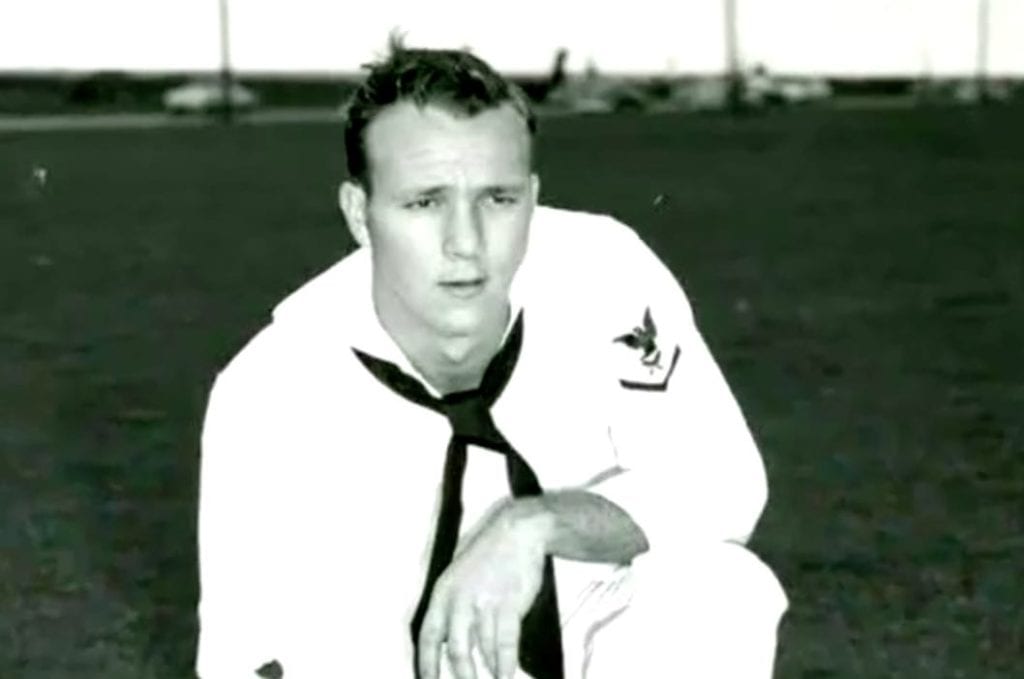
Golfing great Arnold Palmer in his Coast Guard days. U.S. COAST GUARD
PETALUMA, Calif. — The Coast Guard announced plans to rename a training wing after golfing legend Arnold Palmer at Coast Guard Training Center Petaluma, the Coast Guard 11th District said in a March 23 release.
Training Center Petaluma plans to officiate the renaming of the Yeoman and Storekeeper “A” School wing of the Juliet Nichols Building in a ceremony later this year.
Palmer served with distinction as a yeoman in the Coast Guard from 1951 to 1953 and worked for the 9th Coast Guard District commander in Cleveland, Ohio.
Palmer reportedly joined the Coast Guard after his college roommate was tragically killed in an automobile accident as a way to get away from how distraught he was over the loss of his friend.
“My dad said that the U.S. Coast Guard ‘made [him] a better person for the world,’” said Amy Palmer Saunders, chair of the Arnold & Winnie Palmer Foundation. “He would be touched to know that others will be given the same opportunity to learn and grow in a space named for him, and my family and I are grateful to the Pennsylvania delegation, to members of the Coast Guard and to others who made this possible.”
Located just west of the city of Petaluma, Training Center Petaluma is the Coast Guard’s largest West Coast training center. The graduates are the latest chiefs, medics, storekeepers, yeoman, information system technicians, electronics technicians and operations specialists. Training Center Petaluma is also the home to the Coast Guard Leadership Development Center’s Chief Petty Officer Academy.
CNO Visits Fincantieri Marinette Marine Shipyard
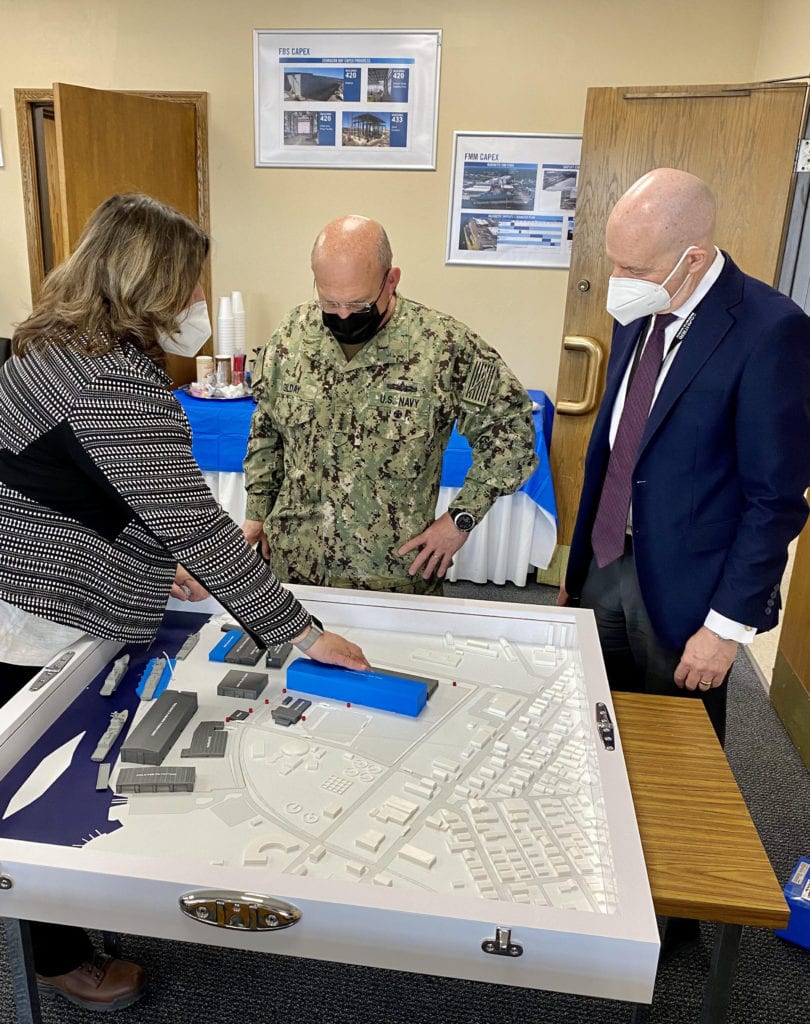
Chief of Naval Operations (CNO) Adm. Mike Gilday tours Fincantieri Marinettte Marine Shipyard with leadership from the shipyard. During the visit, CNO also received briefs on a range of topics, including the Navy’s new Constellation-class Guided-Missile Frigate and Large Unmanned Surface Vehicle development. U.S. NAVY / Cmdr. Nate Christensen
WASHINGTON — Chief of Naval Operations (CNO) Adm. Mike Gilday traveled to Marinette, Wisconsin on March 23, to visit Fincantieri Marinette Marine shipyard, the Navy said in a release.
During the visit, CNO toured the facility and received briefs on a range of topics, including the Navy’s new Constellation-class Guided-Missile Frigate and Large Unmanned Surface Vehicle development.
“One of the most important reasons I am here in Wisconsin is to remind the thousands of men and women working in and around the shipyard that their work is important to our Navy and to our nation” said Gilday. “While Wisconsin seems far from our oceans, its connection to the U.S. Navy remains strong.”
The CNO said an important reason for his visit was to better understand design efforts of the Constellation-class frigates.
“This class of ships is going to be a workhorse in the fleet, and I don’t want anyone to forget the fact that our Sailors are depending on the quality of work done here,” said Gilday. “The ships need to leave Marinette ready for the fight, and that’s what we intend to do. I’m excited to see the FFG ships come to life over the months and years come.”
Dario Deste, president and CEO of Fincantieri Marine Group, echoed similar sentiments.
“We know that the Constellation-class frigates are going to be important for tomorrow’s Navy,” said Deste. “It’s great to have the CNO here in Wisconsin, walking the shipyard, meeting our team and seeing the pride and commitment we have in our work.”
During the visit, the CNO had the chance to meet with shipyard workers and said he was impressed by the innovation and dedication shipyard workers have shown to keeping production lines on track, especially amidst the pandemic.
“To the entire workforce here in Marinette who are responsible for helping us generate warfighting readiness, you have my profound thanks,” said Gilday. “Your innovation and dedication to keeping production lines on track is greatly appreciated, as is your commitment to readiness, which is critical for us to be able to protect our nation.”
Low-Yield Warhead, Nuclear Sea-Based Cruise Missile Will Survive, HASC Ranking Member Says
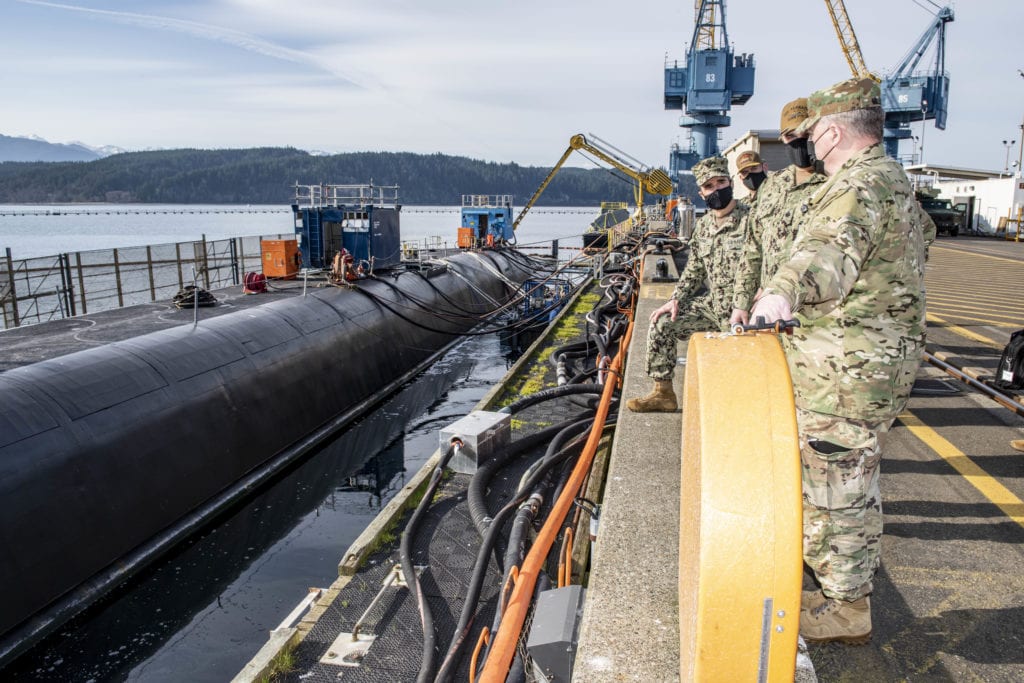
Chairman of the Joint Chiefs of Staff Gen. Mark A. Milley speaks to Cmdr. Brian Murphy, commanding officer of the Ohio-class ballistic-missile submarine USS Alabama (SSBN 731) Blue crew, March 3. Milley toured Alabama, visited with Sailors, and toured Trident Training Facility Bangor and Strategic Weapons Facility Pacific while visiting strategic-deterrent units in the Pacific Northwest. U.S. Navy/ Mass Communication Specialist 1st Class Andrea Perez
ARLINGTON, Va. — Two naval nuclear weapons deployed or planned are likely to survive cancellation efforts from Democratic members Congress, said the new ranking member of the House Armed Services Committee (HASC).
Mike Rogers, R-Alabama, speaking March 22 during a webinar of the Defense Writers Group, was asked by Seapower about the future of the W76-4 low-yield warhead deployed in 2019 on some Trident submarine-launched ballistic missiles — carried on Ohio-class ballistic-missile submarines — and the planned nuclear-armed sea-launched cruise missile (SLCM) called for in the Defense Department’s 2018 Nuclear Posture Review.
The NPR said that “a low-yield SLBM warhead and SLCM will not require or rely on host nation support to provide deterrent effect. They will provide additional diversity in platforms, range, and survivability, and a valuable hedge against future nuclear ‘break out’ scenarios.”
The review said the “SLCM will provide a needed non-strategic regional presence, an assured response capability. It also will provide an arms-control-compliant response to Russia’s noncompliance with the Intermediate-range Nuclear Forces Treaty, its nonstrategic nuclear arsenal, and its other destabilizing behaviors.”
The new HASC chairman, Rep. Adam Smith, D-Washington, has stated his opposition to the low-yield warhead and SLCM as being destabilizing to the nuclear balance.
“We’ll hold the line,” Rogers said, speaking of the congressional Republicans. “I’m sure there will be a big debate. We’ve got some people [opponents of weapons], as long as there are TV cameras in the room, they’re going to run their mouth, but I think we’ll have the votes.”
Japan Launches Lead Ship of 22 Mogami-Class Frigates
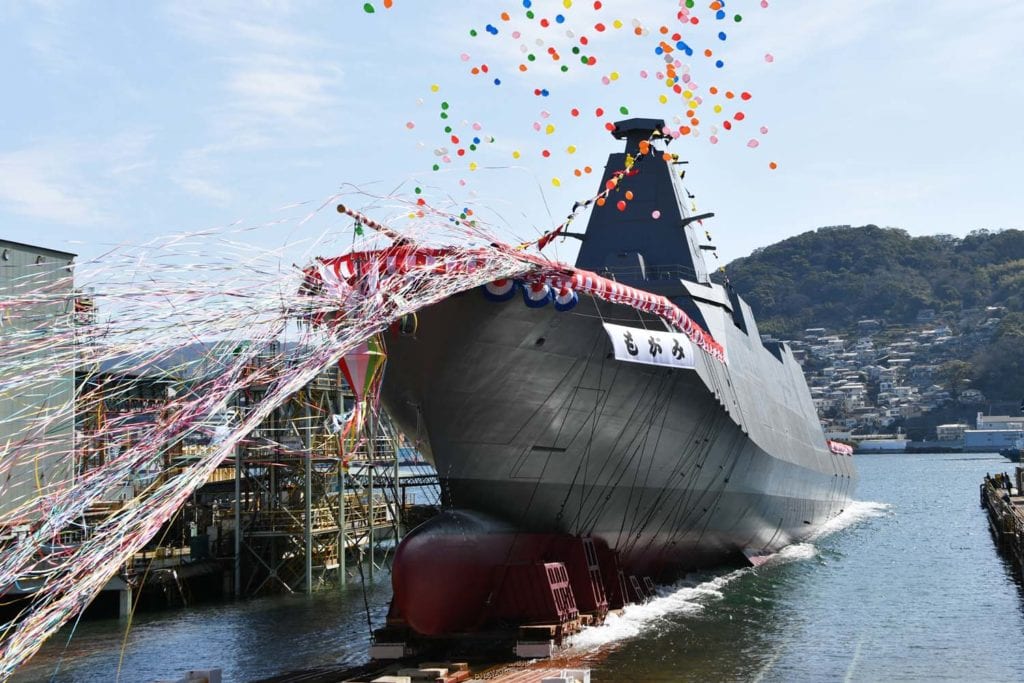
Mitsubishi Heavy Industries launched Mogami, the first of a new class of 22 multirole frigates for the Japanese Maritime Self Defense Force, in a March 3 ceremony at the company’s Nagasaki Shipyard & Machinery Works. Japanese Maritime Self Defense Force
The Japanese Maritime Self Defense Force has launched the first of a new class of multi-mission surface combatant.
The Mogami (FFM 1)-class frigate, also known as the 33FFM program, will be stealthy multi-mission surface combatants with the capability to employ unmanned surface and undersea vehicles to conduct mine countermeasures operations.
The first ship was launched at Mitsubishi Heavy Industries in Nagasaki on March 3. The second ship in the class, Kumano, is being built at Mitsui Engineering and Shipbuilding Tamano Works in Okayama.
Eight of the 426-foot, 5,500-ton Mogami-class FFMs are currently under contract, with 22 of them planned. The Maritime Self Defense Force plans to build two per year.
The Mogami will be armed with a MK 45 5-inch gun, 16 MK 41 Vertical Launch System tubes, eight anti-ship missiles, SeaRAM ddefensive missiles, torpedoes and decoy launchers.
The FFM has a flight deck and hanger to embark an SH-60L helicopter and could also handle unmanned aircraft systems. A rear ramp beneath the flight deck can be used to launch and recover unmanned surface vehicles and unmanned underwater vehicles as well as lay sea mines.
The 30FFM features a futuristic combat information center with a 360-degree video wall.
The stealthy design draws from MHI’s experience with the Mitsubishi X-2 Shinshin stealth fighter technology demonstrator.
The Combined Diesel and Gas Turbine propulsion system features a Rolls Royce MK30 gas turbine and two MAN diesels, delivering speeds of up to 30 knots. The crew of 90 personnel is smaller than existing combatants of comparable size.
The Mogami class will replace some mine warfare ships and escort ships, and will be available for peacekeeping, anti-piracy and humanitarian missions, freeing larger and more capable combatants that are now being used in those roles to assume other duties.
Philippine Navy Retires Four Ships as it Transitions to Modern Fleet
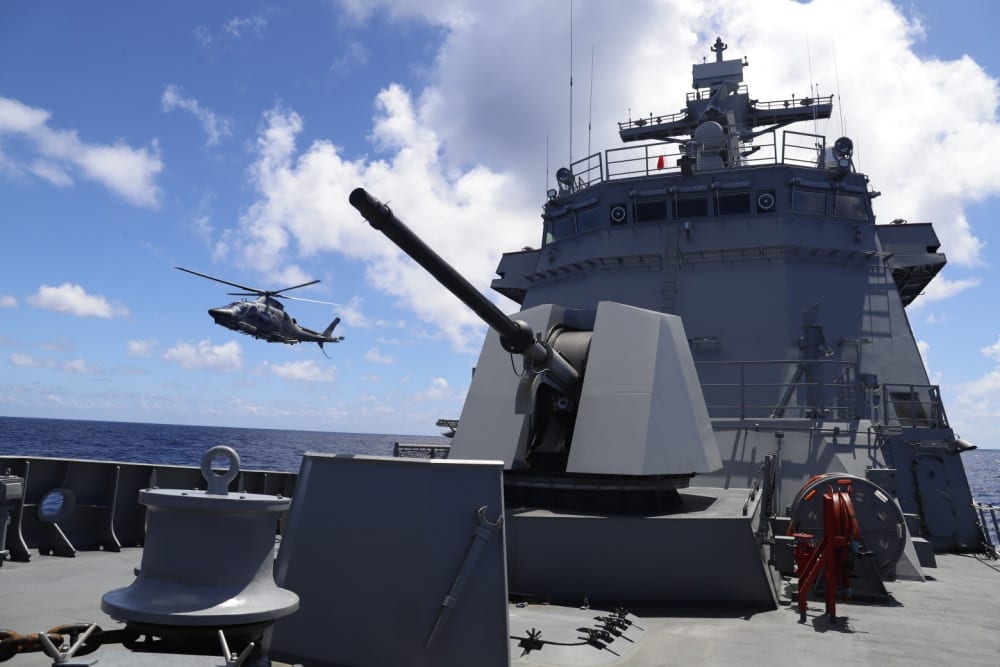
Republic of the Philippines navy ship BRP Jose Rizal (FF 150) conducts flight operations during Exercise Rim of the Pacific 2020. Republic of the Philippines navy / SN1 Pataueg
The Republic of the Philippines’ navy is making a pivot from older legacy ships and craft to newer and more capable surface combatants.
On March 1, 2021, the RPN decommissioned four of its oldest ships in a ceremony at the Heracleo Alano Naval Base in Sangley Point, Cavite City on the island of Luzon. Following guidance from Defense Secretary Delfin Lorenzana, decommissioning “vintage assets” paves the way for the new platforms pursuant to the Armed Forces of the Philippines Modernization Program.
To be decommissioned are Patrol Corvettes BRP Pangasinan (PS-31) and BRP Quezon (PS-70), and Fast Attack Craft BRP Salvador Abcede (PC-114) and BRP Emilio Liwanag (PC-118).
“Indeed, the decommissioning of PS-31, PS-70, PC-118, and PC-114 is a symbolism that there is a new horizon in sight. We are geared towards becoming a stronger and more capable Philippine navy [PN]. With our newest acquisitions, we are more confident that we can better perform our mandate and provide better protection of our maritime domains,” Vice Adm. Giovanni Carlo Bacordo, chief of the navy, said in a statement.
“The accomplishments of these PN vessels won’t be possible without their courageous crew. We are preparing and transitioning from a legacy navy into a modern navy, and part of this is making sure that we allocate our valuable resources and manpower to our new platforms,” Bacordo said in his speech, delivered by PN vice commander Rear Adm. Adeluis Bordado.
The Navy is implementing Defense Secretary Delfin Lorenzana’s guidance to decommission vintage assets to pave the way for the incoming platforms as part of the Armed Forces of the Philippines Modernization Program, and supports the PN’s capability development program to acquire modern platforms with state-of-the-art equipment, sensors, weapons and combat management systems.
In a release from the government-run Philippine News Agency (PNA), Bacordo said the old ships are too old and costly to maintain and operate, and that by decommissioning them, the Navy could “devote more resources to our newly-acquired ships.”
Long-serving veterans
BRP Quezon was one of the last of the 95 Auk-class of minesweepers built during the second world war. She was originally the 221-foot, 1,100-ton Auk-class minesweeper USS Vigilance (AM-324), and was commissioned in January 1943, serving in the Pacific during World War II. She was transferred to the Philippines in 1967 and underwent a major refit in the mid-1990s. At the time of her decommissioning, Quezon was one of the oldest active fighting ships in the world, serving for 77 years, of which 53 years were with the Philippine navy.
The 185-foot, 914-ton BRP Pangasinan began life as PCE 891, a patrol craft commissioned in the U.S. Navy in 1944 and transferred to the Philippines four years later. Although her armament changed over the years, at the time of her deactivation she carried a Mk.26 3-inch/50-caliber gun, three twin Mk.1 Bofors 40mm cannons, four Mk.10 Oerlikon 20mm cannons, and four M2 Browning 12.7mm 50-caliber machine guns. She had 72 years of active service at the time of her retirement.
The two Tomas Batilo-class patrol boats among the four ships deactivated, BRP Salvador Abcede (PC-114) and BRP Emilio Liwanag (PC-118), previously served in the Republic of Korea navy as fast attack craft, designated Patrol Killer Medium (PKM), and were the last of eight ex-Korean PKMs in the Philippine Navy. The PKMs were built in Korea in the 1970s. Five of them were acquired in 1995, one in 1998 and two in 2006. Salvador Abcede and Emilio Liwanag were transferred from the Korean navy in 1996.
The 121-foot, 170-ton PKMs could achieve speeds up to 37 knots, and were armed with Bofors 40/60 caliber guns and pair of Oerlikon 20mm/70 caliber Gatling guns and two 12.7mm/50 caliber machine guns.
Fleet renewal
New ships are joining the fleet. Two new Jose Rizal-class frigates, built by Hyundai Heavy Industries (HHI) in South Korea BRP Antonio Luna (FF 151) was commissioned at Subic Bay earlier this month. The lead ship in the class, BRP Jose Rizal (FF 150), was commissioned in July 2020, and promptly deployed to Hawaii to participate in the Rim of the Pacific multi-national fleet exercise.
These two ships are the Philippine Navy’s most modern surface combatants, and the first with surface-to-air missiles for defense, but the ships were delivered without all of the combat systems installed, including VLS launchers, a close-in weapon system and towed array sonar. They will also be able to embark an AW-159 Wildcat helicopter.
The Philippine navy also received one former Republic of Korea navy Pohang-class coastal defense and anti-submarine corvettes, the BRP Conrado Yap (PS 39), in 2019. At 353 feet long and 2,600 tons, she carries a 76-mm gun, twin 40mm/70 caliber guns and torpedoes.
The 24 ships of the Pohang class were designed and built in Korea and commissioned in the Republic of Korea navy between 1984 and 1993. Ten remain in service with the ROKN, while others have been disposed of or transferred to other navies, as was BRP Conrado Yap. One of the ships in the class, ROKS Cheonan (PCC 772), was sunk by North Korean torpedoes in 1989.
Three former U.S. Coast Guard 378-foot Hamilton-class cutters — Hamilton (WHEC 715), Dallas (WHEC 716) and Boutwell (WHEC 719) — were transferred to the Philippine navy between 2011 and 2016 and became BRP Gregorio del Pilar (PS-15), BRP Ramon Alcaraz (PS 16) and BRP Andres Bonifacio (PS 17), respectively. Although these former 3,250-ton cutters had been in service for about 45 years, they were extensively modernized before being turned over to the Philippines.
Coast Guard Cutter Northland Returns from Gulf of Mexico Patrol
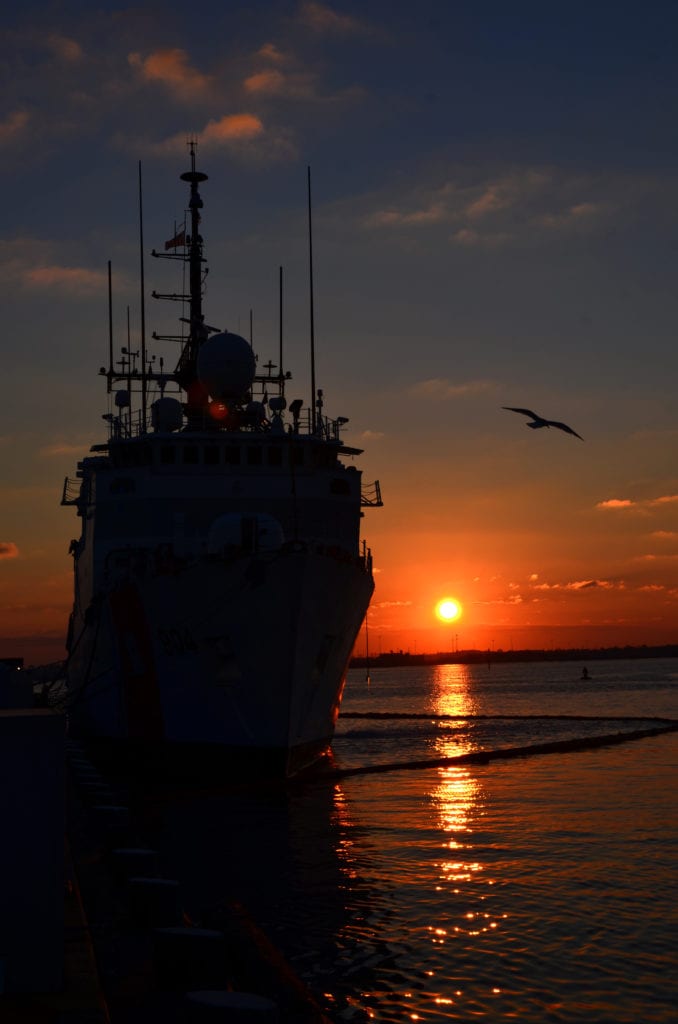
The Coast Guard 270-foot medium endurance cutter Northland lies in her berth at homeport, Coast Guard Base Portsmouth, Feb. 25, 2014. The Northland conducts search and rescue, law enforcement, homeland security, and defense operations missions in the Atlantic Ocean, Caribbean Sea, and Gulf of Mexico. U.S. Coast Guard
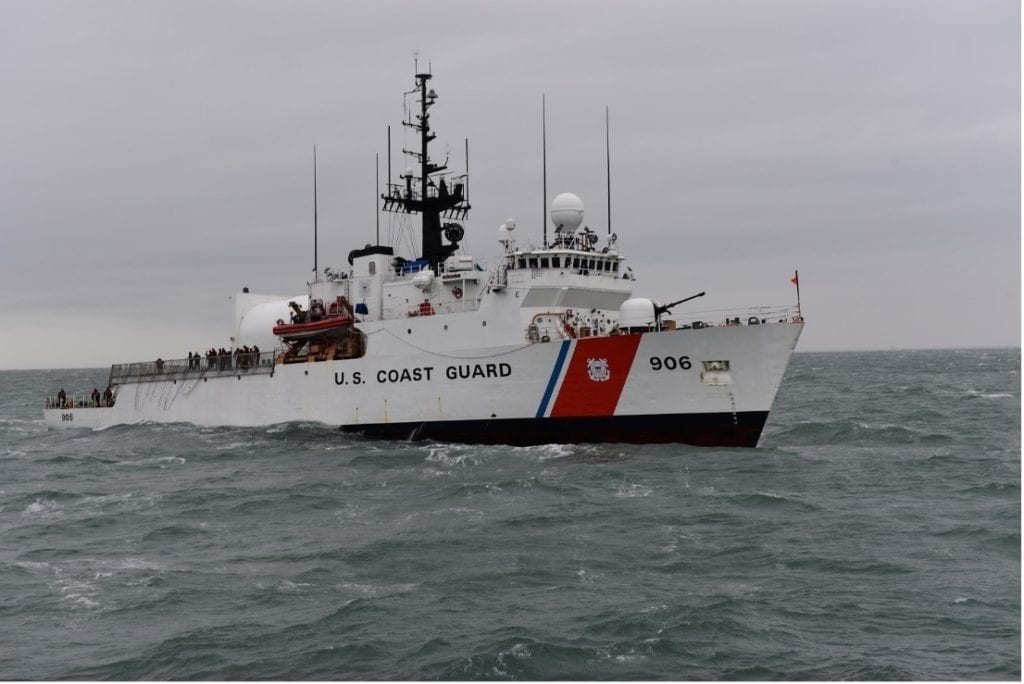
PORTSMOUTH, Va. — The Coast Guard Cutter Northland returned home March 22 to Portsmouth from a patrol in support of the Eighth Coast Guard District, the Coast Guard 5th District said in a March 23 release.
During the patrol, the crew of the Northland conducted daily law enforcement boardings and patrolled the waters for any illegal fishing boats or gear to ensure fair, safe, and sustainable practices.
The Northland crew embarked an MH-65 Dolphin helicopter aviation detachment for the patrol to assist in spotting vessels and targets of interest before launching the cutter small boats.
Prior to beginning patrol, the Northland crew underwent a training availability to test their ability to respond to a variety of shipboard scenarios, such as engine room fires and defense operations. Immediately following the inspection, the Northland crew sailed to Pensacola, Florida, where they successfully completed a biennial evaluation of shipboard helicopter operations.
Upon leaving Pensacola, the cutter patrolled the Maritime Boundary Line, between the United States and Mexico. Once on scene, the crew began fisheries enforcement, deterring illegal fishing and ensuring compliance with federal laws.
Constant surveillance led to the interdiction of one vessel illegally fishing in U.S. waters and the retrieval of miles of fishing gear intentionally left behind by foreign fishermen. The Northland’s presence and enforcement of laws ensured the safety, fairness, and longevity of fisheries throughout the Gulf of Mexico.
“I continue to be impressed with the drive and adaptability that the crew demonstrates on a daily basis,” said Cmdr. Patricia Bennett, commanding officer of Coast Guard Cutter Northland. “I am thankful for the crew’s desire for mission excellence, and also grateful for the Northland being afforded the opportunity to conduct domestic fisheries operations. It is a mission that helps ensure the safety of fishermen and helps sustain a natural marine resource with global implications. Halting illegal fishing through the combination of effective policy and enforcement actions is the best way to prevent the detrimental impact to coastal communities, nations reliant upon seafood as a primary source of protein, and the entire oceanic ecosystem.”
The Northland is a 270-foot medium-endurance cutter that routinely deploys in support of counter-drug, alien migrant interdiction, fisheries, search and rescue and homeland security missions.
U.S. Navy Recovers MH-60S Helicopter From Record Depth
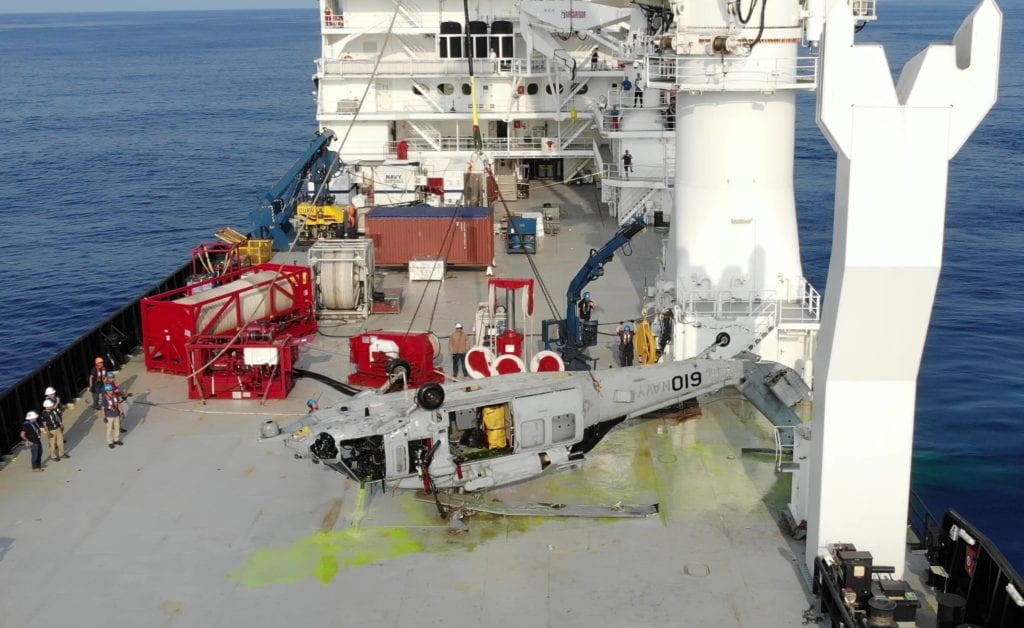
An MH-60S on deck of contracted salvage vessel off the coast of Yokosuka, Japan on March 18, 2021, having just been pulled from the depth of 19,075 feet by NAVSEA Supervisor of Salvage and Diving, (SUPSALV) at the request of the Navy Safety Center to facilitate accident investigation. NAVAL SEA SYSTEMS COMMAND
NORTH PACIFIC — The Naval Sea Systems Command’s (NAVSEA’s) Supervisor of Salvage and Diving (SUPSALV) recovered a downed Navy MH-60S helicopter from a depth of 19,075 feet off the coast of Okinawa, Japan, March 18, the Naval Sea Systems Command Office of Corporate Communication said in a March 22 release.
The helicopter, a twin-engine Sikorsky Seahawk, crashed into the Pacific Ocean last year while operating from the amphibious command ship USS Blue Ridge (LCC-19). The air crew was able to escape the MH-60S before it sank, and no lives were lost in the accident.
Responding to a U.S. Pacific Command Fleet request, SUPSALV located and documented the wreckage using side-scan sonar and photographs of the helicopter as it lay on the ocean floor during North Pacific operations last spring.
SUPSALV returned to the site this month at the request of the Navy Safety Center with CURV 21, a deepwater remotely operated vehicle with the ability to meet deep ocean salvage requirements to a maximum depth of 20,000 feet.
The SUPSALV team met the contracted salvage vessel in Guam, completed mobilization of CURV and its deep-lift take-up reel, and departed for the five-day transit. Arriving on the crash site March17, the team began recovery operations. Pulled from its depth of 19,075 feet below sea level, the MH-60S’s recovery broke SUPSALV’s own world depth record for an aircraft recovery.
The salvage vessel will proceed to Fleet Activities Yokosuka where the MH-60S will be offloaded for transport back to the United States.
“As a whole, this operation was fast-paced and entirely successful,” said Bryan Blake, SUPSALV’s Deep Ocean program manager. “Our efforts validated the Navy’s deep ocean search-and-recovery requirements. The capability to recover the airframe and make it available to determine the cause of the accident is a huge plus helping to ensure Naval Aviation safety.”
The Navy’s Supervisor of Salvage and Diving provides technical, operational and emergency support to the Navy, Department of Defense and other federal agencies in the ocean engineering disciplines of marine salvage, towing, pollution control and abatement, diving and diving system safety and certification, diving and salvage equipment procurement, and underwater ship husbandry.
Congressman Supports Defense Digital Service Academy for Cyber, AI
Rep. Mike Rogers foresees a military academy that focuses on cybersecurity, artificial intelligence and other high-tech skills. NAVAL INFORMATION WARFARE CENTER PACIFIC
ARLINGTON, Va. — The ranking member of the House Armed Services Committee supports establishment of a new training institution for cyberwarfare and artificial intelligence (AI) to help the nation to meet cyber threats.
Rep. Mike Rogers, R-Alabama, speaking March 22 in a webinar of the Defense Writers Group, said one of his top priorities is developing the nation’s defense work force in cyber and artificial intelligence capabilities.
“We just had a cool subcommittee hearing a little over a week ago that recommended a digital service academy, much like the military academies now, but we’d train cyber and AI and other IT [information technology] skills,” Rogers said, noting that the academy could offer qualification “anywhere from a certificate level to an associate degree, bachelor’s degree, to a doctoral degree.”
Rogers said the concept would recruit students that would attend at no charge and would have an obligation to work five years for the government.
“That’s something I’m really focused on, because cyber is an emerging threat that we’ve go to recognize we’re not prepared to meet,” he said.
Coast Guard, CBP Stop Suspected Human Smuggling Venture Off West Palm Beach
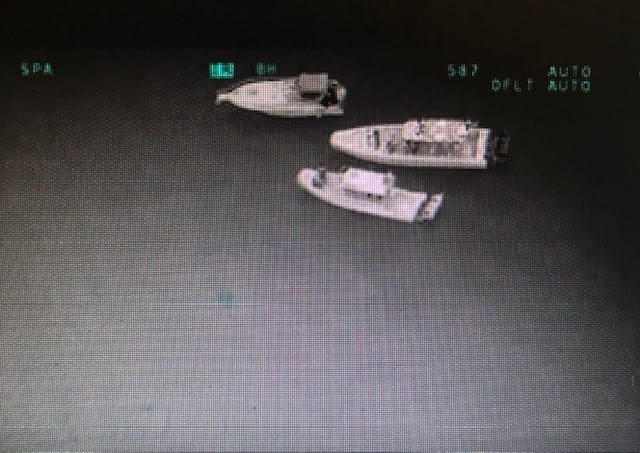
A Coast Guard Station Lake Worth Inlet law enforcement team and Customs and Border Protection Air and Marine Operations law enforcement team interdict a 29-foot vessel with two Bahamians, seven Jamaicans, two Haitians and four Dominican Republicans aboard March 17, 2021 approximately 5 miles off West Palm Beach, Florida. Some passengers were brought ashore for further investigation of potential criminal charges by Homeland Security Investigations while the remaining passengers were repatriated to the Bahamas. U.S. COAST GUARD
MIAMI — A Coast Guard Station Lake Worth Inlet law enforcement team and Customs and Border Protection Air and Marine Operations (CBP AMO) law enforcement teams interdicted a 29-foot vessel with 16 people aboard Wednesday approximately 5 miles off West Palm Beach, the Coast Guard 7th District said in a March 19 release.
Coast Guard Robert Yered arrived on scene and a crew brought all the vessel occupants: two Bahamians, seven Jamaicans, two Haitians and four Dominican Republicans, aboard the ship. Some passengers were brought ashore for further investigation of potential criminal charges by Homeland Security Investigations. The remaining passengers were repatriated to the Bahamas Friday.
A CBP AMO aircraft notified Coast Guard Station Miami watchstanders of the suspected smuggling vessel at approximately 12:20 a.m.
“Wednesday’s case spotlights the great work done every day by Air and Marine and our DHS partners,” stated John Priddy, executive director of the AMO Southeast Region. “With our integrated operations, we get the job done and protect our homeland.”
Since Oct. 1, 2020, Coast Guard crews have interdicted 78 Bahamians, eight Jamaicans, 182 Haitians, 194 Dominican Republicans compared to fiscal year 2020, where crews interdicted 194 Bahamians, four Jamaicans, 418 Haitians and 1,117 Dominican Republicans.
Once aboard a Coast Guard cutter, all migrants receive food, water, shelter and basic medical attention. Throughout the interdiction, Coast Guard crew members were equipped with personal protective equipment to minimize potential exposure to any possible case of COVID-19. There were no migrants in these cases reported to have any COVID-19 related symptoms.
Cutter Seneca Returns Home Following 42-Day Mid-Atlantic Patrol
Coast Guard Cutter Seneca approaches the Coast Guard Cutter Angela McShan for a towing exercise in the Mid-Atlantic Ocean in March 2021. U.S. COAST GUARD
PORTSMOUTH, Va. — The crew of the Coast Guard Cutter Seneca returned to their homeport in Portsmouth on March 13 after a 42-day Mid-Atlantic patrol, the Coast Guard 5th District said in a March 19 release.
The ship’s law enforcement teams boarded commercial fishing vessels from the coast of New Jersey to Florida in support of the Coast Guard’s mission of protecting vital living marine resources. The Coast Guard Cutter Seneca also partnered with aircrews from Coast Guard Air Station Elizabeth City, North Carolina, to help train and maintain proficiency in shipboard helicopter operations.
The Seneca’s law enforcement teams boarded over 24 U.S.-flagged fishing vessels, ensuring compliance with safety, fisheries and environmental regulations. The Seneca crew also worked with the Coast Guard Cutter Angela McShan and the Coast Guard Cutter Lawrence Lawson, two fast-response cutters homeported in Cape May, New Jersey, by conducting joint law enforcement operations and fueling at sea evolutions.
These operations are integral to protecting the $5.6 billion commercial fishing industry, a major economic driver throughout the East Coast, according to the release. Through fisheries enforcement operations, Seneca crews deterred illegal, unreported and unregulated fishing while standing by to answer any calls of distress to members of the commercial fishing industry, which is comprised of more than 39,000 fishermen in the United States.
“This has been a fast-paced and rewarding patrol,” said Cmdr. Matthew Rooney, commanding officer of the Seneca. “The crew did amazing work this patrol. The 30 at-sea boardings promoted safety and let the fishing fleet know the Coast Guard is out here and ready to assist if needed. Their outstanding results and positive attitudes set the standard for Coast Guard operations in the Mid-Atlantic.”
The Seneca is a 270-foot medium-endurance cutter with a crew compliment of 14 officers and 86 enlisted personnel. The cutter’s primary missions include search and rescue, living marine resources, illegal drug interdictions, counter narcotics, migrant interdictions, ensuring the safety of life at sea, and enforcing international and domestic maritime laws in both the Atlantic and Pacific oceans.