U.S. Department of Transportation Draws Record Turnout at U.S. Merchant Marine Academy’s Industry Day
180 participants were onsite to learn about the Academy’s Campus Modernization Plan and federal contracting opportunities in engineering, design, construction, and modernization services
From the U.S. Department of Transportation Office of Public Affairs
KINGS POINT, NEW YORK – The U.S. Department of Transportation drew a record turnout at the U.S. Merchant Marine Academy’s Industry Day, welcoming 180 participants from 90 firms to learn about the Academy’s Campus Modernization Plan (CMP) and upcoming federal contracting opportunities. President Trump’s Executive Order on Restoring Maritime Dominance dedicated an entire section to the modernization of the Academy.
“Modernizing our historic campus is not just about new buildings — it’s about investing in America’s future and restoring our maritime dominance,” said Captain Tony Ceraolo, Acting Superintendent at U.S. Merchant Marine Academy. “I’m proud to see so many great minds from the private sector coming together to want to help create a campus that will inspire innovation, make our nation more competitive, and prepare the next generation of American leaders.”
U.S. Army Corps of Engineers presented the CMP and the upcoming federal contracting opportunities in engineering, design, construction, and modernization services. Participants were also given a tour of the historic campus and joined a Q&A session.
Coast Guard Cutter Campbell Returns Home After 54-Day Maritime Border Security Patrol
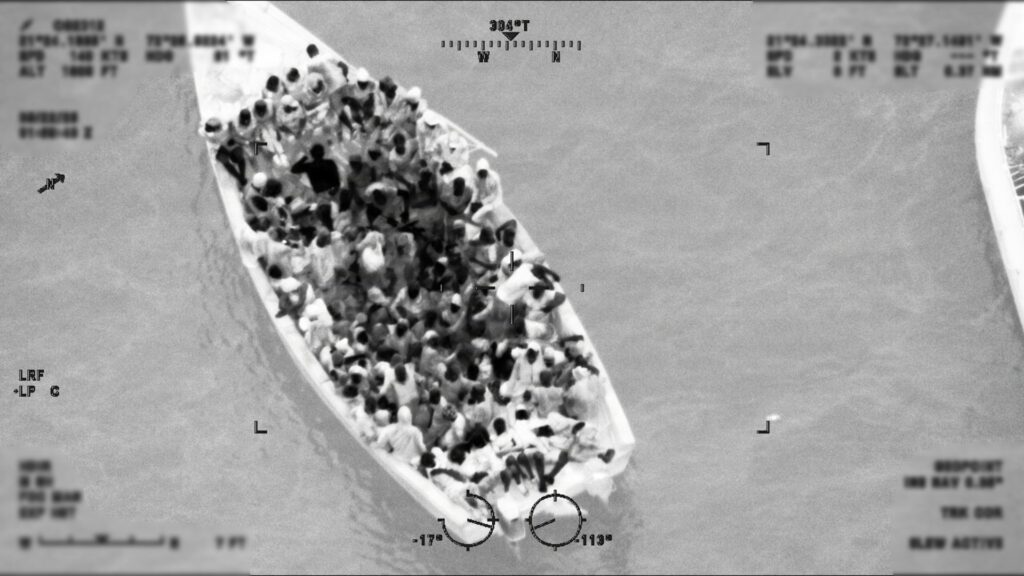
A overloaded Haitian sailing vessel underway approximately 40 miles east of Great Inagua, The Bahamas, September 21, 2025. A forward deployed U.S. Coast Guard Aviation Training Center HC-144 Ocean Sentry aircrew spotted the vessel during a routine surveillance flight along the Florida Straits. (U.S. Coast Guard photo)
NEWPORT, R.I. — The crew of Coast Guard Cutter Campbell (WMEC 909) returned to their homeport at U.S. Naval Station Newport, Monday, following a 54-day maritime border security patrol in the Windward Passage.
Campbell’s crew deployed to the Coast Guard District Southeast area of responsibility in support of Operation Vigilant Sentry, where crews advanced the primary missions of protecting the safety of life at sea while preventing unlawful maritime entry into the United States and its territories.
On Sept. 21, Campbell’s crew coordinated with an HC-144 Ocean Sentry aircrew from Aviation Training Center Mobile to interdict an unsafe, overloaded Haitian sailing vessel with 103 aliens aboard approximately 15 miles from Turks and Caicos. After interdicting the vessel, Campbell’s crew provided life jackets for the aliens and ensured their safety while coordinating with the Royal Turks and Caicos Police Force, who towed the vessel back to the island of Providenciales for further processing.
“This interdiction demonstrates the power of teamwork and international cooperation,” said Cmdr. Krystyn Pecora, commanding officer of Campbell. “Our combined efforts helped to support the Coast Guard’s ongoing mission of deterring illegal maritime migration and ensuring the safety of life at sea. I could not be prouder of this crew’s hard work and dedication throughout this deployment in ensuring Campbell remained mission ready.”
While underway, Campbell’s crew served as the lead task unit in the Windward Passage, coordinating the tactical employment of additional Coast Guard assets to detect, deter and intercept unsafe and illegal alien migration activity.
OVS is a Department of Homeland Security-led operation comprised of federal, state and local partners, responsible for preventing and responding to maritime migration. OVS, previously known as Homeland Security Task Force – Southeast, was established in 2003 and is comprised of more than 50 federal, state and local agencies.
CGD-SE is responsible for Coast Guard activities throughout a 1.7 million square mile area including Puerto Rico, the U.S. Virgin Islands, Florida, Georgia, South Carolina, as well as 34 foreign nations and territories.
Campbell is a 270-foot, Famous-class medium endurance cutter commissioned in 1988. The cutter’s primary missions are counter-drug, alien interdiction and search and rescue in support of U.S. Coast Guard operations throughout the Western Hemisphere. The cutter falls under the command of U.S. Coast Guard Atlantic Area based in Portsmouth, Virginia.
HII, Shield AI Successfully Combine Proven Autonomy in USV Operations
SYDNEY, Nov. 03, 2025 (GLOBE NEWSWIRE) — HII (NYSE: HII) and Shield AI announced today at the Indo Pacific International Maritime Exposition that they have successfully completed the first major test of their integrated autonomy solution aboard HII’s ROMULUS unmanned surface vessel (USV), marking a key step toward operational deployment of the AI-enabled ROMULUS fleet.
The three-day test, conducted in late October in Virginia Beach, Virginia, integrated Shield AI’s combat-proven Hivemind autonomy software, using the Hivemind Enterprise software development kit (SDK), with HII’s Odyssey autonomy suite onboard a ROMULUS 20 USV. The test also marked the first maritime deployment of Hivemind, which enables AI-powered mission autonomy across domains.
This milestone was achieved less than six weeks after the companies announced their partnership, demonstrating rapid adaptability, advanced capabilities, and strong collaboration between the two defense technology leaders.
“This collaboration between HII and Shield AI showcases how adaptable autonomy frameworks can accelerate development,” said Andy Green, president of HII’s Mission Technologies division. “Using the Hivemind Enterprise SDK, our teams integrated capabilities quickly and effectively. The successful deployment on ROMULUS 20 validates the power of this partnership and paves the way for even greater autonomy across the ROMULUS fleet.”
ROMULUS is a modular, high-performance USV line built on commercial-standard hulls for fast production and operational flexibility. The lead vessel, ROMULUS 190, is currently under construction. Designed to exceed 25 knots and operate up to 2,500 nautical miles, ROMULUS 190 will carry four 40-foot ISO containers and feature both Odyssey and Hivemind for next-gen autonomous performance.
Hivemind enables unmanned systems to perform complex missions even in GPS- and communications-denied environments. Proven in aerial operations, Hivemind is now expanding into the maritime domain through this partnership with HII, supporting rapid development and deployment of autonomous capabilities across domains. Under this partnership, Hivemind and Odyssey will integrate into the ROMULUS fleet to operate seamlessly alongside crewed strike groups and surface action groups, while also enabling multi-agent autonomy and intelligent operations.
“Delivering autonomy across domains is key to maintaining a credible deterrent posture in today’s complex geopolitical environment. Each integration strengthens Hivemind’s role as the leading autonomy solution for defense systems,” said Nathan Michael, Shield AI’s chief technology officer and head of the Hivemind business unit. “Through close collaboration with HII and the shared use of Shield AI’s modular, open architecture SDK, we integrated advanced maritime capabilities in less than six weeks — work that typically takes months or years. We look forward to continuing to expand multi-domain autonomy together.”
Shield AI’s Hivemind mission autonomy software and HII’s Odyssey suite will deliver next-generation autonomous solutions. By combining Shield AI’s advanced autonomy with HII’s decades of maritime expertise as America’s largest shipbuilder and leading global maritime unmanned vehicle provider, the two companies aim to accelerate autonomy across domains and platforms.
About ROMULUS and ODYSSEY
ROMULUS, developed with support from HII’s Dark Sea Labs Advanced Technology Group and powered by HII’s Odyssey autonomy software, is capable of manned-unmanned teaming and collaborative operations with unmanned vehicles across all domains. HII’s Odyssey autonomy software is deployed on over 35 USV platforms and over 750 REMUS unmanned underwater vehicles (UUVs), across 30 countries, including 14 NATO members, and enables rapid integration of sensors and payloads for flexible mission design, enhancing the capability and effectiveness of today’s naval fleets.
New GA-ASI Gambit 6 UCAV Adds Air-to-Ground Operations for International CCA
Release From General Atomics Aeronautical Systems Inc.
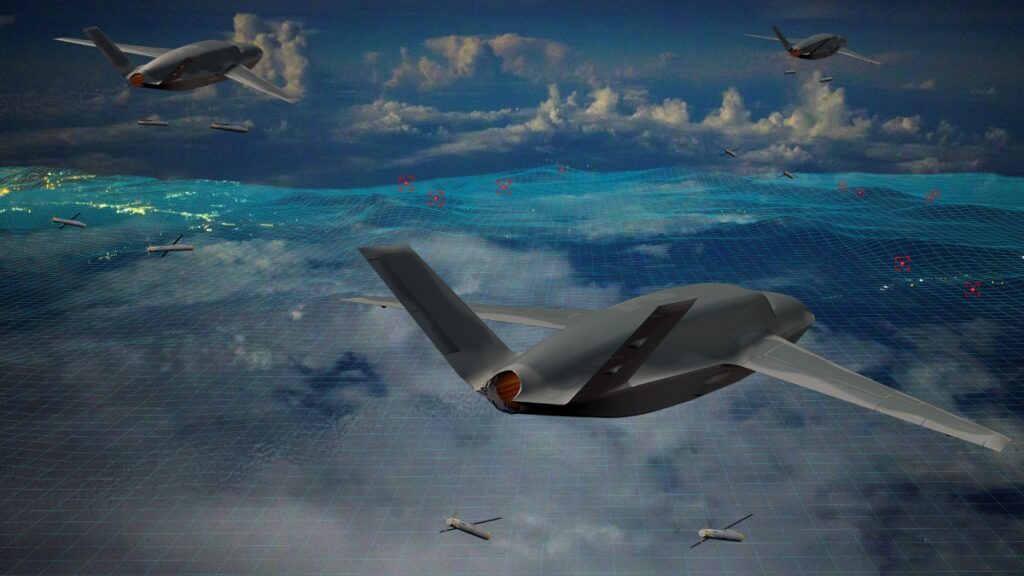
SAN DIEGO – Nov. 4, 2025 – The latest iteration of the innovative Gambit Series of unmanned combat air vehicles (UCAV) from General Atomics Aeronautical Systems, Inc. (GA-ASI) is Gambit 6, a collaborative combat aircraft (CCA) that adds air-to-ground operations to its already proven air-to-air capability. The multi-role platform is optimized for roles such as electronic warfare, suppression of enemy air defenses (SEAD), and deep precision strike, making it a versatile option for evolving defense needs.
Air forces throughout the world are looking to air-to-ground-capable CCAs to enhance operational capabilities and address emerging threats in a denied environment. Gambit 6 is being developed to meet the corresponding need for adaptability, scalability, and mission-specific performance.
“These are real threats, and they require real solutions,” said GA-ASI President David R. Alexander. “The modular architecture and signature-reducing internal weapons bay of Gambit 6 allow for easy integration of advanced autonomy, sensors, and weapons systems, ensuring the aircraft can adapt to a wide range of operational scenarios.”
Airframes will be available for international procurement starting in 2027, with European missionized versions deliverable in 2029. GA-ASI is building industry partnerships throughout Europe with the aim of providing sovereign capabilities for all its platforms.
GA-ASI’s Gambit Series envisions multiple CCA variants rapidly reconfigured from a common core, enabling substantial commonality for rapid and affordable production at scale.
The Gambit Series is a modular family of unmanned aircraft designed to meet diverse mission requirements, including intelligence, surveillance, and reconnaissance; multi-domain combat; advanced training; and stealth reconnaissance. It’s built around a common core platform that accounts for a significant proportion of the aircraft’s hardware, including the landing gear, baseline avionics, and chassis. This shared foundation reduces costs, increases interoperability, and accelerates the development of mission-specific variants like Gambit 6.
By leveraging specialized configurations and advanced autonomy, Gambit aircraft offer tailored capabilities that enhance operational efficiency, reduce costs, and improve survivability in contested environments. One Gambit derivative is the U.S. Air Force’s YFQ-42A, developed as part of that service’s effort to field an AI-enabled uncrewed wingman. Based off the original Gambit 2 concept, the YFQ-42A is designed to complement human-crewed fighters like the F-35 and Next-Generation Air Dominance (NGAD) systems, expanding sensing, weapons capacity, and survivability in contested airspace.
The original concept for Gambit was announced three years ago and was based on four models. Gambit 1 is a nimble sensing platform optimized for long endurance; Gambit 2 adds the provision for air-to-air weapons; Gambit 3 looks much like Gambit 2 but is optimized for a complex adversary air role; Gambit 4 is a combat reconnaissance-focused model with no tail and swept wings. Then in 2024, GA-ASI announced Gambit 5 for ship-based CCA operations.
HII Welcomes UK’s Westley Group as Strategic Supplier, Strengthening Submarine Supply Chain
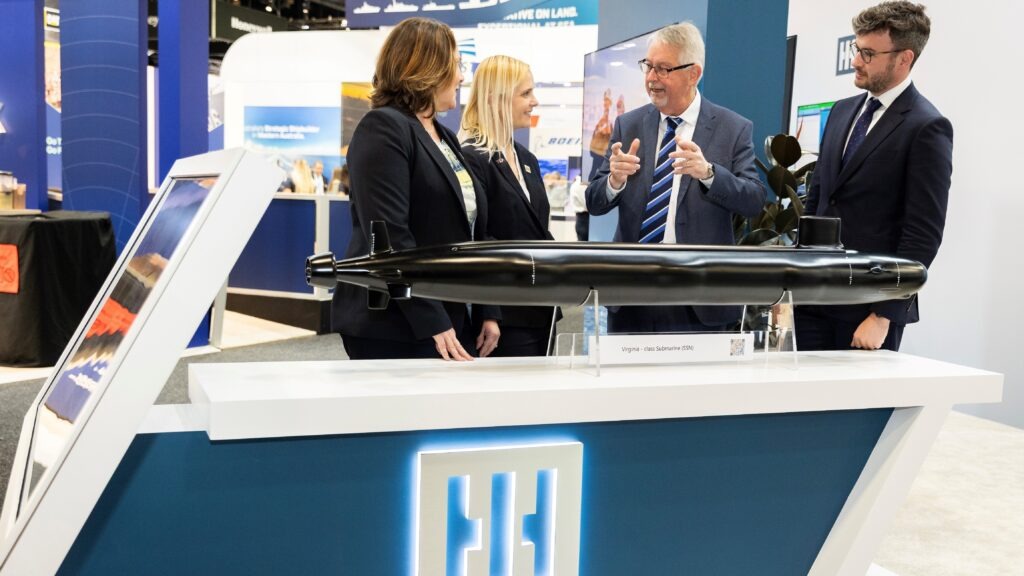
SYDNEY, Nov. 04, 2025 (GLOBE NEWSWIRE) — At the Indo Pacific International Maritime Exposition in Sydney, HII (NYSE: HII) announced the addition of Westley Group, a leading United Kingdom-based manufacturer of high-integrity metal castings, as a strategic supplier supporting the U.S. Navy’s submarine industrial base.
This milestone marks another step forward in advancing allied defense collaboration under the AUKUS trilateral partnership between Australia, the United Kingdom, and the United States.
Westley Group is now approved by HII’s Newport News Shipbuilding division, builder of nuclear-powered submarines and aircraft carriers for the U.S. Navy, to deliver critical castings for U.S. Navy platforms.
“Consistent with the need to have a more integrated supply chain, creating this new supplier that builds essential components adds to the incremental volume required to construct more submarines to meet national security needs,” said Matt Mulherin Jr., HII’s Newport News Shipbuilding division vice president of supply chain and strategic sourcing. “This benefits everyone in the partnership and is a key step toward strengthening and creating a more robust supplier network to meet the expanded need for nuclear-powered submarines.”
The partnership underscores HII’s commitment to expanding industrial integration across AUKUS nations and building a more resilient, globally connected supply chain to support submarine program execution.
This collaboration highlights deepening industrial integration under the AUKUS framework and strengthens collective readiness across the trilateral partnership.
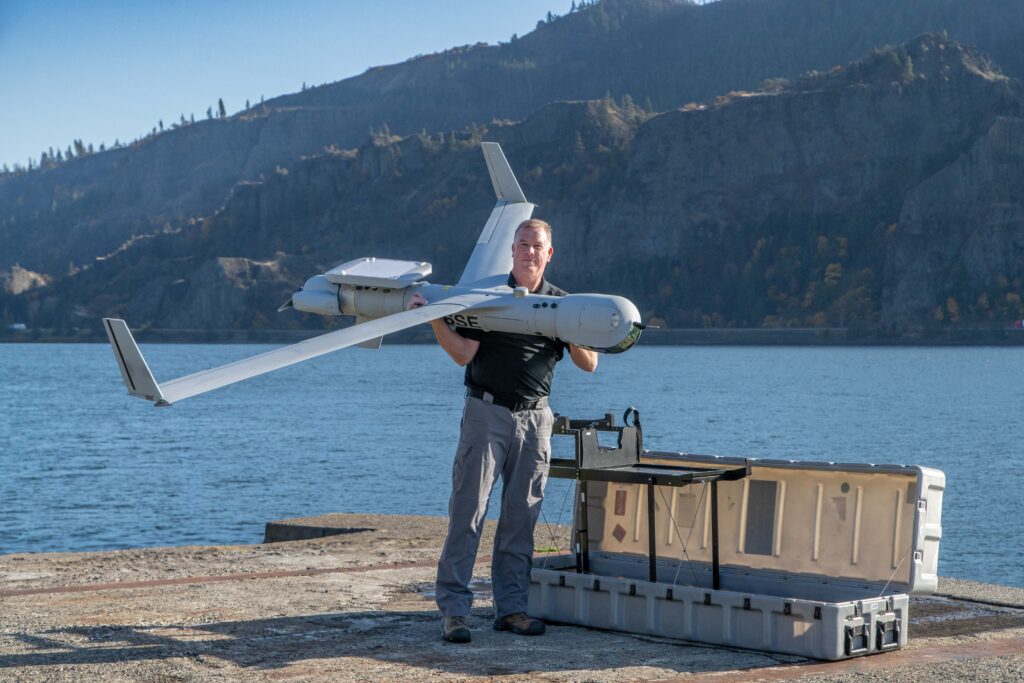
BINGEN, Wash., November 3, 2025 – Insitu, a Boeing Company, is proud to announce the addition of Proliferated Low Earth Orbit (PLEO) Satellite Communication (SATCOM) datalinks and laser-targeting capabilities to its long-endurance, battle-tested ScanEagle Uncrewed Aircraft System (UAS). These enhancements position ScanEagle as the premier choice for reliable over-the-horizon Beyond Line of Sight (BLOS) Intelligence, Surveillance, Reconnaissance and Targeting (ISR-T) missions, further solidifying its reputation as the most proven small UAS in operation today.
ScanEagle, recognized for its reliability with over 1.3 million flight hours logged across contested and combat conditions globally, now offers SATCOM datalinks leveraging PLEO satellite constellations. This capability will enable operators to achieve extended mission reach, even under the most challenging conditions, while controlling ScanEagle UAS from anywhere in the world. Resilience features include visual-based navigation and autonomous RF-switching, ensuring confidence in dynamic and challenging operational scenarios.
“As the leading small UAS on the market, ScanEagle has continuously earned accolades for readiness, reliability, and innovation,” said Diane Rose, Insitu CEO. “The integration of PLEO SATCOM provides operators unparalleled BLOS capability, enabling real-time decision-making capability and operational success for land and maritime missions. The addition of laser targeting capability greatly expands ScanEagle’s reach and mission capability for the most demanding ISR-T missions.”
With Vertical Takeoff and Landing (VTOL) launch and recovery, ScanEagle is ready to fly both maritime and land-based sorties from small ship decks and other expeditionary locations, meeting mission requirements with unequaled flexibility. Its robust capability set includes EO and multi-spectral optics, AI-assisted wide-area and maritime search, communications relay, Signals Intelligence, Electronic Warfare, and laser-designator targeting.
These upgrades are the latest evolution in ScanEagle’s storied track record of innovation, ensuring mission-critical autonomy and resilience in the most demanding environments. Insitu announced PLEO SATCOM capability for Integrator in 2024, and Integrator ER has offered GEO SATCOM capability for years.
As Insitu continues to push the boundaries of UAS capability, ScanEagle and Integrator remain the trusted choice for global operators seeking unmatched reliability and operational excellence.
U.S. Coast Guard Cutter Healy Returns to Seattle After 129-Day Arctic Deployment
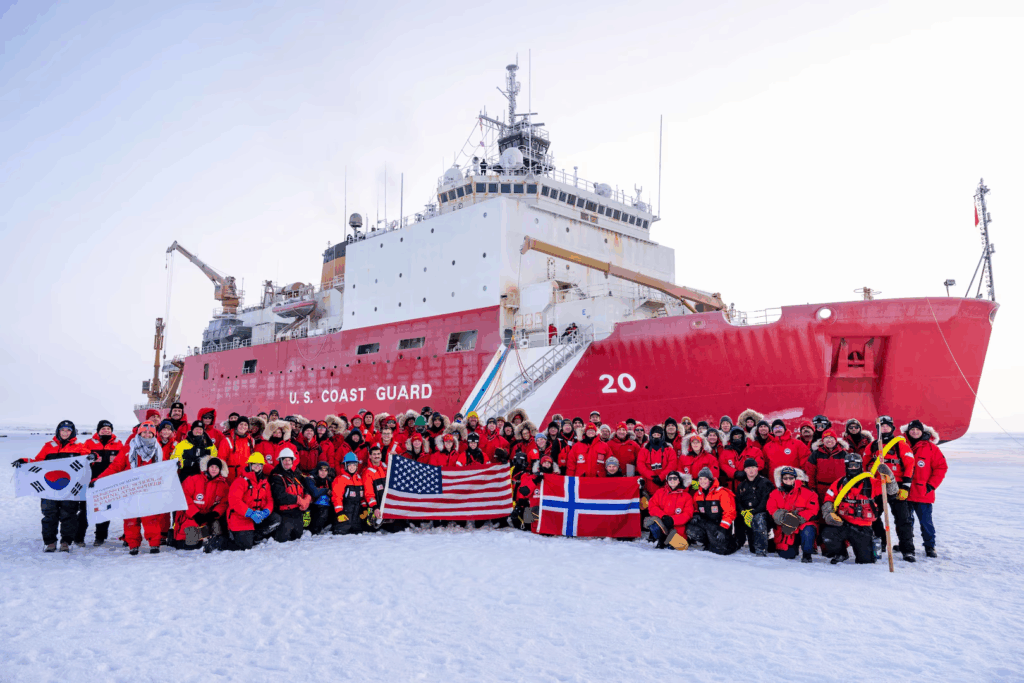
Crewmembers, researchers, and partner nation representatives sailing aboard U.S. Coast Guard Cutter Healy (WAGB 20) pose for a photo on the ice in the Arctic Ocean, Oct. 1, 2025. (U.S. Coast Guard photo by Petty Officer 3rd Class Chris Sappey)
From U.S. Coast Guard Northwest District, Oct. 31, 2025
SEATTLE — The U.S. Coast Guard Cutter Healy (WAGB 20) returned to its Seattle home port Sunday, following a 129-day patrol that concluded its annual Arctic deployment.
Healy, one of three Coast Guard polar icebreakers, steamed over 20,000 miles this deployment, supporting Operation Arctic West Summer and Operation Frontier Sentinel, protecting U.S. sovereign rights and territory, and promoting national security in the Arctic.
“Healy’s unique and specialized capabilities allow us to operate in the most remote regions conducting the highest priority missions of the Coast Guard,” said Capt. Kristen Serumgard, commanding officer of Healy. “Healy’s dynamic crew of active duty and civilian personnel showcased tremendous adaptability, dedication and resilience, steaming over 20,000 miles through ice-covered waters to complete the mission.”
As a part of Operation Frontier Sentinel, Healy queried and monitored three foreign research vessels operating in ice-covered waters over the U.S. Extended Continental Shelf and U.S. Exclusive Economic Zone, protecting the territorial integrity of the United States’ northernmost border.
Five China-affiliated research vessels operated in the Arctic region over the summer, and Healy was one of several Coast Guard assets deployed to control, secure, and defend U.S. sovereign interests. The Coast Guard works in conjunction with U.S. Northern Command and Alaskan Command to constantly monitor foreign vessels operating in and near U.S. waters.
Healy’s crew also supported two missions involving the deployment and recovery of subsurface oceanographic equipment throughout the U.S. Arctic, East Siberian Sea, and Laptev Sea. This work was performed in conjunction with the Office of Naval Research, the National Science Foundation, and other partner agencies. The data collected will help build a more cohesive picture of the physical, biological, and chemical properties of the Arctic Ocean, improving maritime domain awareness north of the Arctic Circle.
As part of the Arctic District’s multi-faceted response to a series of devastating storms that struck Western Alaska communities, Healy diverted to the affected region to respond to Search and Rescue and disaster relief needs.
Homeported in Seattle, Healy is the largest cutter in the U.S. Coast Guard at 420-foot long and 16,000 tons. Healy is designed to break 4.5 feet of ice continuously at three knots and can operate in temperatures as low as -50 degrees Fahrenheit, enabling year-round access to the Arctic Ocean.
Advanced Navigation Unveils Compact Boreas 50 Series For High-Integrity Maritime and Naval Navigation
From Advanced Navigation, Nov. 3, 2025
Global, November 2025 - Advanced Navigation, a global leader in assured positioning, navigation and timing (APNT) and autonomous system, has announced the expansion of its Boreas range with the new 50 series – the company’s most compact fiber-optic gyroscope (FOG) inertial navigation system (INS), delivering rapid North-seeking in challenging GNSS-denied maritime environments.
The 50 Series includes two high-performing variants:
The A50 – an attitude and heading reference system (AHRS)
The D50 – a strategic-grade INS
Each is equipped with a North-seeking gyrocompass capable of rapidly determining true North. Powered by Advanced Navigation’s advanced sensor fusion, the series delivers intelligent, reliable navigation within a SWaP-optimized form factor.
Featuring all-band GNSS receivers, the D50 offers enhancements in signal availability, heading accuracy, and greater resilience in challenging environments. For defense missions operating in particularly high-threat scenarios, it also offers an extra layer of protection through optional Electronic Protection (EP) capabilities.
Maximilian Doemling, Head of Product at Advanced Navigation, said,
“Accurately determining position and heading remains a persistent challenge in maritime and naval operations. That’s where the Boreas 50 Series comes in. It plugs straight into new and existing platforms and starts delivering fast, reliable positioning and North-seeking where traditional systems aren’t able to.
For high-threat operational environments, the D50’s advanced EP capabilities deliver uncompromising protection against nefarious attempts of GNSS jamming and spoofing. It is a powerful counter-Electronic Warfare solution built to operate under direct electronic attack, giving operators the resilience and reliability they need to stay on course against any adversary.”
Compact North-Seeking in Tough Environments
Real-time North-seeking: The Boreas 50 series contains precise North-seeking gyrocompassing, capable of detecting Earth’s rotation to determine true North in real time, completely independent of GNSS signals or magnetic interference. This is housed in a compact form factor weighing 910 grams, enabling easy integration into space- and weight-constrained platforms.
Advanced sensor fusion: Advanced Navigation’s proprietary sensor fusion draws on sophisticated algorithms to interpret and filter sensor data. The software is designed to dynamically weigh the input from each sensor, adjusting in real time based on reliability scores, environmental conditions, and operational context. This ensures continuous, high-confidence state estimation even when GNSS signals are lost or degraded.
All-band GNSS capabilities: The D50 incorporates dual-antenna, all-band GNSS receivers, supporting access to the newer L6 band. This broad-spectrum support enables significantly faster convergence times to centimetre-level positioning accuracy.
Optional EP: The D50 is available with optional EP functionality. While adversaries create GNSS signal attacks, the D50 proactively detects and neutralises these attacks to maintain a reliable, uninterrupted positioning.
Confidence from Surface to Underwater
The Boreas 50 Series integrates effortlessly into both new and legacy defense and commercial platforms to streamline upgrades, reduce installation time, and lower overall costs.This flexibility enables rapid deployment across a wide range of applications.
Maritime vehicles: The denial of GNSS signals blinds a vessel’s precision capabilities, risking its ability to navigate effectively or accurately identify and track incoming threats. The 50 Series is engineered to endure GNSS denial, navigate precisely, and deliver assets on target to maintain tactical advantage on the seas.
AUVs and ROVs: Accurate positioning is critical for AUVs and ROVs. The 50 series can find true North without magnetic sensors, eliminating magnetic interference. Advanced algorithms and integration with DVL and other sensors ensure long-endurance, high-accuracy underwater navigation.
Autonomous Surface Vessel: The 50 series combines North-seeking capability, precision sensors, and survey-grade fusion algorithms to deliver consistent performance for ASVs. With dual-antenna GNSS, DVL, and environmental sensor integration in a compact housing, it provides a robust navigation core that withstands GNSS outages, harsh weather, and violent vessel motion.
Boreas 50 Series Specifications
Heading accuracy: Gyro compassing 0.5 degrees secant latitude
Roll and pitch accuracy: 0.03 degrees
Positional accuracy: 0.01 m CEP50
Electronic Protection capabilities are available on the Boreas D50
Defense Veterans Continue to Drive Rapid Innovation
Beyond unmatched speed, Advanced Navigation’s defense team consists entirely of military veterans, a global force the company plans to more than double within the year to ensure its technologies are shaped by those who understand and have experienced the battlespace.
The veterans partner closely with system integrators, program offices, and military end-users to deliver tailored APNT solutions that meet rigorous performance, compliance, and security standards. Their military experience enables seamless communication between technical teams and military operators, accelerating timelines and reducing the risk of misalignment.
The Ultimate Capability is Availability
Advanced Navigation’s products are developed and delivered on stringent timelines, supported by the company’s vertically integrated manufacturing. This sets a new standard by guaranteeing the shortest production lead times in the industry – ready in weeks, not years, and is backed by a three-year warranty.
With a deep understanding of the applications its products operate in, Advanced Navigation’s global field experts are dedicated to meeting the needs of maritime and naval customers with responsiveness, exceptional quality and genuine care. The team partners closely with system integrators, OEMs, and end-users to deliver tailored solutions that overcome commonplace industry concerns such as integration challenges, cost uncertainty and risk aversion. By leveraging engineering excellence, unmatched speed and quality customer support, Advanced Navigation is accelerating the path towards maritime autonomy.
From Shipyard to Smart Ship: Austal and Greenroom Deliver Rapid AI Integration
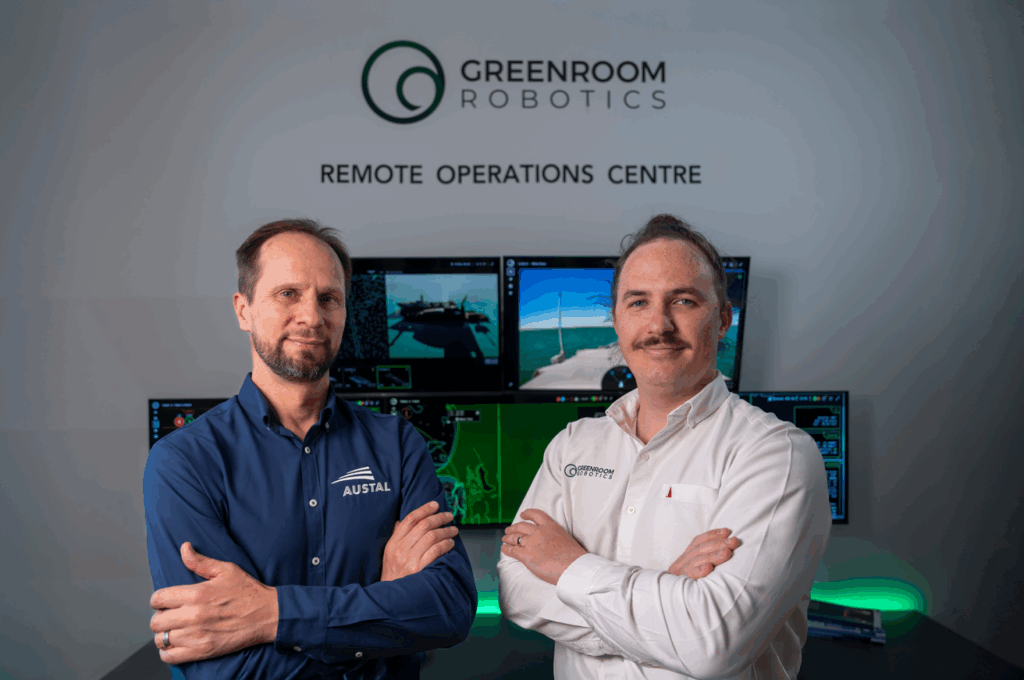
Sam Abbott, Head of R&D, Austal and Harry Hubbert, co-founder and COO, Greenroom Robotics
From Greenroom Robotics, Nov. 2, 2025
At Indo Pac 2025, Greenroom Robotics and Austal Australia have announced that, following extensive trials and successful testing, future Austal vessels have the option to include Greenroom’s GAMA and Lookout+ technology to transform them into fully autonomous vessels. Significantly, this unique collaboration aims to achieve rapid autonomy and AI integration, creating intelligent maritime systems in as little as five days, while competitor solutions on the market take weeks or months.
This is a major milestone in their Strategic Partnership Agreement (signed in September 2024), which brings together Australia’s strategic shipbuilder and leading maritime autonomy company, to redefine the future of shipbuilding.
The ground-breaking technology is on demonstration for media to try via a simulation at Indo Pac at the Austal booth.
Austal has been working with Greenroom Robotics since 2023, with Austal providing a mentoring role as Greenroom scales up and grows globally. Both companies are headquartered in Western Australia. Greenroom has 32 employees, Austal has 4,479.
Greenroom Robotics’ GAMA and Lookout+ technologies turn any boat into an autonomous surface vessel using vision-based AI through the boat’s existing cameras and CCTV systems. These technologies will work seamlessly with Austal’s proven platform management system, MARINELINK Prime, to offer reliable and safe navigation of vessels, including collision avoidance.
During the Royal Australian Navy’s Patrol Boat Autonomy Trial (PBAT), the integrated software successfully executed 148 autonomous collision avoidance manoeuvres over a 705-nautical-mile trial. This formed a strong foundation for autonomy integration opportunities across Austal vessels.
Austal CEO, Patrick Gregg, said: “By bringing together Austal’s shipbuilding excellence and Greenroom’s advanced AI and autonomy software, we’re creating the best of both worlds for the future of Australian shipbuilding. It’s an example of how established industry and emerging innovation can work hand-in-hand to deliver real capability, quickly.
“We are delighted to be working with Greenroom Robotics to develop an integration package to offer to other companies so their clients can leverage the benefits of autonomy and AI now and into the future.”
Greenroom Robotics co-founder and COO, Harry Hubbert said: “Our partnership with Austal is creating best in class capabilities for Australia’s shipbuilding future. Austal are very forward thinking and build great ships. Greenroom are a software company providing autonomous navigation and situational awareness software. What we do is hard, and what they do is hard. This partnership meshes the best of our skill sets to solve significant maritime problems together.
“Greenroom Robotics’ advanced maritime autonomy software and AI-powered optical radar reduces crewing requirements and enhances situational awareness. There’s no size limit for the technology. It works on any vessel.”
Navy Pacific War Vet Attends Navy’s 250th Birthday Celebrations in Philadelphia
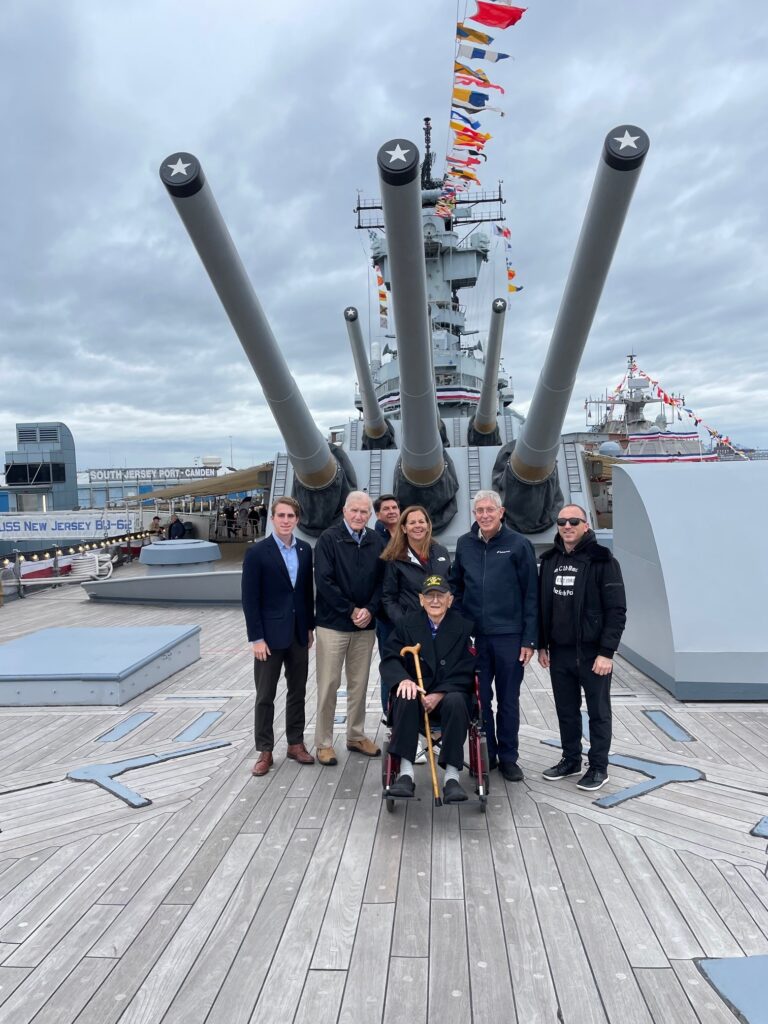
Edward Desmond, center, gets a VIP tour of the battleship USS New Jersey. Photos courtesy of the Desmond family
Soon to be 100-year-old Petty Officer 2nd Class Edward D. Desmond from Boston was invited by the Navy to attend the Navy’s 250th Birthday Celebrations in Philadelphia in early October.
He spent four days in Philadelphia and enjoyed everything from attending the Navy’s Gala Birthday dinner wearing his tuxedo to enjoying a visit to the Battleship USS New Jersey and the Cruiser USS Olympia wearing his newly issued Navy pea coat to keep him warm in the unusually cold weather.
At the Navy 250 Gala birthday dinner held in the Great Hall of the National Constitution Center at Independence National Historical Park, within sight of the Liberty Bell, Desmond received recognition from Navy leaders as he was the oldest Navy Sailor in attendance.
He received a standing ovation from the more than 750 guests in attendance and was able to participate in the ceremonial cutting of the birthday cake alongside Admiral Daryl Caudle, 34th chief of naval operations.
As the oldest Sailor in attendance, 99-year-old Desmond was then presented the first slice, with the second slice presented to the youngest Sailor, just 22 years old. The moment captured the Navy’s enduring legacy honoring those who have served before while also celebrating the newest generation of Navy Sailors who will continue to carry its proud traditions forward.
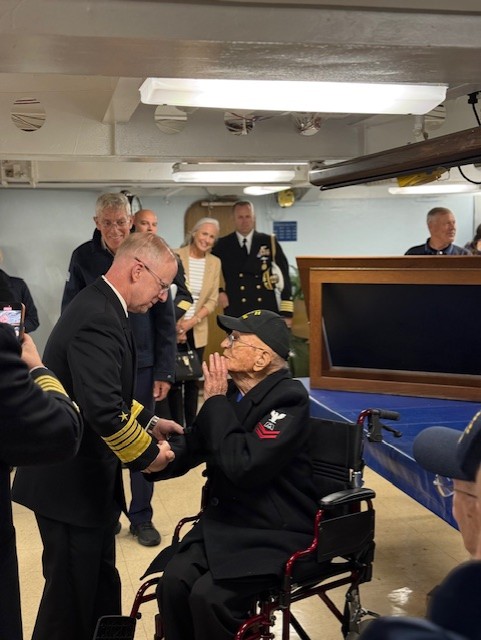
Desmond swapped challenge coins with Admiral Daryl Caudle, the chief of naval operations.
Challenge Coins
On the following day, Desmon was given a VIP tour of the historic Battleship New Jersey where he again met CNO Caudle to share sea stories and where the admiral presented Desmond with a commemorative Navy 250 challenge coin.
Desmond had a surprise for the admiral as he countered by offering Caudle his own challenge coin, a unique coin representing and honoring the service of 10,000 landing craft support Sailors who served on LCS ships during the Pacific war. The U.S. built 130 of those heavily armed gunboats in a hurry in 1944 and 1945 and sent them to the Pacific. They were designed to provide close-in gunfire support for the landing boats carrying Marines and Army troops ashore at such places as Iwo Jima, the Philippines and Okinawa.
Desmond was also the guest of the crew of a smaller, 21st century Navy LCS rafted alongside the battleship New Jersey: the USS Billings (LCS 15) a Freedom-class littoral combat ship.
Desmond noted with delight he had the privilege of being aboard the Billings two years earlier when the ship was at its homeport at Naval Station Mayport in Jacksonville, Florida. Desmond got a tour of the ship and had a front-row seat on the bow for observing Navy small boat forces performing a mock assault on a small ship on the Delaware River.
As Desmond was departing the Billings, the senior gunners mate presented him with a shell casing from the bow gun, a 57mm Mk 110 naval gun capable of a high rate of fire against air, surface, and shore-based threats.
Desmond told the gunners mate that his battle station assignment aboard LCS 128 eight decades ago was at a 20mm anti-aircraft gun and, with a twinkle in his eye, let the gunners mate know that “my 20mm gun had a firing rate of 300 rounds per minute” compared to the 220 rounds per minute firing rate of the MK 110.
That same evening, Desmond rallied and attended a 2.5 hour “Victory at Sea” concert which included performances by the U.S. Navy Band, the Marine Corps Drum and Bugle Corps and a special performance from Patti LaBelle.
On the last day of Desmond’s trip, he was the guest of a different kind of Navy, the famous Schuylkill Navy, sponsor of all of the rowing clubs in Philadelphia. Desmond took a tour of Boathouse Row, including the Saint Joseph’s University Boathouse, and took a few minutes to try out one of the rowing machines.
He had worked up an appetite, so he asked if there was any place close by where he could get a Philly cheesesteak. His wish was granted and he gave the iconic Philly sandwich a big thumbs up.
The indefatigable 99-year-old then headed to his hotel to get ready for a second Navy birthday dinner hosted by the Navy Museum Development Foundation at the prestigious Union League Club.
Coming Up on 100
Desmond’s daughter was his accomplice on his visit to Philadelphia and reported her father said the Navy’s 250th birthday celebration weekend was a once-in-a-lifetime event and he would send a big thank you to the Navy for hosting him at such a prestigious event.
Desmond and his family are now looking to celebrate his 100th birthday on Nov. 10, which just happens to be the Marine Corps’ 250th birthday.
Desmond again, with a twinkle in his eye, said maybe he should send one of his challenge coins to the commandant of the Marine Corps and see if he might get invited to come back to Philadelphia for the Marine’s 250th birthday.