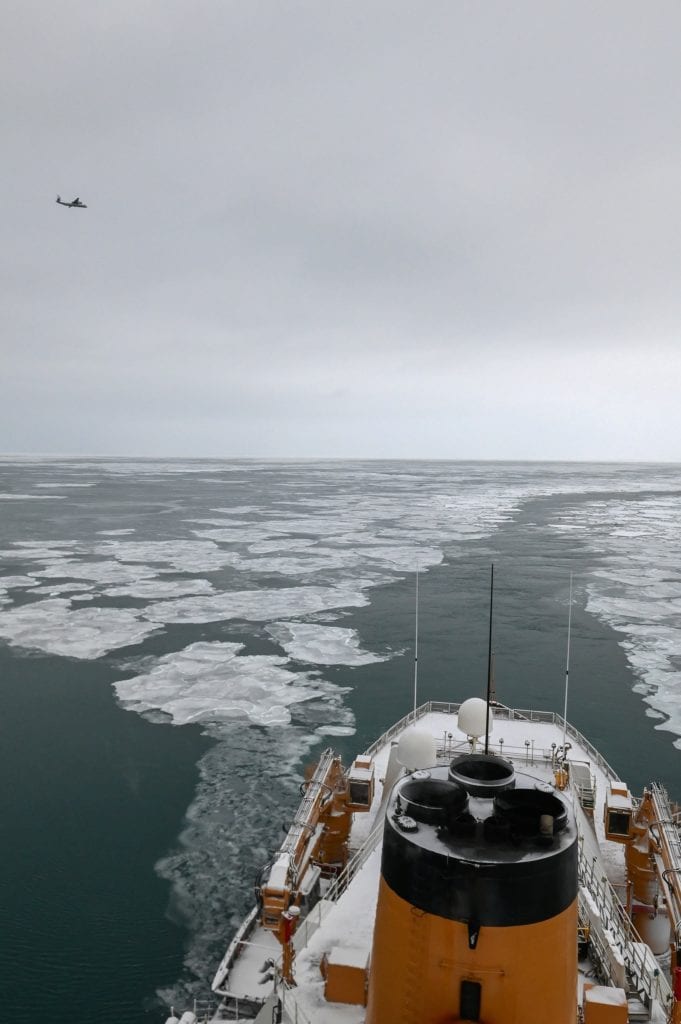
Polar Star Takes Cuttermen to School in the Arctic
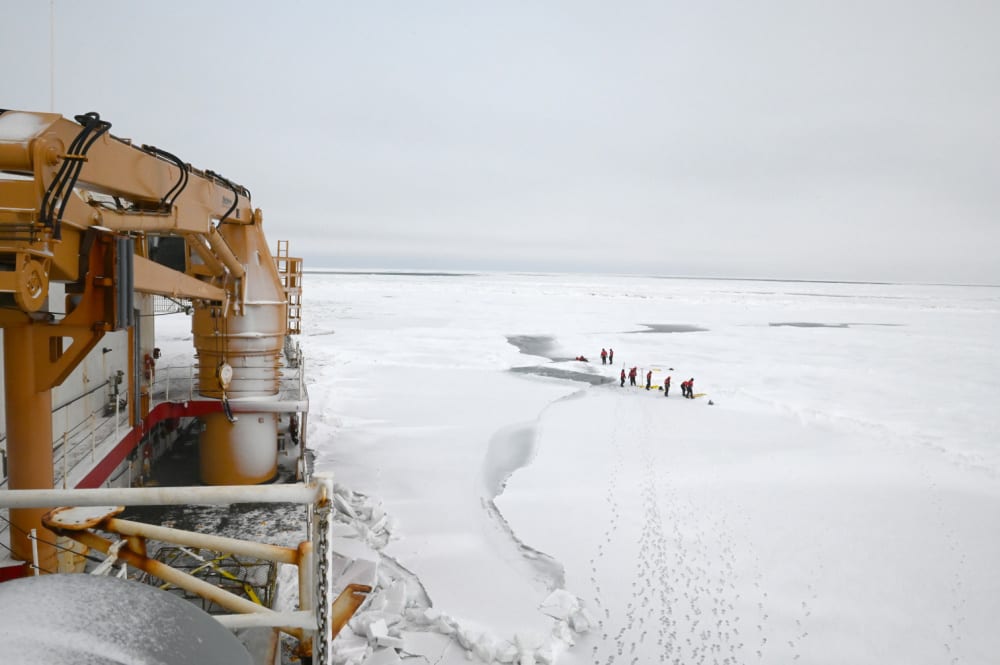
Coast Guard Cutter Polar Star (WAGB 10) crewmembers participate in ice rescue training in the Bering Strait, Wednesday, Jan. 20, 2020. The 45-year-old heavy icebreaker is underway to project power and support national security objectives throughout Alaskan waters and into the Arctic, including along the Maritime Boundary Line between the United States and Russia. U.S. Coast Guard / Petty Officer 1st Class Cynthia Oldham

America’s only heavy icebreaker is conducting training in a realistic environment — the Arctic.

When the National Science Foundation scaled back the research activities at McMurdo Station in Antarctica because of COVID 19, USCGC Polar Star’s annual deployment in support of Operation Deep Freeze was put on ice.  To maintain crew skills in icebreaking and polar operations, the Polar Star’s crew was presented a unique opportunity to get some realistic training.

“When 44-year-old Cutter Polar Star’s annual trip to resupply McMurdo Station in Antarctica was cancelled this year by the National Science Foundation, and Cutter Healy, which typically heads North experienced a major engineering casualty — a main propulsion generator catastrophic failure — we saw an opportunity to send Polar Star to the Bering Sea and North,” said Commandant of the Coast Guard Adm. Karl Schultz, speaking at the Surface Navy Association Annual Symposium last month.

The Coast Guard has another polar icebreaker, the 399-foot, 13,000-ton Polar Sea (WAGB 10), but it is not operational.  The 420-foot, 16,000-ton medium icebreaker USCGC Healy (WAGB 20) suffered a fire about 60 nautical miles from Seward, Alaska, in August of last year on her way to the high north, and is currently undergoing major repairs to replace her propulsion motor.

Schultz said a replacement polar icebreaker is a priority. The Polar Security Cutter (PSC) program, which currently has one 460-foot, 23,000-ton multi-mission PSCs on order with options for two more, is so important.

“We need a minimum of six icebreakers. Within that six, three need to be heavy, or Polar Security Cutters. And we need one now,” Schultz said at the symposium.

But with Healy undergoing repairs, and the first PCS not expected to be delivered until 2024, it’s important to keep the services icebreaking knowledge, expertise and experience. Polar operations are more challenging, especially in winter darkness, and the Antarctic and Arctic environments are not the same. When the new cutters come on line, they will need qualified crews.

“We need to train more cuttermen to break ice,” Schultz said.  

Schultz said there’s no better place to learn about Arctic operations that the Arctic.

“On Christmas Day, Polar Star set a cutter record, traveling North of the 72-degree, 11-minute North latitude line in Chukchi Sea, breaking four-feet thick ice along the way. Aboard Polar Star, there are University of Washington scientists, British sailors from the Royal Navy, midshipmen from the U.S. Merchant Marine Academy, and Ice Pilots from Cutter Healy — another example of partnerships. This is Polar Star’s first Arctic winter deployment since 1982 … presence equals influence in the high latitudes.”
Coast Guard, Navy offload more than $211M worth of cocaine, marijuana in San Diego

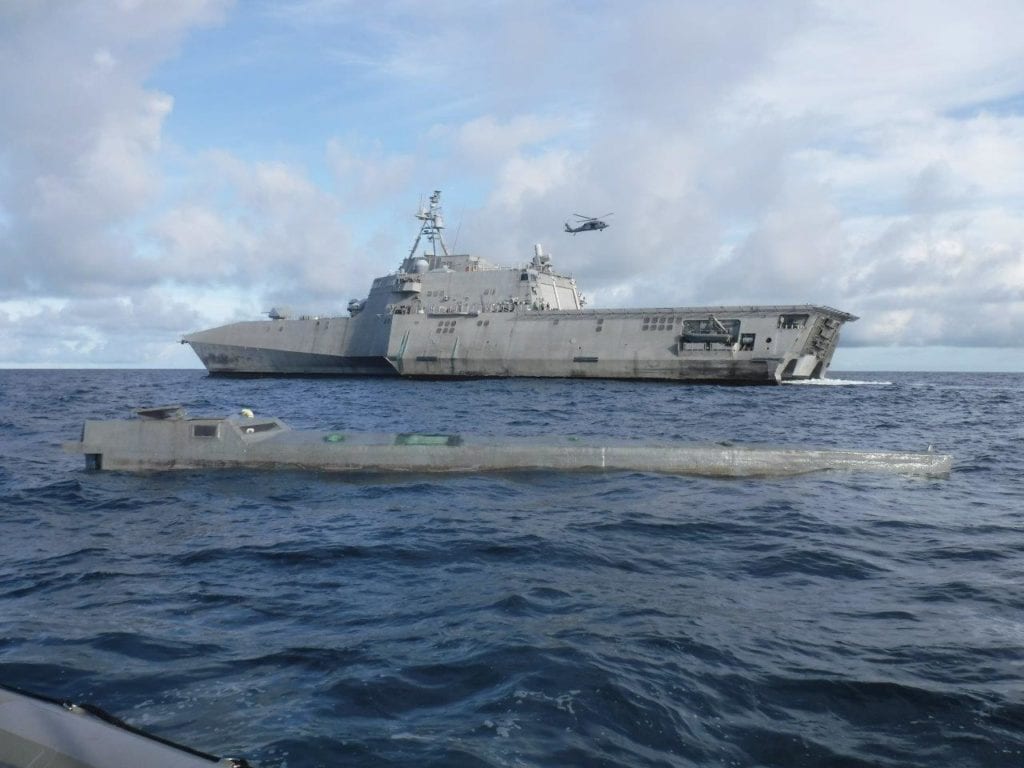
The Independence-variant littoral combat ship USS Gabrielle Giffords (LCS 10) with embarked U.S. Coast Guard Law Enforcement Detachment (LEDET) 407 conducts enhanced counter-narcotics operations, Dec. 5, 2020. Gabrielle Giffords is deployed to the U.S. 4th Fleet area of operations to support Joint Interagency Task Force South’s mission, which includes counter illicit drug trafficking in the Caribbean and Eastern Pacific. U.S. Navy photo.

SAN DIEGO – Coast Guard and Navy personnel offloaded approximately 11,400 pounds of cocaine and 9,000 pounds of marijuana Feb. 1, amounting to more than $211 million from seizures in international waters of the Eastern Pacific Ocean.

The offload is the result of interdictions made by Coast Guard Law Enforcement Detachment 407 (LEDET) personnel, who operated aboard the USS Gabrielle Giffords, and three separate Coast Guard cutter crews between October and December.

“When you are covering a drug-smuggling transit zone the size of the continental United States, every ship makes a huge difference,” said Lt. Jonathan Dietrich.  “The seamless integration between our Law Enforcement Detachment and the crew of the USS Gabrielle Giffords was a major reason why we were successful in interdicting such a large amount of drugs and prevent them from reaching our streets.”

The total amount of drugs offloaded included the following unit and Coast Guard ships:

  • LEDET 407 was responsible for five cases seizing 10,570 pounds of cocaine and 4,100 pounds of marijuana
  • The Seneca (WMEC-906) was responsible for one case seizing 350 pounds of cocaine
  • The Legare (WMEC-912) was responsible for one case seizing 53 pounds of cocaine and 3,400 pounds of marijuana
  • The Spencer (WMEC-905) was responsible for one case seizing 420 pounds of cocaine and 1,450 pounds of marijuana 

“The impressive results of the USS Gabrielle Giffords deployment and drug offload represent more than just a local victory of keeping drugs off our streets,” said Rear Admiral Brian Penoyer. “The Coast Guard and the Navy have worked together for years to keep our waters and shores safe from a number of maritime threats, and we are honored to continue that tradition as we look toward the future.”

The Coast Guard narcotics interdiction efforts are aimed at thwarting transnational criminal organizations, which are fueled by drug trafficking money. Operations like these attack supply networks in Central and South America. The offload highlights the joint impacts that a Coast Guard unit along with the Navy can have, when working together.

On April 1, U.S. Southern Command increased counter-narcotics operations in the Western Hemisphere to disrupt the flow of drugs. Numerous U.S. agencies from the Departments of Defense, Justice, and Homeland Security cooperated in the effort to combat transnational organized crime. The Coast Guard, Navy, Customs and Border Protection, FBI, Drug Enforcement Administration, and Immigration and Customs Enforcement, along with allied and international partner agencies, play a role in counter-drug operations.

The fight against drug cartels in the Eastern Pacific Ocean and the Caribbean Sea requires unity of effort in all phases from detection, monitoring and interdictions, to criminal prosecutions for these interdictions by United States Attorney’s Offices from the Middle District of Florida, the Southern District of Florida, and the Southern District of California. The law enforcement phase of counter-smuggling operations in the Eastern Pacific Ocean is conducted under the authority of the 11th Coast Guard District, headquartered in Alameda. The interdictions, including the actual boardings, are led and conducted by members of the U.S. Coast Guard.

LEDET 407 is part of Tactical Law Enforcement Team-South based in Miami. The Seneca is a 270-foot medium endurance cutter homeported in Boston. The Legare is a 270-foot medium endurance cutter homeported in Portsmouth, Virginia. The Spencer is a 270-foot medium endurance cutter homeported in Boston.


BAE Systems to Sustain Air Traffic Control Systems Under $65.7M Navy Contract

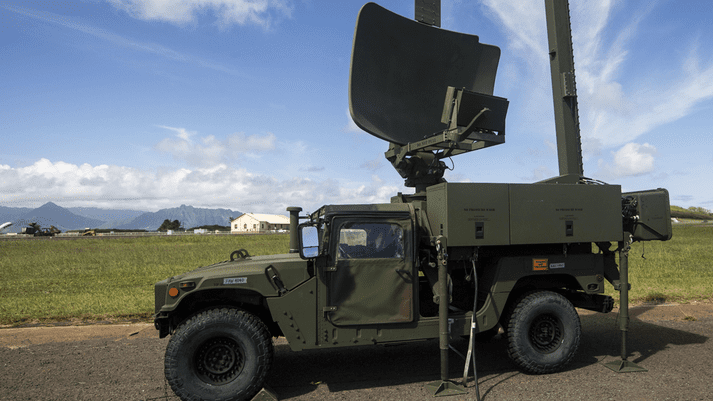
Under the new contract, BAE Systems will provide sustainment and engineering services for air traffic control platforms, similar to the expeditionary ATC radar shown here being carried by a Marine Corps Humvee. U.S. Marine Corps

MCLEAN, Virginia – The U.S. Navy selected BAE Systems for a five-year $65.7 million single-award indefinite delivery, indefinite quantity contract for air traffic control (ATC) platform sustainment and engineering services, the company said in a Feb. 1 release.

BAE Systems will continue to use its engineering, technical, and operational expertise to develop, produce, equip, test, evaluate, sustain, and update key expeditionary ATC aviation systems for the Naval Air Warfare Center Aircraft Division’s Webster Outlying Field.

“With this win, BAE Systems will provide expeditionary forces with the capability to quickly establish an airfield with the radar and communications systems to safely recover and launch aircraft,” said Lisa Hand, vice president and general manager of BAE Systems’ Integrated Defense Solutions business. “We serve as the automation expert and technical coordinator, responsible for development and improvement of real-time ATC computer systems. Our radar technicians deploy around the world to support the warfighter; their work is resulting in quicker turnover to the end user, improved hardware reliability, and more accurate installation and precision in the field.”

This new contract continues BAE Systems’ more than a decade of supporting critical work on key systems, including the Standard Terminal Automation Replacement System (STARS); Air Traffic Navigation, Integration, and Coordination System (ATNAVICS); Airfield Mobile Tactical Air Navigation System (AMTAC); and ATNAVICS Data Link System (ADLS). Under the contract, the company will develop and maintain operational software and supporting test beds, field change programs, and supplies for ATC systems. These systems are integral ATC tools that enhance platform flight safety, especially when end users are operating in new or rough terrain airfields with no existing military base.


Artificial Intelligence, Machine Learning Top Naval Intelligence Technology Needs, Director Says

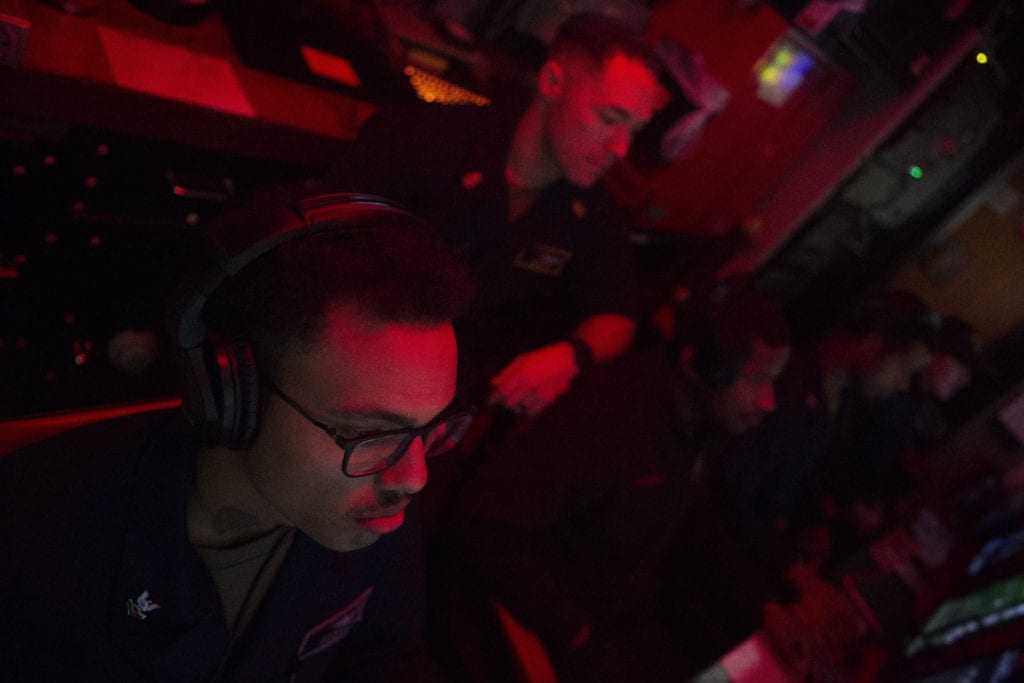
Sailors stand watch in the sonar room of the Los Angeles-class fast-attack submarine USS Chicago (SSN 721) in support of Valiant Shield 2020. Valiant Shield is a U.S. only, biennial field training exercise (FTX) with a focus on integration of joint training in a blue-water environment among U.S. forces. This training enables real-world proficiency in sustaining joint forces through detecting, locating, tracking, and engaging units at sea, in the air, on land and in cyberspace in response to a range of mission areas. U.S. Navy / Mass Communication Specialist 1st Class Derek Harkins

ARLINGTON, Va. — The U.S. Navy will need more help from artificial intelligence systems to answer the  technology challenge posed by vast amounts of data and information available from every domain, the deputy chief of naval operations for information warfare says.

The challenge is with “the amount of data and information that is out there,”  according to Vice Adm. Jeffrey Trussler, who is also director of Naval Intelligence. “We’re well beyond the point where rooms full of analysts” can handle digital information coming from open source, signals and acoustical intelligence, Trussler told a Jan. 27 webinar hosted by the Intelligence and National Security Alliance. “We’re going to have to put machines on that, with the algorithms in place to manage it.

 “Every advancement that exists for AI [artificial intelligence] and ML [machine learning], we need to suck in and learn from,” Trussler said when asked about the top Naval Intelligence technology needs. “I think across the board, AI/ML  is what is top.”

Trussler said there were already “some tremendous AI projects underway” at the acoustics intelligence agency. Of all the domains from seabed to space, only the U.S. Navy deals with intelligence gathering underseas, said Trussler, a submariner for most of his career. “And that is the domain where we still have a dominant margin. But we need to keep pressing and keep learning in that arena.”

He also urged industry to keep pressing the Navy.  “The innovations and ideas from industry are huge. Keep pressing us. Keep knocking on the door. Keep showing us what’s available and what you can do,” he said. However, the Navy isn’t looking for proprietary technology that can’t mesh with existing or future platforms. “We’re going to be more interested in ‘How is this going to link into the systems we have? How is this going to help us advance a collaborative web to close our kill chains?’”

In the future, Trussler said, the Navy Department won’t invest in “proprietary things that we can’t crack open. That aren’t open architecture, that we can link in with the rest of our systems.”


Coast Guard Cutter Spencer Returns After $10M Cocaine, Marijuana Bust

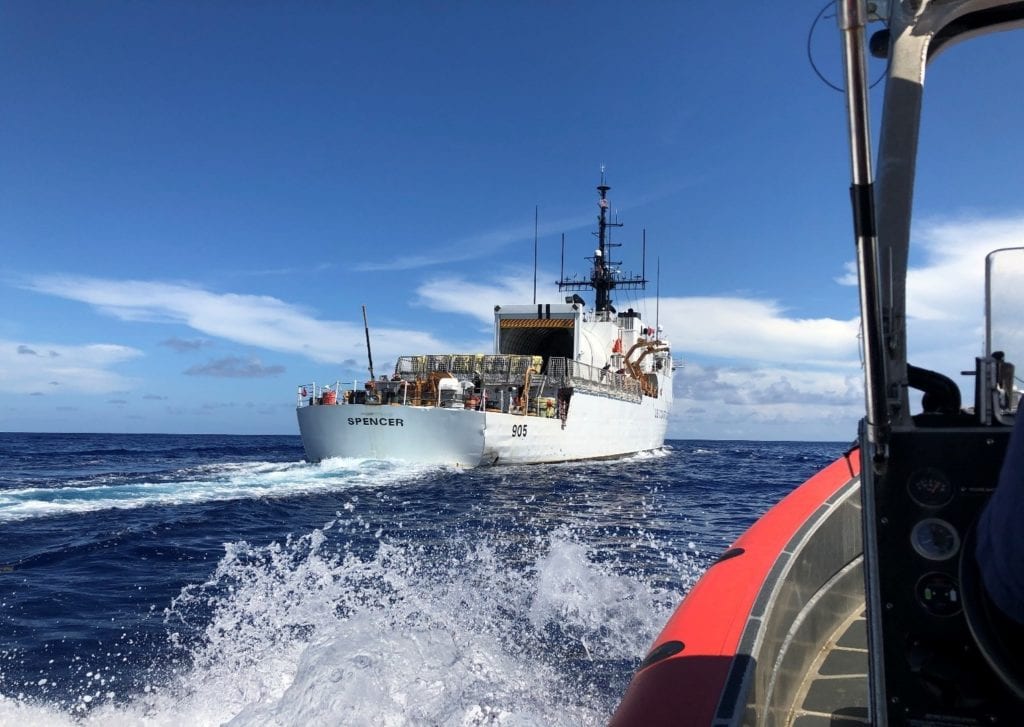
U.S. Coast Guard Cutter Spencer (WMEC 905) underway on patrol in the Eastern Pacific, January 2021. The crew covered over 11,000 miles seizing over $10 million of drugs and assisted in disrupting transnational crime organizations. U.S. Coast Guard

BOSTON — The Coast Guard Cutter Spencer (WMEC 905) crew returned home to Boston, Massachusetts, Jan. 28, after a 59-day patrol, the Coast Guard 1st District said in a release. 

The crew’s seizure of 440 pounds of cocaine and 1,500 pounds of marijuana is valued at over $10 million and assisted in disrupting transnational crime organizations. 

“After conducting operations in the Eastern Pacific, our crew is looking forward to returning home,” said Cmdr. Thomas Rodzewicz, commanding officer. “We provided effective mission critical assets in multiple cases and were able to stop illicit drugs from landing on U.S. shores. As a crew, we came together to enjoy the holidays in a meaningful and memorable way while carrying out our duties. I am extremely proud of the crew’s performance during this challenging patrol.” 

The Coast Guard’s Helicopter Interdiction Tactical Squadron, an advanced aerial interdiction unit, joined the Spencer crew to conduct the counter drug operations. These crews served in support of U.S. operations in partnership with other law enforcement agencies and fellow armed services dedicated to preserving the national security of the United States. 

Since departing Boston in December, The Spencer crew covered over 11,000 miles and made two transits through the Panama Canal. 

Coast Guard Cutter Spencer is a 270-foot medium endurance cutter with a crew of 100 members. 


HMS Queen Elizabeth Assumes Role as Royal Navy’s New Fleet Flagship

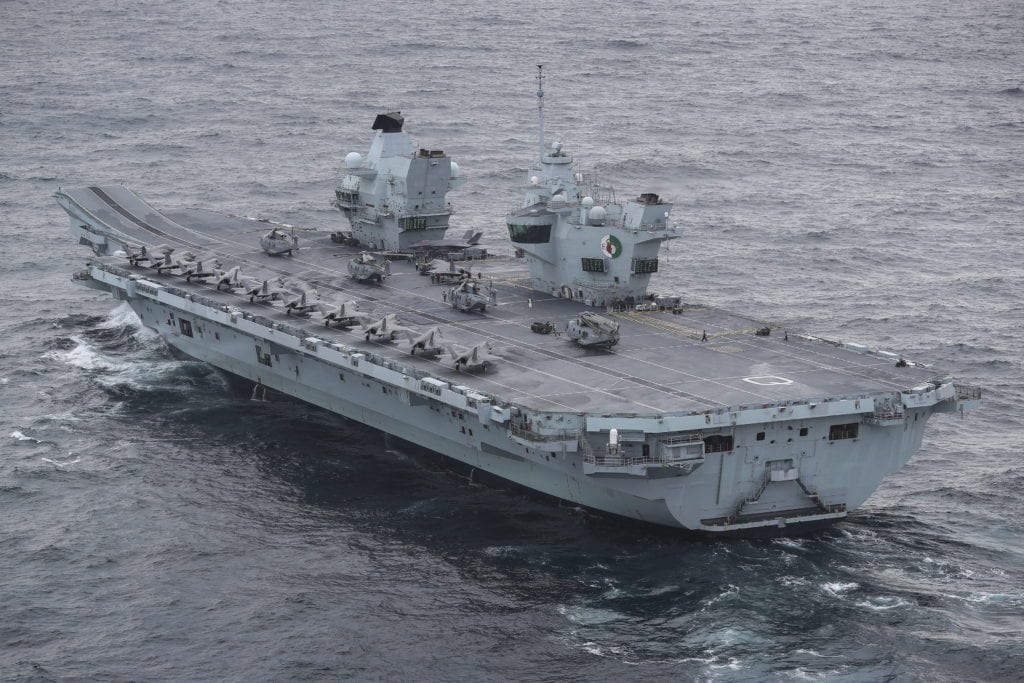
The full U.K. Carrier Strike Group assembled for the first time during Group Exercise 2020 on Oct. 4. Aircraft carrier HMS Queen Elizabeth leads a flotilla of destroyers and frigates from the U.K., U.S. and the Netherlands, together with two Royal Fleet Auxiliaries. It is the most powerful task force assembled by any European Navy in almost 20 years. Royal Navy

LONDON — HMS Queen Elizabeth assumed the role of fleet flagship as the Royal Navy moves closer to deploying the world’s most technologically advanced carrier strike group, the U.K. Ministry of Defence said in a Jan. 29 release. 

Fleet Commander Vice-Admiral Jerry Kyd was received on the aircraft carrier to mark the transfer of the role from HMS Albion, while Royal Navy ships and shore establishments were informed by a signal at 1330. 

The First Sea Lord, Admiral Tony Radakin, said: “The position of fleet flagship is a symbol of HMS Queen Elizabeth’s importance to the nation, not just in restoring our carrier strike capability, but as a rolling statement of British commitment to global security, prosperity and trade. 

“It’s right that we bestow such a historic title now. In the coming months HMS Queen Elizabeth will lead the most ambitious Royal Navy deployment in decades,” Radakin said. She will be a focal point as we look forward to an extraordinary year.” 

It was announced last week that the United Kingdom’s new flagship and Lightning Force of F-35B stealth strike fighters will also be complemented by a detachment of the fifth-generation aircraft from the U.S. Marine Corps, and a U.S. Navy destroyer during her first operational strike group deployment. 

HMS Queen Elizabeth and her strike group will spend time developing collective war-fighting skills when NATO navies gather for exercise Strike Warrior off Scotland during the spring, before departing for the Mediterranean. 

“It is a fantastic privilege for Queen Elizabeth to be made the fleet flagship as we prepare to sail at the heart of U.K.’s very high readiness Carrier Strike Group,” said Capt. Angus Essenhigh, commanding officer of the Queen Elizabeth. “We look forward to doing the nation proud as we deploy on operations for the first time.” 

Last year, Prime Minister Boris Johnson confirmed that HMS Queen Elizabeth will be at the center of a carrier strike group deployment to the Mediterranean, the Indian Ocean and East Asia. She will embark F-35B from 617 Squadron (the “Dambusters”), Royal Navy Merlin helicopters, and be escorted and supported by Royal Navy Type 45 destroyers, Type 23 frigates and support ships of the Royal Fleet Auxiliary.  

Assault ship HMS Albion had been flagship since March 2018, deploying to the Indo-Pacific for 10 months; to the Baltic for major multi-national exercises; and latterly to the Mediterranean leading NATO security patrols and experimental warfare trials. Her sister ship, HMS Bulwark, previously led the Fleet for four years. 

“While it is with some sadness that we hand over the responsibility to HMS Queen Elizabeth, we are proud to be part of the transfer which marks a new era for the Royal Navy and the nation,” said Capt. Simon Kelly, commanding officer of HMS Albion. 


Coast Guard Transfers 2 Suspected Smugglers, $8.5M in Seized Cocaine

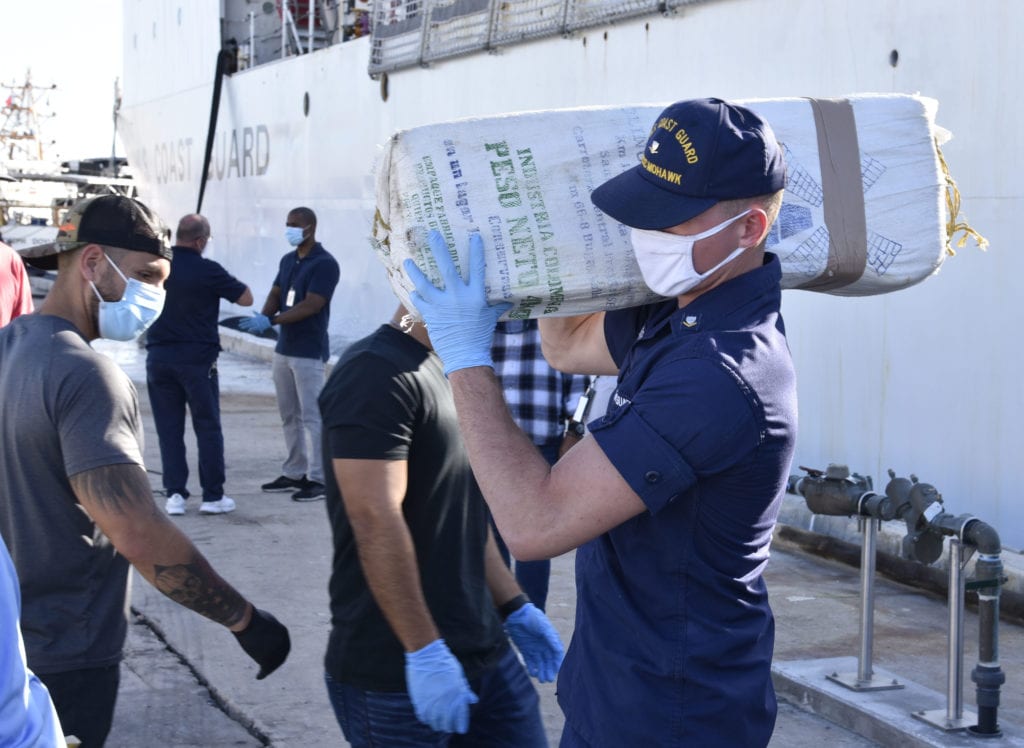
Coast Guard offloads 302 kilograms of cocaine valued at $8.5 million, and transfers custody of two suspected smugglers to Caribbean Corridor Strike Force federal agents in San Juan, Puerto Rico Jan. 28, 2021, following the interdiction of a go-fast vessel in the Caribbean Sea. U.S. Coast Guard

SAN JUAN, Puerto Rico — The Coast Guard Cutters Mohawk and Charles David Jr. transferred custody of two suspected smugglers and $8.5 million in seized cocaine to federal agents at Coast Guard Base San Juan Jan. 28, following the interdiction of a drug smuggling go-fast vessel in the Caribbean Sea, the Coast Guard 7th District said in a Jan. 29 release. 

The interdiction was the result of multi-agency efforts in support of U.S. Southern Command’s enhanced counter-narcotics operations in the Western Hemisphere, the Organized Crime Drug Enforcement Task Force (OCDETF) and High Intensity Drug Trafficking Area (HIDTA) programs, and the Caribbean Corridor Strike Force (CCSF). The United States Attorney’s Office for the District of Puerto Rico is leading the prosecution for this case. 

“This successful interdiction is a reflection of the seamless teamwork and the unwavering resolve between the Coast Guard, our federal law enforcement and Department of Defense partners to protect the nation’s southernmost maritime border against narcotrafficking threats,” said Cmdr. James L. Jarnac, Coast Guard Cutter Mohawk commanding officer.  “The strength of our joint collaboration and partnerships is key to a safer Caribbean Region and disrupting transnational criminal organization activities through the interdiction of drug smuggling vessel’s in the maritime domain.” 

The bust occurred during the afternoon of Jan. 24, 2021, after the aircrew of a maritime patrol aircraft detected a suspicious 25-foot go-fast vessel, approximately 200 nautical miles south of the Dominican Republic. 

The Coast Guard Cutter Mohawk diverted in response to the sighting and interdicted the go-fast vessel with the assistance of the cutter’s small boat. Following the interdiction, the Coast Guard Mohawk’s boarding team located and recovered nine bales of suspected contraband, which weighed approximately 302 kilograms (666 pounds) and tested positive for cocaine. 

The crew of the cutter Mohawk embarked the seized contraband and the two men from the go-fast vessel, who both claimed to be Dominican Republic nationals. The Coast Guard Cutter Charles David Jr. later embarked the two suspected smugglers and a representative sample of the contraband that were disembarked in San Juan, Puerto Rico, where Caribbean Corridor Strike Force federal law enforcement agents received custody. 

Cutter Charles David Jr. is a 154-foot fast response cutter, while the Cutter Mohawk is a 270-foot medium-endurance cutter, both homeported in Key West, Florida.  


Sea Dragon Exercise Tests ASW Skills for Maritime Patrol Aircraft Crews

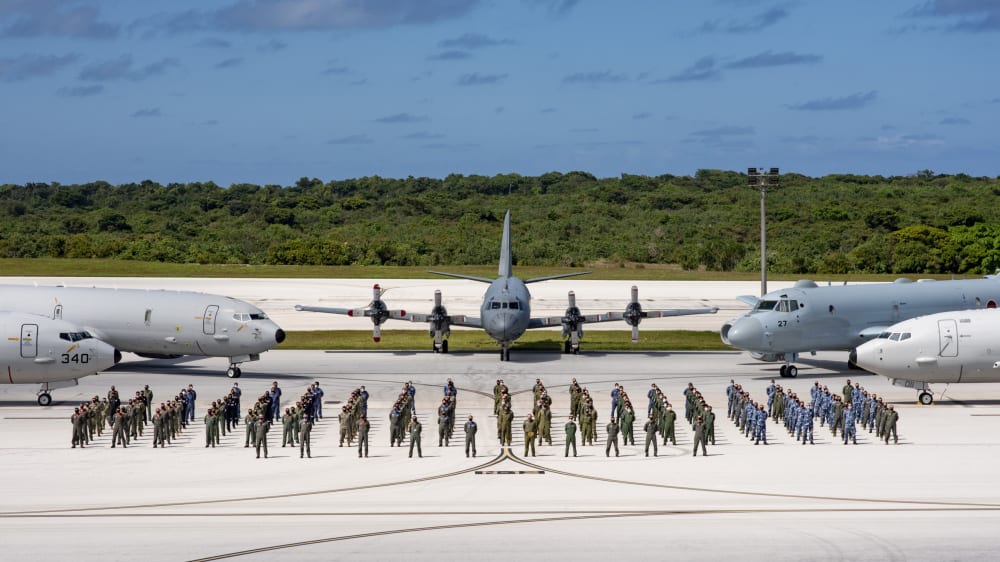
Members of the Royal Australian Air Force, Japan Maritime Self Defense Force, Indian navy and Royal Canadian Air Force, along with Patrol Squadron (VP) 5’s “Mad Foxes” and VP 8’s “Fighting Tigers,” pose for a photo at the conclusion of Exercise Sea Dragon. U.S. Navy / Lt. Cmdr. Kyle Hooker

Maritime Patrol aircraft and crews from five partner nations gathered at Andersen Air Force Base in Guam to participate in Sea Dragon 2021 Anti-Submarine Warfare (ASW) exercise. The exercise wrapped up Jan 27.

The Sea Dragon series of exercises are led by commander, Patrol & Reconnaissance Force, 7th Fleet (CTF-72), based out of Misawa, Japan. They are intended to demonstrate advanced ASW tactics, while at the same time continuing to build on multinational participation with U.S. allies and partners, as well as commitment to the security of the Pacific region.

This year, P-8A Poseidon Maritime patrol and reconnaissance aircraft and crews from Patrol and Reconnaissance Squadrons (VP) 5 and 8 trained together with the counterparts from the Royal Australian Air Force, Japan Maritime Self Defense Force, Indian navy and the Royal Canadian Air Force during the exercise.

The “Mad Foxes” of VP-5 are currently deployed to Kadena, Okinawa, and the “Fighting Tigers” of VP-8 are operating from Misawa, Japan. Both squadrons are based at Naval Air Station Jacksonville, Florida.

The U.S., Australia and India took part in the exercise with Boeing P-8 Poseidon aircraft. Japan flew the Kawasaki P-1, while Canada operated the CP-140 Aurora.

Sea Dragon 2021 centered on ASW training and excellence. The exercise included 250 hours of ground and classroom training and 125 hours of in-flight training ranging from tracking simulated targets to the final problem of finding and tracking Los Angeles-class nuclear submarine. The classroom training sessions helped the aircrews build plans and discuss how to incorporate tactics, capabilities and equipment for their respective nations into the exercise.

At the beginning of the exercise, Lt. Cmdr. Kyle Hooker, officer in charge of the VP-5 detachment, said he was eager for the opportunity to further develop our partnerships with Japan, India, Canada, and Australia during at Sea Dragon 2021.

“The COVID environment will be challenging for all our participants, but I know we will come together to adapt and overcome while executing our goal of anti-submarine warfare interoperability,” he said.

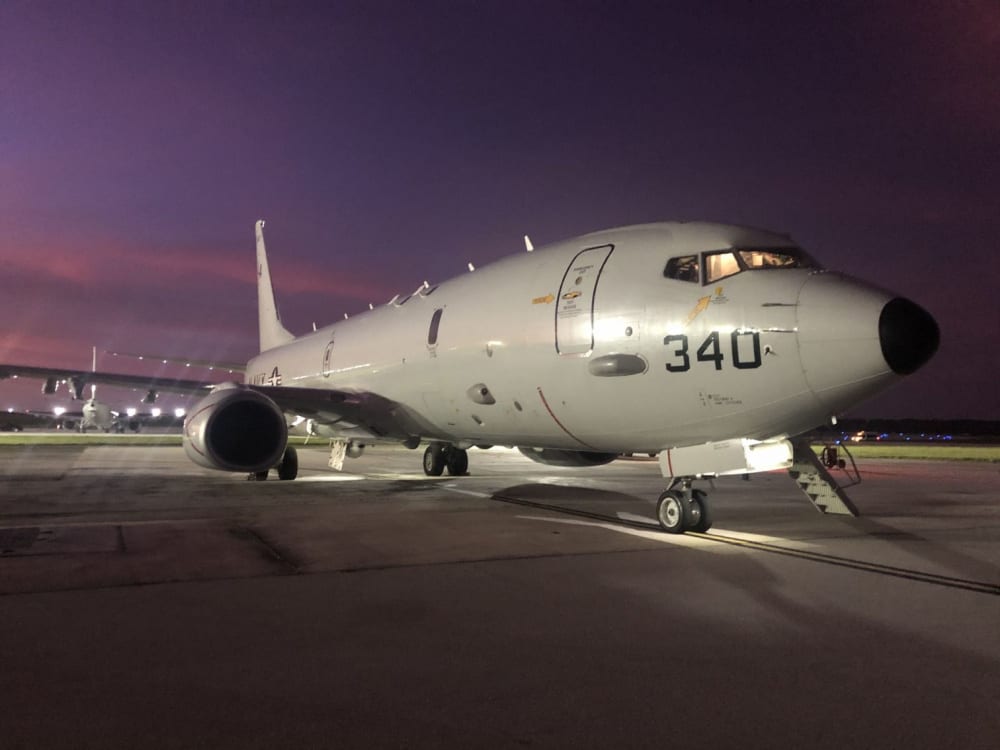
A P-8A Poseidon from Patrol Squadron (VP) 5 is prepared for its first training event of Sea Dragon 21. It involved tracking several Expendable Mobile Anti-Submarine Warfare Training Target’s (EMATT), which simulate the characteristics of a submarine. U.S. Navy / Lt. Cmdr. Kyle Hooker

VP-5 pilot Lt. Reed Arce said his squadron viewed Sea Dragon 2021 as an opportunity for both learning and competition.

“VP-5 was certainly looking forward to the opportunity to flex our ASW muscles and enjoy some friendly competition with our allied partners during Exercise Sea Dragon. We learned so much when comparing tactics between aircrews, and the ability to constantly improve our warfighting skills. We hope to leave Guam with all participants being at their peak performance in prosecuting sub-surface threats anywhere in the world,” he said.

VP-8 pilot Lt. Joseph Moralesvargas  said Sea Dragon 2021 gave his squadron the chance to coordinate and be on station with other crews and other countries.

“The opportunity to speak with other operators and hear their philosophy and insight on ASW has given me new perspective,” he said.  “I can’t think of any other exercise that would give us this chance,” he said.

Sea Dragon culminated with live tracking exercises with the nuclear-powered fast attack submarine, USS Providence (SSN-719) acting as the adversary.

The Sea Dragon events are graded, and the nation with the highest overall score wins the Dragon Belt award. The belt was awarded to the Royal New Zealand Air Force last year.  This year, Royal Canadian Air Force 407 Long Range Patrol Squadron, which operates the CP-140 Aurora, had the highest total point score, and will bring the coveted Dragon Belt home with them to Canadian Forces Base Comox in British Columbia.

The importance of ASW in the Indo-Pacific region cannot be understated, with growing numbers of Chinese, Russian and North Korean submarines. The ability for allies and partners to work together with capable MPA aircraft and crews to successfully conduct ASW is vital to counter this threat.


General Dynamics Receives $43.2M Contract for Columbia/Dreadnought-Class SSBN Fire Control Systems

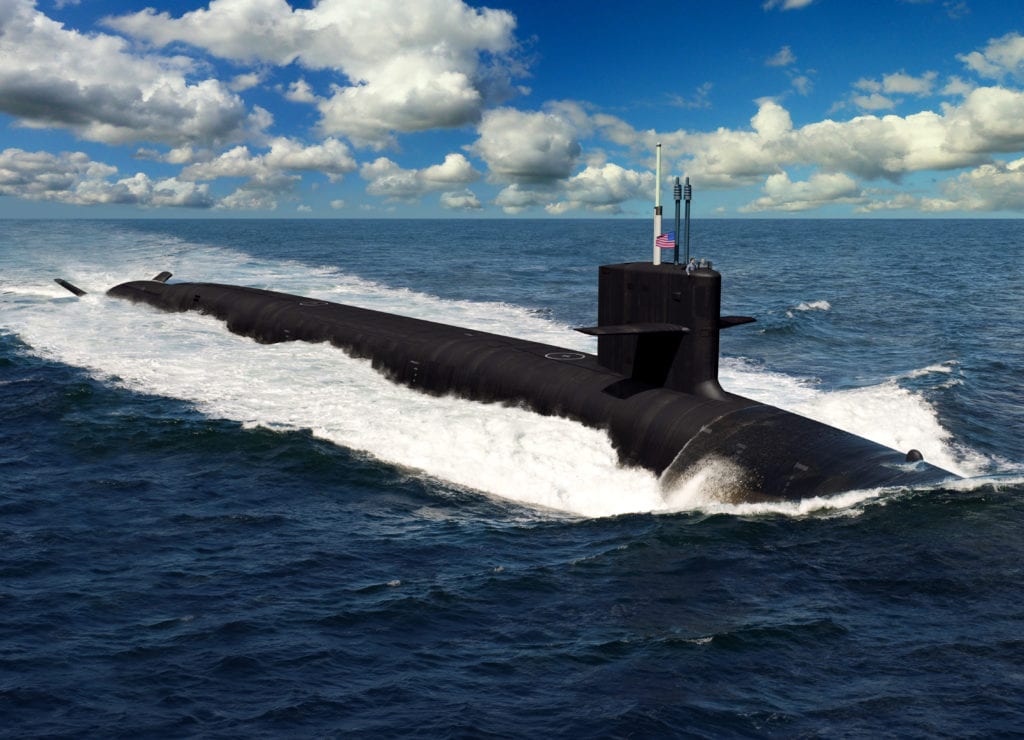
An artist’s rendering of the future Columbia-class ballistic missile submarines. The 12 submarines of the Columbia class are a shipbuilding priority and will replace the Ohio-class submarines reaching maximum extended service life. U.S. Navy

PITTSFIELD, Mass. – The U.S. Navy recently awarded a contract modification to General Dynamics Mission Systems that includes a broad scope of work for the Columbia and Dreadnought ballistic-missile submarine class to support development, production, and installation requirements.

This $43.2 million award is comprised of development, production, installation, and deployed-systems support exclusively for the Columbia/Dreadnaught (CLB/UKD) class of U.S. and U.K. submarine strategic weapons systems and subsystems and coincides with one of the largest manufacturing floor expansions at the Pittsfield, Massachusetts facility.  
 
General Dynamics Mission Systems’ Maritime and Strategic Systems line of business will deliver fire control systems for the U.S. Navy’s first Columbia class submarine (US01) and the first U.S. Columbia class training facility (Kings Bay Trident Training Facility, KB-TTF) as well as installation support and pre-deployment planning for both U.S. and U.K. sites. This contract also includes CLB/UKD design completion scope and continuation of design activities for the first planned refresh of the CLB/UKD fire control system, as well as design support for CLB/UKD planning at the KB-TTF and procurement of the infrastructure material to support the new Trident Training Facility labs. The majority of the work in support of this contract will take place in Pittsfield. 
 
“In November, we celebrated with our Navy partner, 65 years of outstanding support to our nation’s strategic deterrent mission,” said Laura Hooks, vice president of General Dynamics Mission Systems’ Strategic Systems business. “We are entering the next era of development and production for the Navy’s fire control system on the newest fleet of submarines that will extend this deterrent capability for another 65 years.”  


U.S. Coast Guard, Russian Border Guard Patrolled Maritime Boundary Line

Coast Guard Cutter Polar Star crew and a Russian aircraft crew patrolled the Bering Sea maritime boundary line between Russia and the United States in mid-January. The 45-year-old heavy icebreaker is underway for a months-long patrol to support national security objectives throughout Alaskan waters and into the Arctic, including along the Maritime Boundary Line between the United States and Russia. U.S. Coast Guard / Petty Officer 1st Class Cynthia Oldham

JUNEAU, Alaska – The Coast Guard Cutter Polar Star crew and a Russian aircraft crew patrolled the Bering Sea maritime boundary line between Russia and the United States in mid-January, the Coast Guard 17th District said in a Jan. 27 release.  

Following routine coordinated communications between the Russian Border Guard Directorate for the Eastern Arctic District and the Coast Guard Seventeenth District in Juneau, Alaska, the cutter Polar Star crew and a Russian Border Guard AN-26 aircraft crew patrolled a portion of the 1,700-mile maritime boundary line to support mutual agreements. The agreements consist of combined operations including search and rescue missions, contingency operations, routine communications exercises, and operations to counter illegal, unreported, and unregulated fishing.  

The purpose of combined operations and communications exercises are to enforce rules and regulations and protect the sovereign rights and economies of both countries. The routine coordination maintains a strong working relationship and improves joint response capabilities for pollution, law enforcement, and search and rescue cases along our shared maritime border.  

A working relationship at the operational level between the Coast Guard and Russian Border Guard remains critical to ensuring stability in the region. The partnership protects shared interests in fish stocks, safety of life at sea, coordinates environmental responses, and counters illicit activity on the high seas. 

In July 2020, Coast Guard Cutter Munro conducted a similar communications exercise with the Russian Border Guard Vessel Kamchatka in the Bering Strait. 

The Russian Border Guard’s effective enforcement of the maritime boundary line, and direct communication with their fishing industry, significantly reduces foreign fishing vessel incursions of the U.S. exclusive economic zone. 

Since 2018, the Coast Guard has detected only one Russian fishing vessel incursion along the maritime boundary line. The Russian Border Guard immediately conducted an investigation of the incident and issued fines for that incursion. 

“The United States Coast Guard works diligently to maintain a unique cooperative relationship with the Russian Border Guard in an effort to enhance the protection of shared interests in and around the Arctic region. The coordinated communications exercises on the high seas these past weeks with Polar Star demonstrate a recognition of the importance of that relationship,” said Capt. Jason Brennell, chief of enforcement for the Coast Guard’s 17th District.