Naval Surface Force Grapples with Instability in Ship Manning
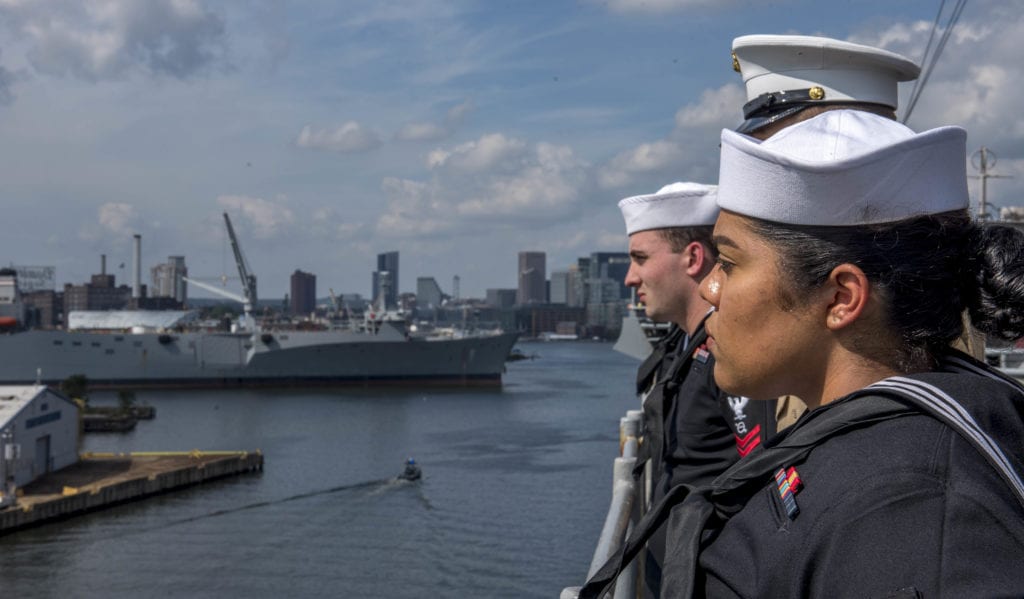
Sailors and Marines man the rails aboard the Harpers Ferry-class dock landing ship USS Oak Hill (LSD 51) during Maryland Fleet Week and Air Show Baltimore in this 2018 photo. U.S. Navy / Mass Communication Specialist 2nd Class Joseph E. Montemarano

ARLINGTON, Va. — The Navy is working hard to solve a persistent manning shortage in its surface fleet, the commander of that force said in an address to the force. 

“We need to man our ships to the right requirement across the OFRP [Optimized Fleet Readiness Plan], not just when they are ready to deploy,” said Vice Adm. Roy Kitchener, commander, Naval Surface Forces, speaking from San Diego in a video shown Jan. 12 during a webinar at the Surface Navy Association convention.  

“We’re making progress with our manning issues, but many challenges remain,” Kitchener said. “We continue to fund more DDG [guided-missile destroyer] billets but it will take time for those Sailors to arrive on the waterfront. Our sea-duty gaps have been reduced to below 11,000 and that reduction is projected to continue to 7,500 by September 2021. But in the last fiscal year, we still resorted to 1,760 temporary personnel assignments to fill the remaining gaps for deployers.  

“That is not a long-time solution,” Kitchener said. “It adds stress on our Sailors, and thereby the force.” 

He pointed out that the manning readiness of a ship “has always been the product of a complex interplay of requirements and funding, inventory and distribution policies, fleet policies and actions, and the frictions between them. Ultimately, this readiness starts with getting the readiness requirement correct. The requirement must consider both in-port and at-sea work, including all of the maintenance you do.”  

He added, “achieving an accurate distribution of manpower is not only important for the short-term ship employment but also to the long-term proficiency and experience of our technicians, operators and maintainers, which we need to better value.” 

Kitchener is implementing an analytics-based project called Surface Manning Experience (SURFMEX), which “will define standard methodology for quantifying and tracking a Sailor’s proficiency and experience as they progress through those career-spanning training continuums.” 

SURFMEX is intended to help assign Sailors “to the right places, first to learn, and then to perform.” 

The project is designed to help distinguish between Sailors who attended a training course years ago and a Sailor who just graduated who look on paper to seem equally prepared for a demanding shipboard billet and to tracking and evaluating their individual fleet experience and proficiency. 

Kitchener identified six ratings that will come under the SURFMEX project: sonar technician, Aegis fire controlman, gas turbine system technician (electrical and mechanical), quartermaster and engineman.   
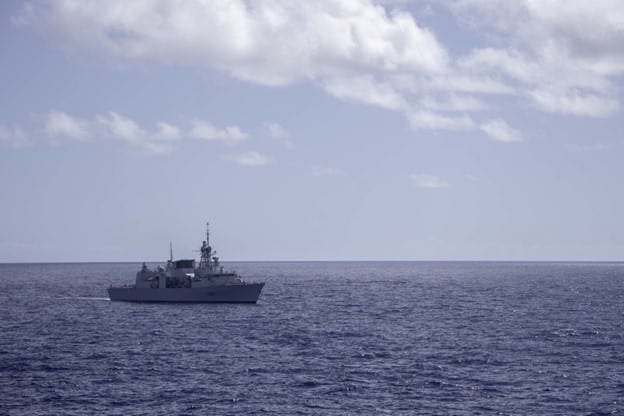


Royal Canadian Navy Welcomes New Commander

The Royal Canadian Navy ship HMCS Winnipeg (FFH 338) transits the Pacific Ocean while participating in a gunnery exercise during Exercise Rim of the Pacific 2020.  U.S. Navy / Mass Communication Specialist 3rd Class Jenna Dobson

OTTAWA – Vice Adm. Craig Baines assumed the duties of commander of the Royal Canadian Navy (CRCN) in a virtual change of command ceremony ceremonies Jan. 12, presided over by Gen. Jonathan Vance, chief of the defense staff (CDS), at National Defence Headquarters.

Baines becomes the 37th CRCN, relieving Vice Adm. Art McDonald, who will be promoted to the rank of admiral and will succeed Vance as the 20th CDS.

Baines is a 33-year veteran of sea-going appointments and staff officer positions, with an initial sea tour aboard HMCS Saguenay (D79) and command of HMCS Winnipeg (FFH 338).  He commanded Canadian Forces Base Esquimalt, Canadian Fleet Atlantic, Maritime Forces Atlantic and Joint Task Force Atlantic, and became the of deputy vice chief of the defense staff in July 2020.

“Change of command ceremonies represent both continuity and change, and it’s a tremendous pleasure to mark the change of command of the Royal Canadian Navy between two great sailors: Vice Admiral Art McDonald and Vice Admiral Craig Baines,” said Minister of Defence Harjit S. Sajjan. “Under Vice Admiral McDonald’s leadership, we have seen the RCN maintain an impressive operational tempo at home and abroad. His focus on people and innovation have positioned the navy for success as it transitions to the future fleet.”

“Through his 33 years of service, Vice Admiral Baines has a proven operational and institutional track record from which to draw upon as he continues to put Canada’s sailors first in all that he does,” Sajjan said. “I am delighted to appoint Vice Admiral Baines to command the Royal Canadian Navy and I know that he will lead by example, put our ethos into practice, and continue to steer the navy towards the objectives of the future fleet.” 

Baines said it was a huge honor to continue to serve with a group of outstanding Canadians who wear a uniform on behalf of their country, often serving in a complex environment far from home.

“We will continue to prioritize support to our sailors, defense team members and their families while managing ongoing cultural change, domestic and international operations, fleet recapitalization, training and readiness, all while innovating throughout our organization to make us the most inclusive, respect-driven navy we can be.”

The Royal Canadian Navy is composed of 28 warships, submarines, and coastal defense vessels, plus many more auxiliary and support vessels, with approximately 8,300 regular force and 3,600 reserve sailors, supported by approximately 3,800 civilian employees.

With its motto of “Ready, Aye, Ready,” the RCN generates combat-capable, multipurpose maritime forces that support Canada’s efforts to participate in security operations anywhere in the world, as part of an integrated Canadian Armed Forces.


Navy: Construction of New Frigate Starts in Early Fiscal 2022

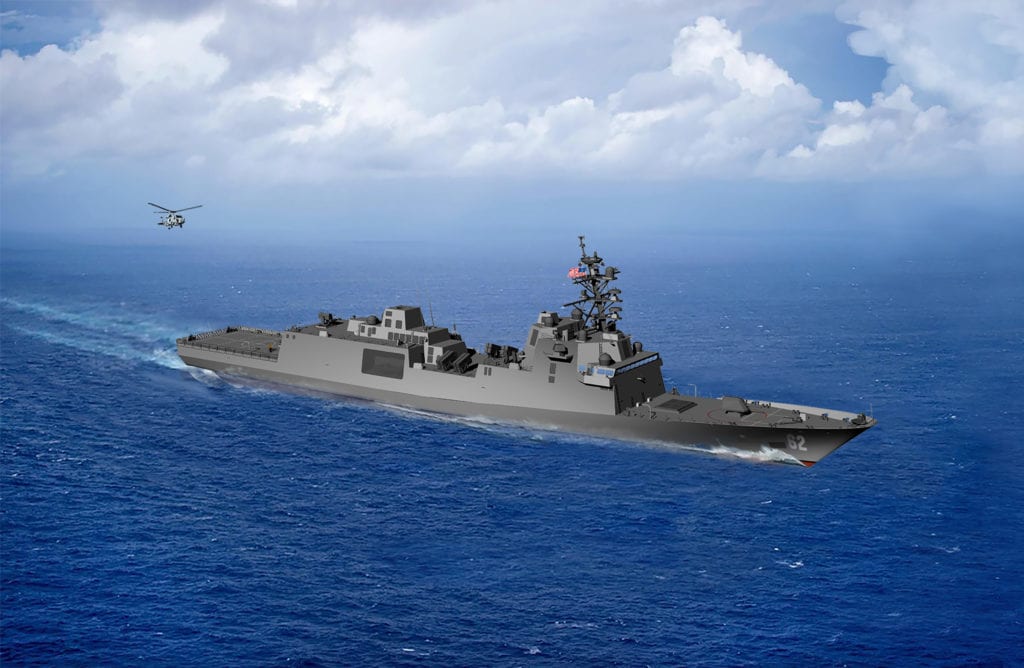
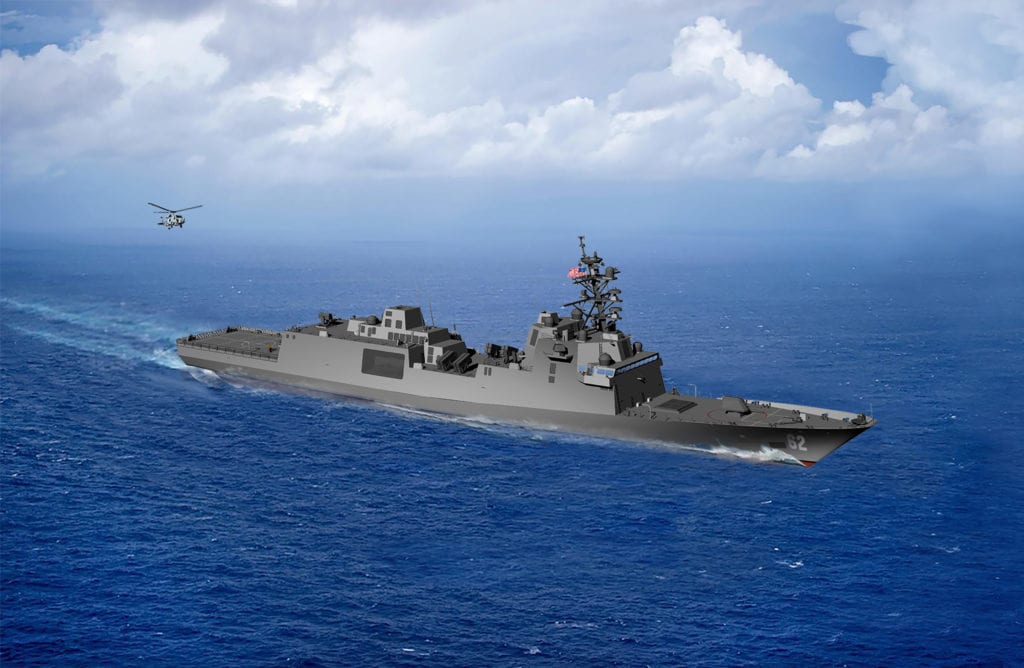
An artist’s rendering of the guided-missile frigate FFG(X). The new small surface combatant will have multi-mission capability to conduct air warfare, anti-submarine warfare, surface warfare, electronic warfare, and information operations. Construction on the lead ship is set to begin in the first quarter of fiscal 2022. U.S. Navy

ARLINGTON, Va. — The Navy plans to start construction of the lead ship of the Constellation-class guided-missile frigate (FFG) during the first quarter of fiscal 2022 (the fall of calendar 2021), a Navy official said. 

Speaking Jan. 12 at a webinar during the Surface Navy Association’s annual convention, Capt. Kevin Smith, the Navy’s program manager for the Constellation frigate, laid out a timeline for the FFG 62 program. The keel-laying of the Constellation is slated for the first quarter of fiscal 2023, and delivery of the ship to the Navy is scheduled for the third quarter of 2026. 

The Navy plans to build 20 Constellation-class FFGs. Under the initial Detailed Design and Construction contract, the first Constellation-class FFG will be built, with options for nine additional hulls. Plans Three are funded one each in fiscal 2020-2022; two each in 2023-2024; three in 2025; and two each in 2026-2030.   

The focus of the FFG 62 program office in 2021, Smith said, is on approval of the ship design; conducting the Critical Design Review and Production Readiness Review; and starting construction of the first ship. 

Smith said the cost of the lead FFG will be $1.28 billion, which includes $795 million for the fixed-price design and construction contract, with the remainder covering the cost of government-furnished equipment and support. The Navy is required by Congress to keep the average cost of each of the nine follow-on ships between $800 million to $950 million in fiscal 2018 dollars. He said the average cost of the next nine FFGs is estimated to be $781 million in 2018 dollars. 

Smith said the Navy is looking at potential need to extend production of the FFG to a second shipyard after the first 10 ships are delivered. With a second shipyard, the cost of a hull could change. He stressed the need to promote competition and affordability for a second order of 10 FFGs.  

A slide presented by Smith gave more detail to the characteristics of the Constellation. It will have a length overall of 496.1 feet, a beam of 64.6 feet, and a draft of 18 feet. Fully loaded displacement will be 7,291 long tons. 

The ship will have personnel accommodations of 200 personnel. The design crew will be 24 officers and 176 enlisted Sailors.  

Weapon systems on the ship will include one Mk110 gun; 32 Mk41 vertical launch system cells; 16 launchers for the Naval Strike Missile, a Mk49 launcher for the Rolling Airframe Missile; the Mk 53 decoy launching system; and the SLQ-32(V)6 electronic counter-measures system. 

Smith the FFG will have space, weight capacity, power and cooling for a future directed energy weapon, but not a railgun. 

Combat systems installed will include the Aegis Baseline 10; SPY-6(V)3 Enterprise Air Search Radar; Mk48 gun weapon system; SQQ-89(V)16 undersea warfare system; and Variable-Depth Sonar System. 

Aviation capability will include one MH-60R Seahawk and a vertical takeoff unmanned aerial vehicle. 

Smith said with the lead ship contract award, the Constellation will have greater than 96% of U.S.-made content in terms of value. 

The program manager said the Constellation will have tubes to launch 16 Naval Strike Missiles.


USS William P. Lawrence Returns from Drug-Busting Deployment

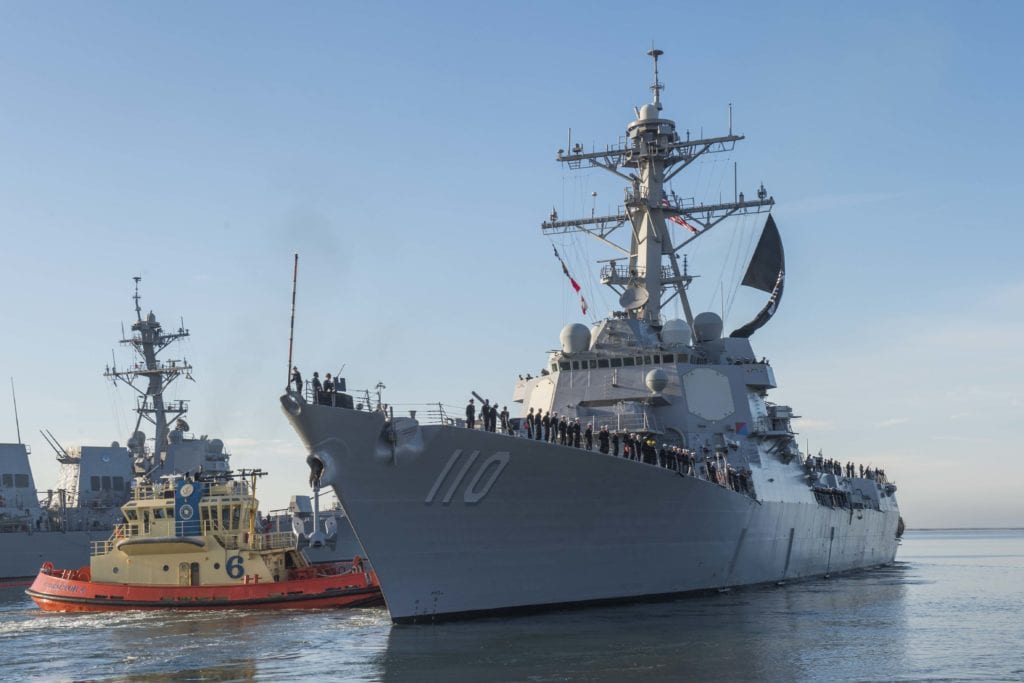
Arleigh Burke-class guided-missile destroyer USS William P. Lawrence (DDG 110) departs San Diego Bay in this 2016 photo. U.S. Navy / Mass Communication Specialist 3rd Class Chelsea Troy Milburn

SAN DIEGO — Arleigh Burke-class guided-missile destroyer USS William P. Lawrence (DDG 110) returned to Joint Base Pearl Harbor, Jan. 11, following a deployment to the U.S. 4th Fleet area of operations, the U.S. Third Fleet Public Affairs said in a release. 

William P. Lawrence, along with Helicopter Maritime Strike Squadron (HSM) 37 Detachment 7, deployed in September to conduct U.S. Southern Command and Joint Interagency Task Force South’s enhanced counter-narcotics operations missions in the Caribbean Sea and Eastern Pacific Ocean. 
 
“I am overcome with pride when I reflect on the accomplishments of the crew while we were deployed,” said Cmdr. Dawn Allen, the commanding officer of William P. Lawrence. “The crew executed a broad spectrum of missions over the past few months with unsurpassed professionalism.” 
 
Along with their embarked U.S. Coast Guard Law Enforcement Detachment 101, William P. Lawrence disrupted approximately 2,921 kilograms of cocaine which has an estimated street value of 204 million dollars. In addition, William P. Lawrence was instrumental in providing hurricane assistance and disaster relief in Honduras, collecting and delivering more than 25,600 pounds of supplies, conducting 19 rescues and two medical evacuations in support of U.S. Southern Command’s Hurricane Iota relief efforts in Central America. 
 
Additionally, William P. Lawrence participated in two passing exercises with the Brazilian training ship BNS Brazil (U 27), an air defense joint exercise with Colombian Air Force Kfir fighter jets and performed freedom of navigation operations off the coast of Venezuela. 
 
William P. Lawrence partnered with U.S. Navy and international warships, the U.S. Coast Guard, the Drug Enforcement Administration, FBI, and Immigration and Customs Enforcement, as well as other allied partners and international agencies, all of which are playing a role in counter-narcotics operations in the area. 


U.S. Merchant Marine Academy Superintendent Receives Third Star

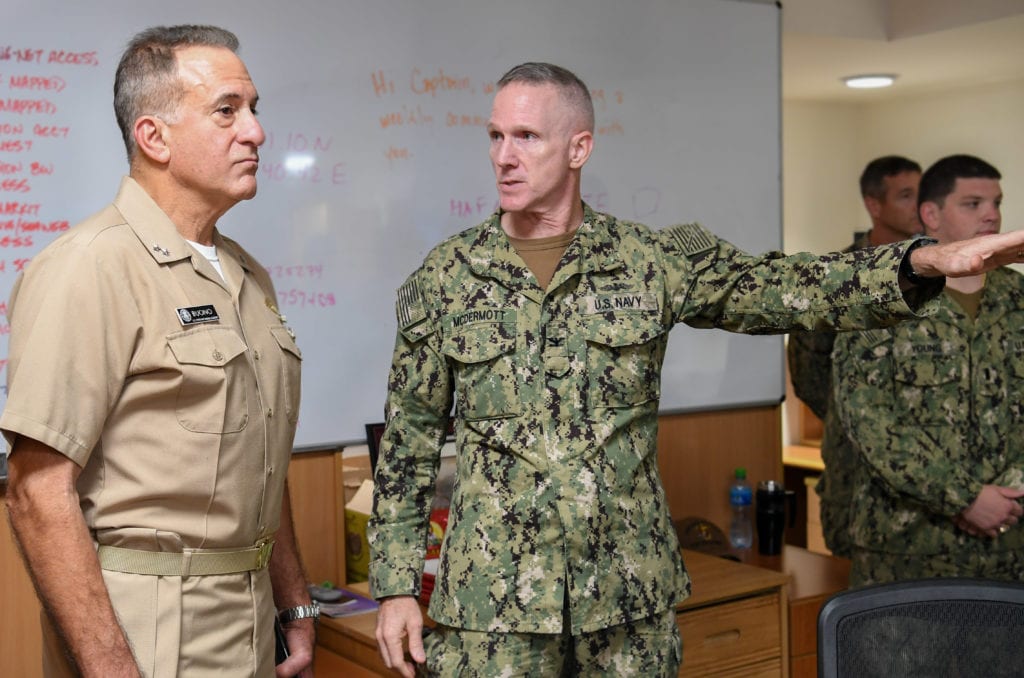
Capt. Charles McDermott, center, gives a tour of the Naval Coordination and Guidance for Shipping (NCAGS) facilities in Bahrain to then -Rear Adm. Jack Buono, Superintendent of the U.S. Merchant Marine Academy, in this 2013 photo. Buono has now been promoted to vice admiral. U.S. Navy / Mass Communication Specialist 3rd Class Dawson Roth

WASHINGTON – Now-former Secretary of Transportation Elaine L. Chao promoted U.S. Merchant Marine Academy (USMMA) Superintendent Rear Adm. Jack Buono to vice admiral in the U.S. Maritime Service (USMS) at a small ceremony Jan. 11 in the Department of Transportation headquarters, Washington, D.C., the Maritime Administration said in a release.  

“Vice Admiral Buono deserves this third star – he’s been a great leader, especially during COVID-19, and has put USMMA at Kings Point on a solid foundation to develop our country’s future maritime leaders,” Chao said on the same day she resigned from her post. 

Buono will continue to lead at USMMA, where he has been stationed since joining the academy in November 2018. The promotion makes Buono the first USMMA graduate to serve in this position at this rank.  

Prior to his appointment as superintendent, Buono had nearly 40 years of maritime experience in the private sector. He retired from his last private sector employer in 2016. 

“This well-deserved promotion is an indication of the trust and confidence we have in Vice Adm. Buono’s leadership in the critical role of preparing our Nation’s next generation of leaders – afloat and ashore,” said former Maritime Administrator Mark H. Buzby, who has also just resigned. “His steady hand on the wheel continues to steer Kings Point fair.” 

Buono is a Master Mariner and a 1978 graduate of the academy. During his tenure as superintendent, he has been responsible for implementing the academy’s strategic plan, which includes updating institutional culture, governance, communications, infrastructure, academics and athletics. More recently, Buono has guided the Regiment of Midshipmen and the academy community through the global health crisis while maintaining a strong focus on accomplishing the mission of the academy. His inspirational leadership has rallied the entire academy family – students, faculty, staff, parents, and alumni. 

“I am truly humbled and honored by this promotion, and I look forward to continuing to develop the future of this national treasure we call USMMA,” Buono said. “We will continue to press forward with our mission, developing leaders of exemplary character committed to serving the national security, marine transportation and economic needs of this great nation.” 

Other recent and significant accomplishments at USMMA under the guidance of Buono include the first semi-virtual graduation ceremony for the Class of 2020, the pivot to distance learning during the COVID-19 public health emergency, maintaining at-sea training experience for midshipmen aboard U.S. Flag merchant ships and two state maritime academy training vessels, and the milestone achievement of sending the Regiment of Midshipmen home for the recent holiday break COVID-free. 


BAE Systems to Support U.S. AV-8B Harrier II Fleet to 2029

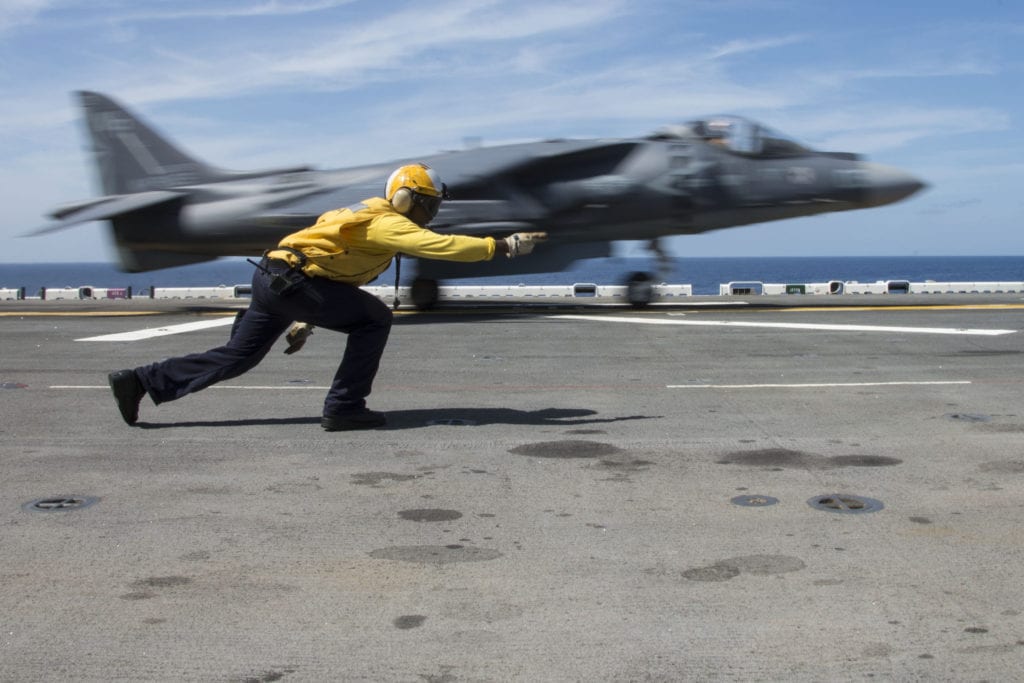
Aviation Boatswain’s Mate (Handling) 2nd Class Jarrel Bullock launches an AV-8B II Harrier off the flight deck of the amphibious assault ship USS Wasp (LHD 1) in this 2013 photo. U.S. Navy / Mass Communication Specialist Seaman Michael T. Forbes II

LONDON — BAE Systems and Vertex Aerospace have signed a nine-year agreement to enhance availability of the U.S. Marine Corps’ AV-8B Harrier II fleet, the company said in a Jan. 12 release.  

The U.S. Department of the Navy awarded Vertex Aerospace LLC the $123 million contracted maintenance, modification, aircrew and related services (CMMARS) task order in July 2020 to provide aircraft maintenance and contractor logistics support services for the U.S. Marine Corps’ AV-8B Harrier fleet.   

Vertex Aerospace selected BAE Systems as a subcontractor for the new logistics support contract, which will ensure increased efficiency of maintenance operations for the Harrier fleet using predictive maintenance techniques and smart stock optimization tools. Together, BAE Systems and Vertex Aerospace will support the crucial training and combat operations conducted from U.S. Navy’s aircraft carriers, amphibious assault ships, and forward operating bases.  

This contract builds on BAE Systems’ existing role in maintaining the AV-8B Harrier’s reaction control system and providing engineering and technical support. Engineers from BAE Systems will work alongside Vertex and the U.S. Marine Corps at stations in Cherry Point, North Carolina; Yuma, Arizona; and Madison, Mississippi. They will be supported by a specialist team in the U.K. with a proven pedigree of delivering maintenance and support contracts for the Royal Air Force.  

“The Harrier is one of the most iconic military aircraft ever created, with its British designed short take-off and vertical landing technology,” said Tom Fillingham, senior vice president – U.S. Programs, BAE Systems Air. “Our expertise with the aircraft goes back 40 years and this new contract with Vertex Aerospace ensures we can continue to apply our expertise to support the U.S. Marine Corps in their crucial operations.”  

Dave Nagy, director of flight solutions, BAE Systems Inc. Intelligence & Security, said, “We’re proud to support our customer’s mission through the AV-8B Harrier program. We are ensuring these aircraft maintain availability until the F-35 replaces the AV-8B. Working together with Vertex as a trusted partner on various U.S. Marine Corps programs, we are demonstrating our capabilities in aircraft modernization, countermeasure system upgrades, and integration activities.”   

“Extending our partnership with BAE Systems to support our U.S. Marine Corps’ important AV-8B pilot training mission just made sense,” said John “Ed” Boyington, CEO and president, Vertex Aerospace. With a combined 100 plus years of aerospace and defense experience, we understand the challenges warfighters face and remain keenly committed to improving aircraft readiness while maximizing efficiencies.” 


CNO: First Few New Frigates to Have Single Crews

An artist’s rendering of the guided-missile frigate FFG(X). The new small surface combatant will have multi-mission capability to conduct air warfare, anti-submarine warfare, surface warfare, electronic warfare, and information operations. U.S. Navy

ARLINGTON, Va. — The chief of naval operations (CNO) said the new first few Constellation guided-missile frigate (FFG 62) will have single crews, a plan that will be in place while the Navy assesses its crew concept. The lessons learned during the littoral combat ship (LCS) program and its Blue/Gold crew concept will be used to inform the crew concept for the frigate. 

“I’m going to move very deliberately and slowly in the crewing concept,” said CNO Adm. Michael Gilday, speaking Jan. 11 during a Surface Navy Association convention webinar. “I’m heading down the line of a single crew for that ship, at least for the first few ships. We’ve got to get that right. This is the Navy’s ‘Space-X.’”  

“When we started building [the] frigate, we looked a lot at LCS, for example, the way we train on LCS, a really good model we’re going to leverage for FFG 62,” said Vice Adm. Roy Kitchener, commander, Naval Surface Forces, speaking to reporters in a Jan. 8 teleconference. “We did look at what we did on LCS, the Blue/Gold concept and how we’re going to fit them [the ships] out, and we think that is probably the way to get the most presence as we usually do.”  

“The crew on a frigate will be larger, so there’s kind of inherently more capability in that crew,” said Rear Adm. Paul Schlise, director of Surface Warfare in the Office of the Chief of Naval Operations, also speaking at the teleconference. “It’s not a minimally manned platform as LCS was, so any margin for having a few extra people around was largely taken out of the LCS in our attempts to make that crew as minimally manned as possible.”  

Schlise said the new frigate’s crew “will support being able to do more multi-mission sorts of things, whereas the LCS is more a single-mission, one-mission-at-a-time platform. And there’s some more ability for the crew to do its own maintenance. Planned maintenance will be done much more so by the ship’s force crew on a frigate, on the ‘Connie’ class, than on LCS.” 

Schlise said the LCS Blue/Gold crew concept is informing the FFG 62 crew concept.  

“There’s some ability to potentially deploy the ships for longer with a rotational crew model, and we are still learning about how to do that and what that right rotation is. So, it’s a little bit pre-decisional still with Connie,” he said. “At least the first few hulls — and I’m not going to give you a number because we haven’t decided yet — we will probably single-crew the first few hulls because there’s a lot of test and evaluation to go through with a new platform like that, and wringing out the new systems, going through all the testing required to bring a new platform fully into this fleet, to get it to IOC [Initial Operational Capability] and FOC [Full Operational Capability]. If we do modify that crewing model farther down the road, that is something that’s under consideration, and we’re looking to of course give the best [availability for operations] to the fleet commander that we can with the platforms.” 

The first new frigate, Constellation, is planned for IOC in 2026.  


HII Completes Assembly Building for Navy’s Orca XLUUV Hulls

Hampton Mayor Donnie Tuck, Virginia Governor Ralph Northam and HII Executive Vice President and President, HII Technical Solutions, Andy Green break ground on HII’s Unmanned Systems Center of Excellence in this September, 2020 photo. The first phase of the center is now complete with the construction of the first of two planned buildings. Huntington Ingalls Industries

NEWPORT NEWS, Va. — Huntington Ingalls Industries has completed the first phase of its Unmanned Systems Center of Excellence with the construction of a 22,000-square-foot facility, the company said in a Jan. 11 release. 

The first of two planned buildings on the 20-acre campus in Hampton, Virginia will be used to assemble hull structures for Boeing’s Orca Extra Large Unmanned Undersea Vehicle (XLUUV) program for the U.S. Navy. 

“We are thrilled to reach this critical milestone with the development of our Center of Excellence campus,” said Andy Green, executive vice president of HII and president of HII’s Technical Solutions division. “Opening this initial facility immediately expands our unmanned systems capability and helps support the increasing needs of our customers who defend our national security.” 

Construction began in September 2020, following a ground-breaking event with special guests, including Gov. Ralph Northam and other state and local government officials. 

Structural development of the main facility, a 135,000-square-foot building, is scheduled to be complete by the end of 2021. The purpose-built, state-of-the-art facility will be used for unmanned systems prototyping, production and testing. 

“HII has made significant investments in the unmanned systems industry during the last year, including this Center of Excellence,” said Duane Fotheringham, president of Technical Solutions’ Unmanned Systems business group. “This facility solidifies HII’s commitment to advancing development of unmanned systems for our current and future customers.” 

HII partnered with the Virginia Economic Development Partnership, the city of Hampton and the Hampton Roads Alliance to secure the project. More than 250 high-quality jobs will be created to support unmanned systems design and production at the facility. Employees began working in the first building on Dec. 28, 2020. 


Coast Guard Captures Alleged Murderer; Transfers Custody to U.S. Marshals

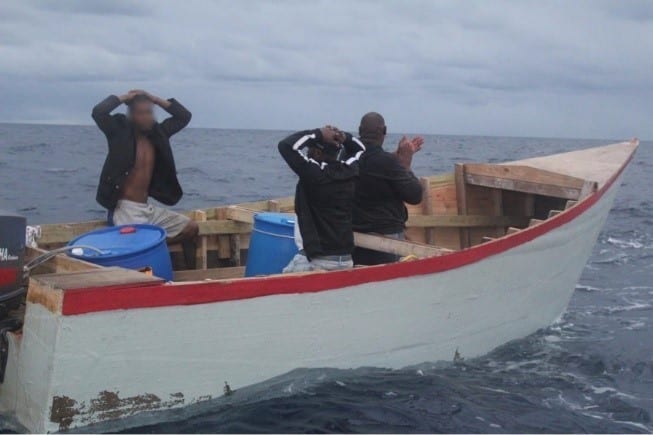
The crew of the Coast Guard Cutter Heriberto Hernandez interdicts a makeshift boat with three Dominican Republic nationals in the Mona Passage Jan. 5, 2021. One of the men was a fugitive with a standing warrant for an alleged murder who was transferred to the custody of U.S. Marshals agents in Mayaguez, Puerto Rico Jan. 7. U.S. Coast Guard photo

SAN JUAN, Puerto Rico – The crew of the Coast Guard Cutter Heriberto Hernandez transferred custody of a man wanted for an alleged murder to the U.S. Marshals Jan. 7 in Mayaguez, Puerto Rico, following the interdiction of a makeshift vessel in Mona Passage waters near Puerto Rico. 

Gustavo Guerrero-Reyes, 37, was arrested on an outstanding Puerto Rico state warrant, following his apprehension while traveling aboard a makeshift boat with two other men, whom all claimed to be Dominican Republic Nationals.  

The interdiction is the result of ongoing Caribbean Border Interagency Group multiagency efforts in their common goal of securing the borders of Puerto Rico against illegal threats. 

“This case was complex and the crew of the cutter Heriberto Hernandez did an outstanding job interdicting this voyage and working with our partners from U.S. Customs and Border Protection (CBP) and the U.S. Marshals, which led to the apprehension of a wanted fugitive with a standing warrant for murder,” said Cmdr. Beau Powers, Sector San Juan chief of response. “This case is a testament to the professionalism of all interdicting agencies in securing and defending the United States’ southeastern border.” 

Coast Guard watchstanders in Sector San Juan received a call Jan. 5 from a CBP Air and Marine Operations (AMO) agent, who reported the crew of an AMO maritime patrol aircraft detected a suspect vessel approximately 37 nautical miles north of Desecheo Island, Puerto Rico. Coast Guard watchstanders diverted the cutter Heriberto Hernandez to assess the situation.  

Once on scene, the cutter’s over the horizon small boat launched and approached the suspect vessel. The Coast Guard boat crew identified the 22-foot white colored makeshift vessel was of wooden construction, unseaworthy, and had no markings or indication of nationality.  The passengers onboard were also unable to provide a registration for the vessel. 

The crew of the Heriberto Hernandez embarked the three men for safety of life at sea concerns and conducted biometrics processing, which revealed one of the men wanted in connection to a murder allegedly committed in March 2020. 

The cutter Heriberto Hernandez rendezvoused with a Dominican Republic navy patrol boat Jan. 6 just off the Dominican Republic and transferred the two other passengers of the makeshift vessel for their return to the Dominican Republic. 

Cutter Heriberto Hernandez is a 154-foot fast response cutter homeported in Miami and San Juan, Puerto Rico. 


CNO: Divest Aegis Ashore Sites to Ground Forces

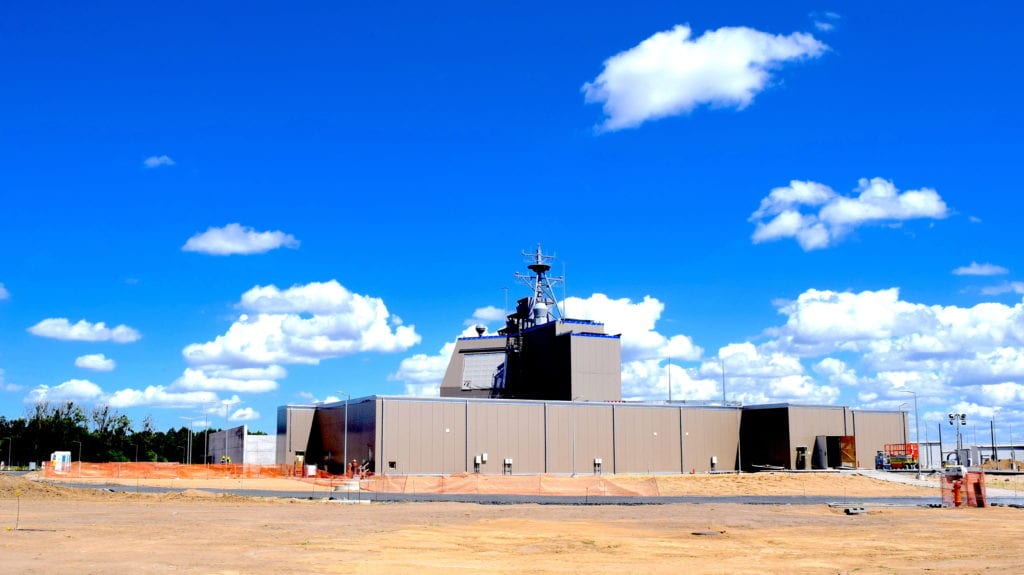
The new Naval Support Facility in Redzikowo, Poland, home to the Aegis Ashore Ballistic Missile Defense System. Pictured: the Aegis Ashore “Deckhouse” command and control center. U.S. Navy / Lt. Amy Forsythe

ARLINGTON, Va. — The chief of naval operations has proposed the U.S. Navy divest its Aegis Ashore ballistic-missile defense (BMD) sites to another service in order to focus on its core missions. 

In the Jan. 11 release of the Navigation Plan for the service, CNO Adm. Michael Gilday wrote of the need to divest capabilities to afford more lethality and sharpen focus. 

“To remain ahead of our competitors, we will divest ourselves of legacy capabilities that no longer bring sufficient lethality to the fight,” Gilday wrote in the document. “This includes divestment of experimental Littoral Combat Ship hulls, legacy Cruisers, and older Dock Landing Ships. It also includes divesting non-core Navy missions like Aegis Ashore. Transferring shore-based ballistic missile defense sites to ground forces enables Sailors to focus on their core missions at sea and frees up resources to increase our lethality.” 

Gilday also spoke of the need of the Navy to divest the Aegis Ashore sites during his Jan. 11 address to the Surface Navy Association convention webinar, without adding more detail.  

The Navy has built and operates two Aegis Ashore sites in Europe, one in Romania and the other in Poland. The sites include an Aegis Combat System and missile launchers that can fire Standard SM-3 missiles. The two sites, part of the European Defense Initiative to shield Europe from missile threats from such countries as Iran, are augmented by BMD patrols in the Mediterranean Sea by Arleigh Burke-class guided-missile ships based in Rota, Spain. 

Plans of Japan to base two Aegis Ashore sites in Japan to defend against missile threats from such nations as North Korea were canceled in 2020, ostensibly because of concerns that missile booster stages would fall on populated areas. Japan also operates guided-missile destroyers equipped with the Aegis Combat System and SM-3 missiles. 

In June 2018, then-CNO Adm. John Richardson advocated for the Navy to divest the BMD role in its cruisers and destroyers patrolling in the Sea of Japan to Aegis Ashore sites in Japan, saying the ships would be better used in more dynamic roles and the demands of geographically restricted patrols took a toll on ship maintenance and crew readiness. 

In 2020, Adm. Philip Davidson, commander, Indo Pacific Command, listed his top acquisition priority as being the installation of Aegis Ashore in Guam to defend the island and its facilities from ballistic missile launched from North Korea. 

“My No. 1 priority, and the most important action we can take to readily and most fully implement the National Defense Strategy, as a first step, is a 360-degree persistent integrated air defense capability of what I call Homeland Defense System Guam,” Davidson said.  

Davidson advocates deploying the Baseline 10 Aegis Ashore missile defense system to Guam to supplement the Terminal High-Altitude Area Defense, or THAAD, system already in place on the island.   

Gilday was not specific to which service — “ground forces’’ — the Aegis Ashore sites should be transferred, but the U.S. Army is the most likely candidate because it provides BMD with its Patriot and THAAD missiles.