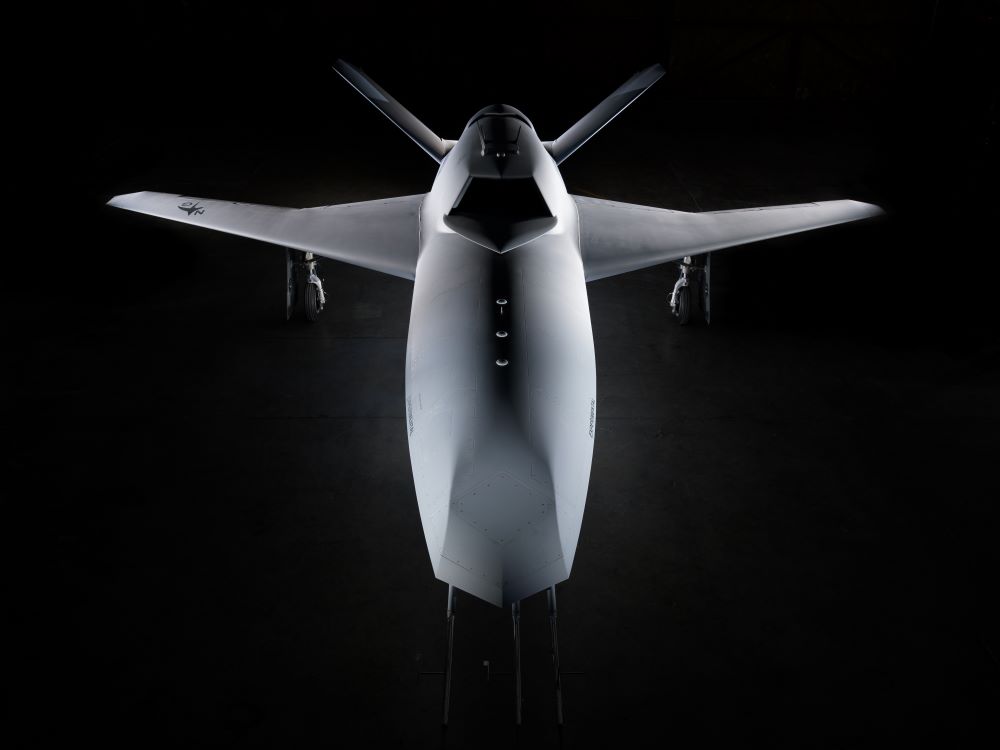
Northrop Grumman has unveiled ‘Project Talon’: the Autonomous Wingman. (Photo Credit: Northrop Grumman)
MOJAVE, Calif. – Dec. 4, 2025 – Northrop Grumman (NYSE: NOC) unveiled Project Talon, an autonomous aircraft built to fly alongside crewed fighters. As the latest addition to the company’s elite autonomous portfolio, Project Talon represents a paradigm shift in air dominance as an adaptive, collaborative teammate for combat missions.
Project Talon combines greater mission versatility with the most advanced modular manufacturing techniques. This disruptive approach shortens timelines, emphasizing speed and simplicity.
Project Talon advances collaboration between crewed and uncrewed aircraft, acting as a force multiplier to enhance lethality, adaptability and mission effectiveness.
Project Talon expands previous boundaries of collaborative aircraft technology to give U.S. and international customers the ability to project power in dynamic threat environments.
Northrop Grumman has more than 500,000 autonomous flight test hours across seven decades of experience in autonomy. Along with the release of Beacon earlier this year, Northrop Grumman continues to demonstrate it is advancing autonomy with speed and decisive action.
Details on Project Talon:
Project Talon was designed, built and on track to fly in under 24 months.
The Northrop Grumman autonomous testbed ecosystem, Beacon, accelerated Project Talon, testing its avionics software in real-world environments.
Project Talon builds on Northrop Grumman’s seven decades of advanced, battle-tested autonomous systems across every domain.
Saildrone Completes Pioneering Mapping Mission of Cayman Islands’ EEZ
The Cayman Islands is the first country in the world to have its exclusive economic zone mapped using autonomous systems, unlocking opportunities to expand its Blue Economy.
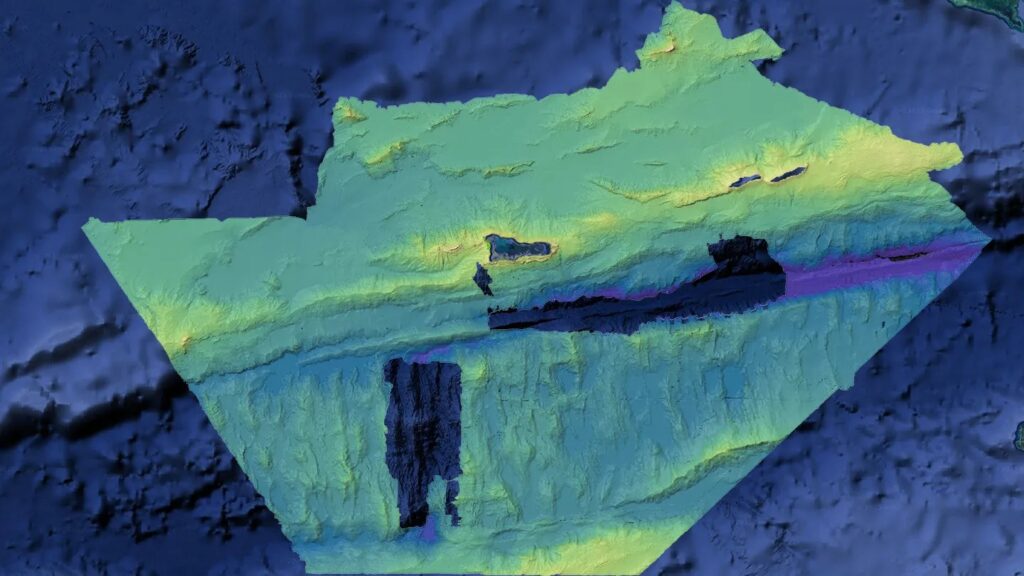
Saildrone, the global leader in autonomous deep water mapping solutions, has completed its mission to map the exclusive economic zone (EEZ) of the Cayman Islands, using a Saildrone Surveyor uncrewed surface vehicle (USV). Over the course of approximately 300 mission days, Saildrone surveyed approximately 90,000 square kilometers of seabed, in depths ranging from 20 meters to 7,000 meters, executing over 900 sound-velocity profile casts to ensure accurate bathymetric data. One of the priorities of the mission was to survey four fishing banks—60 Mile Bank, Lawfords Bank, Pickle Bank, and 12 Mile Bank—which serve as crucial hotspots of biodiversity supporting fisheries, tourism, and recreation, and are an indicator of the health of the Cayman Islands’ marine ecosystem.
The mission was philanthropically funded by the London & Amsterdam Trust Company Limited, a Cayman-based organization that wants to leave a lasting legacy to the Cayman Islands.
Prior to the Saildrone survey, the Cayman Islands had limited data available of its EEZ; the extent to which the Cayman EEZ had been surveyed with modern multibeam sonar technology was only 20,000 sq km of seafloor concentrated around the deep water of the Cayman Trench.
For small island nations such as the Cayman Islands, ocean mapping unlocks critical opportunities in the Blue Economy: A high-resolution bathymetric map of a country’s EEZ is a prerequisite for exploring and managing natural resources in waters extending up to 200 nautical miles from its shores.
With the newly acquired seabed data, the Cayman Government will be better positioned to support:
enhanced maritime safety, navigation, and charting
sustainable fisheries
offshore energy planning
responsible seabed mining and marine mineral exploration
conservation of vulnerable marine ecosystems and habitat management.
All raw bathymetric, backscatter, and ocean-profile data will now be handed over to the UK Hydrographic Office (UKHO), which will process data under its role as the Primary Charting Authority for the Cayman Islands, before the final data sets are formally delivered to the Cayman Government. The UKHO intends to update its nautical chart portfolio of the Cayman Islands by incorporating the collected data. Additionally, a low-resolution dataset will also be provided to Seabed 2030 to support its goal of mapping the entire global seabed by 2030.
During the mission, Saildrone faced numerous operational challenges, including unprecedented sargassum blooms and severe weather threats, which exacerbated the operational difficulties of delivering high-resolution seabed mapping in the open ocean. However, these challenges also presented important opportunities to develop new techniques and tools for overcoming them. Saildrone responded with new approaches to clearing the sound velocity profiler (SVP) and enhanced remote diagnostics to detect biofouling early. Operating safely and consistently during severe weather helped validate the Surveyor’s proven capability to remain on survey up to sea state seven.
“This mission is a testament to the power of Saildrone vehicles in delivering ocean mapping at a scale and resolution that was previously prohibitively expensive for small island nations. Delivering mission-critical operations in sargassum-filled, hurricane-exposed waters demonstrates the resilience of Saildrone’s unmanned mapping services and the prospects it holds for nations worldwide,” said Saildrone VP Ocean Mapping, Brian Connon.
Following the success of this mission, Saildrone is looking forward to opportunities to map the EEZs of additional Caribbean nations.
U.S. Launches One-Way-Attack Drone Force in the Middle East
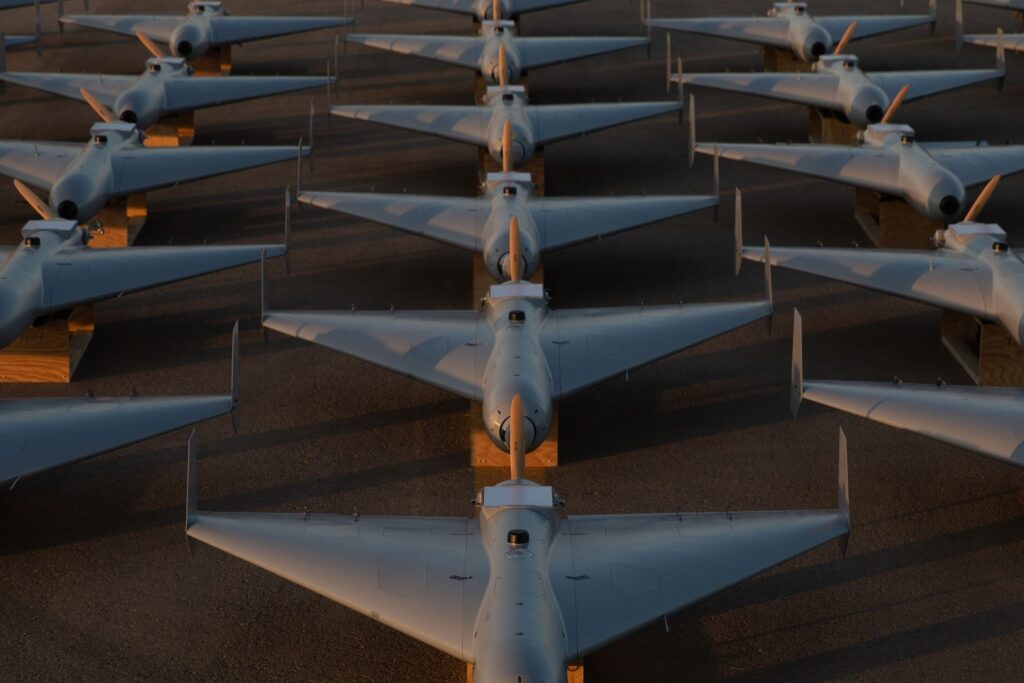
U.S. CENTRAL COMMAND AREA OF RESPONSIBILITY (Nov. 23, 2025) Low-cost Unmanned Combat Attack System (LUCAS) drones are positioned on the tarmac at a base in the U.S. Central Command (CENTCOM) operating area, Nov. 23. The LUCAS platforms are part of a one-way attack drone squadron CENTCOM recently deployed to the Middle East to strengthen regional security and deterrence. (Courtesy Photo)
TAMPA, Fla. – On Dec. 3, U.S. Central Command (CENTCOM) announced a new task force for the U.S. military’s first one-way-attack drone squadron based in the Middle East.
CENTCOM launched Task Force Scorpion Strike (TFSS) four months after Secretary of War Pete Hegseth directed acceleration of the acquisition and fielding of affordable drone technology. TFSS is designed to quickly deliver low cost and effective drone capabilities into the hands of warfighters.
The new task force has already formed a squadron of Low-cost Unmanned Combat Attack System (LUCAS) drones currently based in the Middle East.
LUCAS drones deployed by CENTCOM have an extensive range and are designed to operate autonomously. They can be launched with different mechanisms to include catapults, rocket-assisted takeoff, and mobile ground and vehicle systems.
“This new task force sets the conditions for using innovation as a deterrent,” said Adm. Brad Cooper, CENTCOM commander. “Equipping our skilled warfighters faster with cutting-edge drone capabilities showcases U.S. military innovation and strength, which deters bad actors.”
In September, CENTCOM launched the Rapid Employment Joint Task Force (REJTF) led by its chief technology officer to fast-track processes for outfitting deployed forces with emerging capabilities.
The joint task force is coordinating innovation efforts among Service components in three focus areas: capability, software, and tech diplomacy.
TFSS’s efforts to build the one-way-attack drone squadron are led by personnel from Special Operations Command Central and align with REJTF’s capability focus area.
Recruit Training Command Graduates Final Class of FY 2025
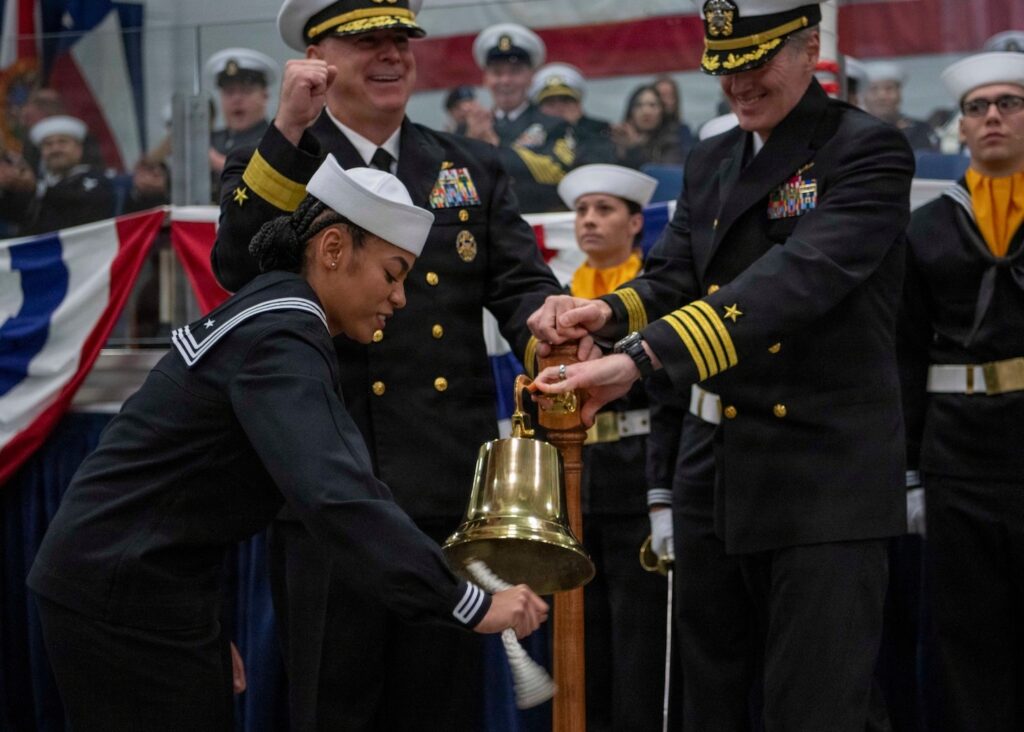
(Nov. 20, 2025) Rear Adm. Matthew Pottenburgh, commander, Naval Service Training Command (center), Capt. Kenneth Froberg, commanding officer, Recruit Training Command (RTC) (right) and Navy Club of the United States Military Excellence Award winner Seaman Yazmine Gaines ring a ceremonial bell during Recruit Training Command’s Pass-In-Review in Midway Ceremonial Drill Hall November, 20, 2025. (U.S. Navy photo by Mass Communication Specialist 2nd Class Stuart Posada)
From U.S. Navy Recruit Training Command, Dec. 5, 2025
NAVAL STATION GREAT LAKES, Ill – The final training group of Sailors who arrived at U.S. Navy Recruit Training Command (RTC) during the Navy’s record-breaking year for recruiting, training and retaining Sailors, graduated from basic military training, commonly known as “boot camp,” during a ceremony at Naval Station Great Lakes, Dec. 4, 2025.
With the graduation of Training Group 52, more than 42,000 Sailors completed initial training during Fiscal Year 2025 (FY25), marking the highest production year for RTC in the past decade—an increase of 10,000 Sailors over last fiscal year.
Today, more than 46,000 Sailors are enrolled in courses throughout the Navy’s accession pipeline to increase mastery of their craft before joining the fleet in defense of the nation. This level of force development is the highest in 20 years, sustaining a battle-ready force that is built to fight and win at sea. Every month, more and more of these Sailors report to commands around the globe.
“Future Sailors arrive at RTC, leaving home for the first time, taking that first critical step into the world seeking adventure,” said Capt. Ken Froberg, commanding officer, Recruit Training Command. “As these men and women mature through boot camp, they realize they are capable of so much more by embracing our professional values of honor, courage and commitment. It really is amazing week-to-week to see these new Sailors graduate and embark on their own journeys with our Navy, unified by a strong warrior ethos. I know the watch is in good hands!”
This milestone coincides with U.S. Navy Recruiting Command surpassing its FY25 recruiting goal for active component Sailors, beating its active duty, enlisted goal by nearly 3,500 future Sailors.
Recruit Division Commanders (RDC) are responsible for training new recruits during boot camp.
“Being an RDC has been one of the most rewarding experiences of my career,” said Master-at-Arms First Class Selena Barragan. “From the first day of training to Pass-In-Review, it’s a privilege to watch recruits grow through discipline, teamwork, and resilience. Seeing that growth firsthand—watching civilians become Sailors who carry themselves with confidence and integrity—is what makes this role so meaningful. Every division I train reminds me why this work matters and why preparing them for the Fleet is both an honor and a responsibility.”
FY25 also saw continued innovations to Navy boot camp, including the further development of the Future Sailor Prep Course (FSPC) and the optimization of training from 10 weeks to 9 weeks.
The FSPC is designed to physically and mentally prepare recruits before starting boot camp, reducing attrition and increasing career opportunities for Sailors after graduation.
To celebrate this achievement in production, commander, Naval Service Training Command, Rear Adm. Matthew Pottenburgh and Training Group 50 Top Sailor, Seaman Yazmine Gaines, rang the ship’s bell – a Navy tradition used to mark important occasions – at a recent RTC graduation.
“RTC is the foundry where Recruits are forged into battle-ready Sailors,” said Pottenburgh. “Here in Great Lakes, our success is measured by the quality of the Sailor who leaves boot camp, the ‘Quarterdeck of the Navy’, following graduation as total Sailors – fit to fight and ready to win tonight, tomorrow, and well into the future.”
The mission of RTC, the Navy’s only boot camp, is to transform civilians into smartly disciplined, physically fit, basically trained Sailors who are ready for follow-on training and service to the fleet, while instilling in them the highest standards of honor, courage, and commitment.
Navy Accepts Delivery of Final Freedom-Variant LCS, USS Cleveland
Release From Naval Sea Systems Command
Cleveland is the 16th and final ship of its class, marking the completion of the Freedom-variant littoral combat ship (LCS) construction phases – a sustained acquisition effort involving Navy personnel, industry partners, and program management teams for over two decades.
“The delivery of USS Cleveland, our final Freedom-variant LCS, symbolizes the U.S. Navy’s unwavering vigilance and a steadfast commitment to protecting national interest and ensuring global stability,” said Jay Iungerich, acting deputy program manager of the LCS Program Office (PMS 501).
Following commissioning in Cleveland, Ohio in early 2026, LCS 31 will be homeported in Mayport, Florida. She will support forward presence, maritime security, sea control, and deterrence in key operational theaters.
“With the final Freedom-variant LCS now delivered, we celebrate the successful outcome of years of innovation and commitment,” said Melissa Kirkendall, Program Executive Officer, Unmanned and Small Combatants (PEO USC). “This highly capable and lethal warship is ready to assert maritime dominance and protect global waters with unparalleled precision and power.”
LCS 31 honors the city of Cleveland, Ohio. She will be the fourth ship to bear the name. The lineage began with the Denver-class protected cruiser, USS Cleveland (C-19), later reclassified as CL-21, commissioned in 1903. She served prominently as flagship of the Atlantic Fleet. During World War I, she diligently escorted convoys and transported troops before her decommissioning in 1929.
The second USS Cleveland (CL-55), a Cleveland-class light cruiser, entered service in 1942, leaving her mark on history through extensive action in World War II’s Pacific theater. Her participation spanned numerous campaigns, including Guadalcanal, Bougainville, the Philippines, Iwo Jima, and Okinawa. CL-55 was decommissioned in 1947.
The third namesake, USS Cleveland (LPD-9), an Austin-class amphibious transport dock, was commissioned in 1976 and served a distinguished 30-year career. LPD-9 was a familiar presence in deployments and exercises around the world, notably contributing to Operation Desert Shield/Storm and Operation Iraqi Freedom. She was decommissioned in 2011.
Now, LCS 31 carries the legacy forward, embodying Cleveland’s spirit of service.
LCS is a fast, agile, mission-focused warship designed to operate in near-shore environments to counter 21st-century threats. It is a class of small surface combatants armed with capabilities to defeat challenges in the world’s littorals. LCS can operate independently or in high-threat scenarios as part of a networked battle force that includes larger, multi-mission surface combatants such as cruisers and destroyers.
PEO USC designs, develops, builds, maintains, and modernizes the Navy’s unmanned maritime systems; mine warfare systems; special warfare systems; expeditionary warfare systems; and small surface combatants. For more news from Program Executive Office, Unmanned and Small Combatants, visit: https://www.navsea.navy.mil/Media/News/
U.S., Bahrain Open New Bilateral Combined Command Post for Air Defense
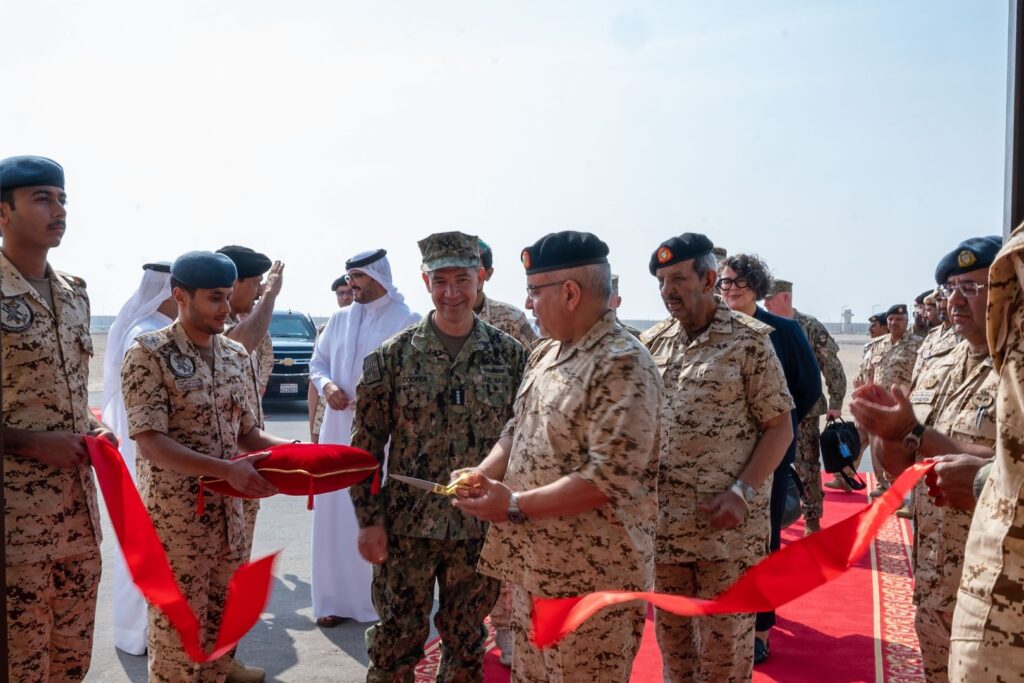
MANAMA, Bahrain (Dec. 1, 2025) His Royal Highness Prince Salman bin Hamad Al-Khalifa, Crown Prince, Deputy Supreme Commander and Prime Minister of Bahrain, cuts a ribbon with U.S. Navy Adm. Brad Cooper, commander of U.S. Central Command, commemorating the opening of the Combined Command Post at Ras Al Bar Camp. (U.S. Navy photo by MC2 Lindsay Lair)
Release From U.S. Central Command
TAMPA, Fla. – Officials from U.S Central Command (CENTCOM) and the Kingdom of Bahrain opened a new bilateral Combined Command Post for air defense during a ribbon-cutting ceremony in Bahrain, Dec. 1.
Adm. Brad Cooper, CENTCOM commander, joined His Royal Highness the Crown Prince, Deputy Supreme Commander of the Armed Forces, and Prime Minister Salman bin Hamad Al Khalifa opened the facility at Ras Al Bar Camp, underscoring the longstanding strategic defense partnership between the two countries.
“Bahrain has been an essential partner in regional security for decades,” said Cooper. “The new Combined Command Post marks a significant step forward in enhancing the regional air defense architecture.”
The new facility will be staffed by forces from the United States and Bahrain and serve as a hub for integrated air defense planning, coordination, and operations. This is CENTCOM’s second bilateral air defense command post in the region.
As a major non-NATO ally, Bahrain hosts the headquarters for the U.S. Navy’s 5th Fleet and the U.S.-led Combined Maritime Forces, which consists of 47 nations.
Dozens of Federal Agencies Initiate Counter-UAS Collaboration
Credit: Navy Petty Officer 1st Class Alexander Kubitza, DOW
Over 180 experts from the War Department and other agencies in the federal government met yesterday for a summit to begin a planned three-year effort to deliver counter-small unmanned aircraft system capabilities to warfighters and keep the skies over America safe from dangerous drones.
In August, Secretary of War Pete Hegseth launched the Joint Interagency Task Force 401. Just two weeks ago, senior leaders from the department and partner agencies, including Secretary of the Army Dan Driscoll, met at the White House to discuss how to best leverage the new task force and defend the homeland.
“My priorities for transformation and acquisition reform include improving mobility and affordability and integrating capabilities into warfighter formations,” Hegseth wrote in the August memo, which directed Driscoll to stand up the task force. ” must focus on speed over process by … establishing JIATF 401 with expanded authorities to execute capability development and delivery timelines that outpace the threat.”
Launching the task force, which Hegseth said will maintain operational capabilities for 36 months, is fully in line with the president’s direction to reestablish air sovereignty over the U.S.
” must enhance its capabilities to protect personnel, equipment and facilities at home and abroad,” Hegseth said.
Representatives from the War Department, Department of Homeland Security, FBI, Transportation Department, Federal Aviation Administration and other agencies — about 50 total — met for the first time at the Mark Center in Alexandria, Virginia, as part of an introductory summit for task force partners.
“This was an opportunity to bring together all of the services, all of our interagency partners that have shared interests and equities with countering small UAS threats, because no one agency can solve this on their own,” said Army Brig. Gen. Matt Ross, joint task force commander. “What we’re really trying to do is expand the community of interest into a community of action and make sure we’re taking tangible steps to defeat the UAS threat we face on a daily basis.”
The threat from small UAS is growing, Ross told task force members.
“Unmanned systems are a defining threat for our time, and I say that because they’re prolific, they’re evolving quickly, and they’re no longer confined to combat,” he said. “The of drones is putting exquisite surveillance and precision strike capability into the hands of individuals and small groups that used to be reserved for our state adversaries.”
Ross emphasized the task force’s three lines of effort to defeat the counter-small UAS threats: defending the homeland, supporting warfighter lethality and joint force training.
In the short term, according to Ross, homeland defense will focus on the area around Washington; the southern border; and supporting the FIFA World Cup event in June 2026, which is a national special security event.
U.S. Northern Command and Joint Task Force Southern Border personnel have reported some 3,000 drone incursions over the border in the past year and have seen over 60,000 drones just south of the border looking into the U.S., according to Ross.
Ross affirmed his belief that addressing threats from drones at the border isn’t about a hardware solution; it involves communications and data sharing.
“We need a common air picture that includes drones,” he said. “In some cases, we need cross-domain solutions that will allow us to see data that’s picked up on a secret radar and an unclassed sensor. We need to proliferate active and passive sensors that provide air situational awareness along the southern border.”
That kind of integration is what JIATF 401 is all about, and it’s what the task force is expected to bring to bear on the small UAS issue, according to Ross.
In the National Capital Region, the task force will monitor how sensors from various agencies are able to track threats as they move through the sky, how that information can be passed to decision-makers and how those with the ability to take those threats out of the sky can be given the authority to do so.
“We’re not there yet, but we’re making progress,” Ross said.
Because the 2026 World Cup is a national special security event, it is a priority. One focus JIATF 401 has during the World Cup is to ensure security personnel have access through the Defense Logistics Agency to purchase counter-UAS capabilities that have been rigorously tested by the War Department.
Keeping the drone threat at bay and protecting the U.S. homeland — including people and infrastructure — will take a whole-of-government approach, Ross emphasized.
“It’s important that this is a joint and interagency effort because nobody can solve this problem alone,” Ross said. ” is a whole-of-government effort to be able to protect our critical infrastructure against the threat of unmanned systems. We’ve got to partner closely with our local law enforcement and other federal, state, local, tribal and territorial law enforcement to be able to counter this threat, see it before it starts to manifest and then to defeat it before an attack is successful.”
Daniel Tamburello, the undersecretary of science and technology for the Department of Homeland Security, acknowledged that working together across the federal government will be crucial to mission success.
Both Northcom and DHS are responsible for protecting the homeland, including from drones.
“There’s a lot of overlap in those missions,” Tamburello said. “Jointness and interagency cooperation is actually extremely essential with this.”
The threat from drones will only continue to grow.
“The unmanned aerial system threat is one that has become prolific and widespread, and it’s only going to get bigger and more complicated as more people adopt these systems and learn how to use them,” Tamburello said. “They’ve become , they’ve become crowd sourced, ubiquitous and available pretty much anywhere. Any bad actor who wants to do something has a chance to do it, and we have to stop them.”
The goals for the task force, Tamburello said, include coordinating with every U.S. agency that deals with the threat posed by counter-UAS to enable interoperability and open communication.
“That is really going to be the best value for the taxpayer to make sure that we’re acquiring not only the best systems, but we’re not wasting money in the process,” he said.
Micheal Torphy, unit chief of the FBI’s UAS and counter-UAS programs within their Critical Incident Response Group, attended the summit. He said the task force’s interagency focus will empower the FBI.
“We’re exceptionally excited about this initiative, and we do believe it will enhance our ability to work with our partners to disrupt threats,” he said.
One of the things the FBI is bringing to the table is the National Counter-UAS Training Center, which recently opened in Huntsville, Alabama.
“Its purpose is to train state, local, tribal and territorial law enforcement officers on counter-UAS, getting them ready for the World Cup, America 250 and ultimately the Olympics and other events,” he said.
Torphy also said he thinks the interoperability inside the task force is going to make it easier for the FBI to work hand in hand with other partners to contribute to the mission of keeping the skies over America safe.
“The way this has been rolled out has been extraordinary,” he said. “Gen. Ross and his team have been fantastic in getting us involved very, very early. We’re really excited about the future.”
NORFOLK, Va. — Adm. Karl Thomas assumed command of U.S. Fleet Forces Command (USFFC) during a ceremony aboard the Nimitz-class aircraft carrier USS Harry S. Truman (CVN 75) at Naval Station Norfolk, Dec. 1.
Chief of Naval Operations Adm. Daryl Caudle presided over the ceremony.
“Admiral Thomas brings exceptional leadership experience and strategic vision to U.S. Fleet Forces Command at a critical time for our Navy,” said Caudle. “His distinguished career spanning information warfare, intelligence operations, and fleet leadership makes him uniquely qualified to lead our forces in maintaining maritime superiority and readiness. I have complete confidence in his ability to guide Fleet Forces Command as we navigate an increasingly complex global security environment and ensure our sailors are trained, equipped, and ready to defend our nation’s interests worldwide.”
Also attending the ceremony was Gen. Gregory M. Guillot, commander of U.S. Northern Command, who served as a guest speaker.
“The readiness of United States Naval Forces – Northern Command is critical to the defense of our homeland, and their support to southern border efforts has been tremendous” said Guillot. “Admiral Thomas’s experience will ensure continued seamless integration and cooperation between NAVNORTH and NORTHCOM, strengthening our ability to deter threats and respond effectively to any crisis.”
From the air to the sea and ashore, Thomas’ Navy career has taken him around the globe in a wide range of operational and leadership assignments.
“We are a global Navy – the world’s premier maritime force, protecting our homeland and forward deployed with the capability to project power across all domains of naval warfare,” said Thomas. “I am honored to work alongside our dedicated Fleet Forces team to continue to enhance fleet readiness, force generation and employment.”
Prior to assuming command of USFFC, Thomas served as the deputy chief of naval operations for Information Warfare (N2/N6) and as the 69th Director of Naval Intelligence.
U.S. Fleet Forces Command is responsible for manning, training, equipping, and employing 138,000 active duty Sailors, reservists, and civilians; more than 120 ships and submarines; 1,500 aircraft; seven task forces; and five carrier strike groups. USFFC directs training and readiness across the maritime domain, prepares forces for worldwide deployment, and provides combat-ready naval forces to combatant commanders.
USCG Heavy Icebreaker Departs Seattle for Months-Long Deployment to Antarctica
USCGC Polar Star (WAGB 10) is seen moored ahead of deploying for Operation Deep Freeze 2026, Seattle, Nov. 20, 2025. Operation Deep Freeze is a joint service, inter-agency support operation for the National Science Foundation, which manages the United States Antarctic Program. (U.S. Coast Guard photo by Petty Officer 3rd Class Christopher Bokum)
SEATTLE — The USCGC Polar Star (WAGB 10) departed Seattle on Thursday commencing its 29th deployment to Antarctica in support of Operation Deep Freeze.
Operation Deep Freeze is an annual joint military mission to resupply the United States Antarctic stations in support of the National Science Foundation (NSF), the lead agency for the United States Antarctic Program. Historic investment in the Big Beautiful Bill of nearly 25 billion, $9 billion of which is specifically for icebreakers and infrastructure in the high latitudes. This massive investment in icebreakers will secure U.S. access, security, and leadership in the polar regions.
As the U.S. Coast Guard prepares to revitalize its icebreaking fleet, the Polar Star remains the only U.S. vessel capable of breaking a navigable channel through the ice to reach McMurdo Station, the largest Antarctic station and the logistics hub of the U.S. Antarctic Program.
Each year, the cutter serves a vital role in ensuring surface access for fuel and supply ships through the Ross Sea to resupply the U.S. Antarctic bases. Polar Star’s mission directly protects the security, freedom, and prosperity for the U.S., our allies and partners.
“Polar Star’s crew does remarkable work maintaining and operating this ship,” said Capt. Jeff Rasnake, commanding officer of Polar Star. “Each year brings unique challenges, and I’m proud to say this crew has risen to meet them all. The way we’ve come together over the course of maintenance, and our logistical preparations is exciting as we enter the operational phase of our annual deployment cycle.”
Commissioned in 1976, Polar Star is 399 feet, weighing 13,500 tons with a 34-foot draft. Despite reaching nearly 50 years of age, Polar Star remains the world’s most powerful non-nuclear icebreaker with the ability to produce up to 75,000 shaft horsepower.
The continuous effort Polar Star’s crew commits to maintaining the aging cutter ensures the nation’s access to the continent and the economic, environmental, and national security interests in the high latitudes. Polar Star will continue to support Operation Deep Freeze until new Polar and Arctic Security Cutters enter service in the coming decade.
Since 1955, Active, Reserve, and Guard members of the U.S. Coast Guard, Air Force, Navy, and Army have proudly supported the USAP by the air and sea lift of supplies to McMurdo Station.
Coast Guard Cutter Tampa Returns Home After 67-Day Counterdrug Patrol
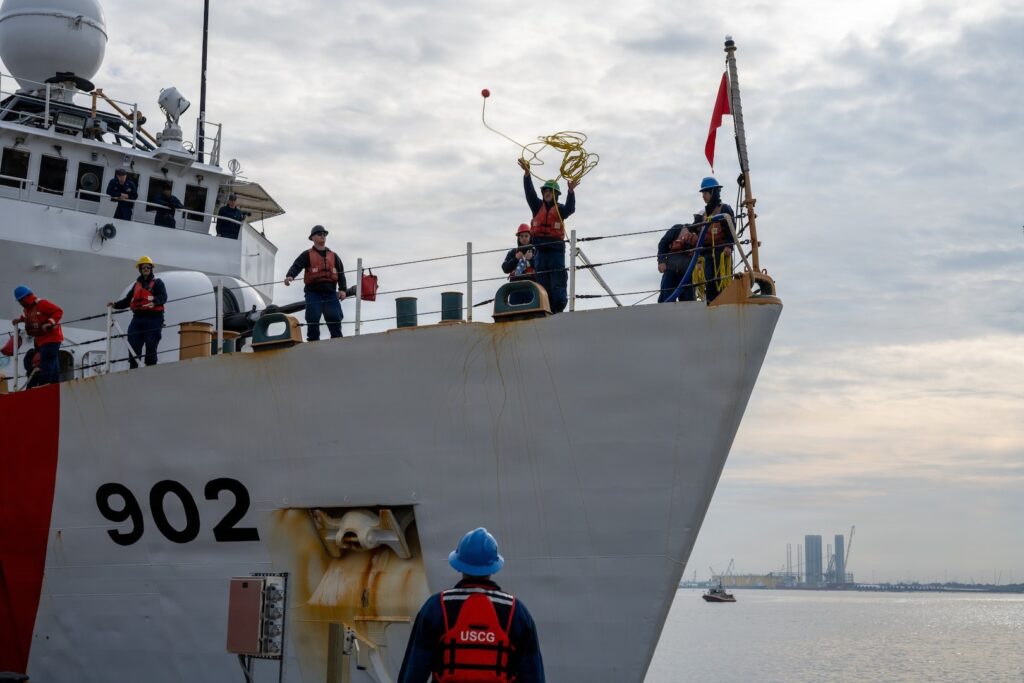
The Coast Guard Cutter Tampa (WMEC 902) returns home to Portsmouth, Virginia, Nov. 21, 2025, following a 67-day deployment. Tampa’s crew deployed in support of counterdrug operations in the Eastern Pacific. (U.S. Coast Guard photo Petty Officer 3rd Class Mason Svitenko)
PORTSMOUTH, Va. — The crew of Coast Guard Cutter Tampa (WMEC 902) returned to their homeport in Portsmouth, Friday, following a 67-day deployment to the Eastern Pacific Ocean in support of the counterdrug mission “Operation Pacific Viper.”
Tampa’s crew deployed in support of Joint Interagency Task Force – South and conducted counterdrug missions in the Coast Guard’s Eastern Pacific area of responsibility. While at sea, Tampa’s crew successfully contributed to protecting Americans by countering transnational criminal organizations and preventing dangerous and illegal narcotics from reaching the United States. The crew worked alongside Coast Guard Cutter Stone (WMSL 758) and their embarked Helicopter Interdiction Tactical Squadron.
On Oct. 8, approximately 270 nautical miles southeast of the Galapagos Islands, Tampa intercepted a 40-foot low-profile vessel suspected of carrying Illicit narcotics. Tampa’s crew intercepted three suspected smugglers, transferring them to Stone. After recovering about 620 kilograms of the cocaine, the boarding team disembarked because the vessel became unseaworthy after it started taking on water. Tampa’s crew conducted a controlled sinking to prevent the vessel from becoming a hazard to navigation.
Tampa made port calls in San Cristobal, Galapagos Islands, hosting members of the Ecuadorian coast guard for tours, and in Panama City, Panama. On Nov. 2, the crew anchored near Isla de Cocos, Costa Rica, exchanging professional experiences with Costa Rican park rangers. This exchange strengthened international relations with Costa Rica and demonstrated the Coast Guard’s commitment to building partnerships throughout the region.
“I am extremely proud of our crew’s dedication and professionalism during this challenging deployment,” said Cmdr. Joshua DiPietro, commanding officer of Tampa. “The Tampa crew displayed exceptional seamanship, tactical expertise and cultural sensitivity while operating across two oceans. Their efforts directly contributed to disrupting criminal networks, keeping dangerous narcotics from reaching American communities and strengthening vital partnerships with our regional partners.”
Tampa is a 270-foot Famous-class medium endurance cutter commissioned in 1984. The cutter’s primary missions include counterdrug and migrant interdiction operations, enforcement of federal fishery laws, and search and rescue operations in support of Coast Guard missions throughout the Western Hemisphere. Tampa operates under U.S. Coast Guard Atlantic Area, based in Portsmouth, Virginia.