Top Defense Investors Encourage Agility, Speed in Innovation at Defense Investment Forum 

From Undersea Technology Innovation Consortium, Oct. 27, 2025 

MIDDLETOWN, R.I. – The Undersea Technology Innovation Consortium (UTIC), in partnership with the Blue Venture Forum, recently hosted the inaugural Defense Investment Forum — a convening of industry leaders, startup founders, and top investors for a day of conversations around emerging trends and priorities in maritime defense innovation and investment.  

“This forum brought together the defense innovation ecosystem for important conversations about emerging technologies and investment trends that are shaping the future of global security,” said Molly Donohue Magee, Chief Executive Officer of UTIC. “UTIC is proud to facilitate these connections and cultivate new pathways to innovation.” 

“This event created valuable opportunities for defense-related startups and industry investors to connect and discuss how their collaboration will support the advancement of critical maritime technology,” said Toby Stapleton, PhD, Director of Blue Venture Forum.  

The agenda included time for more than a dozen defense industry startups to pitch their technology to investors looking to support the future of the maritime defense sector.  

The sold-out event also included several panels: 

  • Investing in Deterrence: Exploring strategic capabilities that will ensure long-term US maritime supremacy 

  • The Defense Gold Rush: Exploring how private capital is driving defense innovation and the implications for national security 

  • Collaboration at a Crossroads: Exploring how government partners support early-stage ventures as they seek to support national security missions 

  • Building the Maritime Tech Industrial Base: Exploring how investors and founders collaborate to fund and deploy next-generation defense technologies. 

The Critical Need to Move Faster  

Several panels focused on the urgent need for defense technology procurement to move faster, allowing the United States to maintain its competitive undersea and maritime advantage.  

A “Generational Opportunity” for Investors   

Panelists touched upon the unmined potential in the maritime defense space for venture capitalists.  

Maintaining Operational Agility  

Panelists highlighted the importance of public-private collaboration and how dual-use products—products with both military and commercial functions—help technology companies stay agile. 

Panelists during the keynote Fireside Chat noted: 

‘You have to do work to find customers. You have to work to find investors as well. So it’s not the system’s job to find your technology and buy it. It’s your job to develop it, market it, sell it.  So, it’s just different from the way things have always been done. But it’s actually better, faster, more efficient.’  said Vice Admiral Mike Connor, U.S. Navy (Ret.), Chairman & CEO of ThayerMahan.  

“The pace at which technology in the fight is evolving is so rapid that it eclipses the legacy ways of acquisition and developing solutions,” said Captain Colin Corridan, U.S. Navy (Ret.), Former Commodore Task Force 59, Head of Government and Defense at Bedrock Ocean Exploration.  


Bollinger Shipyards Delivers FRC 1161 Olivia Hooker to U.S. Coast Guard 

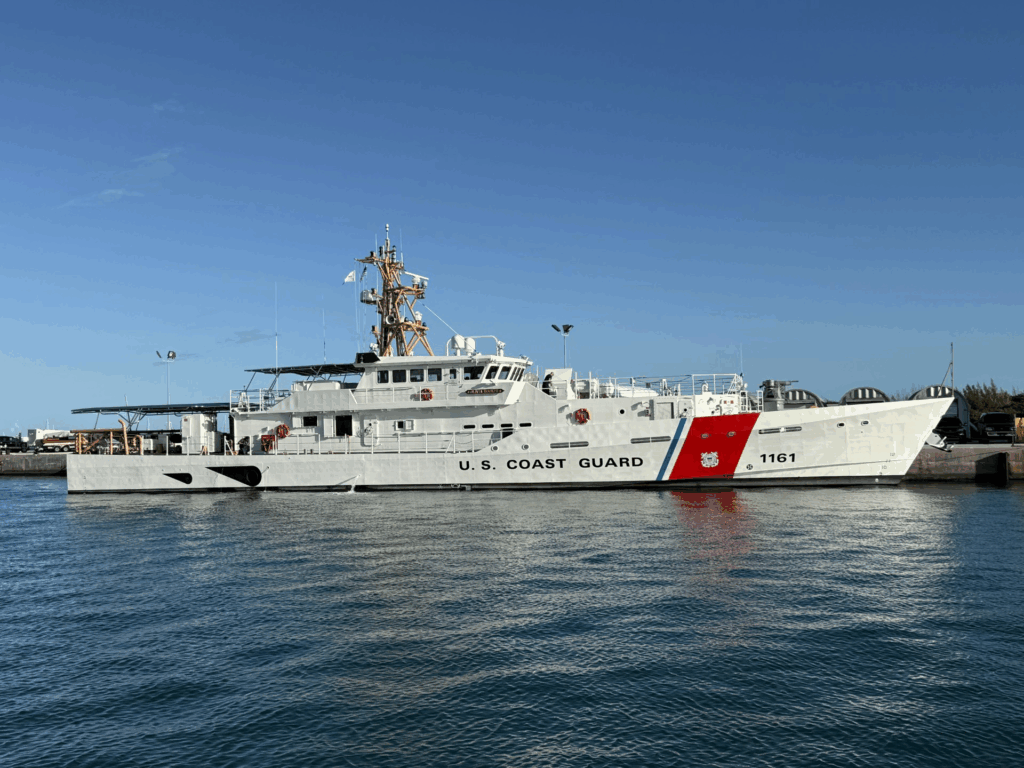
USCGC Olivia Hooker is the second of three FRCs to be homeported in St. Petersburg, FL 

From Bollinger Shipyards, Oct. 23, 2025 

LOCKPORT, La., — (October 23, 2025) – Bollinger Shipyards (“Bollinger”) today announced the recent delivery of the USCGC Olivia Hooker at Coast Guard Sector Key West. This is the 61st Fast Response Cutter (FRC) delivered under the U.S. Coast Guard’s current program and the 187th vessel built by Bollinger for the U.S. Coast Guard over a 40-year partnership. The Olivia Hooker will be homeported in St. Petersburg, Florida. 

“We are honored to deliver the Olivia Hooker to the U.S. Coast Guard, continuing our proud tradition of providing high-quality, mission-ready vessels,” said Bollinger President & CEO Ben Bordelon. “The FRC platform has proven itself time and again as a cornerstone of the Coast Guard’s fleet, excelling in a wide range of operational conditions. We’re confident this vessel will serve its crew well in their mission of defending our nation’s national security interests over a vast and challenging area of responsibility.” 

The USCGC Olivia Hooker is the second of three FRCs to be home-ported in St. Petersburg. Sector St. Petersburg has become one of the Coast Guard’s largest commands, with an area of responsibility encompassing over 400 nautical miles of coastline along Florida’s west coast and the third largest U.S. port for domestic trade. The Sector has responsibility for five primary operational missions: Search and Rescue; Marine Safety; Maritime Law Enforcement; Ports, Waterways, and Coastal Security; and Living Marine Resources. 

Last month, Bollinger announced that the U.S. Coast Guard awarded the company 10 additional FRCs. The award was supported by the historic $25 billion funding included in President Trump’s recently enacted One Big Beautiful Bill Act, which provided $1 billion for additional FRCs and strengthened the Coast Guard in support of its Force Design 2028 initiative. 

“With this award, the Coast Guard is doubling down on a proven platform and a proven team,” said Bordelon at the time of the award. “Our workforce has delivered nearly 200 cutters, including 60 FRCs, in our more than 40-year partnership with the Coast Guard. That performance is no accident. It reflects the dedication, precision and pride of the men and women of Bollinger, and our shared commitment to the Coast Guard’s mission.” 

“This decision reflects our unwavering confidence in your capabilities, expertise, and longstanding commitment to excellence within the maritime industry,” said the U.S. Coast Guard in its award notification to Bollinger. “We continue to be particularly impressed by your track record in shipbuilding, your innovative approaches to maintaining a sustainable design, and your commitment to adhering to the highest standards of safety and compliance…This contract option award is a testament to the trust we place in your abilities and to the shared vision we hold for the future of our fleet. We look forward to a productive and successful partnership and to the delivery of ten world-class ships that will advance our mission and further strengthen our operational capabilities.” 

To date, Bollinger has delivered 61 FRCs and had been under contract to build 67 vessels, with the final FRC previously scheduled for delivery in 2028. With the most recent award, the total program has increased to 77 vessels, extending the production line by approximately three years and ensuring uninterrupted deliveries to meet operational demand. 

Earlier this year, to protect the taxpayer and preserve hard-won efficiencies, Bollinger went “at-risk” to sustain production momentum. The company procured long-lead materials and maintained full payroll to avoid costly restarts and schedule gaps. That proactive decision reduced risk, preserved skilled jobs, and enabled the government to stretch its investment further. 

The FRC program continues to be a powerful economic engine. Since its inception, it has generated over $2 billion in material spending, directly supports more than 650 jobs in Southeast Louisiana, and has indirectly created 1,690 jobs from operations and capital investment, with an annual GDP impact of $202 million, according to the U.S. Maritime Administration’s data on the economic importance of the U.S. shipbuilding and repair industry. Each FRC comprises over 271,000 distinct items and approximately 282 million components and parts, sourced from 965 suppliers across 37 states, demonstrating the program’s broad national industrial footprint. 

Each FRC is named for an enlisted Coast Guard hero who distinguished themselves in the line of duty. This vessel is named after Dr. Olivia Juliette Hooker (1915–2018), who made history as the first African-American woman to serve in the U.S. Coast Guard, enlisting in 1945 as a member of the SPARs during World War II. Dr. Hooker answered the call to serve, completing boot camp and yeoman training before processing discharges for returning Coast Guardsmen. After the war, Dr. Hooker earned advanced degrees in psychology, becoming a respected professor at Fordham University and a lifelong advocate for education, mental health, and civil rights. Her trailblazing service exemplified the Coast Guard’s core values of honor, respect, and devotion to duty, and her legacy endures as the namesake of USCGC Olivia Hooker. 

ABOUT THE FAST RESPONSE CUTTER PLATFORM 

The FRC is an operational “game changer,” according to senior Coast Guard officials. FRCs are consistently being deployed in support of the full range of missions within the United States Coast Guard and other branches of our armed services. This is due to its exceptional performance, expanded operational reach and capabilities, and ability to transform and adapt to the mission. FRCs have conducted operations as far as the Marshall Islands—a 4,400 nautical mile trip from their homeport. Measuring in at 154-feet, FRCs have a flank speed of 28 knots, state-of-the-art C4ISR suite (Command, Control, Communications, Computers, Intelligence, Surveillance, and Reconnaissance), and stern launch and recovery ramp for a 26-foot, over-the-horizon interceptor cutter boat. 


Saronic, NVIDIA Form Strategic Collaboration to Chart the Future of Maritime Innovation

From Saronic Technologies, Oct. 23, 2025 

Saronic Technologies and NVIDIA have formed a strategic collaboration to accelerate advancements in maritime autonomy and robotics and chart a bold course for the future of maritime mobility and global prosperity. By combining Saronic’s expertise in autonomous maritime systems, AI, and next-generation shipbuilding with NVIDIA’s accelerated compute, software libraries, and Physical AI-focused innovation, the companies aim to advance the frontier of intelligent, resilient decision-making at sea. 

“By combining Saronic’s deep expertise in maritime autonomy and next-generation shipbuilding with NVIDIA’s world-class AI and computing capabilities, we’re simultaneously developing the most capable and resilient maritime systems in the world and building the industrial engine to produce them at scale and pace,” said Dino Mavrookas, Saronic Co-founder and CEO. “This collaboration reinforces our leadership in maritime innovation and enables us to move even faster to scale the delivery of next-generation autonomous vessels and ships to meet the strategic demands of the maritime domain.” 

Accelerating Maritime Autonomy with NVIDIA AI and Edge Computing 

Today, Saronic harnesses NVIDIA’s accelerated compute capabilities, AI models, and development tools across its simulation, software development, and autonomous platform operations. With NVIDIA hardware embedded onboard all Saronic vessels, the platforms are able to run state-of-the-art vision and reasoning models at the edge, enabling real-time decision making as well as single-agent and multi-agent autonomous functions. 

By tapping NVIDIA AI models, software libraries, and development environments, Saronic has significantly accelerated its algorithmic flywheel and autonomy development cycle. Tasks that once took days can now be completed in hours, including training, verifying, and deploying new software features. This acceleration allows Saronic to rapidly iterate, harden its autonomy stack, and deliver platforms with improved resilience, reliability, and performance. 

Through this strategic collaboration, Saronic and NVIDIA will deepen their existing relationship and collaborate on joint research and development efforts to advance state-of-the-art technologies for maritime robotics and autonomy. The companies will explore opportunities to leverage NVIDIA’s accelerated computing capabilities and development tools to build, test, and deploy Saronic’s autonomous maritime platforms with even greater speed and efficiency. 

Reimagining American Shipbuilding 

Saronic is pioneering a new AI-powered approach to ship design and production, transforming legacy shipbuilding processes with AI-driven tools and automation to deliver greater efficiencies, accelerate timelines, and lower costs. This vision reflects the company’s broader ambition: to reindustrialize American shipbuilding for the era of autonomy. 

As evidenced by President Trump’s “Restoring America’s Maritime Dominance” Executive Order and the bipartisan SHIPS ACT introduced in both the House and Senate, the federal government is aggressively focused on revitalizing U.S. shipbuilding — mobilizing public-private partnerships, revitalizing domestic yards, and restoring critical maritime industrial capacity. Understanding the urgency of the moment, Saronic and NVIDIA look to collaborate on modernizing U.S. shipbuilding for the era of autonomy and will explore the full spectrum of AI-enablement in shipbuilding. Bringing together Saronic’s production, manufacturing, and shipbuilding expertise with NVIDIA’s virtual facility solutions, simulation capabilities, and AI-powered solutions could help accelerate the transformation of a critical legacy industry. 


Marine Corps Lays Out Aggressive Modernization Efforts in Force Design Update 

From Headquarters, U.S. Marine Corps, Oct. 23, 2025 

HEADQUARTERS, MARINE CORPS – The Commandant of the Marine Corps, Gen. Eric M. Smith, published the 2025 Force Design Update, which lays out how the Marine Corps is aggressively pursuing modernization initiatives to ensure it remains a globally responsive, naval expeditionary force. These efforts are crucial for maintaining readiness and lethality in an era of rapidly evolving technology and increasingly capable adversaries. 

“Force Design is the Marine Corps’ strategic priority, and this update makes clear both our progress and our direction,” said Gen. Smith. “We have strengthened formations, fielded new capabilities, and refined our concepts, but modernization remains a continuous campaign of learning and adaptation.”  

The update highlights the value today’s Marine Corps provides to the Joint Force and the nation, characterized by MAGTFs that are balanced, multi-domain, combined arms, naval expeditionary formations. 

This update also describes results of modernization already delivered across the Marine Corps. We have strengthened formations, fielded new capabilities, and refined our concepts. Forward-deployed Marines remain postured across multiple theaters, ready to conduct sea-denial and amphibious operations, seize key terrain, and enable joint and combined kill webs in support of naval and joint campaigning. 

Additionally, the update describes where the Marine Corps will focus efforts to adapt faster than our adversaries, integrate seamlessly with the Navy and Joint Force, and remain ready for the future fight. 

The Force Design Update 2025 can be found here: Force Design Update 2025  


V-BAT Supports ISR Operations for the U.S. Navy During UNITAS 2025

Release From Shield AI

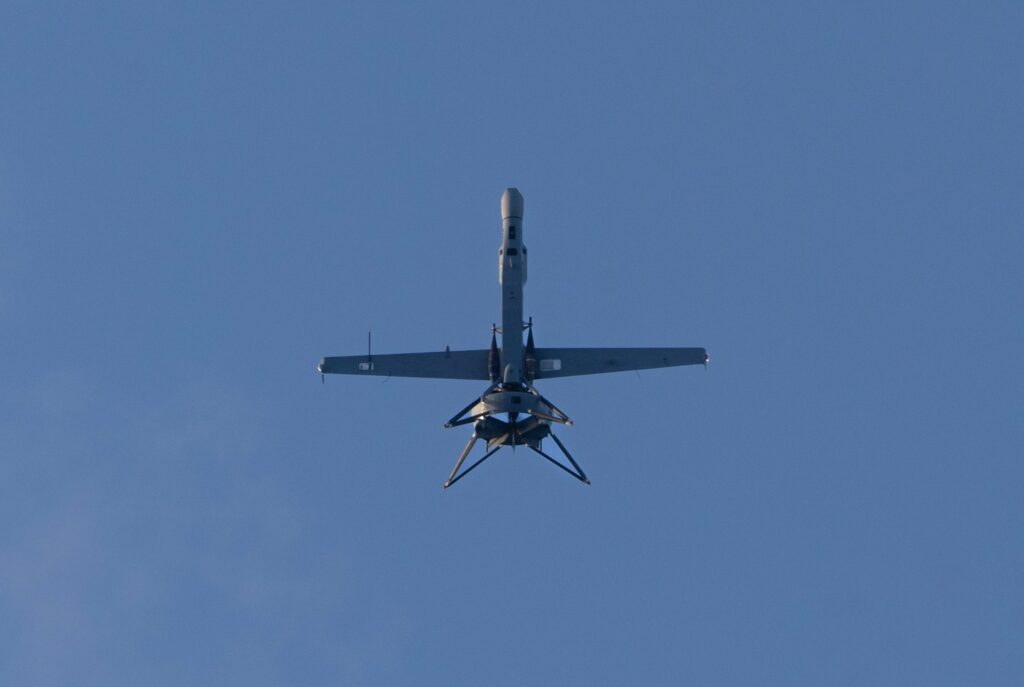
WASHINGTON (October 21, 2025) — Shield AI, the deep-tech company building state-of-the-art autonomy software and aircraft, announced it provided intelligence, surveillance, and reconnaissance (ISR) support for U.S. Naval Forces Southern Command/4th Fleet during UNITAS 2025, the world’s longest-running multinational maritime exercise. V-BAT, Shield AI’s Group 3 unmanned aircraft system (UAS), was deployed from USS Cooperstown (LCS 23) during the exercise, delivering consistent ISR capabilities throughout maritime training scenarios.  

Running from Sept. 15 to Oct. 3, 2025, UNITAS brought together 8,000 personnel from 25 allied and partner nations, with ships, submarines, and both fixed- and rotary-wing aircraft operating across the Americas to strengthen interoperability, enhance maritime domain awareness, and advance combined readiness.  

“It was great to see V-BAT flying alongside U.S. and partner forces during UNITAS,” said Brandon Tseng, Shield AI’s Co-Founder, President and former Navy SEAL. “V-BAT has proven itself in operations across the fleet and has helped the U.S. Coast Guard and joint task forces interdict billions of dollars’ worth of narcotics. We’re excited to keep supporting U.S. and partner forces as they continue operations across the Americas.”   

Through the deployment of V-BAT, Shield AI supported in strengthening maritime domain awareness, advancing the use of autonomous systems, and improving information sharing with partners. V-BAT successfully passed both full-motion video and ViDAR wide-area search data to the Navy’s Minotaur Family of Services (MFoS). MFoS provides a shared Common Operating Picture by fusing sensor inputs from multiple platforms, ensuring that what one platform detects can be seen across the joint force and coalition — a critical enabler for faster decisions, stronger interoperability, and more effective maritime security operations. 

With its vertical takeoff and landing (VTOL) capabilities, small logistics footprint and advanced wide-area search sensors, V-BAT is uniquely suited for ship-based ISR in complex maritime environments. This UNITAS deployment was in support of the Monitoring, Analysis, Reconnaissance, Logistics, Intelligence and Network Services (MARLINS) task order awarded to prime contractor SMX in support of the U.S. Southern Command.  


Marine Fighter Attack Squadron 542 Returns from Historic Deployment with F-35B 

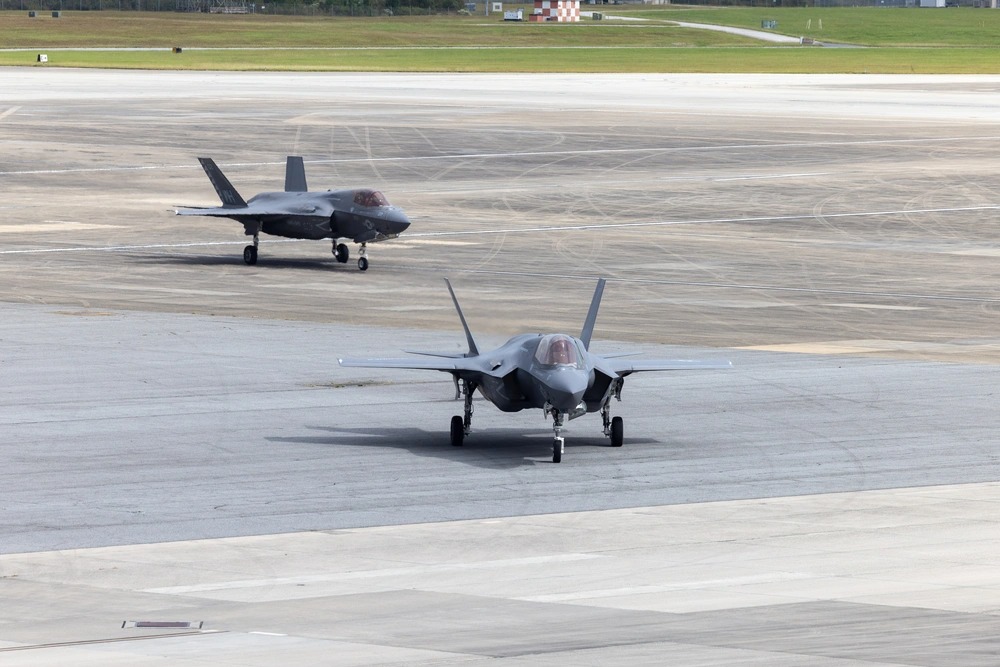
U.S. Marine Corps pilots with Marine Fighter Attack Squadron (VMFA) 542, Marine Aircraft Group 14, 2nd Marine Aircraft Wing, taxi F-35B Lightning II aircraft at Marine Corps Air Station Cherry Point, North Carolina, Oct. 8, 2025. Marines with VMFA-542 returned to MCAS Cherry Point following a deployment in the U.S. Central Command area of responsibility. (U.S. Marine Corps photo by Cpl. Landon Lingle) 

Story by Master Sgt. Shakima DeprinceU.S. Marine Corps Forces Central Command 

MacDill AIR FORCE BASE, Fla. — Marine Fighter Attack Squadron 542 (VMFA-542), operating the F-35B Lightning II stealth fighter, has successfully returned from a historic five-month deployment to the U.S. Central Command (CENTCOM) area of responsibility, marking a major milestone in Marine Corps aviation and joint force integration. 
 
During the deployment, VMFA-542 made a significant operational and strategic impact in the CENTCOM AOR. The squadron conducted Close Air Support, Armed Overwatch, and Defensive Counter-Air missions in support of Marine, Navy, Army, coalition, and partner nation forces. They advanced F-35 tactics, techniques, and procedures while demonstrating the aircraft’s flexibility in real-world operations. 
 
The unit flew more than 1,099 combat sorties and accumulated over 4,736 mishap-free flight hours, providing essential support to CENTCOM’s integrated air operations. VMFA-542 not only enhanced deterrence, supported regional maritime security, and deepened interoperability through combined training with allied and partner air forces, but also led the way in USMC F-35 flight hours, maintaining a high Aircraft Mission Capable readiness rate, setting the standard for aviation units across the fleet. 
 
“VMFA-542’s historic deployment has set new benchmarks for Marine Corps aviation, demonstrating that a forward deployed F-35B squadron can deliver unmatched combat power and readiness while seamlessly integrating with Joint Forces during a major regional crisis,” said LtCol Carlo F. Bonci, Executive Officer, Marine Fighter Attack Squadron 542. 
 
As part of CENTCOM’s Air Component Ninth Air Force (Air Forces Central), VMFA-542 integrated into coalition air and defense operations. The addition of the F-35B Lightning II brought a major upgrade in tactical flexibility, intelligence gathering, and precision strike capabilities. 
 
The F-35B is a fifth-generation stealth fighter uniquely capable of short takeoffs and vertical landings, providing the Marine Corps with operational agility across both air-to-air and air-to-ground missions. 
 
This deployment underscores the Marine Corps’ commitment to maintaining readiness and effectiveness in complex environments while reinforcing partnerships with regional allies. VMFA-542 set a new standard for aviation units across the fleet, leaving a tangible impact on the CENTCOM mission recognized by joint and coalition commanders alike. 


USCGC Waesche Returns Following Multi-Mission Arctic Patrol

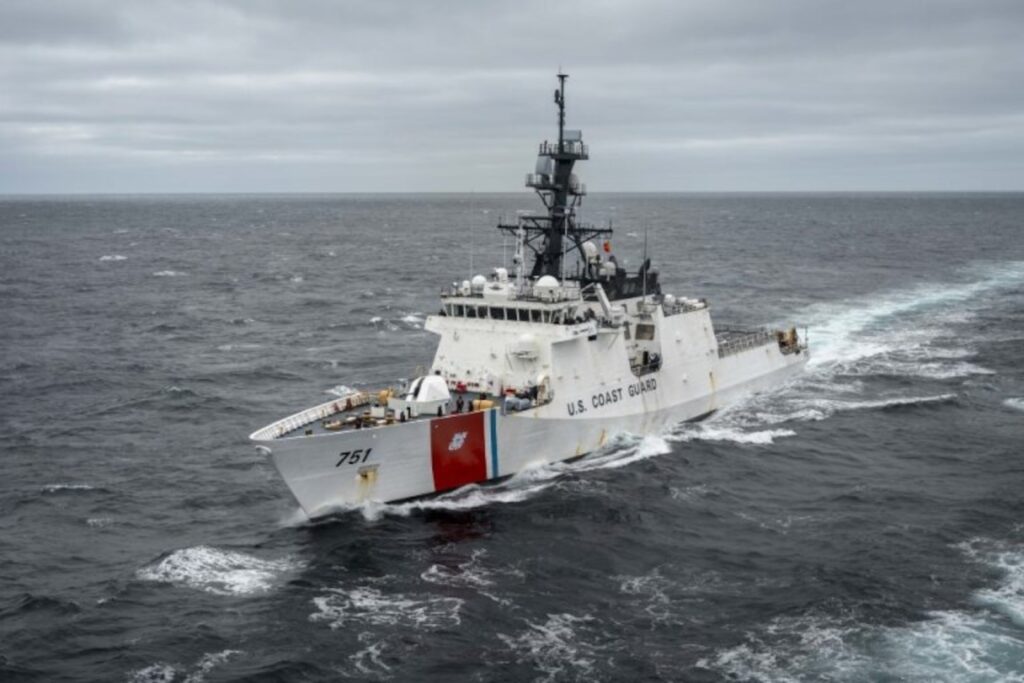
Coast Guard Cutter Waesche (WMSL 751) transit the Bering Sea during Arctic Edge 2025, Aug. 10, 2025. AE25 is a North American Aerospace Defense Command (NORAD) and U.S. Northern Command-led homeland defense exercise designed to improve readiness, demonstrate capabilities, and enhance Joint and Allied Force interoperability in the Arctic. (U.S. Coast Guard courtesy photo) 

From U.S. Coast Guard Southwest District

ALAMEDA, Calif. – The U.S. Coast Guard Cutter Waesche (WMSL 751) returned to its Base Alameda home port Oct. 10, concluding a 105-day Arctic deployment spanning over 21,000 nautical miles.   

Waesche’s deployment underscored the Coast Guard’s commitment to safeguarding U.S. sovereignty, enforcing border control, and ensuring national security in the strategically vital Bering Sea, Arctic Ocean, and along the U.S. – Russia Maritime Boundary Line.   

Throughout the three-and-a-half-month deployment, the crew integrated operations with U.S. Northern Command (NORTHCOM) and U.S. Alaska Command (ALCOM), conducting national defense operations and enforcing maritime laws to safeguard national sovereignty in an increasingly geostrategic Arctic.   

The Arctic is a national priority. The U.S. Coast Guard remains steadfast in its commitment to protecting U.S. interests in the Arctic and ensuring the safety and security of Alaska’s maritime borders and approaches.    

Five China-affiliated research vessels operated in the Arctic region over the summer, and Waesche was one of several Coast Guard assets deployed to the Arctic to control, secure, and defend U.S. territory and sovereign interests.   

In August, Waesche’s crew responded to the People’s Republic of China Research Vessel Zhong Shan Da Xue Ji Di as it was transiting north in the Chukchi Sea above the Arctic Circle, after passing through the Bering Strait. Waesche and the Coast Guard Cutter Healy (WAGB 20) patrolled the Arctic Ocean in September supporting Operation Frontier Sentinel, an operation that responds to adversaries operating in and around Alaskan and U.S. Arctic waters, before responding to China’s research vessels in the region. The U.S. Coast Guard’s responses are intended to counter malign activities, defend sovereign interests, and promote maritime conduct consistent with international law and norms.     

The Coast Guard is the only U.S. surface presence in the Arctic and works in conjunction with U.S. Northern Command and Alaskan Command to constantly monitor foreign vessels operating in and near U.S. waters in support of U.S. homeland defense and security operations.   

While deployed to the region, Waesche served as a Forward Afloat Staging Base during NORTHCOM’s Exercise Arctic Edge 2025, executing a complex, multi-agency assault of a mock target of interest. The operation showcased seamless integration between Waesche, Coast Guard Maritime Security Response Team West, U.S. Navy SEALs, and the Alaska Air National Guard to rapidly respond to domestic threats.   

Waesche conducted joint operations with ALCOM and the Royal Canadian Navy frigate HMCS Regina (FFH 334), demonstrating interagency coordination and a shared commitment to regional security during a joint patrol. The exercise included a passenger exchange, a mock boarding, cross-deck hoist operations with Regina’s CH-148 Cyclone helicopter, air support from a U.S. Coast Guard C-130J Hercules fixed wing aircraft from Air Station Kodiak and a Royal Canadian Air Force CP-140 Aurora.   

“This deployment was a resounding success, proving the concept of expeditionary logistics in the Northern Frontier and solidifying our partnerships with the Joint Force and key allies,” said U.S. Coast Guard Capt. Tyson Scofield, commanding officer of Waesche. “The underway replenishment with Asterix and the successful barge fueling in Kotzebue represent a significant leap forward in our ability to sustain operations in the Arctic. Our integration with the Royal Canadian Navy, ALCOM, and NORTHCOM highlights the importance of peace through strength to maintain an Arctic free of adversarial coercion.”   

Waesche successfully conducted the Coast Guard’s first-ever fueling at sea in the Alaskan theater with the Royal Canadian Navy replenishment oiler MV Asterix – accomplished in 6-8 foot seas with sustained 30-knot winds. Additionally, Waesche fueled north of the Arctic Circle, extending Coast Guard operations into the remote Arctic environment.   

Waesche’s crew conducted professional exchanges with Canadian counterparts, including HMCS Max Bernays in Dutch Harbor, and hosted personnel from the National Oceanic and Atmospheric Administration (NOAA) law enforcement division, and Russian and Mandarin interpreters, further enhancing the cutter’s operational capabilities and regional understanding. Coast Guard Cutter Healy joined Waesche for a joint MBL patrol as well.    

Commissioned in 2010, Waesche is one of four Legend-class national security cutters homeported in Alameda. National security cutters are 418-feet long, 54-feet wide, have a top speed of over 28 knots, a range of 12,000 nautical miles, endurance of up to 90 days, and can hold a crew of up to 170. The advanced technologies of the national security cutter class ships are designed to support the operations and missions throughout the Pacific.   


U.S. Coast Guard Suspends Coastal Buoy Modernization in the Northeast

From U.S. Coast Guard Northeast District

BOSTON — Coast Guard District Northeast is closing the period for providing comments to the Coastal Buoy Modernization Proposal (CBMP) advertised in the Local Notice to Mariners (LNM) and directly solicited from stakeholders.    

After receiving over 3,200 public comments, the Coast Guard will be conducting further analysis of the aids to navigation (ATON) system. There will be no changes to ATON in relation to the proposal until further analysis is complete.   

“We are extremely appreciative of the public’s input on this important project, and our team’s hard work, analysis, and conclusions were reinforced by the outstanding feedback we received from our maritime stakeholders,” said Rear Adm. Michael Platt, the Northeast Coast Guard District Commander. “The Northeast Coast Guard District will continue to ensure a safe, secure, and efficient Maritime Transportation System. We remain focused on shaping the future of our waterways, ensuring a modern aids to navigation system, and facilitating commerce vital to economic prosperity and strategic mobility.”  

The Coast Guard maintains nearly 45,000 navigational aids nationwide. With America’s Marine Transportation System supporting $5.4 trillion of economic activity, America’s ATON system enables the safe and efficient flow of commerce, economic prosperity, and strategic mobility. The Coast Guard will continue assessing waterways and provide the most effective changes to support a resilient marine transportation system.   


San Diego Declares ‘Saronic Day’ as Mayor Joins to Celebrate Opening of West Coast Facility

Release From Saronic

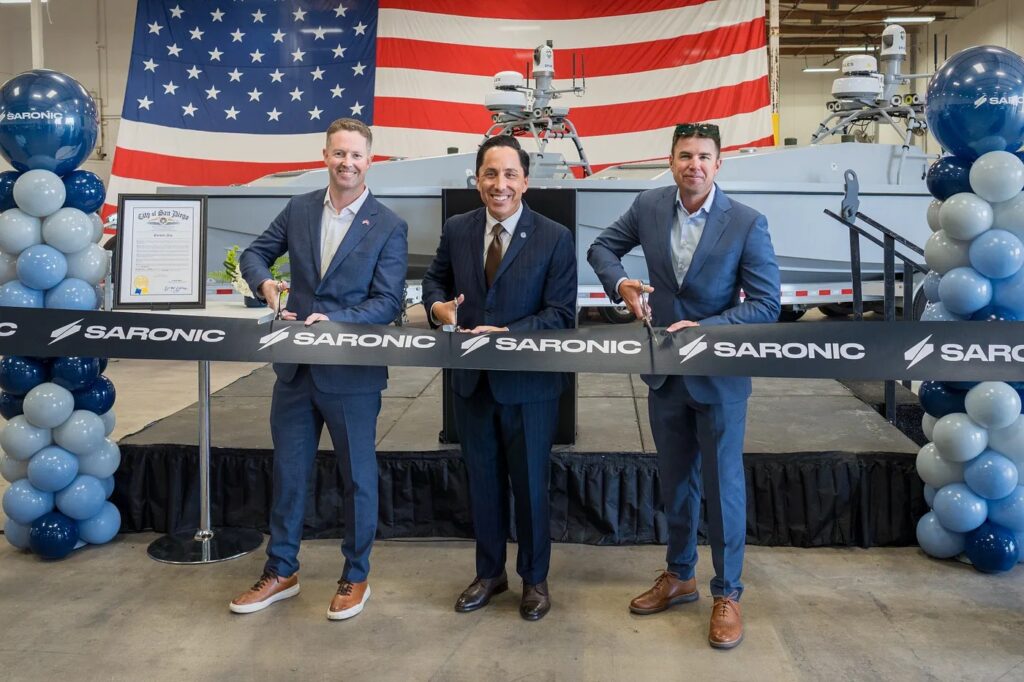
Saronic today commemorated the official opening of its 80,000+ square-foot facility in downtown San Diego, marking the occasion with a celebratory ribbon-cutting ceremony. The event was attended by City of San Diego Mayor Todd Gloria, who provided remarks, as well as other local leaders, government stakeholders, and industry partners. The City has proclaimed October 21 as “Saronic Day” in recognition of the company’s contributions to the region’s defense innovation ecosystem and commitment to bring skilled jobs, economic opportunity, and technical expertise to the community. 

Driven by its strong naval presence, premiere research institutions, and robust industrial partnerships, San Diego has long been viewed as a hub for defense innovation. By opening its new downtown San Diego facility, Saronic is deepening its committed to the region’s economic revitalization while strengthening its ability to deliver autonomous maritime capabilities to its commercial and US Navy partners. Given its proximity to Navy commands, the site ensures Saronic can collaborate with defense customers to rapidly integrate feedback and provide real-time mission support of its Autonomous Surface Vessels (ASVs). 

“San Diego is where innovation meets service,” said San Diego Mayor Todd Gloria. “With Saronic expanding here, we’re strengthening our city’s leadership in defense technology and creating new opportunities for San Diegans to power the next generation of maritime innovation. This investment means more good jobs for San Diegans and stronger partnerships to support the men and women who serve our country.” 

Workforce Development: Training Naval Operators on Maritime Autonomy 

Saronic’s new facility in San Diego will serve in part as a training and development hub for naval and maritime operators, allowing defense and commercial customers and partners to expand their skills and expertise in maritime autonomy. Through a specialized curriculum tailored to the unique demands of autonomous maritime capabilities, Saronic is equipping sailors and mariners with the know-how to maintain and operate the hybrid fleet of the future. 

Saronic is committed to ensuring the safe and effective operation of its ASVs, as well as the development of a highly skilled and certified operator base. The company is a participant in industry- wide initiatives like the AUVSI Trusted UMS Operator Program, which establishes a common standard for training and certification of mission operators across the unmanned systems domain. This new San Diego training initiative reinforces that commitment and builds on the region’s role as a national center for workforce development in the maritime sector. 

“Saronic is partnering closely with naval leaders, operators, and partners to ensure this program not only addresses immediate technical needs but also provides opportunities for continued skills advancement and deepens the understanding of Saronic’s ASVs and autonomous capabilities,” said Nick Stoner, VP of Growth at Saronic. “San Diego is an anchor in the nation’s naval defense network, and this initiative underscores our belief that advancing technology must go hand-in-hand with investing in people – the region’s most powerful asset.” 

Investing in San Diego’s Future 

Saronic first announced its plans to establish a San Diego facility in July 2025. Since then, the space has undergone an extensive renovation, bringing on new capabilities to support its role as an operations, training, and depot facility. With this launch, the company continues to expand its local headcount, hiring across Mission Operations, Growth, Corporate Development, Mission Services, Forward-Deployed Engineering, Programs, and other functions. The company expects to add dozens of roles to its San Diego operations in the coming months. 

This investment builds on Saronic’s continued U.S. expansion, which includes large-scale manufacturing operations in Austin, Texas, and its shipbuilding facility in Franklin, Louisiana. 


Lockheed Martin Awarded $233M Contract to Deliver IRST Block II Systems

From Lockheed Martin 

ORLANDO, Fla., Oct. 20, 2025– Lockheed Martin (NYSE: LMT) has been awarded a $233 million firm-fixed-price contract to deliver IRST21® Block II systems and initial spares to the U.S. Navy and Air National Guard (ANG). 

IRST21 is Lockheed Martin’s next-generation infrared search and track (IRST) sensor capability, a long-wave infrared system that passively detects and tracks airborne targets at extended ranges. By delivering longer range detection and faster target data, IRST21 Block II boosts warfighter situational awareness, cuts decision making time and keeps our armed forces mission ready to engage threats the instant they appear. 

The Block II variant, contracted under this award, features cutting edge optics, advanced processors and industry-leading algorithms that significantly increase threat-detection range and provide tracking and targeting data to support beyond-visual-range missile engagements. 

This award follows the U.S. Navy’s recent declaration of Initial Operational Capability for IRST21, which cleared the path for full-rate production of the Block II variant now entering fleet deployment. 

“IRST21 Block II delivers a game-changing leap in passive warfighting capabilities across multiple platforms,” said Cristin Stengel, IRST21 program director for Lockheed Martin. “By significantly enhancing the range and accuracy to enable weapon employment in challenging environments, this system ensures pilots remain ahead of evolving adversaries and mission-ready at all times.” 
 

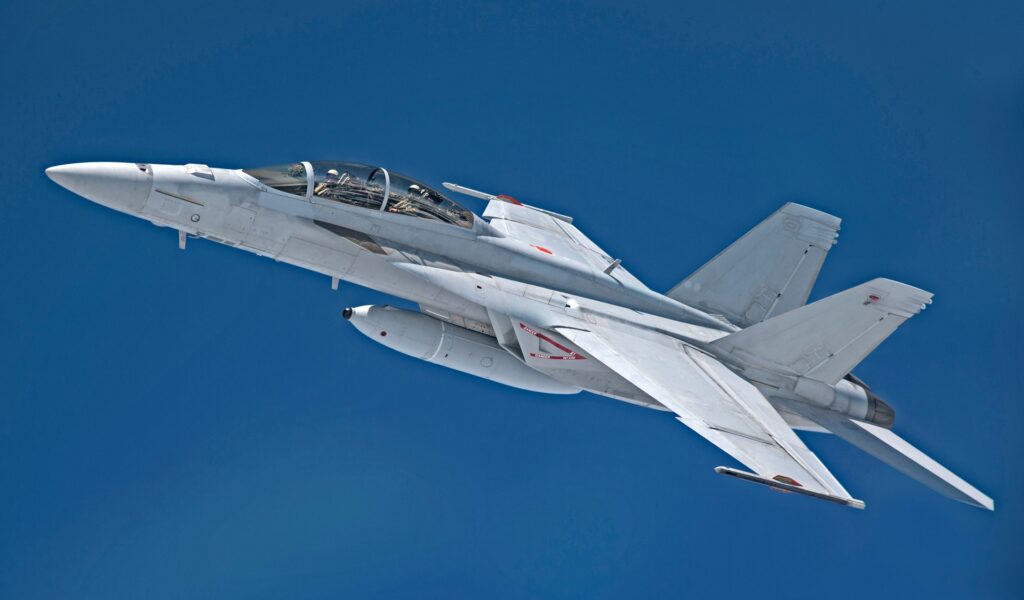
On the F/A-18E/F Super Hornet, IRST21 is mounted on the nose of the centerline fuel tank, complementing the aircraft’s AN/APG-79 radar to maintain effectiveness in radar-denied or heavy electronic attack environments. 

For F-15 and F-16s, IRST21 is embedded in a ready-now modular, externally mounted Legion Pod, providing ease of transportability and bringing 6th generation targeting capability to 4th generation aircraft. By operating passively without emitting a signal, the system is resistant to electronic jamming—ensuring warfighters maintain a critical advantage where survivability and reaction time are essential.