Assistant Secretary of the Navy Visits MSC Ship 

From Military Sealift Command, Aug. 13, 2025 

Assistant Secretary of the Navy (Manpower and Reserve Affairs), Mr. C Scott Duncan (second from left) addresses the crew of USNS Patuxent (T-AO 201) during a ship tour, aboard the ship Aug. 13, 2025. (U.S. Navy photo by Brian Suriani) 


U.S. Coast Guard Cutter Bertholf Returns Home from Deployment in Support of Southern Border Operations 

U.S. Coast Guard Cutter Bertholf (WSML 750) rendezvoused with U.S. Coast Guard Cutter Eagle (WIX 327) for a passenger exchange and formation steaming in the Pacific Ocean, August 6, 2025. Eagle is underway for her West Coast summer cadet tour, and Bertholf was nearing the completion of her Deployment in support of Operation Border Trident. (U.S. Coast Guard photo by Ensign Holli Welcker)

From U.S. Coast Guard Southwest District, Aug. 13. 2025 

ALAMEDA, Calif. — The U.S. Coast Guard Cutter Bertholf (WMSL 750) crew returned to their home port on Coast Guard Base Alameda, California, Sunday, following a 70-day patrol operating along the Southwest maritime boundary line (MBL) near San Diego. 

Bertholf deployed in support of Operation Border Trident, Coast Guard District Southwest’s (CGD-SW) standing operation to counter-illicit maritime activity along the Southwest MBL.  

Operation Border Trident is a Coast Guard-led interagency approach to detection, monitoring, interdiction, and apprehension operations to combat transnational criminal organizations and illegal alien activity in the California Coastal Region. Bertholf increased Coast Guard operational presence in the area, maintaining border control and territorial integrity of the United States.  

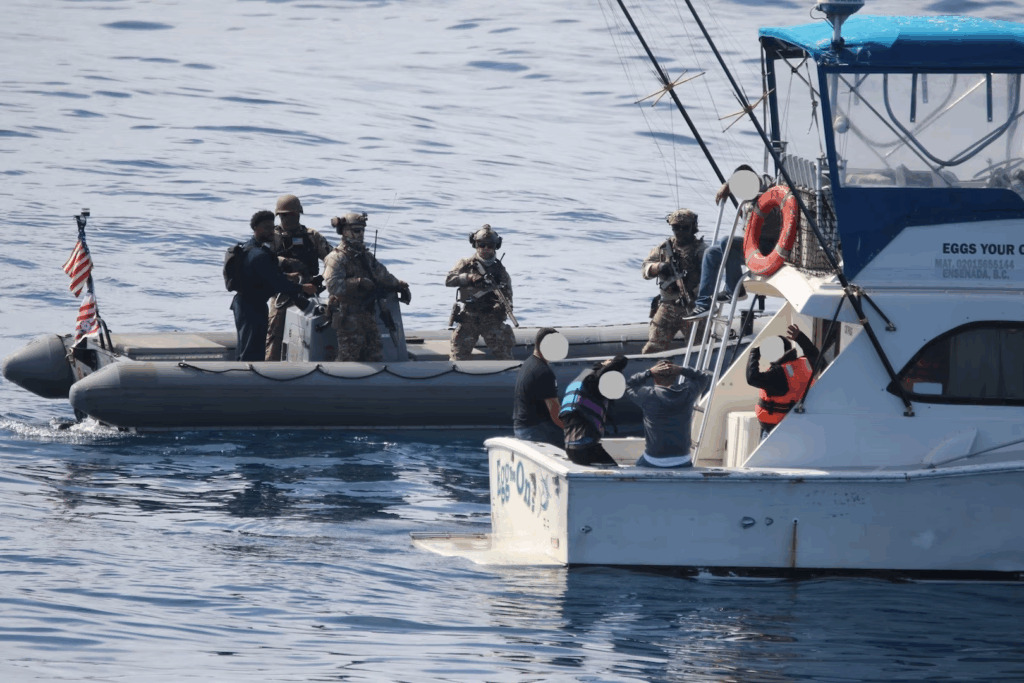
While at sea executing Operation Border Trident, Bertholf conducted 86 security boardings and queries in the vicinity of San Diego, checking more than 250 IDs and inspecting closed cabin vessels to thwart illegal activity. This included more than 250-crew hours deployed in Bertholf’s cutter response boats, providing law enforcement presence and deterrence on the Southwest MBL.  

Departing Alameda on June 2, Bertholf conducted a change of command followed by an annual readiness assessment and training in San Diego prior to deploying to their assigned operating area. On June 9, 2025, Capt. Andrew Pate relieved Capt. Billy Mees as Bertholf’s 10th commanding officer.  

Beginning on June 10, under the guidance of Afloat Training Organization San Diego, Bertholf conducted the first full Basic Cutter Operations assessment for the Legend-Class national security cutter fleet which included two weeks of drills, evaluations, and training reviews. The crew was tested against simulated shipboard fires and flooding in both the in port and underway environments, as well as shipboard emergencies in various tactical scenarios. Bertholf displayed high proficiency in several complex ship evolutions, including mooring, unmooring, and anchoring. Scoring a 95% average across all training areas, Bertholf earned certifications in naval warfare, damage control, seamanship, navigation, medical, and engineering proficiency.  

Bertholf was twice diverted to respond to search and rescue tasking, a core responsibility that remains a sacred trust between the U.S. Coast Guard and the maritime public. The first case involved the search for a downed aircraft about 460 miles off San Diego. Bertholf conducted search patterns, including flying its embarked small, unmanned aircraft system (sUAS) and used one of its cutter response boats as part of a multi-service search effort.   

Later in the deployment, Bertholf received tasking from Coast Guard Sector San Diego to respond to a person in the water 36 miles west of San Diego reported to be experiencing medical distress. Once on scene, Bertholf response boat crewmembers safely recovered the person in distress and brought them aboard Bertholf for initial medical care. Onboard health services technicians provided medical evaluations and care to stabilize the survivor until they were transferred to Emergency Medical Personnel for further care in San Diego.  

“Bertholf’s crew displayed exceptional proficiency and professionalism recovering the survivor, stabilizing their condition, and conducting a smooth transfer via cutter boat to waiting EMS at Sector San Diego for further transfer to higher level care,” said Capt. Andrew Pate, commanding officer of Bertholf.  

To maintain the cutter’s shipboard helicopter operation proficiency, Bertholf conducted 180 helicopter deck landings with U.S. Coast Guard Air Stations (AIRSTA) San Diego and Ventura aircrews. Bertholf also completed 24 fast rope exercises with AIRSTA Ventura and U.S. Coast Guard Maritime Security Response Team West. Coordination of flight operations provided critical training and proficiency opportunities for helicopter crews and Bertholf’s crew, supporting their ability to respond to emergencies requiring shipboard helicopter operations both during the day and at night.   

Routinely operating independently, far from other U.S. Coast Guard cutters, Bertholf capitalized on several unexpected opportunities to rendezvous at sea with multiple cutters deployed from other districts.   

Teaming with the U.S. Coast Guard Cutter Active (WMEC 618) early in the deployment, the cutters ran several small boat exercises to certify Bertholf’s boarding teams for law enforcement operations.   

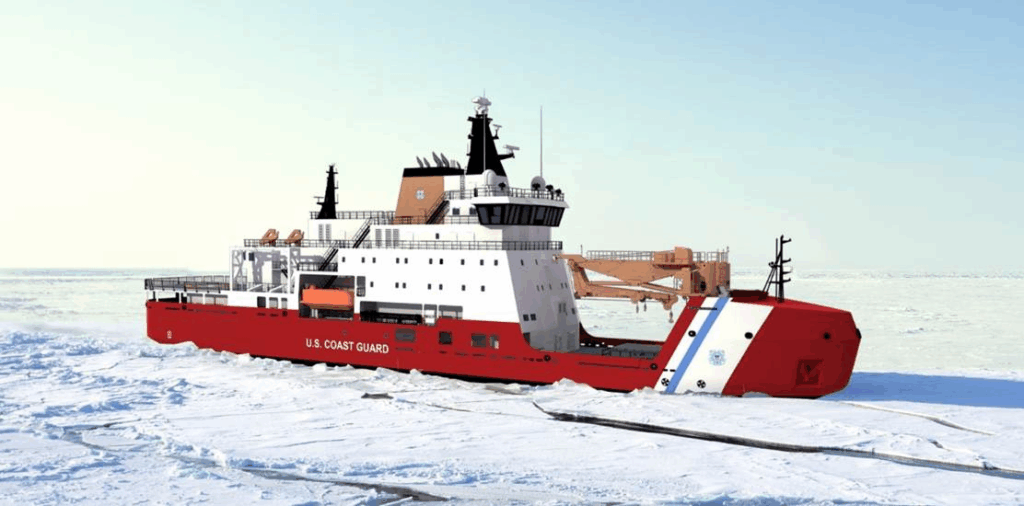
Later, while transiting south to evade a hurricane in Puerto Vallarta, Mexico, Bertholf rendezvoused with the U.S. Coast Guard Cutter Storis (WAGB 21), the first polar icebreaker acquired by the U.S. Coast Guard in over 25 years. Storis was partway through its maiden voyage and briefly conducted formation steaming with Bertholf.   

Finally, Bertholf capitalized on the U.S. Coast Guard Cutter Eagle’s (WIX 327) visit to the west coast, coordinating a passenger exchange for 36 crew members and formation steaming. Eagle is a 295-foot, three-masted barque used exclusively as a training vessel for future officers of the United States Coast Guard. Bertholf and Eagle were briefly joined by the U.S. Coast Guard Cutter Florence Finch (WPC 1157), one of the Coast Guard’s newest 154-foot Fast Response Cutters.  

During this deployment, Bertholf had several opportunities to interact with Department of Defense and international partners. While on a port visit in San Diego, Bertholf’s crew hosted the 89th Military Police Brigade and the 716th Military Police Battalion, strengthening relationships between the land and maritime services and enhanced their understanding of domain awareness capabilities in support of Operation Border Trident.  

“I couldn’t be prouder of the Bertholf crew,” said Pate. “Their proficiency, professionalism, and pride throughout this deployment reflect a selfless commitment to defeating adversaries and providing security for the American people we serve.”  

Bertholf is named for Commodore Ellsworth Price Bertholf, the Coast Guard’s first Commandant. Commodore Bertholf’s most notable service was his role in the famous Alaska Overland Expedition in 1897. When over 265 American whalers became trapped in ice at Point Barrow, Bertholf led the relief party 1,600 miles via dogsled. Along with Lt. David Jarvis and Dr. Samuel Call, Bertholf herded almost 400 reindeer through a frozen Alaska winter to feed the starving whalers, an act that would later earn him the Congressional Gold Medal.   

Homeported in Alameda, Bertholf was commissioned on August 4, 2008, as the Coast Guard’s first Legend-class national-security cutter. National security cutters are 418-feet long, 54-feet wide, and have a 4,600 long-ton displacement. They have a top speed of 28 knots, a range of 12,000 nautical miles, and can hold a crew of up to 170. Bertholf routinely conducts operations throughout the Pacific, where the cutter’s combination of range, speed, and ability to operate in extreme-weather conditions provides the mission flexibility necessary to conduct vital strategic missions. The ship’s motto is “Legends Begin Here.”   


31st MEU supports anti-submarine warfare operation in Indo-Pacific 

U.S. Marine Corps Cpl. Tristan Courtney, a crew chief with Marine Medium Tiltrotor Squadron (VMM) 265 (Rein.), 31st Marine Expeditionary Unit, deploys buoys during anti-submarine warfare training, in the Philippine Sea, Aug. 8, 2025. (U.S. Marine Corps photo by Cpl. Alora Finigan)

From Capt. Robert DeRonda, 31st Marine Expeditionary Unit, Aug. 12, 2025 

CAMP HANSEN, Japan — On Aug. 8, 2025, Marine Medium Tiltrotor Squadron 265 (Reinforced), 31st Marine Expeditionary Unit, supported an operational anti-submarine warfare mission utilizing the MV-22B Osprey teamed with two Navy MH-60R Sea Hawk helicopters to distribute sonobuoys. 

This iteration of anti-submarine operations represents the first time a forward-deployed MV-22B assigned to the 31st MEU has operated in an ASW role within the Indo-Pacific theater, significantly enhancing the 31st MEU’s capabilities and contributing to regional maritime security. 
 
“The Marine Corps has spent the past five years re tooling to fight in the Pacific and the submarine threat can’t be ignored. The MV-22B complements the Navy’s capabilities so well that it’s hard to believe this wasn’t thought of sooner” said Col. Niedziocha, commanding officer, 31st MEU. “We’ve validated the utility of both amphibious warships and littoral forces, demonstrating the ability to fight as the landward component of the fleet.” 

The integration of the MV-22B into ASW operations expands the MEU’s ability to detect, track, and deter potential adversaries operating in the maritime domain. This capability leverages the unique range, speed, and carrying capacity capabilities of the MV-22B with the deployment of advanced sensors and integration with U.S. Navy capabilities, allowing for rapid response and persistent surveillance. 

This operation demonstrated the close relationship between the 31st Marine Expeditionary Unit and U.S. Navy counterparts. Seamless integration and interoperability with the George Washington Carrier Strike Group and the America Expeditionary Strike Group highlighted the strength of combined naval forces. This development underscores the Marine Corps’ commitment to naval integration and the provision of a versatile, rapidly deployable force capable of addressing a wide range of contingencies. 

The 31st MEU is operating aboard ships of the America Expeditionary Strike Group in the U.S. 7th Fleet area of operations, the U.S. Navy’s largest forward-deployed numbered fleet which routinely interacts and operates with allies and partners in preserving a free and open Indo-Pacific region. 

Photo and video packages, including B-roll, will be released by the 31st Marine Expeditionary Unit for media use. Content can be found at https://www.dvidshub.net/unit/31MEU 


DARPA Christens Unmanned Ship Aimed at Revolutionizing Naval Capability 

Ship sponsor Mattie Hanley follows naval tradition by breaking a bottle of spirits on the side of the USX-1 Defiant during the official christening ceremony in Everett, Wash., on Aug. 11, 2025. (DARPA photo by Spencer Bruttig)

Defiant demonstrates path to accelerate US shipbuilding and strengthen naval fleet 
 

From Defense Advanced Research Projects Agency, Aug 11, 2025 

DARPA has marked a traditional naval milestone with the christening of USX-1 Defiant, a first-of-its-kind autonomous, unmanned surface vessel designed from the ground up to never accommodate a human aboard. The ceremony took place Monday, Aug. 11, at Everett Ship Repair in Everett, Washington. 

The demonstrator for the No Manning Required Ship (NOMARS) program, the Defiant, has a simplified hull design to allow rapid production and maintenance in nearly any port facility or Tier III shipyard that traditionally supports yacht, tug, and workboat customers. 

The 180 foot-long, 240-metric-ton lightship is completing final systems testing in preparation for an extended at-sea demonstration of reliability and endurance. 

Defiant is a tough little ship and defies the idea that we cannot make a ship that can operate in the challenging environment of the open ocean without people to operate her,” said NOMARS Program Manager Greg Avicola, during the ceremony. “While relatively small, Defiant is designed for extended voyages in the open ocean, can handle operations in sea state 5 with no degradation and survive much higher seas, continuing operations once the storm passes. She’s no wider than she must be to fit the largest piece of hardware and we have no human passageways to worry about.” 

The NOMARS program leapfrogs conventional thinking about unmanned ships, with a goal to minimize the need for “optionally manned” vessels and safely demonstrate the reliability and capability of fully unmanned systems to strengthen the nation’s defense industrial base. 

Defiant class vessels provide cost-effective, survivable, manufacturable, maintainable, long-range, autonomous, and distributed platforms, which will create future naval lethality, sensing, and logistics,” said DARPA Director Stephen Winchell. “Defiant will protect and expand the capabilities of manned ships, multiply combat power at low cost, and unlock new American maritime industrial capacity.” 

After completing the at-sea demonstration, Defiant will be turned over to the U.S. Navy’s Unmanned Maritime Systems Program Office (PMS 406). DARPA is working closely with the Navy to identify a pathway to ensure capabilities and technologies demonstrated throughout the NOMARS program are accessible for rapid transition and integration, are scalable, and support international defense partnerships. 

In the reconciliation bill, which passed in July of this year, Congress appropriated $2.1 billion “for development, procurement, and integration of purpose-built medium unmanned surface vessels.” Upon transition to PMS 406, Defiant will be the Navy’s first solely autonomous (vs. hybrid manned-unmanned) MUSV. 


Expedition Reveals Thirteen Shipwrecks from WWII Battles off Guadalcanal 

From Clifford Davis, Naval History and Heritage Command, Aug. 12, 2025 

HONIARA, Solomon Islands — A multinational expedition led by the Ocean Exploration Trust aboard the Exploration Vessel (E/V) Nautilus has completed a groundbreaking archaeological survey of more than a dozen World War II era shipwrecks in Iron Bottom Sound, August 1, 2025. 

During the 22-day mission, which included the visual identification of multiple historically significant vessels, the team surveyed 13 wreck sites, including four ships documented for the first time. Among the newly identified wrecks are the bow of the heavy cruiser USS New Orleans (CA 32) and the Imperial Japanese destroyer Teruzuki, both lost during intense naval battles in the Guadalcanal campaign. 

Other vessels surveyed in high resolution include: 
 
USS Vincennes (CA 44) 
 
USS Astoria (CA 34) 
 
USS Quincy (CA 39) 
 
USS Northampton (CA 26) 
 
USS Laffey (DD 459) 
 
USS DeHaven (DD 469) 
 
USS Preston (DD 379) 
 
USS Walke (DD 416) 
 
HMAS Canberra (D33) 
 
Imperial Japanese Navy destroyer Yudachi 
 
and an unidentified landing barge. 
 
“It was wonderful to return to Iron Bottom Sound, where we discovered Japanese, Australian, and American warships over 34 years ago,” said Dr. Robert Ballard, President of Ocean Exploration Trust. “This expedition was special, allowing us to film these sites in a manner not possible back then, as well as document other ships, while at the same time sharing our work live to the entire world.” 
 
The surveys were conducted using advanced underwater robotic systems, including remotely operated vehicles (ROVs) deployed from Nautilus, and an uncrewed surface vehicle (USV), DriX, operated remotely from a shore-based station in Honiara. The DriX system, developed by the University of New Hampshire, mapped over 1,000 square kilometers of seafloor, producing the highest-resolution maps of Iron Bottom Sound to date and identifying dozens of potential targets. 
 
“The use of our uncrewed vessel allowed a tremendous increase in exploration efficiency as we were able to continuously map and identify potential targets while the Nautilus was deploying its ROVs,” said Dr. Larry Mayer, Director, Center for Coastal and Ocean Mapping at the University of New Hampshire. “This technological achievement, combined with the tremendous historical significance of our discoveries, made this one of the most rewarding missions I have ever participated in.” 
 
Iron Bottom Sound, situated between Guadalcanal, Savo, and Nggela Islands, was the site of five major naval battles between August and December 1942. More than 111 vessels and 1,450 aircraft were lost during the campaign, with over 20,000 lives lost. Dozens of wrecks still remain undiscovered. 
 
“NOAA Ocean Exploration is dedicated to increasing our understanding of the deep ocean through scientific discovery, technological advancements, and data delivery,” said Captain William Mowitt, NOAA Corps, acting director of NOAA Ocean Exploration. “This expedition highlights the importance of such cutting-edge technologies and the strong partnership component of the Ocean Exploration Cooperative Institute in not only making discoveries that advance science and resource management, but also engaging and educating the public on the wonders of what lies in our ocean depths.” 
 
The expedition streamed over 138 hours of ROV dives live via NautilusLive.org, bringing real-time exploration to millions of viewers worldwide, including veterans, descendants, and historians. Using telepresence technology, more than 130 experts from the United States, Japan, Australia, New Zealand, and other nations contributed remote analysis and historical interpretation during operations. 
 
“This expedition was a great opportunity to remember the valor and sacrifices of sailors who fought with extreme tenacity and skill, on both sides. Sailors don’t start wars, but they do what their governments ask, and in the waters of Iron Bottom Sound, they did their duty to the fullest. Yet, the end result of that terrible war brought not only freedom for the United States and Allies, but for Japan as well,” said Samuel J. Cox, Director, Naval History and Heritage Command, U.S. Navy Rear Admiral (retired). “This survey of the ships of the United States, Australia, and Japan will add immeasurably to the understanding of one of the most costly naval campaigns in history, a campaign that hopefully will never be repeated.” 
 
“As we commemorate the 250th anniversary of the United States Navy, it is altogether fitting that we explore the wrecks of Iron Bottom Sound,” said Frank Thompson, Director of the Naval History and Heritage Command’s Collection Management Division, who represented the Navy aboard E/V Nautilus. “The battles in these waters cost the United States Navy dearly. Those that made the ultimate sacrifice for their country may lay far from home, but they are not, and never will be, forgotten” 
 
This effort was made possible through collaboration with numerous organizations, including Ocean Exploration Trust; NOAA Ocean Exploration; U.S. Naval History and Heritage Command; the Solomon Islands government; the University of New Hampshire Center for Coastal and Ocean Mapping; University of Rhode Island; Solomon Islands National Museum; Kyoto University; Tokai University; the Defense POW/MIA Accounting Agency; Air/Sea Heritage Foundation; Major Projects Foundation; and the Royal Australian Navy Sea Power Centre. 
 
The Government of the Solomon Islands issued the marine research permit through its Ministry of Education and Human Resources Development. 
 
“The vast majority of our ocean lies in very deep waters that we know virtually nothing about,” said Dr. Daniel Wagner, Chief Scientist, OET.  “These deep-sea explorations highlight how many extraordinary things are still hidden and waiting to be found in the great depths of our ocean.” 
 
For imagery, video, and more information on the expedition, visit: www.NautilusLive.org 


Navy Awards Raytheon $258 Million Contract for SM-2 Missiles 

From RTX, Aug. 13, 2025 

TUCSON, Arizona — The DoD recently announced that Raytheon has been awarded a $258 million contract for the engineering, manufacturing, and development of SM-2 Block IIICU All Up Rounds. This is a new contract for the follow-on integration and test phase of a development program we’ve been in contract for. Majority of work will be performed in Tucson, Arizona and is expected to be completed by September 2031. 

“This contract signals the increased demand given the critical role these interceptors are playing for the U.S. and our allies,” said Barbara Borgonovi, president of Naval Power at Raytheon. “The SM-2 Block IIICU variant incorporates several upgrades and will provide the U.S. Navy with a more capable and versatile missile for modern naval defense operations.” 

About SM-2: 

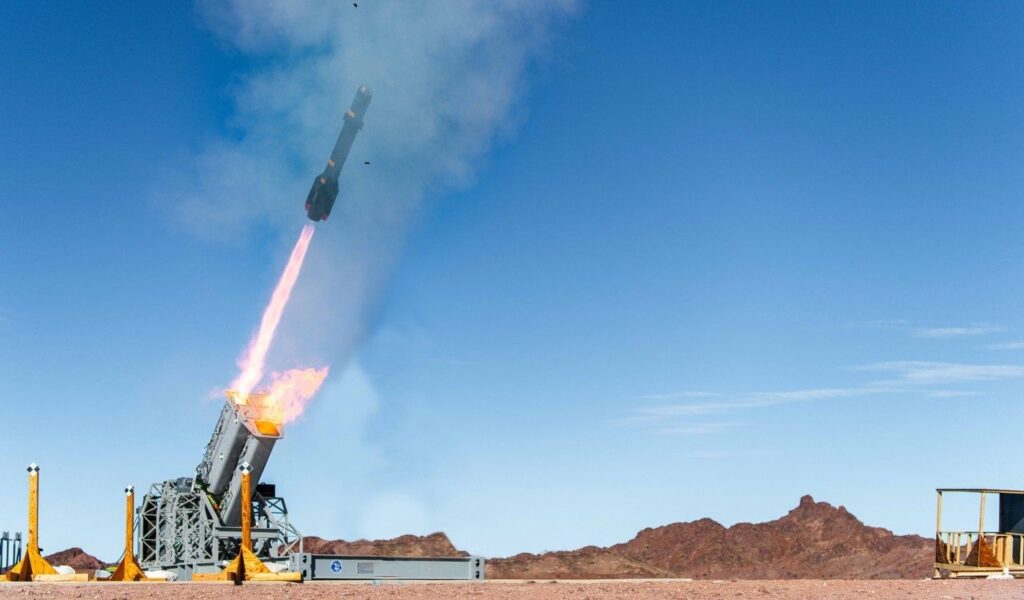
  • SM-2 is a cornerstone of a ship’s layered defense. It provides firepower against high-speed, highly maneuverable anti-ship missiles and aircraft and protects naval assets that give warfighters greater operational flexibility.  

  • The missile can be launched from the MK-41 Vertical Launcher System (VLS) and MK-57 Advanced VLS. It will remain a primary anti-air warfare effector for USN Aegis destroyers and cruisers for several more decades. 

  • More than 12,000 SM-2 missiles have been delivered to the U.S. and allied customers. International customers include Australia, Canada, Germany, Japan, Korea, Netherlands, Spain and Taiwan. Chile and Denmark will be the two newest SM-2 missile customers. 

  • The U.S. Navy confirmed it fired SM-2 to intercept anti-ship missiles and drones in the Red Sea in early 2024 to defend against attacks by Houthi rebels targeting commercial vessels transiting the waterway.   


Leonardo DRS Completes First Open-Water Demonstration of Counter-UAS Equipment 

Concept USV with integrated Leonardo DRS MEP. (Leonardo DRS) 

From Leonardo DRS, Aug. 12, 2025 

ARLINGTON, Va., Aug. 12, 2025  ̶   Leonardo DRS, Inc. (NASDAQ: DRS) announced today that is has successfully completed its first series of open-water demonstrations of its advanced maritime Mission Equipment Package (MEP) for counterUAS (CUAS) naval fleet protection.  

The DRS maritime MEP is a scalable C-UAS system based on DRS’s proven land-based mobile short-range air defense and C-UAS systems.  This system is designed to be mounted on a range of small uncrewed surface vessels providing remote ship protection at varying distances, providing a real solution as the Navy looks to autonomous surface vessels to protect ships from air and surface threats. 

The initial demonstrations were conducted under realistic sea conditions and demonstrated the MEP’s core integrated systems performance – the detection, identification and tracking of a UAS threat and counter-surface ship tracking. The mission equipment package used in the demonstration included a suite of DRS sensors and command-and-control technologies including the BlackLab passive radio frequency (RF) detection system, STAG electro-optic/infrared (EO/IR) gimbal with advanced thermal cameras, and a tactical data management system using DRS’s sensor fusion operating system and AI to support fusion and target recognition using RF and Optical modalities. 

“The U.S. Navy faces the same evolving drone threats as our land forces, and we recognize the urgency of delivering a reliable solution to protect the lives of sailors,” said Cari Ossenfort, senior vice president and general manager of the Leonardo DRS Naval Electronics business unit. “By leveraging our proven expertise in mobile ground-based counter-UAS and short-range air defense systems, we have rapidly developed and demonstrated a maritime force protection capability that provides sailors with full-spectrum situational awareness and the tools to detect, track, and defeat threats at the tactical edge.” 

The DRS Maritime MEP is designed for mission-flexibility through modularity and platform agnosticism. It is able to integrate advanced active and passive RF, EO/IR sensors, 4G/5G electronicwarfare systems, and scalable kinetic or nonkinetic effectors using its MOSA open system architecture embedded in the Leonardo DRS operating system. 

The development and integration of the maritime Mission Equipment Package is an example of DRS’s deep experience as a leading innovator and integrator supporting a wide range of missions for the U.S. military and allies around the world. The company’s integration capability extends across all domains to support force protection, computer networking and C5I, as well as naval power and propulsion systems. 


Coast Guard Awards $32M for Runway Reconstruction at Base Elizabeth City, NC

From U.S. Coast Guard East District, Aug. 12, 2025 

NORFOLK, Va. – The U.S. Coast Guard’s Facilities Design and Construction Center in Norfolk, Virginia, has awarded RQ Construction a $32 million design-build contract for the reconstruction of crosswind Runway 1-19 and the restoration of taxiways Kilo and Golf at Base Elizabeth City, North Carolina. 

The project involves a complete reconstruction of Runway 1-19, which measures 4,518 feet in length and 150 feet in width. The scope of work also includes upgrading the runway lighting system, encompassing runway end identifier lights, edge lights, guidance signs, associated electrical infrastructure and taxiway lighting. A new end-of-runway turnaround apron will be constructed at the Runway 1-19 approach end. 

“This significant infrastructure investment will greatly improve air traffic operations and enhance air traffic safety at Base Elizabeth City,” said Capt. Neal Armstrong, commanding officer of the Coast Guard Facilities Design and Construction Center. “Importantly, the project will be constructed without requiring the closure of the primary Runway 10-28, minimizing disruption to ongoing operations.” 

Construction is scheduled to begin in 2026 and is expected to be completed by fall 2027. 

Base Elizabeth City is a key Coast Guard installation that coordinates and provides regional mission support, including critical search and rescue missions, within the U.S. Coast Guard East District. Air Station Elizabeth City operates HC-130J Hercules aircraft and MH-60T Jayhawk helicopters. Base Elizabeth City is also home to the Coast Guard Aviation Logistics Center, which provides depot-level maintenance for all fixed- and rotary-wing aircraft (HC-27J, HC-144, HC-130J/H, MH-60T and MH-65D), and the Elizabeth City Regional Airport, which hosts a variety of general aviation and light commercial aircraft. 


Coast Guard Commissions USCGC Earl Cunningham in Kodiak, Alaska 

The Coast Guard commissioned its newest cutter, Coast Guard Cutter Earl Cunningham (WPC 1159), for official entry into its service fleet during a ceremony held in Kodiak, Alaska, Aug. 11, 2025. The ceremony was presided over by Adm. Kevin Lunday, acting commandant of the Coast Guard, and members of the Cunningham family were also in attendance, including the cutter’s sponsor, Penney Helmer, who is also the granddaughter of Earl Cunningham. (U.S. Coast Guard photo by PA3 Carmen Caver)

From Coast Guard Arctic District Public Affairs, Aug. 11, 2025 

KODIAK, Alaska — The U.S. Coast Guard commissioned its newest cutter, Coast Guard Cutter Earl Cunningham (WPC 1159), for official entry into its service fleet during a ceremony held in Kodiak, Monday. 

The ceremony was presided over by Adm. Kevin Lunday, acting commandant of the Coast Guard. Members of the Cunningham family were also in attendance, including the cutter’s sponsor, Penney Helmer, granddaughter of Earl Cunningham.  

“Commissioning the USCGC Earl Cunningham strengthens our ability to control, secure, and defend Alaska’s U.S. border and maritime approaches, protect resources vital to our economic prosperity, and respond to crises throughout the Aleutian Islands,” said Adm. Lunday. “This crew will honor the heroic legacy and selfless devotion to duty exemplified by Petty Officer Cunningham in the years ahead.” 

The Earl Cunningham is the 59th Fast Response Cutter (FRC) in the service and the second of three FRCs scheduled to be homeported at Coast Guard Base Kodiak. The crew of the Cunningham primarily serves in and around the Aleutian Islands, Bering Sea, Gulf of Alaska, and North Pacific Ocean. The cutter is designed for missions such as search and rescue; fishery patrols; drug and migrant interdiction; national defense; and ports, waterways, and coastal security. 

The namesake for the cutter, Petty Officer 2nd Class Earl Cunningham, enlisted in the Coast Guard in 1928 and was appointed as a surfman. On February 8, 1936, Cunningham volunteered to rescue two ice fishermen that were trapped in the water on Lake Michigan. Cunningham was able to reach them on his skiff and pulled them out of the water. However, adverse weather conditions prevented them from returning to shore. 

Three days later, one of the fishermen walked 9 miles across the ice onto shore to safety. The other died trying to make it across the ice with him. Cunningham had died and was found on February 12, frozen in place, still manning the oars of the rescue skiff. 

For his ultimate sacrifice, Cunningham was awarded the Gold Life Saving Metal posthumously. He was survived by his wife Helen and three sons. 

Cunningham had also previously served in the Army and fought in the trenches of France during World War I, leaving the service as a corporal to eventually join the Coast Guard.    

The Coast Guard has ordered a series of new FRCs to replace the 1980s-era Island-class 110-foot patrol boats. Supported by historic investments made possible through President Trump’s One Big Beautiful Bill Act, the legislation provides nearly $25 billion – the largest single funding commitment in Coast Guard history – including $1 billion dollars for additional FRCs. 

The FRCs feature advanced command, control, communications, computers, intelligence, surveillance and reconnaissance equipment, and over-the-horizon cutter boat deployment, enhancing the Coast Guard’s operations to control, secure, and defend the U.S. border and maritime approaches. These new assets and capabilities continue the Coast Guard’s modernization through Force Design 2028, an initiative introduced by Secretary of Homeland Security Kristi Noem to transform the Coast Guard into a more agile, capable and responsive fighting force. 

The commissioning ceremony is a traditional milestone in the life of a cutter that marks its entry into active service and represents the cutter’s readiness to conduct Coast Guard operations.  


Fairbanks Morse Defense to Supply Valves, Actuators for U.S. Coast Guard WCC Program 

BELOIT, Wis. – August 12, 2025 – Fairbanks Morse Defense (FMD) has secured a contract from Birdon America to supply key fluid control components for the U.S. Coast Guard’s Waterways Commerce Cutter (WCC) program. The company will deliver motor-operated valves for the first two vessels.  

“Safeguarding maritime commerce extends beyond the open ocean. We must also ensure the security and reliability of our inland waterways,” said Michael Johnston, President of Components at Fairbanks Morse Defense. “This contract underscores Fairbanks Morse Defense’s enduring commitment to maritime readiness across all critical corridors that drive the nation’s economy.”  

 The WCC program is a major modernization effort to replace the Coast Guard’s decades-old fleet of inland buoy and construction tenders, which is approaching obsolescence. These vessels are responsible for maintaining more than 28,000 aids to navigation across 12,000 miles of inland waterways, which are critical routes for the transport of over 630 million tons of cargo annually. Beyond navigation, the cutters also support search and rescue, environmental protection, marine safety, and port security.  

The new fleet will have up to 30 vessels consisting of three designs: River Buoy Tenders, Inland Construction Tenders, and Inland Buoy Tenders. The first of these new vessels, which will be constructed at Birdon’s recently acquired Bayou La Batre shipyard in Alabama, includes sixteen River Buoy Tenders and eleven Inland Construction Tenders.   

Initial deliveries are expected to be operational in 2027.  

 Acquired by Fairbanks Morse Defense in 2021, Hunt Valve, together with its divisions, Hunt Valve Actuator, Montreal Bronze, and Pima Valve, LLC, is a trusted provider of advanced fluid power engineering solutions for U.S. and Canadian maritime defense forces. The company brings decades of expertise in delivering high-performance, severe-duty valves and engineered system solutions that meet the rigorous standards of the Navy and Coast Guard and are built to endure the world’s most demanding naval environments.