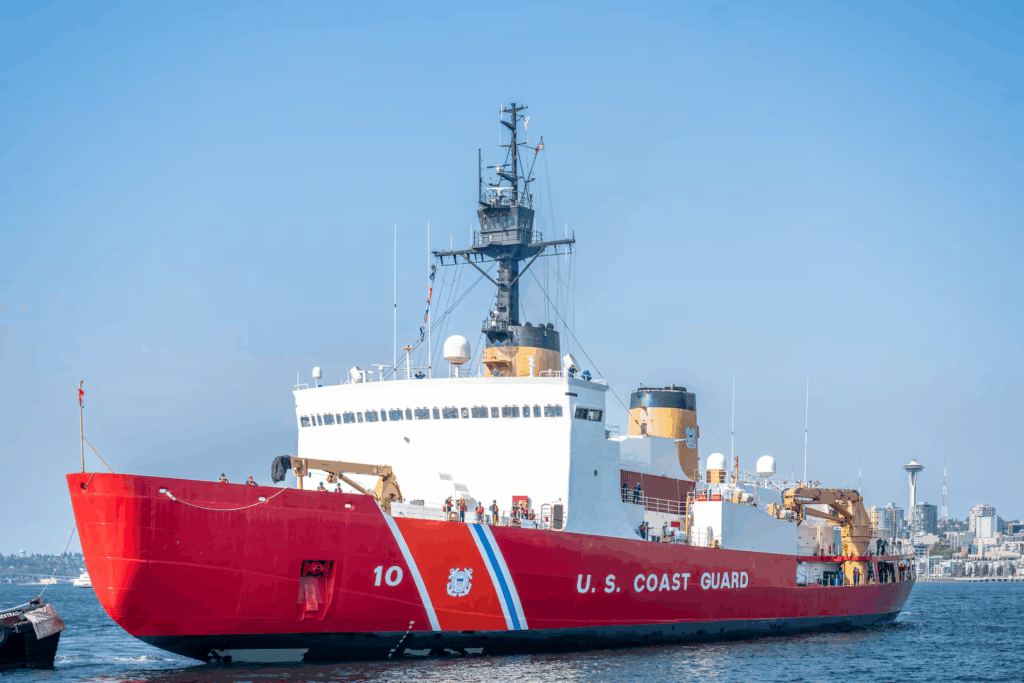
Austal USA Receives Contract for Second Offshore Patrol Cutter

Release From Austal USA

Mobile, Ala. –  Austal USA has received a contract option award from the U.S. Coast Guard for the construction of the second Stage 2 Heritage-class Offshore Patrol Cutter (OPC) and acquisition of long lead-time material to support construction of a third Stage 2 OPC.  The $273 million option is part of a contract that includes options for up to 11 OPCs with a potential value of $3.3 billion.  

“The exercise of this option is a strong sign of the successful partnership between the Coast Guard and our shipbuilding team on the OPC program,” commented Austal USA President Michelle Kruger. “This award is an important step in moving into serial production and delivering this critical capability.  It is a testament to the capabilities of our talented shipbuilders at Austal USA.” 

Austal USA began building the company’s first OPC, Pickering, last summer.  All of Pickering’s steel modules are under construction in Austal USA’s steel assembly line.  Construction on the second cutter will begin this week. Progress on the OPC program is occurring concurrently with a major facility with $750M in construction underway to increase capacity for both surface vessel and submarine manufacturing.  The OPC joins the U.S. Navy’s Towing Salvage and Rescue (T-ATS) and Landing Craft Utility (LCU) programs in serial production in the company’s Mobile ship manufacturing facility.   

The 360-foot OPC will provide the majority of the Coast Guard’s offshore presence conducting a variety of missions including law enforcement, drug and migrant interdiction, and search and rescue.  With a range of 10,200 nautical miles at 14 knots and a 60-day endurance period, each OPC will be capable of deploying independently or as part of task groups, serving as a mobile command and control platform for surge operations such as hurricane response, mass migration incidents and other events. The cutters will also support Arctic objectives by helping regulate and protect emerging commerce and energy exploration in Alaska. 


L3Harris Successfully Tests New Power Plant System for Advanced Lightweight Torpedo

Release From Aerojet Rocketdyne

L3Harris Technologies has successfully completed testing of the first power plant system for the Stored Chemical Energy Propulsion System (SCEPS) that will power the U.S. Navy’s MK 54 MOD 2 Increment 2 Advanced Lightweight Torpedo. The power plant system testing validated the functionality and performance of this key component and positions L3Harris to begin SCEPS design verification testing of the fully integrated system later this year. 

L3Harris is on contract with the Navy to deliver proof of design for SCEPS propulsion for the MK 54 MOD 2 torpedo, which includes the power plant system and an integrated tail and torpedo afterbody assembly. 

“The power plant system is at the very heart of the propulsion system that will power the Navy’s MK 54 MOD 2 torpedo,” said Scott Alexander, President, Missile Solutions, Aerojet Rocketdyne, L3Harris. “We are pleased with the performance of the system during these tests and look forward to completing design verification testing of the entire afterbody later this year.” 

L3Harris’ Center of Excellence for Undersea Propulsion Manufacturing, based in Orlando, Florida, includes the only SCEPS manufacturing capability within the U.S. industrial base, and plays a key role supporting the Navy’s next generation torpedoes. In parallel with ongoing U.S. Navy contracts, the company has been independently funding fabrication and testing of prototype SCEPS components to further the innovative technology. 

SCEPS uses a lithium boiler to generate heat used to create steam that drives a turbine to propel the torpedo to intercept its intended target. The innovative propulsion system will significantly improve U.S. Navy torpedo capabilities. 


Shield AI’s New V-BAT Passes Operational Evaluation with U.S. Coast Guard

Release From Shield AI

SAN DIEGO (July 31, 2025) – Shield AI, the deep-tech company developing cutting-edge autonomy software and next-generation defense aircraft, announced that its new V-BAT 5.3 unmanned aircraft system (UAS) has successfully completed Operational Test & Evaluation (OT&E) with the U.S. Coast Guard.   

The V-BAT passed the operational test by scoring 100% on all Key Performance Parameters and Key System Attributes aboard Coast Guard Cutter Midgett over the course of four days of flight tests. This milestone clears the way for full deployment under a $198 million indefinite-delivery, indefinite-quantity firm fixed-price contract awarded in June 2024 to deliver Intelligence, Surveillance, and Reconnaissance (ISR) services using the V-BAT platform.  

“V-BAT’s role in the Coast Guard’s transformation under Force Design 2028 underscores how rapidly unmanned systems are reshaping maritime operations,” said Brandon Tseng, Shield AI’s President, Co-founder, and former Navy SEAL. “Passing this OT&E on time and on target is an important milestone, but it’s just the beginning. Our focus now turns to expanding the V-BAT capability within the Coast Guard to deliver outcomes every day at unprecedented scale.”  

V-BAT is Shield AI’s operationally deployed single-engine, ducted-fan vertical take-off and landing (VTOL) UAS, capable of launching and recovering without personnel. Trusted by U.S. and international forces, it supports a broad range of missions across Group 1 to Group 5 categories and beyond. 


QinetiQ US Secures $26M in Naval Defense Contracts with General Dynamics Electric Boat

Release From QintetiQ

Multi-year agreement strengthens QinetiQ’s position in naval defense systems with critical components for Virginia and Columbia class submarines 

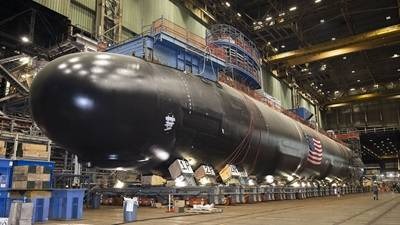
MCLEAN, Va., July 29, 2025 — QinetiQ US secures approximately $26 million in subcontracts from General Dynamics Electric Boat to deliver key electrical and electromechanical systems for the U.S. Navy’s Virginia and Columbia class submarine programs. 

Under these contracts, QinetiQ US will build, test and deliver complex electrical and electromechanical systems that enable critical onboard operations. These specialized components play vital roles in performance and mission effectiveness. 

“These awards highlight Electric Boat’s confidence in QinetiQ’s engineering expertise, manufacturing capability and our role within the Navy submarine industrial base to deliver mission-critical systems for the nation’s fleet,” said Tom Vecchiolla, President and Chief Executive of QinetiQ US. “Our technical solutions support enhanced operational capabilities for these advanced submarines, enabling the U.S. Navy’s undersea dominance.” 

The Virginia and Columbia class submarines represent the current and future of the U.S. Navy’s undersea warfare capabilities. The Virginia class is a nuclear-powered fast-attack submarine designed to excel in littoral and deep-water missions, while the Columbia class will replace the Ohio-class ballistic missile submarines as a critical component of the nation’s nuclear deterrent. 

Production of all electrical and electromechanical systems will take place at QinetiQ’s US-based manufacturing facilities with deliveries scheduled throughout the period of performance. 


F/A-18 and EA-18G Surpass 12 Million Flight Hours 

A formation of Air Test and Evaluation Squadron (VX) 31 “Dust Devils” aircraft, including an EA-18G Growler, AV-8B Harrier II+, an F/A-18E Super Hornet, and an F/A-18D Hornet, flies over Point Mugu’s Sea Range in Californation during a photo exercise. These aircraft demonstrate the Naval Air Warfare Center Weapons Division’s commitment to advancing fleet capabilities through rigorous testing and operational support.  

RELEASE FROM NAVAL AIR SYSTEMS COMMAND

NAS PATUXENT RIVER, Md. — The U.S. Navy’s F/A-18 and EA-18G aircraft fleet has surpassed 12 million flight hours, marking an important milestone for one of the most enduring families of aircraft in modern naval aviation. This achievement underscores the capability, reliability and availability of these aircraft, which have served as the backbone of the U.S. Navy and Marine Corps air power for decades.   

Put into perspective, the aircraft have completed the equivalent of 500,000 days, or nearly 1,370 years, of nonstop flight defending national interests and ensuring global security.   

“When you call the roar of these aircraft ‘the sound of freedom,’ it holds real weight,” said Capt. Michael Burks, program manager for the F/A-18 and EA-18G program office (PMA-265). “Throughout their service, the F/A-18 and EA-18G family has supported nearly every major U.S. military conflict of the past 40 years and continues to adapt to rapidly changing threat environments. From the initial deployment of the Hornet to the advanced capabilities of the Super Hornet and Growler, these aircraft have delivered forward presence, tactical airpower and critical electronic warfare capabilities around the globe.” 

Since the F/A-18 Hornet was first introduced in the 1980s, it has quickly become a versatile and capable fighter and attack aircraft. Its successor, the F/A-18E/F Super Hornet, and its electronic warfare counterpart, the EA-18G Growler, introduced significant advancements in radar, avionics, payload capacity and electronic attack.  

Key modernization efforts include Super Hornet Service Life Modification (SLM), which extends Super Hornet service life from 6,000 to 10,000 flight hours, and the delivery of Block III Super Hornets, which are equipped with advanced sensors, enhanced survivability and a redesigned cockpit for improved pilot performance. Growler Block II modifications will enhance mission systems, enable future capability growth and strengthen the Navy’s electronic warfare superiority.  

“This milestone is a significant achievement and a reflection of the generations of Sailors, Marines and civilians who sustain, fly and innovate these platforms every day,” said Burks. “Twelve million flight hours demonstrates our commitment to delivering world-class capability, enabling our warfighters to execute their missions with an asymmetric advantage and return home safely.” 

The flight hour milestone comes at a notable time for naval aviation, coinciding with the 30th anniversary of the Super Hornet’s first flight in November, and as the U.S. Navy and Marine Corps prepare to celebrate 250 years of service to the nation this year.   

As part of Program Executive Office for Tactical Aircraft Programs (PEO(T)), PMA-265 supports, sustains and advances the F/A-18A-D Hornet, F/A-18E/F Super Hornet and EA-18G Growler, delivering critical capabilities to ensure naval aviators succeed in dynamic and contested operational environments.    


USNS Comfort Departs Costa Rica After Fifth CP25 Mission Stop

LIMÓN, Costa Rica (July 28, 2025) Sailors assigned to the Mercy-class hospital ship USNS Comfort (T-AH 20) assist a patient departing Comfort in Limón, Costa Rica during Continuing Promise 2025, July 28, 2025. (U.S. Navy photo by MC2 Thomas Boatright)

By USNAVSOUTH/4TH FLEET PUBLIC AFFAIRS

LIMÓN, Costa Rica  –  The Mercy-class hospital ship USNS Comfort (T-AH 20) departed from Limón, Costa Rica, August 1, 2025, after spending eight days providing medical care, dental care, veterinary care, and multiple subject matter exchanges for Continuing Promise 2025 (CP25). 
 
“As the Continuing Promise mission continues, we leave Costa Rica not only with a sense of accomplishment in the work we’ve done, but with a profound appreciation for the enduring partnership we’ve forged,” said Capt. Ryan Kendall, commodore, Destroyer Squadron 40 and CP25 mission commander. “We thank our Costa Rican counterparts for their warm welcome and dedication to this mission, as we eagerly anticipate the opportunity to build upon these strong ties in the years to come.” 
 
U.S. and Costa Rican medical providers encountered 2,200 patients at the Limón mobile medical site set up at Hernán Garrón Salazar Terminal. Additionally, team Comfort filled 3,323 pharmaceutical prescriptions, conducted 371 dental procedures, distributed 856 pairs of glasses and 706 sunglasses, and performed 65 surgeries aboard Comfort, including 12 pediatric surgeries. 
 
“We were able to provide the best care to Costa Rica with the resources that we had, within the time that we had,” said Capt. Todd Mondzelewski, an ophthalmologist assigned to Comfort. “We have been able to do a lot of surgeries and provide exceptional medical care for every country that we’ve been to, and I hope to be able to continue doing just that.” 
 
The team conducted subject matter expert exchanges (SMEE) including a trauma symposium, preventive medicine classes, basic life-saving techniques, and a tactical combat casualty care course. Over three days, 13 SMEE events occurred with 228 participants from the Costa Rican Red Cross, first responders, and Servicio Nacional de Guardacostas, Costa Rica’s Coast Guard. 
 
Besides patient and medical services, U.S. Army veterinarians from the 248th Medical Detachment Veterinary Service Support encountered 1,741 small animals, including 1,188 routine checkups, and performed 553 neuter and spay procedures in Limón. 
 
“It was a great experience overall,” said Spc. Ali Peer, a veterinary technician assigned to the 248th Medical Detachment Veterinary Support Services. “We did more than 1,000 vaccinations and consultations on the animals and made a long-lasting impact in Costa Rica.” 
 
Comfort’s time in Limón was more than just a chance to offer medical and veterinary services to Costa Rican citizens; it also allowed service members to reunite with their loved ones. 
 
“I haven’t seen my dad in three years,” said Hospital Corpsman 2nd Class Veronica Hernandez Araya, assigned to Comfort. “I was nervous to see my dad in a military setting, but he was super happy to see me, hugged me, and told me he was proud of me, which made it all worth it.” 
 
Throughout the Comfort’s time in Limón, the U.S. Navy Fleet Forces Band “Uncharted Waters” performed for 6 days at a variety of events for more than 3,560 Costa Ricans. U.S. service members also had the opportunity to participate in community relations events, including a park cleaning and restoration, a basketball game, a cricket game, and a kickball game against students from Colegio Tecnico Professional De Limón. 
 
Lastly, Seabees from Naval Mobile Construction Battalion (NMCB) 11 dedicated 615 man-hours in repairing two school sites: Colegio de Limón and Colegio Tecnico Professional. The repairs included replacing a rotting wooden stage, installing roofing over walkways, and painting a 10,000 square foot roof to prevent roof corrosion. 
 
Following Costa Rica, the Comfort will head to its sixth and final mission stop of CP25 in the capital of Trinidad and Tobago, Port of Spain. 
 
CP25 marks the 16th mission to the region since 2007 and the eighth aboard Comfort. The mission will foster goodwill, strengthen existing partnerships with partner nations, and encourage the establishment of new partnerships among countries, non-federal entities, and international organizations. 
 
U.S. Naval Forces Southern Command/U.S. 4th Fleet supports U.S. Southern Command’s joint and combined military operations by employing maritime forces in cooperative maritime security operations to maintain access, enhance interoperability, and build enduring partnerships in order to enhance regional security and promote peace, stability and prosperity in the Caribbean, Central and South American region. 


General Dynamics Bath Iron Works Awarded Contract for Additional DDG 51 Destroyer 

Release From General Dynamics Bath Iron Works

BATH, Maine – General Dynamics Bath Iron Works, a business unit of General Dynamics (NYSE:GD), announced today that the U.S. Navy has exercised an option to add an additional DDG 51 destroyer to the multi-year contract awarded in 2023.  

“We are proud to be selected to build this ship for the U.S. Navy and to continue our legacy of contributing to the nation’s defense,” said Charles F. Krugh, president of Bath Iron Works. “I appreciate the efforts of our team to improve the construction process and build to the plan. We are clawing back schedule so we can deliver more Bath-built ships to our Navy. I would also like to acknowledge and thank our Congressional delegation who added this ship to the Fiscal Year 2025 Defense Appropriations Bill.” 

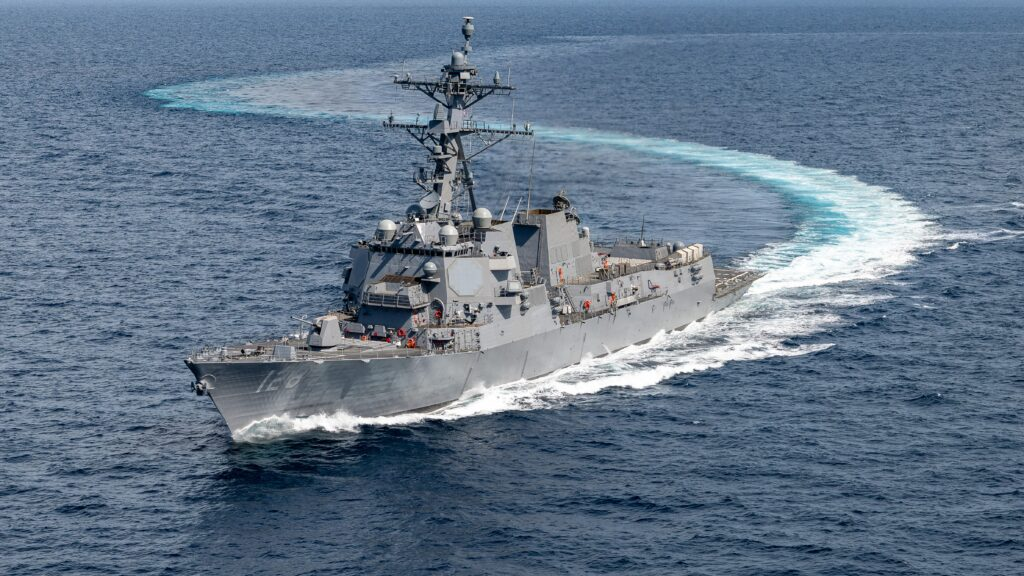
Bath Iron Works currently has under construction the Flight IIA Arleigh Burke-class destroyers Harvey C. Barnum Jr. (DDG 124) and Patrick Gallagher (DDG 127) as well as the Flight III configuration destroyers Louis H. Wilson Jr. (DDG 126), William Charette (DDG 130), Quentin Walsh (DDG 132), John E. Kilmer (DDG 134) and Richard G. Lugar (DDG 136). 


Admiral Caudle Confirmed as Chief of Naval Operations 

ARLINGTON, Va. — Admiral Daryl Caudle was confirmed July 31 by the U.S. Senate as the 34th chief of naval operations (CNO). Caudle was serving as commander, U.S. Fleet Forces Command when he was nominated by the president. 

Adm. Daryl Caudle is a native of Winston-Salem, North Carolina and a 1985 graduate of North Carolina State University (magna cum laude) with a degree in chemical engineering. He was then commissioned after attending Officer Candidate School in Newport, Rhode Island. Caudle holds advanced degrees from the Naval Postgraduate School, Master of Science (distinction) in Physics; from Old Dominion University, and Master of Science in Engineering Management. He also attended the School of Advanced Studies, University of Phoenix, where he obtained a Doctor of Management in Organizational Leadership with a specialization in Information Systems and Technology. 

His doctoral dissertation research was conducted on military decision making uncertainty regarding the use of force in cyberspace. He is also a licensed professional engineer. 

He assumed command of U.S. Fleet Forces Command; U.S. Naval Forces Northern Command; U.S. Naval Forces Strategic Command; and U.S. Strategic Command Joint Force Maritime Component Commander on December 7, 2021. 

Prior to this assignment, he served as commander, Submarine Forces; commander, Submarine Force Atlantic; commander, Task Force (CTF) 114, CTF 88, and CTF 46; and commander, Allied Submarine Command. 

His other flag assignments include deputy chief for security cooperation, Office of the Defense Representative, Pakistan; deputy commander, Joint Functional Component Command-Global Strike; deputy commander, U.S. 6th Fleet; director of operations U.S. Naval Forces Europe-Africa; commander, Submarine Group Eight; commander, Submarine Force, U.S. Pacific Fleet; and vice director for Strategy, Plans, and Policy on the Joint Staff (J-5) in Washington, D.C. 

His early sea tours included assignments as division officer, USS George Washington Carver (SSBN 656G); engineer, USS Stonewall Jackson (SSN 634B); engineer, USS Sand Lance (SSN 660); and executive officer of USS Montpelier (SSN 765). 

Caudle’s first command assignment was as commanding officer of USS Jefferson City (SSN 759). As deputy commander, Submarine Squadron 11, he served as commanding officer of USS Topeka (SSN 754) and USS Helena (SSN 725) due to emergent losses of the normally assigned commanding officers. He also commanded Submarine Squadron 3. 

His tours ashore include assignments as assistant force nuclear power officer, Commander Submarine Force, U.S. Atlantic Fleet; officer-in-charge of Moored Training Ship (MTS 635); deputy commander of Submarine Squadron 11; assistant deputy director for information and cyberspace policy on the Joint Staff (J-5) in Washington, D.C.; and as chief of staff Commander Submarine Force, U.S. Pacific Fleet. 

His personal decorations include the Navy Distinguished Service Medal, Defense Superior Service Medal (four awards), Legion of Merit (four Awards), Meritorious Service Medal (Three Awards), Navy and Marine Corps Commendation Medal (five Awards), and the Navy and Marine Corps Achievement Medal (four Awards). 


Vice Admiral Dougherty Takes Command of NAVAIR 

From Naval Air Systems Command, Aug 1, 2025  

NAS PATUXENT RIVER, Md. — Vice Adm. John “Doc” Dougherty, IV assumed command of the Naval Air Systems Command Aug. 1. Dougherty relieved Vice Adm. Carl Chebi, who retired after 38 years of distinguished naval service.  

Under Chebi’s leadership, NAVAIR achieved and sustained the highest readiness levels in the history of naval aviation, identified over $3 billion in savings to reinvest in naval aviation priorities, and delivered capabilities that are changing the way the naval aviation trains and fights.   

“I’m incredibly proud of the NAVAIR team’s dedication to delivering the capabilities the fleet needs, when they need them,” said Chebi. “I have full confidence Doc will lead this exceptional workforce to deliver next-level capabilities and readiness for our warfighters.”  

Dougherty brings a powerful combination of acquisition and technical experience to his new role, having served as commander of the Naval Air Warfare Center Aircraft Division and NAVAIR Chief Engineer.   

In his first message to the workforce, Dougherty outlined NAVAIR’s “playbook” for delivering readiness and capability–emphasizing a “fleet first” approach to advancing operational readiness and effectiveness, prioritizing speed, executing with precision, tracking performance and owning results and building trust to align efforts and enable data-informed decisions at the lowest levels.    

A Harrisburg, Pennsylvania native, Dougherty graduated from United States Naval Academy in 1995 and holds both a Master of Business Administration and Master of Systems Engineering from the Naval Postgraduate School. Dougherty’s extensive background includes operational tours flying the F/A-18C Hornet with over 1,200 flight hours and 300 carrier landings, followed by senior acquisition roles managing critical programs including Precision Strike Weapons, F-35 Joint Strike Fighter, and the Navy’s Next Generation Air Dominance Program.  

“It’s a privilege to lead this talented team as we continue advancing naval aviation capabilities and readiness,” Dougherty said. “Our success is measured by the fleet’s success, and that mindset will continue to drive our priorities moving forward.” 


U.S. Coast Guard Cutter Stratton Returns Home Following 134-day Western Pacific Patrol 

U.S. Coast Guard Cutter Stratton (WMSL 752) transits the San Francisco Bay after crossing under the Bay Bridge during the ship’s return to its Alameda, California, July 30, 2025. National security cutters are 418-feet long, 54-feet wide, and can hold a crew of up to 170. (U.S. Coast Guard photo by Petty Officer 3rd Class Austin Wiley)

From U.S. Coast Guard Oceania District, July 31, 2025

ALAMEDA, Calif. — The U.S. Coast Guard Cutter Stratton (WMSL 752) and crew returned to their Base Alameda home port, Wednesday, following a 134-day patrol in the Indo-Pacific. 
 
Stratton’s crew engaged in professional exchanges, cultural events, and joint exercises with Japan, Republic of Korea and the Philippines, including at-sea search-and-rescue and interdiction exercises. 
 
Expanded U.S. Coast Guard presence in the Indo-Pacific facilitates professional exchanges that strengthen our mutual capacity and interoperability with allies and partners, creating opportunities to expand maritime domain awareness in support of a secure and prosperous Indo-Pacific through unrestricted access to the maritime commons. 
 
In Puerta Princesa, Philippines, Stratton conducted joint operations with the U.S. Coast Guard Maritime Security Response Team West and Philippine Coast Guard (PCG) Special Operations Forces and hosted the U.S. Ambassador to the Philippines, MaryKay Carlson, and PCG Commandant Adm. Ronnie Gil Gavan. 
 
In Busan, Republic of Korea, Stratton participated in a search and rescue (SAR) tabletop exercise with ten countries for international mission collaboration. Stratton also conducted a trilateral partner nation engagement with the PCG and Japan Coast Guard in Kagoshima, Japan, during which the crew led ship’s tours, tabletop discussions and an at-sea SAR exercise, marking the first time the PCG operated with the U.S. Coast Guard outside their Exclusive Economic Zone. 
 
While anchored in Koror, Palau, Stratton hosted the President of Palau and U.S. Ambassador to Palau, Joel Ehrendreich. The event highlighted the importance of the U.S partnership as Stratton was the first in its class to visit Palau. 
 
Supporting a White House initiative for the Quadrilateral Security Dialogue, Stratton hosted six observers from India Coast Guard, Japan Coast Guard, and Australian Border Force, for the first-ever Quad at-sea ship observer mission to improve interoperability in the Indo-Pacific. 
 
The U.S. Coast Guard navigates with our Quad partners to leverage and network respective maritime security capabilities toward cooperation on key maritime issues of mutual concern and significant value to Indo-Pacific stability. 
 
Additionally, Stratton’s crew embarked three law enforcement officers from the Republic of the Marshall Islands (RMI) Sea Patrol, who provided a combined presence and conducted two successful maritime law enforcement boardings of commercial fishing vessels operating in the RMI EEZ. While no violations were initially reported from the boarding, potential issues with the catch emerged later and constituted further inspection from RMI. 
 
Stratton’s deployment contributed to regional cooperation and enhanced global maritime governance through integrated deterrence and strengthened partnerships. 
 
“The crew is excited to return home after a long but incredibly important deployment,” says Capt. Dorothy Hernaez, Stratton’s commanding officer. “Stratton and her crew showcased that the U.S. Coast Guard is a global Coast Guard. Through presence and partner engagement in the Indo-Pacific, Stratton advanced regional stability that in turn provides for homeland security, peace, and prosperity.” 
 
Hernaez assumed command of the Stratton during a change of command ceremony held in Honolulu on July 22, as the cutter transited toward its home port. 
 
Commissioned in 2012, Stratton is one of ten Legend-class national security cutters and one of four homeported in Alameda. National security cutters are 418-feet long, 54-feet wide, and have a 4,600 long-ton displacement. They have a top speed of 28 knots, a range of 12,000 nautical miles, and can hold a crew of up to 170. National security cutters routinely conduct operations throughout the Pacific, where their unmatched combination of range, speed, and ability to operate in extreme weather provides the mission flexibility necessary to conduct vital strategic missions. 
 
The namesake of U.S. Coast Guard Cutter Stratton is Capt. Dorothy Stratton, who led the service’s all-female reserve force during World War II. Dorothy Stratton was the first female commissioned officer in the Coast Guard and commanded more than 10,000 personnel. The ship’s motto is “We Can’t Afford Not To.”