Living Namesake Rides First Set of Sea Trials for DDG 124
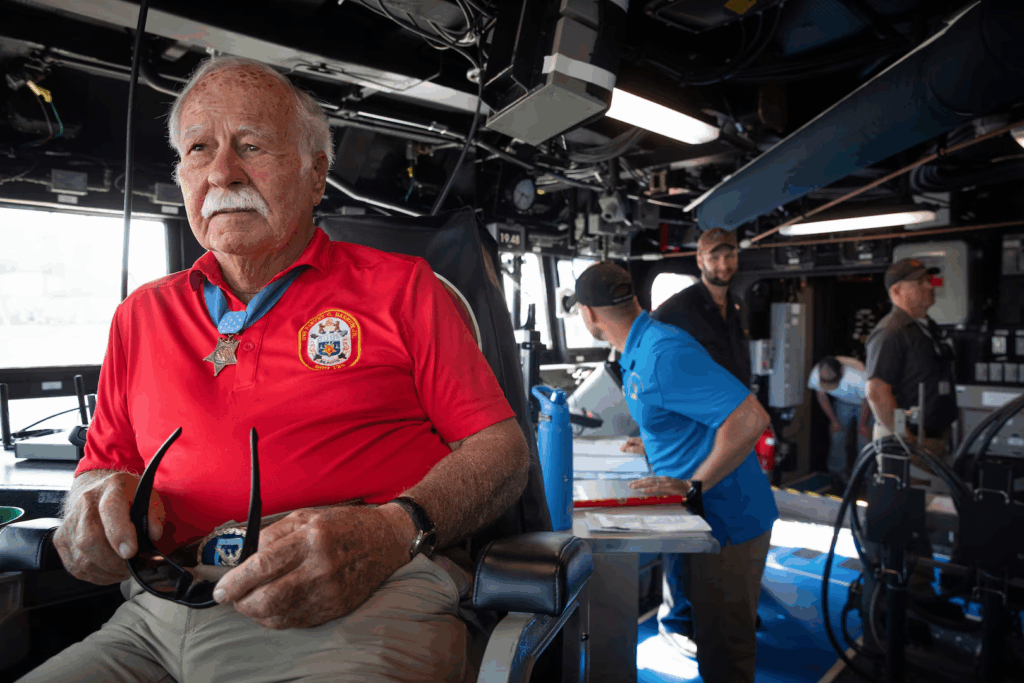
BATH, Maine (July 15, 2025) – U.S. Marine Corps Col. (Ret.) Harvey C. Barnum Jr., a Medal of Honor recipient, sits on the bridge of the future USS Harvey C. Barnum Jr. (DDG 124) during sea trials. The ship is named in honor of Barnum, who received the Medal of Honor for valor during the Vietnam War. (U.S. Navy photo by Laura Lakeway)
By NAVSEA Public Affairs, July 21, 2025
In a rare moment of living history, ship namesake and Medal of Honor recipient, Col. Harvey “Barney” Barnum Jr. joined members of future USS Harvey C. Barnum Jr.’s (DDG 124) crew, the Navy programmatic team, and industry partners onboard the ship’s first set of sea trials, departing from General Dynamics Bath Iron Works, July 15.
Col. Barnum twice served in Vietnam and received his Medal for heroic actions taken against enemy forces at Ky Phu in Quang Tin Province in December 1965 after his company came under enemy fire and was separated from the rest of their battalion. He also served as the deputy assistant secretary of the Navy for reserve affairs.
DDG 124 was named for Col. Barnum in 2016 and is one of 32 DDG 51 class destroyers that are currently named after Medal of Honor recipients.
“It’s a great honor and I was very humbled when I got the call that I was going to have a ship named after me and that it was a warfighter, a DDG Arleigh Burke Class, it made me very proud. I’m very honored to be here for this trial,” said Barnum.
Col. Barnum continues to be a tireless champion of the Navy and Marine Corps team and has closely followed construction of DDG 124. He has been present for all the ship’s significant milestones, including keel laying and christening.
The ship will continue its series of sea trials in advance of delivery to the Navy.
Arleigh Burke-class guided missile destroyers are the backbone of the U.S. Navy’s surface fleet, providing protection to America around the globe. These highly capable, multi-mission ships conduct various operations, from peacetime presence to national security, providing a wide range of warfighting capabilities in multi-threat air, surface, and subsurface domains. These elements of seapower enable the Navy to defend American prosperity and prevent future conflict abroad.
PEO Ships, one of the Department of Defense’s largest acquisition organizations, is responsible for executing the development and procurement of all destroyers, amphibious ships and craft, and auxiliary ships, including special mission ships, sealift ships and support ships.
Fleet Readiness Center Southeast inducts T-45 Goshawks to service life extension production line
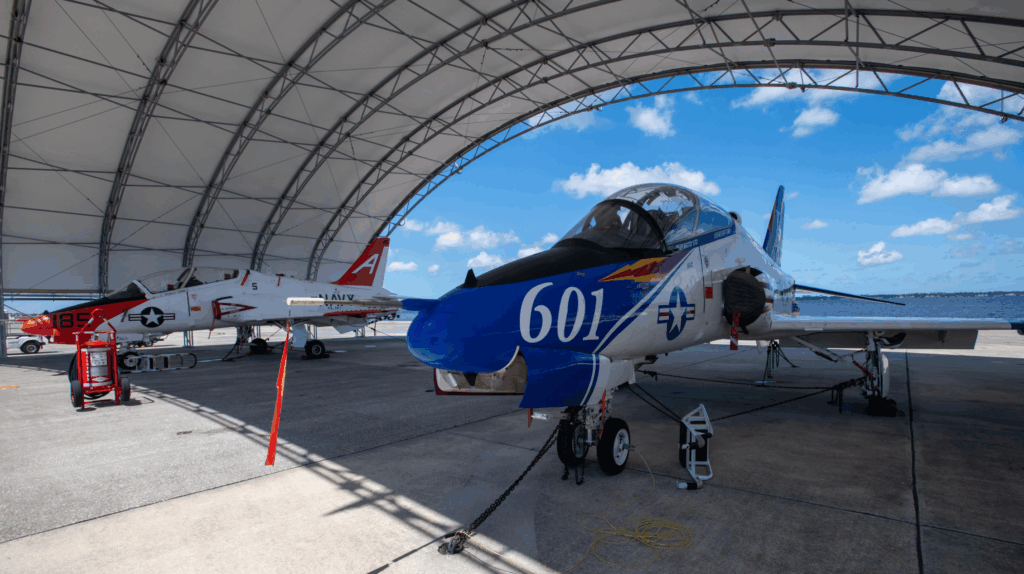
JACKSONVILLE, Fla. (July 1, 2025) Fleet Readiness Center Southeast (FRCSE) inducted its first two T-45 Goshawks into the Service Life Extension Program (SLEP) production line, just 13 months after the Navy identified the requirement. The Goshawk is the primary tandem-seat jet trainer used by the Navy and Marine Corps for pilot carrier qualification. (U.S. Navy Photo by Toiete Jackson)
From Fleet Readiness Center Southeast, July 22, 2025
JACKSONVILLE, Fla. — Fleet Readiness Center Southeast (FRCSE) has inducted its first two T-45 Goshawk aircraft into the Service Life Extension Program (SLEP) production line, 13 months after the Navy identified the requirement.
The Goshawk is the primary tandem-seat jet trainer used by the Navy and Marine Corps for pilot carrier qualification – a mandatory certification pilots must complete before flying any other carrier-capable aircraft.
One T-45 will undergo a wing swap, while the other will receive the full scope of SLEP work. The wing swap process allows aircraft to fly into FRCSE and exchange their wings with ones that have already undergone repair, enabling more efficient turnaround times. The capability required FRCSE to develop an incremental approach to perform SLEP on the wings before aircraft fuselage induction for full SLEP production line establishment.
“The V2X crew was on site to assist us upon the arrival of the first aircraft,” said James Bock, an FRCSE Business Development Office aircraft, structural and mechanical component lead. “Through close coordination with PMA-273 and CNATRA, we will be able to work collaboratively to ensure our artisans receive the highest quality training.”
V2X currently manages all T-45 organizational-level, intermediate-level and depot-level maintenance. V2X provided FRCSE with organizational-level training to FRCSE artisans to support the SLEP and help achieve the Navy’s readiness and pilot training objectives. FRCSE relied heavily on collaboration with V2X, PMA-273 and CNATRA to coordinate the organizational-level training required for the first two aircraft arrivals.
“The T-45 aircraft encompasses 29 distinct configurations, making the partnership with V2X particularly critical,” said Bock. “Organizational-level training is tailored specifically to the type, model and series, so ensuring our artisans are expertly trained on these unique variants is essential. Throughout a full service life extension repair, there are 17 technical directives that must be accurately completed, underscoring the complexity and importance of the collaboration in support of fleet requirements.”
FRCSE expects to conduct T-45 repairs through 2036.
U.S. Coast Guard completes historic Quad Sail to strengthen Indo-Pacific maritime partnership
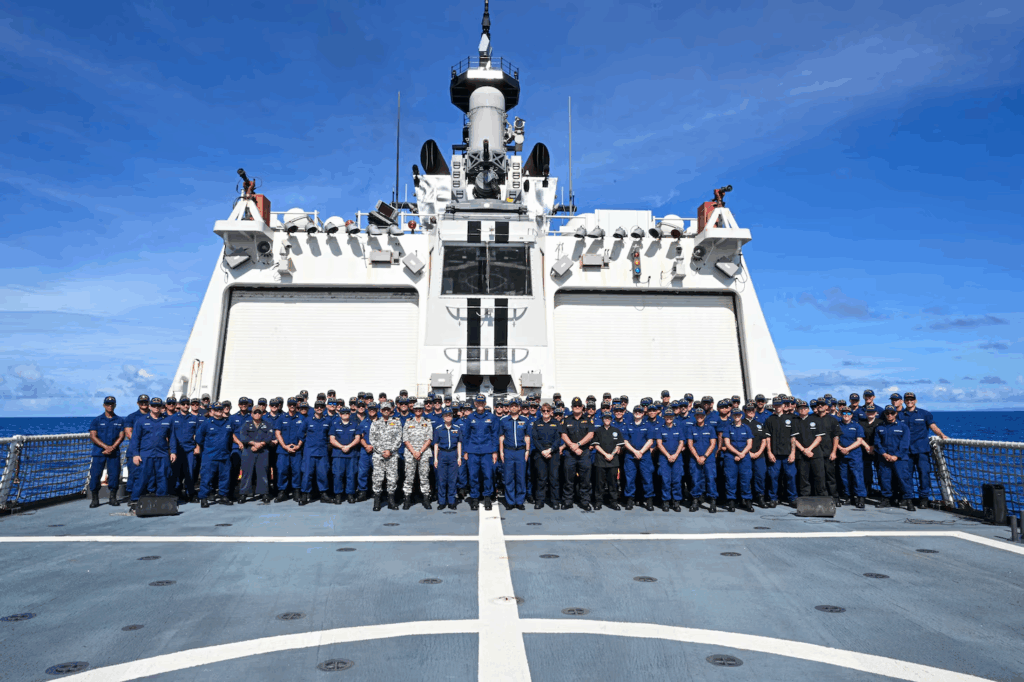
Quad partners from the U.S. Coast Guard, Japan Coast Guard, Australian Border Force, Indian Coast Guard and the command and crew of the Legend-class U.S. Coast Guard Cutter Stratton (WMSL 752) take a photo on the flight deck during the first Quad at-sea mission while Stratton patrols the Pacific Ocean, July 1, 2025. (U.S. Coast Guard photo by Petty Officer 2nd Class Kate Kilroy)
From U.S. 7th Fleet, July 20, 2025
SANTA RITA, Guam – The U.S. Coast Guard Cutter Stratton (WMSL 752) arrived in Guam, July 3, after a landmark multinational sail with representatives aboard from the maritime forces from Australia, India, and Japan—collectively known as the Quad.
As four leading maritime nations in the Indo-Pacific, Quad nations are united in our conviction that peace and stability in the maritime domain underpin the security and prosperity of the region. We are committed to a region where all countries are free from coercion and strongly oppose any unilateral actions that seek to change the status quo by force or coercion.
This inaugural event underscored the U.S. Coast Guard’s commitment to fostering a free and open Indo-Pacific and reflected the U.S. Coast Guard’s strategic priority to strengthen partnerships that uphold the rule of law, sovereignty, and regional stability. The Quad Sail enhanced joint operational capabilities, boosted readiness, and promoted a secure Indo-Pacific region with unrestricted, lawful access to maritime domains.
“The Quad Sail signaled a hallmark moment for our respective nations and the Indo-Pacific,” said Capt. Brian Krautler, commanding officer of the Stratton. “Together, we fostered professional exchanges and enhanced maritime domain awareness. We believe in the necessity of a prosperous and secure Indo-Pacific and share concern over the rise of malign behaviors that undercut law and order and erode maritime safety and security. The Stratton team is honored to represent the U.S. Coast Guard in this historic endeavor.”
The U.S. Coast Guard’s mission in the Indo-Pacific relies on close collaboration with allies, enhancing operational flexibility and delivering a wide range of capabilities. National security cutters, such as the Stratton, routinely operate across the Pacific.
Throughout Stratton’s patrol, the crew has engaged with regional partners and participated in joint operations to advance maritime safety and security. Stratton is currently assigned to Destroyer Squadron (DESRON) 15, the Navy’s largest DESRON and the U.S. 7th Fleet’s principal surface force. DESRON 15 regularly assumes tactical control of surface units operating in the area.
Commissioned in 2012, Stratton is one of 10 Legend-class national security cutters; four of the 10 are homeported in Alameda, California. These 418-foot vessels, with a 54-foot beam and 4,600 long-ton displacement, have a top speed of 28 knots, a 12,000-nautical-mile range, and a crew capacity of up to 170. Their versatility, range, speed, and ability to operate in extreme weather provide mission flexibility throughout the Pacific.
7th Fleet is the U.S. Navy’s largest forward-deployed numbered fleet and routinely interacts and operates with allies and partners in preserving a free and open Indo-Pacific region.
USNS Comfort Departs Dominican Republic After Fourth CP25 Mission Stop
PUERTO PLATA, Dominican Republic (July 20, 2025) Capt. Grace Key, commanding officer, USNS Comfort Medical Treatment Facility, says goodbye to the Dominican Republic medical team as they depart the Mercy-class hospital ship USNS Comfort (T-AH 20) off the coast of Puerto Plata, Dominican Republic during Continuing Promise 2025, July 20, 2025. (U.S. Navy photo by MC2 Rylin Paul)
By U.S. Naval Forces Southern Command / U.S. 4th Fleet – Continuing Promise Detachment, July 22, 2025
PUERTO PLATA, Dominican Republic – The Mercy-class hospital ship USNS Comfort (T-AH 20) departed from Puerto Plata, Dominican Republic, July 21, 2025, after a four-day mission stop during Continuing Promise 2025 (CP25).
At the Dominican mission stop, Comfort’s team provided medical and dental care, veterinary subject matter exchanges, medical subject matter exchanges, a humanitarian aid and disaster response workshop, band performances, and a beach clean-up event. During CP25, a Dominican military medical team embarked with Comfort, where they worked side-by-side with the ship’s crew to provide care to patients at each site visit of the mission.
“The collaboration we experienced here exemplifies what’s possible when partners come together with a shared commitment to service,” said Capt. Grace Key, commanding officer, USNS Comfort Medical Treatment Facility. “It’s through teamwork like this that we achieve a lasting impact.”
U.S. and Dominican providers together encountered 1,588 patient at the Puerto Plata medical site. Comfort’s medical and dental teams completed 248 dental cleaning and fillings, filled 1,158 pharmaceutical prescriptions, and distributed 160 assistive devices to Dominican patients. Additionally, 24 surgeries were performed aboard Comfort. A standout moment came from one of Comfort’s hospital corpsmen who, as a child, received dental treatment at a medical site in the Dominican Republic during a Continuing Promise mission stop in 2007. Hospitalman Flor Jones Garcia, assigned to Comfort, had a tooth extracted in the Dominican Republic by the Continuing Promise medical team when she was seven years old.
“It was awesome being back here,” said Jones Garcia, “I was able to see my mother and this was the first time she saw me in uniform, so I was pretty excited. It is absolutely astounding for me to be on the other side and provide medical care. It means everything to me and I know it does to the people of Puerto Plata as well.”
The mission stop also featured the U.S. Fleet Forces Band, “Uncharted Waters,” who had the opportunity to play alongside Dominican Republic ‘Oleaje’ band and Fuerza Aérea de República Dominicana band for Dominican citizens. They performed four concerts at Central Park of Puerto Plata, Dominican Republic with a total audience of 645 people.
“It’s a great opportunity to not only share cultural aspects in terms of dance and music, but it is also to highlight the work the other lines of effort are doing for the Dominicans,” said Ens. Chris McGann, assistant director of the U.S. Fleet Forces Band.
U.S. Army veterinarians from the 248th Medical Detachment Veterinary Service Support also hosted subject matter expert exchanges while in the Dominican Republic. They trained 187 members of the Fuerza Aérea de República Dominicana in K-9 tactical combat casualty care, as well as Dominican dairy farmers on proper cattle care and sanitization techniques. Furthermore, Comfort Sailors taught a tactical combat casualty care course to Armed Forces of the Dominican Republic members and Comfort’s preventive medicine team took part in a two-day health fair hosted by the Dominican Republic’s Ministry of Public Health.
Field training exercises and a beach clean-up were also conducted in Puerto Plata. The combined efforts for the beach clean-up resulted in the 366 hours of work and the removal of 3,152 pounds of trash from the local beaches. Humanitarian Assistance and Disaster Relief (HA/DR) held Search and Rescue (SAR) field training exercises with 160 Dominican participants, including federal firefighters and paramedics.
Following the mission stop in Dominican Republic, Comfort is scheduled to arrive in Limon, Costa Rica for CP25’s fifth mission stop.
CP25 marks the 16th mission to the region since 2007 and the eighth aboard USNS Comfort. The mission will foster goodwill, strengthen existing partnerships with partner nations, and encourage the establishment of new partnerships among countries, non-federal entities, and international organizations.
U.S. Naval Forces Southern Command/U.S. 4th Fleet supports U.S. Southern Command’s joint and combined military operations by employing maritime forces in cooperative maritime security operations to maintain access, enhance interoperability, and build enduring partnerships in order to enhance regional security and promote peace, stability and prosperity in the Caribbean, Central and South American region.
Trilateral Naval Logistics Arrangement for Further Cooperation Signed
From the Navy’s Office of Information, July 11, 2025
BRISBANE, Australia – Senior U.S., Australian and Japanese flag officers agreed today to further enhance logistics interoperability among their maritime forces. Their intent is to enable deeper maritime cooperation among the three nations, building upon their enduring commitment to stability and security in the Indo-Pacific.
Vice Adm. Jeff Jablon (Deputy Chief of Naval Operations for Installations and Logistics, OPNAV N4), Rear Adm. Naoya Hoshi (Director General of Logistics Department, Maritime Staff Office, Japan Maritime Self Defense Force (JMSDF)), and Commodore Catherine Rhodes (Director General Logistics, Royal Australian Navy (RAN)) took part in the signing ceremony aboard USS America (LHA-6) during a port visit in Brisbane.
The U.S. Navy, JMSDF, and RAN routinely collaborate on a bilateral basis for logistics and other topics under a strategic dialogue framework that has been in place for several years. This is the first time a trilateral logistics agreement has been established under this framework.
“Sustainment in depth is a primary objective,” said Vice Adm. Jablon. “We have robust logistics partnerships with Japan and Australia to ensure we can provide the right material and services at the right place, at the right time to mutually support our maritime forces, from day-to-day training during peacetime through contingencies. This arrangement strengthens those commitments and allows us to more easily share information, technologies and processes for greater logistics resiliency.”
Reloading missile systems and flexible refueling are among the areas of cooperation outlined in the agreement.
RAN and U.S. Navy forces have supported missile reloading for each other’s warships in the Indo-Pacific region since 2019. To enhance the capability to reload rapidly at sea, Naval Sea Systems Command (NAVSEA) is developing prototype systems that are compatible with both existing U.S. and partner nation warships’ MK-41 missile launchers and can be utilized to transfer missile canisters between ships in elevated sea states. These systems were demonstrated in 2024, with demonstrations planned in 2025 and 2026 to showcase additional capability and interoperability.
Refueling naval vessels at sea is fundamental to the ability to maintain presence and respond to contingency situations. U.S., Australian and Japanese military oilers routinely refuel partner nation vessels while participating in combined joint exercises and other cooperative engagements. To augment oiler capability, since 2011 the Military Sealift Command (MSC) has been outfitting leased commercial tanker ships with consolidated tanking, or CONSOL, connections that enable them to refuel a U.S. or partner nation military oiler at sea. This allows the oiler to remain on station for longer periods and continue refueling operational forces, rather than returning to a port to refuel. Since 2022, MSC has ramped up CONSOL operations and related training with Australia, Japan, and other partners. The U.S. Navy is currently exploring how partner nation tankers could incorporate CONSOL capabilities.
“Japan is excited about the chance to collaborate more closely with our U.S. and Australian partners,” said Rear Adm. Hoshi. “This new arrangement will allow us to broaden the scope and increase the efficiency of our interactions.”
Beyond information and technology sharing through these types of agreements, incorporating logistics activities into training in a realistic manner remains a focus area for U.S. naval forces. Examples include offloading missiles from dry cargo/ammunition ships, rearming cruisers and destroyers, refueling at sea, ship and aircraft repair, airfield damage repair, salvage operations, and medical evacuations.
The signing took place just prior to the official kickoff of exercise Talisman-Sabre 2025, during which Australia, Japan, and other partners will participate in many of these activities as feasible.
“During Talisman-Sabre and beyond, we have clear opportunities to work trilaterally with our U.S. and Japanese partners on logistics initiatives,” said Commodore Rhodes. “These efforts facilitate our speed of response for the full range of naval actions in the Indo-Pacific, from routine sustainment through crisis.”
USS George Washington, HMS Prince of Wales Conduct Dual-Carrier Ops
From U.S. Pacific Fleet, July 18, 2025
TIMOR SEA — U.S. Navy George Washington Carrier Strike Group participates in dual carrier operations alongside Royal Navy HMS Prince of Wales Carrier Strike Group while underway in the Timor Sea, as part of Talisman Sabre, July 18, 2025. U.S. Navy Nimitz-class aircraft carrier USS George Washington (CVN 73) sails in formation with U.S. Navy Ticonderoga-class guided-missile cruiser USS Robert Smalls (CG 62), U.S. Navy Arleigh Burke-class guided-missile destroyer USS Shoup (DDG 86), Royal Navy Queen Elizabeth-class aircraft carrier HMS Prince of Wales (R09), Royal Navy Daring-class air-defence destroyer HMS Dauntless (D33), British Royal Fleet Auxiliary Tide-class tanker RFA Tidespring (A136), Royal Australian Navy Hobart-class air warfare destroyer HMAS Sydney (DDG 42), Royal Norwegian Navy Fridtof Nansen-class frigate HNoMS Roald Amundsen (F311), and Royal Canadian Navy Halifax-class frigate HMCS Ville de Québec (FFH 332).
Talisman Sabre is the largest bilateral military exercise between Australia and the United States advancing a free and open Indo-Pacific by strengthening relationships and interoperability among key allies and partners, while enhancing our collective capabilities to respond to a wide array of potential security concerns. (U.S. Navy photo by MCSN Nicolas Quezada)
U.S. Coast Guard Cutter Resolute Returns Home, Offloads Approximately $93.2 Million Worth of Drugs in St. Petersburg
The crew of USCGC Resolute (WMEC 620) pose for a group photo during a drug offload at Coast Guard Sector St. Petersburg, July 17, 2025. Resolute deployed in support of Joint Interagency Task Force-South (JIATF-South), an interagency and international task force that conducts counter-illicit trafficking and security cooperation operations in the Caribbean Sea and Atlantic and Pacific Oceans. (U.S. Coast Guard photo by Petty Officer 1st Class Riley Perkofski)
ST. PETERSBURG, Fla. – The crew of U.S. Coast Guard Cutter Resolute offloaded nearly 12,600 pounds of cocaine, worth an estimated $93.2 million, in their homeport of St. Petersburg, Thursday, following a 59-day patrol in the Eastern Pacific.
Resolute deployed in support of Joint Interagency Task Force-South (JIATF-South), a U.S. Department of Defense command that leverages the capabilities of U.S. Intelligence and Law Enforcement agencies, Allies and Partner Nations to detect, monitor, and support interdiction of illicit narcotics movements in the air and maritime domains throughout the Western hemisphere. During their patrol, Resolute’s crew worked to detect, deter, and intercept smuggling of illegal narcotics into the United States.
Resolute spent several weeks as the only U.S. Coast Guard cutter in the Eastern Pacific, playing a critical role in maintaining maritime domain awareness and operational coverage across a vast area, spanning over 1,000,000 square miles. Halfway through patrol, Resolute was joined by the cutters Escanaba, Tahoma, and Hamilton, providing broad, coordinated coverage across the major drug-smuggling vectors running from Ecuador towards the United States.
The crew expertly completed a total of six vessel interdictions, including a sailing vessel, one fishing vessel, and four go-fast style speedboats. Although several of the boats were determined to not be carrying illicit contraband at the time of interdiction, they provided excellent opportunities to hone Resolute’s tracking and interception capabilities, often done in coordination with Maritime Patrol Aircraft (MPA) support from the sky. One notable case saw Resolute launching their primary interceptor, an Over-the-Horizon Cutter Boat (OTH), from nearly 70 nautical miles away to successfully intercept a high-speed go-fast vessel transiting south of the Galapagos.
During this time, Resolute’s law enforcement team successfully interdicted a suspicious vessel and seized nearly 5,000 pounds of cocaine concealed within the vessel’s cabin. Less than two weeks later, Resolute coordinated with an MPA and launched their OTH to pursue a go-fast vessel transiting in heavy seas. While in pursuit, the OTH experienced a critical structural failure, rendering the asset inoperable. Resolute was able to safely recover the disabled OTH, launched their second interceptor, and worked with the MPA to force the go-fast to jettison their load of contraband, over 3,700 pounds of cocaine. Less than 24 hours after that pursuit, Resolute interdicted yet another go-fast style vessel carrying over 3,900 pounds of cocaine. Together, these three successful seizures prevented over $93.2 million in illicit narcotics from reaching American streets.
The OTH casualty significantly reduced Resolute’s interdiction capability and required a rapid solution in a logistically challenging area of operations. Demonstrating remarkable interagency cooperation and logistical agility, the crew of Resolute worked with JIATF-S, the Coast Guard’s Surface Forces Logistics Center (SFLC), and U.S. Coast Guard Air Station Elizabeth City, to swiftly coordinate the replacement of the OTH. The replacement boat was airlifted to Panama City, Panama, aboard a U.S. Coast Guard HC-130J Super Hercules aircraft. Demanding precise timing and expert execution, the undertaking powerfully underscored the Coast Guard’s dedication to maintaining a persistent and effective presence in its counter-narcotics mission. With the replacement OTH safely cradled aboard the cutter, Team Resolute was able to resume and successfully complete their patrol in the Eastern Pacific drug smuggling vectors.
“Yet again, the crew impressed me with their ability to achieve significant operational success and protect American interests while fighting every day to maintain a nearly 60-year-old ship in a challenging maritime environment,” said Cmdr. Ian Starr, Resolute’s commanding officer.
Resolute is a 210-foot, Reliance-class medium-endurance cutter. The cutter’s primary missions are counter drug operations, migrant interdiction, and search and rescue in support of U.S. Coast Guard operations throughout the Western Hemisphere. For information on how to join the U.S. Coast Guard, visit GoCoastGuard.com to learn about active duty, reserve, officer, and enlisted opportunities. Information on how to apply to the U.S. Coast Guard Academy can be found here.
These interdictions relate to Organized Crime Drug Enforcement Task Forces’ (OCDETF), Strike Force Initiatives and designated investigations. OCDETF identifies, disrupts, and dismantles the highest-level criminal organizations that threaten the United States using a prosecutor-led, intelligence-driven, multi-agency approach. Additional information about the OCDETF program can be found at https://www.justice.gov/OCDETF.
For information on how to join the U.S. Coast Guard, visit GoCoastGuard.com to learn about active duty, reserve, officer, and enlisted opportunities. Information on how to apply to the U.S. Coast Guard Academy can be found here.
Coast Guard Cutter Reliance Returns Home to Florida After 60-day Patrol
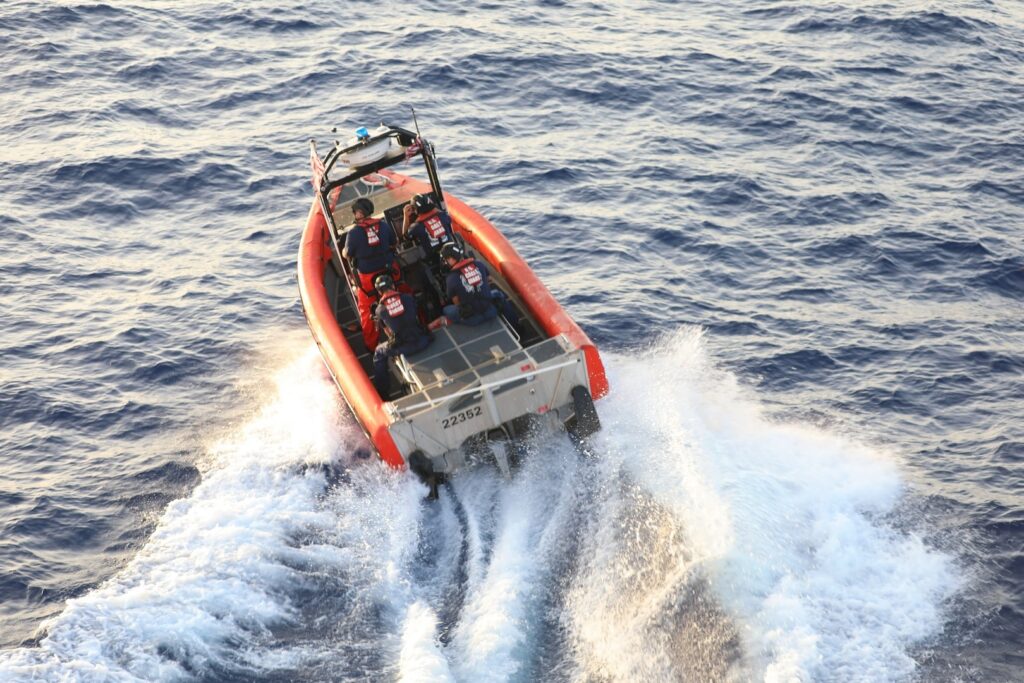
Coast Guard Cutter Reliance (WMEC 615) small boat crew conducts operations in the Gulf of America, July 15, 2025. Reliance’s crew completed a 60-day maritime border security patrol to deter illegal migration, fishing, and smuggling in the region. (U.S. Coast Guard photo by Ensign Jack Steel)
PENSACOLA, Fla. — The crew of the Coast Guard Cutter Reliance (WMEC 615) returned to their home port in Pensacola, Friday, following a 60-day maritime border security patrol in the Gulf of America.
Reliance’s crew deployed to the Coast Guard Heartland District’s area of responsibility in support of maritime safety, security and environmental protection, where crew members conducted extensive operations along the U.S. – Mexico maritime border to protect American sovereignty and territorial integrity. While at sea, the crew worked to deter illegal migration, fishing and smuggling while increasing awareness of all maritime activity in the region.
During the patrol, Reliance’s crew visited Galveston, Texas, near where the cutter was constructed in 1964. While in Galveston, the crew hosted free public tours over Independence Day weekend, welcoming over 800 members of the public on board for an up-close look at life aboard a Coast Guard cutter while providing informational materials to prospective recruits.
Additionally, Reliance’s crew was honored to receive a visit from Master Chief Petty Officer Michael Koch, command master chief, Coast Guard Heartland District, who recognized Reliance’s very own Petty Officer 1st Class Cody Scott, a storekeeper on board, as the Heartland District 2024 Enlisted Person of the Year.
“I am incredibly proud and impressed by the Reliance crew’s professionalism, resilience and skill, which they demonstrated throughout this patrol,” said Cmdr. Kevin Robinson, commanding officer of Reliance. “Their unwavering dedication to protecting our nation’s marine resources and deterring illegal activity at our maritime border reflects the very best of the Coast Guard. Their efforts not only safeguarded American lives and livelihoods but reinforced the Coast Guard’s commitment to mission excellence in maritime safety and security.”
Reliance is a 210-foot, Reliance-class medium-endurance cutter with a crew of 77. The cutter’s primary missions include counter-narcotics and alien interdiction, enforcement of living marine resource laws, and search and rescue throughout the Western Hemisphere.
For information on how to join the U.S. Coast Guard, visit GoCoastGuard.com to learn about active duty, reserve, officer and enlisted opportunities. Information on how to apply to the U.S. Coast Guard Academy can be found here.
U.S. Coast Guard, USS Sampson Conduct Drug Interdiction in Eastern Pacific
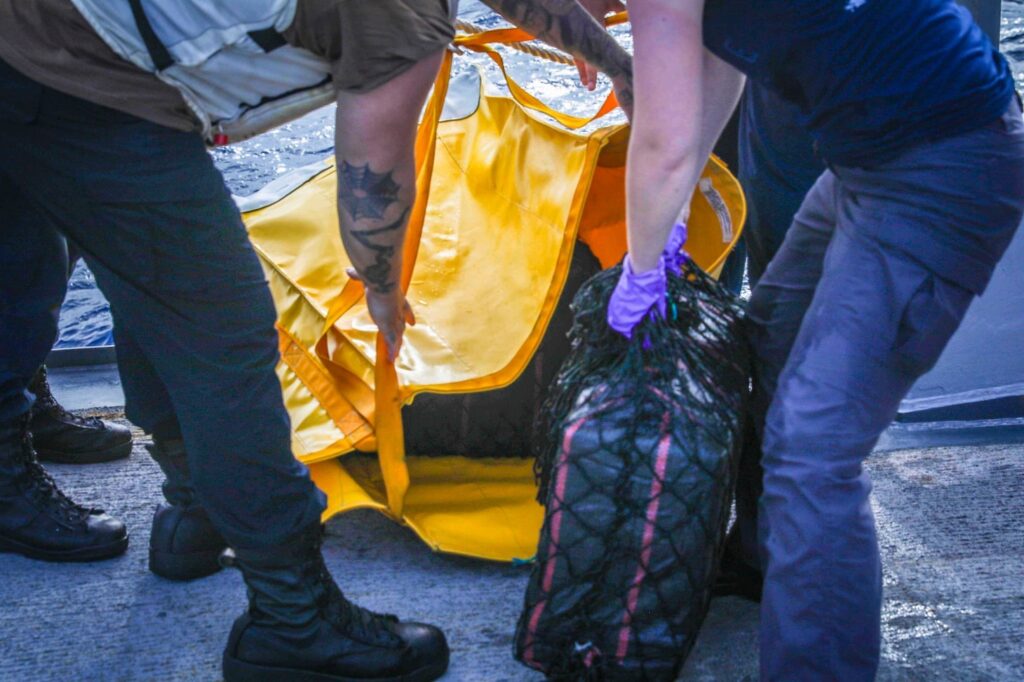
PACIFIC OCEAN (July 10, 2025) Service members aboard the Arleigh Burke-class guided-missile destroyer USS Sampson (DDG 102) haul seized contraband to a secured space in the Pacific Watch mission, July 10, 2025. (U.S. Navy photo by MCSN Maliq Martin)
PACIFIC OCEAN – The U.S. Coast Guard, in coordination with the U.S. Navy destroyer USS Sampson (DDG 102), interdicted two suspected drug smugglers, and seized approximately 3,439 pounds of cocaine in international waters of the Eastern Pacific Ocean July 10.
While on routine patrol, the Sampson detected a go-fast vessel approximately 380 miles southwest of Acapulco, Mexico. The vessel displayed no indication of nationality and was operating in a known drug trafficking corridor. Its appearance and behavior aligned with known maritime smuggling trends, raising further suspicion.
Tactical control of the Sampson was transferred from U.S. Third Fleet to Coast Guard Southwest District for interdiction and apprehension authority. When the U.S. Navy MH-60R Sea Hawk helicopter, assigned to the “Scorpions” of Helicopter Maritime Strike Squadron (HSM) 49, launched from the Sampson and signaled its presence, the suspects aboard began jettisoning packages into the ocean. After warning shots were ineffective, the helicopter crew employed disabling fire, successfully stopping the vessel.
The Sampson launched two boarding teams, which recovered several of the jettisoned packages and took positive control of the suspect vessel. Coast Guard law enforcement personnel conducted a boarding and determined the vessel to be without nationality, granting authority for a full law enforcement boarding.
The two suspected drug smugglers were taken into custody, and field tests confirmed the presence of cocaine aboard the go-fast.
Due to the vessel’s lack of tow points, absence of navigation lights, and poor seaworthiness, the Coast Guard deemed it a hazard to navigation and authorized the sinking of the vessel.
Tactical control of the USS Sampson has since been returned to U.S. Third Fleet for continued operations.
The Coast Guard routinely partners with U.S. Navy and interagency assets to counter transnational criminal organizations operating in the maritime domain.
Sampson is employed under U.S. Northern Command’s maritime homeland defense authorities with a Coast Guard Law Enforcement Detachment embarked to enable maritime interdiction missions to prevent the flow of illegal drugs and other illegal activity. U.S. Northern Command is working together with the Department of Homeland Security to provide additional military forces and capabilities at the southern border.
SECDEF Announces Flag and General Officer Nominations
Secretary of Defense Pete Hegseth announced today that the president has made the following nominations:
Marine Corps Lt. Gen. Michael J. Borgschulte for reappointment to the grade of lieutenant general, with assignment as superintendent, U.S. Naval Academy, Annapolis, Maryland. Borgschulte is currently serving as deputy commandant, Manpower and Reserve Affairs, Quantico, Virginia.
Marine Corps Maj. Gen. Christian F. Wortman for appointment to the grade of lieutenant general, with assignment as commanding general, I Marine Expeditionary Force, Camp Pendleton, California. Wortman is currently serving as the commanding general, 3d Marine Division, Okinawa, Japan.
Navy Vice. Adm. Yvette M. Davids for reappointment to the grade of vice admiral, with assignment as deputy chief of Naval Operations for Operations, Plans, Strategy, and Warfighting Development, N3/N5/N7, Office of the Chief of Naval Operations, Pentagon, Washington, D.C. Davids is currently serving as superintendent, U.S. Naval Academy, Annapolis, Maryland.
Navy Rear Adm. Jeffrey J. Czerewko for appointment to the grade of vice admiral, with assignment as deputy chief of Naval Operations for Personnel, Manpower, and Training, N1, Office of the Chief of Naval Operations and Chief of Naval Personnel, Arlington, Virginia. Czerewko most recently served as commander, Naval Education and Training Command, Pensacola, Florida.
Navy Rear Adm. John E. Dougherty IV for appointment to the grade of vice admiral, with assignment as commander, Naval Air Systems Command, Patuxent River, Maryland. Dougherty is currently serving as commander, Naval Air Warfare Center, Aircraft Division/ chief engineer, Naval Air Systems Command, Patuxent River, Maryland.
Navy Rear Adm. (lower half) Michael S. Sciretta for appointment to the grade of rear admiral. Sciretta is currently serving as director, Maritime Operations, U.S. Fleet Forces Command, Norfolk, Virginia.
Space Force Lt. Gen. Shawn N. Bratton for appointment to the grade of general, with assignment as vice chief of space operations, U.S. Space Force, Pentagon, Washington, D.C. Bratton is currently serving as deputy chief of Space Operations for Strategy, Plans, Programs, and Requirements, Pentagon, Washington, D.C.