MQ-25A Stingray achieves successful first flight, advancing future of naval aviation
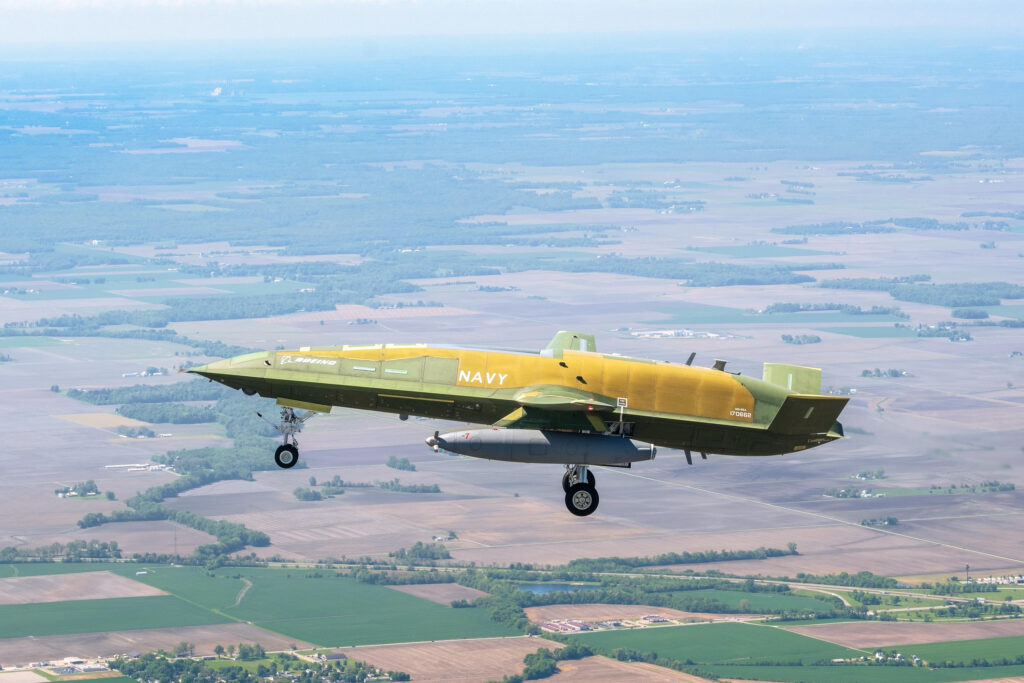
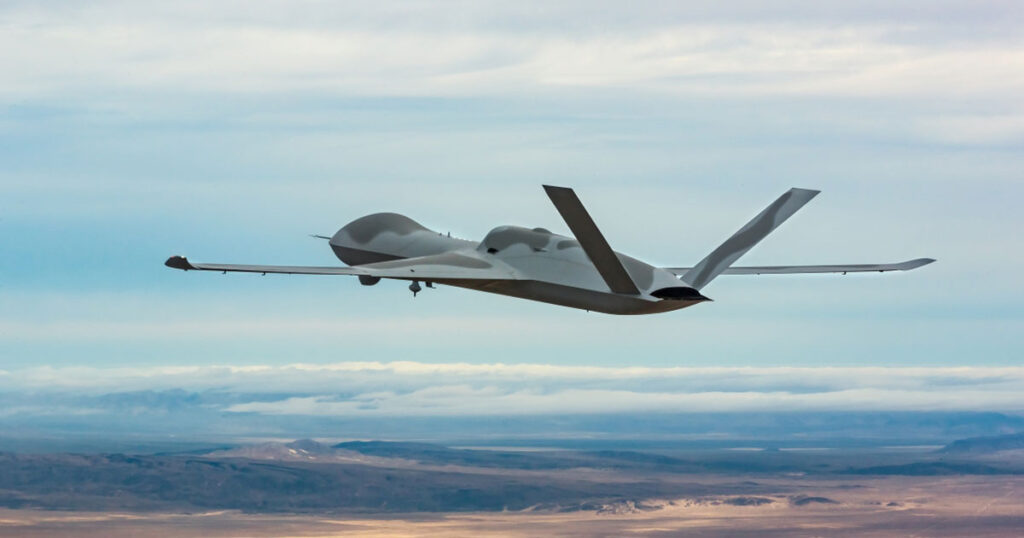
The Navy’s MQ-25A Stingray takes its first flight April 25 at Boeing’s facility at MidAmerica Airport in Mascoutah, Ill. The MQ-25 is the Navy’s first operational carrier-based unmanned aircraft. (Photo courtesy of Boeing)
From Naval Air Systems Command, April 27, 2026
NAS PATUXENT RIVER, Md. — The U.S. Navy’s MQ-25A Stingray™ successfully completed its first test flight from Boeing’s facility at MidAmerica Airport in Mascoutah, Illinois, April 25, achieving a key step for unmanned carrier operations.
The MQ-25A took off at 10:49 a.m. CDT and flew for approximately two hours. During the flight, U.S. Navy and Boeing Air Vehicle Pilots (AVPs) controlled the aircraft from the Unmanned Carrier Aviation Mission Control System MD-5 ground control station that includes Lockheed Martin’s MDCX™ system. The AVPs executed a series of maneuvers and tests, successfully validating the aircraft’s basic flight controls, engine performance, and handling characteristics.
“Achieving this first flight underscores the strong partnership between the Navy and our industry partners,” said Rear Adm. Tony Rossi, who oversees the Program Executive Office for Unmanned Aviation and Strike Weapons (PEO (U&W)). “The MQ-25A is not just an aircraft; it’s the first step in integrating unmanned aerial refueling onto the carrier deck, directly enabling our manned fighters to fly further and faster. This capability is vital to the future of naval aviation.”
The MQ-25A Stingray is the U.S. Navy’s first operational, carrier-based unmanned aircraft system, designed primarily to serve as an aerial refueling tanker. By taking over the refueling mission from crewed fighters, the MQ-25A will significantly extend the combat range and effective strike capability of the Carrier Air Wing.
“I am incredibly proud of the team for working tirelessly over the last several months to achieve this milestone,” said Capt. Daniel Fucito, Unmanned Carrier Aviation program manager (PMA-268). “The successful first flight officially initiates the rigorous flight test program, which will focus on expanding the aircraft’s performance envelope and verifying all mission systems.”
The MQ-25A integrated test team will continue ground control station integration, expanding the flight envelope, and verifying performance parameters prior to its ferry flight to Pax River later this year.
Raytheon Proposes Next-Generation Jammer for Ground- and Ship-Based Defense
By Richard R. Burgess, Senior Editor
ARLINGTON, Va. — Raytheon is demonstrating its Next-Generation Jammer Mid-Band (NGJ-MB) electronic attack arrays for ground-based or shipboard use, particularly in a counter-UAS (unmanned aerial system) role.
The NGJ-MB currently serves in the airborne electronic attack role on the Navy’s EA-18G Growler electronic attack aircraft. Raytheon is looking at expanding its use in other domains. One reason is to use non-kinetic solutions to save on ammunition.
“What we’re finding with high munitions usage, a lot of our customers are looking for non-kinetic options in products and capabilities to solve their problems,” said Camille Wilson, vice president for Requirements and Capabilities for the Raytheon Naval Power sector.
“From a defense perspective, we need a number of different solutions,” Wilson said.
She said that the NGJ-MB array itself can be used for such applications.
“We’ve explored one array up to two, three, four arrays depending on what effect you need, what electric power out you need,” Wilson said. “With one array I could do a myriad of different things. I could use it on a vehicle. I could use a smaller system. If I wanted more capability and more power out or coverage, I could add more arrays. The interesting thing about the land-based variation that we’re looking at is I don’t have the same power and cooling constraints as I do on the airborne side, so there’s a lot more that we could do with it. There are a lot more configurations that we could use those arrays for.”
Wilson was not at liberty to discuss “the full complement of capabilities for a ground-or-ship-based NGJ array, but what a lot of our customers are asking for is counter-UAS.”
She noted that software changes on the NGJ-MB would be required for the counter-UAS role, but that “taking something that is in production, TRL-9 [Technology Readiness Level 9], that we know works, can we make a few software tweaks and optimize for a different mission set?”
She said that in the counter-UAS role, the NGJ-MB could be used to jam or decoy drones.
Raytheon has a demonstration system and is actively demonstrating the ground-based electronic attack capability, Wilson said. “We have multiple U.S. Government and departments and entities [with which] we’re discussing options for deployment.
HII Builds on Manned-Unmanned Submarine Teaming Success with New Pentagon Deal Poised to Transform Undersea Warfare
New DIU Award further advances U.S. Navy’s ability to autonomously deploy and recover unmanned systems from submarines
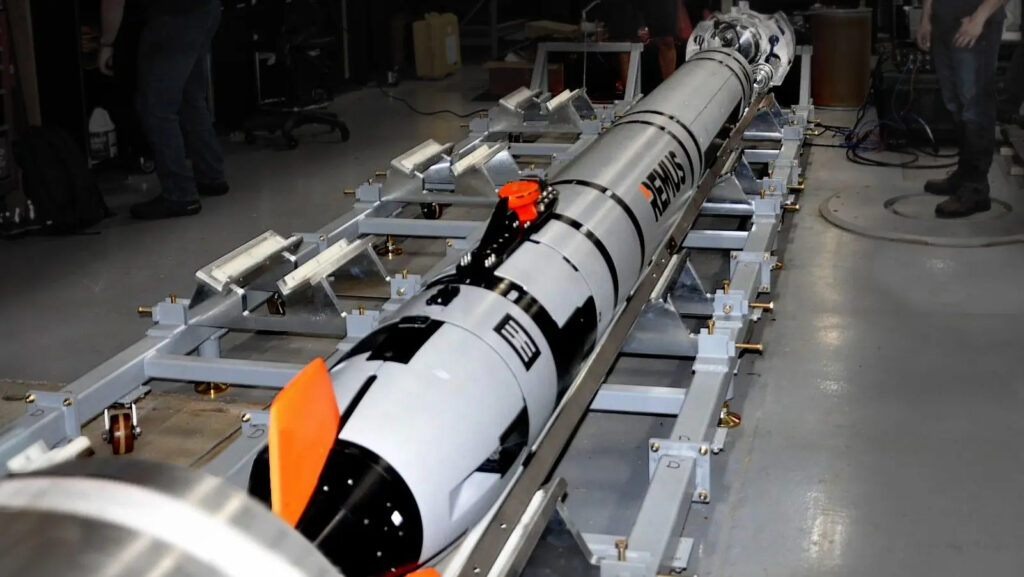
POCASSETT, Mass., April 27, 2026 (GLOBE NEWSWIRE) — HII (NYSE: HII), a global leader in unmanned and autonomous maritime platforms, has been awarded a contract by the Defense Innovation Unit (DIU) to deliver a submarine Torpedo Tube Launch and Recovery (TTLR) system. The system is designed to autonomously deploy and recover HII’s REMUS unmanned underwater vehicle (UUV) from U.S. Navy submarines.
The DIU contract builds on HII’s 120-year leadership in undersea warfare as one of two builders of U.S. nuclear-powered submarines, as well as the world’s largest producer of UUVs, and on a series of recent milestone achievements in manned–unmanned teaming. HII is advancing fully integrated, autonomous maritime capabilities that expand the reach and enhance the effectiveness of the U.S. Navy and its allies.
“This contract award reflects HII’s 25-year leadership in advancing autonomous unmanned maritime platforms and integrating them into submarine operations,” said Duane Fotheringham, president of the Unmanned Systems group in HII’s Mission Technologies division. “There is no company with more expertise in both the manned and unmanned sides of teamed operations. We look forward to continuing our strong partnership with the U.S. Navy to deliver the innovative solutions our forces urgently need in the subsea domain.”
To date, HII has delivered more than 750 REMUS vehicles to over 30 countries, including 14 NATO members. More than 90% of those systems remain in service after more than two decades, underscoring their durability, reliability, and long-term lifecycle value.
In June 2025, the U.S. Navy and Woods Hole Oceanographic Institution (WHOI) successfully advanced the ongoing Yellow Moray UUV capability, marking the first forward-deployed torpedo tube launch and recovery of an HII-built REMUS 600 UUV from the USS Delaware (SSN 791), a Virginia-class submarine constructed by HII. Delaware and an embarked unmanned undersea vehicle squadron (UUVRON-1) cadre, with WHOI support, conducted overseas operations that included three fully autonomous launch and recovery sorties conducted through the submarine’s torpedo tube without diver assistance.
This demonstration represented a significant operational advancement in the autonomous teaming of manned and unmanned systems for intelligence, surveillance, and reconnaissance (ISR), as well as broader maritime missions.
In July 2025, a joint team from HII, WHOI and the U.S. Navy’s Naval Undersea Warfare Center Division Newport completed the first recovery of the latest generation REMUS 620 into a Virginia-class submarine torpedo tube and shutterway test fixture at Seneca Lake, New York.
During in-water testing, the REMUS 620 demonstrated advanced autonomous navigation and communication capabilities. The vehicle successfully docked with a shock and fire enclosure capsule (SAFECAP) within a submerged torpedo tube test fixture and executed reverse swim-out launch and safe separation procedures — validating critical operational functions for future deployment.
These advancements reinforce HII’s role as a leading sea power company and a key innovator in manned-unmanned teaming across two core growth areas: nuclear-powered submarine design and construction, and autonomous unmanned systems. Integrating UUVs through standard submarine interfaces extends mission reach, enhances stealth, and reduces operational risk and crew burden.
P-8A Poseidon Reaches IOC with Increment 3 Block 2 Modifications
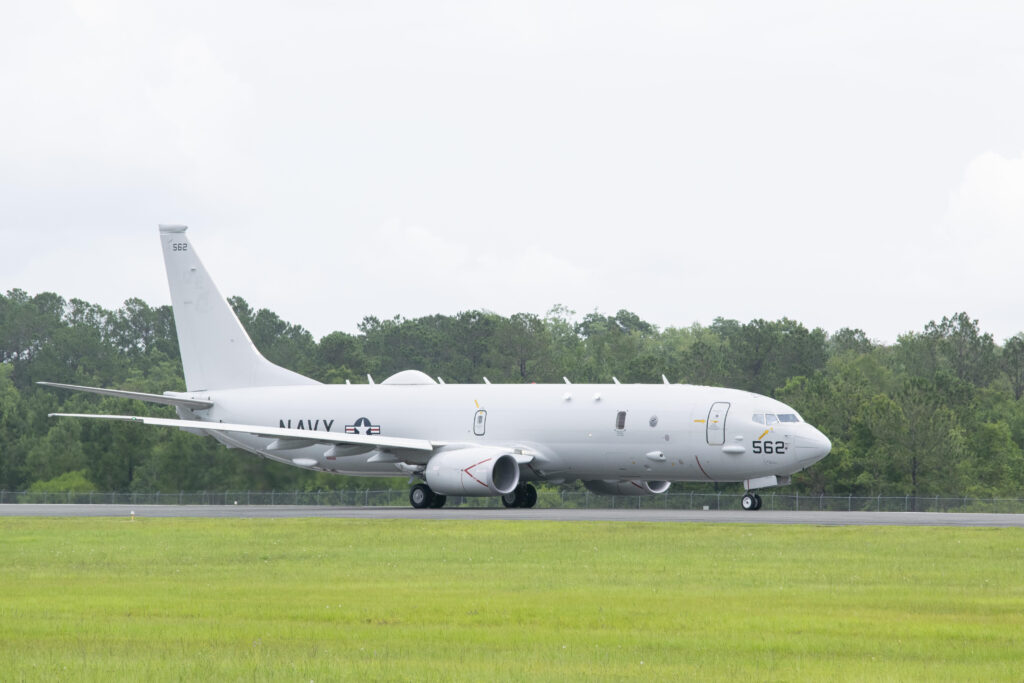
P-8A Poseidon Increment 3 Block 2 system reached initial operating capability. Increment 3 Block 2 provides a significant upgrade to the P-8A airframe and avionics systems, and includes new airframe racks, radome, antennas, sensors, and wiring. Photo courtesy of Boeing.
From Naval Air Systems Command, April 24, 2026
NAS PATUXENT RIVER, Md. — The U.S. Navy declared Initial Operational Capability (IOC) for the P-8A Poseidon Increment 3 Block 2 (Inc 3 Blk 2) system. This significant milestone was achieved after the initial phase of Initial Operational Test performed by Air Test and Evaluation Squadron One (VX-1) with support from the Maritime Patrol and Reconnaissance Aircraft Program Office (PMA-290).
“The P-8A Inc 3 Blk 2 modifications enhance Naval Aviation’s Maritime Intelligence, Surveillance, Reconnaissance, and Targeting (ISR&T) capabilities – the eyes of the Fleet,” said Rear Adm. Michael Wosje, Director of Air Warfare (OPNAV N98). “This capability enhancement is in line with the CNO Fighting Instructions and the Golden Fleet Initiative, which shifts the paradigm from platform-centric thinking to a warfighting system. We are delivering the P-8A Inc 3 Blk 2 as a high-end, networked, and rapidly adaptable platform.”
The P-8A is the Department of War’s only long-range full-spectrum anti-submarine warfare (ASW), cue-to-kill platform, with substantial armed anti-surface warfare (ASuW) and networked intelligence, surveillance, and reconnaissance (ISR) capabilities. Inc 3 Blk 2 provides a significant upgrade to the P-8A airframe and avionics systems, and includes new airframe racks, radome, antennas, sensors, and wiring. The modification incorporates a new combat systems suite with improved computer processing, higher security architecture, a wideband satellite communication system, an ASW signals intelligence capability, a track management system, and additional communications and acoustics systems to enhance search, detection and targeting capabilities.
“The recent deployment of P-8A Increment 3 Block 2 marks the culmination of a spiral development strategy that delivers winning capability to the Fleet and ensures that the P-8A will remain agile, relevant, and lethal for decades to come,” said Rear Adm. Craig Mattingly, Commander Patrol and Reconnaissance Group (CPRG), responsible for the manning, training, and equipping of the Maritime Patrol and Reconnaissance fleet of aircraft for the U.S. Navy.
PMA-290 has advanced P-8A’s capabilities through a phased, incremental acquisition strategy using Engineering Change Proposals (ECPs). This approach began with Increment 1, which reconstituted the capabilities of the legacy P-3C Orion, and continued with further upgrades in Increment 2.
“I am extremely proud of the dedicated and focused acquisition team that is delivering this capability to the fleet,” said Capt. Erik Thomas, PMA-290 program manager. “The P-8A Increment 3 Block 2 modifications could not have come at a better time in our current state of evolving threats. The Poseidon is the cornerstone of sophisticated and lethal global maritime patrol and reconnaissance forces, and this enhanced capability ensures we sustain the core pillar of world-class maritime intelligence, surveillance, reconnaissance and targeting (ISR&T) and remain ready for our current and future fights.”
PMA-290 is responsible for the acquisition, sustainment, and continuous modernization of the P-8A Poseidon, ensuring it remains the world’s premier multi-mission maritime patrol and reconnaissance aircraft.
CPRG works with the Joint Force, Allies, and Partners to find things beneath or on the sea and destroy them. Everything else is in support.
AV Successfully Demonstrates LOCUST Laser Weapon System Aboard USS George H.W. Bush
From AeroVironment, Inc., April 21, 2026
ARLINGTON, Va., April 21, 2026 – AeroVironment, Inc. (“AV”) (NASDAQ: AVAV) today announced the successful demonstration of its palletized LOCUST® Laser Weapon System (LWS) aboard the USS George H.W. Bush (CVN-77) in October 2025 in collaboration with the U.S. Navy and the U.S. Army Rapid Capabilities and Critical Technologies Office (RCCTO).
During the live-fire event, the Palletized High Energy Laser (P-HEL) system tracked, engaged, and neutralized multiple target drones—marking a major milestone toward fielding operational directed energy capabilities across all domains and platforms. This achievement validates that the LOCUST LWS is truly platform-agnostic, seamlessly transitioning from fixed-site and land-based mobile platforms, such as the Joint Light Tactical Vehicle (JLTV) and Infantry Squad Vehicle (ISV), to the dynamic and demanding environment of a maneuvering aircraft carrier.
“LOCUST delivers effective, all-domain protection against emerging drone threats at the speed of light—on any platform, in any domain, for any mission,” said John Garrity, Vice President of Directed Energy Systems at AV. “Rolling LOCUST onto a ship and quickly initiating operations facilitates the expanded use of high-energy lasers across the Fleet without the need for costly, time-consuming ship modifications. This is a game-changer for the Navy and for our national security.”
True platform flexibility: Rapid integration across ground and maritime platforms
Ship compatibility: LOCUST features roll-on, roll-off capabilities and can recharge its battery bank or fully run off ship’s power,–marrying an unlimited DE magazine with an essentially unlimited power source while reducing logistical footprint and integration complexity
Precision aim point and beam control: Accurately acquiring targets, tracking, and eliminating threats on a dynamic, moving shipboard platform
Proven lethality: Engaging and defeating multiple aerial threats in a realistic operational environment
Cross-service commonality: Open interfaces and a common laser weapon system architecture fulfill the requirements of multiple services
AV’s LOCUST family of high-energy laser systems provides scalable, proven solutions for countering unmanned aerial systems and other evolving threats, enabling the joint force to defend against emerging challenges with unmatched precision, speed, and efficiency–on land and at sea. LOCUST is part of AV’s suite of layered C-UAS solutions, including the radio frequency (RF)-based Titan C-UASTM family of products and the Freedom Eagle (FE-1) kinetic missile–all enabled by AV_Halo open architecture software.
Addressing Challenges Ahead: NAVAIR Leadership Discusses Organizational Changes and Industry’s Role at Sea-Air-Space
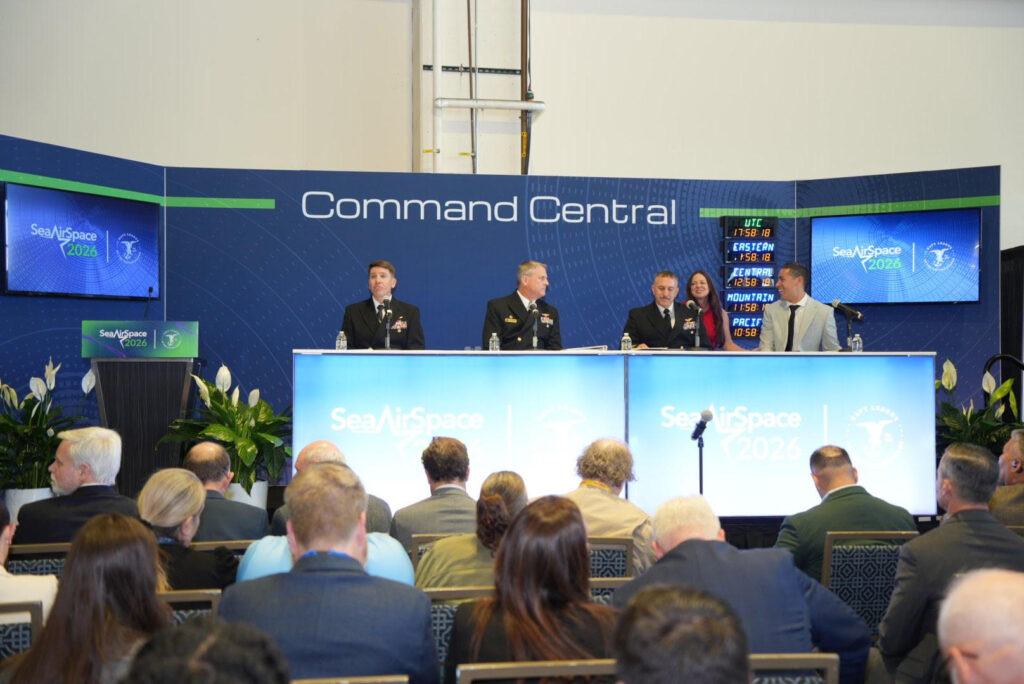
From left, NAVAIR Commander Vice Adm. John E. Dougherty IV; Rear Adm. Todd Evans, Commander, Naval Air Warfare Center Aircraft Division and chief engineer with NAVAIR; Vice Commander Capt. Joseph Hidalgo, Commander, Fleet Readiness Centers (COMFRC); and Paul McGinty, director of the NAVAIR Rapid Capability Cell speak during the panel “Start with the Fleet: Readiness, Capability, Speed,” Tuesday afternoon at the Sea-Air-Space 2026 Exposition.
From Naval Air Systems Command, Apr 21, 2026
NATIONAL HARBOR, Md. — NAVAIR personnel kicked off Tuesday at Sea-Air-Space Exposition 2026 with “Start with the Fleet: Readiness, Capability, Speed,” a panel led by NAVAIR Commander Vice Adm. John E. Dougherty IV, who was joined by Rear Adm. Todd Evans, Commander, Naval Air Warfare Center Aircraft Division and chief engineer with NAVAIR; Vice Commander Capt. Joseph Hidalgo, representing Commander, Fleet Readiness Centers (COMFRC); and Paul McGinty, director of the NAVAIR Rapid Capability Cell.
Dougherty began the panel by laying out NAVAIR’s highest priorities.
“[At NAVAIR we need] to develop our people and grow our culture, to provide the readiness the warfighter needs, to accelerate delivery capability and to elevate our game,” he said. “It’s about focusing on outcomes and transforming our business so that we find better ways to deliver capability to the warfighter. We have got to go quicker, and I know that we’re ready to meet that challenge.
“What we can’t forget is that we’re in a great power competition, and in great power competition, the bar for our performance is raised. The threat is moving very fast in terms of capability and capacity and it’s up to us to get after that.”
Dougherty said the Navy is currently transitioning to Portfolio Acquisition Executive organizations. Under the PAE model, leaders are empowered —and expected— to make disciplined, data-driven trade-offs across cost, schedule and performance, with a clear priority on time to field. Additionally, each PAE is responsible for understanding and actively managing the industrial base supporting their portfolio, including production capacity, supply chain risk and opportunities to expand or diversify suppliers. He encouraged industry partners to “be aggressive” in engaging with naval aviation programs during this time to get input and ideas and keep the production engines running.
“This is a generational opportunity for this industry,” Evans said regarding the acquisition changes. “This industry has been around for a long time, and we’ve always heard ‘go fast, just go faster.’ That is tremendously difficult to change. In order to enable that change, we also have to change.”
“What gets me excited about it for naval aviation is [having a] single, accountable owner,” Dougherty said. “[The way we are organized now] there isn’t really one leader that’s in charge of making sure that all our capability roadmaps are aligned, that we’re putting our dollars toward the most consequential outcomes as we deliver warfighting capability. I like ‘portfolio’ over ‘program management.’ It’s about integrated warfighting capability. I think there is real opportunity in this PAE structure to drive better warfighting outcomes across all our programs with a capability mindset.”
Hidalgo highlighted the depot work done at the various Fleet Readiness Center sites, where most maintenance and sustainment work is performed on aircraft components and engines.
“We’re here for the warfighter,” Hidalgo said. “COMFRC is one of the sole source places where we can do work that gets it to the warfighter right there on the flight line. We get direct calls back from the warfighters because we’re on the flight line and working hand in hand with industry to help us improve anything we need to get done in a more expeditious timeframe.”
“On the rapid capability front, we’re trying to connect those [warfighter] needs and capabilities to true outcomes,” McGinty said, outlining what the NAVAIR Rapid Capability Cell is focused on. “We’re partnering with industry early, bringing our resources to bear with the expertise we have resident in our warfare centers and working within the systems and authorities we have … I think the key to this is really connecting to those problem sets, really trying to break down the barriers between what the warfighter needs and what we are asking industry to do and pin us all up in that space together to get after it.”
In response to a question about what keeps the panelists up at night, Dougherty said he knows that there is someone in NAVAIR who knows how to do things better.
“I don’t know it, but they do, and I need to get that information,” he said. “I believe that good ideas come from the heart of the organization. Our people are our most important asset. We have a world-class workforce here at NAVAIR. They’ve got fantastic ideas. I worry that there’s a lot more of that for us to tap into.”
“I want to make sure we are taking care of our people, making sure that they are adequately trained, that they have the equipment they need, and have the components [for aircraft],” Hidalgo said. “The people that we have at FRC are driving to get readiness to the warfighter. That is one of the things that keeps me up at night, making sure we have the things ready for the warfighter.”
When asked how NAVAIR is changing the contracting process in order to speed projects along, Dougherty said the organization is always “looking for ways to accelerate that timeline.”
“Our contracts team on the government side does pretty good on hitting their timelines. The ask that I would have for industry is to hit the timelines and get proposals back Negotiations can take too long, for sure, so there’s room for improvement.”
Dougherty said industry is needed now to help with current needs as well as any coming future fight.
“That future fight is maybe not so distant, if you look at the geopolitics in the world,” he said. “I would double-down on my message of urgency and double-down on the message that we have many operational needs. I need to connect you to those operational needs better and I want your thoughts.
“We’re in great power competition and we intend to win. And we’re going to get after it with you.”
Coast Guard’s sole heavy icebreaker returns home following Antarctic deployment
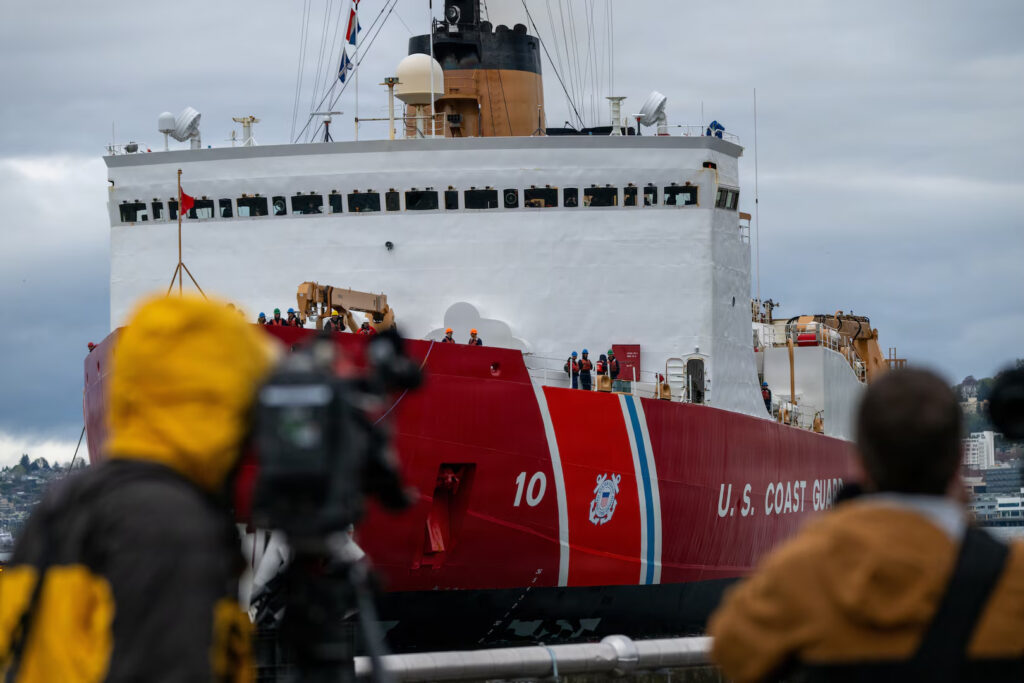
U.S. Coast Guard Cutter Polar Star (WAGB 10) returns to Coast Guard Base Seattle following a 146-day Antarctic deployment in support of Operation Deep Freeze, April 13, 2026. The Polar Star is the United States’ only surface asset capable of providing year-round access to both Polar Regions. It is a 399-foot heavy polar icebreaker commissioned in 1976, weighing 13,500 tons and is 84 feet wide with a 34-foot draft. (U.S. Coast Guard photo by Petty Officer 2nd Class Briana Carter)
From U.S. Coast Guard Northwest District, April 20, 2026
SEATTLE — The crew aboard the U.S. Coast Guard Cutter Polar Star (WAGB 10) returned home to Seattle on April 13, following a 146-day Antarctic deployment in support of Operation Deep Freeze (ODF) 2026.
Polar Star departed Seattle Nov. 20, traveling more than 20,000 nautical miles through ocean and ice to complete ODF 2026. ODF is the logistical support provided by the Department of War to the U.S. National Science Foundation (NSF)-managed U.S. Antarctic Program (USAP).
While spending 62 days in Antarctic waters, Polar Star conducted multiple mission sets before departing the Antarctic region on March 8. The cutter established a seven-mile-long channel through fast ice up to eight feet thick and escorted a fuel tanker and container vessel through the ice in McMurdo Sound in order to resupply McMurdo Station. Polar Star also escorted a tug with the 330-foot-long NSF Discovery Pier for install at McMurdo Station to provide a semi-permanent means to moor ships for the USAP.
Polar Star supported the Commission for the Conservation of Antarctic Marine Living Resources (CCAMLR) by completing sighting reports of fishing vessels in the Ross Sea. Through monitoring and documenting fishing activity, the crew helped ensure compliance with established regulations, protecting marine resources and U.S. interests in one of the world’s most remote and scientifically significant regions.
“Coming back to Seattle following deployment for the first time in a few years means a lot, especially considering how we spend over 300 days away from homeport each year,” said Rasnake. “So, we’ll enjoy the warm embrace of friends and family for a minute before quickly getting back after the hard work of maintaining this cutter and getting it ready for next year’s mission.”
While transiting home, Polar Star’s crew made port calls in Hobart, Australia and Wellington, New Zealand. While in Hobart, Polar Star hosted international visitors from CCAMLR, Australian Armed Forces and Australian Government, including the commanding officer of Navy Headquarters Tasmania.
In Wellington, the U.S. Embassy hosted a reception aboard Polar Star, where David Gehrenbeck, U.S. Chargé d’Affaires to New Zealand, hosted 40 distinguished guests, including, the Honorable Judith Collins, the 43rd Minister of Defence. Other guests and Embassy representatives from over ten different countries joined Polar Star’s crew members to acknowledge the U.S. and New Zealand’s joint support of the Antarctic Treaty and celebrate Polar Star’s first visit to Wellington since December 2021.
Commissioned on Jan. 17, 1976, Polar Star is the nation’s only active heavy icebreaker and has served as a cornerstone of U.S. presence in the polar regions. For five decades, the cutter has executed missions ranging from Antarctic resupply and search and rescue to environmental protection and national defense.
“Polar Star reminded us of her age on more than one occasion this deployment, but as always, this crew demonstrated the cutter’s unique capability by working together through each challenge and finding a way to get the job done,” said Capt. Jeff Rasnake, Polar Star’s commanding officer.
Polar Star will be completing its annual dry dock maintenance over the summer, ensuring it is ready to meet all mission requirements for ODF27. The critical work completed during these periods ensures that U.S. maintains year-round access to the high latitudes.
HII Accelerates ROMULUS USV Program: Four New ROMULUS Vessels Head into Production
From HII, April 21, 2026
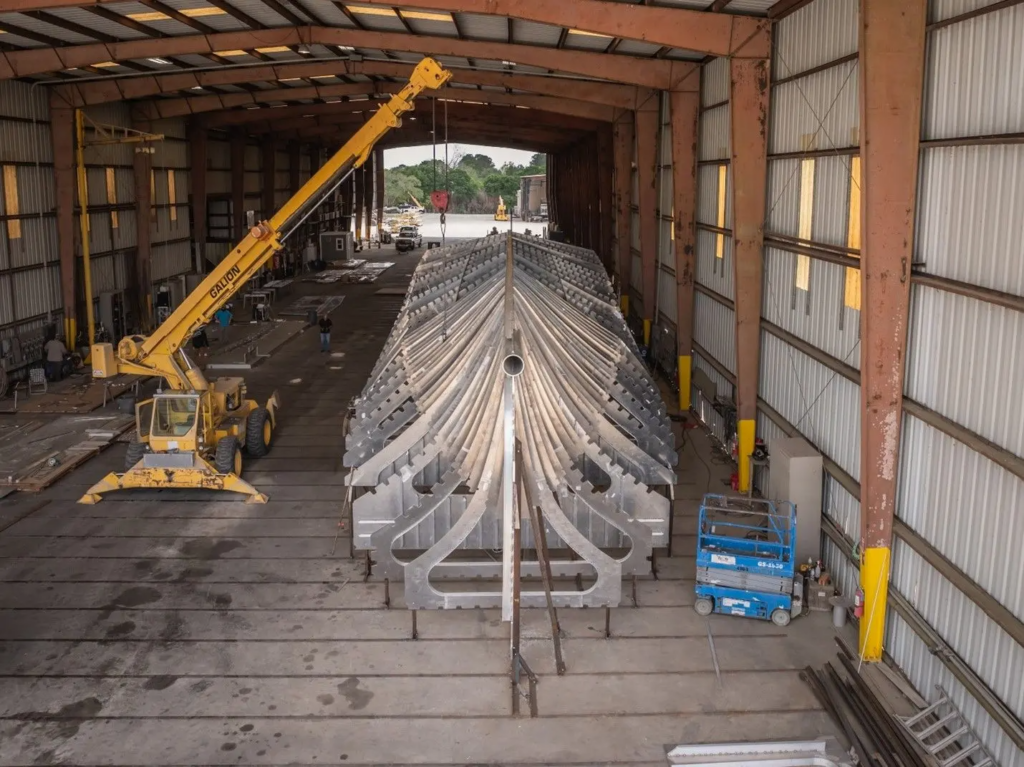
NATIONAL HARBOR, Md., (April 21, 2026) —HII (NYSE: HII), America’s largest military shipbuilder and global leader in autonomous maritime systems, announced today plans for the production of four ROMULUS 151 vessels to be built by Breaux Brothers Enterprises in Louisiana in addition to the ROMULUS 151 currently under construction.
The announcement signals a rapid shift toward initial production, as HII pushes to accelerate delivery of autonomous surface capability to the U.S. Navy and allied partners.
“ROMULUS represents a shift in how we deliver unmanned capability to the fleet,” said Andy Green, executive vice president of HII and president of HII’s Mission Technologies division. “We are combining shipbuilding experience, scalable manufacturing, proven autonomy, and strong industry partnerships to move quickly from prototype to operational deployment. The progress we are seeing today — including these initial production vessels — reinforces that we are on a disciplined path to deliver meaningful capability at speed and at scale.”
Built for Scale and Mission Flexibility
ROMULUS is a modular family of AI-enabled USVs designed to meet current and emerging requirements for the U.S. Navy, U.S. Marine Corps, joint forces, and allied partners. The platform supports a wide range of missions, including intelligence, surveillance and reconnaissance (ISR), mine countermeasures, strike operations, counter-unmanned systems, and the launch and recovery of unmanned underwater and aerial vehicles.
Engineered for serial, repeatable production, ROMULUS vessels combine endurance, global reach, and modular adaptability. The family is designed to scale across multiple vessel sizes while maintaining a common manufacturing approach and autonomy baseline.
Advancing a Scalable Manufacturing Model
The ROMULUS program is supported by HII’s expanding unmanned vessel production ecosystem, including its assembly facility at Breaux Brothers Enterprises and the High-Yield Production Robotics (HYPR) initiative. Together, these efforts are designed to transition unmanned vessel production from prototype builds to high-rate, digitally enabled manufacturing.
In March, HII released a plan outlining an expanded ROMULUS assembly facility at Breaux Brothers and introduced HYPR as HII’s initiative to apply industrial robotics and digital quality systems to unmanned platform manufacturing. By integrating automation, advanced tooling, and standardized workflows, HII aims to reduce unit costs, improve schedule predictability, and enable program-level delivery of unmanned systems aligned with evolving fleet needs.
“ROMULUS is engineered from the outset for scale,” Green added. “By aligning design, autonomy, and manufacturing, we are creating a production model that delivers predictable outcomes and positions us to meet growing demand for autonomous maritime capability.”
GA-ASI Selected by U.S. Navy PMA-281 for Collaborative Autonomy Mission Planning and Debrief Project
From General Atomics Aeronautical Systems Inc.
CAMP Initiative To Demonstrate Advanced Mission Planning, AI Model Management, and Autonomy Workflows
SAN DIEGO – 20 April 2026 – General Atomics Aeronautical Systems, Inc. (GA-ASI) was selected by the U.S. Navy’s Naval Air Systems Command (NAVAIR) PMA-281 for the Collaborative Autonomy Mission Planning and Debrief (CAMP) project. The initiative will advance mission planning capabilities, AI model management, and autonomy workflows for Autonomous Combat Platforms, culminating in a government sponsored demonstration targeting a 2026 Fleet exercise.
The project will demonstrate the potential for extending PMA-281’s Mission Planning Software framework to support advanced autonomy operations, including behavioral tasking, Rules of Engagement (ROE) configuration, AI decision thresholds, and comprehensive mission debrief capabilities. The effort integrates with the Navy’s Joint Digital Autonomy Range (JDAR) and Joint Simulation Environment (JSE) to enable rapid testing and validation of autonomy-enabled mission profiles.
“This project demonstrates our commitment to delivering integrated mission planning and debrief solutions that enable effective human-autonomy teaming,” said Mike Atwood, Vice President of Advanced Programs for GA-ASI. “By advancing collaborative autonomy workflows and leveraging government simulation environments, we’re providing the Navy with critical capabilities to rapidly test, evaluate, and deploy autonomous systems for complex operational missions.”
The CAMP project will demonstrate key capabilities on the MQ-20 Avenger® platform equipped with Government Reference Implementation (GRI) autonomy, Electronic Warfare (EW), and Infrared Search and Track (IRST) payloads. The initiative emphasizes robust communications architectures featuring Link 16, Tactical Targeting Network Technology (TTNT), and Starlink satellite communications for resilient command and control.
In addition, this project advances operationally scalable autonomy by delivering enterprise mission planning, trusted AI governance, and accelerated digital validation to support Autonomous Combat Aircraft. By integrating secure AI model lifecycle management, human-centered oversight, and high-fidelity simulation environments, GA-ASI is enabling rapid capability iteration and seamless human-autonomy teaming.
The planned demonstration will showcase advanced mission planning and debrief capabilities for autonomy-enabled operations, integrated with Navy systems and evaluated in complex contested operational scenarios. The effort will highlight how mission planning software enables behavioral tasking, Electronic Warfare (EW) and Infrared Search and Track (IRST) employment, combat air patrol, and target engagement, with execution and coordination demonstrated via Link 16-enabled platforms including F/A-18 Super Hornets.
One Day Before Departure, Phelan Touted Need for New Budget, New Business Practices, New Battleship
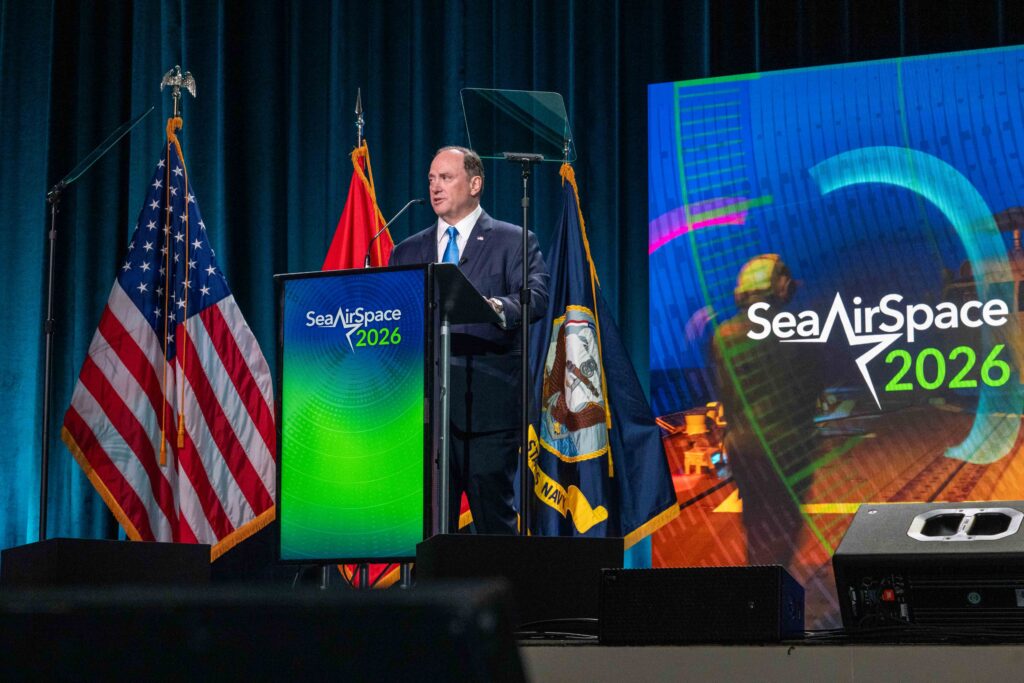
Then-Secretary of the Navy John Phelan delivers a keynote address just hours before unexpectedly departing the job. Photo credit: Laura Hatcher.
Editor’s note: This story appeared April 21 in Seapower’s Show Daily at Sea-Air-Space. On April 22, Pentagon Spokesman Sean Parnell announced on X that John Phelan was leaving the administration; other media reports said he had been forced out. Undersecretary of the Navy Hung Cao is now acting secretary of the Navy. This article is about his keynote speech at Sea-Air-Space.
On the day the Pentagon released a $1.5 trillion fiscal 2027 defense budget, Navy Secretary John Phelan addressed Sea-Air-Space and said the Department of the Navy needs a budget, not a series of continuing resolutions from Congress.
Phelan also defended the controversial planned Trump-class battleship, saying it brings a needed capability and would anchor the new “high-low” Golden Fleet concept outlined the day before by Chief of Naval Operations Admiral Daryl Caudle, speaking from the same stage.
Phelan also echoed Caudle in saying doing business with the Navy must change, which is why the service recently announced a new portfolio acquisition executive (PAE) structure, appointing five senior leaders to act as single accountable officials for key domains to accelerate capability delivery and keep a lid on costs.
Phelan said he will soon testify on the budget on Capitol Hill and will tell lawmakers a continuing resolution — a budget carrying forward current levels of spending — “would have extremely negative consequences for the DoN. It’s like running a business and not being able to charge what your competitors do,” he said. “Continuing resolutions impose constrained short-term funding conditions that force legacy program tradeoffs and impact our ability to innovate and therefore our readiness over time.”
The Golden Fleet initiative “is about delivering the fleet of the future through three mutually reinforcing pillars. One, to maintain and enhance maritime dominance. Two, revitalize the maritime industrial base and three, change how the Department of the Navy does business,” Phelan said.
The initiative includes the proposed Trump-class battleship, or BBG(X), certain to be a target of some in Congress.
“I know the question many of you and the pundits are asking, why battleships, and why now? The answer is straightforward and grounded in the realities of high-end conflict in shaping the next large surface combatant,” he said.
Phelan said he has discussed the issue with top admirals and commanders and said they don’t want to have to choose between air defense, anti-ship warfare, anti-submarine warfare or long-range strikes.
“Battleship strike groups will offer commanders more options than what exists in today’s fleet,” he said. The ships would be “built to fight and stay in the fight by sustaining fires, maintaining pressure and outlasting any adversary … these are not capabilities you can fully distribute across smaller systems alone.”
Phelan said he has heard the critiques of the proposed battleship, that it would be too vulnerable, too expensive, too big. “We’ve heard that before about carriers and about submarines and yet when it matters most, those are the platforms that combatant commanders call for.”
However, he said the battleship would be just a “small part” of the Golden Fleet and would operate as part of a distributed network that would include smaller ships, crewed and uncrewed.
“This is not about replacing the fleet … the strategic reality is that manned platforms combined with unmanned systems, acting interchangeably, is the most powerful winning combination.”
Reviews from Carriers to Barracks
In a roundtable interview with reporters after the keynote speech, Phelan said the Navy is studying all aspects of how it does business, from planning the battleship to building barracks for Sailors more efficiently.
Phelan said the Navy is reviewing CVN 82 and 83, the next Ford-class carriers “to review the costs, the designs, the systems, to make sure that they make sense and they have all the systems and requirements that we want going forward,” a study he said should wrap up next month.
“I think one of the things we have to do a better job of in the Navy is kind of what I call total cost of ownership. So, what does it really cost to sustain and maintain these things? … To be honest, we’re reviewing every program, so the carrier’s just one of them.
“We’re doing the same thing in maintenance. We’re doing the same thing on infrastructure. We’re doing the same thing on milcon [military construction]. I’m still trying to understand why barracks cost, you know, on average more than $1,500 a foot, right? That’s insane.”
The budget proposal aims to improve the military industrial base to, among other things, improve submarine production rates. Phelan said that will be a challenge bigger than improving the production rate of surface ships.
“The submarines [are] a challenge because it’s one of the most complicated things I have seen, having been in there and looking at it, and I’ve been to a lot of places, including SpaceX, etc. This thing’s an underwater space station in effect, if you really look at it, particularly the Columbia.”
Phelan said he has walked a lot of shipyards and “I see a lot of machinery from the 1960s and I see 1980s practices. For example, when a welder runs out of materials, they’re not right next to ’em. They’re sometimes in another building a mile away. Bathrooms are not in the same building. These are things that slow down time on the deck plate.”
Phelan also said the Navy is looking at having some of its ships built by foreign partners, an idea President Trump has raised as a possibility.
“We are going to study that and take a hard look at it,” he said. It might make sense for foreign shipyards to build support ships, or to build modules for combatant ships. The United States will be looking at ships that are rapidly producible and could “hit the fleet fast, so that would tend to lead you more to the Koreas, Japans of the world,” he said. “I guess I would say everything’s on the table. We just need to look at it, understand it, understand the implications be