Rocket Lab Taps Bollinger Shipyards to Support Modification of Neutron Landing Platform 
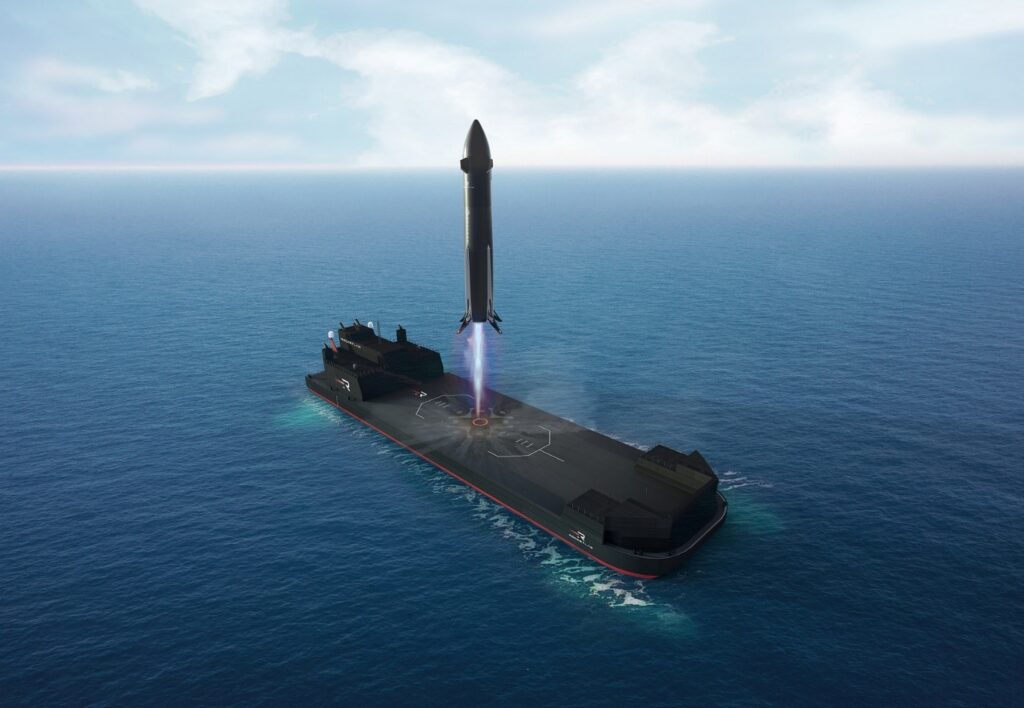
Long Beach, Calif. 10 July, 2025: Rocket Lab Corporation (Nasdaq: RKLB) (“Rocket Lab” or “the Company”), a global leader in launch services and space systems, today announced it has awarded a contract to Bollinger Shipyards, the largest privately owned new construction and repair shipbuilder in the United States, to support the build out of Rocket Lab’s ocean landing platform for its Neutron reusable rocket.  

Modification and fit-out of Rocket Lab technology to its 400-ft-long landing platform named ‘Return On Investment’ has begun and is taking place at Bollinger Shipyards, primarily at its shipyard in Amelia, Louisiana, with delivery of the vessel to Rocket Lab expected in early 2026. Bollinger Shipyards, a premier builder of high-performance vessels, will leverage its extensive experience in marine engineering to complete the Rocket Lab-led design of the rocket-landing platform that includes autonomous ground support equipment, blast shielding for on-deck equipment protection during Neutron landings, and station-keeping thrusters for the platform to hold its position during Neutron return-to-Earth missions at sea.  

Reusability is key to Rocket Lab’s development of Neutron. To meet the increasing demand for regular and reliable launch to space for large single satellites, multi-satellite constellation deployment, and high assurance national security missions, Rocket Lab expects to quickly scale Neutron and double its launch capacity annually once it enters service – with “Return On Investment” integral to that effort. Rocket Lab’s development of recovery infrastructure in Louisiana builds upon the Company’s existing U.S. expansion plans for Neutron’s operations and development, with “Return On Investment” to be operated out of the U.S. East Coast to support timely delivery and return of Neutron rockets to its launch site on Wallops Island, Virginia.   

Rocket Lab Vice President – Neutron, Shaun D’Mello, says: “Neutron’s ability to return to Earth on “Return On Investment” and launch again and again will be foundational to its success. With Bollinger’s extensive experience in marine engineering and shipbuilding, they have been selected to deliver this critical project. We’re looking forward to working with Bollinger to create the conditions to modernize Louisiana’s shipyard capabilities to meet the demands of the aerospace industry’s cutting-edge capabilities.”  

Bollinger Shipyards President and CEO, Ben Bordelon, says: “Bollinger is proud to partner with Rocket Lab on a project that showcases both the ingenuity and innovation of American shipbuilding and the future of space flight. At Bollinger, we’ve spent decades building some of the most advanced vessels in the world. We’re honored to have been selected to bring our deep expertise and experience in marine engineering and fabrication to a program that pushes the boundaries of what’s possible.”  


L3Harris Delivers First Overhauled P-8A Poseidon Aircraft to US Navy

L3Harris is performing program depot maintenance along with repair and overhaul for NAVAIR’s fleet of 139 aircraft. NAVAIR aircraft perform missions that include maritime patrol, long-range anti-submarine warfare, anti-surface warfare and intelligence, surveillance and reconnaissance. Credit L3Harris Technologies

Release From L3Harris Technologies

WACO, Texas, July 10, 2025 — L3Harris Technologies (NYSE: LHX) has delivered the first overhauled P-8A Poseidon aircraft to Naval Air Systems Command (NAVAIR) – a key milestone that supports the U.S. Navy’s readiness goals.  

L3Harris is performing program depot maintenance along with repair and overhaul for NAVAIR’s fleet of 139 aircraft. NAVAIR aircraft perform missions that include maritime patrol, long-range anti-submarine warfare, anti-surface warfare and intelligence, surveillance and reconnaissance. L3Harris will also support foreign military sales of P-8A aircraft.  

“We’re keeping the Navy’s fleet mission-ready with this first P-8A delivery,” said Jason Lambert, President, Intelligence, Surveillance and Reconnaissance, L3Harris. “Our proven expertise in aircraft maintenance enables us to enhance performance and extend fleet longevity.”  

L3Harris anticipates up to nine aircraft inductions during the first contract year. The company is currently overhauling seven aircraft, with all on track for delivery this year. Work on the Navy’s P-8A fleet began in 2024 at L3Harris’ aircraft modification facility in Waco and continues through September 2029.  


U.S. Navy Accepts Delivery of Final Independence-Variant Littoral Combat Ship, Pierre

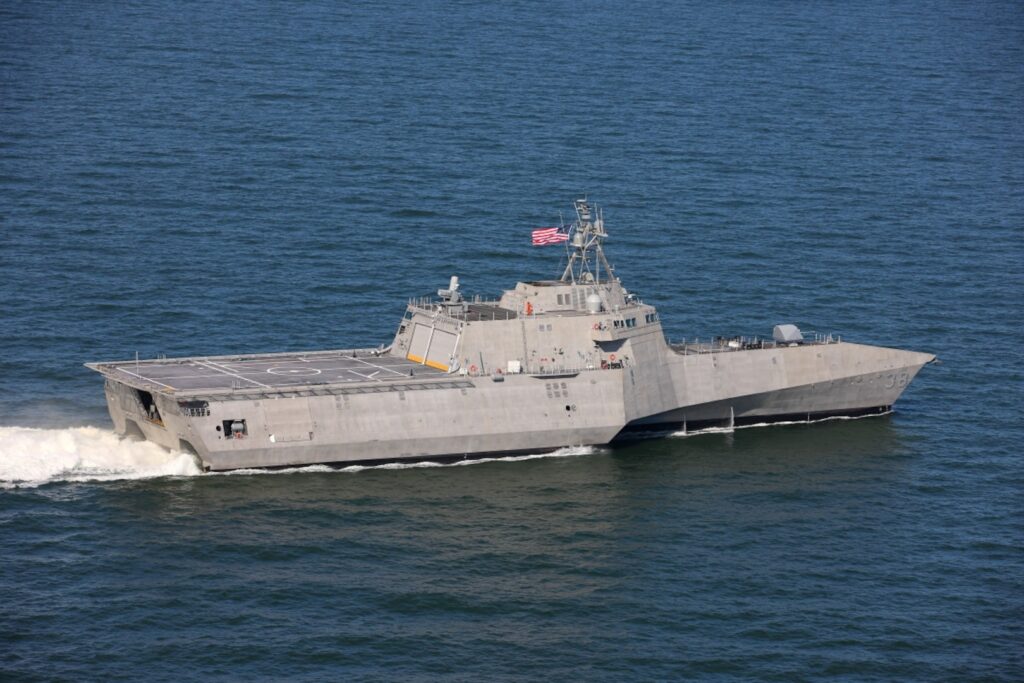
MOBILE, Ala – The future USS Pierre (LCS 38) conducts sea trials in Mobile, Alabama, June 2025. Pierre is the 19th and final ship marking the completion of the Independence-variant littoral combat ship (LCS) construction phase. (Photo courtesy of Austal USA) 

From Program Executive Office Unmanned and Small Combatants (PEO USC) Public Affairs

MOBILE, Ala. – The U.S. Navy accepted delivery of the future USS Pierre (LCS 38) from Austal USA’s shipyard in Mobile, Alabama, July 11. 

Pierre is the 19th and final ship marking the completion of the Independence-variant littoral combat ship (LCS) construction phase—a sustained acquisition effort involving Navy personnel, industry partners, and program management teams for over two decades. 

Pierre successfully completed acceptance trials the week of June 9, achieving the highest measured quality score of any LCS in the past 15 years. This performance reflects the notable progress made over the course of the program and the expertise honed by the LCS shipbuilding and acquisition teams. 

“The delivery of the final Independence-variant LCS marks the end of a chapter, but not the story,” said Capt. Matthew Lehmann, program manager of the LCS Program Office. “The LCS program, for all its complexities, has pushed the boundaries of naval design and operational concepts. The LCS represents a bold vision for a more agile and adaptable Navy. We are seeing the Fleet operating these ships with the advanced mission packages they were designed for and they are continuing to evolve those operational concepts as more unmanned technologies come online.” 

Following commissioning later this fall, the ship will be homeported in San Diego, California, —supporting forward presence, maritime security, sea control, and deterrence in key operational theaters. 

“Pierre is more than just the last number – it represents the hard work of manufacturers, suppliers and builders from across the nation culminating in a warship that will serve as the Navy’s most versatile workhorse for years to come,” said Melissa Kirkendall, acting program executive officer for Unmanned and Small Combatants (PEO USC). “The legacy of Pierre and her sister littoral combat ships is the vibrant shipbuilding industrial base that we now have in the mid-tier yards that are now constructing the Navy’s next-generation warships.”   

LCS is a fast, agile, mission-focused warship designed to operate in near-shore environments to counter 21st-century threats. It is a class of small surface combatants armed with capabilities to defeat challenges in the world’s littorals. LCS can operate independently or in high-threat scenarios as part of a networked battle force that includes larger, multi-mission surface combatants such as cruisers and destroyers.  

PEO USC designs, develops, builds, maintains, and modernizes the Navy’s unmanned maritime systems; mine warfare systems; special warfare systems; expeditionary warfare systems; small boats/craft; and small surface combatants. 

For more news from PEO USC, visit: https://www.navsea.navy.mil/Media/News/ 


Crowley Adds Newest LNG Ship to Fleet Expanding Caribbean and Central American Service

Release from Crowley 

Tiscapa Will Offer Service Connecting U.S. and Dominican Republic 

(JACKSONVILLE, Fla.; July 10, 2025) Crowley’s newest, LNG-powered containership Tiscapa began its inaugural service today, adding faster, bigger options for timely ocean cargo transport around the U.S., Caribbean and Central America. 

Like its sister ships in the Avance Class, Tiscapa features container capacity for 1,400 TEUs (20-foot equivalent units), including 300 refrigerated units. This ship was specifically designed to quickly and frequently deliver cargo while using lower emission liquefied natural gas (LNG) for fuel. 

“The addition of Tiscapa to our fleet marks another milestone in Crowley’s commitment to delivering efficient and reliable logistics solutions across the region,” said Andrew Davis, vice president of operations for Crowley Logistics. “With its LNG-powered design and expanded capacity for dry and refrigerated goods, Tiscapa enhances our ability to provide faster, dependable service for customers moving essential goods throughout the U.S. and Caribbean Basin.” 

Tiscapa departed from the Port of Jacksonville, Florida, for its first commercial voyage serving the Caribbean Basin. Following a transition period of service for the region, Tiscapa will begin providing regular service between the U.S., Dominican Republic and Central America, offering direct market connections for goods such as medical devices, household goods, food and perishables

This follows sister ships Quetzal and Copán, which are also strategically built to serve El Salvador, Guatemala, Honduras and Nicaragua, and the growing trade between the U.S. and Central America. 

Avance Class ships, operated under charter from Eastern Pacific Shipping, are named to honor the cultural aspects of Central America, where Crowley has operated shipping and logistics services for more than 60 years. Located in the capital city of Managua in Nicaragua, Tiscapa is a lagoon of volcanic origin that formed over 10,000 years ago. The area surrounding it contains pre-Columbian remains and a massive Augusto Sandino statue, an iconic symbol of the city. 

The fourth and final Avance Class ship, Torogoz, which is named for the national bird of El Salvador, is due to enter service this August. 


21st Iteration of Pacific Partnership Prepares for Indo-Pacific Mission Aboard USS Pearl Harbor 

From Lt. Cmdr. Andrew Bertucci

JOINT BASE PEARL HARBOR-HICKAM, Hawaii – Pacific Partnership 2025 (PP-25) officially kicks off with the arrival of the Harpers Ferry-class dock landing ship USS Pearl Harbor (LSD 52) at Joint Base Pearl Harbor-Hickam, led by Rear Admiral Todd F. Cimicata, U.S. Pacific Fleet Executive Agent for Pacific Partnership, and the mission commander, U.S. Navy Captain Mark B. Stefanik. 

The PP-25 team, embarked aboard the Harpers Ferry-class dock landing ship USS Pearl Harbor (LSD 52), arrived at Joint Base Pearl Harbor-Hickam to make final preparations ahead of its upcoming port visits throughout the Indo-Pacific region. The PP-25 team will conduct medical exchanges, engineering projects, community outreach, and disaster preparedness engagements with host nation partners. 

“Pacific Partnership is a testament to what we can achieve together,” said Cimicata. “By working alongside our allies and partners, we strengthen regional capacity and resilience and lay the foundation for a collective response to crises. It’s about preparing in calm to respond in crisis.” 

This year’s PP-25 mission will include mission stops in Papua New Guinea, Federated States of Micronesia, Palau, Samoa, and Vanuatu. Prior to the USS Pearl Harbor’s departure, separate fly-in missions were conducted in the Philippines, Fiji, and Tonga in June. 

“This enduring mission provides us the opportunity to build on our relationships, share expertise, and learn from one another,” said Stefanik. “Our shared experiences help create more resilient communities, and I’m proud to lead a team committed to strengthening partnerships across the Indo-Pacific.” 

Pacific Partnership brings together more than 1,500 personnel from the United States and participating nations including Australia, Canada, Germany, Japan, New Zealand, Republic of Korea, Singapore, and the United Kingdom. Activities will include engineering projects at schools and clinics, medical subject matter expert exchanges, and performances by the Pacific Partnership Band, composed of musicians from the U.S. Pacific Fleet and partner nations. 

The mission team will work alongside allies and partners to strengthen relationships, bolster host nation capacity to provide essential humanitarian services, and support efforts to reduce the risk of, prepare for, and respond to disasters. 

Every day, the U.S. Pacific Fleet operates to protect the security, freedom, and prosperity for the U.S. and our allies and partners. The U.S. Pacific Fleet continues to advance a shared vision, alongside our allies and partners, of a free, open, and secure Indo-Pacific. 

Now in its 21st iteration, the Pacific Partnership series is the largest annual multinational humanitarian assistance and disaster management preparedness mission conducted in the Indo-Pacific. Pacific Partnership works collaboratively with host and partner nations to enhance regional interoperability and disaster response capabilities, increase security and stability in the region, and foster new and enduring friendships in the Indo-Pacific. 

For updates and multimedia from Pacific Partnership 2025, follow #PacificPartnership, #PP25, and #PacificPartnership25 on social media or visit: https://www.dvidshub.net/feature/PacificPartnership 


NCIS Deploys Special Agents Aboard DDGs Patrolling Southern Border

Release From U.S. Fleet Forces Command

SAN DIEGO –The Navy deployed two Arleigh Burke-class guided missile destroyers in mid-March to conduct border security objectives in support of the U.S. Northern Command southern border mission: the USS Gravely (DDG 107) to the Gulf of America and the Caribbean, and the USS Stockdale (DDG 106) to the Pacific Ocean. Earlier this summer, the USS Cole (DDG 67) relieved the USS Gravely after 83 days of service to the mission. 

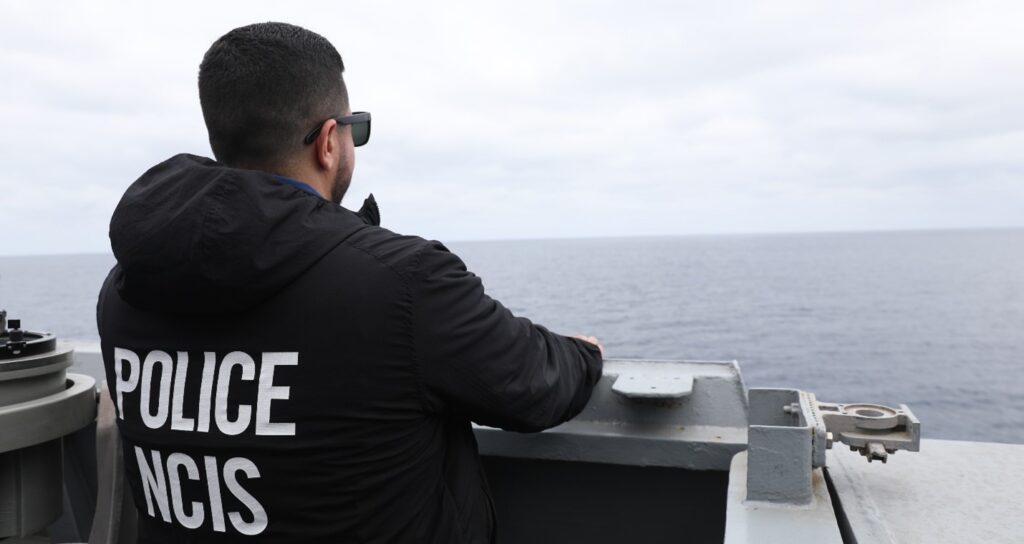
Among the crew onboard these ships have been NCIS Special Agents who provide law enforcement and counterintelligence capabilities related to counternarcotics and combating transnational organized crime. 
 
These Special Agents collaborate with law enforcement and intelligence community partners to synthesize data that enhances Navy leadership’s understanding of the operational environment and increases the probability of successful counternarcotics interdictions. 
 
Such counternarcotics interdictions have included, among others, the seizure of over 6,000 pounds of cocaine by the USS Gravely in May. A subsequent seizure netted over 11,000 pounds of cocaine and 7,200 pounds of marijuana. The USS Cole, partnering with the Royal Canadian Navy, was involved in the seizure of over 540 pounds of cocaine in June. 
 
The ships operate with an embarked U.S. Coast Guard Law Enforcement Detachment (LDET) that, combined with NCIS Special Agents enhance maritime security and support interagency collaboration in the region through presence operations. 
 
These deployments are unique in scope and duration compared to the traditional Special Agent Afloat deployments that NCIS has been conducting aboard U.S. Navy ships since the early 1970s. The Special Agent Afloat program deploys agents for year-long deployments aboard aircraft carriers, hospital ships, and amphibious assault ships. NCIS law enforcement and counterintelligence support to these ships enables the Navy to operate with optimal readiness and lethality to protect the United States and advance its interests globally. 


World Shipping Council Condemns New Attacks in the Red Sea

LONDON, July 9, 2025 — “What we’re seeing unfold in the Red Sea is shocking and unacceptable. Seafarers are being killed while simply doing their jobs,” World Shipping Council President & CEO Joe Kramek said today in response to attacks on commercial ships in the Red Sea over the past few days.  
 
“The World Shipping Council extends its deepest condolences to the families of those who have been lost, and our thoughts are with all those affected. These are devastating, deeply felt losses for the global shipping community,” Kramek said. 
 
“We cannot allow attacks on commercial ships to become normalized or weaponized as political tools. The safety of those at sea, and the freedoms and rights of navigation, must be protected. We support the International Maritime Council Secretary-General’s call for dialogue, to ensure the safety of seafarers,” Kramek concluded. 


Coast Guard Cutter Harriet Lane Returns Home Following Patrol in Oceania

U.S. Coast Guardsmen assigned to medium endurance cutter USCGC Harriet Lane (WMEC 903) moor the cutter at a pier in Taiohae, French Polynesia, May 18, 2025. The crew visited Nuka Hiva, the largest of the Marquesas Islands of French Polynesia, as part of their 73-day patrol supporting Operation Blue Pacific. (U.S. Coast Guard photo by Petty Officer 1st Class Kenneth Shellenberger) 

U.S. Coast Guard Oceania District External Affairs, July 10, 2025 

HONOLULU – The crew of U.S. Coast Guard Cutter Harriet Lane (WMEC 903) returned to Honolulu Wednesday following a 73-day patrol in support of Coast Guard Oceania District’s Operation Blue Pacific.  

The Harriet Lane crew departed Joint Base Pearl Harbor-Hickam in April to conduct joint operations and territorial integrity missions across Oceania. Patrolling more than 15,000 nautical miles around the Hawaiian Islands, French Polynesia, Cook Islands, and American Samoa, the cutter’s crew worked alongside interagency and Pacific Island partners to reinforce the rules-based international maritime order in the region.   

“The crew demonstrated their professionalism, grit, and dedication to strengthening maritime governance in Oceania,” said Petty Officer 1st Class Brennan Augustine, senior maritime enforcement specialist aboard the Harriet Lane. “The crew’s commitment and teamwork with our law enforcement partners protects America’s maritime borders and drives stability in the region.”  

The Harriet Lane crew exercised partnerships with Cook Islands, French Polynesia, New Zealand, and the National Oceanic and Atmospheric Administration (NOAA) Office of Law Enforcement through bilateral maritime law enforcement agreements, professional exchanges, and domestic federal maritime law enforcement operations.  

In the Cook Islands’ exclusive economic zone (EEZ), the Harriet Lane crew and two Ministry of Marine Resources officers conducted six boardings of fishing vessels, resulting in one suspected violation.   

In French Polynesia, the crew conducted joint operations and exercises with French Armed Forces in the Asia-Pacific (ALPACI) to enhance collective maritime domain awareness while sustaining rules-based international norms regarding high seas fishing. Coordinating with an ALPACI aviation asset, the Harriet Lane crew conducted two Western and Central Pacific Fisheries Commission (WCPFC) high seas boardings and inspections on commercial fishing vessels, resulting in one potential violation.  

The crew conducted 14 additional high seas boarding and inspections on commercial fishing vessels, resulting in two potential violations of conservation and management measures under the WCPFC.   

While in American Samoa, the Harriet Lane crew hosted a reception attended by U.S. Congresswoman Aumua Amata Coleman Radewagen’s staff delegation, American Samoa Attorney General Gwen Tauiliili-Langkilde, the Assistant Director of NOAA’s Office of Law Enforcement Pacific Islands Division, and representatives from the U.S. Department of Commerce, National Marine Sanctuary of American Samoa, American Samoa Department of Port Administration, American Samoa Department of Marine and Wildlife Resources, as well as command and crew from the French Overseas Patrol Vessel Teriieroo a Teriierooiterai. Event attendees discussed the deterrence of threats to regional security and illicit maritime activities that affect U.S. border security, regional security and economic prosperity.   

Commissioned in 1984, Cutter Harriet Lane is a 270-foot medium-endurance cutter homeported in Honolulu to support Coast Guard missions in the Pacific region. The service’s medium endurance cutter fleet supports a variety of Coast Guard missions including search and rescue, law enforcement, maritime defense, and protection of the marine environment.   


USS George Washington Departs Manila, Continues Indo-Pacific Patrol 

Armed Forces of the Philippines (AFP) Brig. Gen. Daniel D. Tansip, right, Chief of the AFP Chaplain Service, salutes sideboys following a tour aboard Nimitz-class aircraft carrier USS George Washington (CVN 73) while anchored off the coast of the Philippines, July 5, 2025. (U.S. Navy photo by MC2 Lillian Olen) 

From Petty Officer 2nd Class Bruce Morgan, USS George Washington (CVN 73)

MANILA, Philippines – Nimitz-class aircraft carrier USS George Washington (CVN 73), the flagship of the USS George Washington Carrier Strike Group (GWA CSG), with Carrier Air Wing (CVW) 5 embarked, departed Manila, Philippines, following a scheduled port visit, July 7, 2025. 

George Washington departed anchorage after four scheduled days of port visit in Manila for the crew to enjoy some rest, relaxation, and experience the Philippines with tours, community relations events, and key leader exchanges with allies and partners and members of the Armed Forces of the Philippines. 
 
“These visits are incredibly important engagements with our allies and partners, but what I think we take away from them is the friendships that you make there,” said Capt. Tim Waits, commanding officer, George Washington. “These friendships help strengthen the bonds between our two countries and stress our commitment to shared goals for this region.” 
 
Rear Adm. Eric J. Anduze, Commander, Task Force (CTF) 70/Carrier Strike Group (CSG) 5, visited Vice Admiral Jose M. Ambrosio Q Ezpeleta, Flag Officer in Command, Philippine Navy. The visit demonstrated the U.S. Navy and GWA CSG’s commitment to strengthening our bonds with allies and partners in the Indo-Pacific theater. 
 
“We share with the Republic of the Philippines a strategic vision of a free, peaceful, and prosperous Indo-Pacific,” said Anduze. “Our cooperative activities advance our collective efforts to preserve regional stability.” 
 
George Washington’s Morale, Welfare and Recreation (MWR) team organized tours for the crew, including Manila city tours, sightseeing tours of the Tagaytay Ridge, Pagsanjan falls, Villa Escudero, Puning Hot springs, aquariums and golfing trips. The command religious ministries department also coordinated several community relations events alongside the chaplains of the Armed Forces of the Philippines. 
 
Ticonderoga-class guided-missile cruiser USS Robert Smalls (CG 62) and Arleigh Burke-class guided-missile destroyer USS Shoup (DDG 86) accompanied the George Washington and CVW 5’s departure, continuing a regularly scheduled patrol in the Indo-Pacific region. 
 
CVW-5 consists of various squadrons operating F/A-18E and F/A-18F Super Hornets, F-35C Lightning IIs, E-2D Hawkeyes, CMV-22B Ospreys, EA-18G Growlers, and MH-60R and MH-60S Helicopters. 
 
GWA CSG is on patrol in the U.S. 7th Fleet area of operations. George Washington is the U.S. Navy’s premier forward-deployed aircraft carrier, a long-standing symbol of the United States’ commitment to maintaining a free and open Indo-Pacific region, while operating alongside allies and partners across the U.S. Navy’s largest numbered fleet. 


Fairbanks Morse Defense Awarded Contract for FM 175D Engine to Support U.S. Navy’s DDG(X) Program 

From Fairbanks Morse Defense

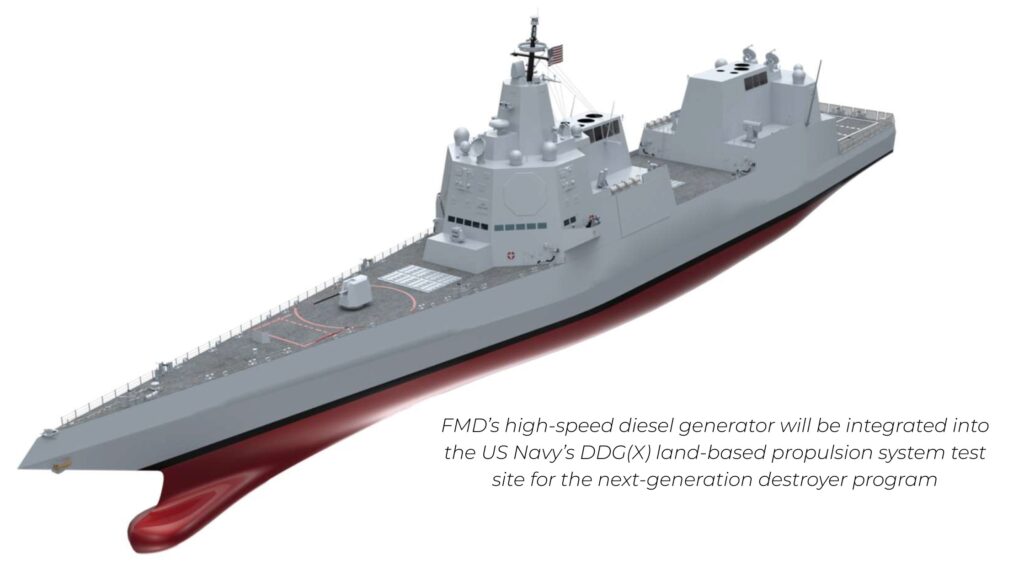
Fairbanks Morse Defense (FMD) has been awarded a contract to provide the U.S. Navy with an FM 175D high-speed diesel generator engine for integration into the DDG(X) land-based propulsion system test site, supporting the U.S. Navy’s goal of reducing design risks as it continues developing the next-generation platform. 

“Fairbanks Morse Defense has a long history of delivering mission-critical power and propulsion solutions for the U.S. Navy,” said Mike Clark, Chief Operating Officer of Fairbanks Morse Defense. “The selection of the FM 175D for this important land-based test highlights the superior power density needed on modern surface combatants, ensuring the DDG(X) has the energy needed to operate advanced combat systems while maintaining operational efficiency.” 

Designed to succeed the Flight II Ticonderoga-class cruisers and the Flight I/II Arleigh Burke-class destroyers, the platform is currently in the design and feasibility stage, with construction expected to begin in 2032. 

As the Navy’s next-generation large surface combatant, DDG(X) will integrate a wider array of advanced systems, demanding unprecedented levels of power generation. The ship is designed with an Integrated Power System (IPS) to generate, convert, and distribute power for ship operations. The DDG(X) electrical plant is expected to deliver more than 75 megawatts of power for standard operations while enabling high-energy equipment, advanced sensors, and enhanced propulsion systems. 

The FM 175D propulsion system generator set can produce 3.8 MW of power, which is considered among the best in class for power density. Unlike conventional high-speed engines, the FM 175D delivers significantly greater power while maximizing fuel efficiency, making it an optimal choice to reduce the life cycle costs of the DDG(X) platform. It has a power output range of 1,740 to 4,400 kilowatts and operates at 1,800 to 2,000 RPM. 

Fairbanks Morse Defense launched the FM 175D into the United States in 2023 to meet the growing demand for high-density power system solutions in the naval defense industry. As the most power-dense engine available in the U.S. maritime sector, the FM 175D is well-proven in maritime defense and commercial applications worldwide, offering increased electrical output for modern naval operations and combat systems. 

The FM 175D is available in 12, 16, or 20-cylinder configurations with a 175mm bore and is capable of driving mechanical propulsion systems or generators for onboard power generation.