USCGC Vigorous Returns Home After 51-Day Counter-Migration Patrol in Windward Passage
From U.S. Coast Guard Atlantic Area, July 1, 2025
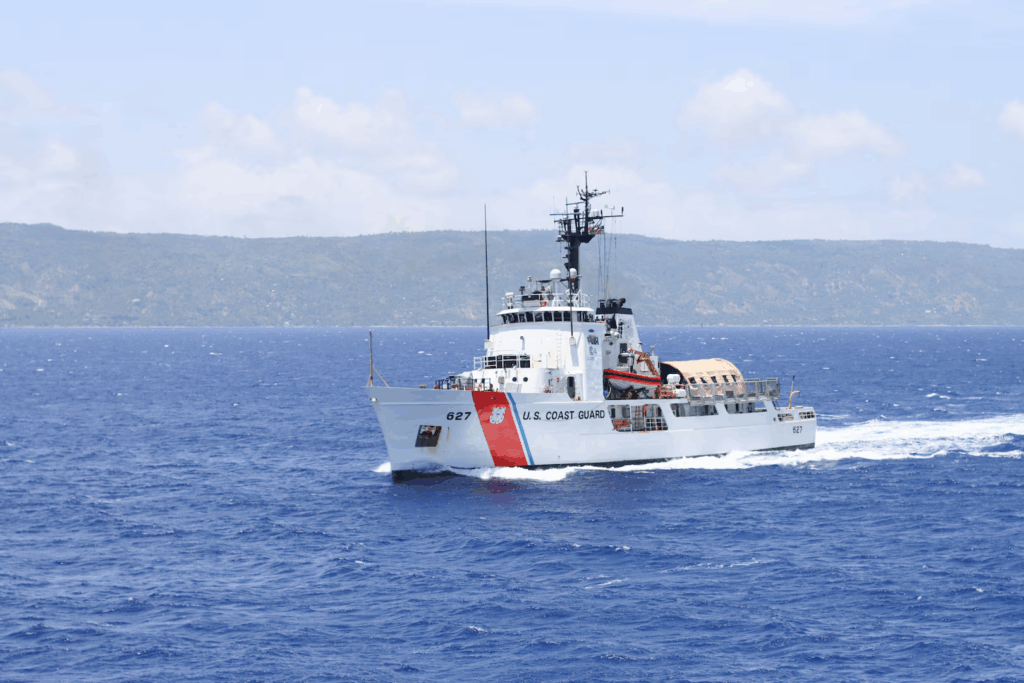
PORTSMOUTH, Va. — The crew of Coast Guard Cutter Vigorous (WMEC 627) returned to their home port in Portsmouth, Tuesday, following a 51-day patrol in the Windward Passage.
Vigorous deployed in support of Operation Vigilant Sentry to advance the primary missions of safety of life at sea and deterrence of illegal alien ventures in known transit zones. Vigorous’ crew conducted maritime safety and security missions while protecting America’s maritime borders from unlawful entry.
Vigorous conducted several consent-based interview boardings in the Canal de la Tortue, Haiti, a key transit zone between Haiti and points north. Vigorous also patrolled for Coast Guard Sector Key West and Sector Miami, which are crucial to deterring illegal activities and maintaining maritime domain awareness. Working with Department of Defense and Department of Homeland Security entities, Vigorous contributed to the disposition of 17 suspected smugglers and nearly 1,400 pounds of cocaine with an estimated street value of $10 million.
Vigorous also honed its tactical proficiency through advanced boat tactics training alongside Coast Guard Cutter Campbell (WMEC 909). The crews conducted pursuit training, enhancing their interoperability and response capabilities in high-speed maneuvering situations. Additionally, they completed a towing exercise, further strengthening their collaborative efforts in maritime assistance and rescue operations.
In a demonstration of international partnership, the Vigorous worked with the Department of State to deliver critical boat supplies to the Haitian Coast Guard, bolstering their capabilities and strengthening maritime security cooperation in the region.
“The crew performed exceptionally well throughout this demanding patrol,” said Cmdr. Charles Bare, commanding officer of Vigorous. “Their dedication and professionalism enabled us to achieve significant operational successes, contributing directly to regional stability and interagency and international partnerships.”
DHS Operation Vigilant Sentry is a DHS-led operation comprised of federal, state and local partners responsible for preventing and responding to maritime migration. OVS, previously known as Homeland Security Task Force – Southeast, was established in 2003 and is comprised of more than 50 federal, state, and local agencies.
Vigorous is a 210-foot, Reliance-class medium-endurance cutter homeported in Portsmouth, Virginia. Its missions include search and rescue, maritime law enforcement, marine environmental protection, and homeland security operations in the Atlantic Ocean. The cutter falls under the command of U.S. Coast Guard Atlantic Area, which is based in Portsmouth, Viginia.
For more information on how to join the U.S. Coast Guard, visit GoCoastGuard.com to learn about active duty, reserve, officer and enlisted opportunities. Information on how to apply to the U.S. Coast Guard Academy can be found here.
HII and Hitachi Lock In Multi-Year REMUS 300 UUV Production Agreement
From HII
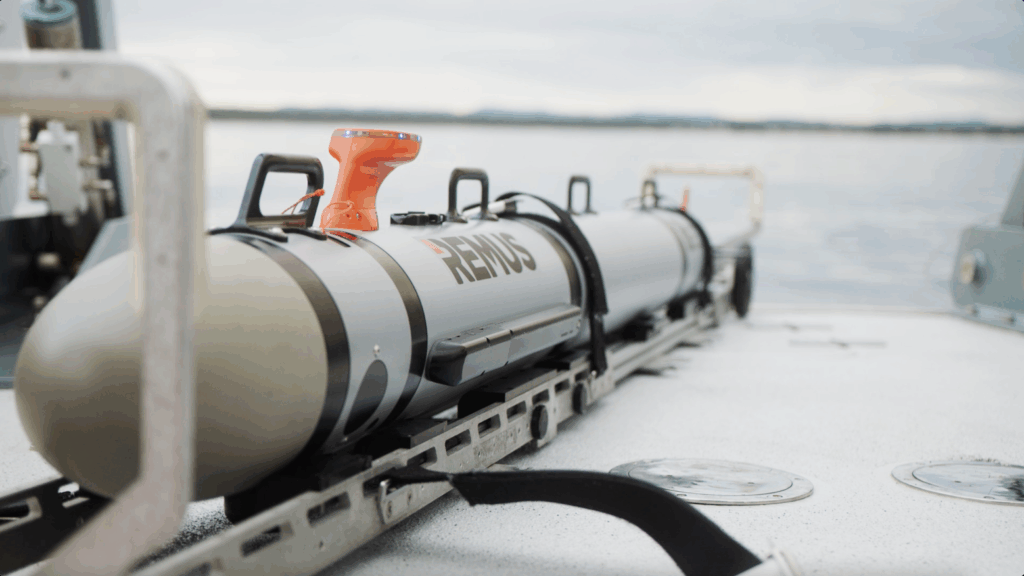
POCASSET, Mass., July 1, 2025 (GLOBE NEWSWIRE) — HII (NYSE: HII) announced the order from Hitachi, Ltd. (Hitachi) for more than a dozen REMUS 300 small uncrewed undersea vehicles (SUUVs) under a program that will deliver the vehicles over multi-years.
HII’s REMUS 300 platform is a modular, open-architecture SUUV engineered for multi-mission adaptability and was the commercial basis for the U.S. Navy’s Lionfish program.
The procurement by Hitachi builds on a long-standing relationship with Japan, an important U.S. ally in the Pacific region. The REMUS 300 platform is in service with several nations worldwide and offers critical interoperability with partner and allied forces.
“This procurement represents a key sale milestone for the REMUS 300 commercial program,” said Duane Fotheringham, president of Mission Technologies’ Uncrewed Systems business group. “We greatly appreciate the confidence Hitachi has placed in us. The success of our commercial REMUS 300 vehicles is a result of our work in the international markets and the high confidence our customers place in REMUS products. These vehicles deliver critical mine-hunting capabilities and flexible payload options to our allies and partners.”
About the REMUS UUV
The REMUS UUV family delivers critical advantages across modern naval operations and the autonomous systems have been proven to operate independently or in conjunction with crewed platforms — such as Virginia-class nuclear submarines — to extend mission range, reduce detection risk and limit personnel exposure.
The REMUS open-architecture design allows rapid payload integration, enabling mission-specific configurations and future tech insertions — key factors in maintaining operational relevance and cost efficiency over time.
To date, HII has sold more than 700 REMUS vehicles to over 30 countries, including 14 NATO members. Notably, over 90% of REMUS units delivered in the past 23 years remain in service, demonstrating platform durability and lifecycle value — both critical in defense acquisition decision-making.
Securing the Backbone: The Defense Industrial Base
PHOTO BY: Air Force Staff Sgt. Marco Gomez
By Ryan Caughill, President, Western New York Council, Navy League of the United States.
“You can’t fight tomorrow’s war with yesterday’s plans.”
In the summer of 2018, I completed my internship at Moog Inc., one of the United States’ premier defense contractors. My role was in Environmental Health & Safety, but my mission went deeper: I was tasked with modernizing and guiding emergency management planning across an organization that was deeply integrated into the Defense Industrial Base (DIB), and yet, lacked a dedicated emergency management function.
Like my time later at M&T Bank, this experience left a lasting impression. It showed me that even companies at the forefront of defense technology can have blind spots when it comes to continuity, resilience, and crisis preparedness.
[While this article isn’t just about my singular experience, but a holistic and general overview,] that’s what makes the Defense Industrial Base one of the most paradoxical critical infrastructure sectors in America: incredibly advanced, but dangerously lacking.
The Backbone Behind the Uniform The Defense Industrial Base is more than just tanks, missiles, or aircraft. It’s an expansive network of over 100,000 private companies that provide products, services, logistics, and technologies to support the U.S. military.
This includes:
Weapons systems and munitions
Aerospace components and military-grade software
Advanced electronics and cyber capabilities
Research and development institutions
Transportation and supply chain networks
Small manufacturers producing critical, often irreplaceable, parts
Some of these are Fortune 500 giants. Many are small, family-owned machine shops in rural communities. All are vital.
But here’s the problem: there is no unified resilience standard across the DIB. And that’s a problem hiding in plain sight.
The Vulnerabilities No One Wants to Talk About During my time at Moog, I saw firsthand how emergency management often sits outside the core of DIB corporate culture. Not out of apathy, but due to the sheer scale and complexity of operations. Many companies have excellent safety and security programs, but few have comprehensive crisis management systems. Fewer still have trained emergency managers or business continuity professionals guiding cross-functional coordination across cyber, physical, and operational risks. This isn’t to say they don’t exist, I’ve met some, and they do a really great job.
That makes this sector vulnerable in ways most people don’t understand.
The DIB is:
Extremely decentralized: A single failed supplier can halt delivery of critical weapons platforms.
Highly classified: Cyber breaches can compromise national defense secrets, yet many companies, especially smaller ones, lack mature cyber defenses.
Logistically fragile: Long-lead items, global supply chains, and just-in-time manufacturing leave little room for error.
Resource-limited: Many smaller firms simply don’t have the bandwidth or expertise to build robust resilience programs.
Worse yet, we take it for granted that these companies – because of what they do – are already hardened. That’s not always true.
Why This Sector Isn’t Taken Seriously — Until It’s Too Late The Defense Industrial Base occupies an odd place in the national consciousness. We respect the military. We fund the military. But we rarely consider who makes the military work.
The supply chains, R&D labs, fabrication shops, and logistics hubs that build and sustain America’s warfighting capability are not invincible. And yet, the DIB isn’t regularly treated like critical infrastructure in the traditional emergency management sense , even though it underpins our strategic deterrence, military readiness, and wartime surge capacity.
That disconnect has consequences. If a natural disaster, ransomware attack, insider threat, or geopolitical disruption strikes a key node in this ecosystem, the effects won’t be immediate headlines. They’ll show up months or years later when a military platform is delayed or compromised.
In an age of strategic competition with China and resurgent threats in Europe and the Middle East, that delay could mean the difference between deterrence and disaster.
Strengthening the Arsenal of the Republic If we want the DIB to remain viable, competitive, and secure, we must elevate resilience as a strategic imperative, not an afterthought.
At the Federal Level:
The DoD must go beyond cybersecurity compliance and require holistic emergency management, business continuity, and crisis communications programs for Tier 1 and Tier 2 contractors
Congress should fund regional DIB resilience initiatives and technical assistance hubs to help small firms build preparedness capacity
DIB firms must be integrated into DHS-FEMA and CISA exercises, not treated as isolated contractors
In the Private Sector:
Contractors should invest in full-time emergency managers or resilience officers, especially at multi-site operations Continuity of Operations plans (COOP) must be tested regularly and integrated across functions – especially cyber, facilities, HR, and production Leadership should prioritize exercises and scenario planning, particularly for cyber-physical convergence threats
Across the Supply Chain:
Vendors must be mapped and tiered by criticality, with redundancy plans in place for sole-source dependencies. Smaller manufacturers should be given access to resilience toolkits and grant-supported planning assistance.
For the Defense Community:
Collaboration must improve across DoD, DHS, and the intelligence community to identify emerging threats to the DIB Emergency management professionals should be embedded, or a partner, in acquisition planning and supplier vetting The public and political class must recognize that defense readiness includes domestic resilience
Resilience is Readiness The Defense Industrial Base is one of the quietest, but most consequential, sectors in the nation’s infrastructure portfolio. You don’t see it in parades. But it’s there in every missile defense test, every jet engine, every encrypted radio, and every armored vehicle.
If we allow it to weaken, structurally, logistically, or digitally, we erode not just our defense capability, but our credibility.
We cannot afford to wait for crisis to realize that the arsenal of our Republic isn’t just built on innovation or budgets.
It’s built on resilience.
These challenges aren’t theoretical, they’re unfolding in real time. Delays in the F-35 rollout, the Navy’s struggles and eventual cancellation with the Littoral Combat Ship (LCS) program, and schedule slippages in the next-generation aircraft carriers, guided missile frigates, and Columbia-class ballistic missile submarines all point to a sector under immense strain. While these issues stem from a mix of design complexity, funding cycles, and industrial bottlenecks, one thing is clear: the Defense Industrial Base cannot afford additional disruption.
A well-funded, well-placed crisis management function, integrated at both the facility and enterprise level, won’t solve design flaws or procurement hurdles, but it can absorb shock, accelerate recovery, and ensure continuity when disaster strikes. In a sector already grappling with compounding risks, crisis management isn’t a luxury, it’s a strategic buffer against the unpredictable threats of 21st century warfare.
Navy, Marine Corps in Planning for Third Large-Scale Exercise
By Richard R. Burgess, Senior Editor
ARLINGTON, Va. — The U.S. Navy and Marine Corps are planning for execution later this month for Large-Scale Exercise (LSE) 2025, the third of such exercises since 2021. The LSE will largely be conducted through Live Virtual Construct (LVC) environment but will encompass units from around the world, including—for the first time—allies and partner nations.
LSE 2025, scheduled to begin on August 30, will be conducted “nearly fully virtual” over 22 time zones, said Rear Admiral Kenneth Blackmon, vice commander, U.S. Fleet Forces Command, during a briefing to reporters on the exercise, pointing out that LVC allows for safer exercises and conserves resources.
Approximately 880 personnel will be directly involved in the exercise, which will include personnel in six regional combatant commanders, U.S. Fleet Forces Command, the U.S. Pacific Fleet, Naval Forces Europe/Africa, Marine Forces Europe/Africa, seven numbered fleets, 10 maritime operations centers (MOCs), Marine Forces Pacific, II Marine Expeditionary Force operations center, five carrier strike groups, two amphibious ready groups, the Office of the Chief of Naval Operations (OPNAV), various systems commands and type commanders, and Reserve Forces Command, said Capt. Captain Christopher Narducci, the exercise lead who briefed the details of the upcoming exercise.
“This is the only naval exercise spanning all 10 Maritime Operations Centers (MOCs), incorporating both the Navy and Marine Corps worldwide to evaluate and address gaps and seams between fleets,” Blackmon said. Many exercises focus on a single fleet, but LSE raises the bar by requiring coordination across all fleets, providing critical reps and sets at the operational level.”
Allied participation will include a NATO response cell, the Royal Canadian Navy, and the Japanese Maritime Self-Defense Force.
The LSE is designed to exercise such aspects as the Global Maritime Response Plan (GMRP), global contested logistics and sustainment operations, reserve mobilization, and the wartime responsibilities of the type commanders.
GMRP “is a new concept that is being developed right now,” Narducci said. “It aims to accelerate our ability to generate forces in wartime or in a crisis scenario. GMRP is about getting more players on the field sooner.”
Brigadier General Thomas M. Armas, deputy commander of U.S. Marine Corps Forces Command, also briefing reporters, said that the LSE would exercise the passing of carrier strike groups and amphibious ready groups from fleet to fleet.
“This exercise provides an incredible opportunity to hone command and control across the most lethal amphibious task forces in the world, ensuring sea lanes remain open and global commerce flows freely, maintaining peace and stability worldwide,” Armas said. “Exercises like this help us identify and close gaps across multiple time zones, preparing our Amphibious Ready Groups (ARGs) and Carrier Strike Groups (CSGs) to seamlessly transition forces during crises. It’s challenging enough to operate within one time zone; coordinating across many, especially in adverse conditions, demands realistic practice.
“Being able to rehearse these scenarios ensures we can guarantee the lethality and readiness our nation depends on,” he said. “When our ARGs are deployed around the world during times of crisis, exercises like LSE 25 ensure those forces are synchronized, on time, and on target. Practicing lethality guarantees we can execute it when needed.”
Narducci said the Naval Warfare Development Center will be responsible for overall exercise control, assisted by six global distributed controllers and supported by 17 flag and general officers, including retired officers.
The Navy Continuous Training Environment will be the network for the LSE, Narducci said.
Coast Guard Reports Fewest Boating Fatalities in More Than 50 Years
WASHINGTON — The U.S. Coast Guard released its 2024 Recreational Boating Statistics Report Tuesday.
The report records the fewest boating fatalities since the Service began collecting statistics more than 50 years ago.
Fatalities fell 1.4% to 556 from 564 in 2023, while overall incidents increased by 1.1% from 3,844 to 3.887. Nonfatal injuries increased 2.1% from 2,126 to 2,170. Alcohol continued to be the leading known contributing factor in fatal boating accidents in 2024, accounting for 92 deaths, or 20% of total fatalities.
The fatality rate was 4.8 deaths per 100,000 registered recreational vessels, a 2% decrease from last year’s rate of 4.9 deaths per 100,000. In 1971, when the Safe Boating Act was first passed, the rate was 20.6 deaths per 100,000. Property damage totaled $88 million, and operator inattention, improper lookout, operator inexperience, machinery failure and navigation rules ranked as the top five primary contributing factors in accidents.
“Boating under the influence is not only illegal but it is also dangerous,” said Capt. Robert Compher, inspections and compliance director. ”The effects of alcohol can be magnified when boating in the sun and on a moving vessel. Staying sober protects you and those around you.”
Deaths occurred predominantly on vessels operated by individuals who had not received boating safety instruction, accounting for roughly 70% of fatalities. Open motorboats, personal watercraft and cabin motorboats were the vessel types most involved in reported incidents.
There was an increase in deaths on standup paddleboards. Drowning accounted for three-quarters of deaths, with 87% of victims not wearing life jackets. The Coast Guard reminds boaters to wear serviceable, properly sized and correctly fastened life jackets, and encourages boaters to check the weather and water conditions before getting underway.
The data in the report is based on incidents that resulted in at least one of the following: death, disappearance, injury that required medical treatment beyond first aid, damage to the vessel(s), or other property equal to or greater than $2,000 or a loss of vessel.
“We thank our federal, state and nonprofit partners who strive to make the nation’s waterways safer. We also thank recreational boaters who follow safe boating,” said Compher.
In addition to wearing a life jacket and taking a boating safety course, the Coast Guard recommends all boaters attach the engine cutoff switch, get a free vessel safety check and boat sober.
The full 2024 Recreational Boating Statistics Report is available at USCGBoating.org.
At Combined Naval Event 2025, Navy Leaders Agree Autonomous is the Future
Rear Admiral Michael Mattis, Director, Strategic Effects, Commander U.S. Naval Forces Europe/Africa Commander, Task Force-SIX SIX (far right), Captain Colin Corridan, Acting Director, U.S. Navy Disruptive Capabilities Office (far left), and Industry partner Insitu (center) on the panel “UxS Exquisiteness to Attritability: How Ukraine has provided insight into how UxS should be deployed for the next conflict in INDOPACOM.”
Current conflicts across the globe prove that the way we engage in war is changing daily – and that winning requires scalable, attritable systems that can adapt to evolving mission landscapes in real-time.
Captain Colin Corridan, Acting Director, U.S. Navy Disruptive Capabilities Office (DCO), heard this live from the watch floor of the Maritime Operation Center in Bahrain, where he was stationed 2022-2024. As he listened to the Captains of U.S. Navy ships take Houthi drone fire, “Hearing the urgency in our warfighters’ voices – I realized everything was changing, and that we have to continue to focus on mastering this attritable side of warfare,” he said.
On 21 May, Rear Admiral Michael Mattis, Director, Strategic Effects, Commander U.S. Naval Forces Europe/Africa Commander, Task Force-SIX SIX, and Corridan joined a panel discussion to discuss these lessons learned. Industry partner Insitu hosted the panel, “UxS Exquisiteness to Attritability: How Ukraine has provided insight into how UxS should be deployed for the next conflict in INDOPACOM,” as part of the Combined Naval Event (CNE) 2025. CNE brings together international navies, the defense industry, and academia to power the future of naval environments by helping align the strategic, operational, and technological opportunities and demands of the future.
Three major themes emerged from the panel: 1: “We must get to autonomous systems at size and scale,” Mattis said. Accelerating testing, fielding, and scaling of these new technologies will help the U.S. Navy maintain its critical edge. By leveraging existing platforms that industry partners can advance quickly, we will get to that next level of autonomy. “Ukraine has been an evolution, autonomous will be a revolution,” said Mattis.
2: “Low-cost. Attritable. No regrets,” Mattis said. Rather than thinking in terms of lifetime investment, the Navy should consider these new weapons in terms of their short-term use. A symbiotic relationship with industry partners is critical here. Innovation is happening in the private sector, and the Navy can benefit from their speed, agility, and ingenuity. On the other side of the coin, the Navy should be able to provide feedback to industry partners to generate real-time iteration.
3. “The whole ocean may soon be a weapons engagement zone,” Corridan said. Our allies and partners are important now more than ever – because no one Navy can or should keep every sea safe. Information is power, and we need to be able to quickly and easily speak with and share data with our allies. We have the technology – the next step is to enable interoperability. When drones can talk to each other – and allow us to talk to our partners – we will have upper hand.
Simply put: if we are not conquering the attritable space as well as the exquisite, we are not doing enough.
The DCO was stood up to marry these three major themes. With the mantra that “speed in this space is our new reality,” DCO takes specific challenges provided directly by the Fleets and accelerates the acquisition of technology to address them. DCO is focused on a minimal viable product that delivers one capability at a lower cost. While speed is in DCO’s DNA, a careful assessment process considers everything from the engineering design and costs of a proposed solution to its legal and policy implications. Along the way, DCO is gathering lessons learned that can be applied to improve the entire Navy’s capability.
SECNAV Renames USNS Harvey Milk Oiler After Navy WWII Medal of Honor Recipient
In alignment with the mandate from the President and the Secretary of Defense to restore the warrior ethos to the military, the Secretary of the Navy has renamed the John Lewis-class fleet replenishment oiler USNS Harvey Milk (T-AO 206) to the USNS Oscar V. Peterson (T-AO 206). USNS Oscar V. Peterson (T-AO 206) honors U.S. Navy Chief Petty Officer Oscar Verner Peterson, who was posthumously awarded the Medal of Honor for conspicuous gallantry and intrepidity at the risk of life above and beyond the call of duty during World War II.
Peterson was born on August 27, 1899, in the small town of Prentice, Wisconsin. He enlisted in the U.S. Navy on December 8, 1920, and over two decades at sea, rose to the rank of chief water tender. At the time of his final act of courage, he was assigned to USS Neosho, a fast fleet oiler that sustained American warships in the midst of heavy battle.
On May 7, 1942, during the Battle of Coral Sea, Japanese dive bombers struck Neosho, setting her ablaze. Peterson, wounded and lacking assistance, manually closed four bulkhead steam line valves to keep the ship operational. In so doing, he suffered third-degree burns on his face, arms, shoulders and hands. He died six days later from his injuries and was buried at sea, leaving behind his wife Lola and two sons Fred and Donald. His actions helped keep the oiler afloat for another four days, saving the lives of 123 of his shipmates who were later rescued. For his act of profound courage, he was posthumously awarded the Medal of Honor. Today, the Navy will carry forward his legacy by naming a John Lewis-class oiler in his honor. This vessel will quietly and powerfully sustain those on the front lines, like Peterson himself.
General Characteristics John Lewis-class oilers are operated by Military Sealift Command and are designed to provide diesel fuel and lubricating oil and small quantities of fresh and frozen provisions, stores and potable water to U.S. Navy ships at sea, as well as jet fuel for aircraft. The oilers can carry a load of 162,000 barrels of oil and maintain significant dry cargo capacity.
Launch and Christening: Nov 2021
Ship Delivery: July 2023
First Sail Date: March 2024
Length: 745.7 feet (227.3 meters)
Beam: 105.6 feet (32.2 meters)
Load: 7,520,731.9 gallons of fuel, fresh water, and other supplies
POCASSET, Mass., July 01, 2025 (GLOBE NEWSWIRE) — HII (NYSE: HII) announced the order from Hitachi, Ltd. (Hitachi) for more than a dozen REMUS 300 small uncrewed undersea vehicles (SUUVs) under a program that will deliver the vehicles over multi-years.
HII’s REMUS 300 platform is a modular, open-architecture SUUV engineered for multi-mission adaptability and was the commercial basis for the U.S. Navy’s Lionfish program.
The procurement by Hitachi builds on a long-standing relationship with Japan, an important U.S. ally in the Pacific region. The REMUS 300 platform is in service with several nations worldwide and offers critical interoperability with partner and allied forces.
“This procurement represents a key sale milestone for the REMUS 300 commercial program,” said Duane Fotheringham, president of Mission Technologies’ Uncrewed Systems business group. “We greatly appreciate the confidence Hitachi has placed in us. The success of our commercial REMUS 300 vehicles is a result of our work in the international markets and the high confidence our customers place in REMUS products. These vehicles deliver critical mine-hunting capabilities and flexible payload options to our allies and partners.”
The REMUS UUV family delivers critical advantages across modern naval operations and the autonomous systems have been proven to operate independently or in conjunction with crewed platforms — such as Virginia-class nuclear submarines — to extend mission range, reduce detection risk and limit personnel exposure.
The REMUS open-architecture design allows rapid payload integration, enabling mission-specific configurations and future tech insertions — key factors in maintaining operational relevance and cost efficiency over time.
To date, HII has sold more than 700 REMUS vehicles to over 30 countries, including 14 NATO members. Notably, over 90% of REMUS units delivered in the past 23 years remain in service, demonstrating platform durability and lifecycle value — both critical in defense acquisition decision-making.
HII Christens Guided Missile Destroyer Jeremiah Denton
From HII
PASCAGOULA, Miss., June 28, 2025 (GLOBE NEWSWIRE) — HII (NYSE: HII) christened today the future USS Jeremiah Denton (DDG 129), the third Flight III Arleigh Burke-class destroyer to be built at the company’s Ingalls Shipbuilding division.
The ship’s name honors former U.S. Sen. Jeremiah Denton Jr., a Vietnam War veteran who was awarded the Navy Cross for his heroism as a prisoner of war. Denton spent 34 years as a naval aviator, including eight years as a prisoner of war in Vietnam. He is known for his act of genius during a televised broadcast in captivity, when Denton spelled out the word “torture” through Morse code using his eyes to blink the code. Following his Navy career, Denton was elected to the U.S. Senate representing his home state of Alabama in 1980.
“Today, we honor the skilled work of our Ingalls shipbuilders and the enduring spirit of Adm. Jeremiah Denton, a man who, under unimaginable pressure, exemplified strength, sacrifice, leadership and resilience,” Ingalls Shipbuilding President Brian Blanchette said. “When we christen a ship, we celebrate a joint mission with our Navy industry partners, one that connects the work we do here in Pascagoula to the safety and security of our nation and the free world.”
Acting Assistant Secretary of the Navy for Research Development and Acquisition Brett Seidle was the keynote speaker. He highlighted the importance of naval ships, the legacy of the ship’s namesake, and recognized the shipbuilding workforce as a vital national asset.
“Today we christen not just a ship, but we make a statement — a powerful steel forged testament to America resolve,” Seidle said. “The future USS Jeremiah Denton will sail as a reminder to the world, much like her namesake, the United States does not back down. The United States does not break and we do not forget our heroes. That is the legacy that this warship carriers forward.”
The ship’s co-sponsors and daughters of the namesake, Madeleine Denton Doak and Mary Denton Lewis, performed the traditional bottle-breaking ceremony against the bow to formally christen the ship. Madeline represented the family by providing remarks and paying tribute to her late father and mother who were Alabama natives.
“This magnificent ship was built by their neighbors (Mississippi), men and women who understand their skills, hard work and precise attention to detail that are vital in keeping our world safe.”
Flight III Arleigh Burke-class destroyers represent the next generation of surface combatants and incorporate a number of design modifications that collectively provide significantly enhanced capability. Upgrades include the AN/SPY-6(V)1 Air and Missile Defense Radar (AMDR) and the Aegis Baseline 10 Combat System required to keep pace with the threats well into the 21st century.
Ingalls has delivered 35 Arleigh Burke-class destroyers to the U.S. Navy including the first Flight III, USS Jack H. Lucas (DDG 125), in June of 2023. In addition, Ingalls Shipbuilding has five Flight IIIs currently under construction including Ted Stevens (DDG 128), Jeremiah Denton (DDG 129), George M. Neal (DDG 131), Sam Nunn (DDG 133) and Thad Cochran (DDG 135).
HII, C3 AI Forge Strategic AI Partnership to Support US Navy Shipbuilding
From HII
NEWPORT NEWS, Va., June 30, 2025 (GLOBE NEWSWIRE) — HII (NYSE: HII), America’s largest military shipbuilder, and C3 AI (NYSE: AI), the Enterprise AI application software company, have announced a strategic partnership to expand digital technologies and apply artificial intelligence (AI) to accelerate shipbuilding throughput at HII’s Newport News Shipbuilding and Ingalls Shipbuilding divisions.
“Increasing shipbuilding throughput is a critical priority for HII and the U.S. Navy,” HII CEO Chris Kastner said. “We’re proud to partner with C3 AI to leverage data and digital capabilities like artificial intelligence in the urgent work of delivering ships to the U.S. Navy.”
“C3 AI is proud to team with HII to ensure its vision in maintaining the nation’s maritime industrial dominance through the adoption of next-generation shipbuilding technologies. This collaboration underscores our growing role as a strategic provider to the U.S. government and defense sector,” said Thomas M. Siebel, chairman and CEO, C3 AI. “By deploying Enterprise AI across planning, operations, and the supply chain, we are powering a modern, intelligent infrastructure to ensure America’s edge in naval readiness.”
HII is broadening an existing partnership with C3 AI to integrate AI solutions across its shipbuilding operations, including in the areas of planning, operations, supply chain and labor allocation. These efforts are expected to accelerate production and support the U.S. Navy’s fleet readiness needs. The collaboration will also include opportunities in uncrewed vehicle production and sustainment.
The collaboration builds on a six-month initial Enterprise AI production deployment program conducted at Ingalls Shipbuilding, where shipbuilding teams leveraged complex algorithms to adjust and optimize work schedules. The initial deployment of the C3 AI application — powered by the C3 Agentic AI Platform — demonstrated significant improvements in schedule performance, an effort which will now be scaled across HII shipyards.
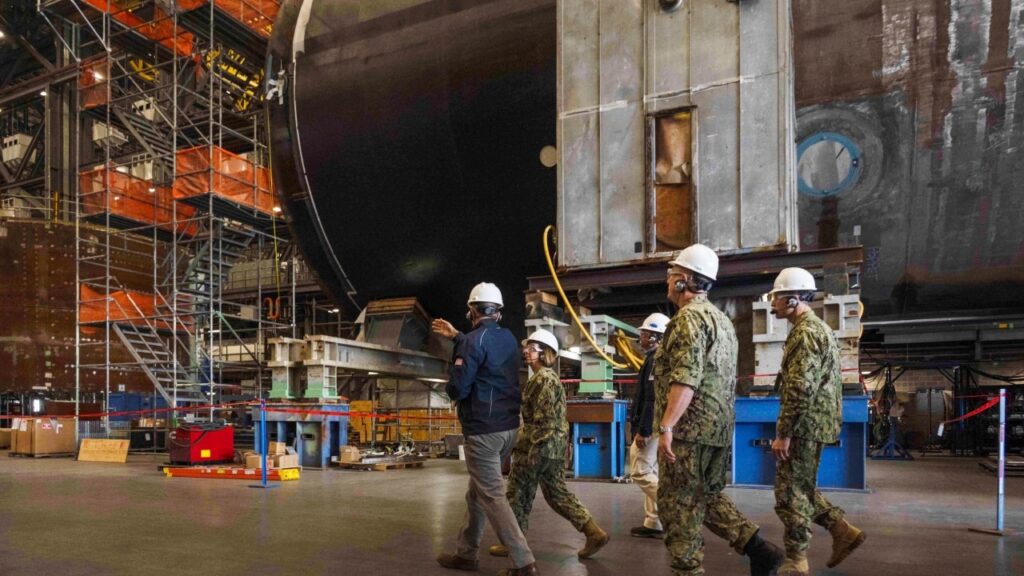
Initial efforts will focus on leveraging AI to enhance planning and scheduling at HII’s two shipbuilding divisions: Ingalls Shipbuilding, which builds amphibious ships and destroyers for the U.S. Navy; and Newport News Shipbuilding, which constructs U.S. nuclear-powered aircraft carriers and nuclear-powered submarines for the U.S. Navy.
This alliance marks a significant milestone in the digitization of America’s defense industrial base and reflects the commitment of both companies to strengthening U.S. naval capabilities through innovation.