U.S. Coast Guard, USS Sampson Conduct Drug Interdiction In Eastern Pacific
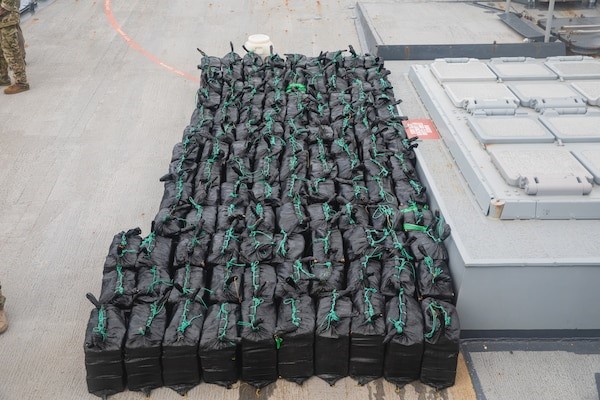
PACIFIC OCEAN – Members of a U.S. Coast Guard Law Enforcement Detachment and U.S. Navy Sailors assigned to the Arleigh Burke-class guided-missile destroyer USS Sampson (DDG 102) seized approximately 7,850 pounds of contraband during a visit, board, search and seizure operation, June 22, 2025 (Official U.S. Navy photo).
From U.S. Fleet Forces Command, June 26, 2025
PACIFIC OCEAN – U.S. Coast Guard and U.S. Navy interdicted three suspected drug smugglers and more than 7,850 pounds of cocaine, with an assessed wholesale value of approximately $58.1 million, in the Eastern Pacific on Sunday morning.
At 5:34 p.m., a Navy helicopter aircrew from the Arleigh Burke-class guided-missile destroyer USS Sampson (DDG 102) observed a vessel displaying suspicious behavior. A small boat was launched from the Sampson with a Coast Guard Law Enforcement Detachment (LEDET) 105 crew members aboard.
LEDET 105 crew members discovered three suspected drug smugglers aboard the vessel, all claiming non-U.S. nationality. The packages aboard the vessel tested positive for cocaine. All three individuals aboard were taken into custody aboard the Sampson.
The vessel, determined to be without nationality, was later sunk as a hazard to navigation.
U.S. Northern Command is working together with the Department of Homeland Security to provide military forces and capabilities at the southern border. Sampson is employed under U.S. Northern Command’s maritime homeland defense authorities with a Coast Guard Law Enforcement Detachment embarked to enable maritime interdiction missions to prevent the flow of illegal drugs and other illegal activity.
Pacific Partnership 2025 commences mission stop in Kingdom of Tonga
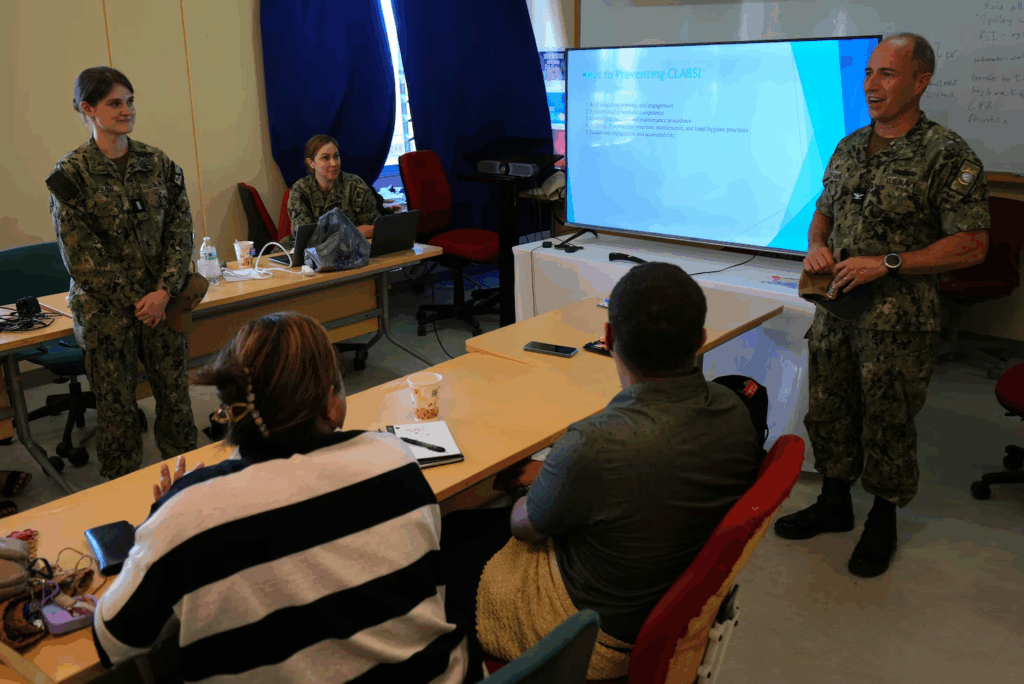
NUKU’ALOFA, Tonga (June 18, 2025) Capt. Mark B. Stefanik, right, mission commander of Pacific Partnership 2025 (PP-25), provides remarks during a nursing workshop at Vaiola Hospital as part of PP-25 in Nuku’Alofa, Tonga, June 18, 2025. (U.S. Navy photo by MC2 Moises Sandoval/Released)
From MC2 Moises Sandoval, Commander, Logistics Group Western Pacific Public Affairs, June 23, 2025
Pacific Partnership has returned to the Kingdom of Tonga to conduct the largest annual multinational humanitarian assistance and disaster response readiness mission present in the Indo-Pacific region, June 18, 2025.
Pacific Partnership brings together U.S. and Tongan personnel to collaborate on engineering projects and medical engagements, strengthening the host-nation’s capacities and forging new, enduring partnerships in the region.
“The various medical and engineering endeavors the United States and the Kingdom of Tonga are scheduled to accomplish together are a reflection of our various shared values, with an emphasis on strong cooperation and adaptability,” said U.S. Navy Capt. Mark B. Stefanik, mission commander of Pacific Partnership. “The U.S., our Navy and our partners stand proud in our prevailing commitment to the Kingdom of Tonga and its more than 100,000 residents.”
During their stop in the Kingdom of Tonga, the Pacific Partnership medical team is scheduled to lead community health engagements in the fields of ophthalmology, nursing, nutrition, environmental health and healthcare.
“This is another example of our enduring commitment to engage with the Tongan people,” said Marcus Jackson, Chargé d’affaires a.i. of United States Embassy Nukuʻalofa. “His Majesty’s Armed Forces and U.S. forces have historically trained together, deployed together and, through Pacific Partnership, build together.”
These engagements are tailored to the individual needs of the local Tongan citizens, repeating and expanding on the trust and rapport developed between the two groups through past iterations of the annual exercise.
The Pacific Partnership 2025 engineering team plans to accomplish numerous engineering repairs on a Technical School Building in Ha’ateiho. The U.S. and Tongan-formed team is also on track to finish multiple repairs on a Mobile Utilities Support Equipment generator, and conduct several subject matter expert exchanges throughout the mission.
“It is an honor to be here in the Kingdom of Tonga and have a role in continuing this partnership,” said Lt. Cmdr. Benjamin Carrington, Pacific Partnership Tonga mission lead. “By working alongside our host Tongans, either through repairing important infrastructure or sharing medical expertise, we are building lasting capacity and enhancing interoperability. So, when disaster strikes, our nations stand readier than ever to work together.”
Now in its 21st iteration, Pacific Partnership series is the largest annual multinational humanitarian assistance and disaster management preparedness mission conducted in the Indo-Pacific. Pacific Partnership works collaboratively with host and partner nations to enhance regional interoperability and disaster response capabilities, increase security and stability in the region, and foster new and enduring friendships in the Indo-Pacific.
Navy Accepts Delivery of USNS Point Loma
By Team Ships Public Affairs, June 24, 2025
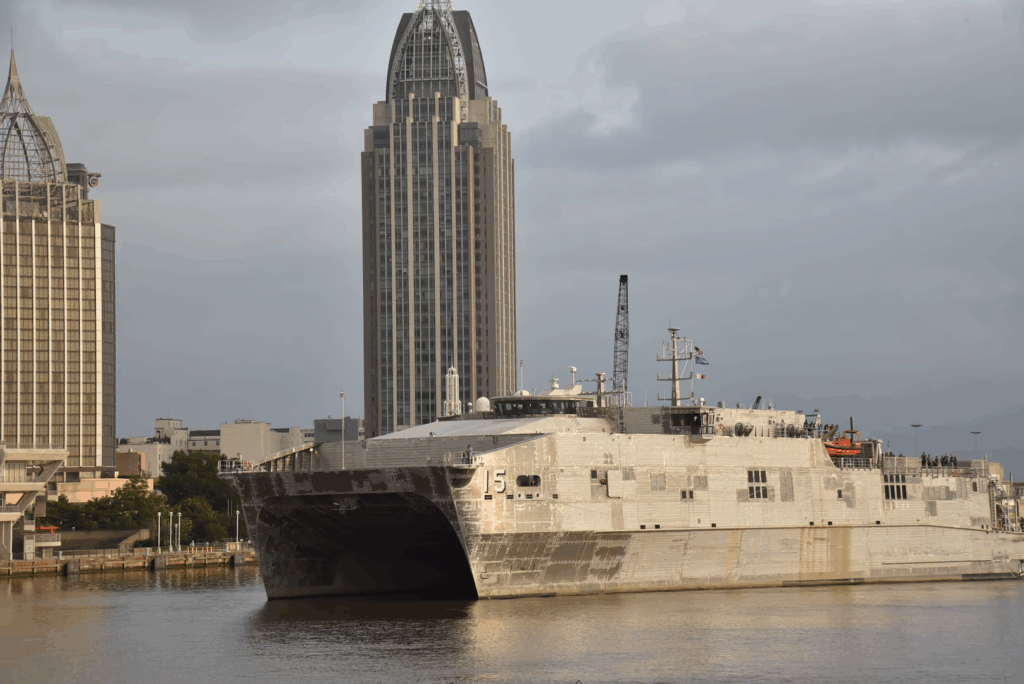
MOBILE, Ala. – The U.S. Navy accepted delivery of USNS Point Loma (EPF 15), the second of the Spearhead-class Expeditionary Fast Transport (EPF) Flight II configuration, from Austal USA, June 24.
The delivery of EPF 15 signifies the official transfer of the ship from the shipbuilder to the Navy. This delivery will enhance the Navy’s ability to transport troops, cargo, heavy equipment, and vehicles to shallow-draft ports. USNS Point Loma will be owned and operated by the U.S. Navy’s Military Sealift Command.
“The delivery of USNS Point Loma marks the second Flight II EPF delivered to the Navy, providing essential fast-transport and enhanced medical capabilities to combatant command areas of operation.” said Tim Roberts, Strategic and Theater Sealift program manager, Program Executive Office, Ships (PEO Ships).
The ship recently completed a formal Acceptance Trial with excellent scores overall and no significant deficiencies, a testament to the high level of completion, quality, and ship readiness.
Flight II EPF vessels add Role 2 enhanced medical mission afloat capabilities with two operating rooms, and support for up to 147 patients. The ships can also transport approximately 419 short tons and travel 1,200 nautical miles at an average speed of 33 knots.
Each vessel can support flight operations and are capable of on- and off-loading heavy equipment, cargo, and tactical vehicles, including Medium Tactical Vehicle Replacements (MTVR) and Joint Light Tactical Vehicles (JLTV).
The future USNS Lansing (EPF 16) is also under construction at Austal USA.
PEO Ships, one of the Department of Defense’s acquisition organizations, is responsible for executing the development and procurement of all destroyers, amphibious ships and craft, and auxiliary ships, including special mission ships, sealift ships and support ships.
Navy Successfully Demonstrates Swarm Mission Planning Tech
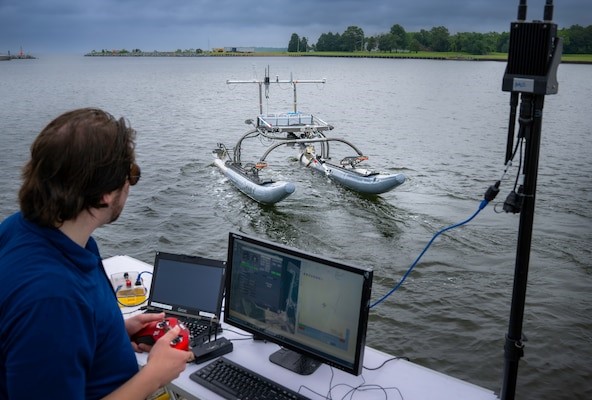
Raymond Koehler, a mechanical engineer at the Naval Air Warfare Center Aircraft Division, demonstrates unmanned swarm mission planning software at Naval Air Station Patuxent River’s West Basin Marina in Md. on June 17, 2025. The software helps the Navy plan missions with unmanned systems by simulating drone, sensor, and arrangement combinations to achieve mission goals at sea ultimately providing warfighters faster and more effective decision making. (U.S. Navy photo by Todd Frantom)
From Naval Air Systems Command, June 25, 2025
The Naval Air Warfare Center Aircraft Division (NAWCAD) successfully demonstrated innovative mission planning software for swarms and other configurations of unmanned air, surface, and underwater systems at its headquarters.
The new Optimized Cross Domain Swarm Sensing (OCDSS) software program helps the Navy plan missions using groups of unmanned aircraft. By running thousands of computer simulations, it determines the best combination of drones, sensors, and arrangement to achieve mission goals at sea.
“Autonomy is the decisive edge for maritime dominance,” said NAWCAD Commander Rear Adm. Todd Evans. “This technology is critical to enhancing operations across domains and represents a significant step forward for manned-unmanned teaming.”
OCDSS helps the Navy and Marine Corps get the most out of their unmanned systems while saving time and money. The software uses computer simulations to predict how different drones perform together in various missions, enabling planners to choose the right number and type of vehicles for the job.
“OCDSS quickly runs thousands of simulations to predict how different unmanned systems might perform together,” said NAWCAD Mechanical Engineer Raymond Koehler, OCDSS’ lead software developer. “This software gives warfighters faster and more effective decision making – that’s competitive advantage.”
By providing a virtual testing environment, OCDSS also reduces the cost and time associated with real-world testing in defense acquisition programs, which aligns with industry practices where simulation drives up to 90% of the development process. The technology successfully operated at ANTX Coastal Trident in August 2024, focusing on port security, providing data for future development and deployment.
“OCDSS levels-up how unmanned systems are used in a wide range of missions, and we’re ready to scale this autonomy to operational teams or test programs across the Navy and Marine Corps,” said Koehler.
Operational users and defense programs interested in learning more about OCDSS should contact NAWCAD tech team lead Derek Alley ([email protected]) for more information.
Koehler earned the Assistant Secretary of the Navy’s 2025 Dr. Delores M. Etter Top Scientists and Engineers of the Year Award as an Emergent Engineer for his outstanding contributions to swarm autonomy. The team he supports also earned a NAWCAD award for its collaboration on the effort with the Naval Surface Warfare Center Carderock Division.
NAWCAD’s military, civilian, and contract personnel operate test ranges, laboratories, and aircraft in support of test, evaluation, research, development, and sustainment for all Navy and Marine Corps aviation platforms. Based in Patuxent River, Maryland, NAWCAD also has major sites in St. Inigoes, Maryland; Lakehurst, New Jersey; and Orlando, Florida.
USNS Comfort Departs Grenada During Continuing Promise 2025
ST. GEORGE’S, Grenada (June 16, 2025) The Mercy-class hospital ship USNS Comfort (T-AH 20) departs from St. George’s, Grenada, during Continuing Promise 2025, June 16, 2025. Continuing Promise 2025 is the 16th iteration of the U.S. 4th Fleet/U.S. Naval Forces Southern Command-led mission since 2007, which aims to foster goodwill, strengthen existing partnerships with partner nations, and form new partnerships between host nations, non-federal entities, and international organizations. (U.S. Army photo by Cpl. William Hunter)
SAINT GEORGE’S, Grenada – The Mercy-class hospital ship USNS Comfort (T-AH 20) departed St. George’s, Grenada, June 16, 2025, concluding a seven-day mission as part of Continuing Promise 2025 (CP25).
This visit marked the third Continuing Promise mission stop to Grenada since 2007, and the second visit to Grenada by Comfort.
“Our ability to provide life-changing medical and dental care alongside our Grenadian counterparts is a testament of our commitment to the region,” said Capt. Ryan Kendall, commodore, Destroyer Squadron 40 and CP25 mission commander. “From medical and dental care to construction projects and community relations events, we were able to make a positive and lasting impact on the community and further strengthen our friendships and partnership.”
During the seven-day mission stop in Grenada, the CP25 team treated 1,653 patients, including 189 dental operations, 526 eye examinations and 52 surgeries that were performed aboard Comfort. Additionally, the combined CP25 team filled 2,003 prescriptions, fabricated and distributed 541 glasses and 459 sunglasses, held a 2-day geriatric care course in Carriacou, and held 5 days of subject matter expert exchanges to include side-by-side surgeries, preventative medicine care courses, and humanitarian aid and disaster response courses.
“Helping people out and seeing them smile and not in pain is very rewarding,” said Hospital Corpsman 3rd Class Cody Romero, a dental assistant assigned to Comfort. “It’s fulfilling work, helping the patients who need care they may not have access to.”
The medical care provided by the CP25 team brought new hope to Grenada. Capt. Shelton Viola, a pediatric physician assigned to Comfort, recalled a pediatric oncology case that his team encountered during the mission stop.
“There was word that came through when we were in Grenada that there was a young child with cancer and was very sick, so our team here reached out to let them know that there was a pediatric oncologist onboard,” said Viola. “I went over to the hospital and was expecting to find a child who was very ill with few treatment options, but I actually found a beautiful 3-year-old that was very ill, but had a very curable and very treatable form of childhood leukemia.”
B-cell acute lymphoblastic leukemia, the 3-year-old’s diagnosis, has a 94% survivability with proper treatment. After visiting with the family, Viola and his team developed a treatment plan with remote follow-ups and monitoring to maximize the child’s chances of success.
“I’ve totally changed my tune after this first mission stop, [we’re] altering this child’s trajectory for cancer care,” said Viola. “Hopefully this case can be a model for Grenada to develop a pediatric cancer program and start to question if there’s a more that can be done for these types of cases than they thought.”
In addition to medical care, the CP25 team conducted community relations events in Carriacou and band events with the Royal Grenadian Police Force band throughout Grenada.
Following its departure from Grenada, Comfort will continue to Panama, City, Panama, for the second mission stop of CP25.
CP25, the 16th mission to the region since 2007 and the eighth aboard Comfort, aims to foster goodwill, strengthen existing partnerships with partner nations, and encourage the establishment of new partnerships among countries, non-federal entities, and international organizations.
U.S. Naval Forces Southern Command/U.S. 4th Fleet supports U.S. Southern Command’s joint and combined military operations by employing maritime forces in cooperative maritime security operations to maintain access, enhance interoperability, and build enduring partnerships in order to enhance regional security and promote peace, stability and prosperity in the Caribbean, Central and South American region.
Gerald R. Ford Carrier Strike Group Departs for Deployment
From Commander, U.S. 2nd Fleet Public Affairs, June 24, 2025
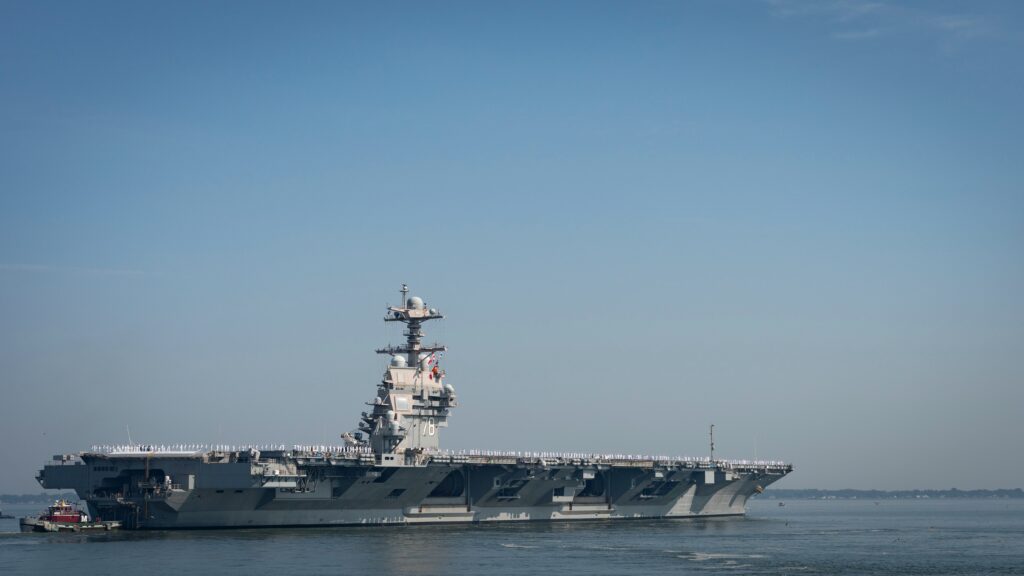
NORFOLK, Va. — Nearly 4,500 Sailors assigned to the Gerald R. Ford Carrier Strike Group departed Naval Station Norfolk and Naval Weapons Station Yorktown, June 24, for a regularly-scheduled deployment to the U.S. European Command (EUCOM) area of responsibility.
The strike group deployed as an integrated naval force in support of economic prosperity, national security, and national defense.
“Carrier Strike Group Twelve is the most capable, adaptable, and lethal naval mission package in the world,” said Rear Adm. Paul Lanzilotta, commander of Carrier Strike Group Twelve. “Our force stands prepared and ready to execute sustained, multi-domain operations at sea, wherever and whenever tasked, in support of American security and economic prosperity.”
Deploying units include flagship USS Gerald R. Ford (CVN 78), commanded by Capt. Dave Skarosi; the nine squadrons of Carrier Air Wing (CVW) 8, commanded by Capt. David Dartez; Arleigh Burke-class destroyers within Destroyer Squadron (DESRON) 2, commanded by Capt. Mark Lawrence; and Arleigh Burke-class destroyer USS Winston S. Churchill (DDG 81), homeported at Naval Station Mayport and commanded by Capt. Judson Mallory.
“I am beyond proud of the work the warfighters on this ship have put in to prepare for this deployment, and thankful for the families and friends who continue to support them,” said Capt. Dave Skarosi, commanding officer of Gerald R. Ford. “I have no doubt that this ship and crew will face and overcome any challenges with overwhelming force and fortitude, showcasing the power and lethality of the Ford-class carrier to the world.”
Guided-missile destroyers of DESRON 2 include USS Mitscher (DDG 57), USS Mahan (DDG 72), USS Bainbridge (DDG 96), and USS Forrest Sherman (DDG 98). Forrest Sherman deployed from Naval Station Norfolk on May 6, 2025.
Squadrons of CVW 8, embarked aboard Gerald R. Ford include Strike Fighter Squadron (VFA) 37, “Ragin’ Bulls”; Strike Fighter Squadron (VFA) 213, “Blacklions”; Strike Fighter Squadron (VFA) 31, “Tomcatters”; Strike Fighter Squadron (VFA) 87, “Golden Warriors”; Electronic Attack Squadron (VAQ) 142, “Gray Wolves”; Airborne Command and Control Squadron (VAW) 124, “Bear Aces”; Helicopter Sea Combat Squadron (HSC) 9, “Tridents”; Helicopter Maritime Strike Squadron (HSM) 70, “Spartans”; and a detachment from Fleet Logistics Support Squadron (VRC) 40 “Rawhides.”
The Gerald R. Ford Carrier Strike Group provides combatant commanders and America’s civilian leaders increased capacity to underpin American security and economic prosperity, deter adversaries, and project power on a global scale through sustained operations at sea.
For more information on the Gerald R. Ford Carrier Strike Group, please visit: https://www.c2f.usff.navy.mil/csg12/. For more information on USS Gerald R. Ford (CVN 78), please visit: https://www.airlant.usff.navy.mil/cvn78/.
Coast Guard Cutter Campbell Returns Home After 62-Day Patrol in the Windward Passage
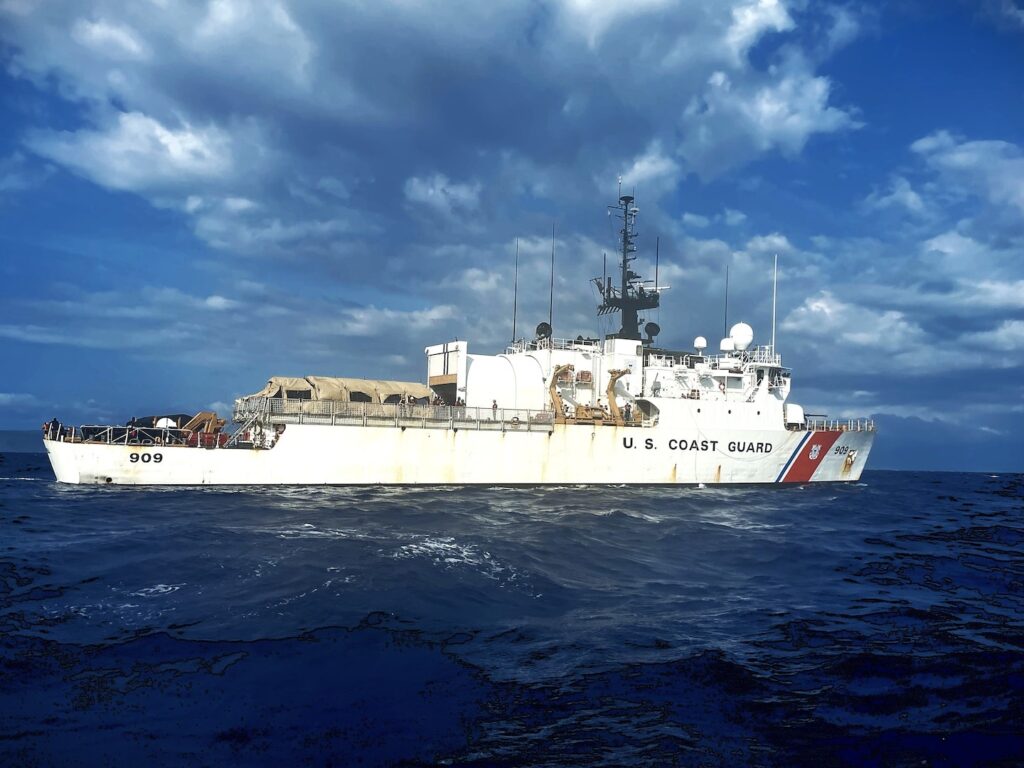
Coast Guard Cutter Campbell (WMEC 909) is underway during a patrol in the Windward Passage, June 5, 2025. Campbell’s crew conducted a two-month patrol to protect the safety of life at sea and deter illegal alien migration in the region. (U.S. Coast Guard photo by Chief Petty Officer Robert Zergman)
From U.S. Coast Guard Atlantic Area, Junne 23, 2025
NEWPORT, R.I. — The crew of Coast Guard Cutter Campbell (WMEC 909) returned to their home port in Newport, Friday, following a 62-day patrol in the Windward Passage.
Campbell deployed in support of Operation Vigilant Sentry to advance the primary missions of safety of life at sea and deterrence of illegal alien ventures in known transit zones. Campbell’s crew conducted maritime safety and security missions while protecting America’s maritime borders from unlawful entry.
While operating in the Seventh Coast Guard District’s area of responsibility, Campbell’s crew worked alongside the Coast Guard Cutters Diligence (WMEC 616), Vigorous (WMEC 627) and Arleigh Burke-class guided missile destroyer USS Gravely (DDG 107) with an embarked Coast Guard law enforcement detachment (LEDET) to support maritime counter-drug operations by maintaining custody of 14 suspected smugglers apprehended in the Caribbean Sea.
Campbell also successfully completed a three-day Aviation Standardization inspection in Miami, Florida which evaluated the crew’s equipment, training and proficiency for conducting shipboard-helicopter operations at sea. These inspections reinforce Coast Guard readiness for interdiction operations, long-range patrols, and search and rescue. Additionally, Campbell partnered with Coast Guard Station Miami and Vigorous for advanced boat tactics training.
“The Campbell and our Department of Homeland Security and Defense partners stood the watch day and night to deter irregular migration while helping the U.S. Coast Guard maintain full operational control of our southeastern maritime border,” said Cmdr. Jonathan Harris, commanding officer of Campbell. “I am very proud of this crew’s teamwork, ingenuity and professionalism throughout this patrol.”
HSTF-SE serves as the Department of Homeland Security lead for operational and tactical planning, command and control, and acts as a standing organization to interdict unlawful maritime migration attempts with federal, state and local partners. HSTF-SE continues to enhance enforcement efforts in support of OVS, which is the 2004 DHS plan to respond to mass maritime migration in the Caribbean Sea and the Florida Straits.
Campbell is a 270-foot, Famous-class medium-endurance cutter. The cutter’s primary missions are counter-drug and alien interdiction operations, enforcement of federal fishery laws, and search and rescue in support of U.S. Coast Guard operations throughout the Western Hemisphere. The cutter falls under the command of U.S. Coast Guard Atlantic Area, which is based in Portsmouth, Virginia.
For more information on how to join the U.S. Coast Guard, visit GoCoastGuard.com to learn about active duty, reserve, officer and enlisted opportunities. Information on how to apply to the U.S. Coast Guard Academy can be found here.
RTX’s Raytheon Awarded $250 Million Contract From MELCO for ESSM Block 2 Licensed Production
Contract represents the latest milestone in the companies’ longstanding partnership
From RTX, June 24, 2025
TUCSON, Ariz. (June 24, 2025) — Raytheon, an RTX (NYSE: RTX) business, has been awarded a $250 million contract from Japan’s Mitsubishi Electric Corporation (MELCO) for ESSM Block 2 licensed production.
Under the Direct Commercial Sale contract, Raytheon will provide missile kits, parts, and components as well as technical support for missile production at MELCO in Japan.
“This innovative licensed production arrangement is the culmination of decades of partnership,” said Barbara Borgonovi, president of Naval Power at Raytheon. “As Japan invests in this critical weapon system, it will strengthen their defense capabilities while reinforcing the vital security alliance between our nations.”
Raytheon and MELCO have a longstanding partnership spanning over 50 years on critical defense programs. This contract represents the latest chapter in their collaborative relationship and allows Japan to enhance its domestic defense manufacturing and missile defense capabilities, while also strengthening the broader U.S.-Japan security partnership.
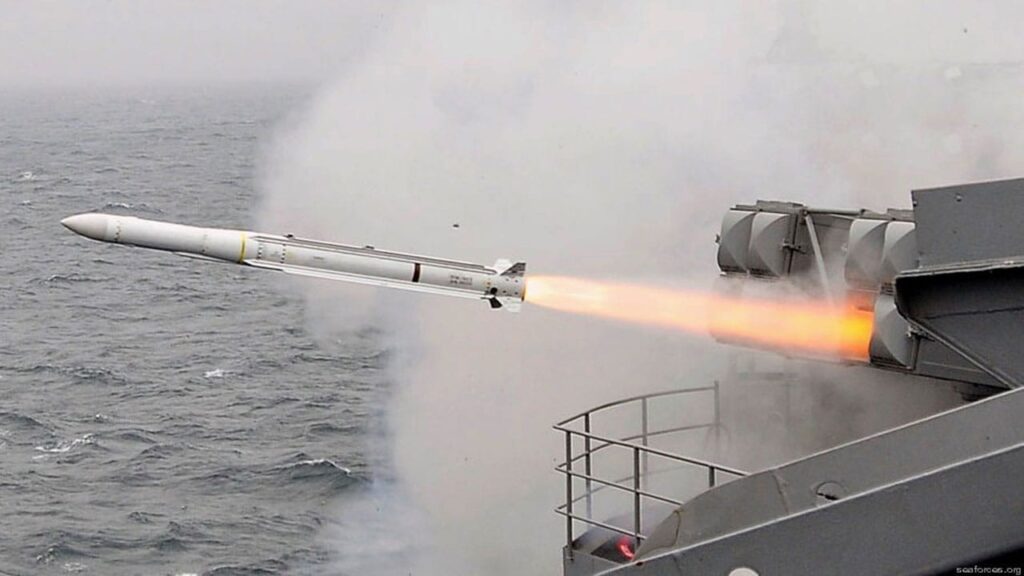
ESSM Block 2 is a short to medium-range, ship-launched, dual-mode, guided missile that has increased maneuverability and improved performance over its Block 1 predecessor. The newest variant reduces dependence on shipboard illumination and is integrated on a wide variety of combat systems and launchers, delivering improved performance in stressing marine environments, and has significant digital processing margin to keep pace with evolving threats through software improvements.
Japan is a customer nation of ESSM, which is managed by the NATO SEASPARROW Consortium composed of 12 nations.
Marine Corps General Tapped for JAG of the Navy
From U.S. Department of Defense, June 24, 2025
ARLINGTON, Va.–Secretary of Defense Pete Hegseth announced today that the president has made the following nomination:
Marine Corps Maj. Gen. David J. Bligh for appointment as judge advocate general of the Navy. Bligh is currently serving as the staff judge advocate to the Commandant of the Marine Corps, Headquarters, Marine Corps, Pentagon, Washington, D.C.
Below is the official biography of Major General Bligh:
Major General Bligh was raised in Athens, Pennsylvania. He is a 1988 graduate of Indiana University of Pennsylvania and a 1997 graduate of the University of Georgia School of Law.
Major General Bligh was commissioned through the Platoon Leaders Course program in 1988. He initially served as a Platoon Commander and Company Commander at 2nd Assault Amphibian Battalion, Camp Lejeune, North Carolina. He later served as a Series Commander at Marine Corps Recruit Depot, Parris Island, South Carolina.
Upon completion of the Naval Justice School, Major General Bligh served as a civil law officer, trial counsel, and officer-in-charge of legal assistance at Camp Lejeune. He was then assigned as Director, Joint Law Center, Marine Corps Air Station New River, North Carolina. During this assignment, Major General Bligh deployed for OIF-I with Task Force Tarawa.
Major General Bligh has served as the Staff Judge Advocate for 3rd Marine Division and III Marine Expeditionary Force in Okinawa, Japan, and Marine Corps Forces Command in Norfolk, Virginia. Prior to assuming his current duties, Major General Bligh served as the Deputy Staff Judge Advocate to the Commandant of the Marine Corps, and later as the Assistant Judge Advocate General of the Navy (Military Law).
Austal USA Completed Acceptance Trials on 19th Independence-variant LCS Pierre
From Austal USA, June 24, 2025
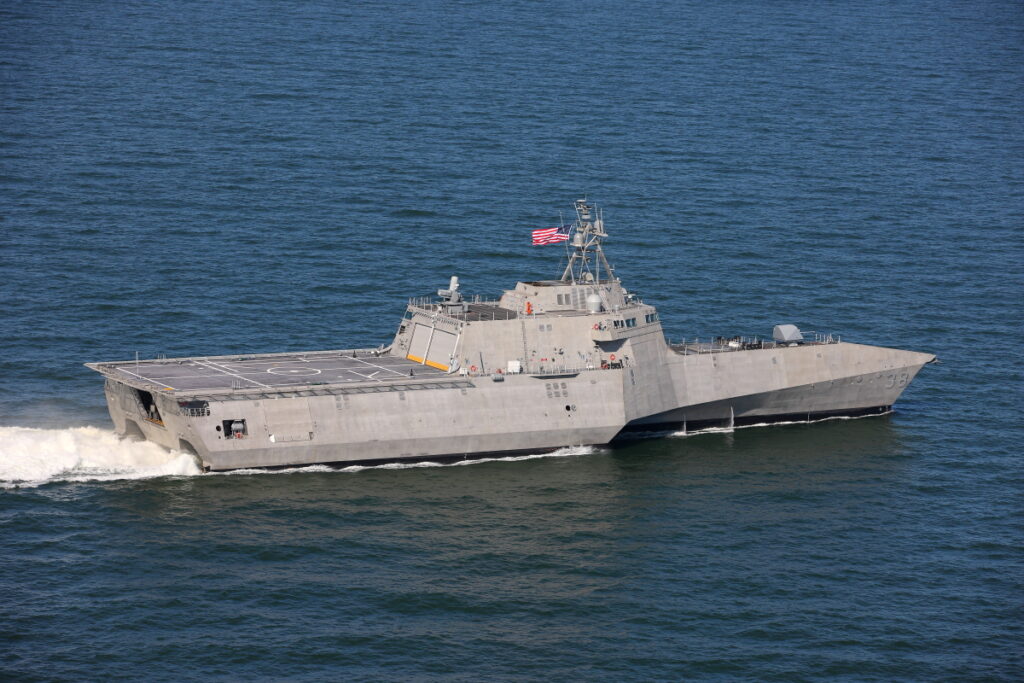
MOBILE, Ala. – Austal USA successfully completed acceptance trials on the company’s 19th Independence-variant Littoral Combat Ship (LCS), the last ship in the class. Future USS Pierre (LCS 38) returned to port late on June 11 after conducting trials.
“The completion of LCS 38 sea trials marks the achievement of an important milestone at Austal USA, the last LCS to go out to sea under our control,” said Harley Combs, Austal USA Vice President of Surface Ship Programs. “Congratulations to our Austal USA shipbuilders, vendors and our Navy teammates who coordinated to accomplish this successful milestone preparing the ship for delivery in a couple of weeks.”
Acceptance trials involve comprehensive testing conducted on the ship’s major systems and equipment in order to demonstrate their successful operation and mission readiness. The U.S. Navy’s Board of Inspection and Survey (INSURV) participates throughout the trials to validate the quality of construction and compliance with Navy requirements.
Sea trials are a team effort and the Austal USA team has consistently proven their excellence as evidenced by the number of successful LCS trial events that have been approved by INSURV. Successfully completing sea trial require expertise from across the company including test and activation/trials, program management, engineering, operations, site services, and supply chain management.
Pierre will be the 19th Independence-variant Littoral Combat Ship and will soon transition to her home port of San Diego. With the delivery of Pierre, Austal USA will have delivered 19 LCS to the Navy in just over 15 years. At times during the program Austal USA delivered three Independence-variant LCS in a year.
In addition to Pierre, Austal USA is also constructing seven more Navy and Coast Guard ships as well as modules for both the Virginia- and Columbia-class submarine programs and aircraft elevators for the Ford-class aircraft carrier fleet.