USS Toledo Arrives at Joint Base Pearl Harbor-Hickam

JOINT BASE PEARL HARBOR-HICKAM, Hawaii (July 12, 2025) – Los Angeles-class fast-attack submarine USS Toledo (SSN 769) arrives at Joint Base Pearl Harbor-Hickam during its change of homeport, July 12, 2025. (U.S. Navy photo by Mass Communication Specialist 1st Class Scott Barnes) 

From MC1 Scott Barnes of Commander, Submarine Force, U.S. Pacific Fleet, July 12, 2025 

The Los Angeles-class fast-attack submarine USS Toledo (SSN 769) arrived at its new homeport of Joint Base Pearl Harbor-Hickam, from its previous homeport of Portsmouth, Virginia, July 12, 2025. The Toledo joined Submarine Squadron 7 as their fourth Los Angeles-class fast-attack submarine. 

“Our crew is excited to finally arrive in Pearl Harbor after completing an important maintenance period in Hampton Roads,” said Cmdr. Dustin Kraemer, commanding officer of the Toledo. “Our crew looks forward to the new chapter for Toledo and the opportunities while operating throughout the Indo-Pacific.” 
 

The Toledo returned to the fleet April 19, 2025, following successful completion of its engineered overhaul at Norfolk Naval Shipyard. The maintenance period included refurbishment and modernization to extend the submarine’s operational life in support of operations throughout the Indo-Pacific. 
 
Rear Adm. Chris Cavanaugh, commander, Submarine Force, U.S. Pacific Fleet, welcomed the Toledo to Pearl Harbor, stating, “The Toledo team has demonstrated professionalism and commitment in completing their extended maintenance and getting the ship back to sea. Toledo joins the Pacific Submarine Force as a tested and capable submarine for years to come.” 
 
Capt. Corey Poorman, commander, Submarine Squadron 7, met the Toledo pierside upon arrival to welcome the crew to the island. “The Squadron 7 Ohana enthusiastically welcomes the crew and families of the Toledo with Hawaii’s enriched culture and spirit of aloha,” said Poorman. “Our team looks forward to continuing the training and certification of Toledo’s crew in defense of our nation and its allies and partners.” 
 
Commissioned on Feb. 24, 1995, the Toledo was named for the city of Toledo, Ohio. The submarine has a crew of approximately 12 officers and 98 enlisted Sailors. The Toledo’s ability to support a multitude of missions, to include anti-submarine warfare, anti-surface ship warfare, intelligence, surveillance and reconnaissance, and strike warfare, makes Toledo one of the most capable submarines in the world. 
 
Submarine Squadron 7 is responsible for providing training, material, and personnel readiness support to two Virginia-class submarines and four Los Angeles-class submarines. 
 
The U.S. Pacific Fleet Submarine Force provides strategic deterrence, anti-submarine warfare, anti-surface warfare, precision land strike, intelligence, surveillance, reconnaissance, and early warning, and special warfare capabilities around the globe. 


HASC Marks National Defense Authorization Bill

Edited by Richard R. Burgess, Senior Editor 

Arlington, Va. — The House Armed Services Committee (HASC) filed the bill for the 2026 National Defense Authorization Act, the bill’s leaders, Committee Chairman Sen. Roger Wicker (R-Miss.)  and Sen. Jack Reed (D- R.I.) announced in a July 16 release. 

Some announced naval-related provisions are listed below:  

  • Authorizes procurement for not more than five Columbia-class submarines.  

  • Authorizes a block buy of up to 15 Medium Landing Ships (LSM) to support testing and experimentation of the Marine Littoral Regiment formation.  

  • Limits funding for TAGOS Ship unless the Secretary of the Navy provides information on the Navy’s management of the program and an assessment of alternative solutions for the mission.  

  • Requires the Navy, in implementing the Medium Landing Ship and Light Replenishment Oiler programs, to utilize a Vessel Construction Manager (VCM) acquisition strategy, employing commercial design standards, construction practices, and an external entity to contract for construction.  

  • Exempts unmanned surface vessels and unmanned underwater vehicles from the Senior Technical Authority requirement and limits certain technical requirements from the Chief Engineer of the Naval Sea Systems Command without prior approval of the program manager.  

  • Modifies certification requirements of operational demonstrations for propulsion and electrical systems of large and medium unmanned surface vessels to increase industrial base participation.  

  • Limits funding to certain Navy-developed software for autonomy and command and control of unmanned surface vessels.  

  • Directs a briefing to the congressional defense committees to prioritize innovative, commercially driven solutions to deliver a scalable medium unmanned surface vessel (MUSV) capability that meets the urgent needs of the fleet while fostering a competitive industrial base.  

  • Requires the Navy to move leadership for conventional surface ship maintenance to the Type Commanders, delegates decision-making authority to project managers, port engineers, and ship commanding officers, and directs a new contracting strategy that emphasizes workload stability and collaborative planning.  

  • Requires the Navy to investigate, and where feasible qualify and fully integrate, 23 advanced technologies and processes into Navy surface ship readiness.  

  • Supports amphibious warship production and readiness by limiting funding of the Secretary of the Navy and the Secretary of Defense if the 30-year shipbuilding plan does not comply with the statutory requirement for 31 amphibious ships, 15 defines “temporarily unavailable” within the 31 amphibious ship requirements, and requires a plan to maintain and extend the service lives of amphibious ships 

  • Requires DOD to develop a comprehensive plan to establish a government-controlled open mission systems computing environment for all variants and blocks of the F–35 aircraft operated by the DOD.  

  • Directs the Navy and Air Force to conduct a comparative study, independent of the air vehicle manufacturer, on the two propeller systems on the C-130J platform.  

  • Accelerates development of the nuclear-armed sea-launched cruise missile and creates a supplementary parallel pathway for rapid fielding.  

  • Strongly encourages the Secretary of Defense to invite the naval forces of Taiwan to the Rim of the Pacific (RIMPAC) exercise, as appropriate, and requires a notification and justification if the Secretary chooses not to do so. 

  • Requires the Navy to develop options for two sources of domestic solid rocket motors in the Navy Modular Missile program. 

  • Directs a briefing on opportunities for the Irregular Warfare Technical Support Directorate to complement innovation efforts by Naval Special Warfare Command for research, experimentation, and prototyping of unmanned maritime vessels.  

  • Authorizes personnel end strength for the active component at 344,600 for the Navy; 172,300 for the Marine Corps; 57,500 for the Navy Reserve; 33,600 for the Marine Corps Reserve; and 7,000 for the Coast Guard Reserve. 

Read the FY26 NDAA Bill Language.  

Read the FY26 NDAA Executive Summary. 


USNS Comfort Arrives in Dominican Republic for CP25

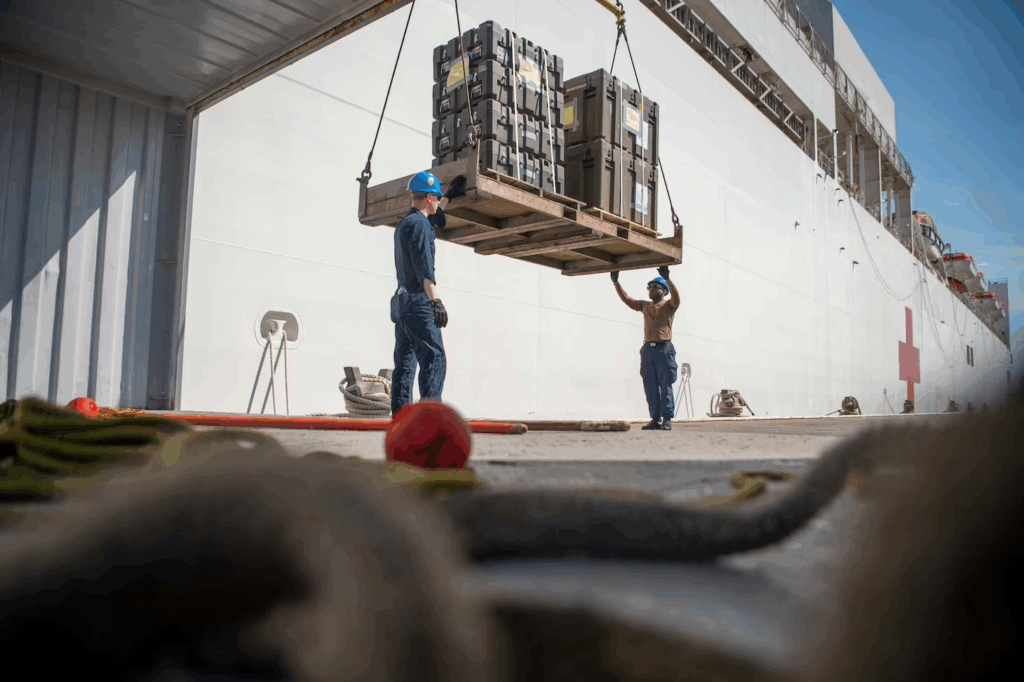
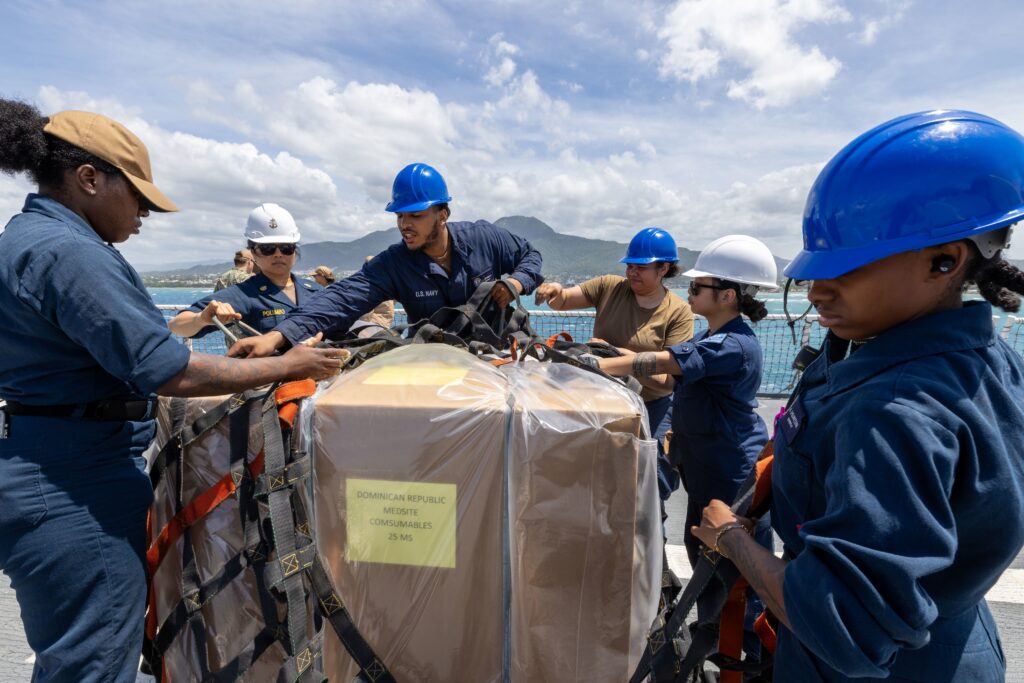
PUERTO PLATA, Dominican Republic (July 15, 2025) Sailors assigned to the Mercy-class hospital ship USNS Comfort (T-AH 20) load medical site cargo aboard Comfort in Puerto Plata, Dominican Republic during Continuing Promise 2025, July 15, 2025. (U.S. Navy photo by MC2 Alfredo Marron) 

From Petty Officer 2nd Class Alfredo Marron – U.S. Naval Forces Southern Command

PUERTO PLATA, Dominican Republic – The Mercy-class hospital ship USNS Comfort (T-AH 20) arrived in Puerto Plata, Dominican Republic for the fourth mission stop of Continuing Promise 2025 (CP25), July 15, 2025. 

“It is an honor and a privilege to leave our footprint in the Dominican Republic,” said Capt. Grace Key, commanding officer, Medical Treatment Facility aboard Comfort. “From the medical site and community relations, to the repairs the Seabees will make to the facilities, we will strengthen our partnership with the people of the Dominican Republic.” 
 
Comfort and Dominican medical professionals will work side-by-side to provide medical care to the community of Puerto Plata. By working together and exchanging knowledge, the Dominican Republic and partners in the region can maintain regional stability as a team and work collectively in the event of natural disasters, medical catastrophes, or regional conflict. 
 
“Throughout Continuing Promise, the clinical staff and personnel have welcomed us with open arms at every port visit,” said Lt. j.g. Althea Caraballo, the Puerto Plata medical site assistant officer in charge. “I am excited to be in Dominican Republic and very inspired by our partnerships and the opportunity to expand our professional and cultural horizons.” 

 
Medical care during the Dominican Republic mission stop will be provided at Polideportivo, Puerto Plata and will include services in adult medicine, pediatrics, dental, optometry, women’s health, dermatology, cardiology, physical therapy, nutrition, preventative medicine, radiology, and pharmacy. 
 
“This mission is a valuable opportunity to deepen cooperation between the United States and the Dominican Republic, particularly in the areas of security and humanitarian assistance,” said Lt. Col. Lowell D. Krusinger, senior defense official/defense attaché, U.S. Embassy Santo Domingo. “We’re proud to see U.S. and Dominican medical professionals working shoulder to shoulder aboard the USNS Comfort, including seven Dominican providers who are lending their expertise to benefit communities across six countries on the ship’s tour.” 
 
Additionally, Comfort’s medical personnel will conduct subject matter expert exchanges (SMEE) with Dominican health professionals, to include tactical combat casualty care (TCCC) and round tables on preventative medicine, nutrition, and wound care. U.S. Army veterinarians embarked aboard Comfort from the 248th Medical Detachment Veterinary Service Support will conduct a dairy farming SMEE and K-9 tactical causality combat care. 
 
This visit marks the sixth Continuing Promise visits the Dominican Republic and the fifth visit from Comfort. The last time Comfort visited the Dominican Republic was during Continuing Promise 2022, where the medical team treated 4,435 patients at sites in Santo Domingo and Azua, as well as conducted 87 surgeries aboard Comfort. 
 
“I am excited to be here as we bring the same service offered to other countries to my home country,” said Dominican Republic 1st Lt. Luiz Rameriez, doctor of obstetrics and gynecology embarked aboard Comfort. “I am excited for the U.S. service members to tour our facilities and to see how we can improve and impact the overall health of the population.” 
 
The CP25 mission in Dominican Republic also includes a Humanitarian Assistance and Disaster Relief (HA/DR) SMEE and a table-top exercise with local responders. Sailors aboard Comfort will also support the region through a variety of community relations events to include a beach clean-up and performances from the U.S. Fleet Forces band “Unchartered Waters.” 
 
“This mission is a blessing, there are people not as fortunate to receive advanced medical care and we are able to provide it while we are here,” said Hospitalman Joseclaudia Garcia, a food service associate assigned to Comfort with Dominican heritage. “The Dominican people will really feel very appreciated that we get to share these engagements with them. I am very excited my fellow service members will get to experience my culture first hand!” 
 
CP25 marks the 16th mission to the region since 2007 and the eighth aboard Comfort. The mission will foster goodwill, strengthen existing partnerships with partner nations, and encourage the establishment of new partnerships among countries, non-federal entities, and international organizations. 
 
U.S. Naval Forces Southern Command/U.S. 4th Fleet supports U.S. Southern Command’s joint and combined military operations by employing maritime forces in cooperative maritime security operations to maintain access, enhance interoperability, and build enduring partnerships in order to enhance regional security and promote peace, stability and prosperity in the Caribbean, Central and South American region. 
 
Learn more about USNAVSOUTH/4th Fleet news and photos, visit facebook.com/NAVSOUS4THFLT, https://www.fourthfleet.navy.mil/, X – @ NAVSOUS4THFLT, and https://www.linkedin.com/company/u-s-naval-forces-southern-command-u-s-4th-fleet 


Fincantieri Brings Together Thought Leaders to Discuss U.S. Shipbuilding Renaissance

Release From Fincantieri

WASHINGTON, D.C. – July 16, 2025 – Fincantieri, the global leader in high-complexity shipbuilding, hosted “FULL SPEED AHEAD: The U.S. Shipbuilding Renaissance” yesterday in Washington, D.C., bringing together senior voices from government, industry, and the national security community to examine the strategic future of American maritime power. 

The event opened with remarks from George Moutafis, newly appointed CEO of Fincantieri Marine Group (FMG), and Jan Allman, CEO of Fincantieri Marinette Marine, who reaffirmed the company’s long-term commitment to the United States through its unique “System of Shipyards” across Wisconsin. This advanced industrial network—operating in Marinette, Sturgeon Bay, Green Bay and Florida —employs more than 3,000 people and stands as a cornerstone of Midwest manufacturing resurgence. 

Moderated by Vice Adm. Rick Hunt, President of FMG, the expert panel featured Dr. Cynthia Cook (Center for Strategic and International Studies), Hon. Russell Rumbaugh (Atlantic Council), and Dr. Stacie Pettyjohn (Center for a New American Security). The discussion focused on the evolving defense-industrial landscape and how the U.S. can rebuild a resilient, sovereign shipbuilding base. 

Closing the event, Pierroberto Folgiero, CEO and Managing Director of Fincantieri, stated: “This is a defining moment for American shipbuilding—and Fincantieri is here to stay. We are not just investing in infrastructure; we are investing in the future of maritime security, industrial innovation, and the skilled workforce that powers it. With a new management team leading our U.S. operations, we are accelerating our commitment to deliver next-generation capabilities in full alignment with U.S. strategic priorities.” 

Looking ahead, Fincantieri is focused on strengthening every dimension of its U.S. presence. The company is advancing innovation across its operations to deliver mission-driven platforms and digitalized shipyards. It is also expanding its supplier base to ensure long-term industrial sustainability while investing in the training and upskilling of the next generation of American shipbuilders. The company’s Sustainable Shipyards™ model is setting a new standard for environmental and operational excellence, making shipbuilding not only stronger, but cleaner and more future-ready. 

With more than $800 million invested in U.S. facilities and over 900 suppliers across 43 states, Fincantieri brings to the table a proven industrial model, a resilient supply chain, and an experienced workforce of over 3,000 employees in Wisconsin. Leveraging its global expertise and advanced capabilities, Fincantieri stands ready to support the United States in strengthening its shipbuilding industrial base—through innovation, execution excellence, and long-term strategic partnership. 


Yemeni Partners Successfully Interdict Iranian Weapons Shipment Bound for Houthis

From U.S. Central Command, July 16, 2025 

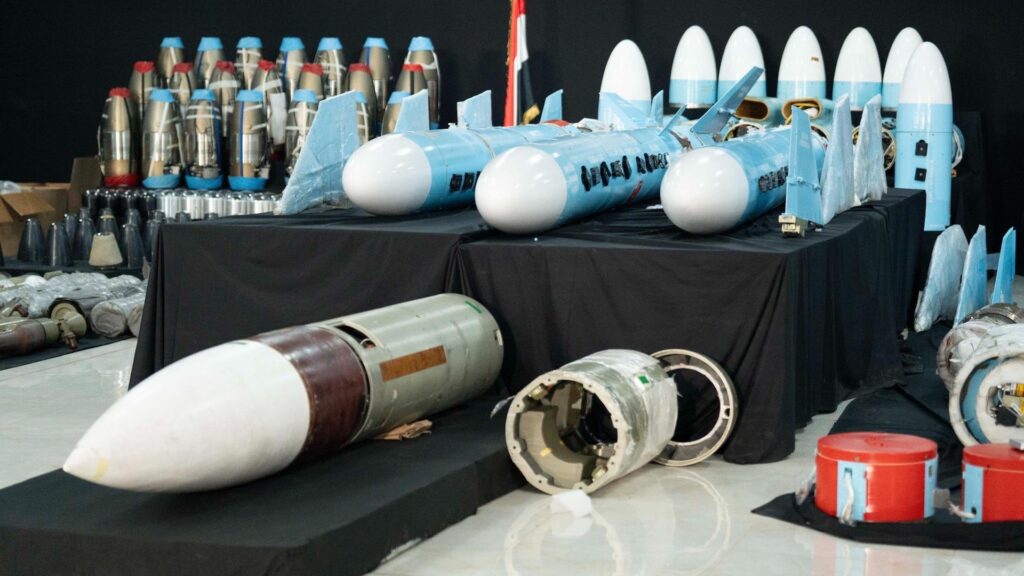
TAMPA, Fla.  –   Congratulations to the Yemeni National Resistance Forces (NRF), led by Gen. Tareq Saleh, for the largest seizure of Iranian advanced conventional weapons in their history. 
 
The NRF intercepted and seized over 750 tons of munitions and hardware to include hundreds of advanced cruise, anti-ship, and anti-aircraft missiles, warheads and seekers, components as well as hundreds of drone engines, air defense equipment, radar systems, and communications equipment. According to the NRF, there were manuals in Farsi and many of the systems were manufactured by a company affiliated with the Iranian Ministry of Defense that is sanctioned by the United States. The illegal shipment was intended for use by the Iranian-backed Houthis 
 
The actions of the NRF support the United Nations Security Council Resolution (UNSCR) and are a direct reflection of their commitment to a safe Yemen, Red Sea and Gulf of Aden. 
 
Gen. Michael Erik Kurilla, commander of CENTCOM, praised the actions of the NRF saying, “We commend the legitimate government forces of Yemen who continue to interdict the flow of Iranian munitions bound for the Houthis. The interdiction of this massive Iranian shipment shows that Iran remains the most destabilizing actor in the region. Limiting the free flow of Iranian support to the Houthis is critical to regional security, stability, and freedom of navigation.” 


USNS Comfort Departs Ecuador After Third CP25 Mission Stop 

MANTA, Ecuador (July 9, 2025) Hospitalman Christopher Olheiser and Logistics Specialist 3rd class Daniel Clerge, both assigned to the Mercy-class hospital ship USNS Comfort (T-AH 20), load medical supplies onto Comfort in Manta, Ecuador during Continuing Promise 2025, July 9, 2025. (U.S. Navy photo by Mass Communication Specialist 2nd Class Thomas Boatright)

By USNAVSOUTH/4TH FLEET PUBLIC AFFAIRS, July 14, 2025 

MANTA, Ecuador  –  The Mercy-class hospital ship USNS Comfort (T-AH 20) departed Manta, Ecuador following the third mission stop of Continuing Promise 2025 (CP25), July 10, 2025. 
  

Throughout the six-day visit to Ecuador, Comfort’s crew worked alongside Ecuador providing medical care to the people of Ecuador, renovating dilapidated infrastructure and training side-by-side with the Ecuadorian military. 
 
During the CP25 visit to Ecuador, the Comfort’s team of U.S., Canadian, Dominican Republican, and Ecuadorian medical professionals, assisted 2,767 patients from Manta and surrounding communities. The team filled 2,486 prescriptions, conducted nine CT scans, and distributed 694 pairs of glasses and 584 pairs of sunglasses. Additionally, the Comfort surgery team performed 48 surgeries to include cataract extraction, cleft lip repair, soft tissue mass removal, and hernia repair. 
 
“Alongside our Ecuadorian partners, the Navy team continues to deepen our relationships and promote a shared commitment to the region,” said Capt. Ryan Kendall, commodore, Destroyer Squadron 40 and Continuing Promise 2025 mission commander. “Through medical care, subject matter expert exchanges, and military to military training, we are enhancing our combined ability to respond to crises and disaster response.” 
 
In addition to medial exchanges and care, veterinarians from the U.S. Army 248th Detachment for Veterinary Support Services conducted subject matter expert exchanges with cattle ranchers in Ropafuertes as well as K-9 training with the Ecuadorian military. 
 
Marines assigned to Marine Force Security Regiment, FAST Battalion, Bravo Company, 5th Platoon conducted a three-day subject matter expert exchange with the Ecuadorian Navy, strengthening partnerships and continuing to enhance our combined capabilities. 
 
Seabees from Naval Mobile Construction Battalion (NMCB) 11 conducted construction, electrical, plumbing, and engineering support for two Manta schools, Escuela Republica Del Ecuador and Unidad Educativa El Porvenir. 
 
“This was an incredible mission stop, I saw a lot of my own upbringing in the situations of these people we were working with,” said Construction Electrician 3rd Class Francisco Espinozavares, a Seabee assigned to NMCB 11. “I felt a lot of mixed emotions, joy, pride, and a sense that we were doing something meaningful, and it put into perspective how fortunate I am.” 
 
Comfort’s community relations team participated in two beach cleanups, painting and beautification at Gil Delgado Elementary and Verdi Cervallos Hospital, a community soccer game, beach volleyball match, and a mural painting at Port Captaincy in Manta. The crews’ interpersonal relations towards the people of Ecuador created the necessary catalyst to help create and strengthen the bonds between the U.S. and Ecuador. 
 
“We are so thankful for all of you,” said Nury Zambrano, a teacher for Gil Delgado Elementary. “You are the best, and we are so grateful for all that you did here for us and are eagerly waiting for you to return.” 
 
The United States Fleet Forces Band “Unchartered Waters” performed at five locations throughout Manta, reaching a total audience of 1,150 members. 
 
Next, Comfort is scheduled to transfer the Panama Canal and sail toward Puerto Plata, Dominican Republic, its fourth mission stop for CP25. 
 
CP25 marks the 16th mission to the region since 2007, the eighth aboard Comfort and fifth time Comfort has visited Ecuador during previous CP missions. The mission will foster goodwill, strengthen existing partnerships with partner nations, and encourage the establishment of new partnerships among countries, non-federal entities, and international organizations. 
 
U.S. Naval Forces Southern Command/U.S. 4th Fleet supports U.S. Southern Command’s joint and combined military operations by employing maritime forces in cooperative maritime security operations to maintain access, enhance interoperability, and build enduring partnerships in order to enhance regional security and promote peace, stability and prosperity in the Caribbean, Central and South American region. 
 
Learn more about USNAVSOUTH/4th Fleet news and photos, visit facebook.com/NAVSOUS4THFLT, https://www.fourthfleet.navy.mil/, X – @ NAVSOUS4THFLT, and https://www.linkedin.com/company/u-s-naval-forces-southern-command-u-s-4th-fleet. 


Stratom to Deliver Advanced Automated Refueling System for Uncrewed Navy Vessels 

SBIR Phase I award supports development of a fully autonomous at-sea fueling system that extends range and reduces risk for autonomous surface vehicles 

From Stratom, July 15, 2025  

LOUISVILLE, Colo. — July 15, 2025 — As the Navy expands its fleet of uncrewed surface vehicles (USV), Stratom has been selected for a Phase I Small Business Innovation Research contract to develop an autonomous refueling system that could redefine naval refueling and logistics at sea.  

As the leading developer of autonomous vehicles and refueling robotic systems for logistics and operational applications, the contract will leverage Stratom’s Deployable Onboard Refueling Interface, or DORI, an automated system designed to let USVs refuel without human intervention. 

“Autonomous refueling is truly a force multiplier — and the next step toward a fully autonomous maritime force,” said Mark Gordon, CEO of Stratom. “With DORI, we’re engineering a practical, scalable way for uncrewed vessels to stay on mission longer, without relying on vulnerable crewed interventions.” 

Building upon existing naval refueling infrastructure while introducing targeted automation, Stratom’s DORI system integrates a hose retrieval system, perception sensors, an automated reel mechanism and a quick-release coupling for emergency disconnects. By enabling USVs to safely and reliably refuel while underway without human intervention, the system will extend operational endurance, reduce personnel risk and increase mission flexibility in contested or distributed environments. 

The Phase I effort will validate the technical feasibility of the system’s automated reel mechanism and include concept refinement, small-scale prototyping, trade studies and integration of commercial bunkering best practices. These activities will ensure the proposed method is technically feasible and aligned with operational requirements. 

Looking ahead, Stratom also sees strong potential for commercial deployment of DORI in ship-to-ship (STS) bunkering, a key refueling process in commercial shipping and global maritime logistics. Automating STS bunkering could reduce high-traffic port congestion, improve safety and cut operating costs for long-haul shipping fleets. 

Stratom brings deep experience to the development effort, successfully transitioning robotic refueling systems developed for the Army and Navy into commercial applications. RAPID, the company’s autonomous refueling, recharging and liquid transfer platform for robotic ground and aircraft refueling, proves the value of automating complex fueling operations through increased uptime, reduced labor demands and enhanced safety. 


Secretary Noem Terminates Contract for Two Coast Guard Offshore Patrol Cutters 

From the U.S. Department of Transportation, July 11, 2025 

“This Administration is unwavering in its commitment to the American taxpayer” 

WASHINGTON – Today, United States Department of Homeland Security Secretary Kristi Noem announced the partial termination of a wasteful shipbuilding contract to protect American taxpayer dollars while revolutionizing the United States Coast Guard for the 21st century. 

“This Administration is unwavering in its commitment to the American taxpayer and to a strong, ready Coast Guard,” said a senior Homeland Security official. “We cannot allow critical shipbuilding projects to languish over budget and behind schedule. Our Coast Guard needs modern, capable vessels to safeguard our national and economic security, and we will ensure every dollar is spent wisely to achieve that mission. This action redirects resources to where they are most needed, ensuring the Coast Guard remains the finest, most-capable maritime service in the world.” 

As part of that commitment, the Coast Guard is reviewing contracts which are failing to meet delivery agreements. An existing Offshore Patrol Cutter (OPC) contract with Eastern Shipbuilding Group (ESG) has been slow to deliver four OPCs, harming the U.S.’s defense capabilities and wasting American’s hard-earned money. In light of that, Secretary Noem partially canceled ESG’s contract for two out of the four OPCs expected from ESG in Panama City, Florida because it was not an effective use of taxpayer money. 

ESG’s delivery of OPC 1 was initially due in June 2023 but will now be completed by the end of 2026 at the earliest. ESG missed its April 2024 delivery for OPC 2. The Coast Guard stopped work on OPCs 3 and 4 after ESG notified the service earlier this year they could not fulfill their contractual duty to deliver all four OPCs without unabsorbable loss. The money saved will redirected to ensure it’s actually benefiting the Coast Guard. 

Due to decades of neglect by previous Administrations and Congress, the Coast Guard has been underfunded, underequipped, and ignored for too long. President Donald Trump is ending that era of neglect with the passage of the One Big Beautiful Bill and Force Design 2028 – Homeland’s plan to transform the Coast Guard into a more agile, capable fighting force. Now, a massive injection of nearly $25 billion is coming to the Coast Guard. 

The Coast Guard’s goal is to procure 25 OPCs — and that has not changed. The Coast Guard remains intent on acquiring and delivering the full OPC class as fast as possible to address the Nation’s security and safety needs. 

The OPC fleet will complement the capabilities of the Service’s National Security Cutters, Fast Response Cutters and Polar Security Cutters as an essential element of the Nation’s layered maritime security strategy. They will be especially critical to the counter-drug and migrant interdiction missions along the southeast border. 


U.S. Coast Guard, Mexican Navy Team to Disrupt Suspected Maritime Smuggling Venture

From U.S. Coast Guard Pacific Southwest Public Affairs, July 15, 2025 

SAN DIEGO — The crew of the Coast Guard Cutter Robert Ward (WPC 1130) and the Mexican Navy vessel ARM Revolución successfully collaborated to deter a suspected maritime smuggling attempt approximately 11 miles southwest of Point Loma, Sunday. 

At approximately 4 p.m., the crew of Robert Ward detected a vessel transiting north from Mexican waters into U.S. territorial waters. As the cutter prepared to deploy its small boat to conduct a boarding, the suspected smuggling vessel suddenly reversed course and fled south at a high rate of speed. 

The Robert Ward pursued the vessel to the U.S.–Mexico Maritime Boundary Line. ARM Revolución was observed operating nearby, and Robert Ward relayed a description of the suspect vessel via VHF radio. Mexican Navy personnel aboard Revolución located, stopped and conducted a boarding of the approximately 24-foot center-console vessel with four people aboard within Mexican territorial waters. 

The outcome of the boarding is unknown at this time; however, the coordinated effort between the U.S. Coast Guard and Mexican Navy successfully deterred a potential smuggling venture and underscored the value of international maritime cooperation in combating transnational criminal activity. 


USS Mount Whitney Returns to Homeport 

From Ensign Samantha Mendiguren, July 15, 2025 

GAETA, Italy – The Blue Ridge-class command and control ship USS Mount Whitney (LCC 20) returned to homeport in Gaeta, Italy, after operating in the Mediterranean Sea, Atlantic Ocean, and Baltic Sea. The underway underscored the U.S. Navy’s commitment to regional security and strong partnerships with European and African nations. 

During the ship’s underway, it conducted port visits to several nations in Africa and Europe and held numerous key leader engagements, fostering international cooperation and addressing shared security concerns in both theaters. These countries included Tunisia, Libya, Cabo Verde, Mauritania, Spain, Germany, Poland, Latvia and Sweden. 

“From the Mediterranean to the Baltic Sea, we worked alongside our allies and partners, building relationships and demonstrating the U.S. Navy’s unwavering commitment to security and stability in both regions,” said Capt. Colin Price, commanding officer of USS Mount Whitney. “I am incredibly proud of the professionalism and dedication exhibited by Team 20 and grateful to have had the opportunity to work with our many great partners in Africa and Europe.” 

Mount Whitney also participated in Baltic Operations (BALTOPS) 25, the premier annual maritime-focused military exercise in the Baltic region. This year marked the 54th iteration of the exercise, bringing together sixteen NATO allies. Over 40 ships, 25 aircraft, and approximately 9,000 personnel participated, working to enhance warfighting capabilities, demonstrate layered defense strategies, and reinforce the strength of partnerships within the Baltic region. 

As the U.S. 6th Fleet command and control ship, Mount Whitney supports naval combatants to deter regional adversaries, conduct naval operations in defense of the homeland, and defend the sovereignty of our partners and allies in Europe and Africa. 
 
Mount Whitney, forward deployed to Gaeta, Italy, operates with a combined crew of U.S. Sailors and Military Sealift Command civil service mariners in the U.S. 6th Fleet area of operations in support of U.S. national security interests in Europe and Africa. 
 
Commander, U.S. 6th Fleet, headquartered in Naples, Italy, conducts the full spectrum of joint and naval operations, often in concert with allied and interagency partners to advance U.S. national interests, security and stability in Europe and Africa.