Cooper Nominated for 4th Star, Command of U.S. Central Command

From the Department of Defense, June 4, 2025 

ARLINGTON, Va. — Secretary of Defense Pete Hegseth announced that the President has nominated Navy Vice Adm. Charles B. Cooper II for appointment to the grade of admiral, with assignment as commander, U.S. Central Command, MacDill Air Force Base, Florida. Cooper is currently serving as deputy commander, U.S. Central Command, MacDill Air Force Base, Florida. 

Below is Cooper’s official biography from the Navy’s website: 

“Vice Adm. Brad Cooper is the son of a career Army Officer. He is a 1989 graduate of the U.S. Naval Academy, and earned a master’s degree in Strategic Intelligence from the National Intelligence University. He studied international relations at Harvard and Tufts Universities. Cooper is a graduate of the U.S. Army Command and General Staff College. 

A career Surface Warfare Officer, he has deployed on ships to every combatant command theater of operation and served a tour on the ground in Afghanistan. He most recently served for nearly three years in Bahrain as commander, U.S. Naval Forces Central Command, FIFTH Fleet and Combined Maritime Forces. Other command tours include service as commander, Naval Surface Force Atlantic; commander, Expeditionary Strike Group 7 in Okinawa, Japan; and, commander, U.S. Naval Forces Korea. His ship commands include USS Russell (DDG 59) and USS Gettysburg (CG 64). 

Ashore, he served as the Navy Chief of Legislative Affairs and Director, Surface Warfare Officer assignments (Pers-41). He has also served in a variety of executive and military assistant roles in the White House, the Office of the Secretary of Defense, U.S. Africa Command and U.S. Pacific Fleet headquarters. 

Cooper is a recipient of the Admiral Elmo Zumwalt Award for Visionary Leadership. 

He is particularly proud of the thousands of extraordinary men and women with whom he has served at sea and ashore all around the world. His amazing Sailors on USS Gettysburg earned the Battenberg Cup as the best ship, submarine or aircraft carrier in the Navy’s Atlantic Fleet.” 


Honeywell Selected by L3Harris Technologies to Support Development of NGJ-LB

From Honeywell, June 3, 2025 

PHOENIX, June 3, 2025 – Honeywell (NASDAQ: HON) has been selected by L3Harris Technologies to support its development of custom tactical jamming pods designed to modernize the U.S. Navy’s airborne electronic attack capability. The contract win comes on the heels of Honeywell’s acquisition of CAES Systems Holdings, LLC, completed in September 2024. 

The U.S. Navy awarded L3 Technologies Inc., Communication Systems-West a $587.4 million contract for the engineering and manufacturing development of the Next Generation Jammer Low Band system. Honeywell’s portion of the work will take place at its Lansdale, Pennsylvania facility. 

“Honeywell’s world-class manufacturing facilities and specialized capabilities enable us to provide reliable solutions for some of today’s most critical missions,” said Brad Westphal, Honeywell Aerospace Technologies president of Electromagnetic Defensive Solutions. “As we work together to bring the latest technologies to our Armed Forces, we look forward to continuing to be a trusted partner of L3Harris and the Navy.” 

“Honeywell’s Lansdale site has a proven history of developing, producing, and delivering reliable electronic warfare technology,” said Clayton McClain, Honeywell Aerospace Technologies general manager, Mission Systems division. “We’re proud to support the Navy and L3Harris as they remain on the forefront of advanced technology to stay ahead of adversaries.” 

The Next Generation Jammer Low Band system is part of a larger system that will augment and ultimately replace the legacy ALQ-99 Tactical Jamming System on the EA-18G Growler aircraft. Using the latest software and active electronically scanned array technologies, the Next Generation Jammer will provide enhanced airborne electronic attack capabilities to disrupt, deny, and degrade enemy air defense and ground communication systems. This latest increment will counter a larger capacity of adversary systems in the low-frequency electromagnetic spectrum. 

Honeywell is a premier supplier of advanced electronic systems that enable customers to fully utilize the electromagnetic spectrum by combining decades of experience with electronic warfare systems and advanced technology. Learn more about Honeywell’s electronic warfare capabilities here.  


Latest Polar Icebreaker USCGC Storis Departs on First Voyage 

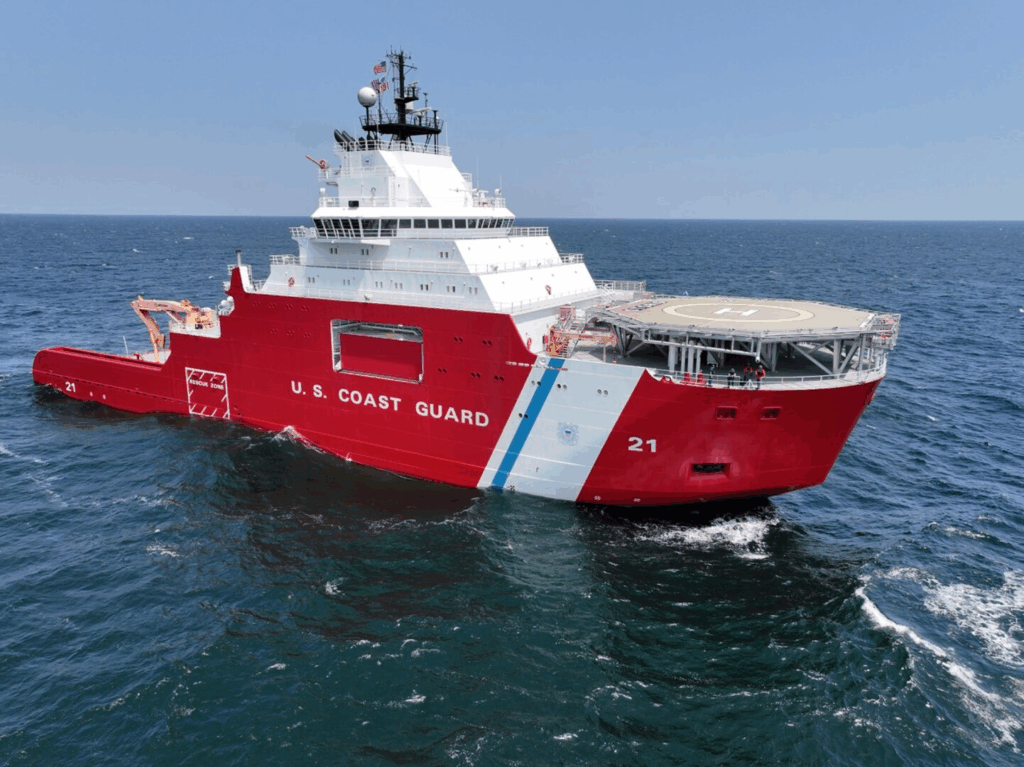
PASCAGOULA, Miss. – The U.S. Coast Guard Cutter Storis is shown here underway, June 3, 2025. The Storis is the Coast Guard’s first new polar icebreaker acquisition in 25 years and will expand U.S. operational presence in the Artic Ocean. Photos courtesy of Edison Chouest Offshore.

From U.S. Coast Guard Headquarters, June 4, 2025 

PASCAGOULA, Mississippi – The U.S. Coast Guard Cutter Storis (WAGB 21), the Coast Guard’s first polar icebreaker acquired in more than 25 years, departed on its initial voyage to safeguard U.S. sovereign interests in the Arctic and conduct Coast Guard missions.  

Storis’ departure marks an early milestone in the service’s transformation through Force Design 2028 (FD2028), which includes reforming Coast Guard acquisitions to rapidly deploy capabilities to execute the Coast Guard’s missions. 

The motor vessel Aiviq, acquired Dec. 20, 2024, from an Edison Chouest Offshore subsidiary, was renamed Storis following modifications to enhance communications and self-defense capabilities. The vessel will expand U.S. operational presence in the Arctic and support Coast Guard missions while the service awaits the delivery of the Polar Security Cutter (PSC) class. The Coast Guard will continue evaluating the cutter’s condition and requirements to achieve full operational capability. 

Storis is commanded by Captain Keith M. Ropella who currently serves as chief of cutter forces at Coast Guard Headquarters in Washington D.C., and previously commanded Coast Guard Cutter Polar Star (WAGB 10), from July 2022 to July 2024. 

The vessel is manned with a hybrid crew consisting of military cuttermen and civilian mariners. This is the second vessel in Coast Guard history to bear the name Storis. The original Storis, known as the “Galloping Ghost of the Alaskan Coast,” had a storied history conducting 64 years of icebreaking operations in Alaska and the Arctic before being decommissioned in 2007. 

Storis will be commissioned this August in Juneau, Alaska, which will eventually be the vessel’s permanent homeport. Until the necessary shore infrastructure improvements are completed in Juneau, Storis will be temporarily berthed in Seattle, Washington, with the Service’s two other polar icebreakers. 

The acquisition was made possible through the Don Young Coast Guard Authorization Act of 2022 and fiscal year 2024 appropriations. It does not affect the ongoing procurement of PSCs and is not part of the PSC program of record. 

The Coast Guard operates the United States’ fleet of icebreakers to assure access to the polar regions to protect U.S. sovereignty. To fulfill this mission and meet operational needs in the polar regions, the Coast Guard requires a fleet of eight to nine polar icebreakers. In support of the President’s intent to acquire at least 40 new icebreakers, the Coast Guard is working to replace, modernize and grow its aging fleet of icebreakers, which currently includes three polar icebreakers, 21 domestic icebreakers and 16 ice-capable buoy tenders. As the United States’ third polar icebreaker, Storis will provide near-term operational presence and support national security as a bridging strategy until the full complement of PSCs is delivered. 

Announced by Secretary of Homeland Security Kristi Noem on May 21, FD 2028 is a blueprint to transform the Coast Guard into a stronger, more ready and capable fighting force. This initiative will include campaigns focused on people, organization, contracting and acquisition, and technology. You can read more about FD 2028 here: Force Design 2028


RTX’s Raytheon awarded $1.1 billion U.S. Navy contract to produce AIM-9X Block II missiles 

From RTX, June 04, 2025  

Award represents largest production contract to date 

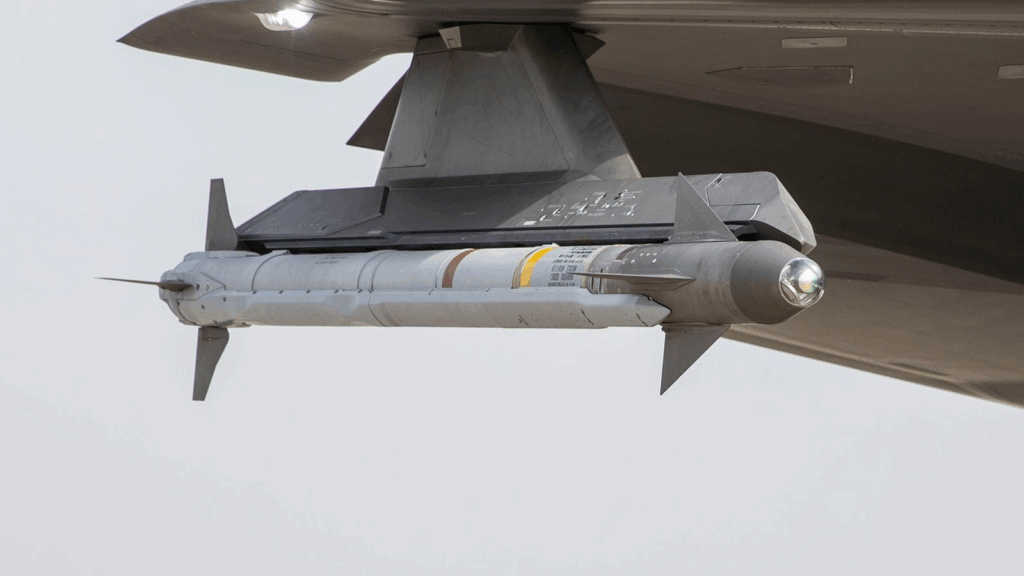
TUCSON, Ariz., June 4, 2025 /PRNewswire/ – Raytheon, an RTX (NYSE: RTX) business, was awarded a $1.1 billion contract from the U.S. Navy to produce AIM-9X Block II missiles. This is the largest contract awarded for the program and will increase production to 2,500 missiles per year. 

“This award represents a historic milestone for the AIM-9X program, further emphasizing its importance to the U.S. and partnered nations,” said Barbara Borgonovi, president of Naval Power at Raytheon. “Through our partnership with the U.S. Navy, we are well-positioned to support this increased demand.” 

AIM-9X is the most advanced infrared-tracking, short-range, air-to-air and surface-to-air missile that is combat proven in several theaters around the world. It is configured for easy installation on a wide range of modern aircraft and provides proven layered defense with ground-launched capabilities, including the National Advanced Surface-to-Air Missile System, or NASAMS. 

A U.S. Navy-led joint program with the U.S. Air Force, AIM-9X is used by over 30 allied and partner nations and continues to gain international interest. 


USS Sampson Deploys to U.S. Northern Command Area of Responsibility 

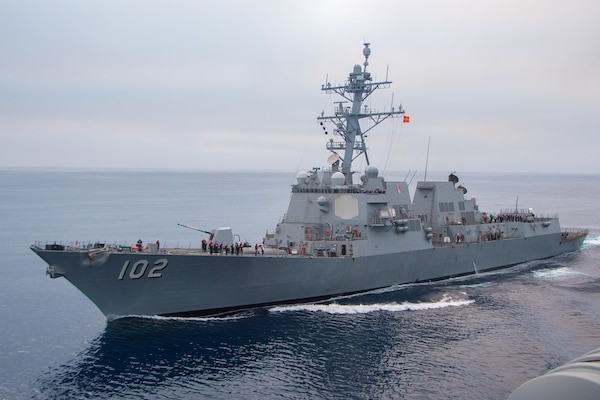
The Arleigh Burke-class guided-missile destroyer USS Sampson (DDG 102) steams alongside the aircraft carrier USS Nimitz (CVN 68) in the Pacific Ocean, Oct. 5, 2024. Nimitz is underway in 3rd Fleet conducting routine training operations. (U.S. Navy photo by Mass Communication Specialist Seaman Joseph M. Paolucci)

From U.S. Fleet Forces Command Public Affairs, June 4, 2025 

SAN DIEGO – The Arleigh Burke-class guided-missile destroyer USS Sampson (DDG 102) departed Naval Base San Diego, June 3, 2025, to support operations in the U.S. Northern Command (USNORTHCOM) area of responsibility. 

Sampson is relieving littoral combat ship USS Charleston (LCS 18), continuing the Navy’s role in maritime operations that support national security priorities. 
Sampson will conduct operations in direct support of USNORTHCOM’s mission to protect the homeland by enhancing maritime domain awareness and deterring illicit activities in coordination with U.S. interagency and law enforcement partners. 
 
The deployment is part of the Department of Defense’s support to national objectives along the U.S. southern border, following Presidential directives and ongoing interagency efforts to improve border security and homeland defense. 
 
During this deployment, Sampson will operate with an embarked U.S. Coast Guard Law Enforcement Detachment (LEDET). This joint presence strengthens the ship’s ability to conduct maritime interdiction operations, contribute to border security, and support counter-narcotics efforts and humanitarian missions as needed. 
 
As a surface combatant assigned to Destroyer Squadron 9, Sampson brings robust multi-mission capabilities to the task of defending U.S. sovereignty and supporting homeland defense operations in coordination with USNORTHCOM. 
 
USFFC is responsible for manning, training, equipping and employing more than 125 ships, 1,000 aircraft, and 103,000 active-duty service members and government employees, and providing combat-ready forces forward to numbered fleets and combatant commanders around the globe in support of U.S. national interests. 
 
USFFC also serves as the Navy’s Service Component Commander to both USNORTHCOM and U.S. Strategic Command, providing naval forces in support of joint missions as Commander, Naval Forces Northern Command (NAVNORTH) and Commander, Naval Forces Strategic Command (NAVSTRAT). USFFC is the Strategic Command Joint Force Maritime Component Commander (JFMCC STRAT) and executes Task Force Atlantic in coordination with U.S. Naval Forces Europe. 


BAE Systems Awarded $30M for Identification Friend or Foe Common Transponder  

From BAE Systems, June 4, 2025 

IFF technical refresh positions the Department of Defense to meet future cyber and crypto requirements and eliminates obsolescence 

GREENLAWN, N.Y. — June 4, 2025 — The U.S. Navy has awarded BAE Systems $30 million to refresh the AN/APX-123A(V) Common Transponder (CXP), which provides time-critical insights that help prevent friendly fire incidents. The refreshed CXP will support the U.S. Navy fleet and joint forces for air defense, weapon systems, air traffic control, and range instrumentation. 

The upgrade will serve as a replacement option for currently installed Identification Friend or Foe (IFF) transponders on existing and emerging platforms including unmanned aerial vehicles, ships, fixed-wing aircraft, and helicopters. As a form, fit, and function replacement, its design will address obsolescence and processing capacity to support future needs. The open-system architecture design and high-density field programmable gate array technology ensures ongoing versatility and future utility through software upgrades, without the risk and cost associated with hardware modifications.  

“Common transponders provide our service men and women with a reliable and secure solution to help them identify friendly forces and make decisions in a variety of threat environments,” said Seth Guanu, Combat Identification Products program area director at BAE Systems. “The level of speed, security, and accuracy matters to support interoperability across U.S. forces. This modernization effort enables us to deliver a critical capability to thousands of existing applications and equip emerging platforms.” 

The AN/APX-123A(V) CXP will be Mark XIIB IFF certified with Mode S and Mode 5 for secure and encrypted data exchange – meeting latest Department of Defense standards. It will also include additional receive channels for passive acquisition of Mode 5 Level 2 and Automatic Dependent Surveillance – Broadcast In, enhancing situational awareness for warfighters. It will provide high-performance, multi-function capabilities while supporting the latest crypto requirements. 

With more than 80 years of IFF experience, BAE Systems has delivered over 1,500 interrogators, 6,000 combined interrogator transponder systems, and 16,000 transponders. 

The AN/APX-123A(V) CXP technical refresh work will be performed at BAE Systems’ Greenlawn, New York and Austin, Texas facilities. Production hardware is expected to be qualified for flight and delivered to users in 2027. 


SASC Chairman Wicker Releases Defense Reconciliation Bill

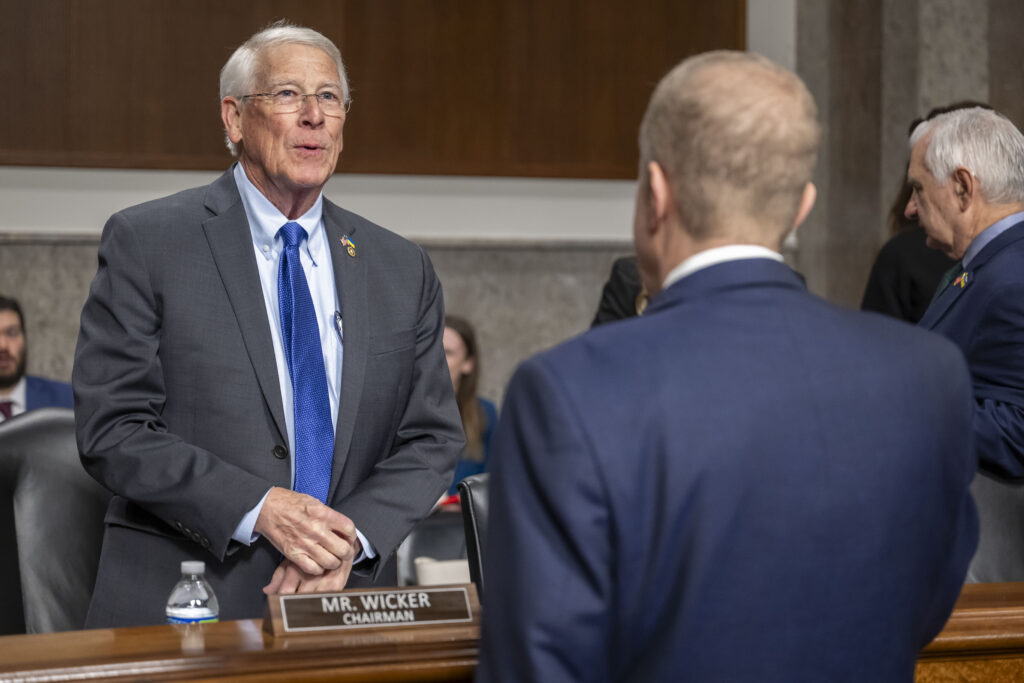
Mississippi Senator and Chairman of the Senate Armed Services Committee Roger Wicker speaks with nominee for Deputy Secretary of Defense Stephen A. Feinberg prior to a SASC hearing in Washington, D.C., Feb. 25, 2025. Photo credit: DoD | U.S. Air Force Senior Airman Madelyn Keech

Sen. Roger Wicker (R-Mississippi), chairman of the Senate Armed Services Committee, on June 3 released the text of the defense portion of the reconciliation bill, named the One Big Beautiful Bill.

 The defense portion was negotiated by members of the House and Senate Armed Services Committees in coordination with the White House and the Department of Defense.

“This bill is a landmark down payment toward the modernization of our military and our defense capabilities,” Wicker said in a statement. “It represents a generational upgrade for our national security with historic funding for Golden Dome, American manufacturing, innovative unmanned technology, and new shipbuilding efforts.”

Among other things, the bill would:

  • Approve $9 billion to improve servicemember quality of life, including housing modernization, childcare and education improvements, and health care.
  • Authorize $29 billion for shipbuilding to expand the maritime industrial base, build 13 battle force ships, and rapidly grow an unmanned fleet.
  • Provide $25 billion for the proposed Golden Dome missile defense system, including space-based missile interceptors.
  • Provide $23 billion to re-stock crucial munitions, rebuild U.S. supply chains for critical minerals and expand advanced manufacturing capacity.
  • Authorize $16 billion to scale production of innovative low-cost and next-gen weapons like drones, counter-drone tech, cheap munitions, and artificial intelligence.
  • Provide $9 billion for air superiority, including accelerating delivery of next-generation aircraft and autonomous systems.
  • Authorize $12 billion for Pacific deterrence, including expanding military exercises in the region, building infrastructure to defend forces and conduct military operations in the Western Pacific and improving Taiwan’s defense.
  • Provide $3.3 billion for border security and funds Department of Defense personnel and logistics support to help carry out the administration’s border, immigration and counterdrug enforcement agenda.

“The House and Senate Armed Services Committees are committed to implementing President Trump’s peace through strength agenda with a generational investment in our national defense,” said Mike Rogers (R-Alabama), chairman of the House Armed Services Committee.


SECDEF Orders Renaming of USNS Harvey Milk

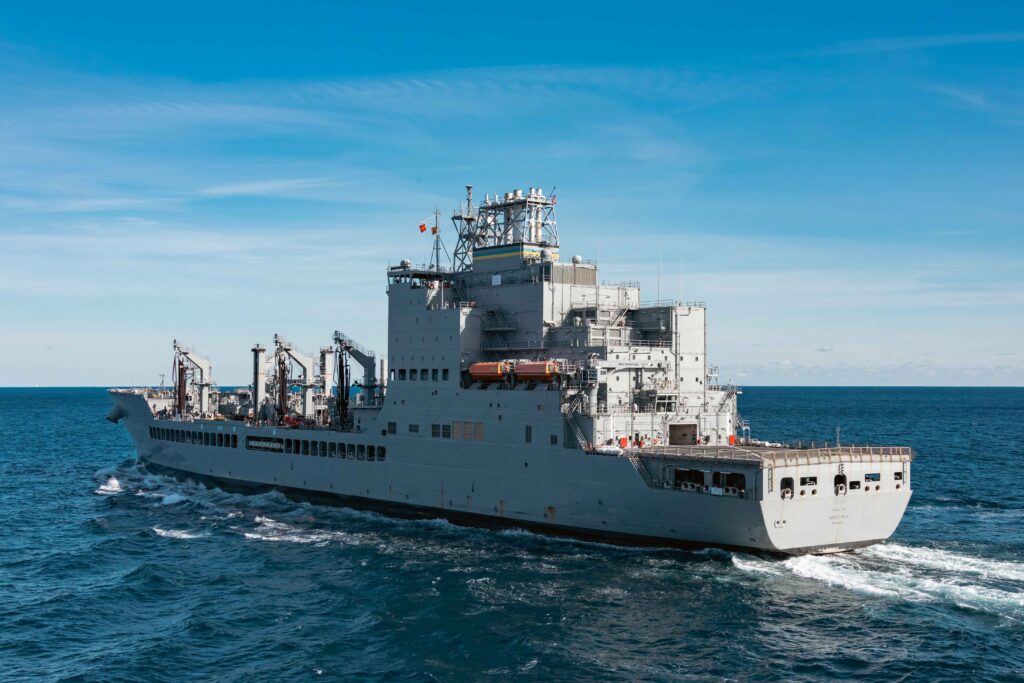
The John Lewis-class replenishment oiler USNS Harvey Milk (T-AO-206) conducts a replenishment at sea with the worldÕs largest aircraft carrier, USS Gerald R. Ford (CVN 78), December 13, 2024. Photo credit: U.S. Navy | Mass Communication Specialist 2nd Class Maxwell Orlosky

According to numerous reports, Secretary of Defense Pete Hegseth has ordered the renaming of USNS Harvey Milk (T-AO-206), a John Lewis-class oiler named after the Navy veteran and gay rights activist.

First reported by Military Times, a memorandum has ordered the changing of the name and the timing of the action, right at the beginning of Pride month, was on purpose, part of the Department of Defense objective of re-establishing a “warrior culture.”

Fox News reported that further name changes may be coming pending internal reviews.

Milk served four years in the Navy in the early 1950s, serving aboard the submarine rescue ship USS Kittiwake as a diving officer and later as a diving instructor at Naval Station San Diego. He resigned at the rank of lieutenant junior grade, leaving service rather than face a court martial for being gay, according to Wikipedia.

Later, he became the first openly gay man to be elected to public office in California as a member of the San Francisco Board of Supervisors. In late 1978, Milk and San Francisco Mayor George Moscone were shot to death by a disgruntled member of the board of supervisors, according to Wikipedia. Milk was posthumously awarded the Presidential Medal of Freedom in 2009.

The USNS Harvey Milk, the second in the John Lewis class of oilers, was officially named in 2016 and launched in 2021. The ship is operated by Military Sealift Command.


Navy Selects Mobile, Ala., Company to Scrap World’s First Nuclear-Powered Aircraft Carrier

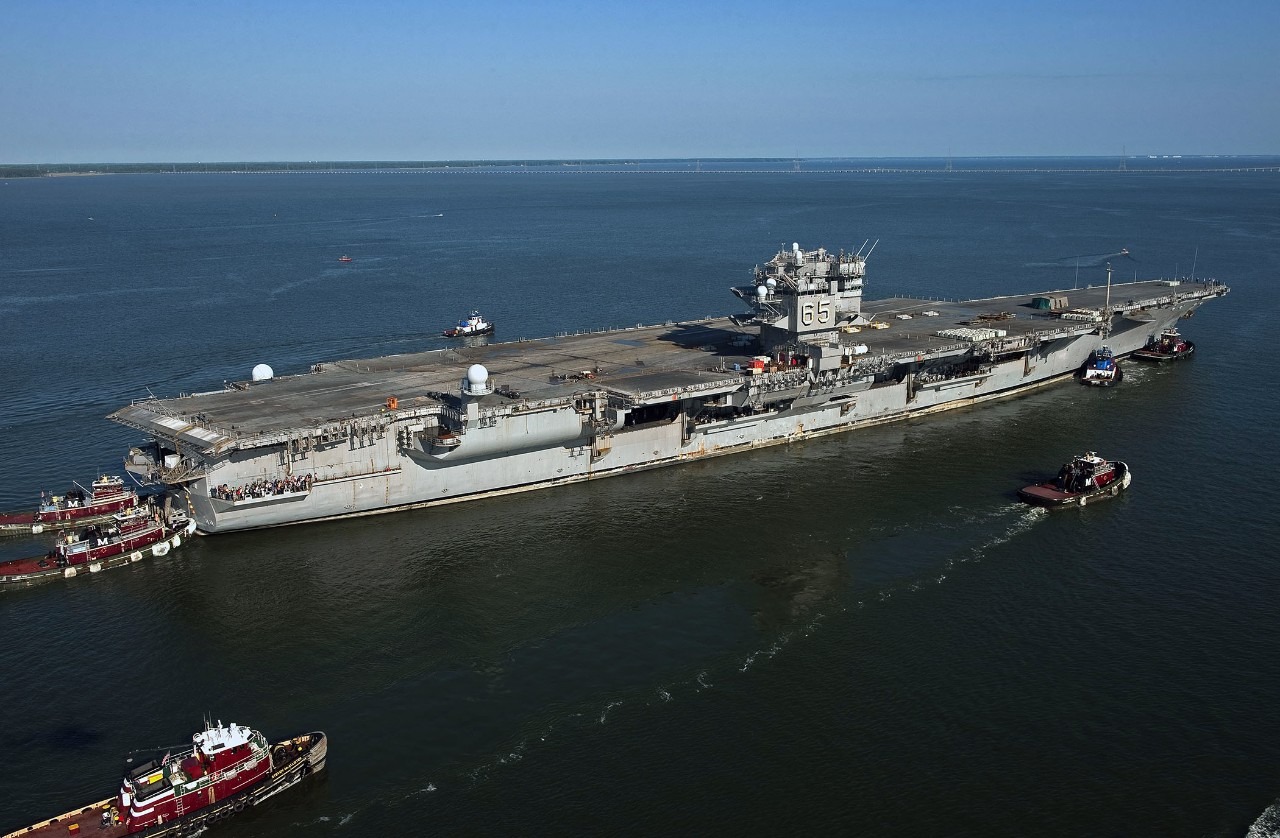
The nuclear-powered aircraft carrier ex-USS Enterprise is shown being moved to Newport News Shipbuilding in 2013 following its decommissioning in 2012. (NHHC) 

By Richard R. Burgess, Senior Editor 

ARLINGTON, Va. — The U.S. Navy has selected NorthStar Maritime Dismantlement Services LLC, a company with facilities in Mobile, Alabama, to scrap the former USS Enterprise (CVN 65), the Navy’s — and the world’s — first nuclear-powered aircraft carrier. 

The Defense Department said in a May 30 contract announcement that NorthStar, headquartered in Vernon, Vermont, was being awarded a $536.7 million firm-fixed-price contract from the Naval Sea Systems Command for “the dismantling, recycling, and disposal of Ex-Enterprise (CVN 65). 

“Under this contract CVN 65 will be dismantled in its entirety, and all resulting materials will be properly recycled or disposed of. Specifically, hazardous materials, including low-level radioactive waste, will be packaged and safely transported for disposal at authorized licensed sites,” the announcement said. “Work will be performed in Mobile, Alabama, and is expected to be completed by November 2029.” 

The Ex-Enterprise, commissioned in 1961, served the nation in numerous crises and conflicts, including the Cuban Missile Crisis, Vietnam War, and Operations Frequent Wind, Earnest Will, Desert Fox, Southern Watch, Enduring Freedom, and Iraqi Freedom.  

The carrier was deactivated in December 2012 and, when its nuclear reactors were defueled, it was decommissioned in February 2017. The hull remained at Newport News Shipbuilding at Newport News, Virginia, awaiting the Navy’s plans for disposal. 

“NorthStar is partnered with Modern American Recycling and Radiological Services, LLC (MARRS) in Mobile, Alabama, where the dismantlement work will take place,” the Naval Sea Systems Command said in a June 2 release posted on linkedin.com. “Waste Control Specialists LLC, of Andrews, Texas, will serve as the licensed facility for disposal of low-level radiological and mixed hazardous waste. Non-hazardous materials will be recycled or disposed of in accordance with all applicable federal, state, and local regulations.” 

The Navy’s selection of a commercial company to dismantle nuclear-powered ship is a change from its normal practice of scrapping nuclear-powered ships, which heretofore included nuclear-powered submarines and cruisers. In recent years, the Navy’s Puget Sound Naval Shipyard in Bremerton, Washington, has been the facility that has handled the tasks. 

“By leveraging private-sector expertise in commercial nuclear power plant decommissioning, the Navy is achieving an estimated $1 billion in cost savings compared to conducting the effort in public shipyards, the Navy release said. “This approach enables the Navy to prioritize public yard resources toward fleet readiness and modernization – while upholding its longstanding commitment to environmental stewardship and nuclear safety.” 


BAE Systems Launches $250M State-of-the-Art Shiplift and Land Level Facility in Jacksonville

From BAE Systems, June 2, 2025 

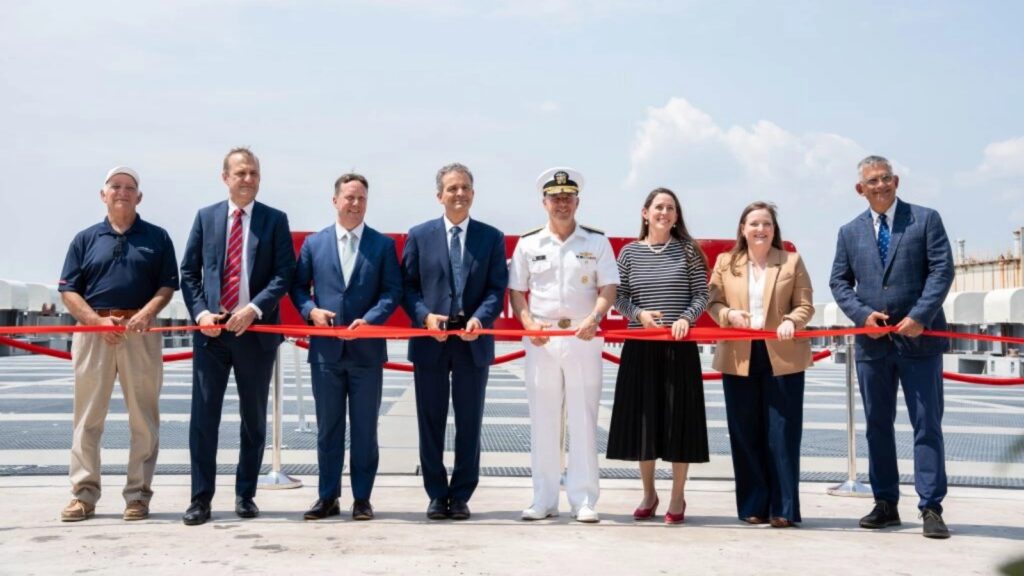
JACKSONVILLE, Fla. — June 2, 2025 — BAE Systems unveiled its new shiplift and land-level repair complex during a ribbon-cutting ceremony at the company’s Jacksonville, Florida shipyard. This marks a significant milestone in the $250 million investment to transform its ship repair capabilities and solidify its role as a key partner to the U.S. Navy and commercial maritime industry. 

The ceremony brought together approximately 500 attendees, including BAE Systems employees, subcontractors, Navy personnel, shipyard neighbors, local community members, and other distinguished guests, including Acting Chief of Naval Operations Admiral Jim Kilby and BAE Systems, Inc. President and CEO Tom Arseneault.    

“Today marks an important milestone as we celebrate the completion of a world-class ship repair facility upgrade here in Florida. The introduction of our new shiplift and land level repair facility represents more than just progress for BAE Systems Ship Repair—it reflects a shared commitment to innovation, growth and collaboration,” Arseneault said. “Together with the United States Navy, and other key industry partners that depend on this port, we are building a stronger foundation for the future, to help maintain our maritime superiority.” 

The shiplift and land level repair complex will support the maintenance and repair of Mayport-based Navy vessels and commercial ships sailing into the Port of Jacksonville. With the capacity to lift ships displacing up to 25,000 tons and accommodate multiple vessels for maintenance simultaneously ashore, the new complex expands the shipyard’s capabilities threefold.  

BAE Systems’ new facility will significantly enhance production efficiency, strengthen regional maritime capabilities, and advance environmental stewardship. Its completion represents the company’s long-term initiative to bolster support for the U.S. Navy while also accommodating a broader range of commercial vessels at competitive scales.  

“From my vantage point, this shiplift and land level facility is contributing to the national movement that is making America safer and more secure,” said Admiral Kilby. “It’s a necessary element to forging a defense industrial base able to support, sustain and generate our fleet.”  

The project, together with Pearlson Shiplift Corporation, Foth Engineering, and Kiewit Infrastructure South Co., replaces an 80-year-old drydock that had reached the end of its lifecycle. The state-of-the-art shiplift system’s platform spans 492 feet by 110 feet, offering a more cost-effective and efficient alternative to traditional drydocks. It will be one of the ten largest shiplift systems in the world and the largest in the Americas. 

The first vessel lift in the facility is anticipated later this month.  

BAE Systems is a leading provider of ship repair, maintenance, and modernization services to the U.S. Navy’s fleet of combatant ships in their homeports; refit and hauling services for commercial and privately held vessels; and fabrication services for the submarine industrial base. The company operates three full-service shipyards in California, Florida, and Virginia, and offers a highly skilled, experienced workforce; a large team of suppliers and subcontractors; seven dry docks and railways; and significant pier space and ship support services.