USS Alexandria Returns to Naval Base Point Loma Following Seven-Month Deployment 
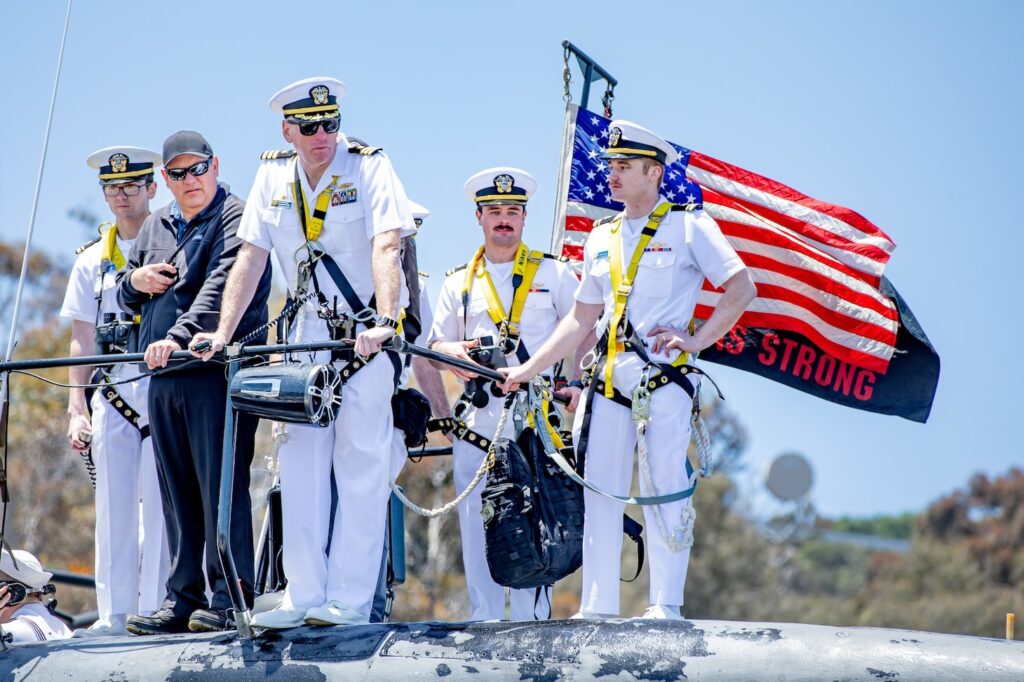
NAVAL BASE POINT LOMA (May 15, 2025) Cmdr. Christopher Rose, center, commanding officer of the Los Angeles-class fast-attack submarine USS Alexandria (SSN 757), observes mooring operations as the boat returns to Naval Base Point Loma following a 7-month deployment to the U.S. Indo-Pacific Command area of responsibility, May 15, 2025. (U.S. Navy photo by Mass Communication Specialist 1st Class Aaron T. Smith) 

From Petty Officer 1st Class Tiarra Brown, May 19, 2025 

SAN DIEGO — The Los Angeles-class fast-attack submarine USS Alexandria (SSN 757) returned home to Naval Base Point Loma following a successful seven-month deployment to the U.S. Indo-Pacific Command area of responsibility, May 15, 2025. 

The Alexandria deployed in 2024 from its homeport of Naval Base Point Loma, California, on a regularly scheduled deployment in support of national security objectives. The submarine’s operations throughout the Pacific Ocean underscore the United States’ commitment to an Indo-Pacific that is free and open, connected, prosperous, secure, and resilient. 
 
“This crew went above and beyond, no matter what was asked of them,” said Cmdr. Chris Rose, Alexandria’s commanding officer. “Deploying on submarines is a demanding but rewarding and consequential task. I could not be prouder of my crew’s resolve over the past seven plus months in demonstrating every day what makes our boats and our crews the apex predators of the maritime domain.” 
 
While deployed, the Alexandria demonstrated the capability and professionalism of the Joint Force, conducting an integrated exercise with U.S. Marine Corps personnel assigned to Third Reconnaissance Battalion during and immediately after a scheduled port visit to Guam. 
 
“This crew did a phenomenal job in all aspects of this deployment,” said Master Chief Machinist’s Mate (Auxiliary) Mitchell Gatton, Alexandria’s chief of the boat. “I am especially proud of the 35 submarine warfare devices earned by Alexandria Sailors, which to me underscores the crew’s commitment to continued growth and development.” 

 
Between operations and taskings, the crew also made a scheduled port visit to Busan, South Korea, underscoring the strategic and critical relationship between the United States and South Korea. Port visits like this reflect the United States’ commitment to the Indo-Pacific region, and complement the many exercises, training, operations and other military cooperation activities conducted by U.S. submarine forces with our Republic of Korea Navy allies. 
 
This visit also provided an opportunity for Alexandria’s crew to gain a deeper understanding of Korean culture while enhancing interpersonal relationships with counterparts. 
 
“I really enjoyed Busan, South Korea because I have never been to that part of the world,” said Fire Control Technician 3rd Class Justin Guerra. “Port visits give us that time to explore new places, get some well-earned rest, and experience the culture, food, and hospitality of our Allied and partner nations.” 
 
Upon arriving home, and in support of a time-honored Navy tradition, Electronics Technician, Submarine, Navigation 3rd Class Dylan Caruthers was the first Alexandria Sailor to depart the boat for the “first kiss.” 
 
“I am thrilled to be home with my family and I’m proud of all the great work we accomplished on deployment,” said Torpedoman’s Mate 3rd Class Ezekiel Hamner. “This morning when I heard the order to station the maneuvering watch and send line handlers topside, it really hit that we were at the end of our deployment. It was an awesome feeling.” 
 
The USS Alexandria is the third ship to bear the name Alexandria. The unit’s motto is “Twice as Strong,” which denotes the fact that it is named for Alexandria, Virginia and Alexandria, Louisiana. She is the 46th Los Angeles-class fast-attack submarine and was commissioned June 29, 1991. 
 
The Alexandria is assigned to Commander, Submarine Squadron 11, home to four Los Angeles-class fast-attack submarines, which are capable of supporting various missions, including anti-submarine warfare, anti-ship warfare, strike warfare and intelligence, surveillance and reconnaissance. 


Coast Guard Cutter Forward Returns Home After Seizing More Than $23M in Cocaine

From U.S. Coast guard Atlantic Area, May 19, 2025 

PORTSMOUTH, VA — The crew of Coast Guard Cutter Forward (WMEC 911) returned to their home port in Portsmouth, Monday, following a 79-day patrol in the Eastern Pacific Ocean.  

Forward’s crew deployed in support of Joint Interagency Task Force – South (JIATF-S) to conduct counter-drug operations while underway in the Eleventh Coast Guard District’s area of responsibility. Through detection, monitoring and interdiction efforts, crew members directly reduced the flow of illicit narcotics into the United States. Forward’s crew worked alongside additional units to include Coast Guard Cutters Kimball (WMSL 756), Thetis (WMEC 910), and the Coast Guard Tactical Law Enforcement Team – South (TACLET-S) to stop suspected drug smuggling while patrolling off the Pacific coast of Central and South America.  

While at sea, the cutter interdicted a vessel engaged in drug-trafficking. After it was detected by a maritime patrol aircraft, a Coast Guard boarding team that included members from TACLET-S launched to pursue the vessel, which led to the apprehension of four suspected drug traffickers. A second small boat crew was launched to locate and recover 37 bales of cocaine that were jettisoned by the suspected traffickers, resulting in the seizure of 2,039 pounds of cocaine worth more than $23 million.  

“Transnational criminal organizations are smart and sophisticated, and our crews meet that challenge head-on,” said Cmdr. Andrew Grantham, commanding officer of Forward. “Throughout this demanding patrol, our team performed with professionalism and determination. However, as a 35-year-old cutter, Forward faces increasing limitations that can impact mission effectiveness – including lost opportunities to interdict known threats. As the Commandant has stated, we continue to feel the strain of sustaining aging assets. Continued investment in new capabilities will ensure we remain ready to counter evolving threats in the maritime domain.”  
 
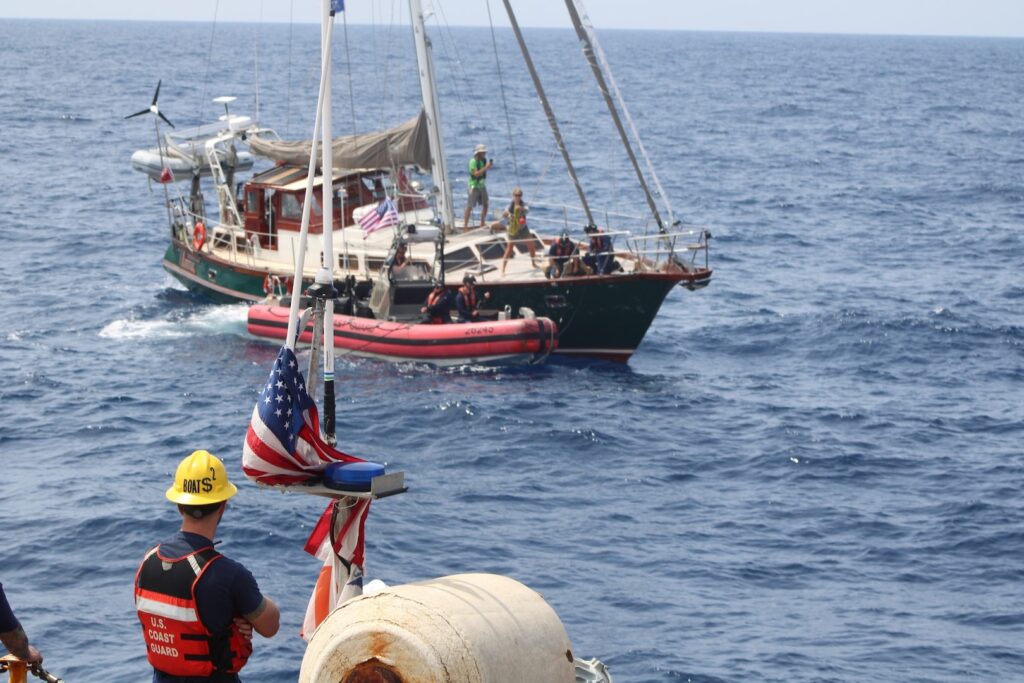
On May 17, the crew of Forward rescued two people and their disabled 60-foot sailboat nearly 90 miles offshore of Charleston, South Carolina. Forward’s crew towed the sailboat to coastal waters, where a Station Charleston boat crew and a commercial salvage vessel took over and safely transported the two sailors and their boat to shore. No injuries were reported. 

During the deployment, Forward’s crew engaged with Ecuadorian navy officials and valued partners in the Galápagos Islands during a port of call on San Cristóbal Island, Ecuador. Forward hosted the delegation aboard the cutter, providing a tour to highlight Coast Guard capabilities in support of U.S., Ecuadorian, and international joint objectives.  

Support from TACLET-S, which is based in Miami, improves mission capability. As part of the Coast Guard’s deployable specialized forces, LEDETs deliver boarding officer teams for high-risk maritime interdiction operations. These units are highly skilled and experienced in counter-drug missions and enforcing U.S. law at sea.   

JIATF-S, in conjunction with partner nations, works to target, detect and monitor illicit drug trafficking within the joint operating area. The organization facilitates the interdiction and apprehension of illicit traffickers to dismantle transnational criminal organizations while reducing the flow of drugs to the public. Once interdiction becomes imminent, the law enforcement phase of the operation begins, and control of the operation shifts to the U.S. Coast Guard throughout the interdiction and apprehension. Interdictions in the Eastern Pacific Ocean are performed by members of the U.S. Coast Guard under the authority and control of the Coast Guard’s Eleventh District, headquartered in Alameda, California.    

Forward is a 270-foot, Famous-class medium endurance cutter. The cutter’s primary missions are counter-drug and migrant interdiction operations, as well as search and rescue in support of U.S. Coast Guard operations throughout the Western Hemisphere. The cutter falls under the command of U.S. Coast Guard Atlantic Area, which is based in Portsmouth, Virginia.    

For information on how to join the U.S. Coast Guard, visit Go Coast Guard.com to learn about active duty and reserve, officer and enlisted opportunities. Information on how to apply to the U.S. Coast Guard Academy can be found here.   

For more, follow us on Facebook, Instagram and X.     


Ultra Maritime and General Atomics Announce Strategic Partnership

From Ultra Maritime, May 20, 2025 

COLUMBIA CITY, Indiana – General Atomics Aeronautical Systems, Inc. (GA-ASI) and Ultra Maritime are proud to announce a strategic partnership to substantially advance the state of the art in unmanned airborne detection and tracking of enemy submarines. By combining the world’s most advanced and prolific unmanned aerial system (UAS), GA-ASI’s MQ-9B SeaGuardian®, with the world’s only miniaturized, low power sonobuoys and receivers, the strategic partnership will make it possible for the U.S. and its allies to use sophisticated techniques to track submarines in hostile, GPS-denied environments.  

As adversary submarines proliferate and become stealthier, unmanned underwater vehicles grow in number and GPS jamming becomes more prevalent, the need for assured and affordable anti-submarine warfare (ASW) solutions is more critical than ever. While unmanned technologies are the clear best solution to this challenge, limitations to date in suitable ASW technologies have prevented real world solutions from emerging. This strategic partnership will provide a significant new capability where small form factor sonobuoys and receivers, aboard a long-range unmanned aircraft, can provide autonomous, low cost ASW in a GPS-denied environment.  

The GA-ASI MQ-9B SeaGuardian provides unmatched multi-domain intelligence, surveillance, reconnaissance and targeting (ISR&T). GA-ASI will integrate the MQ-9B SeaGuardian with Ultra Maritime’s exclusive small form factor (half size) sonobuoys to double UAS capacity. These sonobuoys will provide Multi-static Active (MSA) capabilities achieving unprecedented wide-area search. Furthermore, Ultra Maritime’s new acoustic receivers will be half the traditional size, making them ideal for UAS deployment. The receivers will enable more effective ASW in GPS-denied environments and will monitor more sonobuoys per MQ-9B mission through advanced communications technology. The solution is fully funded by internal research and development, and an integrated operational demonstration of this capability will occur in the Indo Pacific and other theaters beginning in 2025.  


Keel Laid for Future USS Quentin Walsh

From the Navy Office of Information, May 20, 2025 

BATH, Maine — The keel for the future USS Quentin Walsh (DDG 132), an Arleigh Burke-class Flight III guided missile destroyer, was laid during a ceremony on May 20, at Bath Iron Works (BIW). 

The keel laying represents the start of a ship’s construction. During the ceremony, the keel is authenticated when the ship’s sponsor welds their initials into the keel plate, with the assistance of a BIW welder. 

The ship’s sponsor is Madison Ann Zolper, great-granddaughter of the ship’s namesake, Coast Guard Capt. Quentin R. Walsh, who was awarded the Navy Cross for his heroic actions during World War II. 

Walsh received the Navy Cross for his leadership during the 1944 Battle of Cherbourg, where his 53-man reconnaissance unit captured 750 German soldiers and liberated 52 American prisoners of war. After World War II, he served during the Korean War and held various roles at Coast Guard headquarters. After his Coast Guard career, he worked as a teacher and parole officer in Maryland and became known for his dedication to community preservation. 

“We are honored to mark the beginning of the construction for the future USS Quentin Walsh and celebrate his legacy with his family,” said Capt. Jay Young, Arleigh Burke-class Destroyer program manager, Program Executive Office, Ships (PEO Ships). “DDG 132 will provide our Navy with critical strategic capabilities to support Fleet readiness.” 

Arleigh Burke-class Flight III destroyers feature the AN/SPY-6(V)1 Air and Missile Defense Radar and incorporate upgrades to the electrical power and cooling capacity plus additional associated changes to provide enhanced warfighting capability to the fleet. 

The keel laying of future USS Quentin Walsh (DDG 132) symbolizes the Navy’s 250-year commitment to innovation and maritime dominance. From seabed to space, the Navy delivers power for peace – always ready to fight and win. This milestone marks the Navy’s enduring legacy and commitment to shaping the future of maritime power. 

PEO Ships, one of the Department of Defense’s largest acquisition organizations, is responsible for executing the development and procurement of all destroyers, amphibious ships and craft, and auxiliary ships, including special mission ships, sealift ships, and support ships. 


RTX’s Raytheon Awarded $580M Production Contract for Next Generation Jammer Mid-Band 

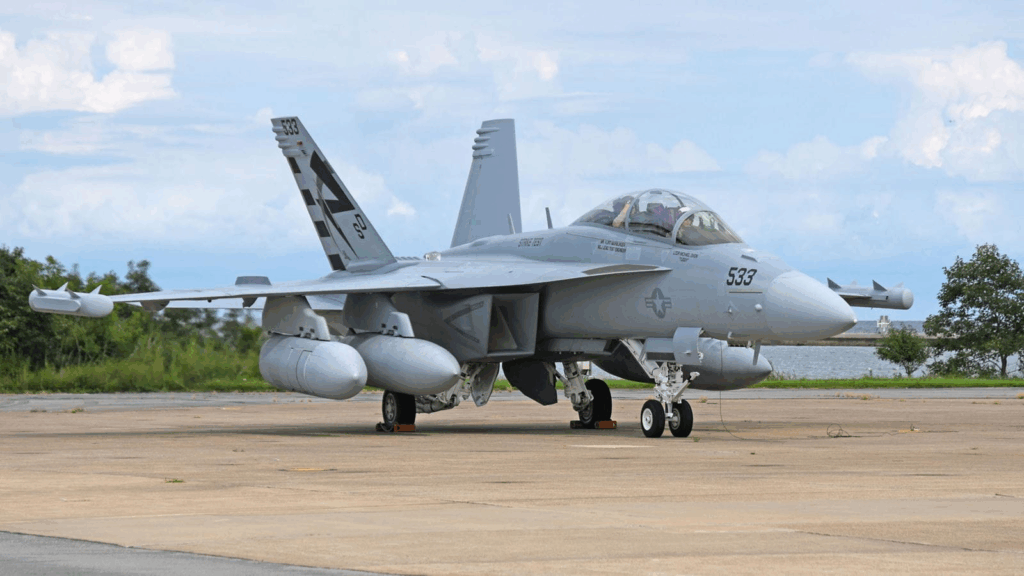
An NGJ-MB pod is mounted outboard under the starboard wing of this EA-18G Growler electronic attack aircraft.  

From RTX, May 16, 2025 

Electronic attack capability will counter new and emerging adversary threats 

MCKINNEY, Texas, May 16, 2025 /PRNewswire/ — Raytheon, an RTX (NYSE: RTX) business, has been awarded a $580 million follow-on production contract from the U.S. Navy for the Next Generation Jammer Mid-Band (NGJ-MB) system. 

Under the contract, Raytheon will provide additional production NGJ-MB pod shipsets, including pods for the Royal Australian Air Force, as well as spares and peculiar support equipment. 

“Offensive Electronic Attack provides a tremendous combat capability, protecting strike packages, kinetic weapons and high-value airborne assets across a broad range of missions,” said Barbara Borgonovi, president of Naval Power at Raytheon. “With this contract, we’ll ensure that our naval aviators in all theaters are better prepared to counter adversary threats and support the Joint Fight.” 

NGJ-MB is a cooperative development and production program with the Royal Australian Air Force. It is an airborne electronic attack system consisting of two pods containing active electronically scanned arrays that radiate in the mid-band frequency range. The U.S. Navy employs NGJ-MB on the EA-18G Growler to target advanced radar threats, communications, data links and non-traditional radio frequency threats. 

Work under this contract will take place in Forest, Mississippi; McKinney, Texas; El Segundo, California; and Andover, Massachusetts through 2028. 


GA Integrates OPTIX Software for USMC Common Intelligence Picture WTI Course 

From General Atomics Aeronautical Systems, Inc. 

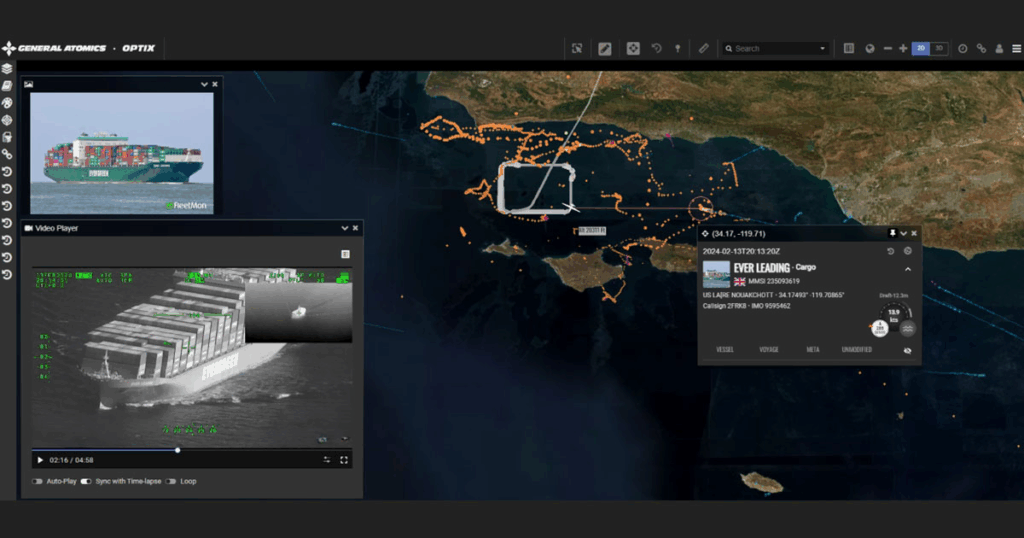
SAN DIEGO – 19 May 2025 – General Atomics Aeronautical Systems, Inc. (GA-ASI) has successfully integrated the advanced Optix software—developed by General Atomics Integrated Intelligence, Inc. (GA-i3)—into the U.S. Marine Corps (USMC) Common Intelligence Picture (CIP) for a multi-service Weapons and Tactics Instructor (WTI) course.  

This milestone marks a significant enhancement in the USMC’s Intelligence, Surveillance, and Reconnaissance (ISR) capabilities, delivering a unified operational view critical to the training of future aviation leaders. For the USMC, this integration directly supports the deployment and effectiveness of the GA-ASI-supplied MQ-9A Medium-Altitude, Long-Endurance (MALE) Unmanned Aircraft System within the Marine Air-Ground Task Force (MAGTF).  

Achieved through close collaboration with Marine Aviation Weapons and Tactics Squadron One (MAWTS-1) and Marine Operational Test and Evaluation Squadron One (VMX-1), the integration brought together engineers from GA-ASI and GA-i3 alongside USMC unmanned aviation operations experts. Their combined efforts enabled the seamless deployment of the Optix software during the rigorous WTI 2-25 training cycle.  

USMC MQ-9A operations during the exercise took place at Yuma, Arizona, and the Strategic Expeditionary Landing Field (SELF) at Twenty-Nine Palms, California—the Marine Corps’ only expeditionary runway in the U.S. The live-fire training environment provided an invaluable opportunity to evaluate the MQ-9A’s role in complex combat scenarios.  

By introducing Optix into this high-demand setting, Marines gained access to real-time data fusion, a shared operational picture, and enhanced collaborative decision-making—tools critical for modern battlefield success.  

“The integration of Optix software represents a key step toward the effective deployment of the MQ-9A MUX MALE platform within the MAGTF and joint operations,” said Doug Brouwer, Senior Director for USMC Programs at GA-ASI. “It enables near real-time situational awareness and improves the decision-making process across the battlespace.”  

Andrew Majchrowicz, Project Manager for Department of Defense Programs at GA-i3, added: “Equipping Marines with advanced ISR tools like Optix enhances the common intelligence picture and operational readiness in live-fire environments. This is a critical milestone in our shared goal of enabling joint-force effectiveness and full operational integration of the MQ-9A.”  

The successful deployment of Optix within the WTI course underscores General Atomics’ continued commitment to delivering cutting-edge solutions that empower the U.S. military with unmatched intelligence and operational capabilities for future multi-domain operations. 


USCGC Calhoun Offloads More than $141M in Illegal Narcotics at Port Everglades 

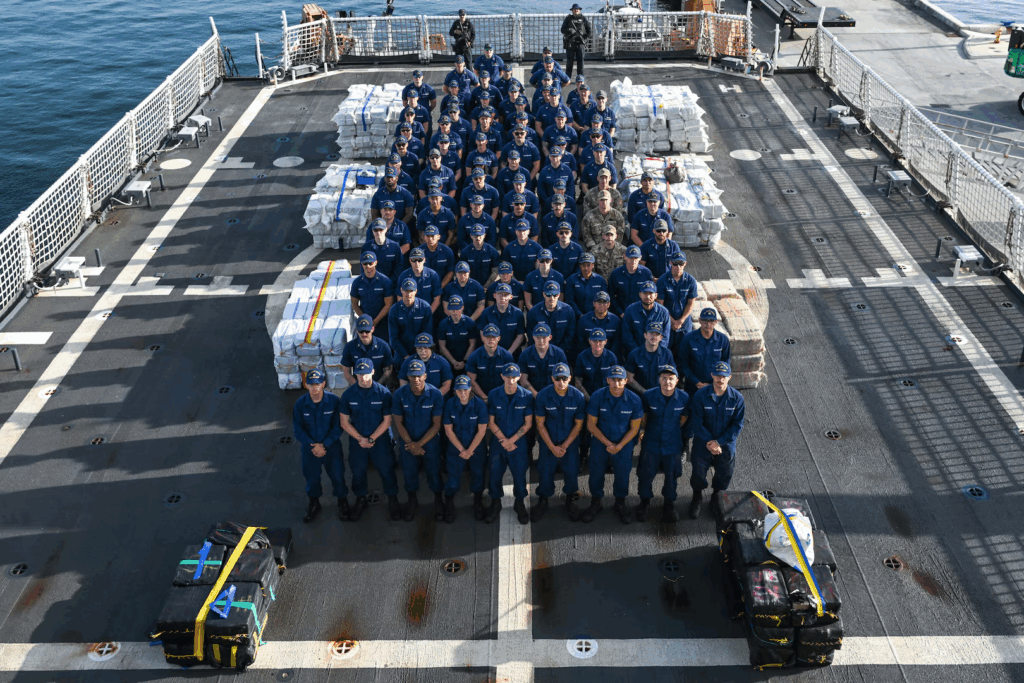
Crew members aboard U.S. Coast Guard Cutter Calhoun (WMSL 759) pose before preparing to offload pallets of illegal narcotics in Port Everglades, May 16, 2025. Calhoun’s crew offloaded more than 19,055 pounds of cocaine and marijuana valued at approximately $140.9 million in Port Everglades, May 16, 2025. (Coast Guard photo by Petty Officer 3rd Class Jessica Walker)

From U.S. Coast Guard 7th District, May 16, 2025 

MIAMI – U.S. Coast Guard Cutter Calhoun’s crew offloaded approximately 19,055 pounds of cocaine and marijuana, worth an estimated $140.9 million, Friday, at Port Everglades.   

The seized contraband was the result of five interdictions in the Atlantic Ocean and Caribbean Sea by interagency partners. The resulting criminal investigations are linked to substantial amounts of transnational criminal organizations and including the foreign terrorist organization, Tren de Aragua.  

On April 12, the Calhoun’s crew, under tactical control of Coast Guard Atlantic Area, detected a suspicious fishing vessel in international waters exhibiting behavior consistent with narcotic trafficking approximately 1,200 miles west of Las Palmas, Canary Islands. The crew interdicted the suspicious vessel, seizing approximately 10,000 pounds of cocaine.  

On May 1, a military patrol aircraft located a suspicious vessel approximately 100 miles off Colombia. A Coast Guard law enforcement detachment deployed on USS Minneapolis Saint Paul interdicted the vessel, seizing approximately 1,500 pounds of cocaine.   

On May 5, a military patrol aircraft located a suspicious vessel approximately 80 miles off Dominican Republic. Calhoun’s crew interdicted the vessel, seizing approximately 825 pounds of cocaine.   

On May 6, Calhoun’s crew interdicted a suspicious vessel approximately 85 miles off Haiti. A law enforcement crew stopped the vessel, seizing approximately 3,135 pounds of cocaine and 14 pounds of marijuana.   

On May 7, a military patrol aircraft located two suspicious vessels approximately 155 miles off Dominican Republic. Calhoun’s crew interdicted both vessels, seizing approximately 3,580 pounds of cocaine.  

“I’m incredibly proud of Calhoun’s role in continuing to disrupt the flow of illicit narcotics,” said Capt. Matthew Hammond, Calhoun’s commanding officer. “The Coast Guard and our partners work tirelessly to deny drug trafficking organizations access to smuggling routes bound for the United States and dismantle transnational criminal activity abroad, which threaten Americans here at home.”  

The following crews also assisted with interdiction operations:  

  • Seventh Coast Guard District watchstanders  

  • U.S. Coast Guard Tactical Law Enforcement Team-South  

Detecting and interdicting illicit drug traffickers on the high seas involves significant interagency and international coordination. Joint Interagency Task Force-South, in Key West, conducts the detection and monitoring of aerial and maritime transit of illegal drugs. Once an interdiction becomes imminent, the law enforcement phase of the operation begins, and control of the operation shifts to the U.S. Coast Guard for the interdiction and apprehension phases. Interdictions in the Caribbean Sea are performed by members of the U.S. Coast Guard under the authority and control of the Seventh Coast Guard District, headquartered in Miami.    

These interdictions relate to Organized Crime Drug Enforcement Task Forces’ Strike Force initiatives and designated investigations. OCDETF identifies, disrupts, and dismantles the highest-level criminal organizations that threaten the United States using a prosecutor-led, intelligence-driven, multi-agency approach. Additional information about the OCDETF program can be found at https://www.justice.gov/OCDETF.    

Calhoun, commissioned in 2024, is the newest 418-foot Legend-class national security cutters homeported in North Charleston, South Carolina. The cutter’s primary missions are counter-drug operations and defense readiness.   

Read more about Calhoun’s April 13 interdiction.  

Read more about USS Minneapolis Saint Paul interdiction.   

For breaking news, follow us on X (formerly Twitter). For additional information, find us on Facebook and follow us on Instagram.    

Make a difference on land, at sea or in the air with the Coast Guard. Visit GoCoastGuard.com to learn more about active duty and reserve, officer and enlisted opportunities. Information on how to apply to the U.S. Coast Guard Academy can be foundhere.    


RTX’s Raytheon Delivers 250th RAM Launcher to U.S. Navy 

From RTX, May 19, 2025 

RAM is a vital component of naval defense, protecting high-value assets and the lives of thousands of sailors and marines 

TUCSON, Ariz. (May 19, 2025) – Raytheon, an RTX (NYSE: RTX) business and German industrial partner RAM-Systems GmbH, delivered the 250th RAM MK49 Guided-Missile Launching System (GMLS) to the U.S. Navy. It will be deployed on the USS Pittsburgh, a new-construction San Antonio-class amphibious transport dock. 

The RAM program, which will celebrate its 50th anniversary next year, is a bilateral partnership between the U.S. and Germany with Raytheon serving as a prime contractor. In addition to the U.S. and Germany, RAM customers include Egypt, Greece, Japan, the Republic of Korea, Mexico, Netherlands, Saudi Arabia, Qatar, Türkiye and the United Arab Emirates.  

“The RAM missile system has been a cornerstone of naval defense capabilities for decades, and this 250th GMLS delivery is a testament to the important role it plays in defending U.S. and allied forces,” said Barbara Borgonovi, president of Naval Power at Raytheon. “As we continue to modernize and expand the deployment of RAM, it remains a critical asset in protecting our sailors and ships from evolving threats.” 

As the world’s premier ship self-defense effector, RAM protects naval assets ranging in size from 220-foot corvettes to 1,100-foot nuclear powered aircraft carriers from advanced anti-ship cruise missiles, aircraft, drones, and other incoming threats.   

Raytheon and its German industrial partners continue to invest in modernizing the RAM system to increase production capacity to meet growing global demand as well as enhance the capabilities of the RAM effector and launching system.  This includes Raytheon’s GMLS manufacturing facilities – which have recently doubled production capacity – in addition to weapon system upgrades and supporting RAM integration aboard new naval platforms.  


Coast Guard to Reduce Flag Officer Positions by 25%

By Richard R. Burgess, Senior Editor 

ARLINGTON, Va. — The U.S. Coast Guard has been ordered to reduce the number of admirals by at least 25% before next year, the service announced. 

In a May 25 directive from Acting Commandant Adm. Kevin Lunday, the service announced that the reductions were part of its Force Design 2028 initiative.  

“As part of Force Design 2028, the Secretary of the Department of Homeland Security has determined that there is redundant executive oversight in our force structure which hinders efficient decision making and Service effectiveness,” The opening statement of the announcement said. 

“As a result, and consistent with similar efforts within the Department of Defense, the Secretary has ordered a reduction of no less than 25% of flag officer positions by 1 January 2026,” the announcement said. “The positions to be eliminated and the plan to reorganize the flag corps will be announced in separate correspondence.” 
 

The Coast Guard currently has approximately 45 flag officers. 

The service also has negated the results of its fiscal 2025 promotion board for the rank of rear admiral (lower Half) while folding opportunity in next year’s selection board. 
 

“The Secretary also disapproved the Promotion Year (PY) 2025 rear admiral (lower half) (RDML) selection board report after determining that the guidance to that board did not align with this Administration’s policies,” the announcement said. “The Secretary’s action also supports planning to reorganize the leadership structure. Officers who were considered by the PY25 RDML selection board and who are otherwise eligible, including those previously selected, will be considered by the PY26 RDML selection board that will convene under new guidance.” 


Harrier Finds Final Home in Fort Worth Aviation Museum

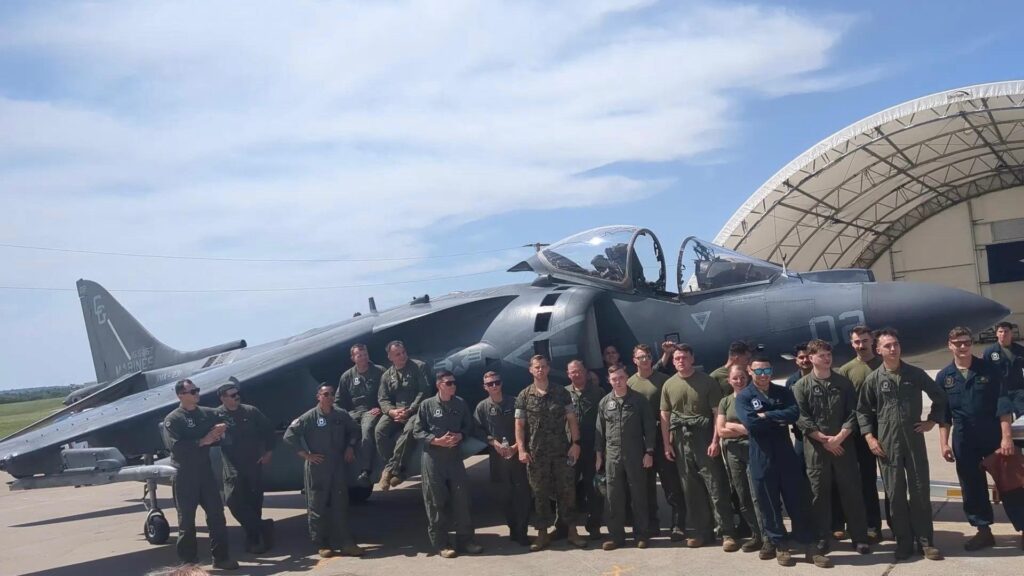
Retired AV-8B II+ Harrier, BUNO 165357, was inducted into its final landing spot at the Fort Worth Aviation Museum on May 13. 

From Naval Air Systems Command, May 16, 2025 

FORT WORTH, Texas — After years of soaring through the skies, a retired AV-8B II+ Harrier found its new home May 13 at the Fort Worth Aviation Museum, ready to inspire a new generation of aviators and engineers. 

A collaborative effort between the AV-8B Weapons Systems Program Office (PMA-257), Headquarters, U.S. Marine Corps, Marine Aircraft Group 14 and Marine Attack Squadron (VMA) 231 ensured the retired Harrier was demilitarized and safe for display, ready for its new role as a museum exhibit. 

VMA-231’s Capt. Zach “Yoda” Moore flew the aircraft to the museum initially performing a fly-by at the observation area before vertically landing. 

“Of over 40 aircraft [at the Fort Worth Aviation Museum], this is one of the most unique and interesting aircraft to have been flown into our museum,” said Ben Guttery, the museum’s collections manager. “This aircraft’s extensive combat history is very important to us and will be greatly appreciated by the public. The AV-8B II+ will eventually be bookend displayed next to the AV-8A demonstrating the many changes of the Harrier from when it first went into service with the U.S. Marines.” 

This aircraft, BUNO 165357, originally entered service with the U.S. Marine Corps as a Day Attack variant on Sept. 16, 1985. It was stricken and remanufactured reentering service on June 12, 1998 as an AV-8B Harrier II+. It flew with Marine Attack Squadrons (VMAs) 223, 231 and 542, logging 995 recorded combat flight hours and a combined total of 8,955 flight hours in support of multiple Marine Expeditionary Unit deployments, Operation Iraqi Freedom, Operation Enduring Freedom deployments, humanitarian efforts and Request for Forces. 

Pablo “Louie” Sanchez, PMA-257 logistics assistant program manager and museum task force lead, said, “The Marine demilitarization crew led by Chief Warrant Officer 2 Neil Vislosky has done a phenomenal job in preparation for this event to include coordination with the Marines of Marine Aviation Logistics Squadron 41 and Marine Fighter Attack Squadron 112 at Joint Reserve Base Fort Worth demonstrating professionalism every step of the way to make this a successful event.” 

According to its official website, the Fort Worth Aviation Museum has the “most touchable warbirds in North Texas” and aims to preserve, inspire and educate. The museum’s vision is to celebrate and showcase the people and aviation accomplishments of North Texas, in a museum and science center that can preserve and display our heritage, educate the community, and inspire young people to stay in school and achieve their full potential. Its slogan, “Giving wings to youth and community through our aviation roots,” highlights the importance of Harrier’s preservation initiatives. 

The AV-8B Harrier II+ is a vertical/short takeoff and landing, light attack jet used by the U.S. Marine Corps, and the Italian and Spanish navies. In service for four decades, its mission is to destroy surface targets and escort friendly aircraft in austere conditions during expeditionary, joint and combined operations. 

The platform provides close and deep air support, including armed reconnaissance and air interdiction, and conducts offensive and defensive anti-air warfare. The AV-8B Harrier II+ can operate from carriers and other suitable seagoing platforms, advanced bases, expeditionary airfields and remote tactical landing sites offering versatility, firepower and mobility to effectively counter enemies engaged by U.S. and allied ground forces.