NAPA Ship Design Software Company Looking to Expand in North America
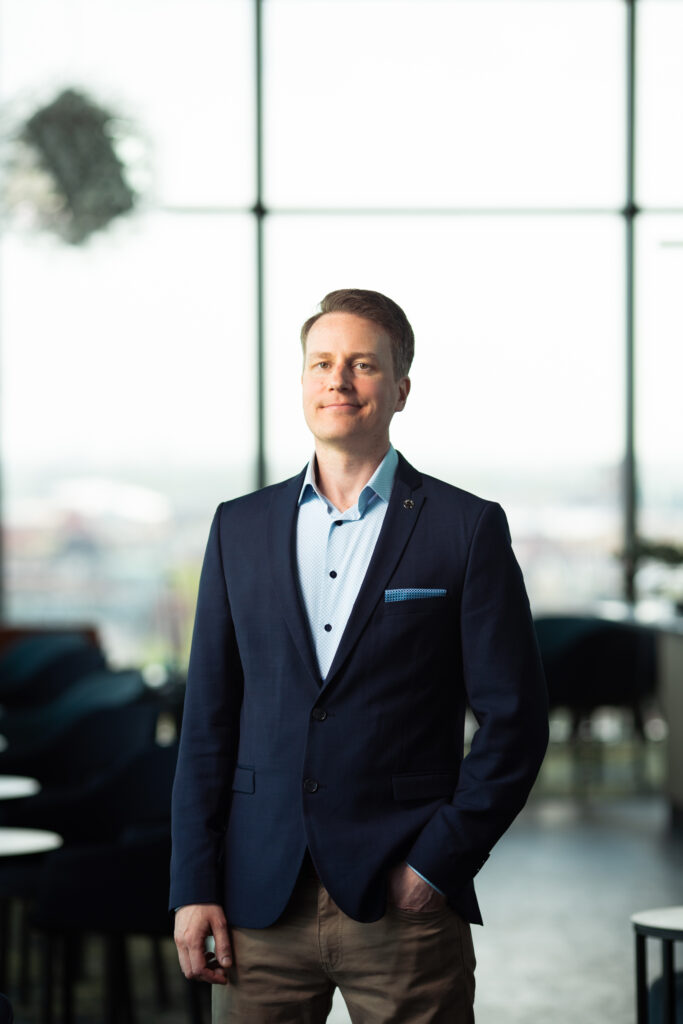
Mikko Forss, NAPA’s executive vice president for Design Solutions (NAPA photo)

By Richard R. Burgess, Senior Editor 

ARLINGTON, Va. — A major ship design software company is focusing on expanding its customer base in North America, especially in view of the U.S. government’s increased shipbuilding initiatives and substantial industry investments. 

The company, NAPA, based in Finland, designs software applications for ship design, safety, and operations. 

“We basically provide 3D CAD [computer-aided design] and engineering software for the shipyards’ engineering offices,” said Mikko Forss, NAPA’s executive vice president for Design Solutions, in an interview with Seapower. “With the help of our software, our customers are able to make critical safety- and naval architecture-related divisions during their design process. 

“Our customer base represents 90% of the annual shipbuilding output,” Forss said. “If we measure it in terms of compensated gross tonnage, we have a very strong position in the key shipbuilding markets in Korea, Japan, China, Europe, and, we have quite a few customers in North America. 

“North America is a very important territory to us,” he said. “Your government has announced the Maritime Action Plan that comes with substantial industry stimulus and investments. We believe we can help the U.S.A. to deliver good quality vessels on time, on budget. So, we’re very much focusing on the North America market at the moment, and we are working with all the key stakeholders… “For the moment, our main focus is on the Navy and Coast Guard. We see ourselves as a really good partner for the U.S. shipbuilding industry to ramp up productivity and efficiency during these unprecedented times.” 

Forss said the NAPA ship design software is “off the shelf,” so without any customization you can start to apply it for your design work Most of our customers have actually tailored and customized our software for their needs. That has proven to be a really, really powerful way of solving the specific challenges they have at hand.” 

He cited South Korea’s HD Hyundai Heavy Industries, the world’s largest shipyard, as using heavily customized NAPA software to match with their design process. 

“With that approach, they can gain more productivity, they can draw more design iterations in less amount of time, and that leads to quality products — ships, in this case — while maintaining the delivery schedule and budget,” he said. 

Forss noted that all the major companies designing and building ice-going vessels are using NAPA software for multiple different design disciplines, including hull structure and stability management. 

He also said that NAPA is emphasizing skilled workforce development. NAPA has partnered with universities in the United States that offer curricula in naval architecture “to build together a program, a curriculum where our software is included and there we have a mutual and shared vision to produce talent and skills that the industry needs because our industry is having, actually, a very exceptional moment, high order books, political-level attention toward our business that is almost unprecedented. But one major challenge we are facing is that skill shortage, that same thing I’m hearing when I’m traveling in Korea, in Japan, in the U.S. and in Canada. One way to solve this challenge is that we are partnering with academia to offer skills for the future graduates that are readily usable in the industry.” 

Founded in 1989, NAPA has offices in ten countries and has 230 experts on board. 

Forss, a graduate from Helsinki University and a naval architect for almost 20 years, explained his enthusiasm for his profession.  

“Ships are the largest man-made objects that move,” he said. “It’s just a remarkable effort of engineering to design and build those and that is still fascinating me every single day. … Naval architects are one big family, globally, and the relationships and connections are really tight in our business.” 


USS Colorado Returns to Fleet from Maintenance Ahead of Schedule, Accelerating Pacific Readiness

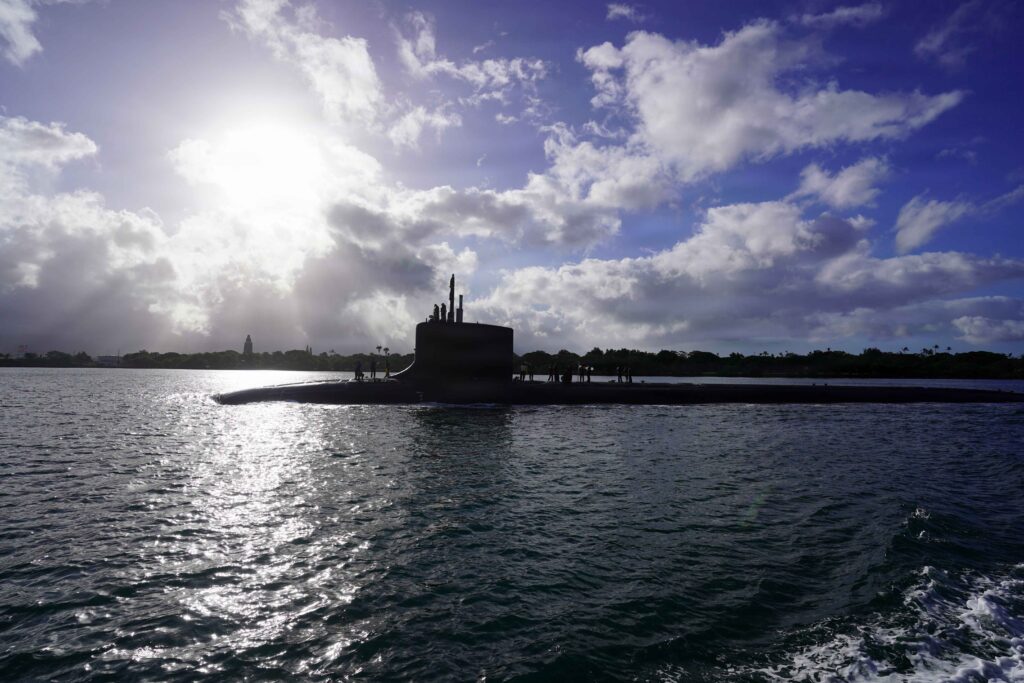
Virginia-class fast-attack submarine USS Colorado (SSN 788) returns from sea trials during a maintenance period at Joint Base Pearl Harbor-Hickam, June 6, 2026. Pearl Harbor Naval Shipyard and Intermediate Maintenance Facility (PHNSY & IMF) and Colorado’s crew completed the scheduled maintenance period on June 10, 2026, 29 days ahead of schedule, returning to the fleet lethal and ready to defend the nation. (US Navy photo by Claudia LaMantia)

From Kenny Jones, June 11, 2026 

PEARL HARBOR, Hawaii — Virginia-class fast-attack submarine USS Colorado (SSN 788) completed a scheduled maintenance period at Pearl Harbor Naval Shipyard and Intermediate Maintenance Facility (PHNSY & IMF) 29 days ahead of schedule June 10, 2026. 

Virginia-class fast-attack submarine USS Colorado (SSN 788) returns from sea trials during a maintenance period at Joint Base Pearl Harbor-Hickam, June 6, 2026. Pearl Harbor Naval Shipyard and Intermediate Maintenance Facility (PHNSY & IMF) and Colorado’s crew completed the scheduled maintenance period on June 10, 2026, 29 days ahead of schedule, returning to the fleet lethal and ready to defend the nation. Commissioned March 17, 2018, at Naval Submarine Base New London, Colorado is the 15th Virginia-class fast-attack submarine and fifth Block III submarine of the class. Colorado is assigned to Submarine Squadron 7 and is capable of supporting various missions, including anti-submarine warfare; anti-surface ship warfare; strike warfare; special operations forces support; and intelligence, surveillance, and reconnaissance. PHNSY & IMF’s mission is to keep the Navy’s fleet “Fit to Fight” by repairing, maintaining, and modernizing the Navy’s fast-attack submarines and surface ships. Strategically located in the heart of the Pacific, it is the most comprehensive fleet repair and maintenance facility between the U.S. West Coast and the Far East. (US Navy photo by Claudia LaMantia) 

Effective and efficient maintenance keeps the U.S. Navy lethal and ready to defend the nation and maximizes the lifespan of its vessels. By returning Colorado to the fleet ahead of schedule, the shipyard and crew demonstrated exceptional professionalism and capability. 

Maintenance was completed early through close partnership between the shipyard and Colorado’s crew. Using the Navy’s world-class planning processes, the joint team executed a complex work package safely and efficiently. Operating seamlessly within the submarine’s confined spaces, an integrated team of shipyard craftsmen, engineers, support staff, and crew members utilized decisive, deckplate-level problem solving to complete repairs. 

“Finishing ahead of schedule is not about rushing, it’s about hard work and persistence,” said U.S. Navy Capt. Ryan McCrillis, commander of PHNSY & IMF. “It’s producing first-time, high-quality work and attacking every roadblock with urgency. It’s a team effort, from the newest apprentice to senior shipyard leaders, the ship’s force, the project team, and support from the fleet and headquarters.” 

A shared focus between the shipyard workforce and the crew—built on clear communication and constant teamwork—drove the project to an early completion. 

“There isn’t just one moment; it’s all the little victories we had leading up to this point,” said Chad Renti Cruz, PHNSY & IMF Colorado project superintendent. “From the get-go, the team gelled as one. Whenever challenges or problems came up, we swarmed the issue, got all the right people in the room to lay out a solid plan, and executed it to a T.” 

For Colorado’s crew, the accelerated shipyard period required active involvement and constant coordination with shipyard maintainers. By applying their deep system knowledge alongside PHNSY & IMF’s experts, the crew played a crucial role in early completion, ensuring the submarine returned to the fleet fully ready for operations. 

“Colorado’s success was largely due to the continual hard work, communication, and coordination between our Sailors and the shipyard team,” said U.S. Navy Cmdr. Justin Reeves, Colorado commanding officer. “Ending the availability early allows us to get back out to sea and prepare the crew for operations.” 

Commissioned March 17, 2018, at Naval Submarine Base New London, Colorado is the 15th Virginia-class fast-attack submarine and fifth Block III submarine of the class. Colorado is assigned to Submarine Squadron 7 and is capable of supporting various missions, including anti-submarine warfare; anti-surface ship warfare; strike warfare; special operations forces support; and intelligence, surveillance, and reconnaissance. 

PHNSY & IMF’s mission is to keep the Navy’s fleet “Fit to Fight” by repairing, maintaining, and modernizing the Navy’s fast-attack submarines and surface ships. Strategically located in the heart of the Pacific, it is the most comprehensive fleet repair and maintenance facility between the U.S. West Coast and the Far East. 


U.S. Forces Disable 3rd Oil Tanker Violating Blockade in Gulf of Oman

From U.S. Central Command, June 11, 2026 

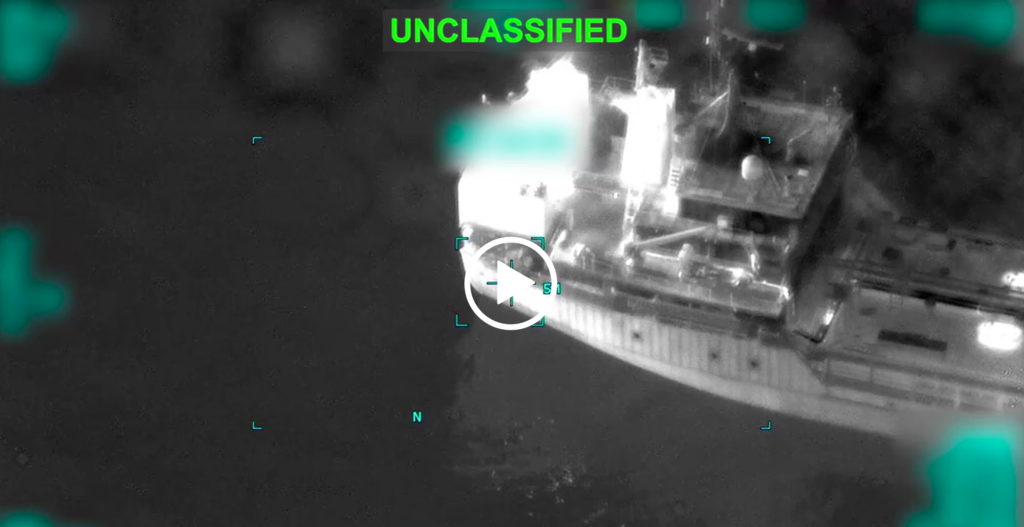
TAMPA, Fla. — U.S. forces disabled an oil tanker in the Gulf of Oman at 11:20 p.m. ET on June 10 after the vessel violated the blockade against Iran by attempting to transport Iranian oil, marking the third commercial ship disabled by American forces this week. 

U.S. Central Command (CENTCOM) acted against Guinea-Bissau flagged M/T Jalveer as it attempted to transport oil from Iran through the Gulf of Oman. A U.S. aircraft fired two Hellfire missiles into the ship’s engine room after the crew repeatedly failed to comply with directions from U.S. forces. 

Earlier this week, U.S. aircraft disabled Palau-flagged vessels M/T Marivex and M/T Settebello on Monday and Tuesday, respectively. Marivex violated the blockade by attempting to sail to an Iranian port and Settebello attempted to transport Iranian oil. 

CENTCOM forces have disabled nine non-compliant vessels, redirected 135 ships that complied, and allowed 42 vessels supporting humanitarian aid to pass since initiating the blockade on April 13. 

The blockade is being enforced impartially against vessels of all nations entering or departing Iranian ports and coastal areas, including all Iranian ports on the Arabian Gulf and Gulf of Oman. 


U.S. Forces Complete Latest Strikes in Iran

U.S. Central Command, June 10, 2026 

TAMPA, Fla. – U.S. Central Command (CENTCOM) forces completed additional self-defense strikes against multiple targets in Iran, June 10, at the Commander in Chief’s direction. 

CENTCOM forces launched strikes on Iranian military surveillance capabilities, communication systems, and air defense sites across Iran. U.S. Marine Corps, Air Force, and Navy assets fired precision munitions on Iranian targets that posed a threat to U.S. forces and international commercial ships transiting regional waters. 

The strikes are in response to Iran’s unwarranted and continued aggression. U.S. forces remain vigilant, lethal, and ready. 


Navy’s Unmanned Vessels Key to $81 Million Cocaine Seizure in Caribbean 

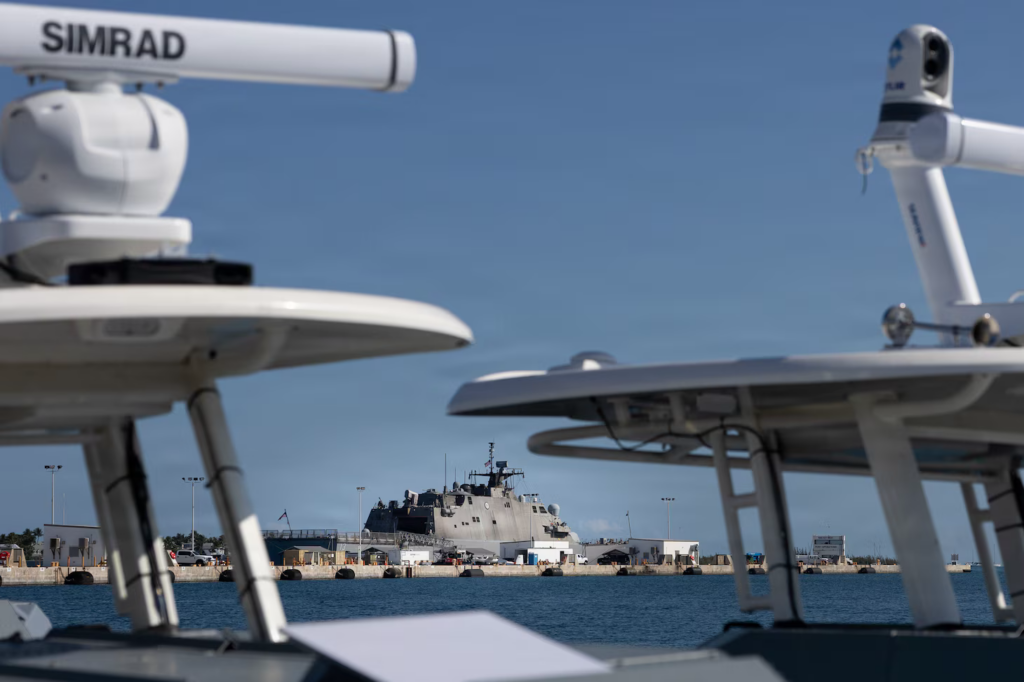
The Freedom-class variant littoral combat ship USS Wichita (LCS 13) sits pierside during the annual Fleet Experimentation (FLEX) 2026 event in Key West, Fla., April 29, 2026. Hosted by U.S. Naval Forces Southern Command/U.S. 4th Fleet April 24-30, the exercise integrates commercially developed unmanned systems and artificial intelligence with traditional manned naval platforms. FLEX 2026 features comprehensive collaboration across the Department of War and industry to demonstrate a sophisticated kill chain that successfully found, tracked and engaged captured drug boats. The campaign focuses on operationalizing advanced robotic and autonomous systems to combat transnational organized crime and patrol vast maritime regions. (U.S. Navy photo by Mass Communication Specialist 3rd Class Jasmin L. Aquino)

By Cmdr. John Williams, U.S. Naval Forces Southern Command / U.S. 4th Fleet 

June 3, 2026 

MAYPORT, Fla.   –  On October 16, 2025, a Long-Dwell Unmanned Surface Vessel detected and identified a target of interest designated by Joint Interagency Task Force South. The unmanned vessel tracked the target, coordinated with naval forces, and enabled a U.S. Navy ship to interdict the vessel, resulting in the significant drug seizure. 
 
Since January 2025, NAVSOUTH has been operating LD-USVs in the Central Caribbean and Eastern Pacific, supporting the regional effort to counter Transnational Criminal Organizations. These autonomous systems have become a critical force multiplier, enhancing maritime domain awareness and augmenting U.S. Navy and Coast Guard capabilities at a fraction of the cost of traditional assets. 
 
“This interdiction is the culmination of months of refining our tactics, techniques, and procedures for these advanced systems in the region,” said Rear Adm. Carlos Sardiello, commander of U.S. Naval Forces Southern Command /U.S. 4th Fleet. “The ability to detect a target, have that vessel identified by our team on the watch floor, and then coordinate with assets on scene to complete the interdiction is a testament to the hard work of our Sailors and our commitment to integrating unmanned systems into fleet operations.” 
 
NAVSOUTH’s unmanned operations are set to expand in 2026 with the integration of interceptor USVs, unmanned aerial vehicles, and high-altitude balloons. These assets will be deployed across the U.S. Southern Command area of responsibility to provide a multi-layered approach to maritime surveillance and counter-illicit trafficking. 
 
“The success we are seeing with these robotic systems allows us to expand our reach and support our mission requirements more effectively,” said Cmdr. Jon Williams, NAVSOUTH’s Technology and Innovation Director. “By layering unmanned surface and airborne systems, we create a highly effective maritime domain awareness network. Operating these systems at scale allows us to accelerate their development and integration across the entire Navy.” 
 
U.S. Naval Forces Southern Command/U.S. 4th Fleet supports U.S. Southern Command’s joint and combined military operations by employing maritime forces in cooperative maritime security operations to maintain access, enhance interoperability, and build enduring partnerships in order to enhance regional security and promote peace, stability and prosperity in the Caribbean, Central and South American region. 


NRL Receives Space Force Antenna to Expand Joint Space Test Capabilities In, From, and To Space 

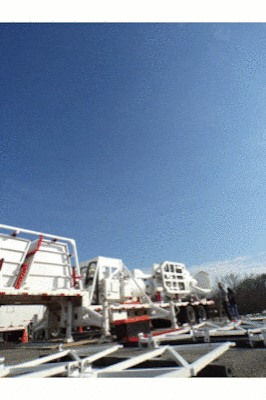
The U.S. Naval Research Laboratory (NRL) has received a satellite tracking antenna system from the U.S. Space Force’s (USSF) Space Systems Command’s (SSC) System Delta 81 (SYD 81) at Blossom Point Tracking Facility to support expanded joint testing and operational readiness for space systems, reinforcing collaboration between the naval and space communities, first quarter, calendar year 2026. (U.S. Navy photo by Sarah Peterson)

From Nicholas E. M. Pasquini, U.S. Naval Research Laboratory Corporate Communications 

June 10, 2026 

WASHINGTON – The U.S. Naval Research Laboratory (NRL) has received a transportable satellite tracking antenna system from the U.S. Space Force’s (USSF) Space Systems Command (SSC) System Delta 81 (SYD 81) to expand joint space testing, training and operational support capabilities at NRL’s Blossom Point Tracking Facility during the first quarter of calendar year 2026. 

The antenna system enhances the facility’s ability to support tracking, telemetry and command operations for emerging space technologies and future operational concepts. The capability will provide additional flexibility for experimentation, system evaluation and long-duration performance monitoring supporting both naval and joint space missions. 
 
Blossom Point Tracking Facility, operated by NRL, has long supported satellite command and control, communications experimentation and orbital research. Integrating the transportable system into the site’s existing infrastructure increases the facility’s capacity to support multi-band communications testing, interoperability assessments and advanced space experimentation. Analysis is underway to determine future experiments, exercises and operational events the system may support, as well as potential deployment locations to maximize mission utility. 
 
The transfer supports broader Department of War efforts to strengthen joint test and training infrastructure while improving collaboration across the naval and space communities. The system also supports SYD 81’s mission to develop and field capabilities that enable realistic test and training environments for the U.S. Space Force. 
The effort reflects ongoing collaboration between SSC, SYD 81 and NRL to improve operational readiness, expand flexible testing capability and accelerate the integration of emerging space systems into joint mission environments. The addition of the antenna provides increased access to stable, repeatable testing environments that support the evaluation of critical space-enabled capabilities for future operations. 
  
The Laboratory is the Navy and Marine Corps’ corporate laboratory, conducting a broad program of scientific research, technology development and advanced experimentation to support operational forces and maintain the nation’s technological advantage at sea, on land, in the air and in space. 


CENTCOM Disables Non-Compliant Vessel in Gulf of Oman 

From U.S. Central Command, June 10, 2026 

TAMPA, Fla. — At 11:14 p.m. on June 9, U.S. forces disabled an oil tanker in the Gulf of Oman for the second consecutive day after another vessel violated the ongoing blockade by attempting to transport oil from Iran. 

U.S. Central Command (CENTCOM) disabled Palau-flagged M/T Settebello as it transited the Gulf of Oman. A U.S. aircraft fired precision munitions into the ship’s engine room after the crew repeatedly failed to comply with directions from American forces. 

CENTCOM forces have disabled eight non-compliant vessels, redirected 134 ships that complied, and allowed 42 vessels supporting humanitarian aid to pass since initiating the blockade on April 13. 


Coast Guard Repatriates 32 Aliens to Dominican Republic Navy Following Vessel Interdiction 

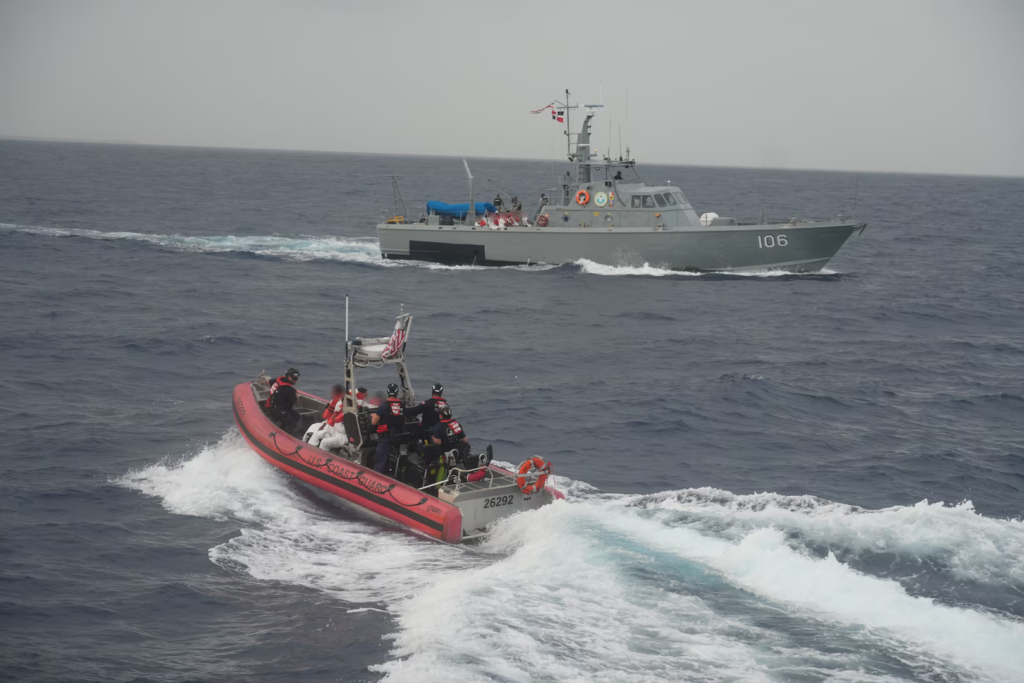
Coast Guard Cutter Heriberto Hernandez’s small boat transfers a group of people during the repatriation of 32 aliens to a Dominican Republic Navy vessel, June 7, 2026. The aliens were interdicted a day earlier off Desecheo, Puerto Rico, as part of Homeland Security Task Force – San Juan Region efforts to combat human smuggling and deter unlawful maritime migration.(U.S. Coast Guard photo)

From U.S. Coast Guard Southeast District, June 9, 2026 

SAN JUAN, Puerto Rico — The crew of Coast Guard Cutter Heriberto Hernandez repatriated 32 aliens to a Dominican Republic Navy vessel at sea, Sunday, following the interdiction of a makeshift vessel near Desecheo, Puerto Rico.    

This interdiction is part of the efforts of the Homeland Security Task Force – San Juan Region to combat human smuggling and deter unlawful maritime migration. 

Sector San Juan watchstanders received a report from the aircrew of a Customs and Border Protection aircraft of a grossly overloaded 20 to 30-foot makeshift vessel off Desecheo, Puerto Rico. With assistance from the Customs and Border Protection aircrew, the U.S. Coast Guard Cutter Heriberto Hernandez interdicted the suspect vessel. 

Following the interdiction, the crew safely embarked 36 Dominican Republic, three Haitian and one Uzbek nationals. 

“This successful outcome is due to the professionalism and unwavering resolve of our Coast Guard crews and Homeland Security Task Force partners stopping unlawful migration voyages at sea,” said Cmdr. Matthew Romano, Sector San Juan chief of response. “To anyone thinking of taking part in an unlawful maritime migration voyage, don’t take to the sea! These voyages are extremely dangerous and most often involve grossly overloaded and unseaworthy vessels that take on water and have no lifesaving equipment. Those caught taking part in an unlawful voyage could face possible prosecution or be repatriated to their country of origin or country from where the voyage originated.” 

This interdiction is part of the Homeland Security Task Force (HSTF) initiative established by Executive Order 14159, Protecting the American People Against Invasion. The HSTF is a whole-of-government partnership dedicated to eliminating criminal cartels, foreign gangs, transnational criminal organizations, and human smuggling and trafficking rings operating in the United States and abroad. Through historic interagency collaboration, the HSTF directs the full might of United States law enforcement towards identifying, investigating, and prosecuting the full spectrum of crimes committed by these organizations, which have long fueled violence and instability within our borders. In performing this work, the HSTF places special emphasis on investigating and prosecuting those engaged in child trafficking or other crimes involving children. The HSTF further utilizes all available tools to prosecute and remove the most violent criminal aliens from the United States. 

HSTF San Juan comprises agents and officers from the following federal partners: FBI, ICE-HSI, CBP (OFO, AMO and Border Patrol), the U.S. Marshals Service for Puerto Rico and the U.S. Virgin Islands, DEA, ATF, IRS, U.S. Coast Guard, U.S. Coast Guard Investigative Service, U.S. Postal Inspection Service, the Department of State, and the U.S. Secret Service, the Puerto Rico/U.S. Virgin Islands HIDTA, TSA, FAA, and the U.S. Attorney’s Offices for the Districts of Puerto Rico and the U.S. Virgin Islands. 

The HSTF also has the following state and local law enforcement partners as participating agencies: the Puerto Rico Police Department; the San Juan, Carolina, Guaynabo, Barceloneta, and Ponce Municipal Police Departments, the Puerto Rico National Guard – Counter Drug Program; the Puerto Rico Department of Corrections and Rehabilitation; the Puerto Rico Internal Revenue Service (Hacienda); the Puerto Rico Port Authority; and the Virgin Islands Police Department. 


Navy Accepts Delivery of USNS Sojourner Truth 

From the Navy Office of Information, June 9, 2026 

WASHINGTON – The U.S. Navy accepted delivery of USNS Sojourner Truth (T-AO 210), the sixth ship in the John Lewis-class fleet replenishment oiler program, from General Dynamics NASSCO in San Diego, June 9. 

Delivery marks the official transfer from the shipbuilder to the U.S. Navy, following completion of successful integrated sea trials. 

“USNS Sojourner Truth’s delivery marks another significant milestone for the Navy and the John Lewis-class program,” said John Lighthammer, Auxiliaries and Special Mission Ships program manager, Deputy Portfolio Acquisition Executive, Auxiliaries. “This ship represents the dedication and expertise of the shipbuilders, engineers, and program professionals who continue to deliver critical capability to the fleet.” 

T-AOs are operated by the Military Sealift Command and feature substantial volume for oil, significant dry cargo capacity, and aviation capability. T-AOs provide additional capacity to the Navy’s Combat Logistics Force and are a cornerstone of the Navy’s fuel delivery capability. 

Driving forward momentum through a stable and optimized production line, this ship class continues to make progress as it rapidly delivers critical capabilities to the fleet. This delivery follows the recent USNS Thurgood Marshall (T-AO 211) christening and the program will have an upcoming keel-laying ceremony for future USNS Harriet Tubman (T-AO 213), scheduled for June 18, representing the next major milestone in the Navy’s ongoing effort to modernize and expand its fleet replenishment capability in support of global maritime operations. 

In addition, General Dynamics NASSCO is in production on four additional T-AO vessels, with three more ships currently under contract. 

The delivery of T-AO 210 underscores the Navy’s commitment to building America’s Fleet of the Future. For 250 years, American naval power has projected strength globally, operating forward 24/7, 365 days a year. This operational tempo demands continuous capability, and the Fleet of the Future is our answer. 

The Portfolio Acquisition Executive (PAE) for Maritime is the single accountable organization for delivering surface ships for the U.S. Navy. This new centralized organizational construct will empower leaders with broader scope and greater authority to accelerate delivery of combat capability and ensure acquisition speed and discipline are driven by what the warfighter needs—when they need it. 


U.S. Navy Establishes NSA Stirling in Australia 

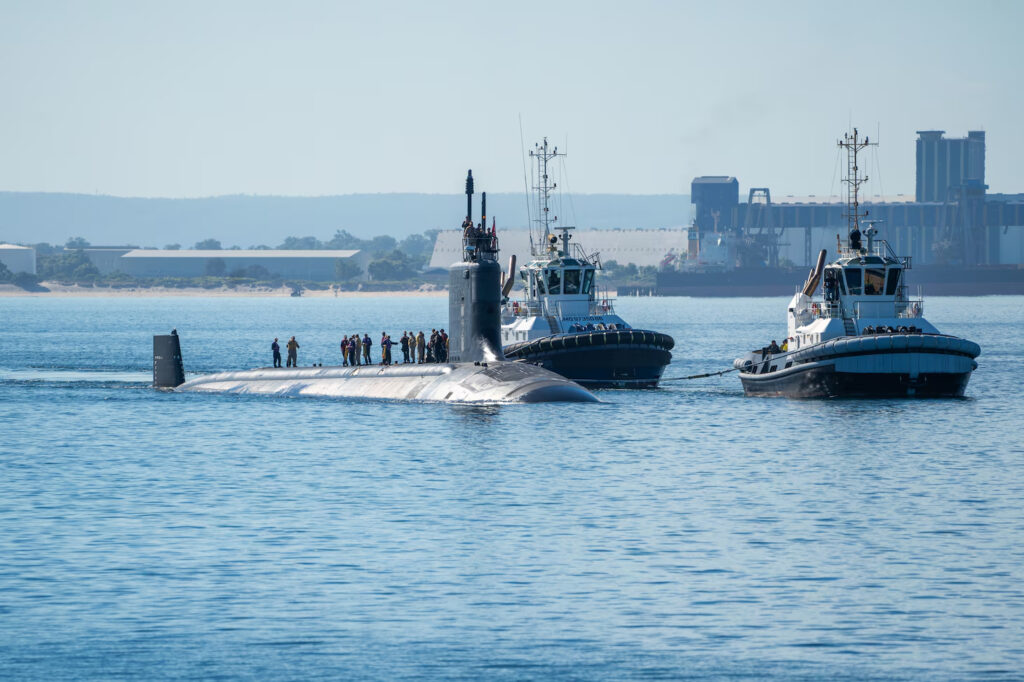
ROCKINGHAM, Western Australia, Australia (Feb. 25, 2025) The Virginia-class fast-attack submarine USS Minnesota (SSN 783) prepares to moor at HMAS Stirling, Western Australia, Australia, Feb. 25, 2025. Minnesota arrived in Western Australia kicking off the first of two planned U.S. fast-attack submarine visits to HMAS Stirling in 2025. Minnesota is currently on deployment supporting the U.S. 7th Fleet, the U.S. Navy’s largest forward-deployed numbered fleet, operating with allies and partners in preserving a free and open Indo-Pacific region. (U.S. Navy photo by Lt. James Caliva) 

From CNFJ/CNRJ Public Affairs, June 7, 2026 

PERTH, Australia – As of May 30, the U.S. Navy has established a new naval support activity in Perth, Western Australia, as part of AUKUS, the enhanced trilateral security partnership between Australia, the United Kingdom, and the United States. This move follows the trilateral Joint Statement on May 30 confirming that key milestones continue to be met for Submarine Rotational Force – West (SRF-West).

Naval Support Activity (NSA) Stirling will provide support services and programs for U.S. service members, civilian personnel, contractors, and their families assigned to SRF-West, which will support the rotational presence of U.S. and U.K. nuclear-powered fast-attack submarines at Australia’s HMAS Stirling base in Western Australia. 

“Establishment of NSA Stirling with our AUKUS partners demonstrates our command mission to support the Fleet, warfighter, and family,” said Vice Adm. Scott Gray, commander, Navy Installations Command. “By providing essential services to U.S. personnel and their families, NSA Stirling will enhance rotational submarine force readiness.” 

Navy Region Japan was tasked in October 2024 to stand up NSA Stirling. SRF-West is established with the approval of and at the invitation of the Australian Government. 

“We are currently in the early stages of establishing NSA Stirling,” said Rear Adm. Ian Johnson, commander of Navy Region Japan. “While there is still much work ahead, we are confident in our ability to accomplish this task through strong collaboration with our AUKUS partners.” 

NSA Stirling will provide robust support for U.S. service members, civilians, and their families, connecting U.S. personnel to quality housing, healthcare, childcare, and recreation to ensure their well-being during their assignment. 

The Department of War’s Joint Statement, AUKUS Defense Ministers’ Meeting can be found here: https://www.war.gov/News/Releases/Release/Article/4504769/joint-statement-aukus-defense-ministers-meeting/