World Shipping Council welcomes Executive Order on revitalizing U.S. maritime industry 

WASHINGTON, D.C. – April 10, 2025 – World Shipping Council President and CEO Joe Kramek said he welcomes the U.S. administration’s plan to rebuild American shipbuilding through strategic public-private investment, workforce development, and targeted incentives to rebuild shipbuilding capacity.  

“We want to work constructively with the administration on its efforts to revitalize the U.S. maritime industry,” Kramek said.  

“As we’ve said previously, revitalizing the U.S. maritime industry will require a comprehensive, realistic, and sustained strategy developed by the administration and Congress and enacted through legislation.”  

“The executive order outlines several encouraging elements that reflect a serious focus on rebuilding the American maritime industry,” Kramek said.   

“Given the direction of this executive order and the comments made by the U.S. Trade Representative earlier this week, the World Shipping Council is hopeful the USTR recognizes that alternative measures to impose retroactive port fees would disadvantage all aspects of the supply chain — from consumers to farmers, from energy producers to manufacturers,” Kramek said. 

WSC member lines, who are container and vehicle carriers, are significant participants in the U.S. maritime industry. WSC member lines contribute 75 percent of the vessels enrolled in the U.S. Maritime Security Program, carry 65 percent of seaborne U.S. trade, and have significant shipbuilding experience.  

WSC members are integral to the U.S. economy and the U.S. maritime sector. Liner shipping contributes $2 trillion to the U.S. economy and supports 6.4 million U.S. jobs paying more than $420 billion in annual wages.  

“The World Shipping Council stands ready to support the administration with constructive proposals to help revitalize the U.S. maritime industry,” Kramek concluded.   


USS Hershel “Woody” Williams Returns to Norfolk from Forward Deployment 

The Lewis B. Puller-class expeditionary mobile base USS Hershel “Woody” Williams (ESB 4) returns to Naval Station Norfolk, April 10, 2025. Photo credit: U.S. Navy | Mass Communication Specialist 2nd Class Derek Cole

NAVAL STATION NORFOLK, Va. – The U.S Navy expeditionary sea base USS Hershel “Woody” Williams (ESB 4) returns to Naval Station Norfolk, April 10, 2025, after operating forward deployed for almost five years, supporting U.S. Navy and allied efforts in the U.S. Naval Forces Europe and Africa / U.S. Sixth Fleet area of operations. 

Hershel “Woody” Williams returns to Norfolk’s waters with a hybrid-manned crew of 44 Military Sealift Command (MSC) civil service mariners who operated, navigated, and maintained the vessel and 85 U.S Navy Sailors, Blue and Gold crews, who alternated manning the vessel and allowing for continuous strategic deterrence patrols. 
 
“This is a unique opportunity to welcome home a hard-working ship from its historic tenure forward-deployed, and to welcome home its crew – its heart, soul and lifeblood – in classic Navy fashion,” said Rear Adm. Dave Walt, commander of Expeditionary Strike Group 2, who was on hand to welcome home the Hershel “Woody” Williams crew. 

“This crew has punched above its weight and impressed leadership with its hard work, resourcefulness, and dedication.” 
 
The evolution marks the completion of 59 months as a Forward Deployed Naval Force (FDNF) vessel homeported in Souda Bay, Crete, Greece, a journey that began in 2020. Hershel “Woody” Williams will spend a week at Naval Station Norfolk, offloading fuel before shifting to the East Coast Repair and Fabrication Shipyard in Newport News, Va., where the ship will be in lay berth awaiting its next tasking. 
 
Built as a highly flexible mobile platform, capable of operating across a broad range of military sea-based operations, Hershel “Woody” Williams had several noteworthy highlights throughout this deployment. 
 
In 2020, Hershel “Woody” Williams became the first U.S. Navy warship assigned to AFRICOM due to the ship’s ability to support maritime security and humanitarian operations. 
 
In 2021, during AFRICOM’s largest, premier, joint, annual exercise, known as African Lion, Hershel “Woody” Williams participated in a key leader engagement with Morocco Armed Forces, hosted by Morocco, Tunisia, and Senegal. 

“These engagements are critical as they allow Navy leaders to interact with partner nations to foster trust and build long-term partnerships,” said MSC’s ESB Project Officer William Revak. 
 
In 2022, Williams joined forces with partners and allies for Obangame Express 22, the largest multinational maritime exercise in Western Africa, to improve communication and information sharing and to increase partner nation capability to further advance maritime security and stability, said MSC’s Program Manager, Prepositioning Ships, Lora Caldwell. Additionally, the ESB-4 platform was used to conduct visit, board, search, and seizure (VBSS) drills with French soldiers. 

“VBSS training with partner nations contributes greatly to a more stable and secure global maritime environment,” Caldwell said. 
 
In 2023, Hershel “Woody” Williams conducted humanitarian and disaster relief operations, delivering 113 pallets of disaster relief supplies, totaling nearly 40,000 pounds, to The Ministry of Interior Disaster and Emergency Management Presidency in Mersin, Türkiye for those citizens impacted by the Feb. 6, earthquakes. 
 
In 2024, the Gold-military crew and MSC’s civilian mariners conducted community relation events in Tema, Ghana to continue building their mutual commitment to security and stability in the region which helps to enhance the Navy’s operational readiness. The Hershel “Woody” Williams crew also conducted a theater security cooperation mission during the ship’s visit to Luanda, Angola. Likewise, they managed regional cooperation operations (logistical and personnel support) while in Port Victoria, Seychelles. While there, the ship hosted U.S. Ambassador Henry Jardine and Brig. Gen. Michael Rosette, chief of the Seychelles Defense Forces. 

“We will continue to share information with the United States of America in the fight against illegal activities within the Indian Ocean,” Rosette stated in Seychelles Nation, dated Sept. 4, 2024. 
 
Throughout Williams 59-month deployment, MSC’s CVIMARS and the Navy’s Blue and Gold crews were instrumental in further enhancing Navy readiness, strengthening partnerships, and improving the combined capabilities of the U.S. Navy and partner nations’ responses to public crisis, Caldwell said. 
 
ESBs primarily support aviation mine countermeasures and expeditionary forces missions. Additional ship features include a large flight deck and hanger with four aviation operating spots capable of handling MH-535E equivalent helicopters and MV-22 Osprey tiltrotor aircraft, berthing and messing accommodations, workspaces and ordnance storage for embarked forces. 
 
ESB 4 is named in honor of Chief Warrant Officer Hershel “Woody” Williams, a decorated U.S. Marine who was awarded the Medal of Honor for his actions during the Battle of Iwo Jima during World War II. 


Austal USA Hosts UK’S Submarine Acquisition Director 

MOBILE, Ala. — Austal USA welcomed Rear Admiral Paul Carroll, director of Submarine Acquisition at the UK Ministry of Defense, at the company’s Mobile, Ala. shipyard yesterday. Rear Admiral Carroll visited to Austal USA to see the company’s facility and the submarine manufacturing efforts supporting the Submarine Industrial Base in conjunction with his meetings with Program Executive Office for Submarines on bi-lateral industrial base efforts.  

While at Austal USA, Carroll toured the company’s ship manufacturing facility and discussed Austal USA’s progress with fabricating and outfitting modules for both Columbia- and Virginia-class submarines with members of the company’s senior leadership team.  During his tour, he experienced first-hand Austal USA’s talented workforce and witnessed the progress being made on completing the new submarine module manufacturing facility (MMF 3). MMF 3 will provide 369,600 square feet of indoor manufacturing space purpose-built to manufacture submarine modules. 

“It was a special honor to host Rear Admiral Carroll and to show him all the work we’ve been doing in support of expanding the submarine industrial base to meet the needs of the U.S. Navy and meet our AUKUS commitments,” stated Austal USA President Michelle Kruger. “We’re proud of our success and balanced portfolio of work, including submarine module production, and we are excited to partner with our allies to strengthen our combined naval forces.” 

Austal USA, celebrating 25 years in Mobile, has delivered 32 ships to the Navy since 2009 and has 10 vessels currently in production. In addition to MMF 3, a new final assembly building to manufacture Navy and Coast Guard surface ships is under construction.  When complete the two new facilities will add over 600,000 square feet of indoor production area and add 2,000 new jobs in the region. 


HII Recognizes Australian Firms at Sea Air Space 2025, Advancing AUKUS Industrial Integration

Representatives from five Australian companies were presented with certificates recognzing their participation in HII-led supplier development initiatives. Photo credit: HII

NATIONAL HARBOR, Md. — At the HII booth during the U.S. Navy League’s annual Sea Air Space 2025 Expo, representatives from five Australian companies were presented with certificates recognizing their successful participation in HII-led supplier development initiatives and received a Newport News Shipbuilding (NNS) supplier identification number. 

The supplier development initiatives include state-led Supplier Capability Uplift Programs, which will feed into the new Australian Submarine Supplier Qualification (AUSSQ) program, announced by Deputy Prime Minister Richard Marles on March 6, 2025. 

Eric Chewning, executive vice president of strategy & development for HII; Cullen Glass, vice president of supply chain management for HII’s Newport News Shipbuilding; and Michael Lempke, president of the global security group at HII’s Mission Technologies division, presented certificates to: 

  • Century Engineering (South Australia) 

  • MacTaggart Scott Australia (South Australia) 

  • Hofmann Engineering (Western Australia) 

  • Levett Engineering (South Australia) 

  • VEEM Ltd. (Western Australia) 

The supplier identification number signifies that, upon full certification through the AUSSQ process, these companies are qualified to participate in the NNS supply chain in support of nuclear-powered submarine construction. 

Also in attendance were Rear Adm. Ian Murray, Australian Defence attaché; Linda Dawson, deputy director general for industry, science and innovation, Western Australian Government; and Sir Nick Hine, executive director of H&B Defence and former second sea lord of the Royal Navy. 

This milestone reflects deepening industrial integration under the AUKUS trilateral security partnership between Australia, the United Kingdom and the United States. HII’s work, under contract with the Australian Government, supports the development of sovereign industrial capabilities and enables Australian companies to enter U.S. defense supply chains. 


Sea-Air-Space: Lockheed Martin Touts Readiness to Build ‘Golden Dome’ Missile Shield

Lockheed Martin’s Dan Tenney speaks with reporters at Sea-Air-Space 2025. Photo credit: Lockheed Martin

A representative from Lockheed Martin said at Sea-Air-Space 2025 the firm is “ready now” to help the nation stand up the “Golden Dome” missile defense system, a new priority of the Trump administration that resurrects some aspects of the Reagan-era Strategic Defense Initiative.

“What does it mean to be ready now? I think it means we have systems that are fielded, they’re operational, they’re proven,” said Dan Tenney, vice president of Strategy and Business Development for Lockheed Martin’s Rotary and Mission Systems section. “They’re actually in operation today.”

A Jan. 27 White House executive order calling for America to develop its own version of Israel’s Iron Dome air defense system unleashed a flood of activity in the defense community. This comes as the government develops the fiscal 2026 defense budget request to Congress, which reportedly could approach $1 trillion, to jumpstart Golden Dome and to support the many other defense priorities.

A March 19 story published by DOD News confirmed the Pentagon is working to bring the Golden Dome from concept to reality.

“Consistent with protecting the homeland and per President Trump’s [executive order], we’re working with the industrial base and [through] supply chain challenges associated with standing up the Golden Dome,” said Steven J. Morani, acting undersecretary of defense for acquisition and sustainment, in the article. “This is like the monster systems engineering problem. This is the monster integration problem.”

This is also a costly proposition. So far, the United States has funneled around $3 billion to Israel — an 8,500-square-mile country roughly the size of New Jersey — for batteries, interceptors and other costs related to Iron Dome, which it stood up in 2011, according to a 2023 Congressional Research Service report.

Establishing a missile defense system covering the entire United States — with a land area of nearly 3.8 million square miles — is estimated to cost billions of dollars annually and present many more barriers to success.

Nevertheless, Tenney said Bethesda-based Lockheed Martin is well positioned to assist.

“We think the future is really going to be around this integration,” Tenney said. “We do operate from seabed to space,” he said, with deep experience developing systems in global positioning, missile warning and tracking, radar, missile defense, high-energy lasers and other capabilities.

“When I think about Golden Dome,” Tenney said, “in so many ways I think we’re going to use existing systems but bring them together.”


USS Emory S. Land returns to Guam

From Seaman Apprentice Mario Reyes Villatoro, April 9, 2025

NAVAL BASE GUAM – The submarine tender USS Emory S. Land (AS 39) returned to its homeport in Apra Harbor, Guam, April 9, 2025. Emory S. Land’s arrival marked the completion of its expeditionary submarine tender deployment, which began May 17, 2024.

Emory S. Land conducted 17 port calls in the Indo-Pacific region over 11 months, strengthening relations with many allies and partners such as Australia, Japan, Republic of Korea, and Singapore. During its deployment, Emory S. Land played a pivotal role supporting Pillar 1 of the AUKUS security partnership between Australia, the United Kingdom, and the United States.

In the first half of deployment, Emory S. Land conducted a Submarine Tendered Maintenance Period, or STMP, with the Virginia-class fast-attack submarine USS Hawaii (SSN 776) in HMAS Stirling, Western Australia, Australia, from Aug. 22 to Sept. 10, 2024. Royal Australian Navy Sailors who had been attached to the submarine tender since January 2024 took the lead on conducting repairs aboard Hawaii. The STMP was the first time Australians had ever performed maintenance on a nuclear-powered submarine in Australia. Emory S. Land Sailors also worked in conjunction with the Royal Australian Navy’s Fleet Support Unit-West, which provides repair and maintenance services to the Australian fleet.

“It is an honor and pleasure to return home to Guam. The entire crew, military personnel and civil service mariners, have performed exceptionally well over the last 11 months and have lived up to the ship’s motto “Tireless Worker of the Sea,” and are ready to come home and enjoy quality time back at home with family and friends,” said Capt. Kenneth Holland, the ship’s commanding officer. “This whole deployment has been an incredible journey, to be able to form closer ties with our allies and interact with the locals by hosting tours of our ship and taking part in community relation events. It’s all been a wonderful experience.”

Emory S. Land departed from its final port of the deployment, Darwin, Northern Territory, Australia, on April 2nd, 2025. While in port, Emory S. Land provided logistical support to the Virginia-class fast-attack submarine USS Minnesota (SSN 783).

“I was glad we returned to Darwin and got to enjoy Australia again, and it was a great to spearhead support for the nuclear submarine in Darwin for the first time in 27 years,” said Chief Gunner’s Mate Brett Peterman. “I can’t wait to enjoy some rest and relaxation, and to spend time with the family, before getting back into supporting Guam deployed submarines.”

During its deployment, Emory S. Land visited Darwin, Cairns, Sydney, Eden, Melbourne, Adelaide, and Perth in Australia; Sasebo and Okinawa in Japan; Palau, Busan, Brunei, Singapore, Thailand, and Subic Bay, Philippines. In each port, Emory S. Land Sailors conducted community relations events by assisting local school programs, participating in beach cleanups, sorting food at foodbanks, and much more.

“It was a unique opportunity to conduct so many community relations events across the region. Reflecting on our tour, I believe the real impact is learning about the difference we’ve made with our allies around the world during each event,” said Religious Program Specialist Seaman Hunter Stewart. “The local community members were always grateful for our team.”

Guam is home to the U.S. Navy’s only submarine tenders, USS Emory S. Land (AS 39) and USS Frank Cable (AS 40), as well as four Los Angeles-class attack and one Virginia-class attack submarines. The submarine tenders provide maintenance, hotel services and logistical support to submarines and surface ships in the U.S. 5th and 7th Fleet areas of operation. The submarines and tenders are maintained as part of the U.S. Navy’s forward-deployed submarine force and are readily capable of meeting global operational requirements.


Saildrone Announces European Expansion Based in Copenhagen

Saildrone’s booth at Sea-Air-Space 2025. Photo credit: Seapower magazine

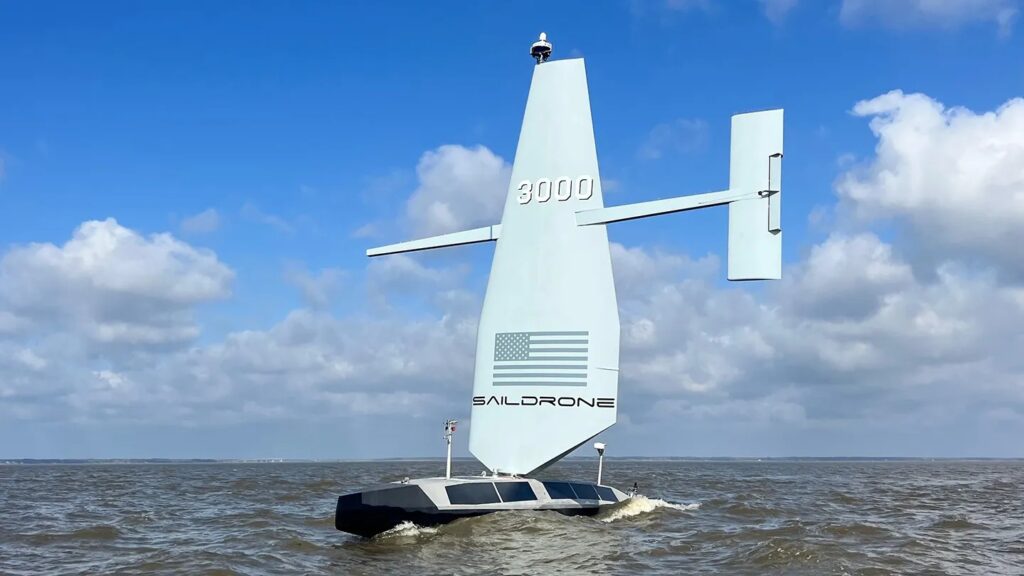
WASHINGTON, D.C. — Saildrone announced it is establishing a European subsidiary in Denmark to address the urgent need for maritime domain awareness in European waters.

Announced at the Maritime Industry Symposium at the Danish Embassy in Washington, D.C., Saildrone Denmark will be a European entity, based in Copenhagen, Denmark. This strategic expansion reflects Saildrone’s commitment to supporting European allies in enhancing maritime situational awareness through advanced autonomous technologies.

“Given the recent sabotage of critical undersea infrastructure in the Baltic Sea, the need for permanent maritime domain awareness has never been greater,” said Richard Jenkins, Saildrone founder and CEO. “I am delighted to announce the establishment of Saildrone Denmark to facilitate our European operations and support allied nations, at this critical time for regional maritime security.”

With increasing geopolitical tensions and rising activity in the Baltic Sea, the need for persistent maritime intelligence is paramount. Saildrone unmanned surface vehicles (USVs) offer unmatched endurance and resilience, capable of operating autonomously for extended durations in the world’s harshest maritime environments. Equipped with a suite of advanced sensors, these systems deliver real-time ISR above and below the surface — enabling the detection of anomalous behavior, monitoring of vessel traffic and the protection of national interests in strategically sensitive waters.

In addition to surface surveillance, Saildrone vehicles will conduct detailed ocean floor mapping, delivering a critical advantage in monitoring and securing subsea infrastructure such as pipelines, communication cables, and offshore energy platforms. Pairing high-resolution seafloor imagery with proprietary machine learning algorithms enables early detection of potential threats or anomalies, enhancing Europe’s ability to safeguard its undersea assets against both conventional and hybrid threats.

Denmark is uniquely situated in the center of the European maritime environment, with coastlines on both the Baltic and North Seas. Saildrone Denmark will be the hub for all European operations, employing local staff to provide support, training, and mission planning capabilities to regional customers and partners.


USS Shiloh Returns to Home Port After Oceania Maritime Security Initiative 2025

USS Shiloh (CG 67) patrolled, and conducted several boarding and intelligence gathering operations in the South Pacific region in support of Oceania Maritime Security Initiative 2025. Photo credit: U.S. Navy
| Commander, U.S. 3rd Fleet.

From U.S. 3rd Fleet, April 7, 2025

PEARL HARBOR, Hawaii — The Ticonderoga-class guided-missile cruiser USS Shiloh (CG 67) returned to its home port, Joint Base Pearl Harbor-Hickam, April 4, 2025.

Shiloh, in partnership with an embarked Law Enforcement Detachment (LEDET) from USCG Pacific Tactical Law Enforcement Team, conducted several boarding and intelligence gathering operations in the South Pacific in support of Oceania Maritime Security Initiative (OMSI) 2025. OMSI is a Secretary of Defense program that leverages Department of Defense assets transiting the region to increase the USCG’s maritime domain awareness, ultimately supporting maritime law enforcement in Oceania.

From February 2025 to April 2025, Shiloh patrolled the South Pacific, strengthening relationship with partner nations and ensured maritime stability and security in the region. These actions were carried out through the enforcement of provisions of the Western and Central Pacific Fisheries Convention (WCPFC) and bilateral law enforcement agreements it has with specific countries in the region.

Captain Bryan E. Geisert is the commanding officer aboard Shiloh.

“I am proud of what our crew accomplished and the strong partnership with our Coast Guard Shipmates’. It is a critical and unique opportunity to assist in ensuring marine resources are protected through the enforcement of international laws to enhance regional stability.” said Capt. Geisert.

Shiloh is operating in the U.S. 3rd Fleet area of responsibility in support of the security and stability of the Indo-Pacific region. Shiloh is assigned to Commander, Naval Surface Group Middle Pacific, a combat-ready force that protects and defends the collective maritime interest of its allies and partners in the region.


Navy Commissions Attack Submarine USS Iowa

Sailors attached to the fast-attack submarine USS Iowa (SSN 797) man their newly commissioned submarine during a ceremony in Groton, Connecticut, April 5, 2025. Photo credit: U.S. Navy | Chief Petty Officer Joshua Karsten

By Joe Markowski, Submarine Readiness Squadron 32, April 7, 2025

GROTON, Conn.  –  Christie Vilsack, Iowa’s sponsor and former First Lady of Iowa, gave the crew the traditional order to “man our ship and bring her to life,” after which Iowa’s sailors responded “aye aye ma’am” before ceremonially running aboard the submarine.

The ceremony culminated a years-long process of commissioning SSN 797, the first submarine and third naval vessel named for the Hawkeye State. The most recent USS Iowa, the highly decorated WWII-era battleship BB 61 (1943-1990), saw action in World War II, the Korean War, and Gulf War. The first BB4 Iowa (1897-1919) saw action in the Spanish-American War and World War I.

Iowa’s commanding officer Cmdr. Gregory Coy, a Walnutport, Pennsylvania native and 2006 graduate of the U.S. Naval Academy, called the event “a historic milestone” during his speech, praising the crew, shipbuilders, and commissioning committee.

“This event is significant for both the life of a submarine and for the amazing people from the Hawkeye State,” Coy said. “To the plank owners, the shipbuilders, the commissioning committee, and our Navy and Submarine Force leaders, this is your submarine.”

Coy took command of Iowa in June 2024 and led the crew from the shipyard and through a series of sea trials, to today’s commissioning and subsequent underway operations.

“I am consistently humbled at what we have accomplished” Coy added. “Today, we become the ‘USS’ Iowa, and I intend to take her to the frontline, continuing the Navy’s overwhelming display of undersea dominance and lethality.”

Iowa’s youngest plankowner – an honor given to commissioning crewmembers – Seaman Lilly Runyon shared her excitement, saying “today’s a lot bigger than I thought it would be.”

“It’s kind of like I’m already used to this,” said Runyon of her sea trials as a PCU. “But now that we’re commissioned, it’s going to feel a little bit more official and I’m very excited for actual operations and figuring things out.”

Secretary of the Navy John Phelan praised the crew and the shipbuilders during his speech calling the ceremony an “opportunity to show Navy lethality and our unmatched undersea superiority.”

“It is an honor to commission the Navy’s newest nuclear-powered attack submarine, here at Groton, the submarine capital of the world,” Phelan said. “USS Iowa will make our fleet stronger and more lethal. As Iowa goes to sea, she does so with one mission: to ensure that America’s adversaries never doubt our resolve.”

Adm. Daryl Caudle, U.S. Fleet Forces commander and senior naval officer at the event, called his participation in the event a homecoming to the submarine capital of the world, a place he called “the nation’s center of gravity for the steely-eyed killers of the deep.”

“In this coming year, this crew of proud American sailors will put this warship to sea and carry the name ‘Iowa’ to the far-flung corners of the globe projecting combat power for decades to come,” Caudle said. “It is the fearless warriors before me that turn this piece of metal weighing almost 8,000 tons – with hundreds of miles of fiber, cable, and piping systems – into a combat ship, a warship designed to decisively win our nation’s battles. Your preparation and execution to get this ship to commissioning day is nothing short of amazing.”

Other platform guests at the commissioning ceremony included Iowa Governor Kim Reynolds; Vice Adm. Robert Gaucher, U.S. Submarine Force commander; representatives from General Dynamics Corp.’s Electric Boat shipyard, U.S. Sen. Richard Blumenthal and U.S. Rep. Joe Courtney of Connecticut. The master of ceremonies was Lt. Cmdr. Scott Carper, executive officer of the USS Iowa.

Capt. Jason Grizzle, commodore of Iowa’s parent Submarine Squadron (SUBRON) 4, likened the success of the crew to the “hard work and dedication that directly mirror people from the Hawkeye State.”

“Iowa’s motto states that ‘our liberties we prize and our rights we will maintain,’” Grizzle explained. “This crew lives by that creed, evidenced today by this fine ship – built, manned, and prepared – in record time, ready to get out to sea where she belongs.”

Iowa, whose keel was laid in August 2019 and christened in June 2023, was designed with stealth and surveillance capabilities, as well as special warfare enhancements, to meet the Navy’s multi-mission requirements. The submarine is 377 feet long, has a 34-foot beam, can dive to depths greater than 800 feet, and operate at speeds in excess of 25 knots. Iowa has a crew of approximately 135 Navy personnel. It is designed with a reactor plant that will not require refueling during the planned life of the ship, reducing lifecycle costs while increasing underway time. The submarine was built by General Dynamics Electric Boat shipyard facility in Groton, Connecticut.

Fast-attack submarines are multi-mission platforms enabling five of the six Navy maritime strategy core capabilities – sea control, power projection, forward presence, maritime security and deterrence. They are designed to excel in anti-submarine warfare, anti-ship warfare, strike warfare, special operations, intelligence, surveillance and reconnaissance, irregular warfare and mine warfare. Fast-attack submarines project power ashore with special operations forces and Tomahawk cruise missiles in the prevention or preparation of regional crises.


How Marines are 3D Printing Lethality Behind Enemy Lines

An AM Marine talks to a member of the Northern Territory Chamber of Commerce about local manufacturing capability at the Land Forces 2024 Symposium.

Logistics in a Contested Environment: A New Operational Reality

Although Washington’s military focus over the past three decades has centered on counterinsurgency operations in the Middle East, the 2018 National Defense Strategy (NDS) marked a critical shift, as revisionist powers reignited long-term strategic competition across regions and theaters of operation. Chief among them, China — America’s pacing threat — has moved with speed and intent, creating flashpoints in the Indo-Pacific, complicating U.S. posture in the Middle East, and reshaping the strategic calculus in Eastern Europe.

“The world is a dangerous place, as evidenced by Putin’s adventures in Ukraine, the war between Israel and Hamas, the aggressive behavior of China, and other threats from Iran and North Korea,” said Glenn Lamartin, an acquisition expert and adjunct professor at Georgetown’s McCourt School of Public Policy. “These actors share neither our values nor our interests, and their behavior contravenes them. Because of this, we have recognized that our acquisition architecture needs to be fast and agile to respond to — and be resilient in the face of — these challenges.”[i]

In this new era of great power competition, navigating logistics in a contested environment has become a critical challenge, with adversaries targeting supply chains to disrupt U.S. military capabilities. Ensuring rapid and resilient resupply is thus essential for combat effectiveness.

In response to this new reality, the Marine Corps — guided by Force Design’s vision for modernization — is undergoing significant transformation to enhance its agility and resilience, ensuring that it can effectively confront and neutralize these evolving threats across multiple domains and contested environments. By introducing additive and advanced manufacturing, or 3D printing capabilities, Marine Corps Systems Command (MCSC) is bolstering commands’ abilities to rapidly produce critical parts in the field, further strengthening operational flexibility and effectiveness in the First Island Chain today.

3D Printing Warfighter Lethality

Recognizing this new operational reality, MCSC’s Program Manager for Combat Support Systems (PM CSS) is actively integrating additive manufacturing capabilities to the warfighter’s toolkit in order to streamline supply chains and enable on-demand fabrication of critical capability components.

According to Terry Ritchie, product manager for Maintenance and Support Systems, “AM capabilities are revolutionizing the Marine Corps across the range of military operations by flattening the supply chain and enhancing the Marine Air Ground Task Force (MAGTF) ability to achieve truly distributed operations. As the Marine Corps conducts operations over greater distances, AM capabilities will enable expeditionary forces to shorten supply chains by streamlining the fabrication authorization and approval process.”[ii]

Such capabilities are especially critical in the context of Expeditionary Advanced Base Operations (EABO), where mobile, distributed forces must be highly self-reliant. PM CSS’s Tactical Fabrication (TACFAB) and Expeditionary Fabrication (XFAB) systems enable forward-deployed units to rapidly produce essential items like unmanned aerial system components and vehicle repair parts, supplementing traditional supply chains that may be vulnerable or overextended.

Building on these capabilities, the Corps envisions leveraging forward-deployed 3D printing even further. In advanced operational environments, acquisition experts see the potential to produce essential components on the spot. While metal parts might not be made behind enemy lines, they could be manufactured on ships, advanced naval bases, or EABs with logistics support missions. Ideally, pre-positioning ships would be equipped as floating production facilities, capable of fabricating critical parts for vehicles and radar systems. This approach ensures that essential items are available closer to the front lines, enhancing the resilience and survivability of our supply chain.

This vision is already being tested. During RIMPAC 2024, Marines and engineers from the Naval Post Graduate School’s Consortium for Advanced Manufacturing Research and Education (CAMRE) demonstrated the power of onboard 3D printing on the USS Somerset.[iii] Shortly after deploying a hybrid-metal printer, the team successfully printed a critical component for the ship’s reverse osmosis pump — vital for producing clean water — after the original part failed. This rapid response not only maintained the ship’s operational readiness but showcased the potential for Marines to use 3D printing to address urgent repair needs directly at sea. By operationalizing AM capabilities on ships alongside our Navy partners, the Navy-Marine Corps team is leading the charge in ensuring that essential repairs and parts production can happen closer to the front lines, enhancing the flexibility and resilience needed in contested environments.

Another example of 3D printing at sea occurred in April 2024, when the amphibious transport dock USS San Diego (LPD 22) tested a liquid metal jetting additive manufacturing process developed by the CAMRE team. Sailors aboard the ship were able to locally reverse engineer and fabricate low pressure air fittings, toggle pins, sound powered phone caps, and flush deck nozzle covers. Talk about Force Design experimentation at its best.[iv]

Yet in a contested Indo-Pacific, ships equipped with printers and feedstock materials alone can’t shoulder the entire burden. To truly fortify supply chains and meet the demands of an EABO environment, the Corps will need to leverage partner nation resources and industrial bases.

While the Advanced Manufacturing Systems team fields containerized machine shops and 3D printing shelters, there is a whole category of fabrication machines that are not easily made expeditionary. These machines are readily available in U.S. industries, producing repair parts for our equipment. In a peer-competitor conflict, where logistics will be contested from the continental U.S. and across every mile of the Pacific Ocean, it makes sense to identify and utilize similar machines within allied economies. CSS is already taking steps in this direction, actively collaborating with Australian partners out of Darwin in the Northern Territory — just one example of the team’s efforts to explore host nations’ potential to adopt commercial additive manufacturing as together we prepare to bring the fight tonight.

There are additive and subtractive machines commonly found in the U.S. industrial base that manufactures parts for the Department of Defense. Current supply chains rely on this industrial base for large-scale production, only to ship small quantities of parts across the globe to support Marines in the Indo-Pacific. As these globe-spanning supply lines become increasingly contested, the Marine Corps is focused on leveraging local host-nation industrial capabilities for on-demand production of repair parts to reconstitute equipment. This approach aligns with the EABO concept of “modern battlefield foraging” — but for repair parts. PM CSS is essentially building distributed and resilient nodes, with both military partners and commercial vendors, throughout the Indo-PACOM area of operations to lower distribution risks.

Advanced manufacturing starts with a digital file and ends with a physical part. While Marine Corps programs of record provide essential deployable fabrication capabilities, some machinery simply doesn’t lend itself to expeditionary use. By leveraging local industry, the goal is to enable Marines to use pre-positioned design files to produce parts locally. If a machine shop is making scooter parts, there’s no reason it can’t produce a bracket for military equipment — so long as the design is readily available and adaptable.

But combatant commanders won’t have to rely on faraway capabilities in the future fight. The XFAB, with its deployable workshops equipped for 3D printing and scanning provides Marines with the ability to fabricate repair parts and develop customized solutions directly in the field, with metal printing capabilities planned for FY26. These initiatives, alongside the introduction of the Advanced Integrated Mobile Machine Shop (AIMMS), aim to enhance and extend existing logistics capabilities, ensuring that Marines can overcome supply chain challenges, sustain operational readiness, and meet the demands of contested environments.

To fully capitalize on this capability, CSS is developing a globally accessible digital repository that ensures technical data packages for part fabrication are available across all logistics levels and can be easily shared with joint and allied partners. Known as the Digital Manufacturing Data Vault, this capability stores advanced manufacturing technical data packages, mitigating supply chain disruptions while addressing the challenges of intellectual property rights and OEM collaboration. By leveraging an agile acquisition pathway through a production Other Transaction Authority (OTA) contract, the team has been able to adapt commercial software tools to meet Marine Corps requirements.

“If you look systemically, what AM is bringing to the issue of logistics for a contested environment and the tyranny of distance in the Pacific — or any contested space — is a supplemental source of supply,” said Maj. Matthew Audette, Advanced Manufacturing Systems Team lead. “It’s not about replacing the existing supply system or original equipment manufacturer (OEMs); it’s about providing another sourcing option to fill gaps — whether due to long lead times, obsolescence, or material shortages — especially in the isolated environments where Stand-in Forces operate. We’ve often seen it as a kind of magic button where things just appear, but it’s time to recognize it as a crucial supplement to our supply chain.”[v]

In short, advanced manufacturing revolutionizes logistics by transforming how we sustain operations in the field. No longer bound by the limitations of traditional supply lines, Marines can now produce essential components like vehicle parts and medical tools directly in the combat zone. When something breaks, there’s no more waiting or scrambling for what we didn’t bring — it’s as simple as sending the request, and within hours, the needed part is being made and sent back to the frontline.

AM vs. our Adversaries: Lessons from Ukraine

Ukraine’s use of additive manufacturing on the battlefield offers a glimpse into how logistics designed for contested environments will shape future conflicts. Under immense pressure, Ukrainian forces have demonstrated how 3D printing can provide rapid solutions to logistical challenges, sustaining combat readiness in ways that traditional supply chains cannot. Their decentralized acquisition model — cutting through red tape to directly engage with industry — has allowed them to field cutting-edge technology with speed and flexibility. This is a playbook worth studying.

In an interview conducted by proxy for this story, an unnamed Ukrainian intelligence official in Kyiv detailed how additive manufacturing is being embraced by military and industry, rapidly reshaping the country’s defense capabilities. He explained that Ukraine is leveraging 3D printing technology across various sectors to produce critical components, enhance supply chain efficiency, and meet battlefield demands. Partnerships between private industry and the military have enabled adaptive logistics and innovative solutions to sustain combat readiness, despite the challenges of operating in a contested environment.[vi]

But American industry partners are also on the ground in Ukraine, proving their capabilities against our stated adversaries on the 21st century battlefield.

KVG, a mission support company based in Gettysburg, Pennsylvania, deployed industrial 3D printers to Ukraine in 2022. According to John Boyer, company CEO, the use of company capabilities and workshop have been instrumental in designing, printing, testing, and refining emerging modifications and prototypes that are now being employed on the frontlines of the conflict. KVG’s team, including former U.S. Marines embedded in Ukraine, emphasizes the importance of additive manufacturing in the adaptation, innovation, and overcoming of logistical challenges in real time, ensuring readiness for the future fight.[vii]

After all, as one unnamed Ukrainian warfighter noted for this story, “Every single first-person-view drone strike relies on at least one 3D-printed component.”[viii]

But here, Ukraine’s success lies widely in its decentralized acquisition structure which allows it to move quickly to equip the warfighter — cutting through red-tape to engage directly with industry to field bleeding-edge technology at near-market speed.

The Way Forward/ Challenges

Although AM is proving to be the way forward in contested logistics environments, the state of the American industrial base and our adversaries’ proven intent to disrupt supply lines demand that we move quickly to incorporate AM into the warfighter’s toolkit.

To fully harness the potential of additive manufacturing for the future fight, the Corps must address several critical challenges. The post-COVID defense industrial base remains stressed, limiting the Department of Defense’s ability to tap into a broader network of suppliers. This issue is further complicated by the lack of access to technical data packages from OEMs, who are often reluctant or unequipped to sell or share proprietary designs. Securing and managing intellectual property effectively would enable the Corps to independently produce essential parts, ensuring operational readiness even when traditional supply lines are compromised.

The Digital Manufacturing Data Vault +must evolve to identify certain print files as “licensed” from OEMs, track the number of successful prints, and secure those files post-production. This technical advancement will be critical to shifting the OEM paradigm — moving from recouping investment in the sustainment phase of a program to incentivizing the sharing of technical data through adequate compensation and licensing.

While technical data remains a challenge for the DoD acquisition community to resolve, AM practitioners, thought leaders, and logistics experts across the Corps are working to standardize training and ensure that education keeps pace with the rapid advancements in technology. Once established, a certification program would ensure commonality in training and create a tiered, journeymen system from basic printer operation to advanced metal fabrication. In line with Talent Management 2030, this effort will help develop and retain the next generation of logistics experts, ensuring Marines are not only proficient but also adaptable in the face of rapidly evolving operational challenges.

After all, “When Marines are properly trained in additive manufacturing (AM), they can deliver solutions that greatly enhance readiness while saving taxpayer dollars,” Audette noted.

While significant progress has been made in the integration of additive manufacturing (AM) across the Marine Corps, challenges remain in gaining broader acceptance. Greater efforts are needed to highlight the innovative work being done and showcase how AM can be a powerful tool to enhance operational readiness.

There are pockets of excellence throughout the Fleet where AM units are stepping up to meet readiness requirements. However, since ingenuity is ingrained in the Marine Corps culture and expected, many of these accomplishments don’t receive widespread attention. Units complete the mission and move on to the next task – because that’s what Marines do.

Ultimately, additive manufacturing is the way forward for the Marine Corps, working with all elements of the joint force and partner nation forces. This technology is revolutionizing how we approach logistics, especially in contested environments, by enabling rapid, on-site production and reducing reliance on vulnerable supply lines. As we prepare to face multiple adversaries across diverse theaters, the Marine Corps is at the forefront of this critical innovation.

As the United States prepares to face our adversaries in the future fight, advanced manufacturing is more than just a capability — it’s an operational necessity ahead of tomorrow’s contested fight. Tomorrow’s battlefields won’t allow for the timelines of traditional supply chains or dependence on distant industrial bases; our adversaries are poised to exploit these vulnerabilities, and they’ve demonstrated their effectiveness in real life and simulated scenarios.[ix][x] with 3D printing as a critical logistics enabler, the Marine Corps ensures that the Joint Force — and our international partners — will have the flexibility and resilience to sustain operations wherever needed.


[i] Glen Lamartin, conversation with Johannes Schmidt, 25 October 2023.

[ii] Terry Ritchie, conversation with Johannes Schmidt, 6 June 2024.

[iii] Mass Communication Specialist 2nd Class Christian Corley, “3D Printer Solves Engineering Challenges Onboard USS Somerset,” Navy.mil, November 9, 2023

[iv] Lt. Cmdr. Chelsea Irish, “3D Printing Creates New Possibilities Onboard USS San Diego,” SurfPac, October 23, 2023

[v] Maj. Matt Audette, conversation with Johannes Schmidt, 18 November 2024.

[vi] Ukrainian intelligence official, interview by proxy, 3 December 2024.

[vii] John Boyer, email conversation with Johannes Schmidt, 21 December 2024.

[viii] Ukrainian warfighter, quote provided by KVG, 22 December 2024.

[ix] Brendan Cole, “Russia Threatens Ukraine’s Donetsk Supply Route with New Offensive,” Newsweek, October 9, 2023.

[x] Mark F. Cancian, Matthew Cancian, and Eric Heginbotham, The First Battle of the Next War: Wargaming a Chinese Invasion of Taiwan (Washington, DC: Center for Strategic and International Studies, 2023)