USNS Lucy Stone Christened as MSC’s Newest Fleet Replenishment Oiler 

Story by Sarah Cannon, Military Sealift Command Pacific, Sept. 21, 2024   

SAN DIEGO-Fleet replenishment oiler USNS Lucy Stone (T-AO 209), the Military Sealift Command’s newest ship, was christened during a ceremony at the General Dynamics NASSCO shipyard in San Diego, Calif., today. 
 
The event was attended by Secretary of the Navy, Carlos Del Toro; Meredith Berger, Assistant Secretary of the Navy for Energy, Installations and Environment; Vice Adm. John F. G. Wade, commander, U.S. THIRD Fleet; Vice Adm. Jeffrey Jablon, Deputy Chief of Naval Operations for Installations and Logistics; Rear Adm. Thomas J. Anderson, Program Executive Officer, Ships; Capt. Micah Murphy, commander, Military Sealift Command Pacific; U.S. Merchant Marine Capt. Lee Apsley, Stone’s civil service master; as well as executives and employees of NASSCO San Diego. 
 
The ship honors American suffragist Lucy Stone, who joined other notable advocates such as Elizabeth Cady Stanton, Susan B. Anthony, Ernestine Rose, and Antoinette Brown Blackwell to petition for suffrage and abolition in the 19th century. Her efforts as a founder of the Women’s National Loyal League were essential to the passage of the Thirteenth Amendment abolishing slavery. 
 
“In choosing to name this ship after Lucy Stone, Secretary Mabus and Secretary Berger knew the legacy of this remarkable woman, who dedicated her life to freedom and to equality for all, “said Deborah Donnley Simmons, Stone co-sponsor. “Her legacy will continue to be told, as this ship sails throughout the world.” 
 
The official christening moment happened when the ship’s co-sponsors, Alicia Aadnesen Deborah Donley Simmons broke a bottle of champagne over the ship’s bow with the words, “For the United States of America, I christen you the USNS Lucy Stone. May God bless this ship and all who sail on her.” Following the christening moment, the ship blew her horns and slid down the rails, amid a fanfare of music from the Navy Band Southwest and red, white and blue streamers. 
 
“The enduring legacy of Lucy Stone as a trailblazer in the women’s rights movement remains an indelible source of inspiration today,” said Del Torro. “How extraordinary that all of these years later, today, our United States Navy is headed-up by the Chief of Naval Operations, a female by the name of Adm. Lisa Franchetti. It would not have been possible if it had not been for the efforts of Lucy Stone.” 
 
The 746-foot Stone is the fifth ship in the new John Lewis-class previously known as the TAO(X). This class of oilers has the ability to carry 162,000 barrels of diesel ship fuel, aviation fuel and dry stores cargo. The upgraded oiler is built with double hulls to protect against oil spills and strengthened cargo and ballast tanks and will be equipped with a basic self-defense capability. The Lewis-class of oilers will replace the current Kaiser Class fleet replenishment oilers as they age out of the MSC fleet. The ship will be manned by a crew of about 100 civilian Merchant Mariners, sailing under the operational control of MSC. 
 
“In order to maintain sustained operations at sea, our Navy warships rely on Military Sealift Command’s Combat Logistics Fleet,” said Del Toro. “Despite the challenges posed by shortfalls in numbers, MSC continues to play a vital roll in supporting our nation’s logistics readiness. I thank all of our Merchant Mariners for answering our national call to maritime service, and for their ongoing efforts to recruit and maintain our critical capabilities!” 


Harry S. Truman Carrier Strike Group Deploys Sept. 23-15 

From U.S. Fleet Forces Public Affairs 

NORFOLK, Va. — More than 6,500 Sailors assigned to the Harry S. Truman Carrier Strike Group (HSTCSG) will leave Norfolk for a regularly scheduled deployment, Sep. 23-25. 

The carrier strike group consists of the flagship USS Harry S. Truman (CVN 75); Carrier Air Wing (CVW) 1 with nine embarked aviation squadrons; staffs from Carrier Strike Group (CSG) 8, CVW-1, and Destroyer Squadron (DESRON) 28; the Ticonderoga-class guided-missile cruiser USS Gettysburg (CG 64); and two Arleigh Burke-class guided-missile destroyers, USS Stout (DDG 55) and USS Jason Dunham (DDG 109). 

The squadrons of Carrier Air Wing (CVW) 1 embarked aboard Harry S. Truman include: 

-The “Red Rippers” of Strike Fighter Squadron (VFA) 11 

-The “Pukin’ Dogs” of Strike Fighter Squadron (VFA) 143 

-The “Sunliners” of Strike Fighter Squadron (VFA) 81 

-The “Knighthawks” of Strike Fighter Squadron (VFA) 136 

-The “Main Battery” of Electronic Attack Squadron (VAQ) 144 

-The “Seahawks” of Control Squadron (VAW) 126 

-The “Proud Warriors” of Helicopter Maritime Strike Squadron (HSM) 72 

-The “Dragonslayers” of Helicopter Sea Combat Squadron (HSC) 11 

-A detachment from the “Rawhides” of Fleet Logistics Squadron (VRC) 40 


September 20 U.S. Central Command Update 

From U.S. Central Command, Sept 20, 2024  
 

TAMPA, Fla. – In the past 24 hours, U.S. Central Command (USCENTCOM) forces successfully destroyed one Iranian-backed Houthi uncrewed aerial vehicle launched from Houthi-controlled areas of Yemen over the Red Sea. 

It was determined this system presented an imminent threat to U.S. and coalition forces, and merchant vessels in the region. This action was taken to protect freedom of navigation and make international waters safer and more secure for U.S., coalition, and merchant vessels. 


AUSTAL USA Continues Expansion of Mobile Shipyard to Support Submarine Industrial Base 

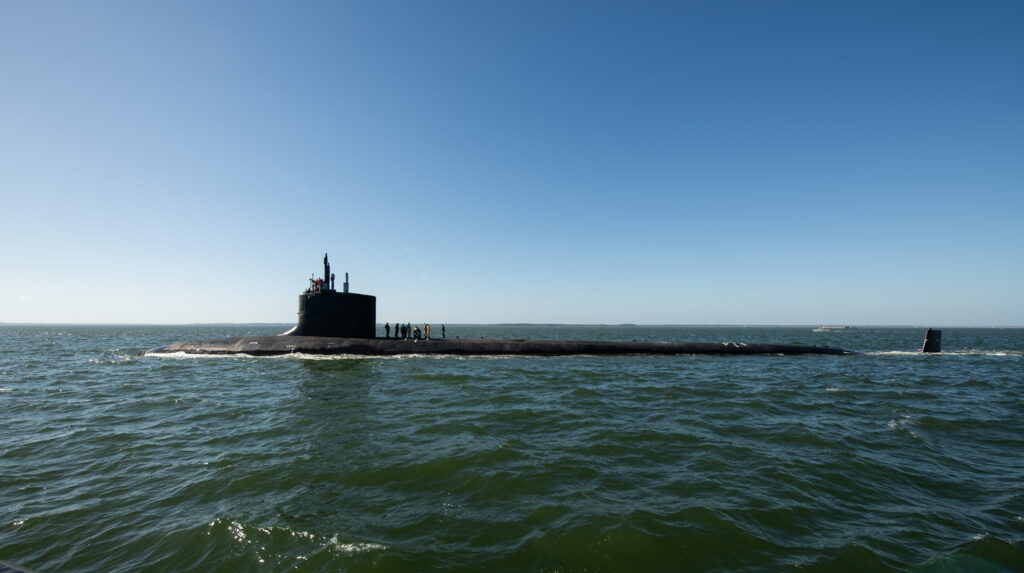
NEWPORT NEWS, Va. (May 15, 2024) The Los Angeles-class attack submarine USS Toledo (SSN 769) is seen at Norfolk Naval Shipyard, May 15, 2024. (U.S. Navy photo by Shelby West) 

From Austal USA, Sept. 23, 2024 
 
MOBILE, Ala. – Austal USA has been awarded a $450 million contract by General Dynamics Electric Boat for the expansion of production capacity in support of the U.S. Navy submarine industrial base (SIB).  This award will enable Austal USA to expand infrastructure in its Mobile, Ala. shipyard to support the U.S. Navy goal of delivering one Columbia-class and two Virginia-class submarines annually.  
 
The award provides funding for Austal USA to design, build, and outfit a new module fabrication and outfitting facility in its Mobile shipyard.  Construction of the new building will start this fall and be complete in 2026.  When fully operational, the building will support approximately 1,000 new jobs at Austal USA and provide capability to fabricate, outfit, and transport submarine components.  
 
This award follows the July 2024 groundbreaking for a 192,000 square-foot final new assembly bay designed to support construction of large steel ships for the U.S. Navy and U.S. Coast Guard.  Together, these projects represent over $700 million in facility expansion in the Mobile shipyard. When both projects are operational they will bring 2,000 new jobs to the region.   
 
“This contract award further solidifies Austal USA’s strong industrial partnership with General Dynamics Electric Boat to increase capacity in the submarine industrial base,” stated Austal USA President Michelle Kruger. “I’m proud of how the Austal USA team has responded to the call to accelerate production of Columbia and Virginia-class submarines, which is critical to our Nation’s defense.” 
 
The construction of these two buildings continues Austal USA’s transformation into a shipyard with a diverse and sustainable portfolio.  The projects increase capacity and capability enabling Austal USA to support a wider range of customer requirements.    
 
“This award represents another significant milestone in the transformation of our Mobile facility to meet the diverse needs of our Navy and Coast Guard customers,” commented Larry Ryder, Austal USA Vice President of Business Development and External Affairs. “Since we broke ground for our steel panel line in 2021 we have continuously worked to grow the capacity and capability of our Mobile shipyard leveraging our highly skilled workforce.” 
 
The new submarine manufacturing building will provide 369,600 square feet of production capacity on eight and a half acres, significantly expanding the current submarine module manufacturing capacity in the Mobile facility.  The building will be designed and built to leverage Industry 4.0 technologies, including extended reality, cloud computing, horizontal and vertical integration, big data analysis, autonomous robots, and simulation with a digital twin.  The project will include a material storage area, machine shop, and assembly area and waterfront improvements to support the transport of complete modules by barge. 
  
“This announcement further solidifies Austal USA’s commitment to the Mobile region and underscores their confidence in our highly skilled workforce,” said Mobile Mayor Sandy Stimpson. “This expansion will bring 1,000 jobs to the area and take advanced manufacturing opportunities to the next level for our citizens and the City of Mobile. We are excited to see Austal USA’s future success and their continued support of U.S. naval defense.” 
 
News of this award follows several recent announcements regarding major milestone achievements at Austal USA.  In August the company celebrated start of construction on the Coast Guard’s Heritage-class Offshore Patrol Cutter, USCG Pickering (OPC 919), and, a couple of weeks ago, the laying of the keel for the final Navy Expeditionary Fast Transport vessel, Lansing (EPF 16), being built by Austal USA.  These milestone achievements, coupled with the successful startup of Austal USA’s new steel panel line in mid-2022, are all signs of a bright future for the maritime industry along the Alabama Gulf Coast.  


Northrop Grumman Demonstrates MQ-4C Triton Navigation Systems Over the Arctic Ocean

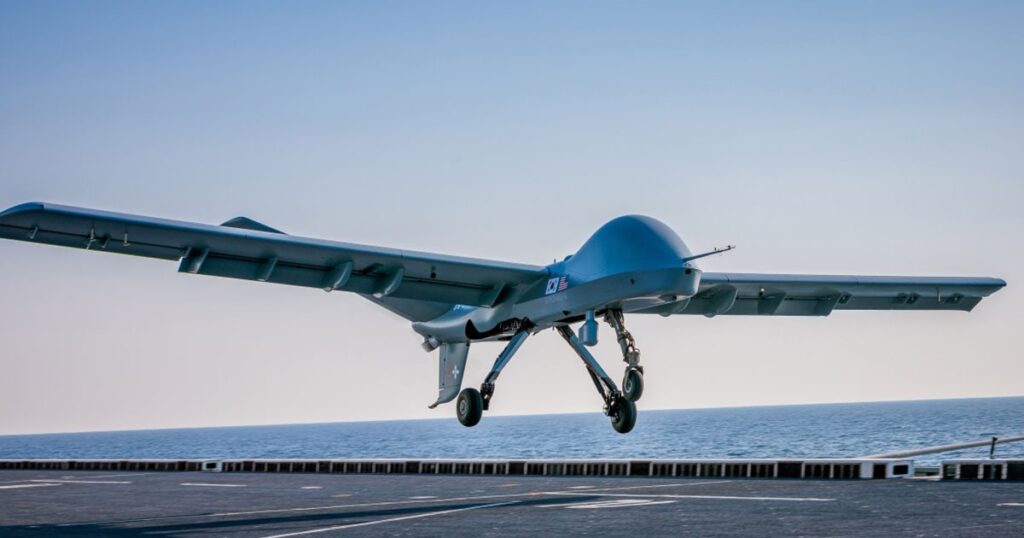
The MQ-4C Triton is capable of operating at an altitude of over 50,000 feet, enabling it to fly above harsh weather conditions. Credit: Northrop Grumman 

From Northrop Grumman 

DEADHORSE, Alaska – Sept. 19, 2024 – Northrop Grumman Corporation (NYSE: NOC) successfully demonstrated the MQ-4C Triton navigation system’s ability to operate at high latitudes deep within the Arctic Circle, delivering on its commitment to provide critical intelligence, surveillance, reconnaissance and targeting capabilities in the High North. The test flight proved the system’s ability to operate in the harsh austere environment over the Arctic Ocean. Triton’s advanced technological design makes it the only autonomous high-altitude, long-endurance aircraft capable of operating at altitudes above 50,000 feet for durations of more than 24 hours. 

The test flight, which began in Deadhorse, Alaska, and flew within 100 miles of the North Pole, utilized Northrop Grumman’s proprietary navigation systems, mission management computer and upgraded operational flight programs to successfully demonstrate Triton’s ability to navigate in the Arctic. 

The test aircraft collected navigation data during the five-hour flight and remained within U.S. and Canadian airspace for the duration. 

The demonstration also validated ground-based GPS alignment and initialization procedures to enable operations from runways above 70 degrees north latitude. 

As a high-altitude, long-endurance platform, Triton is suited for missions in the High North by operating well above Arctic winds and avoiding the range and speed impacts that limit mission performance at medium altitudes. 

Experts: 

Jane Bishop, vice president and general manager, global surveillance division, Northrop Grumman: “Flight operations in austere and frigid conditions present unique navigation challenges. Our demonstration highlights Triton’s ability to successfully perform in that challenging environment.” 

Capt. Josh Guerre, Triton program manager, U.S. Navy: “Arctic regions are an increasingly important theater of operations with unique threats and environments. We are ready to support those mission sets for domestic and international customers.” 

Details: 

The flight test follows a similar demonstration conducted over the Gulf of Alaska in June 2023. During the Northern Edge 2023 exercise, Triton’s radar demonstrated its unmatched ability to detect, track and image targets with weapon relevant accuracy and at a survivable range over a high-sea state environment. 

As allies consider their options for acquiring uncrewed maritime surveillance aircraft, flight demonstrations prove Triton’s ability to operate in challenging environments. Beyond navigation, surveillance operations in the High North are also challenged by strong winds and high seas. Triton’s higher operating altitude of more than 50,000 feet enables operation above inclement weather that would limit medium altitude platforms limited to 10,000-30,000 feet. Triton’s de-icing and anti-icing capabilities ensure it’s mission-ready and capable of operations in extreme arctic conditions.  

Built for the U.S. Navy and the Royal Australian Air Force, the multi-intelligence MQ-4C Triton supports a wide range of missions, including maritime patrol, signals intelligence and search and rescue. These aircraft operate at a higher altitude and have longer endurance than medium-altitude systems. They also incorporate simultaneous multi-intelligence sensor operations that allow them to deliver an exponential increase in mission information. 


Carrier Air Wing 5 Completes Air Wing Fallon Training in Rare Full-Strength Participation

Two F/A-18E Super Hornet strike fighters of VFA-146. (U.S. Navy photo by MC1Gavin Graham)

From MC1 Class Keenan Daniels, 19 September 2024 

NAVAL AIR STATION FALLON, Nev. – Carrier Air Wing (CVW) 5 recently completed Air Wing Fallon (AWF) training as a fully integrated air wing, taking advantage of the scheduled hull swap between Nimitz-class aircraft carriers USS George Washington (CVN 73) and USS Ronald Reagan (CVN 76) at Naval Air Station (NAS) Fallon, Sept. 13, 2024. 

Typically, CVW-5 operates with limited participation in AWF due to operational demands in the Indo-Pacific as part of the U.S. Navy’s forward-deployed naval forces (FDNF). However, the hull swap created a unique scheduling opportunity, allowing the entire air wing to train together. 

“The true value of the AWF course and training at the Naval Aviation Warfighting Development Center (NAWDC) stems from our ability to test the air wing in effectively countering peer threats through the synchronization of kinetic and non-kinetic fires while fully integrating all air wing platforms,” said Capt. John Stigi, strike department head, NAWDC. “Carrier Air Wing 5 seamlessly integrated fixed-wing fighters, command and control platforms, and rotary-wing assets equipped with advanced sensors to locate and destroy targets, while applying contested logistics and expeditionary advanced basing tactics to achieve mission success at significant ranges.” 
 
NAS Fallon hosts the Navy’s premier integrated training facility, providing live, virtual and constructive training opportunities. For five weeks, CVW-5 mission-planned, rehearsed in a virtual environment, refined tactical plans and executed live-flight missions. AWF remains unique, with all NAWDC strike instructors being hand-selected junior officer weapons and tactics instructors (WTIs) from every CVW platform, delivering top-tier tactical instruction. 
 
“I am confident that CVW-5 departs Fallon fully prepared for globally deployable operations across all mission areas,” Stigi said. “CVW-5’s exceptional performance reflects the hard work of the Sailors and chiefs who provided outstanding maintenance in challenging high desert conditions, and the leadership who maintained a laser focus on warfighting excellence throughout the exercise.” 
 
George Washington relieved Ronald Reagan as the forward-deployed carrier in August and is scheduled to return to Yokosuka, Japan. The completion of AWF ensures CVW-5 remains fully trained and ready to support missions in the Indo-Pacific. 
 
“Air Wing Fallon delivers the highest caliber of tactical training that naval aviation provides to carrier air wings prior to deployment,” said Capt. Patrick Corrigan, commander CVW-5. “As CVW-5 is stationed in Japan, it’s over nine years since the entire team completed the course. I am extremely proud of our team, who had just four weeks to integrate the F-35C, the new EA-18Gs and the DSSC 4.0 E-2Ds into the air wing before starting AWF. This process rigorously tested every element of mission planning, tactical execution and debriefing, and as a result, we are now a more lethal air wing. The NAWDC strike team has crafted a world-class training syllabus, and with our newly upgraded air wing, we are fully prepared to return to operations in the South China Sea.” 
 
The hull swap between George Washington and Ronald Reagan, along with CVW-5 readiness, plays a critical role in ensuring that the most advanced and capable warships operate in the Indo-Pacific, providing security and stability throughout the region. 
 
CVW-5 includes Strike Fighter Squadron (VFA) 102 “Diamondbacks,” Strike Fighter Squadron (VFA) 27 “Royal Maces,” Strike Fighter Squadron (VFA) 147 “Argonauts,” Strike Fighter Squadron (VFA) 195 “Dambusters,” Electronic Attack Squadron (VAQ) 141 “Shadowhawks,” Fleet Logistics Multi-Mission Squadron (VRM) 30 “Titans,” and Airborne Command & Control Squadron (VAW) 125 “Tigertails,” operating F/A-18F Super Hornets, F/A-18E Super Hornets, F-35C Lightning II’s, EA-18G Growlers, C-2 Greyhounds and E-2D Hawkeyes. 
 
As the type commander for Naval Aviation, Commander, Naval Air Forces’ mission is to “man, train and equip deployable, combat-ready Naval Aviation forces that win in combat.” 


RTX’s Raytheon Selected to Streamline Production of SPY-6 Transmit/Receive Modules 

September 17, 2024 

Manufacturing advancements expected to reduce production costs 

ANDOVER, Mass., Sept. 17, 2024 /PRNewswire/ — Raytheon, an RTX (NYSE: RTX) business, has been awarded an Office of Naval Research (ONR) Navy ManTech project from Penn State University Applied Research Laboratory’s Electronics Manufacturing Center of Excellence to streamline the production of SPY-6 Transmit/Receive (TR) modules. Manufacturing advancements like automation, new material sources and process yield improvements will result in cost-savings for the U.S. Navy across the life cycle of the SPY-6 radar. 

“TR modules are a key component in many of the military’s critical sensing systems,” said Colin Whelan, president of Advanced Technology at Raytheon. “These manufacturing advancements will greatly benefit future capabilities and can be implemented on other U.S. Navy and Department of Defense programs.” 

SPY-6 is the U.S. Navy’s family of radars that performs air and missile defense on several classes of ships. They enable ships to simultaneously detect, track, and discriminate air, surface and ballistic missile targets, providing a 360-degree integrated air and missile defense for ships. 

The four variants of SPY-6 use common hardware and software, and their construction is modular – making it more reliable and less expensive to maintain. Manufacturing advancements will further increase performance while reducing overall production costs. 

Work on this contract is being conducted in Andover, Massachusetts. New SPY-6 radio frequency TR modules are expected to be delivered in 2026-2027. 


SECNAV Del Toro Names Future John Lewis-class Oiler USNS Dolores Huerta

From SECNAV Public Affairs, 18 September 2024

WASHINGTON – Secretary of the Navy Carlos Del Toro announced that the future John Lewis-class oiler, T-AO 205-class, will be named USNS Dolores Huerta (T-AO 214). Del Toro made the announcement during a speaking engagement at the Veteran Affairs Center for Minority Veterans Hispanic Heritage Month Commemorative Event in Washington, Sept. 18. 
 
The future USNS Dolores Huerta honors American labor leader and civil rights activist Dolores Huerta, a central figure in the farmworkers’ labor movement from the 1950s through 1990s. 
 
The naming selection of the future USNS Dolores Huerta (T-AO 214) follows the tradition of naming John Lewis-class oilers after civil rights leaders and will be the first to bear her name. Secretary Del Toro previously named USNS Thurgood Marshall (T-AO 211), USNS Ruth Bader Ginsberg (T-AO 212), and USNS Harriet Tubman (T-AO 213). 
 
“Dolores Huerta has been a leading figure in the Hispanic community and a champion of civil and workers’ rights for over 70 years,” said Secretary Del Toro. “Dolores Huerta dedicated her life to caring for those voiceless and underrepresented—she dedicated her life to taking care of people. I am honored to announce the next John Lewis-Class fleet replenishment oiler, T-AO 214, will be named USNS Dolores Huerta.” 
 
After a brief stint as a public school teacher, Huerta in 1955 co-founded the Stockton chapter of the Community Service Organization to promote voter registration and economic opportunity initiatives for the local Hispanic community. 
 
In 1962, she along with Cesar Chavez, co-founded the National Farm Workers Association, a forerunner of the United Farm Workers. In the 1960s and 1970s, Huerta helped lead local labor strikes and national boycotts of lettuce, grapes, and Gallo wine that improved the working and living standards for farmworkers. During this period, she also coined the phrase that remains the motto of the farmworkers’ labor movement, “Sí, se puede”—“yes, we can.” 
 
From 1988 – 1993, Huerta served on the Commission on Agricultural Workers, established by Congress to review the effects of farmworker and immigration legislation. In 2002, she founded the Dolores Huerta Foundation, a non-profit organization dedicated to empowering other volunteer organizations that pursue social justice. 
 
Over the course of her career, Huerta has received numerous accolades including the Eleanor Roosevelt Human Rights Award in 1998. When President Barack H. Obama awarded Huerta the Presidential Medal of Freedom in 2012, he praised her lifelong devotion to “advocating for marginalized communities.” 
 
The future USNS Dolores Huerta is the tenth ship of the John Lewis Class. The class and lead ship are named in honor of the late civil rights icon Rep. John Lewis from Georgia. 
 

The ships are designed to supply fuel to the Navy’s operating carrier strike groups.  

The oilers have the ability to carry a load of 162,000 barrels of oil and maintain significant dry cargo capacity. 


Midshipmen Visit Unmanned Surface Vessel Squadron One

Midshipman 1st Class Joseph Kapszukiewicz, Midshipman 1st Class Axel Fisher, Midshipman 1st Class Athena Dinh and Midshipman 1st Class Robert Montoya with Overlord Unmanned Surface Vessel (OUSV) Ranger in Port Hueneme, Caliornia. Unmanned Surface Vessel Squadron (USVRON) One has established a summer training program with USNA for midshipmen interested in furthering the Navy’s integration of robotic and autonomous systems into the fleet.

From Naval Surface Forces, 16 September 2024 

Unmanned Surface Vessel Squadron (USVRON) One welcomed four first class midshipmen from the United States Naval Academy for their summer cruises to focus on the development unmanned surface systems. 
 
Although not a traditional surface cruise, the midshipmen were given an inside look at the Navy’s advances in the unmanned systems that will support the future of the Surface Fleet. The midshipmen were specifically selected for this opportunity based on their interest and undergraduate degree focus in robotics, autonomy, and unmanned systems. 
 
The midshipmen received training on the maritime autonomy control software for the USVs and associated payloads, familiarization tours onboard all the USVs, and assisted in USVRON 1’s planning efforts for future exercises, experimentation, and concepts of operations. 
 
“It’s good to see the future of what our Navy might be. I can’t wait to work alongside USVs when I commission,” said Midshipman 1st Class Axel Fisher. 
 
During the visit, the midshipmen also received familiarization tours of Zumwalt-class guided-missile destroyer USS Michael Monsoor (DDG 1001) and Global Autonomous Reconnaissance Craft (GARCs) operated by USVRON Three in San Diego. Additionally, they received training on the future MQ-25 Stingray Carrier-Based Unmanned Aerial System (CBUAS) and tours of the MQ-4C Triton training facilities at Point Mugu. 
 
“We wanted to give the Midshipmen a broad overview of what the Navy is doing in the unmanned space,” said Lt. Jonathan Dibling, the training officer and midshipman training coordinator at USVRON 1. 
 
“It was fascinating to get to see the behind the scenes of USVs. I was able to use the knowledge from my Electrical Engineering major to understand the capabilities and can see the important future of unmanned craft,” said Midshipman 1st Class Joey Kapszukiewicz at the conclusion of the cruise. 
 
Mariner, Ranger, Seahawk and Sea Hunter are the current USVs assigned to USVRON One and recently completed the first overseas USV deployment to the Indo-Pacific region during Integrated Battle Problem 23.2. During this deployment, they traveled a combined 46,651 nautical miles, navigated primarily by autonomous systems, and visited partners in Japan and Australia. 
 
Based in Port Hueneme, California onboard Naval Base Ventura County, USVRON One’s mission is to test, evaluate and operate USVs in support of medium and large unmanned surface vessel development and integration into fleet operations and provide recommendations to Navy leadership on the development of unmanned systems. 


Fairbanks Morse Defense to Acquire Rolls-Royce Naval Propulsors & Handling Business

A rendering of a marine handling system from Rolls-Royce’s Naval Propulsors and Handling business, which will be acquired by Fairbanks Morse Defense. Fairbanks Morse Defense

BELOIT, Wisconsin — Fairbanks Morse Defense, a portfolio company of Arcline Investment Management, has entered into an agreement with Rolls-Royce to acquire its Naval Propulsors and Handling business. The acquisition will include a range of propellers and waterjets for naval applications, as well as marine handling systems, which enable the deployment and recovery of manned and unmanned craft, and other cargo, from naval vessels. 

“When you look at the 150-year history of Fairbanks Morse Defense, you will find a handful of distinctive moments that completely transformed this company. We believe the acquisition of Rolls-Royce naval propulsors and handling businesses will become one of those moments,” said George Whittier, CEO of Fairbanks Morse Defense. “The way that our products and services complement each other is unmatched in the defense industrial base. Combining our capabilities allows Fairbanks Morse Defense to substantially increase what we offer to our U.S. maritime defense customers while also offering our systems and components solutions to Rolls-Royce’s global customer base.”  

The acquisition will add the following to the Fairbanks Morse Defense portfolio: 

  • Rolls-Royce Pascagoula, Mississippi Facility – Pascagoula is a fully integrated marine propeller and waterjet manufacturing campus that is responsible for producing controllable pitch propeller blades and hub body castings, large fixed-pitch propellers, and waterjets for the U.S. Navy. It is the country’s only privately owned foundry that is qualified to cast propellers for the U.S. Navy’s surface and submarine fleet, making it a United States National Asset.  

  • Rolls-Royce Walpole, Massachusetts Facility – For over 50 years, the Rolls-Royce Walpole campus has delivered critical ship propulsor systems and aftermarket services for the U.S. Navy and Coast Guard and other international navies, including controllable pitch propellers, fixed propellers, and waterjets.

  • Rolls-Royce Peterborough, Ontario Canada Facility – The Centre of Excellence for Naval Handling in Peterborough, Ontario supports the design and manufacture of handling systems, launch and recovery systems, and undersea sensors and systems for navies across the globe. Its products include the next-generation Mission Bay Handling System for the Global Combat Ship program, a frigate program for the UK Royal Navy, Royal Canadian Navy, and Royal Australian Navy.

Rolls-Royce Naval-Marine propellers can be found on all the U.S. aircraft carriers currently in service. They are also used on U.S. Navy fleet supports, amphibious ships, surface combatants, submarines and more, as well as on U.S. Coast Guard vessels. Rolls-Royce handling systems are found on many of the U.S. Navy’s surface combatants.

“Rolls-Royce Naval Propulsors & Handling is an industry leader and trusted supplier to navies around the world. We are pleased to collaborate with Fairbanks Morse Defense, who recognizes the value of this business and the outstanding opportunities for its strong future,” said Adam Riddle, president – Defense and chairman and CEO of Rolls-Royce North America. “We believe this transaction represents the best outcome for the business, its people, and the military customers they serve.”  

Fairbanks Morse Defense has built a diverse portfolio that now includes engines, electrical hardware, motors, valves, cranes, davit systems, fans, fittings, and water treatment solutions. The company has also advanced its technology offerings with AI, digital defense, telerobotics, additive manufacturing, smart engineering, uncrewed mission management, extended reality, and remote collaboration tools.