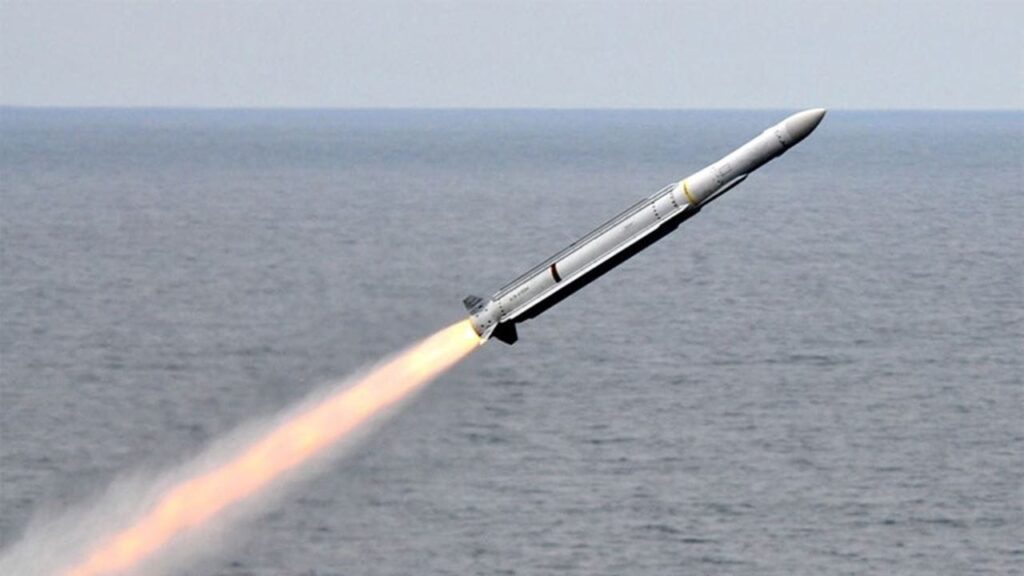
TAMPA, Fla. – In the past 24 hours U.S. Central Command (USCENTCOM) forces successfully destroyed one Iranian-backed Houthi land attack cruise missile (LACM) in Houthi-controlled territory in Yemen.
It was determined the LACM presented an imminent threat to U.S. and coalition forces, and merchant vessels in the region. These actions were taken to protect freedom of navigation and make international waters safer and more secure.
USCGC Thetis Returns After 75-Day Patrol in Windward Passage, Florida Straits
From U.S. Coast Guard Atlantic Area, Aug. 2, 2024
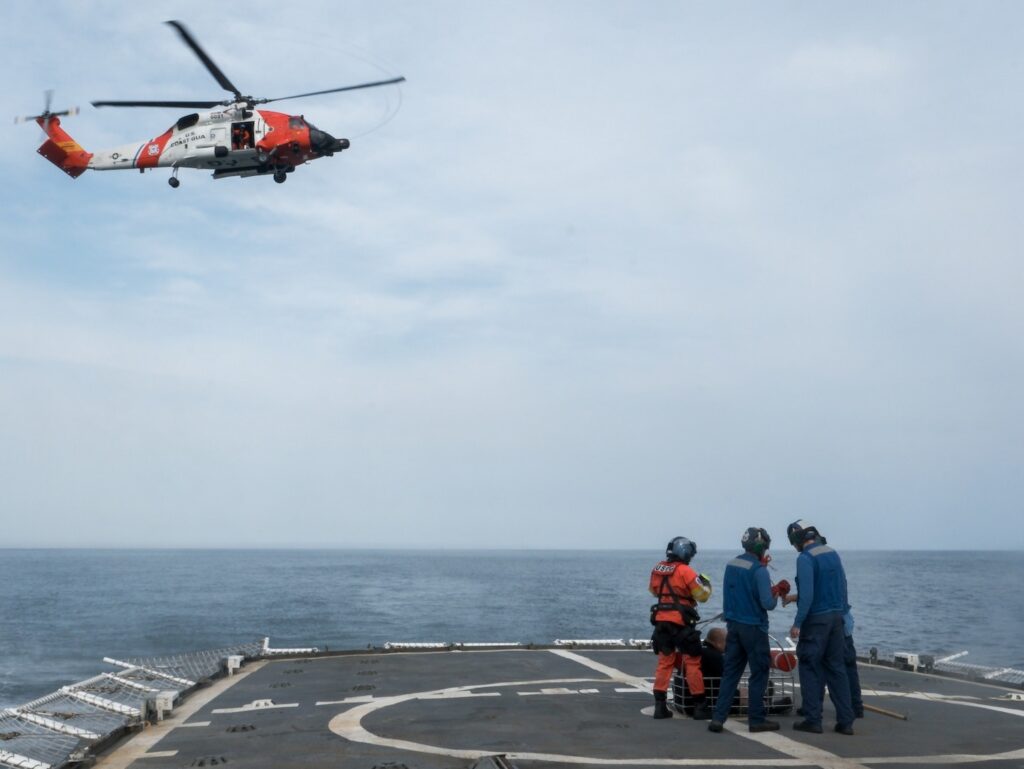
KEY WEST, Fla. — The crew of Coast Guard Cutter Thetis (WMEC 910) returned to their home port in Key West, Friday, following a 75-day migrant interdiction patrol in the Windward Passage and South Florida Straits.
Thetis’ crew deployed in support of Homeland Security Task Force – Southeast and Operation Vigilant Sentry while patrolling in the Seventh Coast Guard District’s area of operations. Crew members carried out maritime safety and security operations aimed at safeguarding lives at sea and upholding U.S. maritime regulations.
During two separate interdictions made by Thetis crew members and Coast Guard Station Key West personnel, 44 Cuban migrants were interdicted while attempting to reach the U.S. unlawfully by sea.
In addition, Thetis crew members cared for and repatriated 197 Haitian migrants after they were transferred aboard from Coast Guard Cutter Valiant (WMEC 621).
Thetis also embarked two suspected drug smugglers and seized contraband after a transfer with Coast Guard Cutter Joseph Tezanos (WPC 1118).
While deployed, Thetis crew members had the opportunity to work with the Haitian Coast Guard, providing assessments of their vessels and capabilities. The collaboration served to strengthen an important regional partnership with the Caribbean nation.
During a port-of-call in Puerta Plata, Dominican Republic, crew members volunteered to help the Fundación Casa Niños Felices, a local orphanage for Dominican children. Thetis crew members assembled fitness and sports equipment for the children, which upgraded the orphanage’s recreational facility and created a long-lasting positive impact.
“This patrol was filled with diverse operations that highlighted the importance of the U.S. Coast Guard operating in the Windward Pass and South Florida Straits,” said Cmdr. Gavin Garcia, commanding officer of Thetis. “I could not be more pleased with the performance of the men and women on board and their ability to overcome adversity, resulting in a resoundingly successful patrol.”
Thetis is a 270-foot, Famous-class medium endurance cutter with a crew of 100. The cutter’s primary missions are counter-narcotics and migrant interdiction operations, living marine resources protection, and search and rescue in support of U.S. Coast Guard operations throughout the Western Hemisphere.
For information on how to join the U.S. Coast Guard, visit GoCoastGuard.com to learn about active duty, reserve, officer, and enlisted opportunities. Information on how to apply to the U.S. Coast Guard Academy can be found here.
CNO Reviews Quality of Service Initiatives at HII Newport News Shipbuilding
NEWPORT NEWS, Va. — Chief of Naval Operations Admiral Lisa Franchetti reviewed Quality of Service initiatives with Navy and shipyard leadership at HII Newport News Shipbuilding in Newport News, Virginia, July 31, 2024.
Last year, the Navy signed a Joint Memo “Setting a New Course for Navy Quality of Service,” to ensure Sailors have the support and resources they require. During her second visit to Newport News, Franchetti received updates on the shipyard’s major programs, infrastructure investments and QoS improvements.
“It’s great to hear from our Sailors here in the Newport News Shipbuilding that our Quality of Service initiatives are making a difference,” said Franchetti. “I appreciate the candid conversations and hard work to remove barriers that has occurred this past year as a result of the Cross Functional Team’s efforts to work with our industry partners and other stakeholders to transform Fleet feedback into results.”
Franchetti visited the triad of the USS Columbus (SSN 762) to get their perspective on QoS initiatives and improvements to safety and security outside of the shipyard. They also discussed a new contract incentive that has enabled HII to construct two new buildings on the pier where Engineering Overhauls of Columbus and then USS Boise (SSN 764) will take place. One building will house berthing and a galley, and the other a work center to improve the quality of life of the service members on board these submarines.
While touring the facilities CNO was briefed on the design and planning underway for a new parking garage that will create more than 2,000 new spaces at NNS once it is complete in 2026, as well as the plans for the construction of a Carrier Refueling Overhaul Workcenter (CROW) facility, which will provide approximately 80,000 square feet of multi-use space for Sailors and HII-NNS shipyard workers. She also saw the 24/7 micro market, designed to provide Sailors with access to more quality food options.
The trip included a tour of Huntington Hall, where renovations are currently ongoing. The updates include refurnished furniture and improvements such as upgraded televisions, kitchen equipment, and an upgraded air conditioning system in the gym, which will soon be available for 24/7 access.
“These upgrades to our existing facilities are making Newport News a better place to work and live for our Sailors,” said Franchetti. “This is just the beginning of Quality of Service improvements, and I am committed to ensuring this work continues here – and then scales out to other Fleet concentration areas – for the next generation of Sailors.”
Vice Admiral Scott Gray serves as the chair of the QoS Cross Functional Team that reports directly to Admiral James Kilby, Vice Chief of Naval Operations, on the CFT’s efforts to establish standards and measures for QoS and bring them to life at Newport News Shipbuilding.
USS Florida Returns to Kings Bay Following 727-Day Deployment
From Petty Officer 1st Class Travis Alston, 1 August 2024
KINGS BAY, Ga. — Ohio-class guided-missile submarine USS Florida (SSGN 728) returned to Naval Submarine Base Kings Bay, Georgia, following a 727- day deployment to 5th, 6th, and 7th fleet areas of operations, July 31.
Assigned to Commander, Submarine Group Ten, USS Florida departed in August 2022 and conducted five crew swaps, before returning to Kings Bay.
“We have demonstrated the versatility of SSGN platform to operate anywhere at any time,” said Capt. Peter French, blue crew commanding officer. “We operated in several different oceans. It’s very uncommon for East Coast submarines to deploy to the west coast, but we managed to do an exceptional job completing the mission.”
During their deployment, the crews conducted vital missions crucial to national security, enhancing operational capabilities and reinforcing deterrence effort, while traveling more than 60,000 nautical miles. The crews also had the opportunity to visit Greece, Guam, Diego Garcia and the United Kingdom, as part of routine port calls.
“Our Sailors are the true strength for our boat and the Navy,” said Master Chief Electronics Technician Submarine, Navigation Christopher L. Martell, gold crew chief of the boat. “They consistently impress me with their unwavering dedication to the submarine force. We train and we fight as a family, and I’m excited to get the crews back home to the actual families and enjoy some much needed time off.”
USS Florida entered Norfolk Naval Shipyard in July 2003 to undergo a refueling and conversion from an SSBN to an SSGN. The conversion was completed in April 2006 and is homeported in Naval Submarine Base Kings Bay, Georgia.
On May 25, 2006 the boat had a return to service ceremony at Naval Station Mayport, Florida.
Submarine Group Ten is the nation’s preeminent provider of sea-based strategic deterrence, Tomahawk Land Attack Missile strikes, and unique submarine-based special operations capabilities. The base is home to all east coast Ohio-class submarines.
For more news from Commander, Submarine Group 10, visit Commander, Submarine Group 10 (navy.mil) and http://www.facebook.com/submarinegroupten
Chad Cary to Lead NOAA Corps and NOAA Office of Marine and Aviation Operations
Rear Adm. Chad Cary will serve as the director of the NOAA Commissioned Officer Corps and NOAA Office of Marine and Aviation Operations. (Image Credit: NOAA)
By David Hall, NOAA Communications, August 2, 2024
The U.S. Senate confirmed on Thursday President Biden’s nomination of NOAA Rear Adm. Chad Cary to lead the NOAA Commissioned Officer Corps (NOAA Corps) and NOAA Office of Marine and Aviation Operations (OMAO).
“Supporting the nation’s environmental and economic security is one of the Biden-Harris Administration’s top priorities and the NOAA Corps, NOAA’s fleet, and the dedicated professionals who operate these critical components of our infrastructure are vital in fulfilling that mission,” said U.S. Secretary of Commerce Gina Raimondo. “Rear Adm. Cary’s leadership will ensure that we can continue to provide essential services to the public — from hurricane forecasts to nautical charts. I congratulate him on his confirmation to serve as the next director of OMAO and the NOAA Corps and thank him for his service to our nation.”
In addition to leading the NOAA Corps — one of the nation’s eight uniformed services — Cary will oversee NOAA’s fleet of 15 research and survey ships and 10 specialized aircraft, including the agency’s “hurricane hunters,” all of which are operated by a combination of NOAA Corps officers and civilians.
“Rear Adm. Cary is a proven leader who has the skills, experience and dedication needed to advance NOAA’s science, service and stewardship mission,” said NOAA Administrator Rick Spinrad, Ph.D. “I am confident he will lead the NOAA Corps and NOAA fleet both capably and effectively as we work together to meet the challenges of a dynamic world.”
Cary has served in many operational and management assignments with NOAA, most recently as deputy director of the NOAA Corps and OMAO’s deputy director for operations. In that capacity, he oversaw the day-to-day operations of OMAO’s marine, aviation and uncrewed systems operations, as well as OMAO’s health and cyber services.
He has held command positions aboard NOAA ships Reuben Lasker and John N. Cobb. He has also served as the director of the NOAA Corps Commissioned Personnel Center and applied his at-sea and shoreside operational experience and expertise to support NOAA Fisheries, NOAA’s National Weather Service and NOAA headquarters.
“I am grateful for this opportunity to continue serving the nation alongside our highly skilled and dedicated workforce,” said Cary. “I would also like to thank my predecessor, Vice Adm. (select) Nancy Hann, for her vision, courageous leadership and service to the nation.”
Cary was born and raised in Alaska. He earned a bachelor’s degree in environmental science with an emphasis in marine sciences from the University of North Carolina at Chapel Hill before joining the NOAA Corps in 2001. He also holds a master’s degree in geography from Portland State University and a graduate certificate in legislative studies from Georgetown University.
VMFT-402 begins standup at Fighter Town East
10 Jun 2024 | Lance Cpl. Kyle Baskin, Marine Corps Air Station Beaufort
MARINE CORPS AIR STATION BEAUFORT, S.C. — Three F-5N Tiger IIs arrived to Marine Corps Air Station (MCAS) Beaufort, South Carolina, on May 30, 2024, as part of Marine Fighter Training Squadron (VMFT) 402’s stand up process to serve as an adversary squadron.
“It’s a huge day in the lifecycle of our squadron,” said Lt. Col. Andrew Christ, commanding officer, VMFT-402, Marine Aircraft Group 41 (MAG-41), 4th Marine Aircraft Wing (4th MAW), “we just delivered the first F-5N Tiger IIs, and it marks a significant milestone in our stand up towards activation.”
VMFT-402 will serve as the Marine Corps’ second adversary squadron; VMFT-401 located at MCAS Yuma is already in operation. Both VMFT-401 and VMFT-402 will be assigned to MAG-41, 4th MAW, Marine Forces Reserve.
“This is a unique collaboration between the air station and the parent unit of VMFT-401, which will remain MAG-41 in Dallas Fort Worth, Texas and 4th MAW,” said Bortnem, “so this is a very unique partnership that we have with our ability to host aircraft and units that are both part of 2nd MAW and 4th MAW.”
“We are expanding to establish a second adversary squadron that is VMFT-402, here in Beaufort, South Carolina,” said Maj. Erin Mathis, operations officer, VMFT-402, Marine Aircraft Group 41, 4th Marine Aircraft Wing.
An adversary squadron acts as opposing forces during training with other squadrons. Pilots with adversary squadrons study the tactics and maneuvers of foreign adversaries to employ them in training to create realistic scenarios.
“We, as experts in adversary tactics and experts in the way the adversary fights, provide the fleet units with a unique look at basically what the adversary does,” said Mathis.
“The ability for us to have on-station adversary support is absolutely critical to the development of both our fleet F-35 pilots in the future and our current training F-35 pilots,” said Bortnem.
Having a local adversary squadron allows for more training opportunities, an easier planning process and allows for VMFT-402 to provide in person debriefs.
“We have a rapidly growing F-35 fleet particularly on the East Coast now and Marine Corps aviation has an insatiable need for as much adversary support and training as they can receive to prepare them for the next fight that’s coming,” said Christ.
Due to available space to house and support the squadron, and the proximity to Marine Fighter Attack Training Squadron 501 and the closest training ranges, MCAS Beaufort was chosen to be the home of VMFT-402, said Bortnem.
“This has been Fighter Town East since 1950. VMFT-401, the previous squadron, had been here many, many times before. So the ability for VMFT-402 to be housed here just makes perfect sense,” he said.
The unit will officially reactivate as Marine Medium Helicopter Training Squadron (HMMT) 402 in September 2024, and will then be redesignated as VMFT-402.
Originally, HMMT-402 was stood up in 1967 and trained helicopter pilots for the Vietnam War, before it was decommissioned in 1972, said MSgt. Jason Tracoma, senior enlisted advisor, VMFT-402.
“Our short term goals will evolve over the course of the summer, we’re going to go through a number of maintenance inspections to make sure that we’re safe for flight operations autonomously,” said Christ.
“It’s been a long time coming, we’ve needed this capability on the East Coast for a number of years and can’t come soon enough,” said Christ, “we need to get our house ready for the high fight.”
MCAS Beaufort provides support to the 2nd MAW and attached II Marine Expeditionary Force units. The air station is the operational base for Marine Aircraft Group 31 and its associated squadrons. MCAS Beaufort is home to Marine Fighter Attack Training Squadron 501, the premiere F-35 training squadron on the East Coast.
Royal Australian Air Force Welcomes First Northrop Grumman MQ-4C Triton
The multi-intelligence MQ-4C Triton operates at higher altitude and has longer endurance than medium-altitude systems to provide commanders with unmatched persistent maritime surveillance. (Northrop Grumman)
Australia’s Triton program remains on track with three additional aircraft currently in production
From Northrop Grumman, July 31, 2024
TINDAL, Australia – July 31, 2024 – Northrop Grumman Corporation (NYSE: NOC) joined the Royal Australian Air Force (RAAF) to welcome its first MQ-4C Triton uncrewed aircraft during a ceremony at RAAF Base Tindal, Northern Territory. The arrival of the high-altitude, long-endurance Triton enables Australia to deploy the most advanced maritime intelligence, surveillance, reconnaissance and targeting capability available today.
The first MQ-4C Triton arrived at RAAF Base Tindal on June 16 following a three-segment flight from Naval Air Station Patuxent River, Maryland.
Northrop Grumman personnel worked closely with their RAAF counterparts to prepare for the aircraft’s arrival and support basing activities.
Australia’s Triton program remains on track with three additional aircraft currently in production at Northrop Grumman’s Palmdale, California, facility.
Experts:
Christine Zeitz, chief executive and general manager, Australia & New Zealand, Northrop Grumman: “As one of the most advanced intelligence, surveillance, reconnaissance and targeting systems in the world, and a product of a cooperative development program between Australia and the United States, Triton is a proven multi-mission, multi-domain national security asset vital to the Australian Defence Force during this critical time.
Capt. Josh Guerre, U.S. Navy Triton program manager: “The delivery of Australia’s first MQ-4C represents a significant step in a collaboration between the U.S. and Australia to drive the future of multi domain intelligence collection. The U.S. Navy is thrilled to collaborate with Australia to deliver this game changing intelligence capability into the 7th Fleet area of responsibility.”
Program Details:
Built for the U.S. Navy and the RAAF, the multi-intelligence MQ-4C Triton supports a wide range of missions, including maritime patrol, signals intelligence and search and rescue. These aircraft deliver unmatched persistent surveillance for the prediction of an adversary’s behavior, enabling better planning and enhancing joint military responses. Key attributes include:
Higher operating altitude and longer endurance than medium-altitude systems
Ultra-long operational range of 7,400 nautical miles (8,515 miles)
Simultaneous multi-intelligence sensor operations delivering an exponential increase in mission information
Northrop Grumman successfully completed the first flight of Australia’s MQ-4C Triton uncrewed aircraft at its Palmdale facility in November 2023. The remaining three Australian Tritons currently under contract are progressing as planned through their production schedules. Once fully fielded, Triton will be operated by the Number 9 Squadron from two locations to perform surveillance over the Indo-Pacific region: RAAF Base Edinburgh in South Australia, and RAAF Base Tindal in the Northern Territory.
Northrop Grumman is establishing a dynamic support environment for the progressive delivery of the Triton systems into Australia, including establishing ground stations at RAAF Base Edinburgh and facilitating aircraft integration into RAAF Base Tindal. The company is building a highly qualified Australian workforce across both locations, leveraging extensive knowledge and experience gained from supporting U.S. Navy Triton operations.
Marine Corps’ Second F-35C Squadron Declares Initial Operational Capability
U.S. Marine Corps F-35C Lightning II aircraft assigned to Marine Fighter Attack Squadron (VMFA) 311, Marine Aircraft Group 11, 3rd Marine Aircraft Wing, are staged during a live ordnance training event at the Marine Corps Air Station Miramar combat aircraft loading area, California, July 24, 2024. This was the first time VMFA-311 conducted live ordnance operations independently and a milestone for the squadron, which declared initial operational capability on July 31, 2024. (U.S. Marine Corps photo by Lance Cpl. Jennifer Sanchez)
From III Marine Aircraft Wing
MARINE CORPS AIR STATION MIRAMAR, Calif.–Demonstrating the Marine Corps’ commitment to aviation advancement, Marine Fighter Attack Squadron (VMFA) 311, Marine Aircraft Group 11, 3rd Marine Aircraft Wing, declared initial operational capability on July 31, 2024.
Achieving initial operational capability is a key milestone for the squadron as part of the Marine Corps tactical aviation (TACAIR) transition plan, the transition from the AV-8B Harrier and F/A-18 Hornet to the F-35. Receiving this qualification means that VMFA-311 has the operational F-35C Lightning II aircraft, trained pilots, maintainers, and support equipment to sustain its mission essential tasks. These tasks include close air support, strike coordination and reconnaissance, anti-air warfare, suppression of enemy air defenses and electronic attacks.
“I am incredibly proud of the Marines and Sailors in this squadron as they hit this critical milestone that ensures greater lethality and operational readiness for the Wing, the Marine Corps, and the joint force,” said Maj. Gen. James Wellons, commanding general of 3rd MAW.
Formerly VMA-311, the “Tomcats” of VMFA-311 reactivated in April 2023 as part of the Marine Corps’ transition to an all fifth-generation force. VMFA-311 achieved its “Safe for Flight” certification in September 2023, allowing the squadron to conduct independent flight operations.
The squadron flew more than 900 sorties, approximately 1,700 hours, and completed more than 800 simulator hours and 2,400 maintenance actions to reach initial operational capability.
“Initial operational capability is a milestone and achievement in readiness,” said Lt. Col. Michael Fisher, commanding officer of VMFA-311, “It’s all on the backs of the Marines out there. What they do in their day-to-day actions is what made this possible.”
In addition to achieving initial operational capability, VMFA-311 Marines have trained at the most advanced aviation schools offered by the U.S. Navy and Marine Corps. Maj. Timothy Potter, an F-35C pilot, graduated from the U.S. Navy Strike Fighter Tactics Instructor Program, more commonly known as TOPGUN, becoming a pilot instructor and increasing the squadron’s ability to train other pilots. Warrant Officer John Page, an aviation ordnance officer, graduated from the Marine Corps Weapons and Tactics Instructor Course. Marines completed lightning tactics instructor qualifications, air combat maneuvering qualifications, division lead and section lead qualifications.
The next step for VMFA-311 is full operational capability, attained when VMFA-311 receives its complete inventory of ten F-35C aircraft, projected for fiscal year 2025.
“Nothing changes for us, our pursuit of excellence and how we carry ourselves, initial operational capability is a byproduct of daily competency and being good at our job,” Fisher said. “It is a great accomplishment, but when we wake up the next day, we are going to keep doing the same thing. Now full operational capability is the goal.”
The Marines of VMFA-311 are actively training and preparing for potential future deployments with the F-35C, continuing the squadron’s legacy as a vital component of Marine Corps aviation.
VMFA-311 was originally commissioned as VMF-311 on December 1, 1942, in Cherry Point, North Carolina and has had a notable history of “firsts” for Marine Corps aviation.
Over the last 80 years, VMFA-311 has flown a variety of aircraft, including the F4U Corsair, F9F Panther, A-4 Skyhawk, AV-8B Harrier II, and currently the F-35C Lightning II. VMFA-311 was one of the first Marine Corps squadrons to transition to jet aircraft with the F9F Panther.
Now the squadron leads the way alongside VMFA-314 as one of the first Marine Corps F-35C Lightning II squadrons.
“The Tomcats have a storied history that includes legends such as Ted Williams and John Glenn, and participation in every major conflict since World War II,” Wellons said. “Today’s Marines add another chapter to that legacy with the introduction of the F-35C and fifth-generation capabilities to VMFA-311.”
In 2020, the squadron, then VMA-311, deactivated its legacy Harrier, and began preparing for its reactivation in April 2023, as VMFA-311, the Marine Corps’ second F-35C Lightning II squadron. Starting with 84 Marines and one aircraft, the reactivation was part of ongoing modernization efforts across the Marine Corps to make the force more lethal, effective, and survivable.
The F-35C’s multirole capabilities enable Marine Corps aviation to adapt to a wide range of mission requirements, including air-to-air combat, air-to-ground strikes, reconnaissance and electronic warfare. As operational challenges evolve, the F-35C’s versatility enhances the Marine Corps’ ability to respond.
“As a previous F/A-18 Hornet pilot, the F-35 is our bid for success for the future,” Fisher said. “It is where the Marine Corps is going for TACAIR.”
The Marine Corps has eight operational F-35B squadrons and two training squadrons, operating more than 100 F-35B aircraft around the world. The Marine Corps’ two F-35C squadrons, VMFA-311 and VMFA-314, are both home-stationed at Marine Corps Air Station Miramar.
Each variant of the F-35 brings slightly different capabilities to the joint force. The F-35C is specifically engineered for carrier-based operations, with heavier landing gear and enlarged, foldable wings designed to facilitate flight operation on naval vessels.
The transition to the F-35C Lightning II is a testament to the Marine Corps’ continued evolution and commitment to maintaining cutting-edge capabilities in modern aerial combat.
USS Preble to Forward Deploy to Japan
USS Preble (DDG 88) leaves Joint Base Pearl Harbor-Hickam, Oahu, Hawaii on March 20, 2024 in preparation for U.S. Missile Defense Agency’s Flight Test Aegis Weapon System-32 (FTM-32), held in cooperation with the U.S. Navy. (courtesy photo)
YOKOSUKA, KANAGAWA, JAPAN – The Arleigh Burke-class guided-missile destroyer USS Preble (DDG 88) will move to Yokosuka, Japan, as part of a scheduled rotation of forces in the Pacific, the U.S. Navy announced today. This move will be a permanent change of station for the crew and family members.
Preble will replace USS Benfold (DDG 65), which will depart Yokosuka and move to Everett, Washington.
The forward presence of Preble supports the United States’ commitment to the defense of Japan, enhances the national security of the United States and improves its ability to protect strategic interests. Preble will directly support the Defense Strategic Guidance to posture the most capable units forward in the Indo-Pacific Region.
The United States values Japan’s contributions to the peace, security and stability of the Indo-Pacific and its long-term commitment and hospitality in hosting U.S. forces forward deployed there. These forces, along with their counterparts in the Japan Self-Defense Forces, make up the core capabilities needed by the alliance to meet our common strategic objectives.
The security environment in the Indo-Pacific requires that the U.S. Navy positions the most capable ships forward. This posture allows the most rapid response times for maritime and joint forces and brings our most capable ships with the greatest amount of striking power and operational capability to bear in the timeliest manner.
Maintaining a forward-deployed naval force capability with the most advanced ships supports the United States’ commitment to the defense of Japan and the security and stability of the vital Indo-Pacific region.
General Dynamics Announces Rayha to Succeed Graney as President of Electric Boat
From General Dynamics, August 1, 2024
RESTON, Va. – General Dynamics (NYSE:GD) announced today that Kevin Graney, who currently serves as president of Electric Boat, has informed the company that he will retire at the end of the year. He will be succeeded by Mark Rayha, who currently serves as senior vice president and chief operating officer of Electric Boat, effective December 1.
“Kevin has served General Dynamics with distinction for nearly 30 years, including tenures as president of both NASSCO and Electric Boat. His shipbuilding expertise and strong leadership have been instrumental to the performance and continuous improvement of both NASSCO and Electric Boat,” said Phebe Novakovic, chairman and chief executive officer. “Mark is a 35-year veteran of General Dynamics and is a proven and capable leader. His experience as CFO and COO of Electric Boat will ensure that we continue to grow to support our nation’s need for submarines.”
Graney joined General Dynamics in 1995 and served in a variety of leadership roles at Electric Boat and NASSCO before becoming a general manager and then president of NASSCO from 2013 to 2019 and president of Electric Boat in 2019.
Rayha joined General Dynamics in 1989 at Land Systems. He became CFO of General Dynamics Mission Systems in 2015. He joined Electric Boat in 2020 and served as CFO from 2021 to 2023. He became chief operating officer in 2023.
General Dynamics is a global aerospace and defense company that offers a broad portfolio of products and services in business aviation; ship construction and repair; land combat vehicles, weapons systems and munitions; and technology products and services. General Dynamics employs more than 100,000 people across 65 countries worldwide and generated $42.3 billion in revenue in 2023. More information about General Dynamics is available at www.gd.com.