U.S. Submarine Tender to Support AUKUS Pillar 1 Milestone 
From the Navy Office of Information, Aug. 16, 2024 

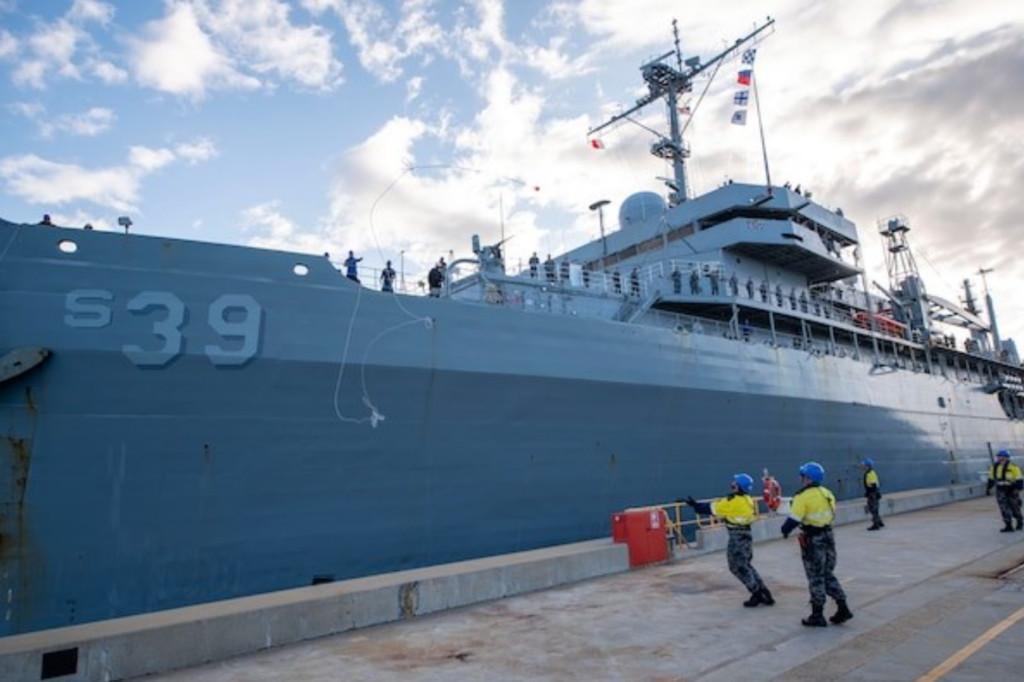
HMAS STIRLING, Australia - The U.S. Navy submarine tender USS Emory S. Land (AS 39) pulled into HMAS Stirling, Aug. 16, marking the seventh port visit in Australia since the ship left its homeport of Guam, May 17. 

The mixed crew of U.S. Navy and Royal Australian Navy personnel will take part in a Submarine Tendered Maintenance Period (STMP) over the next several weeks as Australian technicians perform maintenance on a U.S Navy nuclear-powered fast-attack submarine (SSN) scheduled to arrive for a port visit. 
 
The STMP marks a significant step toward Australia becoming sovereign-ready to operate, maintain, and support a fleet of conventionally armed SSNs, which is a central requirement in executing Pillar 1 of the AUKUS security partnership between Australia, the United Kingdom, and the United States. 
 
“Our knowledge exchange with the Royal Australian Navy (RAN) Fleet Support Unit (FSU) since January has been exceptionally productive,” said Capt. Brent Spillner, commanding officer of the Emory S. Land. “Within weeks they were working shoulder-to-shoulder with U.S. technicians on real submarine repairs, and for the last six weeks we’ve had a team of U.S. Sailors embedded in the FSU West workshops at HMAS Stirling. We’re learning as much from them as they are from us, and we have Australian sailors and officers in the key management positions for the STMP.” 
 
More than 30 Australian sailors will execute the majority of planned maintenance work under the supervision of U.S. personnel, which will include the replacement of a mast in the submarine’s sail and a key hydraulic valve, along with the simulated removal of a large pump weighing more than 3,500 pounds from within the boat. 
 
“Both of our navies are benefiting tremendously from the interoperability we’ve been developing during this deployment, and are now better able to support each other’s fleets around the world. This STMP marks the first time that Australian workers will perform maintenance on an American SSN in Australian waters, but it’s really just the next step in a long partnership,” said Spillner. “This is an important milestone and learning opportunity as we work together to establish Submarine Rotational Force – West, where both U.S. and UK submarines will regularly transit through HMAS Stirling, with maintenance and logistics assisted by Australian personnel, as they develop their own Intermediate-Level Maintenance capability for the eventual Australian SSNs.” 
 
The deployment has been an opportunity for sailors from the three navies to work together. 
 
“The opportunity to have RAN sailors from FSU integrated with my repair department has been phenomenal,” said Cmdr. Derek Fletcher, repair officer aboard Emory S. Land. “The ability to work side-by-side in Guam on U.S. SSNs and then continue that side-by-side work on RAN vessels and even a Royal Navy vessel while in Australia has truly demonstrated our interoperability. It’s been incredible to see our Sailors working together to provide repair services to vessels from all three AUKUS partners.” 
 
Since the start of the Emory S. Land’s deployment, 176 U.S. Sailors have participated in 18 community relations events, investing 731 hours into the communities of Darwin, Cairns, Sydney, Melbourne, and Adelaide. While in port at HMAS Stirling, U.S. Sailors are planning an additional eight to 10 community relations events throughout the region, as well as having the ability to tour Western Australia. 
 
“This deployment is like none other I have ever experienced and will not easily be forgotten,” said Lt. Cmdr. Mark Miller, Emory S. Land’s chaplain. “The warmth and hospitality which the U.S. Sailors have received is truly heartfelt. We are grateful for the strong bond of our two nations and we look forward to our stop in Western Australia.” 
 
Emory S. Land is on deployment supporting the U.S. 7th Fleet, the U.S. Navy’s largest forward deployed numbered fleet, operating with allies and partners in preserving a free and open Indo-Pacific region. Emory S. Land provides expeditionary intermediate-level maintenance, services, and logistics support to deployed submarines. 
 
Guam is home to the U.S. Navy’s only submarine tenders, Emory S. Land and USS Frank Cable (AS 40), as well as Los Angeles-class fast-attack submarines. The submarine tenders provide maintenance, hotel services and logistical support to submarines and surface ships in the U.S. 7th Fleet area of operation. The submarines and tenders are maintained as part of the U.S. Navy’s forward-deployed submarine force and are capable of meeting global operational requirements. 
For more information about Emory S. Land, visit us at http://www.csp.navy.mil/emorysland/ or like us on Facebook at http://www.facebook.com/EmorySLand, or on Twitter @EmorySLand. 
For more news from USS Emory S. Land (AS 39), visit http://www.navy.mil/local/as39/. 


August 15 U.S. Central Command Update 

From U.S. Central Command 

Aug. 15, 2024 
 

TAMPA, Fla. - In the past 24 hours, U.S. Central Command (USCENTCOM) forces successfully destroyed one Iranian-backed Houthi ground control station in a Houthi-controlled area of Yemen. 

It was determined this ground control station presented a clear and imminent threat to U.S. and coalition forces, and merchant vessels in the region. This action was taken to protect freedom of navigation and make international waters safer and more secure for U.S., coalition, and merchant vessels. 


Navy Medicine Enterprise Established to Support Readiness and Warfighting 

From Bobbie Camp, 16 August 2024 

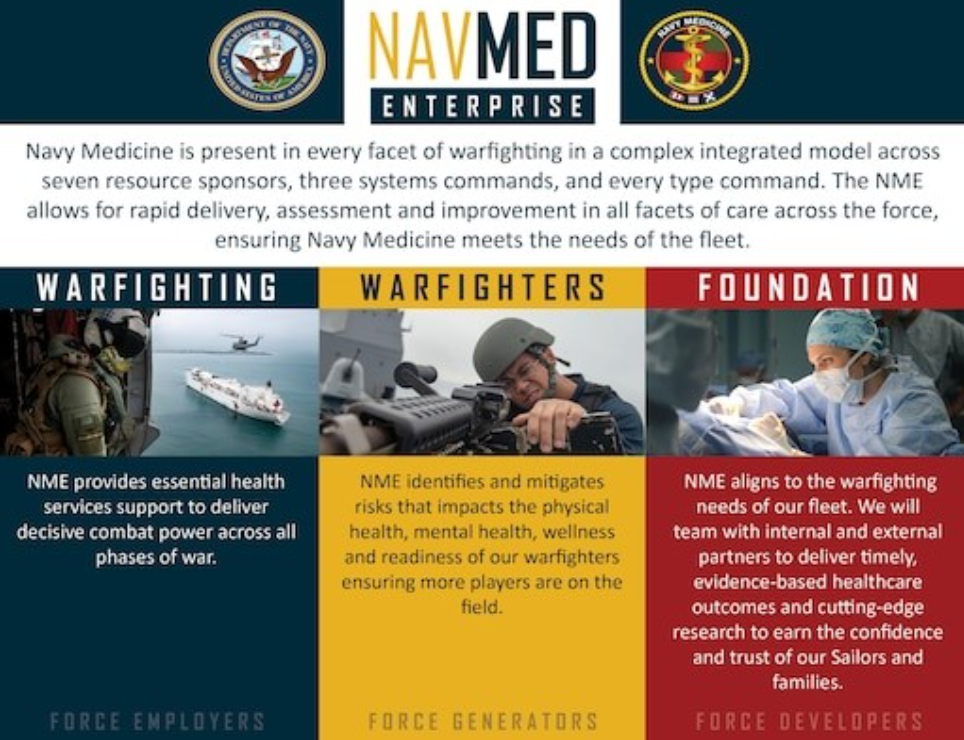
FALLS CHURCH, Va. - Vice Chief of Naval Operations Adm. Jim Kilby approved the establishment of the Navy Medicine Enterprise (NME), which is an operationally focused organizational structure providing senior fleet leadership a mechanism to address and prioritize health service support requirements to meet operational objectives, Aug. 14. 

Vice Chief of Naval Operations Adm. Jim Kilby approved the establishment of the Navy Medicine Enterprise (NME), which is an operationally focused organizational structure providing senior fleet leadership a mechanism to address and prioritize health service support requirements to meet operational objectives, Aug. 14. 
 
The commitment of Navy Medicine to both operational and preventive care is crucial in sustaining our force,” said Kilby. “This is about setting standards of care for our people – from physical and mental health, to training and education. Ensuring our naval medical forces are properly manned, trained, and equipped means we’re ready now and for the future fight.” 

A graphic illustration depicts the Navy Medicine Enterprise (NME), which allows for rapid delivery, assessment and improvement in all facets of care across the force, ensuring Navy Medicine meets the needs of the fleet. Navy Medicine is present in every facet of warfighting in a complex integrated model across seven resource sponsors, three systems commands, and every type command. (U.S. Navy graphic illustration by U.S. Navy) 

 
The U.S. Navy Surgeon General will lead the NME, providing a single integrated voice of a cooperative partnership operating within existing command structures and U.S. Code Title 10 authorities. 
 
“Navy Medicine warfighters are integrated across every facet of warfighting, whether providing health services with the fleet or from the foundation,” stressed U.S. Navy Surgeon General and Chief, U.S. Navy Bureau of Medicine and Surgery Rear Adm. Darin Via. “The NME allows us to ensure we are addressing the needs of the fleet, not only through my authorities as the Surgeon General, but also aligned across the authorities of seven resource sponsors, three system commands and every type command.” 
 
NME will address the readiness, and physical and mental health of all warfighters through healthcare services support designed to prevent illness and injury, maximize baseline human performance, and treat and rehabilitate warfighters’ post illness and injury through standardized quality of care, policy, education, training, and the delivery of medical forces in support of the warfighters. 
 
“Health services are the backbone of effective warfighting in the U.S. Navy, ensuring that every Sailor and Marine is mission-ready and resilient,” said Adm. Daryl Caudle, commander, U.S. Fleet Forces Command. “The Navy Medicine Enterprise stands as a crucial pillar, providing comprehensive support to fleet commanders by mitigating risks, optimizing human factors, and maintaining peak operational health readiness, ultimately ensuring our enduring overmatch, our warriors, can sustain our maritime dominance and strategic advantage.” 
 
The foundation of the NME process will be formed by stakeholders and organizations who are integral to the warfare improvement program who prioritize fleet capabilities and priorities. The NME process also includes coordination with resource sponsors to ensure alignment, reduce duplication, and to achieve organizational goals. 
 
The Fleet Readiness Enterprise construct was established by the Chief of Naval Operations in 2002 to improve efficiency and effectiveness in producing readiness in fleet units and forces, institute structure and process to better support informed decisions on readiness resource allocation and risk mitigation. The enterprise construct enables a more holistic approach to developing fleet recommendations to the Office of the CNO regarding warfighting capabilities and programming. 
 
Navy Medicine – represented by more than 44,000 highly-trained military and civilian health care professionals – provides enduring expeditionary medical support to the warfighter on, below, and above the sea, and ashore. 


Japan Buys Two SeaGuardians From GA-ASI  

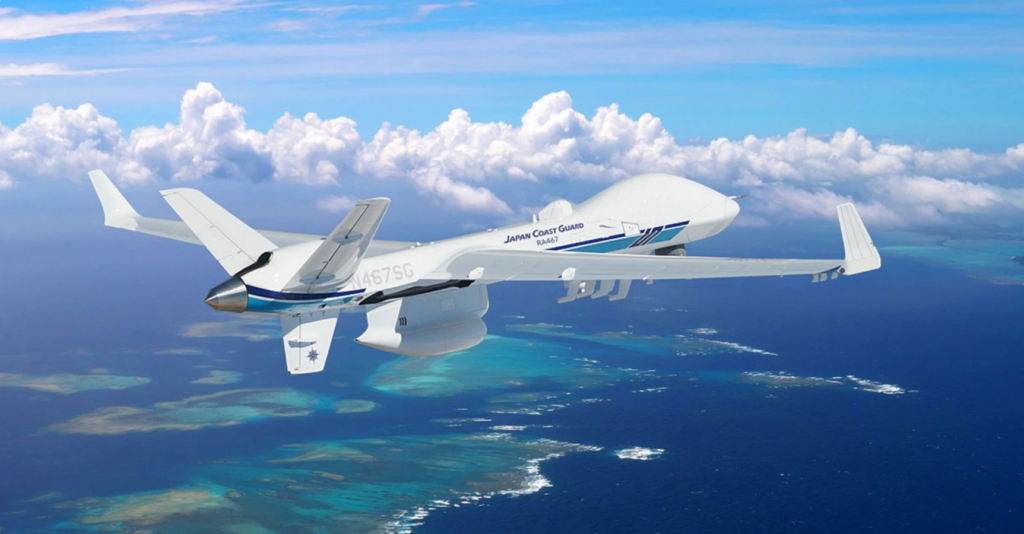
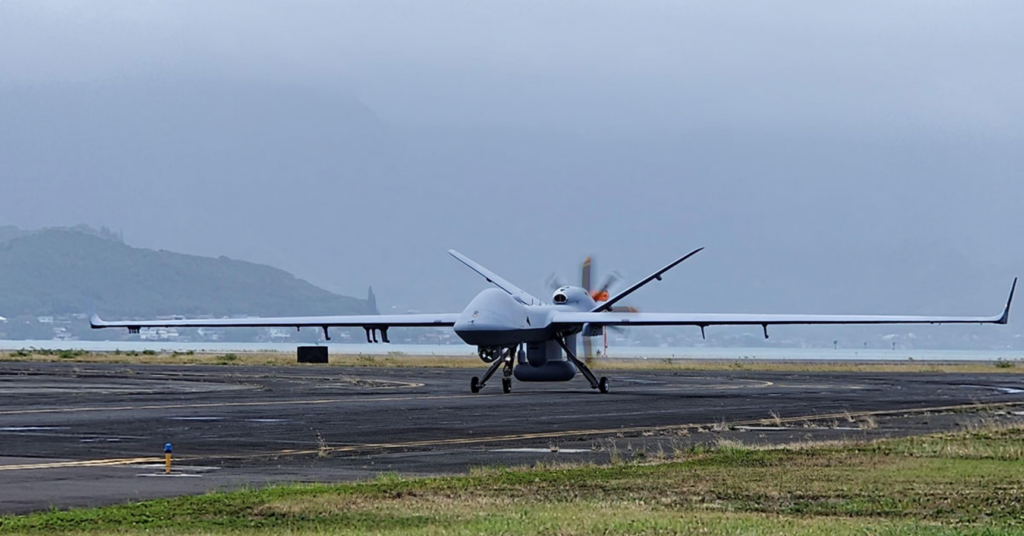
SAN DIEGO, August 15, 2024 (Newswire.com) – The Japan Coast Guard (JCG) has signed a contract for the purchase of two SeaGuardian® Remotely Piloted Aircraft (RPA) from General Atomics Aeronautical Systems, Inc. (GA-ASI), scheduled for delivery in 2025. This follows JCG’s ongoing Company-Owned, Contractor-Operated agreement with GA-ASI for operating SeaGuardian, which began in April 2022.  

“Since JCG started operating SeaGuardians, they have been used for various JCG missions, including supporting search and rescue and disaster response, specifically during the 7.6 magnitude earthquake early this year near the Noto Peninsula of Ishikawa Prefecture and maritime surveillance during the 2023 G-7 Summit in Hiroshima, and the system has performed efficiently and effectively,” said GA-ASI CEO Linden Blue. 

SeaGuardian is a medium-altitude, long-endurance RPA system that can fly for 24 hours or more, depending on the configuration.  

GA-ASI has strengthened its Maritime Wide Area Surveillance (MWAS) for Japan with Optix+, which gathers information from the SeaGuardian sensors, as well as other data sources, displaying the full picture of surveillance information for its operator. This functionality makes it easy to task and direct its Intelligence, Surveillance and Reconnaissance (ISR) information in real time. GA-ASI’s Optix+ software suite rapidly correlates and exploits collected data into an easily shared common operational picture. Having multi-source correlated data enables automatic detection of anomalous behaviors over waters. 


Senate Committee Report Calls for Coast Guard Action on Sexual Harassment Claims

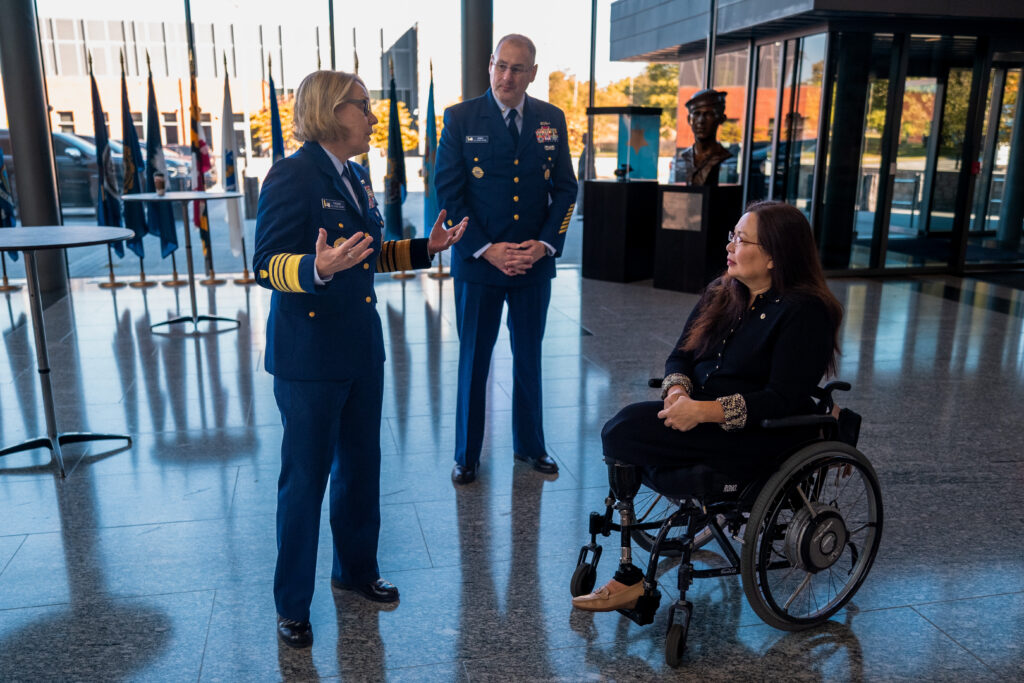
Admiral Linda Fagan and Master Chief Petty Officer of the Coast Guard Heath Jones converse Oct. 19. 2023 with Senator Tammy Duckworth in observance of National Disability Employment Awareness Month. U.S. Coast Guard | Petty Officer 2nd Class Erik Villa Rodriguez

In a new report entitled “A Pervasive Problem,” the majority staff of the Homeland Security Committee’s Permanent Subcommittee on Investigations concluded the U.S. Coast Guard must do more to eliminate sexual harassment in its ranks and at the service’s academy and should use evidence uncovered by the panel to prosecute perpetrators.

“The Subcommittee has heard from more than 80 whistleblowers, who together have made clear the need for immediate change both at the Academy and in the Coast Guard,” the report’s conclusion says. “Their stories detail systemic sexual assault and harassment, including a culture of silencing, retaliation, and failed accountability. Although Operation Fouled Anchor initially brought these problems to light, they span both the Academy and the Fleet — the Coast Guard as a whole must work to build a culture in which everyone is safe, respected, and valued.”

The panel has been looking into the issue for more than a year, and recently held a hearing featuring Coast Guard Commandant Admiral Linda L. Fagan as the main witness, focusing on Operation Fouled Anchor, the Coast Guard’s investigation into sexual harassment allegations. Members of the panel charged the service had buried the results of its own investigation until CNN brought them to light. Fagan pledged to be transparent in dealing with the issue, which is also being investigated by the service’s inspector general.

However, in a “note from the chair” that begins the new report, panel chairman Sen. Richard Blumenthal of Connecticut writes, “I am deeply disappointed by the Coast Guard’s responses to this Subcommittee’s requests for critically necessary information. Despite repeatedly and publicly claiming a commitment to transparency, the organization has often resisted constructive responses. Such repeated opposition to disclosure has made us wonder whether the Coast Guard is, once again, attempting to escape Congressional scrutiny.”

Victim Reports

The report includes statements from numerous reports of sexual assault going back decades, as well as what survivors describe as attempts to silence them.

“These stories, spanning from the 1970s through the 2020s, depict systemic failures at the Coast Guard Academy and in the Coast Guard that continue to this day,” the report says.

In one account, “after learning that she had experienced months of sexual misconduct, a superior allegedly told an enlisted whistleblower: ‘Okay, I want you to think about these men and their careers. They could lose their jobs over this, and you could ruin their lives. And then CGIS [Coast Guard Investigative Services] is going to show up and make you out to be a liar. No one will believe you. Do you want that? I want you to think about all of this before you decide to tell anyone else.’”

In some cases, “fear of punishment for collateral misconduct deterred victims of abuse from reporting. One whistleblower shared that, as a cadet in the 2010s, the threat of discipline for unrelated misconduct was used to keep her from reporting repeated sexual assaults by the same perpetrator for a year. She said: ‘He blackmailed me, using his position over me and the fact that I drank underage to get me to have sex with him. He knew that I would get into more trouble for underage drinking than he would for blackmailing me for sex. He was right. …’”

Blumenthal’s opening note says the subcommittee will continue its work, and “our continuing investigation is likely to provide evidence that will assist and motivate the Coast Guard to impose discipline. It is imperative that the Coast Guard uses all means available to hold accountable both individual perpetrators and the leadership that covered up their wrongdoing … the culture will not change until the Coast Guard makes clear that sexual assault and harassment will not be tolerated.”

Coast Guard Response

The Coast Guard provided a statement to Seapower in response to the report.

“Sexual assault, sexual harassment, and all forms of abuse have no place in the Coast Guard. We are committed to fostering lasting institutional and cultural change that ensures a safe and respectful environment free of sexual assault, sexual harassment, and other harmful behaviors. Should such incidents occur, the Coast Guard is committed to supporting victims, upholding the law, and reinforcing the service’s core values,” the statement says.

“We are actively implementing the commandant’s 33 directed actions announced in November 2023 to strengthen our service culture, improve support and care of victims, and hold perpetrators accountable. Our progress completing 18 of these directed actions so far represents the early stages of enduring change that will ensure every person in the Coast Guard experiences a safe work environment where they are respected and valued.  More information regarding the Coast Guard’s actions to address sexual assault, and ensure accountability, care, and support, is available here.”


Navy Completes Install of First MQ-25 Unmanned Air Warfare Center Aboard USS George H.W. Bush 

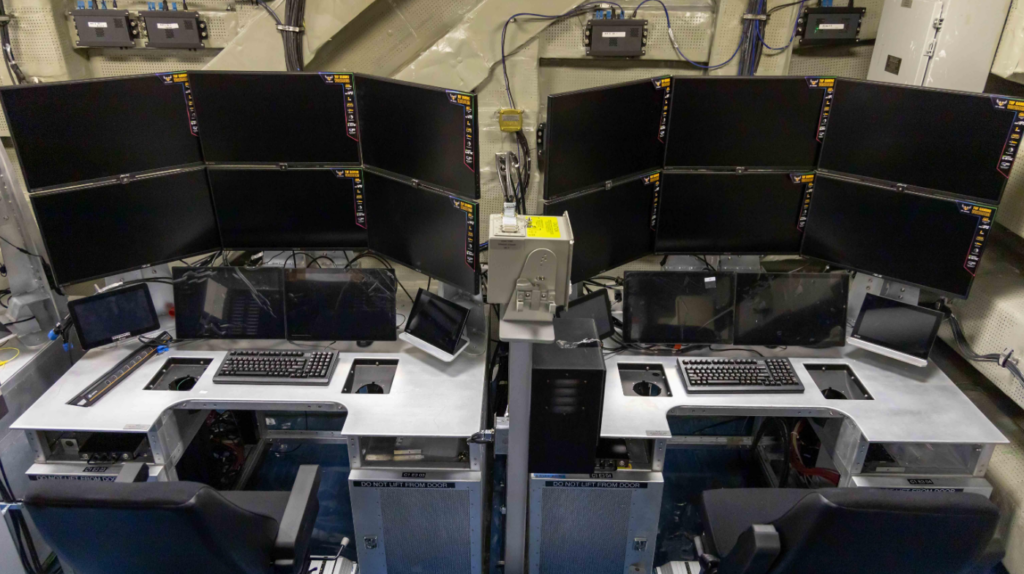
The first installation of the Unmanned Air Warfare Center (UAWC) aboard USS George H.W. Bush (CVN 77), where air vehicle pilots will control future MQ-25 Stingray airborne operations. (U.S. Navy photo)

Aug 15, 2024 

Naval Air Systems Command, Patuxent River, Md. — The Navy recently installed the world’s first Unmanned Air Warfare Center (UAWC) aboard USS George H.W. Bush (CVN 77), where Air Vehicle Pilots (AVPs) will control future MQ-25™ Stingray airborne operations. 

This major installation was a multi-year effort coordinated across multiple ship availability periods and the ship’s deployment schedule. 

The CVN-based control room, known as the UAWC, includes software and hardware systems that make up the first fully operational and integrated Unmanned Carrier Aviation Mission Control System (UMCS) MD-5E Ground Control Station (GCS). UMCS is the system-of-systems required for the MQ-25 air vehicle command and control and is critical to the unmanned aircraft refueler’s operations. 

“CVN 77’s UAWC lays the foundation for how the U.S. Navy will operate and control unmanned aircraft, and perhaps other unmanned vehicles, with UMCS,” said Unmanned Carrier Aviation (PMA-268) Program Manager Capt. Daniel Fucito. “These systems will initially support the MQ-25 but also future unmanned systems such as Collaborative Combat Aircraft that comprise the Air Wing of the Future.” 

The GCS, developed by the Navy, includes Lockheed Martin’s Skunk Works® Multi Domain Combat System (MDCX™), the power behind the GCS, along with additional supporting equipment and hardware. The hardware installed in the racks and cockpits is the baseline for the production systems currently being fabricated for installation on CVNs 70, 71, and 76 beginning in fiscal year 2025.  

“The support we received from all the organizations was incredible,” said Gordon Carlon, acting PMA-268 UMCS CVN installation lead. “Our program is accomplishing things on a much faster timeline than any other normal start-up program.” 

PMA-268’s UMCS team worked with multiple program offices, systems commands and shipyards to integrate the UAWC into existing networks and the carrier architecture. The Naval Air Warfare Center Aircraft Division Webster Outlying Field Alteration Installation Team, AirWorks, and Lockheed Martin assisted with the coordination and physical installation of the UAWC while Naval Sea Systems Command, Norfolk Naval Shipyard, and CVN 77 organized schedules, equipment, and logistics. 

Early next year, CVN 77 will lead the first at-sea testing of the UAWC’s operational networks, building on initial network testing with a simulated GCS that took place in January aboard USS Abraham Lincoln (CVN 72). 

“This will be the first time the AVPs from Unmanned Carrier-Launched Multi-Role Squadron (VUQ) 10 will operate the MD-5 from an aircraft carrier. They will use the actual GCS hardware and software aboard CVN 77 to communicate with a simulated air vehicle in the lab in Pax River,” said Joe Nedeau, PMA-268 UMCS lead. 

PMA-268 is the lead systems integrator for MQ-25, working closely with its two prime industry partners, Boeing and Lockheed Martin, to seamlessly integrate the MQ-25 into carrier operations, including deck handing, taxiing and launch and recovery.  When operational, MQ-25 will provide an aerial refueling capability to extend the range and flexibility of the carrier air wing. 


Coast Guard Offloads More Than $18M in Illegal Narcotics Interdicted in Caribbean

Bales of cocaine stacked on a pier at Base Miami Beach on August 14, 2024. This offload was the result of drug interdiction efforts by Coast Guard and Navy crews in the international waters of Caribbean. (U.S. Coast Guard photo by Petty Officer 3rd Class Nicholas Strasburg)

From U.S. Coast Guard 7th District, Aug. 15, 2024 

MIAMI – The crew of Coast Guard Cutter Robert Yered offloaded more than 1,380 pounds of cocaine with an assessed street value of approximately $18.1 million in Miami Beach, Wednesday.   

A U.S. Coast Guard law enforcement detachment deployed aboard a U.S. Navy ship interdicted the illegal drugs in the international waters of the Caribbean Sea while working alongside interagency and international partners.   

During the interdiction, the go-fast vessel began taking on water and capsized. A combined Navy and Coast Guard boat crew rescued the three suspected smugglers from the water before recovering bales of jettisoned contraband from the sea.   

“I am incredibly proud of the skill and tenacity displayed by our entire team during this interdiction,” said Cmdr. T.J. Orth, commanding officer of USS St. Louis. “This operation was a testament to the capability of our Navy-Coast Guard and interagency teams. The sailors of St. Louis and HSM-50, and Coast Guardsmen of LEDET 105 utilized every resource and capability at their disposal to track and intercept the vessel and then respond to safeguard the lives of the three suspected smugglers.”  

The following assets and crews were involved in the interdictions:  

  • USS St. Louis (LCS 19)  

  • U.S. Coast Guard Tactical Law Enforcement Team Pacific (PAC-TACLET) Law Enforcement Detachment (LEDET) 105  

  • U.S. Navy Helicopter Maritime Strike Squadron 50 (HSM-50) Detachment 4  

  • Joint Interagency Task Force South (JIATF-South)  

The three suspected smugglers will face prosecution in federal courts by the U.S. Department of Justice.  

Detecting and interdicting illicit drug traffickers on the high seas involves significant interagency and international coordination. The Joint Interagency Task Force South in Key West, Florida conducts the detection and monitoring of aerial and maritime transit of illegal drugs. Once interdiction becomes imminent, the law enforcement phase of the operation begins, and control of the operation shifts to the U.S. Coast Guard throughout the interdiction and apprehension. Interdictions in the Caribbean Sea are performed by members of the U.S. Coast Guard under the authority and control of the Coast Guard’s Seventh District, headquartered in Miami.  

This interdiction is part of an Organized Crime Drug Enforcement Task Forces (OCDETF) Strike Force Initiative, which provides for the establishment of permanent multi-agency task force teams that work side-by-side in the same location. OCDETF identifies, disrupts, and dismantles the highest-level criminal organizations that threaten the United States using a prosecutor-led, intelligence-driven, multi-agency approach. Additional information about the OCDETF program can be found at https://www.justice.gov/OCDETF.  


U.S., France Naval Forces Conduct Bilateral Operations in Indo-Pacific 

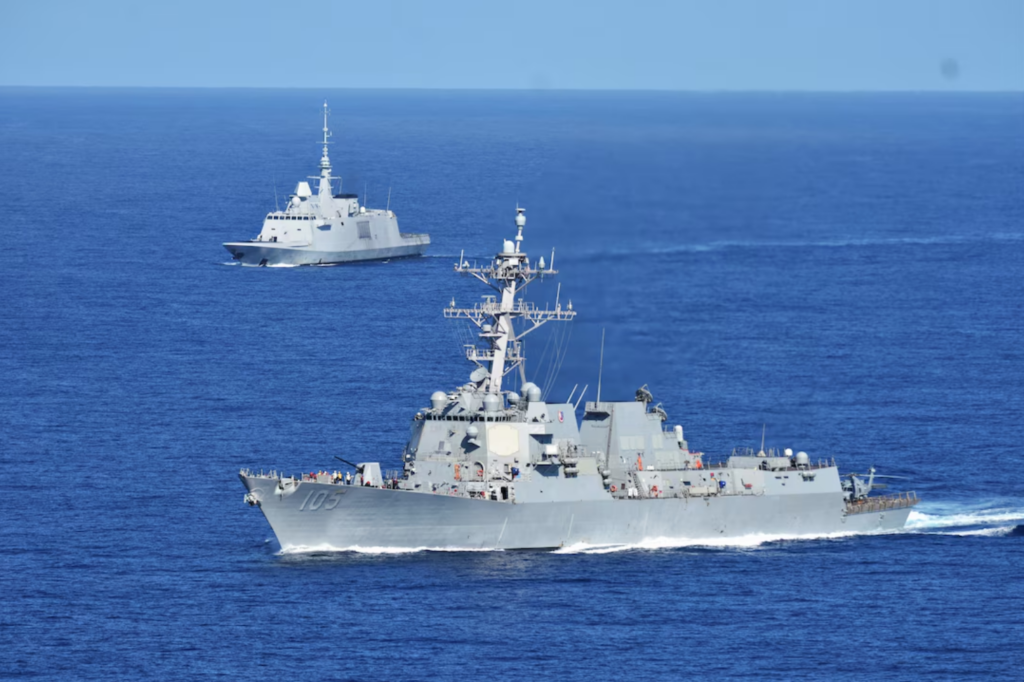
PHILIPPINE SEA (Aug. 13, 2024) – The Arleigh Burke-class guided-missile destroyer USS Dewey (DDG 105) sails alongside the French Navy Aquitane-class frigate FS Bretagne (D 655) during bilateral operations in the Philippine Sea, Aug. 13, 2024. (French Navy Courtesy Photo) 
 

From Commander, Task Force 71/Destroyer Squadron 15, 15 August 2024 

The U.S. Navy and French Navy joined forces to conduct bilateral operations in support of a free and open Indo-Pacific in the Philippine Sea, Aug. 13. 

The operations included U.S. Navy Arleigh Burke-class guided-missile destroyer USS Dewey (DDG 105) and the French Navy Aquitane-class frigate FS Bretagne (D655). 
 
“The U.S. 7th Fleet takes regular steps to advance our interoperability with allies and partners in the Indo-Pacific, as we did during this week’s bilateral operation with our longstanding French Navy allies,” said Vice Adm. Fred Kacher, commander, U.S. 7th Fleet. “The work we do together strengthens the combined capabilities of our professional maritime forces and enhances our ability to deter conflict in the region.” 
 
The ships conducted formation sailing, combined communication, and simulated refueling at sea. 
 
“Our bilateral training affirms the high level of interoperability between French and American navies,” said Capt. Audrey Boutteville, commanding officer of Bretagne. “The newly-swapped crew of the FS Bretagne continues to ride with high spirits established during RIMPAC as demonstrated with our cooperation with the U.S. Navy in the Philippine Sea!” 
 
The U.S. Navy regularly operates alongside our allies in the Indo-Pacific region as a demonstration of our shared commitment to the rules-based international order. Bilateral operations such as this one provides valuable opportunities to train, exercise and develop tactical interoperability across allied navies in the Indo-Pacific. 
 
“Professional engagement with allies, partners, and friends operating in the region allows us to build upon our existing, strong relationships and learn from each other,” said Cmdr. Nicholas Maruca, commanding officer of Dewey. “These sails are great opportunities to enhance interoperability, information sharing and combined warfighting capabilities with our partners and allies through realistic scenarios across a number of warfare areas.” 
 
Dewey is forward-deployed and assigned to Destroyer Squadron (DESRON) 15, the Navy’s largest DESRON and the U.S. 7th Fleet’s principal surface force. 
 
U.S. 7th Fleet is the U.S. Navy’s largest forward-deployed numbered fleet, and routinely interacts and operates with allies and partners in preserving a free and open Indo-Pacific region. 


GA-ASI’S MQ-9B SeaGuardian Showcased at RIMPAC 2024  

Sonobuoy Dispensing System and LRASM Among the New Capabilities Featured 

SAN DIEGO – 14 August 2024 – With the completion of the U.S. Navy’s Rim of the Pacific (RIMPAC) flight operations on July 28, 2024, the MQ-9B SeaGuardian Unmanned Aircraft System (UAS) supplied by General Atomics Aeronautical Systems Inc., self-deployed back to its home base in El Mirage, Calif., but only after introducing an array of new capabilities. The flight home followed close to 100 flight hours supporting RIMPAC 2024 over the four-week exercise in and around the Hawaiian Islands.  

RIMPAC is the world’s largest international maritime exercise. RIMPAC 2024 featured 29 nations, 40 surface ships, three submarines, 14 national land forces, more than 150 aircraft, and 25,000 personnel. 

SeaGuardian provided real-time Intelligence, Surveillance, and Reconnaissance (ISR) data feeds to the U.S. Pacific Fleet Command Center using Signals Intelligence (SIGINT) parametrics and full-motion video to the watch floor and intelligence centers for real-time dynamic tasking — just as it did for the RIMPAC 2022 exercise. This year, SeaGuardian delivered some new features and capabilities, including Long Range Anti-Ship Missile (LRASM) targeting and a new Sonobuoy Dispensing System (SDS) to support its Anti-Submarine Warfare capability. SeaGuardian was configured with a prototype SDS pod capable of deploying 10 A-size sonobuoys per pod (SeaGuardian can carry up to four SDS pods or up to 40 sonobuoys) and the SeaVue Multi-role radar from Raytheon, an RTX business. Upon dispensing, the sonobuoys were successfully monitored and controlled by the SeaGuardian’s onboard Sonobuoy Monitoring and Control System (SMCS). 

SeaGuardian is a maritime derivative of the MQ-9B SkyGuardian and remains the first UAS that offers multi-domain Intelligence, Surveillance, Reconnaissance, and Targeting (ISR&T) as an internal payload that can search the ocean’s surface and depths in support of Fleet Operations. At RIMPAC 2024, SeaGuardian showcased all operational payloads, which includes the SeaVue, SNC’s Electronic Support Measures (ESM) solution, an Automatic Identification System (AIS), and a self-contained Anti-Submarine Warfare (ASW) system. 

SeaGuardian’s multi-domain capabilities allow it to flex from mission to mission and pass real-time sensor data directly to the Fleet. For RIMPAC 2024, SeaGuardian added Link 16 Joint Range Extension Application Protocol (JREAP) “C” (internet protocol) and an integrated Minotaur Mission System to provide real-time sensor data for the various Maritime Operations Centers, ships, and aircraft with Minotaur nodes. 

“For RIMPAC, the MQ-9B effectively passed ISR&T information to various surface and air units, such as the Nimitz-class carrier USS Carl Vinson, guided-missile destroyers (DDGs), littoral combat ships (LCS), frigates, patrol boats, P-8s, P-3s, and numerous other U.S. and foreign units that took part in the exercise,” said GA-ASI President David R. Alexander. 

On July 31, 2024, SeaGuardian self-deployed back to GA-ASI’s Desert Horizon Flight Operations Facility in El Mirage, Calif. 


USS Oscar Austin One of Two U.S. Navy DDGs Homeport Shifting to Rota, Spain 

From Commander, Naval Surface Force, Atlantic, 14 August 2024 

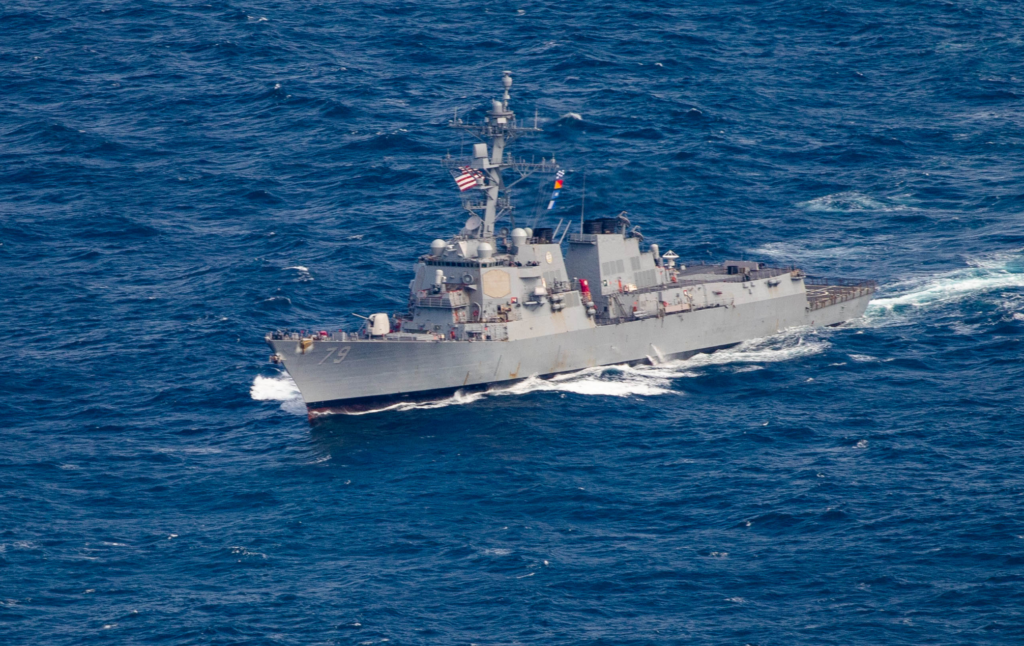
NORFOLK, Va. – USS Oscar Austin (DDG 79) is scheduled to change its homeport from Naval Station Norfolk, Va. to Rota Naval Base, Spain, in the fall of 2024. 

Oscar Austin is the first of two additional Arleigh Burke-class guided-missile destroyers to join the current Forward Deployed Naval Force-Europe (FDNF-E) force – adding additional capabilities to the U.S. European Command (EUCOM) and U.S. Africa Command (AFRICOM) areas of responsibility. The addition of these two ships will be phased, with the second arriving in 2026. The second ship will be named closer to its arrival. 

“Shifting Oscar Austin’s homeport to Rota is the next step in bolstering U.S. and NATO maritime presence and combat power in Europe as well as increasing the capacity to execute the One Atlantic concept,” said Adm. Daryl Caudle, commander, U.S. Fleet Forces Command. “The One Atlantic concept improves the ability to share, leverage, and fully utilize naval forces in response to threats and strategic competitors while conducting multi-mission operations across the Atlantic by multiple Combatant Commanders.” 

The move will increase the U.S. Navy’s forward-deployed operational footprint in EUCOM to five destroyers in Rota. The increased presence reinforces the U.S. Navy’s commitment to its enduring relationship with maritime allies in Spain, and it enhances operations to support maritime security alongside allies and partners in Europe and Africa, strengthening the trans-Atlantic link. The addition will enable additional coordination between U.S. and Spanish navies on ship maintenance and training. 

Operating naval forces from Spain maximizes flexibility and ensures access to strategic global crossroads. The addition of Oscar Austin to Rota will allow for more operational flexibility within the European theater. The arrival of the ship will provide a mitigation of operational tempo for other FDNF-E Sailors assigned to ships in Rota, improving quality of life and decreasing operational stressors. 

On May 8, 2023, the U.S. Ambassador to Spain, Julissa Reynoso, signed in Madrid on behalf of President Biden the enhancement of the Defense Cooperation Agreement with the Kingdom of Spain to increase the U.S. Navy’s presence at Rota Naval Base, Spain, from four Arleigh Burke-class guided-missile destroyers to six. 

The initial decision to base destroyers out of Spain is part of the U.S. European Phased Adaptive Approach announced by President Obama in 2009. Since its announcement, the U.S. has broadened its Ballistic Missile Defense (BMD) capabilities in theater including increasing FDNF-E from four to six and the finalization of the second Aegis Ashore site in Poland. 

Oscar Austin is the first Flight IIA Arleigh Burke-class, guided-missile destroyer and proudly bears the name of Pfc. Oscar P. Austin, United States Marine Corps. USS Oscar Austin was commissioned on August 19, 2000, in Norfolk, Va. Oscar Austin is ballistic missile defense, anti-submarine, and anti-surface warfare capable. The ship can embark two MH-60R Seahawk helicopters to assist in anti-submarine and other warfare areas. Destroyers can work with Carrier Strike Groups, Surface Action Groups, Expeditionary Strike Groups or independently.