Royal Navy Enhances Underwater Capabilities with Acquisition of Additional HII Advanced Unmanned Vehicles
From HII 

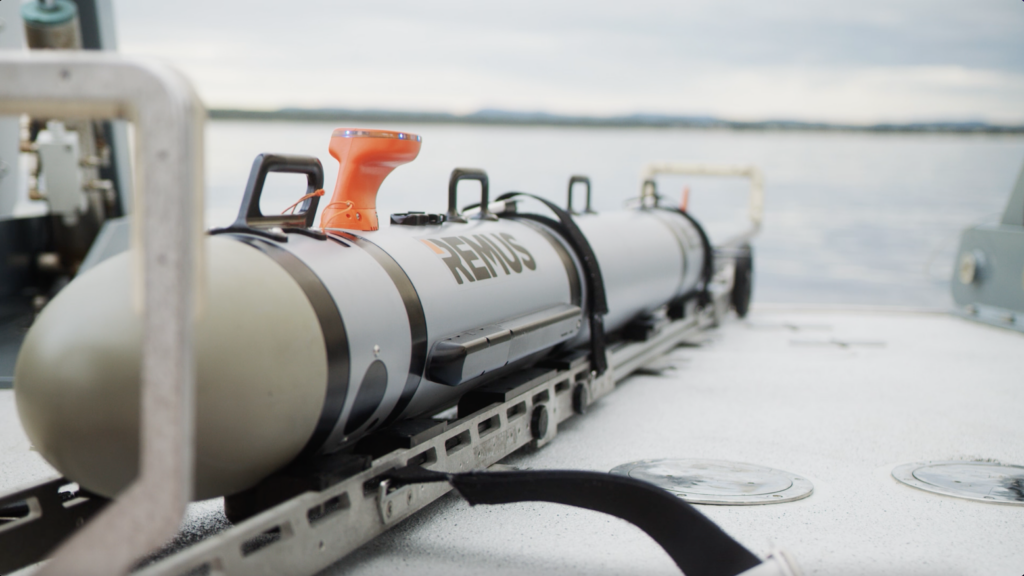
MCLEAN, Va., May 06, 2024 (GLOBE NEWSWIRE) — HII, the leading manufacturer of underwater unmanned vehicles (UUVs), announced the recent sale of three REMUS 100s and five REMUS 300s to the Royal Navy. 

This transaction marks a significant milestone in the longstanding partnership between HII and the United Kingdom military to support the Royal Navy’s capabilities in underwater exploration, countermine and surveillance programs. 

Over the past 20 years, the U.K.’s Ministry of Defence has acquired a mix of REMUS 100s, Remus 300s and REMUS 600s for mine countermeasure operations. 

The Ministry of Defence’s first two REMUS 100s, acquired in 2001, are still in operation today, demonstrating the resilience and modernization capabilities of the HII-built UUVs. 

The REMUS 100s and 300s, known for their versatility and reliability, are set to enhance the Royal Navy’s operational efficiency for a variety of maritime missions. These UUVs are equipped with advanced sensors and systems, enabling them to perform a wide range of tasks, from reconnaissance to mine countermeasures. 

Duane Fotheringham, president of Mission Technologies’ Unmanned Systems business group, stated, “We are honored to support the Royal Navy in their mission to maintain maritime security. The trust placed in our REMUS vehicles by the United Kingdom and other allies is a testament to the quality and reliability of our technology. We look forward to further strengthening our partnerships and contributing to global maritime safety.” 

A photo accompanying this release is available at: https://hii.com/news/hii-royal-navy-REMUS-unmanned-vehicle-acquisition/

The sale of REMUS 100s and 300s to the Royal Navy follows a history of successful collaborations between HII, the U.S. Navy, and U.S. allies around the world, with REMUS UUVs being widely used by NATO members. 

HII has sold more than 600 UUVs to 30 countries worldwide, including 14 NATO member countries like the U.K. 

Recent HII REMUS milestones: 

  • March 2024: HII announced the sale of a REMUS 620 UUV to an international customer in the Indo-Pacific Region. 
  • December 2023: The U.S. Navy announced the first end-to-end submarine torpedo tube launch and recovery of a REMUS UUV using the Yellow Moray system. This capability to deploy a drone through a torpedo tube creates new opportunities for surveillance, reconnaissance and other missions. 
  • October 2023: HII announced the award of a contract to build nine small UUVs for the U.S. Navy’s Lionfish System program. The contract has since grown to 42 vehicles and has the potential to grow to as many as 200 over the next five years with a total value of more than $347 million. 
  • September 2022: HII delivers three REMUS 100 UUVs to the United Kingdom’s Royal Navy. The new systems provide enhanced endurance and the latest generation of sensors and payloads, allowing for increased data quality and mission efficiency. 
  • August 2022: The Royal New Zealand Navy received delivery of four REMUS 300 UUVs for use in mine countermeasure and survey operations. 


BlueHalo and Kraken Partner to Advance Autonomous Maritime Operations

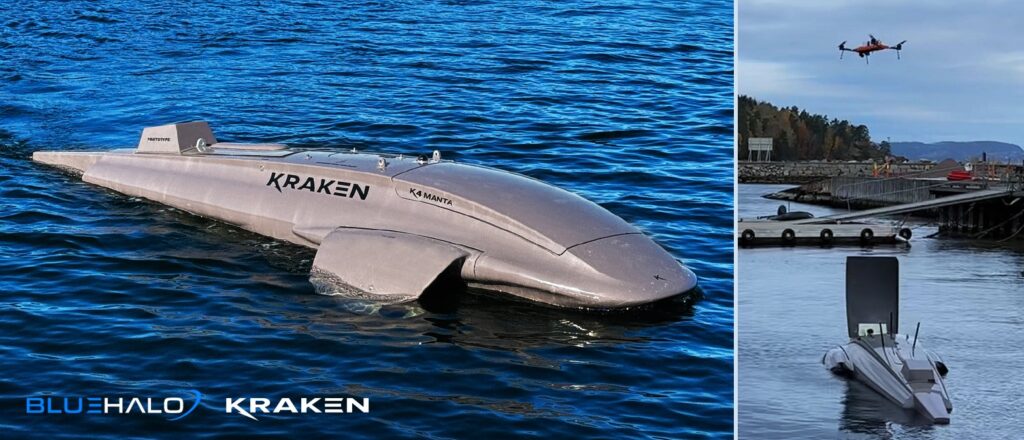
ARLINGTON, Va. and LONDON, U.K. — BlueHalo, the company transforming the future of global defense,  and Kraken Technology Group, a maritime technology leader specializing in disruptive high-performance platforms, today announced a strategic partnership to integrate BlueHalo’s cutting-edge Artificial Intelligence and Machine Learning (AI/ML)-backed autonomous mission systems into Kraken’s littoral security platforms to develop next-generation uncrewed surface vehicles (USV) and uncrewed surface/sub-surface vehicles (USSV) along with multi-domain, ‘marsupial’ capabilities. 

Through this partnership, the entities will work together to integrate BlueHalo’s industry-leading autonomous innovations within a range of Kraken vessels–including the K3 SCOUT USV, the K4 MANTA USSV and the K5 KRAKEN Gunship–to yield significant innovations in maritime autonomy and develop new littoral capabilities addressing critical national security priorities. BlueHalo will also integrate its Titan and SkyView Radio Frequency (RF)-based counter-uncrewed aircraft system (C-UAS) technologies as payload within the K3, K4, and K5 portfolio for mobile, maritime UAS detect and defeat capabilities. 

“This expansion into the maritime domain is one of several initiatives we have been planning as part of our long-term strategic vision. The ability to rapidly and seamlessly adapt current leading technologies to adjacent domains allows us to out innovate adversaries and extend BlueHalo’s ring of protection,” said Jonathan Moneymaker, BlueHalo Chief Executive Officer. “Kraken’s innovative spirit and passion for customer success align directly with our DNA and we are excited to be bringing these disruptive offerings to the mission.” 

“Partnering so closely with BlueHalo on the integration of K3 has demonstrated clear synergies in both vision and expertise. With this combined effort, Kraken and BlueHalo are working together to expand these innovations across our other vessels and pursue even more opportunities to meet critical customer needs,” said Mal Crease, Founder and CEO of Kraken Technology Group. “Game-changing capabilities deployed at pace is our sole objective, and this partnership will ensure our ability to deliver against exponentially growing  
market demand.” 

The BlueHalo AI/ML-backed autonomous platform will serve as the primary core of autonomous operations and functions within the Kraken USV and USSV–leading mission-focused operations, maintaining situational awareness, signaling directions to the autonomous maritime controller, enabling multi-vessel swarming, and supporting hybrid maritime and land “marsupial” operations. 

BlueHalo has extensive technical experience delivering state-of-the-art autonomous capabilities, including R&D, engineering, systems development, fabrication and prototyping, manufacturing, integration and sustainment activities. These capabilities enabled the development of HaloSwarm–a transformational, autonomous drone swarming technology with unmatched mission efficiency and performance previously unavailable to the warfighter. The company also offers an entire ecosystem of uncrewed solutions purpose-built for any environment, including the Intense Eye UAS, which is part of the U.S. Defense Innovation Unit (DIU) Blue UAS Cleared List for rigorously vetted, policy-compliant, commercial UAS. 

Kraken has a successful record of rapidly developing and manufacturing disruptive, scalable littoral platforms at high-volume. K3 SCOUT is a low-cost, low-signature, high-performance autonomous multi-mission USV for use both commercial and military applications. K4 MANTA is a unique, innovative scalable platform under development which will bring multi-mission payloads over large distances, before submerging for covert infiltration, persistent recce or loitering roles. K5 KRAKEN will be the definitive built-for-purpose, high-performance littoral gunship, capable of rapid solo or swarmed precision engagement in defense of littoral or afloat assets.  


USCGC Active Returns from Eastern Pacific Patrol; One Life Saved, $50.8M of Cocaine Interdicted

U.S. Coast Guard Pacific Area, May 3, 2024 

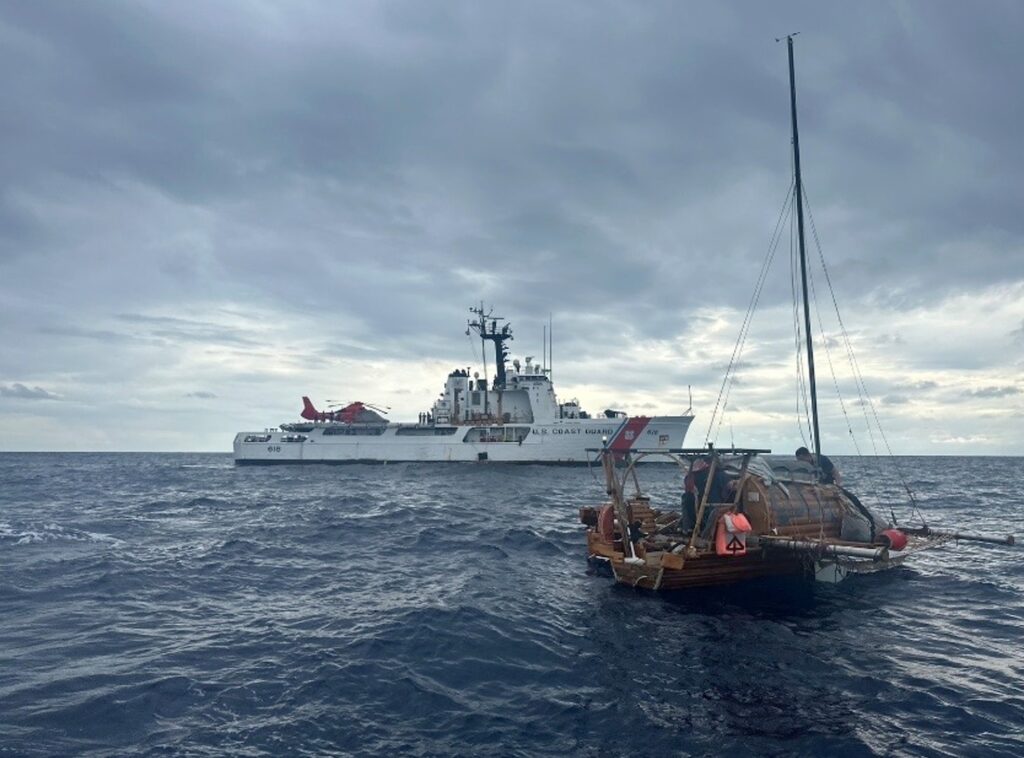
PORT ANGELES, Wash. — The U.S. Coast Guard Cutter Active (WMEC 618) and crew returned home to Port Angeles Friday after completing a 54-day multi-mission patrol in support of a Joint Interagency Task Force-South (JIATF-S) counternarcotics patrol in the Eastern Pacific Ocean. 
 
During the patrol, Active’s crew interdicted 3,858 pounds of cocaine worth an estimated $50.8 million in a coordinated effort involving both airborne and surface units, resulting in a safe and successful interdiction. 
 
In addition to the cocaine interdiction, Active’s crew disrupted two other smuggling events while serving as the sole U.S. surface asset operating in the region for 28 days in support of Joint Interagency Task Force-South’s counter-narcotics campaign. Throughout the deployment, the cutter patrolled over 12,000 nautical miles, a distance roughly equivalent to five spans of the continental U.S. 
 
“Any interdiction at sea is challenging, with a variety of factors at every step, and no two are ever the same,” said Cmdr. Adam Disque, Active’s commanding officer. “The cases we encountered on this patrol were particularly difficult, and the crew fought through obstacles at every turn, working extremely hard to accomplish this mission. I could not be more proud of the team as they fully embodied our cutter’s nickname, ‘The Li’l Tough Guy’.” 
 
On April 12, Active received notification of a single-handed sailor in distress more than 300 nautical miles northeast of the Galapagos Islands. The sailor’s boat was disabled, and he was adrift at sea after reporting a pod of whales damaged his sailboat. 
 
Active diverted over 200 nautical miles at high speed to conduct a search and rescue operation. Upon arrival, the crew safely embarked the mariner and brought him back to shore. 
 
“This sailor was very fortunate that we happened to be in the area; he was far from normal shipping lanes and well out of range for any coastal rescue system,” said Petty Officer 3rd Class Gordon Smith, an Active crewmember who participated in the search planning. “It was fortunate that we were able to find him relatively quickly and get him on board before the weather or situation deteriorated.” 
 
Active’s two pursuit boats were supplemented by an MH-65E helicopter and aircrew from the Helicopter Interdiction Tactical Squadron (HITRON) to respond in a multi-mission environment on the high seas. HITRON, based in Jacksonville, Florida, conducts airborne use of force to stop vessels suspected of breaking U.S. and international laws on the high seas. 
 
During this patrol, specialized law enforcement members from the Coast Guard’s Pacific Tactical Law Enforcement Team and the Maritime Security and Response Team – West deployed aboard to support their mission and augment Active’s crew. 
 
Active regularly patrols international waters off southern Mexico and Central America to combat transnational organized crime in the Western Hemisphere, specifically the smuggling of narcotics. 
 
Active, a 57-year-old medium endurance cutter, is homeported in Port Angeles. The multi-mission cutter falls under the operational command of the Coast Guard Pacific Area Commander. Patrolling from the northernmost part of the contiguous United States to the equator, Active is critical in conducting search and rescue, counter-narcotics law enforcement, living marine resource protection, and homeland defense operations. 


Deputy Secretary of Defense Hicks Announces First Tranche of Replicator Capabilities Focused on All Domain Attritable Autonomous Systems

AeroVironment Switchblade UAS 

MAY 6, 2024 

Exemplifying the Department’s focus on harnessing the value of commercial technology to solve critical operational challenges, the first iteration of the Replicator initiative has reached an execution milestone. 

Deputy Secretary Hicks announced today some of the capabilities and one of the systems selected for accelerated fielding as part of the first tranche of the Replicator initiative, which is focused on fielding all-domain attritable autonomous (ADA2) systems. 

The Department has secured its needed funding of about $500 million for FY24, to include approximately $300 million from the Fiscal Year (FY) 2024 defense appropriations bill supporting the Department’s reprogramming request and additional funding identified using existing authorities and Defense-wide sources. In PB25, the Department has requested a roughly equal amount to the FY24 total and will work with Congress to support this request.  

These investments bring together the capabilities of a broad range of traditional and nontraditional technology companies, including systems vendors, component manufacturers, and software developers.  

“I am pleased to announce that the Department will begin investing in scalable production for these critical capabilities,” said Hicks. “We are taking an important step toward strengthening our defense and technology industrial base. And, we are demonstrating the Department’s ability to break down barriers to scaling innovation at speed not just for ADA2 systems, but in our ability to develop new capabilities and processes for the Department and key stakeholders, including Congress.” 

The first tranche of Replicator capabilities include uncrewed surface vehicles (USV), uncrewed aerial systems (UAS) and counter-uncrewed aerial systems (c-UAS) of various sizes and payloads from several traditional and non-traditional vendors.  

In the air domain, the Department will accelerate fielding of the Switchblade-600 loitering munition, produced by Simi Valley, CA-based AeroVironment Inc. U.S.-supplied Switchblade drones have already demonstrated their utility in Ukraine, and this system will provide additional capability to U.S. forces. 
  
“This is a critical step in delivering the capabilities we need, at the scale and speed we need, to continue securing a free and open Indo-Pacific” said Admiral Samuel Paparo, commander of U.S. Indo-Pacific Command. “The entire Department has come together to help make this a reality.” 

In the maritime domain, the Department is diversifying the vendor base for USVs through the recently announced Production-Ready, Inexpensive, Maritime Expeditionary (PRIME) Commercial Solutions Opening (CSO). The CSO process allows U.S. and international companies to pitch technologies to the Department in a fast-track process for a prototype contract. Launched on January 30, 2024, the PRIME CSO received over one hundred applications from commercial technology companies. With FY24 funding secured, the Department is on track to award several contracts this summer. 

The first tranche of Replicator also includes certain capabilities that remain classified, including others in the maritime domain and some in the counter-UAS portfolio.  

“Meeting the strategic imperatives facing the nation requires that we harness the very best of America’s commercial technology in non-traditional partners, alongside our traditional sources of defense capabilities,” said Doug Beck, Director of the Defense Innovation Unit (DIU). “Replicator is doing just that, and that is why we at DIU are proud to work with our partners from across the Department of Defense to make it a reality.” 

Since Deputy Secretary Hicks’ announcement of the Replicator initiative and its initial focus on ADA2 systems just over seven months ago, the Department-wide effort has systematically aligned senior leaders around a common vision to identify and validate key joint operational gaps and rapidly field solutions in 18-24 months. The Department is also preparing the next tranche of capabilities to add to the ADA2 portfolio. 

“This is just the beginning,” said Admiral Christopher Grady, Vice Chairman of the Joint Chiefs of Staff. “Replicator is helping us jumpstart the delivery of critical capabilities at scale. We will build on that momentum with industry partners to deliver what the warfighter needs, and remove barriers to doing so again and again.” 


U.S. Navy Celebrates Expanding Talent Pipeline for Submarine Industrial Base

Credit: General Dynamics Electric Boat 

From Naval Sea Systems Command, May 3, 2024 

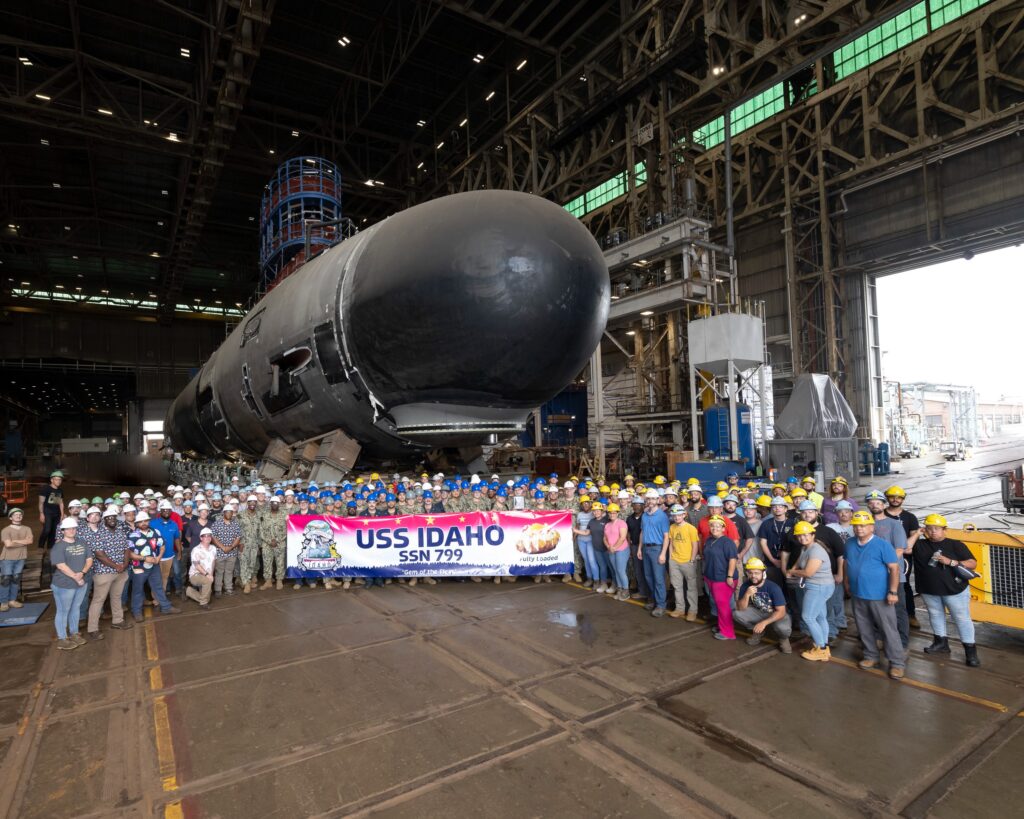
WASHINGTON – This May, the U.S. Navy’s Submarine Industrial Base (SIB) program is hosting a series of Talent Pipeline Project (TPP) Signing Day events across key maritime hubs to recognize the latest wave of skilled workers joining the Defense Industrial Base. 

These events, taking place in Pittsburgh, Philadelphia, Hampton Roads, Boston, and Long Island, mark the culmination of the SIB program’s multiyear effort to develop robust talent pipelines in these regions. Working with partners in industry, academia, and local government, the SIB program has launched training and recruitment initiatives to cultivate the next generation of welders, pipefitters, electricians, and other critical tradespeople. These five programs represent tremendous enterprise collaboration and include more than 290 defense industry and 140 academic partners. 

The May Signing Days will celebrate more than 2,100 individuals who are now embarking on careers at small and medium-sized defense industrial base suppliers – the vital network of companies that provide components, materials, and services critical to new construction and sustainment of our maritime forces. Local shipbuilding companies, elected officials, and community leaders will be on hand to celebrate the graduates and welcome them into this critical defense industry. 

“These Signing Days highlight the many meaningful careers paths to be found in submarine manufacturing and the good-paying jobs being created in communities across the country,” said Rear Adm. Scott Pappano, Program Executive Officer for Strategic Submarines. “These events represent merely the beginning as we work to grow and sustain the submarine industrial base for the long term,” Pappano said, highlighting the importance of these programs. 

The TPPs are critical to the Navy’s efforts to recapitalize its submarine fleet and maintain a strong, resilient industrial base. The SIB program must address persistent workforce challenges with plans to build one Columbia-class and two Virginia-class submarines per year by 2028. 

“I am thankful for the young men and women taking part in these events and those who will support their country and embark on an extraordinary career path through the Talent Pipeline Programs,” said Pappano. “These women and men are critical to the defense of our nation.” 

With the U.S. Navy needing to hire over 140,000 skilled workers over the next decade to meet submarine production goals and to maintain the current submarine fleet, programs like the SIB’s Talent Pipeline are essential. 

“Those who embark on a career in the Submarine Industrial Base are to be applauded for responding to their nation’s call to preserve freedom of the seas and our American way of life,” said Pappano. 

The Navy is invested in cultivating this new generation of submarine builders. The SIB program expanded its Talent Pipeline initiatives this year, adding events in Long Island and Boston. In April, the SIB hosted a Demand Signal Roundtable in Newport Beach, Calif., as a way to expand the talent pipeline initiative into the Southern California region as it seeks to develop a deep, capable workforce for America’s undersea fleet. 

As the U.S. faces evolving global security threats, a strong, resilient submarine force remains a cornerstone of American naval power. The SIB program’s investment in workforce development is crucial to ensuring the submarine industrial base can meet the Navy’s ambitious production goals in the years ahead. 


Navy to Christen Future Expeditionary Sea Base USS Robert E. Simanek 

From the Chief of Information, 3 May 2024 

The Navy will christen the future USS Robert E. Simanek (ESB 7) as the newest Expeditionary Sea Base ship (ESB) during a 9:00 a.m. PST ceremony on Saturday, May 4, in San Diego, California. 

The christening ceremony’s principal address will be delivered by the Honorable Sean Coffey, General Counsel of the Navy.  Remarks will also be provided by the Honorable Scott Peters, U.S. Representative, California’s 50th District; Master Chief Britt Slabinski, President of the Congressional Medal of Honor Society and Medal of Honor Recipient; Vice Admiral Yvette Davids, Superintendent of the U.S. Naval Academy; Brigadier General Robert Weiler, Assistant Division Commander, First Marine Division; and Mr. David Carver, President of General Dynamics NASSCO. The ship’s sponsor is Ann Simanek Clark, Private first class Simanek’s daughter. 

The first of its name, the ship honors United States Marine Corps Private First Class Robert E. Simanek, Ret., who was awarded the Medal of Honor for his actions during the Korean War at Outpost Irene, Korea. Pfc. Simanek was presented the Medal of Honor by President Eisenhower on October 27, 1953. 

The future USS Robert E. Simanek (ESB 7) is a highly flexible platform used across various military operations. When commissioned, the ship will be employed as a mobile sea-based asset. It will be a part of the critical access infrastructure supporting the deployment of forces, equipment, supplies, and warfighting capability. Specifically, ESB 7 will support missions such as Mine Countermeasures, Special Operations, Unmanned Aircraft Surveillance and Reconnaissance, Counter-Piracy, Humanitarian Aid, and Crisis Response.  

General Dynamics NASSCO built and delivered the following ships to the fleet: USNS Montford Point (T-ESD 1), USNS John Glenn (T-ESD 2), USS Lewis B. Puller (ESB 3), USS Hershel “Woody” Williams (ESB 4), USS Miguel Keith (ESB 5), and USS John L. Canley (ESB 6). Follow-on ship Hector A. Cafferata Jr. (ESB 8) is under construction. 


Navy Announces Flag Officer Assignments

MAY 3, 2024 

The secretary of the Navy and chief of naval operations announced May 3 the following assignments: 

Rear Adm. Heidi K. Berg will be assigned as deputy commander, Navy Space Command; and deputy commander, Fleet Cyber Command, Fort Meade, Maryland. Berg is currently serving as assistant deputy chief of naval operations for Operations, Plans, and Strategy, N3/N5B, Office of the Chief of Naval Operations, Washington, D.C. 

Rear Adm. Nicholas M. Homan will be assigned as deputy director, Intelligence, Surveillance, and Reconnaissance Operations; and director, Joint Intelligence, Surveillance, and Reconnaissance Operations Center, J-3, Joint Staff, Fort Meade, Maryland. Homan is currently serving as director, J-2, U.S. Central Command, MacDill Air Force Base, Florida.  
  
Rear Adm. Kevin P. Lenox will be assigned as director, J5, U.S. Cyber Command, Fort Meade, Maryland. Lenox is currently serving as commander, Carrier Strike Group Three, Bremerton, Washington.  

Rear Adm. Darryl L. Walker will be assigned as president, Naval War College, Newport, Rhode Island. Walker is currently serving as commander, Combined Joint Task Force, Cyber, Tenth Fleet, Fort Meade, Maryland. 

Rear Adm. (lower half) Benjamin R. Nicholson, selected for promotion to rear admiral, will be assigned as assistant deputy chief of naval operations for Operations, Plans, and Strategy, N3/N5B, Office of the Chief of Naval Operations, Washington, D.C. Nicholson is currently serving as commander, Expeditionary Strike Group Two, Virginia Beach, Virginia. 
  
Rear Adm. (lower half) Kristen Acquavella will be assigned as commander, Naval Supply Systems Command Weapons Systems Support, Philadelphia, Pennsylvania. Acquavella is currently serving as director, Logistics, Fleet Supply and Ordnance, N4, U.S. Pacific Fleet, Pearl Harbor, Hawaii. 

Rear Adm. (lower half) Eric J. Anduze will be assigned as deputy director for Joint Training, Joint Staff, Suffolk, Virginia. Anduze is currently serving as deputy commander, Combined Joint Task Force, Horn of Africa, Djibouti, Africa.  

Rear Adm. (lower half) Kurtis A. Mole will be assigned as deputy commander, Joint Forces Headquarters-Cyber (Navy); and deputy commander, Fleet Cyber Command, Fort Meade, Maryland. Mole is currently serving as deputy commander, Tenth Fleet, Fort Meade, Maryland. 

Capt. Kevin J. Brown, selected for promotion to rear admiral (lower half), will be assigned as commander, Naval Medical Forces Atlantic, with additional duties as director, Tidewater Market/chief of Medical Service Corps, Portsmouth, Virginia. Brown is currently serving as commanding officer, Navy Medical Readiness and Training Command/Naval Medical Center Camp Lejeune, Camp Lejeune, North Carolina. 

Capt. Todd F. Cimicata, selected for promotion to rear admiral (lower half), will be assigned as commander, Logistics Group, Western Pacific; and commander, Task Force Seven Three, Singapore. Cimicata is currently serving as chief of staff, Naval Air Forces/Naval Air Force, U.S. Pacific Fleet, San Diego, California. 

Capt. Jorge R. Cuadros, selected for promotion to rear admiral (lower half), will be assigned as commander, Naval Facilities Engineering Systems Command Atlantic; and director, Fleet Installations and Environmental Division (N46), U.S. Fleet Forces Command, with additional duties as fleet civil engineer (N01CE), U.S. Fleet Forces Command, Norfolk, Virginia. Cuadros is currently serving as chief of staff, Naval Facilities Engineering Systems Command, Washington, D.C. 

Capt. Marcos A. Jasso, selected for promotion to rear admiral (lower half), will be assigned as deputy director, Plans, U.S. Space Command, Peterson Air Force Base, Colorado. Jasso is currently serving as director for Operations, N3, Maritime Operations Center, U.S. Pacific Fleet, Pearl Harbor, Hawaii. 

Capt. Cassidy C. Norman, selected for promotion to rear admiral (lower half), will be assigned as director, Joint/Fleet Operations, U.S. Fleet Forces Command, Norfolk, Virginia. Norman is currently serving as chief of staff, Naval Air Force Atlantic, Norfolk, Virginia. 


30 Injured in LCAC Incident During Training

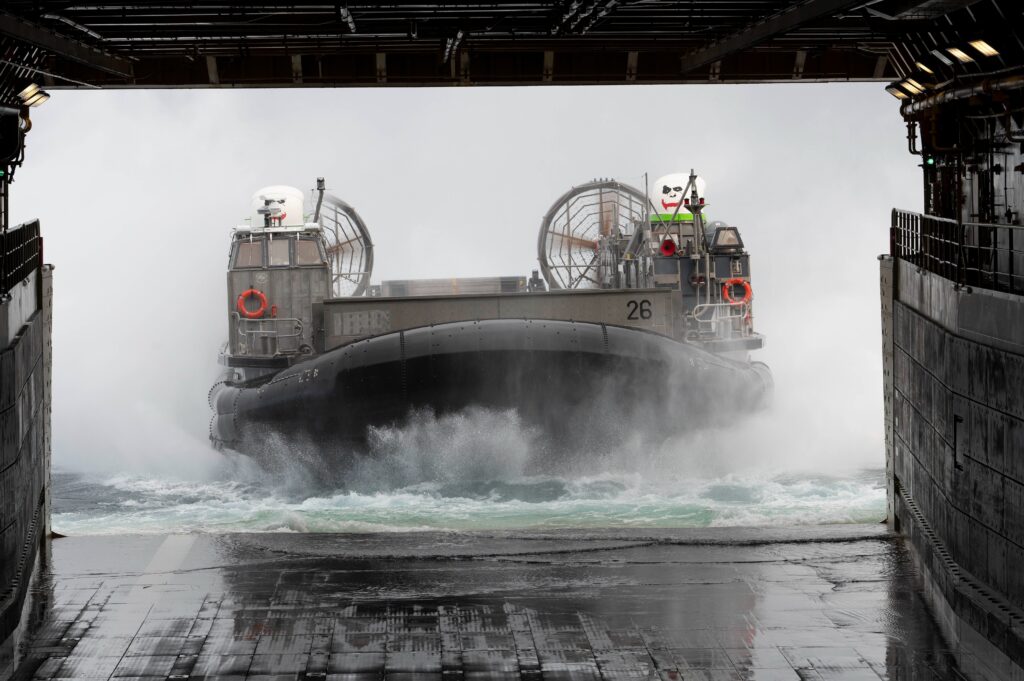
An LCAC departs the well deck of a San Antonio-class amphibious transport dock ship. (U.S. Navy photo by MC2 Jesse Turner)

02 May 2024 

From Commander, U.S. 2nd Fleet, Public Affairs 

NORFOLK, Va. – On the evening of May 1, an incident occurred involving two landing craft, air cushions (LCAC) from USS Wasp (LHD 1) and USS New York (LPD 21) off the coast of Jacksonville, Fla. 

30 Sailors and Marines were injured. Five Sailors were medically evacuated for further care at Savannah Memorial University Medical Center. Four of the five Sailors have been released from the hospital after treatment. One Sailor remains under medical care and is being assessed for further treatment. 

Sailors and Marines with minor injuries were treated aboard Wasp and New York. 

Sailors and Marines assigned to the Wasp Amphibious Ready Group and 24th Marine Expeditionary Unit (MEU) were conducting a training exercise when the incident occurred. 

The recovery and investigation processes are ongoing, and more information will be provided by U.S. 2nd Fleet once available. For any inquiries, contact [email protected]


May 2 Red Sea Update

From U.S. Central Command, May 2, 2024 

 
TAMPA, Fla. – At approximately 2:00 p.m. (Sanaa time) on May 2, 2024, U.S. Central Command (USCENTCOM) forces successfully engaged and destroyed three uncrewed aerial systems (UAS) in an Iranian-backed Houthi controlled area of Yemen. 

It was determined these systems presented an imminent threat to U.S., coalition forces, and merchant vessels in the region. These actions are taken to protect freedom of navigation and make international waters safer and more secure for U.S., coalition, and merchant vessels. 


Navy’s Triton UAV to Provide Targeting for LRASM

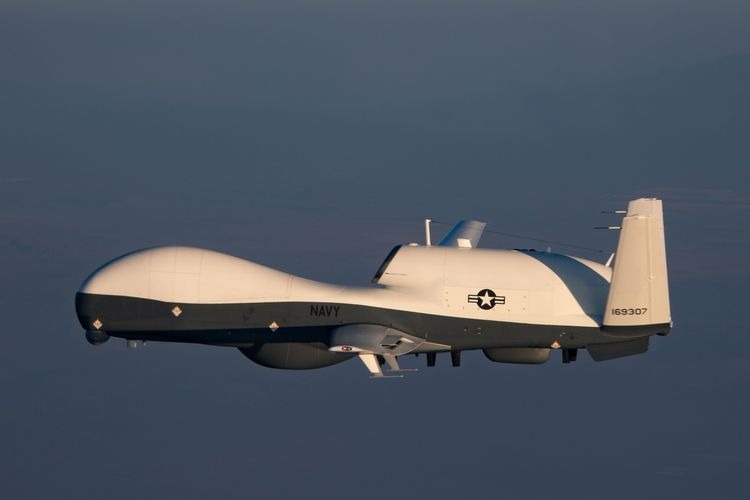
MQ-4C Triton | Credit: Northrop Grumman

By Richard R. Burgess, Senior Editor 

ARLINGTON, Va. — An upgrade to the U.S. Navy’s MQ-4C Triton unmanned aerial vehicle will enable it to provide targeting for the AGM-158 Long-Range Anti-ship Missile (LRASM), senior Navy officials said. 

In a May 1, 2024, Nickolas H. Guertin, assistant secretary of the Navy for Research, Development and Acquisition; Vice Admiral James Pitts, deputy chief of naval operations for Warfighting Requirements and Capabilities; and Lieutenant General Karsten S.Heckl, deputy commandant for Combat Development and Integration and Commanding General, Marine Corps Combat Development Command, testified before the Subcommittee on Seapower of the Senate Armed Services Committee. A written joint statement was submitted for the record and provided some detail on the planned MQ-4C upgrades. 

“The MQ-4 program is meeting schedule objectives, completing Initial Operational Capability (IOC) in July 2023 with its first orbit stand up in INDOPACOM [U.S. Indo-Pacific Command,” the statement said. “The Program is currently in the process of standing up its remaining two operational orbits in EUCOM [U.S. European Command] and CENTCOM [U.S. Central Command], scheduled for Q2FY24 and Q1FY25 respectively.” 

The MQ-4C, built by Northrop Grumman, is now deployed to Andersen Air Force Base in Guam and Naval Air Station Sigonella in Sicily. The site of the future CENTCOM deployment has not been announced.  

“The MQ-4 will undergo continuous spiral upgrades throughout the next four years, to include Link-16 targeting with LRASM in 2024 culminating in Full Operational Capability in FY28 enabling near-24/7 ISR [intelligence, surveillance, and reconnaissance] coverage in simultaneous theaters of operation,” the statement said.  

The LRASM, built by Lockheed Martin Missiles and Fire Control, is designed to be deployed on Navy F/A-18 Super Hornet strike fighters and P-8A Poseidon maritime patrol aircraft, as well as Air Force B-1B Lancer bombers. 

As noted in a May 1 Defense Department contract announcement, the Navy awarded Lockheed Martin a $288 million contract modification to support development of the AGM-158C-3, an extended-range version of the LRASM. The C-3 version would include “advanced communications and survivability capabilities while supporting maritime strike missions for the Navy,” the announcement said.