Navy Awards Bell Textron Contract for 12 AH-1Z Helicopters for Nigeria
KOREA STRAIT (March 29, 2023) An AH-1Z Viper helicopter takes off from the amphibious assault ship USS Makin Island (LHD 8), March 29, 2023. (U.S. Marine Corps photo by Gunnery Sgt. Chad J. Pulliam)
By Richard R. Burgess, Senior Editor
ARLINGTON, Va. — The government of Nigeria is slated to receive 12 AH-1Z Viper helicopter gunships, becoming the third foreign customer for the Viper.
In a March 12 contract announcement, the Naval Air Systems Command awarded to Bell Textron of Fort Worth, Texas, a $455 million “firm-fixed-price, undefinitized contract for the production and delivery of 12 AH-1Z helicopters for the government of Nigeria, as well as provides associated engineering, program management and logistics support, and non-recurring engineering for obsolescence.”
Deliveries to the Nigerian government are expected to be complete by July 2028.
Bell built 189 AH-1Zs for the U.S. Marine Corps and 12 for Bahrain, and is building four for the Czech Republic, along with eight UH-1Y Venom utility helicopters. The Czech Republic also is receiving free of charge six AH-1Zs and two UH-1Ys that formerly were part of the U.S. Marine Corps’ inventory.
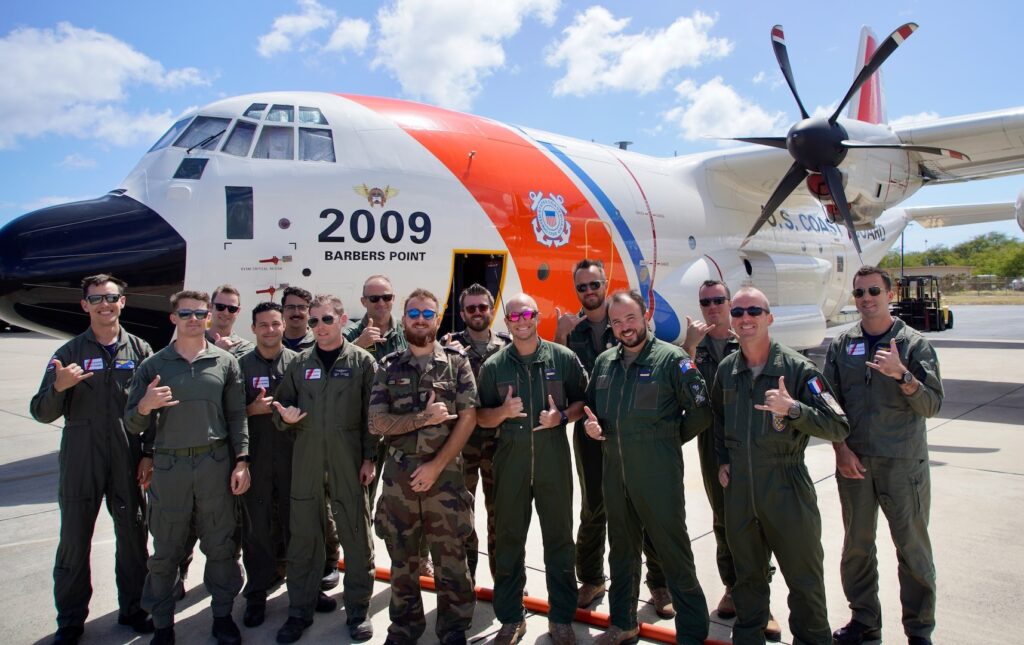
French Air Force crew trains at U.S. Coast Guard Air Station Barbers Point
U.S. Coast Guard 14th District, March 11, 2024
HONOLULU – A crew from the French Air Force arrived at Air Station Barbers Point on March 4, 2024, for a week-long subject matter exchange with U.S. Coast Guard aircrews.
The seven-member team, comprised of three pilots and four crew members, is stationed in French Polynesia, Tahiti, and flies a CN235 Casa aircraft; during their visit, they participated in various activities designed to enhance their aviation proficiency and build professional relationships with their Coast Guard counterparts.
On March 6, Commander Victor Yaguchi of Air Station Barbers Point provided the French aircrew with an in-depth briefing on Coast Guard aircraft missions. This included an overview of Air Station Barbers Point airframes, capabilities, and mission sets. The briefing served as a foundation for the crew’s training experiences throughout the week.
“This visit is a valuable opportunity to collaborate with our French allies and share best practices in aviation operations,” said Captain Maurice Murphy, Commanding Officer of Air Station Barbers Point. “The partnerships in the Pacific are invaluable, we work closely with our French Allies and Joint Rescue Coordination Center Tahiti to rescue mariners at sea.”
The French crew utilized the air station as their base of operations for the week and conducted flights throughout the Hawaiian Island chain. This exposure to a complex and busy airspace allowed them to refine their communication procedures and flight skills. They specifically focused on:
Air-to-Air and Air-to-Ground Communications: The crew honed their ability to communicate effectively in a congested airspace, a skillset critical for safe operations.
U.S. Flight Rules: The training familiarized the crew with U.S. Federal Aviation Administration (FAA) regulations, ensuring smooth integration into the local airspace.
Coast Guard Search and Rescue Operations: The crew gained insight into the Coast Guard’s B-0 SAR response procedures, a vital capability for ensuring maritime safety in the vast Pacific Ocean.
The Hawaiian Islands provide the closest and busiest airspace to French Polynesia, making Air Station Barbers Point an ideal training location. This reinvigorated exchange program is expected to occur several annually, fostering continued collaboration and professional development between the U.S. Coast Guard and the French Air Force.
Upon arrival, the ASBP staff warmly welcomed the French crew and presented them with traditional kukui nut leis, symbolizing protection and peace. This gesture reflects the spirit of cooperation and mutual respect that underpins this exchange program.
March 12 Red Sea Update
USCENTCOM, March 12, 2024
TAMPA, Fla. – Between 2:00 a.m. and 4:30 a.m. (Sanaa time) on March 12, Iranian-backed Houthi terrorists fired one close-range ballistic missile from Houthi-controlled areas of Yemen toward USS Laboon in the Red Sea. The missile did not impact the vessel and there were no injuries or damage reported.
United States Central Command and a coalition vessel successfully engaged and destroyed two unmanned aerial systems (UAS) launched from a Houthi-controlled area of Yemen.
It was determined these weapons presented an imminent threat to merchant vessels and U.S. Navy ships. These actions are taken to protect freedom of navigation and make international waters safer and more secure for U.S. Navy and merchant vessels.
F-35 Program Achieves Milestone C and Full-Rate Production
U.S. DEPARTMENT OF DEFENSE, MARCH 12, 2024
Earlier today, the Milestone Decision Authority, Under Secretary of Defense for Acquisition and Sustainment, Dr. William A. LaPlante, approved the Milestone C / Full-Rate Production (MSC/FRP) of the F-35 Lightning II aircraft with the signing of an Acquisition Decision Memorandum (ADM) after a meeting with the Defense Acquisition Board (DAB).
The F-35 achieved this milestone after considering the results from the F-35 Combined Initial Operational Test and Evaluation and Live Fire Test and Evaluation Report, System Development and Demonstration exit criteria, statutory/regulatory documentation compliance, future production strategy, and draft acquisition program baseline details. Proceeding to MSC/FRP requires control of the manufacturing process, acceptable performance and reliability, and the establishment of adequate sustainment and support systems.
The DAB, which met on March 7, 2024, was chaired by Dr. LaPlante, and is the department’s senior-level forum for critical decisions concerning acquisition programs at the Department of Defense.
“This is a major achievement for the F-35 Program,” LaPlante said. “This decision—backed by my colleagues in the Department—highlights to the Services, F-35 Cooperative Program Partners, and Foreign Military Sales customers that the F-35 is stable and agile, and that all statutory and regulatory requirements have been appropriately addressed. The F-35 Program is the premier system that drives interoperability with our allies and partners while contributing to the integrated deterrence component of our National Defense Strategy.”
With this milestone, the program is now well positioned to efficiently produce and deliver the next generation of aircraft to meet the evolving needs of our services, partners, and FMS customers.
“I am very proud of our team, and this is a huge accomplishment!” said Lt. Gen. Mike Schmidt, Director and Program Executive Officer, F-35 Joint Program Office. “The F-35 enterprise has made significant improvements over the last decade, and we will always be driven to continuously improve sustainability, interoperability, and lethality so warfighters have the capability needed to fight and win when called to do so. Moreover, the Program and our great people can now focus on the future of the F-35 instead of the past.”
In September 2023, a key gateway for MS C/FRP was achieved when F-35 Runs for Score in the Joint Simulation Environment (JSE) and initial trial validation were completed.
“DOT&E conducted analysis of the results from Initial Operational Test and Evaluation (IOT&E) and Live Fire Test and Evaluation and delivered a comprehensive, combined report as required by statute to inform the Milestone C / Full Rate Production decision. DOT&E also provided a separate annex that assessed post-IOT&E Block 4 operational testing of the 30P06 and 30P07 software.” said Dr. Raymond D. O’Toole, Jr., Acting Director, Operational Test & Evaluation. “The Program is working to address DOT&E’s findings and recommendations contained in the report. One of DOT&E’s concerns is to continue to improve test infrastructure for support development and to ensure readiness to test of the upcoming Block 4 capabilities. This includes timely deliveries of the next iterations of F-35-In-A-Box for integration into the JSE.”
Achieving MSC/FRP is important to the program, and it helps to validate the aircraft’s capabilities for present and future partners of the F-35 enterprise.
To date, over 990 F-35 aircraft have been delivered to the U.S. Services, F-35 Cooperative Program Partners, and Foreign Military Sales customers.
The F-35 offers multi-mission capability, including strategic attack, suppression/destruction of enemy air defenses (SEAD/DEAD), offensive/defensive counter air, anti-surface warfare, strike coordination and reconnaissance, and close air support. It brings stealth, sensor fusion, and interoperability to enable access in contested environments and enhances situational awareness.
Specialized Army Unit Underway to Support Humanitarian Aid Delivery to Gaza
March 12, 2024 | By Joseph Clark
The specialized Army unit tasked with establishing a temporary pier off the coast of Gaza to deliver critical humanitarian assistance has wasted no time in making the complex operation a reality.
The first of several watercraft used to construct the pier and manned by troops from the 7th Transportation Brigade began the weekslong transit from the unit’s homeport in Virginia to the U.S. Central Command area of responsibility less than two days after President Joe Biden called on the military to conduct the emergency operation during his State of the Union Address.
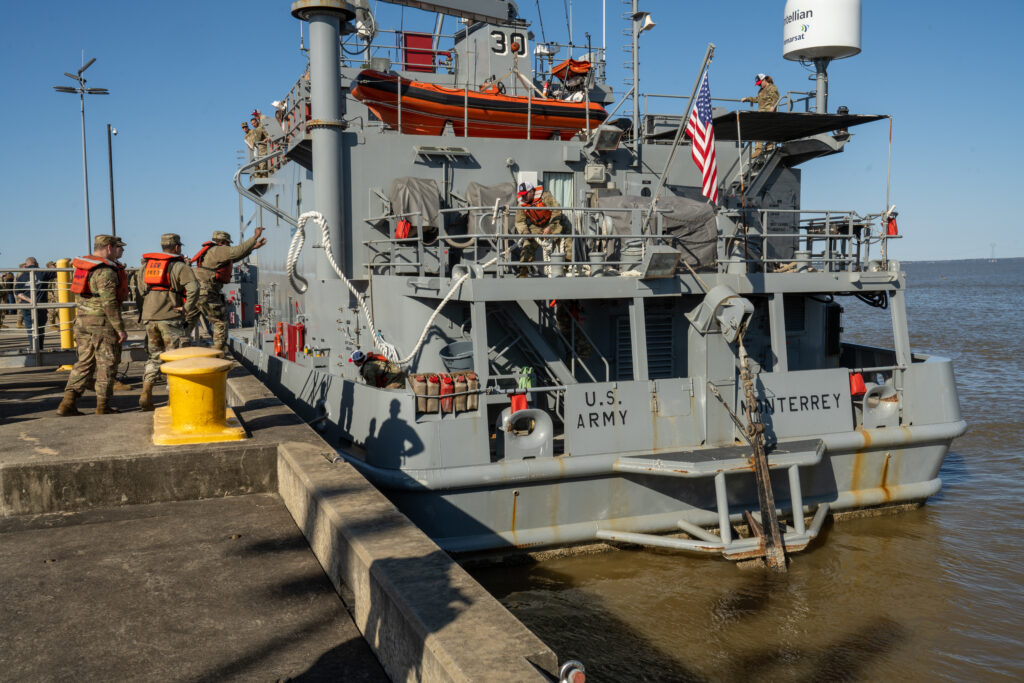
Today, four more Army vessels set sail from Joint Base Langley-Eustis to join the operation: USAVs Monterrey, Matamoros, SP4 James A. Loux and Wilson Wharf.
The brigade, a component of the XVIII Airborne Corps, is the Army’s premier watercraft unit specializing in Joint Logistics Over-the-Shore, or JLOTS.
JLOTS systems can jointly employ Army and Navy logistics assets to deliver critical supplies to troops or civilians in austere environments anywhere in the world.
“This is Army watercraft’s moment, and we’re up for it,” said Army Col. Samuel S. Miller, the 7th Transportation Brigade (Expeditionary) commander.
“The U.S. and the world will see our humanitarian capability on display and in action forward,” he said. “The 7th TB(X) is highly trained, mobile, versatile and capable to operate in these types of environments.”
Delivering the capability involves the complex choreography of logistics support and landing craft vessels that carry the equipment used to construct an approximately 1,800-foot causeway comprised of modular sections linked together known as a Trident Pier.
Once in theater, the unit will begin construction of the causeway off the coast of Gaza enabling the flow of critical aid from the sea to civilians affected by the ongoing conflict. The capability is expected to be operational in approximately 60 days.
Deploying on short notice anywhere throughout the globe is par for course for the units that comprise the XVIII Airborne Corps, said Army Brig. Gen. John B. Hinson, the corps’ assistant commanding general for support.
“We are the contingency corps for the Army,” Hinson said. “We have units, divisions, brigade combat teams, separate brigades, that can deploy anywhere in the world for any type of contingency operation in 18 hours.
“The 7th TB(X) is one of these units that falls in that category where all of their units are very deployable for an immediate response force for different types of contingencies all around the world,” he said.
Once operational, the pier will be capable of delivering up to 2,000,000 humanitarian aid meals per day.
Pentagon Press Secretary Maj. Gen. Pat Ryder previewed the capability Friday during a briefing at the Pentagon following Biden’s State of the Union Address.
“This is part of a full-court press by the United States to not only focus on working on opening up and expanding routes via land, which are the optimal way to get aid into Gaza but also by conducting air drops,” Ryder said.
The U.S. has conducted several humanitarian assistance airdrops into Gaza alongside the Royal Jordanian Air Force. The combined operations have delivered hundreds of thousands of badly needed meals to civilians.
Biden said more aid is needed.
Ryder stressed that the JLOTS capability enables the U.S. to continue delivering aid without putting boots on the ground in Gaza.
“We’ll be working with partners in the region to be on the receiving end of , but at no time will we require U.S. forces to actually go on the ground,” he said. “Our role will be essentially to provide the service of getting to the causeway, at which point it will then be distributed.”
Miller said the unit’s extensive training in environments throughout the world has prepared its soldiers to accomplish the mission in Gaza.
JLOTS was last used operationally to deliver humanitarian assistance following the magnitude 7.0 earthquake that struck Haiti in 2010.
Soldiers from the 7th TB(X) train extensively in deploying the capability around the globe, including off the coast of Australia last summer in support of Exercise Talisman Sabre, a large-scale joint defense exercise between Australia and the United States.
“We understand the importance of this mission, and the interests of the world in this regard,” Miller said. “When it may seem, at times, we have the weight of the world on our shoulders, we will forge across the water to deliver humanitarian assistance.”
That same determination was echoed throughout the ranks.
“We like what we do,” said Army Chief Warrant Officer 3 Benjamin Tate, the chief engineer on one of the vessels that set sail for Gaza today.
“We’re extremely proud that we get to participate in humanitarian relief,” Tate said. “Me personally, if my family was in that situation, I’d want somebody to be willing to help. So, when we were told that was the task, our guys are ramping the boat up and getting ready.”
Navy 2025 Budget Requests Only 6 Battle Force Ships
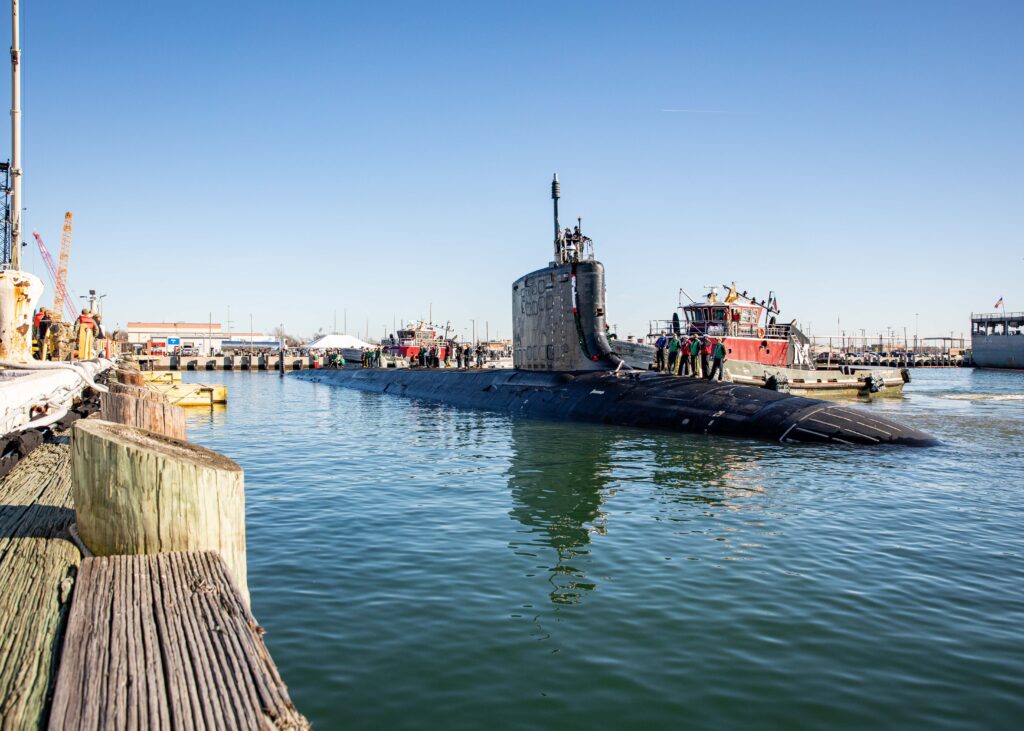
NAVAL STATION NORFOLK — The Virginia-class fast-attack submarine USS Washington (SSN 787) prepares to moor pierside during the boat’s homecoming at Naval Station Norfolk, Dec. 15, 2023. (U.S. Navy photo by Mass Communication Specialist 1st Class Cameron Stoner)
By Richard R. Burgess, Senior Editor
ARLINGTON, Va. — The U.S. Navy’s fiscal 2025 budget request proposes only six battle force ships, which, combined with planned ship retirements, would reduce the size of the battle force from 296 ships to 287 ships.
The Navy’s proposed $257.6 billion budget — which officials said prioritizes readiness over procurement, would include $32.4 billion for ship construction. Those funds would procure one Block VI Virginia-class attack submarine (SSN), two Flight III Arleigh Burke-class guided-missile destroyers, one Constellation-class guided-missile frigate, one Flight II San Antonio-class amphibious platform dock ship (LPD), and one medium landing ship.
The proposal for only one Virginia-class SSN, rather than two, was made out of concern for the submarine industrial base, which currently is delivering only 1.3 hulls instead of the desired two SSNs per year. The gap is designed to help realign the investments in the submarine industrial base. Under the Future Years Defense Plan (FYDP), the Navy expects to return to the procurement rate of two SSNs per year in fiscal 2026. Navy Undersecretary Erik Raven, speaking to reporters March 11 at the budget roll-out, said advance procurement for the SSNs is proceeding to “set up the program for long-term success.”
The ship construction budget also includes continued incremental funding for two aircraft carriers and second Columbia-class ballistic-missile submarine, the refueling and comprehensive overhaul of a Nimitz-class aircraft carrier, the service-life extension of three aircushion landing craft, and the purchase of two used commercial ships for use as sealift ships.
The procurement of the San Antonio-class LPD would mark a reversal from the 2024 plan to end procurement of the class. Navy Undersecretary Erik Raven, speaking to reporters March 11 at the budget roll-out, said the Navy is intent on growing the large- and medium amphibious warfare ship fleet to a minimum of 31 ships.
The FYDP features the procurement start in fiscal 2027 of a new class of ship, the light replenishment oiler (T-AOL).
Raven said the Navy currently has 88 ships under contract, with 66 of those under construction.
Planned ship retirements include two Ticonderoga-class guided-missile cruisers (Shiloh and Lake Erie); two Independence-class littoral combat ships (Jackson and Montgomery), one Whidbey Iland-class dock landing ship (Germantown); one Montford Point-class expeditionary transfer dock ship (John Glenn) and the four oldest Spearhead-class expeditionary fast transports (Spearhead, Choctaw County, Millinocket, and Fall River).
Rep. Rob Wittman, R- Virginia, a member of the Seapower subcommittee of the House Armed Services Committee, criticized the ship construction plan as too little.
“The president is once again proposing to shrink the Navy by reducing the Navy force structure from 296 ships in FY24 to just 287 in FY25. By only building six ships, President Biden is also threatening to devastate our naval fleet and the Hampton Roads industrial base by slowing aircraft carrier construction and failing to meet the two Virginia-class submarines per year cadence required to support the AUKUS security pact,” Wittman said in a March 11 statement.
U.S. Army Assault Helicopters Conduct Deck Landings on USNS DAHL
JINHAE, South Korea – Soldiers with 2nd Battalion, 2nd Aviation Regiment, 2nd Combat Aviation Brigade (2-2 CAB) conducted deck landings with U.S. Army UH-60M Black Hawk helicopters on prepositioning ship USNS Dahl (T-AKR 312), March 7.
Six aircraft crews from Assault Helicopter Battalion 2-2 CAB practiced single-spot deck landings onboard USNS Dahl, about five miles off the coast of Jinhae, South Korea, to certify air crew members and pilots in landing on a ship.
The DLQs were conducted through coordination between Military Sealift Command Office-Korea, USNS Dahl, and crews from Assault Helicopter Battalion 2-2 CAB to qualify or reset their crew on single-spot DLQ currency.
The training environment was also an opportunity for Army aircrews to ensure maritime air movement capability and readiness.
As a secondary training objective, MSCO-K and USNS Dahl aimed to further develop interoperability and joint relationship with 2-2 CAB during ship flight operations.
This training event for the Army also proved to be equally valuable to the crew of USNS Dahl. While mariners’ conduct regular training on ship flight operations, the training environment is usually limited to classroom or computer simulations, which can sometimes not accurately reflect the challenges the crew may face at sea.
In preparation for the event, Dahl conducted a complete inventory and inspection of all flight deck equipment that included testing of all flight deck systems. In addition, Dahl conducted simulated flight deck operations, helicopter crash and fire drills in the days before the operation.
“All flight deck operations are inherently dangerous but DLQs add the wild card of potentially novice crews who are not familiar with either the vessel or ship flight operations in general,” said contracted mariner Capt. Deatra Thompson, ship’s master, USNS Dahl. “Additionally, unlike many USNS vessels, Dahl does not conduct flight operations often and many of the crew, while having received training and simulated operation, some have never been involved in real-life flight operations.”
To reduce danger, Dahl requested that the aircraft’s crew chief depart during the train-the-trainer initial landings to provide hands-on instruction to the Dahl Chock and Chain teams to ensure they were familiar with the methods and placement of the fastening equipment.
The event was executed safely and without incident and resulted in six single-spot deck-landing qualified crews across 2-2 CAB.
“This event demonstrated effective joint coordination and was a great chance for MSCO-K and USNS Dahl to support a valuable training opportunity for our U.S. Army partners stationed here in Korea,” said Cmdr. Patrick J. Moore, commanding officer, MSCO-K. “Overall, there was great collaboration between MSCO-K, USNS Dahl, and the soldiers of 2-2 CAB.”
Maritime prepositioning ship USNS Dahl is a Watson-class large, medium-speed roll-on/roll-off ship and is part of Commander, Maritime Prepositioning Ships Squadron 3.
Commander, Maritime Prepositioning Ships Squadron 3 supports warfighters from all the U.S. Armed Forces by prepositioning Military Sealift Command ships throughout the Indo-Pacific Region, ensuring Army, Navy, Air Force and Marine Corps vehicles, heavy equipment, personnel and supplies are strategically positioned to support the full range of military operations.
Commander, Military Sealift Command Far East ensures approximately 50 ships in the Indo-Pacific Region, are manned, trained and equipped to deliver essential supplies, fuel, cargo, and equipment to warfighters, both at sea and on shore.
Celebrating its 75th anniversary in 2024, MSC exists to support the joint warfighter across the full spectrum of military operations, with a workforce that includes approximately 6,000 Civil Service Mariners and 1,100 contract mariners, supported by 1,500 shore staff and 1,400 active duty and Reserve military personnel.
March 11 Red Sea Update
USCENTCOM, March 11, 2024
TAMPA, Fla. – Between 8:50 a.m. and 12:50 p.m. (Sanaa time) on March 11, Iranian-backed Houthi terrorists fired two anti-ship ballistic missiles from Houthi-controlled areas of into the Red Sea toward merchant vessel Pinocchio, a Singaporean-owned, Liberian-flagged ship. The missiles did not impact the vessel and there were no injuries or damage reported.
Between 2:50-11:30 p.m. (Sanaa time) on March 11, United States Central Command conducted six self-defense strikes destroying an unmanned underwater vessel and 18 anti-ship missiles in Houthi controlled areas of Yemen. It was determined these weapons presented an imminent threat to merchant vessels and U.S. Navy ships in the region. These actions are taken to protect freedom of navigation and make international waters safer and more secure for U.S. Navy and merchant vessels.
HII Mission Technologies Unveils New REMUS 130 Unmanned Underwater Vehicle
Open Architecture and Modularity Minimize Cost and Risk
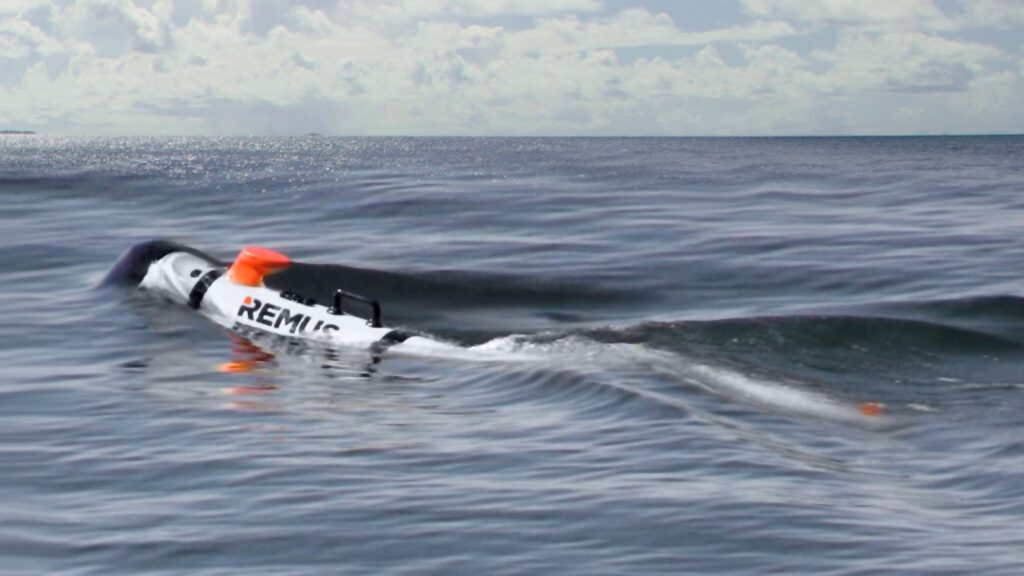
LONDON, March 12, 2024 (GLOBE NEWSWIRE) — HII (NYSE: HII) announced the REMUS 130, a new unmanned underwater vehicle (UUV) model based on the highly successful HII REMUS series of UUVs, today at the Oceanology International 2024 conference and exhibition.
The REMUS 130 is the third generation of REMUS 100 vehicles and is designed to enhance underwater operations with maximum flexibility, advanced capabilities and innovative features, including:
A compact, two-person-portable design.
Effortless payload integration.
Operational depths down to 100 meters.
An extended battery life of up to 10 hours for sustained operations with easy field battery change.
“The REMUS 130 is built on the same proven technology platform as the REMUS 300 and offers customers a highly capable vehicle at reduced cost and risk,” said Duane Fotheringham, president of Mission Technologies’ Unmanned Systems business group. “We are excited to introduce this latest generation of the REMUS 100 that will help drive commonality across the fleet and provide our customers with more flexibility to address their mission needs.”
The REMUS 130 was developed with HII’s internal funding specifically for customers seeking the long service life of REMUS UUVs, along with the proven modularity and open architecture of the REMUS 300 and 620 models at a reduced cost.
The REMUS 130 is built for a variety of missions and operations, including:
Data collection and research.
Offshore oil and gas exploration.
Search and rescue.
Mine countermeasures operations.
The REMUS 130 features modern core electronics, navigation and communications systems with modular, open architecture interfaces to accommodate wet or dry payloads, including custom payloads developed by the user.
The HII REMUS UUV series are recognized for their durability, long service-life and effortless upgradeability.
Leveraging three decades of innovation and the global delivery of over 600 UUVs to 30 countries, including 14 NATO members, HII’s REMUS 130 is poised to transform underwater operations with its advanced features and cost-efficient solutions.
USS Annapolis Visits Perth, Australia, in AUKUS Event
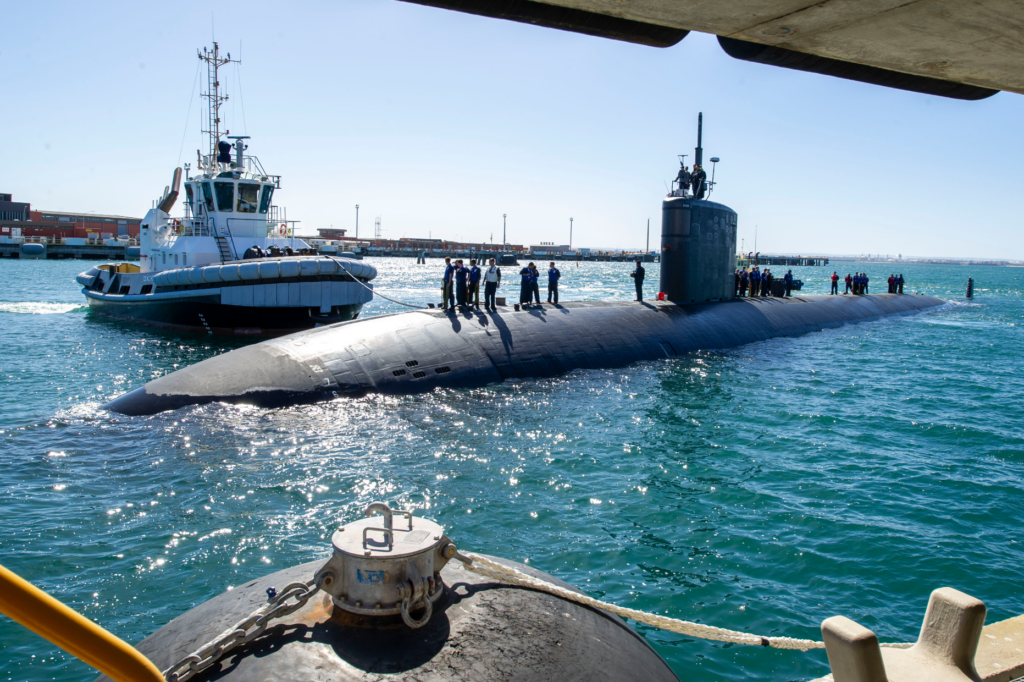
ROCKINGHAM, Australia (March 10, 2024) The Los Angeles-class fast-attack submarine USS Annapolis (SSN 760) pulls alongside Diamantina Pier at Fleet Base West in Rockingham, Western Australia, March 10, 2024. (U.S. Navy photo by Mass Communication Specialist 2nd Class Kaitlyn E. Eads)
March 10, 2024
USS Annapolis (SSN 760) arrived in HMAS Stirling in Perth, Western Australia Sunday.
This marks the second visit by a U.S. fast-attack submarine to HMAS Stirling since the announcement of the AUKUS Optimal Pathway in March 2023. The Optimal Pathway is designed to deliver a conventionally armed, nuclear-powered attack submarine capability to the Royal Australian Navy (RAN).
“Historically, we’ve had allied SSNs visit Australian ports for many decades totaling more than 1,800 days,” said Rear Adm. Matt Buckley, Head of Nuclear Submarine Capability at the Australian Submarine Agency. “Starting with USS North Carolina (SSN 777) last August, these visits are taking on a more important meaning for the Royal Australian Navy and the Australian Submarine Agency as we build the infrastructure, knowledge, and stewardship needed to establish SRF-West in 2027.”
Increasing the number of SSN visits to Australia and the establishment of SRF-W comprise the first of three Optimal Pathway phases. As early as 2027, the United States will begin rotational presence in the Western Australia facility as a way to grow the RAN’s ability to operate and maintain a fleet of SSNs. Ultimately, there will be up to four U.S. Virginia-class submarines and one United Kingdom Astute-class submarine at HMAS Stirling.
The second phase of the Optimal Pathway begins in the early 2030s, with the United States selling Australia three Virginia-class submarines, with the potential to sell up to two more if needed. Phase Three sees the combination of a base British submarine design and advanced United States technology to deliver SSN-AUKUS, the future attack submarine for both Australia and the United Kingdom. Australia plans to deliver the first Australian-built SSN-AUKUS in the early 2040s.
“Having our submarines rotating through HMAS Stirling is critical to building Australia’s sovereign capability to safely and competently operate SSNs,” shared Rear Adm. Lincoln Reifsteck, the U.S. AUKUS Pillar One Program Manager. “Each visit will build upon the previous one and allow the RAN team to grow its capabilities. This visit will see Australians take a more active role in the execution of a voyage repair period.”
“For decades, the U.S. Navy, Royal Australian Navy, and Royal Navy have trained and operated together,” said Rear Adm. Chris Cavanaugh, Commander, Submarine Group (CSG) 7. “AUKUS is a natural extension of our already close relationship, building unprecedented capability and interoperability that will pay dividends for generations.”
“It’s an honor to be here and the team looks forward to working with the Australians and furthering our relationship,” said Cmdr. James Tuthill, Commanding Officer, USS Annapolis. “The enthusiasm and professionalism of the HMAS Stirling team is apparent, and we look forward to making this visit as productive as possible.”
Initially announced in September 2021, the AUKUS trilateral agreement is a strategic endeavor aimed at strengthening the security and defense capabilities of the three nations that also promotes stability and security in the Indo-Pacific region. Australia will acquire conventionally armed SSNs for the Royal Australian Navy under Pillar I of AUKUS via the Optimal Pathway announced by the heads of the three partner nations on March 13, 2023.