Boeing Awarded $3.4 Billion Contract for 17 P-8A Poseidon Aircraft
‒ U.S. Navy award includes 14 new P-8s for Canada, three for Germany
‒ Germany expands Poseidon aircraft fleet with an additional procurement
‒ Order continues global expansion of P-8 maritime patrol capabilities
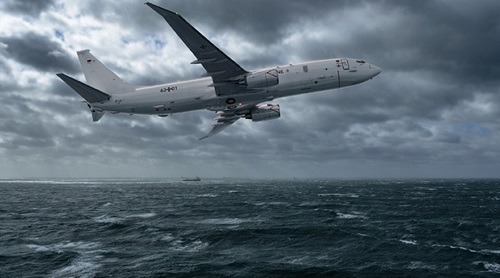
ARLINGTON, Va., Feb. 29, 2024 — The U.S. Navy has awarded Boeing [NYSE: BA] a $3.4 billion contract to begin manufacturing 14 P-8A Poseidon aircraft for the Royal Canadian Air Force and three additional P-8s for the German Navy.
“We are proud to add Canada to the list of international P-8 partners as well as to Germany’s fleet of maritime patrol aircraft,” said Philip June, vice president and program manager, P-8A program. “The Poseidon is a proven aircraft, with more than 600,000 flight hours, that will serve Canada and Germany well in today’s challenging security environment and for decades to come.”
In November 2023, Canada announced its decision to acquire the P-8A Poseidon to replace its current fleet of CP-140 Auroras. The first P-8A for Canada is expected to deliver in 2026.
With the P-8 acquisition, Boeing’s economic commitments to Canada have the potential to generate annual benefits of more than 3,000 jobs for Canadian industry and value-chain partners, and at least $358 million to Canada’s gross domestic product over a 10-year period.
Canada’s Team Poseidon includes CAE, GE Aviation Canada, IMP Aerospace & Defence, KF Aerospace, Honeywell Aerospace Canada, Raytheon Canada, and StandardAero. The team builds on 81 Canadian suppliers to the P-8 platform and more than 550 suppliers across all provinces contributing to Boeing’s annual ~CAD $4 billion in economic benefit to Canada, supporting more than 14,000 Canadian jobs.
“Our global customers require proven advanced capabilities to protect their countries — the P-8 provides that defense,” said Vince Logsdon, vice president, International Business Development for Boeing Defense, Space & Security and Global Services. “Together with our partners, we look forward to delivering this unmatched capability in addition to significant industrial benefits for Canada’s and Germany’s aerospace and defense industries.”
Following the initial procurement of five P-8 aircraft in June 2021, Germany added three additional aircraft to bring the total number of P-8s for the German Navy to eight. The first aircraft will be delivered in 2025, to replace the country’s fleet of P-3 Orions.
In Germany, Boeing has partnered with ESG Elektroniksystem-und Logistik-GmbH and Lufthansa Technik to deliver systems integration, training, support and sustainment work that will bring the highest operational availability to fulfill the German Navy’s missions.
Last year, Boeing and CAE signed teaming agreements to expand multi-mission platform collaboration in Canada, Germany and Norway. These agreements use the complementary capabilities of each company to provide superior management, technical and cost-effective training solutions for the P-8A Poseidon program.
There are 200 P-8s currently in service or on contract across nine countries including the United States, Australia, India, United Kingdom, Norway, New Zealand, Republic of Korea, Germany and Canada.
STRATCOM Commander Affirms Need for Sea-Launched Cruise Missile-Nuclear
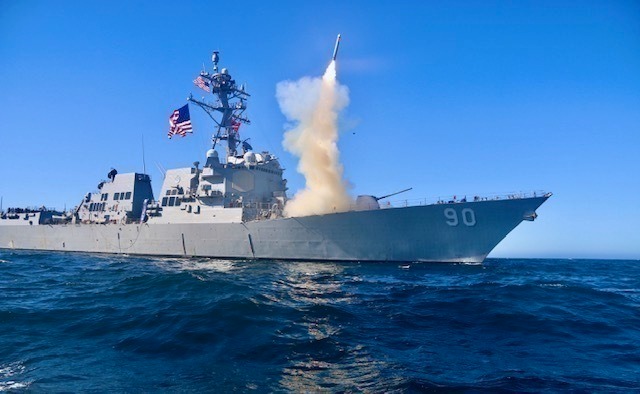
Caption: PACIFIC OCEAN (Nov. 30, 2020) The guided-missile destroyer USS Chafee (DDG 90) launches a Block V Tomahawk, the weapon’s newest variant, during a three-day missile exercise. The Navy is developing a nuclear-tipped sea-launched cruise missile as a future nuclear deterrent. (U.S. Navy photo by Ensign Sean Ianno)
By Richard R. Burgess, Senior Editor
ARLINGTON, Va.—The operational commander of the nation’s nuclear arsenal has reiterated to Congress the requirement for a sea-based nuclear-tipped cruise missile.
Testifying Feb. 29 before the Senate Armed Services Committee, Air force General Anthony J. Cotton, commander, U.S. Strategic Command called for development and deployment of the Sea-Launched Cruise Missile – Nuclear (SLCM-N), a program called for in the 2018 Nuclear Posture Review (NPR).
Cotton called for continued modernization of the U.S. nuclear deterrent forces, including the SLCM-N.
“While our legacy systems continue to hold potential adversaries at risk, it is absolutely critical we continue at speed with the modernization of our nuclear triad, including land-based ICBMs [intercontinental ballistic missiles], the B-21 [bomber], the B-52 [bomber], the Columbia-class submarine, the nuclear sea-launched cruise missile, and LRSO [Long-Range Stand-Off weapon],” Cotton said.
The 2018 NPR called for the United States to “pursue a nuclear-armed SLCM, leveraging existing technologies to help ensure its cost effectiveness. SLCM will provide a needed non-strategic regional presence, an assured response capability. It also will provide an arms-control-compliant response to Russia’s non-compliance with the Intermediate-range Nuclear Forces Treaty, its non-strategic nuclear arsenal, and its other destabilizing behaviors.”
The Biden administration, with support of Democratic representatives in the Congress, has opposed development of the SLCM-N, citing what they said was the cost of the program, the adequacy of the current nuclear deterrent arsenal, and a risk to nuclear stability.
Despite the administration’s opposition, Congress authorized $25 million in the 2023 National Defense Authorization Act for research for the SLCM-N. The administration did not request funding for research for the SLCM-N in its fiscal 2024 budget request, but Congress approved establishing the SLCM-N as a program of record.
The fiscal 2024 NDAA “authorized the Sea-Launched Cruise Missile – Nuclear, or SLCM-N, as part of the program of record with initial operating capability by 2034, said Jill Hruby, National Nuclear Security Administration administrator, speaking Feb. 1 at the 2024 Nuclear Deterrence Summit. “SLCM-N will provide a new low yield at sea nuclear deterrent. NNSA is working closely with the Navy and Office of Secretary of Defense to develop a recommendation for Congress by early March on the details of the SLCM-N program.”
The Navy used to field a nuclear-armed version of the Tomahawk Land-Attack Missile — the TLAN-N — which was retired about 2010.
Secretary of the Navy Del Toro Meets with Leaders of HD Hyundai and Hanwha in the Republic of Korea; Tours Shipyards
Secretary of the Navy Carlos Del Toro met with top shipbuilding industry executives in the Republic of Korea (ROK) and toured some of the world’s most technologically advanced and prolific shipyards. Discussions were very productive and centered on attracting Korean investment in integrated commercial and naval shipbuilding facilities in the United States.
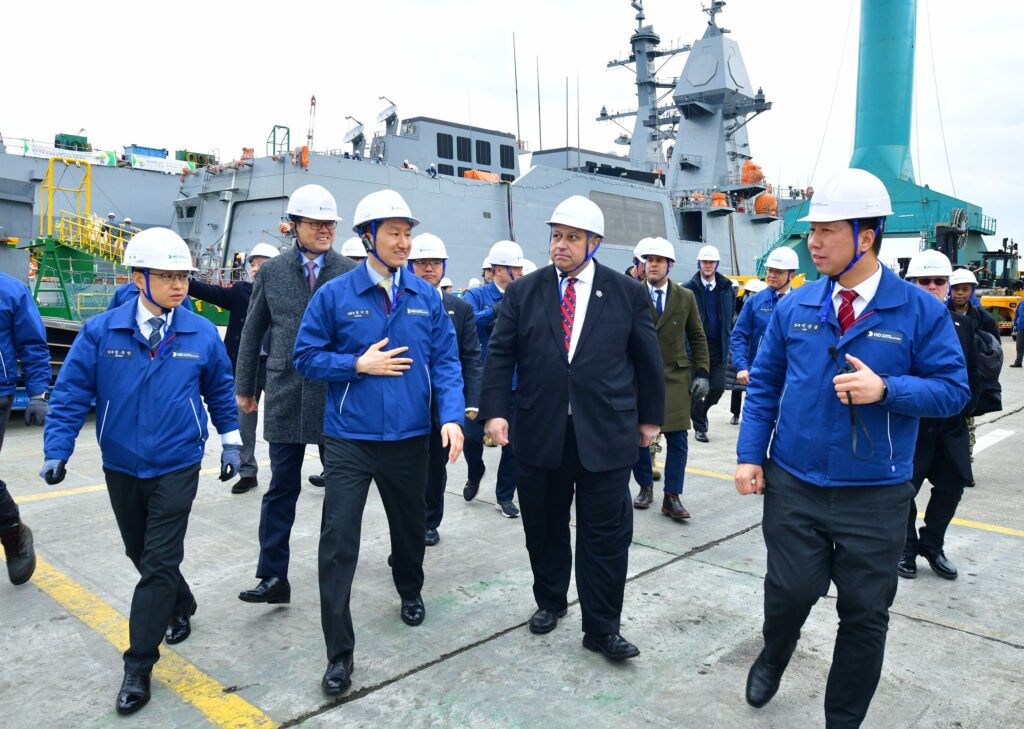
Shortly after arriving in Seoul on Sunday, February 25, Secretary Del Toro engaged separately with Hanwha Vice Chairman and CEO Dong Kwan Kim and HD Hyundai Vice Chairman and CEO Kisun Chung. The morning of Tuesday, February 27, Mr. Chung personally gave Secretary Del Toro a tour of Hyundai’s shipyard in Ulsan. Later that afternoon, the Secretary traveled to Geoje Island, where Hanwha Ocean CEO Hyek-woong Kwon led a tour of his company’s shipyard there.
Secretary Del Toro reflected, “In each of these engagements, I brought to the table a simple, yet profound opportunity: invest in America. I was enormously gratified by the strong interest expressed by the leaders of each of these world-class shipbuilders in establishing U.S. subsidiaries and investing in shipyards in the United States.”
As China continues to aggressively pursue worldwide shipbuilding dominance, Secretary Del Toro expressed his heartfelt appreciation that the Republic of Korea, one of America’s closest allies, continues to hold its own in the international shipbuilding industry. The importance of Korean shipbuilding as an asset to the U.S.-ROK alliance and to the network of global maritime democracies cannot be overstated.
As part of his call for a new Maritime Statecraft in his speech to the Harvard Kennedy School on September 26, 2023, Secretary Del Toro had observed that the U.S. maritime industry “is ripe with opportunity to partner with a greater number of shipbuilders here in the U.S. and with our closest allies overseas, including Japan and South Korea.” In the same speech, he announced his objective to “attract the most advanced shipbuilders in the world to open U.S.-owned subsidiaries and invest in commercial shipyards here in the U.S., modernizing and expanding our shipbuilding industrial capacity and creating a healthier, more competitive shipbuilding workforce.”
Secretary Del Toro said his engagements over the past several days affirmed and advanced that vision. “As I saw firsthand during my shipyard visits in Korea this week, Hanwha and Hyundai set the global industry standard. I could not be more excited at the prospect of these companies bringing their expertise, their technology, and their cutting-edge best practices to American shores. As world class leaders in the global shipbuilding business, they are poised to energize the U.S. shipbuilding marketplace with fresh competition, renowned innovation and unrivaled industrial capacity.”
The Secretary’s current trip to the Republic of Korea, Japan, and Palau, a key step in his Maritime Statecraft efforts to reinvigorate America’s comprehensive maritime power, aligns closely with the Pentagon’s National Defense Industrial Strategy, which calls for venture capital and new ideas to revive the U.S. industrial base.
Secretary Del Toro noted that “in addition to our currently active shipyards, there are numerous former shipyard sites around the country which are largely intact and dormant. These are ripe for redevelopment as dual-use construction facilities for both warships, like AEGIS destroyers, as well as high value chain commercial vessels, such as the ammonia gas carriers that will enable the global transition from fossil fuels to green energy sources like hydrogen.”
The Secretary emphasized the economic value of revitalizing U.S. shipbuilding: “Investment in dual-use shipyards in the United States will create good paying, blue collar and new-collar American jobs building the advanced ships that will protect and power the economy of tomorrow.”
As he departed Korea, Secretary Del Toro underscored that his engagements with Hyundai and Hanwha’s leaders this week marked only the beginning, adding, “I look forward to hosting Mr. Chung and Mr. Kim at my office in the Pentagon to continue our discussions in the coming weeks.”
HII Completes Initial Sea Trials of Virginia-Class Submarine New Jersey
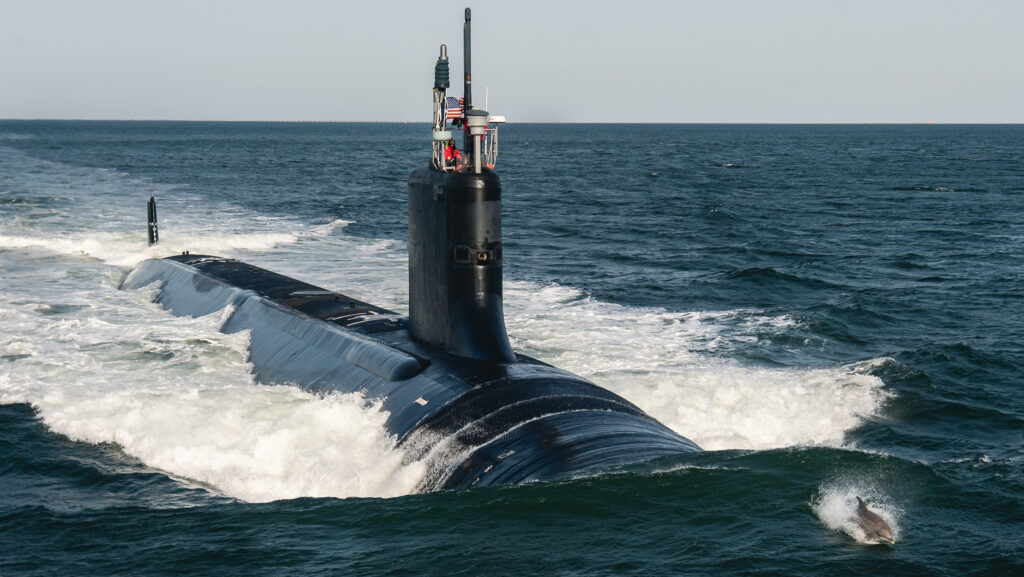
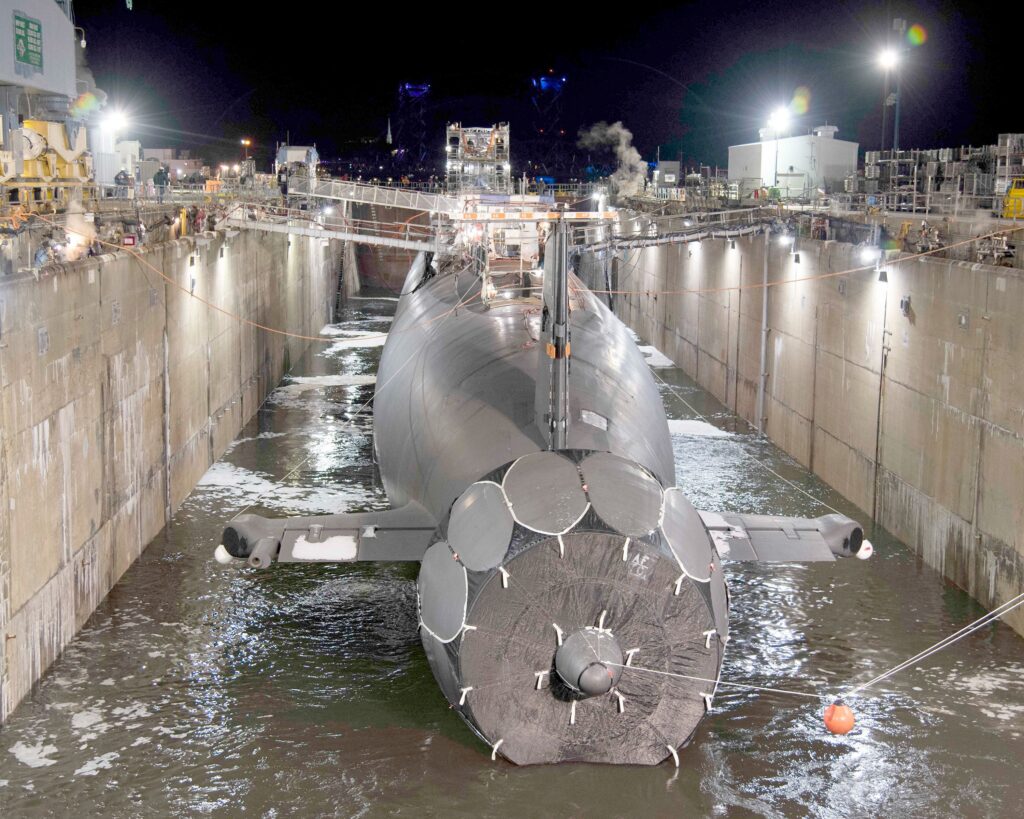
NEWPORT NEWS, Va., Feb. 29, 2024 (GLOBE NEWSWIRE) — HII (NYSE: HII) announced today the successful completion of initial sea trials for Virginia-class attack submarine New Jersey(SSN 796) by the company’s Newport News Shipbuilding division. New Jersey spent several days at sea to test the boat’s systems and components.
Testing included submerging the submarine for the first time and conducting high-speed maneuvers while on the surface and submerged. NNS teams will continue the testing program ahead of delivering the boat to the U.S. Navy.
“Taking New Jersey out for the first time is a significant milestone and the first major test of the submarine’s capabilities at sea,” said Jason Ward, NNS vice president of Virginia-class submarine construction. “Both New Jersey and her crew performed exceptionally well. This was truly a team effort between shipbuilders, thousands of suppliers around the country and the crew. We look forward to delivering New Jersey to the Navy soon so it can begin its service to our nation.”
The boat, the 23rd Virginia-class submarine, was christened in November 2021. New Jersey will be the 11th to be delivered by NNS. It is the first submarine designed with a modification for gender integration.
Bell and Leonardo Enter into Memorandum of Understanding to Evaluate Cooperation Opportunities in the Tiltrotor Technology Domain
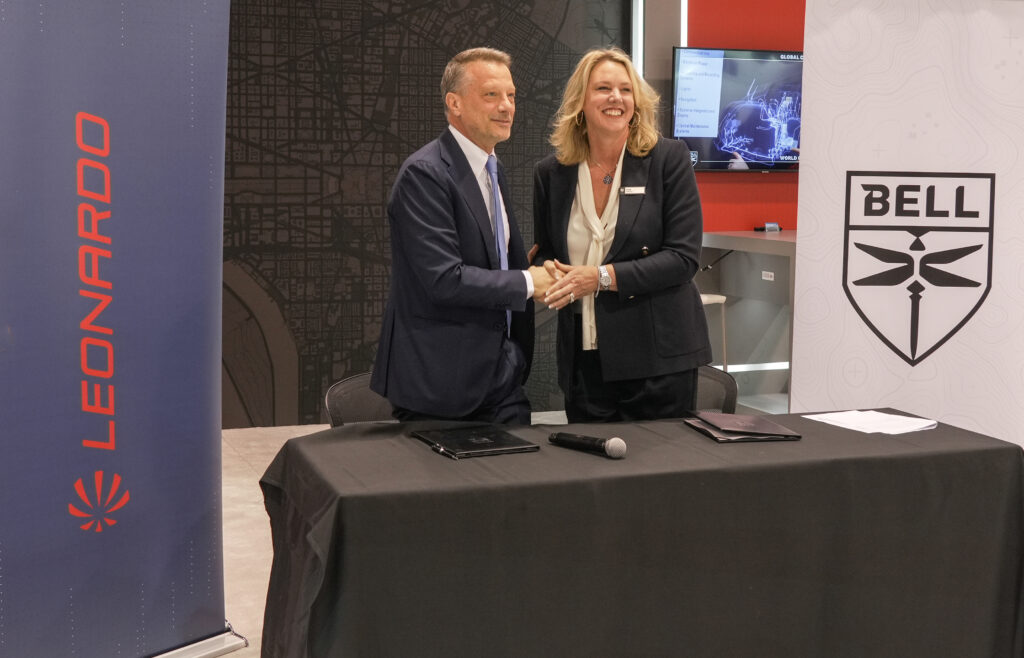
Anaheim, Calif. (Feb. 28, 2024) – Bell Textron Inc., a Textron Inc. (NYSE:TXT) company, and Leonardo S.p.A., have signed a Memorandum of Understanding (MOU) to evaluate cooperation opportunities in the tiltrotor technology domain.
As global leaders in designing, manufacturing, and supporting rotorcraft for commercial and military applications, Bell and Leonardo share a multi-decade history of industrial cooperation on both traditional helicopters as well as tiltrotor technology collaboration.
The cooperative effort will begin in earnest with the NATO Next Generation Rotorcraft Capability (NGRC) Concept Study #5, where Leonardo will take the lead on a tiltrotor architecture proposal with Bell in support.
“This cooperative effort between Bell and Leonardo reflects our shared vision that next generation rotorcraft will be influenced by the speed, range and maneuverability only tiltrotor technology can deliver,” said Lisa Atherton, president and CEO, Bell. “We are proud to deepen our relationship with Leonardo as we continue to explore emerging vertical lift programs in Europe and the United States.”
Gian Piero Cutillo, Managing Director of Leonardo Helicopters, said “We’re thrilled to evaluate new joint efforts for the next generation of rotorcraft technologies, based on our solid and shared view of the unique advantages of tiltrotors. Leonardo has always firmly endorsed tiltrotor technologies to meet evolving rotorcraft requirements, even more so as new needs emerge in the market.”
Raven Warns of CR Impact on Navy Department Budget
By Richard R. Burgess, Senior Editor
ARLINGTON, Va. — The Department of the Navy (DON) is facing a reduction of $12 billion of buying power if the Defense Department has to operate through fiscal 2024 under a continuing resolution (CR) and Congress does not pass a supplemental budget, a top DON official said.
“The misalignment in funding lines results in $26 billion of funding misalignments that we may have in our coffers — but not be able to spend it on the programs that matter,” said Under Secretary of the Navy Erik Raven, speaking Feb. 28 to reporters. “When you add all this up, this is nearly a 10% impact to our topline. This is getting into the territory of the 2013 sequester in terms of fiscal impacts. So, this is a very serious situation.”
Raven said that if a full-year CR is the case, the DON’s priorities would be readiness first and people second. “[W]hat that means is taking risk and investment programs. And I’m very concerned about our ability not only to execute that strategy unless given really unprecedented flexibilities by Congress, but also the follow-on impacts on industrial base and our modernization plans.”
Regarding readiness, Raven said that current operations, such as the effort to defend commercial shipping in the Red Sea from Houthi rebels, would take precedence.
“We need to be able to perform our mission,” he said. “And simply if we don’t have the resources that we need to execute all of our missions, we have to make tough choices. But between the ability to fight tonight and be ready for all the threats versus preparing for the future and modernizing our forces it is a tough decision. But we have to lay our chips somewhere and that’s on the ability to perform our missions today.”
He listed a few programs that would be severely affected by a year-long CR and lack of a supplemental from Congress:
The overhaul of the attack submarine USS Boise, delayed for seven years and finally slated, would not be executed.
The amphibious assault ship construction program would not be kept on track.
The Virginia-class attack submarine program would face a $2 billion shortfall.
Munition funding would suffer “across the board.”
Construction of three child-development centers — two in Virginia and one in Guam — would be delayed.
Doubling of funds for SM-6 missiles — used in the Red Sea operations — would not be doable.
A $3.4 billion investment in the submarine industrial base — to enable production of submarines at a rate of one Columbia ballistic-missile submarine and two Virginia-class submarines — would have to be delayed.
SECDEF Announces Flag Officer Nominations
28 February 2024
The Secretary of Defense Lloyd J. Austin III announced today that the President has made the following nominations:
Active O-8 Flag Officer Nominations
Navy Rear Adm. (lower half) Mark D. Behning has been nominated for appointment to the rank of rear admiral. Behning is currently serving as director, Undersea Warfare Division, N97, Office of the Chief of Naval Operations, Washington, D.C.
Navy Rear Adm. (lower half) Susan BryerJoyner has been nominated for appointment to the rank of rear admiral. BryerJoyner is currently serving as deputy director, Command, Control, Communications, and Computers/Cyber, J6, Joint Staff, Washington, D.C.
Navy Rear Adm. (lower half) Thomas R. Buchanan has been nominated for appointment to the rank of rear admiral. Buchanan is currently serving as commander, Submarine Group TEN, Kings Bay, Georgia.
Navy Rear Adm. (lower half) Christopher J. Cavanaugh has been nominated for appointment to the rank of rear admiral. Cavanaugh is currently serving as commander, Submarine Group SEVEN/commander, Task Force SEVEN FOUR/commander, Task Force FIVE FOUR, Yokosuka, Japan.
Navy Rear Adm. (lower half) Jennifer S. Couture has been nominated for appointment to the rank of rear admiral. Couture is currently serving as commander, Carrier Strike Group ELEVEN, Everett, Washington.
Navy Rear Adm. (lower half) William R. Daly has been nominated for appointment to the rank of rear admiral. Daly is currently serving as commander, Carrier Strike Group FIFTEEN, San Diego, California.
Navy Rear Adm. (lower half) Dion D. English has been nominated for appointment to the rank of rear admiral. English is currently serving as director, Supply, Ordnance, and Logistics Operations Division, N4L, Office of the Chief of Naval Operations, Washington, D.C.
Navy Rear Adm. (lower half) Erik J. Eslich has been nominated for appointment to the rank of rear admiral. Eslich is currently serving as commander, Carrier Strike Group TWELVE, Norfolk, Virginia.
Navy Rear Adm. (lower half) Ronald A. Foy has been nominated for appointment to the rank of rear admiral. Foy is currently serving as commander, Special Operations Command Africa, U.S. Special Operations Command, Stuttgart, Germany.
Navy Rear Adm. (lower half) Patrick J. Hannifin has been nominated for appointment to the rank of rear admiral. Hannifin is currently serving as commander, Task Force SEVEN ZERO/commander, Carrier Strike Group FIVE, Yokosuka, Japan.
Navy Rear Adm. (lower half) Gregory C. Huffman, has been nominated for appointment to the rank of rear admiral. Huffman is currently serving as U.S. Indo-Pacific Command Representative, Guam, Commonwealth of the Northern Mariana Islands, Federated States of Micronesia, Republic of Palau/commander, U.S. Naval Forces, Marianas/commander, Joint Region Marianas, Guam.
Navy Rear Adm. (lower half) Jeffrey J. Kilian has been nominated for appointment to the rank of rear
admiral. Kilian is currently serving as commander, Naval Facilities Engineering Systems Command Pacific/director, Fleet Civil Engineer, U.S. Pacific Fleet, Pearl Harbor, Hawaii.
Navy Rear Adm. (lower half) Kevin P. Lenox has been nominated for appointment to the rank of rear admiral. Lenox is currently serving as commander, Carrier Strike Group THREE, Bremerton, Washington.
Navy Rear Adm. (lower half) Oliver T. Lewis has been nominated for appointment to the rank of rear admiral. Lewis is currently serving as director, Strategic Integration, N2/N6T, Office of the Chief of Naval Operations, Washington, D.C.
Navy Rear Adm. (lower half) Marc J. Miguez has been nominated for appointment to the rank of rear admiral. Miguez is currently serving as commander, Carrier Strike Group TWO, Norfolk, Virginia.
Navy Rear Adm. (lower half) Benjamin R. Nicholson has been nominated for appointment to the rank of rear admiral. Nicholson is currently serving as commander, Expeditionary Strike Group TWO, Virginia Beach, Virginia.
Navy Rear Adm. (lower half) Elizabeth S. Okano has been nominated for appointment to the rank of rear admiral. Okano is currently serving as program executive officer for Integrated Warfare Systems, Washington, D.C.
Navy Rear Adm. (lower half) Kurt J. Rothenhaus has been nominated for appointment to the rank of rear admiral. Rothenhaus is currently serving as chief of Naval Research, Arlington, Virginia.
Navy Rear Adm. (lower half) Carlos A. Sardiello has been nominated for appointment to the rank of rear admiral. Sardiello is currently serving as commander, Carrier Strike Group ONE, San Diego, California.
Navy Rear Adm. (lower half) Ralph R. Smith III has been nominated for appointment to the rank of rear admiral. Smith is currently serving as deputy director, Operations, National Security Agency, Fort Meade, Maryland.
Navy Captain Lia M. Reynolds has been nominated for appointment to the rank of rear admiral and for assignment as Deputy Judge Advocate General of the Navy. Reynolds is currently serving as the Assistant Judge Advocate General, Operations and Management, Washington, D.C.
Reserve O-8 Flag Officer Nominations
The Secretary of Defense Lloyd J. Austin III announced today that the President has made the following nominations:
Navy Rear Adm. (lower half) Bradley D. Dunham has been nominated for appointment to the rank of rear admiral. Dunham is currently serving as reserve commander, Naval Air Force Reserve, San Diego, California.
Navy Rear Adm. (lower half) Scott W. Ruston has been nominated for appointment to the rank of rear admiral. Ruston is currently reserve special assistant to the Vice Chief of Naval Operations, Washington, District of Columbia.
Navy Rear Adm. (lower half) Douglas W. Sasse III has been nominated for appointment to the rank of rear admiral. Sasse is currently serving as reserve director, Assessment Division, N81, Office of the Chief of Naval Operations, Washington, District of Columbia.
Navy Rear Adm. (lower half) Gregory K. Emery has been nominated for appointment to the rank of rear admiral. Emery is currently serving as reserve commander, Navy Information Force Reserve, Washington, District of Columbia.
Navy Rear Adm. (lower half) Dennis E. Collins has been nominated for appointment to the rank of rear admiral. Collins is currently serving as reserve commander, Navy Expeditionary Logistics, Williamsburg, Virginia.
Navy Rear Adm. (lower half) Luke A. Frost has been nominated for appointment to the rank of rear admiral. Frost is currently serving as reserve director, Reserve Warfare, Office of the Chief of Naval Operations, Washington, District of Columbia.
Reserve O-7 Flag Officer Nominations
Secretary of Defense Lloyd J. Austin III announced today that the President has made the following nominations:
Navy Reserve Captain Benjamin E. Baran has been nominated for appointment to the rank of rear admiral (lower half). Baran is currently serving as commanding officer, Navy Reserve U.S. Fleet Forces Command, N1, Norfolk, Virginia.
Navy Reserve Captain David N. Barnes has been nominated for appointment to the rank of rear admiral (lower half). Barnes is currently serving as deputy commander, Navy Reserve Region Readiness and Mobilization Command, Fort Worth, Texas.
Navy Reserve Captain Shawn G. Denihan has been nominated for appointment to the rank of rear admiral (lower half). Denihan is currently serving as chief engineer, Navy Reserve Naval Air Systems Command, Patuxent River, Maryland.
Navy Reserve Captain Michael L. Freiberg has been nominated for appointment to the rank of rear admiral (lower half). Freidberg is currently serving as regional commander, Navy Reserve Naval Information Force Reserve Headquarters, Suffolk, Virginia.
Navy Reserve Captain Reginald H. Hendrix has been nominated for appointment to the rank of rear admiral (lower half). Hendrix is currently serving as deputy commander, Maritime Expeditionary Security Group TWO, Virginia Beach, Virginia.
Navy Reserve Captain Marcus J. Lockard Jr., has been nominated for appointment to the rank of rear admiral (lower half). Lockard is currently serving as commanding officer, Navy Reserve Pacific Fleet Command, N3N5, Pearl Harbor, Hawaii.
Navy Reserve Captain Ryan K. Mahelona has been nominated for appointment to the rank of rear admiral (lower half). Mahelona is currently serving as deputy chief of staff for Warfare Readiness and Integration, Navy Reserve, Naval Information Force Reserve Headquarters, Suffolk, Virginia.
Navy Reserve Captain Jason M. Naidyhorski has been nominated for appointment to the rank of rear admiral (lower half). Naidyhorski is currently serving as deputy commander, Navy Reserve Region Readiness and Mobilization Command, Norfolk, Virginia.
Navy Reserve Captain Troy S. Pugh has been nominated for appointment to the rank of rear admiral (lower half). Pugh is currently serving as commanding officer, Navy Reserve Indo-Pacific Command, J4 KIT, Camp Smith, Hawaii.
Navy Reserve Captain Katie F. Sheldon has been nominated for appointment to the rank of rear admiral (lower half). Sheldon is currently serving as commanding officer, Navy Reserve THIRD Fleet Headquarters, San Diego, California.
Leonardo DRS to Build State-of-the-Art Naval Propulsion Manufacturing and Test Facility Near Charleston, S.C.
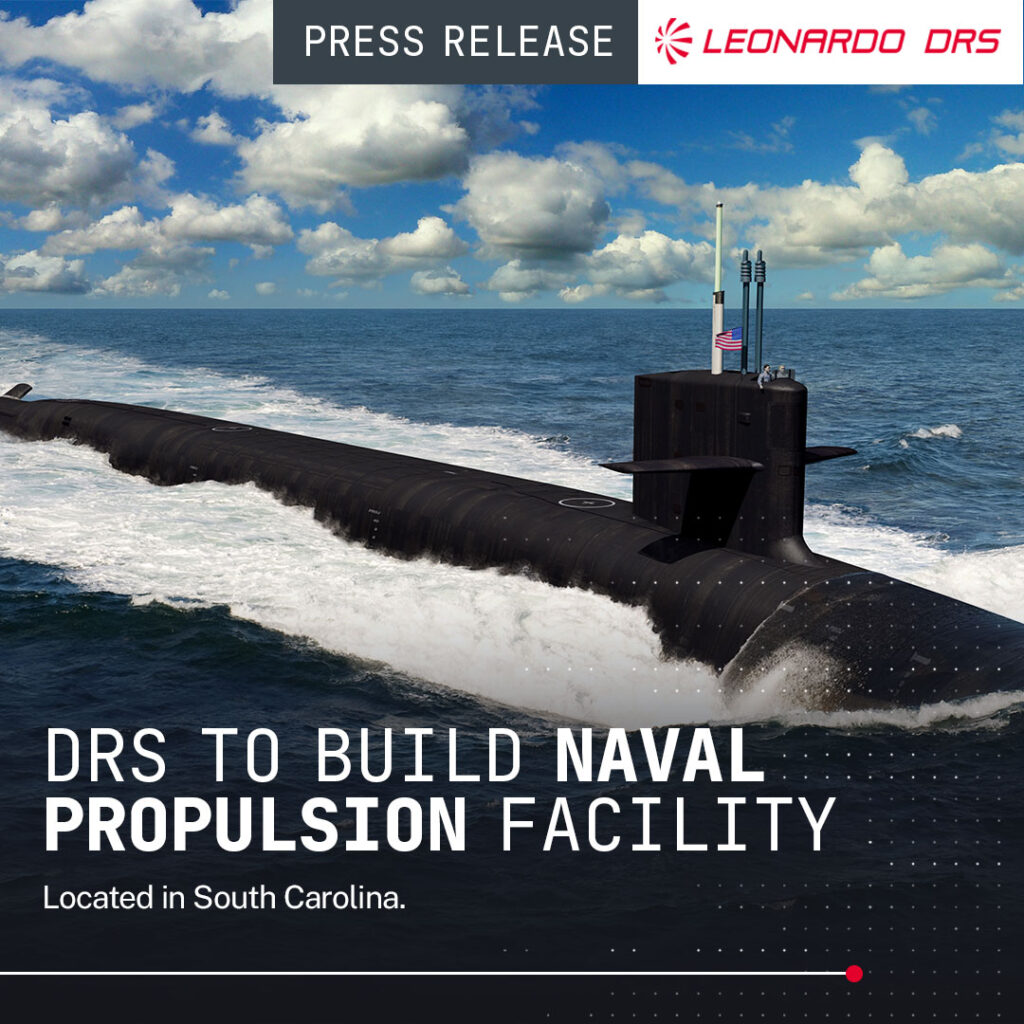
ARLINGTON, VA, February 27, 2024 ̶ Leonardo DRS, Inc. (NASDAQ: DRS) announced today that it has signed a ground lease in the Charleston, South Carolina metropolitan area to develop a state-of-the-art manufacturing facility, allowing the company to grow its naval propulsion capability and streamline its support of priority U.S. Navy programs.
When complete there will be over 140,000 square feet of purpose-built advanced manufacturing, assembly and testing space representing an approximate net investment of $120 million by DRS. The new capabilities made possible by this investment will play a key role in the continued expansion of propulsion system integration and testing for the company. Initial occupancy is targeted for 2026.
“We are proud to be building the next-generation electric propulsion system components for the new Columbia-class ballistic missile submarine,” said Leonardo DRS CEO, Bill Lynn. “This new facility in South Carolina expands our capability to support our U.S. Navy customers on this and other critical programs that enhance the nation’s submarine industrial base,” he added.
When completed, the facility will have the capability to manufacture, integrate and test large components for DRS’s advanced naval electric propulsion systems. The components include solid-state drives, designed and manufactured in the new DRS Menomonee Falls, WI. facility; electric motors designed and manufactured in the DRS facility in Fitchburg, MA.; control systems designed and manufactured in the DRS facility in Danbury, CT., and cooling equipment designed and manufactured in the DRS facility in High Ridge, MO. The South Carolina facility will have direct access to barge transportation on the local waterway and out to the open ocean for shipping these large assemblies to the company’s shipbuilding customers.
“This facility represents a significant milestone in our ongoing collaboration with the U.S. Navy. We expect the unique capabilities in this new facility to be a national asset capable of addressing the Navy’s current and future needs,” said Jon Miller, senior vice president and general manager of the Leonardo DRS Naval Power Systems business.
Additionally, the new facility will also play an important role in spurring economic growth in the region through building a network of regional business partners, universities and other organizations that will work closely with DRS.
Leonardo DRS partnered with a team across state and local governments, as well as regional economic organizations and the private sector to bring this project to the greater Charleston area.
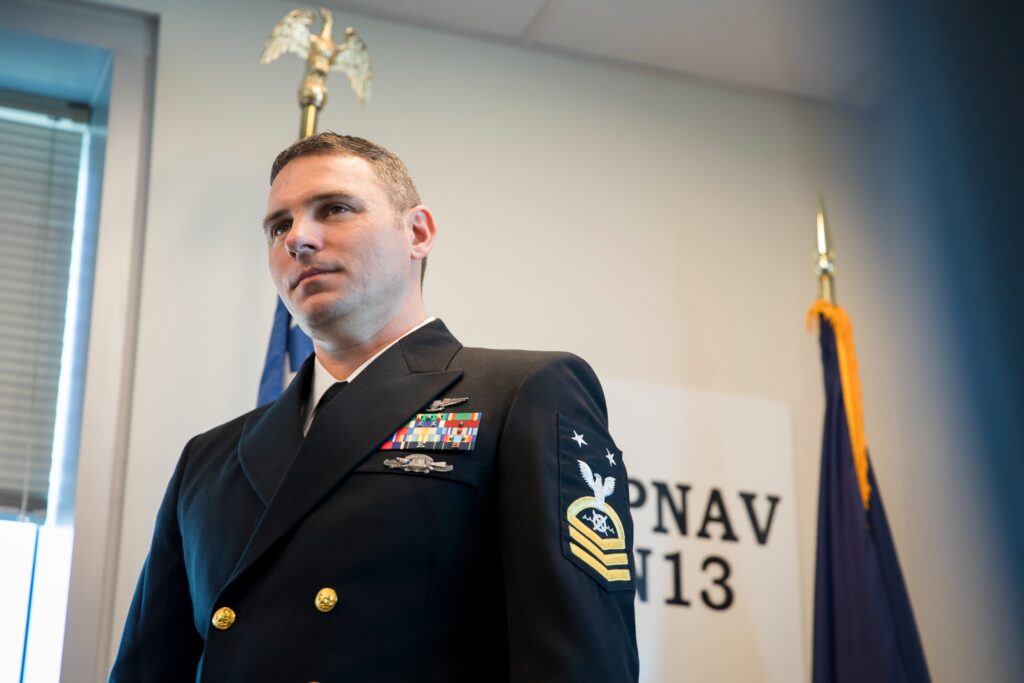
ARLINGTON, Va. — The Chief of Naval Personnel, Vice Adm. Rick Cheeseman, and the Navy’s Personnel Plans and Policy Division (N13) Director, Rear Adm. Jim Waters, pinned Master Chief Christopher Rambert as the Navy’s first Robotics Warfare Specialist during an office call at Naval Support Facility Arlington, Virginia, Feb. 27, 2024.
The rating insignia reveal followed the U.S. Navy’s announcement in NAVADMIN 036/24, establishing the branch’s enlisted career field for operators, maintainers, and managers of robotic and autonomous systems.
The establishment of the RW rating underpins the Chief of Naval Operations Adm. Lisa Franchetti’s plans for building and developing “a team who has the reps and sets in sensors, platform autonomy, and mission autonomy programs, and can provide input in machine-learning feedback processes,” a priority she discussed in her keynote address at the WEST 2024 naval conference.
Although Rambert is the first Sailor to don the new RW uniform rating badge, the development of the Navy robotics warfare community represents years of effort.
“It’s a proud moment to see all the hard work that’s gone into developing this badge, and just seeing it finally get codified and brought to life – to me, it signifies the hard work of the people around me,” Rambert said.
From research and analysis to organizing working groups and designating individual subject matter experts, Sailors and Navy civilian employees have been working behind the scenes on creating the Robotics Warfare Specialist career field for more than three years.
Its founding has distinguished the Navy as the first Department of Defense branch to establish a dedicated enlisted workforce specialized in unmanned and autonomous technology.
“The RW rating is a major milestone in our Navy’s relentless march to achieve a truly hybrid Fleet,” Cheeseman penned in NAVADMIN 036/24.
According to Rambert, the DoD’s hybrid force framework is a force multiplier, allowing Sailors to develop seasoned experience across the rating’s multiple domains – subsurface, surface, air, and ground platforms.
With a background as an aviation electrician’s mate, Rambert spoke to the tactical advantages that will come with the new rating’s initial cadre – and the growing opportunity for future RW Sailors.
“You get the opportunity to go to so many different places,” Rambert said. “If you look across the spectrum of the entire Navy, you’ve got Sailors that have the potential to really touch every single domain out there and that’s very rare.”
Rambert has served as the Navy’s sole Robotics Enlisted Community Manager at the Bureau of Naval Personnel since October 2023.
“It’s really an awesome feeling to be the first one to represent the rating,” Rambert said. “And to see this rating finally come to fruition, you can see the level of excitement, and passion from the other Sailors that are out there.”
Eligibility and Application
The initial selection of Sailors for RW conversions will consist primarily of active-duty Sailors currently holding robotics-related Navy Enlisted Classification (NEC) codes. Sailors currently or previously assigned to billets in unmanned vehicle divisions are primed for selection.
Active-duty E-4 to E-9 Sailors who meet the above criteria can apply by submitting a NAVPERS 1306/7 Electronic Personnel Action Request (EPAR) form to BUPERS-328 or BUPERS-352 (SELRES).
Rambert described the sought-after characteristics of RW candidates as being driven, adaptable, and motivated to become masters of the craft.
“They have to have [the] drive to want to be a part of something that might not be entirely defined by policy,” Rambert said. “They need to be passionate about what they do because what they’re learning now and the lessons learned that we take to the table later can have huge effects on the success of the rating as we progress into the future.”
Rating Symbol Design
The rating symbol for the newly established Navy Robotics Warfare Specialist (RW) rating, announced in NAVADMIN 036/24, comprises an airplane propeller and lightning bolt crossed over a treaded wheel, all layered over a single wave.
Originally designed by Chief Aviation Electrician’s Mate McLean Monaghan, the RW rating symbol comprises an airplane propeller and lightning bolt crossed over a treaded wheel, all layered over a single wave. Each element represents a domain that U.S. Navy Robotics Warfare Specialists are expected to operate in to support the mission of the DoD:
· Airplane Propeller – Aerial Systems
· Lightning Bolt – The Electromagnetic Spectrum
· Treaded Wheel – Ground Systems
· Wave – Surface and Subsurface Systems
Feb. 27 Red Sea Update
USCENTCOM
On Feb. 27, between the hours of 9:50p.m. and 10:55 p.m. (Sanaa time), U.S. aircraft and a coalition warship shot down five Iranian-backed Houthi one-way attack (OWA) unmanned aerial vehicles (UAV) in the Red Sea.
CENTCOM forces identified these UAVs originating from Houthi-controlled areas of Yemen and determined they presented an imminent threat to merchant vessels and to the U.S. Navy and coalition ships in the region. These actions will protect freedom of navigation and make international waters safer and more secure for U.S. Navy and merchant vessels.