Lockheed Martin Delivers 350th MH-60R Helicopter to U.S. Navy 
From Lockheed Martin  

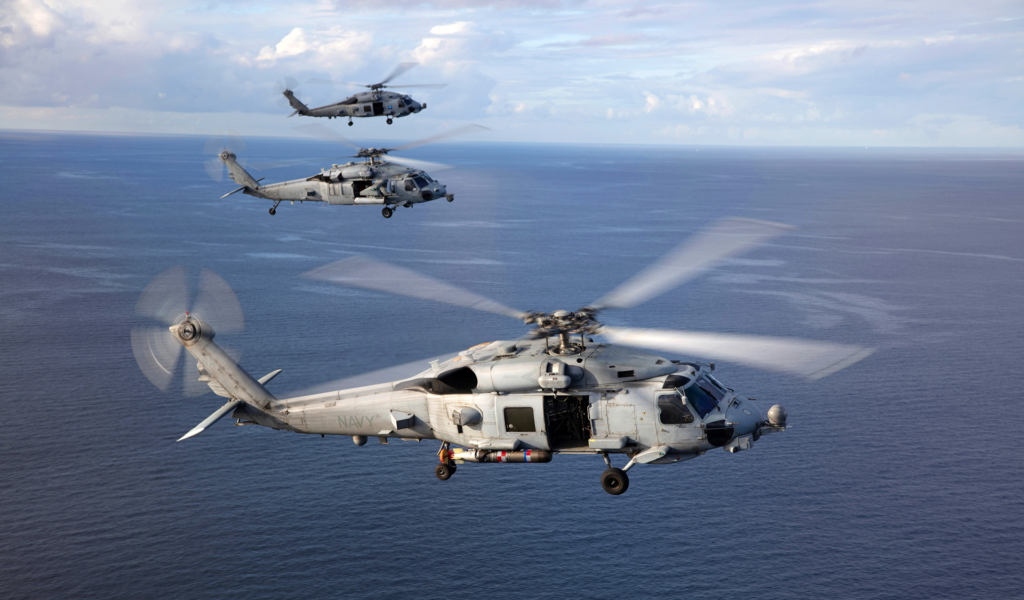
OWEGO, N.Y., Jan. 13, 2026 – In a recent ceremony, Lockheed Martin (NYSE: LMT) delivered its 350th MH-60R “Romeo” helicopter to the United States Navy. The aircraft was delivered to HSM-41, the U.S. Navy’s Helicopter Maritime Strike Fleet Replacement Squadron, training the U.S. Pacific Fleet’s newest naval aviators and naval aircrewmen to operate the MH-60R helicopter. This milestone marks a significant achievement in the production and delivery of world’s most advanced naval helicopter. 

The Sikorsky MH-60R has earned a reputation as the premier global anti-submarine warfare (ASW) helicopter platform, thanks to its advanced sensors, integrated mission systems, precision weapons and network-centric capability. Its proven operational performance has made it an unmatched asset in the global effort to counter increasingly capable submarine threats. 

“The delivery of the 350th MH-60R helicopter is a testament to the exceptional capabilities of this aircraft and the dedication of our team,” said Ali Ruwaih, Maritime Systems vice president. “We are proud to support the U.S. Navy and our global partners with this highly advanced multi-mission platform, which will remain a critical component of global ASW operations for decades to come.” 

 With advanced sensors, radars, Electronic Support Measures, data links and weapons, the MH-60R has repeatedly proven its combat worth, most recently shooting down an enemy drone during a maritime security patrol in the Gulf of Aden by utilizing its advanced sensor suite and rapid engagement capability. The Romeo crew successfully sank multiple Houthiarmed skiffs in the Red Sea, neutralizing threats to merchant vessels and safeguarding vital shipping lanes. The MH60R also played a key role in the Resolute Hunter exercise, integrating seamlessly with allied surface combatants, enhancing antisubmarine warfare coordination and showcasing its versatility in joint multinational operations. 

“The MH-60R has been the U.S. Navy’s primary anti-submarine and surface warfare helicopter since 2010. This true multi-mission asset has proven itself in all aspects of land or maritime operations providing various mission requirements around the globe. We are grateful to the artisans at Sikorsky for keeping this invaluable asset at the ready for all our service men and women for decades to come,” said Captain William Hargreaves, H-60 Multi-Mission Helicopters program manager.  

With its network-centric design, the MH-60R enables seamless communication and data exchange with other ASW assets, enhancing situational awareness and facilitating coordinated ASW operations. Aligned with Lockheed Martin’s 21st Century Security framework, the aircraft’s openarchitecture avionics suite allows rapid integration of emerging sensors and weapons. 

The Romeo’s service life is expected to extend into the 2050s, and its active production line ensures that customers can continue to acquire new aircraft and upgrade their existing fleets with the latest capabilities. 

With more than one million collective flight hours, Lockheed Martin has delivered MH-60R aircraft to the United States, Australia, Denmark, Saudi Arabia, India, Greece and South Korea, with upcoming scheduled deliveries to Spain and Norway. 


Undersea Technology Innovation Consortium and Naval Undersea Warfare Center Division Newport Enter Cooperative Research and Development Agreement 

From The Undersea Technology Innovation Consortium 

MIDDLETOWN, R.I. — The Undersea Technology Innovation Consortium (UTIC) announced today that the organization has entered into a Cooperative Research and Development Agreement (CRADA) with the Naval Undersea Warfare Center (NUWC) Division Newport. 

Through this agreement, UTIC and NUWC Division Newport will collaborate to advance and promote innovative undersea technologies that will help maintain U.S. dominance of the undersea domain. 

This collaboration directly supports NUWC Division Newport’s Mastery of the Seas, a strategic plan to expand the battlespace from the seabed to space, drive the integration of new technologies, and strengthen partnerships with industry to accelerate the delivery of systems and platforms to the warfighter. 

The CRADA establishes a formal framework for communication and collaboration between UTIC and NUWC Division Newport on emerging technologies and capabilities relevant to undersea warfare and maritime operations. 

“Through this CRADA, UTIC is proud to deepen our partnership with NUWC Division Newport and further our shared commitment to advancing undersea technology,” said Molly Donohue Magee, Chief Executive Officer at UTIC. “By connecting innovators from industry and academia with government experts and real-world challenges, we can accelerate the development and adoption of technologies that strengthen our undersea advantage.” 

Under the agreement, UTIC will serve as a liaison and facilitator for industry outreach efforts. These efforts are designed to elevate promising undersea and maritime technologies developed by industry and academic partners.  

“This partnership enhances our ability to identify, assess, and engage with emerging technologies that support the Navy’s undersea mission,” said Marie Bussiere, Technical Director, NUWC Division Newport. “Working with UTIC expands our reach into the private sector’s innovation ecosystem and helps ensure we remain at the forefront of undersea warfare capabilities.” 

As part of the collaboration, UTIC, with input from NUWC Division Newport, will host a minimum of two Industry–NUWC engagement events, two Undersea Virtual Tech Talks, and one in-person Tech Showcase annually, creating multiple opportunities for collaboration and information sharing throughout the year.  

“Agreements like this CRADA enable NUWC Division Newport to work closely with trusted partners to accelerate innovation,” said CAPT Kevin J. Behm, Commanding Officer of NUWC Division Newport. “By fostering collaboration with nonprofit organizations, industry, and academia, we are strengthening our ability to deliver advanced undersea capabilities in support of the U.S. Navy.” 

The CRADA underscores UTIC’s mission to foster a collaborative environment for the rapid development of innovative undersea and maritime technologies, while supporting NUWC Division Newport’s role as the Navy’s center of excellence for undersea warfare research, development, testing, and evaluation. 

About the Undersea Technology Innovation Consortium (UTIC) 
The Undersea Technology Innovation Consortium (UTIC) promotes the rapid development, prototyping, and commercialization of innovative undersea and maritime. UTIC represents a united undersea and maritime industry voice, breaking down barriers to growth by identifying and integrating undersea and maritime technology resources and opportunities, and providing the environment to collaborate on innovative solutions. For more information on UTIC, visit https://www.underseatech.org/

About Naval Undersea Warfare Center Division Newport (NUWC) 
NUWC Newport is the oldest warfare center in the country, tracing its heritage to the Naval Torpedo Station established on Goat Island in Newport Harbor in 1869. Commanded by Capt. Kevin Behm, NUWC Newport maintains major detachments in West Palm Beach, Florida, and Andros Island in the Bahamas, as well as test facilities at Seneca Lake and Fisher’s Island, New York, Leesburg, Florida, and Dodge Pond, Connecticut. 


GA-ASI and USN Test Expanded Sonobuoy Dispensing System for MQ-9B SeaGuardian

From General Atomics Aeronautical Systems Inc. 

SAN DIEGO – 13 January 2026 – General Atomics Aeronautical Systems, Inc. (GA-ASI) and the U.S. Navy continue to expand the Anti-Submarine Warfare (ASW) capability of the MQ-9B SeaGuardian® Unmanned Aircraft System (UAS). Flight test was performed on December 17 and featured Sonobuoy Dispensing System (SDS) pods, more than previously tested, doubling the number of sonobuoys available.  

“Expanding sonobuoy capacity, including Multi-static Active Coherent (MAC) technology for SeaGuardian, has been an integral part of our advanced ASW strategy to broaden and enhance search areas,” said GA-ASI President David R. Alexander. “The wider maritime coverage our MQ-9B’s ASW capability provides is extremely valuable to our customers.”  

Sonobuoys are naval sensors that drop from an aircraft into the ocean and help detect submarines. The SeaGuardian deployed AN/SSQ-36 Bathythermal, AN/SSQ-53G Directional Frequency Analysis and Recording (DIFAR) (passive), and AN/SSQ-62F Directional Command Activated Sonobuoy System (DICASS) (active) buoys. This was the first time Multi-static Active Coherent (MAC) buoys have been dispensed from an uncrewed aircraft. The MAC buoys are better at detecting submarines over large areas and require fewer buoys compared to using DIFAR and DICASS.   

Sponsored by the U.S. Navy, the flight tests were specifically aimed at certifying the SDS. This flight testing supports the Commander, U.S. Pacific Fleet’s Operational Evaluation deployment to SEVENTH Fleet and enjoyed additional support and governmental supervision from the Naval Air Warfare Center Aircraft Division (NAWCAD) AIRWorks.  

Upon completion of the testing and data review, the U.S. Navy is expected to give GA-ASI deployment flight clearance for ASW operations using MQ-9B SeaGuardian in January 2026. 

SeaGuardian has also been used by the U.S. Navy in various recent exercises, including Northern Edge, Integrated Battle Problem, RIMPAC, and Group Sail


Navy Demonstrates AI-enabled Autonomy for Future Collaborative Combat Aircraft 

The U.S. Navy’s BQM-177A subsonic aerial target launches autonomously from a simulated platform during a Dec. 11 demonstration at Point Mugu Sea Range, California. (U.S. Navy photo)

From Naval Air Systems Command, Jan 12, 2026 

NAS PATUXENT RIVER, Md. — The U.S. Navy recently completed a second successful demonstration advancing multi-platform coordination of autonomous systems, an essential step toward developing future Collaborative Combat Aircraft (CCA).  

The Dec. 11 event at Point Mugu Sea Range in California focused on maturing manned-unmanned teaming capabilities for CCA, which are intended to extend the reach of carrier air wings and deliver scalable, cost-effective platforms capable of operating in contested environments.  

“This demonstration is an important step toward advancing autonomous capabilities for the fleet,” said Rear Adm. Tony Rossi, Program Executive Officer for Unmanned Aviation and Strike Weapons (PEO (U&W)). “Integrating AI-enabled autonomy across manned and unmanned platforms will be critical as the Navy develops next-generation air wing concepts and prepares for more complex operational environments.”  

PEO (U&W)’s Aerial Targets (PMA-208) and Strike Planning and Execution Systems (PMA-281) program offices led the effort with industry partners Shield AI, Kratos, and CTSI. Shield AI served as lead systems integrator and mission autonomy provider, overseeing platform modifications, payload integration, and technical coordination across government and industry. Kratos supplied the aircraft, and CTSI delivered the mission planning and pilot-vehicle interface front end.  

During the demonstration, two BQM-177A subsonic aerial targets were flown autonomously using Shield AI’s Hivemind software and connected to a Live Virtual Constructive (LVC) environment. This environment included a virtual F/A-18 and two simulated adversary aircraft, allowing real and simulated assets to operate together in the same scenario.  

In this setup, the virtual F/A-18 acted as the mission lead, directing the BQM-177As to defend designated Combat Air Patrol locations. When the simulated adversary aircraft attempted to move into those areas and threaten U.S. forces, the autonomously controlled BQM-177As responded according to their mission tasking.  

The event also marked major progress in implementing the Navy’s Autonomy Government Reference Architecture (A-GRA) interfaces, which is key to improving interoperability and accelerating the integration of mission autonomy across future unmanned naval platforms.  

“The fact that this is the first time we’re flying a fully autonomous aircraft in execution of a mission beyond the visual range of the remote-control operator is laying the foundation for allowing autonomous mission planning in the future,” said Veronica Wesson, PMA-281 special projects integrated program team lead. “Being able to accomplish all of this over only a 16-month period using the new agile methods of contracting was a great experience.”  

This event builds on an August demonstration in which the Navy and Shield AI validated the foundational Advanced Vehicle Control Laws (AVCL) and basic autonomous behaviors required for autonomous control of the BQM-177A.   

The Navy and Shield AI plan to conduct additional development and fleet exercises in 2026 and beyond. The use of surrogate platforms like the BQM-177A allows for rapid testing and improvement, providing a cost-effective alternative to operational platforms during early development phases. This approach validates that surrogate platforms accelerate the autonomy testing cycle, ensuring the system can handle real-world conditions, enabling continuous improvement in a cost-efficient and iterative manner.  

PMA-208 and PMA-281 fall under the PEO (U&W) and play critical roles in delivering advanced capabilities to the fleet.  


USCGC Hickory Arrives in Guam, Restoring Full Buoy Tender Capacity in Oceania 

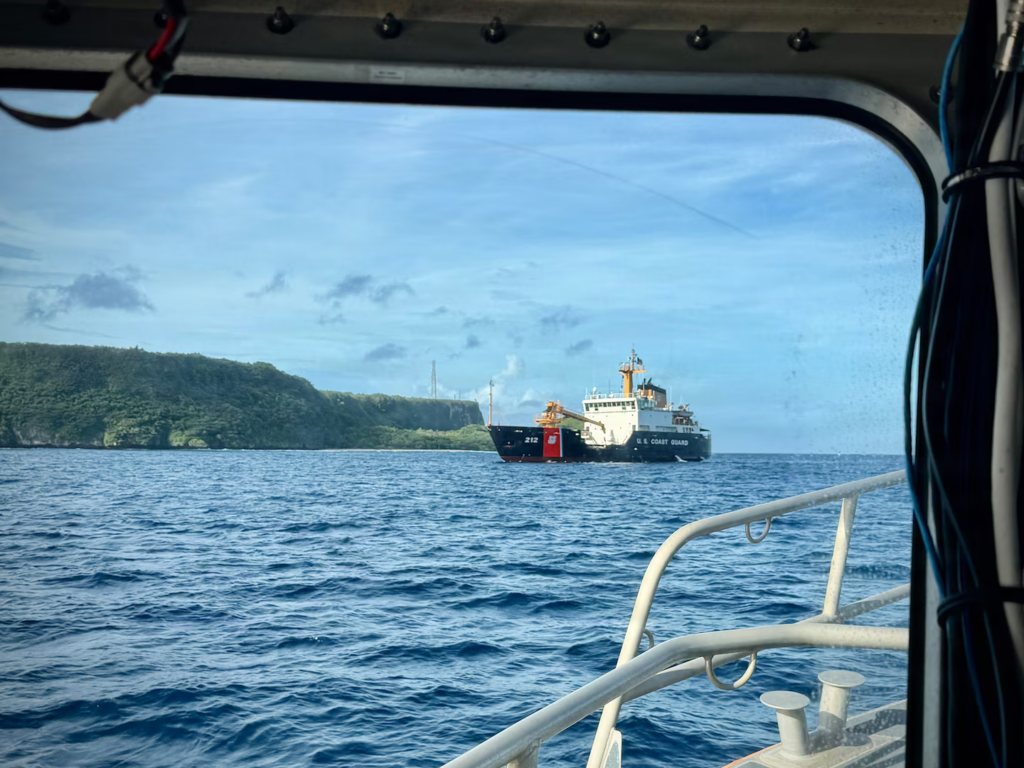
The USCGC Hickory (WLB 212), a 225-foot Juniper-class seagoing buoy tender, arrives in Apra Harbor as it comes to their new homeport in Guam on Jan. 14, 2026, following a more than 13,000-mile transit over 71 days from the U.S. Coast Guard Yard in Baltimore through the Panama Canal. After an extended Major Maintenance Availability at the Yard, part of the In-Service Vessel Sustainment Program that modernizes the entire Juniper-class fleet with hull repairs, system upgrades, and replacement of obsolete equipment, the Hickory is now fully revitalized. (U.S. Coast Guard photo by Chief Warrant Officer Muir) 

U.S. Coast Guard Forces Micronesia, Jan. 14, 2026 

SANTA RITA, Guam — The USCGC Hickory (WLB 212), a 225-foot Juniper-class seagoing buoy tender, arrived at its new homeport in Guam on Wednesday, following a more than 13,000-mile transit over 71 days from the U.S. Coast Guard Yard in Baltimore through the Panama Canal. 

After an extended Major Maintenance Availability at the Yard, part of the In-Service Vessel Sustainment Program that modernizes the entire Juniper-class fleet with hull repairs, system upgrades, and replacement of obsolete equipment, the Hickory is now fully revitalized. 

These enhancements ensure the cutter’s reliability for its full 30-year service life, boosting operational efficiency and mission readiness. The Hickory’s arrival marks a key milestone for the U.S. Coast Guard Oceania District, restoring the full complement of three seagoing buoy tenders dedicated to the vast Pacific region. Homeported in Guam, the Hickory specializes in maintaining aids to navigation, critical for safe passage through strategic sea lanes that support military forward posture and vital commercial shipping. 

The cutter’s area of responsibility encompasses 143 ATON, of which 90 are federally maintained. Reliable ATON is essential for marking navigational hazards and preventing maritime accidents that could disrupt maritime traffic, endanger vessels, or cause economic impacts in this geopolitically significant theater. En route to homeport, Hickory visited Majuro from Jan. 7 to 8 to conduct joint reconnaissance of existing port buoys with the Marshall Islands Ports Authority. The assessment supported future maintenance and upgrade planning aimed at improving maritime safety, port access, and resilience. 

During Hickory’s absence, U.S. Coast Guard personnel maintained operations through resourceful measures, including deploying jump teams. In the fall of 2023, cutter personnel, having safely delivered Hickory’s predecessor, USCGC Sequoia, to the Yards, conducted a full assessment of the local ATON constellation and made repairs through a combination of dive teams and shoreside support to all the aids affected by the Category 5 Typhoon Mawar, which made landfall in May. 

The sister ship USCGC Juniper came out in November 2023 to work on aids. More recently, in October 2025, a jump team from the Aids to Navigation Team Honolulu rapidly repaired seven critical aids across Guam, Rota, Saipan, and Tinian, demonstrating exceptional ingenuity amid operational challenges as the cutter crew worked to bring the ship back to Guam. 

With Hickory’s specialized crane and capabilities, the cutter is poised to address up to seven outstanding federal aids in the Guam and Saipan areas, including several buoys, dayboards, and ranges, further enhancing maritime safety. 

As a multi-mission platform, the Hickory crew will also support search and rescue, maritime law enforcement, marine environmental protection, and homeland security operations across Oceania’s expansive waters. 

“This crew has shown remarkable resilience through extended separations and demanding preparations. We are excited to reunite with our families in Guam and eager to get underway on ATON missions that keep these vital sea lanes safe. As a multi-mission cutter, Hickory stands ready to support the full spectrum of Coast Guard operations in this critical region,” said Lt. Cmdr. Jonathan Lash, commanding officer of Hickory. 

Hickory was previously known as “The Kenai Keeper” and “Bull of the North” while in Alaska. Its current moniker is “Bull of the Pacific.” The USCGC Juniper (WLB 201) and USCGC Hollyhock (WLB 214), both homeported in Honolulu, round out the roster of seagoing buoy tenders in the Oceania District. 

The U.S. Coast Guard operates 16 Juniper-class 225-foot seagoing buoy tenders (WLB 201–216), commissioned between 1996 and 2004. These multi-mission cutters feature a length of 225 feet, a beam of 46 feet, twin diesel propulsion for a 6,000 nautical-mile range at 12 knots, and a crew of approximately 48. As of 2025, all 16 have completed or are undergoing their Midlife Maintenance Availability program to extend their service life and enhance operational reliability. 


Northrop Grumman to Manufacture US Navy’s Advanced Lightweight Torpedo

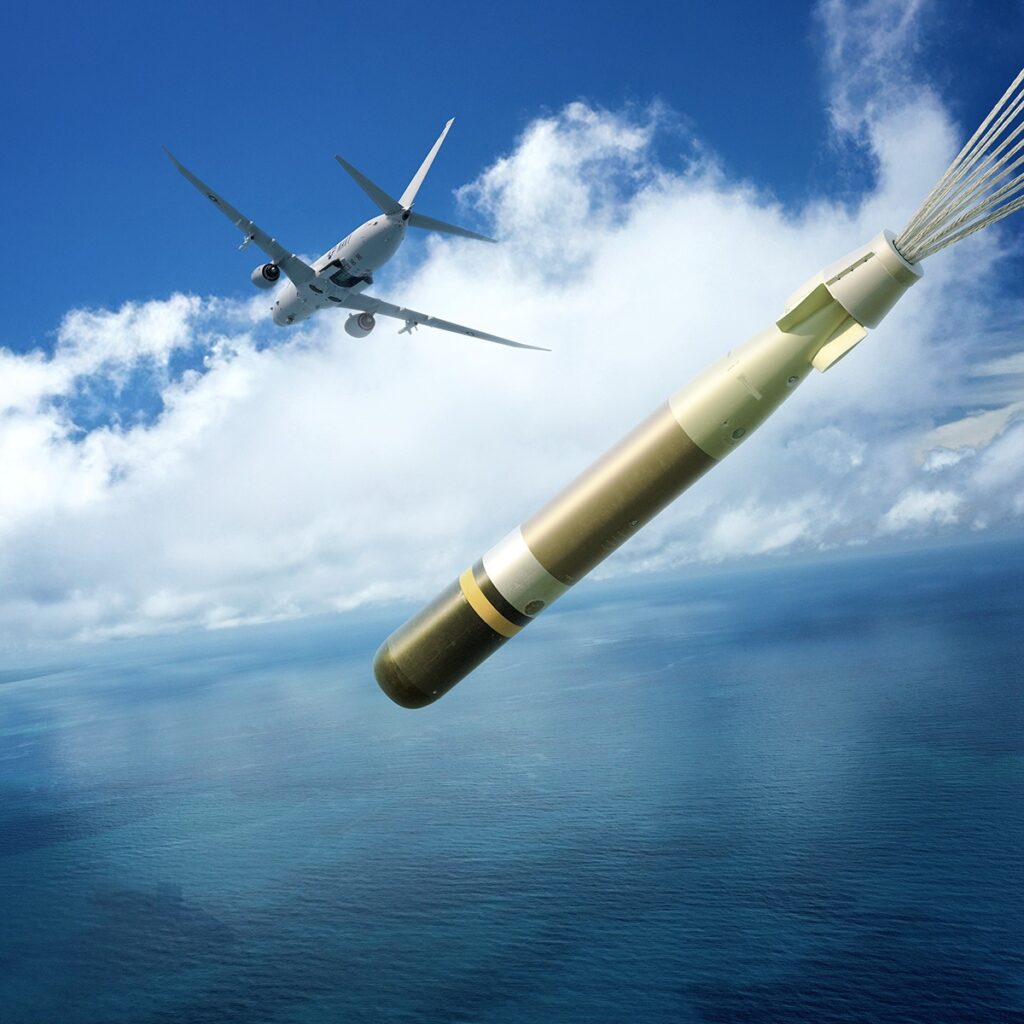
Launched from surface ships, fixed-wing aircraft, and helicopters, the MK54 MOD 2 Advanced Lightweight Torpedo is key to the U.S. Navy’s strategy to address modern and future submarine threats. (Photo Credit: Northrop Grumman)  

Features a newly developed, Northrop Grumman-designed warhead that delivers increased weapon lethality 

Release From Northrop Grumman

PLYMOUTH, Minn. – Jan. 12, 2026 – Northrop Grumman (NYSE: NOC) will manufacture and deliver to the U.S. Navy a new advanced lightweight torpedo with a custom-designed warhead to increase its lethality. Northrop Grumman will draw upon decades of production expertise to deliver a weapon that fires from multiple naval platforms. 

  • Northrop Grumman will perform the integration and initial proof of manufacturing at the company’s facility in Plymouth, Minnesota, and Allegany Ballistics Laboratory (ABL) in Rocket Center, West Virginia.   

  • The contract, worth $233 million, covers the proof of manufacturing and qualification phases, as well as delivery of multiple torpedoes for qualification testing. 

  • Northrop Grumman’s state-of-the-art facilities and technologies allow for rapid delivery of this urgent U.S. Navy requirement.   

Expert:  

Dave Fine, vice president, armament systems, Northrop Grumman: “Northrop Grumman is leveraging over 80 years of innovative torpedo technology, combined with our capacity and speed in delivery, to accelerate the design qualification and manufacturing for the advanced lightweight torpedo. This new weapon will provide U.S. and allied sailors with a next-generation response to counter the most advanced undersea threats.”  

Details on the Advanced Lightweight Torpedo Program:  

The MK54 MOD 2 was designed under a cooperative development agreement with the Australian Defence Force, led by the U.S. Navy. This upgraded torpedo will enhance the existing inventory of MK54 MOD 0 and MOD 1 variants with Northrop Grumman’s advanced warhead and processing capabilities, resulting in increased performance and lethality. Capable of tracking, classifying, and attacking underwater targets, MK54 MOD 2 will operate in all ocean environments.  


HII Successfully Demonstrates Sea Launcher, Ship-Based Automated Launch and Recovery of REMUS Autonomous Underwater Vehicle

Release From HII

POCASSET, Mass., Jan. 13, 2026 (GLOBE NEWSWIRE) — HII (NYSE: HII), the world’s leading manufacturer of autonomous underwater unmanned vehicles, announced today the successful shipboard deployment and recovery of a REMUS autonomous underwater vehicle (UUV) using the company’s automated launch and recovery system, Sea Launcher. 

The demonstration represents a key milestone in advancing operationally proven manned-unmanned teaming for maritime missions and highlights HII’s ability to integrate mature automation and autonomy into ship-ready systems, including the HII ROMULUS family of unmanned surface vessels (USVs) currently in production. 

During recent testing, HII validated key aspects of system performance to support a fully autonomous, end-to-end launch and recovery sequence. The test used a representative vehicle configured for real-world mission conditions and mirrored a recovery procedure that has been proven in deployments repeatedly across U.S. Navy and allied operations. 

Automated launch and recovery significantly reduces risk to sailors, expands mission range and flexibility, and shortens mission timelines. These advantages are particularly important in contested or high-sea-state environments, where minimizing hands-on deck operations improves safety and operational availability. 

“This is proven technology applied in a highly relevant shipboard configuration,” said Duane Fotheringham, president of Mission Technologies’ Unmanned Systems business group. “REMUS has successfully performed autonomous line capture and recovery for years. What this demonstration shows is how seamlessly that capability integrates with automated launch and recovery systems onboard manned or unmanned vessels to support modern maritime operations.” 

REMUS is one of the most widely deployed autonomous underwater vehicle families in the world, trusted by more than 30 navies for missions including mine countermeasures, undersea survey, intelligence collection, and environmental sensing. Its modular design and open architecture allow it to operate independently or as part of a distributed maritime force, teaming with crewed ships, unmanned surface vessels, and other undersea platforms. 

“This demonstration reinforces the value of REMUS within a distributed maritime operating model,” Fotheringham added. “Whether operating alongside manned platforms or coordinating with other unmanned systems, REMUS provides commanders with a reliable and flexible capability they already know and trust.” 

Looking ahead, HII plans to continue integrating REMUS with its new ROMULUS unmanned surface vessel (USV) family, as well as a range of manned and unmanned ships, to support evolving customer requirements across U.S. and allied navies. 


Stopping Small Vessels Safely at Sea

The multi-agency team poses at the CVSC test site. (Photo by NAWC Visual Communication Branch.) 

Release From the Department of Homeland Security

The Science and Technology Directorate (S&T) is developing a new contactless vessel stopping technology for the U.S. Coast Guard (USCG) to bolster interdiction efforts along our maritime borders. 

S&T, USCG, and the Naval Air Warfare Center Weapons Division (NAWCWD) have been conducting proof-of-concept demonstrations of a new Contactless Vessel Stopping Capability (CVSC) prototype. The CVSC uses high energy microwaves to temporarily stop the motor inside of small watercraft, like jet skis. The most recent demonstration, held in December, showed how effective it can be and how much progress has been made. 

This effort began when USCG approached S&T seeking a technology that would allow them to safely and consistently stop small non-compliant vessels. The solution S&T is developing with NAWCWD utilizes highly energized radio frequency pulses to overwhelm the electronic circuits within the targeted vessel, causing the engine to shut down and bring the jet ski to a stop. NAWCWD was selected to build the prototype because they have specialized expertise with high-powered microwave technologies that have demonstrated disruption, degradation, and denial effects on electronic target types, including outboard vessels and combustion engines. 

“We’re looking forward to improving upon the progress we’ve made and accelerating future developments to give USCG a solution to their small vessel gap as fast as possible,” said S&T Maritime and Immigration Security Solutions Program Manager Anthony Caracciolo. 

One potential use case for CVSC technology would be assisting USCG with intercepting a jet ski suspected of traveling from Mexico and trying to come ashore in San Diego. Currently, USCG uses a much larger, 33-foot boat to chase it down. Jet skis are small, fast, and very maneuverable, and there are not many options when it comes to stopping that kind of vessel. CVSC is akin to law enforcement deploying a spike strip on a road to stop a non-compliant vehicle. Once a watercraft is stopped, USCG can determine whether the vessel is involved in something nefarious, like moving drugs, or human trafficking. 

Naval Air Weapons Station (NAWS) China Lake is known for its military research and development facilities and provided an excellent venue to test and evaluate CVSC. The small, teardrop-shaped pond that was used for the test is called PMT, dating back to its previous history as the Pacific Missile Test Center, which merged with NAWS many years ago. 

The multi-agency team poses at the CVSC test site. Photo credit: NAWC Visual Communication Branch. 

To demonstrate the prototype’s capabilities, a jet ski is tethered in place in the PMT. The engine is started, and a test rig consisting of a server attached to a cone-shaped antenna is powered up and aimed at the idling jet ski. At the first demonstration, held last September, the engine was shut down using the CVSC multiple times, restarted, and shut down again, showing that there was no permanent damage to the craft. 

“There are microwave transmitters that can stop a large vessel,” Caracciolo said, “with engines mounted on the back.”  The microwave transmitter can be placed on the front of the pursuing boat for a direct line-of-sight engagement. “But jet skis are different. The small engine is inside of the craft, and the operator is blocking it with their body. CVSC is designed to be effective in those challenging conditions.” 

A follow up demonstration was then conducted in December. During the September demo it took some time for the motor in the targeted jet ski to stop.  During the December demo, the jet ski was shut down almost instantaneously.  The improved response was due to correcting a fault in the transmission cable connecting the pulse generator to the antenna and slightly increasing the pulse repetition rate. 

S&T will take the information gathered from this test and apply it to the next prototype, which will refine the power levels, ranges and safety parameters. Follow-on demonstrations are scheduled for early next year. 

Until spike strips are invented for the high seas, S&T will be there to develop the next best thing. 

For more information about CVSC, listen to Anthony Caracciolo’s episode of S&T’s Technologically Speaking podcast, Good Chance You’re Going to Save Lives. 


Fairbanks Morse Defense Expands Robotic Welding Capabilities to Strengthen Fleet Readiness and Reduce Maintenance Downtime 

FMD’s advanced robotic welding technology cuts repair times, enhances safety and boosts fleet readiness for naval operations  

Release From Fairbanks Morse Defense 

BELOIT, Wis. – January, 12, 2025 – Fairbanks Morse Defense (FMD) has announced the expansion of its robotic welding program aimed at boosting ship repair and maintenance efficiency for the U.S. Navy and allied fleets. The company’s robotic welding technology combines automation, precision and data-driven performance to reduce operational downtime, improve safety and extend the service life of naval assets.  

FMD’s robotics integrate advanced machine learning technology that enables automated weld control, consistent quality and real-time weld fault detection. By merging robotics with human expertise, FMD can accelerate repairs while ensuring each weld meets stringent naval standards. This innovation is part of the company’s broader strategy to modernize maintenance operations and strengthen mission readiness across the maritime defense sector.  

“Robotic welding represents a fundamental shift in how we approach fleet sustainment. It allows us to complete repairs faster, more accurately and more safely than ever before. This technology does not replace skilled technicians, but it enhances their capabilities, ensuring ships are returned to service in record time without compromising quality or safety,” said Keith Haasl, President, Service and Technology at Fairbanks Morse Defense.  

FMD’s robotic welding technology is engineered to perform critical repairs in confined or challenging environments, such as engine rooms and below-deck components. Robotic welders work up to three times faster than manual welding and can reduce crank bore repair time by as much as 75% (even in large-scale jobs).   

FMD robotics are programmed to maintain heat distribution and weld spacing consistently from the first bead to the 1,000th. This ensures each weld is executed with consistent accuracy and durability, reducing the likelihood of rework or failure. The technology also captures detailed data from every weld performed, creating a traceable record that supports quality assurance and predictive maintenance programs.  

FMD’s welding robots have been deployed successfully in high-pressure naval repair operations, including emergent crank line repairs on U.S. submarines, where the system demonstrated three times faster weld repair under demanding conditions. The project validated the effectiveness of robotic welding in critical mission support and confirmed its role as an enabler of faster fleet readiness.  

By automating repetitive or high-risk welding tasks, the system minimizes exposure to heat and hazardous materials for human operators, improving overall workplace safety. Skilled technicians remain integral to the process, overseeing operations, conducting inspections and managing complex or customized welds that require human oversight. This human-machine collaboration supports FMD’s long-term workforce development strategy by allowing technicians to focus on high-value work while leveraging robotics for precision and endurance.   

FMD’s robotics program is aligned with its broader focus on digital transformation across its service and technology divisions. The company remains focused on advancing automation, extended reality training and predictive analytics as part of its long-term strategy to deliver innovative solutions that enhance operational performance and mission success.  


GDIT Awarded $988 Million Contract to Modernize Navy C5ISR Systems

Company will integrate advanced systems across all surface combatant ships to stay ahead of emerging threats

Release From General Dynamics Information Technology

FALLS CHURCH, Va. – General Dynamics Information Technology (GDIT), a business unit of General Dynamics (NYSE:GD), announced today that it was awarded the Ship and Air Command, Control, Communications, Computers, Combat, Intelligence, Surveillance, and Reconnaissance (C5ISR) Systems Support (SACSS) contract to continue modernizing the U.S. Navy fleet. The $988 million contract, awarded in December, has a one-year base period, four one-year options and a six-month option.  

Under the contract, GDIT will modernize and integrate C5ISR systems to enhance the operational effectiveness and readiness of naval forces. The company will provide integration, engineering, procurement, logistics and installation services onboard all classes of surface combatant ships, including guided missile ships, aircraft carriers, Coast Guard vessels, manned and unmanned aircraft and shore stations. GDIT will upgrade these systems efficiently to enable the Navy to keep its current vessels operational and ensure mission continuity. 

“C5ISR systems are foundational to how our Navy senses, communicates and fights in the modern battlespace,” said Brian Sheridan, GDIT senior vice president for Defense. “We look forward to continuing to deliver innovative solutions to ensure these vital systems operate at peak performance and enable our warfighters to stay ahead of emerging threats.” 

GDIT has decades of experience delivering mission-critical services to the Navy. The company supports the development of advanced electronic warfare technologies for airborne platforms, provides training support services for more than 100,000 U.S. and allied sailors around the globe, and delivers advanced artificial intelligence/machine learning solutions to modernize the Navy Enterprise Service Desk program.