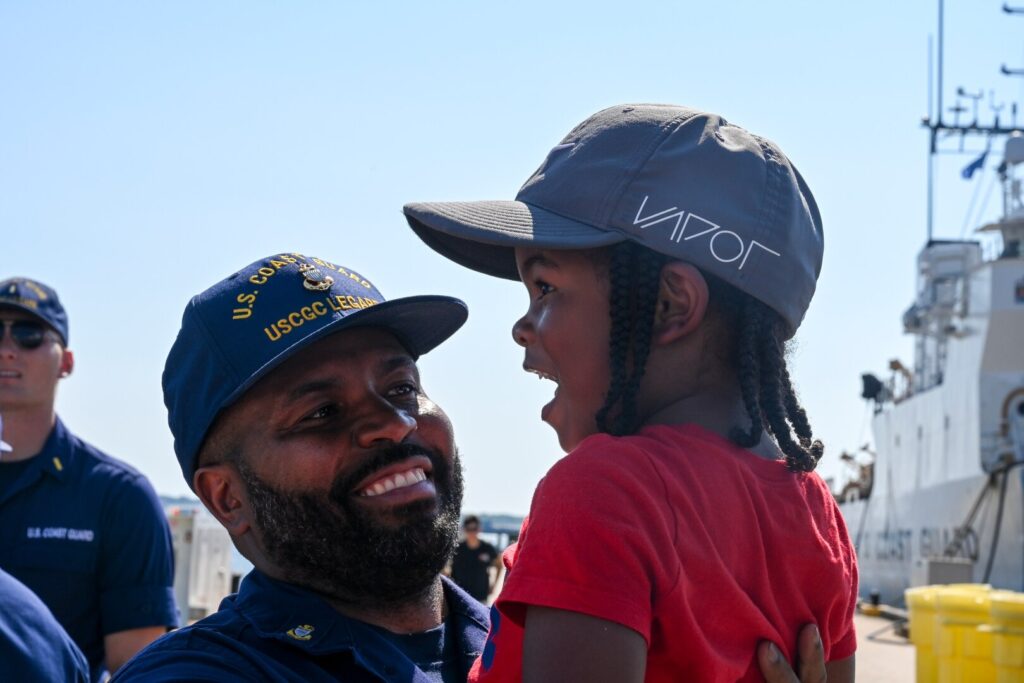
PORTSMOUTH, Va. —The crew of the USCGC Legare (WMEC 912) returned to their home port in Portsmouth Thursday following a 69-day maritime safety and security patrol in the Florida Straits.
Legare deployed in support of Homeland Security Task Force – Southeast and Operation Vigilant Sentry in the Seventh Coast Guard District’s area of responsibility. While underway, Legare’s crew conducted maritime safety and security missions while working to detect, deter and intercept unsafe and illegal maritime migration ventures bound for the United States.
Legare’s crew interdicted seven different migrant vessels attempting a dangerous and irregular journey to the United States. Legare’s crew processed, cared for and repatriated 116 migrants.
During the patrol, Legare also worked alongside other Coast Guard assets to protect the safety of life at sea, including rescuing a man after his 37-foot sailing vessel became disabled 86 miles off Ponte Vedra Beach, Florida.
“The officers and crew of Legare performed admirably in what is a very taxing mission of securing our maritime borders while showing compassion and care for migrants who are often in harm’s way on the sea,” said Cmdr. Jeremy Greenwood, Legare’s commanding officer. “Deterring dangerous and irregular migration to the United States by sea is not only a matter of ensuring U.S. border security but also a matter of saving the lives of those who take to the sea without understanding the hazards and perils of that journey. We reiterate our plea to those wishing to come to the United States to do so by official channels, taking to the sea is never the answer.”
Legare is a 270-foot, Famous-class medium endurance cutter. The cutter’s primary missions are counter drug operations, migrant interdiction, enforcement of federal fishery laws and search and rescue in support of U.S. Coast Guard operations throughout the Western Hemisphere.
The Coast Guard is one component of HSTF-SE, a standing Joint Task Force that integrates the capabilities of local, county, state and federal agencies to effectively respond to maritime migration events. HSTF-SE serves as the DHS lead for operational and tactical planning, command and control, and as a standing organization to deter, mitigate and respond to maritime mass migration in support of Operation Vigilant Sentry, the 2004 DHS plan to respond to irregular maritime migration in the Caribbean Sea and the Florida Straits.
For information on how to join the U.S. Coast Guard, visit GoCoastGuard.com to learn about active duty and reserve, officer and enlisted opportunities. Information on how to apply to the U.S. Coast Guard Academy can be found here.
Philly Shipyard Wins Contract for Hospital Ship Design Study
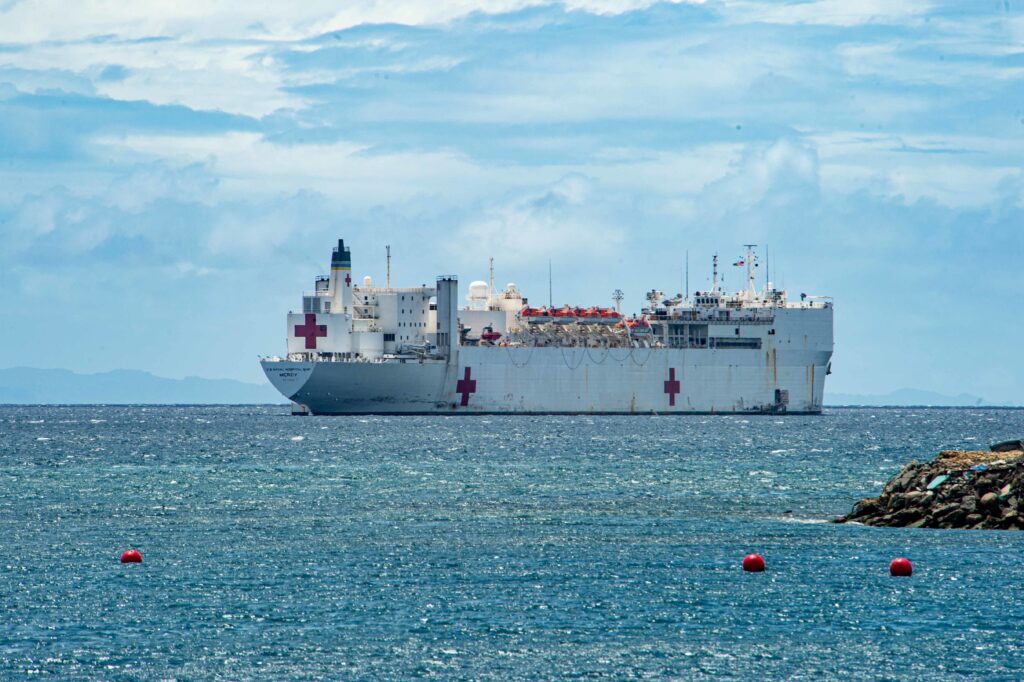
HONIARA, Solomon Islands (Sept. 1, 2022) The Military Sealift Command hospital ship USNS Mercy (T-AH 19) sits at anchor upon its arrival off the coast of Honiara, Solomon Islands during Pacific Partnership 2022. Now in its 17th year, Pacific Partnership is the largest annual multinational humanitarian assistance and disaster relief preparedness mission conducted in the Indo-Pacific. Pacific Partnership is a unifying mission that fosters enduring friendships and cooperation among many nations. The year’s mission in Solomon Islands will include participants from the United States, Japan and Australia (U.S. Navy photo by Mass Communications Specialist 3rd Class Raphael McCorey)
PHILADELPHIA – Philly Shipyard, Inc. (“Philly Shipyard”), the sole operating subsidiary of Philly Shipyard ASA (Oslo: PHLY) today announced the contract award to conduct the T-AH(X) Hospital Ship Feasibility Study for Gibbs and Cox, a Leidos Inc. company. The six-month design study will cover a solution for preliminary designs to replace the two current hospital ships – USNS Mercy and USNS Comfort – owned by the U.S. Navy and operated by Military Sealift Command (MSC). Philly Shipyard will subcontract to Vard Marine Inc. (“VARD”) to provide engineering and technical services for this effort.
“This contract win highlights our commitment to pursuing and securing work in the government market,” said Steinar Nerbovik, Philly Shipyard President and CEO. “Along with our current commercial and government backlog of shipbuilding projects, we have completed previous design studies for the U.S. Navy and are very interested in pursuing government opportunities that fit our production delivery cycles and skill sets. We are excited and grateful to team up, once again, with Vard Marine on this important industry study.”
Philly Shipyard and VARD will leverage design work performed as part of a special study completed for the U.S. Navy’s Common Hull Auxiliary Multi-Mission Platform (CHAMP) program, which was won in 2019.
About Philly Shipyard
Philly Shipyard, Inc. (PSI) is a leading U.S. shipbuilder that is presently pursuing a mix of commercial and government work. It possesses a state-of-the-art shipbuilding facility and has earned a reputation as a preferred provider of oceangoing merchant vessels with a track record of delivering quality ships, having delivered around 50% of all large ocean-going Jones Act commercial ships since 2000. PSI is the sole operating subsidiary of Philly Shipyard ASA. Philly Shipyard ASA is listed on the Euronext Expand Oslo (Oslo: PHLY) and is majority-owned by Aker Capital AS, which in turn is wholly-owned by Aker ASA (Aker). Aker is an industrial investment company that exercises active ownership to create value. Aker has ownership interests in oil and gas, renewable energy and green technologies, maritime assets, marine biotechnology and industrial software, and its portfolio includes companies like Aker BP, Aker Horizons, Aker BioMarine, Cognite, and Aker Solutions. For more information about Philly Shipyard, visit www.phillyshipyard.com.
GA-ASI’S UNMANNED AIRCRAFT CROSS 8 MILLION FLIGHT HOURS
New MQ-9B SkyGuardian®/SeaGuardian® Models Add More Than 4,000 Hours
*****
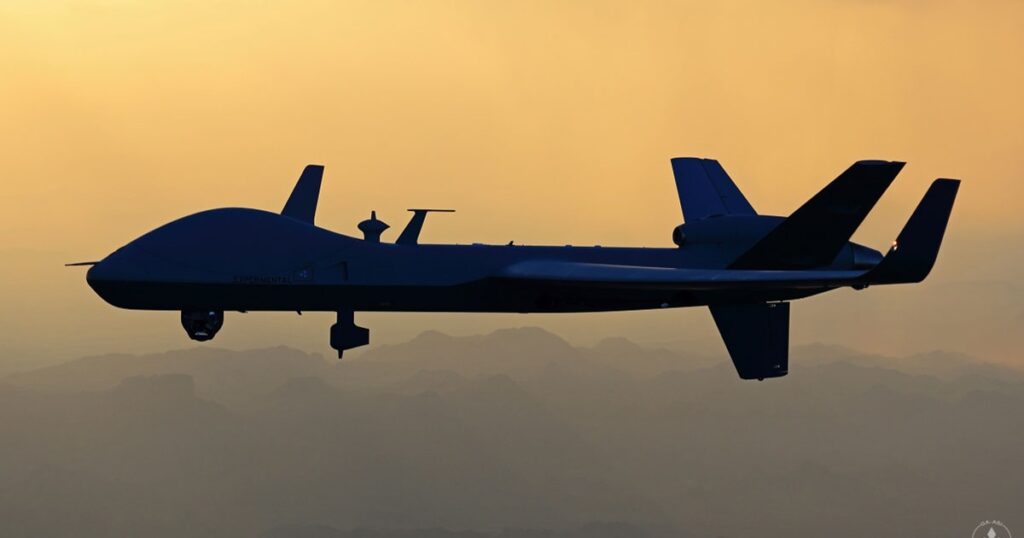
SAN DIEGO – 14 July 2023 – General Atomics Aeronautical Systems, Inc. (GAASI) today announced that its family of Unmanned Aircraft Systems (UAS), which includes the Predator®, Reaper, Gray Eagle, Avenger®, and MQ-9B SkyGuardian®/SeaGuardian® lines, has surpassed eight million flight hours. GA-ASI aircraft have completed 566,000 total missions in nearly 40 countries around the world.
Adding to the total are 13 MQ-9B SkyGuardian/SeaGuardian UAS that have flown more than 4,000 flight hours, including the new Protector RG Mk1 being delivered to the United Kingdom’s Royal Air Force. The first three Protectors are currently undergoing Integrated Test, Evaluation, and Acceptance trials. In addition, MQ-9Bs are being operated by the Japan Coast Guard (JCG) and Japan Maritime Self-Defence Force (JMSDF), as well as supporting various U.S. Navy exercises.
“GA-ASI continues to be a leader in developing reliable, cost-efficient, and sustainable unmanned aircraft systems that perform advanced operations for our customers around the world,” said GA-ASI CEO Linden P. Blue. “Eight million flight hours is another achievement on our list of historic firsts, which demonstrates our relentless commitment to quality.”
The exact aircraft and customer that achieved the milestone is unknown, as it’s estimated that more than 50 Predator-class Medium-Altitude, Long-Endurance (MALE) RPA are airborne worldwide every moment of every day.
GA-ASI aircraft average 40,000 hours per month, supporting programs with the U.S. Air Force, U.S. Army, U.S. Marine Corps, NASA, the Italian Air Force, the UK Royal Air Force, the French Air Force, the United Arab Emirates Armed Forces, the Spanish Air Force, the Royal Netherlands Air Force, the Indian Navy, the Polish Air Force, JCG, JMSDF, and others, with more customers coming online soon. Missions include helping protect ground units on the battlefield, supporting first responders in the wake of natural disasters, and providing critical ISR around the world. These aircraft systems continue to maintain some of the highest mission-capable rates in the U.S. Air Force and U.S. Army aircraft inventories.
GA-ASI has produced more than 1,000 aircraft and nearly 500 Ground Control Stations (GCS) in more than three decades of business. In addition to UAS and GCS, GA-ASI produces Processing, Exploitation, and Dissemination (PED) systems, as well as sensor payloads that deliver radar and video imagery, detect moving targets on the ground and over water, and provide Signals Intelligence (SIGINT) on signals of interest. GA-ASI has also developed a Detect and Avoid (DAA) system to facilitate the safe integration of unmanned aircraft systems into civil airspace in addition to combat environments.
The Predator-series family includes Predator A and Predator XP, Predator B/MQ-9A Reaper, Predator B Extended Range (ER), Guardian, Gray Eagle, Gray Eagle ER, Predator C Avenger/ER, and MQ-9B SkyGuardian/SeaGuardian.
Northrop Grumman to Design Autonomous Vertical Takeoff and Landing Aircraft for DARPA
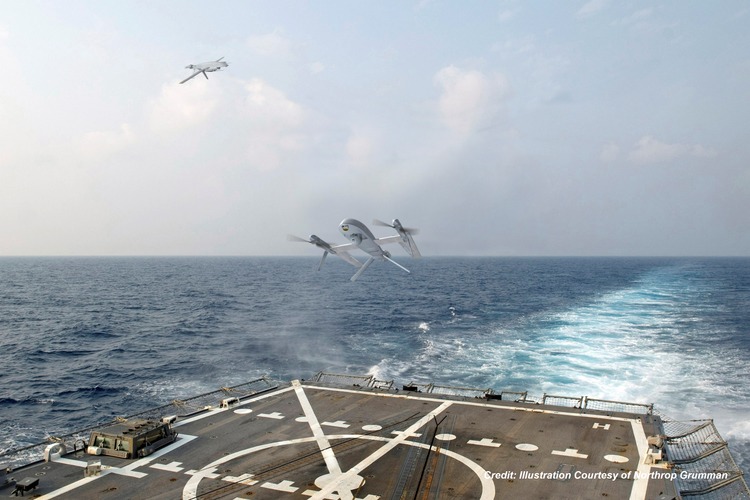
REDONDO BEACH, Calif. – July 13, 2023 – Northrop Grumman Corporation (NYSE: NOC) has been awarded a contract by the Defense Advanced Research Project Agency’s (DARPA) Tactical Technology Office to design an autonomous vertical takeoff and landing (VTOL) uncrewed aircraft system capable of operating from a moving Navy ship at sea.
SAN DIEGO – 14 July 2023 – General Atomics Aeronautical Systems, Inc. (GAASI) today announced that its family of Unmanned Aircraft Systems (UAS), which includes the Predator®, Reaper, Gray Eagle, Avenger®, and MQ-9B SkyGuardian®/SeaGuardian® lines, has surpassed eight million flight hours. GA-ASI aircraft have completed 566,000 total missions in nearly 40 countries around the world.
The AdvaNced airCraft Infrastructure-Less Launch And RecoverY (ANCILLARY) demonstrator will be designed as a cost-efficient, multiple-mission capable vehicle built on an agile platform that is runway independent.
Northrop Grumman’s ANCILLARY demonstrator will be capable of carrying a large 60-pound sensor payload with greater endurance of 20 hours’ time on station and mission radius range of 100 nautical miles, which is more than current systems, without using significant additional infrastructure aside from what is on board the air vehicle. The system will also have capability to land on a ship in adverse weather conditions.
The aircraft will be capable of performing intelligence, surveillance, reconnaissance and targeting missions, and supporting expeditionary missions for special operations forces and logistical missions with significant affordability impacts for ship-to-shore transition of parts and supplies.
Expert:
Tim Frei, vice president, research and advanced design, Northrop Grumman: “In collaboration with DARPA, Northrop Grumman will work to significantly enhance how future autonomous vertical lift aircraft will operate at sea and ashore. The ANCILLARY program enables us to combine our digital engineering expertise with extensive knowledge and insights from past successes in developing and operating uncrewed vertical lift aircraft for the U.S. Navy.”
Details on DARPA ANCILLARY:
DARPA’s ANCILLARY program aims to develop and flight demonstrate an X-plane with the critical technologies required for a leap-ahead in long endurance, VTOL unmanned air system (UAS) performance. The UAS would be able to launch and recover from ship flight decks and small austere land locations in adverse weather without additional infrastructure equipment, thus enabling expeditionary deployments. Unlike large VTOL systems, the small UAS size would allow many aircraft to be stored and operated from one ship creating a tactical beyond-line-of-site, multi-intelligence sensor network capability.
Coast Guard icebreaker departs for months-long Arctic deployment
SEATTLE — The Coast Guard Cutter Healy (WAGB 20) departed Seattle, Tuesday, for a months-long Arctic deployment.
The crew aboard Healy, a 420-foot icebreaker, will provide U.S. surface presence in the Arctic, conduct high latitude science and research missions, engage in exercises and professional exchanges with foreign partners, and conduct other operations as directed throughout the deployment.
Healy’s deployment supports the Coast Guard’s Arctic Strategy while providing critical training opportunities for Polar sailors and future operations in the Arctic.
“We’re excited to begin our Arctic deployment to the high latitudes,” said Capt. Michele Schallip, Healy’s commanding officer. “Our deployment will support scientific exploration to increase understanding of the changing Arctic environment and associated impacts. We’ll also have opportunities to deepen the Coast Guard’s cooperation with our allies, and partner nations through engagements and joint exercises to promote regional stability, security and strengthen our collaborative partnerships.”
The Healy deploys annually to the Arctic to support multiple science missions and Operation Arctic Shield, the service’s annual operation to execute U.S. Coast Guard missions, enhance maritime domain awareness, strengthen partnerships, and build preparedness, prevention, and response capabilities across the Arctic domain.
Commissioned in 2000, Healy is one of two active polar icebreakers in the Coast Guard’s fleet. The Seattle-based Coast Guard Cutter Polar Star (WAGB 10) is a Polar icebreaker commissioned in 1976.
The Coast Guard is recapitalizing its Polar icebreaker fleet to ensure continued access to both Polar regions and support the country’s economic, commercial, maritime, and national security needs.
Secretary of Defense Lloyd J. Austin III announced today that the president has made the following nomination:
Navy Rear Adm. John B. Skillman for appointment to the grade of vice admiral with assignment as deputy chief of naval operations for Integration of Capabilities and Resources, N8, Office of the Chief of Naval Operations, Washington, D.C. Skillman is currently serving as director, Programming Division, N80, Office of the Chief of Naval Operations, Washington, D.C.
Navy Captain Michael T. Spencer for appointment to the grade of rear admiral (lower half). Spencer is currently serving as commander, Naval Aviation Warfighting Development Center, Fallon, Nevada.
Air Industries Group Receives Two Contracts Totaling $5.2 Million for US Navy E-2D Aircraft and F-35 Joint Strike Fighter Components
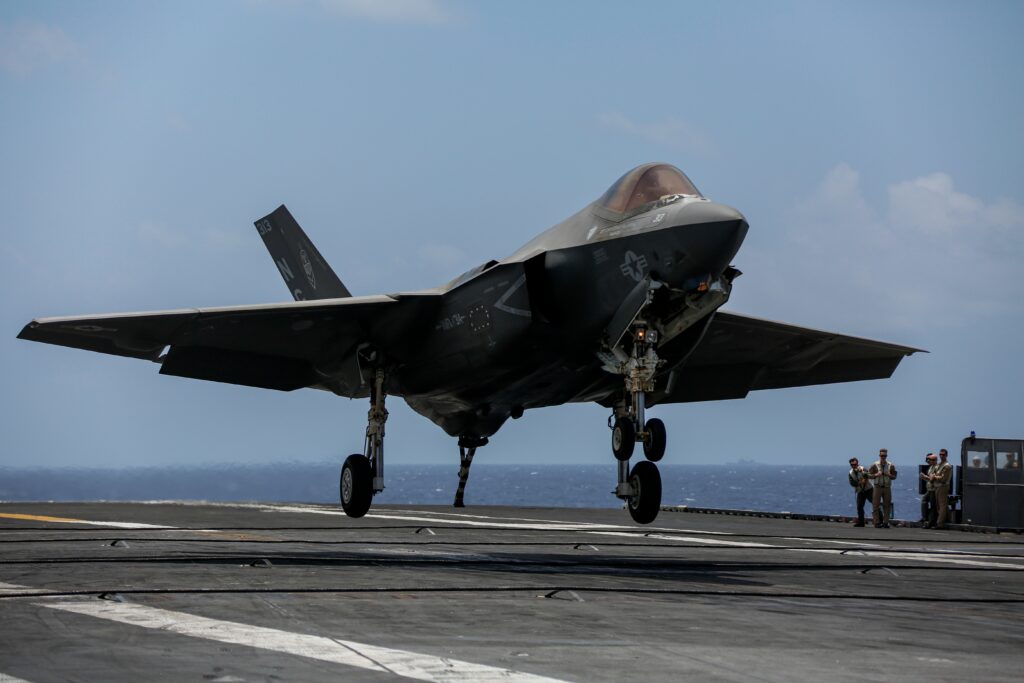
PACIFIC OCEAN (July 30, 2022) An F-35C Lightning II, assigned to the “Black Knights” of Marine Fighter Attack Squadron (VMFA) 314, prepares to make an arrested landing on the flight deck of the Nimitz-class aircraft carrier USS Abraham Lincoln (CVN 72). The Abraham Lincoln Carrier Strike Group is underway conducting routine operations in the U.S. 3rd Fleet. U.S. Navy photo by Mass Communication Specialist 3rd Class Michael Singley)
BAY SHORE, N.Y.–(BUSINESS WIRE)–Jul. 11, 2023– Air Industries Group (the Company) (NYSE American: AIRI), an integrated Tier 1 manufacturer of precision assemblies and components for mission-critical aerospace and defense applications, and a prime contractor to the U.S. Department of Defense, today announced that it has been awarded two new contracts valued at a total of $5.2 million to produce components for the U.S. Navy E-2D aircraft and F-35 Joint Strike Fighter.
The first order is valued at $2.0 million for E-2D arresting gear components. The order originates from a long-time customer of Air Industries Group, which has manufactured these flight safety components for many years. Deliveries under this new order are expected to begin in 2025.
The second order is valued at $3.2 million for F-35 arresting gear components for the CV and CTOL versions of the aircraft. This order is from a new, non-U.S. customer for Air Industries Group. Deliveries under this order are expected to begin in the fourth quarter of 2023.
Mr. Lou Melluzzo, CEO of Air Industries, commented: “We are very pleased to have received two sizeable orders for mission-critical components. The E-2D aircraft is essential to controlling the airspace above U.S. Navy carrier battlegroups. Air Industries has supported the E-2D for many years and is proud to continue to do so.
“The new order for the F-35 aircraft is particularly gratifying as it is from a non-U.S. customer. Our business development strategy has focused on broadening our customer base and expanding our geographic reach. This contract from a European manufacturer is a positive step in both regards.”
NAVAIR Selects Mercury to Deliver Digital Head-Up Display for T-45 Goshawk Training Aircraft
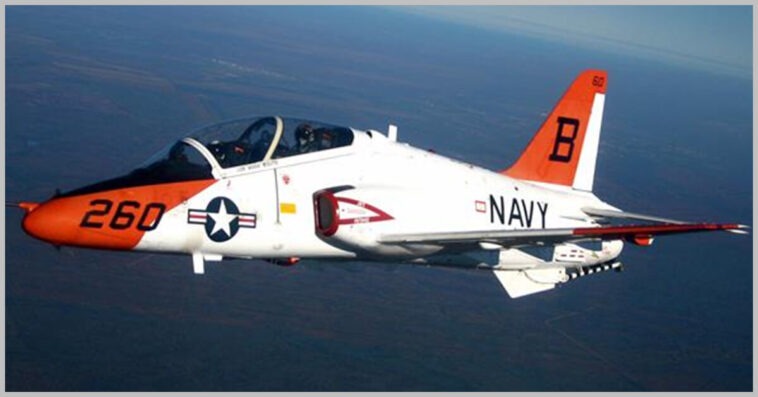
ANDOVER, Mass., July 12, 2023 (GLOBE NEWSWIRE) — Mercury Systems, Inc. (NASDAQ: MRCY, www.mrcy.com), a technology company that delivers processing power for the most demanding aerospace and defense missions, received a five-year contract worth as much as $83 million from the U.S. Naval Air Systems Command to deliver high-definition, digital Head-Up Display (HUD) systems for the T-45 Goshawk training aircraft. This firm-fixed-price delivery order was issued under a previously awarded basic ordering agreement. The Navy is the first customer to adopt Mercury’s HUD1080 technology that enables aviators to see critical flight and weapons data in real-time without taking their eyes off the sky.
Under this program, Mercury expects to deliver nearly 300 HUD systems, with the first $45 million production order awarded in conjunction with this contract. The T-45 Goshawk is a tandem-seat jet trainer used to train Navy and Marine Corps aviators to fly the U.S. military’s most advanced fighter jets, including the F/A-18E/F Super Hornet, F-35 Lightning, and the EA-18G Growler, as well as tactical airborne early warning aircraft such as the E-2 Hawkeye. The new T-45 HUD with an integrated camera is based on Mercury’s low-profile HUD design that minimizes pilot discomfort, enhances situational awareness, and maximizes an aviator’s field-of-view. It is also DAL-A certifiable—the highest level of design assurance that can be applied to airborne systems—allowing it to be used for critical flight and mission tasks such as landing on aircraft carriers.
Why It Matters Pilots must understand a wealth of rapidly changing data while flying, and a HUD allows them to maintain awareness of this information without having to take their eyes off the sky to look down at multiple instruments. Current training aircraft use older analog HUD systems that have a bulky design, are out of production, and cannot integrate with the modern enhanced vision systems used in today’s fighter jets. The integration of Mercury’s HUD into the T-45 solves the obsolescence problem for the aircraft and ensures pilots are trained in an operationally realistic environment, as the systems are compatible with upcoming T-45 avionics upgrades.
“The introduction of the HUD1080 expands Mercury’s display technology portfolio and our ability to deliver mission-ready technology and solutions for all aspects of the avionics ecosystem,” said Mitch Stevison, Executive Vice President and President of Mercury’s Mission Systems division. “We look forward to delivering our digital HUD for the T-45 Goshawk, ensuring today’s student pilots have the technology to train for current and future missions.”
CARTAGENA, Colombia – U.S. Navy and Marine forces are set to arrive in Cartagena in support of UNITAS LXIV, the world’s longest-running multinational maritime exercise in the world, scheduled to start July 11, 2023.
The Colombian navy will host this year’s UNITAS, which will feature 26 warships/vessels, three submarines, 25 aircraft (fixed wing/helicopter), and approximately 7,000 people from 20 partner nations. Forces will conduct training operations off the coast of Cartagena, Colombia, and ashore in Covenas and Barranquilla, Colombia, through July 21. This year marks the 64th iteration of the exercise. Additionally, this year Colombia will celebrate the bicentennial of its navy, a historical milestone commemorating 200 years of the country’s maritime forces.
“UNITAS is so much more than a two week exercise. All participating nations have given much time, energy and effort into the months of planning leading up to what will be one of the most complex UNITAS to date,” said Rear Admiral Jim Aiken, commander U.S. Naval Forces Southern Command/U.S. 4th Fleet. “Utilizing air, surface, sub-surface, and unmanned assets, and land units, UNITAS will provide the multinational force a challenging environment in which to conduct training across the full spectrum of maritime operations. UNITAS strengthens maritime partnerships, enhances proficiency and improves interoperability of the participating forces, which is why so many partner nations are taking part this year.”
As part of the U.S. Navy’s future hybrid fleet, the Chief of Naval Operations has tasked U.S. 4th Fleet to scale unmanned platforms to the fleet level. An addition to this year’s UNITAS will include the integrated operations of unmanned air, surface, and subsurface systems into the exercise. UNITAS’ challenging training address key aspects of multinational and combined operations such as technology standardization and common operating procedures.
“This is our first opportunity to integrate unmanned systems into our operations at sea,” said Rear Adm. Aiken. “UNITAS has often served as a test bed for technology, so it is appropriate that we begin our unmanned integration campaign to operationalize the hybrid fleet here in UNITAS.”
In addition to the United States, UNITAS LXIV will bring together 19 nations from all over the world to train forces in joint maritime operations that enhance tactical proficiency and increase interoperability. Participating nations include Belize, Brazil, Canada, Chile, Colombia, Dominican Republic, Ecuador, France, Germany, Honduras, Jamaica, Mexico, Panama, Peru, Paraguay, Spain, South Korea, United Kingdom, United States, and Uruguay.
Following the UNITAS LXIV Opening Ceremony on July 12, the in port phase of the exercise will feature subject matter expert exchanges, professional symposia, ship rider exchanges, and operations meetings. During this time, Marines and Sailors will conduct expeditionary training events in Covenas to include riverine operations and diving and salvage operations.
During the UNITAS LXIV Underway Phase, forces will participate in events testing all warfare operations, to include live-fire exercises such as a SINKEX and an amphibious ship-to-shore landing and force retraction.
“Marines and Sailors from across the United States will travel to Colombia to not only train alongside our partner nations’ militaries, but to hone the skills required to operate as part of a larger maritime force focused on sea control and sea denial,” said Lt. Gen. David G. Bellon, commander, U.S. Marine Corps Forces, South, and U.S. Marine Corps Forces, Reserve. “We will be exercising command and control from a forward position as Marines set up and employ Expeditionary Advanced Base Operations to enhance naval capabilities as part of UNITAS.”
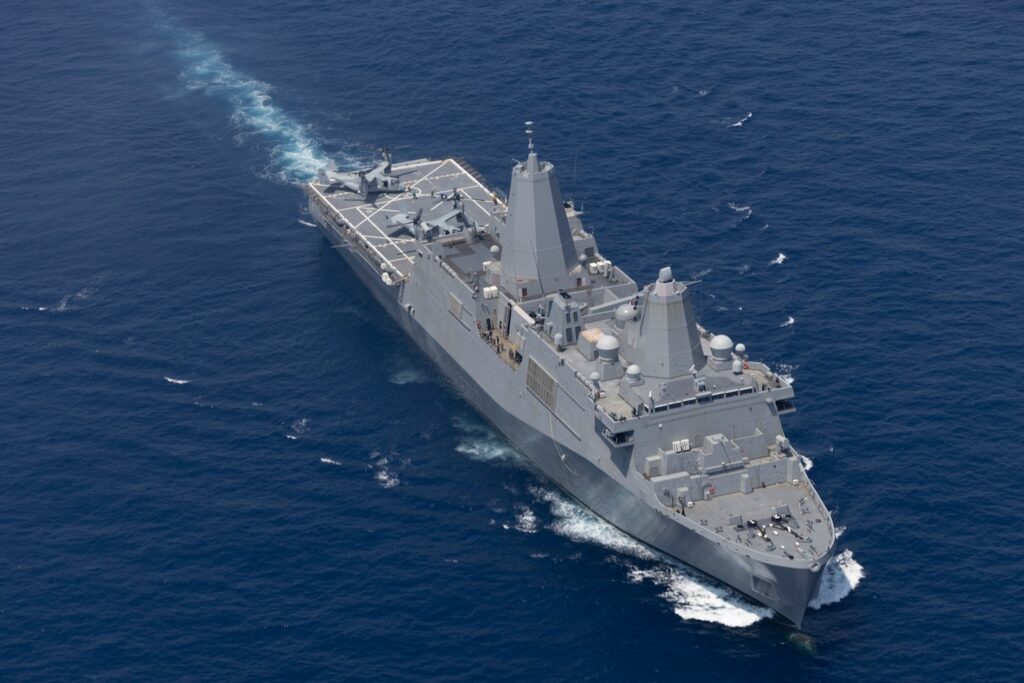
U.S. forces participating in UNITAS LXIV include USS New York (LPD 21), USS Cole (DDG 67), USS Little Rock (LCS 9), USS Pasadena (SSN 752), and USNS Burlington (T-EPF 10). Other U.S. participants include Patrol Squadron Five (VP 5), Mobile Diving and Salvage Unit (MDSU) 2, Explosive Ordnance Disposal Mobile Unit (EOD) 612, Mine Countermeasures Group 3, (MCMGRU 3), Expeditionary Mine Countermeasures EOD Company 61 (EODMU 61), East-coast based Naval Special Warfare units, Helicopter Sea Combat Squadron 22 (HSC 22), Helicopter Maritime Strike Squadron 70 Detachment 2 (HSM 70 Det 2), Joint Communications Support Element (JCSE), Fleet Surgical Team (FST) Eight, and the Meteorological Environmental Team (MET). U.S. Marine forces include 3rd Battalion, 23rd Marine Regiment (3/23), 4th Amphibious Assault Battalion (4th AABn), 8th Combat Logistic Battalion (CLB 8), 4th Combat Engineer Battalion (4th CEB), Marine Medium Tiltrotor Squadron 774 (VMM 774), Marine Light Helicopter Attack Squadron 775 (HMLA 775), Marine Aerial Refueler Transport Squadron 234 (VMGR-234), Marine Aircraft Control Group – 48 (MACG-48), and Marine Fighter Attack Squadron 112 (VMFA-112). Finally, Commander, Destroyer Squadron 40, (COMDESRON 40), Commander, Amphibious Squadron Four (COMPHIBRON FOUR), U.S Marine Corps Forces South (MARFORSOUTH), Special Operations Command South (SOCSOUTH), USNAVSOUTH/FOURTHFLT, and U.S. Southern Command (USSOUTHCOM) are participating in UNITAS LXIV.
UNITAS, which is Latin for unity, united, or oneness, was conceived in 1959 during a previous era of strategic competition when representatives at the first Inter-American Naval Conference in Panama agreed to conduct an annual maritime exercise with one another. Prior to UNITAS I in 1960, U.S. Chief of Naval Operations Adm. Arleigh Burke reviewed preparations for the multinational exercise. He commended planners for their progress, especially in building compatible communication systems among navies, and predicted that UNITAS would build strong relationships among Sailors of the Western Hemisphere.
U.S. Naval Forces Southern Command/U.S. 4th Fleet supports U.S. Southern Command’s joint and combined military operations by employing maritime forces in cooperative maritime security operations to maintain access, enhance interoperability, and build enduring partnerships in order to enhance regional security and promote peace, stability and prosperity in the Caribbean, Central and South American region.
U.S. Marine Corps Forces, South is the Marine Corps component to U.S. Southern Command, is responsible for planning exercises, operations, and overall Marine Corps support for the SOUTHCOM assigned area of responsibility.
Bataan ARG and 26th MEU(SOC) Marines, Sailors Set Sail for Deployment
ATLANTIC OCEAN – U.S. Marines and Sailors of the Bataan Amphibious Ready Group (BAT ARG) / 26th Marine Expeditionary Unit (MEU) (Special Operations Capable) (SOC) departed Norfolk, Virginia, and Camp Lejeune, North Carolina, July 10, after completing a comprehensive, nine-month training program.
The deployment is part of a regular rotation of forces that foster maritime security and increased theater cooperation by providing a forward naval expeditionary presence with vast, specialized crisis response capabilities to support the geographic combatant commander, numbered fleet commander, and joint special operations task force commander.
“We are ready to complete any mission before us, and we are looking forward to the opportunities we will have to work alongside our allies and partners in the months ahead,” said Capt. Martin Robertson, commander of Amphibious Squadron 8. “Our Sailors and Marines have trained hard and are ready. We are thankful for the support of our families and loved ones during this journey.”
The BAT ARG/26th MEU(SOC)’s pre-deployment training program culminated with its final certification exercise, Composite Training Unit Exercise (COMPTUEX), a series of exercises designed to fully integrate roughly 4,000 Marines and Sailors into one cohesive contingency force while testing the units’ abilities to carry out sustained operations from the sea. During COMPTUEX, the BAT ARG/26th MEU(SOC) operated under NATO command and control to replicate the realities of missions the Navy-Marine Corps team may encounter on deployment.
“Over the course of the last nine months, Marines and Sailors of the 26th MEU(SOC) successfully demonstrated the battle staff competencies coupled with all-domain operational capabilities and high proficiency across the MEU Marine Air-Ground Task Force (MAGTF) mission essential tasks and warfighting functions, to include MEU/SOF-integration, during an enhanced, rigorous pre-deployment training program within a scenario reflective of the EUCOM, AFRICOM, and CENTCOM regions,” said Col. Dennis “Dolf” Sampson, commanding officer of the 26th MEU(SOC). “Throughout our work-ups, the Bataan Amphibious Ready Group and the 26th MEU(SOC) executed multiple advanced at-sea training exercises and fully integrated into a cohesive naval expeditionary force capable of supporting theater campaigning requirements while remaining postured, as the Nation’s Immediate Response Force, to rapidly respond to any crisis.”
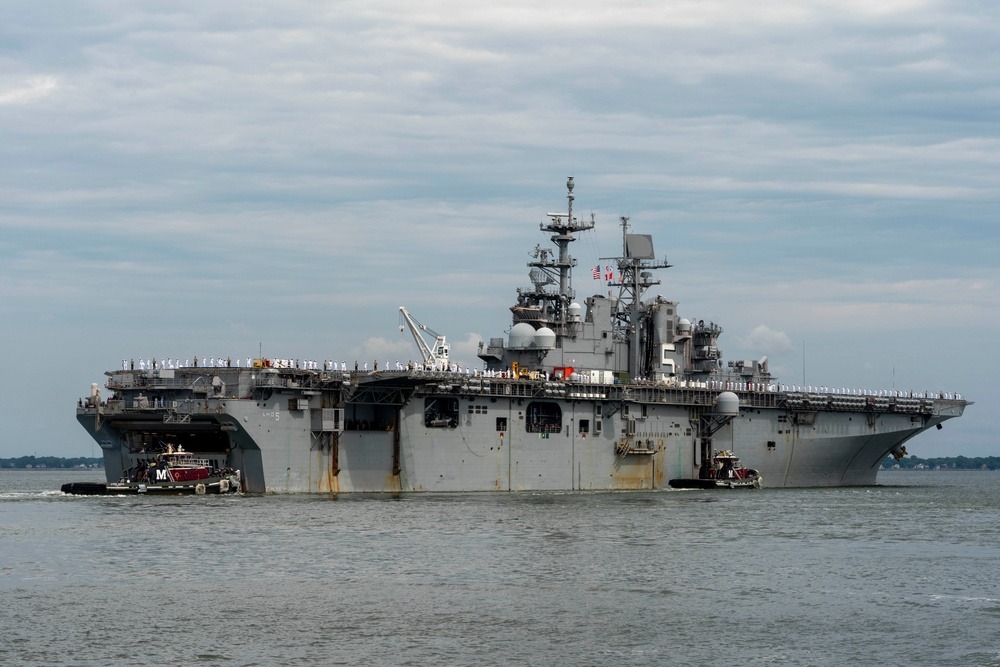
The Bataan ARG is comprised of the Wasp-class amphibious assault ship USS Bataan (LHD 50), the San Antonio-class amphibious transport dock USS Mesa Verde (LPD 19) and the Harpers Ferry-class dock landing ship USS Carter Hall (LSD 50). Embarked commands include commander, Amphibious Squadron (CPR) 8, Fleet Surgical Team 8, Tactical Air Control Squadron 21, Helicopter Sea Combat Squadron 26, Assault Craft Unit 4, Beach Master Unit 2, and the 26th MEU(SOC).
“I could not be any prouder of the Marines, Sailors, and families of the 26th MEU(SOC),” Sampson said. “They set the bar very high during our work-ups as the premiere Tri-GCC Crisis Response Force, showcasing the flexibility and all-domain operational capabilities the ARG/MEU(SOC) provides to a Fleet or Joint Task Force Commander within the littorals and beyond.”
The 26th MEU(SOC) serves as one of the Nation’s premier crisis response forces capable of conducting amphibious operations, crisis response, and limited contingency operations, to include enabling the introduction of follow-on forces and designated special operations, in support of theater requirements of the Geographic Combatant Commander. Coupled with the BAT ARG, the 26th MEU(SOC) serves as a premier stand-in force with a full complement of all-domain capabilities to operate persistently within the littorals or weapons engagement zones of an adversary.
For more information, please contact Bataan ARG and 26th MEU(SOC) Public Affairs: Bataan Amphibious Ready Group Public Affairs, [email protected] and 26th Marine Expeditionary Unit (Special Operations Capable) Communication Strategy & Operations, [email protected].