Third Marine Aircraft Wing Squadron Prints Medical Device In-flight

Release from the 3rd Marine Aircraft Wing 

***** 

07.07.2023 

Story by  2nd Lt. Andrew Baez, 3rd Marine Aircraft Wing

MARINE CORPS BASE CAMP PENDLETON, Calif. — On June 21, 2023, Marine Medium Tiltrotor Squadron (VMM) 164, Marine Aircraft Group (MAG) 39, 3rd Marine Aircraft Wing (MAW), facilitated the in-flight three-dimensional (3D) printing of a medical cast aboard an MV-22B Osprey, in support of the Marine Corps’ Integrated Training Exercise (ITX) 4-23. This milestone event took place as the U.S. Marine Corps looks to sharpen its expeditionary manufacturing capabilities. The Assistant Commandant of the Marine Corps, Gen. Eric M. Smith, emphasized the importance of these organic Marine Corps capabilities in recent testimony to the Senate Armed Services Committee. 
 
“We have to do some very creative work to do additive manufacturing and 3D printing forward,” Smith said. “If confirmed, I’m committed to continuing that effort because I do see one day we will be printing forward in forward operating bases. We’ll be printing major end items, aircraft engines, propellers, we’ll be doing that forward as opposed to straining the lines that come from the United States through contested logistics areas.” 
 
The successful cast print, in collaboration with the Marine Innovation Unit (MIU) and the Naval Postgraduate School (NPS), showcased one angle of Marine Corps aviation’s capacity to facilitate 3D printing in-flight, mirroring potential realistic, dynamic combat scenarios. 
 
The event began with the concept of a Marine in the field with a broken wrist. The steps included scanning the Marine’s arm, optimizing the cast shape using generative design software, and printing the device while en route to a medical evacuation mission. 
 
Lt. Col. Michael Radigan, an MIU liaison to the Naval Postgraduate School, operated the printer in-flight. He currently works with the Consortium for Additive Manufacturing Research and Education (CAMRE), which supported ITX with advanced manufacturing capabilities. The specific printer used is known as a TAMOS (Tactical Advanced Manufacturing Operational System), developed by Mr. Spencer Koroly from Naval Information Warfare Center-Pacific (NIWC-Pacific), San Diego, California. 
 
“This event was significant because it demonstrated a mobility for 3D printing that we have not seen before,” Lt. Col. Radigan said. “Sometimes there is a perception that 3D printers can only operate in a clean room to get mission capable parts. I think we smashed that theory and showed that not only can they operate on the go, but we can do it well during highly dynamic combat flight profiles.” 
 
CAMRE recognizes that advanced manufacturing will play a significant role in a contested logistics environment. 3D printing complements the supply system and makes it more resilient during combat. Recently, Marines from I Marine Expeditionary Force learned how to build, operate and maintain the machines at NIWC-Pacific to prepare for their deployment in which they will be taking the AMOS printer with them. The printer also prints replacement parts for the machine in the event it needs maintenance, and this allows more independence for the expeditionary unit. 
 
Col. Jeremie Hester, Commanding Officer of MAG-39, views the event a means to better support Marines operating on the ground. 
 
“We are doing what Marine Aviation has always done – support our brothers and sisters on the ground,” Hester said. “Now we are figuring out how to do it better!” 
 
Recognizing the importance of innovation and emerging technologies, VMM-164 was poised to play a critical part in this evolution by providing assault support during ITX 4-23. Third MAW has the capability to host multiple printers aboard aircraft and produce a substantial volume of needed parts en route to an objective. Due to the printers’ low power requirements, follow-on experimentation will explore powering dozens of printers via aircraft power for production at scale in contested environments. 
 
“Third MAW has always kept an eye forward,” Radigan said. “Demonstrations like this reinforce their commitment to staying on the leading edge.” 


Navy Accepts Delivery of USNS Harvey Milk (T-AO 206)

Release from Naval Sea Systems Command 

***** 

July 11, 2023 

By Team Ships Public Affairs 

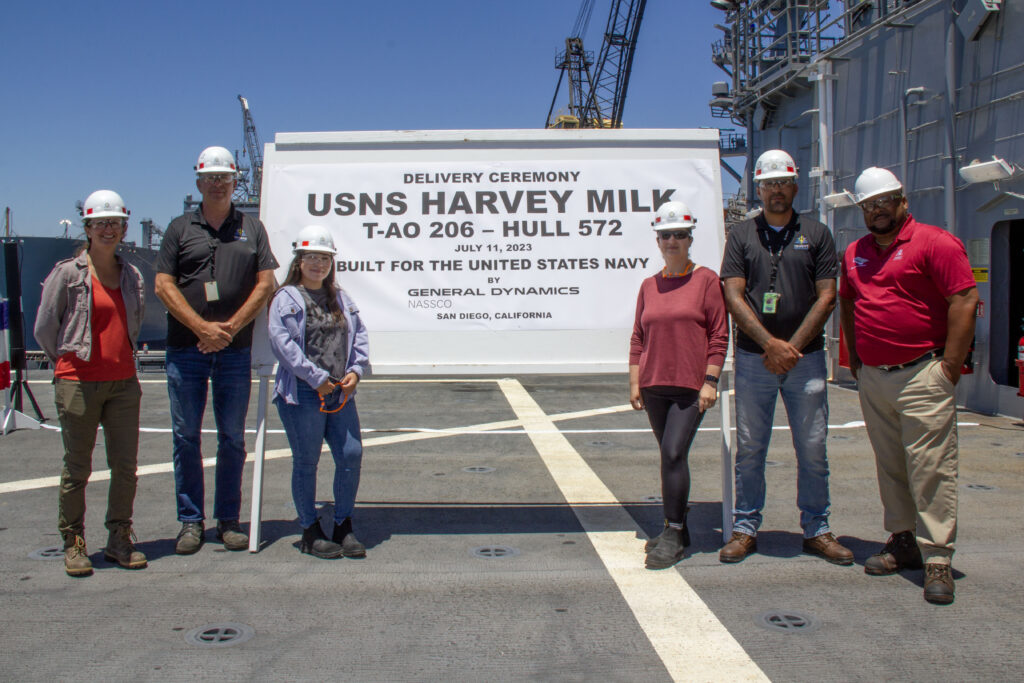
The Navy accepted delivery of fleet replenishment oiler, USNS Harvey Milk (T-AO 206), from shipbuilder General Dynamics National Steel and Shipbuilding Company (NASSCO) on July 11. 

The delivery of T-AO 206 follows the successful completion of acceptance trials with the Navy’s Board of Inspection and Survey to test the readiness and capability of the ship and to validate requirements. 

“We are excited to deliver the 2nd of class T-AO, USNS Harvey Milk, and expand the Navy’s capacity and capability to provide a fuel pipeline at sea,” said John Lighthammer, program manager, Auxiliary and Special Mission Shipbuilding Program Office. “The fleet and her Sailors will benefit from enhanced at-sea operations.” 

T-AO 206, the second ship of the 20-ship class, will be operated by Military Sealift Command. The ship provides diesel fuel, lubricating oil and jet fuel; small quantities of fresh and frozen provisions and dry stores; and potable water to Navy ships at sea. T-AOs add underway replenishment capacity to the Navy’s Combat Logistics Force and will become the cornerstone of the fuel delivery system. 

Shipbuilder General Dynamics NASSCO is currently constructing USNS Earl Warren (T-AO 207) and the future USNS Robert F. Kennedy (T-AO 208), USNS Lucy Stone (T-AO 209) and USNS Sojourner Truth (T-AO 210). Future USNS Thurgood Marshall (T-AO 211) and USNS Ruth Bader Ginsburg (T-AO 212), and yet to be named T-AO 213 are under contract. 

As one of the Defense Department’s largest acquisition organizations, PEO Ships is responsible for executing the development and procurement of all destroyers, amphibious ships, special mission and support ships, boats and craft. 


Indo-Pacific Maritime Security Exchange will examine emerging capabilities and capacity 

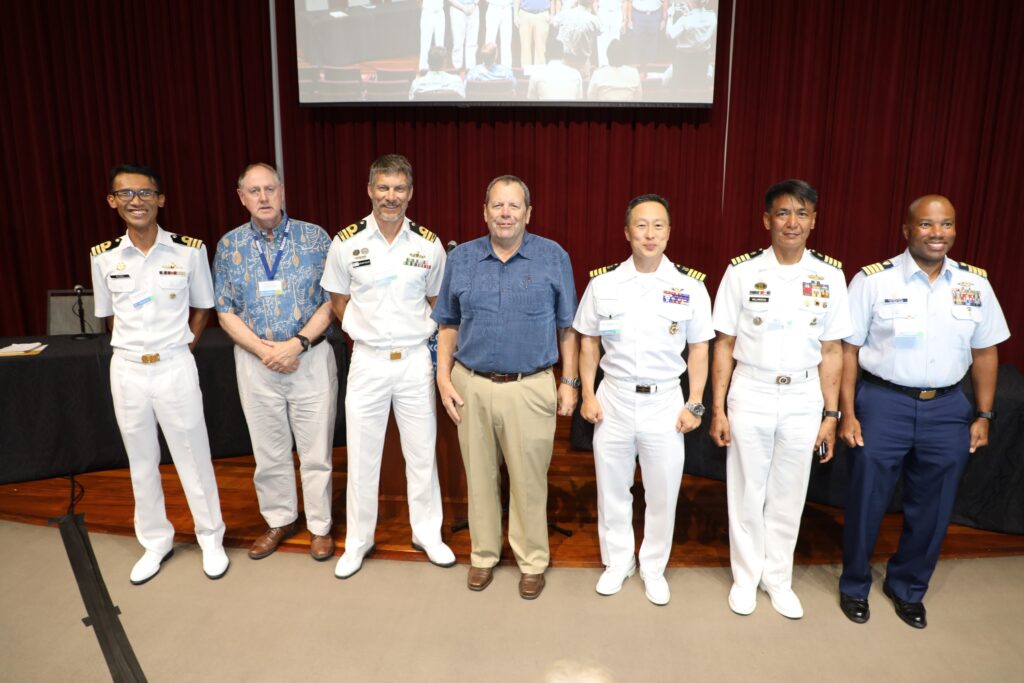
Highlight of the 2022 IMSE was the panel of commanding officers sharing their experiences in the just-completed RIMPAC 2022 exercise.  Focused on interoperability and information sharing, the panel included ship commanding officers from Royal Malaysian Navy, Royal Australian Navy; Republic of Korea Navy; Philippine Navy; and US Coast Guard. (Navy League Honolulu Chapter photo)  

Attend this event online

The Honolulu Council of the Navy League is once again hosting the Indo-Pacific Maritime Security Exchange (IMSE), a conference that brings voices from the Indo-Pacific together to discuss maritime security issues in the region. The event will take place August 3rd and 4th as an online symposium. 

“Our agenda is designed to stimulate a conversation,” said Larry Osborn, a retired Navy captain and president of the Navy League’s Pacific Region.   

In a basic sense, IMSE looks at maritime security in its four key elements: freedom of navigation, unrestricted flow of commerce, the protection of ocean resources, and the exclusive rights of sovereign nations in their Exclusive Economic Zones (EEZs); an overarching theme is building partnerships for security, stability, and prosperity. IMSE will feature senior maritime leaders and subject matter experts from the region as speakers and panelists examining a broad range of topics to include the strengthening of multi-national maritime military capability, capacity building efforts that include security assistance and cooperation, law-enforcement on the high seas, and diplomatic efforts. 

According to the IMSE website, nearly all of the thirty-six countries that comprise the Indo-Pacific region are maritime nations. The region contains nine of the ten busiest seaports in the world and more than half of global maritime trade transits the region. The national sovereignty and economic well-being of nations in the region are dependent on the maintenance of the rule of law and international norms on the high seas as described in the United Nations Convention on the Law of the Sea. Today this rule of law is being challenged by expansionist territorial claims in the South China Sea, harassment of foreign vessels in international waters, and IUU fishing. Countering these threats to maritime security in the region requires the collaborative efforts of like-minded nations in the military, diplomatic, law-enforcement, and commercial arenas.  

Osborn said the IMSE team strives to have half of the speakers be representatives from the various countries in the region. “Specifically, we want to give a voice to all the nations large and small to include Pacific Islanders, as well as some of the more some of the larger nations, like Japan, or the Republic of Korea. Collectively, our peace, security and prosperity are dependent on the seas.” 

The 2023 conference content will be divided into three segments. “The first segment is going to look at illegal, unreported, and unregulated (IUU) fishing and its nexus with transnational crime. The second segment will examine the various treaties, alliances and affiliations in the region and how they interplay. In our third segment, we will focus on emerging maritime capabilities, starting with the People’s Liberation Army Navy (PLAN) and the Chinese Maritime Militia.  We’ll also look at some of the navies in the region to include Japan, Republic of Korea, Australia, and others. And I think each of them has a story to tell about their navies and their emerging capabilities and capacity,” said Osborn.  

As examples, Osborn points to India’s indigenous aircraft carrier; acquisition of MH 60 Romeo helicopters and P-8I Poseidon maritime patrol aircraft, which will give them enhanced anti-submarine warfare capability, as well as a future buy of “Multi-Role Carrier-Borne Fighters.” 

“India occupies a very strategic position on the sea lanes between Asia and the Middle East and Europe.  And they are expanding their ability to keep those sea lanes open and secure,” he said.  “Japan has announced that they’re going to develop counter strike capability and they’re also enhancing their destroyer fleet with anti-ballistic missile capabilities. The Republic of Korea is building large amphibious ships to respond anywhere in the region to a crisis or humanitarian disaster. Taiwan has an indigenous frigate construction program underway to replace their mostly-hand-me-down surface combatants and is building eight submarines of its own design. There are other examples, too, in the region.”   

Another facet of emerging capabilities is in the arena of maritime domain awareness. “We’ll be looking at the technologies involved in delivering maritime domain awareness, from aggregators and processors to collectors and sensors,” Osborn said. 

 In the final series of panels, senior maritime leaders will examine the increased transparency of the oceans and how to make sense of it or act upon it. 

The attendees will learn about “fusion centers” such as the Information Fusion Centre (IFC) is a regional Maritime Security (MARSEC) center hosted by Singapore, and the Information Fusion Centre – Indian Ocean region, hosted by India.  “We’ll discuss the foundation of the technologies that make these fusion centers work, and how operators and data are brought together.” 

“Today’s operators are faced with huge amounts of data, but with the right analytical tools, including artificial intelligence, they can detect anomalies and draw an operator’s attention to where it needs to be, and determine the best course of action,” said Osborn. 

According to Osborn, the content will appeal to a broad audience. “Anybody interested in maritime security or sustainable fishing, will find the conference content very compelling.” 

He said the on-line format makes it easy to attend, “No matter where you are in the world, you can log-in and see the most recent content or see other material that has already been posted.” 

The cost to register is just $15.00, but Navy League members can register for free. 

The major sponsor for this year’s IMSE is the U.S. Agency for International Development (USAID), which has a large interest in protecting sustainable fishing for coastal nations. 

For more information:  https://www.imsehawaii.org/  

To register:  https://www.imsehawaii.org/registration.html  

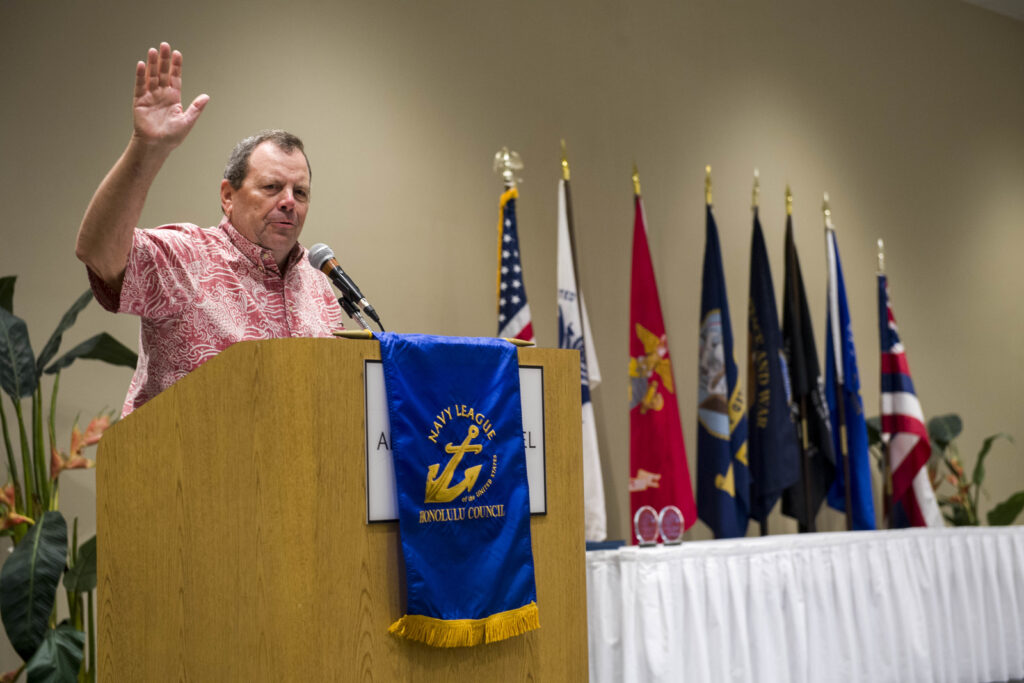
181115-N-NU281-1050 HONOLULU (Nov. 15, 2018) Retired U.S. Navy Capt. Larry Osborn, Navy League President, Honolulu Council, delivers remarks at the 58th Annual Sea Services Awards ceremony. The event honors top performers in the U.S. Navy, Marine Corps and Coast Guard. (U.S. Navy photo by Mass Communication Specialist 2nd Class Justin R. Pacheco)


USNS BURLINGTON Hosts Launch Of Unmanned Surface Vehicle

Release from U.S. 4th Fleet 

***** 

By USNAVSOUTH/4TH FLEET PUBLIC AFFAIRS 

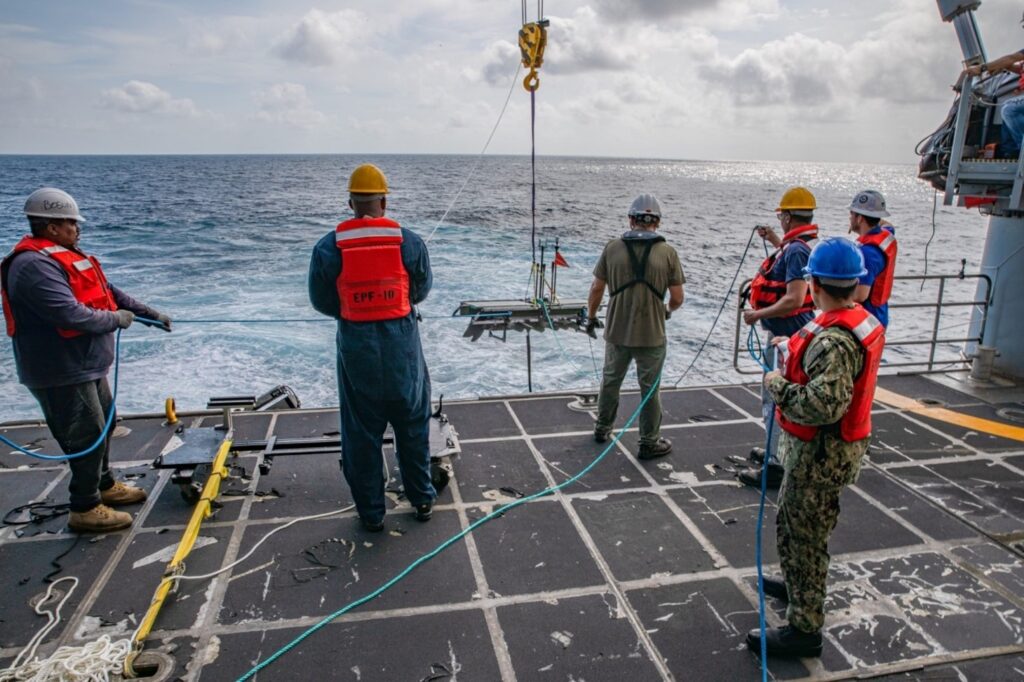
CARRIBEAN SEA  –  U.S. Navy Sailors partnered with Military Sealift Command civilian mariners and civilian contractors in a collaborative effort to successfully launch a Wave Glider unmanned surface vehicle (USV) from expeditionary fast transport ship USNS Burlington (T-EPF 10), June 30, 2023. 
 
The launch took place during the Burlington’s transit to Cartagena, Colombia ahead of the start of UNITAS LXIV. Colombia is this year’s host for UNITAS, longest-running annual multinational maritime exercise in the world, scheduled to start on July 11, 2023. 
 
“UNITAS is so unique and full of opportunities for innovation, providing an ideal location to experiment with service concepts and conduct combined training while close to home and in a permissive environment,” said Burlington’s Military Detachment officer in charge, Cmdr. Michael Fleck. 
 
Wave Glider is one of the unmanned systems in operation during the exercise as a part of the U.S. Naval Forces Southern Command/U.S. 4th Fleet (USNAVSOUTH/FOURTHFLT) Unmanned Integration Campaign. The campaign’s goal is to deploy and integrate unmanned systems and artificial intelligence tools into operations, which will bolster the Navy’s Marine Domain Awareness (MDA), counter-narcotics (CN) efforts and information sharing with partner nations. 
 
“UNITAS is an outstanding avenue to introduce emerging naval concepts for multinational exercises and operations in the region,” said Burlington’s Military Detachment senior enlisted leader, Senior Chief Information Systems Technician Anthony Davis. 
 
The Wave Glider USV runs on wave power, meaning the vertical wave motion is converted into forward thrusts. During UNITAS LXIV, the Wave Glider USV will provide Maritime Domain Awareness (MDA) in the exercise operations area during the underway portions of UNITAS. 
The overall objective of the USNAVSOUTH/FOURTHFLT Unmanned Integration Campaign is to ultimately scale unmanned platforms to the fleet level while developing tactics, techniques, and procedures resulting in the U.S. Navy’s Hybrid Fleet of the 2030s. 
 
UNITAS, Latin for Unity, is the longest-running multinational maritime exercise in the world. A U.S.-sponsored joint exercise, UNITAS was conceived in 1959, with the first UNITAS (UNITAS I) taking place in 1960. UNITAS has occurred every year since then. 
 
U.S. Naval Forces Southern Command/U.S. 4th Fleet supports U.S. Southern Command’s joint and combined military operations by employing maritime forces in cooperative maritime security operations to maintain access, enhance interoperability, and build enduring partnerships in order to enhance regional security and promote peace, stability and prosperity in the Caribbean, Central and South American region. 


Clean Technology Lasers: The Maritime Industry’s New Tool to Remove Corrosion and Scale

Shipbuilding professionals understand the value of pretreating metal surfaces of parts to remove corrosion.

Release from Laser Photonics 

***** 

Laser systems quickly remove corrosion and scale from metal surfaces with less preparation and mess than traditional techniques 

In the maritime industry, corrosion, and scale (where rust penetrates a metal surface) can quickly become an issue in an outdoor, salt sea spray laden environment. When sea spray evaporates, it leaves salt behind, leading to saltwater staining and accelerated corrosion.  

So, most shipbuilders as well as those responsible for maintenance and repair understand the value of treating metal surfaces to remove corrosion, scale, and saltwater staining, which is vital to maintain essential interior and exterior components such as engines, generators, fuel pumps, winches, anchoring chains, latches, door hinges and locks. This is necessary to preserve not only function but also prevent further corrosion and deterioration including possible premature failure. 

Unfortunately, traditional techniques used for this purpose such as sandblasting and chemical stripping are messy and require expensive consumables as well as substantial time for preparation and cleanup. Additionally, sandblasting and chemical stripping may not be feasible to clean, maintain, or recondition many of the ship’s interior and exterior spaces. These methods are also drawing scrutiny from regulators like the EPA and OSHA since they can pose risks to applicators and the environment. 

Although manual methods of cleaning and removal are available, such as chipping and using wire brushes and grinders, these are very labor intensive and time consuming. 

Today, a more effective alternative is utilizing industrial-grade, precision laser-based systems that can remove corrosion and scale with a high-energy laser beam that leaves the substrate unaffected. The technology can also be used for selective cleaning and even de-painting on access points and service latches when required. Preparation and cleanup time are minimal, and the low-maintenance equipment can last decades.  

According to Vincent Galiardi, owner of Galiardi Laser Clean, a surface cleaning operator based in St. Charles County, Missouri, many people are surprised to learn that clean technology lasers are the most cost-effective, efficient, and safest method of metal surface preparation. 

“Many people are unfamiliar with the use of lasers to pretreat metal surfaces,” says Galiardi. “When I do a demonstration, at first the people in attendance are skeptical. But after I use the laser to treat a small area, everyone starts talking and getting excited. By the end, when I let them try the equipment, everyone is having a good time and saying how great the laser works.” 

Given its effectiveness treating metal surfaces, industrial laser systems are increasingly being used at shipyards, shipbuilding berths, and even aboard ships. Technicians can use mobile handheld units, or if needed the systems can be integrated into automated inline processing lines. With significant advantages in safety and efficiency, laser cleaning is poised to disrupt the surface treatment market across more sectors. 

Resolving Conventional Cleaning Limitations 

To treat metal surfaces, sandblasting or chemical stripping are traditionally used as industrial cleaning processes. 

Sand Blasting 

Abrasive sandblasting involves forcefully projecting a stream of abrasive particles onto a surface, usually with compressed air or steam. The silica sand used in abrasive blasting typically fractures into fine particles and becomes airborne, which can cause serious or fatal respiratory disease. 

When workers inhale crystalline silica, the lung tissue reacts by developing fibrotic nodules and scarring around the trapped silica particles, causing a fibrotic lung condition called silicosis. Estimates indicate that more than 1 million U.S. workers are at risk of developing silicosis and that more than 100,000 of these workers are employed as sandblasters. 

In addition, particles are generated during abrasive blasting that further contribute to respiratory problems and other harmful health effects.  

“When sand or any other media is used to knock off particles from a substrate, there is always a byproduct that has the potential to become airborne and inhaled,” says Galiardi. 

“Industry has needed a cleaner, safer surface pre-treatment solution for a very long time,” adds Galiardi. “Sandblasting is inherently unsafe for operators. The silica glass used in sandblasting is toxic. An operator must wear a full HEPA suit when sandblasting to avoid breathing in particulates.” 

Sandblasting also is time-consuming to clean up since the sand essentially scatters everywhere, even though it is usually considered a “fast” cleaning method.  

Chemical Stripping 

With chemical stripping, harsh, even toxic chemicals are used to strip metal-based objects of rust, paint, and contaminants to bare metal. However, for operators, exposure to corrosive acids and noxious chemical fumes is inherently dangerous. The process can also be time-consuming to prepare the proper chemical bath, achieve the required level of cleaning, and dispose of the waste. In addition, disposing of toxic chemicals is costly and closely regulated by agencies like OSHA and the EPA. 

Safe, Effective Laser Cleaning 

Laser-based systems have significant advantages over these traditional methods, including ease of use in which an operator simply points and clicks a high-energy laser beam at the surface. The substrate is not affected by the laser, and the systems do not create any mess or byproducts. The approach is eco-friendly, energy-efficient, and completes the job in half the time of traditional methods when preparation and cleanup are considered. 

“In our experience, laser cleaning is as fast at removing rust or old coatings as other methods, but without the same amount of cleanup,” said Galiardi. “When we treat a surface with lasers, any fumes or dislodged particulate is extracted into a HEPA filter and the job is done. There is no media [sand, chemicals] to replenish or clean up.” 

Galiardi Laser Clean uses laser systems made by Orlando, Florida-based Laser Photonics, a leading provider of patented industrial grade CleanTech® laser systems for cleaning and surface conditioning. The American-made systems function either as mobile standalone units or can be integrated into production lines.  

The laser systems are available in portable and stationary models ranging from 50 to 3,000-watts (a 4,000-watt version is in development) with chamber sizes from 3’ x 3’ in size to 6’ x 12’. The systems can also be installed in manufacturing lines in cabinets or operated by a robotic arm. 

In the shipbuilding industry, operators are utilizing the industrial grade laser systems to maintain a wide range of vital interior and exterior equipment. Operators are using CleanTech systems to smooth surfaces and remove rust and scale from engines, generators, fuel pumps, water separators, winches, anchoring chains, gear shifting and throttle components without disassembly. This improves safety, function, lifespan, and reduces the risk of premature failure, which could be very dangerous during an emergency such as a storm on the high seas. 

The laser systems similarly maintain door hinges and locks as well as remove saltwater stains from metal surfaces. In addition, the technology is used for selective de-painting and cleaning of access points, service latches, and other maritime applications. 

With clean laser technology, there is now an environmentally friendly alternative to abrasive blasting and chemical stripping for surface pretreatment. The approach is safer for operators and highly adaptable to a wide range of maritime applications. 

“As people become more aware of laser-based systems and compare them to traditional methods, they need to factor in prep and cleanup time, which can significantly impact project cost. When the improved operator safety, equipment longevity, and lower maintenance of laser systems are also considered, the clean laser technology has a much higher ROI,” says Galiardi.  

The longevity of low-maintenance laser systems further adds to their value, increasing ROI, and making replacement unnecessary for decades. 

“CleanTech laser systems can last for 50,000 to 100,000 hours. That’s many decades working eight-hour days. After purchase, there’s virtually no maintenance necessary,” concludes Galiardi. 


USMC Preparing for Full Rate Production of MADIS RWS  

MADIS RWS production ongoing in Kongsberg’s world-class facility in Pennsylvania

Release from Kongsberg Defense US 

***** 

JOHNSTOWN, Penn. – July 10, 2023 – A critical system in the Marine Corps Ground-Based Air Defense (GBAD) portfolio, the Marine Air Defense Integrated System (MADIS) Remote Weapon Station has reached a pivotal milestone transitioning into full rate production. The remote weapon station is manufactured and managed by Kongsberg in Johnstown, Penn. and is a key component to the larger and holistic system which provides protection from drones and increased lethality against evolving threats.  

“The Marine Corps is leaning forward with orders for long-lead items to prioritize the timely production of these systems in support of Force Design 2030,” said William Dixon, MADIS Project Manager, KONGSBERG Protech Systems USA. “As we enter full-rate production for these remote weapon stations, we’re also discussing additional technology we can incorporate into the system to improve and expand their capabilities for the Marines.”  

“Kongsberg’s Johnstown facility consistently yields remote weapon station manufacturing excellence, having produced more than 20,000 systems over the last 15 years,” said Eskild Aas, Director US PROTECTOR Programs, Kongsberg. “Delivering the LRIP systems and moving into full-rate production of the MADIS RWS exemplifies our rigorous processes, and is an important milestone for the program office and our team.”  

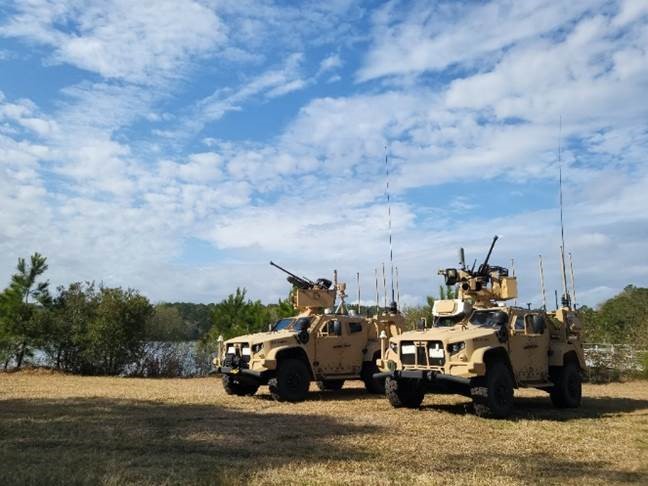
The KONGSBERG RS6 RWS for MADIS RWS includes the XM914E1 30mmx113mm percussion-primed cannon with a co-axial M240C (7.62mm) machine gun, an integration kit for the STINGER Air-To-Air Launcher (ATAL) and provisions for future C-UAS defeat systems. MADIS is part of the U.S. Marine Corps’ plan to upgrade their two active Low Altitude Air Defense (LAAD) battalions. The first 30mm remote weapon system to be qualified on the Joint Light Tactical Vehicle platform (JLTV), MADIS RWS mounts on JLTVs and fights as a complimentary pair, designated as Mk1 and Mk2. The MADIS Mk1 features STINGER missiles, and neutralizes fixed and rotary-wing aircraft. Mk2 fulfills the Counter-Unmanned Aircraft System (C-UAS) mission requirement, while also providing radar and command-and-control for the pair.  

The U.S. Marine Corps awarded Kongsberg the five-year, indefinite delivery / indefinite quantity other transaction authority (OTA) production contract in Sept. 2021. It has a ceiling of $94 million and includes a series of Low-Rate Initial Production (LRIP) systems, full-rate production units, spares and training. This production contract award followed a Sept. 2020 OTA contract award from the USMC to KONGSBERG for test articles and activities, which included Design Verification Testing (DVT), after a competitive process. 

The KONGSBERG RS6 RWS for MADIS leverages technology and competence drawn from multiple counter-unmanned aircraft systems (C-UAS) and air defense programs. The system leverages commonality with the family of PROTECTOR RWS delivered and fielded with the U.S. Army and Marine Corps. 


Draper Equips Small UAVs for Tomorrow’s Battlefield

Draper developed new capabilities for small uncrewed aerial vehicles to improve situational awareness and threat detection for soldiers.
Credit: Draper

Release from Draper

*****

CAMBRIDGE, Mass., July 10, 2023

In field tests, Draper demonstrates advances to its mobile military platform that include an autonomy framework, a sensor-driven mapping algorithm and sensors to detect the presence of chemical, biological, radiation and nuclear (CBRN) elements. 

Battlefields entered a new era with the introduction of small unmanned aerial vehicles, or sUAVs. Commonly called drones, sUAVs enable soldiers to gain an aerial view of the battlefield and improve their situational awareness of the battlespace. 

Designed for low-altitude intelligence, surveillance and reconnaissance missions that depend on rapid deployment and agile maneuverability, sUAVs are being pushed to add more technology while also being asked to fly farther, smarter and better. 

It’s a situation that’s challenging the developer community, according to Won Kim, a program manager at Draper. His team is unveiling a new set of capabilities for sUAVs that represents an advance in the platform from remotely operated vehicles to those capable of fully autonomous operations. 

One new capability is to equip sUAVs so that they can fly ahead of a military unit to scout a location and sense the presence of chemical, biological, radiological and nuclear (CBRN) elements. Hazard detection using an sUAV can reduce the kinds of risks soldiers might encounter by scouting a location using handheld or vehicle-mounted sensors. 

“Customers are asking, can an sUAV sniff out these CBRN hazards in place of humans? How smart does an sUAV need to be to search, map and locate these CBRN hazard without a remote operator? When an sUAV encounters a building or obstacle, can it fly in and around it safely? These are just some of the questions our team is exploring,” Kim said. 

Kim’s team set to work on these challenges in a program funded by the Joint Program Executive Office for Chemical, Biological, Radiological and Nuclear Defense (JPEO-CBRND) called CSIRP, which stands for CBRN Sensor Integration on Robotics Platform. The team investigated the customer needs through field observations, noting requirements such as sensor efficiency and resolution, flight speed, height, duration, autonomous operation, sensor-driven mapping, networked command and enhanced situational awareness through shared interactive digital maps. 

Soldiers operating in urban environments, for instance, need an sUAV that can navigate in and around buildings and obstacles, such as trees or vehicles even when GPS signals are degraded or completely unavailable. Soldiers also need sUAVs to remotely search, detect, map and locate dangerous CBRN hazards. Soldiers dispersed across an area also want a way to share information that is secure, networked and mapped to the environment. 

The new capabilities Draper developed for CSIRP take advantage of multiple environmental inputs, along with a sensor fusion algorithm that can synthesize data from instruments including GPS, LiDAR, inertial measurement units, magnetometers and cameras. All that fused information is designed to achieve robust and autonomous operation through the use of new algorithms developed for CSIRP that make the sUAV capable of obstacle detection and avoidance. 

Under CSIRP, Draper integrated the sUAV with a mobile computing app, running on a handheld device, called the Tactical Assault Kit (TAK), which gives soldiers a map-based common operating picture on a shared network and provides enhanced situational awareness for command and control. Draper has developed software for every version TAK and the CBRN sensor plugin since it was first developed by the Department of Defense. 

In a series of field tests, Draper engineers set the sUAV on a path of several miles, over and around obstacles, navigating autonomously until it detected a simulated CBRN hazard and conducted a sweep of a field one square kilometer in size to map elements of interest. The information was gathered onboard the UAV and shared with the TAK operator and users in the network, including headquarters. 

“Mobile military technologies, like sUAVs, can be force multipliers and force protectors at the same time,” Kim said. “Anytime you can deploy technology like an sUAV to detect suspected CBRN hazards remotely and operate independently without exposing a soldier unnecessarily to harm is an advance in warfighter systems, and that’s important to us at Draper.” 

“Draper designed the autonomy framework and sensor-driven mapping algorithm to be an extensible, modular and resilient mobility platform that is vehicle and processing system agnostic,” said Julius Rose, associate director for Sensors and Delivery at Draper. “As new capabilities and vehicles are developed, autonomous systems should be readily adaptable to support numerous mission types across domains, be that air, ground or sea. Development needs to be efficient, reusable and agile to keep up with the pace of the needs of soldiers and personnel in the field.” 

Draper’s work on the CSIRP program builds on its legacy in autonomous systems, algorithms and positioning, navigation and timing. Advances made through the program will be applied to other air systems, as well as ground, marine and underwater systems. In addition to working with autonomous systems, Draper has assisted U.S. government agencies with projects including cybersecurity, technology protection and miniature cryptography for high stress environments. 


Milley Names Troy E. Black as Senior Enlisted Advisor to the Chairman 

The official photo of the 19th Sergeant Major of the Marine Corps, Sgt. Maj. Troy E. Black.

Release from the U.S. Department of Defense

***** 

July 7, 2023 | By Jim Garamone

The Chairman of the Joint Chiefs of Staff Army Gen. Mark A. Milley has named Sgt. Maj. of the Marine Corps Troy E. Black to succeed Senior Enlisted Advisor to the Chairman Ramon “CZ” Colon-Lopez.  
 
SEAC is the most senior enlisted rank in the U.S. military, and serves as the chairman’s direct tie to the enlisted force.  

The transfer of responsibility ceremony will be November 3 along with Colon-Lopez’s retirement from the U.S. Air Force.  

Black has spent 35 years in the Marine Corps. He attended recruit training at Marine Corps Recruit Depot Parris Island, South Carolina, in April 1988. He has been the sergeant major of the Marine Corps since 2019.  

Black served in Operation Just Cause, Operation Desert Shield/Desert Storm and deployed numerous times to Afghanistan and Iraq.   

Black began his career in the fleet as an infantry machine gunner serving in units from a fleet anti-terrorism security team company, to the 3rd Battalion of the 5th Marine Regiment to the 13th Marine Expeditionary Unit.   

He has successfully completed tours as a drill instructor at Marine Corps Recruit Depot Parris Island, South Carolina (where he met his wife, Stacie), and at the Officer Candidate School, Quantico, Virginia.   

As a sergeant major, Black has served at the 3rd Battalion of the 7th Marine Regiment; Combat Logistics Battalion 5, 11th Marine Expeditionary Unit, 1st Marine Logistics Group and at Marine Corps Manpower and Reserve Affairs.  

Black will be the fifth SEAC and the second Marine to hold the rank. 


Remarks by Secretary of Defense Lloyd J. Austin III at the Commandant of the Marine Corps Relinquishment of Office Ceremony 

Release from U.S. Department of Defense

***** 

JULY 10, 2023 

Well, good morning, everyone.  

It’s an honor to be here at Marine Barracks Washington, which is the oldest active post in the Corps.  

And it’s great to see Secretary Del Toro, General Milley, and so many other military leaders, distinguished guests, friends, and family members. 

I’m delighted to be with you to celebrate the career of an outstanding Marine: our 38th Commandant of the Marine Corps, General David Berger.  

But he would be the first to tell you that today is a celebration of all of our outstanding Marines.  

For two and a half centuries, U.S. Marines have proudly been the “first to fight.” They’ve fought with valor on beaches, in cities, and in jungles. Their commitment to our democracy and to their brothers and sisters in arms is unbreakable. And their courage has long been central to America’s success on the battlefield.   

Today, we face a challenging new security landscape. But our Marines are navigating it with the same grit, power, and resolve that have always set the Corps apart.  

That’s especially important in our primary theater of operations, the Indo-Pacific. I was honored to visit earlier this year with some very impressive Marines in Japan and the Philippines. I got to see firsthand how the Corps is strengthening deterrence alongside our allies. And the Corps is hard at work standing up the 12th Marine Littoral Regiment in Okinawa, which will make our Joint Force even more lethal.  

Marines are also central to our operations and deterrence in Europe. They train alongside our NATO allies on everything from cold-weather operations to mountain warfare. And as Russia continues its cruel war of choice against Ukraine, our “stand-in force” of Marines is critical for NATO’s deterrence and defense.  

In fact, it’s hard to find a spot on the globe where Marines aren’t making it safer.  

And when a crisis erupts, we count on our Marines to be ready for anything—and to leap into action.  

Today, as we work to strengthen our military for the great competitions ahead, the Marine Corps is absolutely central.  

The Force Design 2030 Plan outlines how the Marines will modernize the Corps to deepen America’s deterrence—and, if necessary, to fight and to win wherever they must. 

And General Dave Berger has led this historic and transformational effort. 

He’s done so with vision, creativity, and boldness. 

He’s not just willing to embrace change.  

He’s eager to lead change. 

It’s often said that militaries are always preparing to fight the last war.  

But General Berger has been driving hard to deter the next war.  

In his four years as Commandant, he has focused relentlessly on the future fight. He has faced hard choices head-on. He has encouraged creative thinking at every level of the Corps. And he has pushed our Department to redefine readiness for the 21st century. 

Now, despite all of his achievements, Dave is one of the most humble leaders in our inventory.  

In fact, he probably hates that I’m talking about him right now. 

But I’m going to do it for a few more minutes, Dave, so relax.  

You know, anyone who’s worked in government knows how tempting it can be to just kick the can down the road, or to make do with the old ways for a little longer.  

But that’s not Dave Berger.  

His staff says that he has “never once hit the ‘Easy’ button.” 

And that’s been true throughout his career.  

As a young officer, General Berger did it all: reconnaissance training, jumpmaster school, aviation, combat dive, you name it.  

He went on to command the First Marine Division in Afghanistan, the First Marine Expeditionary Force in Camp Pendleton, and Fleet Marine Forces Pacific, where he saw firsthand what it takes to deter aggression in the Indo-Pacific.  

He’s a warrior-scholar. He’s a tremendous communicator. He’s a tireless advocate for younger Marines.  

And he’s a great listener.  

In fact, General Berger believes that the more senior you get, the more important it is to listen—to everyone, no matter their rank or title.  

Young majors on his staff recall that General Berger would ask them about their own experiences in the Corps, and how things could work better.  

And for anyone with a good idea, he’s always got an open door and an open mind.  
  
Now, if you ask General Berger how he stays grounded, his answer is simple: his family.  

And let me recognize General Berger’s parents, JC and Martha, his wife Donna, and their four sons: Joseph, Ryan, Phillip, and Jeffrey.  

You know, there is nothing more important to Dave than family.  

He loves coaching his sons’ sports teams, bragging on their accomplishments, and riding four-wheelers back on the farm with his grandchildren.   

He takes leave just to spend time with his family, and he turns his phone off so he can be present.  

And Dave always makes clear to the teams he leads: family comes first. 

He loves talking with his staff about what their families are up to—and he encourages them to make sure they’re spending time with their loved ones.  

And that really makes a difference to Marines at all levels of the Corps.  

So I want to thank Dave for his focus on family. And I want to thank this outstanding military family for serving right alongside General Berger.  

Donna, thanks for all that you’ve done for our country and the Corps—and for your tireless work on behalf of military families.   

This year marks 42 years since Dave became a Marine—and 42 years of marriage for Dave and Donna. So let’s give it up for them.  

And to General Berger’s children and your families—thanks for your love and support, and for what you’re doing to serve our country as well.  

You know, years ago, Dave and Donna had a conversation about whether he should stay in the Marines. And they decided that if he ever had three bad days in a row, he’d get out of the military.  

And General Berger says that he’s never had those three bad days.  

So Dave, I want to thank you for everything that you have done to strengthen the Marine Corps and to defend the United States.  

Now, I know that everyone here is looking forward to the rapid confirmation of a distinguished successor to General Berger.  

You know, it’s been more than a century since the U.S. Marine Corps has operated without a Senate-confirmed commandant.  

Smooth and timely transitions of confirmed leadership are central to the defense of the United States, and to the full strength of the most powerful fighting force in history. 

Stable and orderly leadership transitions are also vital to maintaining our unmatched network of allies and partners. 
  
And they’re crucial for our military readiness. 

And of course, our military families give up so much to support those who serve—so they shouldn’t be weighed down with any extra uncertainty.  

We have a sacred duty to do right by those who volunteer to wear the cloth of our nation, and their families.  

I remain confident that all Americans can come together to agree on that basic obligation to those who keep us safe. 

I am also confident that the United States Senate will meet its responsibilities.  

And I look forward to welcoming an outstanding new Commandant for our Marine Corps, and to adding many other distinguished senior leaders across the Joint Force. 

You know, there’s a saying in the Marines: “We don’t accept applications, only commitments.”  

And every day, Marines bring their trademark commitment—quiet but fierce—to their teammates, their commanders, and their country. 

That commitment has allowed America to fight and win countless battles across the centuries.   

That commitment is what lets America race to the aid of those in need, anywhere on the planet.  

And that commitment is why I’m confident that our military is ready to deter aggression wherever we can and to fight and win wherever we must—today, tomorrow, and for decades to come.    

And I am confident that we will rise to the challenge of making our country stronger, and making our world safer.  

To our Marine Corps: thank you for your unfailing commitment to our country.  

And to General Berger: thank you for your unfailing commitment to our Marine Corps.  

May God bless you and your family. May God continue to bless our Marine Corps. And may God continue to bless the United States of America.   

Thank you very much. 


Nuclear Propulsion School First – Three Royal Australian Navy Officers Graduate the Program 

Release from Naval Sea Systems Command

***** 

July 7, 2023

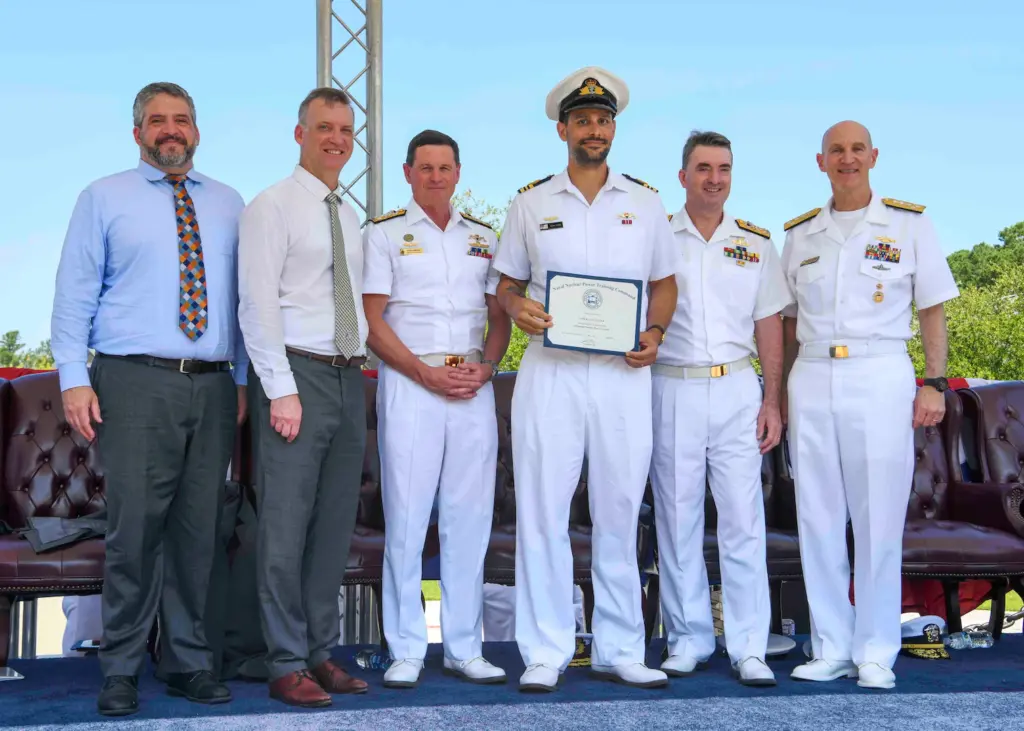
Goose Creek, SC –Three Royal Australian Navy (RAN) officers graduated from the United States Navy’s Nuclear Power School (NPS) today, marking a significant step in Australia’s goal to operate conventionally armed, nuclear-powered attack submarines (SSNs). 

Lt. Cmdr. James Heydon, Lt. Cmdr. Adam Klyne, and Lt. William Hall started NPS in November 2022, becoming the first cadre of RAN personnel to go through one of the Department of Defense’s most rigorous and demanding training programs. 

“I knew coming in that this was going to be a challenge, and I was not disappointed,” said Heydon. “That said, being one of the first Australians to graduate from NPS means a lot to me personally and for Australia as we work to build the stewardship needed to safely operate a nuclear reactor. With that as our motivation, my colleagues and I put our heads down and cracked on.” 

NPS trains officers and enlisted personnel in the science and engineering principles that are fundamental to the design, operation, and maintenance of naval nuclear propulsion plants. 

“What these graduates learn at NPS prepares them for the next step in becoming a nuclear-qualified officer,” said Adm. James Caldwell Jr., Director, Naval Nuclear Propulsion Program. “From here, they will continue their academic and practical studies so that when they go to their aircraft carrier or, in the case of our RAN officers, submarines, they are ready to safely and competently operate the power plant.” 

The three RAN officers will next report to Nuclear Prototype Training Unit (NPTU) Charleston to complete Engineering Officer of the Watch training, which will conclude in late 2023 or early 2024. Following NPTU, the officers will go through Submarine Officer Basic Course for approximately 2.5 months in Groton, Connecticut and then be assigned to a Virginia-class SSN to continue their training and qualifications. 

“These officers will form the nucleus of the RAN’s nuclear-qualified submariners and, through them, Australia will develop its ability to operate, maintain, and build their own conventionally armed nuclear powered submarines when it receives its first Virginia-class submarine from in the U.S. in the early 2030s,” shared Capt. Lincoln Reifsteck the AUKUS Integration and Acquisition Program Manager. 

“Today marks a significant step forward in the Royal Australian Navy’s ability to build its sovereign SSN capability,” said Vice Adm. Jonathan Mead, the Australia Submarine Agency’s Director General. “I could not be more proud of these three officers. Today, we have sharpened the tip of our undersea warfighting spear, and we are closer to having a safer and more secure Indo-Pacific region.” 

There are six RAN officers enrolled in NPS with more planned to join in the near future. “NPS has the capacity to train RAN officers and enlisted personnel. In doing so, we are able to impart the stewardship and knowledge that has allowed the United States to safely operate nuclear-powered ships for nearly 70 years and steam more than 171 million miles,” said Caldwell. 

Initially announced in September 2021, the AUKUS trilateral agreement between Australia, the United Kingdom, and the United States is a strategic endeavor aimed at strengthening the security and defense capabilities of the three nations that also promotes stability and security in the Indo-Pacific region. Australia will acquire conventionally armed SSNs for the Royal Australian Navy under Pillar I of AUKUS via the Optimal Pathway announced by the heads of the three partner nations on March 13, 2023. 

The Optimal Pathway for Australia’s acquisition of nuclear powered submarines begins this year with an increase in the number of U.S. SSNs visiting HMAS Stirling in Western Australia. As early as 2027, U.S. and U.K. SSNs will begin extended rotations to Australia to accelerate the development of Australia’s workforce, infrastructure, and regulatory system as part of the Submarine Rotational Force – West (SRF-W). With congressional approval, the United States intends to sell three Virginia-class SSNs to Australia starting in the early 2030s with the potential to sell up to two additional hulls if needed. These efforts will maintain Australia’s submarine capacity as it builds its fleet of SSN-AUKUS, a trilaterally developed nuclear powered submarines based on the U.K.’s next generation design. The Royal Australian Navy intends to take delivery of the first SSN AUKUS in the late 2030s followed by the first Australian-built SSN AUKUS in the early 2040s.