FUTURE USS CANBERRA (LCS 30) RECEIVES NATIONAL, GRASS-ROOTS SUPPORT FROM COMMISSIONING COMMITTEE
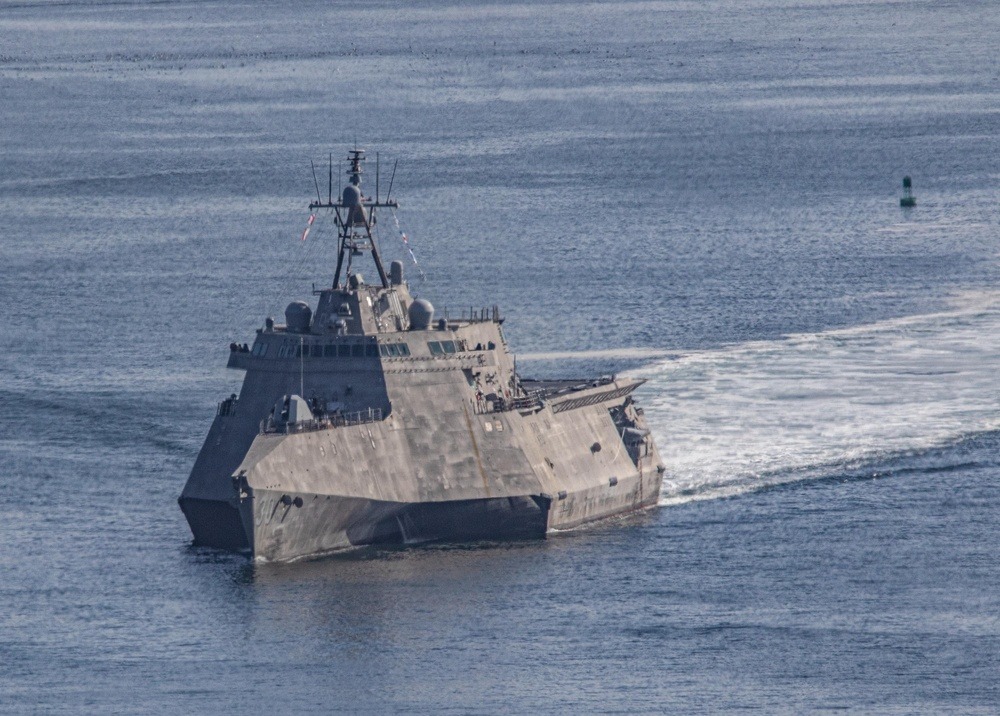
230419-N-NT811-1004 SAN DIEGO (April 19, 2023) The Independence-variant littoral combat ship USS Canberra (LCS 30) departs San Diego Harbor for a routine underway off the California Coast. Littoral Combat Ships are fast, optimally manned, mission-tailored surface combatants that operate in near-shore and open-ocean environments, winning against 21st-century coastal threats. LCS integrates with joint, combined, manned and unmanned teams to support forward presence, maritime security, sea control and deterrence missions around the globe. (U.S. Navy photo by Mass Communication Specialist 1st Class Mark D. Faram)

SYDNEY – The Navy’s Independence-variant Littoral Combat Ship, the future USS Canberra (LCS 30), will be commissioned, July 22 at the Royal Australian Naval Base Garden Island, in Sydney Harbor — a rare commissioning abroad for the U.S. Navy. Behind the scenes, an all-civilian committee of Navy League members have worked for months to support the ship and its crew ahead of this historic event that both celebrates and exemplifies the strong relationship between the two nations. “We have begun another important in the relationship between these two great nations. The new USS Canberra (LCS 30) demonstrates the strong alliance between the United States and Australia,” said Ward Cook, Commissioning Committee Chairman in Kansas City.

Quoting Alfred Thayer Mahan who said, “navies are instruments of international relations,” Commissioning Committee member Patricia Du Mont in Fort Lauderdale, Florida underscored the importance of the relationship, stating, “As the first U.S. Navy international ship commissioning, the commissioning of USS Canberra (LCS 30) in Sydney, Australia, exemplifies people-to-people diplomacy.”

The Navy League of the United States, a nonprofit organization headquartered in Arlington, Virginia whose mission is to advocate, educate, and support the sea services, is routinely involved in the commissioning process of U.S. Navy ships. President and CEO of the Hampton Roads, Virginia Navy League Council, Maryellen Baldwin explained that her council has commissioned 28 ships to date and stated, “Navy League-provided ship enhancements add character and context to a warship, which exerts its presence through port visits and other peacetime pursuits [while also] improving quality of life for those aboard.”

The USS Canberra Commissioning Committee, made up of eleven individuals from across the United States, have extensive experience bringing new ships to life. With more than 50 combined ship commissioning between them, these individuals came together 20 weeks ago to support the crew and families of the future USS Canberra (LCS 30).

When the Navy receives delivery of a ship from the contractor, the ship is only given the bare essentials to conduct business at sea. The civilian Commissioning Committee raises funds to support the crew’s additional needs while on board the ship. There are important morale items that need to be purchased for the crew to use during their down time on board, such as media like books and TVs, and gym equipment This critical support for the ship and her crew are an important part of any ship commissioning effort, but this unique international commissioning this some both challenges and great opportunities.

“Working with on the commissioning of the USS Canberra has been the most challenging yet rewarding experience. Dealing with the women and men from around the globe to not only make all the events leading up to the commissioning happen, but being able to support the crew and their families in many ways will always make this a memorable experience for me,” said Commissioning Committee member Ronald Spence in the Rocky Mountain region, who has worked on multiple commissioning committees.

It will be up to the ship’s crew, its sponsor, the commissioning committee, and the City of Canberra to strengthen the relationship between the ship and its namesake for the life of the ship. The ship’s sponsor is Australian Senator, the Honourable Marise Payne, the former Australian Minister of Foreign Affairs. The commissioning ceremony will be highlighted by a time-honored Navy tradition when Ms. Payne will give the first order to “man our ship and bring her to life!”

Built by Austal USA, LCS 30 will be the twenty sixth littoral combat ship to enter the fleet and the fifteenth of the Independence variant. Former Austal employee and Commissioning Committee member Jenny Beam Klein of Mobile, Alabama said, “it was an honor to witness the construction of future USS Canberra (LCS 30) for the past five years here in Mobile, Alabama.” She discussed the importance of the relationship with Austal, stating, “It has been a privilege to be part of the LCS 30 Commissioning Committee under the leadership of Mr. Ward Cook and Mr. Ernie Conner and we are thrilled to watch her join the U.S. Navy fleet this weekend on the other side of the world. This ship and ceremony are creating stronger ties between our Gulf Coast shipbuilding community, the Navy and Australia. Congratulations to the Officers and the Crew!”

Austal is also hosting watch party for the event at their facility in San Diego to, “keep the families involved,” said Commissioning Committee member CWO4 David Miller, USN (Ret.) of Kansas City, Missouri. “What an honor to be part of this challenging, but highly rewarding event, planning and conducting the commissioning of a ship in Sydney,” he said.

This will be the first US Navy ship in an allied port, and the second US Navy Combat ship named after Australian’s capitol city. Independence-variant LCS pride themselves on being fast, optimally manned, mission-tailored surface combatants that operate in near-shore and open-ocean environments, winning against 21st-century coastal threats. LCS integrates with joint, combined, manned and unmanned teams to support forward-presence, maritime security, sea control, and deterrence missions around the globe.

USS CANBERRA (LCS 30) will be homeported in San Diego, California. The ceremony will be live streamed at: http://www.dvidshub.net/webcast/32033. The link will become active approximately five minutes prior to the event (Friday, July 21st 8:55 p.m. EST). Please contact Editor-in-Chief of Seapower magazine, Ann Tropea with questions: [email protected]

###


Navy Retires Its Last Special Operations Helicopter Squadron

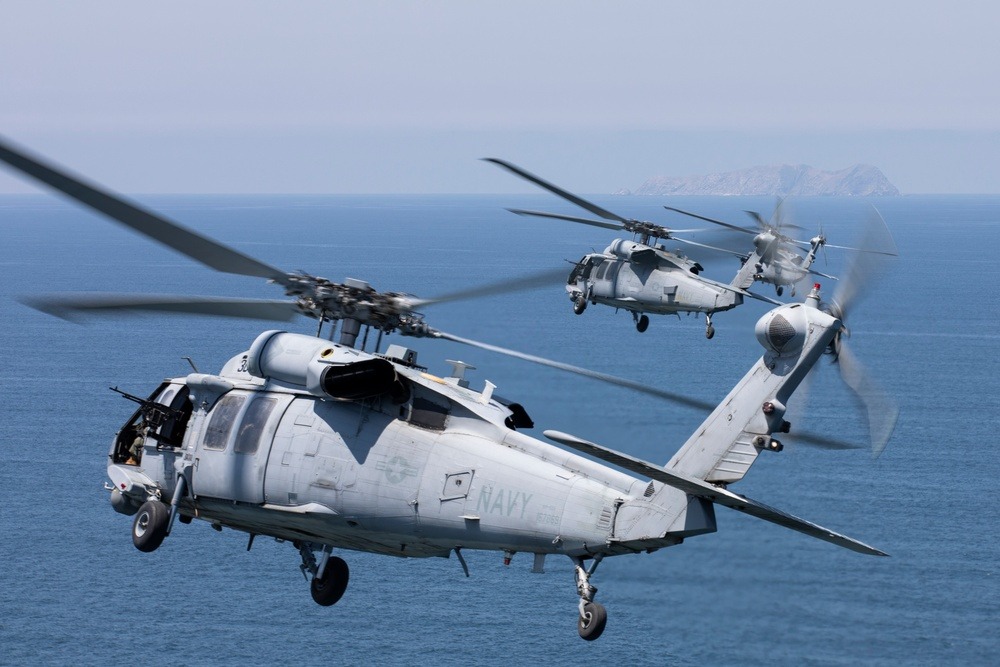
SAN DIEGO, California (June 30, 2023) MH-60S Seahawks assigned to the “Firehawks” of Helicopter Sea Combat Squadron (HSC) 85 fly near San Diego during the squadron’s final flight prior to its deactivation ceremony. Navy Reserve squadron HSC-85 is the Navy’s last helicopter squadron dedicated to Naval Special Warfare (NSW) and Combat Search and Rescue (CSAR). (U.S. Navy photo by Mass Communication Specialist 2nd Class Ryan LeCompte)

*****

ARLINGTON, Va. — The U.S. Navy’s only helicopter squadron dedicated to support of special operations forces has made its final flight.

Helicopter Sea Combat Squadron 85 (HSC-85), a reserve squadron based at Naval Air Station North Island, California, made its final flight on June 30, 2023, prior to its deactivation ceremony, according to a release from Commander, Naval Air Force Reserve.

HSC-85 was equipped with MH-60S Seahawk helicopters to support “Naval Special Warfare forces and other special operations forces training and readiness,” according to the Department of the Navy’s 2023 budget highlights book. The Navy proposed retirement of the squadron with the service’s 2023 budget request. The Navy estimates the program savings would amount to $312.5 million over the Future Years Defense Plan.  

HSC-85 originally was established as Helicopter Anti-Submarine Squadron 85 (HS-85) in 1970 at NAS Alameda, California, and equipped with the SH-3A Sea King helicopter, later upgrading to the SH-3D and SH-3H versions. The squadron moved to NAS North Island in 1993 and in October 1994 was redesignated Helicopter Combat Support Squadron 85 (HC-85), shifting to the roles of search and rescue, logistics and range support. 

The squadron was redesignated HSC-85 in February 2006 and equipped with MH-60S helicopters. In 2011, special operations support became its primary role, and it was equipped with an older version of the Seahawk, the HH-60H. The Navy planned in 2016 to deactivate HSC-85 and its East Coast counterpart, HSC-84, but HSC-85 survived. The squadron in 2018 upgraded to the Block III version of the MH-60S. 


SECNAV ACCEPTS MIAMI-DADE’S INVITATION TO HOST FLEET WEEK MIAMI IN 2024

Release from Commander, Navy Region Southeast

*****

By CNRSE PAO

18 July 2023

MIAMI (July 14, 2023) – Secretary of the Navy Carlos Del Toro joined with Miami-Dade County Mayor Daniella Levine Cava to announce the inaugural Fleet Week Miami in 2024.
 
The two dignitaries made the announcement July 14 at PortMiami along with other military and civilian officials.  Fleet Week Miami will be held May 7-14, 2024 at PortMiami, and will bring in excess of 800 service members to south Florida whose primary mission will be to contribute to a growing understanding of the Navy’s importance in our country’s national defense.  The week-long event is expected to feature both US Navy and US Coast Guard vessels to showcase military technology to the public.
 
“We are honored the U.S. Navy has accepted Miami-Dade County’s invitation to host Fleet Week at PortMiami in 2024,” Levine Cava said. “Residents and visitors will be able to see ships up close, board them and take tours as well as participate in community events. We are also excited the visiting sailors and marines will be able to enjoy our attractions, engage in community projects and experience all of Miami-Dade’s unique cultural offerings.”
 
Other speakers at the news conference included the Honorable Oliver G. Gilbert, III, Chairman, Miami-Dade Board of County Commissioners; the Honorable Carlos Del Toro, Secretary of the Navy; and Hydi Webb, PortMiami Chief Executive Officer.  
 
Senior military present for the announcement included: Rear Adm. Douglas Schofield, Coast Guard Commander District 7; Rear Adm. Allan Thomas, Director of Operations SOUTHCOM; and Capt. Ian Johnson, Commander Navy Region Southeast.
 
The U.S. Navy visited Miami through its Navy Week program in January. The successful event was one of 15 Navy Weeks nationwide to take place in 2023, and it brought a variety of assets, equipment, and personnel to a single city for a weeklong series of engagements designed to bring America’s Navy closer to the people it protects. Miami Navy Week gave the community an opportunity to learn about the Navy, its sailors and its importance to national security and prosperity, and its success helped spur the Fleet Week Miami initiative.
 
“Thank you Mayor Levine Cava, Miami-Dade County and the city of Miami for continuing to host our service members, and for opening up your port to our fleet,” said Secretary of the Navy Carlos Del Toro. “Fleet Week in Miami will be an unforgettable opportunity for Miamians and tourists alike to learn about the incredible people who make up our Navy, Marine Corps and Coast Guard, and their importance to our national security and prosperity.”  


Heavyweight Torpedo Contributes to U.S. Navy’s Undersea Dominance

Release from SAIC

*****

Heavyweight Torpedo Contributes to U.S. Navy’s Undersea Dominance

  • The MK48 torpedo is the U.S. Navy’s sole submarine-launched anti-submarine warfare and anti-surface warfare weapon.
  • SAIC serves as the prime integrator for the MK48, providing integration as well as test support for the torpedo’s subsystems.  
  • Integration of the MK48’s afterbody/tailcone involves more than 500 piece parts.

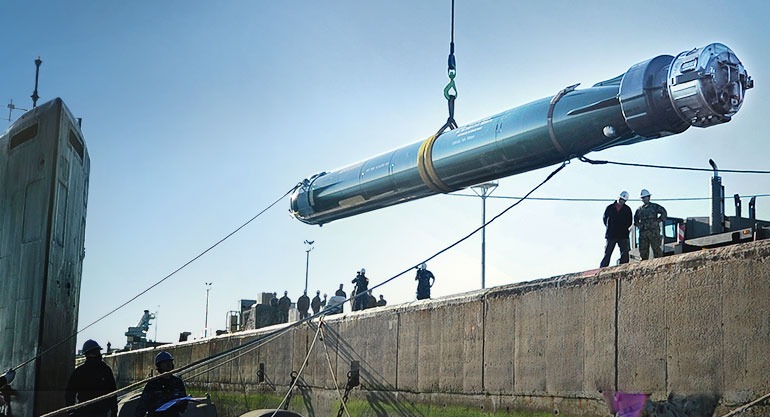
The MK48 torpedo is the U.S. Navy’s sole submarine-launched anti-submarine warfare and anti-surface warfare weapon. All classes of Navy submarines use it for achieving sea control and neutralizing or destroying threats to high-value vessels.

As the prime integrator of the MK48 torpedo, SAIC builds, integrates and tests the afterbody/tailcone sections and fuel tanks of the MK48 Mod 7 heavyweight torpedo for Naval Sea Systems Command (NAVSEA).

Often considered the torpedo’s engine room, the afterbody/tailcone controls the torpedo’s propulsion, starts and applies the power necessary to drive it from the time it is launched until it reaches its target, and steers it on its course to the mark.

The afterbody/tailcone comprises 26 major sub-assemblies requiring the integration of greater than 500 piece parts.

SAIC‘s team of MK48 subject matter experts works primarily in Bedford, Ind., near Naval Surface Warfare Center Crane Division, where the majority of the torpedo integration work takes place. The contract’s program and engineering management team is based in Middletown, R.I., near Naval Undersea Warfare Center (NUWC) Division Newport. SAIC completed the design, development and delivery of an automated electrical power system test set, which is used to test the torpedo’s alternator/regulator assembly, in Indianapolis. 

Building on past success

For more than a decade, SAIC has provided engineering, technical and management services in support of NUWC’s propulsion test facility. Our team performs facility operations, maintenance, upgrades and testing in support of the Navy’s only land-based torpedo testing facility. In this capacity, SAIC’s engineers and technicians routinely integrate MK48 afterbody/tailcones in preparation for tests.

The facility can test torpedoes across their full speed and depth envelopes. Our team runs these tests to capture very unique performance data for NAVSEA.


Bell Expands H-1 Advanced Maintenance Training Academy for USMC

Release from Bell Textron

*****

Jul 19, 2023

Bell Expands H-1 Advanced Maintenance Training Academy for USMC

What does Marine Corps Air Station (MCAS) Camp Pendleton, MCAS Futenma, Bell’s Amarillo Assembly Center, and Bell’s Repair and Overhaul Center have in common? They are all locations where U.S. Marine Corps aircraft maintainers come to receive top-of-the-line maintenance training for the Bell H-1 aircraft line.

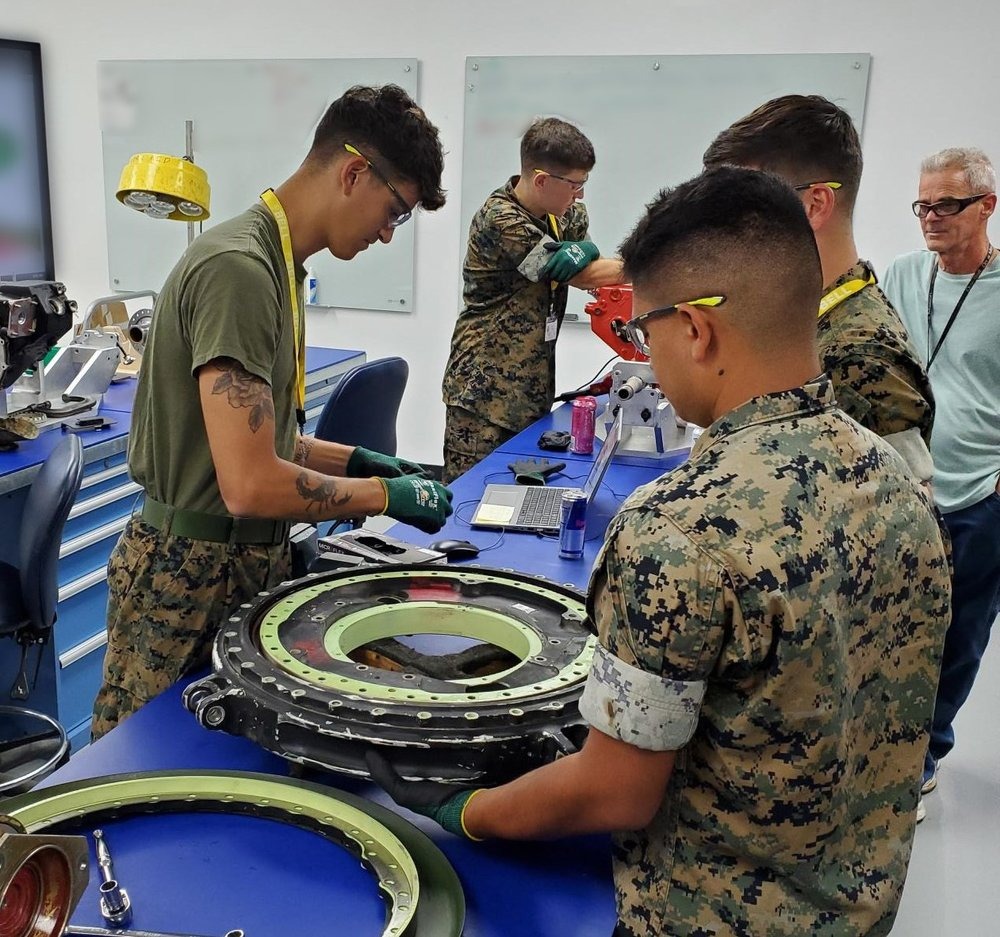
Bell has launched its H-1 Advanced Maintenance Training Academy (AMTA) to provide long-term fleet support through a week-long, interactive training program taught by Bell H-1 maintenance instructors and specialists. The training is an immersive experience coupled with 3-D courseware and hands-on technical instruction for routine maintenance repairs on items such as flight controls, gearboxes, swashplates, and both rotor blades.

“Through the H-1 AMTA, Marine maintainers can take the training knowledge that they receive here and implement it directly on the H-1 flight line, ensuring mission-focused fleet readiness at all times,” said Steve Rudat, H-1 AMTA instructor, Bell.

Marine maintainers from various Marine Aviation Logistics Squadrons (MALS) and Marine Light Attack Helicopter Squadrons (HMLA) located around the world, including MALS-29, MALS-39, HMLA-167, HMLA-169, HMLA-267, HMLA-367, HMLA-369, and HMLAT-303, have attended the H-1 AMTA offered at one of the participating locations.

Most recently, MCAS Camp Pendleton was added to the list of locations that host the H-1 AMTA.

“The goal of the AMTA is for Marines to develop a deeper understanding of the H-1 platform and how the different aircraft systems function together. Whether they are at their home squadron or deployed on a mission, our AMTA program provides H-1 Marine maintainers with the skills to keep their aircraft on the flight schedule,” said Bryan Riley, H-1 fleet support manager, Bell.

Since its launch, over 100 Marine maintainers have successfully completed the training program.

“At Bell, we are committed to providing top-tier after-market support to our customers, and this is one of the key ways that we can support the mission of the HMLA community,” said Nate Green, H-1 program manager, Bell.

The Bell H-1 line is purpose-built to support the U.S. Armed Forces. Bell continues to modernize the Bell AH-1Z Viper and Bell UH-1Y Venom to serve the future generations of warfighters. The current line of the Viper and Venom have proven to be two of the most agile, dependable, and interoperable aircrafts on the market.


Navy’s I-Boss Aeschbach: Fleet Sees Greater Need for Information Warriors

*****

ARLINGTON, Va. — The U.S. Navy’s operational climate is generating a growing need for the Navy Information Forces, challenging the capacity of the forces to meet that need.

The Navy’s information warfare forces include personnel specializing in intelligence, electronic warfare, cyber warfare, oceanography, nuclear command and control, and information warfare.

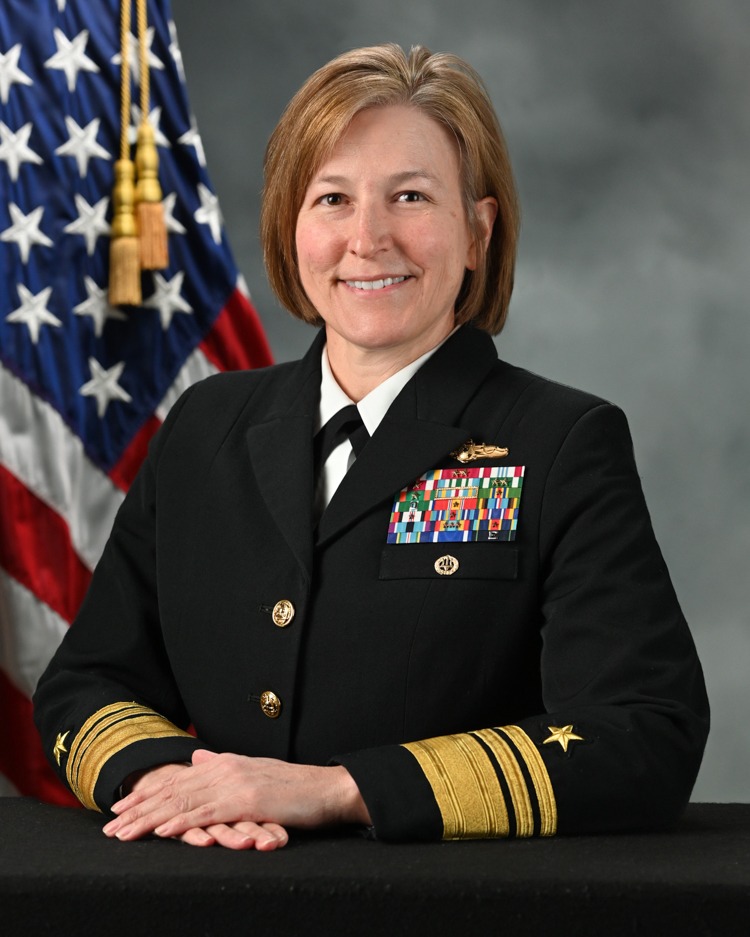
Vice Admiral Kelly Aeschbach, commander Naval Information Forces—known informally as the “I-Boss” — speaking July 18 with retired Rear Admiral Frank Thorp IV in the U.S. Naval Memorial’s SITREP series, said the Navy’s intelligence and cryptologic specialists were not as busy in the maritime environment during the wars in Afghanistan and Iraq as they have now become with the great power competition with China and Russia.

“We were really not challenged in the maritime, and our global competitive environment has changed substantially, and we are now facing a near-peer competition — in some areas, we are being outpaced by our competitors — that I think demands now that you need information warriors to deliver our capability full-time,” Aeschbach said.

The admiral cited the Navy’s submarine force as an example where what is now information warfare was a collateral duty for a submarine officer, but now, with the increased demands of high-end warfare, the capabilities of information warfare specialists are needed to handle the flood of information and allow the other personnel to concentrate on the areas in which they excel.

“We’re a better team for it, if we’re there bringing the detailed information warfare capability,” she said. 

With the increasing demands on information warfare forces, the Navy is challenged to prevent burn-out of the force, which—unlike ship or aircraft crews—does not have a routine sustainment cycle.

“We are operating all the time, and so one of the challenges we have as a type commander is: how do you do the care and feeding and re-generation of a force that is always in demand,” Aeschbach said. “So that has challenged us in terms of how we maintain an appropriate operational tempo for our personnel, effectively train them, and afford them enough time to re-charge and be most effective and most ready for the missions for the missions they’re supporting.”

Aeschbach is working to develop and use live virtual constructive technology to provide realistic training for information warfare forces, which, because of the nature of their capabilities, are more difficult to exercise realistically in a peacetime environment.


Coast Guard crew offloads more than $158 million worth of narcotics in San Diego

Release from the U.S. Coast Guard 11th District

*****

July 17, 2023

USCG District 11 Public Affairs

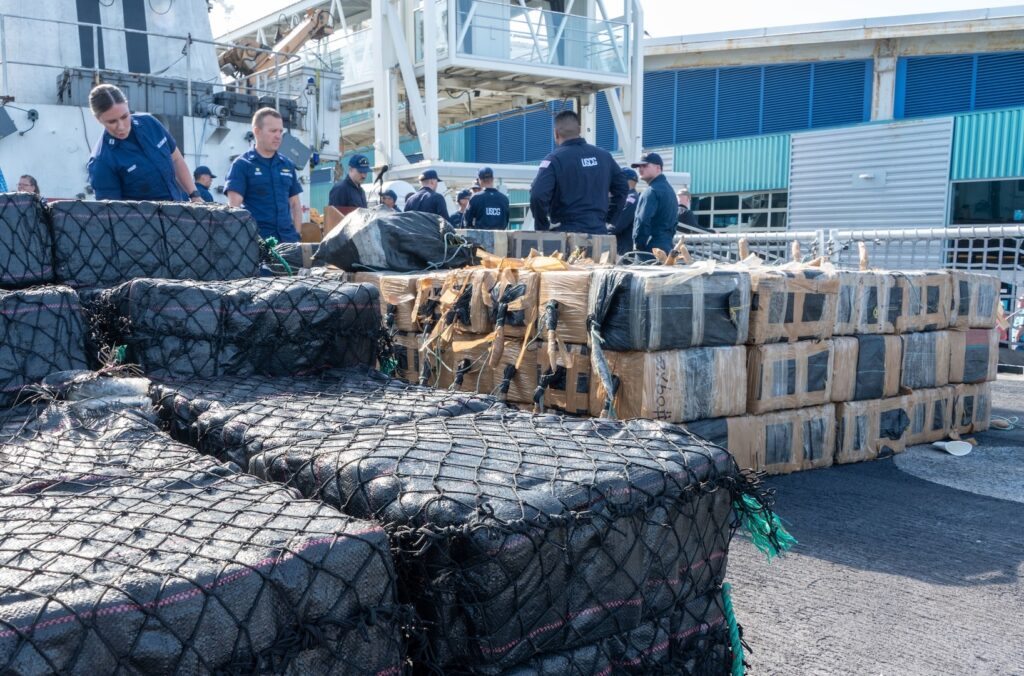
SAN DIEGO — The crew of the Coast Guard Cutter Steadfast (WMEC 623) offloaded more than 11,600 pounds of cocaine and 5,500 pounds of marijuana worth an estimated $158 million in San Diego, Monday.

The interdictions were conducted during counter-narcotics patrols in the Eastern Pacific Ocean between May and July by crews of the Coast Guard Cutters Vigilant (WMEC 617), Mohawk (WMEC 913) and Steadfast.

“The crews of the Coast Guard Cutters Vigilant, Mohawk and Steadfast worked diligently to combat transnational organized crime, disrupt drug flow and prevent a significant amount of drugs from reaching the U.S.,” said Rear Adm. Andrew Sugimoto, commander, Coast Guard Eleventh District. “Their unwavering commitment while interdicting drug smugglers at sea is not only commended, but their continued efforts are unmatched.”

Numerous U.S. agencies from the Departments of Defense, Justice and Homeland Security cooperated in the effort to combat transnational organized crime. The Coast Guard, Customs and Border Protection, FBI, Drug Enforcement Administration, and Immigration and Customs Enforcement, along with the Mexican Navy (SEMAR), contributed to this counter-narcotic operation. These coordinated efforts underscore the strong collaboration between the U.S. and SEMAR.

“Nothing is guaranteed when a Coast Guard crew says ‘goodbye’ to loved ones and embarks on a multi-month patrol,” said Cmdr. Brock Eckel, commanding officer of the Steadfast. “However, our team worked incredibly hard, day-and-night, to stop three smuggling vessels, preventing more than five tons of illicit narcotics from reaching American soil. I am honored to serve with the amazing Steadfast crew and share in their success.”

The fight against drug cartels in the Eastern Pacific Ocean requires unity of effort in all phases from detection, monitoring, and interdictions, to criminal prosecutions by international partners and U.S. Attorneys’ Offices in districts across the nation. The law enforcement phase of counter-smuggling operations in the Eastern Pacific Ocean is conducted under the authority of the Eleventh Coast Guard District, headquartered in Alameda. U.S. Coast Guard members lead and conduct the interdictions, including the actual boardings.

The Steadfast is a 210-foot medium endurance cutter homeported in Astoria, Oregon. This multi-mission platform falls under the operational command of the Coast Guard Pacific Area Commander. As a Coast Guard resource, Steadfast deploys in support of the Coast Guard’s Eleventh and Thirteenth Districts as well as Joint Inter-Agency Task Force South (JIATF-S). During deployments, Steadfast patrols along the western seaboard of the United States, Mexico and North and Central America conducting search and rescue, maritime law enforcement, living marine resource protection, and homeland defense operations.


General Officer Announcement

Release from the U.S. Department of Defense

*****

General Officer Announcement

July 17, 2023

Secretary of Defense Lloyd J. Austin III announced today that the president has made the following nominations:

Marine Corps Maj. Gen. James H. Adams, III, for appointment to the grade of lieutenant general with assignment as deputy commandant for Programs and Resources, Headquarters, United States Marine Corps, Washington, D.C.  Adams is currently serving as deputy director, Requirements and Capability Development, J-8, Joint Staff, Washington, D.C.


USS Canberra (LCS 30) Arrives in Sydney Ahead of Commissioning

Release From Commander, Littoral Combat Ship Squadron ONE Public Affairs Office

Courtesy Story, Littoral Combat Ship Squadron ONE Public Affairs


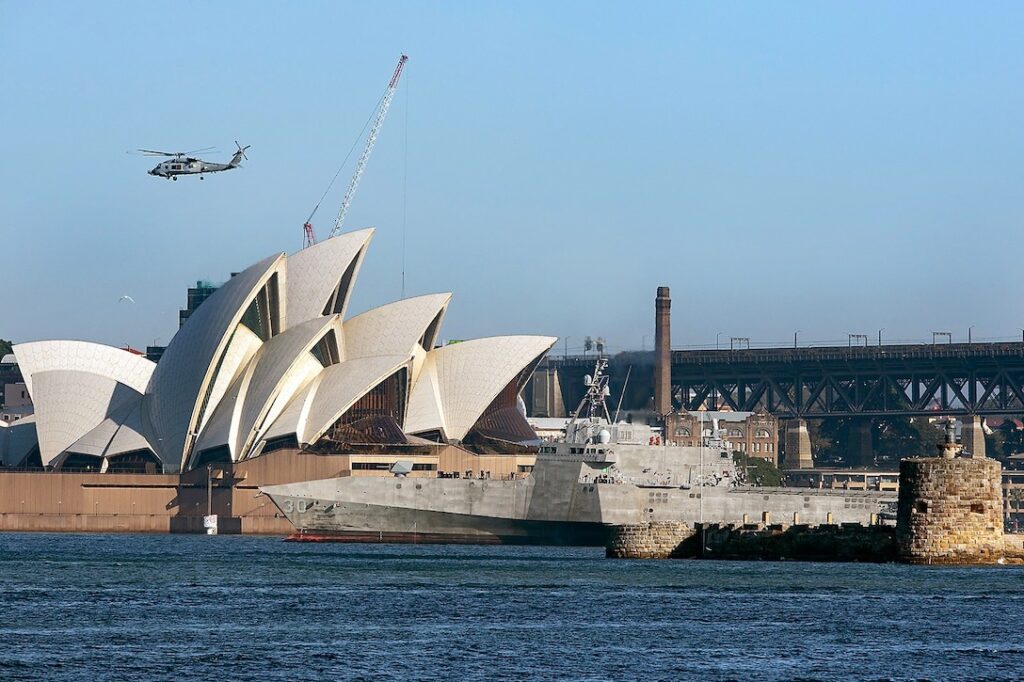
SYDNEY (July 18, 2023) Independence-variant littoral combat ship USS Canberra (LCS 30) arrived in Sydney, Australia, July 18, ahead of the ship’s ceremonial commissioning.

USS Canberra entered Sydney Harbour in formation with Canberra-class landing helicopter dock HMAS Canberra before mooring pierside at the Royal Australian Navy’s Fleet Base East.

“We are thrilled to be here in Sydney this week, and to show this city our fast, optimally-manned ship that sails across the seas as a symbol of our navies’ dedication to each other,” said Capt. Marc Crawford, Commodore of Littoral Combat Ship Squadron ONE. “For more than one hundred years, our nations have stood side-by-side; today is no different.”

The U.S. ship is named for Australia’s capital and the original HMAS Canberra that was sunk at the Battle of Savo Island during World War II while fighting alongside the U.S.

“To sail last night and rendezvous with USS Canberra was an absolute privilege, not just for myself but for the Army, Navy and Air Force crew members on HMAS Canberra,” said. Capt. Brendan O’Hara, commanding officer of HMAS Canberra. “Having another ship named Canberra, there is an automatic bond as mariners between those ships straight away. We look forward to supporting their ship’s company throughout the course of this week, particularly for the commissioning ceremony this Saturday.”

While in Sydney, the ships’ crews will partake in sports competitions, community relations activities, and learn more about the other country’s culture and traditions.

Those interested in viewing the ceremony live may do so on DVIDS at www.dvidshub.net/webcast/32033 beginning at 10:00 a.m. AEST on July 22, 2023.

Homeported in San Diego as a part of Littoral Combat Ship Squadron ONE, USS Canberra is a fast, optimally-manned, mission-tailored surface combatant that operates in near-shore and open-ocean environments, winning against 21st-century coastal threats. LCS like USS Canberra integrate with joint, combined, manned and unmanned teams to support forward presence, maritime security, sea control, and deterrence missions around the globe.

For more information on the USS Canberra commissioning, please visit
https://www.dvidshub.net/feature/CanberraCommissioning and http://images.defence.gov.au/S20232084.


LCACs 105-107 Receive Lift of Opportunity Aboard USS Gunston Hall

Release from Naval Sea Systems Command

*****

By Team Ships Public Affairs

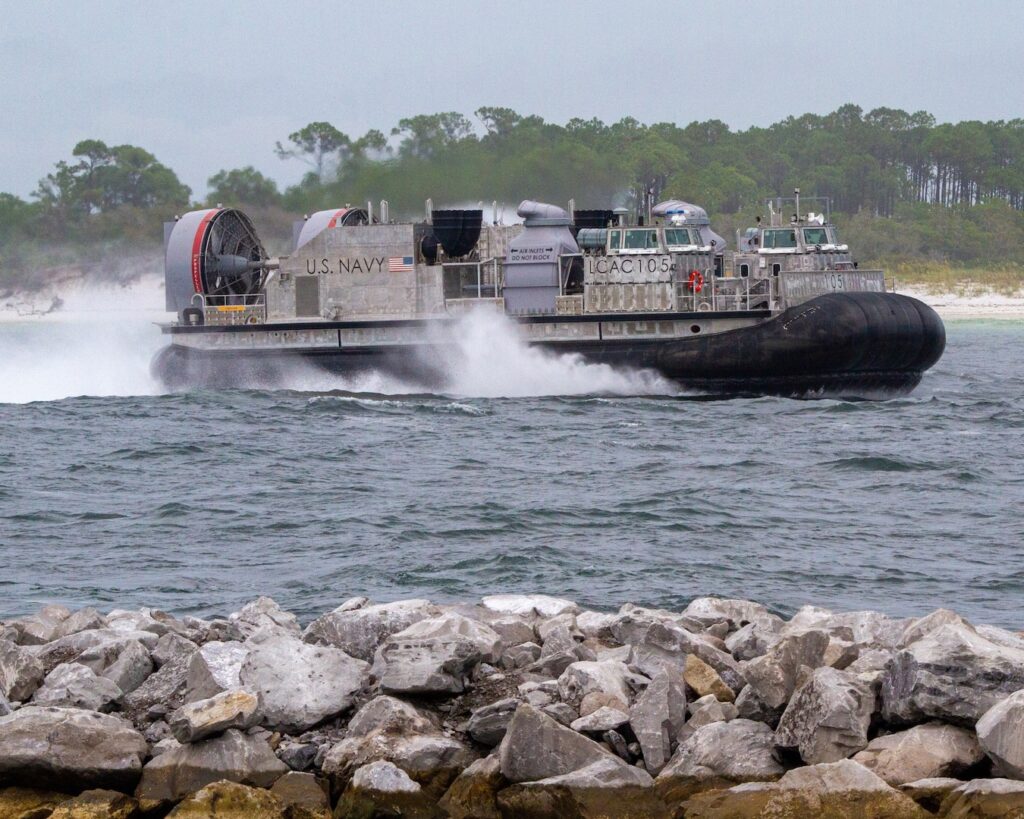
Washington Navy Yard – Ship to Shore Connector (SSC), Landing Craft, Air Cushions (LCAC) 105-107 received a lift of opportunity (LOO) aboard USS Gunston Hall (LSD 44), on July 14.

LCACs 105-107 have been at Naval Surface Warfare Center Panama City Division for post-delivery test and trials following their delivery to the Navy by Textron Systems.

The leadership on the USS Gunston Hall worked with Program Executive Office (PEO) Ships, Naval Surface Warfare Center Panama City Division, and Assault Craft Unit FOUR (ACU 4) as LCACs 105-107 entered the well deck for transport.

“SSC LCACs are in serial production and actively providing much-needed agility and speed to our fleet,” said Capt. Jason Grabelle, program manager, Amphibious Assault and Connectors Programs, PEO Ships. “The flexibility of LCACs, combined with their technology, provide our Navy and Marine Corps team with capability for today and the future fight.”

Later this month, the Gunston Hall team will offload these three crafts to their new home at ACU 4 in Little Creek, Virginia. ACU 4 is the parent unit for LCACs on the east coast. LCACs 101-104 arrived at ACU 4 in February 2022.

SSC LCACs are built with configurations, dimensions, and clearances similar to the legacy LCACs they replace – ensuring that this latest air cushion vehicle is fully compatible with existing, well deck-equipped amphibious ships, the Expeditionary Sea Base, and the Expeditionary Transfer Dock. LCACs are capable of carrying a 74-ton payload. They primarily transport weapon systems, equipment, cargo, and assault element personnel through a wide range of conditions, including over-the-beach.

As one of the Defense Department’s largest acquisition organizations, PEO Ships is responsible for executing the development and procurement of all destroyers, amphibious ships, special mission and support ships, boats, and craft.