Keel Authenticated for Future USS Pittsburgh 
Release from Naval Sea Systems Command 

***** 

By Team Ships Public Affairs 

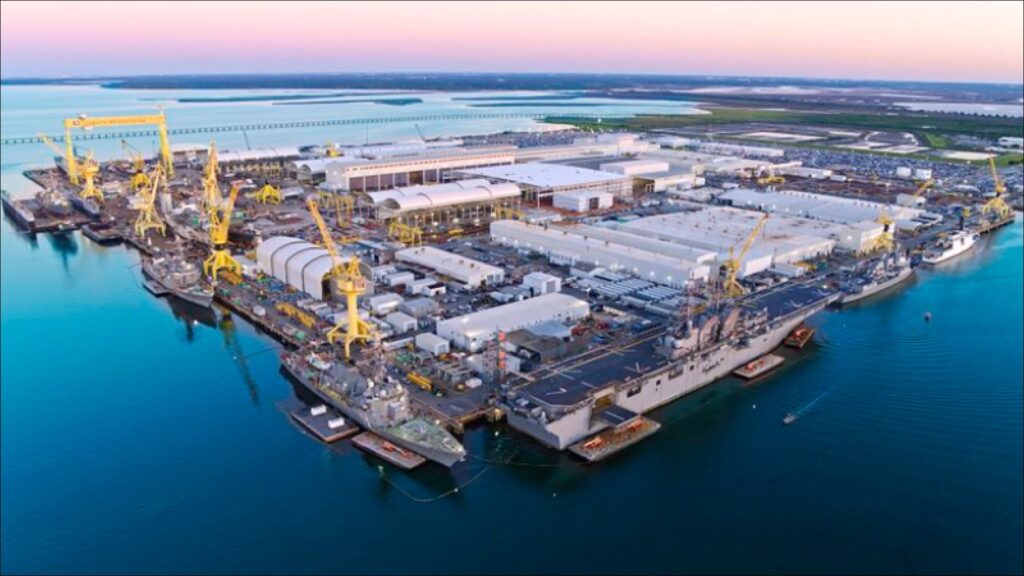
Pascagoula, MS – The keel for the future USS Pittsburgh (LPD 31), a San Antonio-class amphibious transport dock, was ceremonially laid at Huntington Ingalls Industries’ Ingalls Shipbuilding division, June 2. 

The ship is the fifth Navy vessel to be named for the city of Pittsburgh, Pennsylvania and its surrounding region, which play a central role in our national defense infrastructure. The most recent USS Pittsburgh (SSN 720) was a Los Angeles-class submarine, which served the Navy from December 1984 to August 2019. 

The contemporary keel-laying ceremony represents the joining together of a ship’s major modular components at the land level, and is a significant milestone in ship production. The keel is authenticated with the ship sponsors’ initials etched into a ceremonial keel plate that is later incorporated into the ship. The LPD 31 sponsor is Mrs. Nancy Urban. The speaker at the keel laying was Rear Adm. Tom Anderson, Program Executive Officer, Ships. 

“Shipbuilding is a team sport and is one of the most technically complex and challenging things we do in the defense industrial base. I would like to acknowledge the professionalism, skill and perseverance of the HII shipbuilders,” said Anderson. “Thank you for spending yourselves in the worthy cause of bringing the future USS Pittsburgh into being.” 

The San Antonio class is designed to support embarking, transporting, and landing Marines and their equipment by conventional or air-cushioned landing craft. The ship’s capabilities are further enhanced by its flight deck and hangar, enabling the ship to operate a variety of Marine Corps helicopters and the Osprey tilt-rotor aircraft (MV-22). Because of the ships’ inherent capabilities, they are able to support a variety of amphibious assault, special operations, expeditionary warfare, or disaster relief missions, operating independently or as part of amphibious readiness groups, expeditionary strike groups, or joint task forces. 

“The future USS Pittsburgh’s keel laying is a momentous occasion and the Navy and its industry partners look forward to working together during the construction process,” said Capt. Cedric McNeal, program manager, Amphibious Warfare Program Office, Program Executive Office (PEO) Ships. “Ultimately, LPD Flight II ships will provide capability and power projection to support a myriad of employment scenarios as a key component of the Amphibious Force structure for decades to come.” 

Ingalls Shipbuilding division is also currently in production on the future USS Richard S. McCool Jr. (LPD 29) and the future USS Harrisburg (LPD 30). 

As one of the Defense Department’s largest acquisition organizations, PEO Ships is responsible for executing the development and procurement of all destroyers, amphibious ships, sealift ships, support ships, boats and craft. 


TEXTRON SYSTEMS AND ANDURIL INDUSTRIES COMPLETE SUCCESSFUL UNCREWED-UNCREWED TEAMING DEMONSTRATION

Release from Textron Systems

***** 

June 01, 2023 

TEXTRON SYSTEMS AND ANDURIL INDUSTRIES DEMONSTRATE INTEROPERABILITY OF AEROSONDE® UAS AND LATTICE FOR MISSION AUTONOMY SOFTWARE 

Hunt Valley, Maryland and Irvine, California, JUNE 1, 2023 – Textron Systems Corporation, a Textron Inc. (NYSE:TXT) company, and Anduril Industries, a defense technology company, completed a successful demonstration of a Textron Systems Aerosonde® Hybrid Quad (HQ) UAS operated with multiple payloads onboard to simulate and geolocate threat emitters. 

During the demonstration, an operator conducted missions using Anduril’s Lattice for Mission Autonomy to command and control multiple first and third-party UAS with mixed sensor payloads and capabilities including one Textron Systems’ Aerosonde HQ UAS and three variants of from Anduril’s ALTIUS-600 Launched Effects family loitering munitions to demonstrate an autonomous Suppression/Destruction of Enemy Air Defenses (SEAD/DEAD) mission in support of an Army Aviation Air Assault mission. Textron Systems and Anduril integrated multiple sensors, platforms and networks across teams of manned and unmanned systems, molding together hardware and software across domains. 

The Aerosonde HQ has vertical takeoff and landing (VTOL) capability and performs as a modular workhorse for land and sea-based intelligence, surveillance and reconnaissance (ISR) missions. The aircraft has mission-tailorable agility that addresses the need for increased capability, lethality and survivability. Aerosonde has been expanding into the maritime domain, providing real-time situational awareness for surface combatants internationally. 

“Building off the technology that we demonstrated last year at the U.S. Army’s Cyber Quest and Project Convergence exercises, this is the latest exercise to show our cross-domain interoperability and how easily our systems can integrate with others to meet our user’s requirements,” said Wayne Prender, Senior Vice President of Air Systems. “This exercise with Anduril allowed us to showcase how our capabilities are directly applicable to next-generation Army programs like FTUAS, SCI and Launched Effects.” 

Anduril’s Lattice for Mission Autonomy is a hardware-agnostic end-to-end software platform that enables teams of robotic assets to work together under human supervision to dynamically perform complex missions in any domain. Lattice for Mission Autonomy performs the core functions that are essential for mission planning and execution—including autonomous piloting, the ability to sense and make sense of the battlespace, identification of threats and objects of interest, managing signature and communications to enhance survivability, orchestrating multi-asset maneuvers, and synchronizing the delivery of effects. The software platform is built with an open and extensible architecture enabling the integration and interoperability of third-party hardware and software, like the Aerosonde HQ UAS. 

“When you view the pace of technology development through a software lens, you approach the problem differently,” said Andrew Carter of Anduril. “Modern software platforms can allow you to iterate much faster and focus on bringing an ecosystem of technologies, behaviors, and networks together to accomplish a mission outcome. Anduril and Textron Systems were able to integrate, test, and execute in 15 weeks, highlighting the modular open systems architecture of Lattice for Mission Autonomy and the Textron Systems Aerosonde HQ platform.” 


U.S., Philippine, Japan Coast Guards to conduct trilateral engagements

RELEASE DATE:  01JUN  

Release from U.S. Coast Guard Pacific Area
 

***** 

HEADLINE: U.S., Philippine, Japan Coast Guards to conduct trilateral engagements  


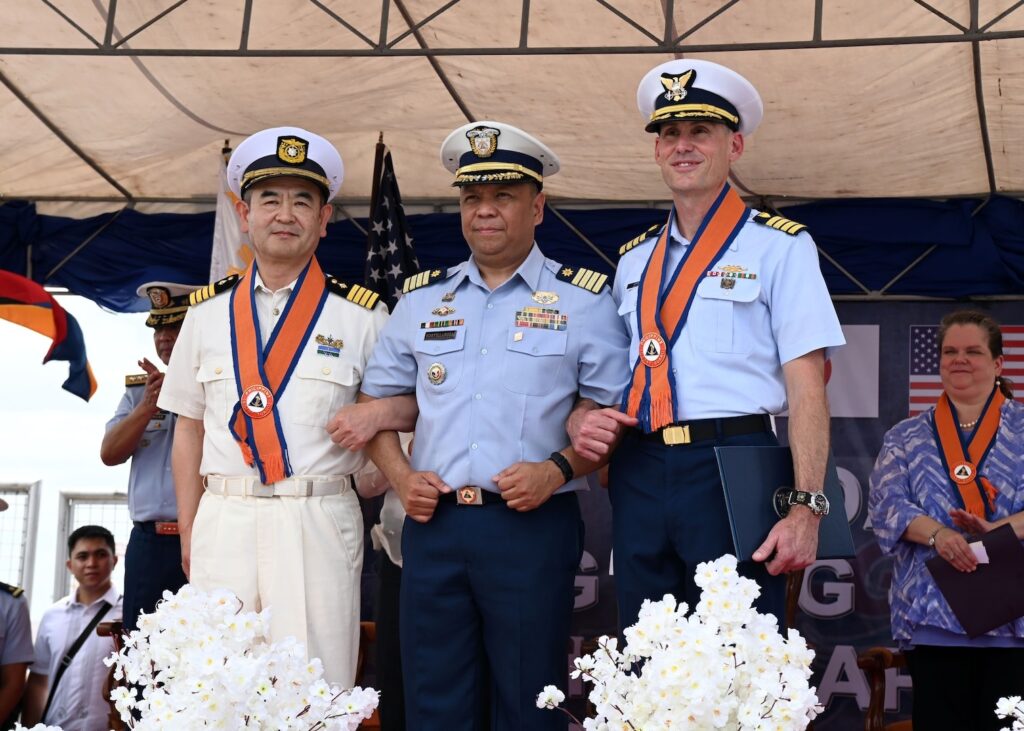
MANILA, Philippines — The U.S. Coast Guard Cutter Stratton (WMSL 752) and crew arrived in Manila on Thursday to conduct professional exchanges and joint operations with members of the Philippine and Japan Coast Guards during Stratton’s months-long Indo-Pacific deployment. 
 
Members from the three Coast Guards will engage in the first ever group of trilateral activities at sea and in port during a multi-day visit building upon enduring partnerships between the nations.  
 
“We’re eager to join the Philippine and Japan Coast Guards and participate in meaningful engagements with our allies and partners both in port and at sea,” said U.S. Coast Guard Capt. Brian Krautler, Stratton’s commanding officer. “This first trilateral engagement between the Coast Guards of these nations will provide invaluable opportunities to strengthen global maritime governance though professional exchanges and combined operations. Together we’ll demonstrate professional, rules-based standards of maritime operations with our steadfast partners to ensure a free and open Indo-Pacific.” 
 
Operating under the tactical control of Commander, U.S. 7th Fleet, Stratton’s crew plans to engage in professional and subject matter expert exchanges with partners and allies throughout the region. 
  
The U.S. Coast Guard’s steadfast partnerships and presence in the Indo-Pacific have increased in recent years. Stratton’s current Indo-Pacific patrol is the cutter’s second patrol in the region and one of seven national security cutter deployments to the Indo-Pacific since 2019.  
  
The Coast Guard Cutter Midgett (WMSL 757) conducted an at-sea search-and-rescue exercise with the Philippine Coast Guard following a port call to Manila in 2022. Midgett’s crew conducted professional engagements and subject matter expert exchanges between the two services during the multi-day port visit.  
  
The Coast Guard Cutter Kimball (WMSL 756) conducted combined operations and search-and-rescue exercises with the Japan Coast Guard in Kagoshima, Japan during their Western Pacific patrol in February in support of Operation Solid Alliance for Peace and Prosperity with Humanity and Integrity on the Rule of law-based Engagement (SAPPHIRE). SAPPHIRE is a joint agreement between the U.S. and Japan Coast Guards signed in 2022 for enhancing cooperation between the two sea services. 
  
The Coast Guard provides expertise in all aspects of maritime governance, within the mission sets of: search and rescue; illegal, unreported and unregulated fishing; maritime environmental response; maritime security; maritime domain awareness; maritime aviation operations; and humanitarian assistance and disaster relief.  
  
As both a federal law enforcement agency and a branch of the armed forces, the Coast Guard is uniquely positioned to conduct security cooperation operations in support of combatant commanders. The service routinely provides forces in joint military operations worldwide, including the deployment of cutters, boats, aircraft and deployable specialized forces.  
 
Commissioned in 2012, Stratton is one of four Coast Guard legend-class national security cutters homeported in Alameda, California. National security cutters are 418-feet long, 54-feet wide, and have a 4,600 long-ton displacement. They have a top speed in excess of 28 knots, a range of 12,000 nautical miles, endurance of up to 90 days and can hold a crew of up to 170.  
 
National security cutters feature advanced command and control capabilities, aviation support facilities, stern cutter boat launch and increased endurance for long-range patrols to disrupt threats to national security further offshore. 
 
U.S. Coast Guard Pacific Area is responsible for U. S. Coast Guard operations spanning across six of the seven continents, 71 countries and more than 74 million square miles of ocean. It reaches from the shores of the West Coast of the United States to the Indo-Pacific, Eastern Pacific, Arctic and Antarctic. Pacific Area strives to integrate capabilities with partners to ensure collaboration and unity of effort throughout the Pacific. 


Kraken Robotics Announces $9.5 Million Contract with the Navy of a Large Asia Pacific Country

Release from Kraken Robotics 

************** 

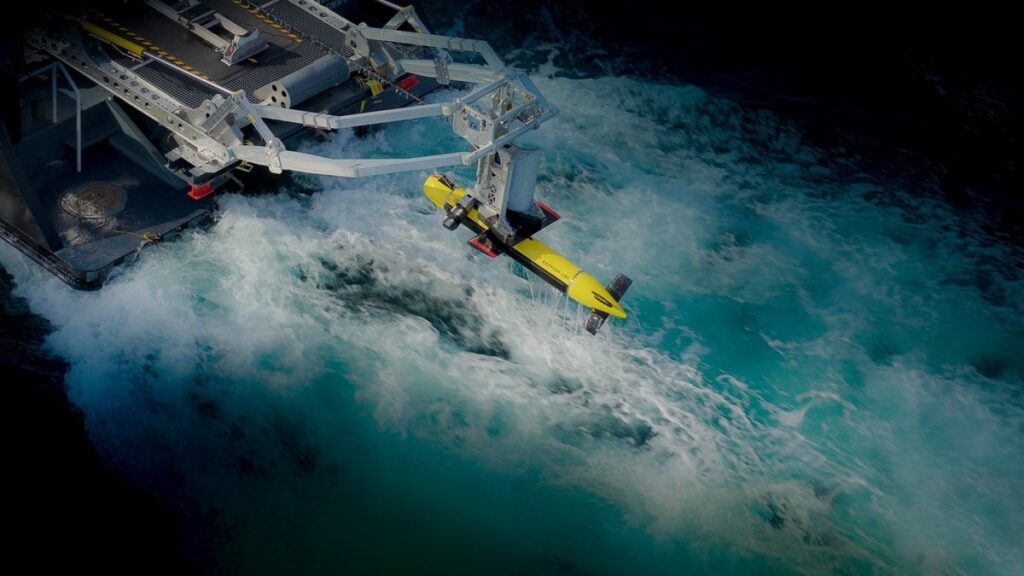
ST. JOHN’S, NEWFOUNDLAND, May 31, 2023 /GLOBE NEWSWIRE/ — Kraken Robotics Inc. (TSX-V: PNG, OTCQB: KRKNF) announces a $9.5 million contract to supply high-resolution seabed mapping sonar equipment to a navy in Asia-Pacific. The customer cannot be named at this time. Under the scope of the contract, Kraken will deliver its KATFISH™ high-speed minehunting solution. The contract also includes a variety of support and sustainment options, including training, spares and operational support. 

Under the acquisition contract, Kraken will deliver its KATFISH towed Synthetic Aperture Sonar, Tentacle® Winch and Autonomous Launch and Recovery System (ALARS) in Q2, 2023. Kraken’s equipment will be integrated onboard a vessel of opportunity selected by the customer. Continuing to build off successful KATFISH deliveries with various NATO navies, this represents Kraken’s first KATFISH system sale in the Asia-Pacific region. 

This contract follows the results of a successful in-country demonstration of KATFISH™ for the customer in Q1 of this year. Kraken’s team worked in concert with a local survey company to complete a 200 km seabed survey that provided real-time ultra- high-resolution imagery and bathymetry of the seafloor along coastal waters. 

Kraken is seeing continued opportunities for growth in all regions of the world as several trends are driving demand for Kraken’s synthetic aperture sonar technology. These include: 

  • A heightened focus on maritime security and protection of subsea infrastructure. 
  • An industry upgrade cycle and a gradual shift to smaller unmanned surface vessels for mine hunting. There are over 300 manned mine hunting vessels that are more than 20 years old and need to be upgraded over the next 5-10 years. Many of these will be replaced with smaller, unmanned vessels. 

  • Strong growth in the commercial market from growing requirements for high resolution data for seabed surveys and subsea asset inspection in the offshore oil and gas and offshore wind sectors. 


ABOUT KATFISH 

The KATFISH is a high-speed seabed survey system providing ultra-high resolution seabed imagery and bathymetry for defense and commercial customers. The acoustic imagery and bathymetry collected by KATFISH systems provides customers with actionable intelligence about subsea assets and infrastructure such as subsea pipelines and fiber optic cables, as well as important hydrographic information about the safety of key transit routes for ocean going assets. Kraken has integrated KATFISH to a variety of manned and unmanned vessels of opportunity, providing both standalone turnkey seabed mapping as well as optional integration to a customer’s combat mission management systems. 


NAVY RELEASES DRAFT ENVIRONMENTAL ASSESSMENT FOR HOMEPORTING OF COLUMBIA CLASS SUBMARINES AT NAVAL SUBMARINE BASE KINGS BAY

Release from U.S. Fleet Forces Command 

***************** 

26 May 2023 

NORFOLK, Va. – The Navy has released a Draft Environmental Assessment (EA) for the homeporting of the Columbia Class submarines at Naval Submarine Base (NSB) Kings Bay. 
  
The Navy proposes to establish facilities and functions at NSB Kings Bay to support the homeporting of Columbia Class submarines as replacements for the retiring Ohio Class submarines currently homeported at NSB Kings Bay. Under the Proposed Action, the Navy would construct eight facilities, modify five facilities, and demolish three facilities across three locations on NSB Kings Bay. Facility changes and development activities would be phased over a period of five years and completed coincident to the first Columbia Class submarines in 2028. The Proposed Action does not modify any existing dry-docks or conduct any in-water activity. 
  
During the 2028 – 2042 transition period from the Ohio Class to the Columbia Class and at completion, the Columbia Class (SSBNs) will be phased in as the Ohio Class are phased out, and thus total numbers of submarines homeported at NSB Kings Bay during this time will not exceed the number of Ohio Class submarines currently homeported at the base. 
  
The personnel numbers associated with the Columbia Class submarines are expected to be comparable to those associated with the Ohio Class submarines. Personnel numbers are also not anticipated to increase. Therefore, the Proposed Action will not increase the number of personnel employed at NSB Kings Bay, although an increase in temporary workers will result during the demolition, modification, and construction of 16 facilities and various functions scheduled for completion in 2028. 
  
This Environmental Assessment evaluates the potential environmental impacts associated with the Proposed Action alternative and the No Action Alternative to the following resource areas: air quality, water resources, geological resources, cultural resources, biological resources, utilities and infrastructure, public health and safety, and hazardous materials and wastes. 
  
The Proposed Action is needed because the Ohio Class SSBNs are reaching the end of their service lives and need to be replaced before degrading to unacceptable conditions. Even with additional maintenance, these submarines would continue to suffer from reduced reliability and increased costs associated with the obsolescence of legacy Ohio system components. 
  
The Draft EA is available for review at Www.Nepa.Navy.Mil/columbia-class. The Navy has prepared this Draft Environmental Assessment (EA) to inform the public of the Proposed Action and to allow the opportunity for public review and comment. The Draft EA will be released for public comment for 30 days.  The Navy invites public comments on the Draft EA, which will help the Navy arrive at the best possible informed decision about the proposal. Comments may be submitted during the public comment period from May 26 through June 25, and be postmarked no later than June 25 to ensure consideration in the Final Environmental Assessment. Written comments may be submitted on the website, or mailed to: ATTN: Ms. Sara Goodwin, code: EV22.SG, 6506 Hampton Blvd, Norfolk, VA 23508-1212. 


Northrop Grumman Rapidly Prepares for Next-Generation Relay Ground Stations in the Pacific Region

Release from Northrop Grumman

*********** 

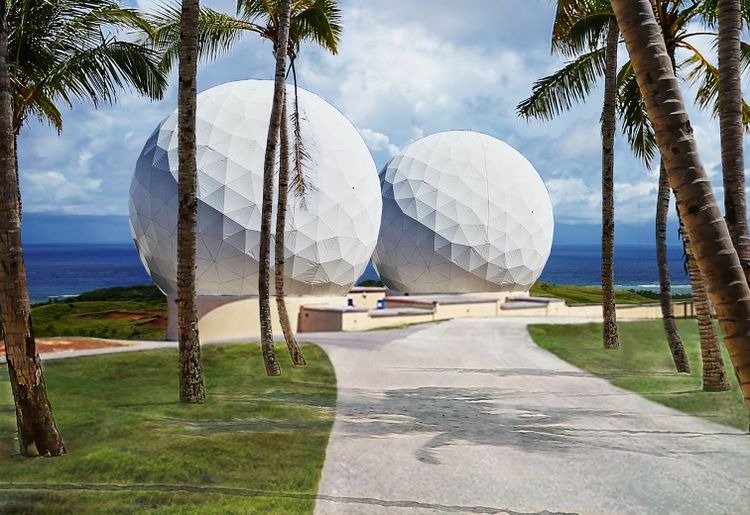
BOULDER, Colo. – June 1, 2023 – Northrop Grumman Corporation (NYSE: NOC) recently completed a successful preliminary design review (PDR) of Relay Ground Station-Asia (RGS-A) for the U.S. Naval Information Warfare Center (NIWC) Pacific. 

  • RGS-A will connect critical legacy and next-generation satellites and end users. 
  • The successful PDR confirms the company is on track to transform the existing missile-warning system. 
  • The review was completed a month ahead of schedule, demonstrating the company’s ability to rapidly meet changing customer requirements. 

Expert: 

Aaron Dann, vice president, strategic force programs, Northrop Grumman: “The preliminary design review exceeded our customers’ expectations and is the next step in delivering much-needed new capabilities to the Pacific region. Our advanced technologies will deliver what is needed to support missile-warning and missile-tracking satellites that protect our nation and its allies.” 

Details: 

The U.S. Space Force is working to transform the existing missile-warning system with the Future Operationally Resilient Ground Evolution (FORGE) system. A cornerstone of the FORGE architecture includes developing relay ground stations capable of supporting existing and new satellite constellations with the ability to handle changes in bandwidth and availability. 

Northrop Grumman was awarded a $99.6 million five-year contract from NIWC Pacific last year to design, develop, integrate, test and deliver the relay ground station. The majority of the work will take place at Northrop Grumman’s campus in Boulder, Colorado. 

NIWC Pacific will develop six antennas for RGS-A to enable the Space Systems Command (SSC) next generation Space-Based Infrared System (SBIRS) ground system which keeps legacy satellites in geosynchronous orbit. RGS-A will be deployed to Guam and is on schedule to be installed by late 2025. 

Northrop Grumman is a leading global aerospace and defense technology company. Our pioneering solutions equip our customers with the capabilities they need to connect and protect the world, and push the boundaries of human exploration across the universe. Driven by a shared purpose to solve our customers’ toughest problems, our 95,000 employees define possible every day.   


Navy F-5 Jet Crashes Near Key West

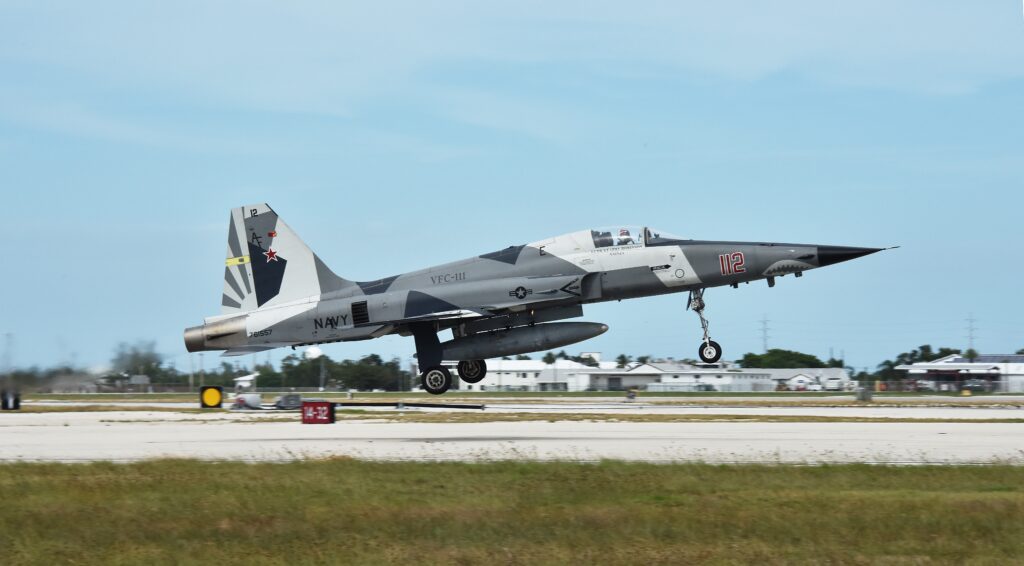
KEY WEST, Fla. (Nov. 6, 2020) An F-5N Tiger-II from the “Sun Downers” of Fighter Squadron Composite (VFC) 111 takes off from Naval Air Station Key West’s Boca Chica Field during the last day of training before the potential bad weather resulting from Tropical Storm Eta. Naval Air Station Key West is the state-of-the-art facility for combat fighter aircraft of all military services, provides world-class pierside support to U.S. and foreign naval vessels, and is the premier training center for surface and subsurface military operations. (U.S. Navy photo by Danette Baso Silvers)

Release from NAS Key West

************************** 

ARLINGTON, Va. — A U.S. Navy F-5N Tiger II jet crashed near Key West. Florida, on May 31, the Navy said. 

Naval Air Station (NAS) Key West said in a Facebook post that the aircraft’s pilot “ejected from an F-5N aircraft approximately 25 miles from Boca Chica Field at approximately 9:20 a.m. today. A NAS Key West Search and Rescue crew launched an MH-60S helicopter and rescued the pilot, who is being transported to a Miami-area hospital for further evaluation.” 

The pilot and F-5N were assigned to Fighter Squadron Composite (VFC) 111, which is a reserve adversary squadron based at NAS Key West. Adversary squadrons provide training in combating enemy aircraft to fleet units. The Navy and Marine Corps have four such squadrons on strength.  

The Navy is investigating the cause of the mishap. 


Smith Nominated as Next Commandant of the Marine Corps

*********** 

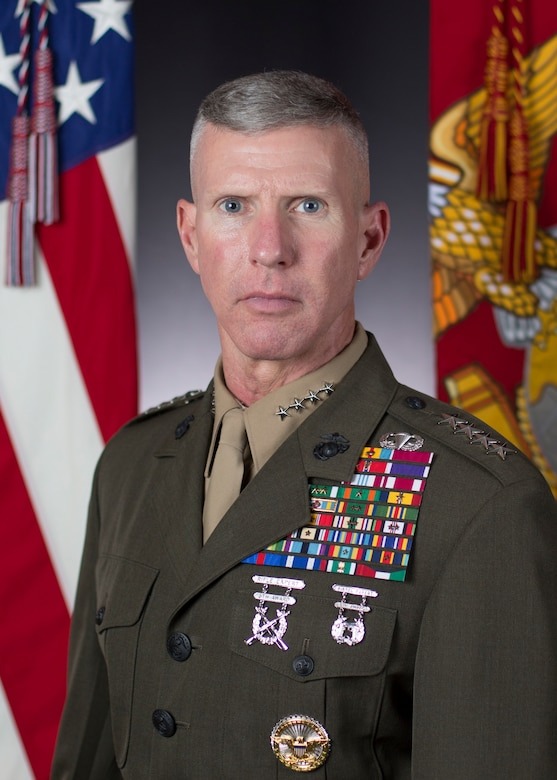
ARLINGTON, Va. — President Joe Biden has nominated Marine Corps General Eric M. Smith as the next commandant of the U.S. Marine Corps, Defense Secretary of Defense Lloyd J. Austin III said in a May 31 release.  

Smith currently is serving as the 36th assistant commandant of the Marine Corps. If confirmed by the Senate, Smith would be come the 38th commandant.  

Smith, a combat veteran of the wars in Iraq and Afghanistan, has served in senior positions that developed the doctrine of the Marine Corps and has been instrumental in implementing Commandant General David H. Berger’s Force Design 2030 concept, a plan to re-design the Corps to meet the challenges of great power competition and higher-end warfare.   

Below is an excerpt from Smith’s official biography posted on the Marine Corps’ website: 

“Born in Kansas City, Missouri, and raised in Plano, Texas, General Smith graduated from Texas A&M University and was commissioned in 1987. He has commanded at every level, including Weapons Company, 2nd Battalion, 2nd Marine Regiment during Operation Assured Response in Monrovia, Liberia; 1st Battalion, 5th Marine Regiment during Operation Iraqi Freedom; and 8th Marine Regiment/ Regimental Combat Team 8 during Operation Enduring Freedom. He also served in Caracas, Venezuela as part of the U.S. Military Group. 

As a General Officer, he commanded U.S. Marine Corps Forces Southern Command, 1st Marine Division, III Marine Expeditionary Force, and Marine Corps Combat Development Command. 

General Smith’s staff assignments as a General Officer include serving as the Director of Capability Development Directorate, Combat Development and Integration; Senior Military Assistant to both the Deputy Secretary of Defense and Secretary of Defense; and Deputy Commandant for Combat Development and Integration.” 


U.S. Marine Corps deactivates 1st Battalion, 12th Marines

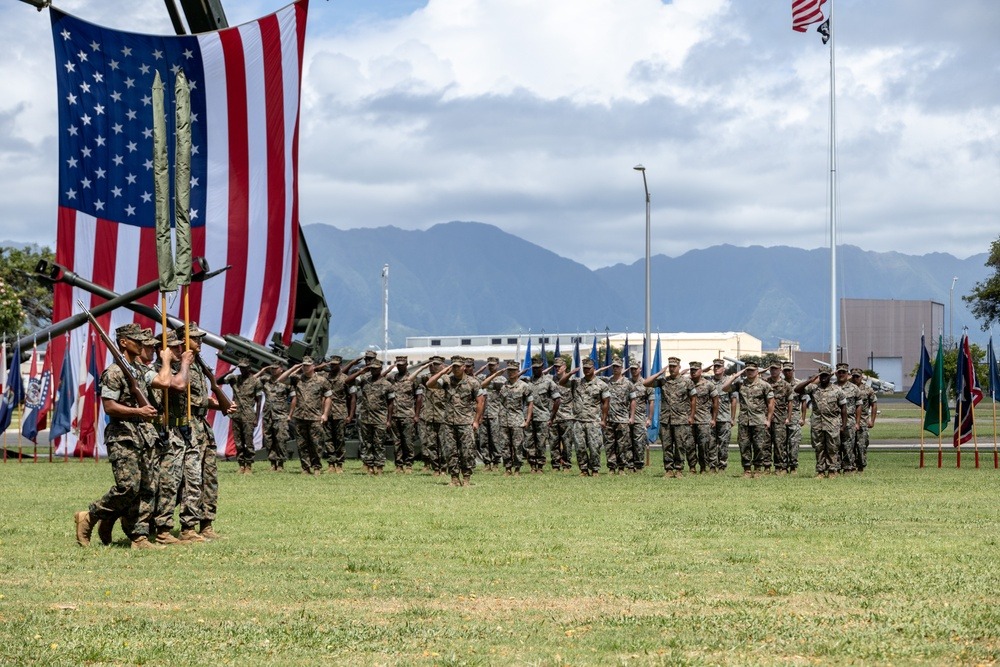
Photo By Sgt. Israel Chincio | U.S. Marines with 1st Battalion, 12th Marines, 3d Marine Division, participate in the unit’s deactivation ceremony on Marine Corps Base Hawaii, May 26, 2023. The deactivation is in accordance with Force Design 2030’s modernization efforts. The battalion has played a valuable role in setting conditions for the 3d Marine Littoral Regiment, and future MLRs, to provide combat ready and lethal forces in the Indo-Pacific. 3d MLR and 12th Marines, which is scheduled to transition to an MLR in 2025, will provide ready and capable stand-in forces to the first island chain, bolstering the United States Indo-Pacific Command’s ability to support deterrence efforts and respond to potential crises with allies and partners. (U.S. Marine Corps photo by Sgt. Israel Chincio)  see less | View Image Page

Release from 3rd Marine Division 

************ 

MARINE CORPS BASE HAWAII, HI, UNITED STATES 

05.26.2023 

Story by 1st Lt. Anne Pentaleri 

3rd Marine Division    

MARINE CORPS BASE HAWAII – 1st Battalion, 12th Marines cased its colors during the unit’s deactivation ceremony at Marine Corps Base Hawaii, May 26, 2023. 
 
1st Battalion, 12th Marines activated on Sept. 1, 1942, as 4th Battalion, 12th Marines at Camp Elliot, California, as an artillery regiment in support of 3d Marine Division. After participating in a number of World War II campaigns, to include battles at Bougainville, Guam, and Iwo Jima, 1/12 underwent a brief period of deactivation before reactivating in support of the Far East Command’s maintenance of amphibious readiness capabilities during the Korean War. 
 
The Marines of 1/12 saw the Vietnam War unfold from April 1965 to September 1969 while operating from their positions at Phu Bai, Da Nang, Cam Lo, Khe Sanh, and Camp Carroll. As U.S. forces kicked off the major raid known as Operation Thor on June 1, 1968, 1/12 enabled the regaining of control of the Demilitarized Zone through the provision of fire support and conduct of artillery raids. 
 
In June 1971, at the conclusion of the Vietnam War, the Marines of 1/12 reported to Marine Corps Air Station Kaneohe Bay, Hawaii, where they have since been permanently stationed. In September 1994, after the battalion’s successful participation in operations Desert Shield and Desert Storm, 1/12 was reassigned to the 3d Marine Division as a part of III Marine Expeditionary Force. From August 2004 to November 2011, 1/12 participated in the Global War on Terror, deploying in support of operations Iraqi Freedom and Enduring Freedom. One such deployment to Al Anbar Province, Iraq, was under the command of now Maj. Gen. Stephen Liszewski, who served as 1/12’s battalion commander from 2006 to 2008, and is now the commanding general of Marine Corps Installations Pacific. 
 
In recent years, 1/12 has been at the forefront of institutional change, leading the practical application of expeditionary advanced basing operations, experimentation with foraging concepts, and the employment of next-generation weapons systems. Most notably, operating in support of Large Scale Exercise 21, the battalion successfully employed the soon-to-be fielded Navy Marine Expeditionary Ship Interdiction System to fire the Naval Strike Missile aboard Pacific Missile Range Facility Barking Sands on Kauai, Hawaii, on Aug. 5, 2021. The missiles traveled over 100 nautical miles before reaching their target – a simulated adversary ship played by the ex-USS Ingraham, a retired Oliver Hazard Perry-class guided missile frigate. Similar operational mission profiles will allow Marine artillery to deny key maritime terrain and facilitate joint force maneuver. 
 
“1st Battalion, 12th Marines spent the last two years at the forefront of force design and joint force integration,” said Lt. Col. Joseph Gill, commanding officer, 1st Battalion, 12th Marines. “We have made tremendous progress in the development of tactics, techniques, and procedures and set conditions for the fielding of the Navy Marine Corps Expeditionary Ship Interdiction System. The battalion’s efforts have increased the lethality of the 3d Marine Division and influenced the way we’ll fight for the foreseeable future.” 
 
On May 26, 2023, the U.S. Marine Corps deactivated 1/12. The change took place in accordance with Force Design 2030’s modernization efforts. The battalion has played a valuable role in setting conditions for the 3d Marine Littoral Regiment, and future MLRs, to provide combat ready and lethal forces in the Indo-Pacific. 3d MLR and 12th Marines, which is scheduled to transition to an MLR in 2025, will provide ready and capable stand-in forces to the first island chain, bolstering the United States Indo-Pacific Command’s ability to support deterrence efforts and respond to potential crises with allies and partners. 
 
“Deactivating a battalion of this nature and ensuring the deliberate transfer of personnel, facilities, and equipment is a tremendous undertaking,” said Maj. Ryan Capdepon, the executive officer of 1st Battalion, 12th Marines. “In true 1/12 fashion, our Marines and Sailors displayed professionalism, flexibility, and dedication in tackling the associated tasks. Concurrently, we continued to support numerous operational requirements and remain postured for potential contingency scenarios. I am proud of our team and the job they have done. Each one of them will be an asset to their next command.” 


Fairbanks Morse Defense signs exclusive agreement with pureLiFi to deploy secure LiFi technology

Release from Fairbanks Morse Defense 

************ 

BELOIT, Wis. and EDINBURGH, Scotland – May 31, 2023 – Fairbanks Morse Defense (FMD), a portfolio company of Arcline Investment Management, is advancing its cutting-edge technology portfolio by signing a three-year agreement with UK-based pureLiFi, a world leader in the development of LiFi, a secure, light-based wireless connectivity technology. The agreement makes FMD the exclusive reseller of the company’s technology and products to FM OnBoard maritime defense customers in the United States, providing those users with access to secure, reliable data transmission capabilities while at sea.   

“The ability to have secure connectivity while at sea is a mission-critical capability for our maritime defense customers,” said George Whittier, Chief Executive Officer of Fairbanks Morse Defense. “pureLiFi’s technology pairs perfectly with FM OnBoard, enabling technicians to securely communicate from the engine room with live, remote technicians who can help troubleshoot any issues.” 

LiFi is a mobile wireless technology that uses light rather than radio frequencies to transmit data. The company’s Kitefin™ LiFi system is the first mission deployable LiFi system designed specifically for the defense industry and builds on the inherent physical security of containable light communications to ensure that data is only transmitted to the right people in the right place. LiFi is not vulnerable to eavesdropping or jamming attempts. The system can be easily set up and deployed in a matter of minutes and enables highly secure connectivity in places that are traditionally considered to be impractical or inaccessible.   

“Fairbanks Morse Defense is quickly becoming known for its best-in-class maritime defense technology solutions, and we consider this to be an ideal collaboration for expanding our presence in the US,” said Alistair Banham, pureLiFi CEO. “Our collaboration with FMD represents a significant step towards expanding LiFi technology beyond pureLiFi’s large scale land-based deployments. We look forward to working with FMD to deliver this game-changing LiFi technology to maritime defense customers.”  

Prior to this agreement, pureLiFi worked with FMD through the FM Defense Accelerator. The companies have been leveraging LiFi and FMD’s resources to co-develop and evaluate maritime use cases for LiFi technology.