Boeing and ST Engineering Sign P-8 Sustainment MoU
From left: Torbjorn (Turbo) Sjogren, Vice President and General Manager, Government Services, Boeing Global Services; Sarbjit Singh, President, Defence Aerospace, ST Engineering. (Photo: Boeing)
– Joint effort will identify opportunities to collaborate in systems integration, training, local parts distribution, support and sustainment work for the P-8
SINGAPORE, May 29, 2023—Boeing [NYSE: BA] signed a Memorandum of Understanding (MoU) with ST Engineering to outline potential areas of collaboration in systems integration, training, local parts distribution, support and sustainment work for the P-8A Poseidon.
Boeing and ST Engineering have identified opportunities to collaborate in a number of areas and will explore these in more detail, including jointly developing a P-8 service center in Singapore with the provision of engineers and aircraft maintenance technicians to support maintenance and engineering services.
The P-8A is a long-range, multi-mission aircraft that delivers unmatched antisubmarine warfare, anti-surface warfare, intelligence, surveillance and reconnaissance, and humanitarian assistance and disaster relief capabilities.
The P-8A, a military derivative of the Next-Generation 737-800, combines superior performance and reliability with an advanced mission system that ensures maximum interoperability in the future battle space. With more than 160 aircraft in service, the P-8 has executed more than 600,000 mishap-free flight hours around the globe.
Militaries that operate or have selected the P-8 include the U.S. Navy, the United Kingdom’s Royal Air Force, Royal Australian Air Force, Royal New Zealand Air Force, Indian Navy, Royal Norwegian Air Force, Republic of Korea Navy and German Navy.
World first as UK hosts inaugural AUKUS AI and autonomy trial
Experimental work by Australia, UK and US on detecting and tracking military targets
Vehicles retrained in flight to adapt to changing mission situations
Shared focus on adhering to safe and responsible artificial intelligence activity
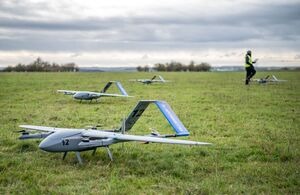
The first AUKUS artificial intelligence (AI) and autonomy trial was held at Upavon in Wiltshire in April, with the aim of rapidly driving these technologies into responsible military use.
The work saw the initial joint deployment of Australian, UK and US AI-enabled assets in a collaborative swarm to detect and track military targets in a representative environment in real time. Accelerating the development of these technologies will have a massive impact on coalition military capability.
The trial, organised by the UK’s Defence Science and Technology Laboratory (Dstl), achieved world firsts, including the live retraining of models in flight and the interchange of AI models between AUKUS nations. The AUKUS collaboration is looking to rapidly drive these technologies into military capabilities.
The AUKUS Advanced Capabilities Pillar, known as Pillar 2, is pursuing a trilateral programme of work on a range of leading-edge technologies and capabilities to promote security and stability in the Indo-Pacific region. Through Pillar 2, Australia, the UK, and the US have collaborated to accelerate collective understanding of AI and autonomy technologies, and how to rapidly field robust, trustworthy AI and autonomy in complex operations, while adhering to the shared values of safe and responsible AI.
Autonomy and AI will transform the way Defence operates. The strategic environment is rapidly evolving, meaning we must adapt our technologies at pace if we are to maintain our operational advantage. By sharing AI – and the underpinning data to enable it – with one another, Australia, UK, and US militaries can access the best AI, reduce duplication of effort, and ensure interoperability.
The event was attended by senior AUKUS Advanced Capabilities pillar leaders – General Rob Magowan (UK), Deputy Chief of the Defence Staff (Financial and Military Capability), Abraham (Abe) Denmark (US), Senior Advisor to the Secretary of Defense for AUKUS, and Hugh Jeffrey (AUS), Deputy Secretary Strategy, Policy, and Industry.
UK Deputy Chief of Defence Staff, Military Capability, Lieutenant General Rob Magowan said:
“This trial demonstrates the military advantage of AUKUS advanced capabilities, as we work in coalition to identify, track and counter potential adversaries from a greater distance and with greater speed. Service personnel, scientists and engineers from our three nations combined to develop and share critical information to enhance commanders’ decision making.
“Accelerating technological advances will deliver the operational advantages necessary to defeat current and future threats across the battlespace. We are committed to collaborating with partners to ensure that we achieve this while also promoting the responsible development and deployment of AI.”
US Senior Advisor to the Secretary of Defense for AUKUS, Abe Denmark said:
“We recognise the immense importance of this collaboration in strengthening our collective national security of our nations. The development and deployment of advanced artificial intelligence technologies have the potential to transform the way we approach defense and security challenges.
“This capability demonstration is truly a shared effort and is thus a critical step in our collective initiative to stay ahead of emerging threats. By pooling our expertise and resources through our AUKUS partnerships, we can ensure that our militaries are equipped with the latest and most effective tools to defend our nations and uphold the principles of freedom and democracy around the world.”
Australian Deputy Secretary, Strategy, Policy and Industry, Hugh Jeffrey said:
“The AUKUS AI and Autonomy trial in Salisbury Plain demonstrated AI algorithms working in a mission-tailored adaptive capability. The AUKUS research and operator teams collaborated to develop, test and evaluate joint machine-learning models, and operate our different national platforms on the battlefield.
“I was impressed to see AI models rapidly updated at the tactical edge to incorporate new targets, which were immediately shared among the three partners to deliver decision advantage and meet changing mission requirements. This cooperation under AUKUS Pillar II will deliver a capability greater than any one country could achieve alone, and this really is the rationale for the AUKUS partnership at work.”
More than 70 military and civilian defence personnel and industry contractors were involved in the exercise in April 2023. The trial utilised a variety of air and ground vehicles to test target identification capability, including: Blue Bear Ghost (UK) and Boeing/Insitu CT220 (AUS) uncrewed aerial vehicles (UAVs), Challenger 2 tank, Warrior armoured vehicle and Viking uncrewed ground vehicle (UGV), along with a commercially hired FV433 Abbot self-propelled gun and former Eastern Bloc BMP OT-90.
The trilateral teams collaborated to develop joint machine-learning (ML) models, apply test and evaluation processes, and fly on different national UAVs. The ML models were quickly updated to include new targets and shared among the coalition and AI models retrained to meet changing mission requirements.
Raytheon Technologies to deliver Full Rate Production for TCTS Increment II Air Combat Training System for U.S. Navy
CEDAR RAPIDS, Iowa, May 25, 2023 /PRNewswire/ — Collins Aerospace, a Raytheon Technologies business (NYSE: RTX) announced today it will deliver on the full rate production contract awarded by the U.S. Navy for Tactical Combat Training System – Increment II (TCTS II), Air Combat Training System (ACMI) for the U.S. Navy. The contract includes both airborne and ground subsystems and will support fielding requirements at various U.S. Navy training ranges.
“TCTS II addresses today’s peer threat, enabling aircrews to train and improve joint tactics, techniques and procedures in an NSA-certified secure environment,” said John Sapp, vice president and general manager, Integrated Solutions for Collins.
Validated flight tests on F/A-18 and EA-18G aircrafts, TCTS II’s long-range, air-to-air and air-to-ground networking capability supported real time data exchanges. The system features an open architecture design, highly encryption capability, computing power, and robust datalink. TCTS II will be the foundation for next-generation training scenarios that will use a combination of live, virtual and constructive entities.
“In our testing, we were able to demonstrate key discriminators of our TCTS II solution including integration into existing infrastructure, tactical intercepts and real-time mission completion notifications,” said Sapp.
TCTS II is planned to replace the U.S. Navy’s legacy ACMI tracking systems with a single system to support training, from tactical aircrew unit level training events to force exercise events, including mobile and fixed locations worldwide.
Developed and built by Collins Aerospace and teammate Leonardo DRS, TCTS II is a scalable and flexible open architecture system that enables highly secure air combat training among 4th and 5th Generation U.S. aircraft, and international aircraft.
Boeing Begins Construction on New Phantom Works Facility
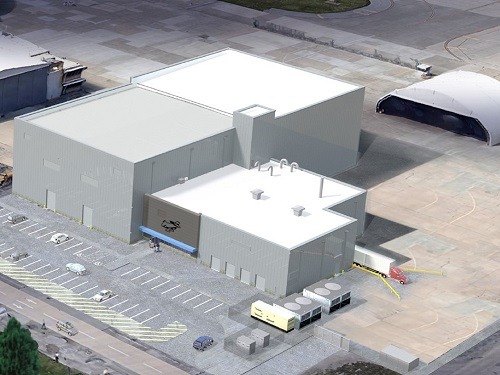
The Boeing Phantom Works’ Advanced Coatings Center in St. Louis will house state-of-the-art, post-assembly phases of future military aircraft production (Boeing artist’s concept).
– The Advanced Coatings Center is the latest factory supporting innovation efforts
– State-of-the-art facility will house critical post-assembly phases of production
– Secure facility is key to defense business modernization and expansion plans
ST. LOUIS, May 26, 2023 — Boeing [NYSE: BA] has begun construction on a new facility to house state-of-the-art, post-assembly phases of future military aircraft production.
The new Advanced Coatings Center will be a secure facility operated by Phantom Works, Boeing Defense, Space & Security’s proprietary research, development and prototyping division. The construction phase of the 47,500 square-foot facility is underway, and the center is expected to be operational in 2025.
“As we pivot toward future programs, Boeing’s defense business is in the midst of one of the most significant investments in new facilities in our history,” said Steve Nordlund, Air Dominance vice president and general manager, and St. Louis senior site executive. “This investment is not only to win new future franchise programs but, more importantly, to enable the United States to outpace increasingly capable and aggressive adversaries. We are revolutionizing how aircraft are designed, built and delivered because the threats demand it,” Nordlund said.
The Advanced Coatings Center is the third new facility revealed as part of Phantom Works’ multi-billion-dollar Production System of the Future effort, enabling Boeing to scale a platform-agnostic, modular and flexible digital production system across future defense programs. Last fall, the company opened the new Advanced Composite Fabrication Center in Mesa, Ariz., and added a new St. Louis-based Lab and Test facility over the winter. Additional new factories supporting various phases of production are planned for the coming years.
“This facility is great news for Missouri and for our nation,” said Missouri Gov. Mike Parson. “With more than 15,000 employees, Boeing is Missouri’s largest manufacturer that helps spur this state’s economic growth every day. This new facility shows our commitment to growth and our investment in the talented workforce.”
HII Redelivers USS George Washington (CVN 73) to U.S. Navy
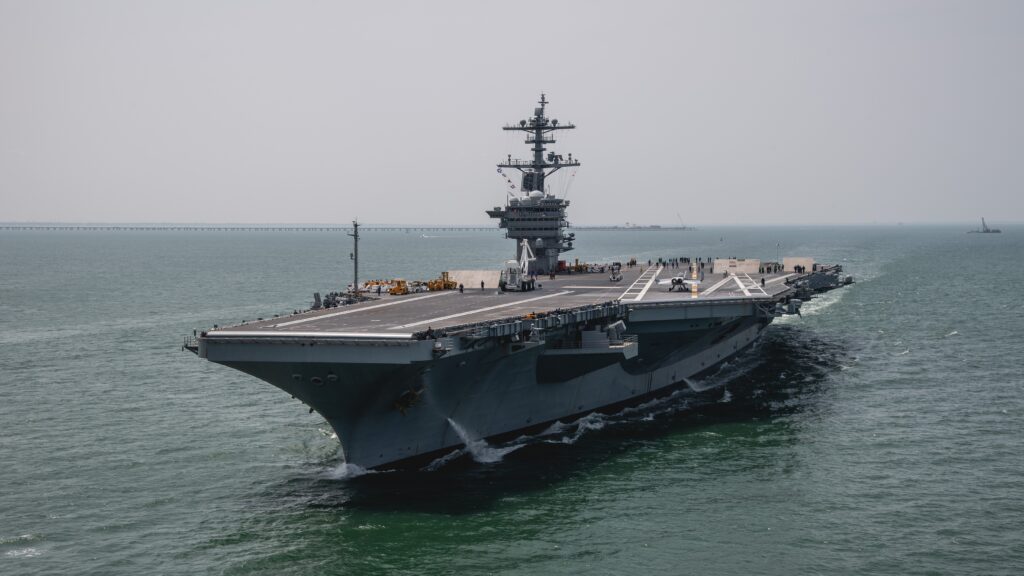
NEWPORT NEWS, Va., May 25, 2023 (GLOBE NEWSWIRE) — HII (NYSE: HII) announced today that its Newport News Shipbuilding division has redelivered the nuclear-powered aircraft carrier USS George Washington (CVN 73) to the U.S. Navy. The redelivery took place after successful sea trials that tested the ship’s systems following its refueling and complex overhaul (RCOH) at NNS.
“Redelivering George Washington to the Navy is the end result of incredible teamwork between our shipbuilders, the CVN 73 crew, our government partners and all of our suppliers,” said Todd West, NNS vice president, in-service aircraft carrier programs. “George Washington has gone through a transformation and now returns to the fleet as a fully recapitalized ship, ready to support any mission and serve our nation for another 25 years.”
Sea trials test the carrier’s systems and operations at sea, including high-speed operations. The trials team, comprising sailors, shipbuilders and government representatives, puts the ship through a series of tests designed to prove system performance and demonstrate all the carrier’s capabilities at sea.
“Getting our warship redelivered and back out to sea to take its place as the premier CVN in the world’s greatest Navy is a direct result of the tenacity and grit displayed by our warfighters,” said Capt. Brent Gaut, Washington‘s commanding officer. “To our incredible Sailors, contractors and shipyard workers: I am proud of you, and I sincerely hope you feel an extreme sense of pride as well, especially in light of our once-in-a-lifetime achievement. You all share an equal part in the legacy of getting our warship back into Navy service at a pivotal moment in our great nation’s history. Our collective intent is to show the world what we can do, and what we must do in support of America’s strategic and operational objectives.”
The RCOH process is performed only once during the ship’s lifetime and involves upgrades to nearly every space and system on the ship. Tanks, the hull, shafting, propellers, rudders, piping, ventilation, electrical, combat and aviation support systems are repaired, upgraded and modernized. Work also includes defueling and refueling the ship’s two nuclear reactors as well as repairs, maintenance, and upgrades to the propulsion plant.
NNS is the only shipyard with the skilled workforce and facilities equipped for this project. USS George Washington is the sixth Nimitz-class carrier to undergo RCOH. The RCOH represents 35 percent of all maintenance and modernization in an aircraft carrier’s service life.
Work continues at NNS on the RCOH for USS John C. Stennis (CVN 74), with steady progress so far this year, including the installation of the main mast.
HII’s Apprentice School at Newport News Shipbuilding Selected for National Apprenticeship Program
NEWPORT NEWS, Va., May 25, 2023 (GLOBE NEWSWIRE) — HII (NYSE: HII) announced today that its Newport News Shipbuilding Apprentice School has been selected for the U.S. Department of Labor’s Apprenticeship Ambassador program.
The program, launched in November 2021, aims to promote and support Registered Apprenticeship opportunities nationwide. This initiative is an effort to modernize, strengthen, diversify and accelerate the use of apprenticeships to advance career pathways and equity in the nation’s economic recovery. The Newport News Shipbuilding Apprentice School is one of 98 organizations selected in the second cohort to serve as an ambassador.
“This recognition is a testament to Newport News Shipbuilding’s commitment to apprenticeships,” said Dr. Latitia McCane, director of education at The Newport News Shipbuilding Apprentice School. “We look forward to learning from others in this space and sharing our best practices nationally as we all work to build our future workforce.”
Funded by HII to train and develop the next generation of shipbuilders, The Newport News Shipbuilding Apprentice School offers four- to eight-year, tuition-free apprenticeships in 19 trades and eight optional advanced programs.
Accredited by the Council for Occupational Education, The Newport News Shipbuilding Apprentice School is certified to offer associate’s degrees of applied science in maritime technology in 26 educational programs. Through partnerships with Virginia Peninsula Community College, Tidewater Community College and Old Dominion University, the Apprentice School’s academic program provides the opportunity to earn associate degrees in business administration, engineering and engineering technology and bachelor’s degrees in mechanical or electrical engineering.
You can learn more about the Department of Labor’s Apprenticeship Ambassador Initiative here.
USS SHOUP Completes First Forward-Deployed Naval Patrol March 2023
USS SHOUP Completes First Forward-Deployed Naval Patrol March 2023
COMBINED FLEET ACTIVITY, Yokosuka – The Arleigh Burke-class guided-missile destroyer USS SHOUP (DDG 86) returned to Combined Fleet Activity Yokosuka, Japan, following the completion of its first Forward-Deployed Naval Forces (FDNF) patrol in the U.S. 7th Fleet (C7F) area of operations, Mar. 23.
SHOUP arrived in Seventh Fleet, Dec. 22′, as the newest FDNF ship under Destroyer Squadron FIFTEEEN to conduct naval operations in the South China Sea in support of U.S. national security.
“I’m extremely excited for SHOUP to join the DESRON 15 and Seventh Fleet Team. We’ve been training for over two years for this opportunity,” said CDR D. R. Tourtelotte, Commanding Officer.
Once SHOUP’s crew had time to acclimate to their new surroundings which included many trips to appreciate what Japan had to offer as their new home. For Her first task in Seventh Fleet, SHOUP joined a U.S.-JMSDF five-ship Surface Action Group for a multiple week-long operations in the Philippine Sea. SHOUP began the patrol just like nothing had changed from previous underways and exercises with the crew’s mindset already established on one goal. Knowing their new role and responsibility. SHOUP’s CMC, CMDCM J. S. Houske expressed urgency through his energetic rendition of the ship’s new command philosophy, “STRENGTH, HONOR, OWNERSHIP, UNITY, PRESERVATION!!!”
Following SHOUP’s underway time of 36 consecutive days out to sea, a port visit was in the plans. Guam was the perfect place to have SHOUP sailors relax as well as replenish much needed stores and supplies to continue to be the most capable destroyer or the “Tip of the Spear” in most cases based out of Yokosuka, Japan. Sailors took advantage of the vast beaches and historical landmarks like Tumon Beach and War in the Pacific Historical Park. SHOUP sailors were in awe of the mesmerizing views displayed at Two Lover’s Point and natural attractions like Pagat Caves.
“The SHOUP team worked extremely hard at sea and accomplished the mission with near-perfection despite a seemingly endless pattern of storms in the Philippine Sea. The port visit in the beautiful island of Guam was a nice change of scenery for the crew. The time in port was used to relax, enjoy the sun, and resupply before setting sail for our homeport of Yokosuka,” comments LCDR T.M. Winters, Executive Officer.
As SHOUP completes its inaugural FDNF patrol, the ship travelled through the Seventh Fleet AOR as it accrued many of accomplishments to be proud of based on the crew’s resiliency and technical prowess. Accomplishments like 750 newly qualified sailors in rating and watch stations, 2 newly appointed LDOs, 1 DESRON SOY, Newly appointed CMDCS Coutcher, 5 Full power runs, over 40 hours combined, 3 newly qualified ESWS Warriors, lastly as a fitting end to help cool down the crew…A successful Ice Cream Social.
“The SHOUP Team had an outstanding first patrol in the Seventh Fleet AOR. I’m very proud of how well this crew performed,” said CDR D. R. Tourtelotte, Commanding Officer.
USS SHOUP, forward-deployed to Yokosuka, Japan operates in support of U.S. national security interests in the C7F area of operations tied to COMBINED FLEET ACTIVITY, Yokosuka. Through it all USS SHOUP proved to be a valuable asset in Seventh fleet to its new DESRON and allies alike.
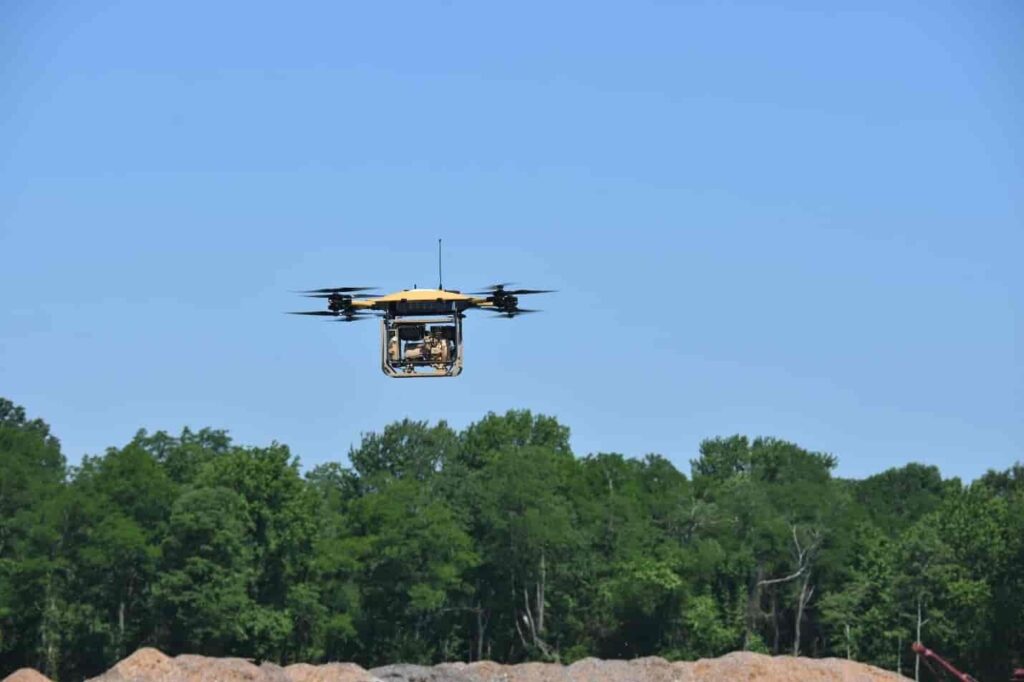
uAvionix RT-2087/ZPX Miniaturized Transponder Selected for Tactical Resupply Unmanned Aircraft Systems
Bigfork, MT 24 May 2023 – uAvionix Corporation defense customer, SURVICE Engineering of Belcamp, MD has been awarded a production contract from the Navy and Marine Corps Small Tactical Aircraft Systems Program Office. The production efforts will successfully equip U.S. warfighters using Tactical Resupply Unmanned Aircraft Systems (TRUAS) with innovative multirotor drones that augment logistical operations at the forward edge of the battlefield. uAvionix’s AIMS-certified RT-2087/ZPX Combat ID and Air Traffic Control surveillance system has been selected for inclusion in the production effort to satisfy the TRUAS Identification Friend or Foe (IFF) Transponder and ADS-B requirements for UAS operating both in the battlefield and in civilian airspace.
“We congratulate SURVICE Engineering on this important award. The TRUAS program will provide an important function to the U.S. Navy and Marine Corps and demonstrates how innovative small UAS can support the warfighter in multiple roles. The RT-2087/ZPX delivers uncompromised performance in a convenient, rugged, miniaturized form factor that meets the needs of tactical UAS operations,” notes Christian Ramsey of uAvionix Corporation. “Our continued collaboration with SURVICE Engineering highlights the importance of proven and dependable low Size, Weight, and Power (SWaP) avionics and their ability to deliver core functionality while not impacting UAS payload and range performance.”
Small unmanned aircraft systems (sUAS) require low SWaP avionics to save space and weight for operational capabilities such as extended range or heavier packages. Military use of sUAS adds additional requirements to ensure that the UAS itself can be properly identified for airspace deconfliction and battlefield situational awareness. In particular, these Combat UAS must be equipped with transponders that allow armed forces to distinguish friendly aircraft from enemy aircraft. The capability, commonly known as Identification Friend or Foe (IFF), relies on transmissions between an interrogating device and the aircraft where the messages are encrypted to prevent interception by enemy forces. Traditionally the IFF transponders were large and heavy; suitable only for larger aircraft. However, with the advent and AIMS certification of the RT-2087/ZPX in March 2021, UAS used for tactical military operations can now be equipped with a fully functional IFF micro transponder and associated crypto unit measuring in grams instead of pounds.
The uAvionix line of ZPX transponder products, such as the RT-2087/ZPX, enable secure Mode 5 platform identification for UAS. Each uAvionix ZPX transponder has a built-in crypto emulator to support development and testing without the security burdens imposed by using actual cryptos, and ZPX transponders possess Mode S/1090ES ADS-B functionality to comply with civil requirements and simplify equipage for military aircraft having to transit civil airspace.
USS TRUXTUN RETURNS FROM DEPLOYMENT
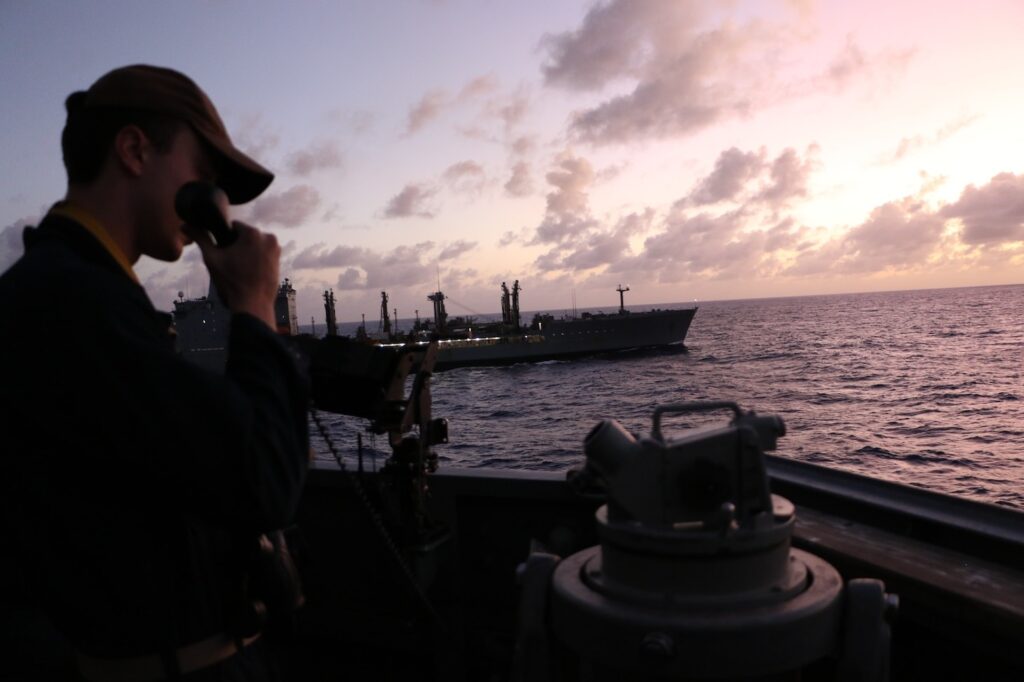
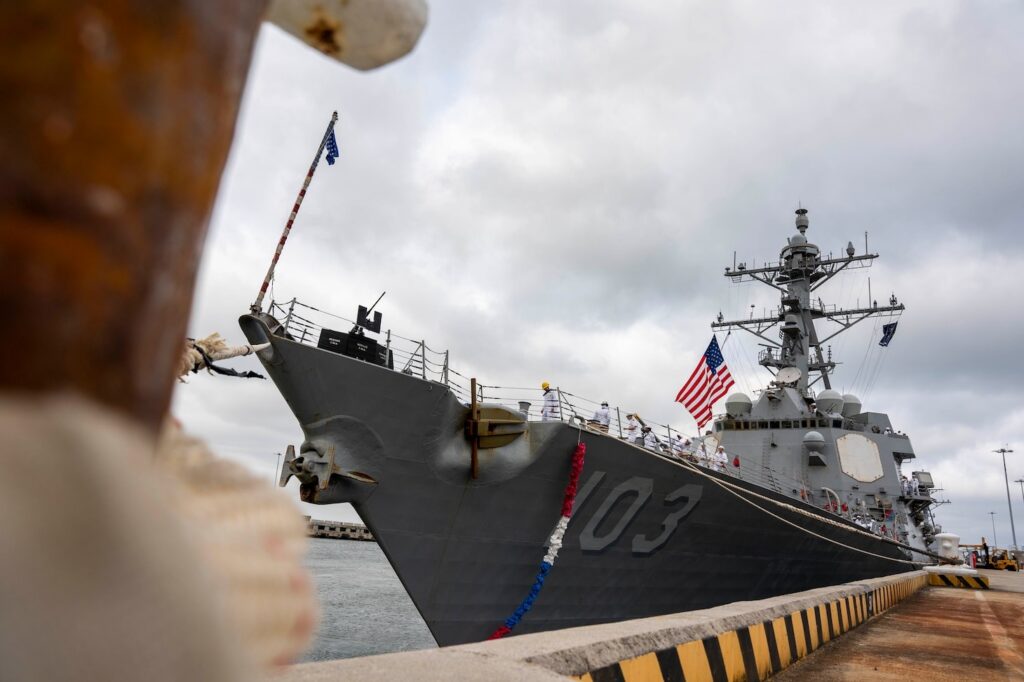
230525-QI061-1194 NORFOLK (May 25, 2023) The Arleigh Burke-class guided-missile destroyer USS Truxtun (DDG 103) returns to Naval Station Norfolk following a nine-month deployment with Carrier Strike Group (CSG) 10. The George H.W. Bush CSG was deployed to the U.S. 5th Fleet and U.S. 6th Fleet areas of operation to defend U.S., allied and partner interests. (U.S. Navy photo by Mass Communication Specialist Nathan T. Beard)
NORFOLK, Va. — The Arleigh Burke-class guided-missile destroyer USS Truxtun (DDG 103) returned to its homeport of Naval Station Norfolk, May 25, 2023, following an eight-month deployment with Carrier Strike Group (CSG) 10, George H.W. Bush CSG, to the U.S. 5th Fleet and U.S. 6th Fleet areas of operation.
“Truxtun’s crew represents the absolute best of America,” said Cmdr. Adam Miller, commanding officer of Truxtun. “They demonstrated exemplary conduct ashore in foreign ports and sustained superior performance operating at sea. From deterring illicit activity in the Red and Arabian Seas to sailing alongside our NATO Allies in the Mediterranean, our crew excelled at every mission tasked to us.” Following completion of a four-week composite training unit exercise, Truxtun deployed in August 2022 alongside the Nimitz-class aircraft carrier USS George H.W. Bush (CVN 77), the Arleigh Burke-class guided-missile destroyers USS Farragut (DDG 99) and USS Delbert D. Black (DDG 119), and the Ticonderoga-class guided-missile cruiser USS Leyte Gulf (CG 55).
Truxtun entered U.S. 5th Fleet in December 2022. While in the Middle East, Truxtun participated in Exercise AMAN, a series of multilateral naval exercises hosted by the Pakistani Navy, and International Maritime Exercise 2023, a U.S. Naval Forces Central Command (NAVCENT) hosted naval training exercise that was combined with the U.S. Naval Forces Europe-Africa-led exercise Cutlass Express 2023, which involved more than 50 partner nations and international organizations operating in the Arabian Gulf, Arabian Sea, Gulf of Oman, Red Sea, Indian Ocean, and East African coastal regions. In January 2023, Truxtun participated in exercise Juniper Oak 23-2, the largest bi-lateral U.S.-Israeli exercise in history. Led by U.S. Central Command and the Israeli Defense Force, Juniper Oak 23-2 was designed to enhance interoperability between the U.S. and Israeli militaries. Juniper Oak 23-2 joined the long-standing “Juniper” series that the U.S. and Israel have conducted for more than 20 years. In April 2023, Truxtun operated off the coast of Sudan in support of Department of State’s evacuation efforts.
Throughout the deployment, the crew conducted scheduled port visits to Split, Croatia; Souda Bay, Crete, Greece; Toulon, France; Aqaba, Jordan; Eilat and Haifa, Israel; and Duqm, Oman. Additionally, the crew hosted key leaders, including Rear Adm. Michael Sciretta, commander, Standing NATO Maritime Group 2, strengthening U.S.-partner relationships across the theaters. “Truxtun is a warship ready for tasking, and that is possible thanks to the talent and dedication of our crew,” Miller said. “I am so proud of every one of our Sailors and thankful for the work they’ve invested to bring us home safely.”
George H.W. Bush is the flagship of CSG-10, George H.W. Bush CSG. CSG-10 is comprised of George H.W. Bush, Carrier Air Wing (CVW) 7, Destroyer Squadron (DESRON) 26, the Information Warfare Commander, and Leyte Gulf.
The ships of DESRON-26 completing deployment within CSG-10 are the Arleigh Burke-class guided-missile destroyers USS Nitze (DDG 94), Truxtun, and Delbert D. Black. The squadrons of CVW-7 embarked aboard the George H.W. Bush are the “Sidewinders” of Strike Fighter Squadron (VFA) 86, the “Jolly Rogers” of VFA-103, the “Knighthawks” of VFA-136, the “Pukin Dogs” of VFA-143, the “Bluetails” of Carrier Airborne Early Warning Squadron (VAW) 121, the “Patriots” of Electronic Attack Squadron (VAQ) 140, the “Nightdippers” of Helicopter Sea Combat Squadron (HSC) 5, and the “Grandmasters” of Helicopter Maritime Strike Squadron (HSM) 46.
For more information about USS Truxtun (DDG 103) or U.S. 2nd Fleet, contact [email protected].
SCSTC Launches Virtual Maintenance Trainer Pilot at the Waterfront
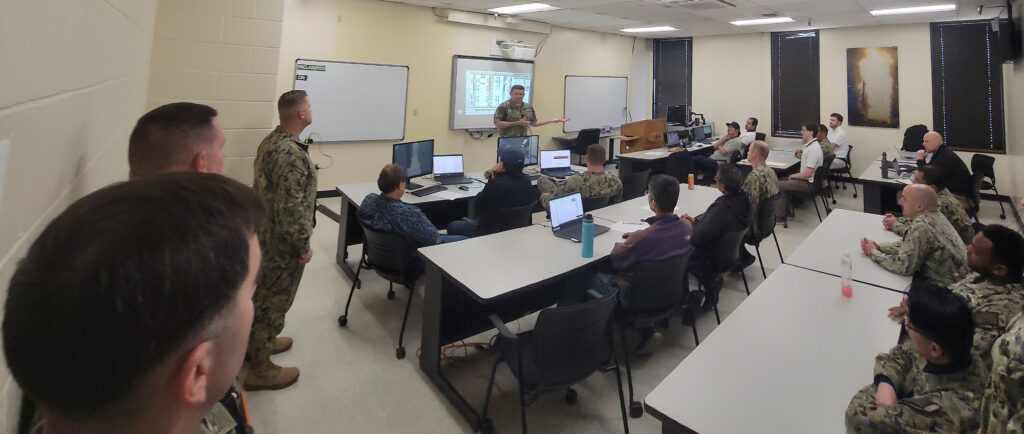
DAHLGREN, Va. – The Navy has authorized the delivery of the most advanced maintenance training systems to the waterfront. To achieve this, Commander, Naval Surface Force, U.S. Pacific Fleet, Commander, Naval Education and Training Command, and Navy Regional Maintenance Center and Naval Sea Systems Command Director, Surface Ship Maintenance and Modernization, have approved Surface Combat Systems Training Command (SCSTC) to execute a six-month Virtual Maintenance Trainer (VMT) pilot program across the waterfront community.
The VMT, an immersive 3D training tool built to support Aegis Weapon System (AWS) maintenance training, is part of the Director, Surface Warfare’s (OPNAV N96) program of record, Surface Training Advanced Virtual Environment-Combat Systems (STAVE-CS). These VMT solutions are currently delivering the right training, at the right time, in the right way in our schools, so Sailors are ready to maintain their equipment at peak capability and reliability to win the high-end fight.
“In an effort to optimize this initiative, we want to test the effectiveness of standalone VMT systems to support maintenance skill, proficiency training, and maintenance support,” said SCSTC’s Commodore, Capt. George A. Kessler, Jr. “Our goal is to get the SPY-1D(V) Radar and Aegis Computer Network Technician [ACNT] VMTs out to the fleet to learn how our ships, training teams, and maintenance teams might utilize the tools to support just in time training prior to a maintenance check, casualty troubleshooting support and maintenance training proficiency. SCSTC will then take that feedback to update the systems and provide a scaled-up plan to better support the fleet.”
From April 2023 through October 2023, SCSTC will collect and analyze data captured from two Baseline 9 (BL 9) Technology Insertion (TI)-16 ships, the Arleigh Burke-class destroyers USS Frank E. Petersen, Jr. (DDG 121) and USS Lenah Sutcliffe Higbee (DDG 123); Regional Maintenance Centers (RMCs) in San Diego and Pearl Harbor; and supporting SCSTC waterfront detachments. To facilitate the delivery of these tools, SCSTC loaded VMT capability on standalone laptops and provided them to each location for use.
SCSTC and the manufacturer then provided training at each location to cover system specifics to include functionality, operation, employment, and data collection. The initial Train the Trainer (TtT) session was conducted with Frank E. Petersen, Jr., Hawaii RMC, and SCSTC Detachment Middle Pacific, 18-20 April. Separate sessions were conducted with Southwest RMC, SCSTC Detachment Southwest, and Lenah Sutcliffe Higbee. The training was well received and set the baseline for the execution of the pilot over the next six months.
Why have VMTs aboard ships?
A knowledge refresher tool for technicians will be the primary use of VMT aboard ships. The VMT will provide technicians an opportunity to refresh themselves on proper procedures, tools, skills, and techniques needed to support preventive maintenance efforts while at sea.
“Typically, technicians have a number of infrequent maintenance tasks that they need to perform on their systems,” explained Mr. Christopher Odachowski, a management analyst for SCSTC HQ’s technical support directorate, N9, and primary lead for the pilot initiative. “These tasks that support preventive maintenance can be challenging for technicians if they have not performed it in a long time, or have limited experience. The VMTs can be used to practice maintenance virtually in a safe environment to refresh knowledge and build confidence prior to physically performing the check on the tactical equipment. Technicians can also practice complex repairs to the system prior to execution.”
The secondary use of a VMT aboard a ship is for Combat System Training Team events.
“The VMT can be employed in the training environment to simulate system casualties the ships currently train to address throughout the basic and advanced phase of training,” Odachowski said.
The VMT provides realistic casualty control and repair scenarios at a level not seen to date on the waterfront. The Combat Systems Training Team (CSTT) can shift from yellow sticky notes and talking through the casualty response to the technicians actually working through the symptoms, executing the associated work packages, and getting their ship back in the fight.
Execution of pilot aboard ships
The VMT hosts software that is a virtualization of the technical insertion TI-16 AWS hardware set along with a virtualization of SPY-1D(V). Frank E. Petersen, Jr. and Lenah Sutcliffe Higbee were selected for this pilot to maximize applicability since both ships have the TI-16 hardware and AN/SPY-1D(V) with Multi-Mission Signal Processor (MMSP) radar. The ships will conduct a six-month test period comprised of two elements; free play and specific training events, with 557 ACNT scenarios and 247 Aegis SPY-1D scenarios at their disposal.
“DDG 121 and DDG 123 will use the VMT as desired and the system will record utilization and document technician proficiency,” explained Lt. Shane Ortiz, SCSTC HQ’s training directorate’s, N7, waterfront coordinator. “During the initial load-out and training, the ships will also identify specific, upcoming infrequent maintenance checks to conduct targeted training prior to execution and collect feedback upon conclusion of maintenance.”
Why have VMTs at specific waterfront locations?
Typically, technicians and Instructors at the RMCs and SCSTC’s waterfront detachments have been trained in earlier versions of the ACNT or SPY systems but do not receive the specific schoolhouse training on the newest systems that they will have responsibility for in their area of operation.
“Having a VMT onsite, along with initial training on the use and operation of the VMT, will help technicians and Instructors expand their knowledge of these newer systems,” explained Mr. Ron Lavold, a management analyst for SCSTC HQ’s N9 and secondary lead for the pilot program. “The VMT is not solely for apprentice level technicians. This pilot will assist us with our overall goal in expanding the VMT’s utilization across all skill levels.”
Another goal of this pilot is to evaluate the VMT as a potential distance support tool at the RMCs. The VMT is designed as a distributed training tool, with Voice over Internet Protocol (VoIP), and real time live student monitoring. These built-in capabilities potentially could be employed to support forward deployed technicians with troubleshooting of their systems when casualties are beyond their technical expertise.
Execution of pilot at RMCs and SCSTC waterfront detachments
SCSTC and the RMCs will create a recommended training plan for technicians assigned to the RMC maintenance and SCSTC waterfront detachment teams to develop and maintain proficiency on BL 9 and SPY-1D(V) with MMSP radar. RMCs will then execute the recommended training proposals, evaluate the VMT for viability as a potential distance support tool for the fleet, and provide focused feedback on VMT usefulness in preparation for maintenance actions.
Feedback process
SCSTC has created a feedback team that will be collecting quantitative
and qualitative data from VMT users throughout the six-month period to determine efficiency of the VMT as a training tool.
“Quantitative data will be collected from the VMT files recorded in each user profile, bi-weekly usage emails, and a user questionnaire,” said Mr. Eric Hall, a management analyst for SCSTC HQ’s N7. “Qualitative
data will be collected during focused fleet feedback discussions.”
Post Pilot
SCSTC will provide a summary of findings to Navy leadership and recommendation for next steps if the VMT capability aboard ships and onboard RMCs and supporting SCSTC waterfront detachments proves to be beneficial.
“The launch of this VMT initiative is a result of an incredible amount of teamwork between headquarters and our learning sites and detachments, SCSTC AEGIS Training and Readiness Center, SCSTC Det Middle Pacific, SCSTC Det Southwest; Regional Maintenance Centers; and our industry partners,” said SCSTC’s Executive Director, Mr. Brian Deters. “We are excited and look forward to the results of this important event.”