Marine Commandant is Bullish on Flight II LPD Capabilities 
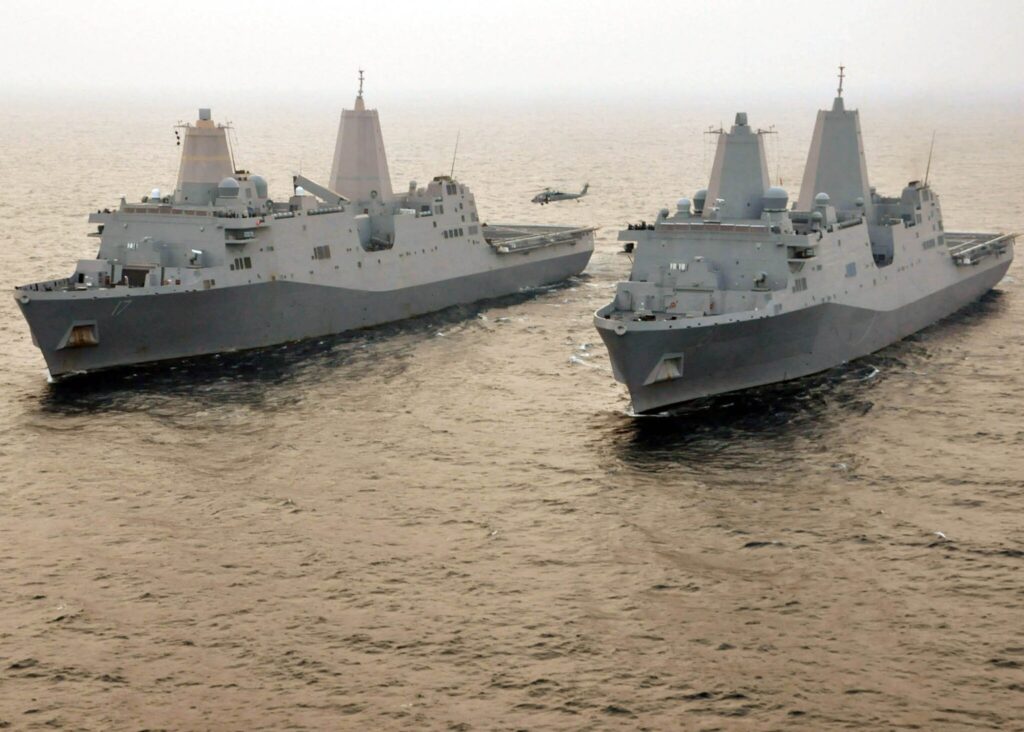
The Flight I amphibious transport dock ships USS San Antonio (LPD 17) and USS New York (LPD 21) in 2011 off the coast of Virginia. They are being succeeded by the Flight II LPD. U.S. NAVY / Mass Communication Specialist 1st Class Edwin F. Bryan 

********* 

WASHINGTON — The Marine Corps commandant praised the Flight II version of the San Antonio-class amphibious platform dock ship (LPD) and re-iterated his position that 31 large and medium amphibious warships is the minimum needed to enable amphibious power projection for the Marine Corps. 

“The Flight II program is a huge success,” said General David H. Berger, speaking in a conversation with Defense One reporter Caitlin Kennedy during the March 16 Defense One State of the Marine Corps webcast. “To us, the Flight II is exactly what we need to replace the LSD.”  

The Flight II LPD is designed to replace the old Whidbey Island-class dock landing ships (LSDs). With the Navy’s 2023 budget, the Navy had planned to retire four LSDs, but Congress refused to consent and prohibited the Navy from decommissioning them. In the 2024 budget proposal, the Navy is requesting to retire three of the LSDs. 

However, the Navy is planning to gap procurement of the Flight II ships for at least five years in the 2024 Future Years Defense Plan while it evaluates the requirements of the Navy and Marine Corps and the construction costs of the ships. 

“The decommissioning of the older ones [LSDs] and a strategic pause [in LPD Flight II procurement] causes a dilemma,” Berger said. 

The Navy in 2014 decided to use the Flight I LPD hull as the basis for the Flight II design as a cost-saving measure. Berger said the cost of as Flight II ship was $1.62 billion, compared to $2 billion for a Flight I ship. 

The commandant also said that the number large and medium amphibious warships needed was nothing less than 31, noting that if the number drops below 31, the nation will lack the Marine presence to respond to crises. He pointed to lack of an amphibious ready group and associated Marine Expeditionary Unit in the Mediterranean Sea to respond to the need disaster relief following the recent earthquake in Türkiye. 

“If the net number of amphibious ships starts to drop … and you don’t have the amphibious ships that you need — we have the Marines, the Navy has the Sailors — the limiting factor here is the number of ships,” he said. “If that happens, you can’t respond in the timeline, you can’t respond when the need is urgent. This is the underpinning of our national strategy … the ability to support allies and partners and deter something from happening. You need to be forward to do that.”   

Berger also re-iterated his support for Chief of Naval Operations Admiral Michael Gilday’s number one priority of readiness. The commandant said the funds for ship maintenance the Navy proposed in the 2024 budget, “were absolutely a step in the right direction.” 


Austal USA Awards Contract to Fairbanks Morse Defense for Cross Company Portfolio of OPC WMSM-919 Equipment 

Release from Austal USA

***** 

Marine defense contractor leverages resources from the company’s multiple brands to reinforce position as a single-source supplier  

BELOIT, Wis. – March 16, 2023 – Fairbanks Morse Defense (FMD), a portfolio company of Arcline Investment Management (Arcline), has been awarded a contract by Austal USA for a portfolio of equipment to support the construction of WMSM-919, the U.S. Coast Guard’s next Heritage-class Offshore Patrol Cutter (OPC). The portfolio includes systems from the company’s multiple brands, reinforcing FMD’s position as a single-source defense contractor capable of providing fully integrated solutions for maritime defense.   

“Receiving this contract from Austal encapsulates what we’ve been working toward in recent years through the acquisition of several strategic maritime suppliers,” said FMD CEO George Whittier. “The industry recognizes the tremendous added value we can bring through our ability to provide projects with a comprehensive equipment portfolio that spans all of our brands. We look forward to working with Austal on this program and further demonstrating our wide range of capabilities.” 

Four of FMD’s recently acquired companies will be involved in this contract. The cross-company package for WMSM-919 includes the following: 

  • Main Propulsion Diesel Engines (2) through Fairbanks Morse Defense 

  • Hangar Door (1) through Federal Equipment Company (FEC) 
  • Stores Elevator (1) through Federal Equipment Company (FEC) 
  • Reverse Osmosis System (1) through Maxim Watermakers  
  • All-Electric Davits (2) through Welin Lambie 
  • Various Electrical Components (cable trays, light supports, piping supports, down commers, stuffing tubes, etc.) through Research, Tool & Die (RT&D) 

In July 2022, Austal USA was awarded a contract from the Coast Guard for detail design and material acquisition for the fifth OPC hull, with an option for up to 11 hulls.  

FMD was previously contracted to provide the main propulsion engines for the Argus (WMSM-915), Chase (WMSM-916), Ingham (WMSM-9170, and Rush (WMSM-918). Earlier this year, the Coast Guard awarded FMD a contract for opposed-piston engine parts for its Bay Class icebreaking tugboats.  

For more than 100 years, FMD has provided products and services to the Coast Guard and Navy. Today, the defense contractor powers over 65% of the Coast Guard’s ships with medium-speed applications and supplies davits to 4 different classes of Coast Guard vessels.  

The defense contractor has rapidly expanded its array of best-in-class marine technologies, OEM parts and turnkey services for marine defense customers through expansion and acquisitions of companies that include Federal Equipment Company (FEC), Hunt Valve, Maxim Watermakers, Research Tool & Die (RT&D), Ward Leonard, and Welin Lambie. FMD is unlocking the future of maritime technology through its recently launched Center of Technology Excellence. 

About Fairbanks Morse Defense (FMD) 

Fairbanks Morse Defense (FMD) builds, maintains, and services the most trusted naval power and propulsion systems on the planet. For more than 100 years, FMD has been a principal supplier of a growing array of leading marine technologies, OEM parts, and turnkey services to the U.S. Navy, U.S. Coast Guard, Military Sealift Command, and Canadian Coast Guard. FMD stands ready to rapidly support the systems that power military fleets without compromising safety or quality. In times of peace and war, the experienced engineers, sailors, and technicians of FMD demonstrate our commitment to supporting the mission and vision of critical global naval operations wherever and whenever needed. FMD is a portfolio company of Arcline Investment Management.  


U.S. Coast Guard Cutter Polar Star completes Operation Deep Freeze 2023 mission, departs Antarctica

Release from U.S. Coast Guard 

***** 

March 15, 2023 

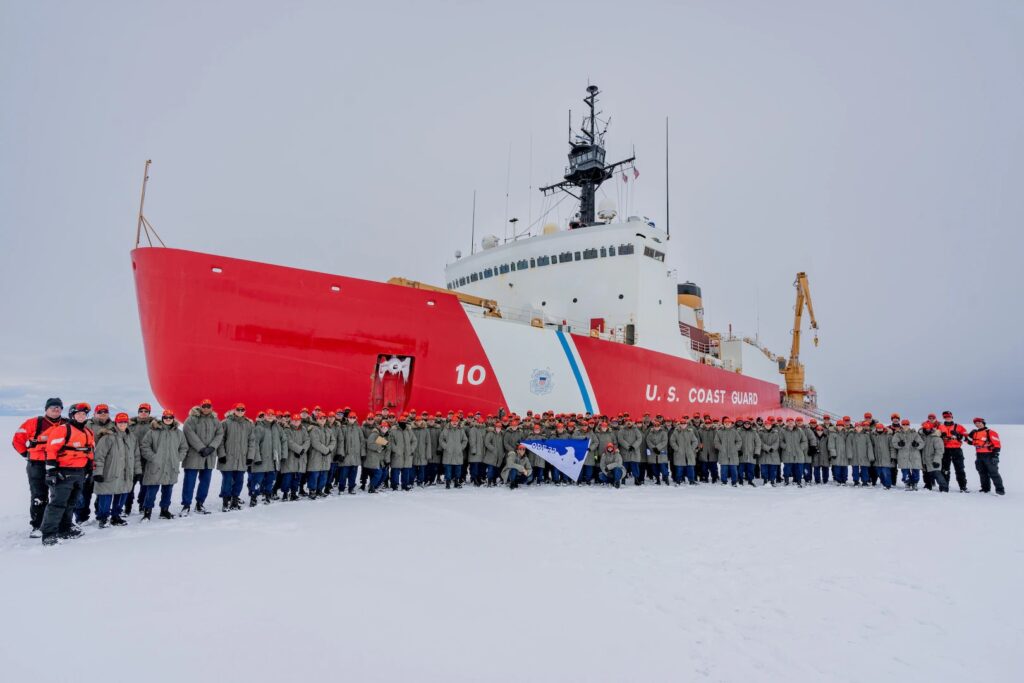
The U.S. Coast Guard Cutter Polar Star (WAGB 10) and crew departed the Antarctic region March 2, after 67 days below the Antarctic Circle in support of Operation Deep Freeze 2023. 
 
The Polar Star and crew broke a 17-mile channel through fast ice and conducted over 1,600 hours of ice breaking operations to create a navigable route for cargo vessels to reach McMurdo Station. The Polar Star and crew executed more than 60 hours of ice escorts for cargo vessels through difficult pack ice conditions. 
 
“Though sea ice around the Antarctic continent overall has been determined to be at one of the lowest in recent history, the sea ice in McMurdo Sound was observed to be at the highest concentration on record dating back to at least 2012,” said Lt. Cmdr. Don Rudnickas, the onboard ice analyst. “The pack ice conditions this year were difficult and made icebreaker support critical not only for establishing the fast ice channel, but for the close escort through pack ice of three of the four cargo vessels resupplying McMurdo Station.” 
 
While operating in Antarctica, the Polar Star and crew made two logistical stops at McMurdo Station. After the first stop in McMurdo, the cutter and crew assisted in moving a 30,000-ton aging and degraded ice pier from Winter Quarters Bay to make way for a modular causeway system that was installed for the season. The cutter also provided an ice escort to motor vessel Ocean Giant and crew, who delivered the 65-ton MCS that was offloaded, assembled, and used as a pier to replace the traditional ice pier used for cargo operations. 
 
“The Antarctic region is a harsh and challenging environment to operate in,” said Lt. Cmdr. Benjamin Litts, operations officer. “Despite the inhospitable conditions, our crew adapted and tirelessly performed at the highest level to ensure mission success.” 
 
Before departing the Antarctic Region, the cutter also visited Palmer Station, the United States’ research facility located on the Antarctic Peninsula. Polar Star personnel went ashore to meet with the station manager and staff, tour the facility, and shared camaraderie in one of the most remote regions on the planet. This was the first visit from a U.S. Coast Guard icebreaker to Palmer Station since 1987. 
 
“Ice breaking in Antarctica is a unique and dynamic mission requiring months of preparation and coordination among all our partners,” said Capt. Keith Ropella, commanding officer. “Mission success was a result of our crew working with fellow service members from the U.S. Air Force, Army, and Navy as a Joint Task Force to continue our proud support of the United States Antarctic Program.” 
 
Operation Deep Freeze is the annual logistical support mission provided by the Department of Defense to the National Science Foundation (NSF) managed by the U.S. Antarctic Program (USAP). This includes coordination of strategic inter-theater airlift, tactical intra-theater airlift and airdrop, aeromedical evacuation support, search and rescue response, sealift, seaport access, bulk fuel supply, port cargo handling, and transportation requirements supporting the NSF. This is a unique mission demonstrating U.S. commitment to the Antarctic Treaty and to research programs conducted for the betterment of all humanity. The Polar Star and crew contribute to this yearly effort through icebreaking to clear the channel for supply vessels. 
 
The Polar Star is the United States’ only asset capable of providing access to both Polar Regions. It is a 399-foot heavy polar icebreaker commissioned in 1976, weighing 13,500 tons and is 84-feet wide with a 34-foot draft. The six diesel and three gas turbine engines produce up to 75,000 horsepower. 


Flag Officer Announcement

Release from the Department of Defense 

***** 

Flag Officer Announcement 

MARCH 15, 2023 

Secretary of Defense Lloyd J. Austin III announced today that the president made the following nominations: 
 
Navy Rear Adm. (lower half) Kenneth R. Blackmon for appointment to the grade of rear admiral. Blackmon is currently serving as reserve director for maritime operations, United States Fleet Forces Command, Norfolk, Virginia.    

Navy Rear Adm. (lower half) Marc S. Lederer for appointment to the grade of rear admiral. Lederer is currently serving as reserve deputy for fleet readiness and logistics, N4R, Office of the Chief of Naval Operations, Washington, D.C.  

Navy Rear Adm. (lower half) Robert C. Nowakowski for appointment to the grade of rear admiral. Nowakowski is currently serving as reserve vice commander, United States Naval Forces, United States Central Command, Fifth Fleet, Manama, Bahrain.    

Navy Capt. John E. Byington for appointment to the grade of rear admiral (lower half). Byington is currently serving as deputy chief of staff for strategic plans and policy, Naval Information Force Reserve Region Southeast, Jacksonville, Florida. 

Navy Capt. Jeffrey J. Jurgemeyer for appointment to the grade of rear admiral (lower half). Jurgemeyer is currently serving as chief of staff, United States Surface Force Pacific, San Diego, California. 

Navy Capt. Richard S. Lofgren for appointment to the grade of rear admiral (lower half). Lofgren is currently serving as commanding officer, Naval Reserve, Fourth Fleet/United States Naval Forces Southern Command, Mayport, Florida. 

Navy Capt. David E. Ludwa for appointment to the grade of rear admiral (lower half). Ludwa is currently serving as executive officer, Naval Reserve, United States Pacific Fleet Logistics Readiness Center, San Diego, California.  

Navy Capt. Michael S. Mattis for appointment to the grade of rear admiral (lower half). Mattis is currently serving as deputy commander, Navy Reserve Region Readiness and Mobilization Command, San Diego, California.  

Navy Capt. Richard W. Meyer for appointment to the grade of rear admiral (lower half). Meyer is currently serving as deputy commander, Navy Region Southeast Reserve Component Command, Fort Worth, Texas. 

Navy Capt. Peter K. Muschinske for appointment to the grade of rear admiral (lower half). Muschinske is currently serving as deputy fleet chaplain, Navy Reserve, United States Pacific Fleet, Maritime Headquarters, Detachment One Zero One, Pearl Harbor, Hawaii.   

Navy Capt. John A. Robinson III for appointment to the grade of rear admiral (lower half). Robinson is currently serving as chief of staff, Navy Office of Information, Washington, D.C. 

Navy Capt. Bryon T. Smith for appointment to the grade of rear admiral (lower half). Smith is currently serving as commanding officer, Navy Reserve, Navy Installations Command Emergency Operations Center, Washington, D.C.  

Navy Capt. Michael R. Vanpoots for appointment to the grade of rear admiral (lower half). Vanpoots is currently serving as deputy commander, Navy Reserve Region Readiness and Mobilization Command, Norfolk, Virginia. 

Navy Capt. Marc F. Williams for appointment to the grade of rear admiral (lower half). Williams is currently serving as regimental commander, Naval Construction Group One, Port Hueneme, California. 


Wittman Statement on AUKUS Announcement 

March 13, 2023 

***** 

Wittman Statement on AUKUS Announcement  

WASHINGTON, D.C. – Today, Congressman Rob Wittman (VA-01), Vice Chairman of the House Armed Services Committee, released the following statement in response to today’s conference on the path forward for AUKUS: 


“First, I commend our three countries for their focus on continuing to realize the promise of AUKUS. At its core, the security framework is an agreement between the United States and the incredibly close friends and allies we find in Australia and the United Kingdom to enhance and advance our shared security priorities in the Indo-Pacific. We must never lose sight of that. AUKUS is far from a zero-sum game, and the success of the framework is critical to deepening our relationship with our allies, expanding our industrial base, and building a more stable Indo-Pacific region. China is watching our actions in the Indo-Pacific very closely—Beijing’s own military ambitions grow by the day. AUKUS at its inception and today reflects a landmark moment for our countries to demonstrate resolve, alignment, and commitment to peace and strength in this era of Great Power Competition.   


“I believe that done properly, AUKUS will be a win-win and serve as a critical opportunity to fully leverage our shared resources and grow our industrial base to support both US and Australian submarine construction. As I have consistently said, US support of Australia in their submarine construction cannot be at the expense of the US imperative to build at least 2 Virginia-class submarines per year and ultimately field 66 attack submarines in the US fleet. AUKUS will not realize its full potential if the overall number of submarines crewed by AUKUS members in the Pacific does not increase above current shipbuilding plans over the next decade—our shared strategic environment demands nothing less. We must, and will, continue to invest in our combined industrial bases in order to reach the full potential of AUKUS.” 


Congressman Rob Wittman represents the 1st District of Virginia. He serves on the House Natural Resources Committee and the House Armed Services Committee, where he serves as the Vice Chairman of the full committee and as the Chairman of the Tactical Air and Land Forces Subcommittee. 


USS ARLEIGH BURKE (DDG 51) RECEIVES SERVICE LIFE EXTENSION

Release from Naval Surface Force Atlantic Public Affairs 

***** 

14 March 2023 

NAVAL STATION NORFOLK — 

OPNAV N96 recently approved a five-year service life extension for USS Arleigh Burke (DDG 51). 
  
First-in-class Arleigh Burke’s estimated service life was 35 years, expected to expire in FY 2026, but efforts began early last year to request additional service time for the ship. The approval extension carries the ship out through FY 2031 now, when the ship will be 40 years old. 
  
According to Rear Adm. Brendan McLane, commander, Naval Surface Force Atlantic, the extension is a testament to the success of the DDG 51 program as a whole and is an example of the Navy’s enduring relationship with industry partners. 
  
“DDG 51’s are the best warships in history. They demonstrate that there are no limits to what we can accomplish with a strong American Navy-industrial partnership,” McLane said. “Arleigh Burke-class destroyers are the backbone of the Navy’s surface fleet and critical to the Nation and the Navy today and long into the future.” 
  
A DDG modernization program is underway to provide a comprehensive mid-life upgrade that will ensure the DDG 51 class possesses the latest long-range fires and terminal defense capabilities. The modernization changes are also being introduced to new construction ships to increase the baseline capabilities of the newest ships in the class, and to provide commonality between new construction ships and modernized in-service ships. The goal of the DDG modernization effort is to increase warfighting capabilities and drive commonality, which enable these ships to remain relevant, to their service life, against current and future threats.       
  
After 30 years in Norfolk, Va., Arleigh Burke shifted homeports to Rota, Spain, on March 26, 2021, to be forward-deployed in U.S. Sixth Fleet. The ship arrived at Naval Station Rota on April 11, 2021, and is on its third patrol. 
 
SURFLANT mans, trains and equips assigned surface forces and shore activities, ensuring a capable force for conducting prompt and sustained operations in support of United States national interests. The SURFLANT force is composed of nearly 80 ships, 17 pre-commissioning units, and more than 30 shore commands. 


Release from General Dynamics Electric Boat 

************** 

Statement from General Dynamics Electric Boat President Kevin Graney Regarding the AUKUS Agreement 

GROTON, Conn. (March 13, 2023) – Today, the United States, United Kingdom and Australia announced the trilateral AUKUS partnership, which will provide Australia with a conventionally armed, nuclear-powered submarine. General Dynamics Electric Boat has a long history of leadership in the design and construction of nuclear submarines from the beginning of naval nuclear propulsion with the USS Nautilus (SSN 571). 

“We look forward to working with the Navy and our industry partners to use our knowledge and expertise to support Australia’s acquisition of nuclear submarines and the development of that country’s shipbuilding infrastructure. The AUKUS agreement underscores the critical role submarines play in the defense of our nation and our allies and calls attention to the importance of continuing to grow our submarine industrial base here in the United States,” said Kevin Graney, president, General Dynamics Electric Boat. 


Coast Guard Cutter Kimball returns home following Western Pacific patrol

Release from Coast Guard Pacific Area 

***** 

March 14, 2023 

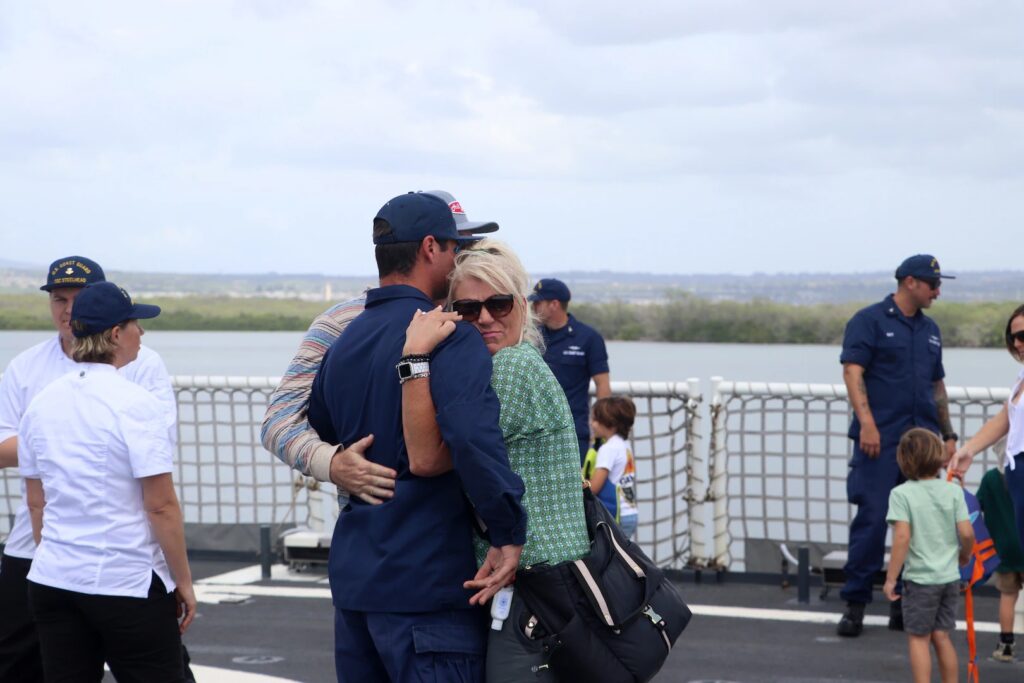
HONOLULU — The Coast Guard Cutter Kimball (WMSL 756) and crew returned to their Honolulu homeport, Friday, following a 42-day, 10,000 nautical mile Western Pacific patrol. 

Kimball was the first U.S. military ship in recent history to visit the port city of Kagoshima, Japan, where the crew partnered with servicemembers from Japan Coast Guard’s 10th District to plan and conduct combined operations and search-and-rescue exercises
 
Kimball’s crew met with Japan Coast Guard senior leadership and hosted Japan Coast Guard servicemembers, U.S. Consulate Fukuoka staff, community leaders and local media aboard the cutter during the port visit in support of Operation SAPPHIRE. 

Operation SAPPHIRE is a joint agreement between the U.S. and Japan Coast Guards signed in 2022 for enhancing cooperation between the two sea services. SAPPHIRE is an acronym for the ‘Solid Alliance for Peace and Prosperity with Humanity and Integrity on the Rule of law-based Engagement.’

“By collaborating with Japan Coast Guard members and conducting evolutions that enhanced communication and inter-operability during the patrol, the crew continued to strengthen a solid foundation for the positive and productive relationship with the maritime service of a like-minded nation,” said Captain Tom D’Arcy, Kimball’s commanding officer. 
 
Kimball’s crew demonstrated proficiency in the ship’s aviation program by working with an air operations inspection team to conduct a biennial Shipboard-Aviation Standardization Inspection (AVSTAN). By achieving their AVSTAN certification, Kimball can continue deploying with aviation detachments during future patrols. 
 
Kimball also supported U.S. Coast Guard efforts to increase its presence in the Indo-Pacific. Kimball’s crew delivered a MH-65 Dolphin helicopter from Air Station Barber’s Point to Santa Rita, Guam, to enable forward operations that extend the service’s air coverage in the region. 
 
During the patrol, the cutter’s engineering department was presented with the Rear Admiral R. S. Lucas Plaque Award for their outstanding contributions to the Coast Guard’s naval engineering program. Members from Kimball’s engineering department were cited for excellence and ingenuity during recent patrols and for completing three extensive industrial periods encompassing significant maintenance, contractual repair projects, and casualty repairs valued at over $4.4 million. 
 
“I am extremely proud of our crew’s accomplishments,” said D’Arcy. “Kimball continues to remain on the front lines of the Coast Guard’s strategic plan. Our engagements in Japan strengthened our existing relationships with international partners who uphold good maritime governance. Kimball’s patrol re-affirmed the U.S. Coast Guard’s commitment to facilitating a free and open Indo-Pacific.” 
 
Commissioned in 2019, Kimball is the Coast Guard’s seventh national security cutter and one of two homeported in Honolulu. National security cutters are 418-feet-long, 54-feet-wide and have a displacement of 4,500 long-tons. With a range of 12,000 nautical miles, the advanced technologies of Legend-class national security cutters are designed to support the national objective to maintain the security of America’s maritime boundaries and provide long range search-and-rescue capabilities. 


Northrop Grumman Offers Battle Management, Command and Control Expertise for U.S. Navy’s E-XX TACAMO Program

Release from Northrop Grumman 

***** 

MELBOURNE, Fla. – Mar. 15, 2023 – Northrop Grumman Corporation (NYSE: NOC) is leveraging its weapons system integration and battle management leadership to compete for the U.S. Navy’s E-XX TACAMO fleet of aircraft systems. 

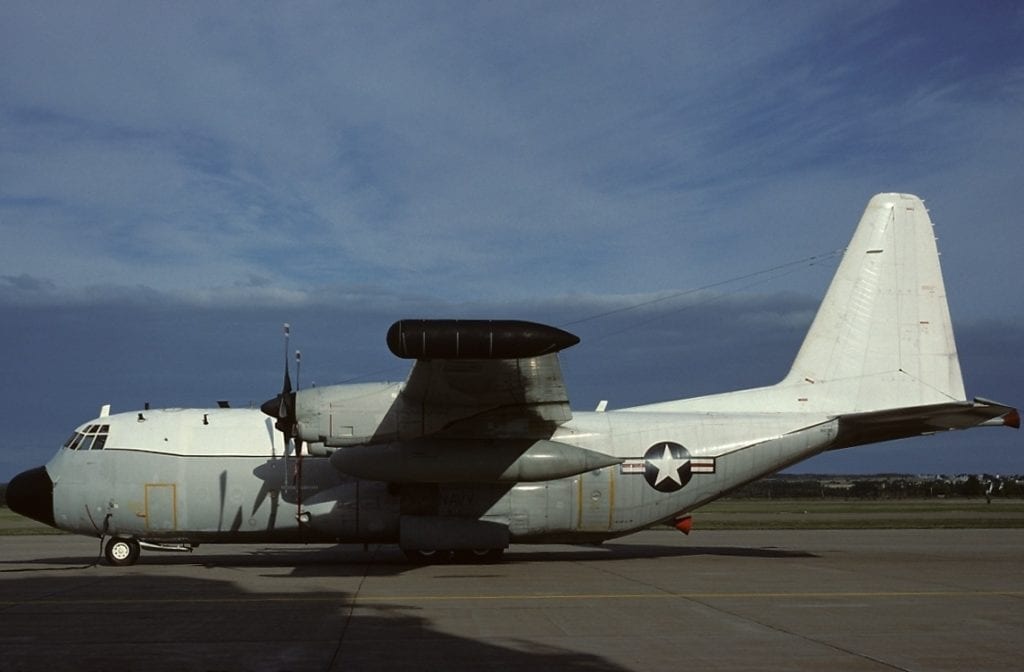
The Navy’s E-XX TACAMO aircraft will be based on the C-130J platform, and provides connectivity between the National Command Authority and ballistic submarines capable of delivering nuclear weapons. The Navy currently operates a fleet of E-6B Mercury aircraft to provide survivable, reliable and endurable airborne command, control and communications between the National Command Authority and U.S. strategic and non-strategic forces. The Navy intends to replace the E-6B fleet with the E-XX to modernize this critical strategic deterrent mission. 

“Our extensive experience integrating aircraft and mission systems, combined with our expertise in creating operationally ready solutions in support of the nuclear enterprise, makes Northrop Grumman the optimal partner to deliver the Navy’s E-XX TACAMO weapon system” said Janice Zilch, vice president, multi-domain command and control programs, Northrop Grumman. “As we’ve demonstrated with the Navy’s E-2 programs, we have been a longtime partner in helping the Navy meet its operational requirements. We will bring this expertise in helping the Navy deliver the E-XX TACAMO on time and optimized for this strategically important mission.” 

For more than six decades, Northrop Grumman has delivered on the development, production and modification of the Navy’s E-2 Hawkeye system as the prime contractor, and continues to provide total mission assurance with proven solutions that are secure, survivable, multi-layered systems designed for total weapon system security. 

“Our team has vast knowledge and expertise in delivering critical command and control, and nuclear enterprise capabilities,” said Henry Cyr, director, multi-domain command and control capture programs, Northrop Grumman. “We perform challenging work that has a real-world impact. You can see that on our legacy platforms, the platforms currently in operation, and the platforms we will deliver tomorrow.” 

Northrop Grumman is a leading global aerospace and defense technology company. Our pioneering solutions equip our customers with the capabilities they need to connect and protect the world, and push the boundaries of human exploration across the universe. Driven by a shared purpose to solve our customers’ toughest problems, our 95,000 employees define possible every day.


Amphib Suppliers to Navy Cite Need for Consistency in Ship Orders

*********** 

ARLINGTON, Va. — The companies supplying components and materials to the shipbuilders who produce the amphibious warfare ships for the U.S. Navy say that consistency in ship orders brings economies to the work and stability to the industrial base. 

“The last few years have been fits and starts on numerous ships in the budget,” said Said David Forster, chairman of the Amphibious Warship Industrial Base Council (AWIBC) and vice president for Global Strategy for Rolls-Royce North America Inc. in an interview with Seapower. “What we have not seen is a consistent shipbuilding program has been substantiated over a FYDP [Future Years Defense Plan] that allows our suppliers the ability to actually plan the work and apply some sort of business practices.” 

The AWIBC “is an organization of amphibious warship suppliers who advocate for Congress to provide funding for the sustained and stable construction of amphibious warships vital to the mission of the U.S. Navy and U.S. Marine Corps. The amphibious warship industrial base is comprised of 614 companies in 38 states and 226 Congressional Districts provide parts worth over $1.78 billion for the construction of amphibious warships,” according to an email from the company.       

“The industrial base can take a lot more work than it currently has,” Forster said. “In order to do that, you do need a plan which allows the industrial base to respond.”  

Forster pointed out that the shipyards need time to ramp up to meet increased production requirements, by hiring and training more skilled workers, ordering more materials, and building or installing more infrastructure and equipment.  

“I think the industrial base has the capacity for more shipbuilding,” he said. “It’s not the instantaneous response that everyone would like it to be. But, given enough lead-time, as well as enough information, the industrial base can do almost anything you really want it to do.” 

Asked about the 31-ship floor set for the amphibious warship fleet, Forster did not take a position.    

“We’re going to let that conversation play within the requirements-setting side of the house, whether that’s the warfare modelers, the Pentagon, Congress,” he said. “We’re standing by, ready to support whatever that requirement is, whether it’s 31 as [Congress] mandated last year in the NDAA [National Defense Authorization Act or whether it’s some other number. … We’re just hoping for consistency in shipbuilding rather than a particular number.” 

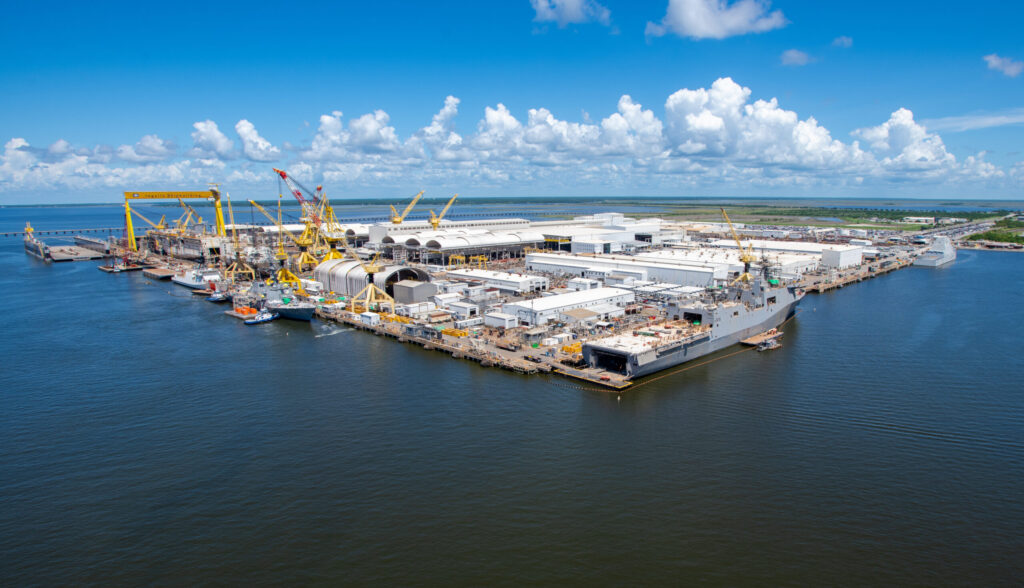
The Navy’s proposed 2024 budget would fund completion of the fourth America-class amphibious assault ship (LHA), but the associated FYDP would not fund any Flight II San Antonio-class amphibious dock ships (LPDs) for at least five years. The ships are built at HII’s Ingalls shipyard in Pascagoula, Mississippi.  

“If we can get the LPDs to about every two-year centers and LHAs to about every four-year centers, what that allows the industrial base to do is apply some of that economic strategy to offset inflation, come through with some investment on whether it’s new capability, new material, new processes, or allows them to invest in workers and retain those workers,” Forster said. 

The proposed medium landing ship, scheduled to be funded in 2025 and designed to support Marine littoral regiments, would be an opportunity to strengthen the industrial base. 

“That ship does offer opportunity to the other yards which are not the big hull builders,” Forster said. “From an industrial base [perspective], that’s pretty good. That helps sustain the industrial base. It also provides resources into the suppliers.” 

“We remain committed to landing ship medium, and for LPD, we’re taking a look at the — the acquisition strategy moving forward, again, to make sure that we would have the right capabilities at the right price, and working with industry partners to put — put together that plan moving forward,” said Undersecretary of the Navy Eric Raven, briefing reporters March 13 on the 2024 budget. …  We received a direction from OSD [the Office of the Secretary of Defense] but this will be an integrated team moving forward for that assessment.” 

Rear Adm. John Gumbleton, deputy secretary of the Navy for Budget, also briefing the reporters, said the “intent here is not a either/or between a LPD or a medium landing ship, it’s a both, so it’s an end game, and we have time to get this right. … I believe the services are fundamentally aligned on this requirement.  Both service chiefs like 31 [large and medium amphibious warships] as a requirement, both service chiefs like multi-year procurements, both service chiefs want to buy in a predictable future. And so, if we can do a study and actually lower the cost of this, that’s all to the good of the Department of the Navy and the Marine Corps.”