USCGC Dependable returns home after a 50-day patrol in the Florida Straits and Windward Pass 

USCGC Dependable’s (WMEC 626) crew operates alongside USCGC James (WMSL 754) in support of Operation Vigilant Sentry in the Florida Straits off the coast of Key West, Florida, Jan. 21, 2023. Dependable’s crew patrolled the Coast Guard’s Seventh District area of operations to conduct maritime safety and security missions. (U.S. Coast Guard photo by Fireman Olliver Miller)

Release from Coast Guard Atlantic Area

***** 

VIRGINIA BEACH, Va. — The crew of the USCGC Dependable (WMEC 626) returned to their homeport in Virginia Beach Thursday following a 50-day maritime safety and security patrol in the Florida Straits and Windward Pass. 

In support of Homeland Security Task Force – Southeast and Operation Vigilant Sentry in the Seventh Coast Guard District’s area of responsibility, Dependable’s crew conducted multiple interdiction evolutions and collaborated with other Coast Guard cutters and task force aircraft to continue the critical mission of maintaining safety at sea. 

During the patrol, Dependable’s crew processed, cared for and repatriated approximately 500 migrants. While operating in the Florida Straits, Dependable worked with other law enforcement entities, including Customs and Border Protection and the Florida Fish and Wildlife Conservation Commission to detect, deter and intercept unsafe and illegal ventures bound for the United States.  

“The crew has been training to conduct migrant interdiction operations since July 2022,” said Lt. Cmdr. Dana Prefer, Dependable’s executive officer. “In preparation for the recent uptick in migration ventures, we worked hard to qualify over 50 crew members to stand watch and care for the migrants embarked onboard the cutter. The training and preparation paid off as it was truly a team effort to interdict, process and care for just about 500 migrants throughout our patrol.” 

Dependable is a 210-foot Reliance-class medium endurance cutter witha crew of 70. The cutter’s primary missions include counter drug operations, migrant interdiction, enforcement of federal fishery laws, and search and rescue in support of Coast Guard operations throughout the Western Hemisphere. 


USMC Calls for GPN

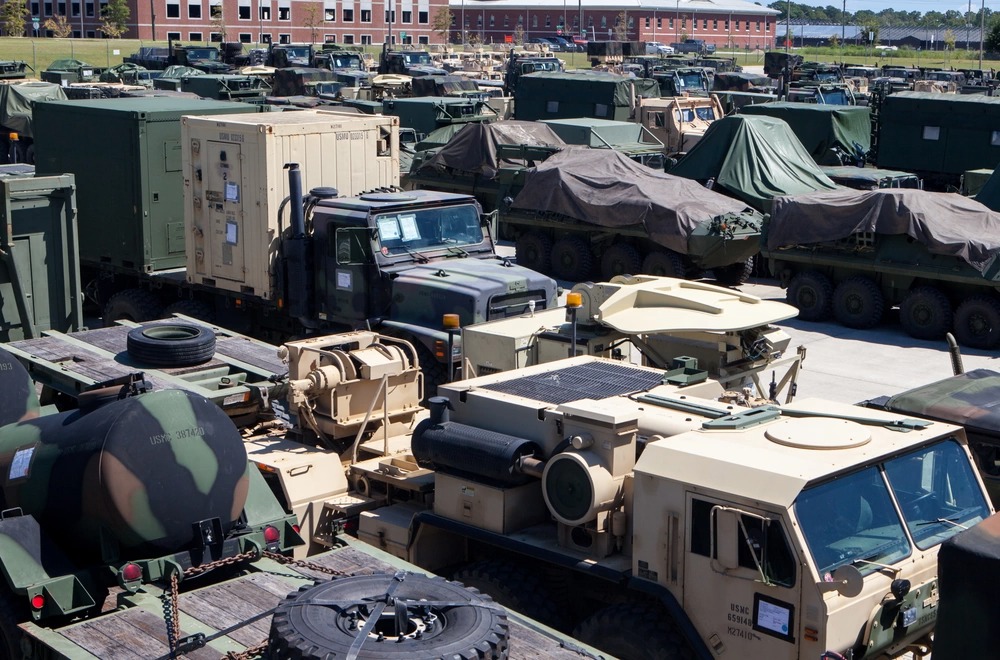
U.S. Marines with Headquarters Company, Headquarters Regiment, 2nd Marine Logistics Group, stage vehicles in support of Exercise Trident Juncture 18 on Camp Lejeune, N.C., Aug.27, 2018.

***** 

New Marine Corps Logistics Plan Calls for Pre-Positioned Stocks to be Integrated into a Global Positioning Network 

ARLINGTON, Va. — The Marine Corps is refining its logistics concepts in conjunction with the commandant’s Force Design 2030 to provide sustainable logistics in a contested environment. The plan includes integrating its pre-positioned stocks into a Global Positioning Network (GPN), the Corps said in a Feb. 23 press teleconference. 

The plan — Installations and Logistics 2030 — was released Feb. 23 by Marine Corps Commandant Gen. David H. Berger, who said in the accompanying release that, “[a]ny student of military history understands the critical nature of logistics and sustainment capabilities. We are focusing on diversifying distribution models, resourcing and improving sustainment capabilities, and ensuring the most resilient installations.” 

“One broken link in a supply chain can result in an untethered force,” said Lt. Gen. Edward Banta, deputy commandant for Installations and Logistics. “A web mentality assures sustainment of the force and can absorb disruption.” 

Logistics Upgrades Needed 

The plan directs myriad studies and experiments to re-vamp the logistical systems and make them more forward and resilient, modify force structure tailored the Stand-In Force operating inside an enemy’s engagement zone, and to and able to take advantage of emerging technologies, including unmanned systems, tele-maintenance, 3D printing, and alternative energy sources. 

“Stand-in Forces are small, low signature, mobile, relatively simple-to-maintain-and-sustain forces designed to operate across the competition continuum within a contested area,” the release said. “They are the leading edge of a maritime defense-in-depth in order to intentionally disrupt the plans of a potential or actual adversary.” 

“We are changing our global posture with a new Global Positioning Network (GPN) that leverages afloat and ashore capability sets for responsiveness,” Banta said. ”The GPN also matures our relationships with partners and allies for access, basing, and overflight. Within the GPN we will be pushing higher echelons of maintenance further forward, as well as leveraging the already existing global presence of commercial industry partners. An example here is the ability of forklift operator to reach over to a Caterpillar dealer in the region, versus having to order a part from back in the Continental United States.” 

The new document says that the current logistics concept “relies on deliberate, multi-modal movement of equipment and supplies across a linear logistics and supply chain, requiring large warehousing and trans-shipment nodes to break down, consolidate, and repackage shipments for delivery to the end user. Our supply chains have been developed for efficiency, not effectiveness. One broken link in the supply chain can result in an untethered force.” 

The GPN will be designed to be a supply web instead of a supply line. 

“Instead of relying on a singular, vulnerable chain, we must build a more resilient supply web that can adapt to temporary broken links or obstructions,” the new document said. “Improving sustainment will demand global logistics solutions that are non-linear and distributed, have a smaller physical footprint at any one site, and limit the vulnerability of forward forces.” 

The Marine Corps maintains prepositioned stocks of weapons, equipment, and supplies on Military Sealift Command ships at Diego Garcia and the Marianas, plus a stock at a facility in Norway. The Corps will be integrating its pre-positioned stocks into the GPN. 

In response to a question from Seapower Magazine about the pre-positioned stocks, Col, Michael Mulvey, Futures branch head for Logistics Vision and Strategy said, “[We] are looking at an integrated global positioning network now. So that’s, that’s a combination of both afloat and ashore platforms that enables campaigning. So that’s steady state operations that Marines will do from day to day. And by having that forward position [with] the equipment and capabilities inside the first island chain and in the Indo Pacific, we can transition much more efficiently from campaigning to a conflict scenario if we need that.” 

“The logistical challenge in front of us is massive. But the risks of not implementing change are clear – the Naval Expeditionary Force becomes unnecessarily vulnerable, particularly while operating in forward and distributed formations,” Berger said in the new document. “Transforming our current installations and logistics related capabilities, capacity, and resiliency to support the future force more effectively, while reducing risk to our units, Marines, Sailors, families, and allies and partners is paramount. The time for action is now.”  

Installations and Logistics 2030 can be downloaded from the USMC website


Boeing Sets F/A-18 Production Completion Date as Defense Business Pivots to Future Work  

A Boeing-built F/A-18 Super Hornet takes off from Lambert International Airport in St. Louis. Boeing will continue to deliver new Block III Super Hornets to the Navy through 2025. (Boeing photo)

Release from Boeing  

***** 

– Defense, Space & Security plans St. Louis workforce growth supporting new and next-generation military aircraft programs and services  

– F/A-18 Service Life Modification will continue through the mid-2030s; advanced capabilities development and upgrades for global fleet continuing for decades 

ST. LOUIS, Feb. 23, 2023 — Boeing [NYSE: BA] expects to complete new-build production of the F/A-18 Super Hornet fighter aircraft in late 2025 following delivery of the final U.S. Navy fighters. Production could be extended to 2027 if the Super Hornet is selected by an international customer. 

To meet demand for defense products and services, Boeing plans to continue hiring year-over-year for the next five at its St. Louis site. More than 900 people were hired in the region last year. 

“We are planning for our future, and building fighter aircraft is in our DNA,” said Steve Nordlund, Boeing Air Dominance vice president and St. Louis site leader. “As we invest in and develop the next era of capability, we are applying the same innovation and expertise that made the F/A-18 a workhorse for the U.S. Navy and air forces around the world for nearly 40 years.” 

The F/A-18 production decision allows Boeing to: 

  • Redirect resources to future military aircraft programs: To support work on the next generation of advanced crewed and uncrewed aircraft, Boeing plans to build three new, state-of-the-art facilities in St. Louis. These facilities, as well as the new Advanced Composite Fabrication Center in Arizona, and the new MQ-25 production facility at MidAmerica St. Louis Airport, represent more than a $1 billion investment. 

  • Boeing has invested $700 million into St. Louis infrastructure upgrades during the past decade, enabling the introduction of new design and build techniques streamlining processes and improving first-time quality. 

  • Ramp up production of critical new defense programs: Boeing St. Louis will increase production of the world’s first all-digital training system, the T-7A Red Hawk, and the world’s first carrier-deployed autonomous refueling aircraft, the MQ-25 Stingray, along with ongoing production of new F-15EX Eagle IIs and 777X wing components.  
  • Focus on modernization and upgrade efforts: Boeing will continue to develop advanced capabilities and upgrades for the global F/A-18 Super Hornet and EA-18G Growler fleet. Throughout the next decade, all Block II Super Hornets in Service Life Modification will receive the Block III capability suite. Boeing will also continue to add advanced electronic attack capability as part of ongoing Growler modifications. 

 
Since the F/A-18 debuted in 1983, Boeing has delivered more than 2,000 Hornets, Super Hornets and EA-18G Growlers to customers around the world including the U.S. Navy, Australia, Canada, Finland, Kuwait, Malaysia, Spain and Switzerland. 


USS Farragut (DDG 99) Arrives in the 4th Fleet AOR

***** 

USS Farragut (DDG 99) Arrives in the 4th Fleet AOR

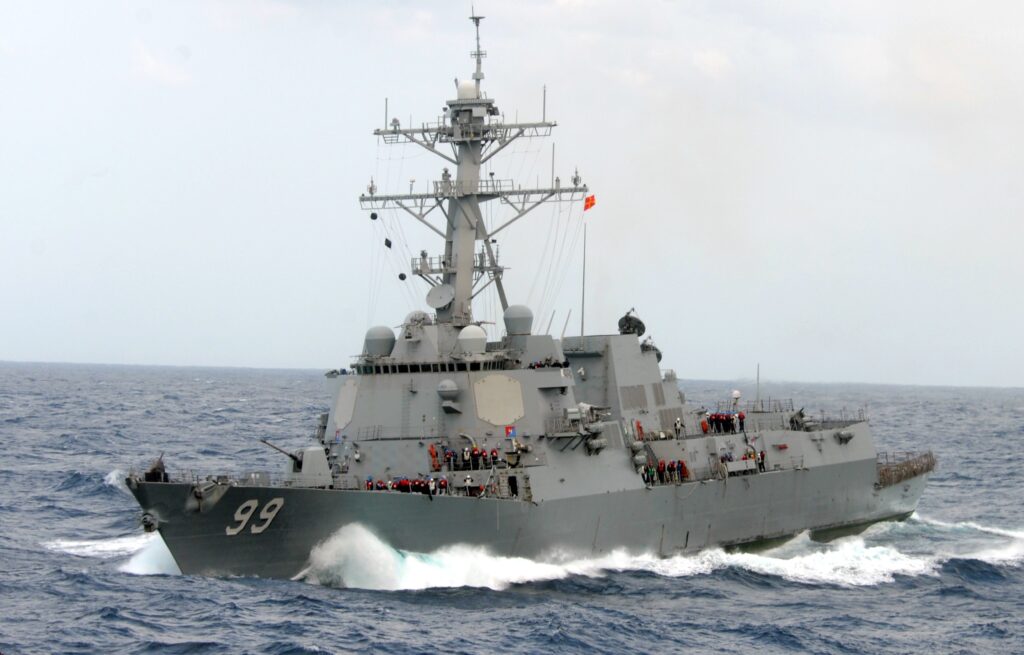
CARIBBEAN SEA - The Arleigh-Burke class guided-missile destroyer USS Farragut (DDG 99) arrived in the U.S. 4th Fleet area of operations for a scheduled deployment, Feb. 15. Embarked with the ship is U.S. Coast Guard Law Enforcement Detachment (LEDET) 406 to conduct counter narcotic operations in the region. 
  

Joint Interagency Task Force-South (JIATF-S), located in Key West, Fla., conducts counter illicit trafficking operations, delivering a high return on a modest investment. In 2022, JIATF-S enabled the disruption of a total of 260,431 kilograms of cocaine and 139,821 pounds of marijuana. JIATF-S also enabled 901 arrests through maritime, land, and air seizure operations. 
 
“We are here to enhance security in the Western Hemisphere,” says Cmdr. Nicholas Gurley, commanding officer of the USS Farragut. “We aim to break the vicious circle of threats, through direct and indirect means, while building a more effective, efficient, and resilient team.” 
 
U.S. Naval Forces Southern Command/U.S. 4th Fleet supports U.S. Southern Command’s joint and combined military operations by employing maritime forces in cooperative maritime security operations to maintain access, enhance interoperability, and build enduring partnerships in order to enhance regional security and promote peace, stability and prosperity in the Caribbean, Central and South American region. 


Investigation into 2022 F-35C crash aboard Carl Vinson complete 

Release from Commander, Naval Air Forces Public Affairs 

***** 

By Commander, Naval Air Forces Public Affairs

22 February 2023 

SAN DIEGO – The investigation into the F-35C Lightning II crash that occurred onboard Nimitz-class aircraft carrier USS Carl Vinson (CVN 70) on Jan. 24, 2022, is complete and was released on Feb. 16, 2023. The cause of the mishap was found to be pilot error; however, the error was not a result of reckless actions or malicious intent. The pilot was current on all qualifications and designations and the aircraft was in compliance with all periodic maintenance and service inspections. 
  
On Jan. 24, 2022, at approximately 1630 local time, the F-35C crashed onto the flight deck of USS Carl Vinson which was operating in the South China Sea. The pilot safely ejected and the aircraft skidded off the flight deck and into the sea. 
 
A total of six personnel injured during this incident – the pilot and five other Sailors who were working on the flight deck at the time of the crash. All injured personnel have been released from medical care. The crash resulted in approximately $120,000 in damage to Carl Vinson’s flight deck, as well as more than $2.5 million in damage to an EA-18G Growler that was struck by debris while staged on the flight deck. 
 
We remain grateful to the highly trained Sailors aboard Carl Vinson who immediately responded to ensure that the pilot was recovered from the water, all injured personnel were cared for, and flight deck was cleared and re-set for operations. After a short pause in accordance with safety procedures, the rapid response from the crew enabled flight operations resume in less than an hour with minimal impact to mission requirements. 
 
On Mar. 2, 2022, a team from U.S. Navy Task Force 75 and the Naval Sea Systems Command’s Supervisor of Salvage and Diving (SUPSALV), embarked on the diving support construction vessel (DSCV) Picasso, recovered the F-35C wreckage from a depth of approximately 12,400 feet. 


AS CLIMATE SHIFTS, U.S. NAVY FOCUSES ON BOLSTERING ARCTIC OCEAN OPERATIONS 

Release from U.S. Fleet Forces Command. 

***** 

By LT Sarena Padilla & ENS Garner Fleming, U.S. National Ice Center

22 February 2023 

WASHINGTON, D.C. - First in a two-part series on how the Navy and its partners are working to improve Arctic operations as the sea ice melts due to warming temperatures. 

The Arctic is the next frontier for U.S. military operations, where the physical environment poses a major threat to achieving strategic dominance, managing assets and ensuring freedom of the seas. 

The importance of the Arctic will only increase each year as the decline of the perennial sea ice continues and the ice edge shifts. It is imperative to strengthen the ability to operate there in order to gain a strategic advantage. Effective operations will hinge on reliable environmental intelligence in a region where conditions can be severe. 

The U.S. most recently Updated Its Strategy For The Arctic Region Last October with a new 10-year scope that seeks a peaceful, stable, prosperous and cooperative Arctic at the same time acknowledging strategic competition with Russia and China. Ongoing efforts include investing in technology that detects and tracks potential threats and improves our own capabilities to maneuver in the region. This is not a simple task due to the dominant role that Russia has in the Arctic, as well as the growing concern for China’s desire to be an influential nation there. 

ARCTIC ENVIRONMENT PRESENTS CHALLENGES FOR THE NAVY   

The Arctic Ocean is in many ways an uncharted domain for conducting military operations. It will be no easy feat to operate effectively because the Arctic is a hostile environment for modern vessels within ice-infested waters. 

Currently, the U.S. has a limited icebreaking capability that is completely reliant on the U.S. Coast Guard, with the Coast Guard cutters Healy and Polar Star handling all pathfinding needed to ensure safe transit. This shortfall is driving the production of the next generation of Polar Security Cutters, a joint Navy and Coast Guard program to address the dire necessity for increased icebreaking operations in the near future. The first new Polar Security Cutter is expected to be delivered in 2025. 

Along with an updated force, any future naval conflict will require leveraging technological advancements made in the past 80 years since the naval challenges of World War II, when the U.S. was last fully tested as a strategic force implementing older-era warfighting tactics. The  Arctic presents conditions and challenges far different from those encountered in earlier eras. 

The future of warfighting will demand means beyond globally deployed strike groups and a prominent physical presence. Information warfare will be of greater importance as the challenges facing battlespace awareness, assured command and control and integrated fires are heightened in the austere environment of the Arctic. 

Successful intelligence preparation of the operational environment, mastery of the electromagnetic spectrum and solid communications could very well be deciding factors for any conflicts in the high latitudes. Any future conflict will be settled in large part by how well information, including environmental intelligence, is gained, exploited and disseminated. 

Technology that implements artificial intelligence/machine learning (AI/ML) methods could yield a warfighting advantage in predicting the physical battlespace. Current projects are underway across the fleet, many led by Office of Naval Research and Naval Research Laboratory, to address the need for advanced data assimilation to improve high-latitude environmental models for weather and conditions forecasting and predictions. 

A variety of environmental data collected through in situ or remote means is necessary for these modeling efforts to be successful. The sea ice edge can vary by hundreds of miles overnight when faced with the dynamic meteorology present in the region. 

Many analytical intelligence challenges can be partially to fully automated AI/ML, but even these innovative efforts require substantial data, among other resources, as a driving mechanism. It will be essential to fill the current environmental data gaps in the Arctic if the U.S. is to harness the technical advances made in computing and successfully exploit technologies such as more sophisticated models and innovative AI/ML projects. Some small but highly effective naval commands have started paving a path forward to meet these shortfalls. 

HOW THE U.S. NATIONAL ICE CENTER PLAYS A MAJOR ROLE 

The U.S. National Ice Center (USNIC) is a tri-agency organization of the Navy, the National Oceanic and Atmospheric Administration (NOAA) and the Coast Guard with a mission to provide global to tactical scale ice and snow information, ice forecasting and related environmental intelligence services for the U.S. government. 

Fewer than 50 uniformed, civilian and contract personnel comprise the USNIC on a daily basis with only a dozen of those individuals creating a variety of routine ice analyses for the Arctic, Antarctic, Great Lakes and other geostrategic locations where ice may form; a daily analysis of U.S. Northern Hemisphere snow and ice information to directly support assets and personnel in the field. 

With such a small team, providing environmental intelligence to ensure safety of navigation in treacherous polar waters and economic prosperity within and along high latitude commercial routes and port regions is a vital task. Indeed, providing environmental intelligence in particular about sea ice proliferating in the Arctic Ocean is essential. 

Several portions of the Arctic Ocean that have historically been covered with sea ice through at least parts of the winter will become increasingly ice-free in the coming years. This decrease in ice can result in shorter maritime trade routes, or completely new transpolar routes, becoming available, significantly decreasing maritime Arctic transit. 

The Arctic is still largely unfamiliar in its delicate environmental complexities. The need for increased and enhanced observations continuously grows as the sea ice left behind year after year becomes more fragile, thin and diminishes in extent, losing an equivalent area the size of South Carolina annually. 

Characterizing the ice in the region requires various input sources whether it be satellite-derived data, sensing platforms like high-tech buoys or occasionally deployed personnel feedback while onboard icebreaking operations in the region. The limited in situ observations help increase near-real time environmental knowledge in the Arctic, but at current numbers, they form an incomplete picture and are not enough for fully forecasting and safely operating within such a complex, harsh domain. 

In the next installment, we discuss how USNIC is bolstering sensor and analysis abilities in the Arctic. 


CNO Visits Australia to Discuss Maritime Security, Continued Cooperation 

Release from Commander, U.S. Pacific Fleet 

***** 

21 February 2023 

CANBERRA, Australia — Chief of Naval Operations (CNO) Adm. Mike Gilday travelled to Canberra, Australia, Feb. 19-21, to meet with Royal Australian Navy (RAN) Chief Vice Adm. Mark Hammond, AM to discuss their shared commitment to maintaining a free and open Indo-Pacific. 

 
Gilday met with other members of the Royal Australian Navy and discussed the two navies’ shared focus on interchangeability, innovation, and combined operations. 

The CNO had the opportunity to meet with U.S. Ambassador to Australia Caroline Kennedy, where they talked about the importance of advancing our bilateral and Navy-to-Navy relationships. 
 
Additionally, Gilday met with Chief of the Australian Defence Force Gen. Angus Campbell, AO, DSC, and Commander of the Australian Defence College Air Vice Marshal Steve Edgeley. 
 
“Australia is one of our oldest friends and most enduring Allies,” said Gilday. “There is no daylight between how we see threats — we share a commitment of protecting and defending a free and open Indo-Pacific. 
 
“I’m grateful to Admiral Hammond for his partnership and teamwork as we continue to strengthen our navies’ interchangeability,” he added. “Our Sailors operate together around the globe, sailing together and participating in high-end maritime exercises—demonstrating our shared commitment to ensuring peace and prosperity throughout the Indo-Pacific.” 
 
The CNO visited the Australian Defence College, where he spoke with Royal Australian Navy, Army, and Air Force service members about the strategic importance of the enduring Alliance between Australia and the U.S.; the two navies working together to uphold the rules-based order; and strengthening partnership, advancing from interoperability to interchangeability. 
 
Gilday and his wife Linda Gilday visited the Australian War Memorial, where the CNO laid a wreath during the time-honored Last Post Ceremony. 
 
“I’m truly humbled by the opportunity to participate in such a meaningful ceremony,” said Gilday. “Reflecting upon the sacrifices of servicemen and women who came before us serves as a reminder that our security and prosperity—and our friendships that uphold them—must never be taken for granted.” 
 
The U.S. and Australian navies share a mutual interest in maintaining freedom of navigation and adherence to the rules-based international order. They conduct frequent cooperative deployments, and regularly operate together during flagship theater exercises like Pacific Partnership, Rim of the Pacific (RIMPAC) and the Australian-led Kakadu. This year, the U.S. and RAN will participate in numerous exercises, to include: ANNUALEX, Sea Dragon, Pacific Partnership, Talisman Sabre, and Malabar, as well as many others. 
 
This trip marked Gilday’s third face-to-face meeting with Hammond, and his first visit to Canberra, Australia, as CNO.


General Officer Announcements 

Release from the Department of Defense

***** 

FEB. 17, 2023 

Secretary of Defense Lloyd J. Austin III announced that the president has made the following nominations: 

Marine Corps Col. David R. Everly for appointment to the grade of brigadier general.  Everly is currently serving as chief of staff, 2d Marine Expeditionary Force, Camp Lejeune, North Carolina. 

Marine Corps Col. Kelvin W. Gallman for appointment to the grade of brigadier general.  Gallman is currently serving as senior military advisor to the Secretary of the Navy, Washington, D.C. 

Marine Corps Col. Adolfo Garcia Jr., for appointment to the grade of brigadier general.  Garcia is currently serving as director, U.S. House of Representatives Congressional Liaison, Office of Legislative Affairs, Headquarters, U.S. Marine Corps, Washington, D.C. 

Marine Corps Col. Matthew T. Good for appointment to the grade of brigadier general.  Good is currently serving as director, U.S. Senate Congressional Liaison, Office of Legislative Affairs, Headquarters, U.S. Marine Corps, Washington, D.C. 

Marine Corps Col. Trevor Hall for appointment to the grade of brigadier general.  Hall is currently serving chief of staff, U.S. Marine Corps Forces Command, Norfolk, Virginia. 

Marine Corps Col. Richard D. Joyce for appointment to the grade of brigadier general.  Joyce is currently serving as commanding officer, Marine Aircraft Group 29, 2d Marine Aircraft Wing, Marine Corps Air Station, New River, North Carolina. 

Marine Corps Col. Omar J. Randall for appointment to the grade of brigadier general.  Randall is currently serving as director, Logistics Combat Element Integration Division, Combat Development and Integration, Headquarters, U.S. Marine Corps, Quantico, Virginia. 

Marine Corps Col. Robert S. Weiler for appointment to the grade of brigadier general.  Weiler is currently serving as military secretary to the commandant of the Marine Corps, Headquarters, U.S. Marine Corps, Washington, D.C. 


Flag Officer Assignments

Release from the Department of Defense

***** 

The secretary of the Navy and chief of naval operations announced today the following assignments: 

Rear Adm. Peter A. Garvin will be assigned as president, Naval War College, Newport, Rhode Island.  Garvin is currently serving as commander, Naval Education and Training Command, Pensacola, Florida. 

Rear Adm. William C. Greene will be assigned as commander, Navy Regional Maintenance Center; and director, Surface Ship Maintenance and Modernization, NAVSEA 21, Washington, D.C.  Greene is currently serving as fleet maintenance officer, U.S. Fleet Forces Command, Norfolk, Virginia. 

Rear Adm. John V. Menoni will be assigned as director, Programming Division, N80, Office of the Chief of Naval Operations, Washington, D.C.  Menoni is currently serving as assistant deputy chief of naval operations for Operations, Plans and Strategy, N3/N5B, Office of the Chief of Naval Operations, Washington, D.C. 

Rear Adm. Milton J. Sands III will be assigned as chief of staff, U.S. Special Operations Command, MacDill Air Force Base, Florida.  Sands is currently serving as commander, Special Operations Command Africa, U.S. Special Operations Command, Naples, Italy. 

Rear Adm. Paul J. Schlise will be assigned as director, Warfare Integration, N9I, Office of the Chief of Naval Operations, Washington, D.C.  Schlise is currently serving as director, Warfare Development, N72, Office of the Chief of Naval Operations, Washington, D.C. 

Rear Adm. Douglas C. Verissimo will be assigned as commander, Naval Air Force Atlantic, Norfolk, Virginia.  Verissimo is currently serving as director, Maritime Operations, U.S. Forces Command, Norfolk, Virginia. 

Rear Adm. (lower half) Joseph F. Cahill III, selected for promotion to rear admiral, will be assigned as commander, Naval Surface Force, Atlantic, Norfolk, Virginia.  Cahill is currently serving as commander, Carrier Strike Group Fifteen, San Diego, California. 

Rear Adm. (lower half) Jeffrey J. Czerewko, selected for promotion to rear admiral, will be assigned as commander, Naval Education and Training Command, Pensacola, Florida. Czerewko is currently serving as commander, Carrier Strike Group Four, Norfolk, Virginia. 

Rear Adm. (lower half) Brian L. Davies, selected for promotion to rear admiral, will be assigned as special assistant to director, Navy Staff for Learning to Action Board, Office of the Chief of Naval Operations, Washington, D.C.  Davies is currently serving as commander, Submarine Group Two, with additional duties as deputy commander, Second Fleet, Norfolk, Virginia.  

Rear Adm. (lower half) Michael P. Donnelly, selected for promotion to rear admiral, will be assigned as director, Air Warfare Division, N98, Office of the Chief of Naval Operations, Washington, D.C.  Donnelly is currently serving as commander, Task Force Seven Zero; and commander, Carrier Strike Group Five, Yokosuka, Japan. 

Rear Adm. (lower half) Kenneth W. Epps, selected for promotion to rear admiral, will be assigned as commander, Naval Supply Systems Command; and chief of the Supply Corps, Mechanicsburg, Pennsylvania.  Epps is currently serving as commander, Naval Supply Systems Command Weapons System Support, Philadelphia, Pennsylvania. 

Rear Adm. (lower half) Rick Freedman, selected for promotion to rear admiral, will be assigned as deputy chief, Bureau of Medicine and Surgery; deputy surgeon general of the Navy; and director, Medical Resources, Plans and Policy Division, N0931, Office of the Chief of Naval Operations, Falls Church, Virginia.  Freedman is currently serving as deputy assistant director, Operations, Strategy, and Education and Training, Defense Health Agency, with additional duties as chief of the Dental Corps, Falls Church, Virginia. 

Rear Adm. (lower half) Casey J. Moton, selected for promotion to rear admiral, will be assigned as program executive officer for Aircraft Carriers, Washington, D.C.  Moton is currently serving as program executive officer, Unmanned and Small Combatants, Washington, D.C. 

Rear Adm. (lower half) Richard E. Seif Jr., selected for promotion to rear admiral, will be assigned as commander, Submarine Force, U.S. Pacific Fleet, Pearl Harbor, Hawaii.  Seif is currently serving as commander, Submarine Group Seven; commander, Task Force Seven Four; and commander, Task Force Five Four, Yokosuka, Japan. 

Rear Adm. (lower half) Paul C. Spedero Jr., selected for promotion to rear admiral, will be assigned as vice director of operations, J-3, Joint Staff, Washington, D.C.  Spedero is currently serving as commander, Carrier Strike Group Eight, Norfolk, Virginia. 

Rear Adm. (lower half) Dennis Velez, selected for promotion to rear admiral, will be assigned as director, Plans and Policy, J-5, U.S. Cyber Command, Fort Meade, Maryland.  Velez is currently serving as commander, Carrier Strike Group Ten, Norfolk, Virginia. 

Rear Adm. (lower half) Christopher D. Alexander will be assigned as commander, Carrier Strike Group Nine, San Diego, California.  Alexander is currently serving as commander, Naval Surface and Mine Warfighting Development Center, San Diego, California. 

Rear Adm. (lower half) Sean R. Bailey will be assigned as commander, Carrier Strike Group Eight, Norfolk, Virginia.  Bailey is currently serving as deputy commander, U.S. Naval Forces, U.S. Central Command; and deputy commander, Fifth Fleet, Manama, Bahrain. 

Rear Adm. (lower half) Mark D. Behning will be assigned as director, Undersea Warfare Division, N97, Office of the Chief of Naval Operations, Washington, D.C.  Behning is currently assigned as commander, Submarine Group Nine, Silverdale, Washington. 

Rear Adm. (lower half) Heidi K. Berg will be assigned as assistant deputy chief of naval operations for Operations, Plans, and Strategy, N3/N5B, Office of the Chief of Naval Operations, Washington, D.C.  Berg is currently serving as director, Plans and Policy, J5, U.S. Cyber Command, Fort Meade, Maryland. 

Rear Adm. (lower half) Michael A. Brookes will be assigned as director, National Maritime Intelligence Integration Office/commander, Office of Naval Intelligence, Washington, D.C.  Brookes is currently serving as director, J2, U.S. Southern Command, Doral, Florida. 

Rear Adm. (lower half) Christopher J. Cavanaugh will be assigned as commander, Submarine Group Seven; commander, Task Force Seven Four; and commander, Task Force Five Four, Yokosuka, Japan.  Cavanaugh is currently serving as director, Maritime Headquarters, N03, U.S. Pacific Fleet, Pearl Harbor, Hawaii. 

Rear Adm. (lower half) Jennifer S. Couture will be assigned as commander, Carrier Strike Group Eleven, Everett, Washington.  Couture is currently serving as commander, Naval Service Training Command, Great Lakes, Illinois. 

Rear Adm. (lower half) William R. Daly will be assigned as commander, Carrier Strike Group Fifteen, San Diego, California.  Daly is currently serving as deputy director, Policy, Plans, Strategy, Capabilities and Resources, J5/8, U.S. European Command, Stuttgart, Germany. 

Rear Adm. (lower half) Dion D. English will be assigned as director, Supply, Ordnance and Logistics Operations Division, N4L, Office of the Chief of Naval Operations, Washington, D.C.  English is currently serving as vice director, J4, Joint Staff, Washington, D.C. 

Rear Adm. (lower half) Erik J. Eslich will be assigned as commander, Carrier Strike Group Twelve, Norfolk, Virginia.  Eslich is currently serving as deputy commander, Seventh Fleet, Yokosuka, Japan. 

Rear Adm. (lower half) Ronald A. Foy, will be assigned as commander, Special Operations Command Africa, U.S. Special Operations Command, Naples, Italy.  Foy is currently serving as deputy director, global Operations, J39, J3, Joint Staff, Washington, D.C. 

Rear Adm. (lower half) Patrick J. Hannifin will be assigned as commander, Task Force Seven Zero; and commander, Carrier Strike Group Five, Yokosuka, Japan.  Hannifin is currently serving as deputy director for Political-Military Affairs (Asia), J5, Joint Staff, Washington, D.C. 

Rear Adm. (lower half) Oliver T. Lewis will be assigned as director, Strategic Integration, N2N6T, Office of the Chief of Naval Operations, Washington, D.C.  Lewis is currently serving as director, Plans and Operations, U.S. Naval Forces Europe – Sixth Fleet; deputy commander, Sixth Fleet; and commander, Submarine Group Eight, Naples, Italy. 

Rear Adm. (lower half) Stephen G. Mack will be assigned as director, Plans and Operations, U.S. Naval Forces Europe – Sixth Fleet; deputy commander, Sixth Fleet; and commander, Submarine Group Eight, Naples, Italy.  Mack is currently serving as deputy chief of staff, Submarines, Maritime Command Headquarters, Northwood, Great Britain; commander, Submarines, NATO; and deputy commander, Submarine Group Eight, United Kingdom. 

Rear Adm. (lower half) Wesley R. McCall will be assigned as commander, Navy Region Mid-Atlantic, Norfolk, Virginia.  McCall is currently serving as commander, Navy Region Southeast, Jacksonville, Florida. 

Rear Adm. (lower half) Max G. McCoy Jr. will be assigned as commander, Carrier Strike Group Four, Norfolk, Virginia.  McCoy is currently serving as commander, Naval Aviation Warfighting Development Center, Fallon, Nevada. 

Rear Adm. (lower half) Martin J. Muckian will be assigned as commander, Submarine Group Two with additional duties as deputy commander, Second Fleet, Norfolk, Virginia.  Muckian is currently serving as commander, Undersea Warfighting Development Center, Groton, Connecticut. 

Rear Adm. (lower half) Benjamin R. Nicholson will be assigned as commander, Expeditionary Strike Group Two, Norfolk, Virginia.  Nicholson is currently serving as U.S. Indo-Pacific Command Representative, Guam, Commonwealth of the Northern Mariana Islands, Federated States of Micronesia, Republic of Palau; commander, U.S. Naval Forces, Marianas; and commander, Joint Region Marianas, Apra, Guam. 

Rear Adm. (lower half) Matthew N. Ott III will be assigned as commander, Naval Supply Systems Command Weapons Systems Support, Philadelphia, Pennsylvania.  Ott is currently serving as deputy chief of staff for fleet ordnance and supply/Fleet Supply Officer, N41, U.S. Fleet Forces Command, Norfolk, Virginia.  

Rear Adm. (lower half) Randall W. Peck will be assigned as commander, Expeditionary Strike Group Three, San Diego, California.  Peck is currently serving as president, Board of Inspection and Survey, Virginia Beach, Virginia. 

Rear Adm. (lower half) Benjamin G. Reynolds will be assigned as deputy assistant secretary of the Navy for Budget; and director, Fiscal Management Division, N82, Office of the Chief of Naval Operations, Washington, D.C.  Reynolds is currently serving as director, Operations and Plans, N3, Office of the Chief of Naval Operations, Washington, D.C. 

Rear Adm. (lower half) Michael S. Sciretta will be assigned as director, Warfare Development, N72, Office of the Chief of Naval Operations, Washington, D.C.  Sciretta is currently serving as commander, Standing NATO Maritime Group Two, Naples, Italy. 

Rear Adm. (lower half) Ralph R. Smith III will be assigned as deputy director, Operations, National Security Agency, Fort Meade, Maryland.  Smith is currently serving as vice director for intelligence, J2, Joint Staff, Washington, D.C. 

Rear Adm. (lower half) Philip E. Sobeck will be assigned as commander, Military Sealift Command, Norfolk, Virginia.  Sobeck is currently serving as director, Strategy, Policy, Programs, and Logistics, J5/4, U.S. Transportation Command, Scott Air Force Base, Illinois. 

Rear Adm. (lower half) Jonathan T. Stephens is assigned as lead special trial counsel, Office of Special Trial Counsel, Washington, D.C.  Stephens previously served as interim lead special trial counsel, Office of Special Trial Counsel, Washington, D.C. 

Rear Adm. (lower half) Nicholas R. Tilbrook will be assigned as commander, Submarine Group Nine, Silverdale, Washington.  Tilbrook is currently serving as deputy director, Strategy, Plans and Policy, U.S. Central Command, MacDill Air Force Base, Florida. 

Rear Adm. (lower half) Robert D. Westendorff will be assigned as commander, Carrier Strike Group Ten, Norfolk, Virginia.  Westendorff is currently serving as director, Fleet Integrated Readiness and Analysis, N02R, U.S. Forces Command, Norfolk, Virginia. 


USCGC Seneca’s crew returns home following 24-day Caribbean Sea patrol 

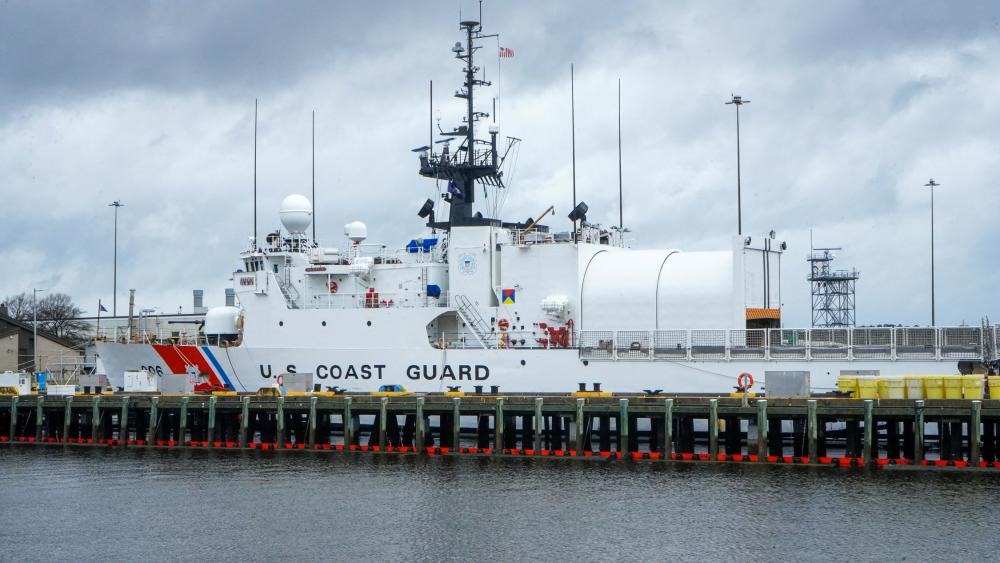
USCGC Seneca’s (WMEC 906) crew pulls into home port in Portsmouth, Virginia, Feb. 17, 2023, following a 24-day patrol in the Caribbean Sea. Seneca’s crew worked with Joint Interagency Task Force South and the U.S. Air Force to disrupt nearly 1,350 kilograms of narcotics from two law enforcement cases in the Caribbean Sea. (U.S. Coast Guard photo by Petty Officer 3rd Class Kate Kilroy)

Release from Coast Guard Atlantic Area 

***** 

Feb. 17, 2023 

USCGC Seneca’s crew returns home following 24-day Caribbean Sea patrol 

PORTSMOUTH, Va. — The crew of the USCGC Seneca (WMEC 906) returned to their homeport in Portsmouth, Friday, following a 24-day patrol in the Caribbean Sea. 

During the patrol, Seneca supported Joint Interagency Task Force – South and worked alongside the U.S. Air Force to disrupt nearly 1,350 kilograms of narcotics during two law enforcement cases in the Caribbean Sea. 

“The crew of Seneca displayed teamwork, grit and professionalism, patrolling the Caribbean Sea to deter, interrupt and interdict transnational criminal organizations smuggling illicit drugs into the United States and elsewhere,” said Cmdr. James McCormack, Seneca’s commanding officer. “Seneca rose to the challenge amidst strong winds and heavy seas to conduct surface-led interdictions in the Caribbean and stopped a drug laden go-fast vessel with three suspected drug smugglers.” 

Seneca’s crew maintained a rigorous training regimen throughout the patrol to build proficiency following a six-month dry dock availability in Brooklyn, New York. Seneca’s crew balanced damage control, engineering and navigation drills with small boat operations and flight operations. Partnering with Coast Guard Air Station Elizabeth City, Seneca completed two aviation training evolutions that enhanced both crew’s readiness. 

“After a short, but successful, patrol in the Caribbean, we look forward to returning to our families and friends while we prepare for our next mission at sea,” added McCormack. 

Seneca is a 270-foot, Famous-class medium endurance cutter with a crew of 100. The cutter’s primary missions include counter drug operations, migrant interdiction, enforcement of federal fishery laws and search and rescue in support of Coast Guard operations throughout the Western Hemisphere.