Wreck Site Identified as World War II Submarine USS Albacore (SS 218)
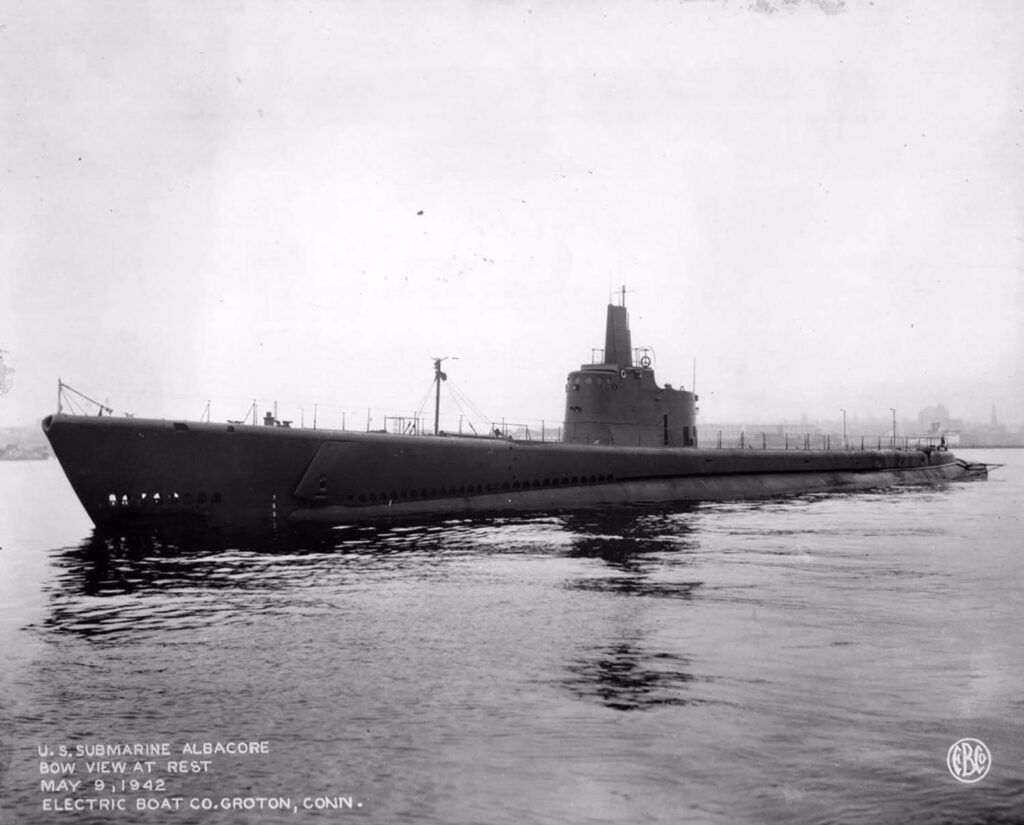
WASHINGTON (Feb. 16, 2023) A file photo dated May 19, 1942 of the Gato-class submarine USS Albacore (SS 218) as it departs Groton, Conn. Albacore served in the Pacific theater during WWII and was presumed lost and stricken from the Naval Vessel Register on March, 30 1945. The wreck site of Albacore was confirmed Feb. 16, off the coast of Hokkaido, Japan. (U.S. Navy photo)

Release from United States Navy 

***** 

From Petty Officer 1st Class Abigayle Lutz, Naval History and Heritage Command 

WASHINGTON - Naval History and Heritage Command (NHHC) confirmed the identity of a wreck site off the coast of Hokkaido, Japan, as USS Albacore (SS 218) Feb. 16. 
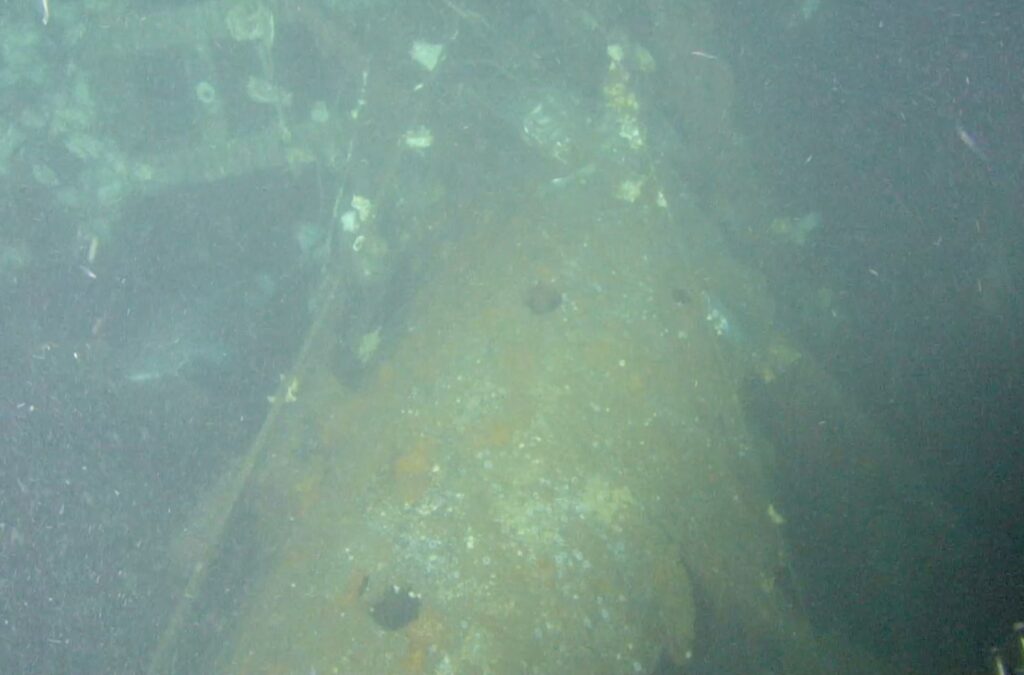
NHHC’s Underwater Archaeology Branch (UAB) used information and imagery provided by Dr. Tamaki Ura, from the University of Tokyo, to confirm the identity of Albacore, which was lost at sea Nov. 7, 1944. 
 
“As the final resting place for Sailors who gave their life in defense of our nation, we sincerely thank and congratulate Dr. Ura and his team for their efforts in locating the wreck of Albacore,” said NHHC Director Samuel J. Cox, U.S. Navy rear admiral (retired). “It is through their hard work and continued collaboration that we could confirm Albacore’s identity after being lost at sea for over 70 years.” 
 
Japanese records originating from the Japan Center for Asian Historical Records (JACAR) covering the loss of an American submarine on Nov. 7, 1944, guided Dr. Ura’s missions. The location mentioned in the records matched a separate ongoing effort by UAB volunteers to establish the location of the shipwreck. 
 
Dr. Ura’s team collected data using a Remotely Operated Vehicle to confirm the historical data. Strong currents, marine growth, and poor visibility on site made it challenging to fully document the wreck or obtain comprehensive images. However, several key features of a late 1944 Gato-class submarine were identified in the video. 
 
Indications of documented modifications made to Albacore prior to her final patrol such as the presence of an SJ Radar dish and mast, a row of vent holes along the top of the superstructure, and the absence of steel plates along the upper edge of the fairwater allowed UAB to confirm the wreck site finding as Albacore. 
 
The wreck of Albacore is a U.S. sunken military craft protected by U.S. law and under the jurisdiction of NHHC. While non-intrusive activities, such as remote sensing documentation, on U.S. Navy sunken military craft is allowed, any intrusive or potentially intrusive activities must be coordinated with NHHC and if appropriate, authorized through a relevant permitting program. Most importantly, the wreck represents the final resting place of Sailors that gave their life in defense of the nation and should be respected by all parties as a war grave. 
 
Albacore was constructed by the Electric Boat Company in Groton, CT and commissioned on June 1, 1942. Before being lost in 1944, she conducted 11 war patrols and is credited with 10 confirmed enemy vessel sinkings, with possibly another three not yet confirmed. Albacore earned nine battle stars and four Presidential Unit Citations during her career. Six of the ten enemy sinkings were enemy combatant ships, ranking her as one of the most successful submarines against enemy combatants during World War II. 
 
For more information on Albacore, please visit our website.

 
NHHC, located at the Washington Navy Yard, is responsible for preserving, analyzing, and disseminating U.S. naval history and heritage. It provides the knowledge foundation for the Navy by maintaining historically relevant resources and products that reflect the Navy’s unique and enduring contributions through our nation’s history and supports the fleet by assisting with and delivering professional research, analysis, and interpretive services. NHHC comprises many activities, including the Navy Department Library, the Navy Operational Archives, the Navy art and artifact collections, underwater archeology, Navy histories, 10 museums, USS Constitution repair facility, and the historic ship Nautilus. 
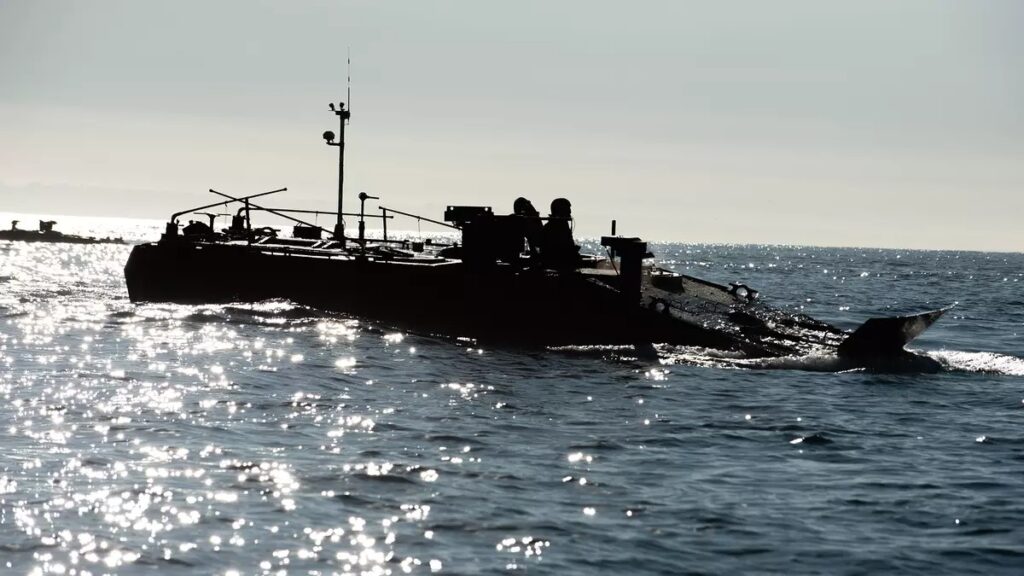


BAE Systems successfully tests Lockheed Martin Skunk Works®‘ small uncrewed aerial systems on ACV C4/UAS  

Release from BAE Systems 

***** 

SILVER SPRINGS, Nev. – Feb. 16, 2023 – BAE Systems and Lockheed Martin Skunk Works® conducted a successful test of the Stalker and Indago small uncrewed aerial systems (UAS) on an Amphibious Combat Vehicle Command, Control, Communication and Computers/Uncrewed Aerial Systems (ACV C4/UAS) variant.  

Both UAS will provide unprecedented, long-endurance reconnaissance capabilities to support the U.S. Marine Corps’ expeditionary warfare and battle management capabilities aboard the ACV C4/UAS. 

“We’re focused on giving Marines an advanced technology solution to meet their reconnaissance requirements,” said Mark Brinkman, program manager for ACV design and development. “That’s why we’re teamed with companies like Lockheed Martin—to provide Marines with the best possible capabilities for their expeditionary needs.” 

BAE Systems tested Skunk Works’ Stalker and Indago UAS along with a number of other technology suppliers as part of contractor verification testing, a key event in the ACV C4/UAS program’s lifecycle. Now that contractor verification testing is complete, the Marine Corps will conduct its own series of tests to evaluate if the ACV C4/UAS is a capable and cost-effective Government Off The Shelf (GOTS) solution for the Advanced Reconnaissance Vehicle (ARV) program.  

Skunk Works’ Stalker and Indago UAS provide industry-leading endurance, a broad operating envelope, and an open systems architecture to allow them to execute diverse and demanding missions while maintaining a small operational footprint and crew requirement.  

“Collaboration with our SOCOM and Marine Corps customers and industry partners has enabled the rapid development of needed capabilities for the warfighter – as exemplified through this partnership with BAE Systems,” said Jacob Johnson, Skunk Works UAS and Attritable Systems director. “By integrating Stalker and Indago on BAE Systems’ ACV platform, we are delivering greater mission flexibility in a small form factor that supports Marine Corps operations.”  

BAE Systems’ ACV C4/UAS vehicle is a Mobile Systems Integration Lab (SIL) built to demonstrate the transformational technology Marines need to conduct reconnaissance, surveillance, and acquisition capabilities, including the ability to sense and communicate targets over the horizon using cutting edge C4 systems. Skunk Works’ Stalker and Indago UAS are some of the technology components that the ACV C4/UAS employs to achieve this goal. 


Navy Admirals Detail Russian Arctic Build-Up

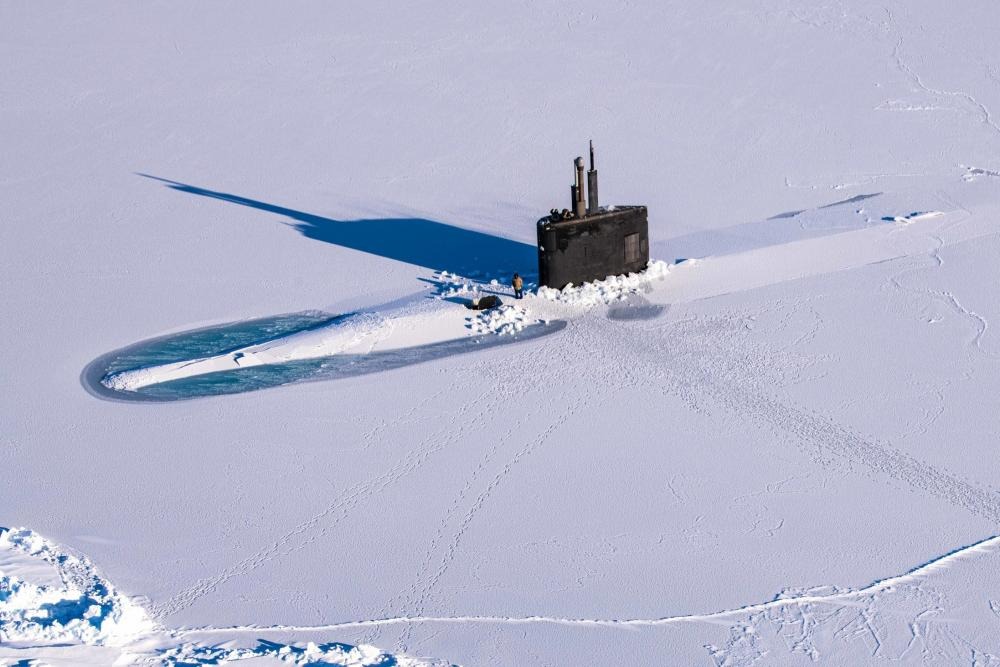
The Los Angeles-class fast-attack submarine USS Pasadena (SSN 752) breaks through the ice in ICEX, which happened concurrently with Arctic Edge 2022. Arctic Edge is a U.S. Northern Command biennial defense exercise designed to demonstrate and exercise the ability to rapidly deploy and operate in the Arctic. (U.S. Navy Photo by Mass Communication Specialist 2nd Class Trey Hutcheson) Photo by Petty Officer 2nd Class Trey Hutcheson

***** 

WASHINGTON — Senior U.S. Navy leaders in the Atlantic and European regions discussed, in some detail, the nature of the Russian build-up and naval activity in the Arctic region during a recent seminar in Washington. 

Speaking Feb. 9 at a seminar sponsored by the Wilson Center’s Polar Institute and the Center for Maritime Strategy (CMS), a think tank of the Navy League of the United States — Deterring Russia at Sea in the High North — were Adm. Daryl Caudle, commander, U.S. Fleet Forces Command and Vice Adm. Dan Dwyer, commander, U.S. Second Fleet. The seminar was moderated by retired Adm. James Foggo, dean of CMS. 

“Russia now has six bases, 14 airfields, 16 deep-water ports, and 14 icebreakers built,” Caudle said of the Russian build-up. 

“They dominate the Arctic geography and possess the corresponding ability to dominate in capability and infrastructure,” he said. “They do have legitimate sovereign interests and have elevated their Northern Fleet to constitute its own military district — think, combatant command.” 

For decades, Russia and its prior Soviet Union entity have been especially protective of the northern approaches of the Barents Sea and Artic Ocean out of a desire to maintain a protective bastion for its nuclear-tipped missile force deployed on its ballistic-missile submarines.  

Caudle said Russia has the largest icebreaker fleet in the world and has even armed icebreakers with the Kalibr cruise missile.  

“They have an active defense system that has high readiness, mobility, and firepower in the Northern Fleet,” he said. “They centralize the command-and-control authority of the S-400 [surface-to-air] missile system. They have strong anti-access and access-denial capability that reaches from the Arctic to the Baltic to the GIUK [Greenland-Iceland-United Kingdom] Gap. They have long-range, precision-guided strike weapons especially focused in and near the Kola Peninsula.” 

Caudle said those weapons include submarine-launched Kalibr submarine-launched land-attack cruise missiles, the Kinzhal long-range anti-ship missile, and the Screwdriver mobile land-attack cruise missile. 

Arctic Upgraded as Russian Priority

Dwyer, whose fleet had increased its excursions into the High North, said “[t]he stability that we enjoyed in the High North is in fact being challenged not only by climate change but by Russia themselves. 

He said that in July 2022 Russia released its new maritime doctrine, “prioritizing the Arctic as its most important maritime direction, pledging to protect these waters ‘by all means.’ This includes increasing attention on the Arctic littorals as well as the introduction of new missile capabilities … to focus on its bastion of the Northern Fleet…. Prior to this announcement, the Arctic was their number three priority. The Atlantic was their number one priority. Now Russians realize that the Arctic is the key to their economy and to their defense as they see the receding of the Arctic ice cap.” 

Dwyer also noted that in August 2022, Russia, “unveiled plans for a new strategic missile-carrying submarine cruiser for Atlantic operations. Moreover, in September Russia conducted Exercise Inka in the Arctic, deploying several submarines together, showing their capability in the High North. It is worth noting that Russia has renovated many Arctic sites and opened new ones. This is why we at JFC [NATO’s Joint Forces Command] Norfolk do everything in our power to manage and mitigate risk, prevent escalation, and ensure transparency of NATO operations in the Arctic.”   


HII Plans Additional Demonstration for Pharos Launcher for LDUUVs

HII press conference 14 Feb 2023

***** 

ARLINGTON, Va. — Huntington Ingalls Industries (HII) is seeking an opportunity to demonstrate its new launch and recovery platform for large-diameter UUVs (LDUUVs) at sea on a U.S. Navy amphibious landing platform dock ship, a company official said. 

Brian Blanchette, vice president for Quality and Engineering at HII’s Ingalls Shipbuilding, spoke to reporters in a teleconference at West 2023 on Feb. 14, a trade show and symposium of the Armed Forces Communications and Electronics Association and the U.S. Naval Institute, and said the company would welcome a demonstration of the Pharos launch and recovery system from the well deck of an LPD either underway or in port.  

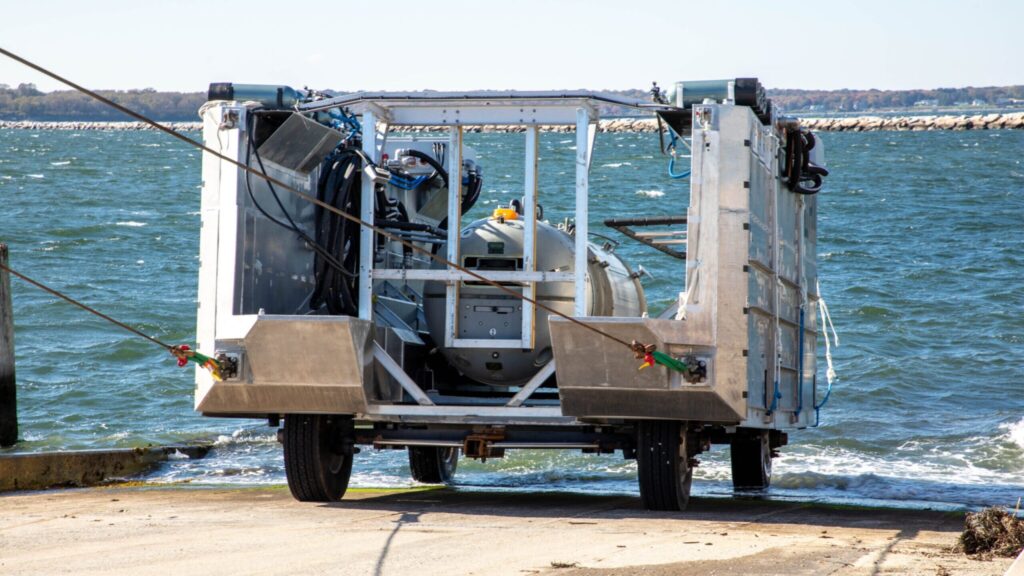
The Pharos system is a prototype cradle large enough to accommodate an LDUUV than can be streamed behind the well deck of an LPD or a well-deck-equipped amphibious assault ship (LHA/LHD) to launch the LDUUV or recover it. The cradle is tethered to a winch. 

The Pharos concept was developed by HII and underwent additional testing through cooperative agreements with the Naval Surface Warfare Center Panama City, Florida, and the Naval Undersea Warfare Center Division Newport, Rhode Island. 

The Pharos was tested dockside in the HII Ingalls shipyard in Pascagoula, Mississippi in June 2022 and towed in a river, Blanchette said. The payload for the demonstration was HII’s Proteus LDUUV. 

He said that interface testing was conducted in September 2022 with a surrogate for the Navy’s Snakehead LDUUV, followed in October 2022 with a ballast/de-ballast test with the Snakehead.  

Scalable Concept 

“When we went through the design process for this vehicle [Pharos], we did computations, including dynamic studies, to evaluate where in the wake zone of the LPD would be a favorable location for a launch and recovery vehicle and also did model basin testing at the University of New Orleans in their tow tank to look at a physical scale model and better understand the capabilities of the system at speed simulating a tow. 

“We feel like we understand some of the challenges and have designed the system around those, but we look forward to at-sea testing to further validate the concept,” he said. “We are in talks with the Navy trying to find a target of opportunity to interface with an LPD either pier-side or at sea.”  

HII also plans this year to integrate the Pharos with the REMUS 6000 UUV. 

Blanchette said the Pharos concept is scalable and could be built to accommodate extra-large-diameter UUVs such as the Orca being developed by Boeing for the Navy. 


AUSTAL USA CELEBRATES OPENING OF SAN DIEGO WATERFRONT SHIP REPAIR FACILITY 

Release from Austal USA

***** 

FEBRUARY 13, 2023 

San Diego, Calif. – Austal USA celebrated the opening of the company’s new San Diego waterfront ship repair facility today during an afternoon reception that brought together military and community leaders, elected officials, and representatives from across the ship repair industry. 

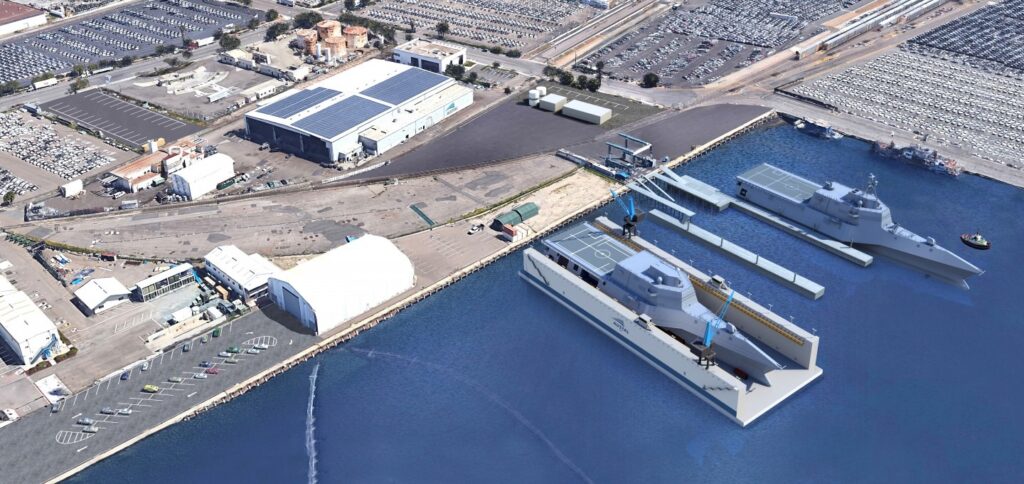
The shipyard, located adjacent to Naval Base San Diego, will provide full-service repair, maintenance and modernization services for small surface combatants, unmanned and autonomous vessels, and auxiliary ships. 

Since finalizing an agreement for the property over a year ago, Austal USA has invested over $100 million in facility upgrades and a new floating dry dock to transform the facility. The 15-acre site now provides 678 feet of improved San Diego Bay shoreline, 80,000 square feet of covered working space, and has been equipped with new pier fenders and moorings, modernized shore power conversions, and enhanced security. 

“As much as this is a significant day for Austal USA, this is a significant day for our Nation, Navy and Coast Guard customer, the National City community and surrounding Port tenants, as well as our fellow industry colleagues,” stated Austal USA President Rusty Murdaugh. “Together, we have a shared commitment to maintaining an operationally ready and available surface fleet and we are proud to join a community here on the southwest waterfront dedicated to that mission.”  

Austal USA is currently executing its first availability in its new facility, the post shakedown of the future USS Canberra (LCS 30). With the company’s new floating dry dock on schedule to be fully operational by summer 2023, Austal USA will have the capability to execute more extensive depot maintenance on Littoral Combat Ships, Frigates, and other similar sized surface combatants and auxiliaries. 

“Getting our Nation’s ships ready and out to sea is critically important. Our team responded to the need to increase capacity here in San Diego and we will similarly respond to the need to deliver ships safely from their availabilities on-time, on-budget, and warfighting ready,” Murdaugh said. “Our team is energized and we’re ready to get to work.” 

With repair and service capabilities previously established in Mobile, Ala. and Singapore, recent expansions into steel shipbuilding, and a technology center in Charlottesville, Va., the San Diego shipyard opening continues Austal USA’s growth as a full service defense provider. 


Northrop Grumman Connects Distributed Platforms Across Domains 

Northrop Grumman demonstrates its next generation gateway system on a Triton Flying Test Bed. This multi-platform, multi-domain capability on the Triton platform bolsters the Navy’s interoperability to help enable distributed maritime operations. Photo: Northrop Grumman

Release from Northrop Grumman

***** 

Multi-platform demonstration showcased interoperability among F-35, MQ-4C Triton, E-2D Advanced Hawkeye and naval ships 

SAN DIEGO – Feb. 13, 2022 – Northrop Grumman Corporation (NYSE: NOC) successfully demonstrated its gateway technology in a flight test that proved the ability to connect airborne platforms with naval assets. The first-of-its-kind demonstration was conducted with Naval Air Systems Command, Office of Naval Research, Naval Information Warfare Center Pacific and BAE Systems. 

“Our gateways provide an open, secure and resilient solution needed to enable information advantage for our customers,” said Ben Davies, vice president and general manager, network information solutions, Northrop Grumman. “This powerful combination expands the mission sets of maritime platforms to deliver a seamlessly connected fleet – a critical step as the U.S. Navy achieves its naval operational architecture to enable distributed maritime operations.” 

Equipped on Northrop Grumman’s MQ-4C Triton Flying Test Bed, the airborne gateway shared fifth-generation sensor data to ground-based simulators that represented an F-35, an E-2D Advanced Hawkeye, U.S. Navy Aegis class destroyers and carrier strike groups. The gateway integrated with Triton’s radar and artificial intelligence and machine learning capabilities to significantly enhance situational awareness across previously disconnected platforms. The addition of the gateway on Triton expands data sharing and will improve the warfighter’s ability to stay ahead of the adversary and make decisions faster across a vast and diverse environment. 

“Triton’s altitude, persistence, and robust communication links make it an ideal candidate to host the Gateway system,” said Jane Bishop, vice president and general manager, global surveillance, Northrop Grumman. ”This demonstration highlighted gateway technology enhancements to Triton that would enable information dominance across distributed maritime assets; including access to the F-35’s robust sensor suite and the E-2D’s battle management capabilities.” 

Northrop Grumman recently demonstrated another gateway solution and also unveiled Australia’s first Triton. Northrop Grumman’s family of systems brings enhanced interoperability between joint and coalition forces across air and sea. 

Northrop Grumman is a leading global aerospace and defense technology company. Our pioneering solutions equip our customers with the capabilities they need to connect and protect the world, and push the boundaries of human exploration across the universe. Driven by a shared purpose to solve our customers’ toughest problems, our 95,000 employees define possible every day.


Sikorsky Delivers Two More CH-53K® Helicopters To U.S. Marine Corps 

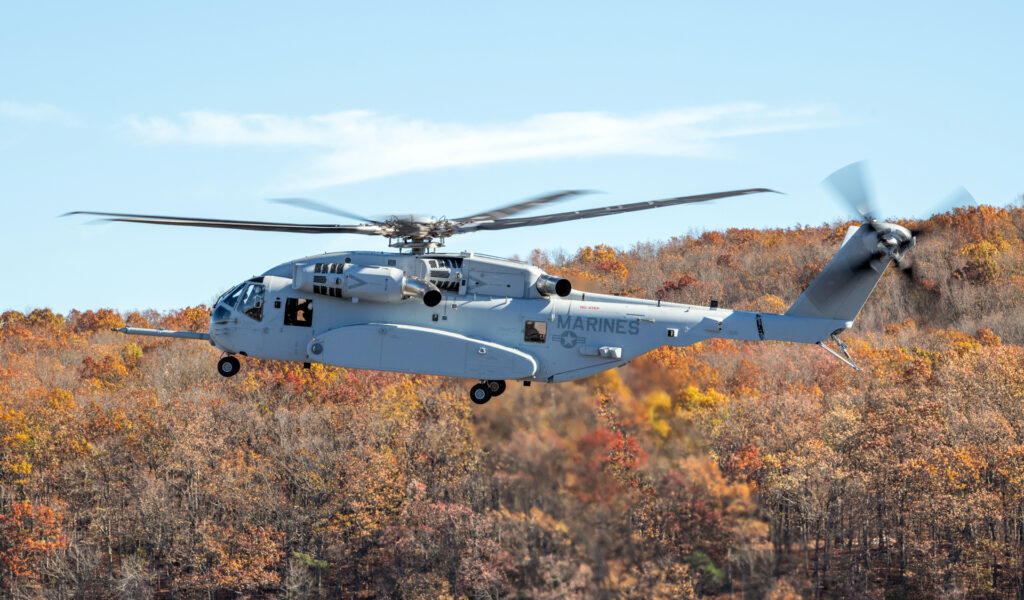
Sikorsky delivered two CH-53K Helicopters to the U.S. Marine Corps in December 2022. The heavy lift helicopters will be based at Marine Corps Air Station New River in Jacksonville, North Carolina.

Release from Sikorsky

***** 

Connecticut factory busy building multi-mission helicopters 

STRATFORD, Conn., Feb. 13, 2023 – Sikorsky, a Lockheed Martin company (NYSE: LMT), delivered two CH-53K helicopters to the U.S. Marine Corps in the final quarter of 2022. These CH-53K heavy lift helicopters join the seven already in operation at Marine Corps Air Station (MCAS) New River in Jacksonville, North Carolina. 

“Sikorsky’s employees are using advanced technologies to manufacture the CH-53K helicopter, which increases capabilities and survivability to the U.S. Marine Corps,” said Bill Falk, director Sikorsky CH-53K program. “With the CH-53K’s transformative technologies, more is possible for the Marine Corps and our allies when deterring threats in the changing battlefield landscape.” 

The CH53K’s heavy-lift capabilities exceed all other U.S. Department of Defense rotary wing platforms and is the only heavy-lift helicopter that will remain in production through 2032 and beyond. 

Production Picks Up in 2023 

Sikorsky is on track to deliver more multi-mission King Stallion™ helicopters to the U.S. Marine Corps in 2023. 

The U.S Navy declared Full Rate Production for the CH-53K program in December 2022; a decision that is expected to increase production to more than 20 helicopters annually in the coming years. The expanded production includes twelve (12) aircraft in various stages of production for the government of Israel. 

Sikorsky is procuring long-lead items and critical materials to support ramping CH-53K production to full rate production in its digital factory. 

U.S. Marine on CH-53K: “A Level of Safety You Can’t Get Anywhere Else” 

The CH-53K is an intelligent aircraft developed to 21st century standards, bringing improved safety and survivability to the warfighter. The CH-53K helicopter will provide many decades of world-wide heavy lift and multi-mission service to the Marine Corps, the Joint Force and our Allies. 

A full authority digital fly-by-wire Flight Control System (FCS) is one of many impressive capabilities setting the CH-53K King Stallion™ heavy lift helicopter apart from any other heavy lift aircraft. “Full authority” means the FCS provides all the aircraft motion – not just supplementing the pilot for stability. 

A digital fly-by-wire FCS is an electronic flight control system teamed with a digital computer that replaces mechanical control systems in an aircraft. It makes the aircraft easier to handle in degraded visual environments. 

For pilots, like Marine Corps Capt. Chris Vanderweerd, the system provides more predictable and stable control responses to improve safety and mission effectiveness. 

“We will take up to 30 fully loaded Marines and [are] able to insert them into a zone in a timely and [safe] manner where they don’t have to risk going in via convoy,” said Vanderweerd, who is with Marine Heavy Helicopter Squadron 461. “We can take them airborne and cut the time drastically that they are in enemy engagement zone essentially.” 

Watch the full video here. 

“The whole fly-by-wire system is awesome,” said Staff Sgt. Dakota Schneider, crew chief with Marine Aviation Weapons and Tactics Squadron (MAWTS) 1, who is supporting the CH-53K at MCAS New River. “It will bring a level of safety that you can’t get anywhere else.” 

Watch the full video here. 

For additional information, visit our website. 


Navy Selects CAES for Block II SEWIP Support 

Release from CAES 

***** 

February 13, 2023 

CAES to Provide Support to the Program Covering Spares, Engineering Services, and Repair for Antenna Array Panel Assemblies 

Arlington, Va. — CAES, a leading provider of mission-critical advanced RF technology, has been awarded an IDIQ contract with value to $38.5M over a five-year period from the U.S. Navy for spares, engineering services, and repairs on antenna array panel assemblies to support the SEWIP Block 2 program. 

The contract was awarded on a sole source basis. Work will be performed at CAES’ Lansdale, Pennsylvania, site and is expected to be complete by February 2028. 

“CAES has a history of performance on critical programs that help our military keep pace as needs evolve,” said Dr. Rob Smith, Senior Vice President and Division General Manager, CAES. “Our extensive knowledge of electronic warfare systems and flawless execution makes us a trusted partner of choice. We’re honored to support the Navy as it continues to implement and maintain essential programs.” 

For over 40 years, CAES has remained one of the premier suppliers of advanced electronic systems, helping to support warfighters in the changing electronic warfare landscape. CAES has supported the SEWIP Block 2 program over the past 10 years, providing antenna array panel assemblies and spares to continue to improve passive electronic counter surveillance capabilities. 

The SEWIP program has upgraded existing AN/SLQ-32 electronic warfare systems. Block 2 has added new defensive technologies and functional capabilities to electronic warfare systems, including improved electronic support receivers and combat system interfaces. These capabilities have allowed the Navy to better detect threats and provide greater situational awareness. 

CAES is a leading designer and manufacturer of advanced electronics and mission systems for defense and commercial use. CAES enables customers to fully exploit the electromagnetic spectrum by combining our decades of experience with electronic warfare systems and advanced technology. For more information about CAES’s electronic warfare capabilities, visit our website here.

About CAES 
CAES is a pioneer of advanced electronics for the most challenging defense and aerospace trusted systems. As a leading provider of advanced RF technology to the United States aerospace and defense industry, CAES delivers high-reliability RF and digital solutions that enable our customers to ensure a safer, more secure planet. On land, at sea and in the air, CAES’ extensive experience in the RF market and enhanced manufacturing capabilities are at the forefront of mission-critical military and aerospace innovation. www.caes.com 


Construction starts on the third Dreadnought Class submarine 

Release from BAE Systems 

******* 

9 Feb 2023 

BAE Systems has today marked the start of construction of the third Dreadnought Class submarine, Warspite, at its shipyard in Barrow-in-Furness, Cumbria.  

Warspite is the third of four Dreadnought Class ballistic missile submarines being designed and built by BAE Systems. Due to enter service from the early 2030s, the boats will carry the UK’s nuclear deterrent and be the biggest, most powerful and technically advanced submarines ever delivered to the Royal Navy. Construction of the first two boats, Dreadnought and Valiant, is already well underway. 

Steve Timms, Managing Director of BAE Systems’ Submarines business, said: 

“Today’s milestone is a really significant moment for the thousands of employees here at BAE Systems and across the submarines enterprise who are working together to deliver the Dreadnought Class. 

“We are immensely proud of the role we play in delivering this truly national endeavour for the Royal Navy and our contribution to protecting national security.” 

Attending today’s ceremony, Defence Procurement Minister Alex Chalk KC MP, said: 

“Our nuclear deterrent protects every UK citizen from the most extreme threats, every minute of every day and progress on the Dreadnought Class is crucial to maintaining our national security. 

“This milestone is a significant step forward in the Dreadnought programme, supporting thousands of jobs and apprenticeships across the country and protecting the UK and our allies for decades to come.” 

BAE Systems Submarines makes a significant contribution to the UK economy, supporting more than 11,000 jobs, the vast majority of which are in Barrow-in-Furness, in the north west of England. The business is continuing to grow its workforce and this year it expects to recruit more than 2,000 new employees. In addition, a record number of apprentices and graduates will join the business with more than 800 roles available in 2023. This early careers population will learn their trade working on one of the world’s most complex engineering programmes. 

Over the life of the Dreadnought programme, an estimated £7.5 billion will be spent with UK suppliers, supporting upwards of 11,800 jobs in the supply chain. 

Alongside the Dreadnought Class, BAE Systems is delivering seven Astute Class hunter killer submarines, four of which are in-service with the Royal Navy. Design and concept work is also underway on the Submersible Ship Nuclear Replacement (SSNR) programme, the eventual replacement to the Astute Class. 


Unified DoD Efforts Supporting Türkiye 

U.S. Marine Corps Brig. Gen. Andrew T. Priddy, Task Force 61/2 commanding general arrives, Feb. 9., at Incirlik Air Base, and is greeted by U.S. Air Force Col. Calvin Powell, 39th Air Base Wing commander. While supporting requirements from USAID, following an earthquake on Feb 6., Task Force, 61/2 is responsible for the coordination of joint U.S. military efforts, providing humanitarian aid and disaster relief to the people of Türkiye. U.S. AIR FORCE / Senior Airman David D. McLoney

Release from the U.S. Navy Chief of Information 

***** 

11 February 2023, From Capt. MacKenzie Margroum TF 61/2 

Marines and Sailors from Task Force 61/2 (TF 61/2), commanded by Brig. Gen. Andrew Priddy, operating under U.S. Naval Forces Europe (NAVEUR) and U.S. Sixth Fleet arrived at Incirlik Air Base in support of humanitarian assistance and disaster relief efforts, Feb. 9. 

The U.S. Department of Defense established a Command and Control Center, commanded by Priddy, to support requirements from the U.S. Agency for International Development (USAID) and to coordinate all U.S. military operations, following a 7.8-magnititude earthquake that tragically struck Türkiye on Feb. 6. 

“We are here in support of USAID to assist the government and people of Türkiye during this time of need,” said Priddy. “Right now, the Navy-Marine Corps team is working alongside the U.S. Army and U.S. Air Force to support the Disaster Assistance Response Team (DART) as they provide aid to the people of Türkiye.” 

Currently, TF 61/2 is overseeing the additional arrival of several U.S. military helicopters. The helicopters arriving include two UH-60s, three HH-60s, and three CH-47s from the U.S. Army, and a few U.S. Navy MH-60S and MH-60R helicopters from the USS GEORGE H W BUSH. These aircraft are in addition to the four UH-60 helicopters currently supporting aid from Incirlik. The primary mission of these aircraft is to support transportation and logistics for the DART and the two U.S. Urban Search and Rescue teams. 

“Our forward deployed integration with U.S. Sixth Fleet enabled us to rapidly respond to this whole of government effort,” said Priddy. “This is the value of the blue-green team, a dynamic world-wide deployable crisis response force.” 

TF 61/2 Marines and Sailors join other U.S. European Command components already on station, in addition to our U.S. allies and partners. The U.S. has helped facilitate 1337 total international aircraft sorties since the recovery efforts initiated. 

“Being able to support USAID’s humanitarian effort is an incredible opportunity,” said Lt. Michael Weaver, a Navy medical planner with TF 61/2. “We are here to assist the USAID Disaster Assistance Response Team as they assess the damage, identify priority needs, and coordinate with the Government of Türkiye.”