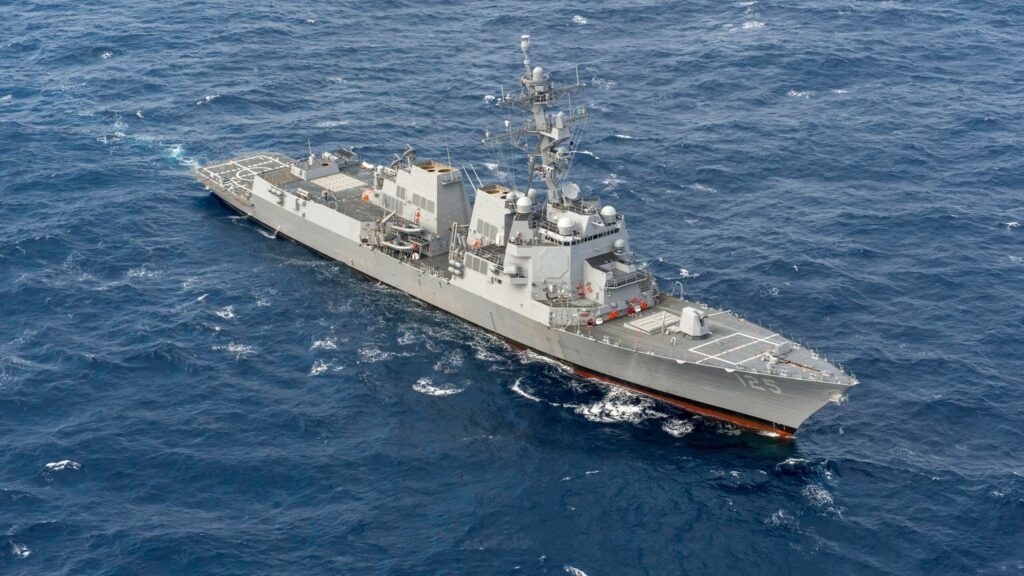
SECNAV Names Future Destroyer after MoH Recipient Capt. Thomas G. Kelley
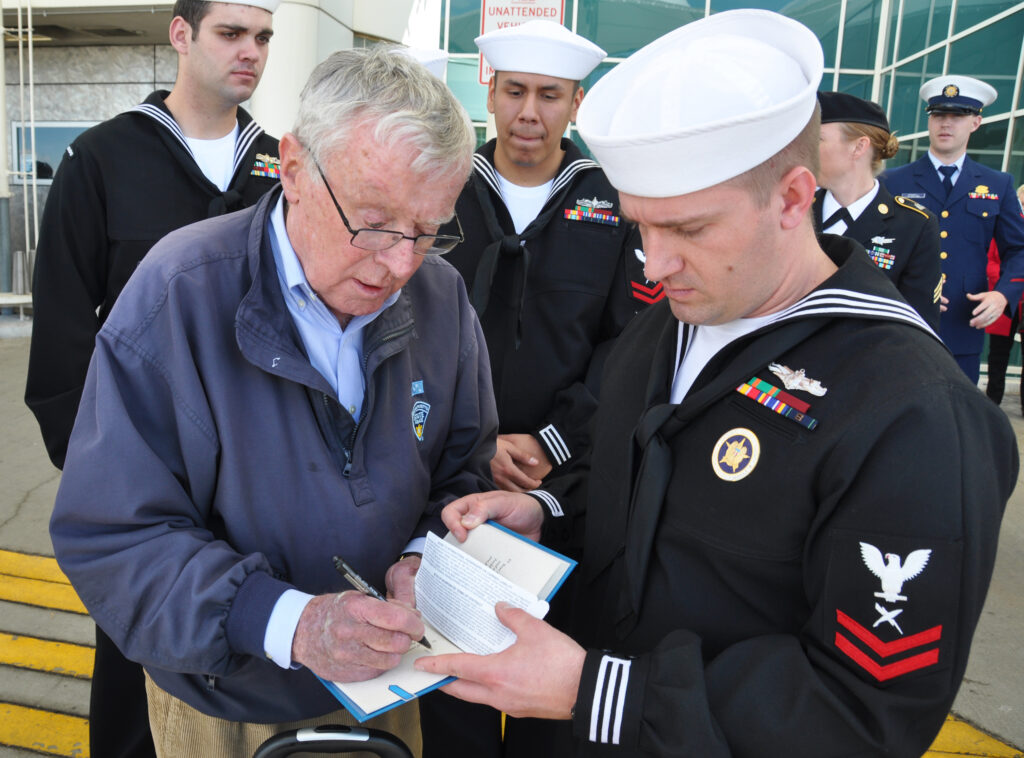
Secretary of the Navy Carlos Del Toro announced the future Arleigh Burke-class guided-missile destroyer DDG 140 will be named USS Thomas G. Kelley, named after the Medal of Honor recipient retired Capt. Thomas G. Kelley, pictured above signing a young Sailor’s book. U.S. NAVY / Petty Officer 2nd Class Robert Hartland

WASHINGTON – Secretary of the Navy (SECNAV) Carlos Del Toro announced during the Surface Navy Association Symposium that future Arleigh Burke-class guided-missile destroyer DDG 140 will be named USS Thomas G. Kelley (DDG 140), the Navy said in a Jan. 12 release.

The future USS Thomas G. Kelley will honor retired Captain Thomas G. Kelley, a Medal of Honor recipient. The name selection follows the tradition of naming destroyers after U.S. naval leaders and heroes.   

In 2020, former Secretary of the Navy Richard Spencer announced his intention to name a ship after Kelley but had yet to dedicate the name to an assigned hull number. Today, Del Toro assigns the name to DDG-140, which was appropriated in the fiscal year 2023 budget. 

“It is with great admiration and great pride that I am announcing the naming of the DDG-140 after Captain (retired) Thomas Gunning Kelley,” said Del Toro. “May we all, especially the future men and women assigned to this ship, always be inspired by Kelley’s brilliant leadership, bold initiative, and resolute determination.” 

Kelley was born in 1939 and grew up in Boston, Massachusetts. He graduated from the College of the Holy Cross in 1960 and was commissioned in the Navy. His early assignments as a Surface Warfare Officer included time aboard USS Pandemus (ARL-18), USS Davis (DD-937), and USS Stickell (DD-888). Kelley then volunteered to serve in Vietnam as a lieutenant commanding River Assault Division 152.  

Riverine Action

On June 15, 1969, Kelley led river assault craft boats when they fell under attack. Kelley, while severely wounded, continued to protect and lead his men to safety. For this gallant effort, he was awarded the Medal of Honor. Kelley, despite his injuries, continued his naval career, taking on the position of executive officer of USS Sample (DE-1048) and commanding officer of USS Lang (FF-1060). While serving, Kelley earned his master’s degree in management from the Naval Post Graduate School and completed the Armed Forces Staff College course in Norfolk, Va. Kelley retired from naval service as a Captain after thirty years, ending his tour as the director of legislation in the Bureau of Naval Personnel.  

After his military service, Kelley became the Massachusetts Department of Veterans’ Services commissioner and was named Secretary of the Department in 2003. In 2011, Kelley retired from public service and focused on charitable pursuits. He is close with the Medal of Honor Society, previously serving as president, Holy Cross’ O’Callahan Society, Arlington National Cemetery, the Homebase Program which treats veterans and active military with the hidden wounds of war, in partnership with the Boston Redsox Foundation and Massachusetts General Hospital. He also serves on the board of directors of the USS Constitution Museum. 

‘Tremendous Honor’

“It is a tremendous honor and I am truly humbled, especially as a Surface Warfare Sailor,” Kelley said. “I trust that those who sail in this ship will be reminded of service to their shipmates and that they will be carrying on a tradition greater than themselves.” 

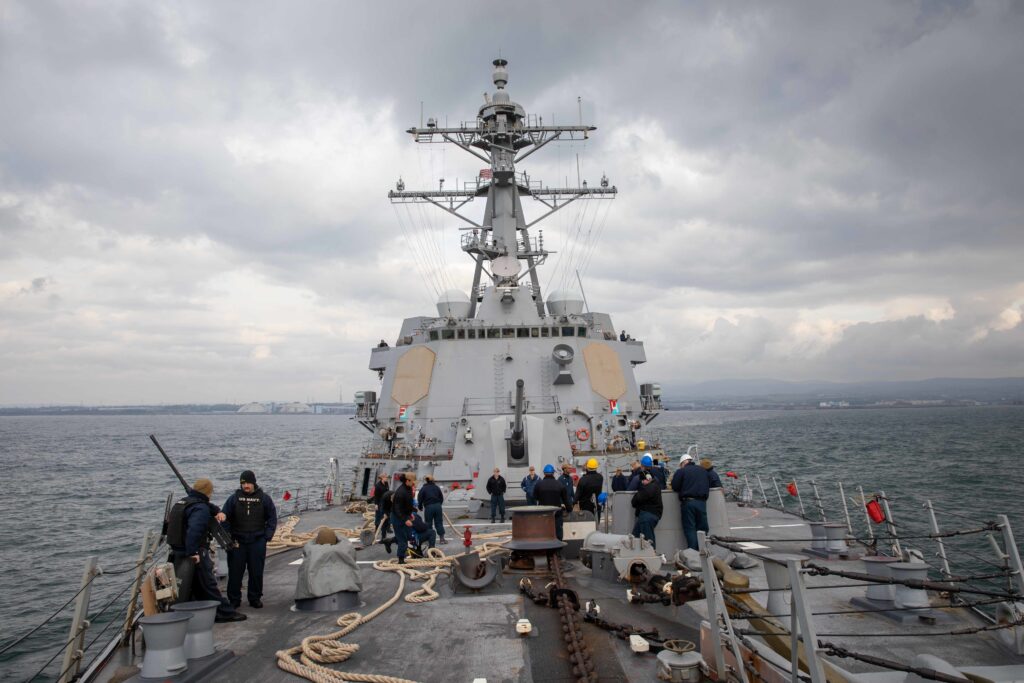
Arleigh Burke-class destroyers, built around the Aegis Combat System, are the backbone of the U.S. Navy’s surface fleet providing protection to America around the globe. They incorporate stealth techniques, allowing these highly capable, multi-mission ships to conduct a variety of operations, from peacetime presence to national security, providing a wide range of warfighting capabilities in multi-threat air, surface and subsurface domains. These elements of sea power enable the Navy to defend American prosperity and prevent future conflict abroad. 


Cutter Alex Haley Returns to Kodiak following 7-Month-Long Maintenance Period 

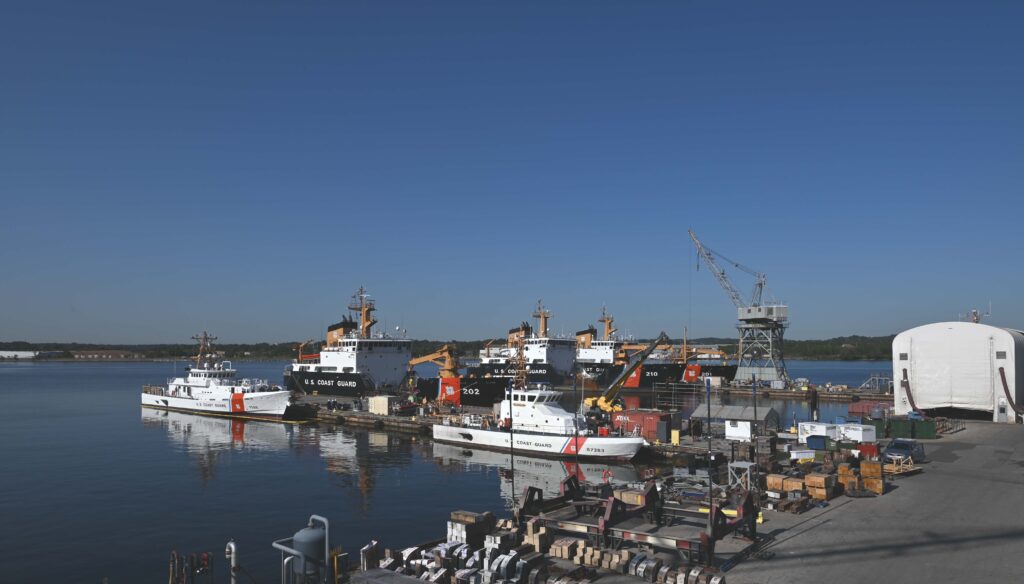
The Coast Guard Alex Haley sits dry docked for repairs and maintenance in Seattle, Washington, Dec. 13, 2022. While in dry dock, the crew and contractors successfully completed more than $6 million worth of repairs. U.S. COAST GUARD

Release from U.S. Coast Guard 

******* 

KODIAK, Alaska — The crew of the Coast Guard Cutter Alex Haley returned to homeport at Coast Guard Base Kodiak, Alaska, on Jan. 12, following an extended seven-month dry dock maintenance period in Seattle, Washington, the Coast Guard 17th District said in a release.  

While in dry dock, the crew and contractors successfully completed more than $6 million worth of repairs.  

The engineering department oversaw 76 work items including major overhauls on the cutter’s controllable pitch propeller system, speed reducers, rudders, and boilers, along with inspections of fuel, sewage, and water tanks. The operations department supervised a renewal of the Alex Haley’s flight deck, navigation systems, and electronics while maintaining critical law enforcement currencies. The deck department expertly completed vast amounts of painting and topside preservation, while ensuring small boat operational readiness.  

When crewmembers were not directly involved in repairs, they took advantage of temporary duty training opportunities to gain technical proficiencies.  

Crew Helps with Other Coast Guard Missions 

Crewmembers were sent to southern California to aid in migrant operations, supported scientific missions in the Arctic, and played a key role in the Rim of the Pacific 2022 Naval Exercise, strengthening our relationships with 33 partner nations.  

The entire crew also attended advanced damage control schools hosted by Naval Base Kitsap in Bremerton, Washington. Crewmembers were taught plugging, patching and dewatering techniques in the classroom then went hands-on, applying their knowledge to simulated flooding in a wet trainer.  

Firefighting tactics were also honed while combating real fires during two scenarios that mimicked plausible casualties on a cutter like the Alex Haley.  

“I am incredibly proud of the crew’s accomplishments during this extended maintenance period,” said Cmdr. Brian Whisler, commanding officer of the Alex Haley. “The crew worked tirelessly to make significant material and aesthetic improvements to the cutter which will have long-term benefits as we continue to prepare for future patrols in the Bering Sea. Seven months is a long time to be away from home and we are thrilled to be reunited with our family, friends, and our Kodiak Community.” 

Following its dry dock period, the Alex Haley will be able to continue operating as the Coast Guard’s primary asset in the Bering Sea with renewed and improved capabilities.  

The Alex Haley is a 52-year-old 282-foot Medium Endurance Cutter that has been homeported in Kodiak since 1999. The crew routinely operates throughout the Bering Sea, the Gulf of Alaska, and the Pacific Ocean. The Alex Haley’s ability to operate in extreme weather conditions provides the mission flexibility necessary to perform search and rescue, fisheries law enforcement, and vessel safety inspections across Alaska. 


Coast Guard, Navy Competition for Ship Availabilities to Increase: USCG Official

The Coast Guard Yard at Curtiss Bay, Maryland, is the service’s main cutter maintenance facility. U.S. COAST GUARD

ARLINGTON, Va. — The U.S. Coast Guard will be in “closer competition than we ever have before” with the U.S. Navy for dry dock and dockside availabilities for their ships, a Coast Guard official said during a panel on maintenance at the Surface Navy Association Annual Symposium on Jan. 12. 

Bob Thomas, U.S. Coast Guard deputy assistant commandant for engineering and logistics (CG-4D), said that the Coast Guard is competing for resources with both the industry and the Navy as retention and recruiting struggles. persist throughout the military. Along with maintenance areas that the Coast Guard hasn’t historically dealt with, such as cyber, that creates an intensely competitive environment, he said. 

The Coast Guard has seen many of the same recruiting and retention challenges as the other services, Thomas noted. 

“The workforce has almost become a migrant workforce,” he said. “They’ll shift to where the work is, [or] who’s paying the most. […] That drives the cost way up when people are competing for limited resources. You get to pay more for the same thing, or sometimes it’s not available.”

Collaborating to Retain Workforce Numbers

However, he added that the Coast Guard is working closely with the Navy to help mitigate some of these issues, mentioning a number of collaborative efforts that he thinks are “going to pay off huge for the Coast Guard.” 
 
Navy Rear Adm. Scott Brown, deputy commander for logistics, maintenance, and industrial operations, also said that 2022 was “not a great year” in terms of staffing at the public shipyards, stating that they were short by 1,200 personnel, with 37,000 total working in those shipyards. 
 
“A big focus of our efforts is to improve the recruiting and incentives for folks that come into the shipyards,” he said. 
 
Brown said he believes that, in addition to the economy, the state of the shipyards and changing demographics are the primary reasons why the Navy continues to struggle with recruiting and retention. 
 
To offset some of those challenges, the Navy is looking not only to boost pay, but to also offer career development opportunities to sailors. For example, the Navy has introduced a program to help mechanical expert tradespeople, a promotion that keeps them “turning wrenches” while still providing advancement opportunities.


Small Torpedo Being Prototyped by Raytheon to Arm the Navy’s Submarines

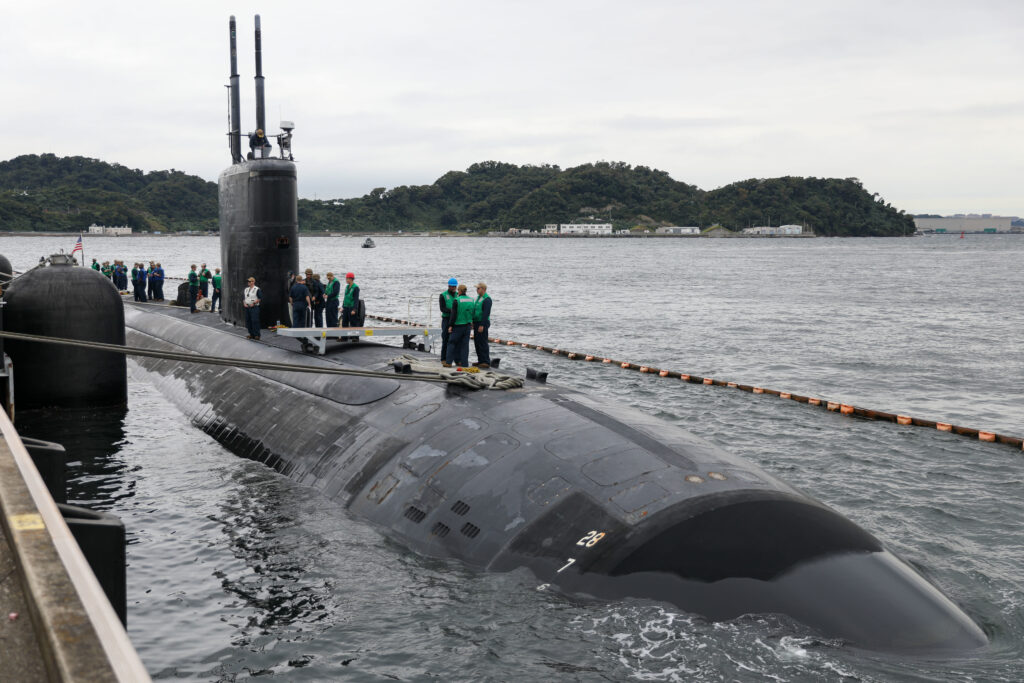
YOKOSUKA, Japan (Oct. 18, 2022) The Los Angeles-class fast-attack submarine USS Springfield (SSN 761), arrives at Fleet Activities Yokosuka for a scheduled port visit, Oct. 18, 2022. Springfield is forward-deployed to Guam and routinely operates in the U.S. 7th Fleet area of responsibility, conducting maritime security operations and supporting national security interests. U.S. NAVY / Mass Communication Specialist 2nd Class Travis Baley

ARLINGTON, Va. — Raytheon is building prototypes of a small torpedo that is designed to attack hostile submarines and defend the U.S. Navy’s submarines from incoming torpedoes. 

The Compact Rapid Attack Weapon (CRAW) is designed to be launched from a submarine’s decoy launcher rather than the submarine’s torpedo tubes, and thus will not require a separate launcher to be installed on a submarine, said Bill Guarini, Raytheon’s director of Requirements and Capabilities for Under Systems, in a Jan. 6 interview with Seapower.

Applied Physics Design in Action

Raytheon was awarded a Navy contract in September in a down-select decision to take a data package from Penn State’s Applied Physics Laboratory’s design of its nine-foot-long Very Lightweight Torpedo, updated with Technology Insertion 1 — that addresses obsolescence issues — and develop a prototype of the CRAW. Raytheon is to build 18 CRAW prototypes and 12 turn-around kits, the latter to be used to restore used CRAW prototypes to a re-usable condition. The prototypes will be delivered to the Navy with the Technology Insertion 2 data package. 

Guarini sees the CRAW as a natural fit with Raytheon’s existing torpedo business. The company builds the Mk54 lightweight torpedo deployed in surface warships and anti-submarine aircraft. 

The CRAW prototypes will be built at the company’s facility in Portsmouth, Rhode Island.


Hot Production Line for Navy’s Ship-to-Shore Connectors

Landing Craft, Air Cushion (LCAC) 104, attached to Assault Craft Unit 4, approaches the Wasp-class amphibious assault ship USS Kearsarge (LHD 3) for well deck operations Dec. 1, 2022. LCAC 100 is the Navy and Marine Corps next generation landing craft designated to replace the legacy LCAC, providing a more reliable and capable high speed amphibious connector to deliver Sailors and Marines and their equipment from ship to shore. U.S. NAVY / Mass Communication Specialist Mark O. Klimenko

ARLINGTON, Va. — Three years after the first Ship-to-Shore Connector (SSC) was delivered to the Navy, the service has accepted delivery of six SSCs, with a total of 24 under contract, with manufacturer Textron, the program manager said Jan. 11 at the Surface Navy Association’s annual symposium
 
Most recently, the Navy took delivery of LCAC 104 and LCAC 106 in June 2022 and November 2022, respectively, said Capt. Jason Grabelle, program manager for amphibious assault and connectors. 
 
Four SSCs are currently at Assault Combat Unit 4 (ACU-4) in Norfolk, Va., he said, and a number of them are going through post-delivery testing and trials. Multiple craft are currently under construction. The next milestone will be LCAC 105 going to acceptance trials.

Past Issues Resolved

In terms of differences between the aging LCAC platform and the SSC craft that will replace it, Grabelle said the two vessels basically do the same thing. The primary differences concern the four gas turbine engines on the SSC, as well as a lower life cycle cost for the SSC. 
 
“ACUs are not only the operators, they are the maintainers,” Grabelle said. “All the plus-ups we’ve made on the SSC are related to improving operational availability and maintainability.” 
 
Asked whether past issues with the gearbox and blade cracking are behind the program, Grabelle said those problems were no longer an issue. 
 
“We definitely have a steady production baseline,” he said. “We are getting more and more craft delivered to the fleet … and the production line is hot and moving along.”


Official: Navy Seeking 18 LAW Ships in POM-25

The Light Amphibious Warship will be much larger than this utility landing craft, and it will also have the ability to discharge its cargo and passengers onto unprepared shores. U.S. NAVY / Mass Communication Specialist 3rd Class Keith Nowak

ARLINGTON, Va. — The Navy will attempt to “lock in” a plan to procure 18 light amphibious warfare (LAW) ships in the Defense Department’s Program Objective Memorandum-2025 (POM-25), Marine Corps Brig. Gen. Marcus Annibale, director of expeditionary warfare (OPNAV N95), said at the Surface Navy Association’s annual symposium
on Jan. 11. 

“The light amphibious warship will birth a new class of ships,” Annibale said. “And the inventory goal is 18 [for the] initial capacity. That’s mapped to the Marine Littoral Regiment.” 

Last April, SEAPOWER reported that the Marine Corps planned to least two commercial ships over the next two years to experiment with the LAW ship concept known as landing ship medium (LSM), according to Brig. Gen. Mark Clingan, assistant deputy commandant for Combat Development and Integration and deputy commanding general of Marine Corps Combat Development Command. 

A LAW/LSM ship would be designed to carry 75 Marines in a Marine Littoral Regiment and land them ashore in an expeditionary environment. These ships would be less attractive targets for enemy missiles than a larger amphibious warfare ship, Clingan remarked. 

Annibale also said that he remained focused on a capacity goal of 31 amphibious ships for the Marines: 10 LHA/LHD large-deck amphibs, and 21 LPD/LSD amphibious transport docks. 

Mine Countermeasures

Another priority is to deliver the Mine Countermeasures Mission (MCM) package for the Independence-class Littoral Combat Ship (LCS), he said. 

“The MCM mission package is on the cusp of IOC [initial operational capability],” Annibale said. “The USS Cincinnati is doing trials on it. 

“We don’t want to put the man in the minefield, we want to put the sensor in the minefield,” he continued, noting that allies such as the Dutch and Belgians are involved from a NATO standpoint. “So very exciting times on all the capabilities that go with the MCM mission package.”


SECNAV Wants to Put Naval Strike Missiles on All Littoral Combat Ships

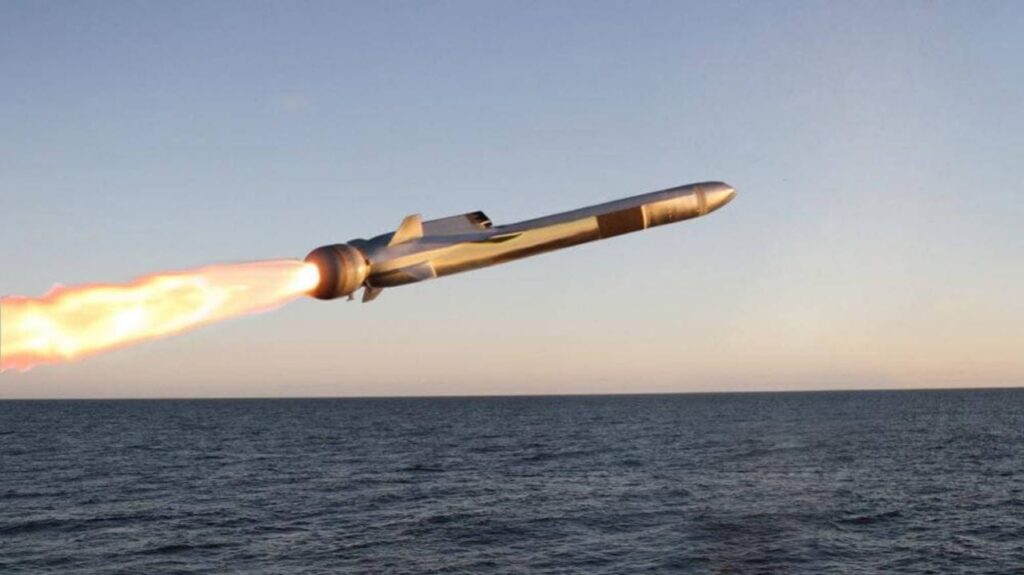
Known for its “sea-skimming” capability, the Naval Strike Missle can fly at very low altitudes over water and land. (Photo: Kongsberg)

ARLINGTON, Va. — Navy Secretary Carlos Del Toro is still keen on the role the littoral combat ship (LCS) have yet to play, despite a troubled history. 

“I’m very enthused about the future of LCS and what we’re going to do with it,” Del Toro said Jan. 11 at the Surface Navy Association’s 2023 National Symposium. “We need to put a Naval Strike Missile on each and every single one of them.” 

Littoral combat ships were designed to be fast, optimally manned, mission-tailored surface combatants that could operate in near-shore and open-ocean environments. The 33rd ship in the LCS program, the future USS Augusta, was christened in December. 

However, LCS, were plagued with reliability and maintainability issues. Serious propulsion problems developed with the newest Freedom-class littoral combat ships. The Navy wanted to retire nine LCS, but Congress pushed back on the plan. The fiscal 2023 National Defense Authorization Act (NDAA), signed into law by President Biden Dec. 23, 2022, blocked early retirement of five of the nine LCS on the Navy’s hit list. 

Creative Use 

Del Toro acknowledged a small number of LCS deemed “least capable in the high-end fight” still may have to go. When he became Navy secretary, Del Toro said he and Navy leaders were confronted with problems on the Freedom class, and, “so we had to make some difficult choices.”

Del Toro noted LCS was being used creatively by the Navy in Central and South American waters. The five-month deployment of USS Sioux City (LCS 11) with the 5th and 6th Fleets demonstrated LCS utility. Sioux City was the first LCS to deploy in the Baltic, Mediterranean and Red seas, the Gulf of Aden, Northern Arabian Sea, Gulf of Oman and Arabian Gulf.

“I look forward to deploying LCS to its fullest with all the years that they have remaining,” Del Toro said.

Concern about COVID Policy 

After his speech, Del Toro met with reporters and was asked about the impact of Defense Secretary Lloyd Austin ending his 2021 mandate requiring all members of the armed forces, to be vaccinated against COVID-19. Austin’s recission of the mandate was required by language in the fiscal 2023 NDAA. 

Before the legislation passed, Del Toro was concerned that a repeal of the vaccine mandate might lead to potential movement restrictions. “It will create almost two classes of citizens in our services – those that can’t deploy and those that can deploy,” he said on Dec.6. 

Del Toro said the Navy Department had followed Austin’s directive, but he expected additional guidance from the Pentagon. 

Asked if he anticipated any short-term problems absent specific guidance, Del Toro said, “No, I think the majority of service members, across all services, quite frankly, get the COVID vaccination whether they’re told to, or not.”  

While more than two million service members have been fully vaccinated, according to the Defense Department, thousands who declined the shot were separated from the military. “I suspect that a lot of people who wanted to leave the military, perhaps, did not go down that path [vaccination], so they could leave the military, perhaps before their contract expired,” Del Toro said.  


Fleet Forces Commander: Surface Warships Need to be ‘Plug and Play’ 

CIVITAVECCHIA, Italy (Jan. 3, 2023) The Arleigh Burke-class guided-missile destroyer USS Nitze (DDG 94) departs Civitavecchia, Italy, following a scheduled port visit, Jan. 3, 2023. The George H.W. Bush Carrier strike Group is on a scheduled deployment in the U.S. Naval Forces Europe area of operations, employed by U.S. 6th Fleet to defend U.S., allied, and partner interests. (U.S. Navy photo by Mass Communication Specialist 2nd Class Cryton Vandiesal)

******

ARLINGTON, Va. — The U.S. Navy’s surface combatants need to be able to operate independently but also integrate with a strike group seamlessly, the admiral in charge of setting fleet doctrine said.  

The Navy needs “to capitalize on our Navy’s greatest strength: its ability to distribute and concentrate lethal effect, and out timing and tempo,” said Adm. Daryl Caudle, commander, U.S. Fleet Forces Command, speaking Jan. 11 at the annual Surface Navy Association symposium in Arlington. 

“This requires our surface combatants to be much more plug and play inherently,” Caudle said. “Our ships should not have to work up together to fight effectively together.” 

Caudle said that ‘[f]rom my vantage point, the way we accomplish this is by redesigning the core carrier strike group. In my view of the model, the core strike group would be built on a CVN [aircraft carrier], of course, an air-defense missile ship, and a re-supply oiler. These units matriculate through the core OFRP [Optimized Fleet Response Plan] based on the CVN’s required phases.” 

The OFRP is the fleet’s standard ship cycle construct that guides a roughly 36-month readiness roadmap. It is designed to provide the fleet with continuously ready, fully certified warships ready to accomplish a full range of on-demand missions at all times. The ships in a strike group go through maintenance, deploy, and stand ready to surge together. 

Deploy Independently, Seamlessly Integrate 

“By removing and de-coupling the requirement that all supporting ships are tied to the CVN’s OFRP phase length, I optimize each surface ship based on a more tailored set of requirements allows me in concept to improve the readiness and availability of our surface Navy to deploy and respond,” Caudle said. “Each surface ship would be trained and certified on their pre-determined set of warfare area competencies beyond basic operations, enabling them to deploy independently and plug into a strike group seamlessly at the point of need. In conflict, this is an absolute necessary.” 

Caudle said the Navy is re-examining training and deployments to align with what already is happening in the fleet.  

“The beauty of this re-designed strike group concept is that it becomes an interchangeable force that can integrate [in a fungible way] into a myriad of environments, with multiple commanders across AORs [areas of responsibility] worldwide,” Caudle said. “This and many other problems and challenges reduce the O [optimized] in the OFRP and are being examined by a cross-functional team led by my fleet readiness officer.” 


CNO Gilday: Shipbuilders Need to Deliver Vessels Faster

The Flight III Arleigh Burke-class guided-missile destroyer Jack H. Lucas, shown on builder’s trials. Congress is pushing the Navy to procure three destroyers per year. 

******* 

ARLINGTON, Va. — The nation’s shipyards need to accelerate their delivery of ships to demonstrate they deserve the maxed-out funding they have received from Congress, Chief of Naval Operations Michael Gilday said Jan. 10 at the Surface Navy Association‘s Annual Symposium. 
 
Gilday said he thought the Navy’s $27.5 billion proposal for shipbuilding in the most recent budget was the maximum that the seven shipyards — five of which build surface ships — could handle, but Congress authorized an additional $4 billion on top of that. One of the main drivers? Congress wants the Navy to buy three destroyers per year. 
 
Now, the shipbuilding industry needs to show that they can produce at the rate the funding requires, he said.

Navy Not Getting What it Pays For

“We are not necessarily getting what we are paying for with respect to two or three ships per year,” Gilday said, noting that industry is also falling short of the two-attack-submarines-per-year production goal. “Right now, I see them a little bit behind on some of our production lines.” 

In November, Congress approved the increase to three destroyers per year as part of the National Defense Authorization Act for 2023, which authorized $816.7 billion in overall defense spending. The Navy asked for two ships as part of a nine-ship multi-year destroyer proposal with an option for a 10th. However, Congress approved a more aggressive buy of 15 destroyers over five years, which would require three per year. HII’s Ingalls Shipbuilding and General Dynamics’ Bath Iron Works would be the primary shipbuilders. 

The Navy has faced continued questions about industrial capacity to build these ships, and the service is likely to face scrutiny in the coming years over shipyard production rates.


Fleet Forces Commander Scolds Weapons Industry for Supply Chain Woes

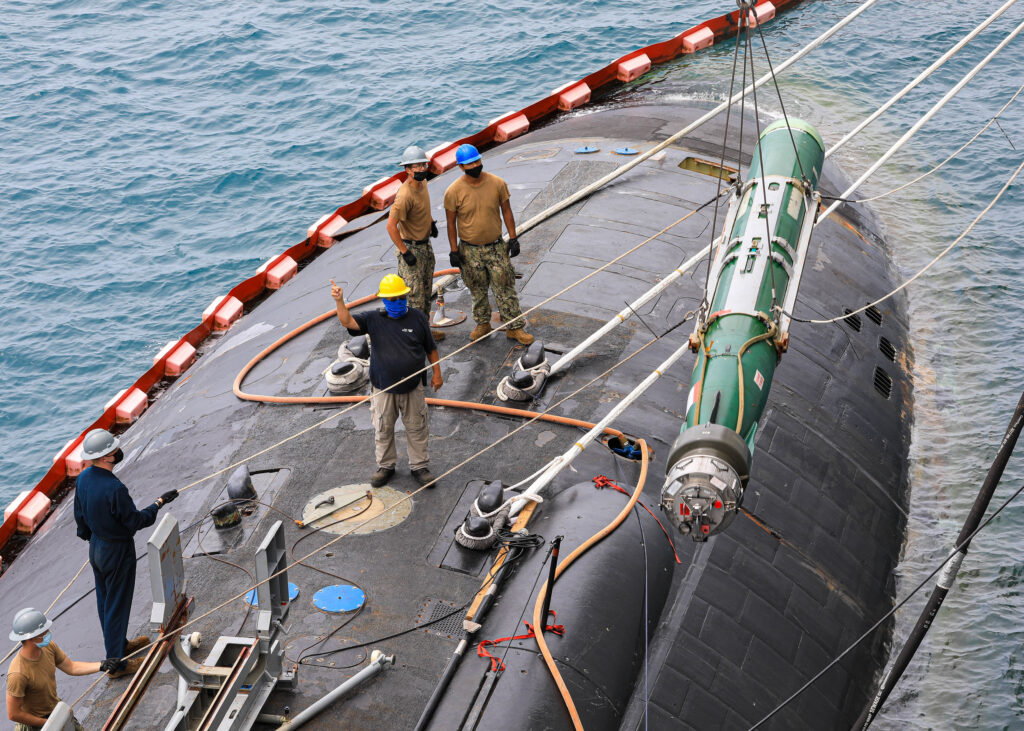
POLARIS POINT, Guam (Sept. 13, 2021) Sailors and civilian mariners assigned to the submarine tender USS Emory S. Land (AS 39) and Sailors assigned to the Los Angeles-class fast-attack submarine USS Asheville (SSN 758) offload a Mark 48 advanced capability torpedo from Asheville during a weapons handling evolution, Sept. 13, 2021. Emory S. Land is one of two U.S. Navy submarine tenders that provide maintenance, berthing and logistical support to submarines and surface ships in the U.S. 5th and 7th Fleet areas of operation. (U.S. Navy photo by Mass Communication Specialist 3rd Class Naomi Johnson)

******* 

ARLINGTON, Va. — The Navy’s admiral who sets manning, training, and equipping the fleet scolded the weapons industry in a blistering response to a question from an audience of naval personnel and defense industry officials about delays in delivery of equipment such as weapons. This countered a common industry citation of supply chain woes related to the COVID-19 pandemic. 

“I’m not as forgiving of the industrial base — I’m just not,” said Adm. Daryl Caudle, commander, U.S. Fleet Forces Command, speaking Jan. 11 at the annual Surface Navy Association symposium in Arlington. “I am not forgiving of the fact that you are not delivering the ordnance that we need.” 

“All this stuff, about COVID this, parts, supply chain this — I just don’t really care. We’ve all got tough jobs,” Caudle said, sparking a round of applause from the audience. “I need SM-6s [Standard Missile-6s] delivered on time, I need Mark 48 torpedoes delivered on time. We’re talking about warfighting, national security and going against a competitor here and a potential adversary that’s like nothing we’ve ever seen, and we kept dilly-dallying around with these deliveries.” 

“I don’t see good accountability, I don’t see a good return on investment from the government side,” he said. “If you want to take me to a room and show me your sob story, I’d be happy to hear it, but at the end of the day, I want the magazines filled, all of the ships’ tubes filled.”  

Robbing Peter to Pay Paul 

“I don’t want to have to bring a strike group back so I can rob Peter to pay Paul so the next one [strike group] can go, and then if I want to help a country out like Ukraine, I’m not sitting, talking about what it is doing to me, I’m talking about, ‘Of course we’re going to help a country, deliver the stuff we need so they can win that conflict against Russia and it’s not going to send me back to the Dark Ages,” Adm. Caudle said.

“I’m frustrated … because it’s so essential to winning, and in my position and for people in the room in uniform, that’s all that matters, and I can’t do that without ordnance,” he said.