U.S. Navy Awards $13.5 Million for BAE Systems’ Smart D2 Technology
AUSTIN, Texas — The U.S. Navy has awarded BAE Systems $13.5 million to incorporate its Smart D2 technology as part of the U.S Navy’s ALE-47 Common Carriage program which increases expendable payload capacity as the service converts from round to square countermeasures, the company said in a Dec. 13 release. The contract is an Other Transaction Agreement (OTA) through the Naval Aviation Systems Consortium (NASC). This is the first purchase of Smart D2 technology by the Department of Defense (DoD).
“Aircraft survivability technology is in a race against emerging threats,” said Don Davidson, director of the Advanced Compact Electronic Warfare Solutions product line at BAE Systems. “Smart D2 elevates legacy systems to the technology capabilities of next-generation smart countermeasures.”
The Smart D2 technology can be integrated into an aircraft’s existing ALE-47 Airborne Countermeasures Dispenser System — the trusted system of choice for aircraft survivability among U.S. armed forces and international allies. More than 4,000 ALE-47 systems have been installed in over 30 countries.
Instead of replacing an aircraft’s entire ALE-47 system, Smart D2 technology allows for the replacement of key elements — the programmer, sequencer, dispenser and expendables. The programmer contains a regularly-updated database of known threats and identifies the appropriate payload, quantity, and dispensing intervals of each countermeasure. It also provides two-way communication of mission-critical information to enable pilots to make more informed decisions on the spot.
Smart D2 technology supports the U.S. Navy conversion to countermeasure expendables with the same square form factor as the U.S. Air Force and the U.S. Army. The Smart D2 sequencer and square style dispenser are a form and fit replacement to the current ALE-47 sequencer and dispenser for the U.S. Navy’s effort under the NASC OTA. Smart D2 will be deployed on USN rotary and fixed-wing aircraft and is also designed to operate on future platforms.
Work on Smart D2 under the ALE-47 Common Carriage program is underway at BAE Systems’ state-of-the-art facility in Austin, Texas.
The Netherlands Selects KONGSBERG’s Naval Strike Missile for Frigates
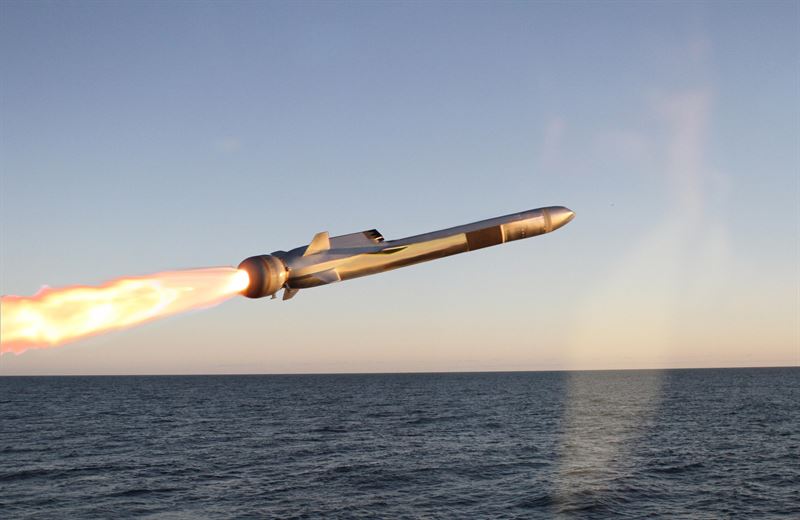
Naval Strike Missile KONGSBERG
KONGSBERG, Norway — Kongsberg Defence & Aerospace AS has entered into a contract with the Netherlands Ministry of Defence to supply the Naval Strike Missile (NSM) for their fleet of Air Defence & Command Frigates, the company said in a Dec. 12 release.
The NSM, at its core, is designed to handle future threats and warfighting environments making it a 5th-generation, long-range, multi-mission (anti-ship & land attack) precision strike missile designed to ensure efficient strikes under complex conditions.
“KONGSBERG is very proud to have been selected by the Netherlands Ministry of Defence to provide the NSM to the Royal Netherlands Navy (RNLN) Air Defence & Command Frigates. This is another great achievement for the NSM program and we are very pleased to welcome the RNLN as a member of the NSM User Group,” says Eirik Lie, President of Kongsberg Defence & Aerospace.
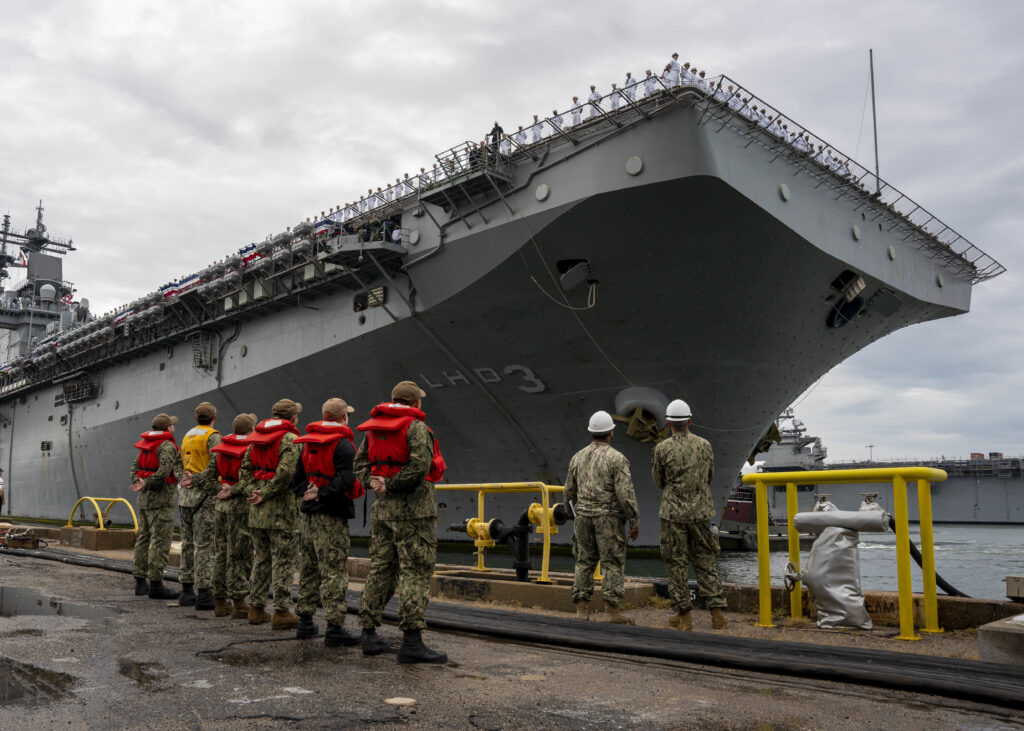
The Wasp-class amphibious assault ship USS Kearsarge (LHD 3), returns to Naval Station Norfolk after a seven-month deployment, Oct. 13, 2022. U.S. NAVY / Mass Communication Specialist 2nd Class Nathan T. Beard
NORFOLK, Va. — BAE Systems has received a $294.7 million contract from the U.S. Navy to drydock and perform more than 20 months of maintenance and modernization work on the amphibious assault ship USS Kearsarge (LHD 3), the company said in a Dec. 12 release. The contract includes options that, if exercised, would bring the cumulative value to $340.3 million.
Under the awarded contract, the maintenance availability of USS Kearsarge will begin in April. Starting in June, the 843-foot-long ship will be drydocked for nearly a year at BAE Systems’ Norfolk shipyard. The shipyard will perform extensive hull, tank and mechanical work, rehabilitate all crew and embarked Marine living compartments onboard, and inspect the ship’s boilers. BAE Systems is expected to complete work aboard the 29-year-old ship in January 2025.
“The extended sustainment period onboard the USS Kearsarge provides a great environment to apply BAE Systems’ substantial experience with ships of the same class and considerable production skills, and supports job stability across our shipyard and supply base,” said Mike Bruneau, vice president and general manager of BAE Systems Norfolk Ship Repair. “Through our maintenance and modernization efforts, the Kearsarge will be ready to deploy for many years to come.”
USS Kearsarge is the third ship of the USS Wasp class of U.S. Navy amphibious assault ships, which are designed to carry expeditionary Marines and their equipment to anywhere in the world. The current Kearsarge is the fourth U.S. Navy vessel to sail with the name. The company’s Norfolk shipyard is also completing a similar modernization project aboard the Wasp.
To prepare for drydocking the Kearsarge, BAE Systems has been hiring employees and temporary workers. Individuals interested in joining the team can visit jobs.baesystems.com for more details. The Norfolk shipyard currently employs about 1,000 people across a number of skilled marine trades and support functions.
Boeing Selects Lufthansa Technik to Support New Zealand’s P-8A Poseidon Fleet
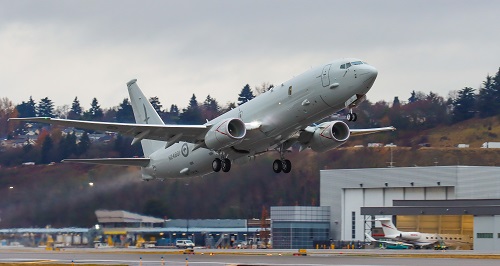
P-8A aircraft. BOEING
BERLIN — Boeing has awarded Lufthansa Technik a contract for sustainment services within its support of the Royal New Zealand Air Force’s (RNZAF) future fleet of four P-8A aircraft that will leverage commercial capabilities to improve readiness rates, Boeing announced in a Dec. 12 release.
The contract is for provision of Lufthansa Technik’s Total Component Support (TCS), a comprehensive component services program for the 737 covering more than four hundred commercial common parts included in the configuration of the P-8A, a military derivative of the popular airliner. Leveraging the 737 commercial market in support of P-8A international customers will allow smaller fleets easier access to necessary global supply chain inventory from the more than four thousand 737 aircraft operating today.
“Our collaboration with Lufthansa Technik is a strong example of how industry can work together to solve customer challenges and maintain high readiness rates,” said Torbjorn (Turbo) Sjogren, Boeing vice president and general manager, Government Services. “Our goal is to expand service offerings from a strategic German industry partner for additional P-8A customers to benefit.”
The TCS program provided by Lufthansa Technik allows the RNZAF to reduce investment in commercial common parts and improve aircraft readiness through access to the German company’s maintenance, repair and overhaul (MRO) global supply chain.
Boeing and Lufthansa Technik signed a strategic Memorandum of Understanding (MOU) in 2021 to support Germany’s P-8A Poseidon fleet. The MOU expanded to a three-party agreement with ESG Elektroniksystem- und Logistik-GmbH in 2022.
“Lufthansa Technik is a longstanding partner with a long history of supporting Boeing aircraft around the world,” said Michael Haidinger, president of Boeing in Germany. “This new contract is a clear demonstration of our commitment to German industry and how we partner across the Atlantic and globally, shaping meaningful partnerships that ensure continued economic and industrial growth in Germany.”
Under Boeing’s Performance-Based Logistics program, Lufthansa Technik also provides hardware support to the Italian fleet of Boeing KC-767A tankers and has facilitated outstanding aircraft availability for the Italian Air Force.
“As a renowned expert for Special Mission aircraft and a leading maintenance, repair and overhaul provider with decades of experience in servicing commercial Boeing 737s, we are delighted to soon start servicing New Zealand’s Poseidon fleet. The strong partnership with Boeing enables us to offer the best possible service level over the entire life cycle of the aircraft,” said Michael von Puttkamer, vice president special aircraft services at Lufthansa Technik. “We are very much looking forward to further cooperation with our partners in Germany and beyond.”
In July 2018, the government of New Zealand announced the purchase of four P-8A Poseidon aircraft to replace their aging fleet of P-3K2 maritime patrol aircraft. The first P-8A to New Zealand was delivered December 2022, with three remaining aircraft to be delivered in 2023.
Deployed around the world with 155 aircraft delivered or in service, and more than 450,000 collective, mishap free flight hours, the P-8A is vital for global anti-submarine warfare, intelligence, surveillance and reconnaissance and search-and-rescue operations.
U.S., Iraq, Kuwait Conduct 2nd Joint Patrol in Arabian Gulf
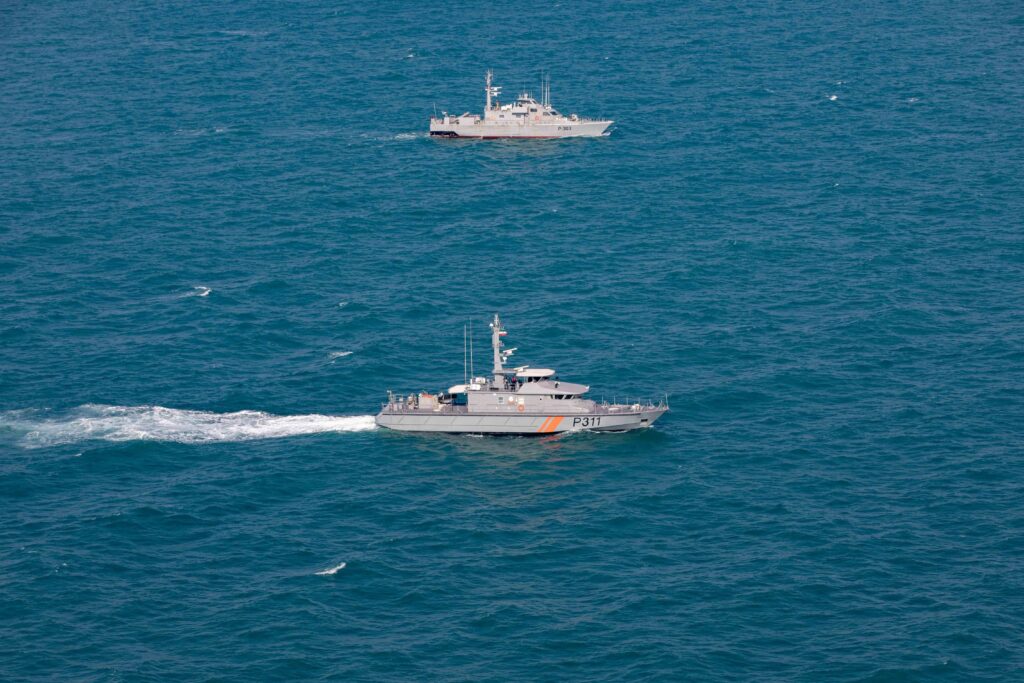
Ships from the Iraq Navy and Kuwait Coast Guard operate in the Arabian Gulf, Dec. 11. The ships completed a joint patrol with the United States in the Arabian Gulf for the second time in four months to promote regional maritime security. U.S. ARMY / Spc. Aaron Troutman
MANAMA, Bahrain — Maritime forces from Iraq, Kuwait and the United States completed a joint patrol in the Arabian Gulf, Dec. 11, representing the second time in four months the three nations sailed together to promote regional maritime security, Commander U.S. Naval Forces Central Command Public Affairs said in a Dec. 12 release.
U.S. Navy mine countermeasures ship USS Dextrous (MCM 13) operated with ships from the Iraq Navy and Kuwait Coast Guard. The vessels conducted maneuvering and maritime security drills.
“Partnerships are at the foundation of maritime security and stability in the Middle East,” said Vice Adm. Brad Cooper, commander of U.S. Naval Forces Central Command, U.S. 5th Fleet and Combined Maritime Forces. “Our continued collaboration reflects our collective commitment to safeguarding regional waters.”
The three nations previously conducted a similar patrol in the Arabian Gulf on Aug. 25. U.S. Navy patrol coastal ship USS Sirocco (PC 6) and U.S. Coast Guard fast response cutter USCGC Charles Moulthrope (WPC 1141) participated.
Dextrous is an Avenger-class mine countermeasures ship designed to clear mines from vital waterways. The ship is forward-deployed to Bahrain where U.S. 5th Fleet is headquartered.
U.S. 5th Fleet’s operating area includes 21 countries, the Arabian Gulf, Gulf of Oman, Red Sea, parts of the Indian Ocean and three critical choke points at the Strait of Hormuz, Bab al-Mandeb and Suez Canal.
HM-14 Squadron Makes its Final Flight in MH-53E Helicopter
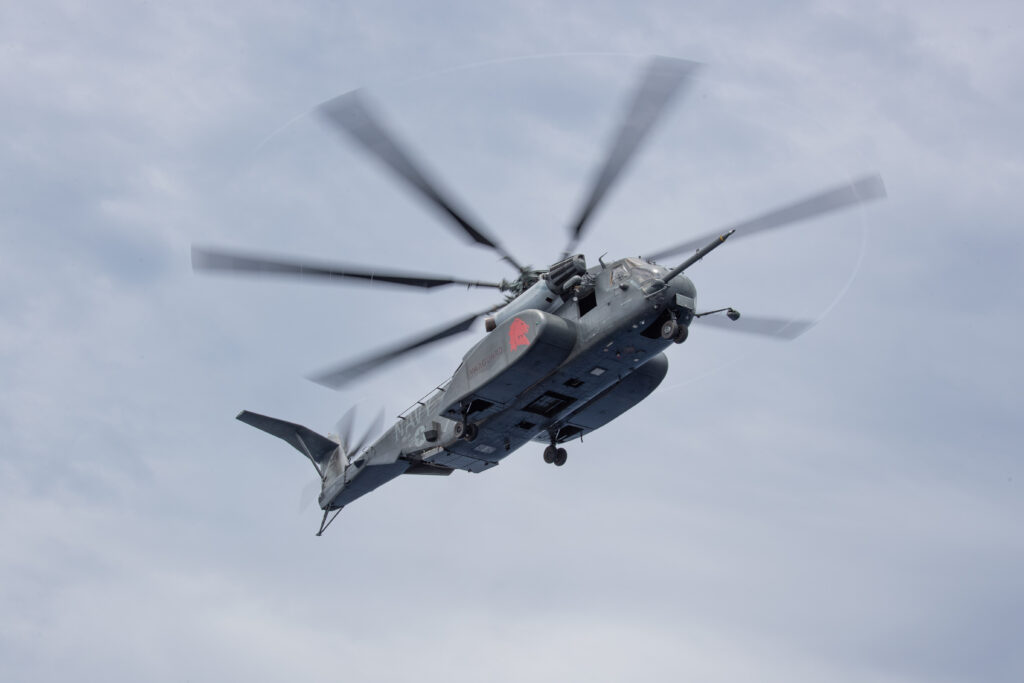
An MH-53E Sea Dragon, attached to the “Vanguard” of Helicopter Mine Countermeasures Squadron takes off from the Ford-class aircraft carrier USS Gerald R. Ford’s (CVN 78) flight deck, June 16, 2022. U.S. NAVY / Mass Communication Specialist 3rd Class Jackson Adkins
NORFOLK, Va. — The World-Famous Vanguard of Helicopter Mine Countermeasures Fourteen (HM-14) flew the final flight of the squadron in Norfolk, Virginia, on Dec. 8, said the squadron’s commanding officer, Cdr. Nicklaus Smith, in a release.
After nearly 45 years of service, flying the RH-53D and the MH-53E, the Vanguard are officially de-activating in July 2023. The sailors of HM-14 have served and flown on every continent in the world over their 45-year history and have been a part of numerous critical military operations. With the Navy’s decision to develop and field new technologies and approaches to mine countermeasures, to include a family of manned and unmanned systems, the MH-53E Sea Dragon is entering its final years of service.
HM-14 is the first of the Navy’s two operational MH-53E squadrons to disestablish, ending a run of 45 years of service to the country. Throughout its history, the squadron underwent numerous changes to its manning and structure and even introduced a new helicopter, but always remained steadfast to Norfolk, Virginia.
Some of HM-14’s aircraft and personnel will be absorbed by sister squadron HM-15.
The tens of thousands of sailors who called HM-14 home have served the community well, and many have permanently called Hampton Roads home. The final sailors of HM-14 have finished strong over the last year few years, winning the Battle E award in both 2020 and 2021.
“There is no greater honor than serving our fellow citizens of the USA, and doing it maintaining and flying the world’s biggest and most powerful helicopter! We have so much fun doing what we do, and playing a small part in maintaining freedom in America and around the world!” Smith said. “I’m so proud of all the sailors of the Vanguard, both past and present, who have served with distinction. Our alumni have attained MCPON [master chief petty officer of the Navy] and Admiral, but I’m most proud of the young men and women who gave blood, sweat and tears, in challenging environments across the world, and kept the Big Iron flying!”
Attack Submarine USS California Returns from Deployment
GROTON, Conn. — The Virginia-class fast-attack submarine USS California (SSN 781) returned home to Naval Submarine Base New London on Thursday, Dec. 8, after a four-month deployment, said Lt. Cmdr. Seth Koenig of Commander, Submarine Force Atlantic, in a release.
“Our submarines provide our nation with unmatched stealth and firepower that can be wielded at any time,” said Capt. Thomas O’Donnell, commander of Submarine Squadron 12, under which California operates. “Cmdr. Henry and his California crew exhibited that high state of readiness and effectiveness over the last several months by executing a short-notice, unscheduled surge deployment to the European Command area of operations. We’re glad to welcome them home now to spend the holidays with their families after another job well-done.”
After California moored to the pier, the ship’s Petty Officer 3rd Class Louis Longwell and his girlfriend Sabine Saladrigas were recognized with the ceremonial first kiss on the pier, while Senior Chief Petty Officer Joseph Wisniewski and his three children were recognized with the ceremonial first hug.
Lt. Tom Krysil, California’s navigator, met his baby son, Christopher, for the first time. Krysil’s wife — and Christopher’s mother — is Molly Krysil, who is also a submarine-qualified Navy officer.
“I’m incredibly proud of the crew of California, who showed once again that America’s Submarine Force is agile and mission ready at all times,” said Cmdr. James Henry, commanding officer of USS California. “This is a dedicated, hard-working team of Sailors and I’m honored to serve alongside them at sea. As with any operational period, we couldn’t do it without the love, support and sacrifice of our families back home, and I’m happy to lead this crew home for the holidays.”
USS California was commissioned on Oct. 29, 2011. SSN 781 is the seventh U.S. warship commissioned under the name California, following a Tennessee-class battleship active during World War II and the 1974 lead ship of a class of nuclear-powered guided missile cruisers, among others. The submarine California has a crew of more than 130 personnel, is more than 377 feet long and can displace nearly 7,900 tons.
Fast-attack submarines are multi-mission platforms enabling five of the six Navy maritime strategy core capabilities – sea control, power projection, forward presence, maritime security and deterrence. They are designed to excel in anti-submarine warfare, anti-ship warfare, strike warfare, special operations, intelligence, surveillance and reconnaissance, irregular warfare and mine warfare. Fast-attack submarines project power ashore with special operations forces and Tomahawk cruise missiles in the prevention or response to regional crises.
USNS Comfort Completes Continuing Promise 2022 Stop in the Dominican Republic
The hospital ship USNS Comfort (T-AH 20) sits anchored in the harbor of Santo Domingo, Dominican Republic on Nov. 27, 2022. U.S. NAVY / Mass Communication Specialist 3rd Class Deven Fernandez
SANTO DOMINGO, Dominican Republic — U.S. Navy hospital ship USNS Comfort (T-AH 20) completed its fourth mission stop of Continuing Promise 2022 in Santo Domingo, Dominican Republic, Dec. 6, 2022, Mass Communication Specialist 3rd Class Sophia Simons of the U.S. Fourth Fleet said in a Dec. release.
For the duration of the 10-day visit to the Dominican Republic, the Comfort team, comprised of medical professionals from the U.S., the Dominican Republic, Ecuador, Canada, U.K., the Netherlands and Chile, service members from the Puerto Rico National Guard, and interpreters and medical students, provided care for 4,435 patients at the medical sites in Santo Domingo and Azua. The team also filled 7,446 prescriptions, conducted 209 x-rays and 78 ultrasounds, and performed 87 surgeries aboard the ship.
“The Comfort team hit their stride in the Dominican Republic, incorporating lessons learned from previous port stops and improving our process daily,” said Cmdr. Bryan Carmichael, commodore of Amphibious Squadron (PHIBRON) 4. “Despite the added difficulty of two medical sites, rough seas and transportation of two medical sites equipment via helicopter, the Continuing Promise team adapted and carried out their mission in stride with the utmost professionalism. As we prepare for our last mission stop, the team will continue to improve on these lessons learned, maintaining an attitude of gratefulness towards the experience gained along the way.”
In addition to providing medical assistance, the Comfort worked alongside the local government and 25 non-government organizations to conduct subject matter expert exchanges (SMEEs), Women, Peace and Security (WPS) initiative seminars and activities, humanitarian assistance and disaster relief (HADR) projects, and community relations (COMREL), in line with Continuing Promise lines of effort.
Twelve SMEEs were completed during the mission stop in the form of basic life support, side-by-side at hospital Moscoso Puello, veterinary services, food safety, dermatology and other subject areas. This support allowed for a total of 12,941 personnel from the community to be engaged by the Comfort Team, along with the two medical sites.
Working alongside the Dominican Ministry of Women, the team hosted two women’s health fairs, a military-to-military roundtable and a volleyball event to support the WPS line of effort.
To enhance HADR readiness, Comfort organized an academics day, held a mass fire drill alongside the “Chargers” of Helicopter Sea Combat Squadron (HSC) 26, directed SMEE and aircraft loading training.
Additionally, military and civilian personnel assigned to Comfort participated in three COMRELs in conjunction with the United States Agency for International Development (USAID) and local schools to provide education exchanges for the students in the community. Concurrently, members of the U.S. Fleet Forces Band supported mission events, held concerts and fostered the Empowerment Through Music program.
“This multi-national public-private multi-service team demonstrated the power of partnership, as well as demonstrated how health security is national security.” said Gen. Laura Richardson, “This team has changed lives and built relationships that will last a long time. In working together, we are striving to build a future with our partners, neighbors and friends. It’s a future based on mutual respect, protection of sovereignty, defense of democracy and service to the citizens of this great country.”
Since the inauguration of Continuing Promise in 2007, Comfort medical teams have treated more than 484,000 patients, which comprises over 83% of the patients treated during all Continuing Promise missions, and conducted more than 7,400 surgeries, including over 800 surgeries during the 2010 earthquake relief mission in Haiti. Comfort’s current mission is the 12th Continuing Promise mission conducted in U.S. Southern Command/U.S. 4th Fleet area of responsibility.
U.S. Naval Forces Southern Command/U.S. 4th Fleet supports U.S. Southern Command’s joint and combined military operations by employing maritime forces in cooperative maritime security operations to maintain access, enhance interoperability, and build enduring partnerships in order to enhance regional security and promote peace, stability and prosperity in the Caribbean, Central and South American region.
Saab Receives US Navy Readiness SupportTasking for Littoral Combat Ships
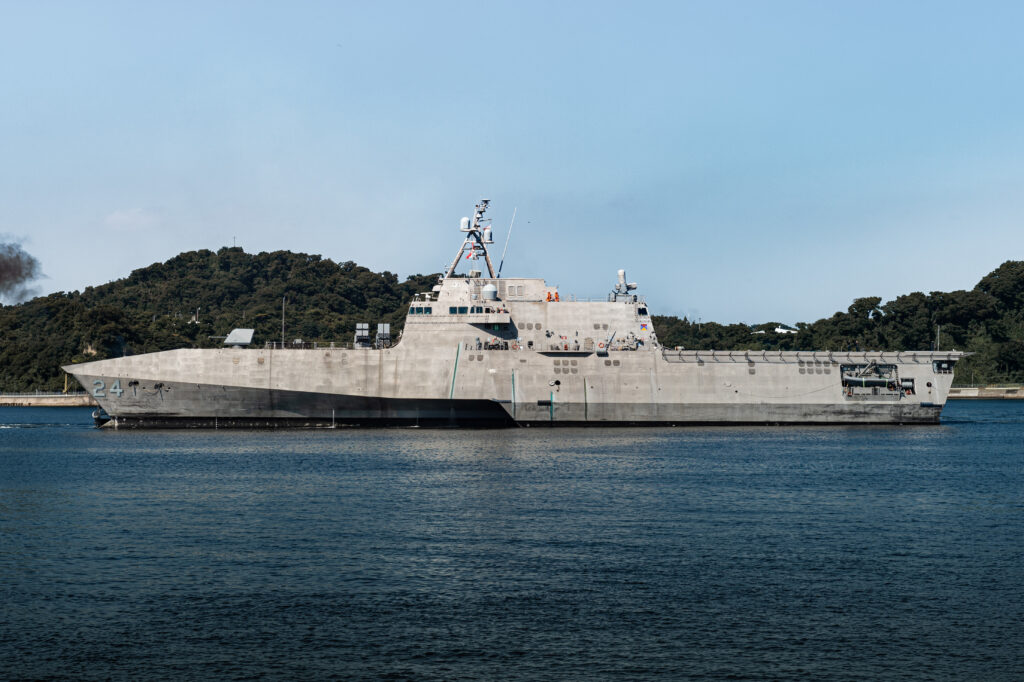
The Independence-variant littoral combat ship USS Oakland (LCS 24) arrives at Commander, Fleet Activities Yokosuka (CFAY) for a scheduled port visit. Oakland is currently operating in the U.S. 7th Fleet area of operations. U.S NAVY / Seaman Darren Cordoviz
STERLING, Va. — The Naval Surface Warfare Center – Port Hueneme Division (NSWC PHD) awarded Saab Inc. (Saab) two new tasks via modifications awarded Sept. 26 and 29, 2022, to provide readiness support to the Independence-class Littoral Combat Ship (LCS) fleet. The funded value of these tasks totals $19.2 million and was booked in the third quarter of 2022.
The first of the two tasks, valued at USD 10.1 million, requires Saab to produce an AN/SPS-77 ship radar system (also known as Sea Giraffe AMB), as a government-owned test system to support development, test and evaluation for emerging operational requirements. The system will allow Saab to more rapidly develop and implement changes, and so more efficiently provide those changes to the radars on the ships. It will be located at Saab’s headquarters in Syracuse, New York.
The second task, valued at USD 9.1 million, will see Saab delivering Maintenance Assist Modules (MAMs) kits.
“This award is in direct response to input received from the Navy’s technical authorities and sailors on the ships about what is most needed to support their ships at sea,” said Erik Smith, president and CEO of Saab Inc. “We greatly value the opportunity to increase the readiness and capability of LCS and look forward to completing this work at our facility in Syracuse, New York.”
The AN/SPS-77 is a multi-role medium-range 3D surveillance radar system for maritime operations. It provides simultaneous air and surface surveillance and is suitable for demanding naval environments from the littorals to blue-water operations. Saab has built a center of radar excellence in central New York, supporting radars on seven classes of Navy and Coast Guard ships, and also produces a substantial portion of the Ground/Air Task-Oriented Radar system for the U.S. Marine Corps.
Textron Systems Delivers Its Cottonmouth Purpose-Built Advanced Reconnaissance Vehicle to Marine Corps
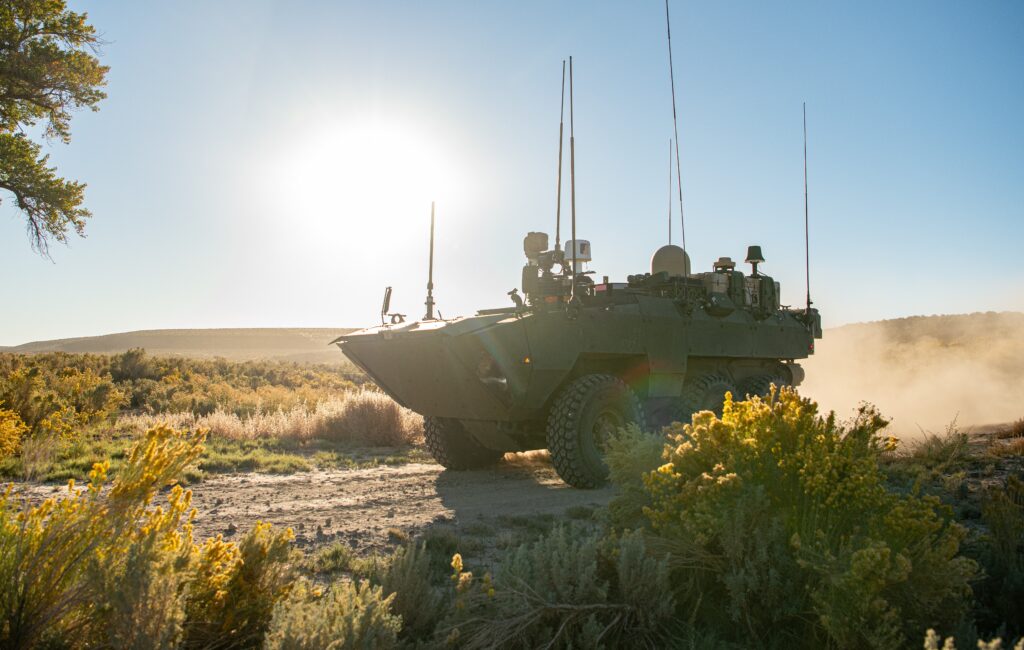
The U.S. Marine Corps’ Advanced Reconnaissance Vehicle at the Nevada Automotive Test Center, Oct. 2022. TEXTRON SYSTEMS
HUNT VALLEY, Md. — Textron Systems Corporation, a Textron Inc. company, announced Dec. 8 the delivery of Cottonmouth, a vehicle purpose-built for the U.S. Marine Corps’ Advanced Reconnaissance Vehicle (ARV) program. The hand-off of the prototype vehicle occurred Dec. 1, 2022, at the Nevada Automotive Test Center (NATC) in Silver Springs, Nevada.
Created to serve as a Naval Sensor Node supporting expeditionary operations, the Cottonmouth vehicle provides lightweight multi-modal capability for the Marines, consistent with the service’s Force Design 2030 vision. A multi-domain command and control suite integrated into the vehicle as part of the C4UAS Mission Role Variant allows it to coordinate data and serve as the quarterback, or battlefield manager, for the modern battlefield. The amphibious 6×6 platform is equipped for sustained reconnaissance with organic unmanned systems capabilities and multi-spectrum sensors which provide seamless communication between the U.S. Navy and Marine Corps.
The Cottonmouth vehicle’s smaller footprint allows rapid transport of four vehicles on a Ship-to-Shore Connector (LCAC 100). Supporting the mission of a mobile scout vehicle, the easy-to-deploy platform swims in open ocean and navigates littoral water obstacles such as bays, estuaries, rivers, light surf and handles any terrain.
“Our Cottonmouth vehicle is a completely clean-sheet design that provides transformative reconnaissance capabilities and meets Marine Corps requirements,” said David Phillips, senior vice president, Land and Sea Systems. “The vehicle was designed from its inception by listening to customer requirements. Because of its smaller size, the Marines can quickly deploy next generational combat power to the fight and lets commanders meet any mission anywhere.”
The prototype is the second iteration of the vehicle informed by lessons learned from an original Alpha prototype vehicle and approximately 3,000 miles of testing. Textron Systems’ Cottonmouth vehicle has completed contractor verification testing of its mobility, swim capability, vetronics integration and C4UAS mission capabilities. In addition to delivery of the fully integrated ARV platform, the company also delivered a blast hull to the Aberdeen Test Center and a systems integration lab to the Naval Information Warfare Center-Atlantic, both of which have been undergoing government evaluation and testing. The prototype vehicle now enters its formal government evaluation phase, expected to last through 2023.