BAE Systems to install joint strike fighter capability aboard USS Iwo Jima
From BAE Systems Maritime Solutions. Feb. 23, 2026
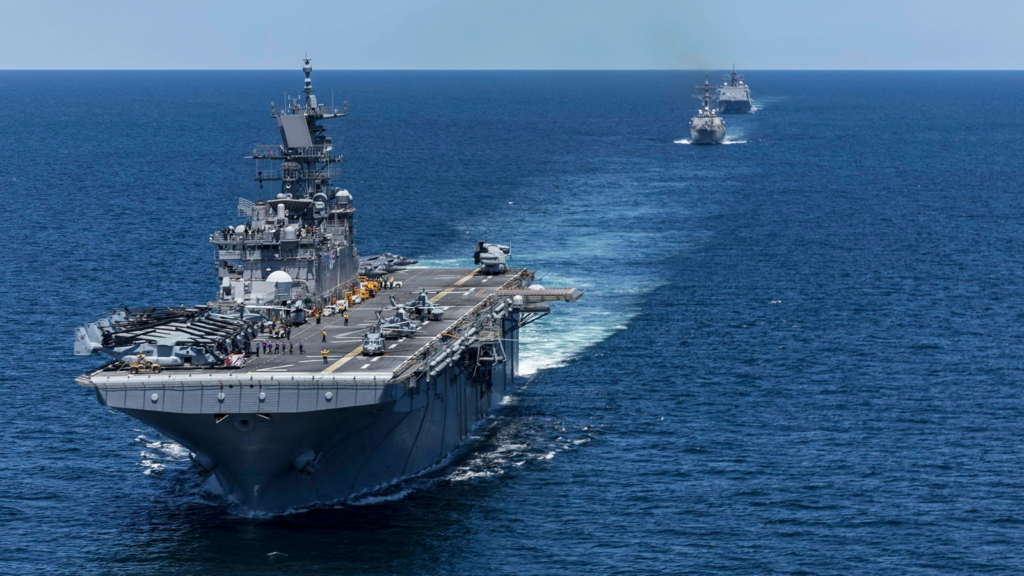
BAE Systems’ Norfolk shipyard has received a $204.1 million U.S. Navy contract to provide maintenance services aboard the Wasp-class amphibious assault ship USS Iwo Jima (LHD 7).
Under the selected restricted availability (SRA) contract awarded, BAE Systems will upgrade shipboard systems to accommodate Joint Strike Fighter flight operations. Work aboard the 843-foot-long ship will begin in August.
“The USS Iwo Jima availability is welcomed work for our Norfolk shipyard team,” said David M. Thomas, Jr., vice president and general manager of BAE Systems Maritime Solutions Norfolk. “We are very familiar with performing modernization work aboard this class of ship. We will apply the lessons learned from current and past LHD-class work done within our shipyard.”
USS Iwo Jima is the third U.S. Navy ship named after the World War II battle. The current vessel was commissioned in June 2001.
The Norfolk shipyard is nearing completion of repairs aboard the lead ship of the amphibious assault ship class, USS Wasp (LHD 1).
BAE Systems Maritime Solutions is a leading provider of maintenance and modernization services to the U.S. Navy’s fleet of combatant ships; refit and hauling services for privately held leisure vessels and workboats; and fabrication services for U.S. submarine and ship builders. The company operates three full-service shipyards in California, Florida, and Virginia, and it employs a highly skilled, experienced workforce and a large team of suppliers and subcontractors.
Sigma Defense Secures 7-Year, $102M IDIQ Contract
From Sigma Defense
PERRY, Ga., Feb. 23, 2026 /PRNewswire/ — Sigma Defense is pleased to announce that SOLUTE, a Sigma Defense company, was awarded the Consolidated Afloat Networks and Enterprise Services (CANES) indefinite-delivery / indefinite-quantity contract for technical and programmatic services for networking, communications, and computer systems for Naval Information Warfare Center Pacific, San Diego, California. The three-year base contract is valued at $42M, and includes two, two-year option periods that can bring the overall value to $102M.
Ed Anderson, Sigma Defense Executive Vice President, stated, “We are excited for the opportunity to support CANES as the Navy’s foundational network environment afloat. Sigma Defense companies have a proven track record of systems modernization, software engineering and fleet support for the U.S Navy and this contract is the next step in delivering new capabilities for NIWC-PAC.”
Through CANES, Sigma Defense will support the design, integration, and testing of systems that are part of the CANES architecture, provide software engineering support, including development and updates for all CANES platforms, ensure systems modernization and provide fleet readiness support.
“Winning the CANES contract is a tremendous honor and a testament to our team’s deep commitment to advancing naval capability,” said Matt Jones, CEO Sigma Defense company. “We are proud to support the Navy’s mission by delivering secure, modernized network solutions that enhance fleet readiness and enable operational superiority across the globe.”
Woolpert, Saildrone Partner to Deploy Surveyor for NOAA Seafloor Mapping Project
From Saildrone, Feb. 24, 2026
The data collected will help enhance understanding of habitats, geohazards, and oceanographic conditions across 13,000 square nautical miles in the northwestern Pacific Ocean.
WASHINGTON — Woolpert and Saildrone have partnered to acquire and process bathymetric survey data for the National Oceanic and Atmospheric Administration (NOAA)’s Ocean Exploration and Office of Coast Survey in support of safe navigation and national ocean mapping initiatives, including the National Strategy for Mapping, Exploring, and Characterizing the United States Exclusive Economic Zone and Seabed 2030 initiative.
The Mariana Islands’ strategic location and vast marine ecosystems make it a critical region for monitoring and analysis. The data will be used by NOAA to help enhance its understanding of sensitive habitats, marine geohazards, oceanographic conditions, seafloor composition, and ecosystem management within the US exclusive economic zone in the vicinity of the Mariana Islands. It will also help expand taxonomic reference libraries for understudied marine organisms.
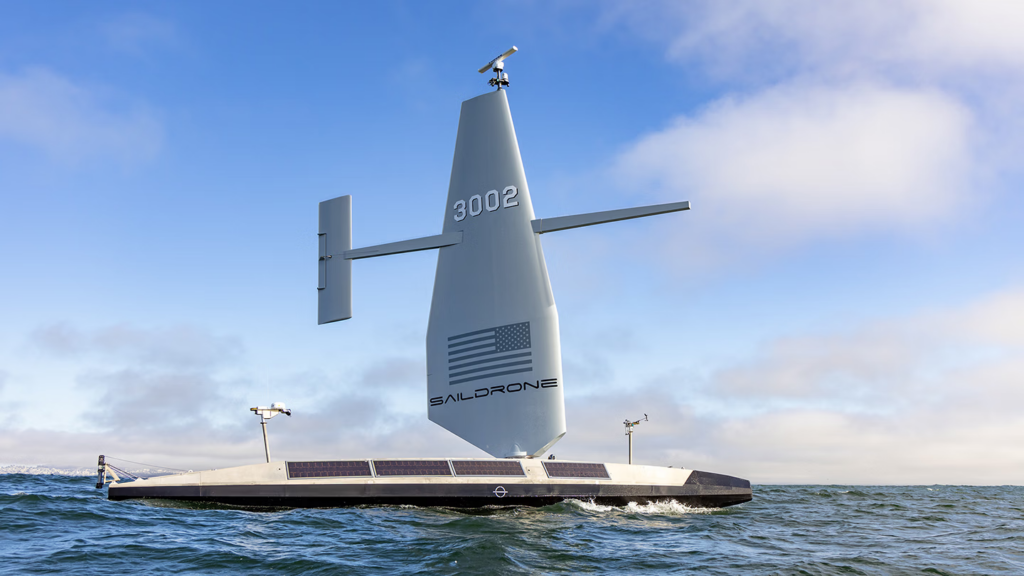
Woolpert, a leading provider of lidar and sonar bathymetry data, was selected by NOAA to map the seafloor off the eastern coast of the Mariana Islands. The firm partnered with Saildrone, which will use a 20-meter Saildrone Surveyor uncrewed surface vehicle designed for persistent maritime intelligence, surveillance, reconnaissance, and deep-ocean mapping.
The Saildrone Surveyor operates autonomously and delivers high-resolution bathymetric data in the world’s most challenging environments. Powered by a high-efficiency diesel engine augmented by the patented Saildrone Wing, the vehicle leverages auxiliary wind energy to maximize fuel efficiency. This dual-source power architecture enables the extreme range and persistence necessary for autonomous, long-duration deep-water ocean mapping.
This month, Saildrone began collecting high-resolution bathymetric data across the 13,000-square-nautical-mile area of the northwestern Pacific Ocean. Saildrone will transmit the data to Woolpert in near-real time for processing and final delivery.
“The seafloor mapping and exploration data that the Surveyor collects around the Mariana Islands will close critical bathymetric gaps in the United States’ exclusive economic zone,” said Brian Connon, vice president of ocean mapping at Saildrone. “The Surveyor’s ability to remain at sea for months at a time, regardless of weather conditions or sea state, makes it an ideal platform to carry out this vital work. Saildrone is proud to be working with both Woolpert and NOAA in these crucial efforts to better understand our ocean, marine resources, and ecosystem.”
Woolpert Maritime Market Director Dave Neff said the partnership shows how autonomous technologies are transforming the acquisition of hydrographic data for deep-ocean exploration.
“By integrating Saildrone’s mission portal with Woolpert’s automated survey production environment, we gain real-time visibility into acquisition progress and data quality—especially in deep-water regions that were once difficult and costly to access,” Neff said. “This collaboration shows how uncrewed systems and smart partnerships can expand what’s possible in ocean mapping.”
The contract is underway and is expected to conclude in May 2026.
The U.S. Coast Guard and Department of Homeland Security partner agencies interdict a suspected maritime smuggling vessel during coordinated operations south of San Clemente Island, California, Feb. 21, 2026. In total, crews interdicted five vessels and apprehended 62 aliens in under 90 minutes. (U.S. Coast Guard courtesy photo)
From U.S. Coast Guard Southwest District Public Affairs, Feb. 24, 2026
SAN DIEGO — The U.S. Coast Guard and Department of Homeland Security partner agencies, supported by the U.S. Navy, interdicted five suspected maritime smuggling vessels and apprehended 62 aliens during coordinated operations south of San Clemente Island, Saturday.
At approximately 12:30 p.m., watchstanders at the Sector San Diego Joint Harbor Operations Center received reports from a partner agency aircraft of three vessels suspected of smuggling illegal aliens, transiting northbound from Mexican waters. The vessels were described as 20-to-25-foot cuddy cabin-style boats carrying fishing gear and fuel barrels onboard.
The Coast Guard Cutter Haddock (WPB-87347) already on patrol in the area, launched a small boat crew to investigate the first vessel and conduct a boarding. Located approximately 26 miles south of San Clemente Island, the vessel was observed flying a U.S. flag and was compliant during the boarding. Haddock crews reported 10 aliens aboard the vessel, all claiming Mexican nationality.
A Department of Homeland Security partner agency aircraft located a second vessel of interest and directed a law enforcement crew to the vessel’s location, ultimately leading to a pursuit. Failing to comply with law enforcement commands to stop, warning shots were employed to compel the vessel’s compliance. The vessel complied, and 10 additional aliens were identified onboard, all claiming Mexican nationality. All 10 individuals were subsequently embarked aboard the Haddock.
A Department of Homeland Security partner agency vessel then stopped a third vessel suspected of smuggling illegal aliens. Nine additional aliens, all claiming Mexican nationality, were identified and safely embarked aboard the Haddock.
Additional reports of suspected smuggling vessels in the area prompted further response. A U.S. Navy helicopter and small boat crew from the littoral combat ship USS Augusta (LCS-34) with an embarked Coast Guard Maritime Law Enforcement Team (MLET) assisted in locating and interdicting a fourth cuddy cabin vessel. The Coast Guard MLET identified 16 aliens aboard the vessel, 14 claiming Mexican nationality and two claiming Colombian nationality. All 16 individuals were detained and transferred to the Sentinel-class Forrest Rednour (WPC-1129).
A fifth vessel was later intercepted by a Department of Homeland Security partner agency vessel, which employed warning shots to gain compliance after the vessel failed to obey law enforcement commands to stop. Seventeen aliens were aboard the vessel,16 claiming Mexican nationality and one claiming Guatemalan nationality. All were taken into custody.
In total, crews interdicted five vessels and apprehended 62 aliens in under 90 minutes. The Haddock and Rednour crews transported all aliens to Coast Guard Sector San Diego, where they were transferred to another Department of Homeland Security agency for further processing. One unaccompanied minor was identified among the group.
Department of Homeland Security partner agency personnel seized four of the five vessels. The fifth vessel, which was taking on water and determined to be unseaworthy, was left at sea.
The Coast Guard routinely conducts patrols alongside interagency and Department of War partners to detect suspected maritime smuggling operations and interdict illegal activity, while ensuring the safety of life at sea. This case is an example of the stellar partnerships and complex coordination required amongst all agencies involved.
CTF-67 Hosts Fifth JEDI Symposium at NAS Sigonella
From LTJG Vianni Paquian, Feb. 23, 2026
NAVAL AIR STATION SIGONELLA, Italy – Commander, Task Force 67 (CTF-67) hosted the fifth iteration of the Joint Exploration and Discussion of Initiatives (JEDI) symposium at Naval Air Station (NAS) Sigonella, Feb. 9-12, 2026. The symposium convened elite maritime patrol and reconnaissance aircraft (MPRA) crews from the United States, United Kingdom, Norway, Canada, and Germany with the primary objective to synchronize the operations of the multi-national P-8A Poseidon fleet, effectively forging a single, cohesive force across the European theater.
The P-8A Poseidon is a premier multi-mission maritime aircraft, specializing in anti-submarine and anti-surface warfare. Its advanced sensor suite provides unparalleled maritime domain awareness, capable of monitoring vast stretches of the ocean for threats on and below the surface. Beyond its combat roles, the P-8A is a critical asset for search and rescue missions, underscoring its versatility in complex operational environments.
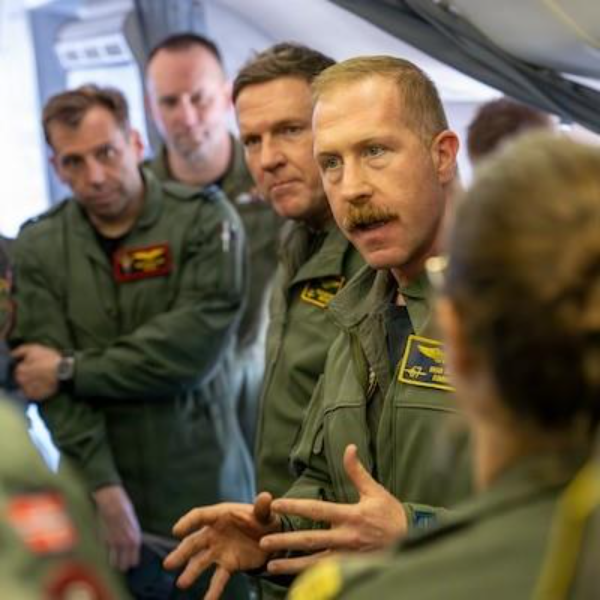
“Our NATO JEDI Symposium has become the gold standard for integrating the strategic capabilities of our P-8A partners amongst those that operate this advanced weapon system. This year, we moved beyond theory into warfighting reality,” said U.S. Navy Capt. Brian Schneider, commodore, CTF-67. “The highlight was our capstone flying event: a cross-decked mission crew where operators from the UK, Norway, Germany, and Canada manned the controls of a U.S. P-8A to track an Expendable Mobile ASW Training Target (EMATT). This evolution proves we are moving past mere interoperability toward true interchangeability. When we speak of five nations with common aircraft, we are really talking about five nations with interchangeable people.”
Throughout the symposium, participants engaged in a series of classified and unclassified working groups to advance shared initiatives and refine tactics, techniques, and procedures (TTPs). The event featured full-crew and multinational training flights, alongside integrated ground maintenance evolutions, providing a rare opportunity to test international interoperability and observe allied nations’ crew compositions and procedures in real-time.
This JEDI iteration shattered previous benchmarks with a groundbreaking operational test. For the first time, a multinational P-8A crew, composed of members who had not previously met or trained together, were assembled and tasked with completing a complex, high-stakes mission on the same day of receiving their assignment. The crew’s flawless execution and mission success marked a paradigm shift for NATO’s MPRA community, demonstrating an unprecedented level of ‘plug-and-play’ interoperability and proving that allied forces can rapidly converge and deliver decisive effects.
“What we witnessed here was more than just cooperation, it was true integration,” said Gp. Capt. Matthew D’Aubyn, Commander Air Wing, Intelligence, Surveillance, Target Acquisition and Reconnaissance (ISTAR) Force, Royal Air Force. “The success of the multinational crew proves our theory of distributed maritime operations and agile combat employment. We are building a force that is more lethal, flexible, and resilient because of the trust and shared expertise forged at events like JEDI. This is the future of coalition maritime warfare.”
The rigorous operational schedule was balanced with events designed to solidify the professional and personal bonds between the allied partners, including an International Night, a formal Heritage Dinner, and engaged in some friendly athletic competition referred to as the “Poseidon Games” at the NAS Sigonella Morale, Welfare, and Recreation (MWR) fitness facility.
The symposium concluded with a final brief, cementing the week’s progress and launching new lines of effort for the coming year. CTF-67’s leadership and coordination with NAS Sigonella to host JEDI 5 reinforces its central role in advancing NATO’s maritime strategy and security in the Mediterranean.
NAS Sigonella provides consolidated operational, command and control, administrative, and advanced logistical support to U.S. and NATO forces. The installation’s strategic location enables U.S., allied, and partner nation forces to deploy and respond as required, ensuring security and stability throughout Europe, Africa and Central Asia.
For more news and information from NAS Sigonella, visit: https://cnreurafcent.cnic.navy.mil/Installations/NAS-Sigonella/ or https://www.facebook.com/nassig.official
U.S. Navy, Estonian Partners Conduct Ice Diving Training to Enhance Baltic Maritime Readiness
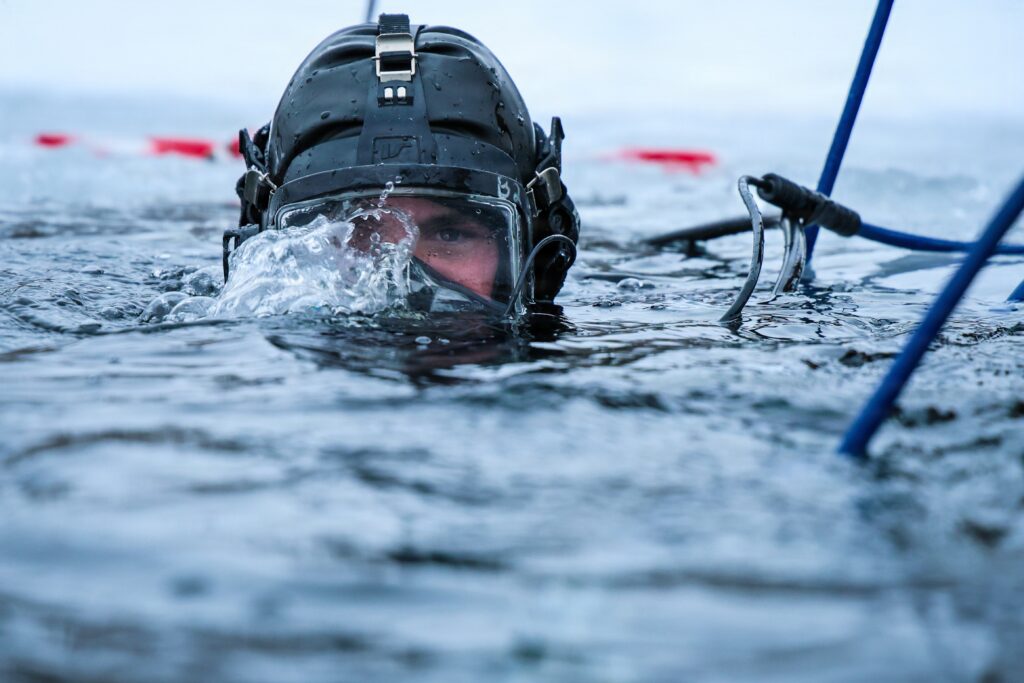
Equipment Operator 1st Class Devon Maher, U.S. Navy Seabee Diver assigned to Underwater Construction Team (UCT) One, Construction Dive Detachment Bravo (CDD/B), conduct ice diving operations during a bilateral ice diving exchange with Estonian Rescue Board and Estonian Navy divers at Rummu Quarry Lake, Feb. 10, 2026.
ESTONIA – U.S. Navy Seabee Divers assigned to Underwater Construction Team (UCT) One, Construction Dive Detachment Bravo (CDD/B), are conducting ice diving and underwater demolition training with the Estonian Rescue Board (ERB) and Estonian navy divers during an annual bilateral ice exercise scheduled from Jan. 31 to Feb. 17, 2026.
The exercise focuses on developing cold weather capabilities that enhance maritime security, improve Alliance readiness, and reinforce Estonia’s contributions to the conventional defense of the Baltic Sea region.
“This opportunity builds real-world capability in one of the most demanding dive environments imaginable,” said Senior Chief Constructionman Keith Reed, master diver assigned to UCT-1 CDD/B. “Operating under ice requires absolute trust in equipment, procedures, and teammates, especially in conditions where precision, readiness, and discipline directly affect mission success.”
The exercise takes place at Rummu Quarry Lake and Miinisadam Naval Base and includes classroom instruction, pier-side safety training, practical ice dives, and a salvage survey of a submerged barge.
Estonia faces a significant volume of explosive remnants of war, particularly in waterways and coastal regions affected by historic conflicts. The training supports humanitarian mine action objectives while improving Allied capacity to detect, assess, and respond to underwater hazards that threaten maritime infrastructure, commercial traffic, and regional security in all weather conditions.
“Ice diving stresses every element of a diver’s training from planning, communications, emergency response, and execution,” Reed said. “Working alongside Estonian Rescue Board and navy divers allows us to exchange techniques, leverage their local expertise, and carry lessons forward that strengthen cold-weather and Arctic diving operations across the Naval Construction Force.”
Beyond technical dive training, the training is designed to improve interoperability, expand operational readiness, and support NATO maritime safety and deterrence efforts by ensuring regional forces are prepared to operate effectively in austere and contested environments.
“This engagement reflects years of trusted coordination with Estonia and deliberate planning across U.S. and host-nation teams,” said Chief Builder David Madmon, diving action officer assigned to 22nd Naval Construction Regiment (22NCR). “Our role was to align the right capabilities, ensure safety and logistics were in place, and create a training environment that delivers lasting operational value for both nations.”
This training builds on previous U.S.–Estonian humanitarian mine action engagements dating back to 2017 and supports NATO objectives to enhance maritime readiness, resilience, and safety across the Baltic Sea region.
It also reinforces a forward defense posture by strengthening European Allies’ ability to lead regional maritime safety and security efforts, with U.S. forces providing specialized capabilities and operational support.
UCT-1 CDD/B, currently deployed under 22NCR, is a specially trained and equipped unit within Navy Expeditionary Combat Forces that specializes in diving, light salvage, underwater construction, and military engineering operations in austere environments.
22NCR commands naval construction forces for Navy Expeditionary Forces Europe-Africa/Task Force 68 across the U.S. 6th Fleet area of operations to defend U.S., Allied, and partner interests.
U.S. Submarine Maintenance Period Demonstrates Forward Sustainment in Australia
From Ashley Calingo, AUKUS Integration & Acquisition Public Affairs, Feb. 20, 2026
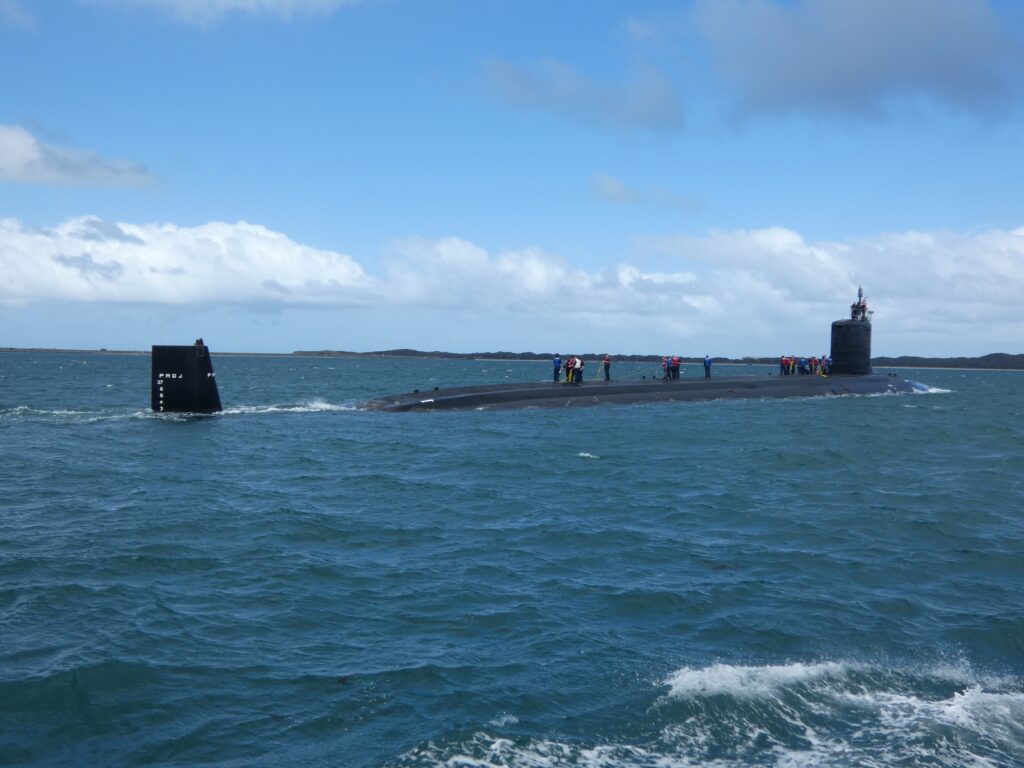
HMAS STIRLING, Western Australia - Last November, on the edge of the Indian Ocean, just beyond mainland Australia and across the Garden Island Causeway to HMAS Stirling, a U.S. Virginia-class submarine quietly completed the first submarine maintenance period without the support of a U.S. submarine tender—a specialized vessel that provides mobile repair and supply services.
What appeared to be a routine maintenance stop for the USS Vermont (SSN 792) carried far greater meaning for the United States, Australia and the United Kingdom. The availability marked a decisive step in turning the AUKUS security partnership into an operational reality, reinforcing the Department of War’s peace through strength approach to security in the Indo-Pacific. By expanding allied capacity to repair, sustain and re-supply submarines forward in a strategically relevant region, AUKUS strengthens deterrence and ensures combat-credible forces are postured to deter aggression across the Indo-Pacific.
“This was the first time a maintenance availability at this level has ever been done on a Virginia-class outside the United States,” said Cmdr. Matthew Lewis, commanding officer of Vermont. “The ability to work through differences, uphold safety standards and execute all the planned work was huge.”
At the center of that effort was a blended American and Australian maintenance team led by Pearl Harbor Naval Shipyard and Intermediate Maintenance Facility (PHNSY & IMF), whose flyaway workforce provided the technical backbone for the submarine’s availability in Australia and demonstrated the ability of allied forces to operate as a single, integrated maintenance team.
“This maintenance period demonstrates what AUKUS Pillar I is designed to deliver,” said Rear Adm. Rick Seif, U.S. Navy, AUKUS Integration and Acquisition program manager. “We are moving from planning to execution. Each successful availability strengthens allied readiness and our ability to sustain submarines forward in the Indo-Pacific.”
Before any maintenance could occur, the team first had to solve a more fundamental challenge: how to support a maintenance availability for a nuclear-powered submarine at a foreign pier without the familiar infrastructure of a U.S. shipyard or tender. Bipartisan legislation in the Fiscal Year 2024 National Defense Authorization Act, followed by approval from Secretary of War Pete Hegseth, provided the authority for the Navy to conduct submarine maintenance in a foreign port.
“Seventy-five to 80 percent of any submarine maintenance availability is simply setting the conditions to do the work,” said Capt. Jason Pittman, AUKUS I&A ’s liaison to the Australian Submarine Agency “Temporary shore power, high-pressure air, chilled water and staging all have to be in place before you can even begin.”
During this maintenance period, Australian industry set many of those conditions through structures and systems that were locally sourced, procured and installed.
Among the most significant was a mobile pure water purification plant—the first of its kind in the world—manufactured in Western Australia and positioned directly on the pier for the maintenance period. The systems on U.S. nuclear-powered warships require high purity water, which is traditionally delivered by fixed facilities. The mobile system demonstrated how AUKUS partnerships can drive innovation that benefits both U.S. submarine operations and Australia’s growing sustainment capacity.
“We provided the chemical specification for the water we needed, and Australian industry developed the solution,” Pittman said. “It is efficient, affordable, mobile and performs exactly as required.”
One blended workforce, one plan
The integration extended across Royal Australian Navy Fleet Support Unit sailors, divers, Australian industry and local logistics providers. Each day required tight synchronization between maintenance execution, diving operations, port traffic, base operations and Australian safety standards.
“This availability was not just about maintaining a submarine,” said Lt. Cmdr. Ryan Willis, the AUKUS I&A representative at HMAS Stirling and the maintenance operations liaison during the submarine maintenance period. “It was also about demonstrating capabilities, proving that Australia can support maintenance of nuclear-powered submarines with local solutions.”
By the time the submarine prepared to depart HMAS Stirling, the blended maintenance workforce had completed more than 200 individual maintenance tasks, ranging from hull preservation and temporary service installations to complex system access, testing and restoration.
Many of the Australian sailors and civilians executing those jobs had trained earlier this year at PHNSY & IMF, working alongside the same U.S. maintenance professionals supporting the SMP in Western Australia.
“For me, equally important to the physical work we did on the deck plate were the relationships we forged with the shipyard teams and the U.S. maintenance side,” said Royal Australian Navy Fleet Support Unit Chief Petty Officer Steven Sheakey, one of the sailors who trained at PHNSY & IMF last year. “That trust is what makes everything else possible.”
Royal Australian Navy Fleet Support Unit Petty Officer Christopher Warnes said the experience reshaped how he viewed Australia’s growing sustainment role.
“This was the first time we’ve performed maintenance at this level on a nuclear-powered submarine,” said Warnes. “We proved we could do it. For instance, in my section, if someone was missing a part or resource, I was able to take them to the amazing facilities that we do have here to find a solution.”
A shipyard thousands of miles from home
Leading the technical execution was PHNSY & IMF Project Superintendent Maea Lefotu, whose flyaway team brought decades of submarine maintenance experience to an unfamiliar operating environment.
“For me, this is about sharing more than 20 years of experience and applying it in a new environment,” Lefotu said. “The work is familiar, but the environment and logistics are not. Everything here requires more coordination, more communication and more trust.”
Without the proximity of a home shipyard, every decision carried operational weight, from material sourcing to documentation to safety verification.
“Maintenance is rarely executed to a plan written weeks ahead of time,” Willis said. “It is about identifying issues, adapting and delivering safe, clean results under tight conditions.”
Lefotu said the disciplined daily coordination kept the project aligned.
“Our meeting rhythm kept everyone on the same plan,” he said. “The Pearl [Harbor] team, along with the ship’s force, the Australian and U.K. sailors and civilians were all working toward the same goal.”
Trilateral by design
The U.K. embedded engineers and officers throughout the maintenance availability as they prepared for their o wn nuclear-powered submarine maintenance period at HMAS Stirling in early 2026.
“The U.K. does not consider a U.S. submarine maintenance availability at HMAS Stirling to be a U.S.-only maintenance availability,” said Capt. Shaun Southwood, the U.K.’s liaison officer for AUKUS in Australia. “Every submarine maintenance period here is trilateral.”
British personnel observed technical demonstrations, safety drills and procedure validations across the availability. Lessons learned during the availability now feed directly into preparations for the U.K.’s first submarine maintenance period at HMAS Stirling, scheduled for early 2026.
“What the U.S. learned here directly supports the upcoming U.K. maintenance period,” Southwood said.
Why it matters
For Pittman, the significance of the maintenance period extends far beyond a single submarine.
“Each maintenance period builds toward a future where Australia can support submarines forward deployed,” he said.
Willis said the operational payoff is immediate, noting, “a submarine that can receive maintenance here instead of returning to Hawaii saves weeks of transit time.”
Lewis agreed with Willis’ assessment of the operational payoff.
“This is a huge enabler,” Lewis said. “It gives the forward-deployed operational commander flexibility in how submarines are managed. Having another location where we can safely execute maintenance makes it easier to sustain forward presence in the Indo-Pacific.”
“This is about building a network of trusted partners who can sustain undersea forces forward, at speed and at scale,” said Seif. “What was demonstrated at HMAS Stirling moves us closer to that goal and keeps AUKUS on track to support increased allied submarine presence when and where it matters.”
AUKUS moves from concept to reality From mobile pure water production to intermediate maintenance execution, workforce qualification and local industrial integration, the 2025 submarine maintenance period showed that AUKUS Pillar I is no longer just an agreement in principle.
“This is how submarine sustainment in Australia becomes real,” Pittman said. “Through people, partnerships and proven capability.”
With the U.K. preparing to conduct its first submarine maintenance period at HMAS Stirling soon, Western Australia is no longer just a destination for visiting submarines. It is becoming a hub for trilateral undersea capability, supporting the maintenance, readiness and forward presence of allied submarines in the Indo-Pacific.
GA-ASI Develops Long-Range Weapons Capability for MQ-9B
Industry Leading UAS Expands Mission Roles To Include Naval Strike
From General Atomics Aeronautical Systems, Inc.
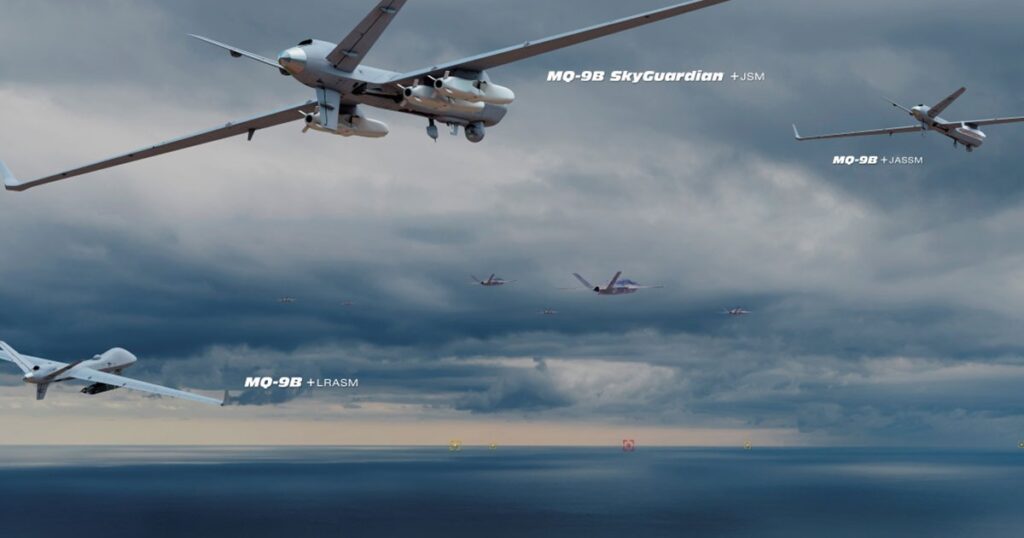
SAN DIEGO – 23 February 2026 – General Atomics Aeronautical Systems, Inc. (GA-ASI) is developing the addition of long-range standoff weapons to its top-of-the-line MQ-9B SkyGuardian® and SeaGuardian®.
Demand continues from naval and air warfighters for platforms that can hold targets at risk from great ranges, especially over the expanses of air and water in the Western Pacific. That’s why GA-ASI engineers have begun the work of adapting MQ-9B’s payload, stability, range and other features to accommodate the new generation of extended-range precision weapons.
“MQ-9B continues to impress in the field and we keep adding to our global customer list,” said GA-ASI President David R. Alexander. “We want to continue to build value in the aircraft by expanding into more missions. MQ-9B features extraordinary payload capacity, so it only makes sense to add to our mission sets with the ability to carry long-range weapons.”
So far, GA-ASI has performed all the performance analytics and is confident in MQ-9B’s ability to carry long-range weapons over long distances, while providing a measure of persistence and endurance. Company engineers and others continue to refine the technical aspects of this integration and potential concepts of operation, eyeing weapons such as the Lockheed Martin Joint Air-to-Surface Standoff Missile andLong-Range Anti-Ship Missile, as well as the Kongsberg/Raytheon Joint Strike Missile.
GA-ASI plans to fly at least one of these new weapons as early as 2026.
Hypothetically, a mission profile might look like this: MQ-9Bs could launch from a number of friendly bases in the Western or Southern Pacific, fly to a hold point and loiter there outside a hostile power’s weapons engagement zone. If the order came to release the weapons, the aircraft could launch them in coordination with other U.S. or allied operations.
In addition to the SkyGuardian and SeaGuardian models, MQ-9B also includes the Protector RG Mk1 that is currently being delivered to the United Kingdom’s Royal Air Force (RAF). GA-ASI also has MQ-9B procurement contracts with Belgium, Canada, Denmark, Germany, India, Japan, Poland, Taiwan and the U.S. Air Force in support of the Special Operations Command. MQ-9B has also been featured in various U.S. Navy exercises, including Northern Edge, Integrated Battle Problem, RIMPAC, and Group Sail.
U.S. Navy Approves Raytheon’s StormBreaker Smart Weapon for use on Super Hornet Fleet
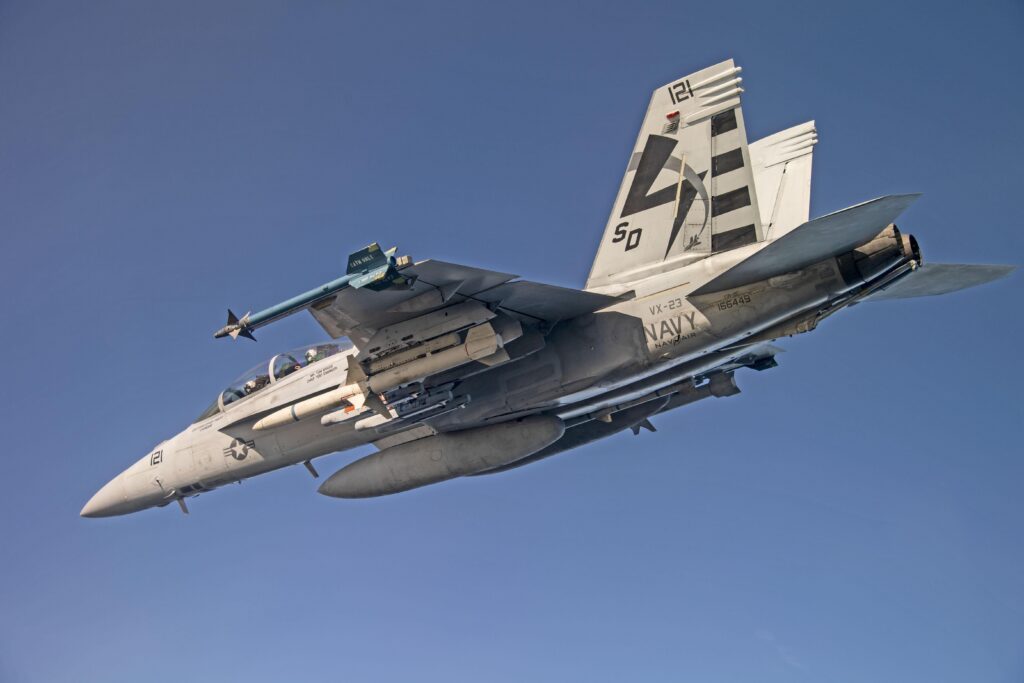
A Navy F/A-18 Super Hornet undergoes weapons testing with the StormBreaker, also known as the Small Diameter Bomb II, at NAS Patuxent River, Md. This all-weather, precision-guided munition achieved its first operational use on an F/A-18 during a limited early operational capability in 2025. (U.S. Navy photo)
Precision strike capability will increase fleet lethality and survivability
TUCSON, Ariz., (February 20, 2026) — The U.S. Navy has approved Raytheon’s StormBreaker® smart weapon for operational use on the F/A-18-E/F Super Hornet strike fighter. Raytheon is an RTX (NYSE: RTX) business.
StormBreaker is the only operational smart weapon that can engage moving and stationary targets in both fair and adverse weather conditions, at land or at sea. Its compact size allows a single aircraft to engage more surface targets than previously possible. The weapon can also fly to strike mobile targets, reducing the amount of time that aircrews spend in harm’s way.
“The Super Hornet plays a critical role in the Navy’s air combat strategy and equipping it with StormBreaker increases the aircraft’s lethality by enabling precision strike in all weather conditions,” said Sam Deneke, president of Air & Space Defense Systems at Raytheon. “StormBreaker’s accuracy and versatility gives operators the upper hand in the most degraded environments, ensuring they can complete the mission and return home safely.”
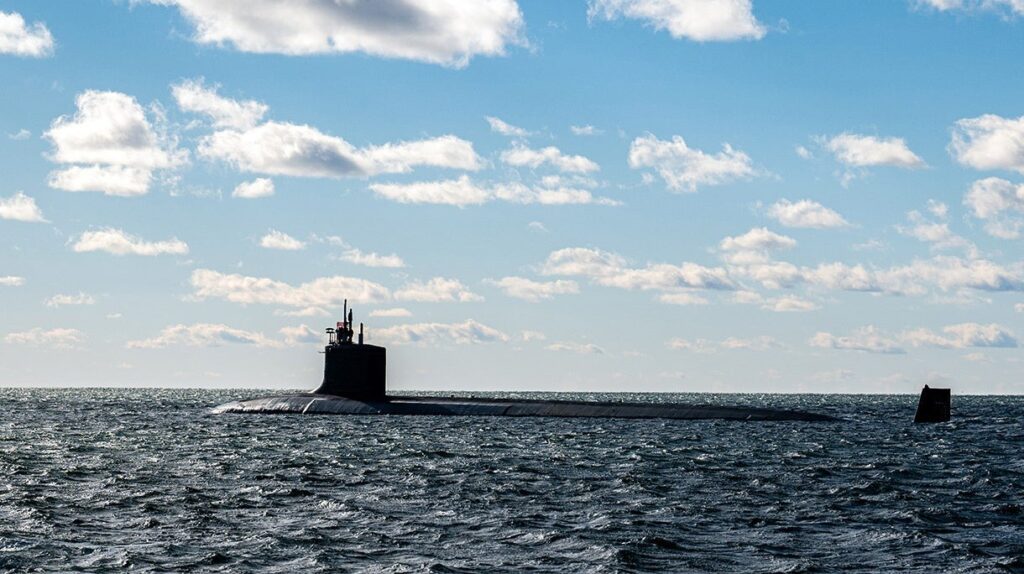
CAMDEN, N.J., Feb. 18, 2026 — L3Harris Technologies (NYSE: LHX) has received its largest full-rate production contract for communications systems from General Dynamics Electric Boat to deliver 26 shipsets for Virginia- and Columbia-class submarines. By utilizing state-of-the-art technology, these systems will enhance situational awareness and communication across submarine crews.
The follow-on award includes production for both submarine classes through 2033, with support extendable to future Columbia-class platforms and allied navies worldwide.
“The ability for submarines to operate undetected is vital to the U.S. Navy’s strategic advantage,” said Nino DiCosmo, President, Maritime, Space and Mission Systems, L3Harris. “With decades of experience in submarine technology and in partnership with General Dynamics Electric Boat, L3Harris will deliver highly reliable, undetectable communications systems to enhance operational effectiveness.”
This award builds on L3Harris’ decades-long legacy of supporting U.S. Navy submarine programs, including the Ohio- and Los Angeles-class submarines. Virginia-class submarines are nuclear-powered, fast-attack vessels designed for both littoral and deep-sea operations. The Columbia-class submarines, under development, will replace the Ohio-class ballistic missile submarines as the cornerstone of the nation’s sea-based nuclear deterrent.