U.S. Navy Completes First BQM-177A Target Intercept during Missile Launch 

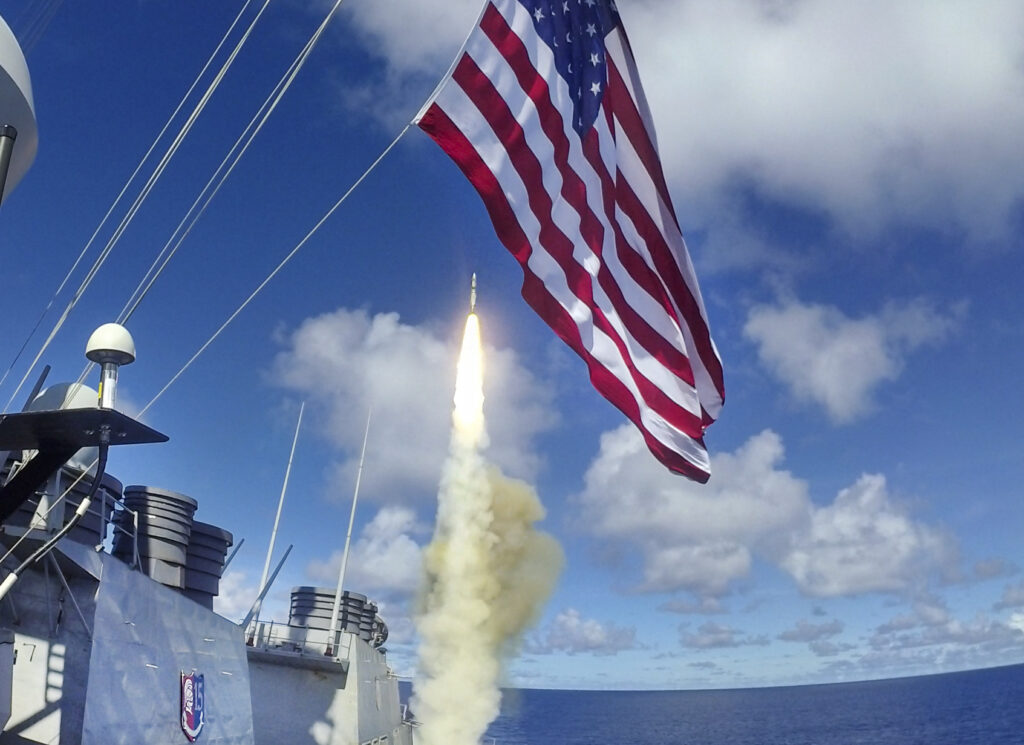
The guided-missile destroyer USS Barry (DDG 52) launches a Standard Missile 2 during a live-fire missile exercise as part of Pacific Vanguard 22, Aug. 28. U.S. NAVY / Mass Communication Specialist 1st Class Deanna Gonzales

PHILIPPINE SEA — The U.S. Navy’s next-generation subsonic aerial target, the BQM-177A, reached full operational capability during a successful standard missile launch and intercept while participating in Pacific Vanguard 2022 in the Philippine Sea on Aug. 28, U.S. 7th Fleet said Sept. 1. 
 
The target drones were launched from the Lewis and Clark-class dry cargo ship USNS Alan Shepard (T-AKE 3) and engaged with missiles launched from Arleigh Burke-class guided-missile destroyer USS Barry (DDG 52) and Royal Australian Navy Anzac-class frigate HMAS Perth (FFH 157), marking the first time the BQM-177A has been used in the Western Pacific region and highlighting the drones achieving full operational capability. 
 
“Not only am I glad the [Commander, Task Force] CTF 71 team was the first to have a successful missile launch against a brand-new type of target drone, but I am extremely grateful that we got to do it side by side with our allies and partners in the region,” said Capt. Walter Mainor, commander, Task Force 71. “I’m proud of all of the participants who worked hard to make this happen, but I’m especially proud of the crews of USS Barry, USNS Alan Shepard, and our coalition partner HMAS Perth.” 
 
The BQM-177A is an advanced high-subsonic, recoverable aerial target system that imitates advanced subsonic anti-ship cruise missile threats to test the effectiveness of shipboard air defense systems and is used for fleet training. It is unmatched in its performance capabilities when it comes to delivering realistic anti-ship missile threat emulation, according to program managers at Naval Air Systems Command. 
 
“Our primary focus in the targets community is effective, affordable training and test for the U.S. Navy,” said Don Blottenberger, the Navy’s Aerial Targets program manager. “The efforts of the team, including partnership with MSC and the target operations organizations, represents the best of our community. The BQM-177, now fully capable, will provide quality service to our warfighters for decades to come.” 
 
Pacific Vanguard 2022 is the fifth iteration of the quadrilateral exercise series between Australia, Japan, Republic of Korea and U.S. Naval forces. This exercise is focused on improving the capabilities of the countries participating to respond together as a naval force against crises and contingencies in the region. The purpose is for the participating navies to continue to refine their skills operating as an integrated force ready to respond to a changing and complex maritime environment in the Indo-Pacific region. 


Coast Guard Offloads More than $3 Million in Illegal Narcotics in Miami 

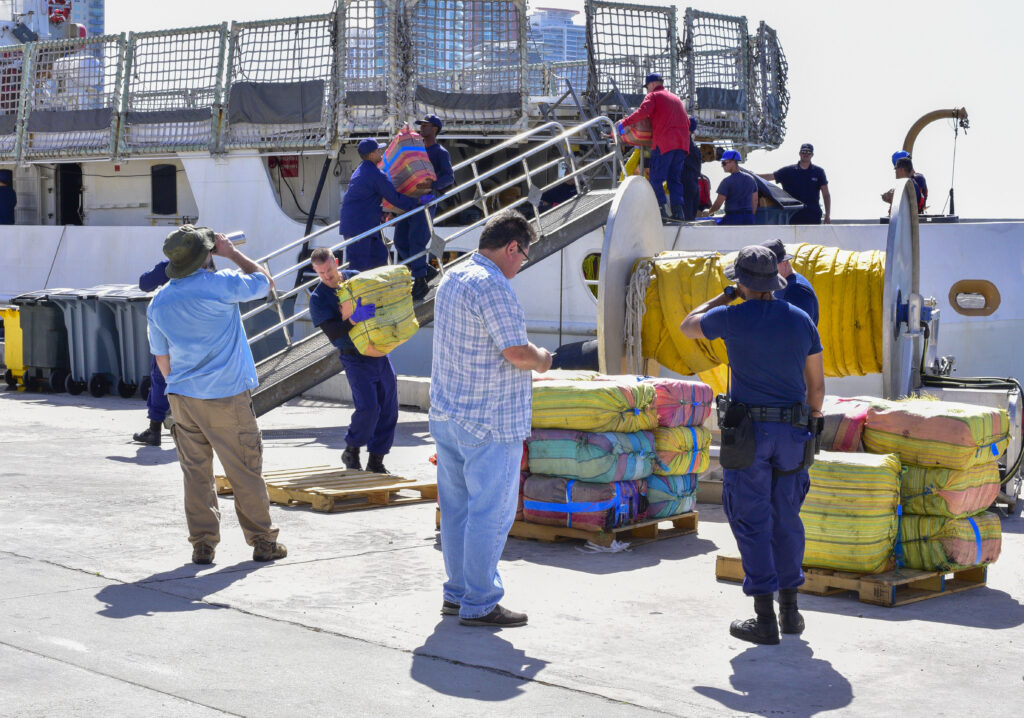
The crew of the U.S. Coast Guard Cutter Vigorous (WMEC 627) offloads approximately 22 pounds of cocaine and 1,256 pounds of marijuana, worth an estimated $3 million, Aug. 30 at Coast Guard Base Miami Beach, Florida. U.S. COAST GUARD / Chief Petty Officer Stephen Lehmann

MIAMI — The crew of the Coast Guard Cutter Vigorous offloaded approximately 22 pounds of cocaine and 1,256 pounds of marijuana, worth an estimated $3 million, on Aug. 30, at Base Miami Beach, the Coast Guard Atlantic Area said Sept. 2. 

The drugs were interdicted in the international waters of the Eastern Pacific Ocean by crews from the cutters Vigorous (WMEC 627) and Legare (WMEC 912).

“Vigorous is glad to have been able to make an important contribution to the Coast Guard’s counterdrug mission,” said Cmdr. Ryan A. Waters, commanding officer of Vigorous. “I’m incredibly proud of the hardworking Vigorous crew’s proficiency teamwork and devotion to duty that enabled the detection, interdiction and boarding of a vessel suspected of drug smuggling.” 

The fight against drug cartels in the Caribbean Sea and Eastern Pacific Ocean, and the transnational criminal organizations they are associated with, requires a unity of effort in all phases, from detection and monitoring to interdiction and apprehension, and on to criminal prosecutions by international partners and U.S. attorneys’ offices in districts across the nation. 

Detecting and interdicting illegal drug traffickers on the high seas involves significant interagency and international coordination. The Joint Interagency Task Force South in Key West, Florida, conducts detection and monitoring of aerial and maritime transit of illegal drugs. Maritime interdiction of illicit maritime activity in the Caribbean Sea is coordinated by the 7th Coast Guard District, headquartered in Miami, Florida, and the 11th Coast Guard District, headquartered in Alameda, California, coordinates interdiction of illicit maritime activity in the Eastern Pacific. 

Cutter Vigorous, a 210-foot Reliance-class medium endurance cutter, was commissioned in May 1969 and is homeported in Virginia Beach, Virginia. The Vigorous generally deploys 185 days a year for patrols lasting 45 to 60 days to a variety of operating areas, extending from the Gulf of Maine to the Caribbean Sea, the Gulf of Mexico and the Eastern Pacific Ocean. The Vigorous’ primary mission areas include homeland security, law enforcement, counterdrug operations, search and rescue, migrant operations, and fisheries enforcement. 


General Atomics Awarded Contract Continuing EMALS, AAG Evaluation for French Carrier 

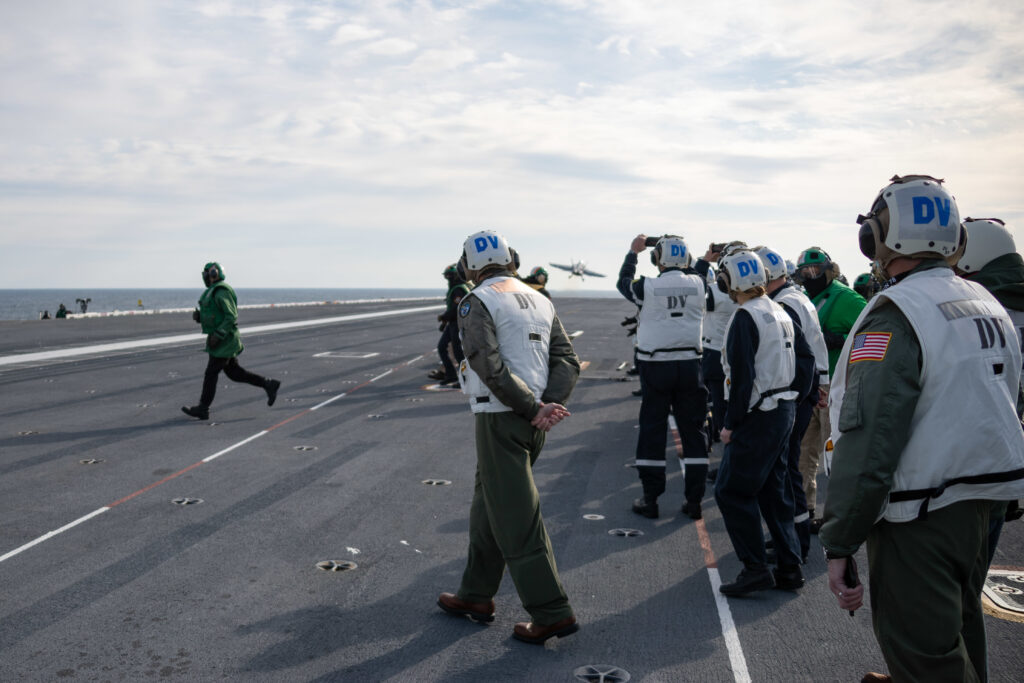
French Armaments Procurements Agency (DGA) members observe flight operations on USS Gerald R. Ford’s (CVN 78) flight deck during a ship visit, April, 23, 2021. DGA executive leadership visited Ford to view the electromagnetic aircraft launch system (EMALS) and advanced arresting gear (AAG) in operation, to enable France to refine the design of the Future French Carrier. U.S. NAVY / Mass Communication Specialist 3rd Class Dalton Lowing

SAN DIEGO — General Atomics Electromagnetic Systems announced it has been awarded a contract by US Naval Air Systems Command to continue development and evaluation of tailored configurations of the Electromagnetic Aircraft Launch System (EMALS) and Advanced Arresting Gear (AAG) as a potential Foreign Military Sale to the French navy for their next generation aircraft carrier, Porte-Avions Nouvelle Génération (PANG).  

“We are proud to be supporting the ongoing efforts between our nations to realize the potential of integrating EMALS and AAG onboard the future flagship of the French Marine Nationale,” said Scott Forney, president of GA-EMS. “For decades, France’s Charles de Gaulle and U.S. Nimitz-class carriers have provided interoperable capabilities to conduct joint operations and launch and recover aircraft on each other’s ships. EMALS and AAG onboard next generation French and U.S. aircraft carriers will provide increased interoperability between our navies and greater flexibility to launch a wider range of current and future aircraft for the decades to come.” 

GA-EMS will continue evaluating optimal EMALS and AAG configurations for performance and document ship interfaces and impacts on the PANG. The contract will culminate in 2023 with a system requirements review and an evaluation of French suppliers for potential component manufacturing in France.  

Under previous contract awards over the past two years, GA-EMS participated in carrier studies to investigate the feasibility of implementing EMALS and AAG for the future French carrier design. In December 2021, the U.S. State Department announced it approved a possible Foreign Military Sale for a two EMALS and three AAG configuration to France. 

The first-in-class USS Gerald R. Ford (CVN 78) recently completed its 10,000th successful launch and arrested landing using EMALS and AAG. The systems continue to perform successfully as CVN 78 prepares for its upcoming deployment. GA-EMS is currently under contract with the Navy to support CVN 78 sustainment requirements and is delivering EMALS and AAG for the next two Ford-class carriers currently under construction, John F. Kennedy (CVN 79) and Enterprise (CVN 80). GA-EMS is also working with the Navy to determine the EMALS and AAG contract and schedule requirements for the fourth Ford-class aircraft carrier, Doris Miller (CVN 81). 


CNO, Uruguay Navy Chief Discuss Maritime Peace and Security 

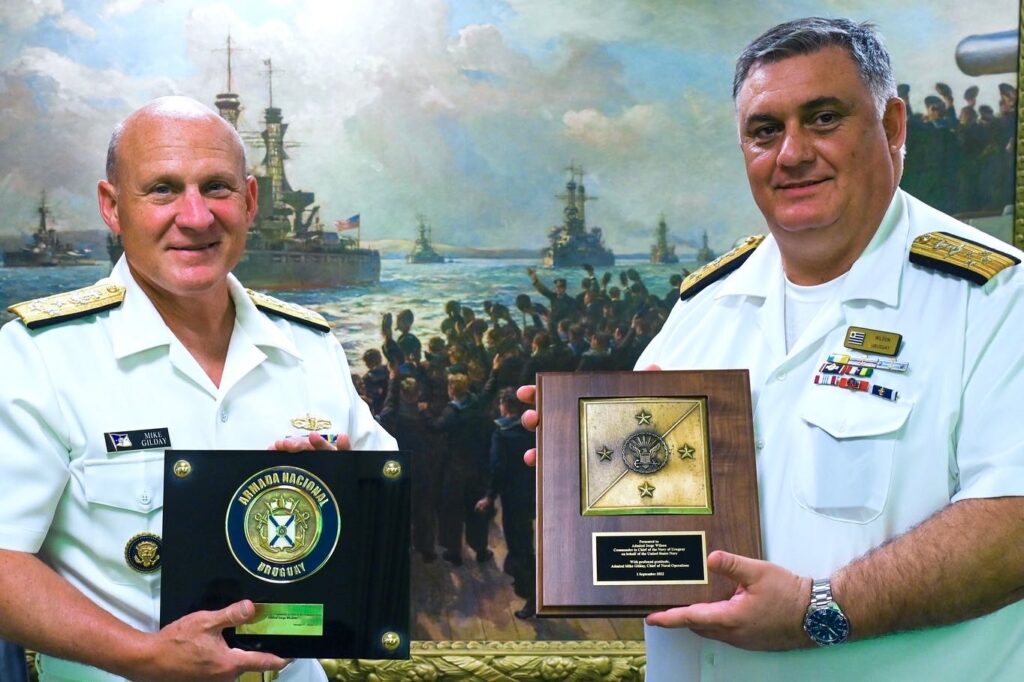
WASHINGTON — Chief of Naval Operations Adm. Mike Gilday hosted Commandant in Chief of the National Navy of Uruguay Adm. Jorge Wilson at the Pentagon for an office call on Sept. 1. U.S. NAVY / Chief Mass Communication Specialist Amanda Gray.


WASHINGTON — Chief of Naval Operations Adm. Mike Gilday hosted Commandant in Chief of the National Navy of Uruguay Adm. Jorge Wilson at the Pentagon for an office call on Sept. 1, the CNO’s public affairs said in a release. 

The two leaders discussed their shared vision to advance the bilateral relationship between the two navies, Uruguay’s long-standing partnership in the U.S. Global Peace Operations Initiative, ways to foster innovation and experimentation and the importance of supporting the international rules-based order. 

“Through our like-minded values and professionalism, our relationship with the Uruguayan navy continues to grow,” said Gilday. “This visit is an important opportunity to discuss ways to strengthen and advance our cooperation and interoperability.” 

During his trip to the Washington area, Wilson attended a ceremony in Baltimore where three former U.S. Coast Guard cutters were reflagged as Uruguayan navy ships, the culmination of a government-to-government agreement finalized in December 2021. 

Recently, U.S. and Uruguayan naval forces have worked closely together to conduct peacekeeping operations, assist with disaster response and develop professional education and training. In August, the Uruguayan navy sent maritime planners to participate in PANAMAX 2022 as part of the Combined Force Maritime Component Command Staff hosted by U.S. Naval Forces Southern Command/U.S. 4th Fleet in Mayport, Florida. PANAMAX 2022 is a U.S. Southern Command-sponsored exercise that focuses on security and stability operations to ensure free flow of commerce through the Panama Canal.  

Later this month, both the U.S. Navy and the Uruguayan navy will operate together as part of UNITAS LXIII, hosted this year by Brazil. UNITAS strengthens maritime partnerships, enhances proficiency and improves interoperability of the participating forces. This year marks the 63rd iteration of the longest-running, multinational maritime exercise in the world.  

This was the first meeting between the two heads of navy. 


MIKEL Wins Multi-Million Dollar Contract to Support U.S. Navy  

MIDDLETOWN, R.I. — MIKEL Inc., a defense company that has been developing and delivering innovative technologies to the U.S. Navy for more than 20 years, announced Sept. 1 that the Naval Sea Systems Command has awarded it a five-year, multi-million dollar contract to support the Undersea Warfare Combat Systems Department of the Naval Undersea Warfare Center in Newport, Rhode Island.  

This award extends a previous five-year contract, through which MIKEL continues to provide engineering and technical services for essential technologies on Navy submarines stationed around the world.   

“MIKEL is proud to continue to provide technical support for critical systems that maintain and advance national security. Through this important partnership with defense leaders at NUWC, we can ensure that U.S. submarines and warfighters are on the cutting edge of technology and innovation,” said Kelly Mendell, president of MIKEL. “Once again, we’ve demonstrated that for the military leaders who make our country safer, MIKEL makes their work easier.”  

The contract, which MIKEL won through a competitive bid process, supports the Global Command and Control System on vessels. MIKEL installs, tests, and ensures accuracy of software that integrates data from undersea, surface-level, and air sources, with available intelligence and environmental information. The system operates in near real-time, empowering fast action and decision making for all U.S. Navy submarines, surface ships, and land-based sites connected through NUWC in Newport.  

In other words, the technology enables U.S. warfighters to maintain superiority.   

“Our team brings highly-specialized technical expertise to this project, supporting the installation, integration, and deployment of critical systems on all U.S. Navy submarines,” said Kim Matthews, MIKEL’s director of Engineering Services. “We look forward to continuing to work with and deliver for our partners at NUWC. This award is a reflection of the quality work and state-of-the-art technologies our team consistently provides to the fleet.”  


Security, Industry Leaders Call Workforce Development an Urgent Defense Imperative  

NEWPORT, R.I. — As part of Defense Innovation Days, its signature national convening, SENEDIA (Southeast New England Defense Industrial Association) on Aug. 31 brought together White House, Department of Defense, Department of Labor and industry leaders for a compelling summit, “Building the Shipbuilding Workforce to Meet National Security and Supply Chain Priorities.”  

Key takeaways from the summit included:  

  • The workforce is the top concern for government and industry leaders. There is a lot of great work going on, but it is not enough to meet the current and future workforce needs of the shipbuilding industry. 
  • The challenges of workforce shortages and eroded talent pipelines are too complex for any one entity to address and solve alone. Effectively tackling these challenges requires new ways of thinking and new ways of partnering to develop regional training systems meeting critical defense needs. It is a strategic issue crossing state and industry lines.  
  • The shipbuilding industry needs to work together to make the case for manufacturing careers and reach underrepresented populations, including women, communities of color, refugees, and the previously incarcerated. Students need to be introduced to manufacturing careers earlier in their education.  
  • Partnerships need to address all the barriers to recruitment, hiring, and retention of workforce, including pay, benefits, and issues like housing and childcare.  

With national projections of 2.1 million unfilled manufacturing jobs by 2030, summit speakers painted a picture of a workforce development strategy that starts in early childhood and continues through multiple pathways into the profession.  

Sen. Jack Reed (D-Rhode Island), chair of the Senate Armed Services Committee, welcomed the attendees. He highlighted that Rhode Island has a good story to tell about creating a model for workforce development that can strengthen our national security and workforce. The effort has created a sustainable workforce development pipeline to build submarines, and it is a program that can be replicated and shared with other sectors of the economy.  

Deborah Rosenblum, assistant secretary of Defense for Industrial Base Policy, gave the keynote address for the summit. She highlighted that supply chain resilience and workforce development are national security imperatives. For more than 50 years, markets have prioritized supply chain efficiency over supply chain resilience. The need to invest in the resilience of the defense ecosystem has been made clear by the pandemic and the Russian invasion of Ukraine.  

“The workforce challenge is beyond any one state, agency, or manufacturer to solve,” she said. “That is why DoD is making targeted investments in training through the Industrial Base Analysis and Sustainment National Imperative for Industrial Skills initiative and partnering with SENEDIA’s regional Next Gen Submarine Shipbuilding Supply Chain Partnership. The partnership has trained over 2,000 workers and focused attention to shipbuilding careers.”  

Celeste Drake, White House National Economic Council deputy director for Labor Economy, expanded on the need for investment in the workforce. Manufacturing jobs are a pathway to the middle class. Over time, employer training eroded, and the public system has not kept up. Skills investment only works if they are the skills employers are looking for in their region. She also emphasized that resources and support for childcare and other caregiving responsibilities must be a part of the equation.   

“We are behind other advanced economies right now, but we have a tremendous opportunity in front of us,” she said. “We are investing in the future of America.”  

Manny Lamarre, senior advisor for the Employment and Training Administration at the U.S. Department of Labor, discussed the importance of equity, job quality, and partnerships. Companies can’t build the workforce of the future alone. The best way to scale workforce readiness is through partnerships that include industry, labor, and all levels of government (federal, state, local).   

“To build a strong workforce, we need to create opportunities for young people to be exposed and introduced to the shipbuilding industry,” he said.   

Adele Ratcliff, director of the DoD Industrial Base Analysis and Sustainment Program, said the need for early career exploration and skills building is more urgent than ever.   

“Gaps in manufacturing workforce are undermining the entire sector. When the United States moved from quality manufacturing to cost manufacturing, companies took on a job shop mentality. The entire educational and recruitment pipeline from K-12 through community college eroded,” she said. “IBAS is investing in the skills imperative — piloting new programs, reducing the cycle time on training, and responding to new skills needs.”  

Redefining career pathways in defense and helping more people see themselves reflected in those opportunities means new avenues for recruitment.  

Navy Rear Adm. Scott Pappano, Navy Program Executive Officer for Strategic Submarines, said a strong and sustainable workforce is critical to the construction of Columbia-class and Virginia-class submarines — a top priority for the U.S. Navy. The current worker shortage needs to be closed faster, which will require thinking outside the box.   

“We have to do things differently than we have done in the past,” he said. “The workforce is the rising tide that lifts all boats. That is the bottom line.”  

Pappano went on to say that he and his team are expanding the view on ideal candidates for the defense industrial base jobs of tomorrow. At-risk youth and retraining for adult learners are some of the non-traditional sources that he hopes to expand, as well as refugees and those who come to America looking for a better life. For these individuals, defense employment could provide an expedited path to citizenship and a sense of patriotism and purpose, while the industry benefits from a new source of talent.  

Rounding out the summit panel, Shawn Coyne, General Dynamics Electric Boat vice president for Human Resources, and Ray Steen, General Dynamics Bath Iron Works vice president for Human Resources shared additional strategies for bolstering the ranks of the shipbuilding workforce and the broader defense workforce. Andrew Bond, General Dynamics Electric Boat vice president for Planning, was the moderator of the event.  

Coyne announced that General Dynamics Electric Boat earlier this week increased their new minimum starting pay for unskilled workers to $20 per hour. They have also significantly increased recruitment efforts, hosting or attending 350 recruitment events to date this year alone.  

Particularly important, the speakers agreed, is increasing flexibility and benefits. Steen said a 9 to 5 job affords more options for childcare than the typical 7 a.m. start in military and defense environments. Changing shifts or creating flexibility, he said, can remove a major barrier for employment.  

Consistently throughout the summit discussion, participants agreed that workforce development is a shared responsibility. Molly Magee, SENEDIA executive director, concluded that everyone at the summit has a clear call to action in their respective spheres of influence to break down the barriers to recruitment, hiring, and retention of the shipbuilding workforce.  


Australian Navy Submariners to Train on British Nuclear Submarines 

Australian submariners will train on the new U.K. submarine HMS Anson. U.K. MINISTRY OF DEFENCE

LONDON — Royal Australian Navy submariners will join United Kingdom crews to train on the newly commissioned Astute-class nuclear-powered attack submarine HMS Anson, the U.K. Ministry of Defence said Aug. 31. 

Prime Minister Boris Johnson and Defence Secretary Ben Wallace hosted new Australian Deputy Prime Minister Richard Marles at Barrow to see the commissioning of the Anson.  

The announcement came as Marles and Wallace emphasized the importance of the deep defense ties between the U.K. and Australia, following the development of the trilateral AUKUS partnership working with the United States, which was represented today by the U.S. Defense Attaché, Navy Capt. Leland. 

Hosting Marles on his first official visit to the U.K. since the new Australian government came to power, the prime minister and ministers attended the commissioning of the fifth of seven new Astute-class Royal Navy submarines. 

With naval capability at the center of the two powers’ future defense relationship, the visit reinforced the priorities of the Integrated Review and significance of the AUKUS partnership, which links the U.K., the United States and Australia in promoting stability in the Indo-Pacific region. 

The U.K. and U.S. already have welcomed Royal Australian Navy personnel on its specialized nuclear training courses, and more will follow next year, before Australian submariners go to sea. The training and exchanges mark the beginning of a multigenerational naval partnership between the three AUKUS nations. 

Marles, who is also minister for defense, visited Barrow, having also seen the Type 26 frigate shipbuilding facility in Govan, accompanied by the First Sea Lord, Adm. Sir Ben Key. 

“Today is a significant milestone in the U.K. and Australia’s preparation to confront growing threats to the liberal democratic order, especially in the Indo Pacific,” said Wallace. “Not only have we progressed our defense planning but Minister Marles participated in the commissioning of our latest attack submarine, on which will Royal Australian Navy submariners will be embarked as we develop our shared capabilities in the years ahead.” 

One of the most sophisticated underwater vessels ever built, HMS Anson represents £1.3 billion of U.K. investment. Capable of defending the U.K.’s interests at home and overseas, HMS Anson will be armed with up to 38 Spearfish Heavyweight Torpedoes and Block V Tomahawk land attack missiles, able to tackle targets at a range of up to 1,000 miles. 

“HMS Anson is the cutting edge in submarine design and construction, ensuring operational advantage in the underwater battlespace, the last great stealth domain,” said Key. “Given the world we live in, there is no more important tool in the United Kingdom’s arsenal: silent, unseen, and a key instrument of our global, modern, ready Royal Navy.” 

At 97 meters long, HMS Anson stands at around the length of two Olympic swimming pools, with 240 kilometers of cabling, enough to stretch from Barrow-In-Furness to its new home in Faslane, Scotland. 

HMS Anson will remain in Barrow for the coming weeks while undergoing final checks and rigorous testing to the numerous complex systems that make up a nuclear-powered submarine, before sailing to HM Naval Base Clyde in Faslane to prepare for sea trials. 

HMS Anson will join four other Astute Class submarines in service with the Royal Navy — HMS Astute, HMS Ambush, HMS Artful and HMS Audacious. 

Two further boats — Agamemnon and Agincourt — are in various stages of construction at BAE Systems’ Barrow-In-Furness site as part of £11.2 billion overall investment in the whole Astute-class program. 


Coast Guard FRC Seizes Illegal Narcotics in Gulf of Oman 

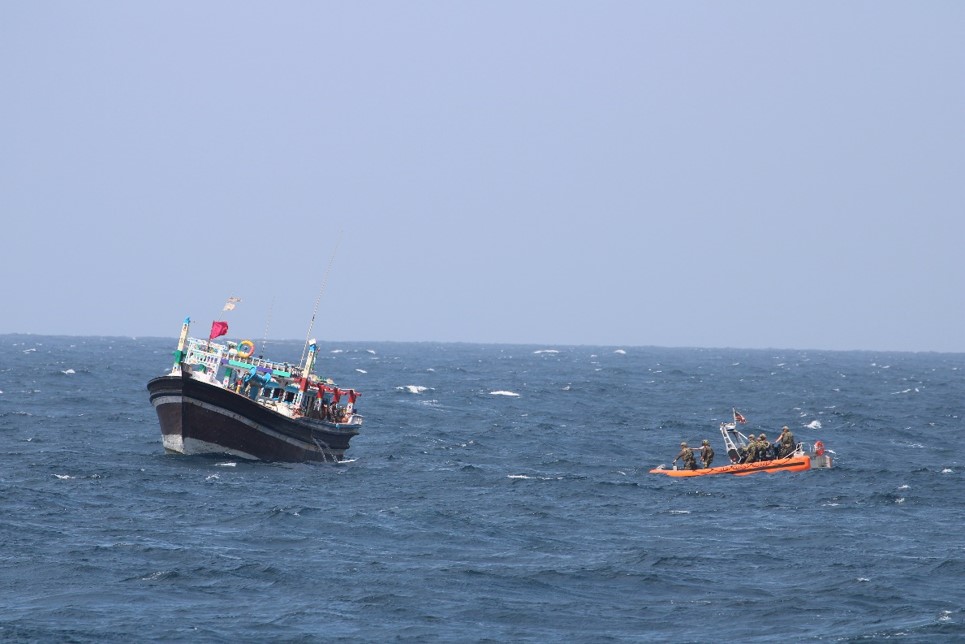
Personnel from U.S. Coast Guard fast response cutter USCGC Glen Harris (WPC 1144) interdict a fishing vessel smuggling illegal narcotics in the Gulf of Oman, Aug. 30. U.S. COAST GUARD

MANAMA, Bahrain — A U.S. Coast Guard fast response cutter interdicted a fishing vessel smuggling illegal drugs worth an estimated U.S. street value of $20 million while patrolling the Gulf of Oman, Aug. 30, NAVCENT Public Affairs said Aug. 31. 

USCGC Glen Harris (WPC 1144) seized 2,980 kilograms of hashish and 320 kilograms of amphetamine tablets during operations in support of Combined Task Force (CTF) 150. 

Led by the Royal Saudi Navy, CTF 150 is one of four task forces under Combined Maritime Forces, the largest multinational naval partnership in the world. CTF 150 conducts maritime security operations in the Gulf of Oman and North Arabian Sea to help ensure the free flow of commerce. 

Glen Harris previously interdicted another fishing vessel May 31 while patrolling the Gulf of Oman. The interdiction led to CTF 150 seizing $11 million worth of heroin. This followed an earlier seizure of heroin, methamphetamine and amphetamine pills worth $17 million in the same body of water, May 15. 

“The results of Glen Harris’s success is a testament to the crew’s professionalism and determination,” said Lt. Cmdr. Reginald Reynolds, commanding officer of Glen Harris. “I’m proud of our team’s commitment to countering illicit activity on the high seas and promoting security and stability across the region.” 

The fast response cutter arrived in the Middle East in January and operates from the U.S. Navy base in Bahrain where Combined Maritime Forces is headquartered with U.S. Naval Forces Central Command and U.S. 5th Fleet. 

Combined Maritime Forces includes 34 member-nations that operate across the Middle East to promote rules-based international order at sea. 


USNS Trenton Completes Gulf of Guinea Deployment 

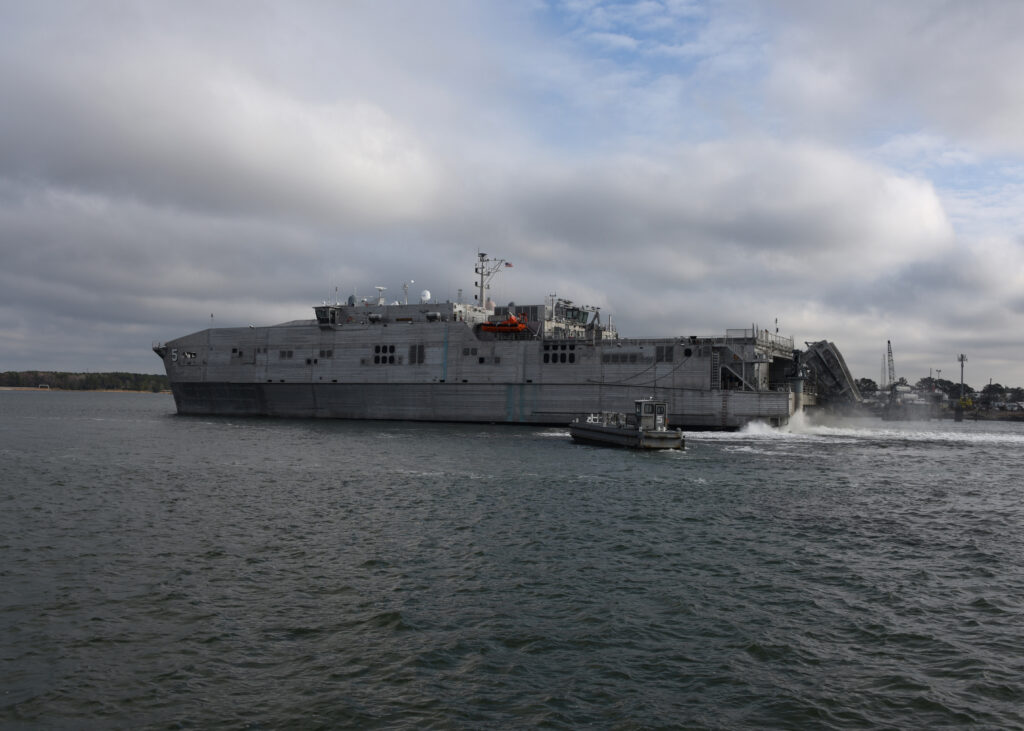
Military Sealift Command’s expeditionary fast transport ship, USNS Trenton (EPF 5) gets underway from Joint Expeditionary Base Little Creek-Fort Story, Dec. 20. U.S. NAVY / Bill Mesta

MALAGA, Spain — The Spearhead-class expeditionary fast transport USNS Trenton (T-EPF 5) arrived in Malaga, Spain, following a two-month deployment to the Gulf of Guinea, Aug. 28, 2022, U.S. Naval Forces Europe-Africa Public Affairs said Aug. 30.  

The deployment demonstrates the U.S. commitment to strengthening maritime security as well as peace and stability within the region. From July to August, Trenton conducted regional maritime presence operations and enriched valued relationships with African partners from Cabo Verde, Equatorial Guinea, Gabon, Ghana, Morocco and Sierra Leone. 

“Our combined military and civilian crew executed their mission with professionalism and enthusiasm, which demonstrated the United States’ steadfast commitment to our partner nations,” said Cmdr. Tim Rustico, officer in charge of Trenton. 

Trenton’s deployment also included tri-service maritime efforts within the U.S. Naval Forces Africa (NAVAF) area of operations. While deployed, Marines assigned to Task Force 61 Naval Amphibious Forces Europe-2d Marine Division (TF-61/2) embarked Trenton to provide in-port security assistance and to continue bolstering integrated maritime operations between the sea services. 

“I’m incredibly proud of Trenton’s professional execution during their deployment, where they worked with our partners, developed logistical nodes, and expanded maritime domain awareness in Western Africa,” said Capt. Kenneth Pickard, commodore, Task Force 63. “Trenton’s efforts laid the groundwork for continued presence and partnership in the Gulf of Guinea.” 

Over the last decade, the United States has steadily increased maritime security cooperation with partners on Africa’s Atlantic coast to improve maritime domain awareness capability to protect their sovereign waters. 

Earlier this month, NAVAF and the Royal Danish Navy jointly hosted the Maritime Operations Planning Workshop (MOPW) in Accra, Ghana for West African partners from 14 nations. MOPW allowed junior officers from African navies and coast guards to exchange operational planning experiences, develop templates for use during exercises, and plan real-world operations. 

In July 2022, NAVAF participated in the Naval Infantry Leaders Symposium-Africa (NILS-A) in Dakar, Senegal with maritime partners and allies. NILS-A is a multinational, Africa-focused forum designed to bring together partner nations with Marine forces and naval infantry. 

In March 2022, NAVAF hosted exercise Obangame Express, the largest multinational maritime exercise in Western Africa. These types of exercises strengthen partnerships and allow countries to work more closely on shared transnational maritime challenges including collaborative efforts in support of the Yaoundé Code of Conduct and adherence to the rule of law. 

In 2013, Gulf of Guinea coastal nations developed and signed the Yaoundé Code of Conduct, a key agreement to improve maritime interoperability.  This powerful framework established objectives and improved inter-region coastal relationships and joint capabilities that have reduced illegal activities in the Gulf of Guinea. 

The U.S. shares a common interest with African partner nations in ensuring security, safety, and freedom of navigation on the waters surrounding the continent, because these waters are critical for Africa’s prosperity and access to global markets. 


Coast Guard Enforces Safety Zone for Tow of Battleship USS Texas 

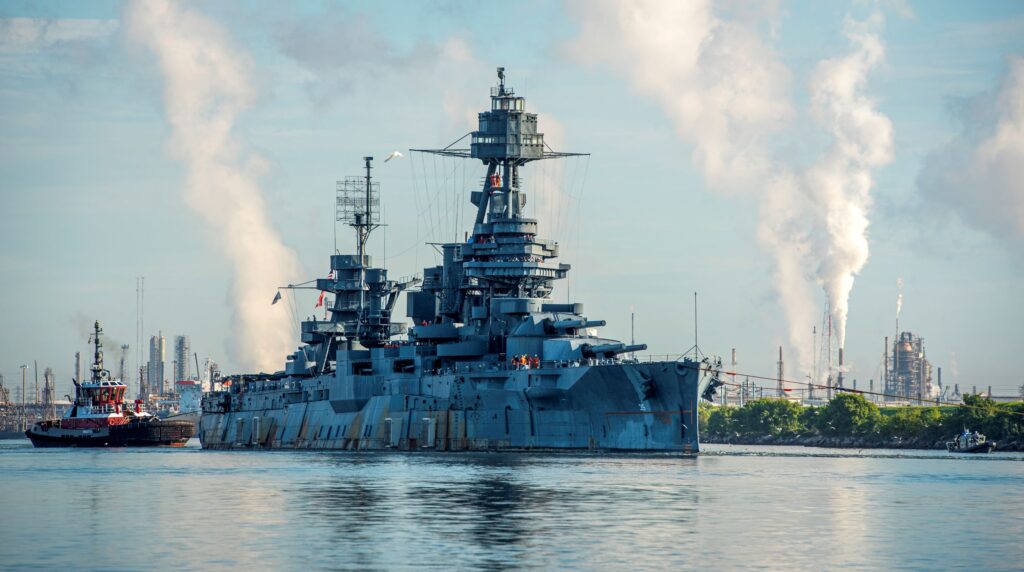
Pilot boat crews tow the battleship USS Texas down the Houston Ship Channel near Baytown, Texas, Aug. 31. The USS Texas is moving from the San Jacinto Battleground State Historic Site in La Porte, Texas, to a dry dock in Galveston where it will undergo extensive hull repairs. U.S. COAST GUARD / Petty Officer 1st Class Corinne Zilnicki

HOUSTON — The Coast Guard enforced a safety zone in the Houston Ship Channel and Galveston Ship Channel for the tow of the battleship USS Texas, Aug. 31, the Coast Guard 8th District said in a release. 

The Coast Guard captain of the port, in coordination with the Coast Guard’s law enforcement partners, established a safety zone to ensure the safety of the public and security for all vessels in the channels. 

Crews from Coast Guard Station Houston, Coast Guard Marine Safety & Security Team Houston, Coast Guard Station Galveston, Coast Guard Cutter Hawk, Texas Parks & Wildlife Department, Harris County Sheriff’s Office and the Houston Police Department enforced the safety zone during the tow, which began at approximately 6 a.m. and concluded at 9 p.m. 

Marine safety experts from Coast Guard Sector Houston-Galveston and the Coast Guard’s Salvage Engineering Response Team traveled aboard the battleship to ensure a safe, successful tow. Houston Pilots towed the battleship from the San Jacinto Battleground State Historic Site in La Porte, Texas, down the Houston Ship Channel, then transferred the tow to Galveston-Texas City Pilots, who transported the ship to Gulf Copper & Manufacturing Corporations’ Galveston Shipyard in Galveston. 

While in dry dock, the USS Texas will undergo $35 million in hull repairs. 

“Today’s successful transit of the battleship Texas was a historic, monumental event only possible with planning and partnerships throughout the port community,” said Capt. Jason Smith, captain of the port and commander of Sector Houston-Galveston. “Long before today’s event, the Battleship Texas Foundation and Valkor worked closely with naval architects from Resolve Marine and the Coast Guard’s Salvage Engineering Response Team to ensure a sound transit plan. Coast Guard crews partnered with local pilot associations and various other maritime law enforcement agencies to protect both the battleship and our waterways throughout the transit. As we say in the maritime community for a job well done, Bravo Zulu to all involved.”