NCMS to Test Ship Maintenance Tech in Navy’s New REPTX Event  

ANN ARBOR, Mich. — NCMS will assist the U.S. Navy in keeping ships in top shape while at sea through the new Repair Technology Exercise (REPTX), taking place Aug. 22 through Sept. 2 at Naval Base Ventura County, the consortium said Aug. 24.  

More than 60 technology suppliers are testing their products’ capacity to tackle real-world fleet maintenance challenges, including assessing and repairing potential battle damage during REPTX’s 12 days of technical demonstrations and field experiments aboard the Navy’s Self Defense Test Ship, an asset of Naval Surface Warfare Center, Port Hueneme Division..  

REPTX offers a unique opportunity to evaluate innovative products and services that could potentially help Sailors carry out the repairs needed to keep them underway. Industry and academic participants were identified and vetted via NCMS’s engagement with its network of hundreds of innovative technology solutions providers.  

“Our priorities as a warfare center are to deliver and sustain readiness, modernize and maintain the current fleet, and field the surface fleet of the future,” said Capt. Andrew Hoffman, NSWC PHD commanding officer. “REPTX demonstrates these priorities by allowing both industry, government and academia to work side-by-side while exploring innovative maintenance concepts that we can rapidly deliver to our forward-deployed warfighters.”  

REPTX participants include private industry, academia and government that will demonstrate technologies designed to address four focus areas: visualization, command and control aids, forward manufacturing and expeditionary maintenance.   

During REPTX, the technology suppliers will test their solutions on NSWC PHD’s Self Defense Test Ship, a 563-foot-long decommissioned Spruance-class destroyer the Navy uses to evaluate naval weapons and emerging technologies.  

Naval Sea Systems Command’s Naval Systems Engineering and Logistics Directorate Technology Office selected 65 technologies to take part in the event, including unmanned aerial vehicles and submersibles, additive manufacturing equipment, ship-to-shore communication systems, inspection and repair tools, and above- and below-water visualization devices.    

REPTX will immerse the technologies in a variety of shipboard scenarios, such as loss of lighting, an unidentified object on the hull, pipe corrosion and leakage, and damage to the ship’s superstructure.  

“The format will provide a realistic fielding environment, both pier-side and underway, allowing teams the chance to field, adjust, learn and retest their solutions,” said Janice Bryant, sustainment technology manager at Naval Systems Engineering and Logistics Directorate Technology Office and the sponsor of REPTX.  

REPTX is part of the broader Advanced Naval Technology Exercise-Coastal Trident 2022, which began in June and runs to September, and which NSWC PHD organizes and aims to bolster port and maritime security through field experiments involving emerging technologies and training events with law enforcement and other first responders.  


BAE Systems to Perform Extended Work aboard USS Ross  

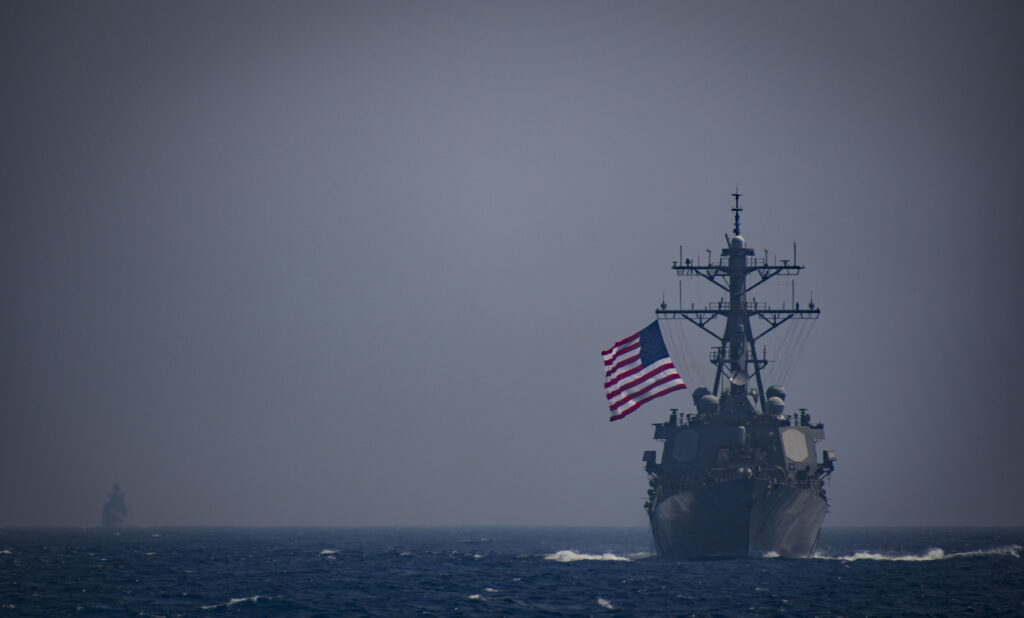
The Arleigh Burke-class guided-missile destroyer USS Ross (DDG 71) transits the Mediterranean Sea Sept. 3, 2018. U.S. NAVY / Mass Communication Specialist 1st Class Ryan U. Kledzik

NORFOLK, Va. — BAE Systems has received a $107.7 million contract from the U.S. Navy to modernize the guided-missile destroyer USS Ross (DDG 71), the company said Aug. 24.

Under this extended dry-docking selected restricted availability contract, the company will perform the modernization work at its Norfolk, Virginia shipyard. The contract includes options that, if exercised, would bring the cumulative value to $123.8 million. 

BAE Systems will dry-dock USS Ross to perform maintenance on the underwater hull, repair the ship’s main propulsion system, preserve internal ballast and fuel tanks and external superstructure and rehabilitate crew berthing and dining compartments. The modernization project is scheduled to take more than 500 days and be completed in April 2024. Once complete, the ship will be capable of serving in the fleet for another 10 years. The 16-year-old ship recently completed a seven-year operational period in Rota, Spain as a forward-deployed U.S. Navy combatant.  

“This is an important job for our employees, subcontractors, and the Navy to accomplish,” said Mike Bruneau, vice president and general manager of BAE Systems Norfolk Ship Repair. “We look forward to meeting the long-term maintenance goals for USS Ross to sustain the future capability and readiness of the ship.”  

The USS Ross was commissioned in June 1997. The ship is named after the first Medal of Honor recipient of World War II, Donald K. Ross. While serving aboard the battleship USS Nevada (BB 36) during the attack on Pearl Harbor on Dec. 7, 1941, Ross valiantly helped the badly damaged ship get underway during the attack. USS Ross is part of the Arleigh Burke class of destroyers. 


Navy Ready to Christen New Overlord USV ‘Mariner’ 

The Navy’s newest medium unmanned surface vessel, soon to be christened Mariner, on display at the U.S. Naval Academy in Annapolis. RICHARD R. BURGESS

ANNAPOLIS, Md. — The U.S. Navy’s newest Overlord medium unmanned surface vessel (MUSV) is moored at the U.S. Naval Academy in Annapolis, Maryland, for its Aug. 23 christening ceremony after a period of tours by dignitaries, Navy officials, academy midshipmen and media reporters. 

The MUSV, produced by prime contractor Leidos, with Gulf Craft of Franklin, Louisiana, as the builder, is to be christened “Mariner” by Stacy Small, wife of Capt. Pete Small, program manager for Unmanned Maritime Systems in the Program Executive Office, Unmanned and Small Combatants (PEO-USC). 

The Mariner is the fourth Overlord MUSV to be acquired by the Navy, although the third vessel, Vanguard, is still under construction. The first two Overlord MUSVs, Ranger and Nomad, were built under the Strategic Capabilities Office’s Ghost Fleet Overlord Program and transferred to the Navy early in 2022. They are assigned to Unmanned Surface Vessel Division One in San Diego, California and participated in the Rim-of-the-Pacific Exercise off Hawaii this summer.  

The Mariner, delivered to the Navy in March, recently completed a period at Little Creek, Virginia, for installation of some government-furnished equipment, said Brian Fitzpatrick, principal assistant program manager. Eventually it will be transferred to USV Division One via a transit of the Panama Canal.  

Rear Adm. Casey Moton, program executive officer, PEO-USC, said the Overlord program is leveraging both at-sea and land-based testing. The at-sea testing is used to evaluate the performance of the MUSV in a corrosive salt-water environment. 

Casey pointed out that each of the four Overlord vessels is different, with a variety of different hull, mechanical, and engineering systems and mission systems. Each MUSV also is evaluated with different mission systems that are changed out.  

The Mariner, halfway built when the Navy bought it, is based on a fast supply vessel designed to service offshore oil rigs. The vessels are already significantly automated. 

The MUSV is equipped with satellite communications; three radars of different bands; a mast-mounted electro-optical sensor, an electro-optical/infrared system camera system on six sides of the ship; Link 16; and several radios.     

The Mariner, for example, can carry two 20-foot containers and four 40-foot containers on its aft section. The containers can contain mission systems, spare parts, weapons and other systems. 

The Mariner can accommodate a small crew — including two merchant marine captains — as needed while the technology and concepts of operation for the MUSVs are evaluated. Fitzpatrick showed reporters the “red button” at the bridge control panel that allows a captain to take control of the ship if needed.  

The Mariner is powered by five 2,000-horsepower diesel engines that drive five water jets. The ship also is equipped with bow thrusters. The ship was built with two generators but a third was installed by the Navy to provide power for the expected needs of the payloads, some of which may be deployed on the ship with their own power and cooling systems. 

Redundancy is necessary on an unmanned ship more than a manned ship, and for each of its diesel engines the Mariner is equipped with three oil filters instead of one.  

‘Pushing Boundaries’

The admiral said the Overlord vessels are designed to deploy in open oceans but declined to say they would be deployed to the Western Pacific, noting that the Ranger and Nomad deployed to Hawaii for RIMPAC. 

Fitzpatrick said the Overlord MUSVs will need to be able to be refueled at sea, currently conducted by an onboard crew. 

“We have to work through that,” he said. 

Fitzpatrick said the program is collecting massive amounts of data — 400 terabytes so far — and has started to process it. 

Moton said the Overlord program will influence the discussion in Congress and the Navy on the value and operation of MUSVs and that the program will have an impact beyond the U.S. Navy into the international maritime market, including commercial operations.  

The Vanguard will be longer than the Mariner — 205 feet vice 19 feet — with a wider beam and greater capacity for payloads. Fitzpatrick said the program is “purposely pushing boundaries” with the Vanguard. 


Marine Corps Study on Body Composition Leads to Change 

MARINE CORPS BASE QUANTICO, Va. — The U.S. Marine Corps’ Training and Education Command, in collaboration with the United States Army Research Institute of Environmental Medicine, recently concluded a year-long study to evaluate current body composition standards and ensure service standards optimize health, performance, and fitness, Headquarters Marine Corps said in a release    

Gen. David Berger, commandant of the Marine Corps, received the study’s findings and made the following decisions: the performance exemption for Marines who score a 285 or higher on their fitness tests will remain in place. Prior to assigning Marines to the Body Composition Program, commanders will assess body composition using more advanced body composition methods effective Jan. 1, 2023; and a 1% increase in total allowable body fat for female Marines, also effective Jan. 1.   

The Marine Corps will codify these changes via official messages in the coming months. This announcement is being published ahead of official and final changes to the policy because the Marine Corps recognizes needed change cannot wait.   

“This study marks a milestone in understanding the health and performance of our Marines,” said Berger. “Our primary focus in the Marine Corps is the individual Marine and this study is a pivot point. We will continue to learn and explore additional modifications to our body composition program.”   

This study was one of the most technologically advanced studies on the topic since the 1980s, drawing participation from a diverse group of 2,173 Marines, including 1,435 men and 738 women, 196 of whom were postpartum. The study was conducted at three locations: Marine Corps Bases Quantico, Virginia; Camp Lejeune, North Carolina; and Camp Pendleton, California.   

“Ultimately, this is about warfighting. We need to find the most practical, accurate, and unbiased method of measuring body composition to maintain a healthy, ready force,” said Berger. “In order to make changes, we have to understand the impacts and availability of our proposed alternative methods. This will take some time to get it right, but we owe it to our Marines to move quickly. We continue to make changes across the force that aim to better take care of our most important asset — our Marines.”   

Every participant was first assessed utilizing methods that measure the size and proportions of the human body via height, weight, and the current service wide tape test.    

Then, participants received three assessments that measure tissue density. The first assessment was a Dual Energy X-Ray Absorptiometry scan, the most accurate means to estimate body fat, lean body mass and bone density. The second assessment was a 3D body scan using a two-compartment model approach to assess fat and lean mass. The third method was through bioelectrical impedance analysis, which uses an imperceptible electrical current to estimate lean mass and fat mass.    

Finally, the performance assessment, called the Counter Movement Jump, was conducted on a force plate designed to measure the forces and movement applied when conducting an upward jump.   

Going forward, the Marine Corps will still conduct height and weight measurements with the accompanying tape test. The research concluded that the tape test correctly identifies 91.6% of male Marines and 92% of female Marines as over the allowable body fat. Under this new process, the 0.6% of male and 6.3% of female Marines who are erroneously identified as exceeding body fat standards by the tape test would be correctly identified within standards by completing the Dual Energy X-Ray Absorptiometry scan.    

“Our research demonstrated the taping method is still a viable solution to determine if a Marine is within an optimal body composition range. However, we recognize that a more scientifically advanced method of determining body composition is required before a Marine is assigned to a program that could have career implications,” said LtGen. Kevin Iiams, commanding general, Training and Education Command.   

Therefore, under this policy, Marines who are identified as over their allowable body fat percentage when taped will receive a DEXA or BIA scan to ensure body fat percentage accuracy prior to enrollment in the body composition program.   

“We also recognized that male and female Marines’ body composition standards did not similarly compare to performance-related body fat. Female standards were leaner than the males,” said Iiams. “We have updated the maximum percentage allowed for females to reflect what the science told us was an equally-balanced and standardized body composition across the force.     

“These are likely not the last changes to come for the body composition program,” said Iiams. “We are a learning organization and will continue to refine these important health and readiness-programs as we collect more data.” 


Naval Station Newport Now Homeport for Two Coast Guard Cutters 

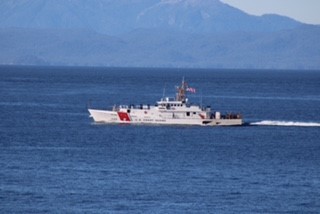
U.S. Coast Guard Cutters Tahoma (WMEC 908) and Campbell (WMEC 909) sit moored at Naval Station Newport, Rhode Island, Aug. 19. Tahoma and Campbell were welcomed to Naval Station Newport during a change of homeport ceremony. U.S. COAST GUARD / Petty Officer 3rd Class Briana Carter

NEWPORT, R.I. — The Coast Guard held a joint change-of-homeport ceremony for USCGC Tahoma (WMEC 908) and USCGC Campbell (WMEC 909) Aug. 19 at Naval Station Newport, Rhode Island.  

The Tahoma and Campbell are 270-foot Famous-class medium-endurance cutters previously based at the Portsmouth Naval Shipyard in Kittery, Maine. The relocation of these two cutters will allow the U.S. Navy to conduct infrastructure upgrades as part of a Shipyard Infrastructure Optimization Program at the Portsmouth Naval Shipyard. 

Adm. Linda L. Fagan, commandant of the U.S. Coast Guard, presided over the ceremony. 

“For these two ships, this is actually a homecoming,” said Fagan. “Nine of the Coast Guard’s 270-foot medium endurance cutters, including the Tahoma and Campbell, were constructed right here in Rhode Island. These cutter’s new berths in Newport will provide a continued pathway for our crews to maintain geographic stability in southeastern New England while they conduct historic missions throughout the globe in support of the Atlantic Area commander.” 

Attendees at today’s ceremony included Rhode Island Senators Jack Reed and Sheldon Whitehouse, Rep. David Cicilline, Newport Mayor Jeanne-Marie Napolitano, Capt. James McIver, commanding officer of Naval Station Newport, and other local officials. 

“We are proud to welcome USCGC Tahoma and USCGC Campbell home to Naval Station Newport,” said McIver. “As fellow members of the United States’ maritime services, we look forward to the return of these units to their original birthplace here in Rhode Island and supporting them as they carry out global missions to meet the needs of our nation and the Joint Force.“ 

Tahoma is the third Coast Guard cutter to bear the name. Campbell is the sixth Coast Guard cutter to bear its name. Tahoma and Campbell are the eighth and ninth cutters, respectively, of 13 Famous-class cutters in service by the Coast Guard. Both cutters were commissioned in 1988 and are under the operational control of Coast Guard Atlantic Area. 


New Coast Guard Cutter Douglas Denman Arrives in Alaska 

The crew of Coast Guard Cutter Douglas Denman arrived at the cutter’s new homeport in Ketchikan, Alaska, Aug. 19. U.S. COAST GUARD

KETCHIKAN, Alaska — The crew of Coast Guard Cutter Douglas Denman arrived in Ketchikan, Alaska on Aug. 19 after a 36-day transit from Key West, Florida, the Coast Guard 17th District said in a release.  

Douglas Denman, the Coast Guard’s 49th fast response cutter, traveled nearly 7,000 miles from the most southeastern city in the U.S. to the most southeastern city in Alaska, transiting through the Caribbean Sea, the Panama Canal and up the west coast of Central America and the U.S. 

Following production of the ship in 2020, the first crewmember arrived in Ketchikan summer of 2021. Since then, the crew has undergone a year of administration and training in preparation to take ownership of the cutter. The engineering department alone attended a total of three months of school in addition to the crew’s seven weeks of familiarity training in Lockport, Louisiana, and seven weeks of post delivery availability phase in Key West.    

“It’s been a long but extremely rewarding journey to get to this point,” said Chief Petty Officer Hayes Printy, the cutter’s engineering chief. “Seeing the crew’s growth throughout the process and being able to make this unit what we want is an experience I will cherish and not forget.”  

The cutter will be commissioned at the end of September and fully operational in its area of responsibility in Southeast Alaska where the missions will include law enforcement, fisheries enforcement, search and rescue and national security.   

The Douglas Denman is scheduled to be permanently homeported in Sitka, Alaska, upon completion of required shore infrastructure improvements. 


Navy Taps BIW, Raytheon for Conventional Prompt Strike Work on Zumwalt DDGs  

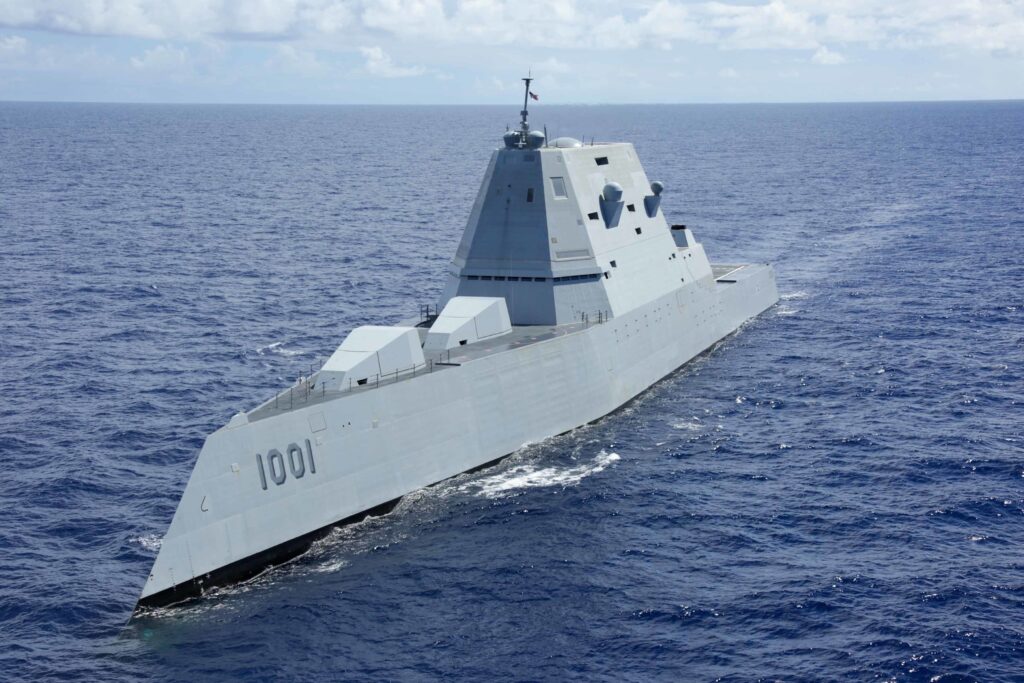
The Zumwalt-class guided-missile destroyer USS Michael Monsoor (DDG 1001) sails in formation during Rim of the Pacific (RIMPAC) 2022. U.S. NAVY / Mass Communication Specialist 3rd Class Aleksandr Freutel

ARLINGTON, Va. — As the U.S. Navy moves to deploy Conventional Prompt Strike missile systems on its three Zumwalt-class (DDG 1000) guided-missile destroyers, the service recently awarded two contracts to further that goal. 

The Navy’s Supervisor of Shipbuilding, Conversion, and Repair, Bath, Maine, has awarded General Dynamics Bath Iron Works a $20 million cost-plus-fixed-fee contract modification “for procurement of long-lead time material for the Large Missile Vertical Launch System [LMVLS] launch module fabrication on DDG 1000,” an Aug. 18 Defense Department contract announcement said. Work is expected to be completed by June 2024.  

Bath Iron Works is the prime contractor for the Zumwalt-class DDG. Raytheon is the contractor for the ship’s Total Ship Computing Environment. 

The Naval Sea Systems Command has awarded Raytheon an $11.2 million firm-fixed-price contract modification for “Total Ship Computing Environment Lab hardware for modernization/technical refresh and Conventional Prompt Strike to support DDG 1000-class combat system activation, sustainment and modernization,” according to an Aug. 19 Defense Department contract announcement. Work is expected to be completed by November 2023. 

The Navy plans to field the Conventional Prompt Strike capability on the USS Zumwalt in 2025 as the first platform for the new weapon. The LMVLS is needed because the ship’s existing Mk57 launchers for its Standard and Tomahawk missiles are too small to accommodate the CPS missile.  

The Conventional Prompt Strike capability will be fielded later in the decade on the Block V version of the Virginia-class attack submarine. 


Lockheed Martin Delivers Integrated Multi-Mission Laser Weapon System to The Navy 

HELIOS provides directed energy capability to the Navy fleet. LOCKHEED MARTIN

SAN DIEGO — Lockheed Martin has delivered to the U.S. Navy a 60+ kW-class high energy laser with integrated optical-dazzler and surveillance (HELIOS), the first tactical laser weapon system to be integrated into existing ships and provide directed energy capability to the fleet, the company said Aug. 18.

Integrated and scalable by design, the multi-mission HELIOS system will provide tactically relevant laser weapon system warfighting capability as a key element of a layered defense architecture. 

“Lockheed Martin and the U.S. Navy share a common vision and enthusiasm for developing and providing disruptive laser weapon systems,” said Rick Cordaro, vice president of Lockheed Martin Advanced Product Solutions. “HELIOS enhances the overall combat system effectiveness of the ship to deter future threats and provide additional protection for Sailors, and we understand we must provide scalable solutions customized to the Navy’s priorities. HELIOS represents a solid foundation for incremental delivery of robust and powerful laser weapon system capabilities.” 

HELIOS provides an additional layer of protection for the fleet with its deep magazine, low-cost per kill, speed of light delivery and precision response, the company said.


CNO Visits Spain, UK, Meets with Sailors, Focuses on Partnerships   

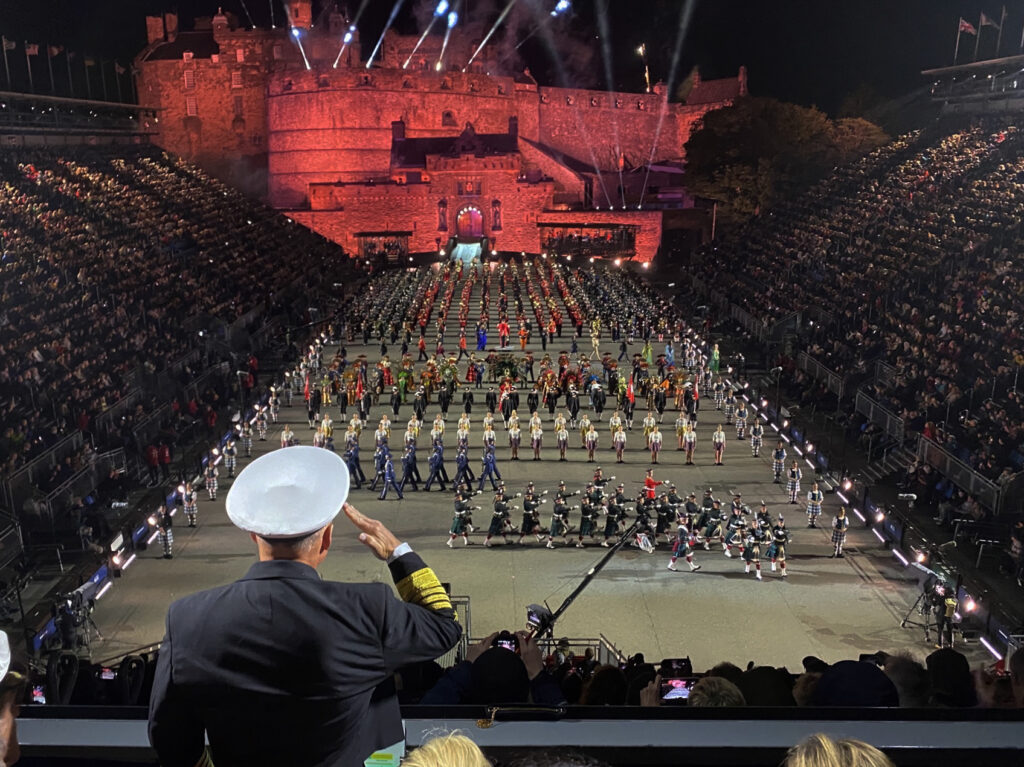
Chief of Naval Operations Adm. Mike Gilday renders a salute as the Royal Navy’s guest of honor at the Royal Edinburgh Military Tattoo in Edinburgh, Scotland, Aug. 20. U.S. NAVY / Capt. Gregory Leland

EDINBURGH — Chief of Naval Operations Adm. Mike Gilday and his wife, Linda, visited Spain and the United Kingdom, Aug. 16-21 to meet with Sailors, government and military leaders, the CNO’s public affairs office said Aug. 19.   

The CNO spoke with U.S. Sailors, as well as service members assigned to allied and partner militaries in Rota, Spain, London and Faslane and Edinburgh, Scotland.    

Gilday’s visit to Rota coincided with the arrival of the guided-missile destroyer USS Bulkeley (DDG 84) to its new homeport, Naval Station Rota, Aug. 17. Bulkeley joins three other U.S. Navy destroyers that are part of Forward Deployed Naval Forces-Europe: USS Arleigh Burke (DDG 51), USS Paul Ignatius (DDG 117) and USS Roosevelt (DDG 80).      

Gilday participated in a flag-raising ceremony alongside Admiral of the Spanish Fleet, Adm. Eugenio Díaz del Río Jaudenes, where together they hoisted the Spanish flag aboard Bulkeley.    

Speaking afterward to media, Gilday explained the significance of presence and the strength of the partnership between the U.S. and Spanish navies.   

“Spain remains one of our closest partners particularly in the maritime,” said Gilday. “The global economy floats on seawater … the U.S. Navy’s ability to have our destroyers forward-deployed in Spain is an exceptional opportunity for us to help keep sea lanes open, to work with closely with our allies and partners.”   

He later explained, “Our ships here in Rota are equipped with the most advanced capabilities and together with the Spanish navy we will continue to operate and sail strongly side by side to assure our NATO allies.”   

The Gildays also toured and spoke with Sailors assigned to Arleigh Burke.   

“What you do every day is not insignificant. I am extremely proud of this ship and everything you are doing, the ship means nothing without the crew and this is an exceptionally talented and dedicated team of warfighters,” Gilday said while speaking to the Sailors.   

Gilday began his U.K. engagements in London, where he was the keynote speaker at the dedication ceremony of the USS Osprey (AM 56) bell at the United States Embassy. USS Osprey was a Raven-class minesweeper that supported the invasion of Normandy, Operation Overlord. The ship struck an enemy mine the night before the invasion of Normandy while clearing the channel for the invasion. Six members of the crew died, becoming among the first of D-Day casualties. 

Gilday also visited the London Tech Bridge, where he exchanged views on the importance of this innovation hub and the partnership and collaboration with the U.S.-U.K. military, industry, academia and small businesses. 

“Collaborating, sharing information, being interoperable and truly interchangeable strengthens our ability to prevail in conflict and bolsters integrated deterrence against potential adversaries,” said Gilday. “We must continue to pursue innovative solutions, experiment and put capabilities in the hands of warfighters quickly if we want to maintain warfighting advantages.”   

During a visit to HM Naval Base Clyde at Faslane, Scotland, a logistical base for warships and submarines operating in European waters, he observed Valiant Jetty which was built to support operations by the latest Astute-class Royal Navy attack submarines. Gilday spoke with U.S. Navy Sailors who are training with Royal Navy sailors, toured cutting-edge boats, and also congratulated newly qualified Royal Navy British submariners who received their qualifications and pins.   

Gilday, the Royal Navy’s guest of honor, attended the Royal Edinburgh Military Tattoo, an annual series of artistic performances by 900 performers, including British armed forces, commonwealth and international military bands from across the globe.  

The focus of Gilday’s visit to the U.K. was to advance and further strengthen the maritime partnership and work toward becoming truly interchangeable. Throughout his visit, Gilday met with Royal Navy Adm. Sir Ben Key, First Sea Lord and chief of the Naval Staff of the United Kingdom. 


‘OpTech’ Workshop Will Focus on Littoral Environment in Baltic Sea

HELSINKI — The Littoral OpTech Baltic Sea workshop coming up at the end of August in Helsinki may look like a logical dialogue to have with navies in the region in the shadow of Russia’s invasion of Ukraine, but it’s not.

It comes as the two nations who are leading the event are preparing to joining the NATO alliance, but that is coincidental. In fact, this Littoral OpTech workshop was originally planned for two years ago and postponed twice because of the pandemic.

However, world events and the importance of littoral environments in areas such as the Black Sea and Baltic Sea, underscore the urgency of having this event now.

The Helsinki workshop will be held Aug. 30-31 at the Finnish Naval Academy and is one of a series of OpTechs held in different parts of the world in key littoral environments. The first was conducted in 2014 in Stockholm, with subsequent workshops conducted in important littoral areas of maritime operations including Japan, Columbia, Canada and Greece.

Other conferences and workshops have been held at the U.S. Naval Postgraduate School in Monterey, California. The workshops are usually two-day events, with the first day focused on the environment and operations and the second day examining new technologies. Participants also take part in a “war game” focused on a plausible maritime scenario in that part of the world.

Capt. Bo Wallander, a retired captain in the Royal Swedish Navy, has led the previous OpTechs, along with retired U.S. Navy Cmdr. Steve Benson.

Wallander, who is producing the Helsinki event, said the purpose is “to gather international defense leaders, scientists, researchers, analysts, and think-tank experts to explore the unique operational and technological challenges to security and defense in typical cul-de-sac littorals, like the Baltic Sea.”

The nations on the Baltic Sea are close to each other. The air distance between Kaliningrad and Helsinki its 357 nautical miles, and to Stockholm it’s just 288 nautical miles. It’s 161 nautical miles from St. Petersburg to Helsinki, and 372 nautical miles to Stockholm. So, reaction times are short. 

“The goals of the workshop are to share experiences how to develop systems and operate and in a littoral environment,” Wallander said.

“Focusing on the Littorals fosters collaboration on common security and defense concerns with an all-domain approach to solutions,” Benson said.