Pappano: Studying ‘Shortish’ Life Extension of Ohio SSBNs as Risk Mitigator  
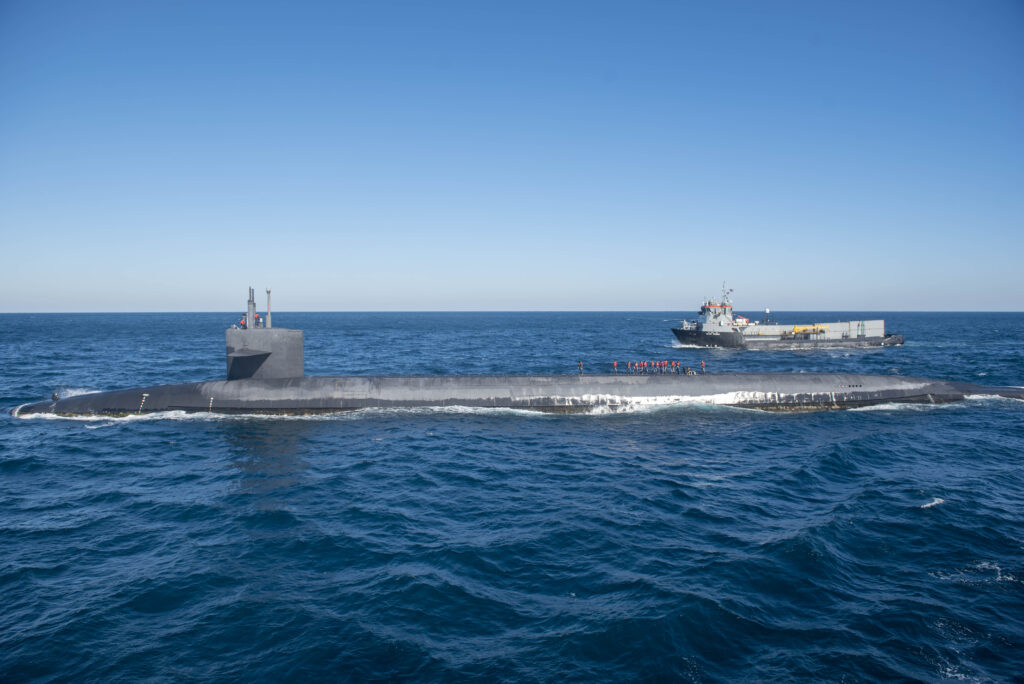
The Ohio-class ballistic-missile submarine USS Wyoming (SSBN 742), supported by USNS Black Powder (T-AGSE 1), prepares to execute an exchange of command and crews at sea. This regularly scheduled exchange of command at sea demonstrates the continuity and operational flexibility of our sea-based nuclear deterrent operations and our ready, reliable ballistic-submarine force. The efficiency of exchanges of crews at sea allows Sailors to reunite with their families and provides a ready, resilient submarine force. U.S. NAVY / Mass Communication Specialist 2nd Class Aaron Xavier Saldana

ARLINGTON, Va. — The U.S. Navy admiral in charge of procuring and sustaining the Navy’s ballistic-missile submarines (SSBNs) said the Navy is studying possible short service-life extensions of some Ohio-class SSBNs and even the Ohio-class guided-missile submarines. 

The Ohio-class SSBNs are scheduled to be replaced by the Columbia-class SSBNs now under construction. The first Columbia SSBN is scheduled to be on patrol in fiscal 2031 in order to maintain the undersea leg of the nation’s nuclear deterrent force. The margin available in the schedule for the Columbia program is tight. 

“Because it is the prudent thing to do, we are evaluating potential — not class extensions — but individual hull extensions for up to five of our Ohio-class SSBNs,” said Rear Adm. Scott Pappano, the program executive officer for strategic submarines, speaking May 12 in a webinar of the Advanced Nuclear Weapons Alliance Deterrence Center. 

The Ohio-class SSBNs were built for 30-year service lives, which were lengthened to 42 years through an extension program. 

“It’s very hard to get past 42 years,” Pappano said. “We’re going to at least evaluate that in the background. The first time we’d actually have to start thinking about doing that — to actually do one — would be in the FY29 time frame. So, we’re doing the evaluations right now on what it would take to do a ‘shortish’ repair availability to extend those ships for a couple of years as a risk mitigator, if need be. My goal is to not have to do that, but we want to understand the opportunities and risks associated with that short extension of the Ohio if we need to go do that, depending on what the world situation looks like at the end of the ‘20s and into the ‘30s.” 

The admiral said the Ohio class has been upgraded with a modernized Strategic Weapon System and COTS [commercial-off-the-shelf] systems and sensors. 

“That class is doing very, very well,” he said. 

Pappano also said that “as part of that we’ll also evaluate the SSGNs [Ohio-class guided-missile submarines] right now. That’s a bit more of a challenge because those ships are operated vigorously than the SSBNs are in the current roles they have right now, but we will continue to look forward to doing that.  

“Eventually, the Virginia-class [SSN] VPM [Virginia Payload Module] capability will supplant much of that [SSGN] missile inventory,” he said. “Until that comes online, we want to make sure we have the missile shooter capability in the SSGNs for as long as we can, but it’s going to be a delicate balancing act of maintaining the current SSBN fleet versus extending the SSGN fleet. One of the things we’re looking at right now as we go forward is to make sure we provide as much capability to the warfighters as we can at the right amount of risk.”

Navy to Commission Guided-Missile Destroyer Frank E. Petersen Jr. 

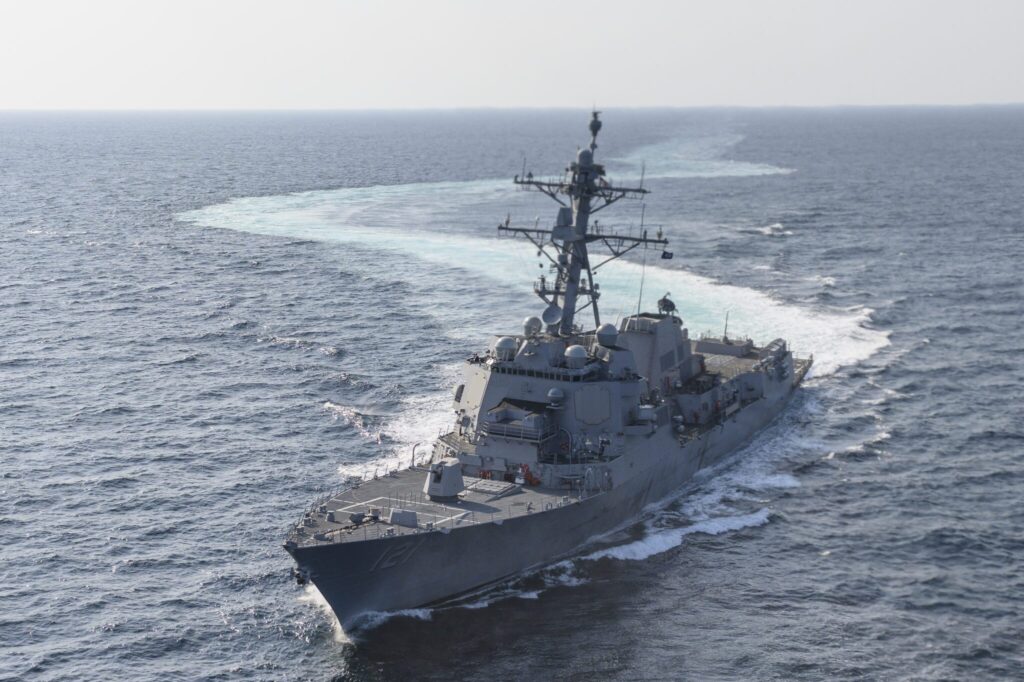
Frank E. Petersen Jr. (DDG 121) navigates in the Gulf of Mexico during bravo trials. HUNTINGTON INGALLS INDUSTRIES

ARLINGTON, Va. — The Navy will commission the future USS Frank E. Petersen Jr. (DDG 121), the newest Arleigh Burke-class guided-missile destroyer, during a 10:00 a.m. EDT ceremony on Saturday, May 14, in Charleston, South Carolina, the Defense Department said in a release. 

The future USS Frank E. Petersen Jr. is the first ship to honor Marine Corps Lt. Gen. Frank E. Petersen, Jr., the first Black Marine Corps aviator and the first Black Marine Corps officer promoted to brigadier general. When Petersen retired in 1988 after 38 years of service, he was, by date of designation, the senior-ranking aviator in the Department of the Navy. 

The principal speaker is The Honorable Carlos Campbell, Naval aviator and former Assistant Secretary of Commerce for Economic Development. Additional speakers include The Honorable Nancy Mace, U.S Rep. from South Carolina’s 1st District; The Honorable Carlos Del Toro, Secretary of the Navy; Gen. David Berger, Commandant of the Marine Corps; Adm. Michael Gilday, Chief of Naval Operations; The Honorable John Tecklenberg, Mayor of Charleston, South Carolina; Mr. George Nungesser, Vice President of Program Management, Ingalls Shipbuilding; and Ms. Gayle Petersen, daughter of the ship’s namesake.  

The ship’s sponsors are Mrs. D’Arcy Ann Neller, wife of former Commandant of the Marine Corps, retired Gen. Robert “Bob” Neller, and the late Dr. Alicia J. Petersen, Lt. Gen. Petersen’s wife at the time of his passing in 2015. Dr. Petersen passed away in September 2021. Both sponsors participated in the keel laying, mast stepping, and christening ceremonies. Mrs. Neller will give the order to “man our ship and bring her to life.” 

“This ship honors the life and legacy of Lt. Gen. Frank E. Petersen, Jr., a pioneer not just for Marine Corps aviation but for our entire naval force,” said Secretary of the Navy Carlos Del Toro. “I have no doubt the crew will be a cornerstone of the Surface Force carrying his legacy forward and strengthening the bond between our Navy and Marine Corps team.” 

Arleigh Burke-class destroyers are the backbone of the U.S. Navy’s surface fleet providing protection to America around the globe. These highly capable, multi-mission ships conduct a variety of operations, from peacetime presence to national security, providing a wide range of warfighting capabilities in multi-threat air, surface and subsurface domains. These elements of seapower enable the Navy to defend American prosperity and prevent future conflict abroad. 

The nearly 9,500-ton USS Frank E. Petersen Jr. is 509.5 feet in length, has a waterline beam of 59 feet, and a navigational draft of 31 feet. Four gas turbine engines will power the ship to speeds in excess of 30 knots. USS Frank E. Petersen Jr. will homeport at Joint Base Pearl Harbor-Hickam.  

The ceremony will be live streamed at: USS Frank E. Petersen, Jr. Commissioning. The link becomes active approximately ten minutes prior to the event (9:50 a.m. EST). 

Additional information on a history of the ship and its namesake can be found at: https://www.history.navy.mil/news-and-events/multimedia-gallery/infographics/heritage/history-of-u-s–marine-corps-pioneer–frank-e–petersen.html 


SECDEF Announces Flag and General Officer Nominations 

ARLINGTON, Va. — Secretary of Defense Lloyd J. Austin III announced on May 11 that the president has made the following nominations: 

Marine Corps Maj. Gen. Brian W. Cavanaugh for appointment to the grade of lieutenant general, with assignment as commander, U.S. Marine Corps Forces Command; commanding general, Fleet Marine Force Atlantic; and commander, Marine Corps Forces North, Norfolk, Virginia. Cavanaugh is currently serving as commanding general, 1st Marine Aircraft Wing, Okinawa, Japan. 

Navy Rear Adm. Michael E. Boyle for appointment to the grade of vice admiral, and assignment as commander, Third Fleet, San Diego, California. Boyle is currently serving as director, Maritime Operations, U.S. Pacific Fleet, Pearl Harbor, Hawaii.  

Navy Rear Adm. Frank M. Bradley for appointment to the grade of vice admiral, and assignment as commander, Joint Special Operations Command; and commander, Joint Special Operations Command Forward, U.S. Special Operations Command, Ft. Bragg, North Carolina. Bradley is currently serving as commander, Special Operations Command Central, MacDill Air Force Base, Florida. 

Navy Rear Adm. Richard A. Correll for appointment to the grade of vice admiral, and assignment deputy commander, U.S. Strategic Command, Offutt Air Force Base, Nebraska. Correll is currently serving as director, Strategic Integration, N2/N6T, Office of the Chief of Naval Operations, Washington, D.C. 

Navy Capt. Aaron C. Rugh for appointment to the grade of rear admiral (lower half), and assignment as chief prosecutor for military commissions. Rugh is currently serving as division director, Criminal Law Division, Office of the Navy Judge Advocate General, Washington, D.C. 


Fagan Confirmed as Next Coast Guard Commandant 

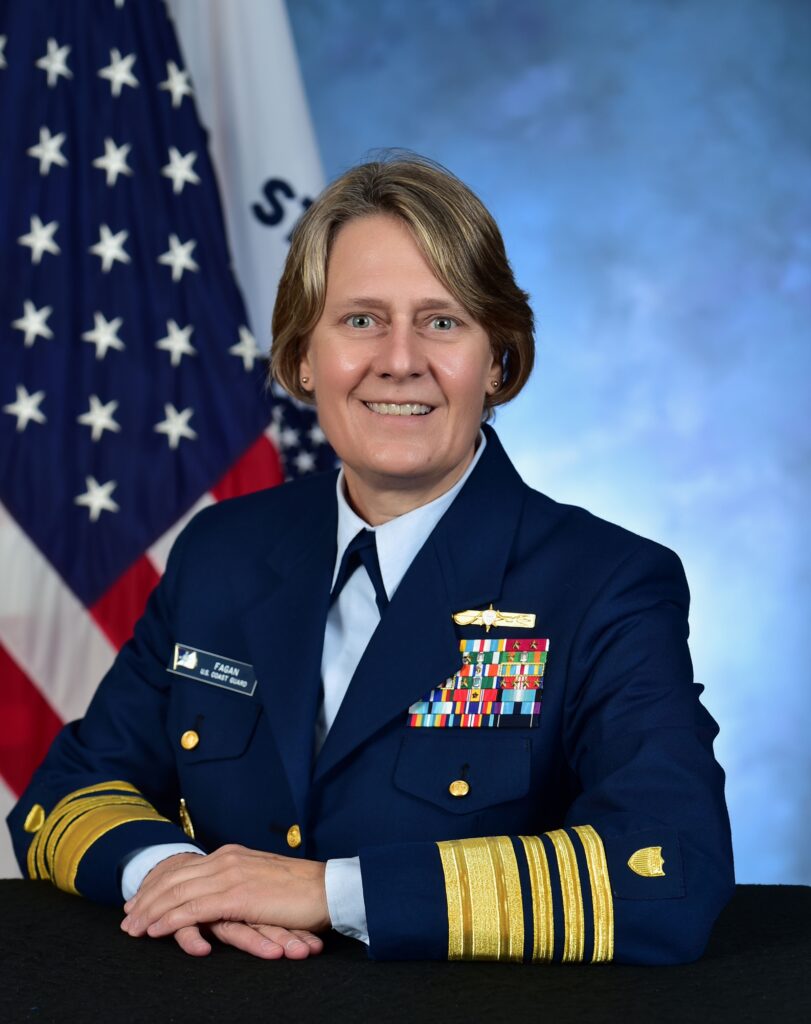
U.S. Coast Guard Vice Commandant Vice Adm. Linda Fagan, who was confirmed by the Senate as the next commandant of the sea service and will be the first woman to lead a U.S. military service branch. U.S. Coast Guard

WASHINGTON — The U.S. Senate confirmed Adm. Linda Fagan Wednesday to lead the Coast Guard as its next commandant, said Kara Noto of the Coast Guard’s MYCG staff. 

Fagan will be the first woman to lead a U.S. military service branch.   

Fagan has served as the service’s vice commandant since June 2021, when she became the first woman four-star admiral in Coast Guard history.  

The White House issued the following May 12 statement from President Joe Biden: 

“It is with deep pride that I congratulate Admiral Linda L. Fagan on her confirmation by the Senate as Commandant of the U.S. Coast Guard. Admiral Fagan is the Coast Guard’s first woman to hold the rank of four-star admiral. Today, she again makes history not only as the first woman to lead the Coast Guard—but also as the first woman Service Chief of any U.S. military service. Admiral Fagan’s leadership, experience, and integrity are second to none, and I know she will advance the Coast Guard’s mission to ensure our nation’s maritime safety and security.  

“My administration is committed to seeing more qualified women in senior leadership and command roles; making sure women can succeed and thrive throughout their military careers. Today, Admiral Fagan’s confirmation as Commandant of the U.S. Coast Guard signals to women and girls across our nation they have a place in protecting their country at the highest level.” 

The Senate also confirmed five other significant roles:   

  • Vice Commandant – Adm. Steven D. Poulin  
  • Deputy Commandant for Operations – Rear Adm. Peter Gautier   
  • Commander, District 14 – Rear Adm. Michael H. Day    
  • Commander, Atlantic Area – Rear Adm. Kevin Lunday   
  • Commander, Pacific Area – Rear Adm. Andrew J. Tiongson   

Previously announced senior leadership assignments include:  

  • First District Commander – RADM J.W. Mauger  
  • Fifth District Commander – RADM (Select) S.N. Gilreath  
  • Seventh District Commander – RADM (Select) B.C. McPherson  
  • Eighth District Commander – RADM (Select) R.V. Timme  
  • Ninth District Commander – RADM M.J. Johnston  
  • Eleventh District Commander – RADM (Select) A.M. Sugimoto  
  • Thirteenth District Commander – RADM M.W. Bouboulis  
  • Seventeenth District Commander – RADM N.A. Moore 


Saab Awarded Contract for Carl-Gustaf Recoilless Rifles for Army, Marine Corps 

Carl-Gustaf M4 in artic environment with AFCD from SENOP. Saab

STOCKHOLM — The U.S. Army MAAWS Program Office has awarded Saab a contract for Carl-Gustaf M4 recoilless rifles for the Army and Marine Corps. The Carl-Gustaf rifles are also known as Multi-purpose Anti-Armor Anti-personnel Weapon System (MAAWS) and M3A1 in the U.S. Army. The order will include deliveries of weapons for both the Army and the US Marine Corps. The contract has a total value of USD 16 million and is awarded under a current ID/IQ agreement.   

Saab will provide Carl-Gustaf recoilless rifles to continue supporting the ongoing fielding effort in both the Army and the Marine Corps.   

“At Saab, we are always striving to support the Infantry with light-weight solutions that make their jobs easier. This order will make Soldiers and Marines more agile thanks to the reduced weight and increased capability compared to the previous version currently in operational use. Additionally, this order will increase interoperability across services, alliances, and partnerships, with so many already fielding the Carl-Gustaf M4,” said Erik Smith, president and CEO of Saab in the United States.   

Carl-Gustaf M4 increases tactical flexibility, enabling soldiers to deal with any situation. Built to satisfy future requirements, it is compatible with advanced fire control devices and prepared for specialized ammunition, putting advanced technology at forces’ fingertips. The wide range of ammunition provides extreme tactical flexibility ready for any combat situation, delivering faster engagement, increased hit probability and greater effectiveness. 

The Carl-Gustaf system of lightweight weapons, now in its fourth generation. It is in use in more than 40 different countries, including many NATO allies. 


Ingalls Shipbuilding: Ready to Take on More Navy Shipbuilding 

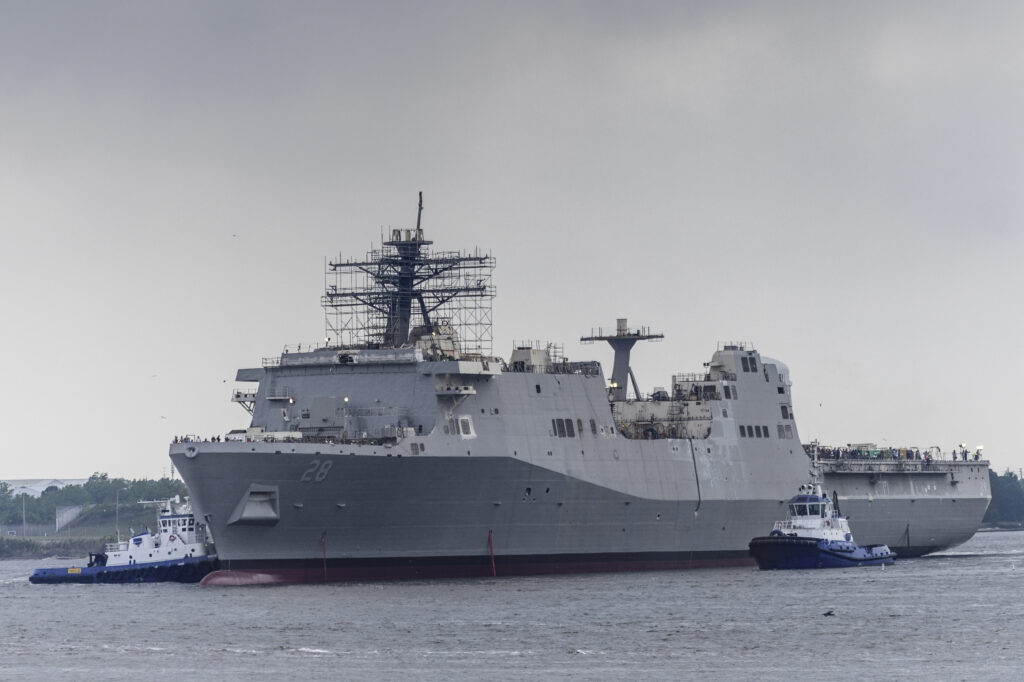
USS Fort Lauderdale was translated via Ingalls’ rail car system to the floating dry dock prior to launch. The dock was moved away from the pier and then flooded to float the ship. With the assistance of tugs, USS Fort Lauderdale came of the dock on March 29. HII / Lance Davis

ARLINGTON, Va. — Ingalls Shipbuilding, HII’s builder of surface warships, has the industrial facilities and workforce to add to the capacity of its portfolio, a senior Ingalls official said. 

“We have the ability to take on more work that we do today,” said George Nungesser, vice president for program management at Ingalls, speaking May 11 to reporters at the Modern-Day Marine Expo in Washington. 

Ingalls’ 11,500 workers are building Arleigh Burke-class guided-missile destroyers, Legend-class national security cutters, America-class amphibious assault ships (LHAs), and Flight I/II San Antonio-class amphibious transport dock ships (LPDs). They also are activating the combat system of the third Zumwalt-class guided-missile destroyer. 

Nungesser said that Ingalls has three LPDs under construction. LPD 28, the future USS Fort Lauderdale, will sail away from the shipyard for commissioning in July. Nungesser said this LPD represented the best cost and schedule performance to date in the LPD 17 program. 

LPD 29, the future USS Richard M. McCool Jr., was launched in January and is 75% complete. Nungesser said it would be delivered to the Navy by the end of 2023. 

LPD 29 and LPD 30 are transition ships to the Flight II version of the class. 

LPD 30, the future USS Harrisburg, is 25% complete.  

Fabrication of LPD 31, the future USS Pittsburgh, is scheduled to begin in September. 

LPD 32 has been requested by the Navy in the 2023 budget. However, the budget plan would truncate the LPD 17 program with LPD 32 being the last to be procured. The Marine Corps has listed advance procurement funding of an additional ship, LPD 33, in its Unfunded Priorities List for 2023. 

Nungesser said the Navy did a good job with the technology transition to the Flight II ships, including accommodation of the SPY-6(V)2 active electronically scanned array radar and the CH-53K helicopter. 

Ingalls completed the post-shakedown availability of the America-class LHA USS Tripoli (LHA 7), work which including modifying the ship to operate F-35B Lightning II strike fighters.  

LHA 8, the future USS Bougainville, is 50% complete. 

LHA 9 was authorized and funded in fiscal 2021.  

Nungesser said that Ingalls has a solid backlog of work in the short term and is working to modernize its facilities and is working closely with its vendors to sustain the industrial base. Ingalls is in discussion with its vendors to get price quotes for LPD 32. 

He said that it would be ideal for the workforce to have the LPD production centered on building one every two years and LHA production every four years. 

Ingalls wants to be the builder of the future Light Amphibious Warship, Steve Sloan, Ingalls’ LPD program manager, also speaking in the roundtable.


Marine Infantry to Become More Commando-Like

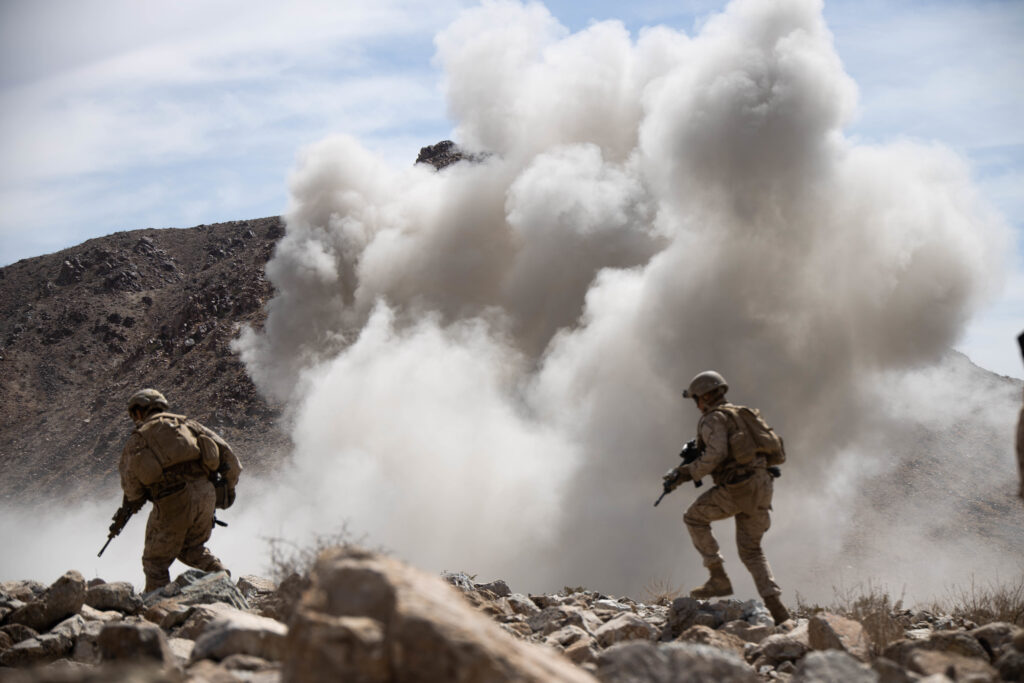
U.S. Marines with India Company, 3d Battalion, 1st Marine Regiment, 1st Marine Division, breach the objective while conducting Range 400 as a part of Integrated Training Exercise (ITX) 3-22 at Marine Corps Air Ground Combat Center Twentynine Palms, Calif., April 10, 2022. ITX is a month-long training evolution comprised of multiple ranges to refine combined arms maneuver in offensive and defensive combat operations. U.S. MARINE CORPS / Lance Cpl. Brayden Daniel

WASHINGTON – A critical element of the Marine Corps’ 2030 force transformation process is a sweeping array of changes in how they train and educate their Marines, from recruiting training, through infantry and advanced skills instruction to the combat exercises among the war-fighting units. The basic thrust of these dramatic changes is to create a more lethal, resilient and innovative force that can adapt to the rapidly changing technological character of war and the actions of any future peer adversary, a panel of the Corps’ top training officers said May 12.

The goal is “to create a generation of Marines who will be able to out wit, out pace and out fight any 21st century adversary,” said Col. Howard Hall, assistant chief of staff of the Marines Training and Education Command (TECOM). But throughout these dramatic transformations, the traditional Marine “rigorous standards will continue to apply” so the future Corps will be “a certain force in an uncertain world,” Hall said.

A major focus of the improved training is on the infantry, with expansion and intensification of the initial and advanced training for both enlisted and officer infantry Marines and higher standards for assignment to what has traditionally been the essential core of the Marines’ warfighting doctrine.

Responding to direction from Marine Corps Commandant Gen. David Berger, “we’re going to make our infantry Marines more like (Army) Rangers, more commando-like,” said Maj. Gen. Julian Alford, commanding general of Training Command. To prepare for that change, Alford said he and his staff visited the 75th Ranger Regiment, who are designed as light-assault raiders, and the British Royal Marines, who are traditionally labeled as “commandos. And to better serve these commando-like infantry units, the Marines will require the Navy hospital corpsmen assigned to those units to go through basic infantry training.

Among the training changes underway, are higher intelligence scores, better swimming capabilities and proven performance on obstacle courses, to qualify for basic infantry training, a four-week extension of that training and the addition of a sergeant or staff sergeant to supervise a 14-Marine element during training, he said. They also are extending the infantry officer training course by four weeks, adding more field training including combined arms instruction, Alford added. And there will be additional training in crew-served and anti-armor weapons.

Although the initial recruit training program will not be extended, it will be modified to include periods in which the recruits are given more opportunity to demonstrate leadership and initiative, and the marksmanship training will shift from the standard shooting at fixed-range targets to more combat-like responding to unexpected targets, said Col. Col. Joseph Jones, Commanding Officer Recruit Training Regiment, Marine Corps Training Depot San Diego.

The recruits also will be given a lot more swimming training to improve water survival skills and their training will be more closely supervised by an officer, Jones said.

But Jones said, “the critical element , the legendary relationship between the drill instructor and the recruits, will remains. It still is as powerful as it’s ever been.”

To support this intensified and redirected training, the Corps is making major expansion and modernization to its combat training infrastructure, with more simulation and constructive capabilities that can tie widely separated personnel into a combat scenario.

The overall factor in these significant changes is the need to change from what Hall called “industrial-age training models, one size fits all,” to produce quantity of bodies to an “information-age” process to prepare for the future “multi-domain, multi-spectral fight.”


Raytheon Flies APG-79(V)4 GaN-AESA Radar in Marine Corps F/A-18 

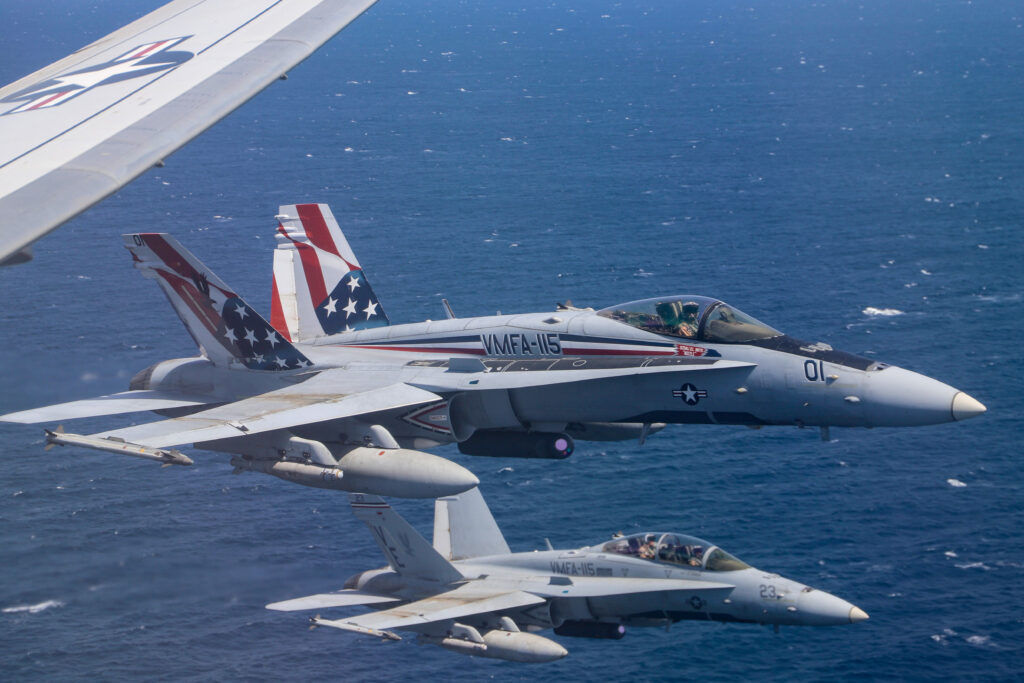
F/A-18C Hornets attached to Marine Fighter Attack Squadron 115 fly in formation during a Bab Al Mandeb transit, Feb. 3, 2022. U.S. NAVY

EL SEGUNDO, Calif. — Raytheon Intelligence & Space’s (RI&S’s) pre-production APG-79(V)4 radar system was successfully flown on a U.S. Marine Corps F/A-18 Hornet earlier this year, at Naval Air Weapons Station in China Lake, California. This is the radar system’s first flight on the aircraft since RI&S delivered the prototype radar in 2021.

The APG-79(V)4 is an APG-79 radar derivative that employs the first airborne GaN-AESA fire-control radar to help pilots detect and track enemy aircraft from greater distances with greater accuracy and meets the power and cooling requirements of legacy aircraft.

“Following successful ground testing and the delivery of the prototype radar, this flight test was critical to observe performance in the air,” said Thomas Shaurette, vice president of F/A-18 & Global Strike Radars for RI&S. “It allowed our partners to see the V4 radar’s enhanced detection and tracking abilities in real-time.”

The U.S. Marine Corps pilot demonstrated the radar’s seamless integration with the legacy Hornet avionics. The APG-79(V)4 radar is common in parts and technology with the legacy AN/APG-79 radar used in the U.S. Navy’s F/A-18 Super Hornet, thus optimizing cost and sustainment. Flight tests will continue to support weapons system integration on the fleet.

The Naval Air Systems Command recently awarded additional contract modifications to equip the Hornet fleet with more radars in 2021, and the total production value for domestic and foreign military sales customers is over $300 million.


Medium Range Interceptor Capability Proves Effective in Marine Corps Test 

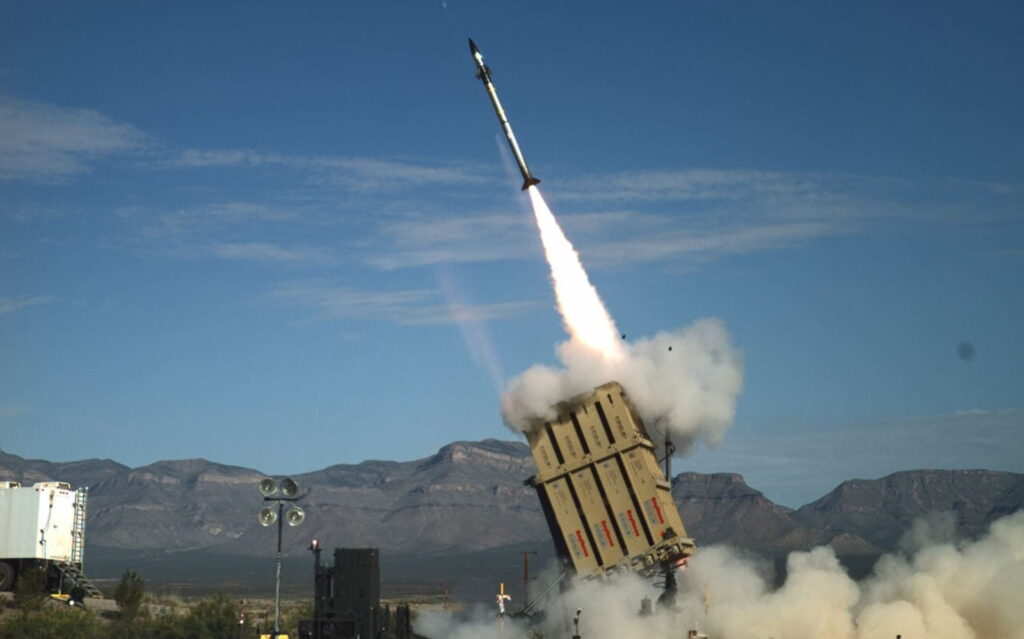
Live fire of the Medium Range Interceptor Capability with the US Marine Corps’ AN/TPS-80 Ground/Air Task Oriented Radar, Common Aviation Command and Control System, and components of the Iron Dome Weapon System, including the Tamir interceptor. U.S. MARINE CORPS

TUCSON, Ariz. — Raytheon Missiles & Defense, a Raytheon Technologies business, and RAFAEL Advanced Defense Systems Ltd., an Israeli-based defense technology company, successfully conducted a live fire of the Medium Range Interceptor Capability (MRIC). During the U.S. Marine Corps event, MRIC engaged targets representative of cruise missile threats, Raytheon said in a May 6 release. 

The test examined MRIC’s integration capabilities with the US Marine Corps’ AN/TPS-80 Ground/Air Task Oriented Radar, Common Aviation Command and Control System, and components of the Iron Dome Weapon System, including the Tamir interceptor. 

This test is a first in a series designed to prove out the MRIC’s ability to intercept cruise missiles threats. The live fire also stressed the MRIC system to assess its proficiency against high-end threats used by near-peer adversaries. 

“This test proved the interoperability of sensors and effectors working together as an integrated air and missile defense capability,” said Tom Laliberty, president of Land Warfare & Air Defense at Raytheon Missiles & Defense. “The demonstration showcased the benefits of integration, extending the capabilities of individual systems into a solution greater than the sum of its parts.” 

The Ground Based Air Defense program office at Program Executive Office Land Systems in the U.S. Marine Corps is developing the MRIC prototype in support of a Fleet Marine Forces modernization initiative. According to the U.S. Marine Corps, MRIC is designed is to defeat cruise missile threats and other manned and unmanned aerial threats for fixed and operationally semi-fixed sites. 

“We are excited about the success of this live-fire,” said Brig. Gen. (res.) Pini Yungman, executive vice president for Air and Missile Defense of RAFAEL Advanced Defense Systems. “Iron Dome continues to demonstrate its capabilities against more advanced threats, further proving its ability as one of the most premier lower-tier missile air and missile defense systems in the world.” 

Raytheon Missiles & Defense and RAFAEL have teamed for more than a decade on Iron Dome, with more than 4,000 operational intercepts and a success rate exceeding 90 percent.  


CNO: Keep R&D Alive for Nuclear Sea-Launched Cruise Missile

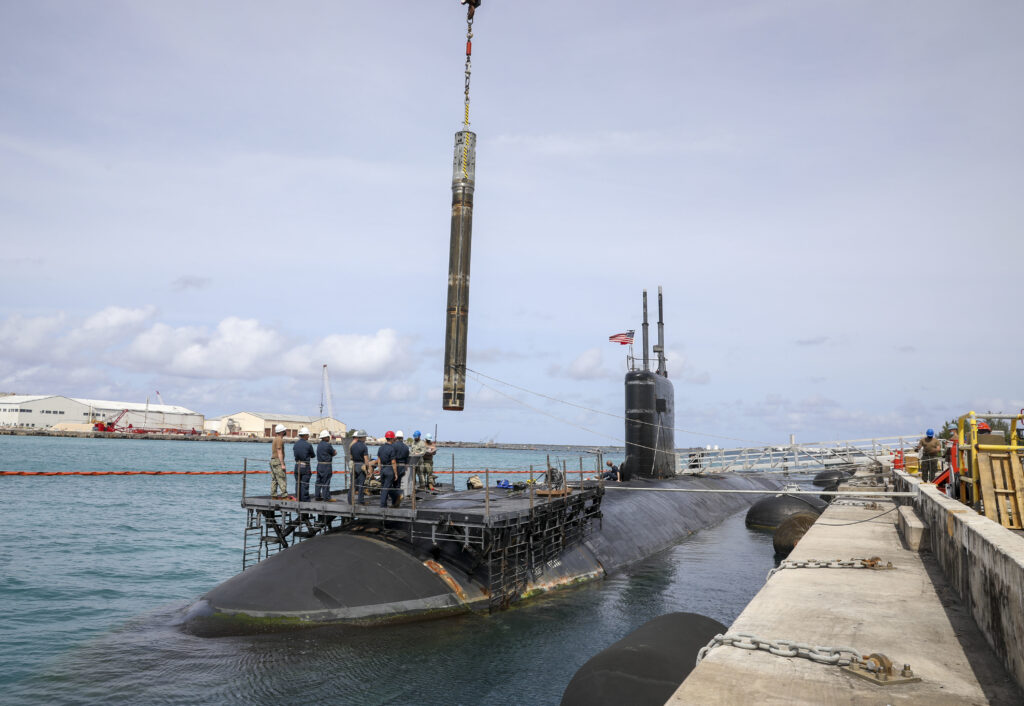
A Tomahawk cruise missile is removed from Los Angeles-class attack submarine USS Asheville at Polaris Point, Guam. An SLCM-N would occupy the place in naval armament formerly occupied by the now retired nuclear-armed version of the Tomahawk. U.S. NAVY / Mass Communication Specialist 1st Class Victoria Kinney

WASHINGTON — The Navy’s top officer did not request any funds for procurement of the Sea-Launched Cruise Missile – Nuclear (SLCM-N) in the 2023 budget proposal but would like to fund a small amount of research and development to keep the industrial base in place should the missile be funded in the future. 

Testifying May 11 before the House Armed Services Committee, Chief of Naval Operations Adm. Michael Gilday said that “having served on a nuclear-capable surface ship in the late 1980s, that mission does not come without a cost. There is a significant amount of attention that has to be paid to any platform that carries that type of weapon in terms of training, in terms of sustainability, in terms of reliability, in terms of the force’s readiness to be able to use them and be able to conduct that mission. I’m not convinced yet that we need to make a $31 billion investment in that particular system to close that particular gap.  

“It makes sense to me that we keep a small amount of money against R&D to keep that “warm,’ if you will, within the industrial base, while we get a better understanding of the world we live in with two nuclear-capable peer competitors,” Gilday said. “At the same time, the fact that we’re about to put hypersonics into play this year with the Army, in 2025 with the Navy, that’s also a deterrent we should factor in the conversation in terms of the investments that we’re going to make, in my opinion.” 

Rep. Doug Lamborn, R-Colorado, addressed the CNO and reminded the officials present that this year the HASC had heard testimony from Chairman of the Joint Chiefs of Staff Gen. Mark Milley, Vice Chairman of the Joint Chief of Staff Adm. Christopher Grady, U.S. Strategic Command Commander Adm. Charles Richard and U.S. European Command Commander Gen. Todd Wolters that “their best military advice was to continue with the SLCM-N program. 

“Do you believe that we should continue the program or at least the research so that we don’t lose that capability in the workforce and in our labs that’s actually proceeding apace right now and, then, from that, make informed decisions about whether or not we want to invest a significant amount of money in that capability understanding what both of those nuclear-powered peers bring to the table?” he said.  

Lamborn said that opponents of SLCM-N say the Navy did not have the bandwidth to handle a nuclear cruise missile aboard ships, but he pointed out that the Navy deployed a nuclear-armed version of the Tomahawk cruise missile on ships and submarines during and after the Cold War. 

He asked the CNO if “given the mission of certifying and carrying a SLCM-N, are you confident that the Navy would be up to the task, given that assigment?”  

Gilday affirmed that “given the assignment, we would, sir,” while again noting the cost. “I think it deserves some study in terms on how we’re going to balance that, given other things that we’re doing.” 

Lamborn told Navy Secretary Carlos Del Toro, who also testified at the hearing, that Del Toro’s predecessor, “promised certain documents and emails related to the then-rumored cancellation of the SLCM-N program. Last year’s NDAA [National Defense Authorization Act] fenced a large amount of money until these documents and the analysis of alternatives for SLCM-N were provided to Congress. We have yet to receive any of this information.  

“Despite the proposal in the Nuclear Posture Review to cancel SLCM-N and its being zeroed out of this year’s proposed budget request, when can we expect the Navy to comply with our directives and produce these documents?” Lamborn asked. 

Del Toro responded that he “was not aware that those documents had not been provided to the Congress, however I will promise you that I will go back and ensure that we do provide necessary required documents that you have requested.”