Service Chiefs: ‘Keep Your Eye on China’
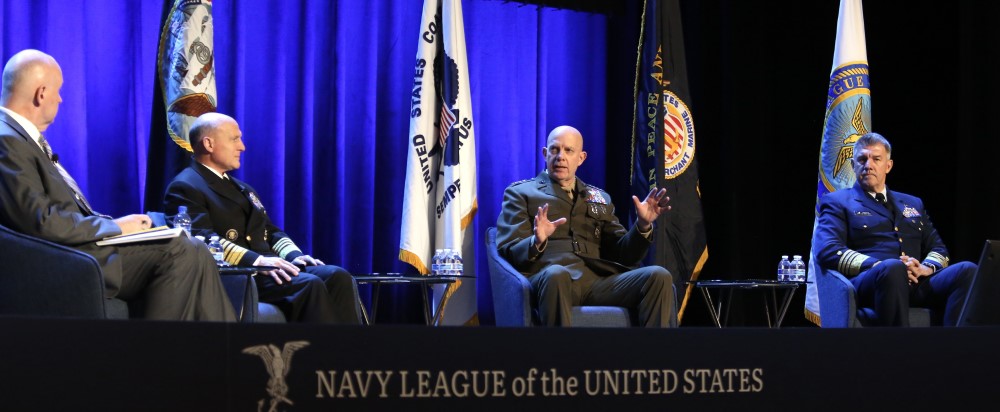
All three service chiefs discussed the newly released defense budget, which Marine Corps Commandant Gen. David Berger described as “strategy-driven.” LISA NIPP

NATIONAL HARBOR, Md. — The top leaders of the Navy and Marine Corps sought to justify their force structure decisions, arguing April 4 that it was necessary to cut some current platforms and systems to be able to buy the capabilities they believe will be needed for a likely future fight against a new peer competitor.

“I think the three of us are saying, keep your eye on China,” said Chief of Naval Operations Adm. Michael Gilday, which was echoed by Marine Corps Commandant Gen. David Berger and Coast Guard Commandant Adm. Karl Schultz in the opening session of the Navy League’s 2022 Sea-Air-Space exposition.

All three of the maritime leaders highlighted their priorities in the newly released 2023 defense budget, which Berger noted was released within days of the new National Defense Strategy and the Nuclear Posture Review.

“It’s very clear to me this is a strategy-driven budget,” Berger said. “If we need to fight in the South China Sea, the force has to be relevant.”

“In order to understand how you resource the fleet, you have to think about how you plan to use the fleet, how you will fight the fleet,” Gilday said, adding that that was done “in the content of strategy.”            

The new Navy budget proposes deeper cuts in the surface fleet than previous proposals, and the Marine Corps’ funding plan continues the reductions and changes in the Corps’ forces to make it lighter and more mobile to operate in a contested littoral environment.

Gilday said the Navy needs “a more ready force rather than a less ready larger force. If you look at the budget, we’re trying to buy back a ready force,” that has ammunition in its magazines with a priority on longer range weapons.

“I personally think we are on the right path.,” he said, while acknowledging that the budget “is not popular with many in the fleet and in this room.”

If you are going to match the change in the character of warfare, Berger said, “you have to divest some resources.”
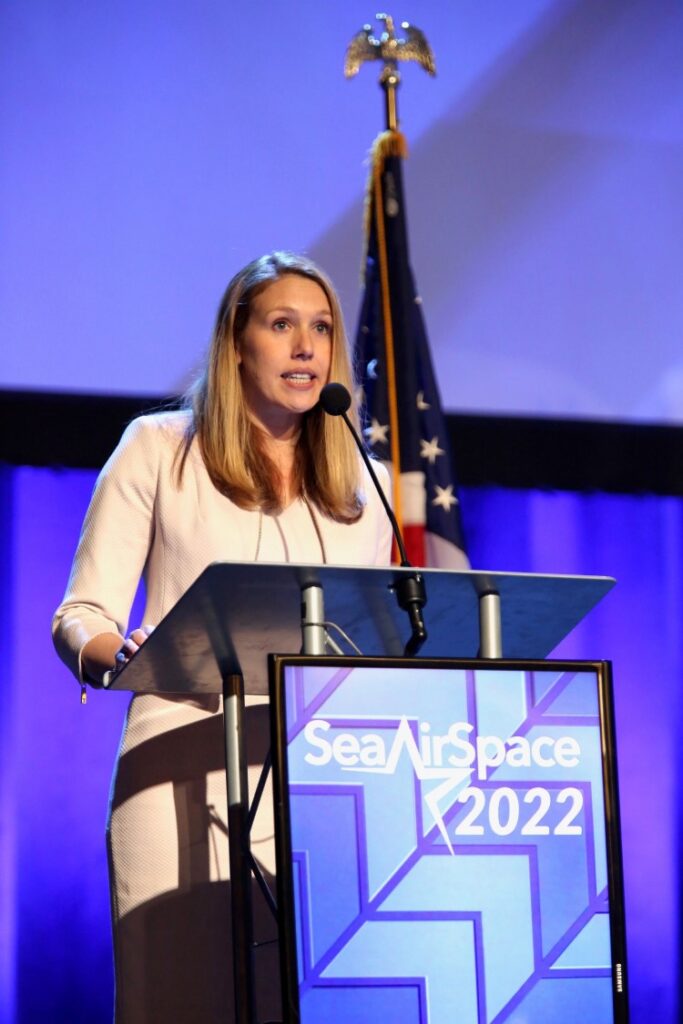
Meredith Berger, performing the duties of Undersecretary of the Navy, kicked off the opening ceremony prior to the chiefs panel on Monday. She said the Navy’s priorities “are empowering our people” with a focus on warfighting and “strengthening our maritime power.” She noted the areas the Department of Navy is operating in are changing to include the information environment and cyberspace. LISA NIPP

Schultz noted the recent signing by all three of the maritime leaders of a new maritime security strategy, which continues the growing integration of his service with the Navy and Marine Corps in the efforts to counter a stronger and more aggressive China.

Schultz said the changing national security and global economic growth has put unprecedented demands on the Coast Guard.

He emphasized the Coast Guard’s uncommonly strong shipbuilding program, which includes finishing the National Security Cutter fleet, buying more of its Offshore Security Cutters and planning a new ice breaker.

Gilday said the long-term shipbuilding program would produce increased capabilities in the surface and undersea fleets with the new models of the Arleigh Burke destroyers and Virginia-class attack submarines, the future guided missile frigates and a wide variety of unmanned surface and subsurface systems.
Collins Aerospace Awarded Risk Reduction Contract for Navy’s E-XX Program    

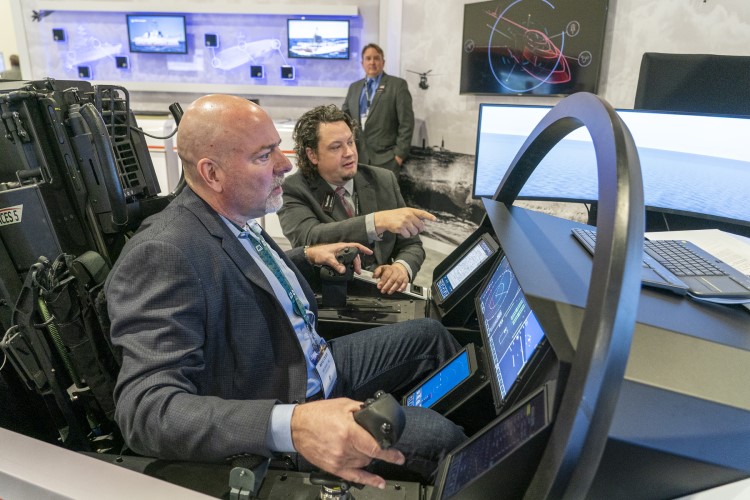
Mark Cejer sits at the controls of a flight simulator as Tracy Miller of Collins Aerospace gives him instructions. The simulator showcases Collins Aerospace’s avionics. SOLARES PHOTOGRAPHY

NATIONAL HARBOR, Md. — Collins Aerospace (Booth 701) has been awarded development of a very-low-frequency communication system for the E-6B Recapitalization Program (E-XX) as part of the Navy’s Take Charge and Move Out Weapons System, the company said April 4. 

The contract provides developmental design and risk reduction engineering efforts for airborne VLF system modernization in support of Airborne Strategic Command, Control, and Communications Program Office (PMA-271) capability requirements. The development efforts and resulting system features enhanced security measures to address advanced and emerging threats.

This award is the first award of a series for the new E-XX test program. The open systems approach ensures that the terminal and remaining portions of the weapons systems can be easily integrated on the platform. Additionally, the new systems are easier to maintain and upgrade over the life of the aircraft making it a potential long-term solution for the Navy.

“This sole-source award underscores the recognized technical expertise that Collins brings to the TACAMO community,” said Heather Robertson, vice president and general manager of Integrated Solutions for Collins Aerospace. “As we are seeing the accelerated need for command, control and communication capabilities, our DoD partners can rely on Collins to deliver ready-now, comprehensive, integrated and durable solutions.”    

The work will be completed at Collins’ Richardson, Texas, and Cedar Rapids, Iowa, facilities.


Admiral on EMALS and AAG Programs: ‘It Works’

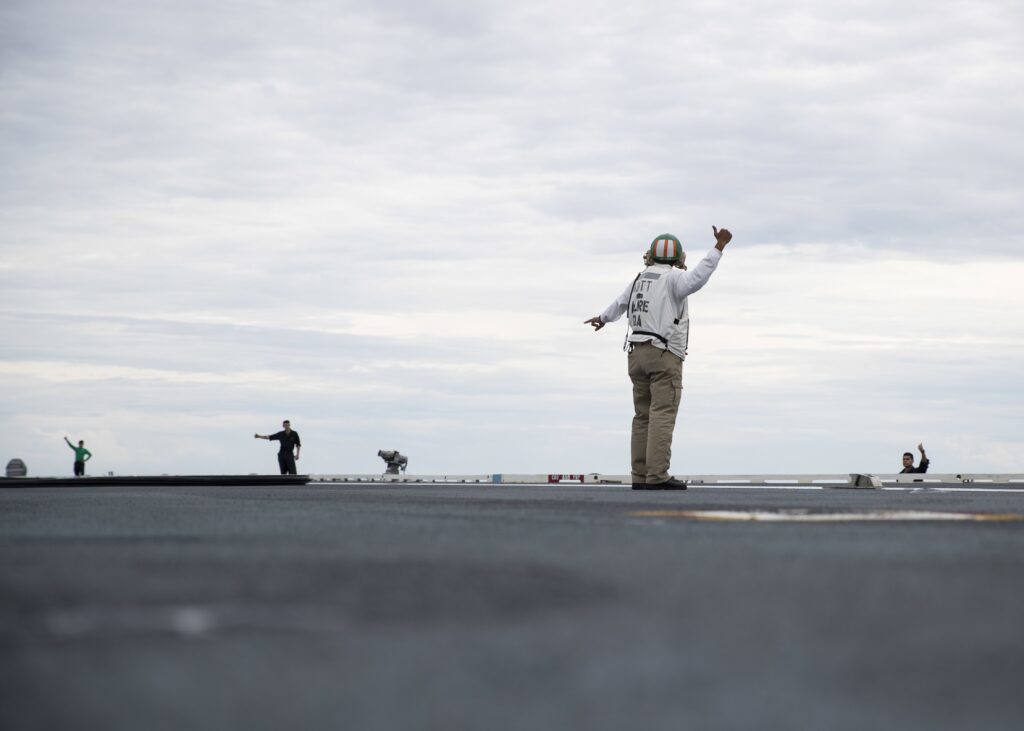
Chief Aviation Boatswain’s Mate (Equipment) Louis Mountain Jr., from Seat Pleasant, Maryland, assigned to USS Gerald R. Ford’s (CVN 78) air department, signals the EMALS to launch during no load testing on the ship’s flight deck. U.S. NAVY / Mass Communication Specialist 3rd Class Zachary Melvin

A Navy admiral says that despite reports to the contrary, the Electromagnetic Aircraft Launch System and Advanced Arresting Gear systems aboard the USS Gerald R. Ford (CVN-78) are working just fine.

Rear Adm. Shane G. Gahagan, program executive officer for tactical aircraft programs (PEO-T) at Naval Air Systems Command, said Monday, April 4 at Sea-Air-Space that the system had achieved 8,500 “cats and traps” on the Ford over the past two years.

The EMALS system has struggled with reliability issues over the years, but Gahagan insisted that it is performing well today.

“It works,” Gahagan said. “I read in the press … that it doesn’t work. It works day in and day out with cats and traps, and now it’s like every other program: How are we going to sustain it for the fight we need?”

He said the EMALS and AAG systems have a “lot of great capability” and that Sailors “love it.”


Bell Offers Manned, Unmanned Tiltrotors for Navy’s Next Rotorcraft 

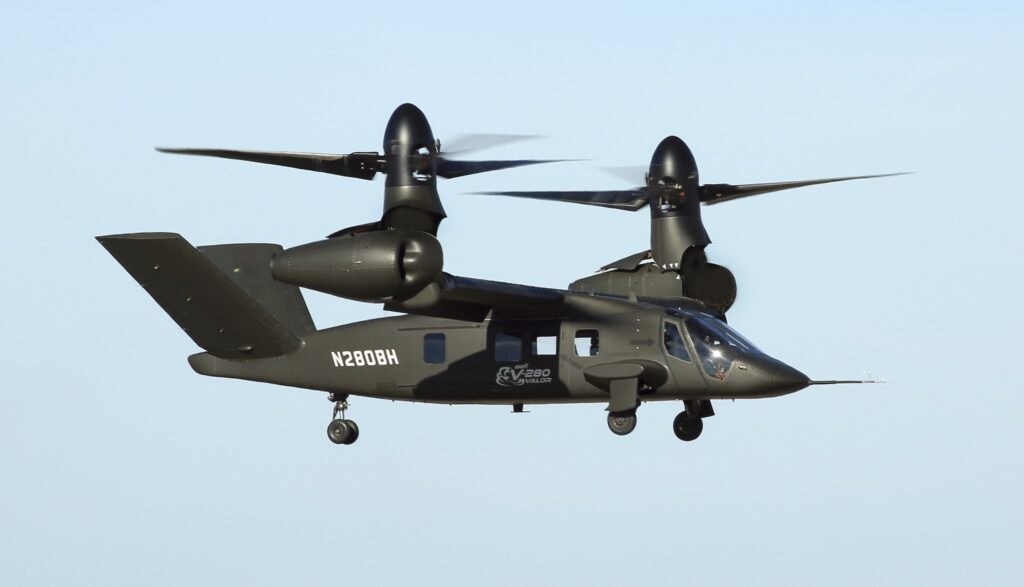
The Bell 280 Valor is currently offered as a replacement for the U.S. Army’s H-60 helicopters, and Bell proposes they would be an ideal component of the Navy’s DMO concept. Bell

NATIONAL HARBOR, Md. — Bell, a Textron company, is marketing its manned and unmanned tiltrotor aircraft to be the eventual replacements for the Navy’s MH-60R/S helicopters. 

Carl Forsling, Bell’s senior manager for military sales and strategy, told Seapower April 4 at the Navy League’s Sea-Air Space expo that the Bell tiltrotors would be ideal for implementation of the Navy’s Distributed Maritime Operations concept because of their speed, range and payload. 

The two tiltrotors are the versions of the unmanned Bell 247 Vigilant and the manned Bell 280 Valor.  

The Valor, currently offered as a replacement for the U.S. Army’s H-60 helicopters, is larger than the 247 and is designed to carry 8-12 passengers. It has two engines, one each at the wingtips driving a tiltrotor. Unlike those on the Bell-Boeing V-22 Osprey, the engines do not pivot, simplifying the mechanics of the movement and reducing cost. The marinized Valor would have a pivoting wing like the V-22 for storage in a ship’s hangar. The aircraft would be hardened for electromagnetic protection and be marinized for corrosion control in the salt-water environment. It would assume the roles of the MH-60S, including plane guard, rescue, medical evacuation and logistics. 

The marinized unmanned Vigilant would replace the MH-60Rs on surface warships such as guided-missile destroyers. The folding rotors and pivoting wing would allow storage in a warships’ small helicopter hangars. The Vigilant could be used for roles including surveillance, antisubmarine warfare, precision strike and aerial refueling. 

With both aircraft replacing helicopters, the speed and range advantage would allow the tiltrotors to cover more area at a faster rate, Forsling said, while carrying heavier payloads.   


Navy’s CVM-22B Aircraft Adds Medevac Speed to Carrier Strike Group 

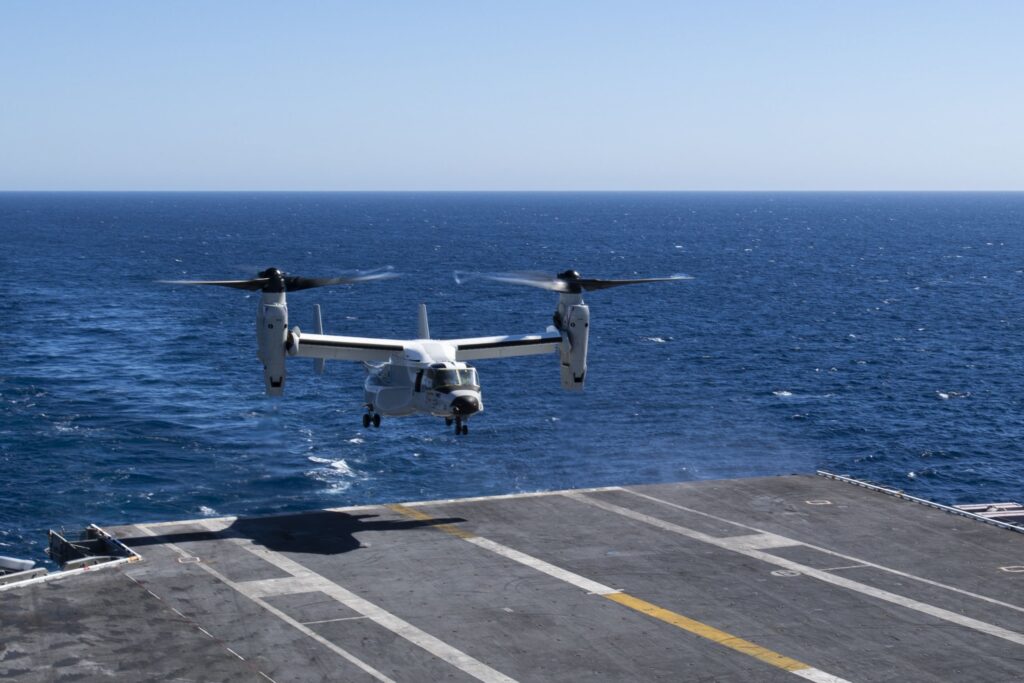
A CVM-22B Osprey, from the “Sunhawks” of fleet logistics multi-mission squadron (VRM) 50, lands on the flight deck of the aircraft carrier USS Nimitz (CVN 68). At a Sea-Air-Space briefing, the V-22 program manager discussed the aircraft’s usefulness as a medevac solution. U.S. Navy / Mass Communications Specialist 3rd Class Joseph Calabrese

NATIONAL HARBOR, Md. — The U.S. Navy’s new CMV-22B Osprey tiltrotor carrier-onboard delivery aircraft’s capabilities have been a game-changer for medical evacuation from a carrier strike group, the Navy’s V-22 program official said. 

The CMV-22B, which is replacing the catapult-launched C-2A Greyhound COD aircraft in the fleet, takes off and lands vertically. It is less dependent on carrier launch-and-recover cycles and, therefore, more flexible in its ability to quickly launch from the aircraft carrier and carry a medical patient to facilities ashore. 

In addition to quicker launch capability, the range of the CMV-22B — which can be refueled in flight—give it an added ability to reach land-based medical facilities from farther out. 

Marine Col. Brian Taylor, the Navy’s V-22 program manager, speaking April 4 to reporters at a Naval Air Systems Command (Booth 947) briefing the Navy League’s Sea-Air Space expo at National Harbor, Maryland, spoke of a medevac from the one of the two CMV-22B detachments from that have deployed on aircraft carriers to the Indo-Pacific region so far from Fleet Logistics Multimission Squadron 30 (VRM-30). A CVM-22B launched from the carrier with a medevac patient and was able to land in a helicopter landing pad at the naval hospital in Camp Foster, Okinawa, a feat that the C-2A would not have been able to accomplish. 

Taylor MV-22B integrated well with carrier operations. He also said the Marine Corps’ MV-22B Osprey has qualified to operate from the hospital ship USNS Mercy. 

The Osprey is operated by the U.S. Marine Corps, Air Force, and Navy and by the Japanese Self-Defense Force. 

Taylor said the Osprey is expected to be in service through 2055. It reached initial operational capability in 2007. Under current contracts, production is expected to end in late 2024. The program office is focusing on sustainment and keeping the flow of parts and other resources necessary to keep the Osprey fleet operational through its service life. 

Last year the Marine Corps deactivated one MV-22B squadron — VMM-166 — as part of Commandant Gen. David Berger’s Force Design 2030 initiatives. Faced with the possibility of excess MV-22Bs in inventory, Taylor said his office is looking at inventory management of the fleet to develop a long-term plan, with an option that some Ospreys may be placed in storage, available as attrition aircraft. 


Navy’s Flight I/II DDGs Get UAS Capability with Textron’s Aerosonde 

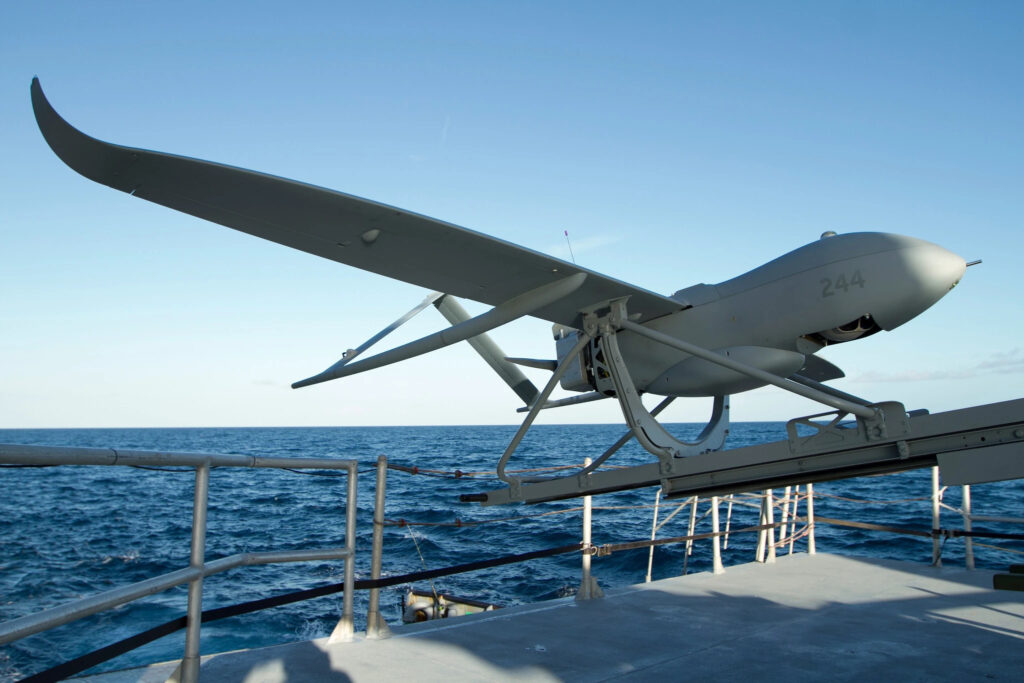
The Aerosonde UAS has been deployed on a Navy Arleigh Burke-class guided missile destroyer in the 7th Fleet. TEXTRON SYSTEMS

ARLINGTON, Va. — The Aerosonde unmanned aerial system has been deployed on a U.S. Navy Arleigh Burke-class guided-missile destroyer serving in the U.S. 7th Fleet, giving the Flight I/II DDG — which does not have the organic helicopter facilities of the Flight IIA and subsequent versions of the DDG — an organic aerial surveillance capability. 

Wayne Prender, Textron Systems’ vice president for Air Systems, told Seapower March 31 the DDG — which he was not at liberty to name — deployed with an Aerosonde system on board in March. The system is being operated under a contractor-owned/contractor-operated arrangement. 

Prender said a second DDG would deploy with an Aerosonde system later this year. He also said that for three years an Aerosonde system has been operational on board the Lewis B. Puller-class expeditionary sea base ship USS Hershel “Woody” Williams in support of the U.S. 2nd Fleet. 

Prender said the deployments are “helping to set the calculus for real-world operations.” 

The Aerosonde can carry a variety of sensors including an electro-optical camera, an Automatic Information System receiver, and other special payloads. The UAS can perform wide-area search, expanding the search horizon of the host ship. The system is fully integrated into the ship’s combat information center.  

The UAS uses less fuel — about one pound per hour — than an MH-60 helicopter, which burns about 1,000 pounds per hour. The Aerosonde uses heavy fuel, the same fuel used by the ship’s turbines, so no provision for a different fuel is needed. 

An Aerosonde can be operated by a team of three contractor personnel. The fixed-wing version can be launched and recovered in Sea State 4 and is recovered by a net rigged on the host ship. A vertical takeoff and landing version, which carries a lighter payload but can be launched more quickly, will be deployed on a ship later this year.     


President, First Lady Celebrate Commissioning of USS Delaware  

President Joe Biden and First Lady Jill Biden, the ship sponsor, celebrated the commissioning of the Virginia-class fast attack submarine USS Delaware (SSN 791) Saturday, April 2. U.S. NAVY

WILMINGTON, Delaware — President Joe Biden and First Lady Jill Biden, the ship sponsor, celebrated the commissioning of the Virginia-class fast attack submarine USS Delaware (SSN 791) Saturday, April 2, in a ceremony in Wilmington, Delaware. 

Biden previously represented the state of Delaware for 36 years in the U.S. Senate. 
 
Due to COVID restrictions in place at the time, there was no traditional commissioning ceremony held when USS Delaware was commissioned administratively on April 4, 2020. On that day, the submarine was underway and became the first U.S. Navy ship commissioned while submerged. 
 
Saturday’s ceremony followed the script of a traditional commissioning and was held in commemoration of the milestone. 
 
“This latest Navy ship to carry the Delaware name is part of a long tradition of serving our nation proudly and strengthening our nation’s security,” Biden said. “Not just us, but our allies and partners around the world as well.” 
 
As the ship sponsor, Jill Biden performed the traditional honor of calling for the crew to man the ship and “bring her to life,” a ceremonial procession following the commemorative setting of the first watch. 
 
“This vessel will always uphold the First State’s motto of ‘Liberty and Independence,’” she said. “It’s difficult to put into words what it means to be a part of the USS Delaware family. It’s an incredible honor that I take seriously. I’ve seen the heart of this crew and it makes me proud and humbled to be your shipmate for life.” 
 
USS Delaware is the 18th Virginia-class submarine built, as well as the eighth and final Block III Virginia-class sub. The Block III submarines are notable for replacing 12 vertical launch tubes for Tomahawk Land Attack Missiles with two larger, 87-inch diameter launch tubes, capable of carrying larger payloads, among other advancements. 
 
“The men who serve — and will serve — aboard the USS Delaware will bear our state’s name for decades to come as they defend our nation,” said U.S. Sen. Tom Carper of Delaware, the event’s keynote speaker. “Through their sacrifice and service, may we grow even closer to that more perfect union.” 
 
USS Delaware is homeported at Submarine Base New London in Groton, Connecticut, where it operates under Submarine Squadron 12 and its Commodore, Capt. Matthew Boland. 
 
The submarine is the seventh U.S. Navy ship to be named for the First State, but first in more than a century. The first ship to be named Delaware was a 24-gun frigate launched in July of 1776, the month the Continental Congress adopted the Declaration of Independence. 


Kid-Friendly Expo Showcases STEM to Kick Off Sea-Air-Space 2022

(Left to right) Trisha Anand, 8, and Mary Bodoh, 9, enjoy playing with bubbles after a science experiment at STEM Expo 2022. SOLARES PHOTOGRAPHY

The 2022 STEM Expo, which kicked off Sea-Air-Space 2022 April 3, marked the largest crowd yet for the science- and fun-focused event, geared to students in the fifth to 12th grades.

The popular expo featured hands-on “mad science” demonstrations with dry ice, electricity, chemical reactions, robots, military animals and more, including nearly two dozen exhibits.

A performance by the U.S. Coast Guard Drill Team led the event, which also included a large and very popular version of the game Battleship; a nitrogen ice cream station, an edible version of some of the mad science experiments; and a unique building event with Tinker Man, who builds large, complex structures from children’s toys.

“It is great to see so much attention at the booth,” said Heather Deagle, a member of HII’s STEM team. “These kids are the future. It is their talent and contributions that will have an impact on shaping future technologies — and being part of this STEM event is a great opportunity to display our commitment to the education of these future generations.”

The expo encourages students to pursue coursework and careers in STEM and reaches underserved communities to promote STEM education.

The “champion” sponsor for the event was HII, whose booth included everything from a 3D printer to a REMUS unmanned underwater vehicle. Sponsors included CACI, L3Harris, Raytheon Technologies and Lockheed Martin.

Through the years, HII has made numerous investments in STEM education programs; partnerships with local high schools, community colleges and technical schools to develop trade-based curriculum; summer internships for both students and teachers; and industry-leading apprentice schools at the company’s two shipyards.


Lockheed Martin Marks Delivery of 500th C-130J Super Hercules

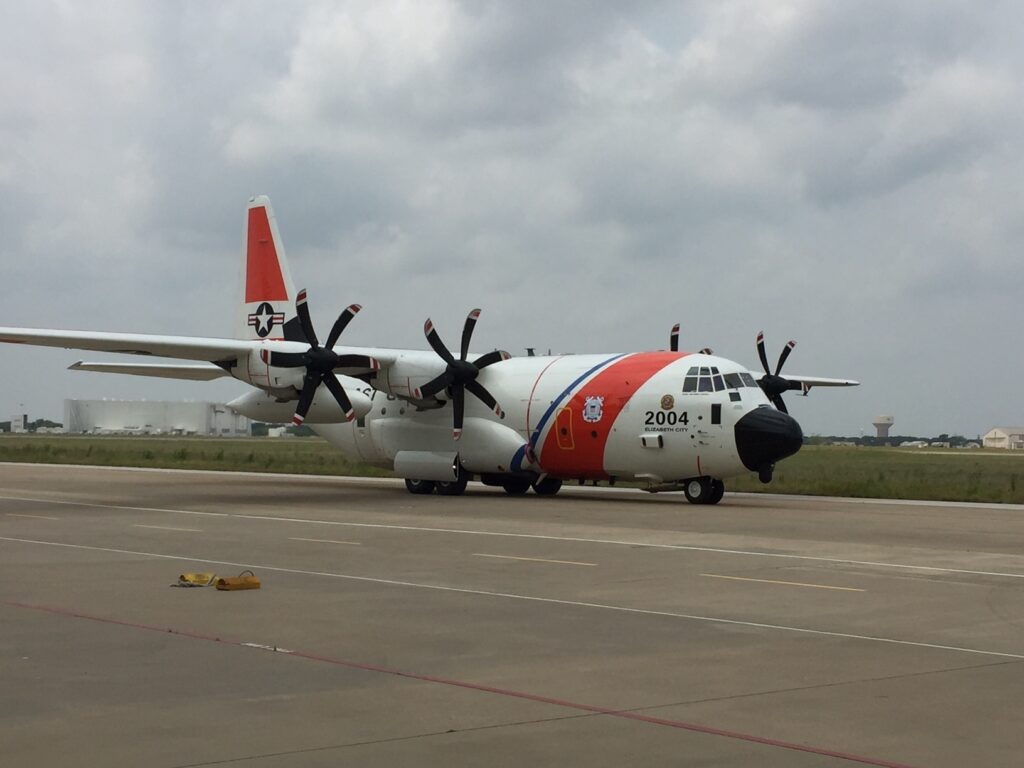
An HC-130J Super Hercules long range surveillance aircraft sits on a runway in Waco, Texas, following its arrival May 11, 2017, to begin installation of the Minotaur Mission System Suite. U.S. Coast Guard

ARLINGTON, Va. — The 500th C-130J Super Hercules aircraft built by Lockheed Martin (Booth 1001) has been delivered to its customer, the company announced March 15.

The aircraft, Lockheed Martin C-130 construction number 5934, is a C-130J-30 version that was delivered to the 130th Airlift Wing, a unit of the West Virginia Air National Guard based at McLaughlin Air National Guard Base in Charleston, West Virginia. The wing is replacing its older C-130 Hercules aircraft with new C-130J-30s.

The C-130J Super Hercules represents a significant advancement in performance, technology and airlift capability over the older C-130 Hercules family of aircraft. The C-130J is equipped with the more powerful Rolls-Royce AE 2100D3 turboprop engines, six-bladed GE-Dowty R391 composite propellers, modern avionics and mission systems. The Super Hercules features dual head-up displays, an integrated defensive suite, automated maintenance fault reporting, and a rear ramp door capable of opening at airspeeds of up to 250 knots. It has greater speed, range lift capacity, climb rate, cruise altitude and short-field performance than the legacy C-130.

The C-130J Super Hercules is the current production model of the legendary C-130 Hercules aircraft. The C-130J first flew in 1996 and entered service in 1999. It is now the airlift aircraft of choice of 26 operators in 22 nations.

The U.S. military services operate the largest C-130J Super Hercules fleet in the world. The U.S. Air Force and Air National Guard collectively operate C-130J, C-130J-30, AC-130J Ghostrider, EC-130J Commando Solo, HC-130J Combat King II, MC-130J Commando II and WC-130J Weatherbird variants. The Marine Corps operates the KC-130J tanker version and a C-130J as part of the Blue Angels Flight Demonstration Team. The Coast Guard operates a version of the HC-130J which is different than the version used by the Air Force for search, rescue and logistics. The U.S. Navy is planning to test a version of the C-130J-30 for the Take Charge and Move Out (TACAMO) strategic communications mission.

These are some of the 17 different mission configurations of the C-130J used worldwide for transport (military and commercial), humanitarian aid delivery, aerial firefighting, natural disaster relief support, medevac, search and rescue, special operations, fire support, weather reconnaissance, atmospheric research and aerial refueling.

The C-130J-30 is a version of the Super Hercules, which has an extended fuselage (15 feet, or 4.6 meters) when compared to the basic C-130J. As such, it can carry 30% more passengers and cargo than the basic C-130J and 50% more container delivery system bundles.

The rugged C-130 family of aircraft has been in serial production longer than any other military aircraft in the U.S. inventory. The first C-130A made its first flight in 1954 and entered service in 1956. Since the first C-130 rolled of the Lockheed Martin production line, more than 2,100 were built before production switched to the C-130J. It is flown out of more than 70 nations and has been certified to support upwards of 100 different mission capabilities in its lifetime.

“No aircraft in history, production or operation matches the C-130 Hercules in terms of its versatility. The C-130J both extends and expands this reputation thanks to increased speed, integration and strength,” said Rob Toth, director of Business Development for Lockheed Martin’s Air Mobility and Maritime Missions line of business.

As a retired U.S. Air Force Special Operations MC-130H navigator, Toth has experience flying and commanding operations with both legacy and C-130J aircraft.

“The legacy Hercs were great aircraft. The C-130J offers a more enhanced flying experience, especially with the advanced situational awareness and added power,” he said. “You the value of those attributes across all mission scenarios, especially with the maritime patrol, search and rescue, special operations and aerial refueling requirements supported by the U.S. Marine Corps and Coast Guard.”

To date, the Navy is the only U.S. government operator to not have a J in its fleet. Currently the Navy flies C-130s for transport and for 20 years (1963-1993) on the TACAMO missions.

Lockheed Martin is honored to have the Super Hercules selected for TACAMO testing — possibly bringing it back to where it all began, Toth said.

“We are working closely with NAVAIR to support an aggressive acquisition strategy that prioritizes both speed of acquisition and affordability to accelerate recapitalization of one of our nation’s most important capabilities — survivable, reliable, and endurable communications between the president and the nation’s nuclear forces,” Toth adds. “We are proud to be at the heart of this effort and confident that the Super Hercules will deliver the critical capability our nation needs.”  


With SPY-6, Navy Has Radar to Match the Range of its Missiles  

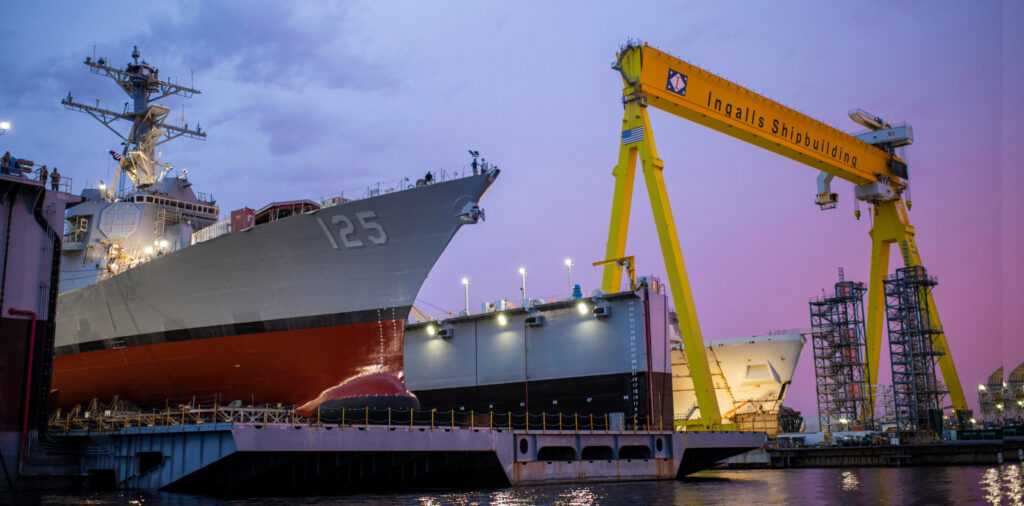
The SPY-6(V)1 is being installed on Flight III Arleigh Burke-class DDGs. This air-and-missile-defense radar has been installed on the future USS Jack H. Lucas (DDG 125), shown here, scheduled to join the fleet in 2024. HII

ARLINGTON, Va. — The SPY-6 air and missile defense radar, the first of which has been installed on a guided-missile destroyer, will give the Navy a sensor worthy of its long-range Standard SM-3 Block IIA surface missiles, Raytheon officials said. 

Briefing reporters April 1, Ken Spurlock, Raytheon’s Strategic Missile Defense Requirements & Capabilities director, said the SM-3 missile “out-shot” the capabilities of earlier radars — presumably the SPY-1 on earlier DDGs. With the SPY-6, the SM-3 “can engage at the maximum range possible” for the missile. 

Spurlock said the SPY-6 allows a ship to provide air and missile defense simultaneously, provide regional defense organically, offer greater clarity of the battlespace, give more defense in depth, reduce the risk of fratricide and reduce the number of missiles needed to defeat a target. 

Also briefing was Michael Nulk, Raytheon’s associate director, Requirements and Capabilities – Naval Power, said the SPY-6 will give commanders the discrimination capability to make better decisions and to “change their shot doctrine.” 

“There is no other radar with the surface maritime capabilities of SPY-6,” Wes Kremer, president of Raytheon Missiles & Defense, said in a March 31 release. “SPY-6 is the most advanced naval radar in existence, and it will provide our military a giant leap forward in capability for decades to come.”  

Raytheon Missiles & Defense was awarded a $651 million Naval Sea Systems Command contract, with options totaling $2.5 billion, for “hardware, production and sustainment for full-rate production” of the SPY-6 family of radars. The contract provides for five years of production for radars for up to 31 U.S. Navy ships of seven types.  

Scott Spence, naval radars executive director at Raytheon Missiles & Defense, also briefing reporters, said the company had 46 SPY-6 shipsets under contract, with six of those in work at the Raytheon plant. He said the enlarged footprint of the SPY-6 production will help reduce sustainment costs.  

Spence noted the last transmitter that Raytheon builds for the SPY-1 radar will be delivered in April, concluding 41 years of production for the SPY-1. 

The SPY-6 family includes the SPY-6(V)1, being installed on Flight III Arleigh Burke-class DDGs. The (V)1 has four flat antenna faces each with 37 radar module assemblies. This air-and-missile-defense radar has been installed on the future USS Jack H. Lucas (DDG 125), scheduled to join the fleet in 2024. The second shipset has been delivered for installation on the future USS Ted Stevens (DDG 128). 

The SPY-6(V)2 Enterprise Air Surveillance Radar (EASR) has a rotating face with nine RMAs. The (V)2 will equip the America-class and Wasp-class amphibious assault ships, San Antonio-class amphibious transport dock ships, and Nimitz-class aircraft carriers. 

The SPY-6(V)3 EASR has three fixed faces each with nine RMAs. The (V)3 will be installed on Ford-class aircraft carriers and Constellation-class guided-missile frigates. 

The SPY-6(V)4 EASR will have four fixed faces each with 24 RMAs. The (V)4 will be back-fitted on some Flight IIA Arleigh Burke-class DDGs.