Berger: Ukraine War Demonstrates Vulnerability of Tanks to Missile-Armed Infantry 

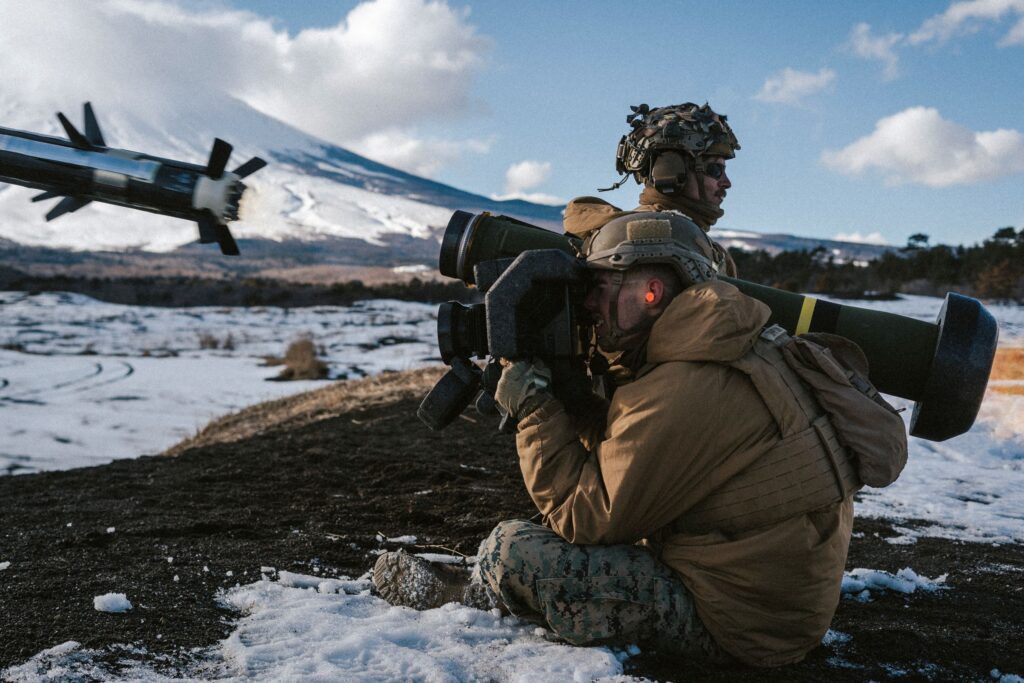
U.S. Marines with 1st Battalion, 3d Marines, 3d Marine Division fire a Javelin shoulder-fired anti-tank missile while conducting squad attacks during Fuji Viper 22.3 at Combined Arms Training Center, Camp Fuji, Japan, Feb. 17. Javelins have proven to be effective against tanks in Ukraine and elsewhere. U.S. MARINE CORPS / Cpl. Juan Carpanzano

WASHINGTON — The success of Ukrainian forces in countering Russian armored vehicle columns with missiles and rockets in the ongoing Russian invasion of Ukraine shows the vulnerability of tanks to missile-armed infantry, the Marine Corps commandant said, and seemed to reinforce his decision to shed tanks from the Corps as part of his Force Design 2030 concept.    

During a live-streamed conversation with Washington Post columnist David Ignatius, Gen. David Berger said the Russian forces seemed to be ineffective in using a combined arms approach in that they were not using “maneuver to bolster your fires or using fires to set up your forces for maneuver. In both cases, one without the other … is very ineffective.” 

Berger also said Ukrainian forces seemed to be effective at causing confusion among Russian forces by stripping away Russian reconnaissance — which he said parenthetically that U.S. Marines “were very, very good at.”  

The commandant also noted Russian forces seemed to have planned for a very short war and lost momentum with poor logistics planning. He said the Ukrainian forces seemed to be able to strike at the Russian “logistics backside.”  

Berger noted that amphibious operations are very complex and the Russian forces seemed to unnecessarily delay their limited amphibious operations. He said amphibious operations remain very much the core mission of the Corps.    

 “Amphibious landings, amphibious assault, forcible entry — things which Marines are known for for 70 years — we’ll continue to do but in a very different way,” Berger said. “Why? Because the character of war is changing. We need to change with it. 

“Instead of tank-on-tank formations, I would say if you look at Armenia and Azerbaijan, Lebanon, or even right now in Ukraine, it’s pretty clear the top-down missile attacks on the top side of heavy armor makes [tanks] pretty vulnerable,” he said.  

The Javelin missiles supplied by the United States to Ukraine have a vertical attack mode. 

“Tanks did tremendous work for us for many years in many different scenarios,” Berger said. “Going forward, they are heavier, too difficult to logistically support, and in some cases too vulnerable to attack from a proliferation of very inexpensive missiles. 

“So, in some cases, we’ve let go of things that were very successful in the past in order to move towards things that we are going to need in the future,” he said. “The aviation/ground/logistics team — that’s the strength of the Marine Corps having it all organic — we are an enabler for the joint force. We’re the first ones on the scene to figure it out. We need the mobility to do that, which means we need amphibious ships, which [are] critical for the nation to have. 

“You need to have the ability — I would say especially today in Ukraine — to have a crisis response force from the sea,” he said. “That means we need to have the number of amphibious ships necessary to global in the pacific or the Mediterranean. For the U.S., that’s 31 amphibious ships we have to have in order to do what the nation needs us to do.” 


MH-60R Helicopters Approved by State Dept. for Spain 

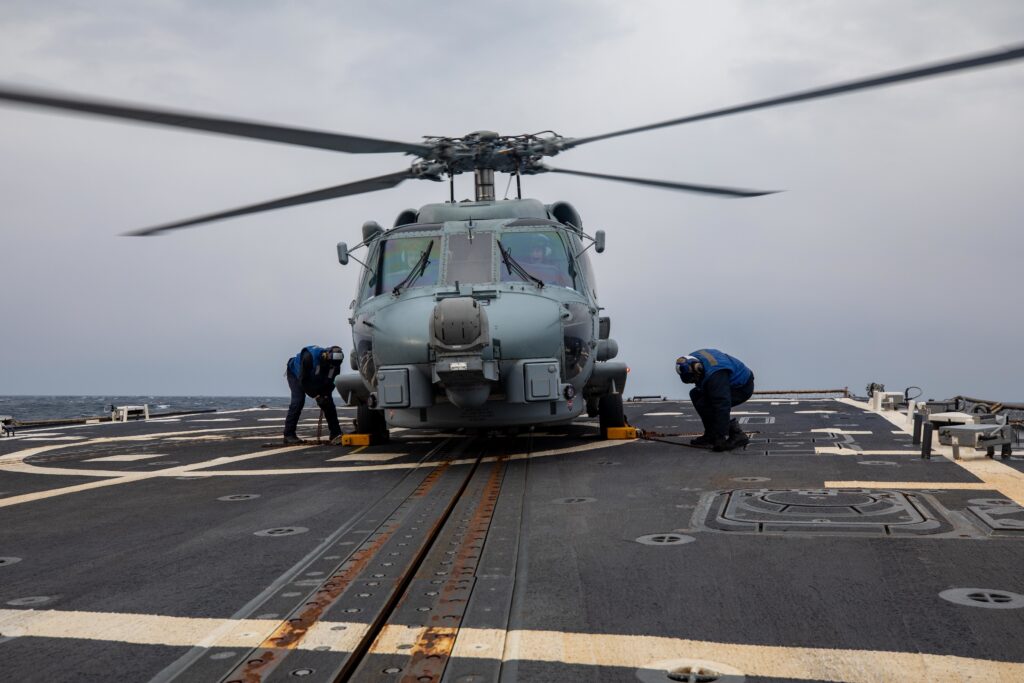
Boatswain’s Mate Seaman Armando Herrera, left, and Boatswain’s Mate 3rd Class Clifford Turner remove chocks and chains from a MH-60R Seahawk helicopter aboard the Arleigh Burke-class guided-missile destroyer USS Roosevelt (DDG 80), March 13. U.S. NAVY / Mass Communication Specialist 2nd Class Andrea Rumple

WASHINGTON — The U.S. State Department has approved the possible Foreign Military Sale of MH-60R Seahawk helicopters along with support and related equipment to Spain, the Defense Security Cooperation Agency said March 15. 

The DSCA said the total cost of the program would be approximately $950 million. Approved was the possible sale of eight MH-60Rs, built by Lockheed Martin. 

The sale also would include engines, avionics, data links and other communications systems, APS-153 radars, electronic countermeasures and support systems, Airborne Low-Frequency Sonars, rocket launchers, AGM-114R(N) Hellfire missiles, Advanced Precision Kill Weapon System rockets, GAU-21 machine guns, and sonobuoys, as well as a flight simulator, spare parts, publications, training, engineering, logistics, ferry and technical support.  

“The proposed sale will improve Spain’s capability to meet current and future threats. The MH-60R Multi-Mission Helicopter will provide the capability to perform anti-surface and anti-submarine warfare missions along with the ability to perform secondary missions including vertical replenishment, search and rescue, and communications relay and will bolster the Spanish navy’s ability to support NATO and remain interoperable with the U.S. and the NATO alliance,” the announcement said.  

Spain currently operates SH-60F versions of the Seahawk. 

Spain would become the eighth nation to procure the MH-60R. The MH-60R is in service with the U.S. Navy, Australian navy, Danish navy, Saudi navy, and Indian navy. Greece and the Republic of Korea also have ordered MH-60Rs. 


Marine Corps and Navy Aviation Fly Together for Manned-Unmanned Teaming

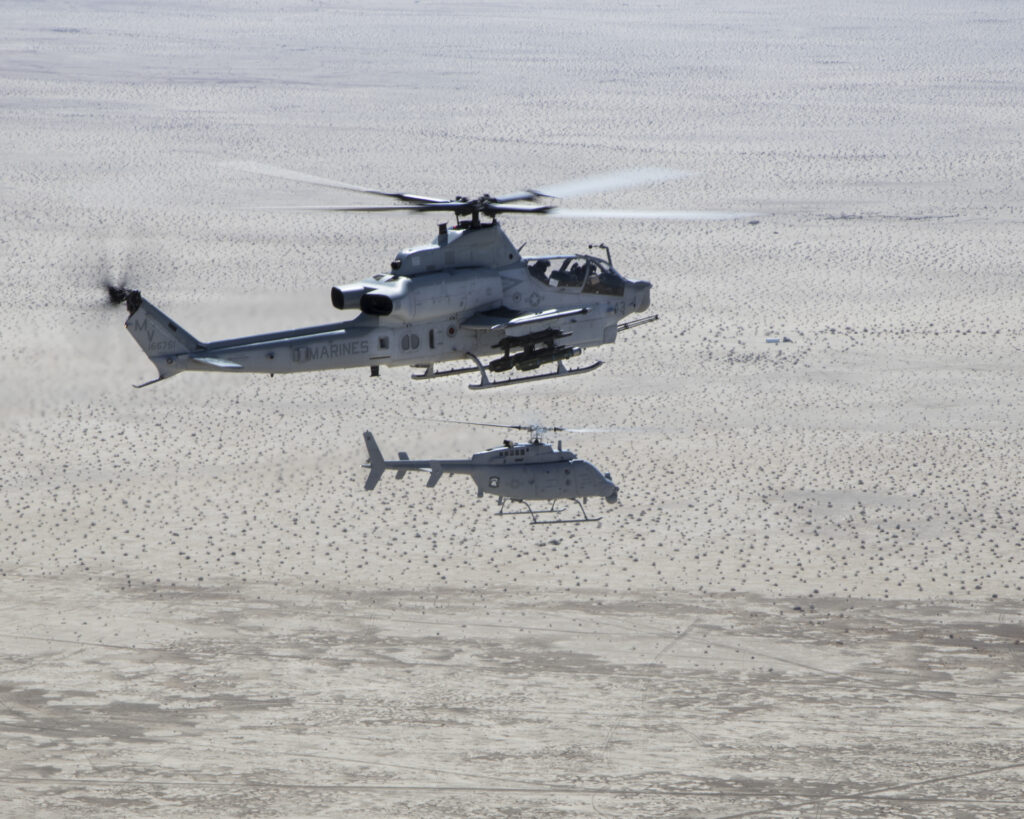
An AH-1Z Viper (top) with Marine Operational and Test Evaluation Squadron 1 (VMX-1), and an MQ-8C Fire Scout unmanned helicopter assigned to Helicopter Sea Combat Squadron 23 (HSC-23), conduct Strike Coordination and Reconnaissance Training near El Centro, California, March 10. U.S. MARINE CORPS / Lance Cpl. Jade Venegas

Washington, D.C. — Marines from Marine Operational Test and Evaluation Squadron One (VMX-1) and Sailors from Helicopter Sea Combat Squadron 23 (HSC-23) teamed to conduct tactics development in integrating manned and unmanned rotary-wing aircraft at Naval Air Facility El Centro, California, on March 10, Headquarters Marine Corps said March 15.

During the exercise, VMX-1’s UH-1Y Venom and AH-1Z Viper helicopters conducted attacks while Marines and Sailors operating in the ground control station assisted with the target detection and strike coordination utilizing a MQ-8C Fire Scout.

“This opportunity promotes greater familiarization and concept development of the manned-unmanned teaming that builds confidence and efficiency throughout the Blue-Green Team,” said VMX-1 Commanding Officer Col. Byron Sullivan. “Our partnership plays an integral part of the commandant and [Chief of Naval Operation]’s vision to embrace the future of warfare and turn it into our advantage on the battlefield.”

The services continue to develop manned-unmanned tactics to better align with the 2018 National Defense Strategy and the Commandant’s Planning Guidance. As the exercise in El Centro progressed, the Navy-Marine Corps team became more proficient in planning, communicating, and coordinating effective fires from manned and unmanned rotary wing aircraft. The proliferation of unmanned rotary wing platforms on U.S. Navy ships makes integration with Marine rotary wing and the MQ-8C a likelihood in the littoral environment.

“Adversaries are going to be placed on the horns of a dilemma as we strengthen our naval expeditionary force in leveraging unmanned systems to complement our rotary wing,” said VMX-1 Science and Technology lead Maj. Ben Henry.

The mission of VMX-1 is to conduct operational test and evaluation of Marine Corps aviation platforms and systems.


Carrier Aircraft Operate Over Yellow Sea in Response to North Korean ICBMs 

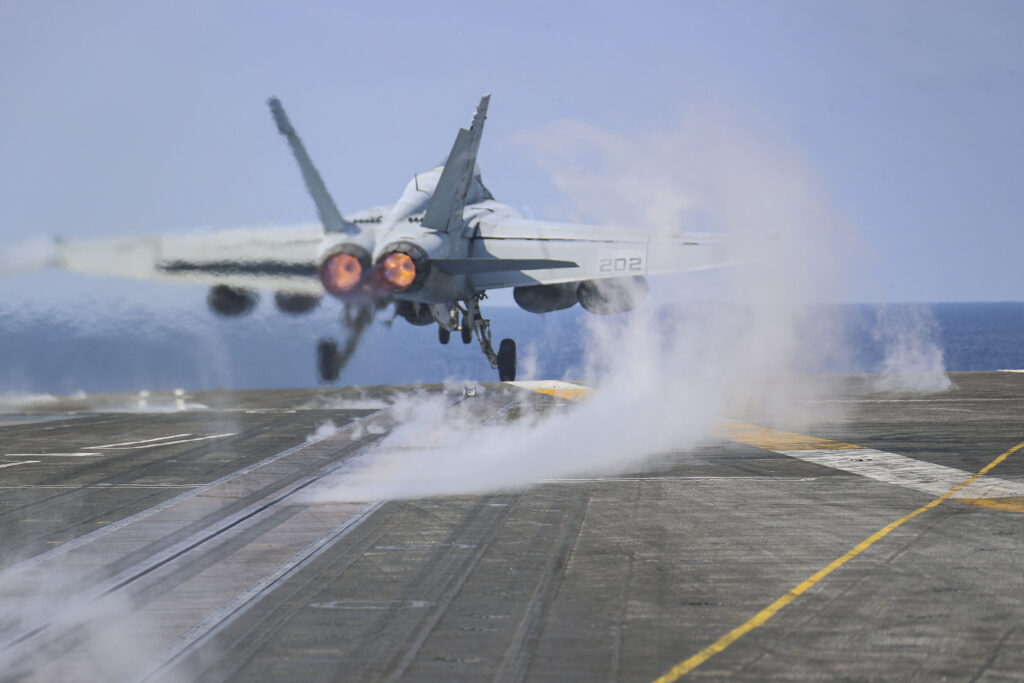
An F/A-18E Super Hornet, assigned to the “Tophatters” of Strike Fighter Squadron (VFA) 14, launches from the flight deck of the Nimitz-class aircraft carrier USS Abraham Lincoln (CVN 72) on March 15. U.S. NAVY / Mass Communication Specialist 3rd Class Javier Reyes

ARLINGTON, Va. — U.S. Navy and Marine Corps operated over the Yellow Sea off the west coast of North Korea in a demonstration in response to North Korean launches of intercontinental ballistic missiles. 

USS Abraham Lincoln (CVN 72), deployed in the Western Pacific region, launched F-35C Lightning II and F/A-18 Super Hornet strike fighters assigned to Carrier Air Wing Nine into international airspace over the Yellow Sea, which was described as “a demonstration of our resolve and commitment to our regional allies,” in a March 15 release from U.S. 7th Fleet.  

The flights were in response to the launch of two ICBMs by the Democratic People’s Republic of Korea on Feb. 27 and March 5, respectively.  

The F-35Cs are assigned to Marine Fighter Attack Squadron 314, which have taken the Marine Corps’ F-35Cs on their first deployment. 

In addition, the U.S. Air Force aircraft based in the region also participated.  

The U.S. Indo-Pacific Command has increased reconnaissance and surveillance collection efforts in the Yellow Sea, while U.S. forces in Korea have increased the posture of ballistic-missile defense in South Korea, 

“The ICBM launches by DPRK are a brazen violation of multiple UN Security Council resolutions — as well as its international commitments — and pose a threat to regional neighbors and the international community,” the release said.

“We have made clear our growing concern over the significant increase in DPRK’s missile testing, and we will continue to take all necessary measures to ensure the security of the United States and our allies. We remain in close coordination with our allies and partners to address the threats posed by the DPRK. Our commitment to the defense of the Republic of Korea and Japan remains ironclad.” 


Congress Orders Navy to ‘Buy American’ for Some Ship Components  

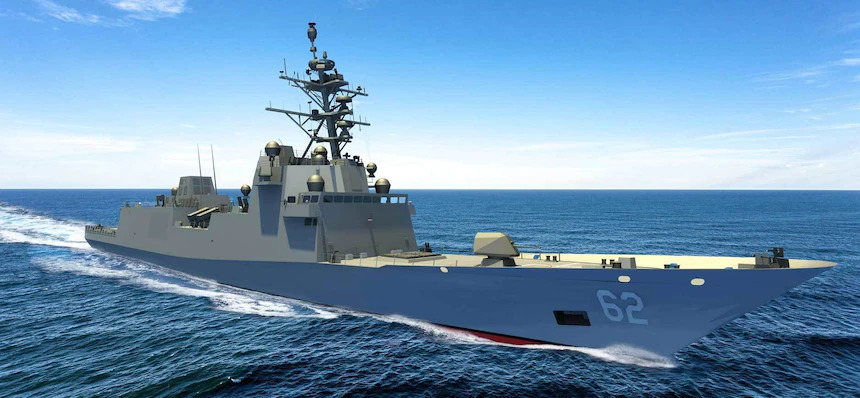
The new budget bill calls for the 11th and subsequent Constellation-class guided-missile frigates to have many of its components purchased from American companies. U.S. NAVY

ARLINGTON, Va. — Buried deep in the text of the 2022 budget bill signed into law March 15 by the president are certain provisions to force the Navy to “buy American,” purchasing from U.S. companies many of the components and systems that will be installed on some new-construction ships for the U.S Navy and Military Sealift Command. 

For the 11th Constellation-class guided-missile frigate and subsequent, the Navy is forbidden to award new contracts unless the following components are manufactured in the United States: air circuit breakers; gyrocompasses; electronic navigation chart systems; steering controls; pumps; propulsion and machinery control systems; totally enclosed lifeboats; auxiliary equipment pumps; shipboard cranes; auxiliary chill water systems; and propulsion propellers, provided that the Navy “shall incorporate United States-manufactured propulsion engines and propulsion reduction gears into the [frigate] program beginning not later than with the eleventh ship of the program.” 

For the seventh and subsequent John Lewis-class fleet replenishment ships, for example, the Navy is forbidden to fund purchase of the following components unless they are manufactured in the United States: auxiliary equipment (including pumps) for shipboard services; propulsion equipment (including engines, reduction gears, and propellers); shipboard cranes; spreaders for shipboard cranes; and anchor chains. 

Similarly, for the T-ARC(X) cable-laying ship and T-AGOS(X) ocean surveillance ship programs, the Navy is forbidden to use funds for a new contract for “requirements development, performance specification development, concept design and development, ship configuration development, systems engineering, naval architecture, marine engineering, operations research analysis, industry studies, preliminary design, development of the Detailed Design and Construction Request for Proposals solicitation package, or related activities … unless these  contracts include specifications that all auxiliary equipment, including pumps and propulsion shafts, are manufactured in the United States.”  


NGC Begins Full-Rate Production of Link-16 for the Marine Corps H-1 Fleet 

Link-16 will give the AH-1Z and UH-1Y the ability to share data and communications securely with other aircraft and users of military networks. NORTHROP GRUMMAN

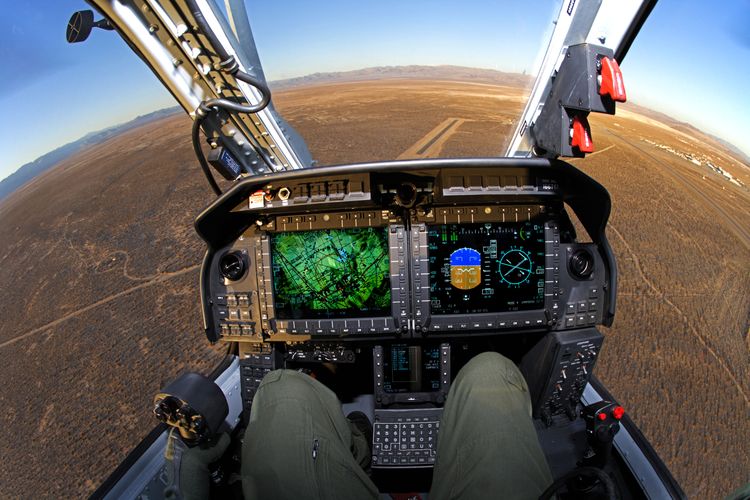
WOODLAND HILLS, Calif. — Northrop Grumman has been awarded a $65 million contract by the U.S. Navy to execute the full-rate production of Link-16 for the U.S. Marine Corps AH-1Z and UH-1Y aircraft, which will involve the integration of data link hardware across the fleet, the company said March 9. 

“As lead technology integrator for H-1 Avionics, we are expanding our long-standing partnership with the Marine Corps to modernize electronic systems across the fleet through an open systems architecture approach,” said Lindsay McEwen, vice president, navigation, targeting and survivability at Northrop Grumman. “Link-16 full-rate production is the starting point.” 

Link-16 is a secure data link that allows H-1 crews to share data and communications with other aircraft and users on military networks. This capability is a critical mission enabler as the Department of Defense moves to joint all-domain command and control. 

The company said the processes, capabilities and open architecture developed for the H-1 fleet are directly applicable to other platforms and could be used in future aircraft development programs such as Naval Air Command’s Vertical Take Off and Landing Family of Systems, MUX and others. 


Russian Navy Blockades Ukraine’s Coast, Continues Missile Strikes 

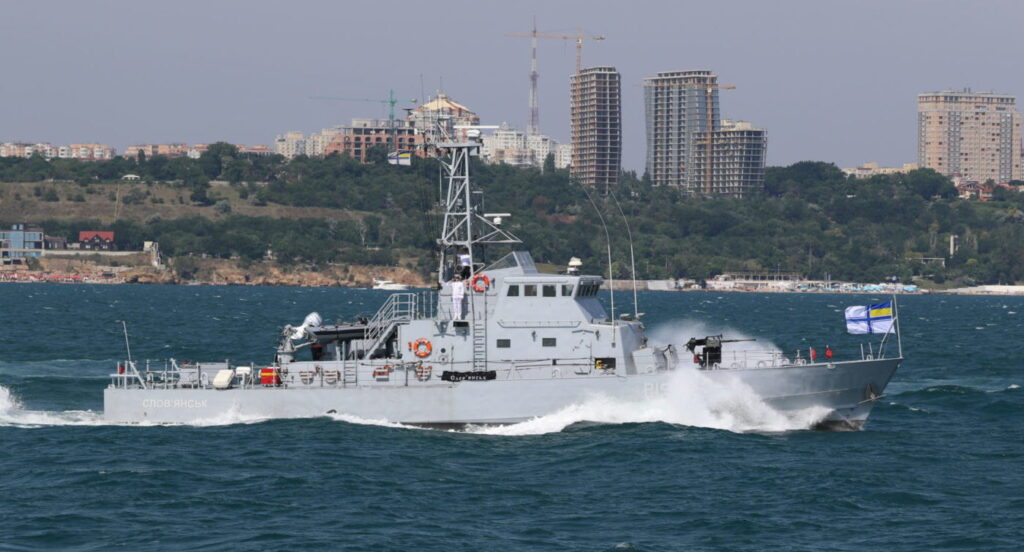
The Ukrainian Slovyansk, formerly the U.S. Coast Guard Island-class cutter Cushing, was reportedly destroyed on March 3. WIKIPEDIA

ARLINGTON, Va. — The Russian Black Sea Fleet has set up a naval blockade of Ukrainian ports along the Black Sea, a United Kingdom defense official said, and is continuing fire support of the Russian invasion of Ukraine. 

“The [U.K.] Ministry of Defence’s Defence Intelligence said Russian naval forces have established a distant blockade of Ukraine’s Black Sea coast, effectively isolating Ukraine from international maritime trade,” Air Vice-Marshal Mick Smeath, British defence attaché in Washington, said in a March 13 release.  

While the Russian navy has taken a lesser role than its army counterparts in the invasion of Ukraine, it has taken part in offensive operations and amphibious warfare. 

“Russian naval forces are also continuing to conduct missile strikes against targets throughout Ukraine,” Smeath said.  

Some Russian navy warships are equipped with Kalibr cruise missiles. 

Russian naval infantry — the equivalent of U.S. Marines — have landed ashore in Ukraine to participate in the campaign in southeastern Ukraine. 

“Russia has already conducted one amphibious landing in the Sea of Azov and could look to conduct further such operations in the coming weeks,” Smeath said. 

Ukraine’s main port on the Black Sea, Odesa, remains in Ukrainian hands.  

Press reports have said that a Ukrainian patrol boat — the Slovyansk, formerly the U.S. Coast Guard Island-class cutter Cushing — was destroyed by a Russian aircraft on March 3. 

A Russian patrol boat, the Vasily Bykov, reportedly was severely damaged and sunk on March 7 by rockets launched by a Ukrainian battery, according to press reports.  

Some of the Russian ships in the region entered the Black Sea after a transit from Russia’s Baltic Sea and Northern Fleet. These included several amphibious warfare ships and missile-armed surface warships.  


Future Attack Submarine USS Montana delivered to U.S. Navy 

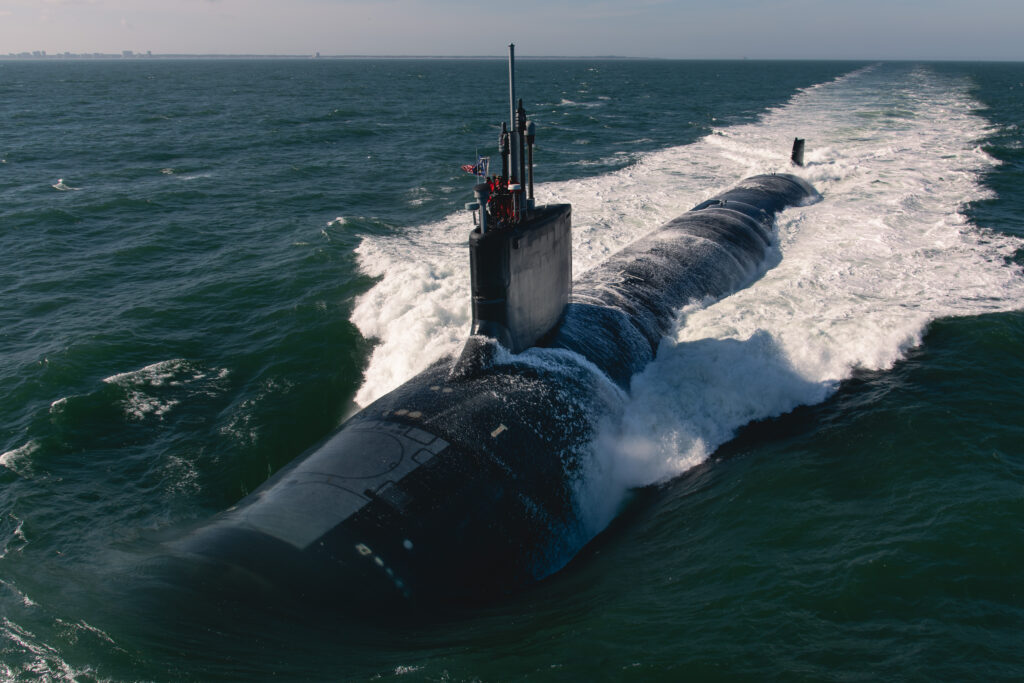
The future USS Montana was delivered to the Navy on March 12. HUNTINGTON INGALLS INDUSTRIES / Ashley Cowan

NEWPORT NEWS, Va. — The Submarine Force’s newest attack submarine, the future USS Montana (SSN 794), delivered to the U.S. Navy on March 12, Team Submarines Public Affairs said March 14.

PCU Montana is the 21st Virginia Class submarine co-produced by General Dynamics Electric Boat and Huntington Ingalls Industries’ Newport News Shipbuilding through a long-standing teaming agreement. Montana is the 10th Virginia-class delivered by the shipbuilding team and the third Block IV configured submarine. 

“The delivery of this ship reflects an enormous effort across the Navy and Industry shipbuilding teams,” said Capt. Todd Weeks, the Virginia-class program manager who rode the boat during sea trials. “This is an exciting time for the program, Montana’s crew and the Navy. This is the second Virginia-class submarine to deliver in less than a month and it is in excellent condition. Continued deliveries of attack submarines are critical to the fleet and our National Maritime Strategy.” 

Virginia-class aubmarines are built to operate in the world’s littoral and deep waters while conducting anti-submarine warfare; anti-surface ship warfare; strike warfare; special operations forces support; intelligence, surveillance and reconnaissance; irregular warfare; and mine warfare missions. Their inherent stealth, endurance, mobility and firepower directly enable them to support five of the six maritime strategy core capabilities — sea control, power projection, forward presence, maritime security, and deterrence. 

The submarine’s sponsor is Sally Jewell, former secretary of the United States Department of Interior. 

Montana is the second U.S. Navy ship to honor the state. The first USS Montana (ACR 13), an armored cruiser, was also built at Newport News Shipbuilding and commissioned July 1908. It served in the Atlantic and Mediterranean, landed Marines during unrest in Haiti in 1914 and escorted convoys during World War I. It was decommissioned in 1921. Two other battleships (BB 51 and 67) were to have been named Montana but were canceled in 1922 and 1943, respectively. 


Navy Accepts Delivery of the Future USS Fort Lauderdale 

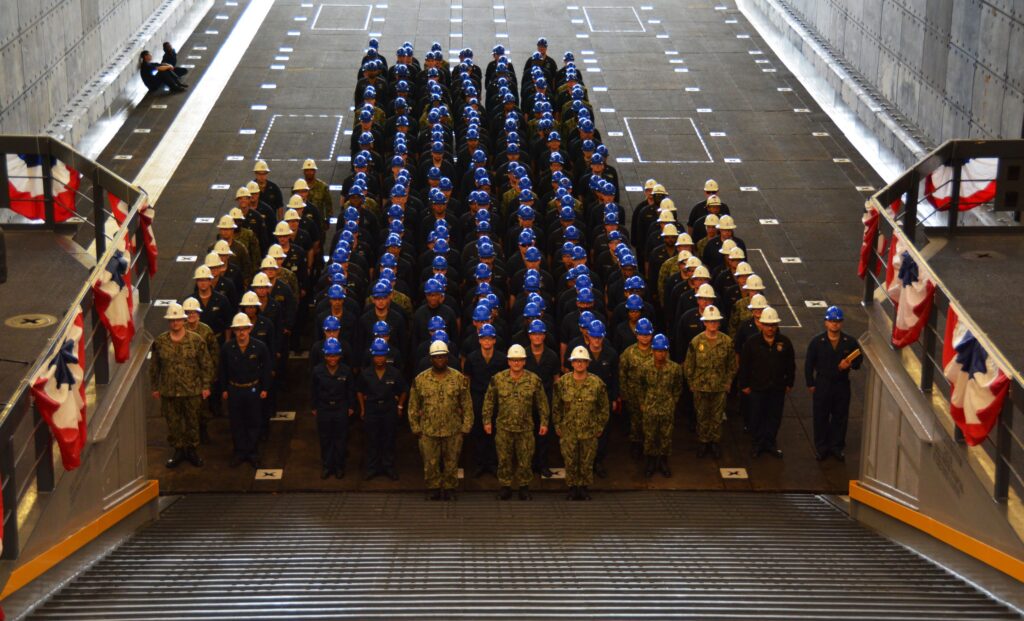
Pre-Commissioning Unit Fort Lauderdale (LPD 28) Commanding Officer Capt. James Quaresimo (front center), Command Master Chief James Magee (front left) and Acting Executive Officer Cmdr. Charles Marshall pose with the crew in the well deck after accepting delivery of the ship. U.S. NAVY / Mass Communications Specialist 2nd Class Dustin Knight

WASHINGTON — The Navy accepted delivery of the future USS Fort Lauderdale (LPD 28), the 12th San Antonio class-amphibious transport dock ship, from Huntington Ingalls Industries’ Ingalls Shipbuilding Division, March 11, Team Ships Public Affairs said March 14. 

Delivery of LPD 28 represents the official transfer of the ship from the shipbuilder to the Navy. Prior to delivery, the ship successfully conducted a series of at-sea and pier-side trials to demonstrate its material and operational readiness.  

“Following successful builder’s and acceptance trials, LPD 28 will soon be ready to join the fleet to provide critical readiness and capacity to our Sailors,” said Capt. Cedric McNeal, program manager, Amphibious Warfare Program Office, Program Executive Office Ships. “This ship will help expand our advantage in the maritime domain and brings critical capability now and in the future.” 

The San Antonio-class is designed to support embarking, transporting, and landing Marines and their equipment by conventional or air-cushioned landing craft. The ship’s capabilities are further enhanced by its flight deck and hangar, enabling the ship to operate a variety of Marine Corps helicopters and the MV-22 Osprey tilt-rotor aircraft. Because of the ships’ inherent capabilities, they are able to support a variety of amphibious assault, special operations, expeditionary warfare, or disaster relief missions, operating independently or as part of Amphibious Readiness Groups, Expeditionary Strike Groups or Joint Task Forces. 

In addition to LPD 28, HII’s Ingalls Shipbuilding Division is currently in production on the future USS Richard S. McCool (LPD 29) and the future USS Harrisburg (LPD 30), with start of fabrication for future USS Pittsburgh (LPD 31) planned for later this spring. 


Navy Announces Flag Officer Assignments 

ARLINGTON, Va. — The secretary of the Navy and chief of naval operations announced March 11 the following assignments: 

Rear Adm. Michael D. Bernacchi Jr. will be assigned as deputy commander, 10th Fleet, Fort George G. Meade, Maryland. Bernacchi is currently serving as director, Plans and Policy, J-5, U.S. Space Command, Peterson Air Force Base, Colorado. 

Rear Adm. Keith B. Davids will be assigned as commander, Naval Special Warfare Command, San Diego, California. Davids is currently serving as commander, Special Operations Command South, U.S. Southern Command, Homestead, Florida. 

Rear Adm. Leonard C. Dollaga will be assigned as chief of legislative affairs, Washington, D.C. Dollaga is currently serving as commander, Submarine Group 7; commander, Task Force 74; and commander, Task Force 54, Yokosuka, Japan. 

Rear Adm. Christopher S. Gray will be assigned as commander, Navy Region Mid-Atlantic, Norfolk, Virginia. Gray is currently serving as commander, Navy Region Europe, Africa, Central; and commander, Maritime Air Forces Naples, Naples, Italy. 

Rear Adm. Nancy S. Lacore will be assigned as commandant, Naval District Washington, Washington, D.C. Lacore is currently serving as chief of staff, U.S. Naval Forces Europe/U.S. Naval Forces Africa/6th Fleet, Naples, Italy. 

Rear Adm. Fred I. Pyle will be assigned as director, Surface Warfare Division, N96, Office of the Chief of Naval Operations, Washington, D.C. Pyle is currently serving as director, Maritime Operations, U.S. Fleet Forces Command, Norfolk, Virginia. 
Rear Adm. Michael W. Studeman will be assigned as director, National Maritime Intelligence Integration Office; and commander, Office of Naval Intelligence, Washington, D.C. Studeman is currently serving as director, J-2, U.S. Indo-Pacific Command, Camp H.M. Smith, Hawaii. 

Rear Adm. (lower half) Anthony C. Carullo, selected for promotion to rear admiral, will be assigned as director, Plans and Policy, U.S. Strategic Command, Offutt Air Force Base, Nebraska. Carullo is currently serving as director, Plans and Operations, U.S. Naval Forces Europe Sixth Fleet; deputy commander, 6th Fleet; and commander, Submarine Group 8, Naples, Italy. 

Rear Adm. (lower half) Robert M. Gaucher, selected for promotion to rear admiral, will be assigned as director, Strategic Integration, N2/N6T, Office of the Chief of Naval Operations, Washington, D.C. Gaucher is currently serving as commander, Submarine Group 9, Silverdale, Washington. 
Rear Adm. (lower half) Nicholas M. Homan, selected for promotion to rear admiral, will be assigned as director of intelligence, J-2, U.S. Central Command, Tampa, Florida. Homan is currently serving as director of intelligence, J-2, U.S. Special Operations Command, MacDill Air Force Base, Florida. 

Rear Adm. (lower half) Scott F. Robertson, selected for promotion to rear admiral, will be assigned as director of plans, Policy and Strategy, J-5, North American Aerospace Defense Command and U.S. Northern Command, Colorado Springs, Colorado. Robertson is currently serving as commander, Carrier Strike Group 2, Norfolk, Virginia. 

Rear Adm. (lower half) Curt A. Renshaw, selected for promotion to rear admiral, will be assigned as director of operations, J-3, U.S. Central Command, MacDill Air Force Base, Florida. Renshaw is currently serving as commander, Carrier Strike Group 8, Norfolk, Virginia. 

Rear Adm. (lower half) Christopher M. Engdahl, selected for promotion to rear admiral, will be assigned as commander, Naval Safety Command, Norfolk, Virginia. Engdahl is currently serving as commander, Expeditionary Strike Group 7; commander, Task Force 76; and commander, Amphibious Force, 7th Fleet, Yokosuka, Japan. 

Rear Adm. (lower half) John S. Lemmon, selected for promotion to rear admiral, will be assigned as program executive officer for Tactical Aircraft Programs, Patuxent River, Maryland. Lemmon is currently serving as commander, Naval Air Warfare Center, Aircraft Division; and assistant commander for research and engineering, Naval Air Systems command (AIR-4.0), Patuxent River, Maryland. 

Rear Adm. (lower half) Michael J. Vernazza, selected for promotion to rear admiral, will be assigned as commander, Fleet Information Warfare Command Pacific/Information Warfare Task Force, Pacific, Pearl Harbor, Hawaii. Vernazza is currently serving as commander, Naval Information Warfighting Development Center, Norfolk, Virginia. 

Rear Adm. (lower half) Kristin Acquavella will be assigned as director, Logistics Fleet Supply and Ordnance, N4, U.S. Pacific Fleet, Pearl Harbor, Hawaii. Acquavella is currently serving as director, Audits, Naval Supply Systems Command, Mechanicsburg, Pennsylvania. 

Rear Adm. (lower half) Bradley J. Andros will be assigned as commander, Navy Expeditionary Combat Command, Virginia Beach, Virginia. Andros is currently serving as director J10 – Directorate of Countering Weapons of Mass Destruction, U.S. Special Operations Command, Fort Belvoir, Virginia. 

Rear Adm. (lower half) Stephen D. Barnett will be assigned as commander, Navy Region Hawaii; and commander, Naval Surface Group Middle Pacific, Pearl Harbor, Hawaii. Barnett is currently serving as commander, Navy Region Southwest, San Diego, California. 

Rear Adm. (lower half) Mark D. Behning will be assigned as commander, Submarine Group 9, Silverdale, Washington. Behning is currently serving as deputy director, Strategic Targeting and Nuclear Mission Planning, J5N, U.S. Strategic Command, Offutt Air Force Base, Nebraska. 

Rear Adm. (lower half) Richard T. Brophy Jr. will be assigned as chief of naval air training, Corpus Christi, Texas.  Brophy is currently serving as commander, Carrier Strike Group 4, Norfolk, Virginia. 

Rear Adm. (lower half) Scott M. Brown is assigned as deputy commander, Logistics, Maintenance, and Industrial Operations (NAVSEA 04), Naval Sea Systems Command, Washington, D.C. Brown previously served as director, Fleet Maintenance, U.S. Pacific Fleet, Pearl Harbor, Hawaii. 

Rear Adm. (lower half) Susan Bryerjoyner will be assigned as deputy director, Command, Control, Communications, and Computers/Cyber Systems, J-6, Joint Staff, Washington, D.C. Bryerjoyner is currently serving as Navy Cyber Security Division director, Office of the Chief of Naval Operations, Washington, D.C. 
Rear Adm. (lower half) Thomas R. Buchanan will be assigned as commander, Submarine Group 10, Kings Bay, Georgia. Buchanan is currently serving as deputy director for Plans and Policy, U.S. Central Command, MacDill Air Force Base, Florida. 

Rear Adm. (lower half) Joseph F. Cahill III, will be assigned as commander, Carrier Strike Group 15, San Diego, California. Cahill is currently serving as deputy director for resources and acquisitions, J-8, Joint Staff, Washington, D.C. 

Rear Adm. (lower half) Brad J. Collins will be assigned as commander, Navy Region Europe, Africa, Central; and commander, Maritime Air Forces Naples, Naples, Italy. Collins is currently serving as commander, Navy Region Northwest, Silverdale, Washington. 

Rear Adm. (lower half) Jeffrey J. Czerewko, will be assigned as commander, Carrier Strike Group 4, Norfolk, Virginia. Czerewko is currently serving as director, Fleet Integrated Readiness and Analysis, N02R, U.S. Fleet Forces Command, Norfolk, Virginia. 

Rear Adm. (lower half) Dion D. English will be assigned as vice director for logistics, J-4, Joint Staff, Washington, D.C. English is currently serving as director, Logistics, Fleet Supply and Ordnance, N4, U.S. Pacific Fleet, Pearl Harbor, Hawaii. 

Rear Adm. (lower half) Christopher A. Kijek will be assigned as commander, Patrol and Reconnaissance Group, Norfolk, Virginia.  Kijek is currently serving as director, Operations and Plans, N3, Office of the Chief of Naval Operations, Washington, D.C. 
Rear Adm. (lower half) Kevin P. Lenox, will be assigned as commander, Carrier Strike Group 3, Bremerton, Washington. Lenox is currently serving as deputy director for Operations, J-3, U.S. Central Command, MacDill Air Force Base, Florida. 

Rear Adm. (lower half) Oliver T. Lewis will be assigned as director, Plans and Operations, U.S. Naval Forces Europe – 6th Fleet; deputy commander, 6th Fleet; and commander, Submarine Group 8, Naples, Italy. Lewis is currently serving as deputy director for Political-Military Affairs (Europe, NATO, Russia), J-5, Joint Staff, Washington, D.C. 

Rear Adm. (lower half) Daniel P. Martin will be assigned as director, Maritime Operations (DMOC/N04), U.S. Pacific Fleet, Pearl Harbor, Hawaii. Martin is currently serving as commander, Carrier Strike Group 1, San Diego, California. 

Rear Adm. (lower half) Mark A. Melson will be assigned as commander, Logistics Group, Western Pacific; and commander, Task Force 73, Singapore.  Melson is currently serving as deputy director, Joint Force Development and Design Integration, J-7, Joint Staff, Washington, D.C. 

Rear Adm. (lower half) Marc J. Miguez, will be assigned as commander, Carrier Strike Group 2, Norfolk, Virginia. Miguez is currently serving as deputy director for Operations, National Joint Operations Intelligence Center, Operations Team Two, J3, Joint Staff, Washington, D.C. 

Rear Adm. (lower half) Benjamin G. Reynolds will be assigned as director, Operations and Plans, N3, Officer of the Chief of Naval Operations, Washington, D.C. Reynolds is currently serving as director of maritime headquarters, U.S. Naval Forces Europe/Africa/6th Fleet, Naples, Italy. 
Rear Adm. (lower half) Carlos A. Sardiello will be assigned as commander, Carrier Strike Group 1, San Diego, California. Sardiello is currently serving as director, Joint and Fleet Operations, U.S. Fleet Forces Command, Norfolk, Virginia. 

Rear Adm. (lower half) Michael S. Sciretta will be assigned as commander, Standing NATO Maritime Group 2, Naples, Italy. Sciretta is currently serving as deputy commander, Joint Interagency Task Force-South, U.S. Southern Command, Key West, Florida. 

Rear Adm. (lower half) Richard E. Seif Jr. will be assigned as commander, Submarine Group 7; commander, Task Force 74; and commander, Task Force 54, Yokosuka, Japan. Seif is currently serving as commander, Undersea Warfighting Development Center, Groton, Connecticut. 

Rear Adm. (lower half) Paul C. Spedero Jr. will be assigned as commander, Carrier Strike Group 8, Norfolk, Virginia. Spedero is currently serving as commander, Joint Enabling Capabilities Command, U.S. Transportation Command, Norfolk, Virginia. 

Rear Adm. (lower half) Stephen R. Tedford will be assigned as program executive officer for unmanned aviation and strike weapons, Patuxent River, Maryland. Tedford is currently serving as commander, Operational Test and Evaluation Force, Norfolk, Virginia. 

Rear Adm. (lower half) Derek A. Trinque will be assigned as commander, Expeditionary Strike Group 7; commander, Task Force 76; and commander, Amphibious Force, 7th Fleet, Yokosuka, Japan. Trinque is currently serving as assistant commander for Career Management, PERS-4, Navy Personnel Command, Millington, Tennessee. 

Rear Adm. (lower half) Dennis Velez will be assigned as commander, Carrier Strike Group 10, Norfolk, Virginia. Velez is currently serving as commander, Navy Recruiting Command, Millington, Tennessee. 

Rear Adm. (lower half) Darryl L. Walker will be assigned as commander, Combined Joint Task Force CYBER, 10th Fleet, Fort Meade, Maryland.  Walker is currently serving as deputy director, Operations, J-3, U.S. Cyber Command, Fort Meade, Maryland. 

Rear Adm. (lower half) Robert D. Westendorff will be assigned as director, Fleet Integrated Readiness and Analysis, N02R, U.S. Fleet Forces Command, Norfolk, Virginia. Westendorff is currently serving as chief of naval air training, Corpus Christi, Texas. 

Rear Adm. (lower half) Jeromy B. Williams will be assigned as commander, Special Operations Command Pacific, Camp H.M. Smith, Hawaii. Williams is currently serving as deputy director, Special Operations and Counter Terrorism, J-3, Joint Staff, Washington, D.C. 

Rear Adm. (lower half) Thomas R. Williams II will be assigned as commander, Expeditionary Strike Group 2, Virginia Beach, Virginia. Williams is currently serving as director, Plans, Policy and Integration, N5, Office of the Chief of Naval Operations, Washington, D.C. 
Capt. Brian H. Bennett, selected for promotion to rear admiral (lower half), will be assigned as assistant commander-operations, Joint Special Operations Command, U.S. Special Operations Command, Fort Bragg, North Carolina. Bennett is currently serving as executive officer to Commander, U.S. Special Operations Command, Tampa, Florida. 

Capt. Maximilian Clark, selected for promotion to rear admiral (lower half), will be assigned as assistant chief of staff (J3), Joint Forces Command, Naples, Italy. Clark is currently serving as executive assistant to director, Air Warfare, N98, Office of the Chief of Naval Operations, Washington, D.C. 
Capt. Kavon Hakimzadeh, selected for promotion to rear admiral (lower half), will be assigned as director, Joint/Fleet Operations, U.S. Fleet Forces Command, Norfolk, Virginia. Hakimzadeh is currently serving as programs and policy director, Aircraft Branch Head, N0980C, Office of the Chief of Naval Operations, Washington, D.C. 
Capt. Kevin M. Kennedy, selected for promotion to rear admiral (lower half), will be assigned as assistant commander for career management, PERS-4, Navy Personnel Command, Millington, Tennessee. Kennedy is currently serving as director, Surface Warfare Officer Distribution, (PERS-41), Navy Personnel Command, Millington, Tennessee. 

Capt. Brett W. Mietus, selected for promotion to rear admiral (lower half), will be assigned as director, 21st Century Sailor Office, N17, Office of the Chief of Naval Operations, Arlington, Virginia. Mietus is currently serving as director of the Chief of Naval Operations Strategic Integration Group, Office of the Chief of Naval Operations, Washington, D.C. 
Capt. Martin J. Muckian, selected for promotion to rear admiral (lower half), will be assigned as commander, Undersea Warfighting Development Command, Groton, Connecticut. Muckian is currently serving as chief of staff to commander, U.S. Submarine Forces, U.S. Pacific Fleet; and chief of staff, U.S. Strategic Command Special Activities Pacific, Pearl Harbor, Hawaii. 

Capt. Gregory D. Newkirk, selected for promotion to rear admiral (lower half), will be assigned as deputy director for operations, National Joint Operations Intelligence Team 2, J3, Joint Staff, Washington, D.C. Newkirk is currently serving as executive assistant, U.S. Indo-Pacific Command, Camp H.M. Smith, Hawaii. 

Capt. Matthew C. Paradise, selected for promotion to rear admiral (lower half), will be assigned as deputy director, Operations, J-3, U.S. Cyber Command, Fort Meade, Maryland. Paradise is currently serving as chief of staff, Naval Air Forces, U.S. Pacific Fleet, San Diego, California. 

Capt. Chase D. Patrick, selected for promotion to rear admiral (lower half), will be assigned as director of Maritime Headquarters, U.S. Naval Forces Europe/Africa/6th Fleet, Naples, Italy. Patrick is currently serving as director, Navy Senate Liaison Office, Office of Legislative Affairs, Washington, D.C. 

Capt. Bradley N. Rosen, selected for promotion to rear admiral (lower half), will be assigned as commander, Navy Region Southwest, San Diego, California. Rosen is currently serving as chief of staff, Navy Installations Command, Washington, D.C. 

Capt. Alexis T. Walker, selected for promotion to rear admiral (lower half), will be assigned as commander, Navy Recruiting Command, Millington, Tennessee. Walker is currently serving as commanding officer, Surface Warfare Officer School Command, Newport, Rhode Island. 

Capt. David P. Walt, selected for promotion to rear admiral (lower half), will be assigned as deputy director for resources and acquisitions, J-8, Joint Staff, Washington, D.C. Walt is currently serving as director, Operations Division, Office of the Assistant Secretary of the Navy for Financial Management and Comptroller; and director, Operations Division, Fiscal Management Division, N821, Office of the Chief of Naval Operations, Washington, D.C. 

Capt. Robert E. Wirth, selected for promotion to rear admiral (lower half), will be assigned as deputy director, Strategic Targeting and Nuclear Mission Planning, J5N, U.S. Strategic Command, Offutt Air Force Base, Nebraska. Wirth is currently serving as director, Submarine/Nuclear Power Distribution (PERS-42), Navy Personnel Command, Millington, Tennessee. 

Capt. Michael S. Wosje, selected for promotion to rear admiral (lower half), will be assigned as chief of staff, Naval Striking and Support Forces, NATO, Lisbon, Portugal. Wosje is currently serving as executive assistant to the Deputy Chief of Naval Operations for Warfighting Requirements and Capabilities, N9, Office of the Chief of Naval Operations, Washington, D.C.