Marine Corps ACVs Set to Return to Unrestricted Amphibious Operations
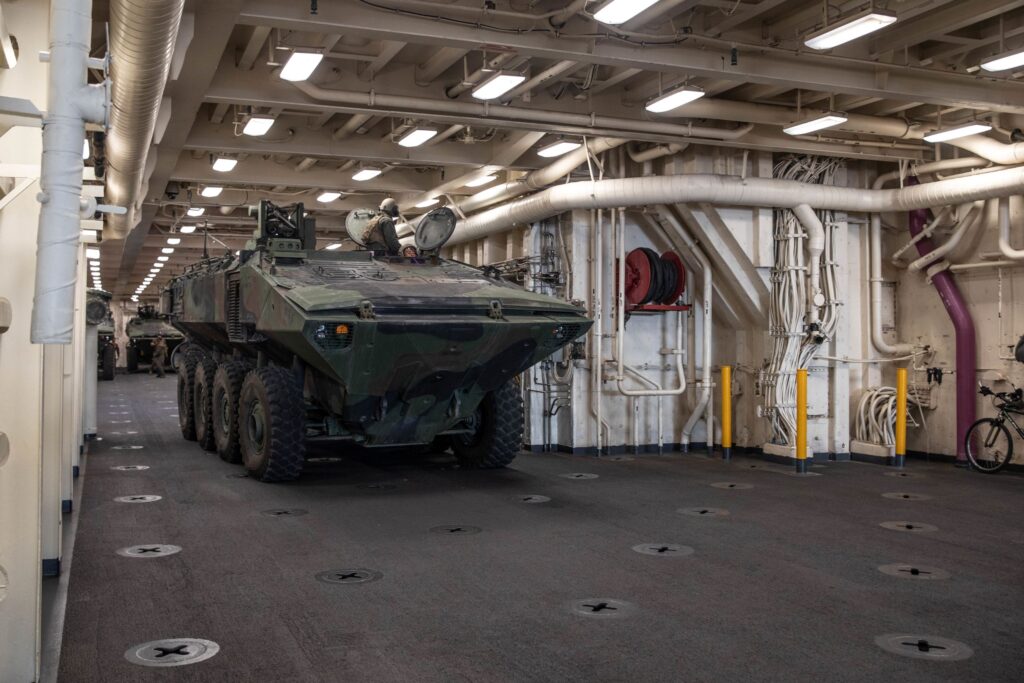
A U.S. Marine Corps amphibious combat vehicle, with 3d Assault Amphibian Battalion, 1st Marine Division, is loaded onto the amphibious assault dock landing ship USS Anchorage (LPD 23) during a strategic mobility exercise Oct. 19, 2021. U.S. MARINE CORPS / Corps Cpl. Cameron Hermanet

ARLINGTON, Va. — Marine Corps Amphibious Combat Vehicles are set to return to unrestricted waterborne operations following the development of a new tow rope solution designed to address previous issues with the vehicle’s towing mechanism, the Marine Corps said Jan. 6. 

In September 2021, the Marine Corps suspended ACV operations in unprotected waters while it worked to resolve the towing issues that were identified in several after action reports from the field.  

“Amphibious operations, including the use of amphibious ship-to-shore connectors, is a foundational aspect of Marine Corps operations and is critical to the future force and its ability to remain the Nation’s premier expeditionary force in readiness,” said Lt. Gen. David Furness, deputy commandant for plans, policies and operations. 

Once equipped with and trained to employ the new tow rope solution, units are authorized to use the ACV to conduct unrestricted amphibious operations, including self-recovery operations in the open ocean and through the surf zone. 

Prior to the receipt and installation of the new replacement tow ropes, ACV operation remains restricted to land mobility, gunnery operations, and amphibious operations in protected waters.  

In addition to the new equipment and training requirements are the 18 tasks that units must complete, validate and certify prior to the resumption of waterborne operations. These tasks stem from the comprehensive investigation into the facts and circumstances surrounding the July 2020 AAV tragedy. 

The tasks cover a variety of requirements, including ensuring training and qualifications for crew and embarked personnel are properly equipped, vehicles have passed required inspections and operations are conducted with safety boats, sea state assessments and positive communication. 


Bollinger Delivers to Coast Guard Sixth FRC for Basing in Bahrain

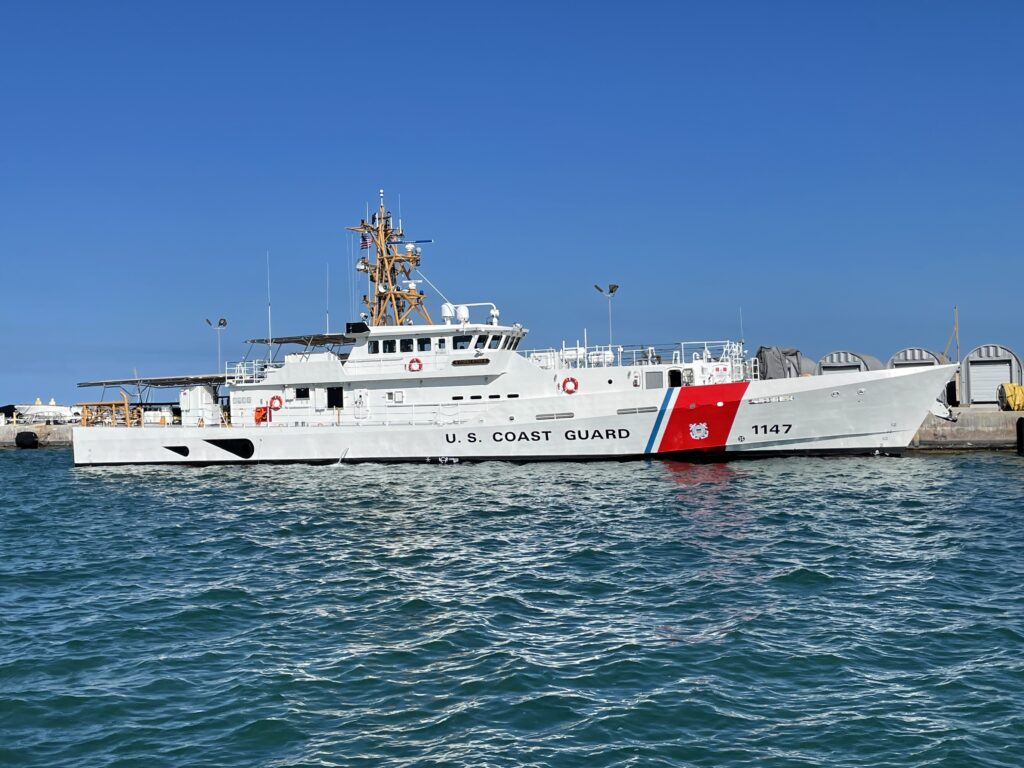
The U.S. Coast Guard Cutter Clarence Sutphin, now delivered to the service in Key West, Florida, and bound for Bahrain. BOLLINGER SHIPYARDS LLC

LOCKPORT, La. — Bollinger Shipyards LLC has delivered the USCGC Clarence Sutphin to the U.S. Coast Guard in Key West, Florida, the company said Jan. 6. This is the 170th vessel Bollinger has delivered to the U.S. Coast Guard over a 35-year period and the 47th Fast Response Cutter delivered under the current program.  

The Clarence Sutphin is the final of six FRCs to be home-ported in Manama, Bahrain, which will replace the aging 110-foot Island-class patrol boats, built by Bollinger Shipyards 30 years ago, supporting the Patrol Forces Southwest Asia, the U.S. Coast Guard’s largest overseas presence outside the United States. 

“Ensuring that the brave men and women of the U.S. Coast Guard have the most state-of-the-art, advanced vessels as they work to build and maintain the necessary regional alliances to ensure maritime security in the region is a top priority,” said Bollinger President and CEO Ben Bordelon. “Bollinger is proud to continue enhancing and supporting the U.S. Coast Guard’s operational presence in the Middle East and ensuring it remains the preferred partner around the world.” 

Earlier this year at the commissioning ceremony of the USCGC Charles Moulthrope, U.S. Coast Guard Commandant Adm. Karl Schultz lauded the “enhanced seakeeping” capabilities of the PATFORSWA-bound FRCs, saying “these ships are truly going to be game changing in their new theater of operations” and “offer increased opportunities for integrated joint operations with our Navy and Marine Corps colleagues” as the Coast Guard seeks to be part of the whole-of-government solution set in the region. 

PATFORSWA is composed of six cutters, shoreside support personnel, and the Maritime Engagement Team. The unit’s mission is to train, organize, equip, support and deploy combat-ready Coast Guard Forces in support of U.S. Central Command and national security objectives. PATFORSWA works with Naval Forces Central Command in furthering their goals to conduct persistent maritime operations to forward U.S. interests, deter and counter disruptive countries, defeat violent extremism and strengthen partner nations’ maritime capabilities in order to promote a secure maritime environment. 

Each FRC is named for an enlisted Coast Guard hero who distinguished themselves in the line of duty. Clarence Sutphin, Boatswain Mate First Class, USCG, was awarded the Bronze Star Medal for his courageous actions during the invasion of Saipan Island in 1944. His citation reads: “For heroic achievement in action against enemy Japanese forces during the invasion of Saipan, Marianas Islands, on June 15 and 16, 1944.  Swimming with a line through heavy surf to a tank lighter stranded on a reef, SUTPHIN remained aboard under mortar and artillery fire until the boat was salvaged. Returning to the beach, he aided in salvaging another tank lighter under enemy fire and, when a mortar shell struck a group of eight Marines, promptly treated the wounded and moved them to a first aid station. His courage and grave concern for the safety of others reflects the highest credit upon SUTPHIN and the United States naval service.” 


CNO Emphasizes Hypersonics During Alabama Visit

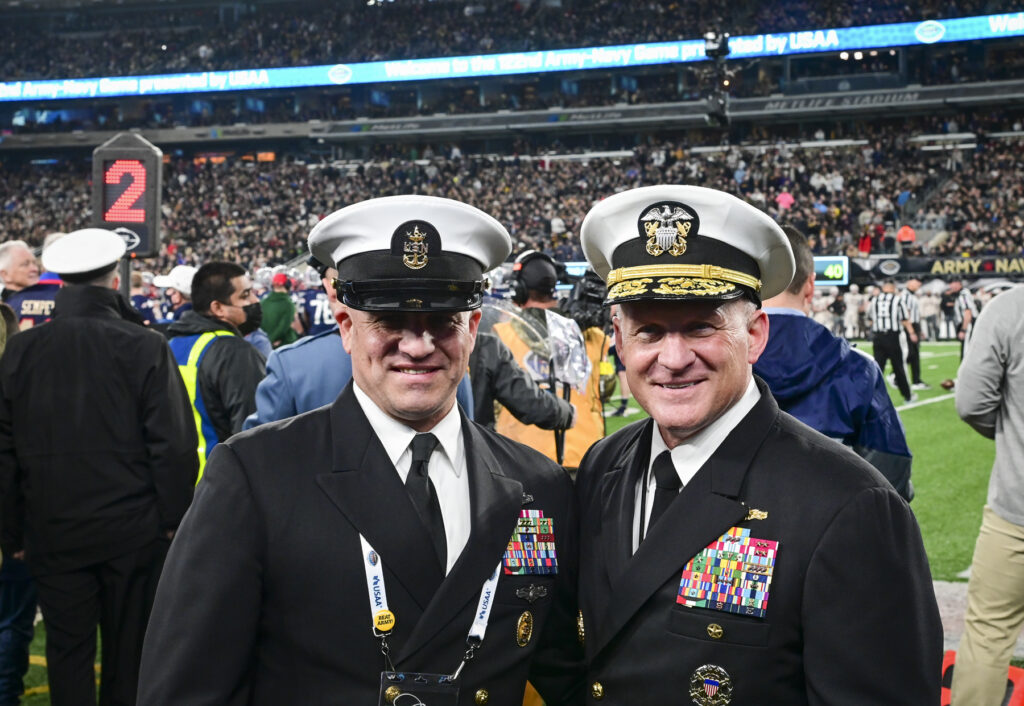
Chief of Naval Operations (CNO) Adm. Mike Gilday, right, and Master Chief Petty Officer of the Navy Russell Smith, shown here during the 122nd Army-Navy football game. U.S. NAVY / Mass Communication Specialist 1st Class Sean Castellano

HUNTSVILLE, Ala. — Chief of Naval Operations Adm. Mike Gilday traveled to Courtland and Huntsville, Alabama, Jan. 6, to visit Dynetics and Lockheed Martin facilities with Alabama Rep. Mo Brooks, the CNO’s public affairs officer said in a release. 

Gilday toured facilities and received updates about hypersonic weapon technology development, advancements, and capabilities. 

“In order to maintain a warfighting advantage against the increasingly aggressive modernization efforts of our primary challengers, it is imperative to accelerate the development and fielding of hypersonic capabilities,” Gilday said. “Our partnerships with the Army and industry are paramount as we transition hypersonics from developmental to operational systems at speed and scale that will meet the needs of our Sailors, Soldiers and the nation.”   

Hypersonic weapons, capable of flying at speeds greater than five times the speed of sound, or Mach 5, are highly maneuverable and operate at varying altitudes. The U.S. Navy and Army are working together to expand hypersonic capabilities through the use of a common glide body, common missile design and joint test opportunities to field hypersonic weapon systems in the mid- to late-2020s. 

“Hypersonic systems provide a combination of speed, maneuverability and altitude that enables highly survivable, long-range, rapid defeat of time-critical, heavily-defended and high value targets,” Gilday said. “Delivering hypersonic weapons continues to be one of the Navy’s highest priorities, which the Navigation Plan makes clear.” 

“I appreciate Adm. Mike Gilday for taking the time to visit Courtland and Huntsville as part of the Navy and Army’s collaboration with industry, government national laboratories, and academia to field hypersonic warfighting capability,” said Brooks. 

“As the co-chair of the newly formed House Hypersonics Caucus, I’m doing all I can to help my congressional colleagues understand that hypersonic systems are absolutely vital to America’s missile defenses and should be an urgent priority.”  Brooks said. “China and Russia are diligently strengthening their hypersonics capabilities and America must keep pace.” 

The Navy and Army have been working in collaboration with industry, government national laboratories, and academia to field hypersonic warfighting capability. 

This visit marked CNO’s first trip to Huntsville and Courtland.  


BAE Systems to Modernize USS Mitscher

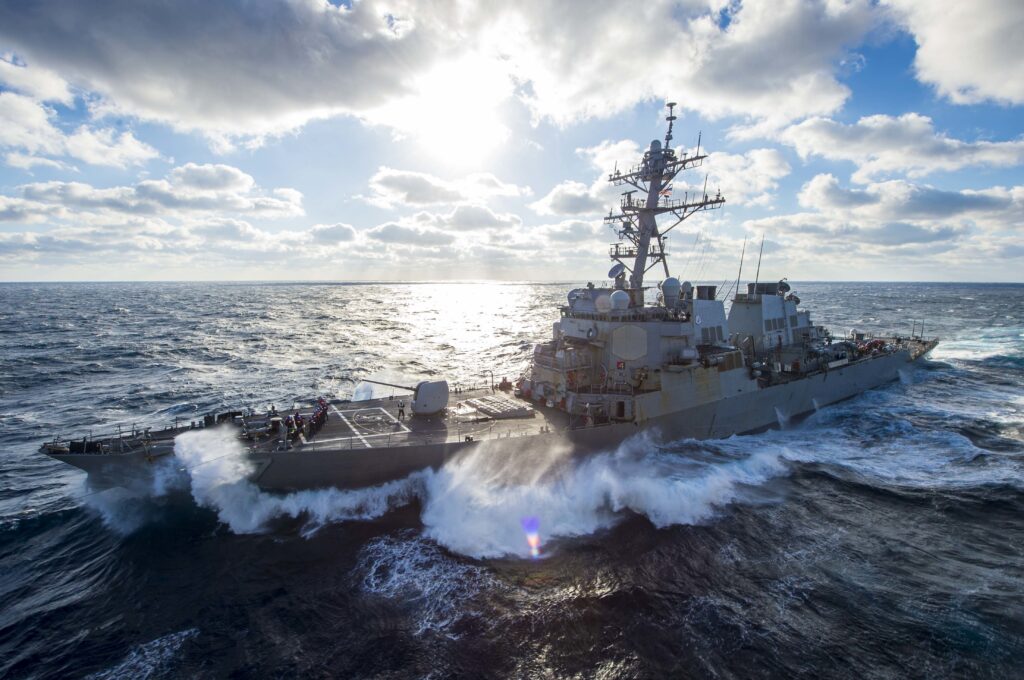
The Arleigh Burke-class guided-missile destroyer USS Mitscher (DDG-57) prepares to conduct a fueling-at-sea with the Nimitz-class aircraft carrier USS Dwight D. Eisenhower (CVN 69) in February 2021. U.S. NAVY / Mass Communication Specialist 3rd Class Cameron Pinske

NORFOLK, Va. — BAE Systems has received a $1.9 million contract from the U.S. Navy for the maintenance and modernization of the Arleigh Burke-class guided-missile destroyer USS Mitscher (DDG 57). The value of the competitively awarded contract could reach $101.2 million if all options are exercised. 

Under the docking selected restricted availability contract awarded, BAE Systems will dry-dock the ship, perform underwater hull preservation work, support the Navy’s efforts to upgrade the ship’s Aegis combat system and its command-and-control equipment and refurbish the living spaces for the ship’s 285 crewmembers. The work is expected to begin in March 2022 and to be completed in April 2023.  

“Our team looks forward to the preservation and upgrade work aboard USS Mitscher,” said Mike Bruneau, vice president and general manager of BAE Systems Norfolk Ship Repair. “With our subcontractor teammates and Navy personnel alongside, we will apply our experience with the DDG class to ensure this ship returns to the fleet mission-ready and fully capable to support our national security.”    

BAE Systems’ Norfolk shipyard is performing similar work aboard the guided-missile destroyer USS Stout (DDG 55).  

USS Mitscher is the second U.S. Navy ship named in honor of Adm. Marc Mitscher (1887-1947), who served as commander of the Fast Carrier Task Force 58 in the Pacific, the Navy’s main striking force during the latter half of World War II. The current ship was commissioned in December 1994.  


Leonardo DRS Taps Cari Ossenfort as VP/GM for its Naval Electronics Business

Cari Ossenfort, Leonardo DRS’ new senior vice president and general manager of Naval Electronics. LEONARDO DRS

ARLINGTON, Va. — Leonardo DRS Inc. has named Cari Ossenfort as the senior vice president and general manager of the company’s Naval Electronics business unit, responsible for the business by leading operations, programs, business strategy and future growth opportunities, the company announced Jan. 6.  

Ossenfort brings more than 20 years of experience in engineering, operations and leadership in the defense and commercial industries, including working on a range of programs for U.S. military and government agencies.  

Most recently, she was the Leonardo DRS corporate vice president of operational excellence and quality, responsible for the creation, evolution, growth and strategy for that program. In her time in the role, Ossenfort successfully developed and executed company-wide performance improvement initiatives across eight business units and the corporate office by addressing operational inefficiencies and driving standardization throughout the more than 6,500-person employee base. 

“We are excited to have someone of Cari’s caliber lead our Naval Electronics business,” said Bill Lynn, CEO of Leonardo DRS. “Her experience, foresight and leadership qualities will help chart a clear path forward to grow the business and support our important U.S. Navy customer in existing and future programs.”   

Before her role leading the Leonardo DRS operational excellence program, she was the vice president and general manager for the L3 Infrared Products group leading the infrared focal plane business in Dallas, Texas.   

Ossenfort is a trained engineer and has held multiple senior engineering, operations, and management roles in previous positions at Leonardo DRS, Raytheon, Texas Instruments and Avery Dennison. She received her engineering degree and master’s in business administration from Auburn University. 

The Leonardo DRS Naval Electronic business is a leader in naval computing infrastructure, network and data distribution and middleware enterprise services, as well as world-class advanced manufacturing and support capabilities of critical importance to the U.S. Navy and other military branches.   


Aegis Going Through Substantial Digital Transformation, Lockheed Martin Says

USS Wayne E. Meyer (DDG 108) arrives recently at Naval Surface Warfare Center, Port Hueneme Division with the help of a tug boat. The ship’s namesake is the late Rear Adm. Wayne Meyer, widely recognized as the Father of the Aegis Weapon System, considered a cornerstone of the military service. U.S. NAVY / Photo by Eric Parsons

ARLINGTON, Va. — The Aegis Combat System is going through substantial digital transformation as its processing speed is increased and more sensors and weapons are integrated with it, a Lockheed Martin official said. 

The Aegis Combat System’s “relevance to the fleet has never been greater,” said Jon Rambeau, Lockheed Martin’s vice president and general manager for Integrated Warfare Systems and Sensors, in an interview with Seapower

Rambeau, who formerly worked with the company’s Acoustic Rapid Capability Insertion programs to periodically and rapidly upgrade U.S. Navy submarine sensor capabilities through software refreshes, is now continuing the same concept with Aegis.   

The company is implementing automated test capabilities for Aegis. Rambeau cited the implementation of those on Baseline 10 version as “the most comprehensive evolution of Aegis we’ve ever undertaken. … So, we we’ve automated about 20,000 of our software test procedures as part of our Baseline 10 efforts to try to improve our efficiency and speed of capability to the fleet.” 

He said the company is “working to implement model-based engineering processes across the board with the goal of getting the same quality product we’ve always delivered but getting that to the fleet much more rapidly. So, we’re focused on speed of capability to make sure we’re keeping the fleet relevant.” 

In a broader perspective, Rambeau said the company is working to focus its culture on creating an environment where government, small business and academia can integrate efforts with the company to work seamlessly across the Aegis enterprise. He credited the work of the Forge, a Navy software development “ecosystem” activity designed to field advanced capability more rapidly, and said the company is working to be positioned to receive the capabilities developed by the Forge “and make sure we’re bring the systems engineering rigor and the collaboration to support the responsible integration of those capabilities into the Aegis baseline.”

Rambeau also said the company is working to keep Aegis relevant by integrating future hard-kill and soft-kill capabilities, including that of reducing the cost per kill of systems to defeat ballistic and hypersonic missiles. He cited the company’s HELIOS laser weapon system, which is the first laser weapon system integrated with Aegis and is going through its first installation on the Arleigh Burke-class guided missile destroyer USS Preble.   


Navy Stands Up High-Powered Microwave Division to Refocus Directed Energy Efforts

Nhan Bhui, a statistician at Naval Surface Warfare Center Dahlgren Division, works on a boat motor. Using high powered microwaves, Bhui and scientist Thomas Salvato are testing vessel stopping efforts. NAVAL SEA SYSTEMS COMMAND

DAHLGREN, Va. — Under the directed energy umbrella, there are two significant areas of interest: high-energy laser and high-power microwave weapon systems, or HPM. At Naval Surface Warfare Center Dahlgren Division, the growing demand from the operational community for novel directed energy weapon systems resulted in a corresponding growth in NSWCDD’s technical capability in this area, the center said Jan. 5.  

During a recent reorganization of the Integrated Engagement Systems Department, leadership looked at the two directed energy areas historically maintained in a single division and made the strategic decision to split them into respective divisions, recognizing the need for continued growth and development in both areas that have similar technical roots. 

“HPM and lasers work in parallel in a lot of areas,” said NSWCDD HPM Weapon Systems Division Head Kevin Cogley, who spent several years working with high energy lasers before making the move to lead the new division. 

“One thing that is unique in the HPM arena is that we can have graduated effects. In HPM, we can have a range of effects on target — from basically jamming a device to physically destroying electrical systems,” he explained. “HPM is very different than many other weapon systems because in many cases you may not see any outward physical effects during an engagement but will see nearly-instant results on the target’s operational performance. Using HPM, we can give our Sailors a capability that could be a desirable alternative to firing a kinetic weapon.” 

Both high energy lasers and HPM projects require significant development costs, but “the cost per shot is pennies” instead of million-dollar weapons, according to Cogley. “When you look at a historically kinetic weapon system, DE brings a wealth of benefits in terms of magazine depth. We can keep shooting as long as there is power.” 

The added “magazine depth” that directed energy can provide creates a strong argument for its use, compared to kinetic technologies. 

“The Navy has strategic objectives to provide effective and affordable ship defense solutions that address growing threats to our ability to project power and protect freedom of the seas,” explained Navy Senior Technologist for DE Dr. Frank Peterkin. “The Dahlgren mission to deliver warfare systems to the fleet includes bringing forward new technical solutions like DE in general and HPM specifically, offering great promise to meet these goals.” 

Over the last five or six years, DE has been a high-level thrust for the Office of the Secretary of Defense, with funding approximately doubling for research and development efforts. 

The technical split of directed energy within the department, separating high-energy laser systems and HPMs, sets NSWCDD ahead of the curve for HPM testing. According to NSWCDD Deputy Director of the Research Institute for DE Matt McQuage, Dahlgren is one of two places in the country with a specific HPM division, acting alongside the Air Force Research Lab in New Mexico. 

The two centers collaborate on the largest HPM projects in the country, offense applications, counter unmanned aerial systems and integrated air defense topics. The talents and expertise of the members of the Dahlgren HPM Weapon Systems Division results in the development of game-changing weapon system technologies that provides the warfighter with a unique capability to execute their mission. 


Israel to Purchase CH-53K King Stallion Helicopters

An artist’s rendering of a CH-53K helicopter for the Israeli air force. SIKORSKY

NAVAL AIR STATION PATUXENT RIVER, Md. — The Israeli air force signed a letter of acceptance with the United States government on Dec. 30 to purchase the CH-53K King Stallion heavy lift helicopter, Naval Air Systems Command said Jan. 4. 

“We’re happy the IAF recognizes the unrivaled capabilities and performance of the K and have chosen to move forward with us,” said Col. Jack Perrin, program manager, heavy lift helicopter program office (PMA-261). “Welcome to the CH-53K family.” 

The CH-53K is the most powerful helicopter ever built by the U.S. government and will replace the IAF’s current fleet of modified CH-53D Yasur helicopters, which have been flying for over 50 years.   

The signed agreement states first deliveries of the aircraft are planned for 2025. In addition to the aircraft, the agreement includes T408-GE-400 engines; facilities study, design and construction; spare and repair parts; support and test equipment; publications and technical documentation; aircrew and maintenance training; U.S. government and contractor engineering, technical and logistics support services; and other related elements of logistics and program support. 

As the long-range logistic support backbone for the U.S. Marine Corps, the CH-53K will support Israeli special operations programs first, as well as provide the Israeli defense forces with a platform that has the speed, safety and gross weight capability to support all of its missions, including troop and cargo transport, and search and rescue. 

The decision wraps up a multi-year negotiation process. In the end, the King Stallion offered more capabilities and the latest technology compared to the competition. During this period, PMA-261 hosted multiple visits by IAF leadership as they compared aircraft, including orientation flights and flight evaluations with IAF pilots and acquisitions professionals. 

The CH-53K King Stallion program is in the initial operational test and evaluation stage and is on track to achieve initial operational capability in early 2022, with first fleet deployment planned for fiscal 2024. 


Fairbanks Morse Defense Acquires Federal Equipment Co.

BELOIT, Wis. — Fairbanks Morse Defense, a portfolio company of Arcline Investment Management, has acquired Federal Equipment Co., Fairbanks said Jan. 5. 

The acquisition significantly expands FMD’s product capabilities and services for shipyard, defense, and industrial customers, with emphasis on its support for and offerings to the U.S. nuclear navy. 

The transaction includes FEC Military, a global leader in designing and manufacturing mission-critical components and systems for the U.S. Navy and U.S. Coast Guard, including its advanced cargo elevators, engineered doors and specialized material handling equipment. The transaction also includes FEC’s commercial business, which delivers handling solutions to manufacturing customers outside the defense market. 

“Fairbanks Morse Defense is committed to the values that define us as a leading defense contractor. The capabilities, experience, and quality reputation that we’re acquiring with FEC reinforce this commitment and solidify our position as a proven, single-source provider to our naval customers,” said FMD CEO George Whittier. “Both FEC and Fairbanks Morse Defense have highly experienced teams who understand the critical role that our customers play in protecting the nation, and they are all dedicated to delivering the highest quality service in support of that mission. Combining our knowledge and capabilities makes us a powerful asset for the defense industry.”  

The FEC acquisition adds extensive capabilities to FMD, solidifying Fairbanks Morse Defense’s position as an integrated defense contractor and turnkey solutions provider to the Navy and Coast Guard. In recent years, FMD has completed multiple acquisitions to better serve defense customers, including its acquisitions of Hunt Valve Company, Ward Leonard, and Welin Lambie.   

Founded in Ohio in 1982, FEC has approximately 145 employees. The company is headquartered on its campus near Cincinnati, Ohio, which includes two facilities totaling 100,000 square feet. In addition, FEC has begun construction on a 50,000 square foot facility, which will further increase its manufacturing capacity and capabilities. This building is expected to open in mid-2022. 


BAE Systems Awarded $137 Million for Lifecycle Sustainment of U.S. Navy C5ISR systems

MCLEAN, Va. — BAE Systems has been awarded a five-year contract, worth up to $137 million, to provide lifecycle management and sustainment of the U.S. Navy’s command, control, communications, computers, combat systems, intelligence, surveillance, and reconnaissance systems, the company said Jan. 5. 

Under this contract, awarded in November, the company will also train military personnel on how to operate the C5ISR systems. 

“Our deep C5ISR sustainment experience, skilled workforce, and in-place resources positioned us well to recompete for this important work,” said Lisa Hand, vice president and general manager of BAE Systems Integrated Defense Solutions. “With our deep mission understanding and dedicated experts, we continue to help our military customers adapt and maintain a tactical edge. Warfighters will benefit from high system availability and increased capability to solve complex problems.” 

C5ISR systems are built, integrated, and networked to improve military operators’ and decision makers’ situational awareness. Integrated C5ISR systems are then fielded to military installations across the U.S. and abroad, where personnel are trained on how to leverage the systems’ full capabilities. As part of this contract, BAE Systems will provide post-fielding support and sustainment, including implementing various technical upgrades and cyber hardening; in-service engineering; and logistical support to end-users who are on-site at U.S. government facilities.