Austal Finalizes Deal for San Diego Waterfront Ship Repair Facility

The Independence-variant littoral combat ships USS Gabrielle Giffords (LCS 10), bottom, and USS Montgomery (LCS 8) operate in the South China Sea. Shipbuilder Austal USA has finalized a deal to establish a repair facility in the Port of San Diego, including for littoral combat ships. U.S. NAVY / Mass Communication Specialist 2nd Class Chris Roys

SAN DIEGO — Austal USA has finalized a deal to establish a repair facility in the Port of San Diego, the company said Dec. 15.  

The deal includes a long-term lease of a waterfront site in National City adjacent to Naval Base San Diego. Austal USA’s 15-acre site will focus on ship repair for U.S. Navy, Military Sealift Command and U.S. Coast Guard ships. The site will be centered on a newly built dry dock designed to efficiently dock small surface combatants and similar sized ships.    

“This agreement marks a major milestone in the continued growth of Austal USA’s services business. When the dry dock is delivered, we will be able to provide the Navy a highly capable full-service repair facility located in the homeport of San Diego,” Austal USA President Rusty Murdaugh said. “We know how valuable this additional repair facility is to our customers, the Navy, Coast Guard, and Military Sealift Command, and we are ready to meet the growing demand. We are also looking forward to working closely with the National City community as we expand our presence in the area.” 

Austal USA will establish a full-service ship repair capability providing maintenance and modernization for small surface combatants, unmanned and autonomous vessels, and other ships. The site will include a dry dock optimized to execute availabilities on littoral combat ships and other small surface combatants. Services will include technical and material support, topside work, and drydocking availabilities. The new facility will enable more availabilities to be completed in their home port of San Diego reducing the strain on the fleet and Sailors.   

This lease agreement follows a string of maintenance contract awards for Austal USA. In August, the Navy awarded Austal SEC East and West contracts positioning the company to service all Littoral Combat Ships. In November, Austal received a contract to provide services and support for LCS deployed to the Western Pacific and Indian Ocean. These contracts are the result of the company’s significant investment in and continued focus on growing its service business and centers in Mobile, San Diego and Singapore. 


Fairbanks Morse Defense Acquires Fluid Filtration Specialists LLC

BELOIT, Wis. — Fairbanks Morse Defense, a portfolio company of Arcline Investment Management, has acquired Fluid Filtration Specialists LLC, a leader in flushing and filtration services for marine vessels and other facilities that operate large, highly sophisticated engines and systems. 

The acquisition of FFS further expands FMD’s capabilities and service solutions for shipyard, defense, and commercial marine customers, including the U.S. Navy, the U.S. Coast Guard and the Canadian Coast Guard.  

“Fluid Filtration Specialists has a stellar reputation for doing quality work correctly and on time, which makes it a natural fit for our turnkey service offerings,” said George Whittier, CEO of FMD. “Our growing shipbuilding solutions are operating on the military’s most advanced naval vessels and adding services like those provided by FFS helps us serve as a single, proven partner who knows those ships from stem to stern. This allows us to respond faster with just the right parts, services, and maintenance solutions.”   

Founded by engineering experts, FFS focuses on proven fluid separation and cleaning systems that were specifically designed to address the maintenance and reliability concerns of heavy equipment used in critical operational systems, often under challenging conditions. 

“Quality care of high-performance mechanical systems creates opportunities to lower costs, reduce downtime, and prolong the reliability and lifespan of valuable assets,” said Shane Sims, owner of FFS. “Becoming part of Fairbanks Morse Defense enables us to leverage its robust service center network to expand our reach among defense customers that so many communities depend on.” 

Over the past year, FMD has expanded its capabilities, inventory, and geographic presence with several key acquisitions to become a single-source provider of equipment and services to the marine defense industry. In 2021, FMD acquired Welin Lambie, a military and commercial davit manufacturer; Hunt Valve, a specialty naval valve manufacturer; and in 2020, FMD acquired Ward Leonard, a motor and control solutions provider. FMD also acquired diesel engine repair and rebuilding service provider BRECO International in November 2020. 


Coast Guard, Partners Stop 3 Human Smuggling Attempts, Detain 100 People

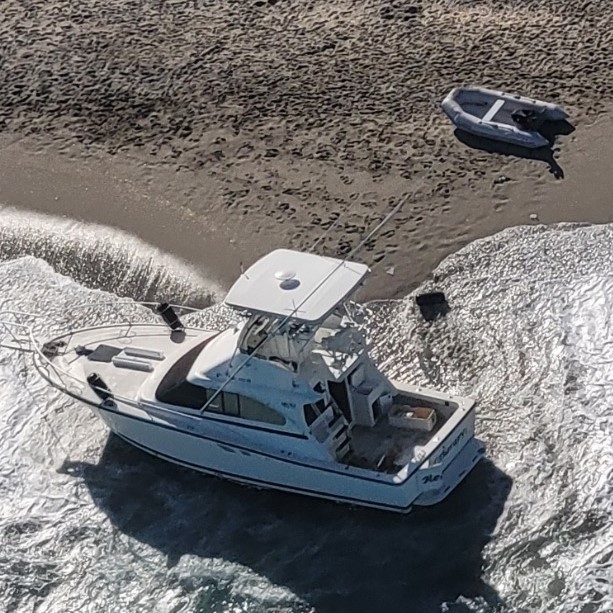
An abandoned vessel on Juno Beach, Florida, Dec. 12. U.S. Border Patrol officers apprehended 26 people following a maritime smuggling event. U.S. BORDER PATROL

MIAMI — Coast Guard, U.S Customs and Border Protection Air and Marine Operations and U.S. Border Patrol officers stopped three human smuggling attempts and detained 100 people between Dec. 12 and Dec. 14, the Coast Guard 7th District said in a release.

Coast Guard and CBP AMO officers detained 43 people at sea, and one suspected smuggler was transferred to Homeland Security Investigation officers for further investigation, Sunday, off the coast of Jupiter, Florida. Additionally, 26 people were apprehended by Border Patrol officers after a maritime smuggling event landed in the vicinity of Ocean Blvd.

Coast Guard and CBP AMO officers detained 28 people of various nationalities at sea, and the case is under investigation by Homeland Security Investigation officers, Dec. 14, off Pompano’s coast.

Additionally, two landings happened off Pompano Beach, Dec. 12 and Dec. 14, and approximately 26 people were not apprehended.

“Human smuggling is dangerous and illegal,” said Rear Adm. Brendan McPherson, commander of Coast Guard 7th District and director of Homeland Security Task Force-Southeast. “Smugglers exploit vulnerable people for profit with no regard for their safety. We work hard, along with our dedicated local law enforcement and fellow DHS partners, to protect all lives on and offshore.”

“Air and Marine Operations has the duty to patrol the waters around the Florida Straits, and along with our partners, we work every day to defeat the efforts of smugglers who have little regard for the human suffering they cause,” said Gerald Burgess, spokesman for Air and Marine Operations, Southeast Region. “Together with DHS partners, we work to keep the waters safe and secure.”

Those intercepted at sea are transferred or repatriated to their country of origin.

Homeland Security Task Force-Southeast is a standing task force that provides the organizational framework to detect a mass migration event or other contingency operation, facilitate the assignment of roles to participating agencies, and establishes processes for intra-departmental and inter-departmental collaboration. Partners within HSTF-SE routinely conduct a broad range of readiness activities, including periodic surge operations and exercises.


Berger: Pacific Stand-In Forces Will Rely on Allies, Joint Force Sensors to Avoid Another Wake Island

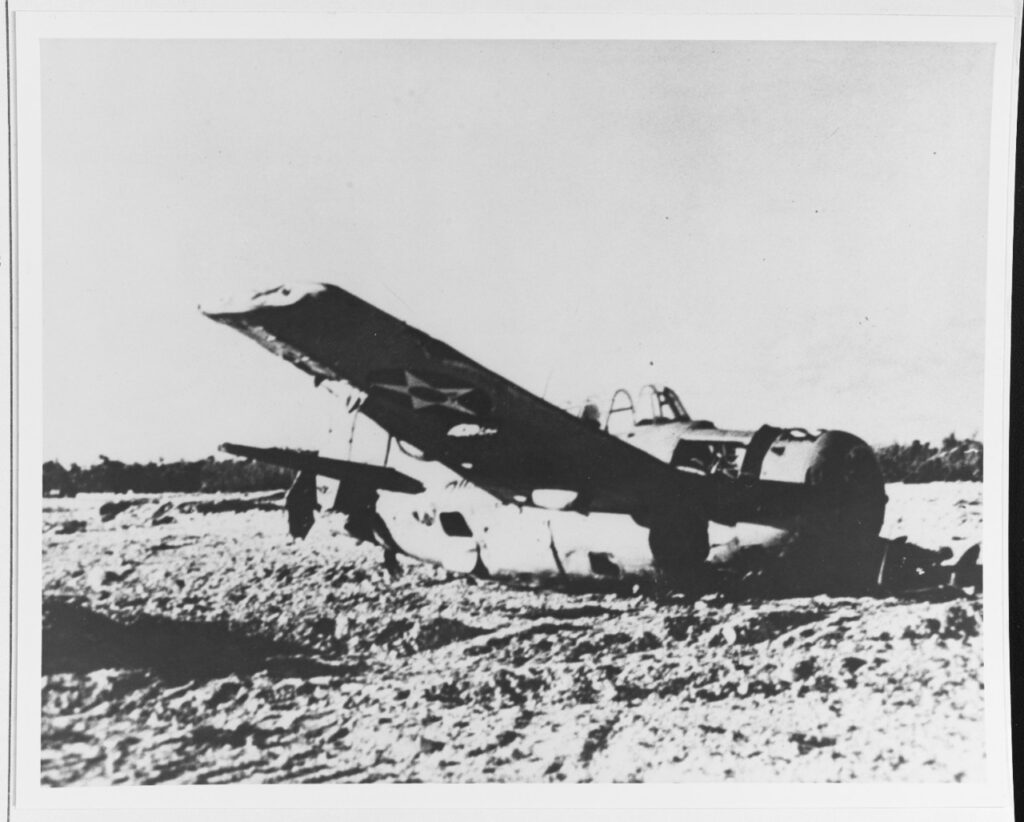
Wreckage of a U.S. Marine Corps F4F-3, Photographed on Wake following its capture by the Japanese on Dec. 23, 1941. NATIONAL ARCHIVES

ARLINGTON, Va. — Marine Corps Stand-In Forces are needed in the contested sea lanes and littorals of the Western Pacific as the leading edge of a maritime defense-in-depth that can disrupt the plans of potential adversaries, according to the Corps’ commandant.

The Marine Corps recently released A Concept for Stand-in Forces, which maintains that small but lethal, resilient, forward-postured forces, operating in contested areas — capable of transitioning rapidly from competition to crisis to conflict and back again — can extend the reach of the fleet and joint force.

Depending solely on a stand-off force of large vessels 1,000 miles away from China “works right into their strategy,” Gen. David Berger told a Dec. 14 virtual “fireside chat” with the Center for New American Security, a Washington think tank. “They’ll be exactly where they want to be five years from now.”

The People’s Liberation Army Navy likes to build a bubble or shield within a contested area, Berger said, and “push it way, way out and then operate without being seen. That’s perfect for them. That’s what happened in the South China Sea.”

That’s why a stand-in force of small, highly mobile Marine expeditionary units, dispersed in contested areas by numerous smaller, cheaper, low signature surface vessels is necessary, Berger said. “How are you going to sense what’s in front of us every day? How are we going to assure  our partners and allies? We have to be there, up close and forward”. The concept paper said Stand-In Forces would be supplied by expeditionary advanced bases.

Berger was asked how such forward-deployed units, even armed with long-range precision fires, could avoid a fate like the advanced naval and air base at Wake Island, which fell to the Japanese 80 years ago.

“Wake Island only happened because we couldn’t see it coming early enough. We have to be forward as a Stand-In Force. We have to be the eyes and ears of the joint force,” Berger said.

Wake Island, an uninhabited atoll in the Central Pacific, more than 2,000 miles west of Hawaii, was home to a half completed aircraft and submarine base in early December 1941, as war with Japan threatened. Wake was defended by an understrength battalion of 449 Marines, a handful of Navy and Army personnel and a dozen Marine Corps Grumman F4F Wildcats, all but four of them destroyed in a Japanese air raid just hours after Pearl Harbor was attacked. The base had no radar equipment.

Marine shore batteries and the remaining Wildcats repulsed a Japanese naval assault on Dec. 11. Two Japanese destroyers and a submarine were sunk, 21 aircraft shot down and several other Japanese vessels were damaged. However, Wake Island’s defenders were overrun by a second naval assault and surrendered on Dec. 23, 1941. Before the surrender, a Navy task force sent as relief mission to Wake was recalled under still controversial circumstances.

“The chance of a 21st century Wake Island goes up if we do not have the ability to do sensing forward, the ability to strip away an adversary’s eyes and ears,” Berger said, calling for reconnaissance measures that would also counter Chinese surveillance efforts. “The balance of sensors has to be from the satellite all the way down to terrestrial. All of it, so that nothing happens in front of us without us knowing it, without us understanding it.”

“The Stand-In Force that we’re working on isn’t just Marines,” the commandant said. It could also include the Coast Guard and Special Operations, he said. “It could be the subsurface fleet, allies and partners — all of them forward — and Wake Island doesn’t happen.”


Navy Down-Select for Compact Rapid Attack Weapon Expected in February

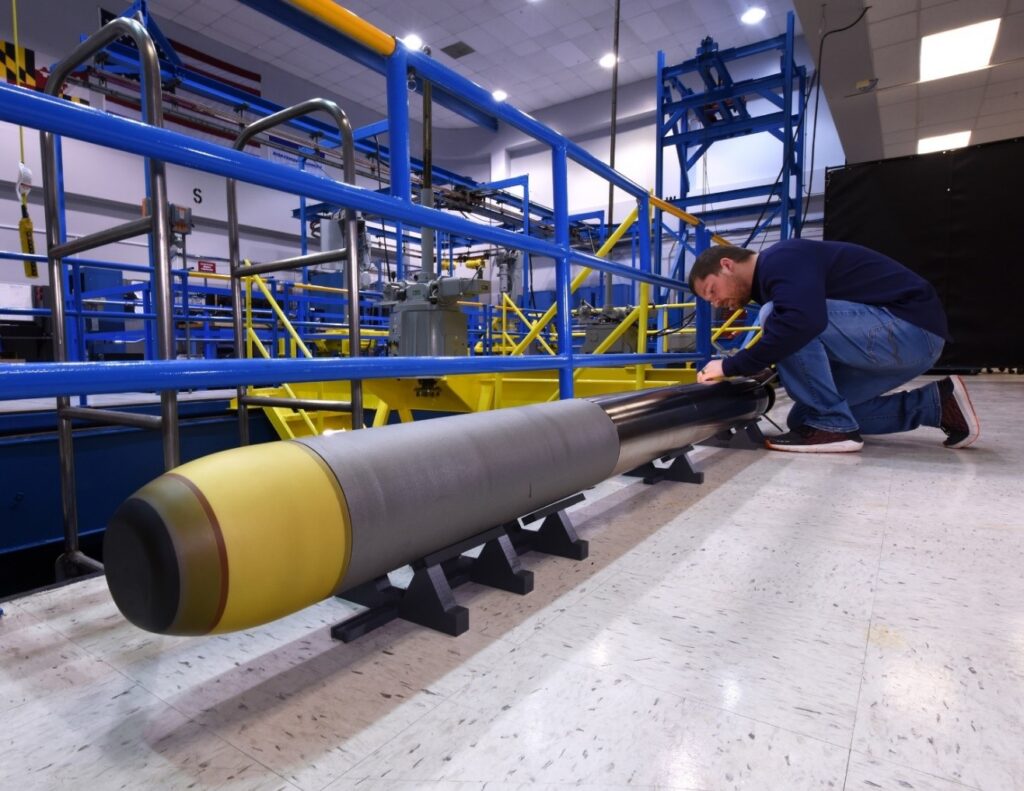
The U.S. Navy is expected to soon down-select for the Compact Rapid Attack Weapon, an offensive version of the Very Light-Weight Torpedo, shown here. NORTHROP GRUMMAN

ARLINGTON, Va. — The Navy’s down-select of a company to manufacture the Compact Rapid Attack Weapon is expected in February 2022, a defense industry official said. 

David Portner, Northrop Grumman’s senior program manager for undersea weapons, said during a Dec. 15 interview with Seapower he expects the contract for building the CRAW will be awarded in March 2022 after the down-select decision. Northrop Grumman in competing for the production contract.  

The CRAW is an offensive version of the Very Lightweight Torpedo developed by Penn State Applied Physics Lab. The defensive version is known as the Counter Anti-torpedo Torpedo, which differs from the CRAW only in its software. 

Northrop Grumman submitted its response to the October request for proposals at the end of November. At issue is the selection of the company with the best readiness and capability to build the CRAW in production quantities, taking the non-production-designed VLWT prototype — designed by Penn State Applied Physics Lab — into a production design and developing it as an All-Up Round CRAW suitable for manufacturing. Other Transactional Authority will be used to deploy the torpedo to the fleet.  

The nine-foot-long VLWT is one third of the size of the Mk54 — the Navy’s most advanced light-weight torpedo — and weighs just over 200 pounds, compared with the 608-pound Mk54. With this weight advantage, a platform can carry more torpedoes or carry the same number at longer ranges and give the platform more endurance. The VLWT could be carried by surface, airborne, and undersea platforms, manned and unmanned.  

Portner said in an earlier interview the VLWT could be carried by such anti-submarine aircraft as P-8A maritime patrol aircraft, MH-60R helicopters and MQ-8 Fire Scout unmanned aerial vehicles. During an Advanced Naval Technology Exercise in 2018, Northrop Grumman demonstrated the deployment of a VLWT from a surrogate helicopter simulating a Fire Scout.  

The torpedo is fitted with a parachute to reduce the shock of impact with the water. The VLWT also could be fitted with a glide wing kit similar to the one on Boeing’s HAAWC (High-Altitude Anti-submarine Weapon Concept), which is in development to extend the launch range and altitude as well as precision guidance for the Mk54 torpedo.  

Portner said the VLWT also could be deployed from a vessel such as a littoral combat ship by way of an unmanned surface vehicle or unmanned underwater vehicle. He said the light weight of the CRAW, compared with the MK54, would enable a platform to carry more weapons the same distance or the same number of weapons to a greater range or endurance.  

If selected, Northrop Grumman would build the CRAW components in Salt Lake City, Utah, with a key supplier in Colorado. Final integration would be accomplished in Annapolis. Maryland, Portner said.  


Navy Cuts Ribbon on Unmanned Vehicle Testing Facilities at Port Hueneme

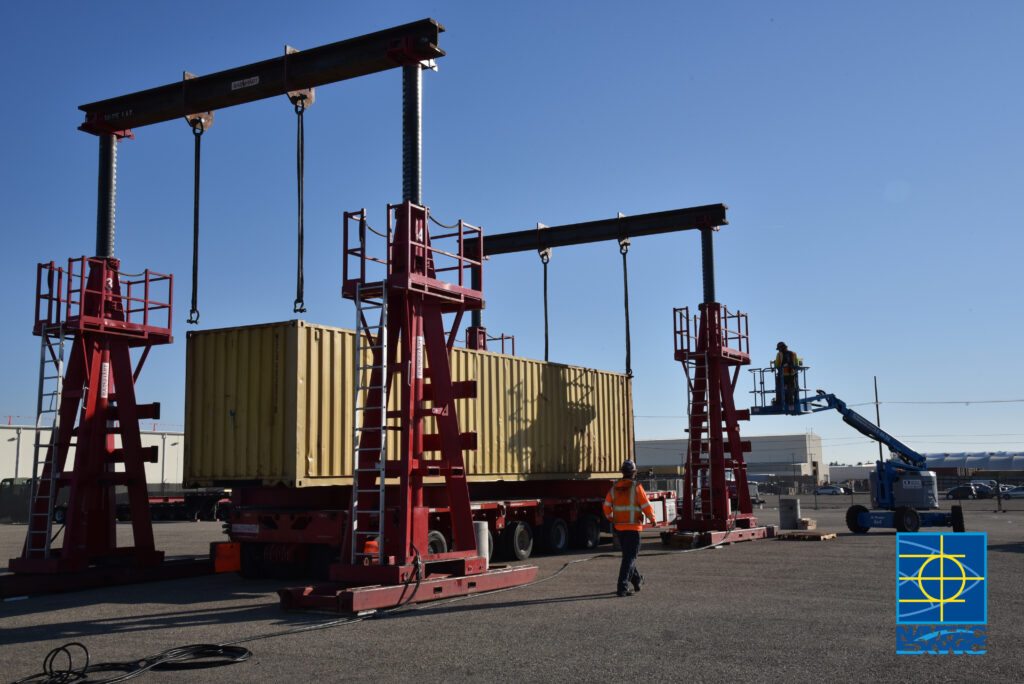
Teams at Naval Facilities Engineering and Expeditionary Warfare Center develop and execute a technical solution and demonstration for the assembly, transportation and disassembly of an 85-foot-long, 90-ton extra-large unmanned undersea vehicle at Naval Base Ventura County in Port Hueneme, California, in April 2021. U.S. NAVY / Palmer Pinckney II

NAVAL BASE VENTURA COUNTY, Calif. — The Navy conducted a joint ground-breaking and ribbon-cutting ceremony Dec. 8 for the first purpose-built and co-located facilities for unmanned maritime vehicle testing, Program Executive Office Unmanned and Small Combatants Public Affairs said in a Dec. 14 release. 

Located on Naval Surface Warfare Center Port Hueneme Division, at Naval Base Ventura County, the facilities will accommodate testing, evaluation, and technology demonstration for Extra-Large Unmanned Undersea Vehicle and Unmanned Surface Vessel prototypes. 

“These facilities will be the focal point of Navy learning and experimentation on the capabilities, operations and sustainment of Unmanned Maritime Vehicle prototypes to inform future programs,” said Capt. Pete Small, Program Manager, Unmanned Maritime Systems (PMS 406). 

PMS 406, within the Program Executive Office Unmanned and Small Combatants (PEO USC), oversees the XLUUV, Large USV, Medium USV programs and their advanced technology capabilities. 

The ribbon-cutting recognized completion of modifications to the existing Littoral Combat Ship Mission Package Support Facility (Building 1392) that will house the XLUUV prototypes, and personnel who will perform test and evaluation and training on the vehicles, which are in fabrication under a contract with Boeing. The ground-breaking recognized the start of construction of the modular administrative building for the newly established Unmanned Surface Vessel Division One and Unmanned Undersea Vehicles Squadron One personnel who will operate and maintain the unmanned vehicle prototypes. 

In addition to five Orca XLUUV prototypes, the NBVC Port Hueneme site will eventually accommodate one MUSV, two Sea Hunter USV and four Overlord USV prototypes. NBVC is ideally suited for these facilities with ready access to open-water instrumented ranges, multimodal expeditionary transportation capabilities, proximity to Navy and industry hubs, and synergies with other tenant commands. 


BAE Systems to Advance F-35 Electronic Warfare Capabilities

An F-35C Lightning II carrier variant joint strike fighter launches from the flight deck of the aircraft carrier USS Nimitz (CVN 68). U.S. NAVY / Mass Communication Specialist Seaman Shauna C. Sowersby

NASHUA, N.H. — BAE Systems has received a $493 million contract modification from Lockheed Martin to significantly upgrade and modernize the electronic warfare system for the F-35 Lightning II, enabling the fifth-generation fighter to quickly detect and address evolving electromagnetic threats in contested battlespaces, BAE Systems said Dec. 15. 

Under the contract, BAE Systems will deliver enhanced and highly capable core hardware for the F-35’s high-performance EW mission system, known as AN/ASQ-239, and will provide engineering support services and test infrastructure. The upgraded system will improve superior situational awareness and electromagnetic attack and countermeasure capabilities with new sensors and more powerful signal processing. 

“The capabilities we will deliver in this contract are foundational and will be leveraged to other platforms to ensure all warfighters have the most advanced EW capability at the ready,” said Lisa Aucoin, vice president of F-35 Solutions at BAE Systems. “The highly adaptable mission system will allow our warfighters to outpace evolving threats and defend democracy around the globe.” 

The enhanced electronic warfare system’s robust design will enable rapid future upgrades, aligning with the U.S. Department of Defense’s strategy for continuous capability development. The system’s modular architecture will also allow for efficient hardware upgrades that reduce lifecycle and retrofit costs, and support faster software updates across the global F-35 fleet. The system also includes the Non-Intrusive Electronic Warfare Test Solution fault isolation and diagnostics capability, which enables precise troubleshooting that further reduces maintenance costs. 

BAE Systems is a major global partner to Lockheed Martin on the F-35 program. In addition to delivering world-class EW systems, the company also manufactures the aft fuselage, active inceptor control system, and vehicle management computer for each F-35 at state-of-the-art manufacturing facilities in the United Kingdom, Australia, and U.S. The company also provides sustainability, technical support, and training services to keep the F-35s mission-ready. 


Reliability Most Challenging Aspect of Large, Medium USV Designs

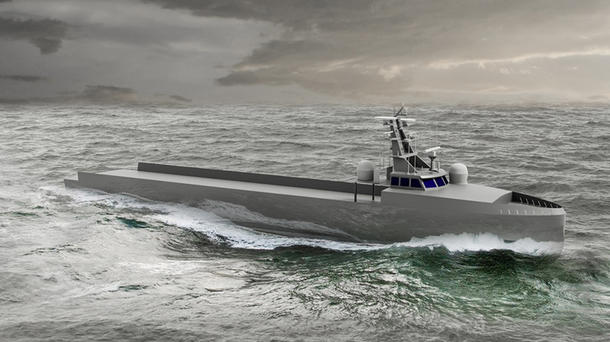
L3Harris’ concept of a medium unmanned surface vessel. L3HARRIS

ARLINGTON, Va. — The most challenging aspect of designing large unmanned surface vessels for the Navy is building reliability of its systems, a senior defense industry official said. 

“We can solve the autonomy challenge,” said Kevin Knowles, senior manager of strategic growth and USV team lead for Northrop Grumman Mission Systems, in a Dec. 14 interview with Seapower, discussing the company’s participation in the concept designs for the Navy’s Large USV and Medium USV. “How do we improve reliability, to put a ship to sea without a crew.” 

Knowles noted an Arleigh Burke-class guided missile destroyer has a crew of about 300, with a third of those devoted to keeping the ship running. Without a crew preforming the routine preventative maintenance and repairs, reliability of systems in a USV becomes even more paramount, he said. Even when optionally manned, most of the personnel on board would oversee force protection.  

The Navy is planning on adding to its fleet the LUSV and MUSV. The LUSV essentially will be a missile shooter, with banks of vertical launch systems. The smaller MUSV is intended for a reconnaissance and surveillance role, with an array of sensors, many of them in containers that can be switched out. 

Northrop Grumman is teamed with two of the design teams awarded concept design contracts for the LUSV. Not a shipbuilder, its contributions would be most notable in mission systems and payloads. The team lead primes are Austal USA, Huntington Ingalls, Lockheed Martin, Fincantieri, Bollinger and Gibbs & Cox.  

Knowles said a second challenge is the deliberate pace at which the Navy is proceeding with the programs, keeping the defense industry pressed to keep up. He noted some in Congress think the Navy is moving too fast, encouraging it to prove the technology before production. 

He said the Navy will use a land-based test site at the Naval Surface Warfare Center Philadelphia Division to integrate and test the propulsion and other systems planned for the LUSV. 

Developments in aviation also are being factored in as solutions to design challenges. Knowles said components of systems developed for the F-35 Lightning II strike fighter can be adapted to the USVs, offering the advantages of light weight and low energy usage. 

The LUSV and MUSV likely will emerge with a common control system, he said, possible with many aspects of the Common Control System in work for the Navy’s unmanned aerial systems. 

Another challenge for LUSVs and MUSVs is repair at sea. Such concepts as fly-away teams dispatched to the vessel could be considered.  

Knowles praised the Navy’s program office, PMS-406, for keeping the prime contractors informed with the latest data and requirements needed for their designs. 


MIND Technology to Collaborate with Navy on Mine-Hunting Sonars Research

THE WOODLANDS, Texas — MIND Technology Inc. has entered into a cooperative research and development agreement with the U.S. Navy’s Naval Surface Warfare Center, Panama City Division, the company said Dec 13. 

The CRADA, “Advanced Mine Finding,” will allow scientists and engineers from MIND and the U.S. Navy to collaborate on optimizing the next generation of mine-hunting sonar systems to ensure that they fit the needs of the warfighter. 

“Through our subsidiary, Klein Marine Systems, MIND has a long history of supporting the US Navy. I’m thrilled that this CRADA will allow us to leverage the expertise of the scientists and engineers at NSWC PCD to provide innovative solutions to the warfighter, now and into the future,” said Andy Meecham, MIND’s chief technology officer. “This agreement demonstrates our corporate focus on innovation and new technology, which has delivered game-changing capabilities such as our unique full-swath MA-X sonars, will continue to define the gold standard in underwater sensing.” 

MIND Technology Inc. provides technology to the oceanographic, hydrographic, defense, seismic and security industries. Headquartered in The Woodlands, Texas, MIND has a global presence with key operating locations in the United States, Singapore, Malaysia and the United Kingdom. Its Seamap and Klein units design, manufacture and sell specialized, high performance, marine sonar and seismic equipment.   


President Biden Nominates Erik Raven for Under SECNAV

WASHINGTON — President Joe Biden announced his intent to nominate Erik K. Raven for undersecretary of the Navy, the White House said Dec. 13. 

Erik K. Raven is the majority clerk of the Senate Defense Appropriations Subcommittee, where he oversees more than $700 billion of annual spending by the Department of Defense and the intelligence community. Prior to joining the Appropriations Committee in 2007, he served as national security adviser and legislative director to Senator Robert C. Byrd, fellow to Senator Ted Kennedy, in several positions for Senator Dianne Feinstein, and as an English teacher in China. 

Raven holds associate of arts degrees from the College of Marin, a bachelor of arts with honors and distinction in International Relations from Connecticut College and a master of science with merit in international history from the London School of Economics and Political Science. He resides with his family in Washington, D.C.