Cutter Alex Haley Returns to Kodiak from Bering Sea Patrol
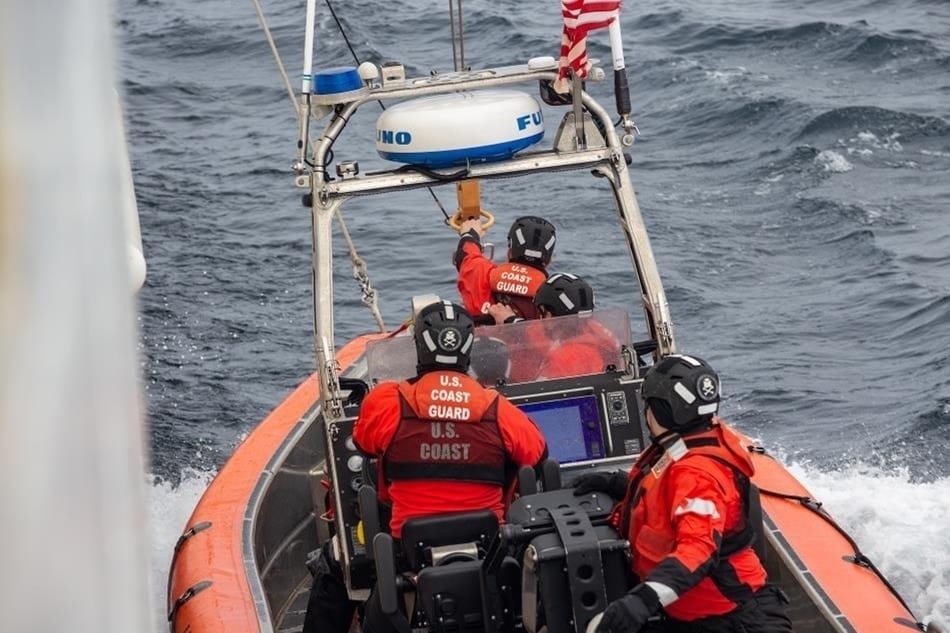
Coast Guard Cutter Alex Haley boat crew members prepare to disconnect from the forward-davit connection during rescue-and-assistance training in the Bering Sea, May 28, 2021. Small boats deployed from Coast Guard cutters are used in a variety of missions including law enforcement and search and rescue. U.S. COAST GUARD
KODIAK, Alaska —The crew of the Coast Guard Cutter Alex Haley returned to homeport on Tuesday, June 29 following a 52-day Bering Sea patrol, the Coast Guard 17th District said in a July 2 release.
While deployed, the crew of the Alex Haley provided search and rescue capability to the fisheries in the Bering Sea. Their embarked MH-65 helicopter crew from Air Station Kodiak conducted a search and rescue mission in the coastal town of Akutan. The aircrew transported a severely injured resident to a higher level of medical care.
The crew also maintained a law enforcement presence throughout the Aleutian chain. They conducted 17 law enforcement boardings, ensured compliance with maritime laws and regulations, and protected the U.S. Exclusive Economic Zone by patrolling the maritime boundary line to prevent the illegal harvesting of U.S. fish stocks.
“Assuming the duties as commanding officer of Alex Haley during a patrol afforded me the opportunity to learn a great deal about the ship and its crew,” said Cmdr. Brian Whisler commanding officer of the Alex Haley. “While such a significant transition can prove challenging, the crew continually maintained impressive work ethic and professionalism in the execution of our primary missions. Their dedication to the people and communities we serve proves Alex Haley crew members is a vital asset in the Bering Sea region.”
The Alex Haley is a 282-foot medium-endurance cutter that has been homeported in Kodiak since 1999. The crew routinely operate throughout the Bering Sea, Gulf of Alaska, and Pacific Ocean. The cutter’s ability to operate in extreme weather conditions provides the mission flexibility necessary to perform search and rescue, fisheries law enforcement, and vessel safety inspections across Alaska.
USS Donald Cook Concludes Forward Deployment to U.S. 6th Fleet
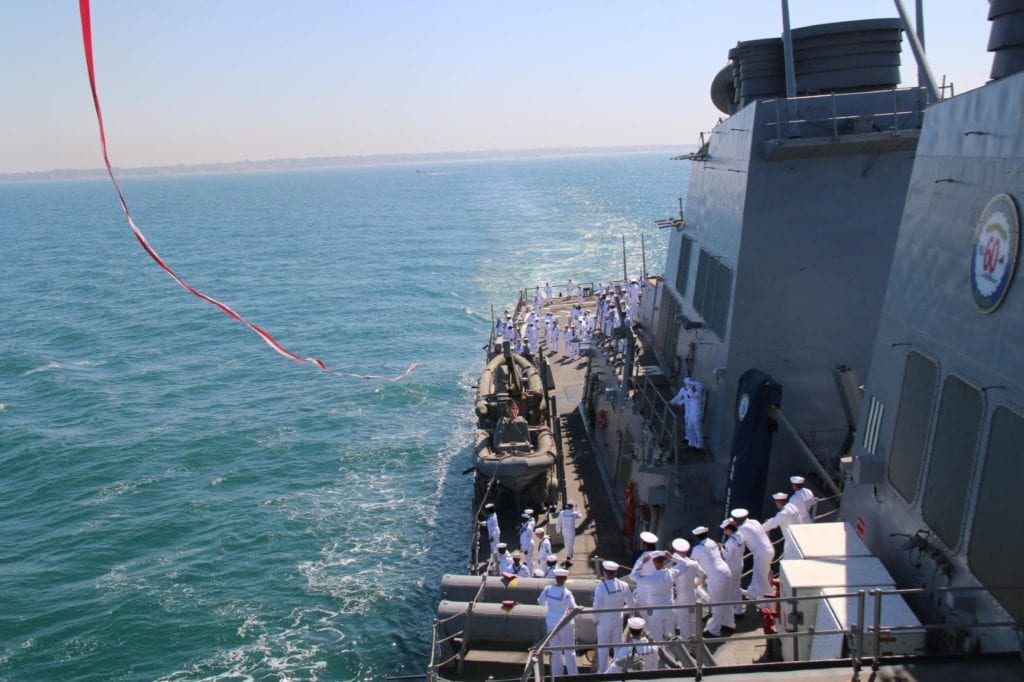
The Arleigh Burke-class guided-missile destroyer USS Donald Cook (DDG 75) departed Naval Station Rota, Spain, for the last time as a Forward Deployed Naval Forces-Europe (FDNF-E) destroyer, June 30, 2021. U.S. NAVY
ROTA, Spain – The Arleigh Burke-class guided-missile destroyer USS Donald Cook (DDG 75) departed Naval Station Rota, Spain, for the last time as a Forward Deployed Naval Forces-Europe (FDNF-E) destroyer, June 30, 2021, said Mass Communication Specialist 2nd Class Kaila Peters, in a July 6 U.S. 6th Fleet release.
USS Arleigh Burke (DDG 51), the lead ship of its class of Aegis-equipped guided missile destroyers with the latest AEGIS baseline 9 upgrade, replaced Donald Cook in the second of four scheduled homeport shifts to occur in support of the U.S. Navy’s long-range plan to gradually rotate the Rota-based destroyers. USS Roosevelt (DDG 80) replaced USS Carney (DDG 64) in the first homeport shift.
“These Sailors distinguished themselves throughout their five years deployed overseas,” said Capt. Joseph Gagliano, Commander, Destroyers Squadron 60 and Task Force 65. “Their contribution to NATO security and freedom of navigation is a legacy that will now continue with Arleigh Burke.”
Donald Cook bookended its operations in U.S. 6th Fleet by conducting operations in the Black Sea.
Upon arrival in U.S. 6th Fleet in 2014 as one of the first Rota-based FDNF-E destroyers under Commander, Task Force (CTF) 65, Donald Cook executed operational tasking immediately by conducting operations in the Black Sea following Russia’s annexation of Crimea. After 11 patrols and numerous visits to the Black Sea, the ship wrapped up its last visit to the Black Sea in support of NATO Allies and regional partners, Feb. 10, 2021. During this last visit, Donald Cook conducted presence operations, demonstrated commitment to NATO allies and partners, and engaged in exercises that strengthened interoperability and collective readiness.
Donald Cook’s commitment to NATO Allies and regional partners extended well beyond the Black Sea. During its time in Europe, Donald Cook operated from the Barents Sea above Europe, to the Gulf of Guinea along the west coast of Africa.
“Donald Cook’s time in 6th Fleet has afforded this ship and her crew a number of invaluable experiences that are unique to this area of operation to include operating in the Black Sea, crossing the Arctic Circle, and a multitude of international operations,” said Cmdr. Matthew Curnen, Donald Cook’s commanding officer. “My time in 6th Fleet has been unlike anything else I’ve experienced in my naval career. I am extremely thankful for the opportunities and challenges it has presented that have helped all of us grow professionally and personally.”
The agility and capabilities of the Arleigh Burke class destroyer has made it an ideal platform to integrate and strengthen relations with regional allies and partners.
Throughout Donald Cook’s time in U.S. 6th Fleet, the ship participated in previous iterations of Exercise Sea Breeze, BALTOPs, Phoenix Express, Formidable Shield, Atlas Handshake, and other multi-lateral maritime training opportunities with partners to include Algeria, France, Georgia, Italy, Morocco and Norway. Mission sets during these exercises included surface warfare, anti-submarine warfare, and anti-air warfare scenarios that focus on maintaining maritime stability and security.
Notable milestones include Donald Cook’s Oct. 2019 visit to the High North for the first time. The ship’s presence in the Arctic Circle reinforced the United States’ commitment to regional security and stability, as well as the Navy’s ability to deploy to many different environments on short notice, and the value of having forward-deployed naval forces available to operate in the region.
The visit also provided the crew the rare opportunity to become “Blue Nose” Sailors when the ship crossed into the Arctic Circle, a Navy tradition that only Sailors who have been to the Arctic can claim. Donald Cook’s time in the High North followed a historic port visit to the Faroe Islands, with Donald Cook being the Navy’s first destroyer to visit the island, and the first Navy vessel to visit in 33 years.
“It has been a bittersweet departure from Rota,” said Operations Specialist Second Class Jory Fetterolf. “My time in Spain has been an amazing opportunity to experience a different culture and afforded me the opportunity to travel to places I would’ve never seen if I wasn’t stationed here, however, I’m excited to return to the Unites States to be closer to family.”
Donald Cook completed one final underway to the Aegean Sea to perform maneuver exercises with the Arleigh Burke-class guided-missile destroyer USS Roosevelt (DDG 80) to conclude its last patrol. The two destroyers formed a Surface Action Group (SAG) led by Capt. Joseph Gagliano, commander, Task Force 65, who was embarked on the Roosevelt during this underway. The SAG conducted numerous scenarios to provide integrated training and test real-time response to combat situations.
Named after U.S. Marine Corps Col. Donald G. Cook, a prisoner of War during the Vietnam War who was posthumously awarded the Medal of Honor, Donald Cook is scheduled to return to its former homeport of Mayport, Florida.
Forward-Deployed Naval Forces-Europe ships have the flexibility to operate throughout the waters of Europe and Africa, from the Cape of Good Hope to the Arctic Circle, demonstrating their mastery of the maritime domain.
CTF 65 and Destroyer Squadron 60, headquartered in Rota, Spain, oversee the FDNF of C6F’s area of operation in support of regional allies and partners as well as U.S. national security interests in Europe and Africa.
U.S. 6th Fleet, headquartered in Naples, Italy, conducts the full spectrum of joint and naval operations, often in concert with allied and interagency partners, in order to advance U.S. national interests and security and stability in Europe and Africa.
Saildrone USVs Set for 7th Arctic Mission
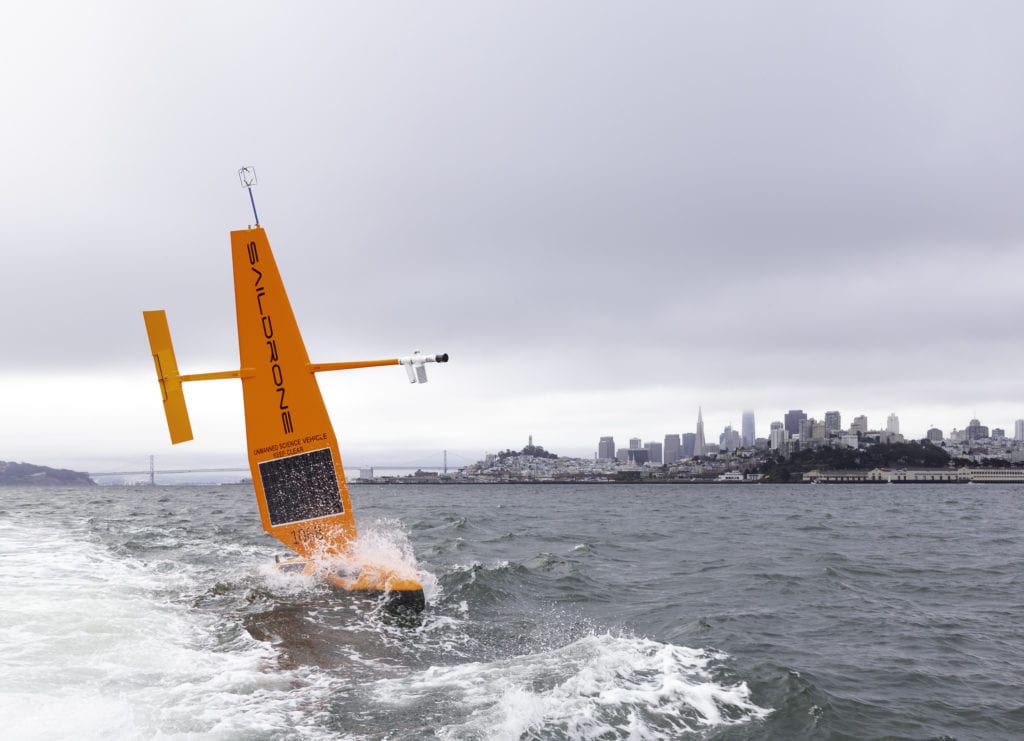
A Saildrone Explorer at work. SAILDRONE
ARLINGTON, Va. — Saildrone is set to conduct an Arctic research mission for the seventh consecutive year with its autonomous unmanned surface vessels (USVs) powered by wind and sun. The company is conducting the missions with six of its smallest USV, the 23-foot-long Explorer.
The six USVs are being launched from Dutch Harbor, a port in the Aleutian Islands. Four will collect data in the Bering Sea and two will collect data in the Chukchi and Beaufort Seas in the Arctic Ocean.
The voyages are being conducted to collect atmospheric, oceanographic and bathymetric data for the National Oceanic and Atmospheric Administration (NOAA) and NASA. The sensors on board the Saildrones will be collecting data on carbon dioxide dissolved in the water; bathymetry; climate and weather — including heat, radiation, carbon and atmospheric variables; wind speed and direction; and radiation and temperatures.
“Every year we have increased our capabilities,” said Rich Jenkins, Saildrone’s CEO, who noted that the Explorer USVs have “incredible reliability.”
For maritime domain awareness, the Explorers also are fitted with 360-degree cameras that record visual information 24/7 using machine learning algorithms to spot anomalies, such as a passing vessel, imaging every five seconds.
“We’ve amassed hundreds of millions of images of the open ocean from the Arctic down to the Southern Ocean,” Jenkins said. “We train the machine-learning model to recognize things visually” such as vessels, icebergs, birds, whales, dolphins, etc.
Data on vessels can be fused with data from the Automatic Information System for increased maritime domain awareness. Saildrone leases the services of Iridium commercial satellites for transmitting data between a USV and a ground station.
Oshkosh Defense Receives $152M Order for JLTVs to U.S. Military and NATO Allies
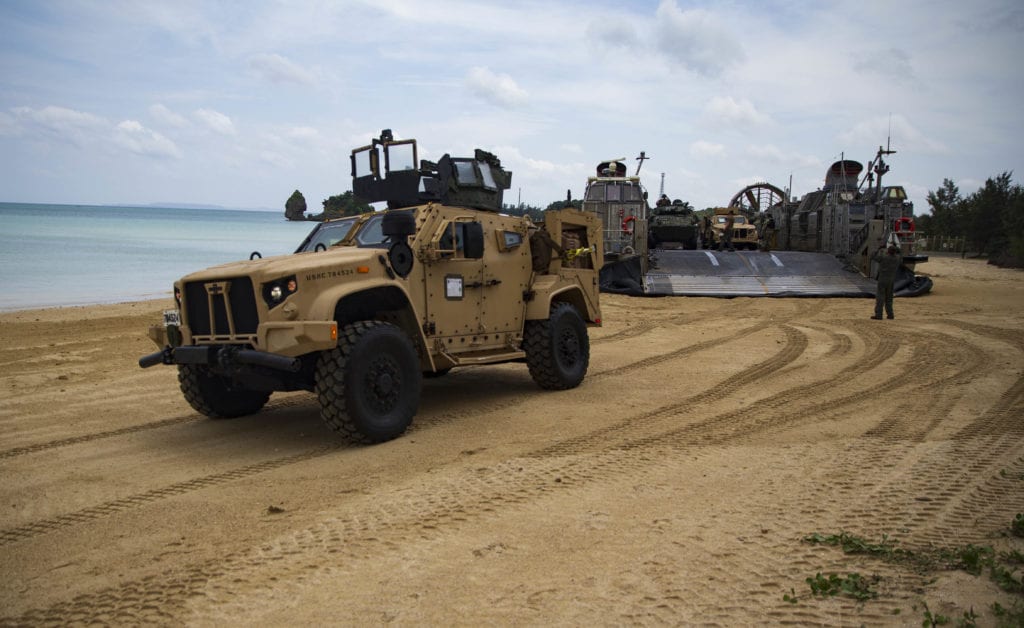
U.S. Marines with Battalion Landing Team 3/5, 31st Marine Expeditionary Unit (MEU), land on the beach in a joint light tactical vehicle (JLTV) to begin a light armored reconnaissance raid reherasal at Camp Schwab, Okinawa, Japan, June 19, 2021. U.S. MARINE CORPS / Sgt. Daisha R. Ramirez
OSHKOSH, Wis.— The U.S. Army Contracting Command – Detroit Arsenal has awarded Oshkosh Defense, a wholly owned subsidiary of Oshkosh Corp., a $152 million order for Joint Light Tactical Wheeled Vehicles (JLTV), companion trailers, and associated kits, the company said in a July 1 release.
The order includes Oshkosh JLTVs, trailers and kits for the U.S. Army, U.S. Marine Corps, U.S. Air Force, and U.S. Navy, as well as NATO allies Lithuania, North Macedonia, Slovenia, and Romania.
Since winning the competitive JLTV contract in 2015, Oshkosh has built over 12,500 JLTVs, fielded vehicles to over 40 U.S. and international military installations, and received commitments from eight NATO, Allied, and Coalition partners.
“We’ve spent over 10 years developing our vehicle, followed by nearly six years of manufacturing the vehicle in both low rate and full rate production,” said George Mansfield, vice president and general manager of Joint Programs, Oshkosh Defense. “We’ve refined the manufacturing process, matured our robust supply chain, and fulfilled the light tactical vehicle capability gap in eight additional countries with our proven platform. No one else can say that. And we have no plans to stop building the Oshkosh JLTV anytime soon.”
The U.S. Army recently increased Oshkosh’s option ceiling under the current contract from 18,170 to 23,163 vehicles to support critical missions worldwide.
“Oshkosh Defense is incredibly pleased with the reception the JLTV continues to receive around the world,” said John Lazar, vice president and general manager of International Programs, Oshkosh Defense. “The JLTV provides unprecedented levels of off-road mobility, survivability, and hosted firepower on a light tactical vehicle platform. We had a busy Spring and the momentum surrounding the platform continues to grow.”
In May, the North Macedonia minister of defense, Radmila Sekerinska, was able to ride in the JLTV for the first time. Sekerinska later tweeted, “These new American-made light armored vehicles will become part of the Army facilities. Today at Krivolak, we were convinced of their exceptional performance. This is what our Army looks like in #NATO.”
Later in June, the Slovenian deputy prime minister and minister of defense Matej Tonin, remarked at a JLTV acceptance ceremony, “Modernization of the Slovenian Army has finally begun. With the new light armored vehicles Oshkosh 4×4, our Soldiers will be more successful and safer in tasks at home and abroad.”
To date, Oshkosh has received orders or commitments from the following NATO, Allied, and Coalition partners including the United Kingdom, Belgium, Montenegro, Slovenia, Lithuania, Brazil, Romania, and North Macedonia.
First USMC F-35C squadron Declares Full Operational Capability
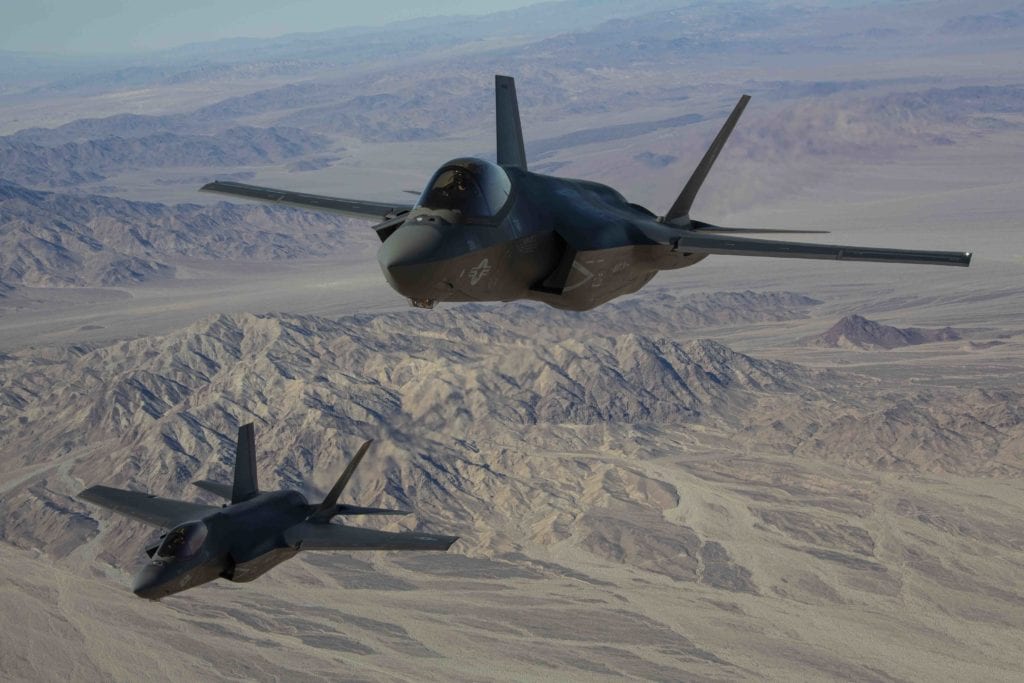
U.S. Marines with Marine Fighter Attack Squadron 314 and Marine Aerial Refueler Transport Squadron 352, Marine Aircraft Group 11, 3rd Marine Aircraft Wing, conduct a new expeditionary landing demonstration with M-31 arresting gear Interim Flight Clearance (IFC), on Marine Corps Air Ground Combat Center Twentynine Palms, Calif., Dec. 3rd, 2020. U.S. MARINE CORPS / Cpl. Leilani Cervantes
MARINE CORPS AIR STATION MIRAMAR, Calif. — As the Marine Corps continues to make changes to meet the demands of the rapidly evolving future operating environment, Marine Fighter Attack Squadron (VMFA) 314 has reached a new milestone in Marine Corps history as they declare their full operational capability (FOC) for the F-35C Lightning II, according to 3rd Marine Aircraft Wing (MAW) spokesman 1st Lt. Charles Allen in a July 1 release.
“VMFA-314 is the first F-35C squadron in the Marine Corps to declare FOC. They are now full up round and bring the incredible 5th generation capability to 3rd MAW. They will deploy as part of a Carrier Strike Group next year.” said Maj. Gen. Christopher Mahoney, 3rd MAW commanding general. “FOC for the Black Knights is yet another step forward in achieving Force Design objectives. The Black Knights are ready- 3rd MAW is ready.”
FOC is significant in its confirmation that VMFA-314 is fully prepared and equipped successfully deploy aboard U.S. Navy aircraft carriers, marking the first FOC declaration for Marine Corps. This inaugural event is met after VMFA-314 received their first F-35C on January 21, 2020, when their first jet arrived at Marine Corps Air Station (MCAS) Miramar from Naval Air Station Lemoore.
“Many hours were spent maintaining aircraft, launching and recovering aircraft in Miramar, at other military facilities, and aboard the ship to conduct the training required to meet these goals,” said Major Derek Heinz, VMFA-314 operations officer. “The Marines of VMFA-314 have gained confidence in fighting this aircraft and feel confident we can do so in combat if called upon.”
VMFA-314 is currently continuing its preparations toward future deployments by conducting tailored ship’s training availability (TSTA), marking the first F-35C squadron to conduct TSTA in the Marine Corps. This training will consist of communication rehearsals, medical drills, flight operations, and shipboard drills conducted while underway, ensuring the squadron is prepared to deploy in support of maritime campaigns.
Exercise Sea Breeze Underway in the Black Sea
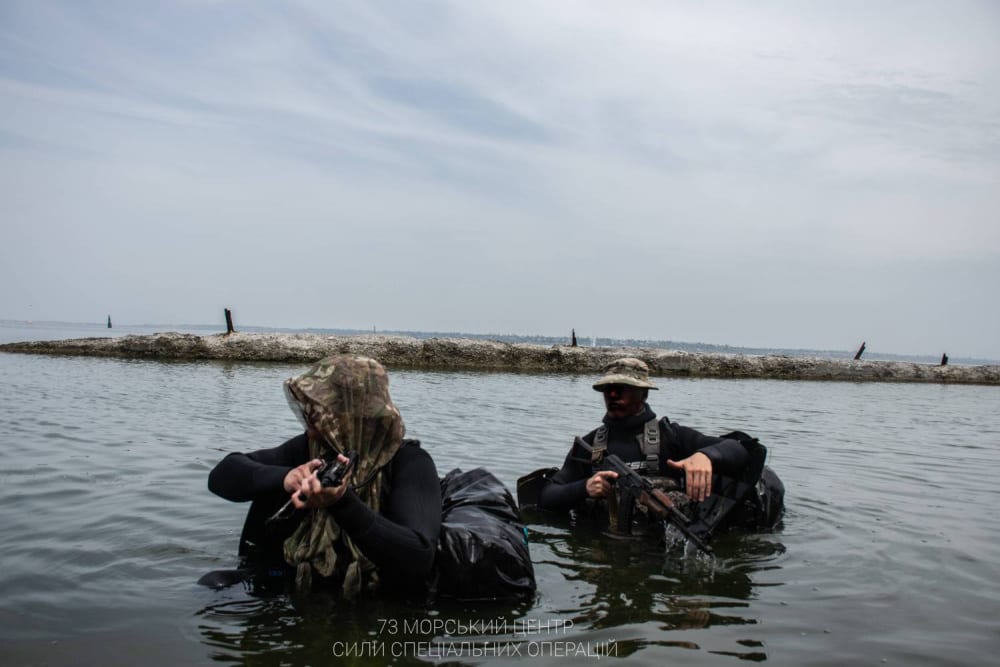
Special forces from several countries participated in Exercise Sea Breeze 2021 in Ukraine, June 30, 2021. Exercise Sea Breeze is a multinational maritime exercise cohosted by the U.S. 6th Fleet and the Ukrainian Navy since 1997. Sea Breeze 2021 is designed to enhance interoperability of participating nations and strengthens maritime security and peace in the region. U.S. NAVY / UKR SOF
U.S. 6th Fleet and the Ukrainian Navy are cohosting the annual naval Exercise Sea Breeze 2021 (SB21) in the Black Sea region. SB21 kicked off on June 28 and runs through July 10.
According to a statement from the U.S. 6th Fleet, SB21 will “focus on multiple warfare areas including amphibious warfare, land maneuver warfare, diving operations, maritime interdiction operations, air defense, special operations integration, anti-submarine warfare, and search and rescue operations.”
The first Sea Breeze exercise took place in 1997, and it has grown steadily to involve more nations and participants. “This year’s iteration has the largest number of participating nations in the exercise’s history with 32 countries from six continents providing 5,000 troops, 32 ships, 40 aircraft, and 18 special operations and dive teams scheduled to participate,” said Lt. Bobby Dixon, a spokesman for the 6th Fleet.
Nations participating in SB21 include Albania, Australia, Brazil, Bulgaria, Canada, Denmark, Egypt, Estonia, France, Georgia, Greece, Israel, Italy, Japan, Latvia, Lithuania, Moldova, Morocco, Norway, Pakistan, Poland, Romania, Senegal, Spain, South Korea, Sweden, Tunisia, Turkey, Ukraine, United Arab Emirates, United Kingdom, and the United States. Participants will engage in realistic maritime training to build experience and teamwork and strengthen interoperability.
NATO has participated in Sea Breeze since the beginning, and the annual exercise’s popularity has continued to grow in popularity over the years.
The ships and embarked aircraft of Standing NATO Maritime Group 2 will take part in the exercise. The exercise will focus on multiple warfare areas including amphibious warfare, land maneuver warfare, diving operations, maritime interdiction operations, air defense, special operations integration, anti-submarine warfare, and search and rescue operations in the Black Sea region.
According to a NATO press release, “This is good example to how allies and partners provide unique training opportunities, designed to enhance readiness, improve collaboration, and interoperability in the Black Sea region.”
“Sea Breeze allows allies and partners to come together and operate in the Black Sea and build capabilities and to conduct coordinated operations in international waters,” said Capt. Kyle Gantt, the deputy commodore and the deputy commander of Task Force 65.
Task Force 65, based at Rota, Spain, is the U.S. Navy’s forward-deployed destroyer squadron in Europe, and represents the United States annually as the lead task force executing exercise Sea Breeze.
Gannt said Sea Breeze improves partner capabilities and interoperability. “I’ve been very impressed with the capability of the Ukrainian navy,” said Gantt. “All of the exercises are conducted using standard procedures, which are common among our allies and we use when operating with our partners.”
The exercise is following appropriate COVID 19 protocols. “Last year, significant limitation was imposed due to COVID-19 pandemic and there were no ships were able to visit Ukrainian ports. This year training will be conducted to the fullest extent,” said Rear Adm. Oleksiy Neyezhpapa, commander of the Ukrainian navy. “More foreign equipment will be deployed than in the Sea Breeze of the past year.”
Capt. Cameron Chen, commander of Task Force 68, said the training and coordination with the Sea Breeze partners will help build and increase the capabilities of the Ukrainian military. “We are the Naval Expeditionary Force component for Sixth Fleet. We provide EOD [explosive ordnance disposal], divers, MCM [mine countermeasure] capability, and naval construction force and maritime expeditionary security to Europe and Africa. More Iterations like this, more exercises and continued partnerships, I think, is the key to strengthening ties and improving capabilities in the region.”
Since Russia’s illegal annexation of Crimea in 2014, NATO has increased its presence in the Black Sea. According to a statement from Supreme Headquarters Allied Powers Europe, NATO supports Ukraine’s sovereignty and territorial integrity within its internationally recognized borders, extending to its territorial waters.
“NATO does not and will not recognize Russia’s illegal and illegitimate annexation of Crimea and denounces its temporary occupation,” the statement said. “NATO continues to operate in international waters and the alliance’s actions are always defensive in nature, proportionate in posture, and in line with international laws and conventions. The multinational character of NATO deployments, and transparency in all of its exercises and activities, reflects allies’ fundamental commitment to the principles of collective defense, transatlantic unity, and interoperability in order to maintain peace and preserve security.”
No Provocation
Russia consistently monitors allied operations in the Black Sea with interest. This June, Russia fired warning shots at a Royal Navy destroyer that it said was in Russian waters, harassed a Dutch frigate, and has “spoofed” AIS tracking information to show allied ships near Crimea when they were actually faraway or in port in Odessa.
Gantt said the exercise was not intended to provoke Russia.
“This is a long-planned exercise. In fact, this is an exercise that has happened since 1997. In fact, this is the 21st iteration. This is in no way a reactive exercise. This is a longstanding commitment to an exercise in the Black Sea co-hosted by the United States and the Ukrainian navies. All nations have the right to operate in international waters, and this exercise will take place either in Ukraine or in international waters.”
“Russia routinely observes our operations, and it is their right to do so when they’re doing that in international waters,” said Gannt. “What we expect is that all nations will operate professionally at sea. We expect that all nations will respect the international laws and norms that govern safe and professional operations at sea. I expect that from Russia and I expect that from all of the forces here operating in Sea Breeze.”
Gannt pointed out that the U.S. and Russia have a longstanding Incidents at Sea agreement (INCSEA) to reduce the chance of an incident at sea between the two countries and, in the event that one occurred, to prevent it from escalating.
“INCSEA provides a standardized set of communications to make sure there is no question when ships communicate with each other how they are — what their intentions are, and it’s a longstanding process that, quite frankly, removes risk. That’s an important part of what we’re doing here with Sea Breeze. We are demonstrating to the world that the Black Sea is an international sea; it is open and available for the free transport of commerce, of shipping, for all nations, and it is not owned by any one nation.”
As in past years, Sea Breeze serves to demonstrate the commitment of the U.S., NATO and partner nations to the stability and prosperity of the region.
“We are committed to maintaining the safety and security of the Black Sea,” said Chargé d’affaires Kristina Kvien of the U.S. Embassy in Ukraine.
President Nominates Two Marines for 3-Star Rank
ARLINGTON, Va. — Secretary of Defense Lloyd J. Austin III announced July 2 that the president has made the following nominations:
Marine Corps Maj. Gen. Christopher J. Mahoney for appointment to the rank of lieutenant general, and assignment as deputy commandant for programs and resources, Headquarters, U.S. Marine Corps. Mahoney is currently serving as commanding general, 3d Marine Aircraft Wing, San Diego, California.
Marine Corps Maj. Gen. Stephen D. Sklenka for appointment to the rank of lieutenant general, and assignment as deputy commander, U.S. Indo-Pacific Command. Sklenka is currently serving as the J-5, director for strategic planning and policy, U.S. Indo-Pacific Command, Oahu, Hawaii.
Navy Has the Highest COVID Vaccination Rate in DoD; Marine Corps the Lowest
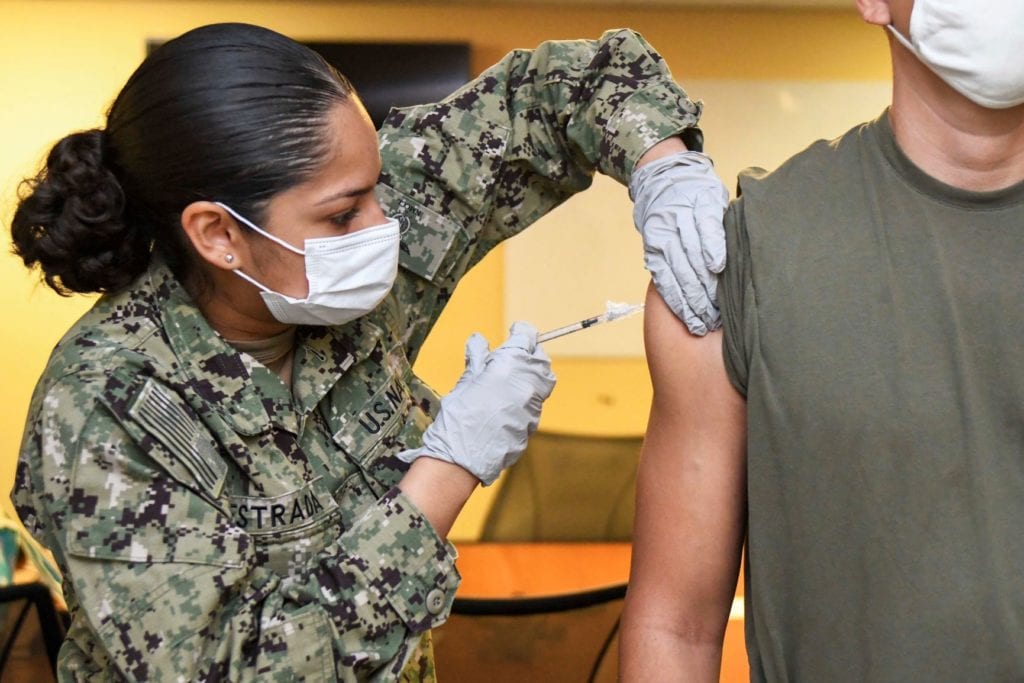
Navy Seaman Denisse Estrada-Suarez administers the COVID-19 vaccine during a Tiger Team visit to Marine Forces Special Operations Command at Camp Lejeune, N.C., June 15, 2021. NAVAL MEDICAL CENTER CAMP LEJEUNE
ARLINGTON, Va. — The U.S. Navy has the highest rate, 77%, of active duty personnel who have gotten at least one vaccination shot against COVID-19 virus, while the Marine Corps, at 58%, has the lowest, according to Defense Department health officials.
At a June 29 Pentagon briefing to update reporters on the Defense Department’s success in battling the coronavirus pandemic, officials announced efforts to determine why just 68% of the military overall have been vaccinated with at least one dose, and how to encourage more services members to roll up their sleeves to get their first and follow-on shots.
“The pandemic is not over, and we are not done with all-out efforts to encourage vaccination,” said Dr. Terry Adirim, acting Assistant Secretary of Defense for Health Affairs.
In addition to the Navy at one end of the active duty vaccination rate and the Marines at the other, officials said the first shot vaccination rate was 70% for the Army and 61% for the Air Force. There were no numbers for the Space Force and officials did not address reasons for the disparity of vaccination numbers among the services.
While COVID-19 case counts are dropping across the department and base commanders have been reducing local health protection condition (HPCON) levels, Adirim said recent data shows the unvaccinated or under-vaccinated are more susceptible to COVID variants, which are far more dangerous, especially the delta variant.
According to the military health system, the delta variant of COVID-19 is more transmittable, causes more severe disease, and results in higher cases of hospitalization and death than any other strain of the virus.
Of the 21 military personnel currently hospitalized with COVID, none were vaccinated, said Army Lt. Gen. Ronald Place, director of Defense Health Agency. He and Adirim said they were concerned about the risks posed to unvaccinated personnel at installations located in states and counties in the United States with low vaccination rates.
“The Delta variant poses a threat to unvaccinated personnel,” said Adirim, adding that the best way to beat it was through vaccination. Officials noted that a single dose of anti-COVID vaccine was only 33% effective against the Delta variant, while getting a second dose was 88% effective.
Bollinger Shipyards Delivers 45th Fast Response Cutter to Coast Guard
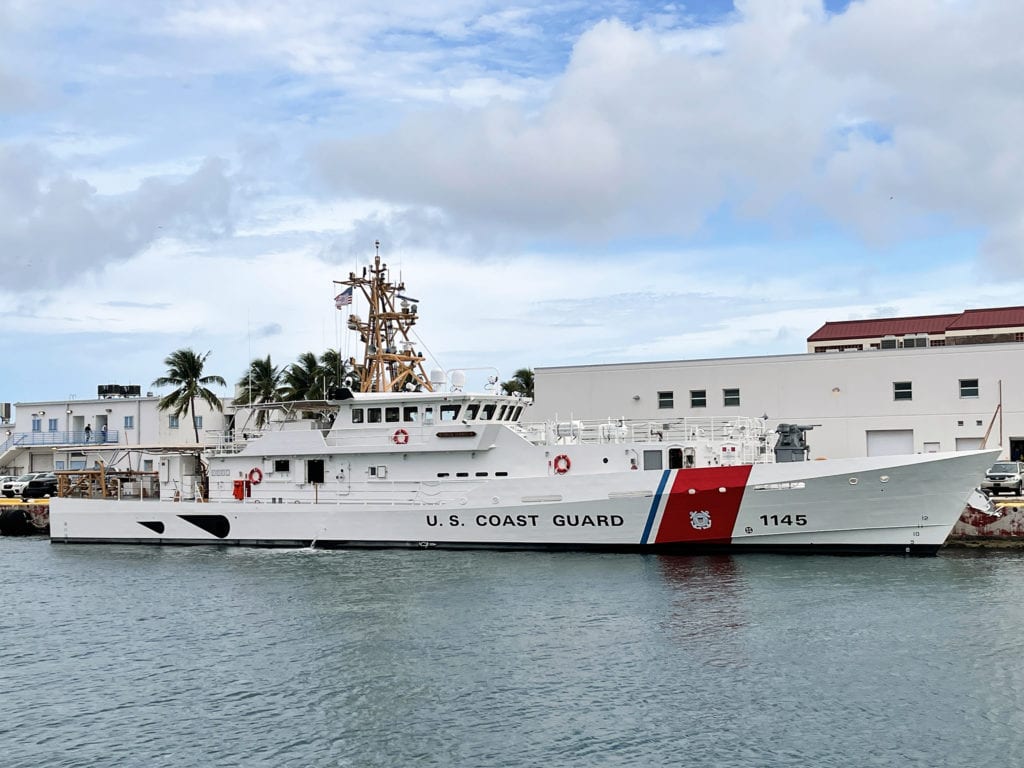
USCGC Emlen Tunnell in Key West, Florida. BOLLINGER SHIPYARDS
LOCKPORT, La. — Bollinger Shipyards LLC has delivered the USCGC Emlen Tunnell to the U.S. Coast Guard in Key West, Florida, the company said in a July 1 release. This is the 168th vessel Bollinger has delivered to the U.S. Coast Guard over a 35-year period and the 45thFast Response Cutter (FRC) delivered under the current program.
Named in honor of Coast Guard hero and National Football League great Emlen Tunnell, the cutter is the fourth of six FRCs to be home-ported in Manama, Bahrain. They will replace the aging 110-foot Island Class Patrol Boats, built by Bollinger Shipyards 30 years ago, supporting the Patrol Forces Southwest Asia (PATFORSWA), the U.S. Coast Guard’s largest overseas presence outside the United States.
“With recent incursions in the Arabian Gulf, it is a top priority to ensure that the brave men and women of the Coast Guard have the most state-of-the-art, advanced vessels as they work to ensure maritime security in the region,” said Bollinger President and CEO Ben Bordelon. “Bollinger is proud to continue enhancing and supporting the U.S. Coast Guard’s operational presence in the Middle East and ensuring it remains the preferred partner around the world.”
Earlier this year at the commissioning ceremony of the USCGC Charles Moulthrope, U.S. Coast Guard Commandant Adm. Karl Schultz lauded the “enhanced seakeeping” capabilities of the PATFORSWA-bound FRCs, saying “these ships are truly going to be game changing in their new theater of operations” and “offer increased opportunities for integrated joint operations with our Navy and Marine Corps colleagues” as the Coast Guard seeks to be part of the whole-of-government solution set in the region.
PATFORSWA is composed of six cutters, shoreside support personnel, and the Maritime Engagement Team. The unit’s mission is to train, organize, equip, support and deploy combat-ready Coast Guard Forces in support of U.S. Central Command and national security objectives. PATFORSWA works with Naval Forces Central Command in furthering their goals to conduct persistent maritime operations to forward U.S. interests, deter and counter disruptive countries, defeat violent extremism and strengthen partner nations’ maritime capabilities in order to promote a secure maritime environment.
Each FRC is named for an enlisted Coast Guard hero who distinguished themselves in the line of duty. Emlen Tunnell was instrumental in saving the lives of two shipmates in two different heroic actions. His exploits as a Coast Guardsman and then as a ground-breaking African American in the world of professional sports, Tunnell, through his incredible achievements both on and off the field, demonstrated the Coast Guard’s core values of honor, respect and devotion to duty.
Tunnell played college football at Toledo before and after World War II — he enlisted from 1943 to 1946 — and continued his collegiate career at the University of Iowa. After leaving college in 1948, he hitchhiked from his home in Pennsylvania to New York for a tryout with the New York Giants. Tunnell was the first Black player signed by the Giants and later played for the Green Bay Packers. He ended up playing 14 seasons in the NFL and when he retired as a player, he held league records with 1,282 interception return yards, 258 punt returns, 2,209 punt return yards, and 79 interceptions, the second most interceptions in NFL history today. He then became a scout and one of the league’s first Black assistant coaches, helping fully integrate both the Giants and the Packers. In 1967, Tunnell was the first Black man and the first defensive specialist to be enshrined in Canton.
The FRC is an operational “game changer,” according to senior Coast Guard officials. FRCs are consistently being deployed in support of the full range of missions within the United States Coast Guard and other branches of our armed services. This is due to its exceptional performance, expanded operational reach and capabilities, and ability to transform and adapt to the mission. FRCs have conducted operations as far as the Marshall Islands — a 4,400 nautical mile trip from their homeport. Measuring in at 154-feet, FRCs have a flank speed of 28 knots, state of the art C4ISR suite and stern launch and recovery ramp for a 26-foot, over-the-horizon interceptor cutter boat.
Pacific Fleet Commander Says He Has a Duty To Prevent Seizure of Taiwan
Commander, U.S. Pacific Fleet Adm. Sam Paparo speaks to Forward Deployed Naval Forces, Commander, Fleet Activities Sasebo and tenant command leadership onboard CFAS June 9, 2021. U.S. NAVY / Mass Communication Specialist 3rd Class Jasmine Ikusebiala
ARLINGTON, Va. — The commander of U.S. Pacific Fleet says he is concerned about People’s Republic of China (PRC) as a pacing threat, but he is also confident in his forces, allies and operational designs to thwart any attempt by China to seize Taiwan by force.
“China is a pacing threat,” Adm. Sam Paparo said June 29 during the final webinar of the West 2021 symposium of the Armed Forces Communications and Electronics Association, and the U.S. Naval Institute. Paparo said he interpreted that to mean China’s development of its own combat capability, particularly maritime capability, “is the factor that we’re taking into account in making our own investments in our own combat capabilities.”
Paparo, who took command of the Pacific Fleet in May, said he completely agreed with the former head of Indo-Pacific Command, Adm. Philip Davidson, who told a Senate hearing in March that China might attempt to take over Taiwan in six years, as part of its aim to expand its influence across the region and supplant the U.S. leadership role in the rules-based international order by 2050. China claims Taiwan, a position officially supported by the United States.
“I worry about China’s intentions,” Paparo said. “It doesn’t make a difference to me, whether it is tomorrow, next year or whether it is in six years. At Pacific Fleet and Indo-Pacific Command we have a duty to be ready to respond to threats to U.S. security.”
That duty includes delivering a fleet “capable of thwarting any effort on the part of the Chinese to upend that [world] order, to include the unification by force of Taiwan to the People’s Republic of China,” the admiral said. “But I also feel confident in our Sailors, Marines and Coast Guardsmen … as well as our operational designs to thwart such an effort with the teamwork of our allies and partners.”
Asked if there was any further discussion of creating a numbered fleet for the Indian Ocean, Paparo noted that by Navy doctrine, every numbered fleet is a tactical three star headquarters that can be deployed worldwide against any task.
“No numbered fleet, anywhere in the world has a monopoly on any battle space. They are broadly associated with bits of geography by convention,” he said. While hard to imagine the 5th, 6th or 7th fleets being separated from the geographic areas where they have deep relationships as a function of their placement, the 4th, 2nd and 3rd fleets “are up and ready rounds that can be deployed to the point of need.”