The Navy’s Shrinking Patrol Boat Force

The new PB(X) patrol boat will be based on the 40-foot Defiant boat, built by Metal Shark. METAL SHARK

ARLINGTON, Va. — The U.S. Navy has been reducing its patrol boat force in recent years and proposes to continue that trend by retiring its rather new Mark VI patrol boats under the fiscal 2022 budget, after having retired its entire riverine force.

As the Navy pivots to reshape its force to focus on high-end capabilities to counter China and Russia, the relatively flat 2022 budget is demanding some sacrifices, and the Navy chose to inactivate its fleet of 12 Mark VI PBs.  

Last year the Navy changed the names of the units that had operated the 78-foot-long Mark VI PBs and the smaller coastal and harbor — and previously riverine — patrol boats. The Coastal Riverine Force is now known as the Maritime Expeditionary Security Force. 

“Riverine warfare is no longer an assigned mission area for the United States Navy, and the legacy name no longer captures the roles and missions of our force,” said Lt. Cmdr. Amber Lewis, a spokeswoman for Navy Expeditionary Combat Command (NECC). “The new name captures the Maritime Expeditionary Security Force’s (MESF’s) growing green and blue-water fleet integration and contributions to the high-end fight in an era of great power competition, which are more robust than the legacy riverine roles.” 

The change is significant. The Navy has operated riverine forces off and on over the decades, most recently restoring the capability during the Iraq War, assuming the role from the Marine Corps. The Navy built and sustained an impressive riverine capability during the Vietnam War, but most of that capability was turned over to the South Vietnamese Navy as the United States ended its in-country force presence in South Vietnam. (The Navy Special Operations Command retains some small boat coastal and riverine capability for insertion and extraction of SEALs and other special operations forces.) 

In May 2012, the Navy selected a SAFE Boats International design for the Mark VI, eventually procuring 12 boats. Other Mark VI PBs are being procured by Ukraine. The first Mark VI PBs were delivered to the Navy on Aug. 27, 2014, and were delivered to NECC in September 2015. Some of the PBs have been deployed to the Persian Gulf and to Guam. 

The Mark VI is the largest craft in the MESF. It can patrol shallow littoral waters beyond sheltered harbors and bays. The PBs are used for maritime intercept; escort; infrastructure protection; theater security cooperation; security force assistance; and visit, board, search and seizure operations. They can launch UAVs and UUVs. The PBs are armed with Mk38 25mm guns and .50-caliber machine guns and feature integrated workstations, shock-mitigating seats, a galley and a shower. 

In addition to the Mark VI PBs, the MESF operates 164 patrol craft. These include 117 SeaArk 34-foot Dauntless-class patrol boats and 17 SAFE Boats 25-foot Oswald-class patrol boats. The riverine assault craft, riverine command boats and riverine patrol boats all have been retired and stored. The single Coastal Command Boat, a smaller predecessor to the Mark VI that was deployed to the 5th Fleet, was transferred to a test role in 2018. 

Intelligence Specialist 1st Class Petty Officer William Woodley, assigned to Task Group 68.6 (TG-68.6), stands watch as a crewman onboard a 34ft SeaArk patrol boat upon completion of a mission with the USNS Alan Shepard, Sept. 18, 2018. U.S. NAVY / Quartermaster 2nd Class Ashley Taylor

The current mainstay of the MESF, the SeaArk 34-foot patrol boat, performs the roles of high-value escort, port and harbor defense, and port security. The 34-foot boats are scheduled for replacement, beginning in June 2021 when the first new 40-foot patrol boats arrive, Lewis said. 

In October 2017, the Navy awarded a contract to Metal Shark for a new patrol boat, PB(X), to replace the service’s Oswald- and Dauntless-class tactical craft. Metal Shark’s 40-foot Defiant design actually is a 43-foot-long welded aluminum boat powered by twin diesel inboard engines. The boats have a wide-waterplane, sharp-entry hull capable of attaining 40 knots and enhanced handling at cruise speeds of 10 to 15 knots. The boats offer ballistic protection; an armored, climate-controlled pilothouse; five whole-body isolation suspension seats and an advanced communications, navigation and situational awareness suite.  

“Metal Shark Boats currently has 54 40-foot Patrol Boats [PBs] under contract, with two delivered for a total of 56,” said the Support Ships, Boats and Craft program office of the Program Executive Office – Ships. “To date, two boats have been delivered and 10 boats are in production and scheduled to be delivered in [fiscal 2021]. The current plan is to procure a total of 120 40-foot PBs over the next 10 years [to replace the 34-foot and 25-foot PBs].” 

The Navy also has ordered 24 Force Protection-Medium (FP-M) patrol boats from Lake Assault Boats LLC, which was awarded a contract for up to 119 FP-Ms in February 2020. The 33-foot-long aluminum V-hull boats will be used for harbor and waterway patrols, interrogation of other waterborne assets and escorting large vessels in and out of ports in various weather and water conditions. The first was scheduled for delivery this spring. 


Cutter Resolute Returns Home from 41-day Deployment

A Coast Guard Cutter Resolute small boat crew transports two rescued Cuban migrants, about 16 miles south of Key West, Florida, May 27, 2021. During a routine patrol, the Resolute bridge team spotted multiple people in the water and alerted Coast Guard Sector Key West watchstanders. U.S. COAST GUARD

ST. PETERSBURG, Fla. — The USCGC Resolute (WMEC 620) and crew returned home to St. Petersburg Tuesday, after a 41-day Central Caribbean patrol, the Coast Guard 7th District said in a June 2 release. 

The Resolute crew patrolled the coast of Haiti in support of Operation Southeast Watch. The team focused efforts on known transit zones and served as a presence to discourage hazardous migration voyages. 

Watchstanders received an urgent radio call from a cargo vessel on May 13, reporting it collided with a wooden sailboat approximately two miles from Isla de la Tortue. The small boat sank, leaving two people in the water. The Resolute and its small boat crews, along with an Air Station Clearwater MH-60 Jayhawk aircrew forward-deployed in Great Inagua, conducted search patterns. The small boat crew located the men in the water clinging to foam fishing buoys. After a medical check, both survivors were determined to be in good health and were returned safely to port. 

On May 28, the Resolute crew interdicted two Cuban migrants on a makeshift raft, 15 miles south of Key West. 

During the routine patrol, May 27, the bridge team spotted multiple Cuban migrants in the water, about 16 miles south of Key West. The team alerted Coast Guard Sector Key West watchstanders. Response efforts resulted in eight people rescued, and two people recovered deceased. An extensive search operation began for 10 people reportedly still missing. Search and rescue efforts continued for two days before the search suspended. 

On May 27, the Resolute crew interdicted two suspected smugglers and 25 Cuban migrants, 60 miles south of Key West. 

Among multiple events, the Resolute crew completed emergency drills and training. The Damage Control Olympics is a unique and active way to train crewmembers on proper damage control procedures. At the same time, the Navigation Seamanship Olympics achieve the same goal of creating an interactive learning environment but focus on rescue and assistance and small boat operations. These training evolutions enhance technical skills while building camaraderie and ensuring technical proficiencies are maintained. 

The Resolute, a 210-foot Reliance-class cutter with a crew of 72, was commissioned on Dec. 8, 1966.  


First Newly Appointed Senior Military Acquisition Advisors Report to ASN RDA

Capt. Stephen H. Murray, shown here in 2017 addressing the Corona, California, Chamber of Commerce, is one of two new Senior Military Acquisition Advisors. U.S. NAVY / Greg Vojtko

WASHINGTON — The Department of the Navy’s first Senate-confirmed Senior Military Acquisition Advisors (SMAA) joined the assistant secretary of the Navy for Research, Development and Acquisition (ASN RDA) staff this month, the Navy said in a June 2 release. 

This program established in the National Defense Authorization Act of 2018 is designed for senior officers within the acquisition community to provide strategic, technical, and programmatic advice to their Service Acquisition Executive with the option of serving as adjunct professors at Defense Acquisition University. 

U.S. Navy Capt. Stephen Murray and U.S. Marine Corps Col. Dave Burton were selected by a panel of flag and general officers to provide senior level acquisition expertise to ASN RDA. 
 
“Both of these officers are very successful acquisition professionals,” said Vice Adm. Mike Moran, principal military deputy ASN RDA. “Their selection as the Department of the Navy’s first SMAAs speaks not only to their superb careers, but the tremendous value they will bring to the Department of the Navy for many more years.”   
 
Murray will assume a key leadership role as a military deputy on the recently established Deputy ASN Sustainment staff. He will be responsible for long term surface ship/submarine maintenance planning, industrial base coordination, and shipyard improvements for fleet readiness. Murray will also assume a lead role on the new Sustainment System Working Group (SSWG), established to address systemic readiness issues across the naval enterprise. Murray has extensive fleet and acquisition experience, and just completed a very successful tour as a major program manager for Surface Ship Readiness and Maintenance.  
 
Burton will assume a key leadership role as the military deputy on the Department of the Navy’s new Project Overmatch Organization, which supports Navy and Marine Corps Distributed Maritime Operations and integration with the Joint All-Domain Command and Control (JADC2) program. He will be responsible for integrating current Marine Corps and Navy networks and services to enable a future common operational architecture. Burton’s decades of operational and acquisition experience uniquely qualify him for this role along with his very successful tour as a major program manager for Intelligence Systems.  
 
The assistant secretary of the Navy for research, development and acquisition serves as the Navy Service Acquisition Executive. ASN RDA has authority, responsibility and accountability for all acquisition functions and programs, and for enforcement of Under Secretary of Defense for Acquisition and Sustainment procedures. The assistant secretary represents the Department of the Navy to USD (A&S) and to Congress on all matters relating to acquisition policy and programs.  
 
The assistant secretary establishes policies and procedures and manages the Navy’s research, development and acquisition activities in accordance with DoD 5000 Series Directives. The assistant secretary serves as program (milestone) decision authority on ACAT IC programs and recommends decisions on ACAT ID programs.  


USMC Seeks to Jettison Some Weapons Platforms to Invest in Mobility, High Tech

Landing Craft Utility (LCU) 1661 deploys a Utility Tactical Vehicle from the 24th Marine Expeditionary Unit during CONTEX-PHIBEX, a bilateral amphibious exercise between the U.S. and Portuguese naval services, May 9, 2021. U.S. MARINE CORPS / 1st Lt. Mark Andries

ARLINGTON, Va. — The U.S. Marine Corps plans to shrink its force and divest itself of heavy weapons platforms such as tanks and towed artillery to pay for new investments in cyber space, artificial intelligence and high mobility, according to new budget documents and briefings.

The Department of the Navy, including the Marine Corps, is seeking $211.7 billion from Congress in its fiscal 2022 budget request. The Marines would get $47.98 billion, an increase of 6% over their 2021’s enacted budget, “with real growth in their operational, maintenance and procurement accounts,” Adm. John Gubleton, the deputy assistant secretary of the Navy for budget, told a Pentagon briefing at the Defense Department budget rollout May 28.

Overall, the Navy “realigned tens of billions of dollars towards higher priority programs and divested of legacy capabilities,” Gubleton said. For the Marine Corps those divestments include the Corps’ Abrams main battle tanks and towed artillery, to pay in part for a lighter, swifter widely dispersed force with the right skills for future challenges such as distributed operations, crisis response, and electronic, information and cyber warfare, according to budget documents.

Force Design

As part of that modernization, included in the Force Design 2030 plan announced in March 2020, the current budget request calls a reduction of 2,700 enlisted Marines, from 159,716 in 2021 to 156,650 in fiscal 2022. With the addition of 366 new officers to the existing officer corps, the total force in fiscal 2022 would be 178,500.

In the months leading up to the budget announcement, Marine Corps Commandant Gen. David Berger has stressed the Marines are divesting 20th century weaponry, like main battle tanks and towed artillery, to make room for capabilities that are unique to the threat posed by China, which Pentagon leadership has identified as the number one pacing challenge, a near-peer competitor that is catching up. But Berger has also stressed the Marine Corps has to be ready for other contingencies like natural disaster relief and rapid response across the globe.

“We’re willing to trade things like heavy armor for capabilities I think are unique to the Marine Corps, that provide a unique contribution to the combatant commander to the Joint Force,” Berger told a live-streamed forum at the Brooking Institution 10 days before the budget release. “And that is the expeditionary, the amphibious, the parts that we do better than anybody else.”

Berger said he was “willing to trade capacity, end strength, for quality,” adding, “we’ll have a slightly smaller Marine Corps in terms of end strength, but they will be more senior and better trained. So that’s a trade I’m willing to make.”

U.S. Marine Warrant Officer Zachary DeLong, a defensive cyber weapons officer with 7th Communication Bn., III Marine Expeditionary Force Information Group, demonstrates Defensive Cyberspace Operations-Internal Defensive Measures capabilities during a virtual training session with members of the Philippine Marine Corps on Camp Hansen, Okinawa, Japan, April 19, 2021. U.S. MARINE CORPS / Cpl. Nicholas Filca

Procurement

The fiscal 2022 request includes $3 billion in procurements, up from $2.7 billion enacted in 2021, including key Marine Corps development programs such as the Ground Based Anti-Ship Missile (GBASM), Ground/Air Task Oriented Radar, CH-53K King Stallion helicopter and the Amphibious Combat Vehicle.

Procurement requests include 17 short take off and vertical landing F-35B Lightning II joint strike fighter aircraft and six KC-130 aerial refueling tankers.

The request calls for replacing the CH-53 Sea Stallion, the ship-board compatible heavy-lift helicopter the Marines have been operating since the early 1980s, with the CH-53K King Stallion. The fiscal 2022 request seeks nine King Stallions.

The fiscal 2022 request would procure 613 Joint Light Tactical Vehicle (JLTV) vehicles, 139 less than fiscal 2021, and associated kits. The kits will support the baseline vehicle by providing the warfighter the ability to augment the vehicle’s configuration in order to respond to environmental conditions or threat situations. Kit procurement provides up to 75 individual kit options.

For the Amphibious Combat Vehicle, which will replace the legacy Assault Amphibious Vehicle in the Assault Amphibious battalions, the request is for a second full-rate production lot of 92 vehicles (20 more than FY 2021), plus procurement of related items such as production support, systems engineering/program management, engineering change orders, government furnished equipment, and integrated logistics support.

Fiscal 2022 funding seeks eight Ground/Air Task-Oriented Radar (G/ATOR) systems as well as the initiation of radar decoy procurement capabilities to support air defense, air surveillance, and counterbattery/target acquisition.

The Marines are asking for $47.9 million to begin the procurement of the initial capacity Naval Strike Missiles in support of the GBASM/Remotely Operated Ground Unit Expeditionary (ROGUE) Fires Vehicle for the Marine Littoral Regiment.

For the High Mobility Artillery Rocket System, a C-130 transportable, wheeled, indirect fire, rocket/missile launcher, the Marines are also seeking funding to procures launchers, carriers and equipment to support the continued expansion of marine Corps launcher capacity, and the procurement of Reduced Range Practice Rockets for tactical training, classroom training, and handling exercises.


Coast Guard Requests $13.1 Billion for Fiscal 2022

U.S. Coast Guard Machinery Technician 3rd Class Carlos Sepulveda, right, heaves a heaving line to Boatswain’s Mate 3rd Class Steven Rojas while conducting distressed boat recovery training in Apra Harbor, Guam. U.S. NAVY / Mass Communication Specialist 2nd Class MacAdam Kane Weissman

ARLINGTON, Va. — The U.S. Coast Guard is requesting $13.1 billion for fiscal 2022, according to the service’s budget documents, just $38 million more than enacted in the 2021 budget. 

The cutter procurement portion of the Coast Guard budget includes $1 billion for cutter construction and long-lead materials. The procurement includes: 

  • $170.0 million for program management for construction of Polar Security Cutter (PSC) hulls #1 and #2 and for long-lead materials for PSC #3
  • $597.0 million for construction of Offshore Patrol Cutter (OPC) #4, detailed design for the re-compete contract for the OPC, and long-lead materials for OPC #5  
  • $67.0 million for the detail and design and construction of the Waterways Commerce Cutter 
  • $87.8 million for sustainment of numerous in-service cutters  
  • $78.0 million for post-delivery activities for National Security Cutters #10 and #11 
  • $20 million for program management of the Fast Response Cutter (FRC) program 
  • $15 million for the multi-year service-life extension of the USCGC Polar Star, the services only operational heavy icebreaker. 

The Coast Guard also requested $221.8 million for aircraft procurement and modification:  

  • $102.8 million to continue life extension of the MH-60T helicopter fleet to serve into the 2030s and initial funding to expand the size of the fleet beyond 48 aircraft (through conversion of ex-Navy H-60 airframes)   
  • $66.5 million for continued missionization of C-27J medium-endurance surveillance aircraft into HC-27J versions 
  • $20.0 million for long-lead materials for HC-130J long-range surveillance aircraft in preparation of the transition of Air Station Barbers Point, Hawaii, from the legacy HC-130H versions 
  • $32 million for modernization and sustainment of the MH-65 helicopters to extend their service life into the 2030s 
  • $0.5 million to continue funding installation of small unmanned aerial system capability into the National Security Cutters. 

The Operations and Maintenance portion of the budget includes $92.5 million, which includes funding for: 

  • Crew and shore side support for the homeporting of the 10th NSC in Charleston, South Carolina 
  • Crews and support for six FRCs for Manama, Bahrain; St. Petersburg, Florida; Ketchikan, Alaska; and Boston, Massachusetts 
  • Crew, support, and facilities for OPCs at San Pedro, California 
  • Crew and support for three HC-130J aircraft at Air Station Barbers Point 
  • Support for a new C-27 long-range command-and-control aircraft in Washington, D.C. 
  • Support for a new air station in Ventura County, California 
  • Support for home-porting a medium-endurance cutter at Joint Expeditionary Base Little Creek, Virginia 
  • Support for the transition of Air Station New Orleans, Louisiana, from the MH-65 to the MH-60T helicopter 
  • Crew and support for the 49th MH-60T helicopter 
  • A third Cyber Protection Team. 

The 2022 budget also plans for retiring five HC-130H aircraft (four at Barbers Pint and one in depot maintenance); decommissioning five 110-foot Island-class patrol boats; and decommissioning five 87-foot Marine Protector-class coastal patrol boats. 

The 10 patrol boats are being replaced by FRCs. 


Coast Guard Repatriates 46 Migrants from 4 Interdictions to Cuba

Coast Guard Cutter Resolute small boat crew rescues eight people from the water approximately 16 miles south of Key West, Florida, May 27,2021. The survivors currently remain aboard a Coast Guard cutter where they will receive food, water and basic medical attention. U.S. COAST GUARD

MIAMI — The Coast Guard Cutter Kathleen Moore crew repatriated 46 Cuban migrants to Cuba, Monday, from four interdictions, the Coast Guard 7th District said in a May 31 release. 

In the first interdiction, the Cutter Kathleen Moore’s crew located a migrant vessel and notified Sector Key West watchstanders, May 21, approximately 45 miles north of Bahia Honda, Cuba.  

In the second interdiction, the Coast Guard Cutter Resolute’s crew spotted and rescued migrants from the water, May 21, approximately 16 miles south of Key West. Cutter Resolute’s crew transferred the migrants to Cutter Kathleen Moore. 

In the third interdiction, a Coast Guard Air Station Miami HC-144 Ocean Sentry aircrew spotted a rustic vessel and notified Sector Key West watchstanders, May 21, approximately 23 miles south of Key West. The Cutter Resolute arrived on scene and embarked the migrants with no medical concerns reported. Cutter Resolute’s crew transferred the migrants to Cutter Kathleen Moore. 

In the fourth interdiction, Coast Guard District Seven watchstanders received a report from a good Samaritan of a rustic vessel, May 21, approximately 69 miles south of the Marquesas. Cutter Kathleen Moore arrived on scene and safely embarked the migrants. 

“The Florida Straits can be very dangerous,” said Capt. Adam Chamie, commander of Sector Key West. “The weather can change quickly. Even if the water is warm, the sea can be unforgiving, particularly in unseaworthy rafts. Please don’t take to the sea.” 

Since Oct. 1, 2020, Coast Guard crews have interdicted 323 Cubans, compared to: 

5,396 Cuban migrants in Fiscal Year 2016 

1,468 Cuban migrants in Fiscal Year 2017 

259 Cuban migrants in Fiscal Year 2018 

313 Cuban migrants in Fiscal Year 2019 

49 Cuban migrants in Fiscal Year 2020.

Once aboard a Coast Guard cutter, all migrants receive food, water, shelter and basic medical attention. Throughout the interdiction, Coast Guard crew members were equipped with personal protective equipment to minimize potential exposure to any possible case of COVID-19.   


Navy Budgets for 8 Ships, 107 Aircraft for Fiscal 2022 Procurement

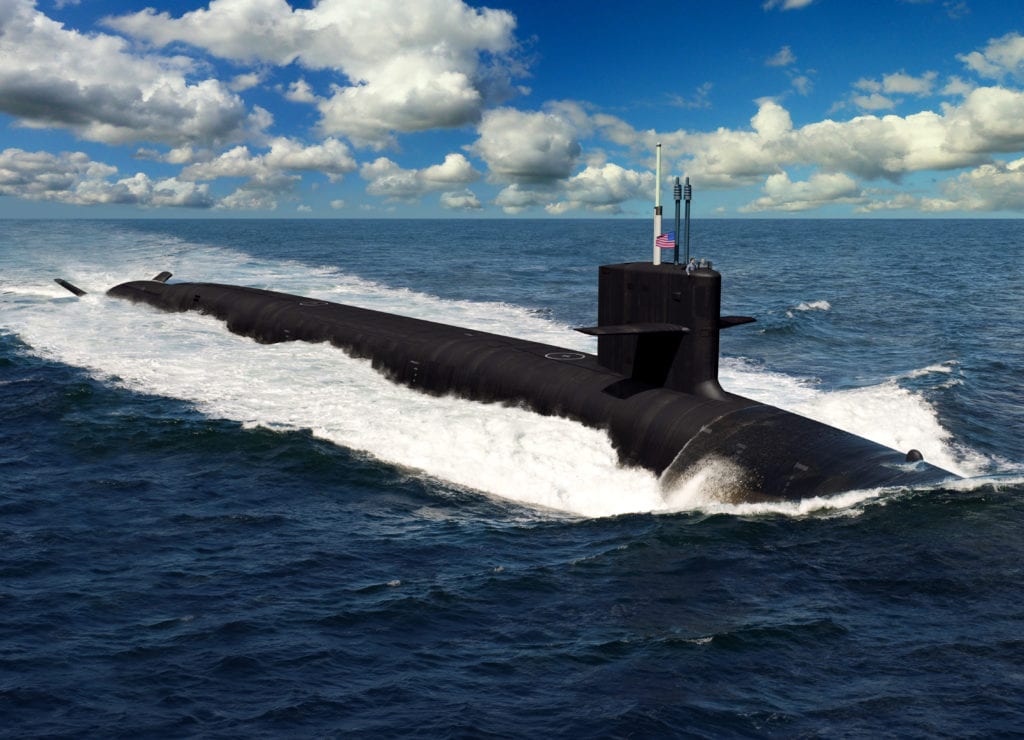
The Columbia-class submarine is among the top priorities in the fiscal year 2022 budget released on May 28. U.S. NAVY

ARLINGTON, Va. — The Navy Department’s fiscal 2022 budget requests totals $211.7 billion, a $3.8 billion increase over the enacted 2021 budget. The request includes funds for eight battle force ships and 107 aircraft. 

The Navy Department’s $211.7 billion request is part of the Defense Department’s $715 billion request. Defense programs in the Department of Energy total $37.9 billion. 

The department’s request includes $71.2 billion for operations and maintenance; $56.6 billion for personnel; $58.2 billion for procurement; $22.6 billion for research, development, test and evaluation; $150 million for revolving and management funds. 

SHIPS 

The procurement budget requests $22.6 billion for shipbuilding, a 3% reduction from the 2021 amount of $23.3 billion. The administration is planning incremental funding for the Columbia-class ballistic-missile submarine (SSBN) as well as the fifth increment of the detailed design and construction of the third Ford-class aircraft carrier, the future USS Enterprise and the fourth increment for the fourth Ford-class CVN, the future Dorie Miller. 

The Navy is planning on procuring two Block V Virginia-class attack submarines (SSNs), each with the Virginia Payload Module and funding advance procurement of the Block VI Virginia version; one Flight III Arleigh Burke-class guided-missile destroyer; one Constellation-class guided-missile frigate (FFG); one John Lewis-class fleet replenishment oiler (T-AO); two Navajo-class towing, salvage and rescue ships (T-ATS); and one T-AGOS(X) ocean-surveillance ship. 

The shipbuilding procurement request also includes two LCAC 100-class ship-to-shore connectors, four LCU 1700-class utility landing craft and five used commercial logistics ships for conversion to sealift ships. Two older LCACs will be given service-life extensions.  

The shipbuilding budget also requests funds toward one America-class amphibious assault ship and an additional increment of funding for the future USS Pittsburgh, a Block II San Antonio-class amphibious platform dock ship.  

RDT&E funds for ships are planned for the Columbia SSBN, Ford-Class CVN, Virginia-class SSN, Future Attack Submarine (SSN(X)), Constellation-class FFG, Future Large Surface Combatant ((DDG(X)), Next-Generation Logistics Ship (NGLS), Large USV, Orca UUV, Snakehead UUV and Mk18 UUV.  

The Navy anticipates delivery of 17 ships in fiscal 2022 and retirement of 15 ships. Deliveries include three Virginia-class SSNs, three Arleigh Burke-class DDGs, one Zumwalt-class DDG, one expeditionary staging base ship (ESB), one Spearhead-class expeditionary fast transport ship, one John-Lewis-class T-AO and one Navajo-class T-ATS.  

Ships planned for retirement include four littoral combat ships (LCS 3, 4, 7 and 9), two Los Angeles-class SSNs, seven Ticonderoga-class guided-missile cruisers (including two not previously planned for retirement — USS Hue City and USS Anzio), one Whidbey Island-class dock landing ship (LSD) and one Powhatan-class fleet ocean tug. Also planned for divestment are the Navy’s 12 Mark VI patrol boats.  

The Navy is decommissioning LCS 1 and 2 in 2021. The service moved the planned retirement of LCS 3 and 4 to 2022. These four ships, currently serving as training and research ships, no longer meet the desired capabilities for the class. LCS 7 and 9 are more modern. The reason LCS 5 was not selected for retirement is that it is preparing for deployment and that it made more sense to select LCS 7 and 9 for budget reasons, according to Rear Adm. John Gumbleton, deputy assistant secretary of the Navy for budget, briefing reporters May 28. 

AIRCRAFT 

Funding of aircraft procurement for 2022 totals $16.5 billion, a 15.6% decrease from 2021’s $19.5 billion. Navy aircraft requested for 2022 include 20 F-35C Lightning II strike fighters, five E-2D Advanced Hawkeye battle management aircraft, three CMV-22B Osprey carrier-onboard-delivery aircraft and 36 TH-73A training helicopters. For the Marine Corps, the request includes funds for 17 F-35Bs, six KC-130J Super Hercules tanker/transport aircraft, nine CH-53K King Stallion heavy-lift helicopters, five MV-22B Osprey assault transport tiltrotor aircraft and six MQ-9 extended-range Reaper medium-altitude surveillance unmanned aerial vehicles. 

Notably, the budget contains no further funding for the F/A-18E/F Super Hornet strike fighter, P-8A Poseidon maritime patrol reconnaissance aircraft, the VH-92A presidential transport helicopter or the training version of the E-6B Mercury strategic communications aircraft. Procurement of these types has been completed, assuming no additions by the Congress. There is no 2022 request for funding for the MQ-4C Triton high-altitude, long-endurance UAV in that there is a pause in procurement while the UAV’s Integrated Functional Capability 4 is matured. 

RDT&E funds are programed for the F-35, CH-53E, VH-92A, Next-Generation Jammer, F/A-18E/F Advanced Infrared Search and Track (IRST), and MQ-25 Stingray UAV. 

The 2022 budget plan calls for accelerated divestment of legacy F/A-18A-D Hornet strike fighters, moving up the divestment of the 55 on strength from 2024 to 2022 and replacing them in the adversary role with F-16s transferred from the Air Force. Divestment of the RQ-4A Global Hawk Broad-Area Maritime Surveillance-Demonstrator UAV is planned for acceleration from 2023 to 2022, with the savings invested in higher priorities. 

WEAPONS 

Weapons procurement is slightly less that that of 2021, with $4.2 billion requested for 2022 to purchase 1,092 missiles and torpedoes, compared with $4.5 billion for 2,095 weapons in 2021. One missile type being added to the inventory for the first time is the AGGM-158B Joint Air-to-Surface Standoff Missile (JAASM), which has up until now has been an Air Force-only weapon. 

RDT&E funds are programmed for the Conventional Prompt Strike hypersonic weapon and the Navy Family of Laser Systems. 

PERSONNEL 

The 2022 budget calls for a reduction of active-component Sailors by 1,600 to a level of 346,200 Sailors. Part of the decrease is a planned result of some ship decommissionings. The reserve component is planned for a decrease of 200 personnel to 58,600 Sailors. 


Navy Tests New Hypersonic Rocket Motor

A 2020 photo of a successfully tested hypersonic glide body in a flight experiment executed by the U.S. Navy and U.S. Army from the Pacific Missile Range Facility, Kauai, Hawaii. U.S. ARMY

WASHINGTON — Navy Strategic Systems Programs (SSP) successfully conducted a test of the First Stage Solid Rocket Motor (SRM) on May 27 in Promontory, Utah, as part of the development of the Navy’s Conventional Prompt Strike (CPS) offensive hypersonic strike capability and the Army’s Long Range Hypersonic Weapon (LRHW), the Navy said in a release. 

This was the initial live fire test of the first stage SRM and is a vital step in the development of a Navy-designed common hypersonic missile that will be fielded by both the Navy and Army.  
 
The first stage SRM will be part of a new missile booster for the services, and will be combined with a Common Hypersonic Glide Body (CHGB) to create the common hypersonic missile. Each service will use the common hypersonic missile, while developing individual weapon systems and launchers tailored for launch from sea or land. This successful SRM test represents a critical milestone leading up to the next Navy and Army joint flight test, which will take place in the first quarter of fiscal tear 2022, and ultimately the fielding of the CPS and LRHW weapon systems. 
 
The Department of Defense successfully tested the CHGB on March 20, 2020. The services are working closely with government national laboratories and industry to continue development and production of the CHGB. The Navy is the lead designer, and the Army leads production. 
 
Information gathered from this and future tests will further inform the services offensive hypersonic technology development. The Department of Defense is working in collaboration with industry, government national laboratories and academia to field hypersonic warfighting capability in the early-to mid-2020s. 
 
Hypersonic weapons, capable of flying at speeds greater than five times the speed of sound (Mach 5), are highly maneuverable and operate at varying altitudes. In a matter of minutes, Navy and Army warfighters can defeat high-value targets hundreds or even thousands of miles away. Delivering hypersonic weapons is one of the DoD’s highest priorities. 
 
The common hypersonic missile design for sea and land-based applications provides economies of scale for future production and relies upon a growing U.S. hypersonics industrial base. 


Cutter Active Returns From Counter-Drug Patrol, $106M in Cocaine Seized

Members with the Coast Guard Pacific Tactical Law Enforcement Team board a suspected drug smuggling vessel in the Easter Pacific Ocean, May 5, 2021. The drugs, worth an estimated $220 million, were seized in international waters of the Eastern Pacific Ocean during April and May. U.S. COAST GUARD

PORT ANGELES, Wash. — The crew of the Coast Guard Cutter Active (WMEC 618) returned to their homeport May 27 in Port Angeles after a 58-day counter-drug patrol in the Eastern Pacific Ocean, the Coast Guard Pacific Area said in a May 28 release. 
 
The 55-year-old cutter and crew patrolled international waters off the coasts of Central America and Mexico in support of the Coast Guard and partner agencies’ maritime illicit drug interdiction missions. 
 
The Active intercepted two vessels suspected of smuggling illicit narcotics. Active’s crew seized approximately 5,650 pounds of cocaine worth an estimated $106.8 million from the combined interdictions. One of the two smuggling vessels, which are designed to evade detection, was a low-profile vessel. Low-profile vessels ride low in the water and are often painted blue to camouflage with the ocean, which make them more difficult to track. The contraband and suspects were transferred to the custody of federal law enforcement agencies for prosecution. 
 
Active’s crew offloaded approximately 11,500 pounds of seized cocaine in San Diego on May 19, representing four suspected drug smuggling vessel interdictions made by crews aboard the Active, the Coast Guard Cutters Steadfast (WMEC 623) and Tahoma (WMEC 908). 
 
The cutter also conducted two search-and-rescue missions during their deployment. Active’s crew rescued four fishermen from a stranded fishing vessel and towed the disabled vessel until another Coast Guard cutter completed the search-and-rescue case. The second case Active responded to was a distress call for a jet skier injured in the water. Active’s health services technician provided first aid to the person and stabilized the injured jet skier for further transfer by Coast Guard Station San Diego to waiting emergency medical services personnel.  
 
Active was accompanied by an MH-65 Dolphin helicopter from Coast Guard Air Station San Francisco and personnel from the Helicopter Interdiction Tactical Squadron (HITRON) from Jacksonville, Florida. The helicopter and HITRON aircrews are capable of utilizing airborne use of force including disabling fire on the engines of non-compliant vessels suspected of carrying contraband. Additionally, Active’s crew was supplemented by four Pacific Tactical Law Enforcement Team (PAC-TACLET) members from San Diego. PAC-TACLET’s specialization in law enforcement and knowledge of the Law of the Sea enhanced Active’s ability to identify, interdict, and process suspected drug smugglers. 
 
“This patrol was another superb example of teamwork across the interagency,” said Cmdr. James M. O’Mara IV, Active’s commanding officer. “Beyond our lifelines, interagency and partner nations shared information to develop cases, while U.S. Navy, Customs and Coast Guard aircraft detected targets of interest. Active’s crew leaned forward, operated aggressively and executed their missions with distinction.” 
 
This patrol marked O’Mara’s last patrol as commanding officer of the Active. Assuming command in January of 2019, O’Mara sailed over 55,000 miles throughout his nearly two and a half year tenure as Active’s commanding officer. O’Mara was relieved by Cmdr. Brian J. Tesson on May 24 during a change of command ceremony aboard the cutter in the San Francisco Bay while transiting home. O’Mara will be reporting to Pacific Area Cutter Forces in June. Tesson reports to the Active from the Coast Guard Civil Engineering Unit Oakland where he served as the executive office. 
 
Commissioned in 1966, Active is a 210-foot Reliance-class medium-endurance cutter homeported in Port Angeles and routinely deploys in support of counter-drug, migrant interdiction, fisheries, and search-and-rescue and homeland security missions. 


Navy’s RQ-4A BAMS-D Surveillance UAV Passes 40K Flight Hours

BAMS-D, which has been operational since 2009, surpassed 40,000 flight hours during a U.S. Central Command mission with the Coast Guard on April 13. NORTHROP GRUMMAN

SAN DIEGO — Northrop Grumman’s autonomous high-altitude, long-endurance (HALE) Broad Area Maritime Surveillance-Demonstrator (BAMS-D) system surpassed 40,000 flight hours during a routine mission in the U.S. Central Command (USCENTCOM) area of operations April 13, the company said in a May 27 release.

“This milestone in the BAMS-D program demonstrates Northrop Grumman’s commitment to delivering critical capabilities to our customers that provide an advantage to U.S. and coalition partners in theater,” said Doug Shaffer, vice president and program manager, Triton programs, Northrop Grumman. “BAMS-D providing operational support well beyond its intended demonstration period highlights the unrivaled strategic value of autonomous maritime HALE while the Navy integrates the MQ-4C Triton into its vital maritime patrol mission.”

BAMS-D entered operational service for the U.S. Navy in 2009. Originally intended to be a six-month demonstration deployment, BAMS-D has supported U.S. Navy intelligence, surveillance and reconnaissance (ISR) missions in USCENTCOM for more than 12 years.

“BAMS-D sustainment is truly a Northrop Grumman cross-enterprise effort and is a testament to our unwavering commitment to mission readiness,” continued Shaffer.

“This is a significant milestone for any aircraft, but especially remarkable for an originally planned six-month demonstration system,” said Capt. James P. Johnston, commander, Task Force 57. “The persistence and dependability of the BAMS-D system and the resilience of the personnel who operate the platform here in 5th Fleet, are essential in sustaining maritime security and freedom of navigation throughout the region.”

While BAMS-D remains in operational service, its replacement, the MQ-4C Triton, completed its first year of an early operating capability deployment in the U.S. Indo-Pacific area of responsibility. The Triton system is currently progressing toward a multi-intelligence configuration and will ultimately support five operational orbits for the Navy with 68 operational aircraft. Australia is set to receive their first Triton in 2023 as part of a cooperative development program that will enable intelligence sharing between the U.S. and Australia.

Northrop Grumman’s family of autonomous high-altitude, long-endurance systems perform critical wide-area ISR collection. Today, autonomous HALE systems operate across the globe, with 24-plus hour endurance, collecting essential ISR data over land and sea to enable rapid, informed decision-making. In the future, these systems will connect the joint force, implementing advanced autonomy and AI and machine learning while delivering indispensable capabilities with fewer people to provide information at the speed of relevance.