Ingalls Shipbuilding Awarded Life-Cycle Engineering Contract on Navy’s LPD 17 Program
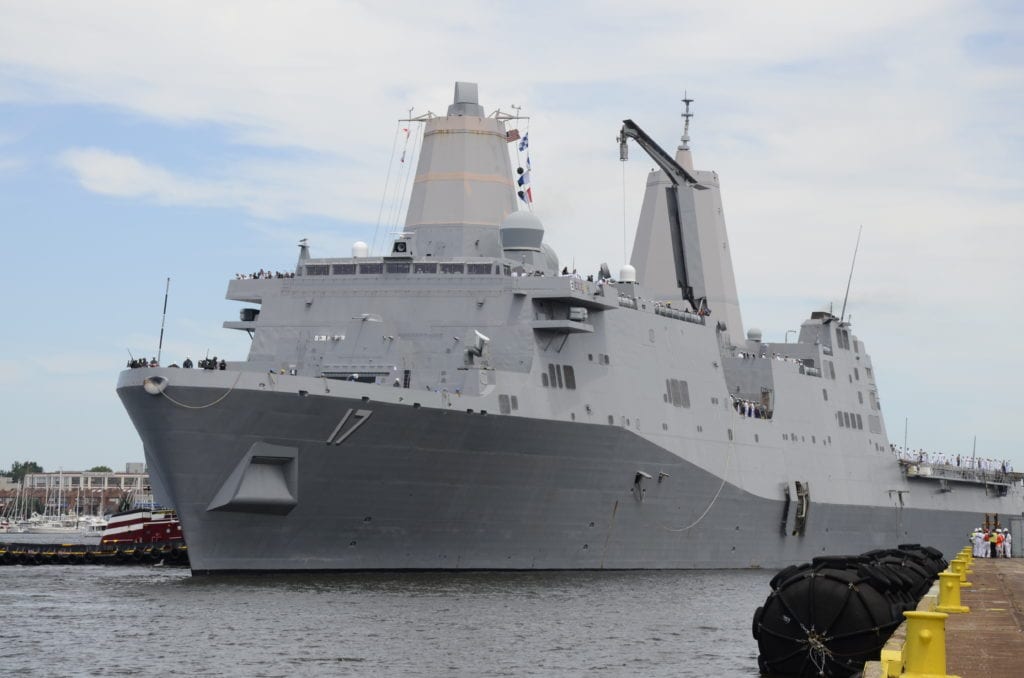
USS San Antonio (LPD 17) approaches its assigned berthing space in Baltimore, Maryland, in this 2012 photo. Ingalls Shipbuilding has been awarded a contract for life-cycle engineering and support services for the San Antonio class of amphibious transport docks. U.S. Navy / Joseph P. Cirone
PASCAGOULA, Miss. — Huntington Ingalls Industries’ Ingalls Shipbuilding division has been awarded a cost-plus-fixed-fee contract for life-cycle engineering and support services on the U.S. Navy’s San Antonio (LPD 17) class of amphibious transport docks, the company said in a Feb. 26 release. This follow-on contract consists of a base contract valued at $36.9 million with a cumulative value of $213.9 million if all options are exercised.
“This contract enables Ingalls to continue providing LPD support and services that are critical to the sustainment of the Navy’s amphibious fleet,” said Ingalls Shipbuilding President Brian Cuccias. “Our talented workforce has the knowledge and experience required to perform this important work, and we are committed to ensuring these state-of-the-art warships serve our nation well into the future.”
Services provided in this contract include engineering change management; systems engineering and integration; supply chain management; training for new LPD 17-class shipboard systems; and the execution of industrial post-delivery availabilities.
“We appreciate the Navy’s continued investment in our experienced team and their reliance on the support we provide,” said David King, Ingalls’ LPD 17 life-cycle program manager. “This contract builds on our strong partnership with the Navy in the construction and post-delivery management of Navy ships. We look forward to supporting these ships as they evolve to meet the changing threat environment.”
San Antonio-class ships are 684 feet long and 105 feet wide and displace approximately 25,000 tons. Their principal mission is to deploy the combat and support elements of Marine expeditionary units and brigades. The ships can carry up to 800 troops and have the capability of transporting and debarking landing craft air cushion or conventional landing craft, augmented by helicopters or vertical take-off and landing aircraft such as the MV-22. These ships will support amphibious assault, special operations or expeditionary warfare missions through the first half of the 21st century.
Families Welcome Nimitz Carrier Strike Group Sailors after 331 Days of Separation
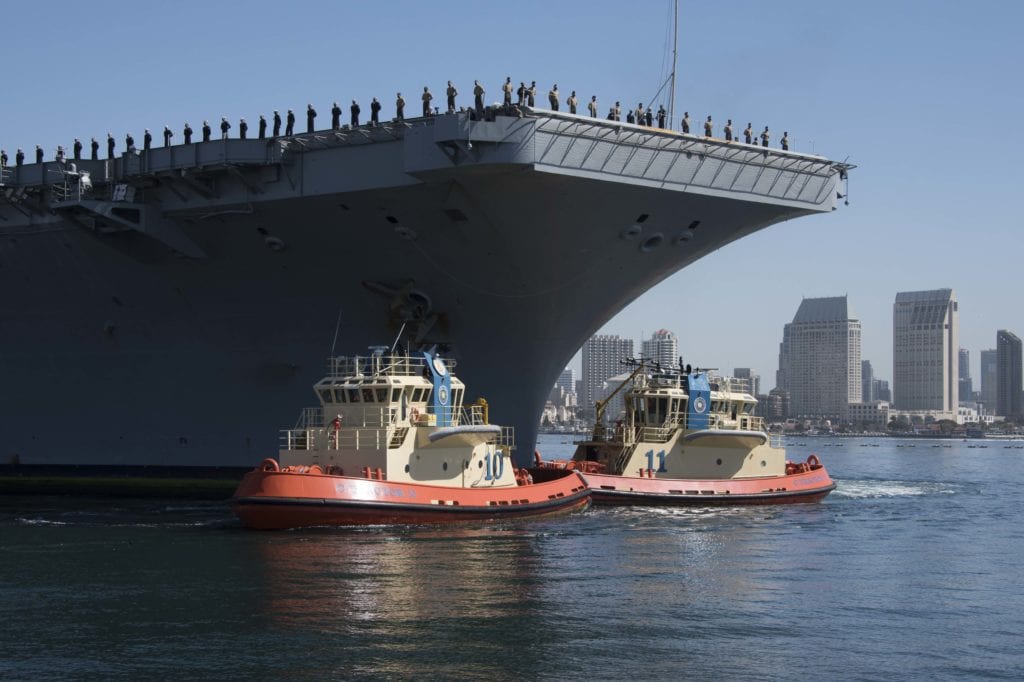
Aircraft carrier USS Nimitz (CVN 68) arrives Naval Air Station North Island on Feb. 26. Nimitz Carrier Strike Group returned after a more than 10-month deployment to U.S. 5th Fleet and U.S. 7th Fleet, which included freedom of navigation operations and participation in operations Freedom’s Sentinel, Inherent Resolve and Octave Quartz. U.S. Navy / Mass Communication Specialist 3rd Class Timothy Heaps
ARLINGTON, Va. — The Nimitz Carrier Strike Group (CSG) returned to San Diego Feb. 26 after nearly 11 months deployed in the U.S. 5th and 7th Fleet areas of operation (AOR), the Navy said. The strike group was the first to deploy after the onset of the COVID-19 pandemic.
USS Nimitz departed its homeport, Naval Base Kitsap – Bremerton, on April 27, 2020, for integrated training and began its deployment heading west on June 8. The crew began sequestering April 7, resulting in a separation from families of 331 days by the time the strike group returned.
During the deployment, the strike group supported operations Inherent Resolve, Freedom’s Sentinel and Octave Quartz in the U.S. Fifth Fleet area of operation, said Rear Adm. James Kirk, the strike group commander, in a Feb. 26 teleconference with reporters.
The strike group includes Carrier Strike Group (CSG) 11, aircraft carrier USS Nimitz (CVN 68), embarked Carrier Air Wing (CVW) 17, Destroyer Squadron 9, Ticonderoga-class guided-missile cruiser USS Princeton (CG 59) and Arleigh Burke-class guided-missile destroyer USS Sterett (DDG 104). The USS Arleigh Burke-class guided-missile destroyer USS John Paul Jones also operated with the group but remains in the 5th Fleet AOR.
The strike group made the lengthy deployment with no liberty port calls, a necessity in the COVID era. The Nimitz and Princeton pulled alongside a pier four times and the Sterett two times during the deployment, but only for pier-side logistics.
During the deployment, the Nimitz CSG conducted dual carrier operations twice with the USS Theodore Roosevelt CSG and thrice with the USS Ronald Reagan CSG. The Nimitz CSG also operated with ships of the Indian navy, Royal Australian Navy and Japanese Maritime Self-Defense Force.
Nimitz disembarked CVW-17 and began its return to its homeport at Naval Base Kitsap – Bremerton. CVW-17 includes Strike Fighter Squadron (VFA) 137, VFA 94, VFA 22, Marine Fighter Attack Squadron (VMFA) 323, Electronic Attack Squadron (VAQ) 139, Carrier Airborne Early Warning Squadron (VAW) 116, Helicopter Sea Combat Squadron (HSC) 6, Helicopter Maritime Strike Squadron (HSM) 73 and Fleet Logistics Support Squadron (VRC) 30.
SECDEF Announces More Flag Officer Nominations
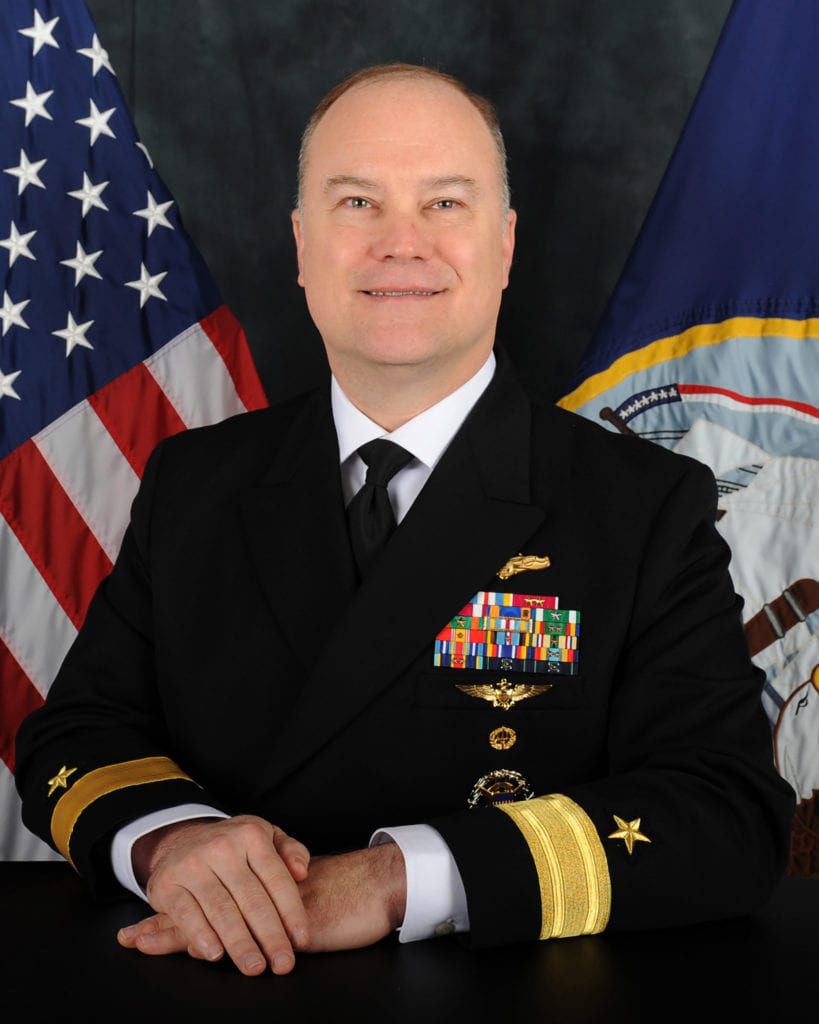
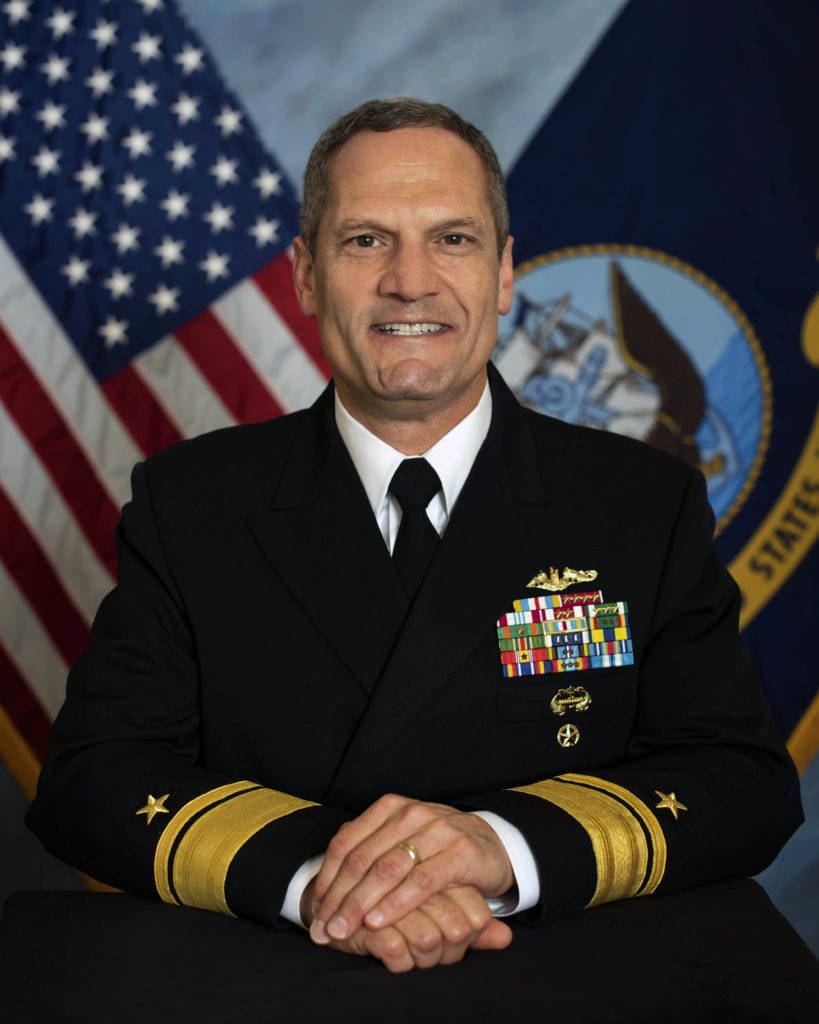
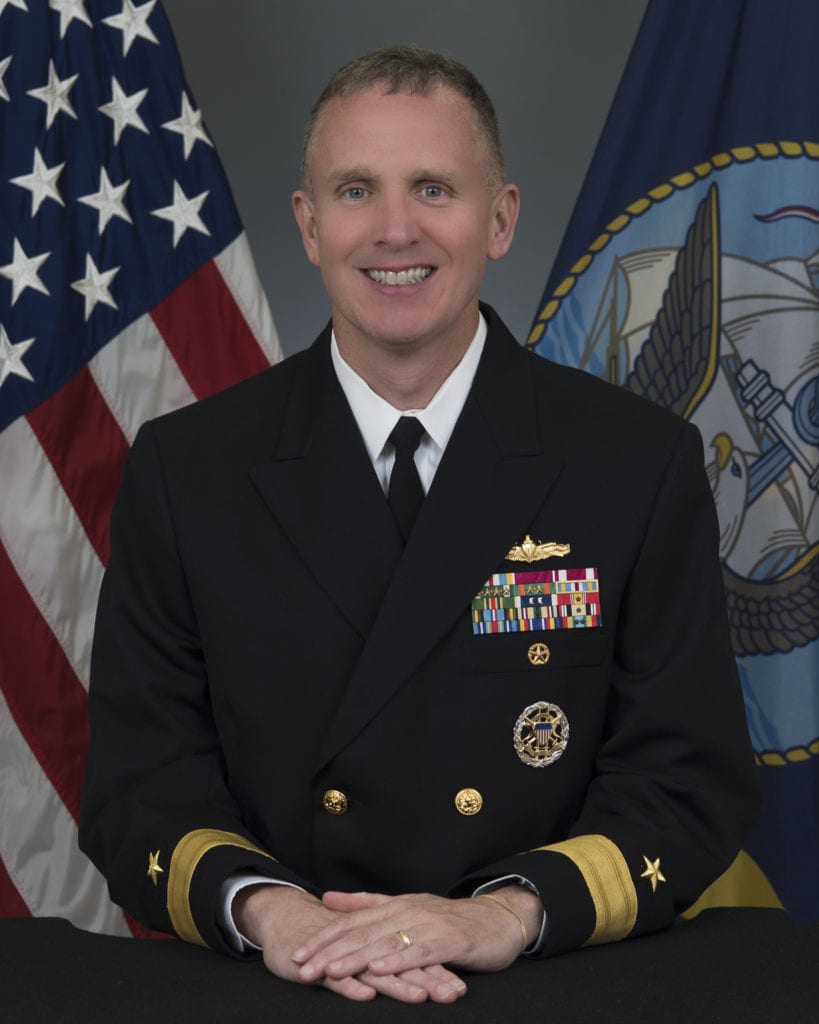
Rear Adm. (lower half) William E. Chase III has been nominated for appointment to the rank of rear admiral, one of several flag officer nominations announced Feb. 26.
ARLINGTON, Va. — Secretary of Defense Lloyd J. Austin III announced Feb. 26 that the president has made the following nominations:
Rear Adm. (lower half) William E. Chase III has been nominated for appointment to the rank of rear admiral. Chase is currently serving as senior military advisor for cyber policy to the under secretary of defense for policy; and the deputy principal cyber advisor to the secretary of defense, Washington, D.C.
Rear Adm. (lower half) Christopher C. French has been nominated for appointment to the rank of rear admiral. French is currently serving as legal counsel to the chairman of the Joint Chiefs of Staff, Washington, D.C.
Rear Adm. (lower half) William C. Greene has been nominated for appointment to the rank of rear admiral. Greene is currently serving as fleet maintenance officer, U.S. Atlantic Fleet, Norfolk, Virginia.
Rear Adm. (lower half) Joseph D. Noble Jr., has been nominated for appointment to the rank of rear admiral. Noble is currently serving as commander, Naval Supply Systems Command Weapons Systems Support, Philadelphia.
Rear Adm. (lower half) John A. Okon has been nominated for appointment to the rank of rear admiral. Okon is currently serving as commander, Naval Meteorology and Oceanography Command, Stennis Space Center, Mississippi.
Rear Adm. (lower half) Scott W. Pappano has been nominated for appointment to the rank of rear admiral. Pappano is currently serving as program executive office, Columbia, Washington, D.C.
Rear Adm. (lower half) Dean A. VanderLey has been nominated for appointment to the rank of rear admiral. VanderLey is currently serving as commander, Naval Facilities Engineering Systems Command Atlantic with additional duties as fleet civil engineer (N01CE), U.S. Atlantic Fleet, Norfolk, Virginia.
Capt. Kristin Acquavella has been nominated for appointment to the rank of rear admiral (lower half). Acquavella is currently serving as director, plans and policies, N415, Office of the Chief of Naval Operations, Washington, D.C.
Capt. Maria L. Aguayo has been nominated for appointment to the rank of rear admiral (lower half). Aguayo is currently serving as chief of staff, Naval Facilities Engineering Systems Command, Washington, D.C.
Capt. Joseph B. Hornbuckle has been nominated for appointment to the rank of rear admiral (lower half). Hornbuckle is currently serving as chief of staff, Naval Air Warfare Center Aircraft Division, Patuxent River, Maryland.
Capt. Ronald J. Piret has been nominated for appointment to the rank of rear admiral (lower half). Piret is currently serving as chief of staff, Naval Meteorology and Oceanography Command, John C. Stennis Space Center, Hancock County, Mississippi.
Capt. Anthony E. Rossi has been nominated for appointment to the rank of rear admiral (lower half). Rossi is currently serving as major program manager, Mission Integration and Special Programs Office, PMA 298, Patuxent River, Maryland.
Capt. Stuart C. Satterwhite has been nominated for appointment to the rank of rear admiral (lower half). Satterwhite is currently serving as deputy director, enterprise support, Office of the Chief of Naval Personnel, Washington, D.C.
Capt. Ralph R. Smith III has been nominated for appointment to the rank of rear admiral (lower half). Smith is currently serving as director, Maritime Operations Center, U.S. Tenth Fleet/U.S. Fleet Cyber Command, Fort Meade, Maryland.
Navy Conducts First At-Sea F-35C Engine Power Module Replenishment
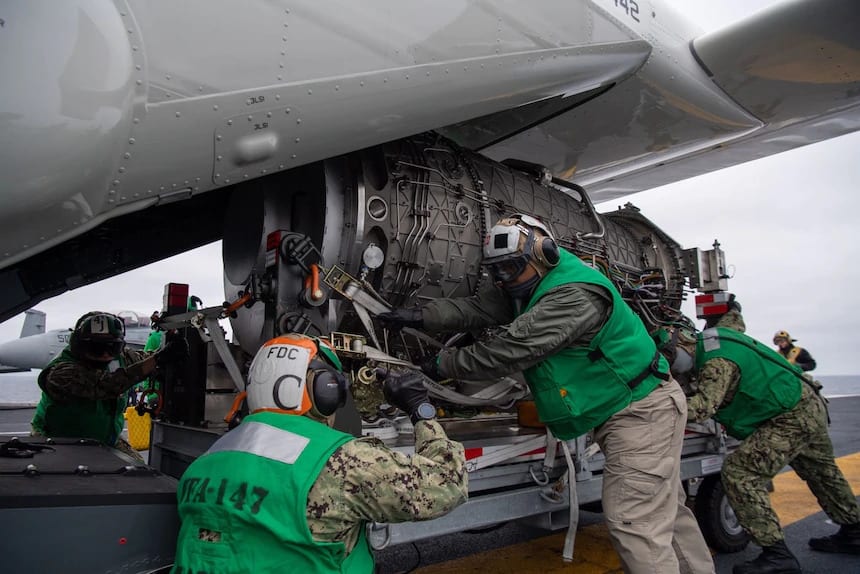
The “Titans” of Fleet Logistics Multi-Mission Squadron (VRM) 30 and members of Carrier Air Wing (CVW) 2 successfully delivered an F-35C power module aboard USS Carl Vinson (CVN 70) in the U. S. Navy’s first, at-sea replenishment for this component. U.S. Navy
PACIFIC OCEAN – The “Titans” of Fleet Logistics Multi-Mission Squadron (VRM) 30 and members of Carrier Air Wing (CVW) 2 successfully delivered an F-35C power module aboard USS Carl Vinson (CVN 70) in the U. S. Navy’s first, at-sea replenishment for this component, the ship reported in a Feb. 26 release.
This success follows a November 2020 milestone, during which VRM-30, CVW-2 and Vinson conducted the Navy’s first landings, take-offs, and refueling of a Navy CMV-22B Osprey from an aircraft carrier.
The at-sea power module replenishment evolution consisted of loading, transporting and unloading the F135 power module from a shore-based location to the carrier by way of a CMV-22B. The power module is an engine component used by all three F-35 Lightning II variants.
The CMV-22B is the U.S. Navy version of the V-22 Osprey, a multi-engine, dual-piloted, self-deployable, medium lift, vertical takeoff and landing (VTOL) tilt-rotor aircraft. The CMV-22B can transport cargo and passengers as far as 1,150 nautical miles; provides enhanced survivability and beyond-line-of-sight communications; and has the required cargo capacity and fast cargo loading/unloading. Coupled with its ability to transport the F-35 power module inside its cargo bay, CMV-22B is the ideal choice to provide required carrier on-board delivery capabilities for F-35C operations at sea. The delivery marks a milestone in the integration of CMV-22B to the Carrier Air Wing, validates the F135 modular maintenance concept at sea, and most importantly supports future carrier air wing deployments with next-generation platforms.
“The CMV-22B is a great addition to the carrier air wing,” said Capt. Matt Thrasher, commander, CVW-2. “The Osprey is a robust logistical platform that not only supports the F-35C but also gives the entire air wing increased range and transport capacity. Its addition to our team ensures that CVW-2 remains ready to perform as-advertised while on deployment.”
CVW-2 is currently embarked aboard Vinson under the command of Carrier Strike Group (CSG) 1.
CVW-2 is leading the charge in introducing and integrating the next generation of aircraft and capabilities in the Fleet as the U.S. Navy’s first Carrier Air Wing to deploy with the F-35C Lightning II, E-2D Hawkeye and the CMV-22B Osprey. The Navy’s next iteration of the Carrier Air Wing will be more lethal and survivable through the integration of organic fourth-generation kinematics and fifth-generation information and survivability, increased command and control and airborne electronic attack capacity, all sustained with a reliable logistical support platform.
“With the addition of the newest fifth-generation aircraft, the Navy has delivered the world’s most capable, lethal and ready air wing to our strike group,” said Rear Adm. Timothy J. Kott, commander, CSG-1. “Delivering the right balance of presence and power, including airpower supremacy, strike groups continue to be one of our nation’s primary on-call assets in times of need. By maintaining a lethal, ready strike group, manned by the world’s most skilled Sailors and outfitted with the best equipment, fifth generation aircraft will help America maintain our advantage at sea and protect our nation for years to come.”
Capable of embarking both the F-35C and the CMV-22B, Vinson is the first aircraft carrier equipped to support fifth-generation aircraft. With its recent modifications, no other weapons system has the responsiveness, endurance, multi-dimensional might, inherent battlespace awareness or command and control capabilities of the Vinson and CVW-2.
Upgrades included enhanced jet blast deflectors able to take the increased heat generated by the F-35C and the Autonomic Logistics Information System (ALIS), the new computer network that supports the unique maintenance and tactical operations functions of the advanced aircraft.
“Our crews and staffs have done a fantastic job during integrated operations with the new aircraft and associated upgrades,” said Capt. P. Scott Miller, Vinson’s commanding officer. “We are truly a team. The successful replenishment of the power module is another testament to that team and our Sailors, who are the most dedicated, best trained and well educated in the world. The continued professionalism and warfighter spirit they demonstrate each and every day is the number one key to our success time and time again.”
Vinson is currently completing a series of “work ups” and certifications in preparation for future operational tasking.
Navy Announces Flag Officer Assignments
Rear Adm. Jeffrey T. Jablon was assigned commander, Submarine Force, U.S. Pacific Fleet, one of numerous flag officer assignments announced Feb. 25. U.S. Navy
ARLINGTON, Va. — The acting secretary of the Navy and chief of naval operations announced on Feb. 25 the following flag assignments:
Rear Adm. Jeffrey T. Jablon will be assigned as commander, Submarine Force, U.S. Pacific Fleet, Pearl Harbor, Hawaii. Jablon is currently serving as director, Military Personnel Plans and Policy Division, N13, Office of the Chief of Naval Operations, Arlington, Virginia.
Rear Adm. (lower half) James A. Kirk, selected for promotion to rear admiral, will be assigned as commander, Carrier Strike Group Fifteen, San Diego. Kirk is currently serving as commander, Carrier Strike Group Eleven, Everett, Washington.
Rear Adm. (lower half) Andrew J. Loiselle, selected for promotion to rear admiral, will be assigned as director, Air Warfare Division, N98, Office of the Chief of Naval Operations, Washington, D.C. Loiselle is currently serving as commander, Carrier Strike Group Four, Norfolk, Virginia.
Rear Adm. (lower half) Brendan R. McLane, selected for promotion to rear admiral, will be assigned as commander, Naval Surface Force, Atlantic, Norfolk, Virginia. McLane is currently serving as special assistant to the commander, U.S. Fleet Forces, Norfolk, Virginia.
Rear Adm. (lower half) John A. Okon, selected for promotion to rear admiral, will be assigned as director, Warfare Integration Directorate, N2/N6F, Office of the Chief of Naval Operations, Washington, D.C. Okon is currently serving as commander, Naval Meteorology and Oceanography Command, Stennis Space Center, Mississippi.
Rear Adm. (lower half) James P. Waters III, selected for promotion to rear admiral, will be assigned as director, Military Personnel Plans and Policy Division, N13, Office of the Chief of Naval Operations, Arlington, Virginia. Waters is currently serving as commander, Submarine Group Two, Norfolk, Virginia.
Rear Adm. (lower half) Jeffrey T. Anderson will be assigned as commander, Carrier Strike Group Three, Bremerton, Washington. Anderson is currently serving as deputy director for political-military affairs (Asia), J5, Joint Staff, Washington, D.C.
Rear Adm. (lower half) Michael W. Baze will be assigned as commander, Expeditionary Strike Group Three, San Diego. Baze is currently serving as director of Maritime Headquarters, U.S. Naval Forces Europe/Africa/Sixth Fleet, Naples, Italy.
Rear Adm. (lower half) Richard T. Brophy Jr., will be assigned as commander, Carrier Strike Group Four, Norfolk, Virginia. Brophy is currently serving as commander, Naval Aviation Warfighting Development Center, Fallon, Nevada.
Rear Adm. (lower half) Robert B. Chadwick II will be assigned as commander, Carrier Strike Group Nine, San Diego, California. Chadwick is currently serving as commander, Navy Region Hawaii; and commander, Naval Surface Group, MIDPAC, Pearl Harbor, Hawaii.
Rear Adm. (lower half) Jeffrey J. Czerewko will be assigned as director, fleet integrated readiness and analysis, N02R, U.S. Atlantic Fleet, Norfolk, Virginia. Czerewko is currently serving as deputy director, global operations, J39, J3, Joint Staff, Washington, D.C.
Rear Adm. (lower half) Brian L. Davies will be assigned as commander, Submarine Group Two, Norfolk, Virginia. Davies is currently serving as special assistant to the commander, Navy Personnel Command, Millington, Tennessee.
Rear Adm. (lower half) Michael P. Donnelly will be assigned as commander, Task Force Seven Zero; and commander, Carrier Strike Group Five, Yokosuka, Japan. Donnelly is currently serving as commander, Navy Region Korea; commander, U.S. Naval Forces Korea; and commander, Naval Component, U.S. Forces Korea, United Nations Command, Korea.
Rear Adm. (lower half) Christopher M. Engdahl will be assigned as commander, Expeditionary Strike Group Seven; and commander, Amphibious Force, Seventh Fleet, Okinawa, Japan. Engdahl is currently serving as president, Board of Inspection and Survey, Virginia Beach, Virginia.
Rear Adm. (lower half) Kenneth W. Epps will be assigned as commander, Naval Supply Systems Command Weapons Systems Support, Philadelphia. Epps is currently serving as deputy chief of staff for Fleet Ordnance and Supply/Fleet Supply Officer, N41, U.S. Fleet Forces Command Fleet, Norfolk, Virginia.
Rear Adm. (lower half) Robert M. Gaucher will be assigned commander, Submarine Group Nine, Silverdale, Washington. Gaucher is currently serving as director, Maritime Headquarters (N03), U.S. Pacific Fleet, Pearl Harbor, Hawaii.
Rear Adm. (lower half) Gregory C. Huffman will be assigned as commander, Carrier Strike Group Twelve, Norfolk, Virginia. Huffman is currently serving as director, operations and plans, N31, Office of the Chief of Naval Operations, Washington, D.C.
Rear Adm. (lower half) Kevin P. Lenox is currently assigned as deputy director for operations, J3, U.S. Central Command, MacDill Air Force Base, Florida. Lenox previously served as branch head, Joint Intelligence Operations Center, J3, U.S. Central Command, MacDill Air Force Base, Florida.
Rear Adm. (lower half) Daniel P. Martin will be assigned as commander, Carrier Strike Group One, San Diego. Martin is currently serving as senior military advisor to the assistant secretary of state for political-military affairs, Washington, D.C.
Rear Adm. (lower half) Wesley R. McCall will be assigned as commander, Navy Region Southeast, Jacksonville, Florida. McCall is currently serving as executive assistant to the assistant secretary of the Navy (energy, installations and environment), Washington, D.C.
Rear Adm. (lower half) John V. Menoni will be assigned as commander, Expeditionary Strike Group Two, Virginia Beach, Virginia. Menoni is currently serving as U.S. Indo-Pacific Command representative, Guam, Commonwealth of the Northern Mariana Islands, Federated States of Micronesia, Republic of Palau; commander, U.S. Naval Forces, Marianas; and commander, Joint Region Marianas, Guam.
Rear Adm. (lower half) Curt A. Renshaw will be assigned as commander, Carrier Strike Group Eight, Norfolk, Virginia. Renshaw is currently serving as deputy commander, U.S. Naval Forces, U.S. Central Command; and deputy commander, Fifth Fleet, Manama, Bahrain.
Rear Adm. (lower half) Philip E. Sobeck will be assigned as commander, Logistics Group, Western Pacific; and commander, Task Force Seven Three, Singapore. Sobeck is currently serving as commander, Expeditionary Strike Group Three, San Diego.
Rear Adm. (lower half) Paul C. Spedero Jr. will be assigned as commander, Joint Enabling Capabilities Command, U.S. Transportation Command, Norfolk, Virginia. Spedero is currently serving as director, fleet integrated readiness and analysis, N02R, U.S. Fleet Forces, Norfolk, Virginia.
Rear Adm. (lower half) Christopher J. Sweeney will be assigned as commander, Carrier Strike Group Eleven, Everett, Washington. Sweeney is currently serving as deputy director for plans and policy, ECJ-5, U.S. European Command, Stuttgart, Germany.
Austin Praises Nimitz Carrier Strike Group for Record-Breaking Deployment
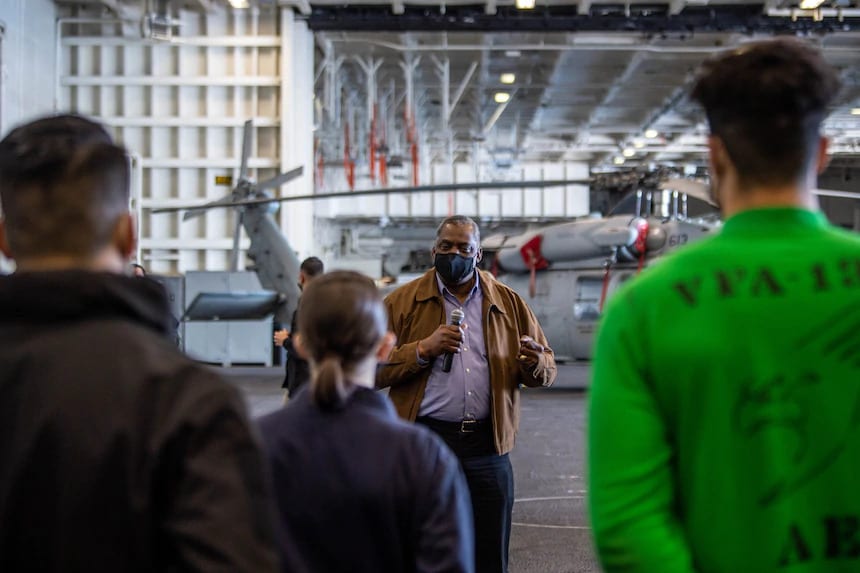
Secretary of Defense Lloyd J. Austin III flew out to the aircraft carrier USS Nimitz off the coast of California to thank the crew for a record-setting deployment in the U.S. Indo-Pacific Command and U.S. Central Command areas of responsibility. Department of Defense
PACIFIC OCEAN – Secretary of Defense Lloyd J. Austin III flew out to the aircraft carrier USS Nimitz off the coast of California to thank the crew for a record-setting deployment, the Department of Defense said in a Feb. 25 release.
The Nimitz Carrier Strike Group is returning after operations in U.S. Indo-Pacific Command and U.S. Central Command (CENTCOM) areas of responsibility. It was the first carrier strike group to deploy under COVID-19 protocols. By the time the carrier strike group reaches home, the Sailors and Marines aboard will have been gone for 321 days.
The Nimitz, the cruiser USS Princeton, and the destroyers USS Sterett and USS Ralph Johnson made up the group.
“You’ve just demonstrated incredible professionalism, resilience and focus,” Austin told the crew over the ship-wide public address system. “It’s been very impressive.”
The group provided carrier support in the Persian Gulf in support of CENTCOM during a particularly tense time with Iran. The group also participated in maritime exercise Malabar 2020 alongside Indian, Australian and Japanese ships. The carrier strike group also participated in dual-carrier operations with the USS Theodore Roosevelt and USS Ronald Reagan carrier strike groups. The group also operated in the South China Sea.
Austin praised the group for these efforts. “You’ve sent a clear message about America’s resolve,” he told the crew. “Any potential adversary out there — in this ocean or any other ocean — has to know when they look at what you accomplished, that the United States takes very seriously our security commitments around the world.”
He thanked the Sailors for working with key allies and partners across the U.S. combatant commands.
The Nimitz Carrier Strike Group had the longest deployment since the Vietnam War. It was lengthened by COVID-19 protocols that called for a quarantine before departing and the elimination of port calls during the deployment. The Navy aims for deployments to be roughly six months. The Nimitz group will be away from family and friends almost twice that.
“I don’t want deployments this long to be the norm,” the secretary said. “And so, we need to take a hard look at that, but you handled it very, very well. You led. You took care of each other in the midst of a pandemic, and you were a team.”
In a news conference with Pentagon reporters on the hangar deck, Austin thanked families in particular. “Their families have been very, very supportive as well,” he said. “And I want to make sure I give them a shout out again, and provide our thanks for their sacrifices.”
The Nimitz was on its way home from the CENTCOM area of responsibility when events in the region necessitated its return. Events such as these happen. He noted the year-long deployments to Iraq and Afghanistan that stretched to 18 months, as an example.
“I understand the stress that, that can place on families,” he said. “So as secretary, what I want to do is make sure that … going forward, we do everything we can to minimize that kind of stress.”
That means taking care of equipment, sure, but really ensuring that service members and their families are taken care of. “We’re going to continue to learn,” he said. “We’re going to continue to make sure we have the resources. [We’re going to ensure] that we’re doing the right things to pace ourselves going forward. Because I really think this is important.”
Overall, the carrier strike group steamed more than 87,300 nautical miles during its deployment. The carrier launched 10,185 sorties totaling 23,410 flight hours logged.
Article by Jim Garamone, DoD News
Rebalanced Navy Can Push Back on Chinese Assertiveness, Analyst Says
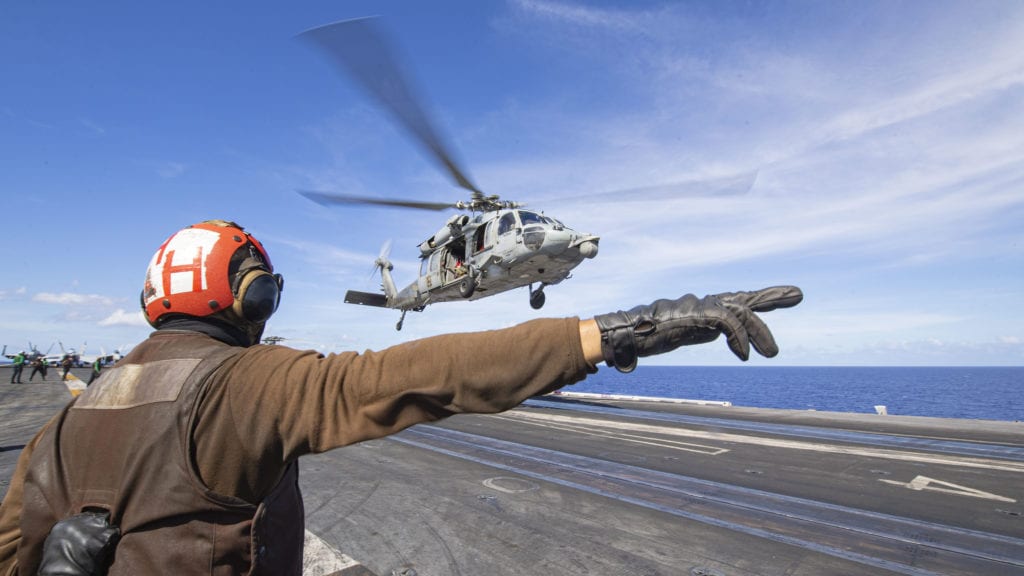
U.S. Navy Airman Christopher Rodriguez signals to an MH-60S Sea Hawk to launch from the USS Theodore Roosevelt (CVN 71), on a deployment to the U.S. 7th Fleet area of operations. The 7th Fleet routinely operates and interacts with 35 maritime nations while conducting missions to preserve and protect a free and open Indo-Pacific Region. One naval analyst says the Navy can more effectively counter Chinese rivalry in the area by designing its fleet more for competition than combat. U.S. Navy / Mass Communication Specialist 3rd Class Erik Melgar
ARLINGTON, Va. — The U.S. Navy can more effectively counter the growing Chinese capabilities by rebalancing its fleet to one designed more for competition than for intense combat, a naval analyst said.
“China and Russia are obviously pursuing an approach to achieving their objectives that is different than what we envisioned from the Soviet Union, which was more of an existential threat, that they were going to pursue armed aggression of a conventional kind against their neighbor,” said Bryan Clark, a former U.S. Navy submarine officer and a naval analyst at the Hudson Institute, speaking in a Feb. 24 webinar sponsored by the Center for Security Policy. “China and Russia are pretty much content to use this gray-zone approach to achieve their objectives over a longer period of time.
“That creates a challenge for the U.S. because we’ve tended to build militaries for World War III and not to fight this protracted series of low-intensity engagements that might ebb and flow in terms of how severe they become because we’ve built a set of high-end platforms and capabilities that are really designed for intense combat but are expensive to operate in peacetime during a competition phase,” Clark said.
Clark said he sees “the need to rebalance the military, in particular the Navy, to deal with competition more than conflict … because that seems to be where China and Russia are really hanging their hats.”
The analyst pointed out that “even as the Chinese navy has grown, you can see that the way it has grown it is one that is designed more for competition. The Chinese navy is predominantly smaller platforms with smaller numbers of missiles. They’re designed to keep the pressure on their neighbors than maintain a presence in the region or around the world. They have a lot lower percentage of larger combatants than the U.S. does. So, I think we need to fundamentally rethink how we organize the military to deal with competition.”
Clark said that “for the [U.S.] Navy that gets us to this idea of rebalancing. How do we increase the number of ships so we can sustain presence overseas, keep up the pressure on our adversaries, not offer them opportunities to take advantage of their neighbors, and also to present them a set of options at various escalations?”
The U.S. Indo-Pacific Command and the U.S 7th Fleet have said they need this adaptability and optionality and want to build a strategy around that idea, Clark said. “If they have more optionality, they’ve got more choices at more rungs of the escalation ladder, they can push back on Chinese assertiveness and aggression.”
“The drives us toward a Navy that’s different from the one we have had, and in our Hudson study we show that you can even build that kind of Navy within the fiscal constraints of PB21 [President’s Budget 2021] plus inflation over the next 30 years. You can rebalance the Navy and build one that’s going to be effective in that competition phase even if it accepts a little risk in its ability to fight the high-end conflict.”
Clark said the Chinese fleet is “still oriented toward the near-seas defense mission, focused on missions like sea control with a relatively small number of missiles. “It’s not designed to go and project power overseas yet. That is something that is still an aspiration, even with the [Chinese] navy having improved in size and quality over the last decade or so.”
He said the U.S. Navy could try to improve its ability to push back on the perception of the Chinese that their near seas are secure by continuing to field capable small surface combatants — and large surface combatants to a lesser degree.
Clark asserts that such a pushback would distract the Chinese attention from developing power-projection platforms “like large aircraft carriers and amphibious assault ships that the Chinese have just begun to field.”
The U.S. Navy’s shift to a larger fleet with more combatants that are smaller than their predecessors of smaller ships reflects this, he said.
Cutter Kimball Conducts Patrol to Increase Maritime Presence and Support in Pacific
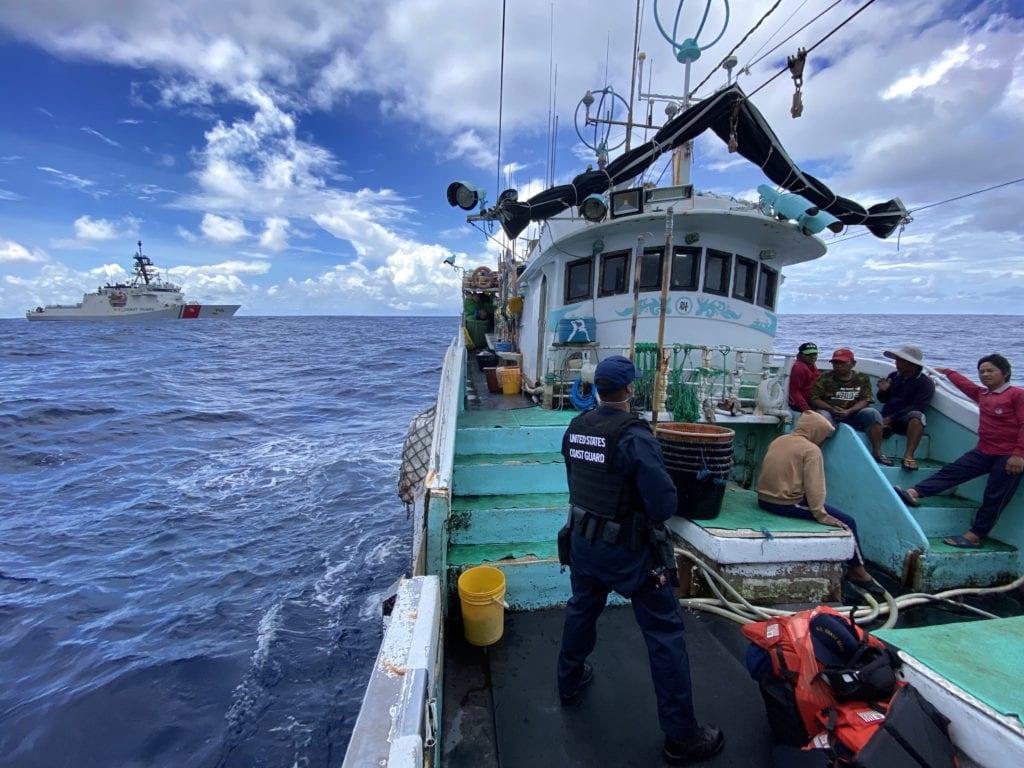
While patrolling approximately 3,600 miles in the Philippine Sea, the Coast Guard Cutter Kimball’s law enforcement team conducted its first at-sea boarding, Feb. 10, 2021. As part of Operation Blue Pacific, the crew of the Kimball deployed in support of national security goals of stability and security throughout the Indo-Pacific. U.S. Coast Guard
HONOLULU — The Coast Guard Cutter Kimball (WMSL-756) concluded a successful two-week expeditionary patrol in support of counter-illegal, unreported and unregulated fisheries enforcement, furthering the United States’ commitment to regional security and partnerships, the Coast Guard 14th District said in a Feb. 24 release.
As part of Operation Blue Pacific, the crew of the Kimball deployed in support of national security goals of stability and security throughout the Indo-Pacific. The crew of the Kimball remains prepared to use training in targeted and intelligence-driven enforcement actions as well as counter predatory irresponsible maritime behavior.
While patrolling approximately 3,600 miles in the Philippine Sea, the Kimball’s law enforcement team conducted its first at-sea boarding and expanded on the multilateral fisheries enforcement cooperation such as the Western and Central Pacific Fisheries Commission.
The WCPFC is an international body made up of 43 nations and international organizations. Members agree to allow the 13 countries in the pact to board and record any potential violations on their nationally flagged vessels. The findings go to the WCPFC, which notifies the vessel’s flag state of the suspected infraction for further investigation.
“Our presence in the area shows our partners the Coast Guard’s enduring efforts to provide search and rescue response and oversight of important economic resources,” said Lt. Cmdr. Drew Cavanagh, operations officer for the Kimball. “The ongoing presence of a Coast Guard cutter in this part of the Pacific to assist in determining compliance with conservation management measures established by the WCPFC demonstrates the U.S. commitment to the region and our partners.”
The Coast Guard combats illegal fishing and other maritime threats across the Pacific to protect the United States and Pacific Island Countries resource security and sovereignty. Combating illegal fishing is part of promoting maritime governance and a rules-based international order that is essential to a free and open Oceania.
While on patrol, the Kimball was briefly diverted to assist in a search and rescue case in the Federated States of Micronesia, where they used a small unmanned aircraft system, or SUAS. The use of SUAS expands maritime domain awareness and provides persistent airborne surveillance on maritime hazards, threats, and rescue operations.
“Training is also an important component of underway time and affects our readiness,” said Lt.j.g. Joseph Fox, assistant combat systems officer for the Kimball. “The team conducted law enforcement training as well as disabled vessel towing training for our newest crewmembers.”
The Kimball is one of the newest national security cutters to be homeported in Honolulu. These technologically advanced ships are 418 feet long, 54 feet wide and have a 4,600 long-ton displacement. They have a top speed in excess of 28 knots, a range of 12,000 nautical miles, endurance of up to 90 days and can accommodate a crew of up to 150.
Advanced command-and-control capabilities and an unmatched combination of range, speed and ability to operate in extreme weather enable these ships to confront national security threats, strengthen maritime governance, support economic prosperity, and promote individual sovereignty.
Work Praises Navy League’s Maritime Policy Statement
Former Deputy Secretary of Defense Robert O. Work praised the policy positions of the 2021-2022 Maritime Policy Statement of the Navy League of the United States during a webinar on Feb. 24. U.S. Navy / Chief Mass Communication Specialist Mike DiMestico
ARLINGTON, Va. — Former Deputy Secretary of Defense and former Under Secretary of the Navy Robert O. Work praised the policy positions of the 2021-2022 Maritime Policy statement of the Navy League of the United States (NLUS) during a webinar. He also noted aspects that the policy statement did not address.
The Maritime Policy statement is a document produced biennially by the Navy League to advocate for national support for a strong Navy, Marine Corps, Coast Guard, and Merchant Marine.
The keynote speaker of a Feb. 24 webinar conducted by the Navy League and sponsored by Crowley Marine, Work gave four “big Bravo Zulus” (BZs) to the Navy League for focusing on policy.
Work’s first BZ praised the Navy League from avoiding getting dragged into the ship numbers game. He ran through the various studies of naval force structure assessments that were conducted over five years and noted that the ship force level made law by Congress is the one the Navy League policy supports. That level is 355 ships.
“The Constitution says that Congress should provide and maintain a Navy, and unstated is that these naval forces need to preserve and protect the interests of the United States, “Work said. “So, I’m very happy that the Navy League didn’t jump into a big argument over the exact number of ships. They focused on policy, which is where they should have focused.”
Work did note that the Navy League should have recommended “forthrightly” a position on whether unmanned ships are to be counted in the battle force or not, noting that “Congress is not fully convinced that we should do so. So, it’s a policy question that is very, very important, and the Navy League’s voice is very important, and by not saying anything I found that to be significant.”
In his second BZ, Work said the Navy League’s policy is the “closest thing we have to a description to what I’ll call the National Fleet.”
He noted that the focus on the counting rules of the Navy’s battle force often obscures the “tremendous maritime capabilities of the United States.”
Work said given the new presidential administration’s expansion of national security, such as countering pandemics, the force should count hospital ships. He also said the count might include unmanned ships and craft, coastal patrol ships, patrol boats, prepositioning ships, Coast Guard cutters, surge sealift ships, the Ready Reserve Force of the Maritime Administration, the ships of the Maritime Security Program, the Tanker Security Program ships, cable repair ships and the ships of the National Oceanic and Atmospheric Administration.
The third BZ praised the Maritime Policy Statement’s emphasis on sealift.
“We’ve known that our sealift fleet is going to need recapitalization in the 2020s, but we never do anything about it,” Work said. “It’s always ‘next year.’ Another study. We’ve gotten to the point where we’ve got to do something, or we’re not going to have any sealift, which for a power projection nation is a bad thing.”
Work’s fourth BZ is that the Maritime Policy comes out “in support of the United Nations Convention on Law of the Sea [UNCLOS]. It is a disgrace that the United States has not acceded to that convention. The Chinese practice ‘lawfare’ against us all the time. Yes, we do freedom-of-navigation missions, but we are not a signatory to the policy, which undercuts what we’re saying. I was very happy to see that the Navy League come out four-square in support of signing UNCLOS.”
Work said he was disappointed that the key enabler of the National Fleet, the nation’s shipbuilding capacity in the industrial base, was not addressed in the policy statement. He said that, as a minimum, he would have expected the Navy League to come out in support of the Navy’s Shipyard Infrastructure Optimization Plan.
He said given the looming maritime competition with China, it is more important to invest more in the shipyard industrial base “right now” than in increasing the number of ships.
“We simply have to have more submarine building capacity [and] more shipbuilding capacity,” he said. We have to be able to repair ships, more repair yards, more graving docks. This is an important part of a global navy.
Naval analysts Bryan McGrath and Bryan Clark, both of the Hudson Institute, praised the Maritime Policy statement.
McGrath emphasized that the nation needs more maritime power. He also questioned the Marine Corps plan to reduce its force by 12,000 Marines. He said the Navy League should “support what the Navy needs,” not just support the Navy’s budget as submitted, which is a consensus document.
Clark praised the policy statement’s emphasis on sealift, tankers and the other often neglected aspects of the National Fleet. He also said maritime air power needs to be re-examined, given the changing environment of great power competition.
Adm. James A. Aiken is one of 13 rear admirals to get a second star, according to a new Pentagon announcement.
ARLINGTON, Va. — Secretary of Defense Lloyd J. Austin III announced Feb. 24 that the president has made the following nominations:
Rear Adm. (lower half) James A. Aiken for appointment to the rank of rear admiral. Aiken is currently serving as commander, Carrier Strike Group Three, Bremerton, Washington.
Rear Adm. (lower half) Michael E. Boyle for appointment to the rank of rear admiral. Boyle is currently serving as director, maritime operations, U.S. Pacific Fleet, Pearl Harbor, Hawaii.
Rear Adm. (lower half) Keith B. Davids for appointment to the rank of rear admiral. Davids is currently serving as commander, Special Operations Command South, U.S. Southern Command, Homestead Air Reserve Base, Florida.
Rear Adm. (lower half) Leonard C. Dollaga for appointment to the rank of rear admiral. Dollaga is currently serving as commander, Submarine Group Seven; commander, Task Force Seven Four; and commander, Task Force Five Four, Yokosuka, Japan.
Rear Adm. (lower half) Christopher S. Gray for appointment to the rank of rear admiral. Gray is currently serving as commander, Region Europe, Africa, Central; and commander, Maritime Air Forces, Naples, Italy.
Rear Adm. (lower half) John E. Gumbleton for appointment to the rank of rear admiral. Gumbleton is currently serving as deputy assistant secretary of the Navy for budget; and director, Fiscal Management Division, N82, Office of the Chief of Naval Operations, Washington, D.C.
Rear Adm. (lower half) Sara A. Joyner for appointment to the rank of rear admiral. Joyner is currently serving as chief of legislative affairs, Washington, D.C.
Rear Adm. (lower half) James A. Kirk for appointment to the rank of rear admiral. Kirk is currently serving as commander, Carrier Strike Group Eleven, Everett, Washington.
Rear Adm. (lower half) Andrew J. Loiselle for appointment to the rank of rear admiral. Loiselle is currently serving as commander, Carrier Strike Group Four, Norfolk, Virginia.
Rear Adm. (lower half) Brendan R. McLane for appointment to the rank of rear admiral. McLane is currently serving as special assistant to commander, U.S. Fleet Forces Command, Norfolk, Virginia.
Rear Adm. (lower half) Peter G. Vasely for appointment to the rank of rear admiral. Vasely is currently serving as director for operations, Defense Intelligence Agency, Washington, D.C.
Rear Adm. (lower half) James P. Waters III for appointment to the rank of rear admiral. Waters is currently serving as commander, Submarine Group Two, Norfolk, Virginia.
Rear Adm. (lower half) George M. Wikoff for appointment to the rank of rear admiral. Wikoff is currently serving as special assistant to the deputy chief of naval operations for operations, plans and strategy, N3/N5, Office of the Chief of Naval Operations, Washington, D.C.
Capt. Christopher D. Alexander for appointment to the rank of rear admiral (lower half). Alexander is currently serving as commanding officer, Surface Warfare Officer School Command, Newport, Rhode Island.
Capt. Sean R. Bailey for appointment to the rank of rear admiral (lower half). Bailey is currently serving as chief of staff, Naval Air Force Atlantic, Norfolk, Virginia.
Capt. Thomas R. Buchanan for appointment to the rank of rear admiral (lower half). Buchanan is currently serving as commandant of midshipman, U.S. Naval Academy, Annapolis, Maryland.
Capt. Christopher J. Cavanaugh for appointment to the rank of rear admiral (lower half). Cavanaugh is currently serving as director, submarine/nuclear officer distribution (PERS 42), Personnel Command, Millington, Tennessee.
Capt. Brad J. Collins for appointment to the rank of rear admiral (lower half). Collins is currently serving as chief of staff, Installation Command, Washington, D.C.
Capt. Jennifer S. Couture for appointment to the rank of rear admiral (lower half). Couture is currently serving as assistant chief of staff, Naval Surface Force, Atlantic, Norfolk, Virginia.
Capt. William R. Daly for appointment to the rank of rear admiral (lower half). Daly is currently serving as chief of staff, Naval Surface Forces/Naval Surface Force, U.S. Pacific Fleet, San Diego, California.
Capt. Erik J. Eslich for appointment to the rank of rear admiral (lower half). Eslich is currently serving as executive assistant, U.S. Fleet Forces Command, Norfolk, Virginia.
Capt. Ronald A. Foy for appointment to the rank of rear admiral (lower half). Foy is currently serving as deputy commander, Naval Special Warfare Group, Dam Neck, Virginia.
Capt. Patrick J. Hannifin for appointment to the rank of rear admiral (lower half). Hannifin is currently serving as director, aircraft carrier requirements, N98, Office of the Chief of Naval Operations, Washington, D.C.
Capt. Christopher A. Kijek for appointment to the rank of rear admiral (lower half). Kijek is currently serving as executive assistant, U.S. Indo-Pacific Command, Camp H. M. Smith, Hawaii.