CNO Meets with Project Overmatch Team on Fleet Modernization
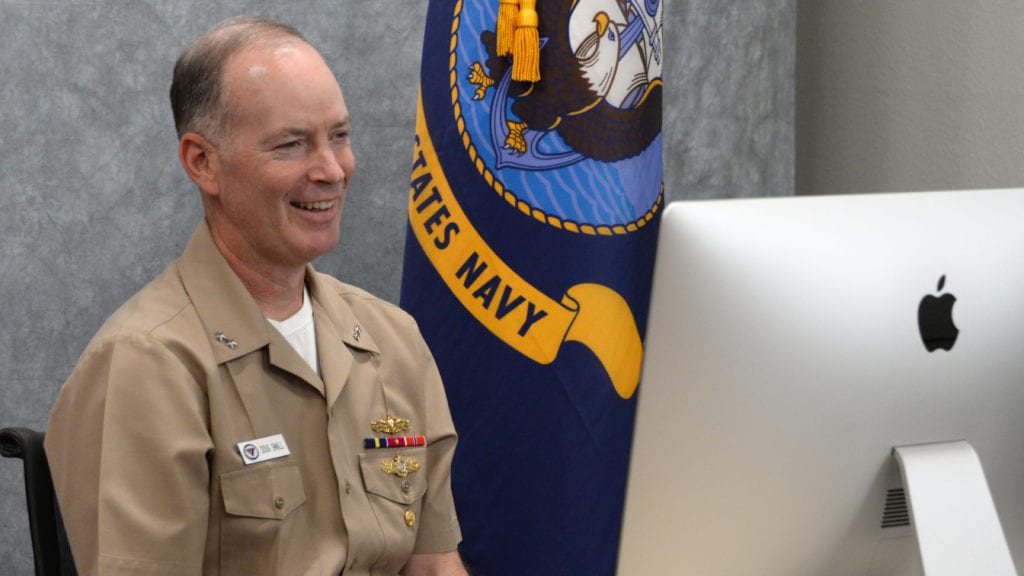
Rear Adm. Douglas Small, Commander, Naval Information Warfare Systems Command (NAVWAR) discusses NAVWAR’s role in Project Overmatch to a virtual audience at the 2021 Surface Navy Association symposium from the systems command’s Old Town San Diego complex. U.S. Navy / Rick Naystatt

SAN DIEGO —The chief of naval operations (CNO) met with Naval Information Warfare Systems Command (NAVWAR) top leaders and engineering experts Feb. 22 at Naval Information Warfare Center (NIWC) Pacific in San Diego, to discuss a project aimed at integrating sensors, platforms and weapons to provide decision superiority over potential adversaries. 

NAVWAR Commander Rear Adm. Doug Small welcomed CNO Adm. Mike Gilday and gave him an update on his team’s progress to speed the delivery of advanced capabilities in support of Project Overmatch, an initiative Gilday stood up on Oct. 1, 2020. 

“As we adapt to an increasingly complex security environment, it is imperative that the Navy develop a warfighting network of networks to support a future fleet of manned and unmanned vessels,” said Gilday. “Information has become the cornerstone of how we operate, and we need to be able to decide and act faster than anyone else. Simply put, Project Overmatch will provide us a decision advantage over our adversaries and help us deliver a more lethal and better-connected fleet far into the future. This is a top priority – we must deliver it.” 

Small echoed similar sentiments. 

“CNO gave us a complex set of challenges,” said Small. “This incredible team was able to show him first-hand what we’ve been up to over the last few months to meet them head on at the blistering pace required.” 

Project Overmatch is a multi-command effort aimed at enabling a Navy and Marine Corps that swarms the sea, delivering synchronized lethal and non-lethal effects from near-and-far, every axis and every domain. Critical to Project Overmatch is the development of networks, infrastructure, data architecture, tools and analytics that support the operational and developmental environment that will enable sustained maritime dominance using manned and unmanned systems. 

Additionally, Project Overmatch will leverage the latest in digital technologies such as state-of-the-art artificial intelligence, machine learning, and information and networking technologies for improved fleet readiness worldwide. This includes the NAVWAR developed Overmatch Software Armory, a cloud-enabled digital environment using industry-standard development, security and operation (DevSecOps) principles that brings the rapid delivery of software capability to the fleet.   

“We’re at an exciting crossroads,” said Rebecca Gassler, Project Overmatch chief engineer and Program Executive Office for Integrated Warfare Systems, Command and Control Directorate (PEO IWS 6) technical director. “We have been given the charter to realize a conceptual Naval Operational Architecture through the integration of our legacy systems, new systems, and science and technology, in the most rapid manner possible, to support fleet priorities. We are driving technical and programmatic evolution through extensive use of concepts and techniques. This includes agile management, model-based systems engineering, user centered design and DevSecOps.” 

To equip the fleet with these modern capabilities, Small and his team are also engaging with academia and industry, both defense and commercial, using industry days. Small recently held a Project Overmatch Industry Day, Dec. 15, where over 180 companies had the opportunity to learn about the project’s vision, the current technological state, and the challenges and opportunities that would benefit from private sector support. At the event, he emphasized the importance of government-industry partnerships in support of the project and highlighted his plans to hold additional industry days, with the next one planned to be held on the East Coast. 

Article by Elisha Gamboa, Naval Information Warfare Systems Command Public Affairs 


BAE Systems Names Its Top Ship Repair Suppliers for 2020

NORFOLK, Virginia — BAE Systems celebrated its best suppliers and subcontractors during its first ever ‘Partner2Win’ Supplier awards for its Ship Repair business, the company said in a Feb. 24 release. 

In a ceremony held virtually on Feb. 23, BAE Systems Ship Repair recognized 112 suppliers that achieved outstanding results last year in key areas including overcoming COVID-19 challenges, exceeding quality metrics, and achieving the best cost-reward relationships. The awards were based upon BAE Systems’ Partner2Win program, a collaborative partnership between the company’s shipyards in Jacksonville, Florida, Norfolk, Virginia and San Diego, California, and a vast network of naval and commercial ship repair suppliers.   

“Our relationship with our suppliers has always been significant and important for the completion of our ship repair work,” said Paul Smith, vice president and general manager of BAE Systems Ship Repair. “Communication and completion of our joint obligations, in the midst of a pandemic, was integral to success last year. I thank all of our supply chain partners and recognize those who have won our first-ever Partner2Win Supplier Awards.”  

While this Partner2Win symposium was the first in the area of ship repair and modernization, the symposium has been held in other business areas of BAE Systems for years. 

This year’s top ship repair supplier awards went to NSC Technologies of Portsmouth, Virginia, and Vallen Distribution of Belmont, North Carolina. 

NSC Technologies, a shipyard staffing and recruiting company, is the subcontractor of the year for Ship Repair. NSC provides the temporary workers that allow the shipyards to adapt to workload demands and focus on their core shipyard competencies.  

Vallen Distribution, an indirect materials distributor, is the Maintenance, Repair, and Operations Supplier of the Year. Vallen was a reliable and trusted partner in 2020, delivering items timely to our shipyards.  

Forty-nine gold, 42 silver and 21 bronze awards were presented during the ceremony. The following companies were recognized with NSC Technologies and Vallen Distribution as stand-out gold award winners: 

  • BAE Systems Jacksonville Ship Repair’s Subcontractor of the Year – East Coast Repair & Fabrication, LLC of Chesapeake, Virginia 
  • BAE Systems Norfolk Ship Repair Subcontractor of the Year – Central Radio Company, Inc. of Norfolk, Virginia 
  • BAE Systems San Diego Ship Repair Subcontractor of the Year – Pacific Tank Cleaning, LLC of Chula Vista, California 
  • COVID-19 PPE Supplier of the Year – Advantage Promotions, LLC of Bedminster, New Jersey  
  • Original Equipment Manufacturer of the Year – Fairbanks Morse, LLC of Beloit, Wisconsin 
  • Small Business Subcontractor of the Year – Collins Machine Works of Portsmouth, Virginia  
  • Veteran-Owned Small Business Subcontractor of the Year – Bay Metals and Fabrication, LLC of Chesapeake, Virginia 

BAE Systems is a leading provider of ship repair, maintenance and modernization services to the U.S. Navy’s fleet of combatant ships in their homeports, as well as refit and hauling services for commercial and privately held vessels. The company operates four full-service shipyards in California, Florida, Hawaii, and Virginia, and offers a highly skilled, experienced workforce, seven dry docks and railways, and significant pier space and ship support services. 


Cutter Thetis Returns Home from a 43-day Drug-Busting Caribbean Patrol Sea

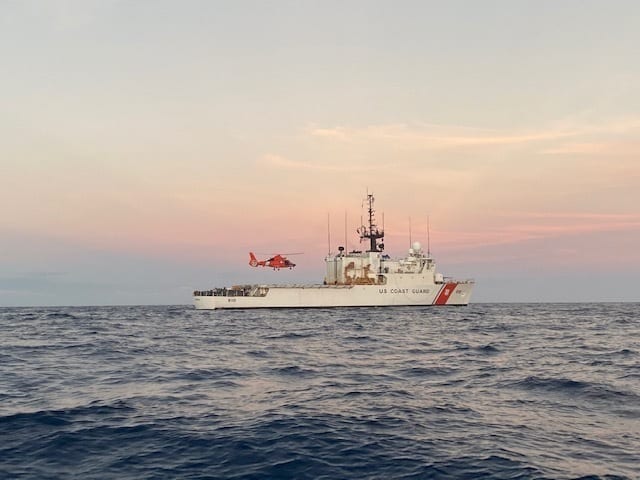
The Coast Guard Cutter Thetis (WMEC-910) underway in the West Caribbean, Jan. 14, 2021. The Coast Guard Cutter Thetis crew returned to Key West, Florida, on Feb. 21 after a 65-day Caribbean Sea patrol in support of Coast Guard 7th District. U.S. Coast Guard

KEY WEST, Fla. — The crew of Coast Guard Cutter Thetis (WMEC-910) returned home to Key West, Florida, on Feb. 21 after a 43-day patrol to the Caribbean Sea, the Coast Guard 7th District said in a Feb. 22 release. 

The crew interdicted three drug vessels and seized close to 6,000 pounds of cocaine with a street value of approximately $82 million. 

“By making our presence known in the Caribbean, we continue to disrupt the flow of illicit and dangerous drugs into the United States,” said Cmdr. Justin Nadolny, cutter Thetis commanding officer. “Despite strong winds and rough seas throughout the patrol, the crew persevered and did an outstanding job in executing the mission. I couldn’t be more proud to be part of such a fine team. This crew achieved superior results while maintaining positive attitudes and keeping morale high. I’m also thankful for the support of our Thetis family back in Key West. It’s not easy when your loved ones are deployed for long periods of time and their continued love and support kept us all motivated and focused.” 

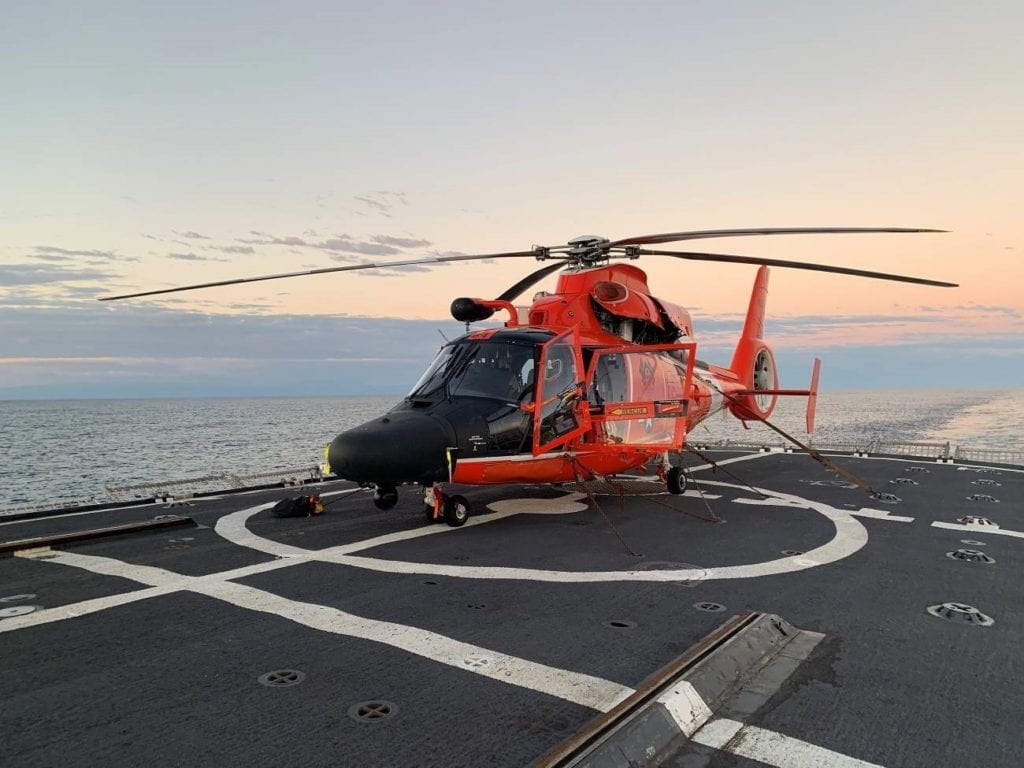
Working in support of U.S. Southern Command’s Joint Interagency Task Force South, the Thetis crew played a critical role in executing the nation’s counter drug mission. Thetis deployed with an MH-65 Dolphin helicopter and aviation detachment capable of conducting airborne use of force from the Coast Guard’s Helicopter Interdiction Tactical Squadron based in Jacksonville, Florida.  

In one case, Thetis’ crew assumed tactical control of Port Canaveral-based Coast Guard Cutter Confidence’s (WMEC-619) pursuit boat and boarding team. Thetis’ crew launched an MH-65 helicopter, which stopped the go-fast vessel with disabling fire, and resulted in an estimated 1,100 pounds of cocaine disrupted and the apprehension of two suspected smugglers. Thetis’ crew also conducted a joint interdiction with its Key West sister ship, Coast Guard Cutter Mohawk (WMEC-13) and crew. During this case, Thetis’ crew used an MH-65 helicopter and stopped a go-fast vessel with precision fire to the vessel’s outboard engine, resulting in an estimated 1,220 pounds of cocaine seized and the apprehension of three suspected smugglers. 

The crew also conducted joint counter-narcotic operations with the Colombian navy. While patrolling with one of the partner nation’s ships, Thetis’ crew conducted communications exercises, showcasing the teamwork and joint interoperability between the United States and Colombia. 

“I am exceedingly proud to sail with the Thetis crew,” said Lt. Moriba George, cutter Thetis’ engineering officer. “The engineering department demonstrated their ability to improvise, adapt and overcome with the many challenges and rigors that being underway in turbulent seas can pose. Their continual positive energy and dedication to the mission in the midst of the COVID-19 pandemic is incredibly admirable. We are looking forward to a productive maintenance period and spending some well-earned time at home with our loved ones.” 

Counternarcotic interdictions were in support of Campaign Martillo, a multinational counter-narcotics collaboration to disrupt transnational criminal organizations that threaten global security and prosperity. Martillo is led by Joint Interagency Task Force South, a component of U.S. Southern Command, and supported by 15 U.S. and 21 international agencies. 

Named for the famous Greek mythology sea nymph and mother of Achilles, Thetis is a 270-foot Famous-class cutter homeported in Key West with a crew of 104. 


Lockheed Martin Awarded 4th, 5th Production Lots for LRASM for F/A-18E/F, B-1B

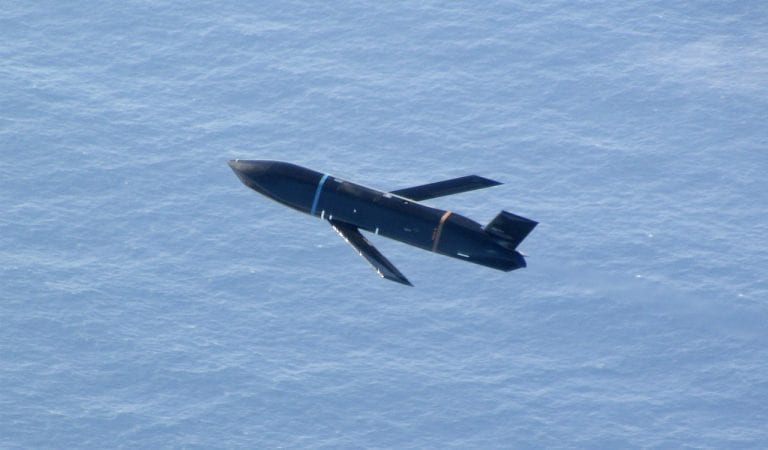
A Long Range Anti-Ship Missile in flight. Lockheed Martin has been awarded a new production contract for the missile. Lockheed Martin

ORLANDO, Fla. — Lockheed Martin has been awarded a $414 million contract from the U.S. Navy and Air Force for Long Range Anti-Ship Missile (LRASM) production, the company said in a release. This is the largest LRASM production contract in the history of the program. 

The combined Lot 4/5 contract continues production of the air-launched variant of LRASM, now operational on the U.S. Navy F/A-18E/F and U.S. Air Force B-1B. 

“This contract reflects LRASM’s increasing significance to our customers’ missions. Focused teamwork around a shared vision with our customers and our dedicated supply partners remains key to this program’s success,” said David Helsel, LRASM director at Lockheed Martin Missiles and Fire Control. “We look forward to continuing our important work and growing our capabilities and platforms.” 

LRASM is designed to detect and destroy specific targets within groups of ships by employing advanced technologies that reduce dependence on intelligence, surveillance and reconnaissance platforms, network links and GPS navigation in electronic warfare environments. LRASM will play a significant role in ensuring military access to operate in open ocean, owing to its enhanced ability to discriminate and conduct tactical engagements from extended ranges. 

LRASM is a precision-guided, anti-ship standoff missile based on the successful Joint Air-to-Surface Standoff Missile – Extended Range (JASSM-ER). It is designed to meet the needs of U.S. Navy and U.S. Air Force warfighters in contested environments. LRASM provides an operational capability for the U.S. Navy’s offensive anti-surface warfare Increment I requirement. 


Looser Intel-Sharing Restraints May Be Worth a Look to Facilitate Joint Ops, Navy Data Chief Says

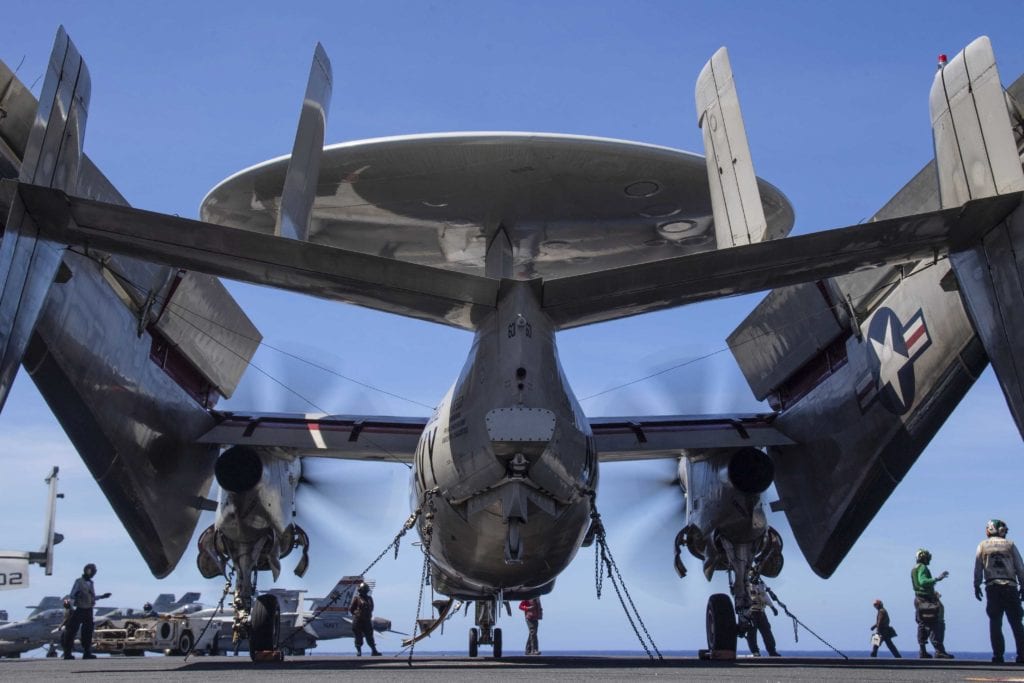
U.S. Sailors conduct pre-flight checks on an E-2C Hawkeye, assigned to the “Liberty Bells” of Airborne Command and Control Squadron (VAW) 115, as it starts up on the flight deck of the aircraft carrier USS Theodore Roosevelt (CVN 71) Jan. 30, 2021. U.S. Navy / Mass Communication Specialist 2nd Class Zachary Wheeler

ARLINGTON, Va. — Getting actionable, timely data to deployed expeditionary forces is tougher than keeping that data secure from prying adversaries, according to the U.S. Navy’s top data official.

“We’re pretty good at securing information and keeping it from people, which is the exact opposite of making it available for decision making,” concedes Thomas Sasala, chief data officer, Department of the Navy.

Enhancing data sharing is a key element in the Navy’s Project Overmatch, as part of the Defense Department’s Joint All-Domain Command and Control (JADC2) concept to connect sensors from all of the military services into a single network.

For years the Army, Navy, Marine Corps and Air Force have been developing tactical communications networks that can’t interface with other services’ networks, hampering joint operations, a pillar of the National Defense Strategy. And that’s keeping crucial data from getting to front-line commanders in an actionable timeframe. It may be worth taking a look at whether security culture is getting in the way, Sasala told the Feb. 17 webinar of the C4ISRNET website’s “Removing Stovepipes” series.

“You have to understand the concept of perishability,” Sasala said. The information given warfighters “is generally highly perishable. And so, if that information is hacked or compromised for one reason or another, it is not useful outside its lifecycle.”

Big strategic decisions are not being sent downrange for kicking-down-the door activity, Sasala said.

“Literally, it’s ‘This guy is on the roof right now.’ And five minutes from now that information is not useful to anyone because he’s no longer on the roof. And so, we have to take that risk calculus into the equation — which we don’t do today.”

All data is treated with the same sensitivity level, the same protection level, Sasala said, adding, it might be time to take a step back.

“The information might be classified. It might come from a highly classified intelligence source, but if it’s only good for five minutes, and only these three people need to see it, maybe we can just lighten up a little bit on how we get it to them.”

However, he added, issues like keeping sources and methods secret or maintaining plausible deniability on sensitive operations have to be considered when passing data.

“It’s a balancing act,” he said, “more cultural than anything. There are some bandwidth restraints. There are data operability and exchange restraints, but our general risk aversion to kind of opening up the aperture  a little bit on what data we send is probably the biggest barrier more than anything.”

The goal of Project Overmatch is to develop networks, infrastructure, data architecture, tools and analytics that enable Navy and Marine Corps operations that swarm the sea, delivering synchronized lethal and non-lethal effects from near-and-far in every domain.

Sasala called Overmatch the maritime contribution to the broader multi-domain battle space.

“From a data perspective, data simply doesn’t care whether you’re Army, Navy, Air Force. Position data is position data whether it’s a plane  or a boat — whatever,” he said. But breaking down military department silos or stovepipes “is really the key to getting at something like JADC2.”


USS Dwight D. Eisenhower Deploys Upon Completion of Historic COMPTUEX

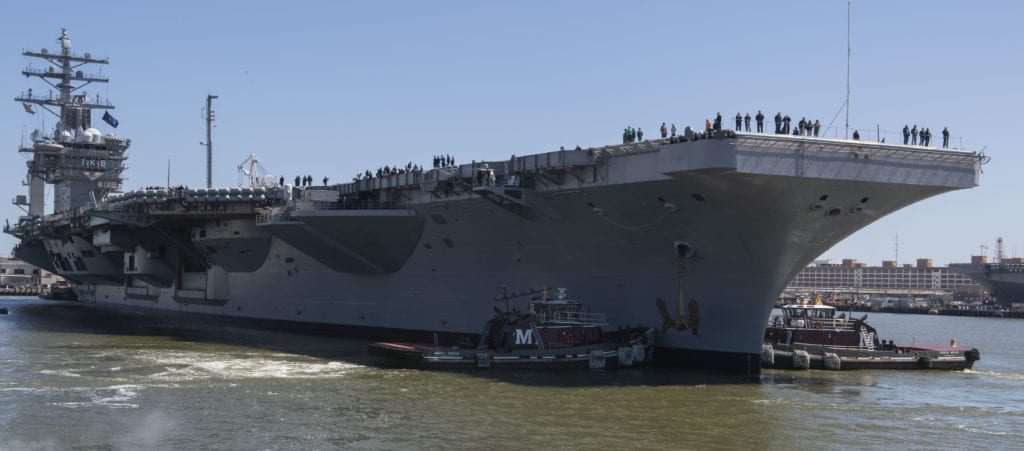
The Nimitz-class aircraft carrier USS Dwight D. Eisenhower (CVN 69) departs for a scheduled underway in this 2019 photo. As part of the Eisenhower Carrier Strike Group, it has now departed for deployment. U.S. Navy / Mass Communication Specialist 3rd Class Daniel E. Gheesling

NORFOLK, Va. — The Nimitz-class aircraft carrier USS Dwight D. Eisenhower (CVN 69) and the ships and aircraft of Carrier Strike Group (CSG) 2, the Eisenhower Carrier Strike Group (IKE CSG), departed for deployment Feb. 18 after successfully completing a historic Composite Unit Training Exercise (COMPTUEX).

That COMPTUEX included a NATO vignette and training with SEALS from an East Coast-based Naval Special Warfare (NSW) Group for the first time in recent history, the U.S. 2nd Fleet said in a Feb. 18 release. 

 “COMPTUEX provided graduate-level training that simulates the full spectrum of operations, low intensity to high-end combat that IKE CSG must be ready for,” said Rear Adm. Scott Robertson, commander, CSG-2. “The live, virtual and constructive training with a NATO backdrop enabled the team to hone its application of integrated, multiple domain warfare. We are ready to deploy!” 
 
The inaugural NATO vignette, developed by CSG 4 and Combined Joint Operations from the Sea Centre of Excellence (CJOS COE), consisted of familiarity training designed to facilitate Allied maritime interoperability and integration, in practical terms using NATO procedures, messaging formats and chat capabilities. The vignette developed and refined a clear list of interoperability requirements for future Navy force generation, and improved allied maritime command and control linkages. 
 
“To ensure truly effective deterrence and defense in the North Atlantic, we need to make sure that the navies of NATO can work as one team, and that means interoperability is vital,” said Commodore Tom Guy, Royal Navy, deputy director CJOS COE. “This NATO vignette has been a great step forward in pursuing allied interoperability. CJOS COE looks forward to continuing to develop this for future deploying strike groups.” 
 
Additionally, NSW SEAL, Boat and Reconnaissance units integrated with the IKE CSG team to enhance warfighting lethality in the maritime domain and to educate Fleet leadership on unique NSW capabilities. The SEAL Team focused on supporting COMPTUEX in maritime strike warfare. During the training, personnel helped with over-the-horizon targeting, directed combat aircraft’s action in close-air support, and other offensive air operations. NSW forces controlled operations from a Task Group headquarters. To extend the IKE CSG reach, NSW forces employed multi-mission combatant craft, which allowed operators to get closer to simulated enemies and send the real-time operational picture back to decision-makers on the ship and beyond. The SEAL Team also sent an advisor to the training cell to provide expertise on NSW capabilities. 
 
The opportunity to support IKE CSG objectives by showcasing NSW’s unique contributions to distributed maritime operations improved integration and interoperability with the fleet. NSW was able to validate near-peer maritime and land-based tactics, techniques and procedures to demonstrate NSW’s critical role in global power competition. 
 
COMPTUEX is a live, virtual, and constructive (LVC) training that provides Sailors from the IKE CSG with an opportunity to operate real equipment with real risk. LVC training increases interoperability and provides the fleet with unprecedented flexibility in conducting training across the spectrum of operations and threat scenarios. CSG 4 was involved in building the scenarios and assessing performance to ensure that when IKE CSG shows up to the fleet they are ready to operate. 
 
The IKE CSG is a multiplatform team of ships, aircraft and more than 6,000 Sailors, capable of carrying out a wide variety of missions around the globe. 
 
Deploying ships and aircraft of the strike group, commanded by Rear Adm. Scott Robertson, include flagship USS Dwight D. Eisenhower (CVN 69), commanded by Capt. Paul F. Campagna; eight squadrons from Carrier Air Wing Three; Ticonderoga-class guided-missile cruisers USS Monterey (CG 61) and USS Vella Gulf (CG 72); Arleigh Burke-class guided-missile destroyers USS Mitscher (DDG 57), USS Laboon (DDG 58), USS Mahan (DDG 72) and USS Thomas Hudner (DDG 116) from Destroyer Squadron 22 stationed at Naval Station Norfolk, Virginia. 
 
Squadrons of Carrier Air Wing (CVW) 3, commanded by Capt. Marcos Jasso, embarked on Eisenhower include the “Fighting Swordsmen” of Strike Fighter Squadron (VFA) 32, “Gunslingers” of Strike Fighter Squadron (VFA) 105, “Wildcats” of Strike Fighter Squadron (VFA) 131, “Rampagers” of Strike Fighter Squadron (VFA) 83; “Dusty Dogs” of Helicopter Sea Combat Squadron (HSC) 7; “Swamp Foxes” of Helicopter Maritime Strike Squadron (HSM) 74; “Screwtops” of Airborne Command and Control Squadron (VAW) 123; “Zappers” of Electronic Attack Squadron (VAQ) 130, and a detachment from Fleet Logistics Support Squadron (VRC) 40 “Rawhides.” 
 
C2F exercises operational authorities over assigned ships, aircraft, and landing forces on the East Coast and the Atlantic. When directed, C2F conducts exercises and operations within the U.S. European Command area of operations as an expeditionary fleet, providing Naval Forces Europe an additional maneuver arm to operate forces dynamically in theater. 


HII Awarded $2.9 Billion Contract to Execute USS John C. Stennis RCOH

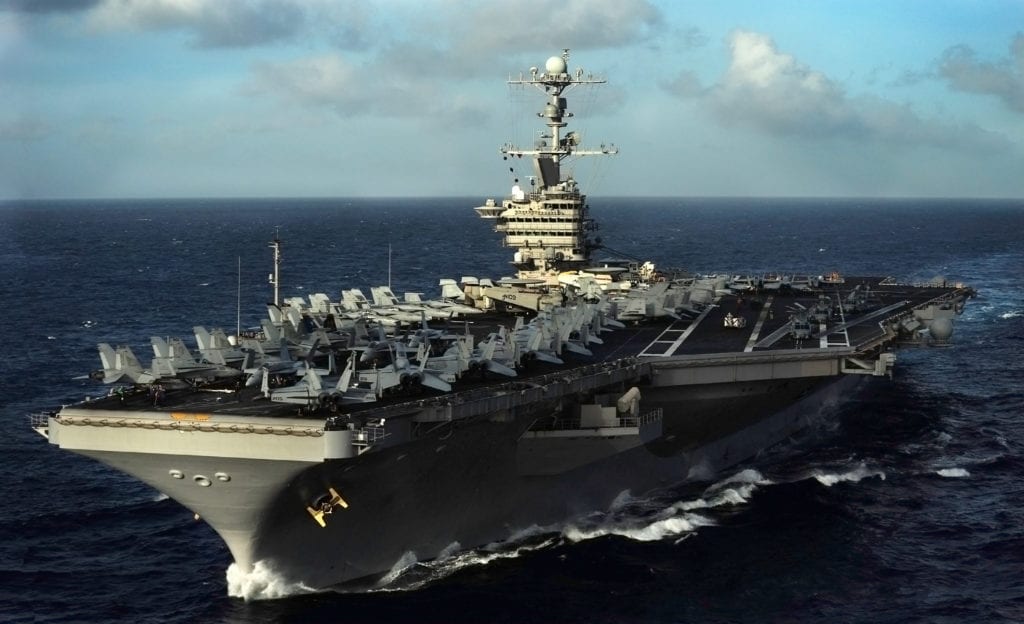
The Nimitz-class aircraft carrier USS John C. Stennis (CVN 74) transits the Pacific Ocean during a replenishment at sea. Huntington Ingalls Industries’ Newport News Shipbuilding will carry out its refueling and complex overhaul under a $2.9 billion contract. U.S. Navy / Mass Communication Specialist 2nd Class Walter M. Wayman

NEWPORT NEWS, Va. — Huntington Ingalls Industries’ Newport News Shipbuilding division has been awarded a $2.9 billion contract for the refueling and complex overhaul (RCOH) of the nuclear-powered aircraft carrier USS John C. Stennis (CVN 74), the company said in a Feb. 19 release. 

“We are pleased to be awarded the contract to execute this extensive construction and engineering project,” said Todd West, Newport News’ vice president, in-service aircraft carrier programs. “Our teams have spent three years preparing and planning for each step of the process along the way, and we look forward to continuing our work with our suppliers and Navy partners in anticipation of the ship’s arrival at Newport News.” 

The RCOH represents 35% of all maintenance and modernization in an aircraft carrier’s 50-year service life. Stennis’ RCOH will include the refueling of the ship’s reactors, as well as extensive modernization work to more than 2,300 compartments, hundreds of tanks and systems. In addition, major upgrades will be made in the propulsion plant, to the flight deck, catapults, combat systems and the island. 

Built at Newport News, Stennis was christened in 1993 and delivered to the Navy in 1995. The ship is the seventh Nimitz-class carrier to undergo this major life-cycle milestone. More than 4,000 Newport News employees will support the execution effort, which will continue through late 2025. 


Cutter Harriet Lane Returns Home following Interdiction of $40M Worth of Drugs

An MH-65 Dolphin Helicopter rests on the deck of the Coast Guard Cutter Harriet Lane during their 71-day patrol. The Coast Guard Cutter Harriet Lane is home-ported in Portsmouth, Virginia. U.S. Coast Guard

PORTSMOUTH, Va. – The Coast Guard Cutter Harriet Lane returned to its homeport in Portsmouth, Virginia, after a 71-day counter-drug patrol Feb. 12, the Coast Guard 5th District said in a Feb. 18 release.  

In support of the Coast Guard’s 11th District and Joint Interagency Task Force South, the Harriet Lane crew worked throughout the duration of the patrol in conjunction with a deployed aviation detachment from the Helicopter Interdiction Tactical Squadron (HITRON) based in Jacksonville, Fla. HITRON specializes in the execution of airborne use of force for the purpose of disabling non-compliant vessels suspected of illicit drug smuggling.  

Harriet Lane joined forces with the Colombian navy to conduct joint maritime operations in the Caribbean, focusing on interoperability, communications, and counter-narcotics efforts. Upon crossing into the Pacific via the Panama Canal, the Harriet Lane crew and her embarked aviation detachment interdicted two non-compliant vessels suspected of illicit drug smuggling.

These interdictions included the seizure of 980 kilograms of cocaine and 1,600 pounds of marijuana, an estimated street value of $40 million. Harriet Lane also detained seven suspected drug smugglers associated with the interdictions. Between operational tasking, the cutter crew completed aviation, damage control, seamanship and navigation training to maintain operational readiness and prepare for future multi-mission deployments. 

“I could not be more proud of the crew of Harriet Lane for their perseverance and operational success amid the continued pandemic,” said Cmdr. Dorothy Hernaez, commanding officer of the Harriet Lane. “The crew flawlessly executed COVID-19 mitigation protocols leading up to and during the deployment to remain healthy and operationally ready throughout. The success we had during this deployment would not have been possible without the continued support of our families and friends, who we are looking forward to seeing again upon our return to port.”  

Prior to returning home, Harriet Lane stopped in Port Everglades, Florida, to transfer 17 suspected drug smugglers and $206 million of illicit drugs to partner agencies for prosecution. In addition to the interdictions by Harriet Lane, people and drug evidence transferred in this evolution came from interdictions in the eastern Pacific and Caribbean by Coast Guard Cutters Bertholf, Munro, and Mohawk, as well as the USS William P. Lawrence with Coast Guard Law Enforcement Detachment Team 101 and USS Comstock with Coast Guard Law Enforcement Detachment Team 403.  

Harriet Lane is a 270-foot medium endurance cutter responsible for a variety of Coast Guard missions, including search and rescue, enforcement of laws and treaties, maritime defense, and protection of the marine environment. 


Heavy icebreaker Polar Star Completes Months-Long Arctic Deployment

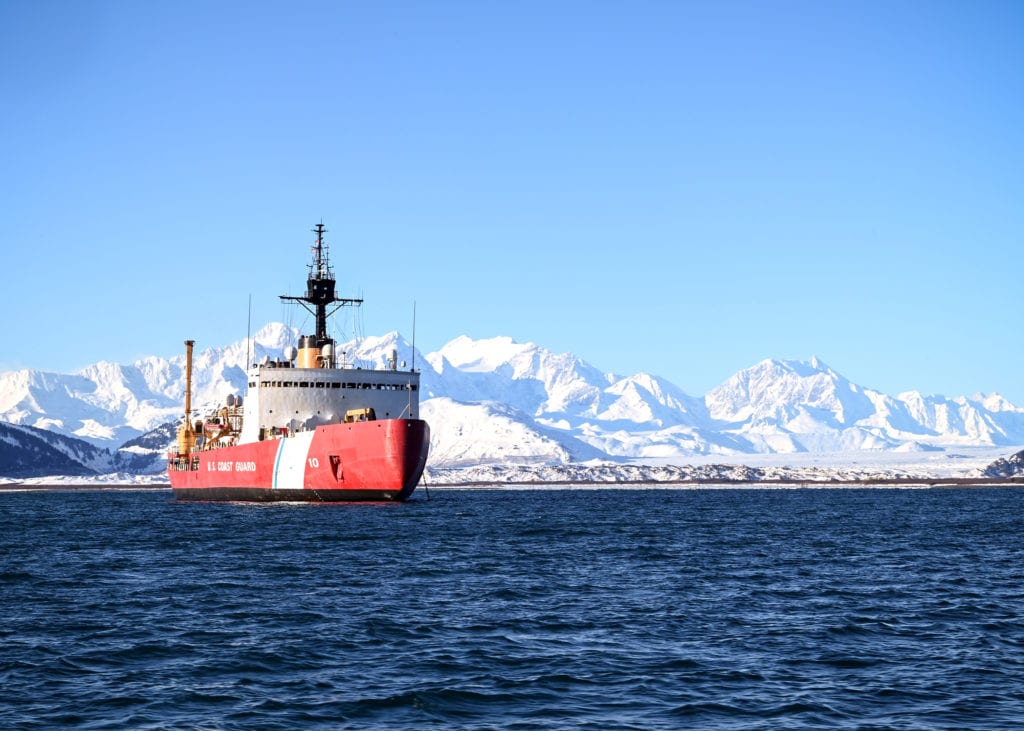
The Seattle-based Coast Guard Cutter Polar Star (WAGB 10) sits at anchor in Taylor Bay, Alaska, Feb. 10, ahead of its scheduled logistics stop in Juneau, Alaska, near the end of its months-long Arctic deployment and return to its Seattle homeport. U.S. Coast Guard photo by Petty Officer 1st Class Cindy Oldham

SEATTLE — The Coast Guard Cutter Polar Star (WAGB 10) returned to its homeport in Seattle Feb. 20 following a months-long Arctic deployment to defend the nation’s maritime sovereignty and security throughout the region, develop future Arctic Sailors, and gather high-latitude scientific data, the Coast Guard Pacific Area said in a release. 

The 45-year-old heavy icebreaker’s crew spent a majority of the patrol operating in the Bering and Chukchi Seas. Notably, on Dec. 25 the crew traversed a historic winter latitude when they navigated through dense sea ice to patrol beyond 72 degrees latitude, farther north than any U.S. surface asset ever traversed in the winter. 

Additionally, in mid-January, the Polar Star crew and a Russian Border Guard aircraft crew patrolled a portion of the 1,700-mile international maritime boundary line. The joint effort supported mutual agreements to prepare for a potential natural or manmade maritime disaster and reduce any impacts it might have. 

Capt. Bill Woityra, the Polar Star’s commanding officer, said he is incredibly proud of Polar Star’s crew for their hard work and perseverance through the long and arduous mission. 

“Spending a majority of the patrol navigating dense, constantly shifting sea ice, consistently below-zero temperatures and day-long darkness, the crew’s resilience was unyielding,” said Woityra. “With their tremendous effort and positive attitudes, we accomplished everything we set out to do, and more.” 

Throughout the patrol, the crew continued progress toward developing future icebreaker leadership by honing ice navigation proficiency and regional familiarity. The crew also hosted scientists and researchers aboard to better understand Arctic operational capabilities and lessen the void of winter data available from the world’s most northern oceans. 

Woityra said the United States and the Coast Guard are fiercely committed to defending national interests in the Arctic and, looking to the future, the U.S. must continue to invest in the infrastructure and platforms that will enable year-round Arctic operations, and continue to pursue technologies that will mitigate operational risks and enable mission performance in such a challenging environment. 

In April 2019, the Coast Guard released the Arctic Strategic Outlook, which reaffirms the service’s commitment to American leadership in the region through partnership, unity of effort, and continuous innovation. 

The Coast Guard has been the sole provider of the nation’s polar icebreaking capability since 1965 and is seeking to increase its icebreaking fleet with up to six new polar security cutters (PSCs) to ensure continued national presence and access to the Polar Regions. 

The Coast Guard awarded VT Halter Marine Inc. of Pascagoula, Mississippi, a contract for the design and construction of the Coast Guard’s lead polar security cutter, which will also be homeported in Seattle. The contract also includes options for the construction of two additional PSCs. 


AeroVironment Completes Acquisition of Arcturus UAV

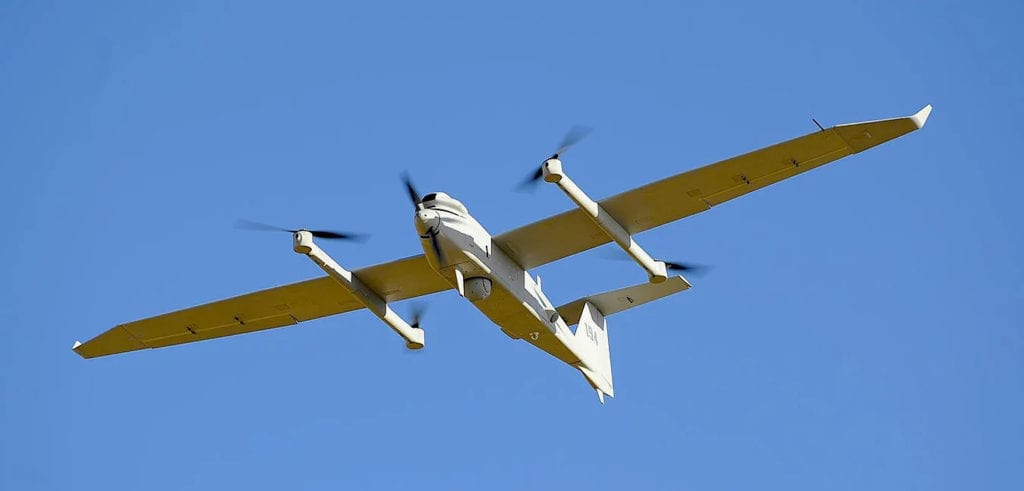
Arcturus UAV’s Jump 20 VTOL drone. Arcturus UAV

SIMI VALLEY, Calif. — AeroVironment Inc. has completed its acquisition of Arcturus UAV Inc., a designer and manufacturer of high-performance unmanned aircraft systems (UAS). The approximately $405 million transaction was previously announced in a press release on Jan. 13.

The United States Special Operations Command (USSOCOM) selected Arcturus UAV as one of six companies qualified for the potential $975 million indefinite-delivery/indefinite-quantity MEUAS IV [Medium-Endurance UAS IV] contract in June 2020. The contract enables awardees to compete for site-specific task orders and provide USSOCOM with unmanned aircraft systems services and support for intelligence, surveillance and reconnaissance (ISR) operations.

Arcturus UAV employs its vertical takeoff and landing Jump 20 UAS in support of USSOCOM operations, minimizing the logistical footprint of UAS operations while delivering multi-payload, multi-mission capabilities. Arcturus UAV is also one of four awardees selected for funded development and demonstrations supporting the U.S. Army’s FTUAS [Future Tactical UAS] program, a potential billion-dollar, next-generation UAS program. 

“Like AeroVironment, the Arcturus UAV team is laser-focused on supporting its customers around the world with the most reliable and effective products and services for their missions,” said Wahid Nawabi, president and CEO of AeroVironment. “As we welcome the Arcturus UAV team to AeroVironment, we commit to maintaining or exceeding the high level of service our existing and new customers experience. The Jump 20 and T-20 platforms, combined with associated ISR services, represent a significant expansion to AeroVironment’s portfolio of intelligent, multi-domain robotic systems that will enhance long-term shareholder value and help our customers around the world proceed with certainty.” 

AeroVironment completed the acquisition of Arcturus UAV on Feb. 19, resulting in Arcturus UAV becoming a wholly owned subsidiary operating under the AeroVironment brand.