MARAD Announces Comment Period for Future Use of the Historic Vessel NS Savannah
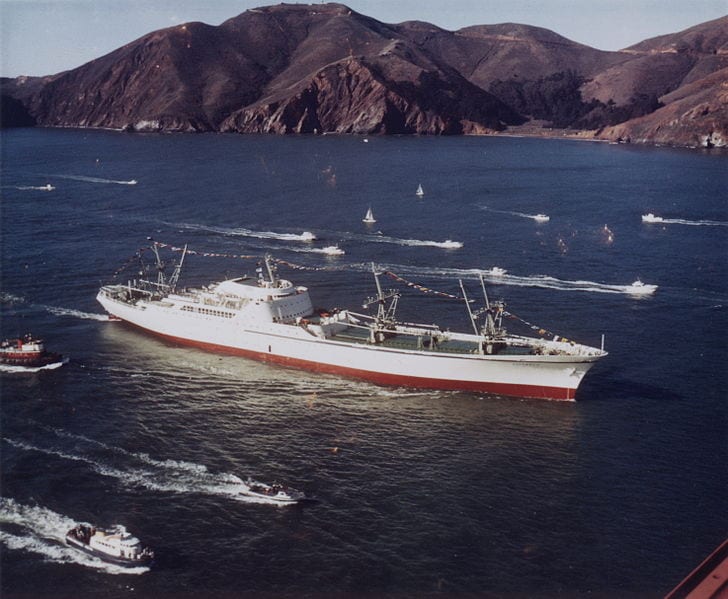
NS (Nuclear Ship) Savannah, the first commercial nuclear power cargo vessel, en route to the World’s Fair in Seattle in 1962. Wikipedia / U.S. government
The N.S. Savannah was the world’s first nuclear-powered merchant ship. It operated from 1962 to 1971, when it was inactivated. It currently is moored in Baltimore.
Under the authority of the National Historic Preservation Act (NHPA), MARAD is engaged in formal consultations with federal, state, and organizational stakeholders, and expects to enter into a Programmatic Agreement with those stakeholders in the next few months. The agreement includes a stipulation that details how MARAD will consider future uses for the vessel after its nuclear power plant is fully decommissioned.
Comments can be submitted electronically online through the Federal eRulemaking Portal at www.regulations.gov under docket number MARAD-2020-0133. Alternatively, comments may be mailed to the following address: U.S. Department of Transportation, Docket Management Facility, West Building, Ground Floor, Room W12-140, 1200 New Jersey Avenue, SE, Washington, DC 20590. In person submissions are being accepted in accordance with social distancing protocols in place.
All submissions to the docket will be posted without change to www.regulations.gov and will include any personal information you provide.
CAE and Pinnacle Solutions Prepare to Deliver LCS Simulators to U.S. Navy
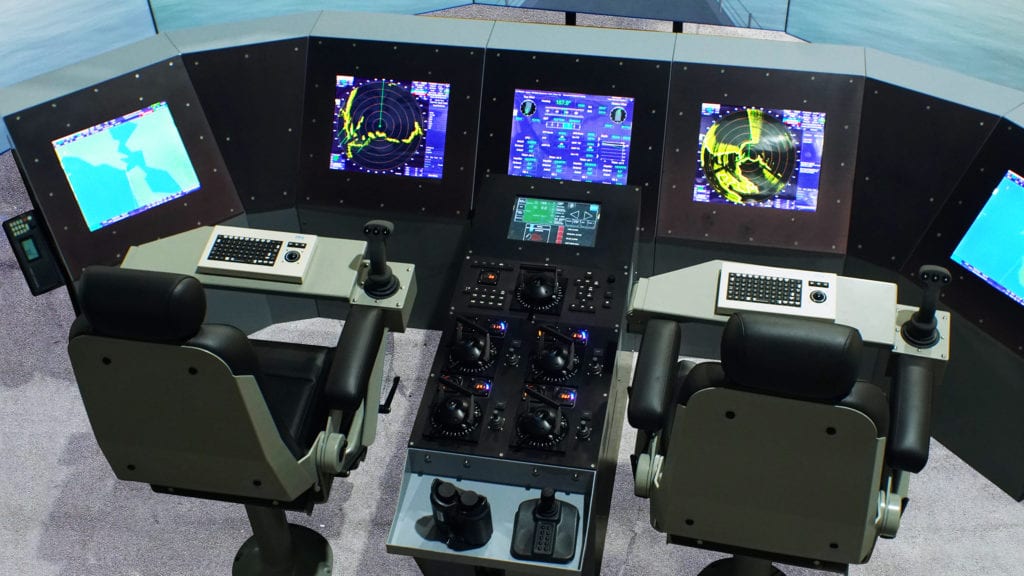
Two Littoral Combat Ship Bridge Part-Task Trainers representing the General Dynamics Independence variant will be delivered to the Navy’s Surface Warfare Schools Command in Newport, Rhode Island. CAE
TAMPA, Fla.—The joint venture CAE USA and Pinnacle Solutions, Xebec, will be delivering the first three Littoral Combat Ship (LCS) Bridge Part-Task Trainers (BPTTs) to the U.S. Navy, CAE said in a Feb. 9 release.
The new LCS BPTTs recently completed factory acceptance testing at CAE’s facility in Tampa, Florida and will now be packed and shipped to the Navy’s Surface Warfare Schools Command (SWSC) in Newport, Rhode Island. The SWSC is the Navy’s center of excellence for surface warfare where training for officers and Sailors who will serve on the Navy’s surface combatants is delivered.
“The Navy is focused on navigation and seamanship training and these littoral combat ship simulators will greatly assist in this endeavor,” said Michael Beard, program manager, U.S. Navy LCS Training Systems for CAE. “The more training our officers and Sailors receive ashore, the better prepared they will be at sea in real life situations.”
CAE is featured a video demonstration of the LCS bridge simulators in the Innovation Hub as part of the CAE OneWorld virtual conference and tradeshow. CAE OneWorld 2021 will be available online for the next month.
Included in the initial delivery to the SWSC in Newport will be two LCS BPTTs for the LCS 2 Independence variant manufactured by General Dynamics and Austal USA, and one LCS BPTT for the LCS 1 Freedom variant manufactured by Lockheed Martin. The three LCS BPTTs will undergo site acceptance testing once installed in Newport and are expected to be ready for training by the end of April. Xebec is under contract to deliver four additional LCS BPTTs which will be delivered to the LCS training facilities located in San Diego, California and Mayport, Florida.
“The fidelity and flexibility of the littoral combat ship simulators we have developed will allow the Navy to deliver most of the personnel qualification standards training in a simulation-based environment,” said Ray Duquette, president and general manager, CAE USA. “This means when sailors get to their assigned ship they will be better prepared for the navigation and operational assignments required.”
The LCS BPTTs are being developed by Xebec, a joint venture of CAE USA and Pinnacle Solutions established under the U.S. Small Business Administration’s Mentor-Protégé program.
“We were pleased to establish the Xebec joint venture with CAE and the collaboration has resulted in a very successful littoral combat ship simulator program for the Navy,” said Mike Durant, Pinnacle’s president and CEO. “We look forward to continuing deliveries of the LCS simulators to the Navy and to future pursuits with CAE through the Xebec joint venture.”
Xerox and Naval Postgraduate School Collaborate on 3-D Printing Research
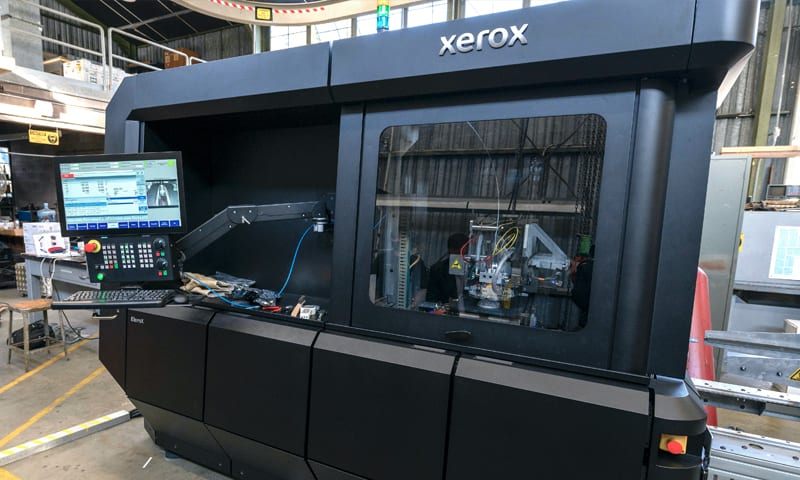
At the cutting-edge of additive manufacturing technology, this new Xerox ElemX 3-D Liquid Metal Printer is now operational in NPS’ Large Experiment Annex on campus. Naval Postgraduate School
NORWALK, Conn. & MONTEREY, Calif. — Xerox and the Naval Postgraduate School (NPS) have formed a strategic collaboration focused on advancing additive manufacturing research, specifically 3-D printing, which has the potential to dramatically transform the way the military supplies its forward-deployed forces, Xerox and NPS said in a joint release.
As part of a Collaborative Research and Development Agreement (CRADA), NPS was the first to receive an installation of the Xerox ElemX Liquid Metal Printer on the university campus in December. The Xerox system will provide NPS faculty and students with hands-on exploration of new ways the technology can deliver on-demand 3-D printing of metal parts and equipment.
“The military supply chain is among the most complex in the world, and NPS understands first-hand the challenges manufacturers must address,” said Xerox Chief Technology Officer Naresh Shanker. “This collaboration will aid NPS in pushing adoption of 3-D printing throughout the U.S. Navy, and will provide Xerox valuable information to help deliver supply chain flexibility and resiliency to future customers.”
With access to the latest additive manufacturing equipment, NPS faculty and students will use the ElemX printer to conduct thesis research to develop new capabilities for the Navy and Marine Corps.
“As the Department of the Navy’s applied research university, NPS combines student operational experience with education and research to deliver innovative capabilities and develop innovative leaders with the knowhow to use them,” said NPS President Ann Rondeau, a retired vice admiral. “This collaborative research effort with Xerox and the use of their 3-D printing innovations is a great example of how NPS uniquely prepares our military students to examine novel approaches to create, make, prototype and manufacture capability wherever they are.”
“From the age of sail to the nuclear era, Sailors have been fixing things at sea so they can complete the mission,” Rondeau continued. “This partnership is about the strategic ability of the Navy to have Sailors on ships with the capability through creativity and technology to advance their operations at sea. Through collaboration, NPS and Xerox are helping build a Navy for the 21st Century.”
The Xerox ElemX printer uses cost-effective aluminum wire to fabricate end-use parts that can withstand the rigors of operational demands. This ability to produce reliable replacement parts on-demand reduces the dependency on complex global supply chains for deployed forces and also addresses the hidden costs of traditional manufacturing.
“The NPS Alumni Association and Foundation supported bringing the ElemX liquid metal printer to NPS because it will enable soldiers, sailors, airmen, and marines to solve their problems where they are, when problems occur,” noted retired U.S. Marine Corps Col. Todd Lyons, vice president of the NPS Alumni Association and Foundation. “By providing the right digital tools and the liquid metal printer, all of a sudden we’ve helped transform not just the supply chain, but how the Department of Defense (DoD) thinks operationally about supplying war.”
“This is one way to bend the cost curve so that the DoD is not spending a thousand dollars for every dollar that a peer competitor spends,” he added.
“Global supply chains leave industries like aerospace, automotive, heavy equipment, and oil and gas vulnerable to external risks,” said Tali Rosman, vice president and general manager, 3D Printing, Xerox. “Our goal is to integrate localized 3D printing into their operations, and the real-time feedback from NPS gives us actionable data to continuously improve the ElemX.”
Northrop Grumman to Develop Advanced Air-to-Air Missile Engagement Concept
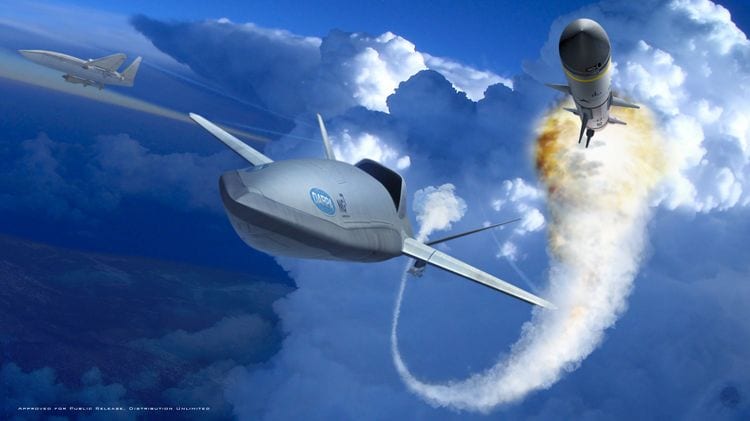
An artist’s conception of the LongShot advanced weapons concept. Northrop Grumman
REDONDO BEACH, Calif. — Northrop Grumman Corp. has been awarded a contract by the U.S. Defense Advanced Research Project Agency (DARPA) Tactical Technology Office to develop an advanced technology weapon concept designed to significantly increase engagement range and weapon effectiveness of U.S. forces against adversary air threats, the company said in a Feb. 10 release.
“Our collaboration with DARPA is the critical first step in the development of innovative operational concepts and solutions that will enhance our warfighter’s combat capability against a rapidly growing threat,” said Jaime Engdahl, program director, kinetic weapons and emerging capabilities, Northrop Grumman. “The LongShot program enables us to combine our digital engineering skillset with our extensive knowledge in advanced technology weapons, autonomous systems and strike platforms to increase weapon range and effectiveness.”
Spurred by rapid technological advancements and an ever more dangerous and disruptive battlefield, DARPA’s LongShot program will explore new lethal engagement concepts by leveraging multi-modal propulsion, weapon systems that can be operationally deployed from existing fighters or bombers.
DARPA’s advanced aerospace systems activities are focused on utilizing high pay-off opportunities to provide revolutionary new system capabilities, as opposed to incremental or evolutionary advancements, in order to achieve undeterrable air presence at dramatically reduced costs.
The LongShot program enables Northrop Grumman to combine its expertise in weapon system design, survivability, autonomy, advanced mission systems and rapid prototyping to deliver advanced solutions that help to maintain a competitive military advantage in highly contested environments.
U.S. Marine Corps Awards BAE Systems $184 million for Additional ACVs
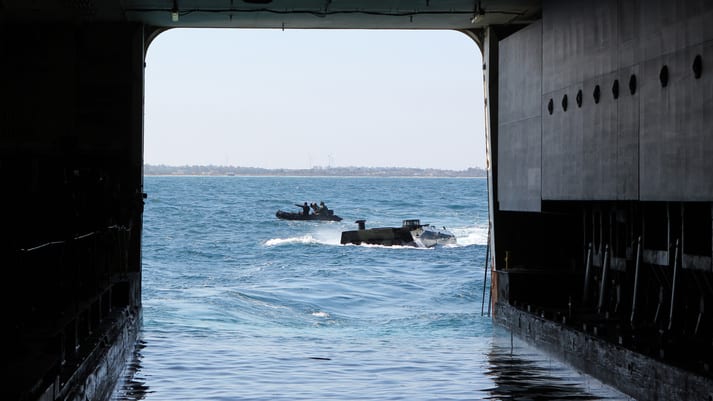
Amphibious Combat Vehicles undergoing sea tests in Italy. BAE Systems
STAFFORD, Virginia – BAE Systems has received a $184 million contract option from the U.S. Marine Corps for 36 additional Amphibious Combat Vehicles (ACVs) under full-rate production, the company said in a Feb. 11 release. The order demonstrates the Marine Corps’ confidence in a program that is on track to deliver this critical capability to the Marines.
This contract award will cover production, fielding, and support costs for the ACV personnel carrier (ACV-P) variant. BAE Systems was awarded the first full-rate production contract option in December for the first 36 vehicles. This option on that contract increases the total number of vehicles under full-rate production to 72, for a total value of $366 million.
“The exercising of this option validates years of teamwork in partnership with the Marines to provide the most adaptable amphibious vehicle possible to meet their expeditionary needs,” said John Swift, director of amphibious programs at BAE Systems. “The ACV was designed to meet the Marines’ needs of today while allowing for growth to meet future mission role requirements.”
The ACV is a highly mobile, survivable, and adaptable platform for conducting rapid ship-to-shore operations and brings enhanced combat power to the battlefield. BAE Systems is under contract to deliver two variants to the Marine Corps under the ACV Family of Vehicles program: the ACV-P and the ACV command variant (ACV-C). A 30mm cannon (ACV-30) is currently under contract for design and development and a recovery variant (ACV-R) is also planned.
The Marine Corps selected BAE Systems along with teammate Iveco Defence Vehicles for the ACV program in 2018 to replace its legacy fleet of Assault Amphibious Vehicles (AAVs), also built by BAE Systems. BAE Systems was also recently awarded an indefinite delivery indefinite quantity contract worth up to $77 million for the ACV program that includes the provision of spare and replacement parts, testing equipment, and other services.
ACV production and support is taking place at BAE Systems locations in Stafford, Virginia; San Jose, California; Sterling Heights, Michigan; Aiken, South Carolina; and York, Pennsylvania.
Kongsberg Drone to be Deployed on Canadian Coast Guard Vessels
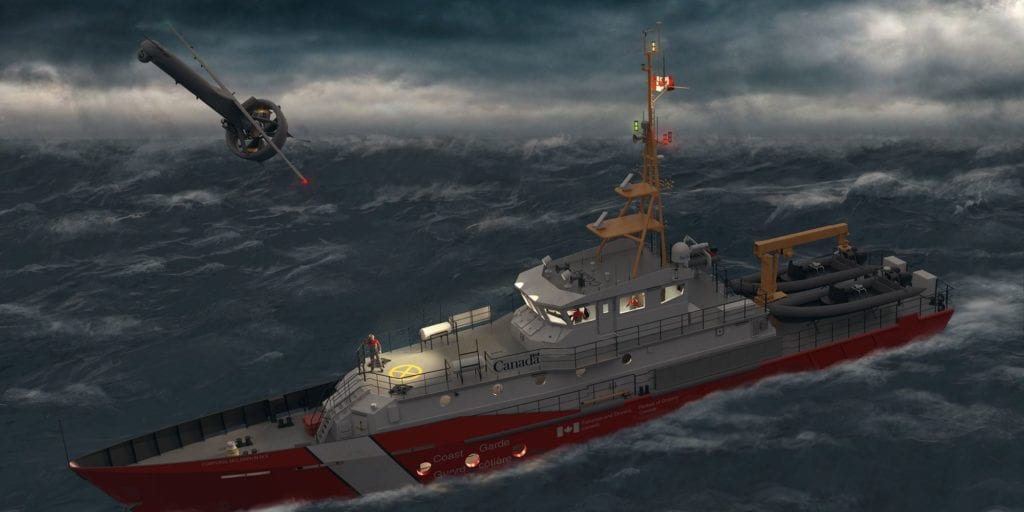
An artist’s conception of a Martin UAV V-BAT operating from a Canadian Coast Guard vessel. Kongsberg Geospatial
OTTAWA, Canada — Kongsberg Geospatial has been selected by Defence Research and Development Canada (DRDC) to conduct trials of a new long-endurance unmanned aircraft surveillance system for the Canadian Coast Guard, the company said in a Feb. 9 release. The Martin UAV V-BAT aircraft was selected to provide the unique ability to combine takeoff and landing from the small confines aboard ship with the long endurance of a fixed-wing aircraft while carrying multiple sensors.
The aircraft will communicate with the Kongsberg Geospatial sensor data management system, called MIDAS, which allows a range of sensor data, including full-motion video from unmanned systems to be processed and exploited in near real-time by analysts on board Canadian Coast Guard ships. MIDAS provides the capability to compare historical and live data from the mission area, and to examine sensor data with a variety of tools, including motion and object detection, in near-real time. This near real-time analytical capability can greatly enhance the effectiveness of UAVs for a variety of mission types.
The V-BAT provided by Martin UAV is a fixed-wing vertical take-off and landing aircraft specifically designed to operate from very small spaces on ships, land, and nearly any environment. The V-BAT is a long-endurance aircraft capable of carrying multiple sensors, including land and maritime wide area surveillance.
Kongsberg Geospatial’s MIDAS is derived from technologies created for the NATO Alliance Ground Surveillance project which required the storage and retrieval of vast amounts of intelligence data for intelligence analysts. The system directly addresses the problem that the vast majority of UAVs have no standards-compliant capability to process, exploit, and distribute their sensor data where it is being used. MIDAS provides a fully standards-compliant system that allows intelligence analysts to view, process, and analyze sensor data in near real-time, from where the drone is being operated. MIDAS has packaged these capabilities into a tactical and portable form factor to enables those surveillance capabilities to be deployed as a portable system on board a ship, or in a temporary command post.
CINTIQS Military Technology Consulting will be providing consulting services for the planning and conduct of the flight trials and sensor employment to validate systems performance.
The combination of the Martin UAV V-BAT and the Kongsberg MIDAS sensor data management system will allow Coast Guard vessels to significantly expand their surveillance range for search and rescue missions, and for the surveillance of the movement of icebergs, without requiring the use of manned aircraft.
“UAVs are a useful tool, but they are only truly effective if they can collect sensor data that results in actionable intelligence,” said Ranald McGillis, president of Kongsberg Geospatial. “Our MIDAS system allows users to fully exploit raw sensor data and derive useful intelligence at the tactical edge where the UAV is being used. In a search and rescue context, that could mean using infrared sensors, or near real-time motion detection to locate a subject when visibility or weather conditions are poor.”
Bollinger Shipyards Delivers 43rd Fast Response Cutter
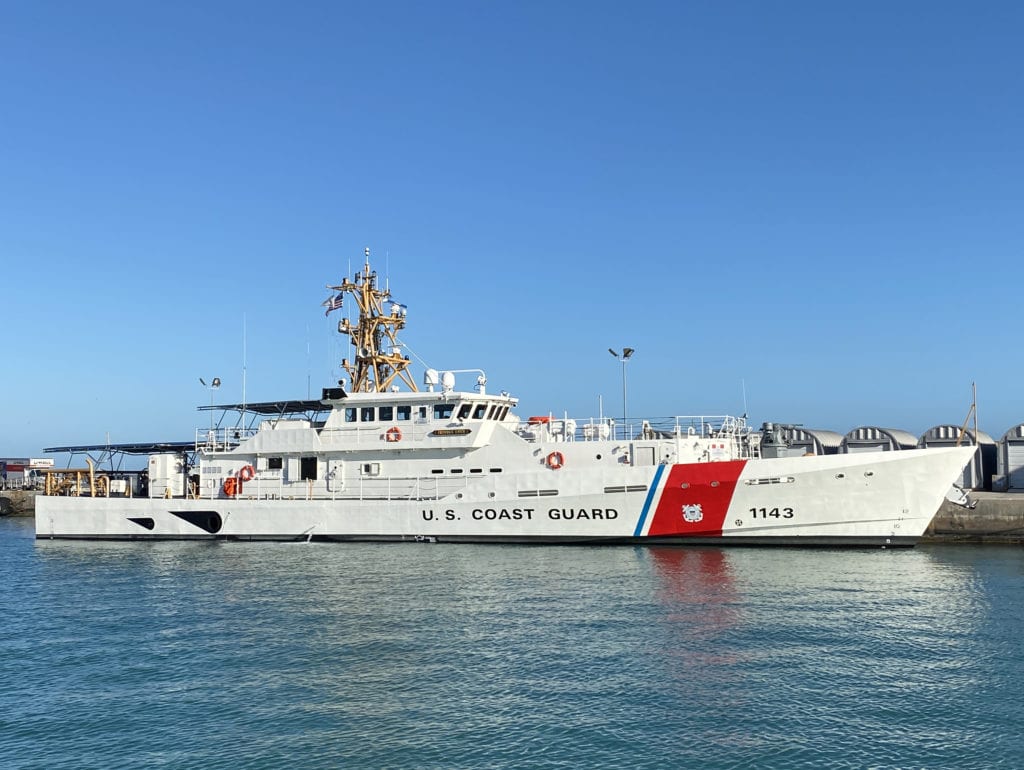
U.S. Coast Guard Cutter Frederick Hatch, the 43rd Fast Response Cutter delivered by Bollinger Shipyards LLC under the current program. Bollinger Shipyards.
LOCKPORT, La.—Bollinger Shipyards LLC has delivered the USCGC Frederick Hatch to the U.S. Coast Guard in Key West, Florida, the company said in a Feb. 10 release. This is the 166th vessel Bollinger has delivered to the U.S. Coast Guard over a 35-year period and the 43rd Fast Response Cutter (FRC) delivered under the current program.
The Frederick Hatch is the final of three FRCs to be home-ported in Apra Harbor, Guam, increasing the presence for the U.S. Coast Guard in the Indo-Pacific Theater. Additionally, in 2020, Bollinger delivered two of six FRCs that will be home-ported in Manama, Bahrain, which are replacing the Island-class patrol boats supporting the Patrol Forces Southwest Asia, the U. S. Coast Guard’s largest unit outside of the United States.
“Bollinger is proud to continue enhancing and supporting the Coast Guard’s operational presence and mission in the Indo-Pacific region with the delivery of the Frederick Hatch,”said Ben Bordelon, Bollinger president and CEO. “Building ships for the U.S. Coast Guard provides critical assets to bolster our national security interests, both domestically and abroad. We are proud and humbled to be partners in the FRC program.”
The homeporting of three FRCs in Guam is part of the U.S. Coast Guard’s “doubling down on Oceania,” allowing more frequent and longer patrols in an area where the U.S. Coast Guard has increased its presence over the past two years and is aligned with the U.S. position on maritime security in the Indo-Pacific. In the early days of the new administration, President Joe Biden has assured U.S. allies in the region that the United States is committed to “maintaining a secure and prosperous Indo-Pacific region.”
U.S. Coast Guard Commandant Adm. Karl Schultz has previously stressed the strategic importance of the service’s presence in the region, saying, “We’re on a trajectory where the geostrategic importance of the Oceania region has not been higher here in decades, and it’s a place that the Coast Guard’s looking to be part of the whole-of-government solution set.”
The majority of the Frederick Hatch build occurred despite the COVID-19 global pandemic and six named storms impacting the Gulf region, all of which affected Louisiana and two of which made landfall in the state as hurricanes, including Hurricane Laura, a Category 4 storm and the strongest to hit the state since the Great Storm of 1856. Despite these challenges, Bollinger undertook precautions to ensure the health and safety of employees and maintained its record of on-time deliveries to the Coast Guard.
Bordelon continued, “Delivering vessels on schedule and on budget to the Coast Guard in these unprecedented times given the COVID-19 challenges that we are all facing shows the resiliency and dedication of our incredibly capable workforce. The FRC hot production line continues to produce and provide stability in the industrial base for the U.S. government and our Bollinger workforce, assuring economic benefit for the Lafourche Parish Louisiana region, our vendor partners in the 40-plus states that support the FRC program, and our country.“
Each FRC is named for an enlisted Coast Guard hero who distinguished himself or herself in the line of duty. Surfman Frederick Hatch was a two-time winner of the Gold Lifesaving Medal. Hatch was awarded his first medal in 1884 for his actions as a surfman at the Cleveland Life-Saving Station for rescuing the crew of the schooner Sophia Minch. He was awarded his second gold medal in 1890, for his selfless act of courage as he rescued those on board the schooner Wahnapitae, which grounded near the Cleveland Breakwater lighthouse where he served as keeper. His career exemplified the Coast Guard’s core values of “honor, respect and devotion to duty” and serves as an inspiration to other enlisted men and women.
The FRC is an operational “game changer,” according to senior Coast Guard officials. FRCs are consistently being deployed in support of the full range of missions within the United States Coast Guard and other branches of our armed services. This is due to its exceptional performance, expanded operational reach and capabilities, and ability to transform and adapt to the mission. FRCs have conducted operations as far as the Marshall Islands — a 4,400 nautical mile trip from their homeport. Measuring in at 154-feet, FRCs have a flank speed of 28 knots, state of the art C4ISR suite (command, control, communications, computers, intelligence, surveillance, and reconnaissance), and stern launch and recovery ramp for a 26-foot, over-the-horizon interceptor cutter boat.
DARPA Selects Performers to Advance Unmanned Underwater Vehicle Project
An artist’s conception of DARPA’s Manta Ray project. DARPA
ARLINGTON, Va.—The Defense Advanced Research Projects Agency (DARPA) has executed contract options to continue the Manta Ray project that began in 2020, the agency said in a Feb. 5 release.
The Manta Ray effort seeks to demonstrate innovative technologies allowing payload-capable unmanned underwater vehicles (UUVs) to operate on long-duration, long-range missions in ocean environments. The three prime contractors will be Northrop Grumman Systems Corp., Martin Defense Group LLC (formerly Navatek, LLC), and Metron Inc.
The Manta Ray project seeks to develop UUVs that operate for extended durations without the need for on-site human logistics support or maintenance. It also aims to address critical challenges spanning energy management, UUV reliability, biofouling, corrosion control, navigation, underwater obstacle avoidance, and many other areas that could benefit Navy operations.
“Manta Ray performers have each taken unique approaches to solving the wide range of challenges related to UUV endurance,” said Cmdr. Kyle Woerner, the program manager for Manta Ray. “To me, this is a clear sign we are tackling a complex problem without a clear ‘one size fits all’ solution.”
The Manta Ray program concluded its first major milestone with the completion of preliminary design reviews in early 2021. Later this year, selected performers will advance their designs toward a critical design review that will confirm design maturity before vehicle fabrication and testing in an anticipated Phase 2.
“The goals of this new class of undersea vehicle and its critical component technologies are to inform, as well as transition into, future Navy UUV efforts,” added Woerner.
Two of the selected performers, Northrop Grumman Systems Corp. and Martin Defense Group LLC, will continue development of fully integrated demonstration vehicles. A third performer, Metron Inc., will advance progress on a novel energy harvesting subsystem.
L3Harris Awarded Systems Integration Contract for Navy Frigate Program
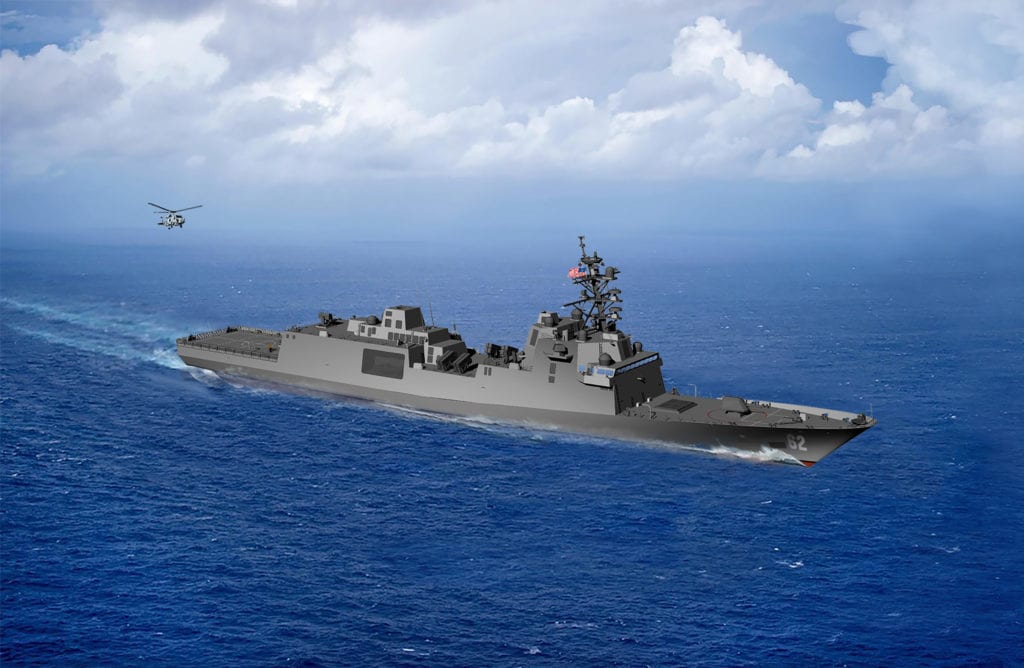
An artist’s rendering of the guided-missile frigate (FFG). The new small surface combatant will have multi-mission capability to conduct air warfare, anti-submarine warfare, surface warfare, electronic warfare, and information operations. U.S. Navy
CAMDEN, N.J. — L3Harris Technologies has been awarded a contract by Fincantieri Marinette Marine for the shipboard integration and production of major subsystems onboard the U.S. Navy’s guided-missile frigate, FFG 62, the company said in a Feb. 10 release. L3Harris is prepared to support the Navy’s plans to build at least 10 ships. The value of the L3Harris program could exceed $300 million if all design, development, and production options are awarded.
L3Harris is the largest member of the Fincantieri FFG team and will provide integrated systems that include the electric and propulsion systems, bridge and navigation systems, and aviation integration services. The diversified capabilities that L3Harris delivers on the Constellation-class frigate program will distribute the power and propulsion needed to meet the U.S. Navy’s mission requirements throughout the world.
“We’re excited by the opportunity to join the Fincantieri Marinette Marine team on the Frigate program and we look forward to bringing to bear industry-best speed, innovation and affordability as we deliver the advanced integrated capabilities that will ensure the Navy’s ability to operate this ship with impunity upon any sea,” said Sean Stackley, president, Integrated Mission Systems, L3Harris.
The Navy recently awarded a contract to Fincantieri to design and build the FFG, the Navy’s first new build in more than a decade. L3Harris will support Fincantieri at its Marinette, Wisconsin, shipyard, where it will build the frigate based on the company’s Italian FREMM multi-mission frigate.
Oshkosh Defense Celebrates Production of the 10,000th JLTV
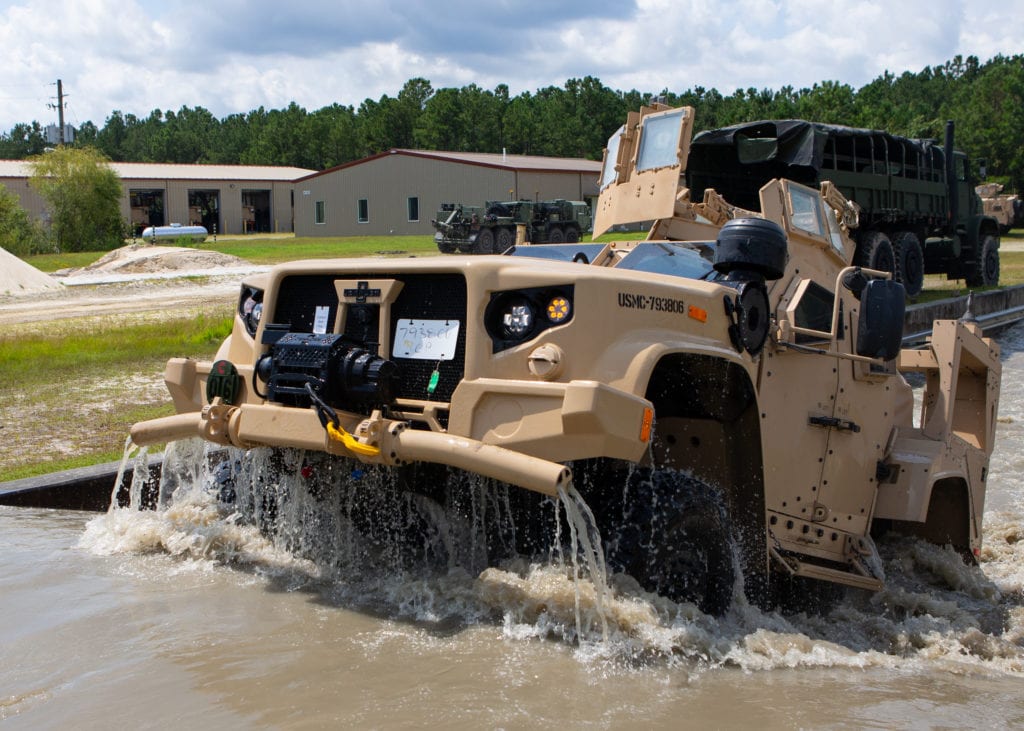
A joint light tactical vehicle with Marine Wing Support Squadron 271 emerges from a fording pit at Camp Lejeune, North Carolina, Sept. 2, 2020. U.S. Marine Corps / Lance Cpl. Elias E. Pimentel III
OSHKOSH, Wis. — Oshkosh Defense LLC, an Oshkosh Corp. company, recently produced the 10,000th Joint Light Tactical Vehicle (JLTV), the company said in a Feb. 9 release.
This significant milestone represents over a decade of proprietary experience in designing, building, and delivering the world’s most capable light tactical vehicle. Since the program was awarded to Oshkosh Defense in August 2015, the company has built a robust, dependable supply chain; optimized its manufacturing process and maximized efficiencies; and provided JLTVs at a contractual price substantially lower than the government cost estimate.
“This milestone is a true testament to the pride and dedication that our team members have in the JLTV program which has become a central piece of the U.S. military’s ground force,” said George Mansfield, vice president and general manager of Joint Programs for Oshkosh Defense. “Producing the 10,000th JLTV in under five years is further evidence of our ability to meet the demands of our domestic and international customers by providing the world’s most capable light tactical vehicle at a great price. We’re excited to continue working with our military customer to further refine and expand the platform.”
To date, Oshkosh Defense has received orders for 18,126 JLTVs for a total contract value over $6 billion. Over 6,500 of those vehicles have been fielded with warfighters around the globe, including over 30 U.S. and international military installations. The U.S. Army and U.S. Marine Corps are the customers for the majority of the JLTVs ordered so far.
International interest in the Oshkosh Defense JLTV also continues to grow. Oshkosh Defense has received orders or commitments from seven NATO and non-NATO allies including United Kingdom, Belgium, Montenegro, Slovenia, Lithuania, Brazil, and North Macedonia.