U.S., Russia Sign Joint Contingency Plan for Pollution Response in the Bering and Chukchi Seas
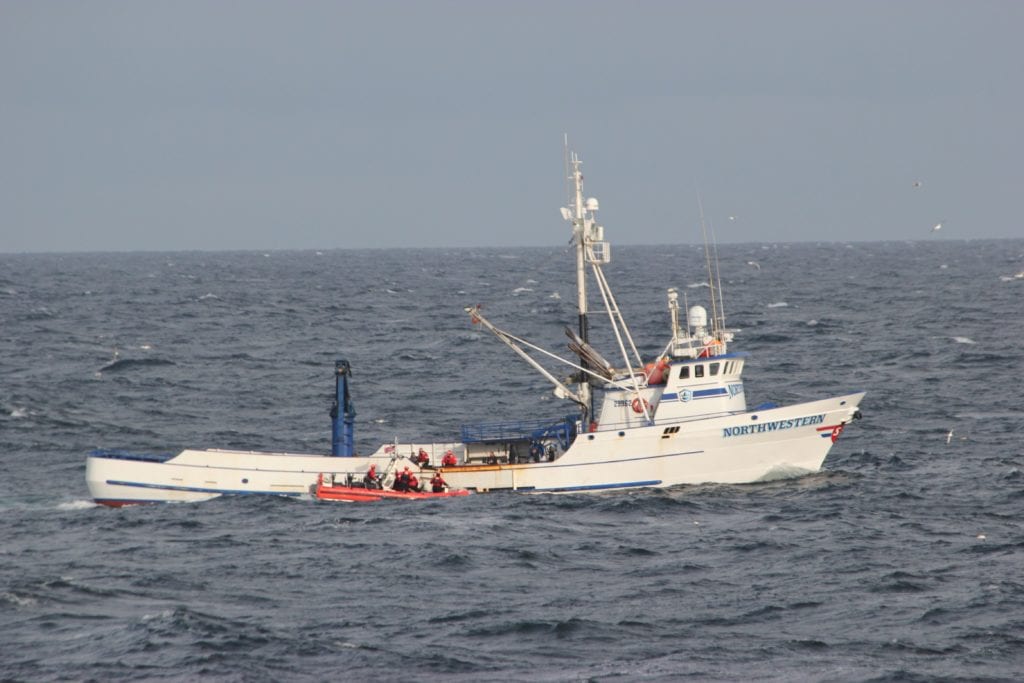
The Coast Guard Cutter Alex Haley’s small boat transfers their boarding team onto the fishing vessel Northwestern to conduct a safety inspection in the Bering Sea in this 2018 photo. U.S. Coast Guard / Ens. Douglas Zimmerman

WASHINGTON – The U.S. Coast Guard and the Russian Federation’s Marine Rescue Service recently signed the 2020 Joint Contingency Plan of the United States of America & the Russian Federation in Combating Pollution on the Bering & Chukchi Seas, the Coast Guard 17th District said in a Feb. 2 release.  

On Feb. 1, 2021, Acting Director Andrey Khaustov of the Russian Federation’s Marine Rescue Service (MRS) and the U.S. Coast Guard’s deputy commandant for operations, Vice Adm. Scott Buschman, signed the 2020 update to the Joint Contingency Plan (JCP), a bilateral agreement focused on preparing for and responding to transboundary maritime pollution incidents.  

The updated JCP promotes a coordinated system for planning, preparing and responding to pollutant substance incidents in the waters between the U.S. and Russia. The U.S. and Russian Federation have shared a cooperative bilateral agreement on transboundary marine pollution preparedness and response in this area since 1989. The newest JCP revision requires joint planning and transboundary exercise efforts to be coordinated by a Joint Planning Group led by Coast Guard District 17, and is guided by a non-binding two-year work plan. In addition, the updated JCP creates the new International Coordinating Officer role to help facilitate the critical sharing of information during coordinated response efforts. 

“This is an important agreement between the U.S and the Russian Federation that ensures coordination between respective authorities and actively promotes the protection of our shared interests in these environmentally and culturally significant trans-boundary waters,” Buschman said. “We look forward to continuing our necessary and productive relationship with the Marine Rescue Service and the opportunity to conduct joint training and exercises in the near future in order to ensure the protection of our nations’ critical natural resources.” 

The shared maritime boundary between the U.S. and Russia in the Bering and Chukchi seas has notoriously poor weather conditions and limited resources to respond to pollution incidents. This plan primarily addresses international collaboration matters and as such is meant to augment each country’s national response system as well as state, regional, and local plans. In the United States, the operational aspects of the plan fall under the responsibility of the U.S. Coast Guard’s 17th District Commander and Sector Anchorage. 


Burke: Keflavik Important to North Atlantic Operations

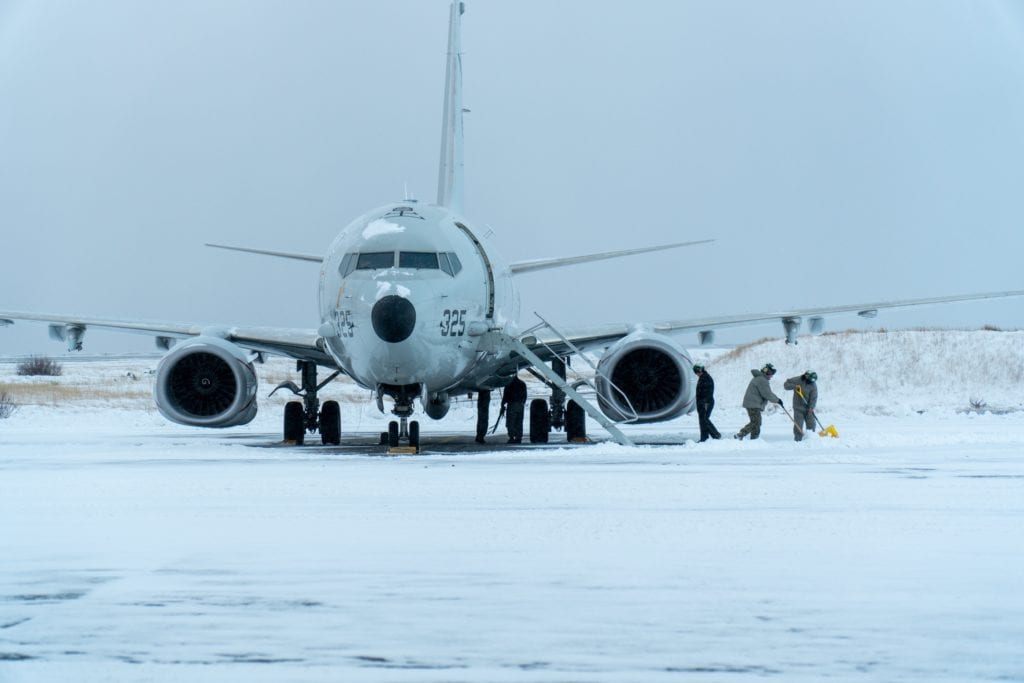
Sailors assigned to Patrol Squadron (VP) 4 shovel snow away from the port engine of a squadron P-8A Poseidon maritime patrol and reconnaissance aircraft on the the apron of Keflavik Air Base, Jan. 03, 2020. U.S. Navy / Lt. Cmdr. Ryan McFeely

ARLINGTON, Va. — The U.S. Navy’s top admiral in Europe highlighted the importance of using the airfield in Keflavik, Iceland, in the current era of great power competition, as a base for maritime patrol and anti-submarine warfare (ASW) aircraft. 

“We need to operate there,” said Adm. Robert Burke, commander, U.S. Naval Forces Europe/Africa, speaking Feb. 2 at a webinar sponsored by the U.S. Naval Institute and the Center for Strategic and International Studies, funded by Huntington Ingalls Industries. “There were 12 P-8s on the ground when I was there at the end of October. They were very busy. I can tell you it wasn’t an exercise and it’s not hard to imagine why.” 

Burke referred the listener to 2019 when “there were open-source reports of 10 Russian submarines operating in the Arctic and the North Atlantic. From there, they head into the Atlantic and they go there to exercise their ability to hold Europe and the continental United States at risk with land-attack cruise missiles.” 

The admiral pointed out that “[s]ome of those missiles, in the not-to-distant future, will be capable of hypersonic speeds. That’s a real threat and that’s something we have to be ready to address.” 

The international airport in Keflavik was the site of a U.S. naval air station during the Cold War, with an ASW operations center. A squadron of P-3 Orion maritime patrol aircraft was deployed there on a rotational basis. A detachment of U.S. Air Force F-15 Eagle fighters also was present to intercept Soviet bombers that ventured over the Atlantic. 

Iceland has no armed forces other than a coast guard, but Keflavik represents an important contribution to the U.S. and NATO’s capabilities with Keflavik’s airfield. 

With mobile operations command centers, the Navy rapidly can deploy one to Keflavik to stand up an ASW command, control, and analysis capability for deployed maritime patrol aircraft. 

Two other North Atlantic nations are acquiring P-8A aircraft. The U.K. Royal Air Force already is operating its new P-8s, having reconstituted a maritime patrol capability after the 2011 retirement of its Nimrod aircraft. The first P-8A for the Royal Norwegian Air Force is now under construction to replace its P-3 aircraft. Other NATO nations including Germany, Spain, Portugal and Greece operate P-3s, and France and Italy operate Atlantique aircraft. 

Burke praised the P-8 for its “incredible legs, incredible capabilities.” 

While the Russian submarine force is much smaller than its peak during the Soviet era, it has continued to push development of modern submarines, now in their sixth generation. 


HII Awarded $175M U.S. Navy CVN Support Contract

The USS Enterprise, left, passes the USS George H.W. Bush in this 2011 photo. Huntington Ingalls Industries’ Technical Solutions division has been awarded a contract for maintenance, training and planning support of U.S. Navy carriers. U.S. Navy

NEWPORT NEWS, Va. — Huntington Ingalls Industries’ Technical Solutions division was awarded a contract last week to provide maintenance, training and planning support for U.S. Navy aircraft carriers, the company said in a Feb. 1 release. The indefinite-delivery/indefinite-quantity contract includes a five-year ordering term, with a total potential value of $175 million. 

“We are very pleased the U.S. Navy has entrusted us to support the readiness of one of our nation’s most important power projection platforms,” said Garry Schwartz, president of Technical Solutions’ Defense and Federal Solutions business group. “For nearly four decades, we’ve partnered with the Navy on this critical program, and we look forward to continuing to advance our nation’s fleet sustainment for years to come.” 

HII will provide engineering services, maintenance and operator training as well as technical and repair services in support of maintenance and planning for the overhaul, modernization and repair of shipboard elevators, cargo-handling equipment and associated systems installed within U.S. Navy aircraft carriers. 

The work, contracted by Naval Sea Systems Command, will be performed on board U.S. Navy aircraft carriers in Norfolk, Virginia; San Diego, California; Bremerton and Everett, Washington; Japan, and other fleet concentration areas to be determined. 


Davie Polar Icebreaker Program Confirms GE as Strategic Partner

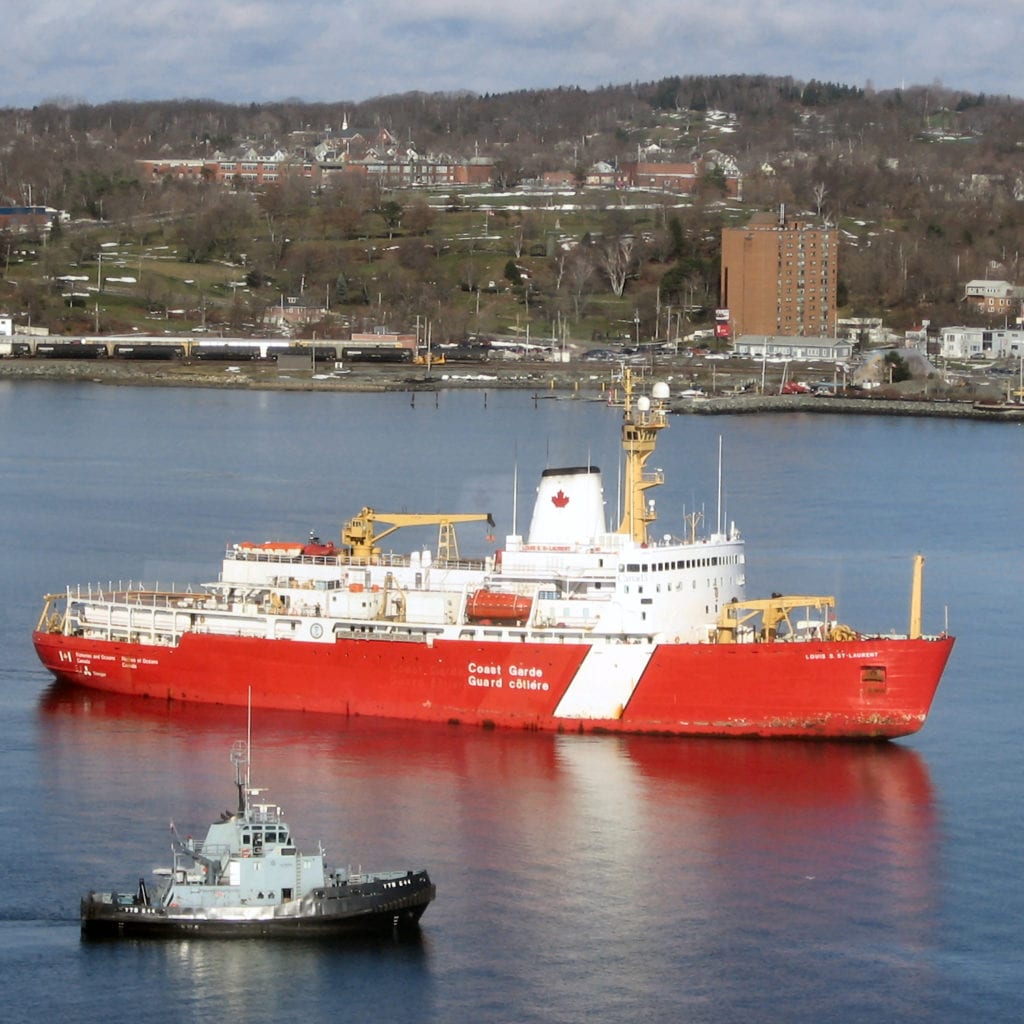
CCGS Louis S. St-Laurent, one of Canada’s aging polar icebreakers, shown here transiting Halifax Harbor. Wikipedia / Verne Equinox

LEVIS, QUEBEC — Davie, Canada’s premier builder of polar and ice-capable ships, welcomed GE as a strategic partner in its polar icebreaker program, the flagship of Canada’s National Icebreaker Centre, Davie said in a Feb. 2 release. 

Launched in August 2020, the NIC is a center of excellence for polar technologies and Arctic expertise. It reflects Davie’s role as Canada’s icebreaking partner and builder of the new icebreaker fleet, under the National Shipbuilding Strategy. This will create thousands of good jobs, a vibrant world-class maritime cluster in Québec and drive exports of Canadian innovation. 

Canada’s current polar icebreakers are very old. CCGS Louis S. St-Laurent is deep into its sixth decade and CCGS Terry Fox is fast approaching 40 years in service. A new polar class will enable Canada to maintain a continuous Arctic presence benefiting all Canadians, including the northern communities, enabling ice-choked trade, supporting Arctic sovereignty and protecting the polar environment. 

GE’s Power Conversion business offer a full spectrum of best-in-class integrated electrical propulsion and power systems, including its Seajet podded propulsion units. The ice-class range of Seajet – a technology jointly developed with AETC Sapphire – is available for Polar Class notation, with a power range of 7.5 MW to 15 MW. In the Seajet system the electric motor is housed in the hull mounted pod and directly connected to the propeller, freeing up cargo and operational space in the ship. Maneuverability and efficiency are greatly improved, and total fuel consumption and exhaust emissions are reduced. Customizable for different ship types, with simplified installation, Seajet pods can enhance performance in an array of commercial, offshore marine, and ice breaking ships.  

Davie is Canada’s only mega-yard with 50% of total capacity, able to build up to eight large, complex ships simultaneously. The 150-meter polar will be easily accommodated in Davie’s 351-meter Champlain Dry Dock. An integrated build schedule would ensure polar would complement other Davie programs such as the six program icebreakers it is set to build under the NSS. In fact, it would facilitate a steep learning curve and economies of scale to significantly benefit both programs by mitigating cost, schedule and performance risks. 

Moreover, a recent analysis conducted for Davie by Deloitte, drawing on ISED and StatCan numbers, concluded that building polar icebreakers at Davie will generate up to 2,500 well-paid jobs, engage over 1,300 suppliers (with 900 plus in Québec) and contribute up to $2.5 billion to the Canadian economy. 

“We welcome GE to our polar program,” said James Davies, president and CEO of Davie Shipbuilding. “Their leading-edge propulsion system combined with decades of icebreaker experience and electric and power system capabilities are unsurpassed. Their inclusion also greatly strengthens Canada’s National Icebreaker Centre. Together, we can ensure the polar is stimulating the post-pandemic economy and protecting Canada’s Arctic interests into the far future.” 

Philippe Piron, president and CEO of GE Power Conversion, said, “GE are ready to begin work with Davie Shipbuilding to deliver Canada’s new generation of polar class ships. GE and Davie skills are complementary. GE are prepared to deliver the robust systems and equipment that are essential for the powerful polar class ships that Davie will build for Canada. We are excited to have the opportunity to strengthen Canada’s National Icebreaker Centre under Davie’s leadership, and we look forward to engaging broadly with Canada’s marine industry.” 

GE joins Vard and Serco as partner in Davie’s polar program. Davie expects to soon announce steel, critical systems and other service partners. 


Polar Star Takes Cuttermen to School in the Arctic

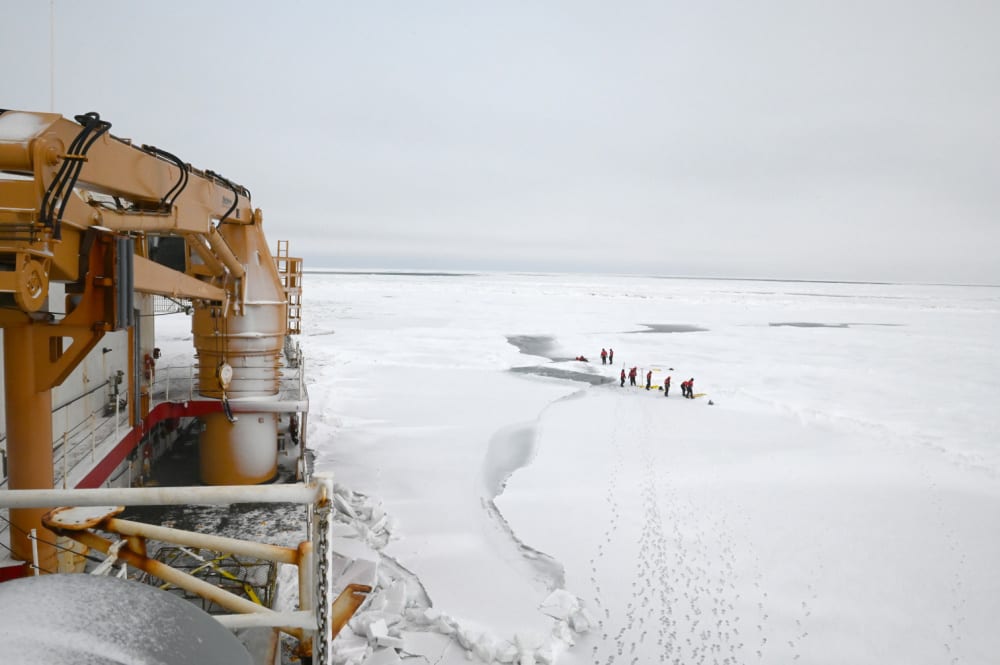
Coast Guard Cutter Polar Star (WAGB 10) crewmembers participate in ice rescue training in the Bering Strait, Wednesday, Jan. 20, 2020. The 45-year-old heavy icebreaker is underway to project power and support national security objectives throughout Alaskan waters and into the Arctic, including along the Maritime Boundary Line between the United States and Russia. U.S. Coast Guard / Petty Officer 1st Class Cynthia Oldham

America’s only heavy icebreaker is conducting training in a realistic environment — the Arctic.

When the National Science Foundation scaled back the research activities at McMurdo Station in Antarctica because of COVID 19, USCGC Polar Star’s annual deployment in support of Operation Deep Freeze was put on ice.  To maintain crew skills in icebreaking and polar operations, the Polar Star’s crew was presented a unique opportunity to get some realistic training.

“When 44-year-old Cutter Polar Star’s annual trip to resupply McMurdo Station in Antarctica was cancelled this year by the National Science Foundation, and Cutter Healy, which typically heads North experienced a major engineering casualty — a main propulsion generator catastrophic failure — we saw an opportunity to send Polar Star to the Bering Sea and North,” said Commandant of the Coast Guard Adm. Karl Schultz, speaking at the Surface Navy Association Annual Symposium last month.

The Coast Guard has another polar icebreaker, the 399-foot, 13,000-ton Polar Sea (WAGB 10), but it is not operational.  The 420-foot, 16,000-ton medium icebreaker USCGC Healy (WAGB 20) suffered a fire about 60 nautical miles from Seward, Alaska, in August of last year on her way to the high north, and is currently undergoing major repairs to replace her propulsion motor.

Schultz said a replacement polar icebreaker is a priority. The Polar Security Cutter (PSC) program, which currently has one 460-foot, 23,000-ton multi-mission PSCs on order with options for two more, is so important.

“We need a minimum of six icebreakers. Within that six, three need to be heavy, or Polar Security Cutters. And we need one now,” Schultz said at the symposium.

But with Healy undergoing repairs, and the first PCS not expected to be delivered until 2024, it’s important to keep the services icebreaking knowledge, expertise and experience. Polar operations are more challenging, especially in winter darkness, and the Antarctic and Arctic environments are not the same. When the new cutters come on line, they will need qualified crews.

“We need to train more cuttermen to break ice,” Schultz said.  

Schultz said there’s no better place to learn about Arctic operations that the Arctic.

“On Christmas Day, Polar Star set a cutter record, traveling North of the 72-degree, 11-minute North latitude line in Chukchi Sea, breaking four-feet thick ice along the way. Aboard Polar Star, there are University of Washington scientists, British sailors from the Royal Navy, midshipmen from the U.S. Merchant Marine Academy, and Ice Pilots from Cutter Healy — another example of partnerships. This is Polar Star’s first Arctic winter deployment since 1982 … presence equals influence in the high latitudes.”


Coast Guard, Navy offload more than $211M worth of cocaine, marijuana in San Diego

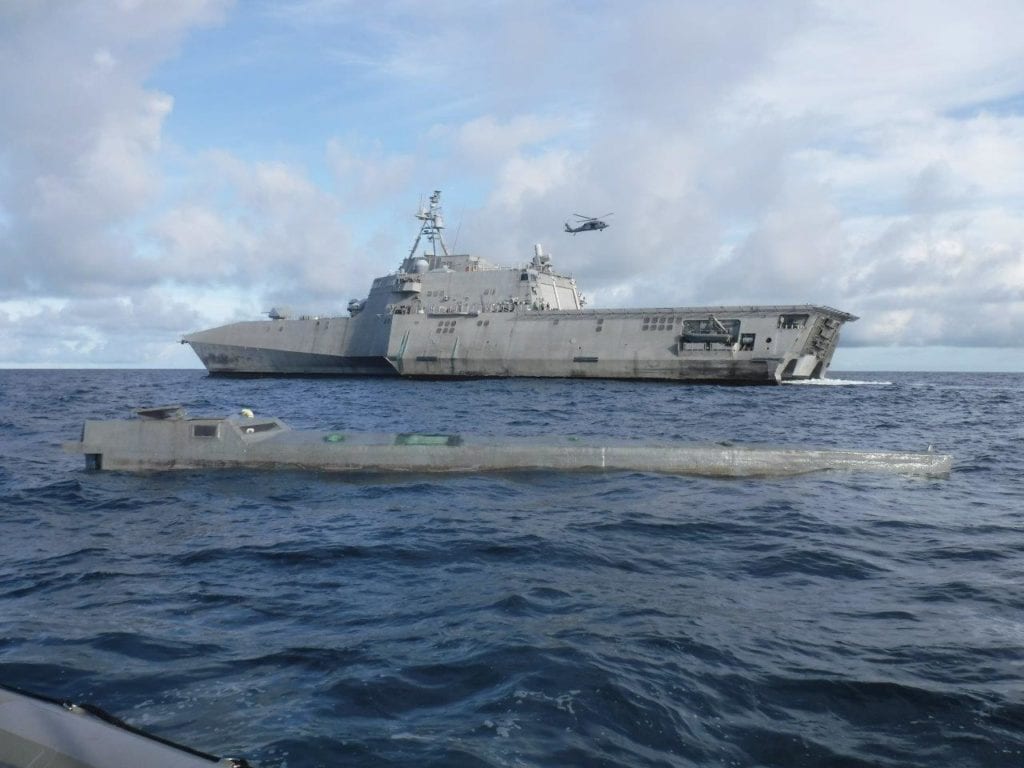
The Independence-variant littoral combat ship USS Gabrielle Giffords (LCS 10) with embarked U.S. Coast Guard Law Enforcement Detachment (LEDET) 407 conducts enhanced counter-narcotics operations, Dec. 5, 2020. Gabrielle Giffords is deployed to the U.S. 4th Fleet area of operations to support Joint Interagency Task Force South’s mission, which includes counter illicit drug trafficking in the Caribbean and Eastern Pacific. U.S. Navy photo.

SAN DIEGO – Coast Guard and Navy personnel offloaded approximately 11,400 pounds of cocaine and 9,000 pounds of marijuana Feb. 1, amounting to more than $211 million from seizures in international waters of the Eastern Pacific Ocean.

The offload is the result of interdictions made by Coast Guard Law Enforcement Detachment 407 (LEDET) personnel, who operated aboard the USS Gabrielle Giffords, and three separate Coast Guard cutter crews between October and December.

“When you are covering a drug-smuggling transit zone the size of the continental United States, every ship makes a huge difference,” said Lt. Jonathan Dietrich.  “The seamless integration between our Law Enforcement Detachment and the crew of the USS Gabrielle Giffords was a major reason why we were successful in interdicting such a large amount of drugs and prevent them from reaching our streets.”

The total amount of drugs offloaded included the following unit and Coast Guard ships:

  • LEDET 407 was responsible for five cases seizing 10,570 pounds of cocaine and 4,100 pounds of marijuana
  • The Seneca (WMEC-906) was responsible for one case seizing 350 pounds of cocaine
  • The Legare (WMEC-912) was responsible for one case seizing 53 pounds of cocaine and 3,400 pounds of marijuana
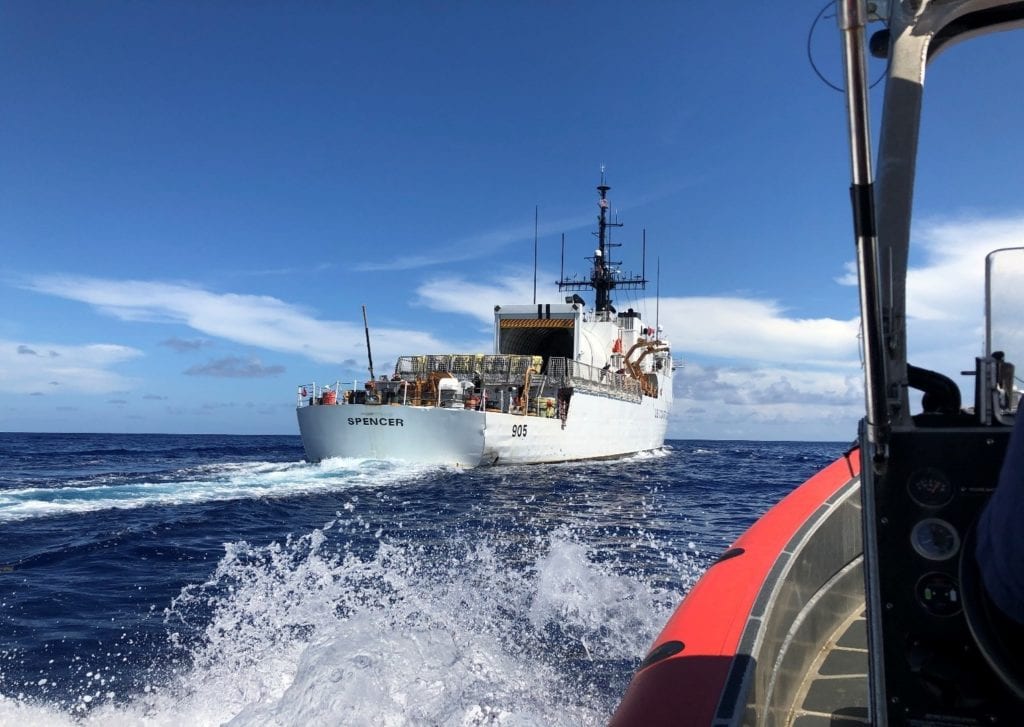
  • The Spencer (WMEC-905) was responsible for one case seizing 420 pounds of cocaine and 1,450 pounds of marijuana 

“The impressive results of the USS Gabrielle Giffords deployment and drug offload represent more than just a local victory of keeping drugs off our streets,” said Rear Admiral Brian Penoyer. “The Coast Guard and the Navy have worked together for years to keep our waters and shores safe from a number of maritime threats, and we are honored to continue that tradition as we look toward the future.”

The Coast Guard narcotics interdiction efforts are aimed at thwarting transnational criminal organizations, which are fueled by drug trafficking money. Operations like these attack supply networks in Central and South America. The offload highlights the joint impacts that a Coast Guard unit along with the Navy can have, when working together.

On April 1, U.S. Southern Command increased counter-narcotics operations in the Western Hemisphere to disrupt the flow of drugs. Numerous U.S. agencies from the Departments of Defense, Justice, and Homeland Security cooperated in the effort to combat transnational organized crime. The Coast Guard, Navy, Customs and Border Protection, FBI, Drug Enforcement Administration, and Immigration and Customs Enforcement, along with allied and international partner agencies, play a role in counter-drug operations.

The fight against drug cartels in the Eastern Pacific Ocean and the Caribbean Sea requires unity of effort in all phases from detection, monitoring and interdictions, to criminal prosecutions for these interdictions by United States Attorney’s Offices from the Middle District of Florida, the Southern District of Florida, and the Southern District of California. The law enforcement phase of counter-smuggling operations in the Eastern Pacific Ocean is conducted under the authority of the 11th Coast Guard District, headquartered in Alameda. The interdictions, including the actual boardings, are led and conducted by members of the U.S. Coast Guard.

LEDET 407 is part of Tactical Law Enforcement Team-South based in Miami. The Seneca is a 270-foot medium endurance cutter homeported in Boston. The Legare is a 270-foot medium endurance cutter homeported in Portsmouth, Virginia. The Spencer is a 270-foot medium endurance cutter homeported in Boston.


BAE Systems to Sustain Air Traffic Control Systems Under $65.7M Navy Contract

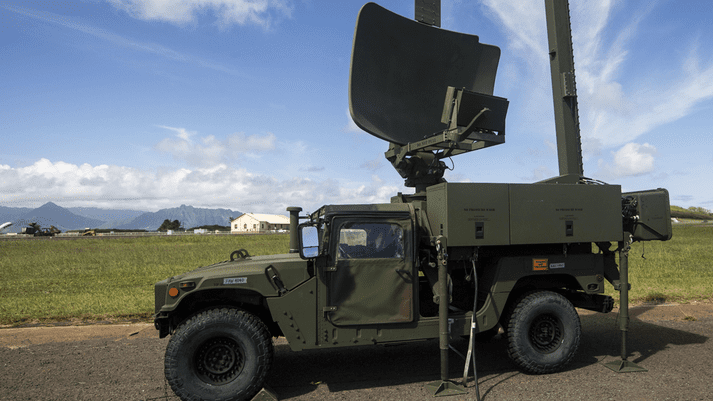
Under the new contract, BAE Systems will provide sustainment and engineering services for air traffic control platforms, similar to the expeditionary ATC radar shown here being carried by a Marine Corps Humvee. U.S. Marine Corps

MCLEAN, Virginia – The U.S. Navy selected BAE Systems for a five-year $65.7 million single-award indefinite delivery, indefinite quantity contract for air traffic control (ATC) platform sustainment and engineering services, the company said in a Feb. 1 release.

BAE Systems will continue to use its engineering, technical, and operational expertise to develop, produce, equip, test, evaluate, sustain, and update key expeditionary ATC aviation systems for the Naval Air Warfare Center Aircraft Division’s Webster Outlying Field.

“With this win, BAE Systems will provide expeditionary forces with the capability to quickly establish an airfield with the radar and communications systems to safely recover and launch aircraft,” said Lisa Hand, vice president and general manager of BAE Systems’ Integrated Defense Solutions business. “We serve as the automation expert and technical coordinator, responsible for development and improvement of real-time ATC computer systems. Our radar technicians deploy around the world to support the warfighter; their work is resulting in quicker turnover to the end user, improved hardware reliability, and more accurate installation and precision in the field.”

This new contract continues BAE Systems’ more than a decade of supporting critical work on key systems, including the Standard Terminal Automation Replacement System (STARS); Air Traffic Navigation, Integration, and Coordination System (ATNAVICS); Airfield Mobile Tactical Air Navigation System (AMTAC); and ATNAVICS Data Link System (ADLS). Under the contract, the company will develop and maintain operational software and supporting test beds, field change programs, and supplies for ATC systems. These systems are integral ATC tools that enhance platform flight safety, especially when end users are operating in new or rough terrain airfields with no existing military base.


Artificial Intelligence, Machine Learning Top Naval Intelligence Technology Needs, Director Says

Sailors stand watch in the sonar room of the Los Angeles-class fast-attack submarine USS Chicago (SSN 721) in support of Valiant Shield 2020. Valiant Shield is a U.S. only, biennial field training exercise (FTX) with a focus on integration of joint training in a blue-water environment among U.S. forces. This training enables real-world proficiency in sustaining joint forces through detecting, locating, tracking, and engaging units at sea, in the air, on land and in cyberspace in response to a range of mission areas. U.S. Navy / Mass Communication Specialist 1st Class Derek Harkins

ARLINGTON, Va. — The U.S. Navy will need more help from artificial intelligence systems to answer the  technology challenge posed by vast amounts of data and information available from every domain, the deputy chief of naval operations for information warfare says.

The challenge is with “the amount of data and information that is out there,”  according to Vice Adm. Jeffrey Trussler, who is also director of Naval Intelligence. “We’re well beyond the point where rooms full of analysts” can handle digital information coming from open source, signals and acoustical intelligence, Trussler told a Jan. 27 webinar hosted by the Intelligence and National Security Alliance. “We’re going to have to put machines on that, with the algorithms in place to manage it.

 “Every advancement that exists for AI [artificial intelligence] and ML [machine learning], we need to suck in and learn from,” Trussler said when asked about the top Naval Intelligence technology needs. “I think across the board, AI/ML  is what is top.”

Trussler said there were already “some tremendous AI projects underway” at the acoustics intelligence agency. Of all the domains from seabed to space, only the U.S. Navy deals with intelligence gathering underseas, said Trussler, a submariner for most of his career. “And that is the domain where we still have a dominant margin. But we need to keep pressing and keep learning in that arena.”

He also urged industry to keep pressing the Navy.  “The innovations and ideas from industry are huge. Keep pressing us. Keep knocking on the door. Keep showing us what’s available and what you can do,” he said. However, the Navy isn’t looking for proprietary technology that can’t mesh with existing or future platforms. “We’re going to be more interested in ‘How is this going to link into the systems we have? How is this going to help us advance a collaborative web to close our kill chains?’”

In the future, Trussler said, the Navy Department won’t invest in “proprietary things that we can’t crack open. That aren’t open architecture, that we can link in with the rest of our systems.”


Coast Guard Cutter Spencer Returns After $10M Cocaine, Marijuana Bust

U.S. Coast Guard Cutter Spencer (WMEC 905) underway on patrol in the Eastern Pacific, January 2021. The crew covered over 11,000 miles seizing over $10 million of drugs and assisted in disrupting transnational crime organizations. U.S. Coast Guard

BOSTON — The Coast Guard Cutter Spencer (WMEC 905) crew returned home to Boston, Massachusetts, Jan. 28, after a 59-day patrol, the Coast Guard 1st District said in a release. 

The crew’s seizure of 440 pounds of cocaine and 1,500 pounds of marijuana is valued at over $10 million and assisted in disrupting transnational crime organizations. 

“After conducting operations in the Eastern Pacific, our crew is looking forward to returning home,” said Cmdr. Thomas Rodzewicz, commanding officer. “We provided effective mission critical assets in multiple cases and were able to stop illicit drugs from landing on U.S. shores. As a crew, we came together to enjoy the holidays in a meaningful and memorable way while carrying out our duties. I am extremely proud of the crew’s performance during this challenging patrol.” 

The Coast Guard’s Helicopter Interdiction Tactical Squadron, an advanced aerial interdiction unit, joined the Spencer crew to conduct the counter drug operations. These crews served in support of U.S. operations in partnership with other law enforcement agencies and fellow armed services dedicated to preserving the national security of the United States. 

Since departing Boston in December, The Spencer crew covered over 11,000 miles and made two transits through the Panama Canal. 

Coast Guard Cutter Spencer is a 270-foot medium endurance cutter with a crew of 100 members. 


HMS Queen Elizabeth Assumes Role as Royal Navy’s New Fleet Flagship

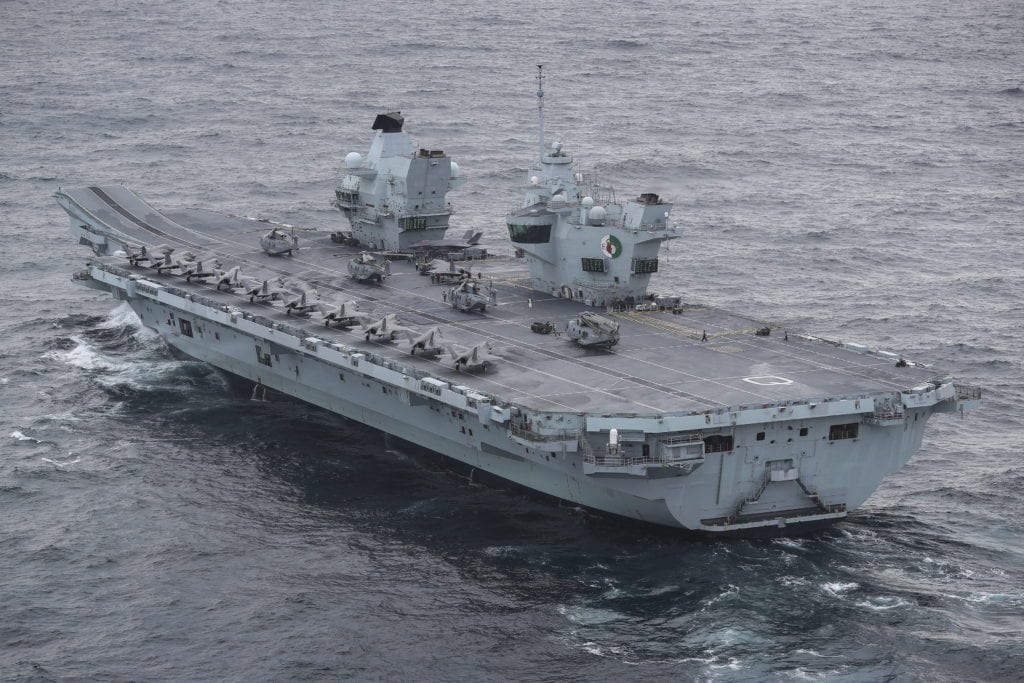
The full U.K. Carrier Strike Group assembled for the first time during Group Exercise 2020 on Oct. 4. Aircraft carrier HMS Queen Elizabeth leads a flotilla of destroyers and frigates from the U.K., U.S. and the Netherlands, together with two Royal Fleet Auxiliaries. It is the most powerful task force assembled by any European Navy in almost 20 years. Royal Navy

LONDON — HMS Queen Elizabeth assumed the role of fleet flagship as the Royal Navy moves closer to deploying the world’s most technologically advanced carrier strike group, the U.K. Ministry of Defence said in a Jan. 29 release. 

Fleet Commander Vice-Admiral Jerry Kyd was received on the aircraft carrier to mark the transfer of the role from HMS Albion, while Royal Navy ships and shore establishments were informed by a signal at 1330. 

The First Sea Lord, Admiral Tony Radakin, said: “The position of fleet flagship is a symbol of HMS Queen Elizabeth’s importance to the nation, not just in restoring our carrier strike capability, but as a rolling statement of British commitment to global security, prosperity and trade. 

“It’s right that we bestow such a historic title now. In the coming months HMS Queen Elizabeth will lead the most ambitious Royal Navy deployment in decades,” Radakin said. She will be a focal point as we look forward to an extraordinary year.” 

It was announced last week that the United Kingdom’s new flagship and Lightning Force of F-35B stealth strike fighters will also be complemented by a detachment of the fifth-generation aircraft from the U.S. Marine Corps, and a U.S. Navy destroyer during her first operational strike group deployment. 

HMS Queen Elizabeth and her strike group will spend time developing collective war-fighting skills when NATO navies gather for exercise Strike Warrior off Scotland during the spring, before departing for the Mediterranean. 

“It is a fantastic privilege for Queen Elizabeth to be made the fleet flagship as we prepare to sail at the heart of U.K.’s very high readiness Carrier Strike Group,” said Capt. Angus Essenhigh, commanding officer of the Queen Elizabeth. “We look forward to doing the nation proud as we deploy on operations for the first time.” 

Last year, Prime Minister Boris Johnson confirmed that HMS Queen Elizabeth will be at the center of a carrier strike group deployment to the Mediterranean, the Indian Ocean and East Asia. She will embark F-35B from 617 Squadron (the “Dambusters”), Royal Navy Merlin helicopters, and be escorted and supported by Royal Navy Type 45 destroyers, Type 23 frigates and support ships of the Royal Fleet Auxiliary.  

Assault ship HMS Albion had been flagship since March 2018, deploying to the Indo-Pacific for 10 months; to the Baltic for major multi-national exercises; and latterly to the Mediterranean leading NATO security patrols and experimental warfare trials. Her sister ship, HMS Bulwark, previously led the Fleet for four years. 

“While it is with some sadness that we hand over the responsibility to HMS Queen Elizabeth, we are proud to be part of the transfer which marks a new era for the Royal Navy and the nation,” said Capt. Simon Kelly, commanding officer of HMS Albion.