Metal Shark Developing Autonomous Naval Defense System for Marine Corps
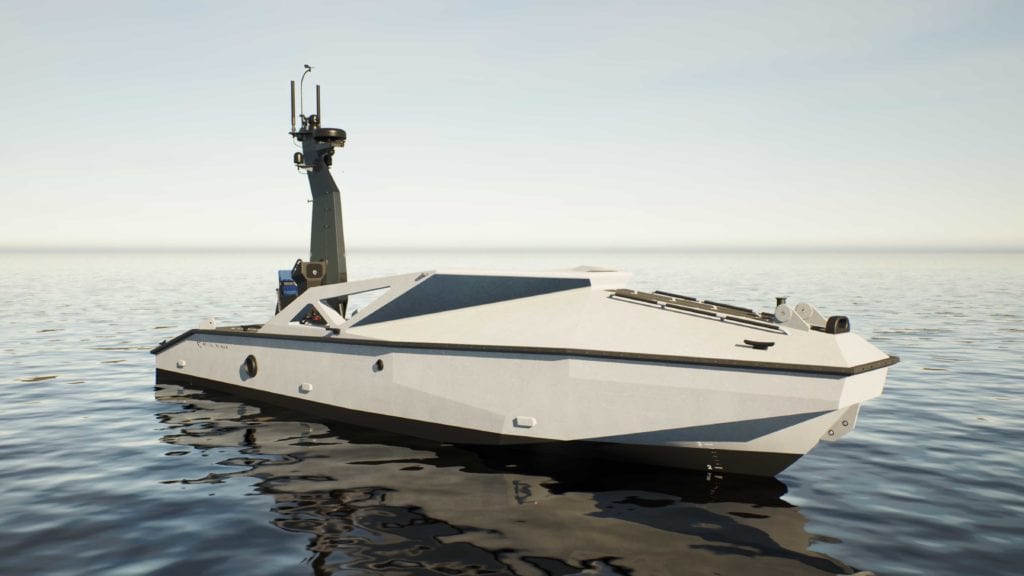
Louisiana-based shipbuilder Metal Shark is developing the Long Range Unmanned Vessel (LRUSV), a tiered, scalable weapons system, for the United States Marine Corps. Metal Shark

Jeanerette, La. — Louisiana-based shipbuilder Metal Shark has been selected to develop and implement the Long-Range Unmanned Surface Vessel (LRUSV) System for the U.S. Marine Corps, the company said in a Jan. 25 release. 

The LRUSV System will usher in a new era of naval technology while increasing the lethality of U.S. forces, with a network of unmanned vessels traveling autonomously for extended ranges and transporting loitering munitions to address targets at sea and on land.  

This tiered, scalable weapons system will provide the ability to accurately track and destroy targets at range throughout the battle space. While fully autonomous, the vessels may be optionally manned and they will carry multiple payloads, which they will be capable of autonomously launching and retrieving. 

Metal Shark has enlisted autonomous technology developer Spatial Integrated Systems (SIS), recently acquired by Huntington Ingalls Industries, to provide the autonomy solution for the LRUSV system. SIS is a leader in the development of multi-vessel collaborative “swarming” autonomous capabilities, sensor fusion and perception. 

Under an Other Transaction Authority (OTA) agreement with Marine Corps Systems Command, Metal Shark will design, build, test and implement the vessels and handle the integration of the autonomy system and an advanced command and control (C2) software suite.  

In addition to the autonomous LRUSV, Metal Shark will also produce manned support vessels for the LRUSV system using its 40 Defiant military patrol craft platform, which the builder is currently producing to create the U.S. Navy’s new 40 PB patrol boat fleet.  

“The LRUSV program represents a significant milestone for autonomous technology, for the defense world, and for the entire shipbuilding industry,” said Chris Allard, Metal Shark’s CEO. “We are thrilled to be integrating advanced autonomy and command and control capability into these highly specialized surface vessels to provide the Marine Corps with a next-generation system.” 

Under the OTA, Metal Shark will also provide the Marine Corps with associated program management, system engineering, configuration management, quality assurance, logistical support, and the development of technical publications and manuals in support of the LRUSV program.  

The LRUSV program is the latest success for Metal Shark’s Sharktech Autonomous Vessels division, a wholly owned subsidiary launched in 2018 and specifically focused on the advancement of unmanned vessel technology.

In September, it was announced that the U.S. Coast Guard had selected a 29-foot Sharktech autonomous test vessel, equipped with autonomy by Boston-based technology developer Sea Machines, for evaluation by the USCG Research and Development Center.

In 2019, Metal Shark was selected by US Navy PMS 406 (Naval Sea Systems Command’s Unmanned Maritime Systems division) for the Unmanned Family of Systems Multi Award IDIQ, a blanket Navy contact covering multiple topics in the autonomous space.

As a brand-agnostic technology integrator actively engaged with multiple developers in the unmanned space, Metal Shark’s Sharktech division has also produced and delivered autonomous vessels equipped with autonomy solutions from L3 Harris (previously ASV Global). 

“Metal Shark has designed, built, and delivered over 400 autonomous and remotely operated vessels to date,” Allard said. “As we develop and deploy the LRUSV system for the Marine Corps, we will continue to work with clients across government and commercial markets, integrating the systems of multiple technology partners into our boats, solidifying our leadership position in the autonomous vessel space, and streamlining the path to autonomy.” 
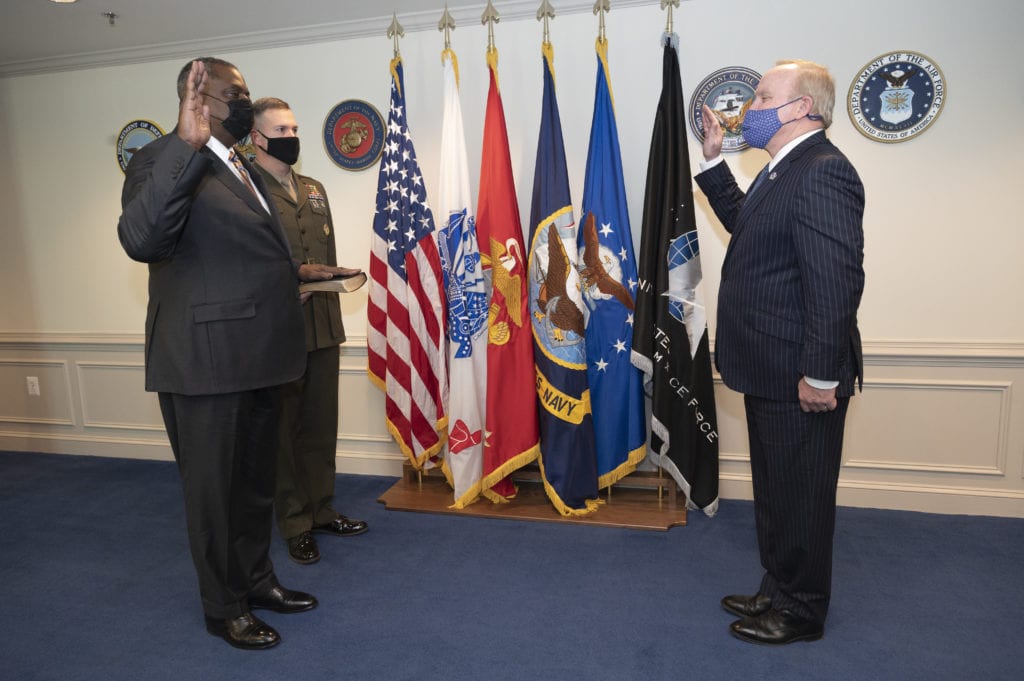


Austin Sworn In as Secretary of Defense

Washington Headquarters Services Director David Muir swears in Lloyd J. Austin III as secretary of defense, the Pentagon, Washington, D.C., Jan. 22, 2021. Holding the Bible is the Junior Military Assistant to the Secretary of Defense, Marine Corps Lt. Col. Caleb Hyatt. DoD / Lisa Ferdinando

ARLINGTON, Va.— Retired Army Gen. Lloyd J. Austin III was sworn in Jan. 22 as secretary of defense at the Pentagon by Washington Headquarters Services Director David Muir after a morning confirmation vote from the Senate. 

Austin issued the following message to the Defense Department the same day:  

“I am honored to have this chance to serve again and to do so alongside you and your families. My wife, Charlene, and I know all too well the sacrifices you make to keep this country safe. That safety is job one, and I promise to work as hard as you do at it. 

“The way I see it, my job as Secretary of Defense is to make you more effective at doing yours. That means ensuring you have the tools, technology, weapons, and training to deter and defeat our enemies. It means establishing sound policy and strategy and assigning you clear missions. It means putting a premium on cooperation with our allies and partners. And it means living up to our core values, the same ones our fellow citizens expect of us. 

“Right now, of course, doing my job also means helping our country get control of the pandemic, which has killed more than 400,000 Americans. You have already come to the aid of our Nation’s health care professionals. You can expect that mission to continue. But we must help the Federal Government move further and faster to eradicate the devastating effects of the coronavirus. To that end, we will also do everything we can to vaccinate and care for our workforce and to look for meaningful ways to alleviate the pressure this pandemic has exerted on you and your families. 

“None of us succeeds at this business alone. Defending the country requires teamwork and cooperation. It requires a certain humility, a willingness to learn, and absolute respect for one another. I know you share my devotion to these qualities. 

“I am proud to be back on your team.” 


Rolls-Royce Secures Navy Research Contract to Develop Innovative Debris Detection Technology

Rolls-Royce will further develop its engine FOD detection under a $1 million U.S. Navy contract. Rolls-Royce

RESTON, Va. — Rolls-Royce has been awarded $1 million of research funding from the U.S. government for digital foreign object debris (FOD) detection technology, the company said in a Jan. 20 release. 

The year-long research contract from the Navy will help further develop and validate Rolls-Royce’s FanSense debris monitoring system, which is currently supporting the Pegasus engine. 

FanSense works by analyzing the shaft speed signal of an engine and is able to detect any disruptions that arise as a result of a small object, such as stones or screws, striking an engine fan blade. The innovative technology will allow customers across civil and defense industries to detect much smaller debris entering the engine, enabling them to build a clearer picture of FOD damage and engine wear over time and help to identify airfields that need to improve their FOD prevention practices. 

“FanSense is an innovative and revolutionary Rolls-Royce digital technology being packaged and applied to our products,” said Paul Craig, president of the company’s Defence Services. “The research funding granted by the U.S. Navy will allow us to further enhance and build upon our pioneering technologies that will enhance safety, efficiency and deliver a cultural change for our customers.” 

FOD is estimated to cost the global aviation industry billions of dollars per year in damage and disruption. The vast majority of ingested debris currently goes undetected — only when very large items are ingested do operators have any indication that something has made its way into the engine. Rolls-Royce will continue to work with a long-standing industrial partner, Roke, to deliver the contract. 

Jonathan Sides, FOD chief engineer at Naval Air Systems Command, said, “Inlet debris monitoring technology is a critical element of the FOD mitigation portfolio, supporting the U.S. Navy’s initiative to save hundreds of millions in FOD repair costs.” 

The FanSense technology adds to Rolls-Royce’s portfolio of FOD prevention offerings, including the FOD App, the FOD cloud data analysis service and FOD officers. The vision for FOD technology is to build a digital system that is able to predict FOD events before they occur by analyzing data collected from the app and using vehicle tracking sensors and debris tracking radars. FanSense adds a key missing piece to this system, determining the exact time and location of historic FOD events, which will enable customers to predict the conditions in which ingestion of a harmful object is likely to occur. 


Royal Navy Ready to Deploy a Carrier Strike Group for First Time in a Generation

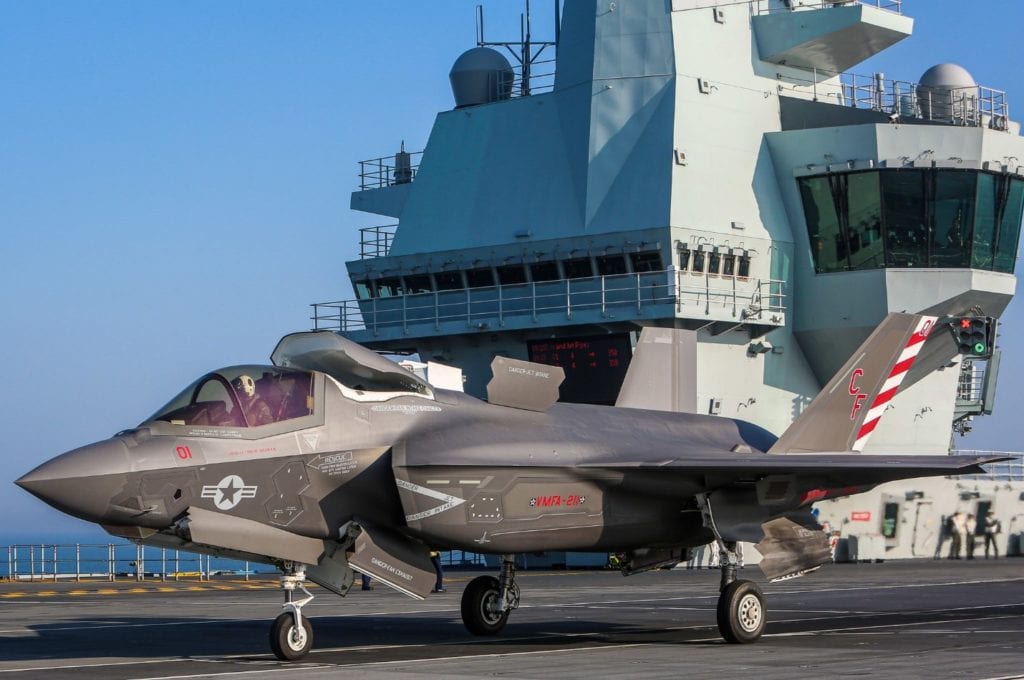
A VMFA-211 F-35B operates from HMS Queen Elizabeth. U.K. Royal Navy

Adm. Anthony David Radakin, First Sea Lord of the Royal Navy, said the upcoming deployment of the HMS Queen Elizabeth (R08) carrier strike group exemplifies the Royal Navy’s commitment to global operations.

Speaking this week at the Surface Warships 2021 conference in London, Radakin said the U.K. continues to demand more from the Royal Navy’s “equipment and people, deploying further, faster and longer to deliver U.K. forward presence around the globe.” 

“We, as a nation, have declared ourselves ready to deploy a carrier strike group for the first time in a generation,” Radakin said.  “HMS Queen Elizabeth, one of the most advanced and capable aircraft carriers in the world, will deploy at the heart of a multi-national carrier strike group, with Royal Navy and RAF jets and helicopters embarked. She will sail through the Mediterranean, Suez, Indian Ocean and on into the Indo-Pacific, and, on the way, she will exercise with our allies and partners from around the world.”

The U.S. and U.K. defense secretaries made a joint declaration on Jan. 19 regarding the joint participation for the Queen Elizabeth Carrier Strike Group deployment this spring.  “The leaders look forward to seeing the culmination of nearly a decade of U.S.-U.K. carrier cooperation when Carrier Strike Group 2021 sets sail from Portsmouth, UK later this year,” the statement said.

The inaugural deployment will include a submarine, destroyers HMS Diamond and HMS Defender, frigates HMS Kent and HMS Richmond, as well as USS The Sullivans (DDG-68) and a frigate from the Royal Netherlands Navy.  The strike group will be supported by the Royal Fleet Auxiliary stores ship RFA Fort Victoria and new Tide-class oiler. The airwing will  include jet and rotary wing aircraft from the Royal Navy and Royal Air Force, along with F-35B Joint Strike Fighters from U.S. Marine Fighter Attack Squadron 211 (VMFA 211).

VMFA 211 has been operating from Queen Elizabeth and helped the carrier strike group achieve its initial operating capability (IOC) declaration for the carrier strike group earlier this month.

According to a MOD UK statement, the CSG’s IOC means that all elements of the group from fighter jets to radar systems to anti-ship weapons have been successfully brought together and operated.

“Both the air and naval elements of the CSG have now met this milestone, which includes qualified pilots and ground crews being held at short notice for carrier-based operations and trained to handle weapons and maintain the equipment,” the statement said. “Another marker of success at this stage includes the ability to deploy anti-submarine warfare capabilities such as frigates and destroyers, as well as both fixed and rotary wing aircraft including Merlin helicopters to operate alongside the carrier.”

The Queen Elizabeth was commissioned in 2017. With a displacement of 65,000 tons and 920 feet in length, she is the Royal Navy’s largest ship ever.  Her sister ship, HMS Prince of Wales (R09), was commissioned two years later.

Radakin said the Royal Navy is taking a larger role in global operations. He pointed to recent deployments of ships like the amphibious assault ship HMS Albion and to the Pacific, and HMS Montrose (F236), which has been deployed in Bahrain, serving with the U.S. Fifth Fleet since April 2019.

“We didn’t just forward base her, she has been available 99 percent of the time, and has the lowest rate of defects of any ship in class,” Radakin said.  “The successful Montrose model gives me confidence that we can manage deploying ships, and even start to imagine them never returning to U.K.”


Raytheon’s Maritime Surveillance Systems Flight-Tested on GA-ASI SeaGuardian for Japan Coast Guard

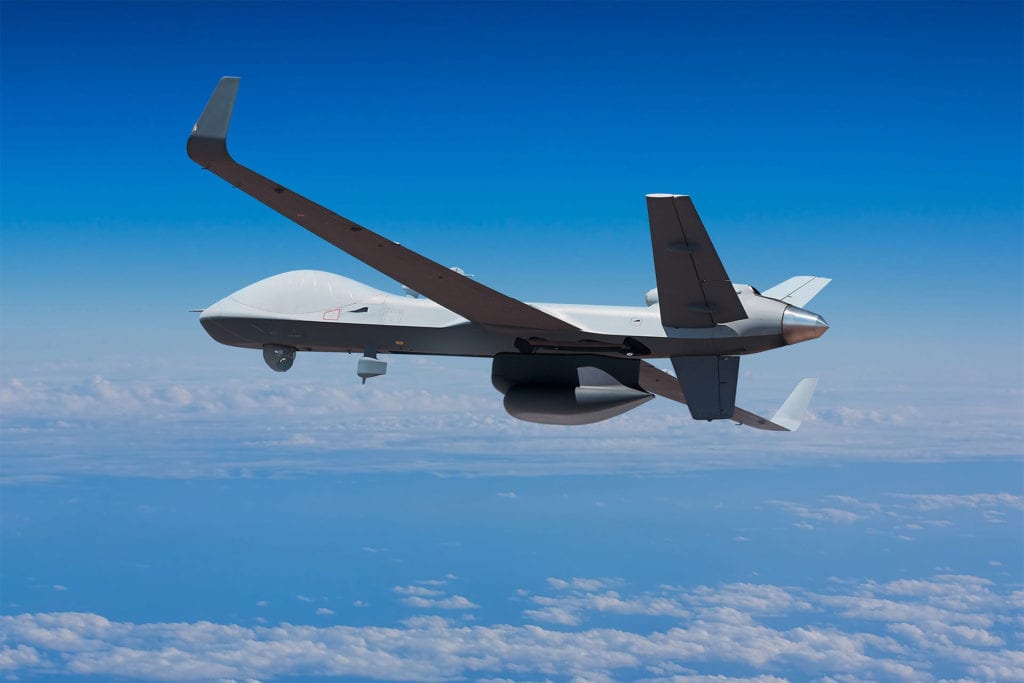
General Atomics Aeronautical Systems Inc.’s SeaGuardian remotely piloted aircraft. GA-ASI

SAN DIEGO — Japan’s coast guard recently completed successful flight testing of Raytheon Intelligence & Space (RI&S) maritime surveillance technologies onboard a General Atomics Aeronautical Systems Inc. SeaGuardian remotely piloted aircraft, the company said in a Jan. 21 release.

RI&S provided its SeaVue Expanded Mission Capability (XMC) radar and AN/DAS-4 Multi-spectral Targeting System for the tests, which were conducted in the Hachinohe, Aomori Prefecture, Japan, between Oct. 15 and Nov. 10, 2020. 

The tests validated the wide-area maritime surveillance systems support for the Japan Coast Guard to carry out missions for search and rescue, disaster response and maritime law enforcement. 

“Our advanced intelligence, surveillance and reconnaissance solutions can aid the Japan Coast Guard to perform their duties effectively in alignment with Japan’s maritime security priorities,” said Barbara Borgonovi, vice president of Intelligence, Surveillance and Reconnaissance Systems for RI&S. “Through our partnership with GA-ASI, SeaVue XMC and DAS-4 contribute to SeaGuardian’s critical role to help operators make decisions faster. Our wide-area surveillance technologies have proven track records that can be tailored to any mission in the maritime environment.” 

The SeaVue XMC radar provides enhanced wide-area surveillance by identifying targets of interest rapidly and efficiently, such as small maritime vessels. SeaVue MR delivers expanded capabilities including small-target detection at longer ranges and higher altitudes, and a software-defined digital architecture to add new functionality without changing hardware. 

The DAS-4 sensor suite offers operators next-generation electro-optical surveillance in high-definition and full-motion video to identify and engage targets with pinpoint accuracy. The flight tests support the Japan coast guard’s policy on strengthening maritime security, which calls for modernized maritime technologies to protect Japan’s sovereignty. 


U.S. Coast Guard Commissions 41st Fast Response Cutter

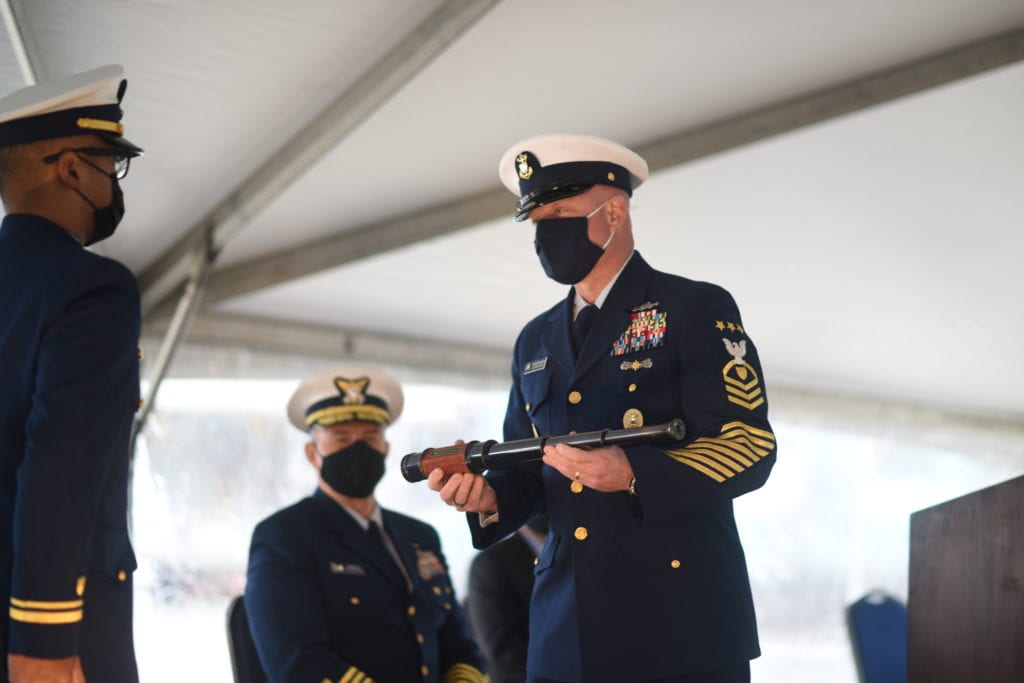
Master Chief Petty Officer Jason M. Vanderhaden, the senior enlisted leader of the Coast Guard, presents Lt. j.g Paul Kang, the official USCGC Charles Moulthrope’s (WPC 1141) long glass on Coast Guard Base Portsmouth, Va., Jan. 21, 2021. Each FRC is named for an enlisted Coast Guard hero who distinguished himself or herself in the line of duty. The Moulthrope is one of six fast response cutters destined for the Patrol Forces Southwest Asia (PATFORSWA) mission. U.S. Coast Guard / Petty Officer 1st Class Adam Stanton

PORTSMOUTH, Va., The USCGC Charles Moulthrope (WPC 1141), Patrol Forces Southwest Asia’s first Sentinel-class fast response cutter, was commissioned into service at Coast Guard Base Portsmouth, Jan. 22, the Coast Guard Atlantic Area said in a release. 

Adm. Karl Shultz, commandant, U.S. Coast Guard, presided over the 41st Sentinel-class cutter ceremony. Moulthrope is the first of six FRCs to be homeported in Manama, Bahrain. 

The cutter’s sponsor is Mrs. Dawn Schultz, spouse of Adm. Karl Schultz. 

The Charles Moulthrope is the first of six FRCs planned for service in Manama, Bahrain. Stationing FRCs in Bahrain supports Patrol Force, South-West Asia (PATFORSWA), the Coast Guard’s largest unit outside of the U.S., and its mission to train, organize, equip, support and deploy combat-ready Coast Guard forces in support of Central Command and national security objectives. 

PATFORSWA works with Naval Forces Central Command to conduct maritime operations to forward U.S. interests, deter, and counter disruptive countries, defeat violent extremism, and strengthen partner nations’ maritime capabilities to secure the maritime environment in the Central Command area of responsibility. 

The cutter is named after Seaman Charles Moulthrope, remembered for heroic and selfless service as a member of the Revenue Cutter Service cutter Commodore Perry, en route to patrol Alaska, when he rescued multiple shipmates who ended up in the sea. They had attempted to rescue another crewman who was swept overboard during heavy seas. Moulthrope “grabbed a line and leaped over the side” into the freezing water to save the four men. Not long after, he lost his life in the performance of duties in Unalaska, Alaska, in 1896, when he fell from a mast while trying to free a fouled pennant. This ship will be the first modern Coast Guard cutter named for an enlisted man of the Revenue Cutter Service, bringing recognition to the service and sacrifice of hundreds of sailors who served their country aboard the ships of this precursor of the Coast Guard. 

The Coast Guard has ordered 64 FRCs to date. Forty are in service: 12 in Florida, seven in Puerto Rico; four in California; three each in Hawaii, Texas, and New Jersey, and two each in Alaska, Mississippi, and North Carolina. Two FRCs arrived in their homeport of Apra Harbor, Guam, in 2020, with one more to come.  

The Coast Guard took delivery of Charles Moulthrope on Oct. 22, 2020, in Key West. They will transit to Bahrain later this year with their sister ship, the Robert Goldman (WPC 1142), delivered Dec. 22, 2020, and due to be commissioned in February in Key West.  

The fast response cutters were designed to patrol coastal regions and are operating in an increasingly expeditionary manner. They feature advanced command, control, communications, computers, intelligence, surveillance, and reconnaissance equipment, and launch and recover standardized small boats from the stern. 


USCGC Resolute Completes 42-day Winter Caribbean Patrol

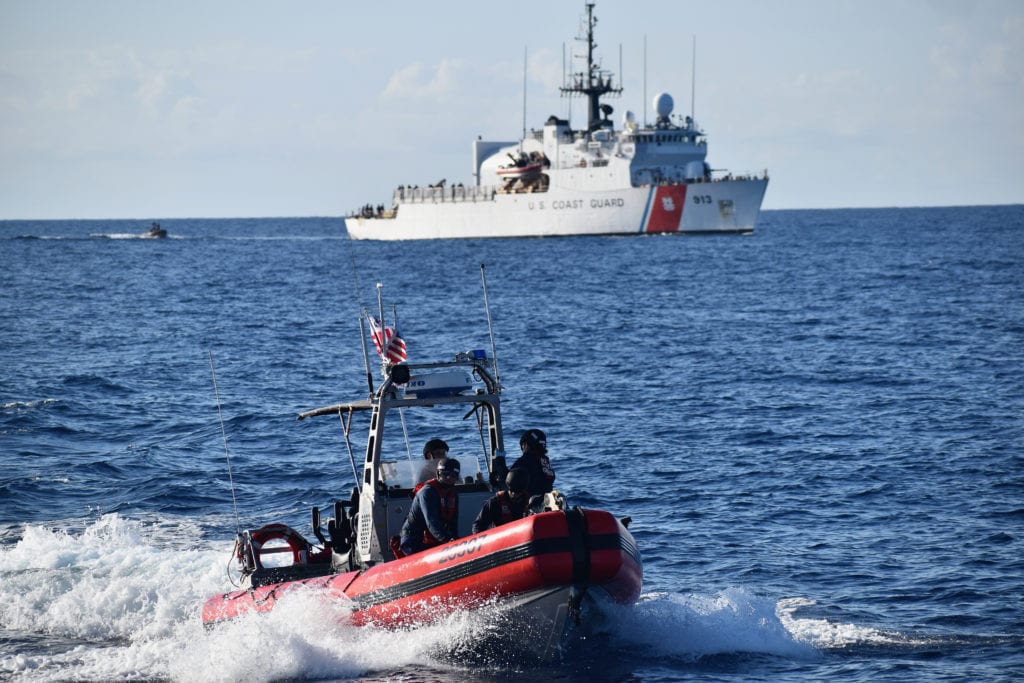
The USCGC Resolute crew (WMEC 620) conducts an at-sea transfer with USCGC Mohawk (WMEC 913) in the Caribbean on Dec. 27, 2020. Resolute returned to St. Petersburg, Florida, on Jan. 14, 2021, following a 42-day patrol in support of Operation Southeast Watch and others. U.S. Coast Guard / Ensign Alexander Cordes

PORTSMOUTH, Va. — The crew of USCGC Resolute (WMEC 620) returned to St. Petersburg, Florida, on Jan. 14, following a 42-day patrol in support of Operation Southeast Watch and others, the Coast Guard Atlantic Area said in a Jan. 21 release.  
 
Resolute traveled over 5,000 miles, rescued and repatriated 110 Haitian migrants and stopped 500 kilograms of contraband. 
 
The crew departed Florida, Dec. 4, 2020, to Windward Pass, patrolling off Haiti’s northern coast to deter illegal immigration and promote regional stability. They responded to a report of a dangerously overcrowded and unseaworthy vessel received from a Coast Guard MH-60 Jayhawk helicopter on station off the coast of Haiti. From the air, the Jayhawk crew described the boat as having approximately 50 to 80 people aboard.  
 
The Jayhawk crew guided Resolute’s small boats to the vessel, and once on the scene, the boarding team embarked on the 40-foot wooden boat and discovered 110 Haitian migrants. Working through the night, the small boat crews safely rescued all 110 migrants, including six children, and ferried them back to the cutter, where they received food, water, and medical attention. All 110 migrants were subsequently repatriated back to Cap Haitian with the Coast Guard liaison officer’s assistance in Haiti and the Haitian coast guard.  
 
Transitioning to the Caribbean Sea, the crew intercepted a northbound vessel, resulting in more than 500 kilograms of contraband. Coast Guard boarding teams detained the suspected smugglers and took positive control of the boat. The contraband, detainees, and vessel were transported to the United States for final case disposition.   
 
Resolute’s crew conducted numerous at-sea transfers of contraband and detainees with other U.S. Coast Guard and Navy surface assets, including cutters William Trump, Raymond Evans, Mohawk, James, Decisive, Richard Etheridge, and the U.S. naval warship USS Comstock (LSD 45). Resolute’s crew worked closely with these units to safely embark and transport suspected smugglers and contraband to the United States, ensuring numerous cases’ timely disposition.  
 
Resolute completed more than 40 shipboard-helicopter evolutions with Coast Guard Air Station Miami’s assistance before returning home. Conducting these flight operations helped Air Station Miami pilots maintain critical flight currencies and allowed Resolute to train new crew and maintain shipboard-helicopter proficiency for future patrols. 
 
Through this patrol, Resolute supported international, multi-agency operations, including Operation Unified Resolve, Operation Southeast Watch, Operation Caribbean Guard, Enhanced Counternarcotics Operations, Campaign Martillo, and the Caribbean Corridor Strike Force.  
 
“Working for the Coast Guard’s 7th District was a rewarding experience for the crew of Resolute,” said Cmdr. Justin Vanden Heuvel, commanding officer of Resolute. “We stood the watch throughout the holiday season and into the new year, transitioning seamlessly between alien-migration interdiction operations to enforcing counter drug regulations on the high seas.”  
 
“The crew of the Resolute has done a fantastic job during this recent patrol, and their successes illustrate the vital partnerships that are essential in combating transnational criminal organizations that threaten global security and prosperity,” said Rear Adm. Douglas Fears, director of Joint Interagency Task Force (JIATF)-South. “The U.S. Coast Guard and JIATF-South work together every day, as well as with our other U.S. and international partners, to disrupt the flow of illicit drugs that are a major funding source for criminal organizations operating within the Western Hemisphere.”  

Resolute homeported in St. Petersburg, is a 210-foot Reliance-class cutter and has a crew of 78. Their motto is Fama Extendere Factis, fame through good deeds. 


Navy Names Future Vessel to Honor Muscogee Creek Nation

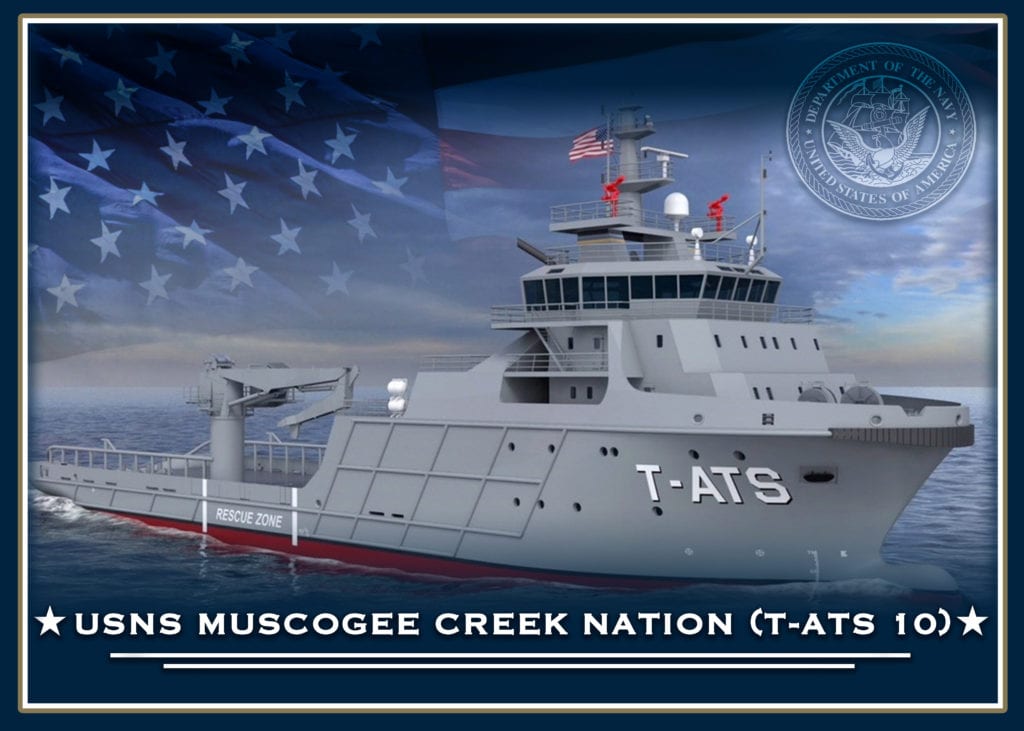
A graphic illustration of the future Military Sealift Command Navajo-class towing and salvage ship USNS Muscogee Creek Nation (T-ATS 10). U.S. Navy

OKLAHOMA CITY, Okla. — The U.S. Navy will name a future Navajo-class towing, salvage, and rescue ship USNS Muscogee Creek Nation (T-ATS 10) to honor the self-governed Native American tribe located in Okmulgee, Oklahoma, the Navy said in a Jan. 15 release. 

Gregory J. Slavonic, performing the duties of the under secretary of the Navy, and an Oklahoma native, announced the name selection during a ceremony at the First Americans Museum in Oklahoma City. 

“I am sincerely honored, on behalf of the secretary of the Navy, to announce that this future naval vessel will carry the proud legacy of the people of the Muscogee Creek Nation and be cemented as part of Navy and Marine Corps history,” Slavonic said. “The future towing, salvage, and rescue ship honors the culturally distinct people of the state of Oklahoma and will join the fleet as a symbol of appreciation for the contributions of American Indians and the Muscogee Creek citizens to the defense of our nation.” 

The Muscogee people are descendants of not just one tribe, but a union of several. Muscogee Creek Nation is the largest of the federally recognized Muscogee tribes, the fourth largest tribe in the U.S. with more than 86,000 citizens — some of whom have or continue to serve across the U.S. armed forces. 

This will be the first Navy vessel to carry the name Muscogee Creek Nation. 

“Despite a complex and sometimes challenging history with the U.S., no race has answered the call of duty and served more than Native Americans, per capita,” said David Hill, principal chief of the Muscogee Creek Nation. “Today, we are joined together to once again strengthen our ties and recognize those efforts with this wonderful gesture by the Navy to respect that commitment. Myself, along with our tribal leadership, employees and citizens are so thrilled that for the first time, a United States Navy ship will be named after the Muscogee Creek Nation.” 

In early 2019, the Navy announced that T-ATS ships would be known as the Navajo class of ships to honor the contributions of the Navajo people to the armed forces. Vessels in this class are named for prominent Native Americans or Native American tribes. 

The Navajo-class T-ATS ships are designed to combine and replace the current capabilities of the Powhatan-class ocean tugs and Safeguard-class rescue and salvage ships in service with the Military Sealift Command. They will be capable of towing U.S. Navy ships and have 6,000 square feet of deck space for embarked systems. The platform will be 263 feet long, have a beam of 59 feet, and carry a load of nearly 2,000 tons. 

The future USNS Muscogee Creek Nation will join USNS Navajo (T-ATS 6), USNS Cherokee Nation (T-ATS 7), and USNS Saginaw Ojibwe Anishinabek (T-ATS 8) providing a wide range of missions including open ocean towing, oil spill response, humanitarian assistance and wide area search and surveillance.   


GA-ASI Completes UAV ASW Demonstration of Sonobuoy Dispensing and Remote Processing

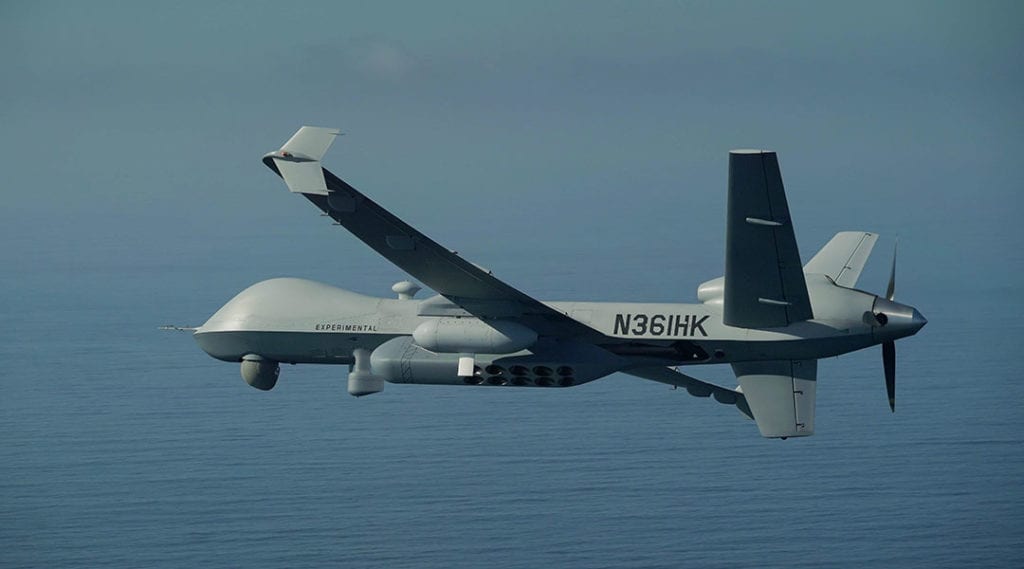
General Atomics Aeronautical Systems, Inc. recently completed development and test of the world’s first self-contained anti-submarine warfare capability for an unmanned aircraft system. GA-ASI

SAN DIEGO — General Atomics Aeronautical Systems Inc. (GA-ASI) recently completed development and test of the world’s first self-contained anti-submarine warfare (ASW) capability for an unmanned aircraft system, the company said in a Jan. 19 release. 

On Nov. 24, GA-ASI successfully demonstrated an A size sonobuoy­­ carriage, release, process and control from a company-owned MQ-9A Block 5 on a U.S. Navy Pacific test range. Using a satellite communications link, GA-ASI remotely processed bathythermal and acoustic data from deployed A size Directional Frequency Analysis and Recording (DIFAR-AN/SSQ-53G), Directional Command Activated Sonobuoy System (DICASS-AN/SSQ-62F) and Bathythermograph (BT-AN/SSQ-36B) sonobuoys and accurately generated a target track in real time from the Laguna Flight Operations Facility located at Yuma Proving Grounds.  

The MQ-9A Block 5 successfully deployed one BT, seven DIFAR, and two DICASS buoys to initiate prosecution and continuously track a MK-39 Expendable Mobile ASW Training Target over a three-hour period. Target track was generated using General Dynamics Mission Systems-Canada’s UYS-505 Sonobuoy Processing Systems. GA-ASI is developing this first-of-its-kind capability for its new MQ-9B SeaGuardian UAS in partnership with the U.S. Navy under a Cooperative Research and Development Agreement with Naval Air Systems Command, Patuxent River, Maryland.  

“This demonstration is a first for airborne ASW. The successful completion of this testing paves the way for future development of more anti-submarine warfare capabilities from our MQ-9s,” said GA-ASI President David R. Alexander. “We look forward to continuing collaboration with the U.S. Navy as they explore innovative options for distributed maritime operations in the undersea domain.” 

GA-ASI first demonstrated a sonobuoy remote processing capability in 2017 from an MQ-9A. Since then, GA-ASI has added a Sonobuoy Management & Control System (SMCS) to monitor and control deployed sonobuoys, and developed a pneumatic sonobuoy dispenser system (SDS) capable of safely carrying and deploying 10 U.S. Navy-compliant A size or 20 G size sonobuoys per pod. The MQ-9B SeaGuardian has four wing stations available to carry up to four SDS pods, allowing it to carry and dispense up to 40 A size or 80 G size sonobuoys, and remotely perform ASW anywhere in the world. 

In a standard configuration, SeaGuardian’s endurance exceeds 18 hours, encompassing a mission radius of 1,200 nautical miles with eight hours of on-station time for submarine prosecution, providing a low-cost complement to manned aircraft for manned-unmanned teaming operations. GA-ASI has already received orders for this MQ-9B SeaGuardian ASW capability from two separate foreign customers and anticipates demand to be extremely strong for the MQ-9B SeaGuardian with its high-end maritime capabilities and low cost relative to legacy manned maritime platforms. 


US DoD, UK Defence Ministry Sign Accord for Joint Carrier Strike Group Deployment

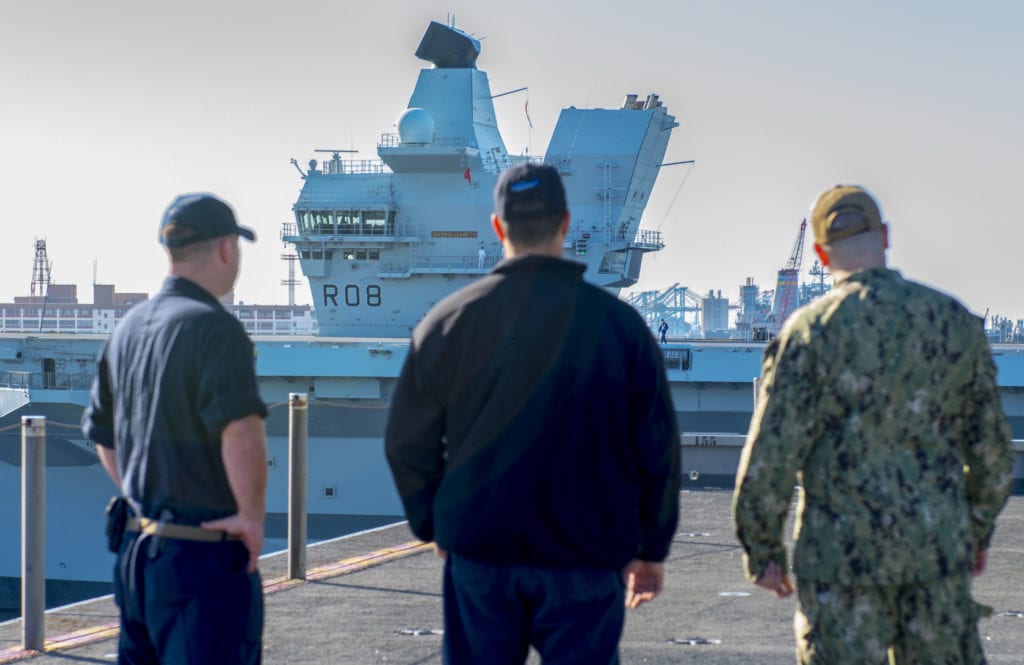
Sailors observe the Royal Navy aircraft carrier HMS Queen Elizabeth II (R08) from aboard the aircraft carrier USS George H.W. Bush (CVN 77) in this 2018 photo. U.S. Navy / Mass Communication Specialist 3rd Class Kallysta Castillo

LONDON and ARLINGTON, Va. — Acting Secretary of Defense Christopher C. Miller and U.K. Secretary of State for Defence Ben Wallace have cosigned the Joint Declaration for the Carrier Strike Group 2021 deployment.  

The Joint Declaration enables the deployment of U.S. Marine Corps and U.S. Navy personnel and equipment, including a detachment of U.S. Marine Corps F-35B Lightning II aircraft and the Navy’s Arleigh Burke-class guided-missile destroyer USS The Sullivans (DDG 68), as part of a U.K.-U.S. combined carrier strike group, led by the United Kingdom’s aircraft carrier HMS Queen Elizabeth.  

“This deployment underscores the strength of our bilateral ties and demonstrates U.S.-U.K. interoperability, both of which are key tenets of the U.S. National Defense Strategy,” Miller said in a release. 

The leaders look forward to seeing the culmination of nearly a decade of U.S.-UK carrier cooperation when Carrier Strike Group 2021 sets sail from Portsmouth, United Kingdom, later this year. 

“This joint declaration paves the way for the U.S. Navy and Marine Corps to be joining the HMS Queen Elizabeth Carrier Strike Group this year for the inaugural Carrier Strike 21 deployment,” Wallace said in a release. “I am delighted that the U.K. now possesses a 21st century Carrier Strike capability, which has been greatly assisted by the unswerving support and cooperation of the United States at all levels over the past decade. This deployment embodies the strength of our bilateral ties and reflects the depth and breadth of this vital defense and security partnership.” 

The U.K. reached a major milestone in December when it declared its carrier strike program had achieved initial operating capability following a series of multinational exercises throughout 2020. This joint declaration paves the way for a successful inaugural operational deployment of the U.K. Carrier Strike Group alongside its allies.